



Abstract
A visa-free policy is a tool for attracting foreign tourists, but existing studies evaluating its effects do not consider spatial spillover. This study, therefore, examined the effects of visa policies on urban inbound tourism with spatial spillover. This study used the implementation of the 72-hr visa-free transit policy in China as a natural experiment and employed a spatial difference-in-differences approach. The results show that the implementation of the 72-hr visa-free transit policy had no significant effect on the number of foreign tourists, but can reduce the average length of stay for foreign tourists. It also shows that there is a significant spatial spillover effect on the flow of foreign tourists. The results indicate the importance of spatial spillover in the evaluation of the impact of visa policy on inbound tourism, providing empirical evidence for further improving visa-free policies and urban tourism development.
Keywords
Introduction
Inbound tourism expansion continues to boost economic growth (Cortes-Jimenez & Pulina, 2010; Liu et al., 2018). Vigorous development of inbound tourism has often been a priority strategy for tourism development in various countries worldwide (Andrianov, 2015; Kang, 2016; Mizoo, 2018). However, the severe global outbreak of COVID-19 directly devastated the global tourism industry and the number of international tourists plummeted (Ahmad et al., 2021; Han et al., 2020; Irfan et al., 2022). The United Nations World Tourism Organization (UNWTO) stated that COVID-19 resulted in a 73% decrease in annual international tourist arrivals in 2020 compared with the previous year (UNWTO, 2022). In the face of the continued downturn in the development of inbound tourism, different institutions and experts from various countries have put forward their own opinions in an attempt to revitalize international tourism. After the COVID-19 outbreak, countries generally adopted visa restrictions to deter the entry of international tourists (Seyfi et al., 2023). With the mitigation of the COVID-19 pandemic, the relaxation of visa restrictions has become an important measure to re-activate international tourism. After a period of silence, the impact of visa policies on international tourism has become a hot topic among academics, governments, and tourism practitioners.
Although Bedford and Lidgard (1998) had already paid attention to the effect of visa policies on inbound tourism in 1998, systematic research on the impact of visa policies on inbound tourism started mainly in 2007 (Tchorbadjiyska, 2007). Evidence from the United States (Neiman & Swagel, 2009), Japan (Lee et al., 2010), Turkey (Balli et al., 2013), and China (Song et al., 2012) shows that the easing of visa policies has a positive effect on inbound tourism. However, there is also evidence that relaxation of the visa regime has not increased the number of inbound tourists (Satyr et al., 2021; Zengeni & Zengeni, 2012). It is evident that there are two views on the impact of visa liberalization on international tourism: one view affirms the role of visa liberalization in promoting international tourism; the other view is that visa liberalization does not significantly increase international tourism. Key to the debate is whether there is a causal relationship between visa liberalization and the development of inbound tourism. If this problem is solved, the aforementioned disputes will be resolved naturally.
How effective is visa liberalization for promoting the growth of inbound tourism? Existing studies have conducted empirical tests based on time-series data (Cheng, 2012; Lee et al., 2010) or panel data (Czaika & Neumayer, 2017; Karaman, 2016). However, most studies face endogeneity problems owing to omitted variables and selection bias, and the results of empirical analyses are insufficient to demonstrate causality. In addition, the flow of inbound tourists often has spatial spillover effects (Kang et al., 2018; Y. Yang & Wong, 2012). However, this spatial spillover effect is generally ignored in the existing literature on the impact of visa liberalization on inbound tourism.
This study used a 72-hr visa-free transit policy in Chinese cities as a natural experiment to examine the effects of visa policy on inbound tourism by utilizing spatial difference-in-differences (SDiD) models. The contributions of this study are as follows: First, most of the existing literature conducts visa policy studies at the national level (Neiman & Swagel, 2009; Pujiharini & Ichihashi, 2016; Reilly & Tekleselassie, 2018), while this study examined the impact of visa policy on inbound tourism at the city level with the purpose of providing theoretical support for further reform of visa policy and promotion of international tourism. Second, this study focused on exploring and testing the causal relationship between visa policies and inbound tourism. This not only enriches and expands the research content of inbound tourism policy but also helps resolve long-standing academic debates and disagreements on this issue (Artal-Tur et al., 2016; Czaika & Neumayer, 2017; Reilly & Tekleselassie, 2018). Third, this study introduced the SDiD approach to the study of tourism policy, which not only examines the spatial spillover effect of inbound tourist flow but also helps promote the in-depth development of sustainable tourism management and tourism economics research (Işik et al., 2017; Koščak et al., 2023). Based on exploring the spatiotemporal evolution pattern of the inbound tourism development level and its spatial agglomeration characteristics, this study used the SDiD model to explore the impact effect and spatial spillover effect of visa liberalization on urban inbound tourism, which provides a scientific basis for the government to formulate a coordinated regional tourism development policy.
The remainder of this paper is organized as follows: Section 2 presents the literature review and theoretical background; Section 3 summarizes the visa-free transit policy in Chinese cities and determines the research objectives; Section 4 presents the data and research design; Section 5 presents the empirical results; Section 6 contains the discussion, and the final section draws the conclusion.
Literature Review and Theoretical Background
Through multiple screenings and evaluations of the relevant literature, 40 journal articles were identified. Relevant information on these documents is summarized in the Supplemental Appendix. Figure 1 shows that the majority of the articles in the sample (97.5%) were published after 2006. The first publication peaks were in 2010, 2012, and 2013, accounting for 32.5% of the total publications. The second publication peak occurred in 2016, 2017, and 2018, accounting for 27.5% of the total publications. The third publication peak after the COVID-19 outbreak occurred in 2020 and 2021 and accounted for 22.5% of the total publications.
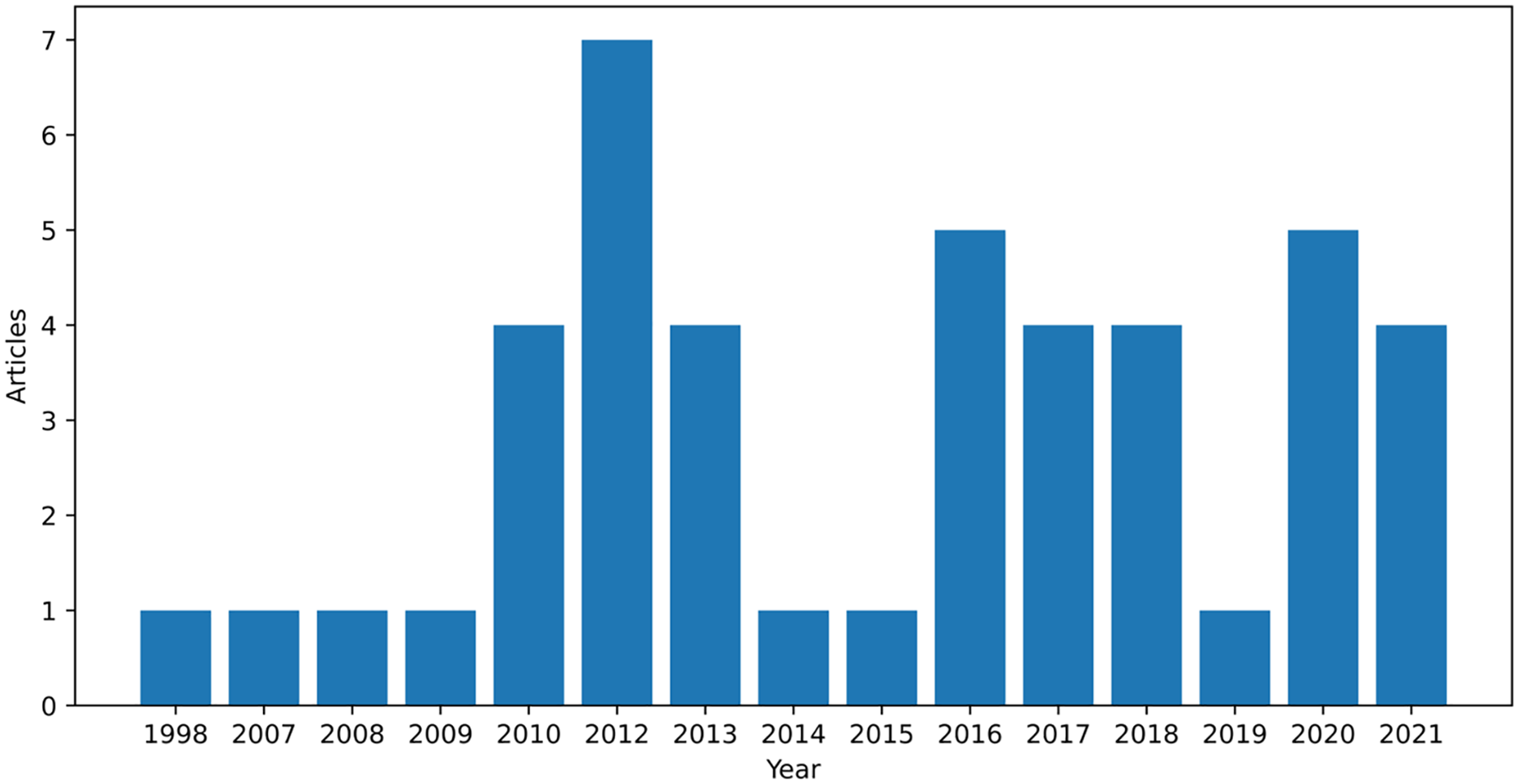
Year of publication of the selected articles.
From the findings of these studies, the view that visa liberalization helps promote inbound tourism predominates. Visa policies have long been loosely used by many countries around the world to stimulate tourism growth (Karaman, 2016; Kuzey et al., 2019). International tourists tend to choose to travel to countries and regions with relaxed visa systems (Whyte, 2008). Lee et al. (2010) found that visa-free travel has a positive and significant impact on tourism numbers and revenues. Liberal visa policies can be effective in overcoming the negative impacts of adverse events on international tourism. For example, Cheng’s (2012) study showed that the positive impact of launching the Individual Visit Scheme for Mainland Chinese tourists outweighed the adverse impact of severe acute respiratory syndrome (SARS) on tourism demand in Hong Kong. Visa liberalization can lead to a substantial increase in the volume of arrivals (Liu & Mckercher, 2014). Visa-free policies increased the number of tourists arriving in Turkey (Balli et al., 2013). In Israel, a partial waiver of visa restrictions would increase tourism by 48% and a complete waiver of visa restrictions would increase tourism by 118% (Beenstock et al., 2015). Similar findings and projections have been reported in other publications (Abesadze et al., 2020; Hor, 2021; Ming et al., 2020; Radovanov et al., 2020; Tang, 2021).
The conclusions of many studies on the positive impact of easing visa policies on inbound tourism are not directly confirmed by evaluating the effects of easing visa policies, but rather indirectly by evaluating the suppressive effects of visa restrictions. That is, the tests are indirect. Visa restrictions have reduced bilateral travel by an average of 52% to 63% (Neumayer, 2010). Visa restrictions significantly reduce the demand for foreign tourists to travel to a country (Li & Song, 2013). In Turkey, visa restrictions imposed on the country adversely affect inbound tourism by an average of 29% (Karaman, 2016). A visa restriction in a destination country deters tourism inflows by more than 20% (Czaika & Neumayer, 2017). A study based on data from 2000 to 2010 showed that the causal negative impact of visa restrictions on international tourist flows is significant (Artal-Tur et al., 2016). Logically, the suppressive effect of visa restrictions on inbound tourism does not imply that a relaxation of visa controls will necessarily attract foreign tourists.
However, there is also empirical evidence that liberalizing the visa regime does not increase the number of inbound tourists (Neiman & Swagel, 2009). In Bulgaria, visa-free travel with Russia was abolished in 2001 because of Bulgaria’s desire to join the EU. However, since 2002, the number of inbound tourists entering Bulgaria from Russia has continued to increase annually, exceeding the number of inbound tourists for visa-free travel prior to 2001 (Tchorbadjiyska, 2007). After 9/11, the new post-9/11 visa requirements were not significant contributors to the decline in travel to the United States (Neiman & Swagel, 2009). In Zimbabwe, visa restrictions played only a minor role in discouraging inbound tourism (Zengeni & Zengeni, 2012). Visa-free travel to the Schengen Area did not have a statistically significant impact on the number of tourists traveling from Ukraine to the Baltic Sea Region countries (Satyr et al., 2021). In Indonesia, while the visa exemption policy increased monthly foreign tourist arrivals by an average of 5%, the effect was evident only for less traditional destinations (Yudhistira et al., 2021). This empirical evidence suggests that the relationship between visa policies and inbound tourism is not as clear or as large as one might think. In addition, there is empirical evidence that visa liberalization may also negatively affect inbound tourism. The implementation of visa liberalization policies for group tours, school trips, and family tours has negatively impacted Chinese tourist arrivals to Japan, even though these open visa policies may not be significant (Su et al., 2012). This suggests that the relationship between visa policy and inbound tourism may be more complex than previously thought.
From the perspective of research methods, according to the literature in the Supplemental appendix, of the 40 papers, 9 papers, such as Tang (2021), Czaika and Neumayer (2017), and Neumayer (2010) used a gravity-type model, accounting for 22.5%; five papers, such as Ming et al. (2020) and Bedford and Lidgard (1998) used descriptive statistics, accounting for 12.5%; and five papers, such as Cheng (2012) and Lawson and Roychoudhury (2016) used OLS regression analysis, accounting for 12.5%. Four studies, such as Song et al. (2012) and Lee et al. (2010), used time series analysis, accounting for 10%; four papers, including Reilly and Tekleselassie (2018), Pujiharini and Ichihashi (2016), Beenstock et al. (2015), and Hu (2013) adopted the difference-in-differences (DiD) approach, accounting for 10%. However, these four studies using the DiD approach had two limitations. First, none of these studies conducted a counterfactual placebo test, therefore it is impossible to attribute changes in the number of inbound tourists to changes in visa policy, which may also be a proxy variable for other differences between the experimental and control groups. Second, none of these studies considered the existence of spatial spillovers, which could easily lead to biased assessment results. The DiD estimation produces biased estimates when a spatial spillover effect is present (Butts, 2023). Therefore, it is necessary to consider the spatial spillover effects when assessing policy effects. This is known as the spatial difference-in-differences (SDiD) method (Gu, 2021b; Liang et al., 2020).
The spatial agglomeration and spillover of the urban tourism industry is a necessary stage in the transformation process of the tourism economy to high-quality development. This spatial spillover also exists in the development of inbound tourism (Deng et al., 2017; Xiong et al., 2022). The clustering of the inbound tourism industry is more likely to attract education and research institutions to locate near the clusters, which helps strengthen the solidarity between regions, thus promoting the development of the inbound tourism industry in neighboring regions (Llorca-Rodríguez et al., 2021). The agglomeration of inbound tourism can also generate spatial spillover effects on neighboring tourism development through sharing and siphoning effects (Shi et al., 2021). There is also a spatial spillover effect between neighboring households in terms of their decision to participate in tourism (Gu, 2023a). However, the existing literature lacks a systematic study of the spatial distribution and evolutionary characteristics of inbound tourism. In terms of research methodology, there is still a gap in the literature regarding the construction of spatial DiD models to examine the impact of visa liberalization on inbound tourism by integrating spatial spillover. Therefore, portraying the spatial distribution and evolution characteristics of inbound tourism development and further clarifying the impact effect and spatial spillover effect of visa liberalization on inbound tourism development are of great theoretical value and practical significance for the government to formulate a coordinated and high-quality development policy for inbound tourism.
72-hr Visa-free Transit Policy in China
The visa-free transit policy for foreigners is one of the elements of the visa-free system implemented by countries around the world (Bangwayo-Skeete & Skeete, 2016). It is a policy that allows foreigners to transit from one country to a third country via a transit country without applying for a transit country visa, and allows a short stay in the transit country (Hasumi, 2004). With the continuous deepening of China’s opening-up policy, the 72-hr visa-free transit policy provides a larger space for China’s economic development and cultural exchange (Kai, 2021). Since 2013, China has implemented the 72-hr visa-free transit policy in some cities. In 2013, this policy was implemented in five cities: Beijing, Shanghai, Guangzhou, Chengdu, and Chongqing. In 2014, this policy was extended to six cities: Shenyang, Dalian, Xi’an, Guilin, Kunming, and Hangzhou. In 2015, five additional cities, including Xiamen, Wuhan, Tianjin, Harbin, and Nanjing, implemented the policy. However, the implementation of this policy has not been satisfactory, and there is a gap between the growth in the number of visa-free foreigners in transit and the expected number. Therefore, it is necessary to conduct a scientific evaluation of the actual effects of this policy.
From the perspective of inbound tourism, the 72-hr visa-free transit policy is undoubtedly an important external treatment that divides cities into two groups: those that implement the policy and those that do not. The former is the experimental group and the latter is the control group. The spatial distributions of these two groups of cities are summarized in Figure 2. Thus, the implementation of this policy constitutes a quasi-natural experiment.
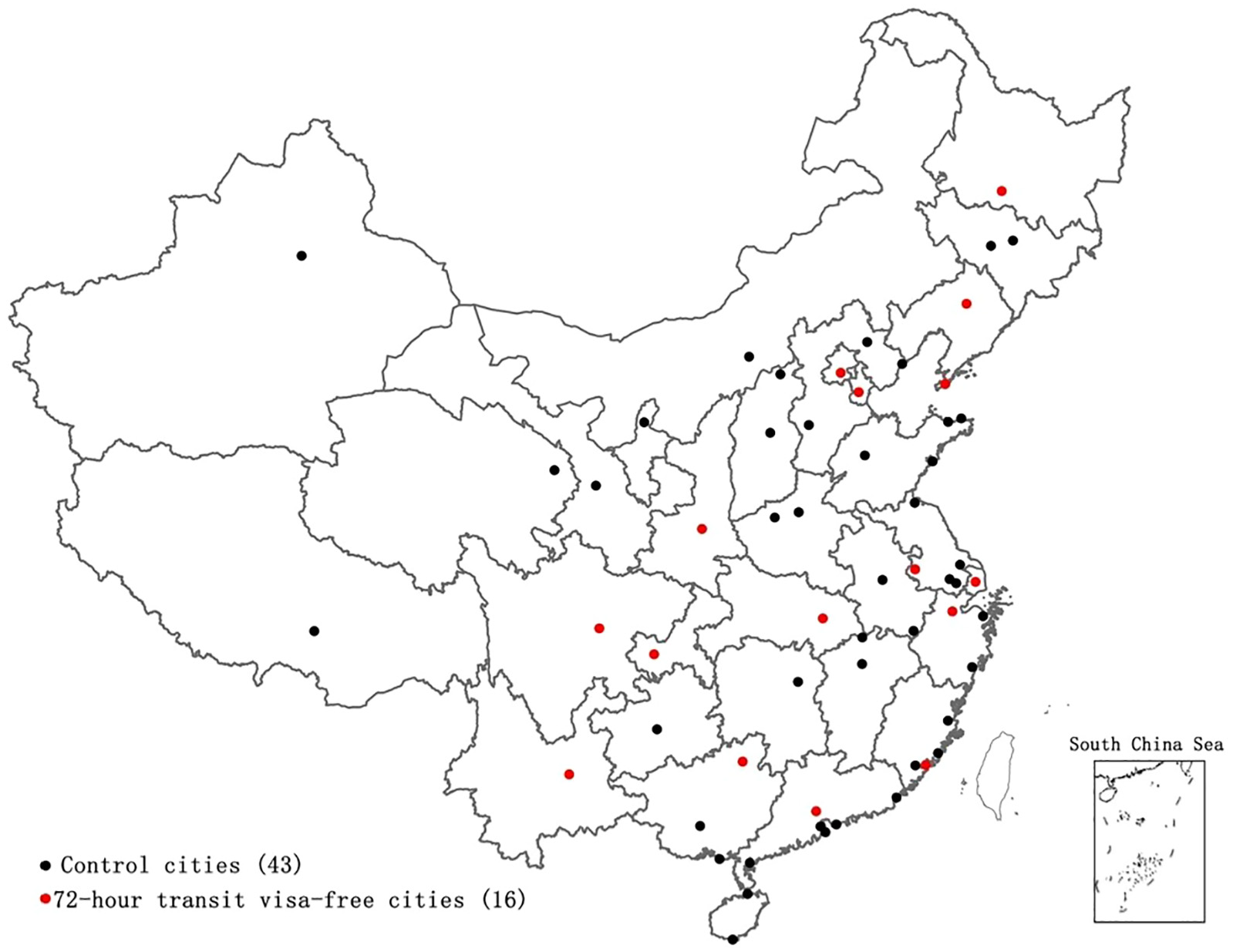
Spatial distribution of cities in experimental and control groups.
Samples, Data, and Methods
The research data used in this study are annual panel data of 59 cities at the prefecture level and above in China from 2000 to 2017. The time period of similar previous studies was from 2000 to 2015 (Gao et al., 2019; Gao & Su, 2019, 2021). Referring to Gu (2023c), the data from 2000 to 2017 were chosen because 2000 was the beginning of the new millennium, while 2017 was the last year the Chinese government disclosed the relevant data. The “China Tourism Statistical Yearbook” announced the number of inbound tourists and the average length of stay in 59 cities at the prefecture level and above, which means that they are provincial capital cities or prefecture level cities. Data on the number of inbound tourists and the average length of stay in each city were obtained from the “China Tourism Statistical Yearbook” from previous years; the data for each control variable were mainly obtained from the “China City Statistical Yearbook” over the years, the statistical yearbooks of prefecture-level cities, and the Statistical Bulletin of National Economic and Social Development.
Variables
Dependent Variables
There were two dependent variables in this study: the number of foreign tourists (Tourist) and the average length of stay of foreign tourists (Length). The number of inbound tourists is an important and widely used indicator in inbound tourism research (Goto & Akai, 2017; Ming et al., 2020; Yudhistira et al., 2021). However, few studies have been conducted on the length of stay of foreign tourists. In the Pham et al. (2018) study, where the number of visitor nights was used to replace the average length of stay of foreign tourists, it was concluded that the number of Chinese visitor nights decreased by 21% due to the increase in visa fees. García-Sánchez et al. (2013) showed that length of stay is an important factor influencing daily travel expenditures. Therefore, this indicator is an important dimension for measuring inbound tourism and requires measuring. In this study, logarithmic values were used for both variables.
Visa Policy
This study constructed the dummy variable (
Control Variables
The degree of economic development is an important factor that affects inbound tourism (Cortes-Jimenez & Pulina, 2010; Czaika & Neumayer, 2017). There is often a correlation between GDP per capita and inbound tourism development (Wen & Tisdell, 1996). The logarithm of GDP per capita was used as a control variable. Inbound tourism is an important component of the service industry (Chae & Kim, 2020; Zhang et al., 2021). Therefore, the percentage of employees in the tertiary industry (EMP) was used as another control variable. Empirical evidence suggests that the relationship between inbound tourism and Foreign Direct Investment (FDI) is positive (Arain et al., 2020; Chowdhury & Arthanari, 2019). Therefore, FDI is the third control variable. Inbound tourism is closely related to the accommodation and catering industries of a destination (M. Zhao & Liu, 2021). Therefore, the proportion of employees in the accommodation and catering industry to the total population at the end of the year (EAC) was used as the last control variable.
The descriptive statistics and correlation coefficients for these variables are summarized in Table 1.
Descriptive Statistics and Correlation Coefficient Table.

and *** are significant at the 0.05 and 0.001 levels, respectively.
Methods
Standard Deviational Ellipse
Standard deviational ellipse (SDE) is a spatial statistical method that can accurately reveal the spatial distribution characteristics of various elements (Gong, 2002). This method was first proposed by sociologist, Lefever (1926), and is mainly used to reveal the spatial relationship between geographical elements. Later, it was widely used for spatial descriptive exploration in many fields (Wang et al., 2015). This method is suitable for both the descriptive analysis of temporal changes and the comparison of changes in spatial distribution (Sherman et al., 2005). The centroid of the SDE is calculated as follows:

where (
SDiD Method
In the DiD model, the classic assumption is the stable unit treatment value (Jin et al., 2022; Schwartz et al., 2012; Yeon et al., 2022). However, this assumption no longer holds when spatial spillover effects exist among different spatial units (Jia et al., 2021). SDiD can effectively compensate for the deficiencies of DiD, accommodate spatial spillover effects, and avoid biased estimates (Gu, 2023b, 2023c). Since the 72-hr visa-free transit policy was implemented sequentially, the experimental group could distinguish between pre- and post-events, whereas the control group could not. Additionally, foreign tourist city tours have obvious spatial spillover effects (Kang et al., 2018; Y. Yang & Wong, 2012). The spatial difference-in-differences (SDiD) model can effectively address these problems (Gu, 2021b; Kosfeld et al., 2021). The coefficients estimated by the SDiD model are unbiased and effective in the presence of spatial spillover effects (Guo et al., 2021). Therefore, this study drew from the SDiD model established by Heckert (2015) and Gu (2021b):


This is the Spatial Lag Model (Gu 2021c). In the above formula, the subscripts
Results
SDE Analysis
The results of the SDE analysis for the average length of stay for foreign tourists are shown in Figure 3. According to the left section of Figure 3, the direction of the long axis of the ellipse roughly follows the north-south direction, which indicates that the spatial distribution of the average length of stay of foreign tourists presents a “south-north” spatial pattern. In 2000, the center of gravity of foreign tourists’ average length of stay was located in the city of Zhumadian, Henan Province, and in 2017, it moved to the city of Xuchang, Henan Province. From 2000 to 2017, the total displacement of the center of gravity of the average length of stay of foreign tourists was 189.791 km, which moved 156.266 km westward and 107.71 km northward, showing a trend of moving to the northwest as a whole. This indicates that the average length of stay of foreign tourists increased more rapidly in cities in the northwest than in those in the southeast.
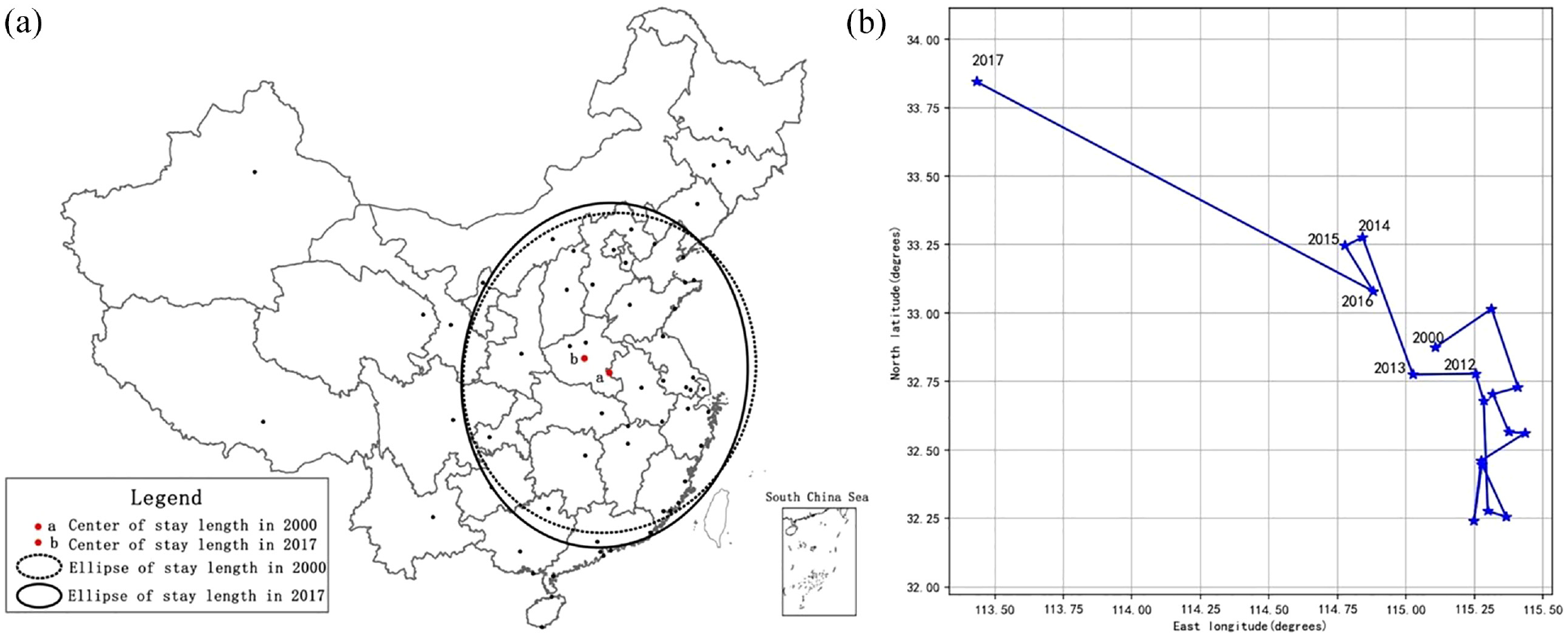
(a) The pentagram points on the right side of Figure 3 are the centers of the foreign tourists’ stay time for different years. (b) The spatial ellipse and the trajectory of the center of gravity of the foreign tourists’ stay time.
According to the right section of Figure 3, the position of exhibits a significant displacement. From 2000 to 2012, the center of gravity moved from north to south and then from south to north. Since 2013, some cities have been implementing the 72-hr visa-free transit policy, and the movement trajectory of the center of gravity began to change significantly. From 2013 to 2017, the total displacement of the center of gravity of the average length of stay of foreign tourists was 190.363 km, which moved 148.719 km westward and 118.83 km northward. It can be seen that the implementation of the 72-hr visa-free transit policy has significantly changed the spatial pattern of the average length of stay of foreign tourists. As can be seen from Figure 3, the implementation of the 72-hr visa-free transit policy has, in relative terms, caused foreign tourists to stay longer in cities in the northwest and shorter in cities in the southeast.
There are various factors contributing to this change in spatial pattern. One important factor is the denser distribution of cities along the southeast coast, making cross-city travel more convenient (Weng et al., 2021). As a result, foreign tourists stay in individual cities for shorter periods. The implementation of the 72-hr visa-free transit policy has accelerated foreign travel between cities in the southeast owing to the construction of high-speed rail (Z. Yang & Li, 2020). On the contrary, the cities in the northwest are more scattered and it is not easy for foreign tourists to travel to them. Therefore, foreign tourists visit each city more thoroughly and stay longer. This is the inevitable result of the space–time compression of inbound tourism on the southeast coast (Gu 2023b).
SDiD Analysis
The results of Moran’s I test are summarized in Supplemental Appendix 2. Moran’s I test shows that there are significant spatial autocorrelations for the two independent variables, which indicates that the SDiD method is superior to the DiD method (Gu, 2021a, 2021b). The identification and inspection of this causal relationship must be performed using the following SDiD method: Table 2 presents the results of the SDiD model. The dependent variable for Models 1, 2, and 3 is the number of foreign tourists, while that for Models 4, 5, and 6 is the average length of stay of foreign tourists. In Models 1 and 4, neither the year effect nor the city effect was fixed. In Models 2 and 5, only the city effect was fixed. In Models 3 and 6, both year and city effects were fixed. These models are all random-effects models because Hausman’s test is insignificant; that is, random-effects models are better than fixed-effects models. The VIF values were all less than two, indicating that there was no multicollinearity.
Results of Spatial Difference-in-differences Models.

, and *** are significant at the 0.05 and 0.001 levels, respectively.
According to Models 1, 2, and 3, regardless of whether the year effect or city effect is controlled for, the estimated coefficients of DiD are all negative and insignificant. This indicates that the implementation of the 72-hr visa-free transit policy had a negative, but non-significant effect on attracting foreign tourists. The results do not change when controlling for the year effect or city effect, indicating that the results are robust. This result does not support the previous view that visa liberalization promotes inbound tourism (Kurihara & Okamoto, 2010; Ming et al., 2020; Reilly & Tekleselassie, 2018; Tang, 2021). Conversely, the results of this study suggest that visa liberalization has no significant effect on attracting foreign tourists. The results of this study suggest that the effect of visa liberalization on inbound tourism needs to be treated with caution. This view is similar to that of previous studies (Neiman & Swagel, 2009; Satyr et al., 2021; Tchorbadjiyska, 2007; Yudhistira et al., 2021; Zengeni & Zengeni, 2012). In particular, this study shows that the 72-hr visa-free transit policy has a negative and insignificant effect on inbound tourism, a result identical to the findings of Su et al. (2012).
Obviously, the implementation effect of the 72-hr visa-free transit policy is unsatisfactory, and the actual number of foreign tourists who have gone through the formalities of transit is far from the expected number. The main reasons for this are as follows: First, the 72-hr transit visa exemption period is not long enough and not attractive enough for foreign tourists. Singapore has a 96-hr visa-free transit time, Hong Kong has a maximum transit time of seven days, and Seoul in South Korea has the longest visa-free transit time of up to 30 days. In contrast, China’s 72-hr visa-free transit policy is not advantageous. Second, the status of the port city hub in China is not prominent and the supporting services are not perfect. At present, the competition between China’s International Airport and neighboring countries is still extremely fierce, and the international transit business is the weak point of the international aviation business in Chinese airports. As a result, tourists from outside the Asian region traveling to Asia may travel to Singapore or Korea for transit instead of China for transit.
According to Models 4, 5, and 6, regardless of whether the year effect or city effect is controlled for, the estimated coefficients of DiD are all negative and significant. This indicates that the implementation of the 72-hr visa-free transit policy had a negative and significant effect on the average length of stay for foreign tourists. This phenomenon has been largely ignored by inbound tourism researchers. A similar phenomenon emerged from Su et al. (2012), but with little significance. The length of stay of foreign tourists is an important factor that affects their daily travel expenditure (García-Sánchez et al., 2013). Therefore, the length of stay of foreign tourists is an important topic in inbound tourism research. The 72-hr visa-free transit policy reduced the length of stay for foreign tourists. Based on the results of Model 6, the policy reduced the average length of stay of foreign tourists by 1.3 percentage points.
In Model 3, the regression coefficient (
Parallel Trend test and Placebo Test
The SDiD method assumes that the experimental and control groups have approximately the same trend of change prior to the implementation of the policy. The average length of stay of foreign visitors in both groups was compared for trends, and the results are summarized in Figure 4. As shown in Figure 4, before the implementation of the 72-hr visa-free transit policy, the trends of the experimental and control groups remained essentially the same and did not differ significantly. However, the difference in trends between the two groups became significant during and after the implementation of the 72-hr visa-free transit policy. This suggests that the experiment passed the parallel-trend test.

The impact of the visa-free policy.
This graphical approach is more intuitive, but not sufficiently rigorous. Therefore, it is necessary to supplement it with a placebo. Previous studies have confirmed the effect of visa liberalization on inbound tourism through the DID approach (Beenstock et al., 2015; Hu, 2013; Pujiharini & Ichihashi, 2016; Reilly & Tekleselassie, 2018). However, none of these studies address the “counterfactual situations.” The conclusions of the above studies are not sufficient as causal evidence that visa liberalization promotes inbound tourism, and the resulting policy implications need to be treated with caution. Would the results differ if the policy had not been implemented in that year? If the results were the same, then the policy would not be the cause of the results, but a proxy for the inherent differences between cities. Therefore, this so-called placebo test hypothetically delays the implementation of the policy by 1 or 2 years to test whether the results would have changed (Gu, 2021b). This is a placebo test that tests whether the 72-hr visa-free transit policy reduces the average length of stay of foreign tourists. The test results are presented in Table 3. The results of Models 7 and 8 show that the DiD regression coefficients are insignificant. The results of Models 5 and 6 show that the regression coefficients of DiD are insignificant, whereas, in Model 6 of Table 3, the regression coefficient of DiD is negative and significant. This indicates that the visa liberalization policy is indeed the reason for the reduction in the average travel time of foreign tourists.
Results of the Placebo Test.

, and *** are significant at the 0.05 and 0.001 levels, respectively.
Mechanism Analysis
Based on the three-step test of mediating variables (Baron & Kenny, 1986; Gu, 2022a), this study empirically analyzed the impact mechanism of visa policy. According to the results summarized in Table 4, the percentage of employees in the tertiary industry (EMP) mediates the relationship between visa policy and the length of stay of foreign tourists. In other words, the 72-hr visa-free transit policy affects the length of stay of foreign visitors by affecting employment in the tertiary sector. Moreover, the percentage of employees in the tertiary industry (EMP) is a competitive mediator in the process, not a complementary mediator (X. Zhao et al., 2010).
Results of Mechanism Analysis.
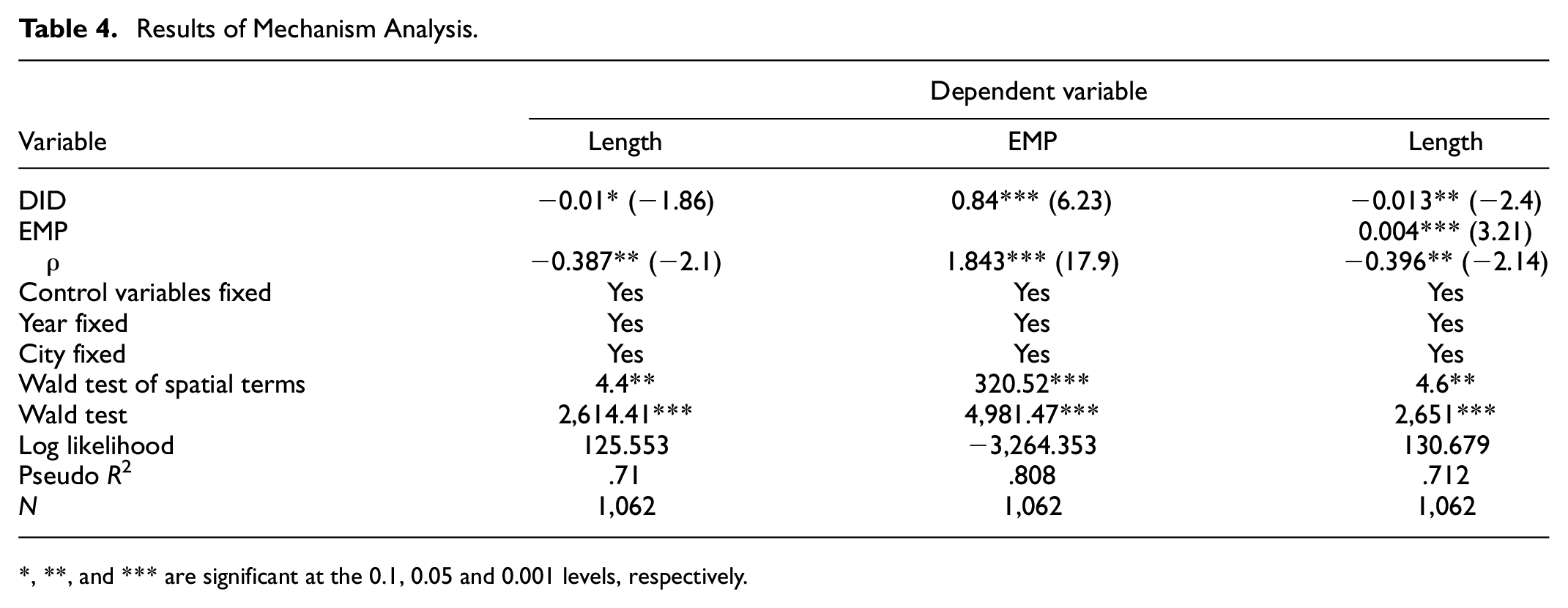
, **, and *** are significant at the 0.1, 0.05 and 0.001 levels, respectively.
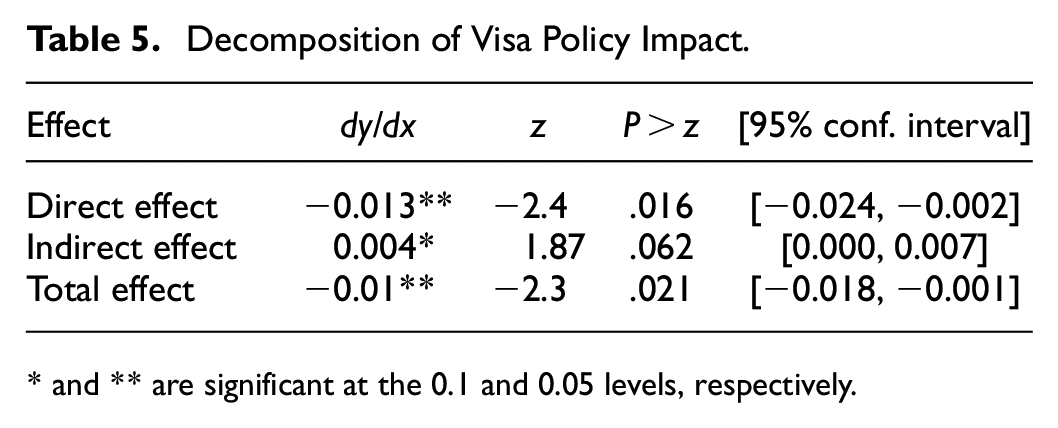
Furthermore, the spatial spillover effects of visa policies can be tested further. Using this current spatial weight matrix, it is possible to estimate the direct, indirect, and total effects of the impact of the 72-hr visa-free transit policy on the length of stay of foreign tourists. The results are summarized in Table 5. According to Table 5, the direct effect of the 72-hr visa-free transit policy is significantly negative, whereas the indirect effect is significantly positive. The direct effect is the impact on the local area, whereas the indirect effect is the impact on neighboring areas through policy spillover (Gu, 2022c). It can be seen that the implementation of the 72-hr visa-free transit policy reduces the length of stay of foreign tourists in the city and increases the length of stay of foreign tourists in neighboring cities. However, in terms of total effect, the visa policy has generally reduced the length of stay of foreign visitors. This suggests that this visa policy will not only have an impact on the length of stay of foreign visitors in the city, but will also indirectly affect the length of stay of foreign visitors in the city by affecting the length of stay of foreign visitors in neighboring cities. One of the main reasons for this is that the planning of routes for foreign tourists is subject to a specific transit policy (Pujiharini & Ichihashi, 2016; Yudhistira et al., 2021).
Decomposition of Visa Policy Impact.
and ** are significant at the 0.1 and 0.05 levels, respectively.
Robustness test
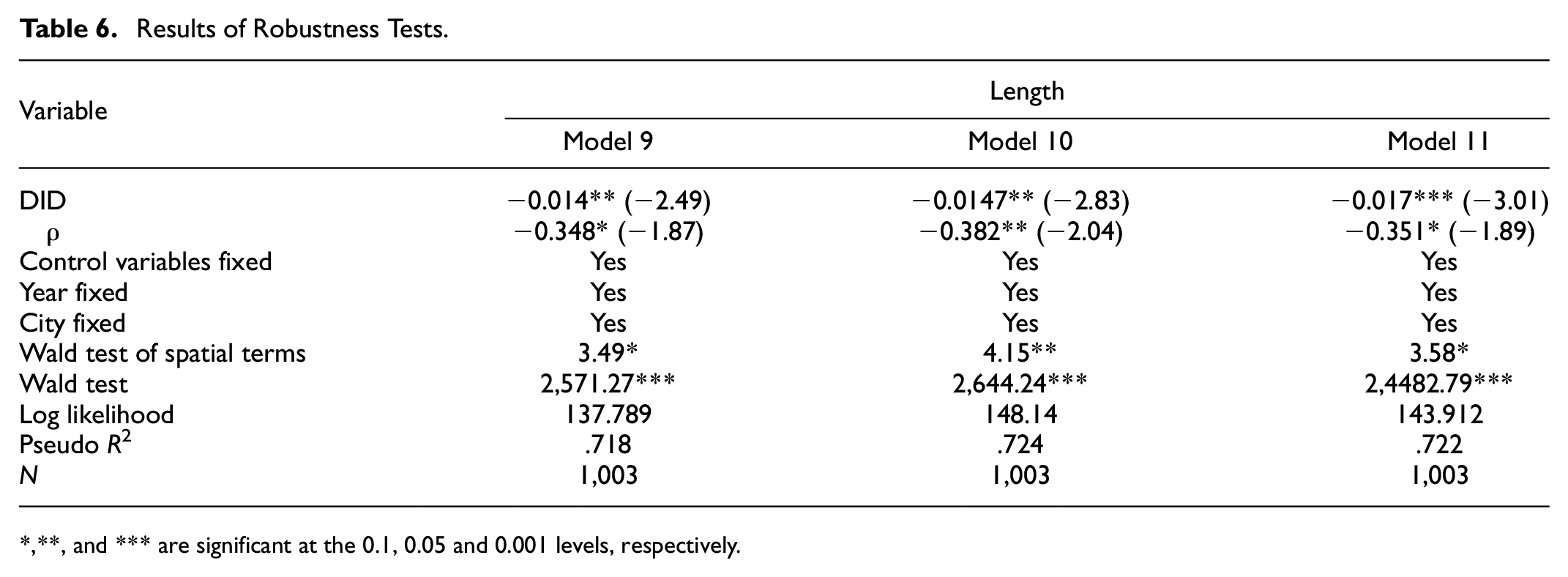
Robustness tests were performed in terms of changes to the time span and changes to the control variables. First, the time span was changed to 2011 to 2017; the empirical results are summarized in Model 9 of Table 6. Second, the time span was changed to 2010 to 2016; the empirical results are summarized in Model 10 of Table 6. Finally, all four control variables were replaced with lags of one period, and the empirical results are summarized in Model 11 of Table 6. A comparison of the results of Table 6 with those of Model 6 in Table 2 shows that the results are consistent. This indicates the robustness of the findings of this study.
Results of Robustness Tests.
,**, and *** are significant at the 0.1, 0.05 and 0.001 levels, respectively.
Discussion
Theoretical Implications
This study has three important theoretical implications as follows:
First, from a research perspective, this study examined the impact of visa policy on inbound tourism at the city level, thus providing important theoretical support for the further reform of visa policy and the recovery of inbound tourism. Visa liberalization may have a positive (Karaman, 2016; Li & Song, 2013; Neumayer, 2010), negative (Su et al., 2012), or insignificant effect (Neiman & Swagel, 2009; Satyr et al., 2021; Tchorbadjiyska, 2007; Yudhistira et al., 2021; Zengeni & Zengeni, 2012). The empirical evidence for these debates is overwhelming at the national level, while city-level research is extremely scarce. Since the visa policy regarding foreign visitors has a certain contingency (Lawson & Lemke, 2012), different results can emerge owing to different levels of research. This study found that the impact of visa liberalization policies at the city level on inbound tourism was insignificant. Therefore, attention should be paid to cultivating the city’s comprehensive attractiveness to foreign tourists, rather than just seeking a visa-free transit policy. This enriches and expands research and theories related to inbound tourist visa policies.
This inquiry has also provided a new perspective for the study of innovation in tourism (Işık et al., 2022). Evidence from this study suggests that visa liberalization does not necessarily lead to the development of inbound tourism. This will help reduce the blind optimism of tourism policymakers regarding visa liberalization (Bangwayo-Skeete & Skeete, 2016; Goto & Akai, 2017; Reilly & Tekleselassie, 2018). For each country, in addition to visa liberalization, other innovations and breakthroughs should be adopted to promote inbound tourism. Cities are the most important source markets and tourist destinations, as well as the most concentrated space for tourism innovation, and play a pivotal role in tourism (Booyens & Rogerson, 2015). Once city tourism policymakers break through the myths and shackles of visa liberalization in their thinking, they can focus more on tourism innovation and push the envelope on tourism products and services which will attract more foreign tourists.
Second, in terms of research content, this study analyzed the dynamic impact of the visa-free transit policy on the length of stay of foreign tourists and its spatial variation trends, bridging the gap in existing knowledge in this field. The vast majority of studies on visa policy and inbound tourism have focused on foreign tourist arrivals (Goto & Akai, 2017; Ming et al., 2020; Yudhistira et al., 2021), whereas only a few have addressed the length of stay of foreign tourists (Pham et al., 2018). The length of stay of foreign tourists is an important factor in tourism expenditure (García-Sánchez et al., 2013). Therefore, evaluating the impact of visa policies on inbound tourism should also assess their impact on the length of stay of these tourists, in addition to evaluating the impact on the number of inbound tourists. Only in this way can the impact of visa policies on inbound tourism be systematically and comprehensively assessed. This study found that the impact of the 72-hr visa-free transit policy on the average length of stay of foreign tourists was significantly negative. In addition, this study found that the center of gravity of the spatial distribution of the average length of stay of foreign tourists in Chinese cities has shifted from the southeast to the northwest since the implementation of this policy. In comparison with previous studies, the findings of this study make the research on the impact of visa policies on inbound tourism more intuitive and specific, effectively enriching and supplementing the research on the impact of visas on inbound tourism.
Undoubtedly, these research results have a positive effect on promoting the development of tourism geography and expanding the scope of tourism geography. In recent years, tourism geography has been developing rapidly, but there are problems such as weak theoretical and methodological research, narrow research scope, and slow improvement in the overall research level (Saarinen et al., 2017). Although the spatial distribution of tourists is an important area where geographers have achieved considerable results (Khan, 2018; Siakwah, 2018), the further development of inbound tourism needs to be studied from multiple perspectives, aspects, and levels. This study not only explored the impact of visa policies on inbound tourism but also revealed the spatiotemporal patterns of inbound tourists and their distribution at a global level, which expands the scope of tourism geography.
Third, in terms of research methods, the more cutting-edge SDiD method was introduced into an evidence-based tourism policy for the first time, which helps promote the in-depth development of tourism management and tourism economics research. To study the relationship between visa liberalization and inbound tourism, some scholars have begun to adopt the DID approach (Beenstock et al., 2015; Hu, 2013; Pujiharini & Ichihashi, 2016; Reilly & Tekleselassie, 2018). However, these studies have two important limitations. First, none of these studies have considered the spatial spillover effects of foreign tourist flows, which tend to produce biased estimates (Butts, 2023). Second, none of these studies have conducted a placebo test based on a “counterfactual scenario” and therefore cannot rule out a pseudo-causality for the stimulating effect of visa liberalization on inbound tourism, as visa liberalization policies may simply be a proxy variable of the systematic differences between cities in the experimental and control groups (Gu, 2021b; Liang et al., 2020). The SDiD method used in this study effectively overcomes these shortcomings and achieves a theoretical and methodological breakthrough in inbound tourism research and visa policy evaluation.
Finally, this study has provided a new theoretical perspective on tourism recovery in the post-epidemic era. In the post-epidemic era, visa deregulation will help inbound tourism recovery (Nguyen, 2020). However, compared with the recovery of domestic tourism, the recovery of international tourism is still slower and will be a painful and difficult journey for a long time to come (Qiu et al., 2021; Sánchez-Teba et al., 2020). This study suggests that visa liberalization may have side effects on the development of inbound tourism, the so-called “double-edged sword” (Huang et al., 2022). Therefore, countries cannot simply expect visa liberalization to quickly revive inbound tourism, which differs from the overly optimistic estimate of Rabeeu et al. (2021). In the post-epidemic era, in addition to visa liberalization, national and local governments should explore innovations in public policies such as promotion efforts, shopping tax rebates, service provider incentive settings, and international air routes to provide a good platform and public management environment for the revival of inbound tourism. This study expands and enriches tourism management knowledge and highlights the managerial implications of revitalizing inbound tourism through comprehensive policies in the face of a large-scale crisis (Okasha et al., 2023; Yudhistira et al., 2021).
Policy implications
This study has important practical implications, including the following points: First, the visa-free policy should be implemented in a targeted and differentiated manner. Second, the duration of visa-free transit must be extended further. In recent years, a number of Chinese cities have extended their visa-free transit times from 72 to 144 hr. In the next stage, the 144-hr transit visa-free period can be extended to 15 days, so that foreign tourists can have more rest and entertainment time and remain longer in the city, bringing more tourism consumption to the city. Finally, the current strictly controlled entry and exit should be relaxed in a timely and appropriate manner. The visa-free transit policy should also be extended to seaports and land ports, where foreign tourists are free to choose their means of transportation for entry and exit.
Conclusion
This study considered 59 Chinese cities from 2000 to 2017 as the research object and used the SDiD method to explore the impact of the 72-hr visa-free transit policy on inbound tourism. The results show that the 72-hr visa-free transit policy had no significant impact on the number of foreign tourists but had a significant and negative impact on the average length of stay of foreign tourists. Various factors drive the growth of the inbound tourism market. In addition to the gradual facilitation of the visa system, the government should apply complementary measures such as promotion abroad, cultural similarities, and ease of transportation to attract foreign tourists. In addition, this study also shows that from 2000 to 2017, the spatial center of gravity of the average length of stay of foreign tourists shifted from southeast to northwest. However, the average length of stay of foreign tourists has obvious negative spatial spillover effects. In contrast, there is a positive spatial spillover effect on foreign tourist arrivals. The results of these studies can provide a theoretical basis for tourism government departments and immigration authorities to make appropriate decisions. To promote the sustainable development of foreign tourism, the government can flexibly expand the implementation caliber of the visa system and promote the electronic visa system for foreign tourists’ inbound tours, and so on to significantly reduce the travel costs of inbound tourists and maximize the release of the all-factor development momentum of the visa system.
Due to restrictions on data availability, this study inevitably has some limitations that require further research. The sample size of this study was relatively small, comprising 59 cities in China. In the future, if the data allows, the study can be expanded to include more Chinese cities in the sample for a more comprehensive test. In addition, the current urban sample may also have a self-selection problem, which requires further investigation. In terms of dependent variables, this study focused on the number of foreign tourist arrivals and length of stay. In the future, tourist spending or destination tourism revenue, geopolitical risks, etc., could be added to the study as dependent variables if the data allows. In addition to the independent variables, other variables, such as tourism resources, exchange rates, and exogenous shocks can be added in the future to conduct a more in-depth study. Finally, this study did not conduct a country comparison study. Further studies can be conducted by comparing China with other countries.
Supplemental Material
sj-docx-1-sgo-10.1177_21582440241261676 – Supplemental material for Does the Visa-Free Policy Promote Inbound Tourism? Evidence From China
Supplemental material, sj-docx-1-sgo-10.1177_21582440241261676 for Does the Visa-Free Policy Promote Inbound Tourism? Evidence From China by Jiafeng Gu in SAGE Open
Supplemental Material
sj-docx-2-sgo-10.1177_21582440241261676 – Supplemental material for Does the Visa-Free Policy Promote Inbound Tourism? Evidence From China
Supplemental material, sj-docx-2-sgo-10.1177_21582440241261676 for Does the Visa-Free Policy Promote Inbound Tourism? Evidence From China by Jiafeng Gu in SAGE Open
Footnotes
Acknowledgements
The authors gratefully acknowledge the Social Science Foundation of China(17BSH122) for the support of this research.
Declaration of Conflicting Interests
The author declared no potential conflicts of interest with respect to the research, authorship, and/or publication of this article.
Funding
The author disclosed receipt of the following financial support for the research, authorship, and/or publication of this article: This research is funded by the National Social Science Foundation of China(17BSH122).
Ethical Approval
This research is funded by the National Social Science Foundation of China (17BSH122). The authors declare that they have no conflict of interest. Because the data in this research is not collected from human subjects and is not involving Human Participants and/or Animals, EA is no needed in this research.

Data Availability Statement
Jiafeng Gu had full access to all of the data in the study and takes responsibility for the integrity of the data and the accuracy of the data analysis.
Supplemental Material
Supplemental material for this article is available online.
References
Supplementary Material
Please find the following supplemental material available below.
For Open Access articles published under a Creative Commons License, all supplemental material carries the same license as the article it is associated with.
For non-Open Access articles published, all supplemental material carries a non-exclusive license, and permission requests for re-use of supplemental material or any part of supplemental material shall be sent directly to the copyright owner as specified in the copyright notice associated with the article.
