




Abstract
The purpose of this study was to confirm the causal relationship between COVID-19 social phobia, contamination concern, and purchase intention. Herein, contamination concern refers to consumers’ fear of exposure to COVID-19. This study sought to determine whether online communities’ trust in the seller acts as a moderator between contamination concern and purchase intention. In addition, the indirect effect of COVID-19 social phobia and contamination concerns on purchase intention was investigated. The causal relationships of the variables were examined by comparing differences in trust level (NHigh = 139, NLow = 144; Mage = 38.57; female = 51.9%, n = 147) in the used-goods market during the COVID-19 scenario. Using PROCESS macro model 14, the relationship between COVID-19 social phobia and contamination concern, the relationship between contamination concern and purchase intention, and the moderating effect of the level of trust on contamination concern and purchase intention were explored. Finally, moderated mediation was analyzed using the research model. COVID-19 social phobia positively affected contamination concern, and the level of trust had a moderating effect on contamination concern and purchase intention. However, the causal relationship between contamination concern and purchase intention was not significant; thus, the moderating effect could not be confirmed. As the sharing economy expanded, the influence of contamination concern on consumer purchasing decisions was confirmed. To deal with this, corporate managers must proactively implement measures to increase the trust of consumers.
Keywords
Introduction
SARS-CoV-2 (COVID-19) appeared in China in December 2019 and spread worldwide rapidly, changing people’s daily lives profoundly. A recent study by Armiya’u et al. (2024) identified inadequate social interaction as a key psychological barrier during this period. This highlights how community-scale disasters pose immediate risks to people’s psychological, physical, and social relationships (Bonanno et al., 2010), which subsequently impacts their consumption habits. Approximately one-third of consumers preferred shopping alone during the pandemic due to fear, while approximately 40% of consumers exhibited strong reactions to health threats (Veselovská, 2023). People were naturally concerned about COVID-19 due to its elevated infection and mortality rates (Lin, 2020), and since shopping involves touching products and contact between people and objects, the risk of infection impacted their buying habits. After the pandemic, consumers’ concerns about product safety increased, making this factor a crucial determinant in individual product choices (Bai, 2024). The potential for future pandemics and health risks has led consumers to prefer safer purchasing methods (Gupta & Mukherjee, 2022). Additionally, the COVID-19 pandemic brought significant changes to consumer behavior, increasing awareness of environmental issues and sustainable consumption (Wong et al., 2023). In this regard, the sharing economy can contribute to solving environmental problems by reducing resource waste and promoting circular economic practices (Meenakshi, 2023). While it serves as an alternative to enhance resource efficiency and reduce environmental pollution as a sustainable consumption model, hygiene concerns have become increasingly significant in shaping consumer behavior (Xu et al., 2022). Rising hygiene concerns can influence risk perception and perceived value, ultimately affecting the intention to use sharing services (Wei & Wang, 2025). In fact, the sharing economy temporarily stagnated during the pandemic, making safety issues more critical. Both service providers and consumers were motivated to adhere to new hygiene guidelines (Meenakshi, 2023). Depending on the level of physical contact required by different platforms—such as high-contact platforms (e.g., Airbnb) versus low-contact platforms (e.g., Uber Eats)—high-contact platforms had to modify their business models by enhancing hygiene measures and developing contactless options (Nuttah et al., 2023). Ultimately, the psychological impact of health and safety concerns shaped by COVID-19 is likely to have a long-term influence on consumer behavior (Xu et al., 2022). Recent studies have shown that the psychological impact of COVID-19 fear can be shaped by several moderating and mediating variables—such as resilience, personal meaning, personal growth initiative, and perceived controllability, which influence outcomes ranging from behavioral dependence and well-being to the adoption of preventive actions (Arslan et al., 2021; Green & Yıldırım, 2022; Yıldırım & Çiçek, 2022; Yıldırım & Özaslan, 2021). This highlights the need to identify both socially and personally relevant factors that shape consumer behavior during pandemics. As a result, building trust with consumers by aligning with changing consumption patterns that prioritize safety and a sustainable future will be a crucial challenge for businesses.
This research required a thorough examination of the consumer goods market, especially the sharing economy, in which consumer contact may be more pronounced. Consumers’ concerns have been addressed previously in the field of access-based services that are used temporarily, based on service innovation (Bardhi & Eckhardt, 2012). Although the company retains ownership, users access self-service anonymously in the short term (Schaefers et al., 2016). Due to the nature of these services, many people share them without ownership, so contamination has been pointed out as a typical problem of collaborative consumption (Gullstrand Edbring et al., 2016). For example, the introduction of reusable bottles into the design and supply chain increased due to corporate ethical considerations, but for consumers, environmentally friendly reusable bottles are not necessarily preferable, considering potential contamination (Meng & Leary, 2021). To illustrate, many people tend to buy clothes from the bottom of the stack to avoid those that have been handled (Underhill, 2009). In the past, flea markets provided a platform for trading used goods, but the emergence of the internet altered the market for used goods (Weill & Vitale, 2001) due to legal and institutional pressures (S. Taylor & Todd, 1995) and changes in neighboring communities (Gamba & Oskamp, 1994). In the post-pandemic era, as consumer anxiety related to the risk of infection has increased, trust has become a crucial factor in the online used-goods (secondhand) market. Ultimately, the fear induced by the pandemic and concerns about contamination may serve as major risk factors for the sharing economy and the secondhand market, as they alter consumers’ purchase intentions rather than reinforce environmental concerns and sustainable consumption behaviors (Wong et al., 2023). Therefore, alleviating consumer concerns and effectively building trust are key elements in promoting sustainable consumption. Despite the notable growth of customer-to-customer (C2C) platforms during the pandemic due to their functionality and ability to facilitate consumer transactions (Trehan & Sharma, 2020), research on the impact of social fear and concerns regarding contamination on the secondhand market and the role of trust in the market remains insufficient. To address this gap, this study raises two main research questions. First, the impact of the COVID-19 pandemic on consumers’ social phobia (SP) and contamination concern (CC) in the secondhand market is analyzed, examining how these factors influence purchase intention (PI) in this context. Second, the question of whether trust in the secondhand market community moderates the relationship between CC and PI is investigated. From these analyses, several changes in consumer psychology and behavior caused by COVID-19 are elucidated, particularly by examining the interaction between CC and trust and considering its role in shaping purchase intentions. This research expands the existing literature on consumer behavior in sharing economies, such as the secondhand market. Additionally, the findings provide practical implications for post-pandemic secondhand market and sharing economy platform operators, offering insights into strategies to enhance consumer trust and mitigate CC. These findings may help businesses better address consumer expectations for sustainable consumption.
Theoretical Background
COVID-19-Related Social Phobia and Contamination Concern
A phobia is a particular form of anxiety characterized by a persistent and overwhelming fear of the environment and objects (American Psychological Association [APA], 2013). Phobias often induce anxiety and have been associated with physical, mental, and mood disorders, including suicidal intent and major depression (Arpaci et al., 2020). Genetic and physiological antecedents and environmental conditions trigger specific phobias. Man-made and natural disasters can also activate phobias (APA, 2013). In the face of COVID-19, many people experienced phobic reactions (Arpaci et al., 2020). The COVID-19 phobia differs from ordinary temporary fear, and the intensity of fear or anxiety is vigorous (Arpaci et al., 2020). Considering the sudden and rapid expansion of the pandemic, ease of transmission, limited treatment options, and high virus-related mortality further increased psychopathological reactions (Rothan & Byrareddy, 2020). Fear is an adaptive emotion to allocate energy in the face of potential threats. If fear is too extreme, it may have a detrimental psychological impact on the individual (Mertens et al., 2020). However, if it is too low, it may lead to ignoring coronavirus policies and be harmful to individuals and society. Finally, although fear induces safe behavior and reduces specific threats, it can also increase anxiety (Mertens et al., 2020). A phobia differs from a simple fear; it is a disproportionate fear of objects or situations and leads to anxiety (APA, 2013). Corona phobia, the subject of interest in this study, is defined as excessive fear of exposure to COVID-19 (Arpaci et al., 2022). Studies have determined that excessive fear of COVID-19 is due to its high infection rate, uncertainty, and economic downturns (Arpaci et al., 2022). Uncertainty about the current state is the most critical factor affecting psychological risk; it disrupts daily routines and social support mechanisms and causes a sense of loss of control (Satici et al., 2020). Since coronavirus was spread by human-to-human contact, as the fear of contagion loomed, many people began working remotely, and hundreds of millions of people moved home from offices, schools, and university dormitories. Some were quarantined or isolated, and all gathering places—face-to-face classes, restaurants, bars, and exercise facilities—were restricted (Casale & Flett, 2020). This sudden reduction in opportunities for social connection created conditions of inadequate social interaction, which has been shown to exacerbate stress and undermine well-being during the pandemic (Armiya’u et al.’, 2024). Moreover, concern for others remains a frequently expressed worry (Mertens et al., 2020). Because human-to-human contact poses the most significant infection risk, gaging SP related to interpersonal relationships was an essential part of this research. SP is the anxiety felt when an individual is exposed to social situations (APA, 2013). Individuals feel stressed by the presence of other people during certain activities, including eating, using public restrooms, working, traveling on public transportation, and walking near other people (Mattick & Clarke, 1998), and this critically impacts their academic, work, and general social functioning (Aderka et al., 2012). According to research on the distance between people, social anxiety can result from people’s discomfort about being physically near others (Arad et al., 2021). Stress related to face-to-face contact is the worry that one may be infected with coronavirus through contact with others or objects. CC is an intense and persistent fear of being directly or indirectly contaminated by a person, place, or thing; thus, contamination is the result of direct or indirect contact with someone or something that is considered to be dirty, impure, infected, or harmful (Rachman, 2004). The specific ways in which a phobia of social relationships due to COVID-19 affects CC are outlined as follows.
First, feeling disgusted by the possibility of contracting COVID-19 from person-to-person contact is considered a CC. Disgust is a reaction to substances that may cause harm (Tybur et al., 2009). Stimuli that potentially induce disgust include feces, rotten food or flesh, body fluids such as blood, sneezes, coughing, vomit, or bad breath (Coelho et al., 2020). Therefore, being physically close to a group of people at potential risk of infection during an epidemic can cause maladaptive psychological consequences, such as anxiety (Satici et al., 2020). Previous studies have shown that the disgust domain is positively associated with contamination fear (Deacon & Olatunji, 2007), and disgust sensitivity, which is a physical sensation linked to potential infection that predicts fear, has been confirmed (McKay et al., 2020).
Second, SP caused by COVID-19 leads to CC because it is related to specific avoidance and protective behavior to reduce the risk of infection. Infectious diseases can increase contamination sensitivity and ultimately act as a factor in lowering infections (Stevenson et al., 2009). It has been reported that worry about the perils of COVID-19 intensified stress and avoidance behavior (S. Taylor et al., 2020). The spread of disease and infection is tentatively linked to subsequent avoidance (Viar-Paxton & Olatunji, 2016). Health-anxious people avoid coronavirus-contaminated areas outside and enter only safe places, such as their homes. Protection motivation theory asserts that consumers are induced to engage in self-protective behaviors in situations of uncertainty and lack of control (Truong & Truong, 2022). This fear activates consumers’ defensive mechanisms, leading them to adopt safer behaviors, reduce perceived risks, and choose hygienic and reliable services (Apaolaza et al., 2022; Goyal & Verma, 2021). With technology, they can work from home, shop online, and have food delivered (S. Taylor & Asmundson, 2020). The pandemic made people pickier, avoiding touching contaminated surfaces or shaking hands (S. Taylor & Asmundson, 2020). Negative mental health effects, such as crowd avoidance, also occurred during the severe acute respiratory syndrome (SARS) health crisis and led to long-term behavioral changes (Reynolds et al., 2008). CC can increase protective behaviors against disease (Stevenson et al., 2009). A critical risk factor of COVID-19 during the pandemic was individuals’ constant worry about themselves and their families (Li et al., 2020). Many pandemic factors affecting mental health have been reported, but concerns that family, friends, and acquaintances may be infected appear to be a newly reported psychological effect (Brooks et al., 2020). In addition, overall, the use of media as a safety-seeking behavior increased due to COVID-19, and the increase in disturbing information reinforced this behavior (Garfin et al., 2020). As a result, fear of person-to-person infection minimized individuals’ engagement in risky behaviors and reinforced virus-attenuating behaviors (Harper et al., 2021).
Third, the behavior of consumers who avoid products that they believe are contaminated can further strengthen the impact of SP caused by CC. Consumers frequently open, touch, and feel packaged products during the purchasing process and then buy untouched products. In light of the law of contagion, PI may decrease for products touched by other people (Argo et al., 2006). A source (person/object) affects a recipient when they come into direct or indirect contact (Rozin & Nemeroff, 1990). Notably, according to this law, the essence can be transferred even if it is not visible, and the essence of the source can remain in the recipient even after such contact ends (Rozin & Nemeroff, 1990). People do not avoid buying used clothes because they feel no connection to unknown people, but because they believe that previous wearers have contaminated the clothes (Argo et al., 2006). Overall, SP resulting from the COVID-19 outbreak is positively associated with customers’ fear of contact.
Consumer Contamination Concern and Online Purchase Intention
The reasons consumers’ CC negatively impacts online PI are summarized as follows.
First, in the case of used products that other people have touched, the intent to buy may be affected. In the retail field, the law of contagion significantly impacts consumer judgment and perception (Peck & Johnson, 2011). That is, if someone else has touched the product, consumers feel that it is unclean, and this lowers their PI (Argo et al., 2006). Consumer contamination affects decision-making, product evaluation, and the outcome (Kapitan & Bhargave, 2013). In the secondhand clothing market, consumers’ perceptions of health risks and the possibility of infection are a crucial factor in their purchasing decisions. Therefore, the transparency of clothing laundering and hygiene management influences consumer purchasing behavior (Xu et al., 2022). Information asymmetries that occur in situations such as COVID-19 make it more difficult for consumers to evaluate the health risks of products. Therefore, they try to assess the product and its resulting health risks through the presumed contamination of the product site (Grande et al., 1999). Since contamination is rarely visible (Morales & Fitzsimons, 2007), responses to contamination may be driven by what people imagine through mental imagery (Gérard & Helme-Guizon, 2018). Contamination belief is the perception that contamination has occurred through salient clues and may have permanent characteristics (Rozin & Nemeroff, 2002). Therefore, once contamination occurs, it may affect subsequent actions, judgments, and preferences, even after the cause of contamination has been removed (Huang et al., 2017). For example, contamination from contact with offensive properties lowers the intention to purchase cotton (Morales & Fitzsimons, 2007). Consumers’ PI is reduced for potentially contaminated products due to an instinctive self-preservation instinct (Grande et al., 1999). Humans can physically resist and prevent infection behaviorally, such as by avoiding sneezes (Murray & Schaller, 2016). This means that evolutionarily, if we expect certain products to harm our bodies, our behavior adapts to avoid them (Meng & Leary, 2021). Transmission usually occurs through physical contact, but contamination transmission can occur in spatial proximity. People may perceive a contamination source nearby, even without physical contact (L. R. Kim & Kim, 2011). Of course, in cases in which physical contact is expected, such as a T-shirt that touches the body, people’s caution may increase, ultimately lowering PI (Meng & Leary, 2021). In addition, consumers may feel disgust toward contaminated products when they confirm physical contact. Thus, the feeling of disgust pointed out above diminishes consumers’ evaluation and their PI (Argo et al., 2006). A decrease in PI results from contamination risk knowledge. When consumers evaluate health risks, they try to hedge against the uncertainty of limited information (Frank & Schvaneveldt, 2016). Consumer suspicion is associated with mistrust due to a lack of information from the company (Healy & Palepu, 2001). The fear of infection in situations such as COVID-19 extends negative associations between the source and target products (Morales & Fitzsimons, 2007) and will inevitably affect the evaluation of the product (Gérard & Helme-Guizon, 2018). Furthermore, cognitive processes regarding contamination may occur, particularly when people’s vividness and valence mental imagery regarding contamination are activated, and will negatively affect product evaluation and PI (Gérard & Helme-Guizon, 2018).
Second, crowding may indirectly increase the possibility of contamination of used products, thereby lowering the intention to purchase. After the pandemic, this mode of shopping has further accelerated into a complex omnichannel combining online and offline trade (Chen & Chi, 2021). Therefore, even when consumers attempt to purchase online, they become sensitive to the causes of contamination perceived in various purchasing environments. Among them, crowding is a significant variable that relates to human contact and is therefore involved in purchasing, even in the COVID-19 situation. People become more concerned about contamination the closer it is to their bodies, and the more they share space with unfamiliar users, the more they feel this concern (Hazée et al., 2019). Therefore, crowding is a crucial issue relating to infection caused by face-to-face contact. The perception of crowding varies depending on the individual’s tolerance level, pressure, and the shopping task (Eroglu & Harrell, 1986). There are two types of crowding—human and spatial. The latter infringes on freedom of movement and therefore has a more negative impact (Blut & Iyer, 2020). Customers feel stressed when they feel that space is limited. When customers perceive that the space is inadequate, the experience is unpleasant, causing anxiety or stress, while human crowding refers to the number of people interacting in a given setting (Machleit et al., 1994). In general, spatial crowding has a negative impact on customer outcomes, while human crowding can have a positive impact (Blut & Iyer, 2020). This is because the social contact of a crowd can reduce social tension and stimulate shopping. In addition, human crowding can change depending on the situation, but crowding caused by the space itself has a longer-term impact (Rompay et al., 2008). Research shows that they both affect customer satisfaction and behavioral responses (Blut & Iyer, 2020). For example, spatial crowding can have a negative impact on consumers’ outcomes. In a hedonic situation, it can limit enjoyment, and in a utilitarian situation, when the primary purpose is to buy a product, spatial crowding can interfere—it can be a negative feeling (Blut & Iyer, 2020). Preliminary studies have suggested that feeling crowded is generally caused by the perceived availability of space compared with the space one wants (Stokols, 1972). Negative evaluations and emotions arise from the threat of spatial constraints on the ability to perform certain behaviors and activities. These negative consequences occur when an individual’s control does not lead to successful coping strategies (Stokols, 1976). Spatial crowding concerns the physical space in shopping areas. Individuals experience negative feelings due to insufficient space and constraints on the available space (Stokols, 1972). In view of these findings, it was anticipated that the COVID-19 pandemic would heighten the likelihood of contagion in cramped spaces, thereby limiting people’s ability to cope, which could exacerbate the perception of overcrowding. Therefore, because the recent COVID-19 infection caused an aversion to any human contact, crowding became a problem. In the crowded environment of shopping, the sense of loss of control negatively impacts comfort (Hui & Bateson, 1991), which may also be linked to PI.
Moderating Effect of Trust Between Contamination Concern and Purchase Intention
The social uncertainty about online vendors is high because their behavior is usually not guaranteed or monitored (Reichheld & Schefter, 2000). Therefore, trust becomes a factor that reduces risk among inexperienced online consumers (Gefen et al., 2003). Because vendors have the advantage in online transactions, trust becomes more relevant (Jarvenpaa et al., 2000). Trust is an essential aspect of e-commerce because traders are in a position to engage in opportunistic behavior (Reichheld & Schefter, 2000). Trust between buyers and sellers reduces perceived risk and directly increases PI (Gefen, 2000). As a result, trust becomes a strong predictor of PI. For example, in Facebook’s C2C community, consumer transactions are greatly influenced by trust. Viewing profiles and interacting with photos, videos, and reviews in Facebook Messenger resolves information uncertainty (Valenzuela et al., 2009). In fact, unlike traditional channels, making payments through authentication in the real world can build trust among community users and increase PI (Trehan & Sharma, 2020).
In this study, trust in an online community is mediated between CC and online PI for the following reasons.
First, differences in trust, depending on the perceptions of the ingroup and outgroup, influence online PI. In virtual communities, people communicate with one or more others. Because posts are public, trust is generalized and becomes collective (Ridings et al., 2002). Research results show that consumers have greater CC when they share objects with unfamiliar people (Hazée et al., 2019). They are more concerned about contamination the closer it is to their bodies and the more they share it with unfamiliar users (Hazée et al., 2019). Bias or prejudice against outgroups became more pronounced as the COVID-19 pandemic intensified (Luca et al., 2022). Moreover, during and after the pandemic, consumers increasingly adopted specific preventive measures due to social pressure or norms defined as pandemic subjective norms by Singh et al. (2024). Disgust, as mentioned earlier, is induced not only by contagion risk, which is a basic appraisal theme, but also has a socio-moral theme that arises from the loss of community norms (Tapias et al., 2007). Since contamination has a strong and persistent connection with disgust regarding contact with people, places, or things that are directly or indirectly perceived as harmful (Rachman, 2004), in the context of a pandemic, disgust sensitivity is related to disease avoidance and fear of contamination. At the mechanism level (Olatunji et al., 2007), outgroup bias may intensify disgust sensitivity (Luca et al., 2022). In other words, people with higher disgust sensitivity worry more about contamination, which leads to negative attitudes toward outgroups (Hodson et al., 2013). Ultimately, contamination-based disgust during the COVID-19 global pandemic may have been a form of passive or indirect aggression toward outgroups (Luca et al., 2022). Perceptions of the outgroup and disease avoidance are linked to specific emotions, such as disgust and fear of contamination. In particular, according to self-categorization theory (Turner et al., 1987), people consider familiar people extensions of themselves. The theory posits that disgust separates groups and creates prejudice against outgroups (K. Taylor, 2007). Familiar people are not viewed as a potential threat of contamination (Reicher et al., 2016). When the CC of COVID-19 is intense, boundaries between ingroups and outgroups may arise. Consumers strive for mutual relationships, develop attachments, interact with others, and become positively immersed, focusing on familiarity, which is a prerequisite for building trust (Shin, 2014). Such tendencies lead naturally to differences in consumer behavior (Schaefers et al., 2016).
Second, differences in trust within an online community resulting from differences in social capital, such as social connections and a sense of belonging, may affect online PI. Social capital strengthens trust and promotes transactions within the community. Minimal trust is required for an actual purchase (Trehan & Sharma, 2020). There is a clear relationship between trust and the exchange of information. As trust between members in a virtual space increases, the exchange of information among members increases. This information relies on the honesty inherent in people and their intention to help each other. Within such communities, members share information to solve problems (H. Y. Lee et al., 2014). From the perspective of social capital, users’ emotional connections can further activate community-level platforms and influence purchasing in the C2C community (Trehan & Sharma, 2020). Social capital is the sum of relational resources and is linked to the development of social networks (Adler & Kwon, 2002). A byproduct of social capital is trust (Woolcock, 1998). For example, new members form trust while communicating with existing members (Trehan & Sharma, 2020). Likewise, a virtual community can become a community with trust that extends beyond physical space in social networks or social relationships (Hiltz & Wellman, 1997). Online communities connect people who feel that they are the core of the community and benefit from it (McMillan, 1996). Through social capital, users increase their sense of belonging and PI (Trehan & Sharma, 2020). They feel comfortable sharing personal information over the computer (Sproull et al., 1991); when others post their personal information, it demonstrates mutual trust and encourages others to do so. This can generate trust (Ridings et al., 2002). Many communities are based on shared interests and trust in one’s personal information. For example, in the Facebook C2C community, the social capital of a virtual community is strengthened when users offer guidance and feedback (Trehan & Sharma, 2020). Such shared norms, reinforced by community managers, simulate the environment of a neighborhood. This further strengthens social capital and affects members’ PI. Sharing experiences increases social capital, and sharing emotions not only through simple text but also in photos and videos builds trust. The consequent social capital and emotional connections enhance PI (Trehan & Sharma, 2020). In a brand community, as individuals become closer, they help each other resolve consumer issues through active interaction (Wiertz & de Ruyter, 2007). In this way, customers make better purchasing decisions and resolve uncertainties through C2C communication (Adjei et al., 2010). Likewise, as CC about COVID-19 persists, people seek online purchasing centered on community with accumulated social capital that allows active interaction. Obviously, loneliness resulting from prolonged isolation can critically impact psychological well-being (Stickley & Koyanagi, 2016). Lockdowns diminished social well-being by reducing face-to-face social contact and broader connections (Kaniasty & Norris, 1993). The duration of quarantine also impacts—the longer it is, the more stressful it becomes (Bezerra et al., 2020). Conversely, the perception of coronavirus may increase social support and reduce loneliness, perhaps because the spread of the virus increased social cohesion (Courtet et al., 2020). As mentioned above, it is essential to understand the social impact of pandemics and lockdowns because social belonging and support are critical to the ability to recover and cope with the threats faced (Kaniasty & Norris, 1993). Similarly, Armiya’u et al.’ (2024) identified social support as a key facilitator of mental health during the COVID-19 pandemic. The need to belong is a particularly important human motivator. Consumers use innovative and resilient ways to meet these needs. Therefore, virtual gatherings apply technology for social connection while adhering to physical distancing requirements (Kirk & Rifkin, 2020). A sense of community promotes social connection, serves as a buffer against stress, and helps people cope with mental and physical challenges (Jetten et al., 2012). A shared threat increases people’s sense of community by acknowledging their identity and increasing their affective ties (Greenaway & Cruwys, 2019).
Third, trust in reliable communities may be high amid false information caused by COVID-19. When people lose control of the real world, they try to compensate through fantasy (Douglas et al., 2017). COVID-19 is a large-scale event that is not easily understood, affecting the entire world and simultaneously leaving many uncertainties. Therefore, people may rely on a conspiratorial worldview, distrusting expert advice (Vindegaard & Benros, 2020). This is because contradictory knowledge about complex facts generates a false sense of the causal process and exacerbates fear and suspicion. (Brooks et al., 2020). Public health is based on public trust, and if people receive incorrect information, they may be less willing to comply with measures such as social distancing (Fuller, 2020). The increase in media reports, government briefings, and discussions led to mixed messages (Balog-Way & McComas, 2020). Fully communicating uncertainty in risk information is the way to do the least damage to trust (Balog-Way & McComas, 2020). To cope with risks in uncertain circumstances, establishing regular practices together can secure transparency effectively (Boholm, 2019). Therefore, even in online communities relating to COVID-19, consumers prefer highly trustworthy information that filters out misinformation. As the pandemic intensified, the need for clear, honest, and valid information to counter uncertainty became the most effective means of preventing the spread of COVID-19 (Finset et al., 2020).
Herein, the indirect effects of COVID-19 SP on PI through CC are expected to weaken as trust increases. Thus, a third hypothesis is proposed:
Moderated Mediation Model
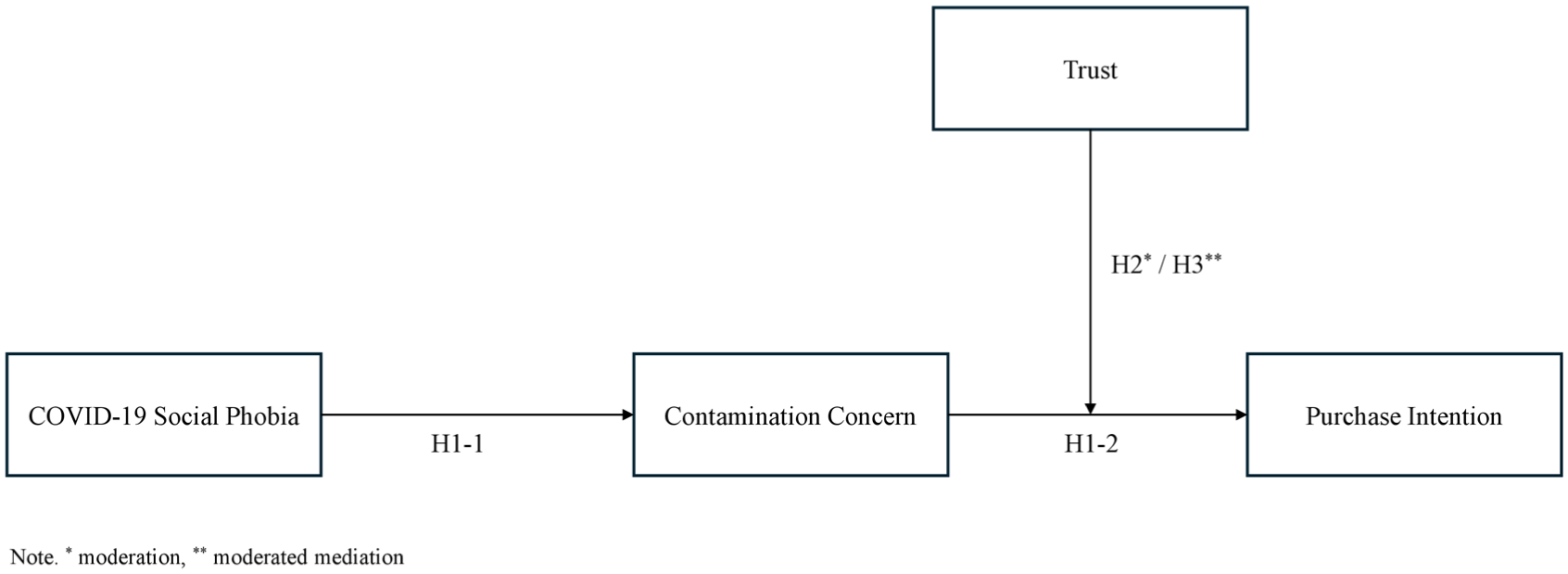
Research model diagram.
Methods
Participants
A total of 283 participants in the United States who exhibited interest in online shopping during the COVID-19 period were recruited through the crowdsourcing platform MTurk via CloudResearch (www.cloudresearch.com; Mage = 38.57, SD 12.53; female = 51.9%, n = 147). The study was classified as exempt from full IRB review due to minimal risk. Prior to beginning the survey, participants were clearly informed about the study’s purpose (online shopping behavior after the COVID-19 pandemic), along with its duration, compensation, anonymity, and voluntary nature. Consent to participate was considered granted upon survey submission.
Procedures
Upon agreeing to participate in the study, participants identified a scenario of purchasing products in a used-goods market under COVID-19 conditions (see Appendix 1). The confirmed scenarios were divided into high and low confidence levels (Nhigh = 139, Nlow = 144). To verify the difference in trust level, trust was measured with three questions, including “Even if not monitored, I’d trust the community of sellers to do the job right” (Gefen, 2000; Mayer et al., 1995). The difference in trust was significant between the two groups (Cronbach’s α = .96; Mhigh = 4.32, Mlow = 3.72, t(281) = 3.44, p < .01). Next, participants answered in the following order: COVID-19 SP, CC, and PI. Finally, vaccination status, gender, and age were answered.
Measures
The questionnaire was developed using items that were validated and applied in previous research (see Appendix 2). Each item was scored by the participants based on a seven-point Likert scale (1, strongly disagree; 7, strongly agree), except the scores for CC, which ranged from 1 (not worried at all) to 7 (very worried).
COVID-19 Social Phobia
COVID-19 social phobia is defined as a persistent fear of social situations due to the perceived risk of infection during the pandemic. COVID-19 SP was measured using three items developed by Arpaci et al. (2020). An example is, “After the coronavirus pandemic, I feel extremely anxious when I see people coughing.” Cronbach’s α was .84.
Contamination Concern
Contamination concern refers to consumers’ discomfort or aversion arising from the perception that shared goods may have been physically tainted by previous users. CC was measured using four items developed by Hazée et al. (2019). An example is, “To what extent would you be concerned about someone else touching the product you were going to use?” Cronbach’s α was .97.
Purchase Intention
Purchase intention refers to a consumer’s deliberate willingness and readiness to engage in transactions. PI was measured using three items developed by Trehan and Sharma (2020). An example is, “Given the chance, I would consider transacting with these communities in the future.” Cronbach’s α was .96.
For the factor analysis, a varimax rotation was conducted to ensure the validity of the measures. Excluding two of the five questions measuring COVID-19 SP, three questions were used in the analysis (Cronbach’s α = .84). As a result, the three measures contributed to 87.70% of the variance (factor loading, 0.58–0.98), and all of the items exhibited acceptable validity.
Analytical Strategies
Descriptive statistics and normality checks were conducted, and common method bias was assessed using Harman’s single-factor test. A moderated mediation model was tested using PROCESS Macro (Model 14; Hayes, 2017) with 5,000 bootstrapped samples. The model examined CC as a mediator between SP and PI, and trust as a moderator on the CC–PI path. Age, gender, and vaccine status were included as controls.
Results
Descriptions and Correlations
The research variables were first tested for normality. All measures of the skewness (−0.335 to 0.854) and kurtosis (−0.996 to 0.225) were below the cutoff for acceptability. Then, the Mahalanobis distance was used to check for multivariate outliers. No participants were removed because of the multivariate outlier results, resulting in a final sample of 283 participants. To determine whether there were any demographic control variables that should be included in the model for testing, the demographic characteristics (i.e., age, gender, vaccine status) of the bivariate correlation variables were examined. Correlations were assessed using the demographic and research variables. Finally, age, gender, and vaccine status were included as control variables in the subsequent analyses.
In correlating, COVID-19 SP and CC showed the expected correlation, but the correlation between CC and PI was not significant. This may be because the relationship was viewed by combining the two results of the scenario according to the level of trust, and a detailed interpretation of the correlation results was confirmed based on regression analysis. Table 1 presents the means, standard deviations, and bivariate correlations determined for the study variables.
Means, Standard Deviation, Correlation, Alpha Reliabilities.

Vaccination status: No = 0, Yes = 1.
Gender: 1 = “male”, 2 = “female”.
Values on the diagonal are Cronbach’s alphas.
p < .05; **p < .01 (two-tailed).
Common Method Bias
Considering that the analysis relied on self-reported data, Harman’s single-factor test was performed to determine whether the results were influenced by common method bias. All measures were examined by employing an exploratory factor analysis, assuming that common method variance, or a majority of the covariance, is attributed to either a single factor or a general factor (Podsakoff et al., 2003). Without rotation, the analysis indicated that a four-factor model may be more appropriate than a single-factor model. The majority of the variance could not be ascribed to a single factor; the most influential factor contributed to only 47.97% of the variance.
Moderated Mediation Model Test
The procedural validation procedure was analyzed as follows: (1) mediation role analysis for
Table 2 presents the results and unstandardized regression coefficients. The first hypothesis stated that COVID-19 SP is positively correlated with CC (
Bootstrapping With Moderated Mediation Model.

Figure 2 illustrates this interaction, showing differences in PI at high and low levels of trust. Overall, used-goods market users reported the highest levels of PI when they also reported high levels of trust. Even when trust was high, PI increased when CC was low, and the direction of PI decreased as CC increased (B = −.21, t = −2.47, p = .01, CI [ −0.37, −0.04]). However, when trust was low, the relationship between CC and PI was not significant (B = .03, t = 0.30, p = .76, CI [−0.14, 0.19]).
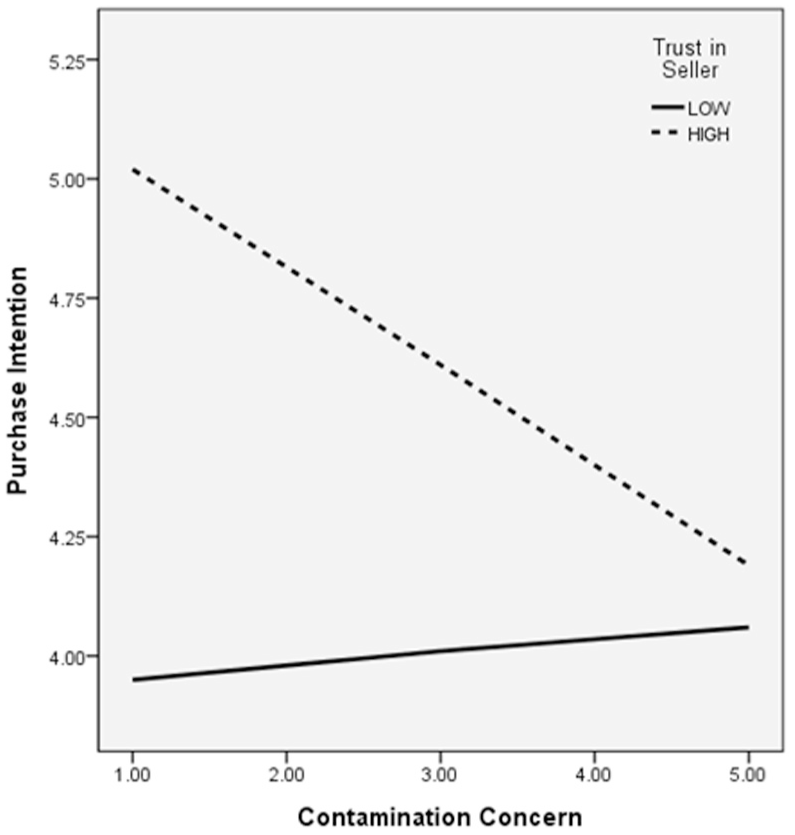
The conditional effect of trust as a moderator.
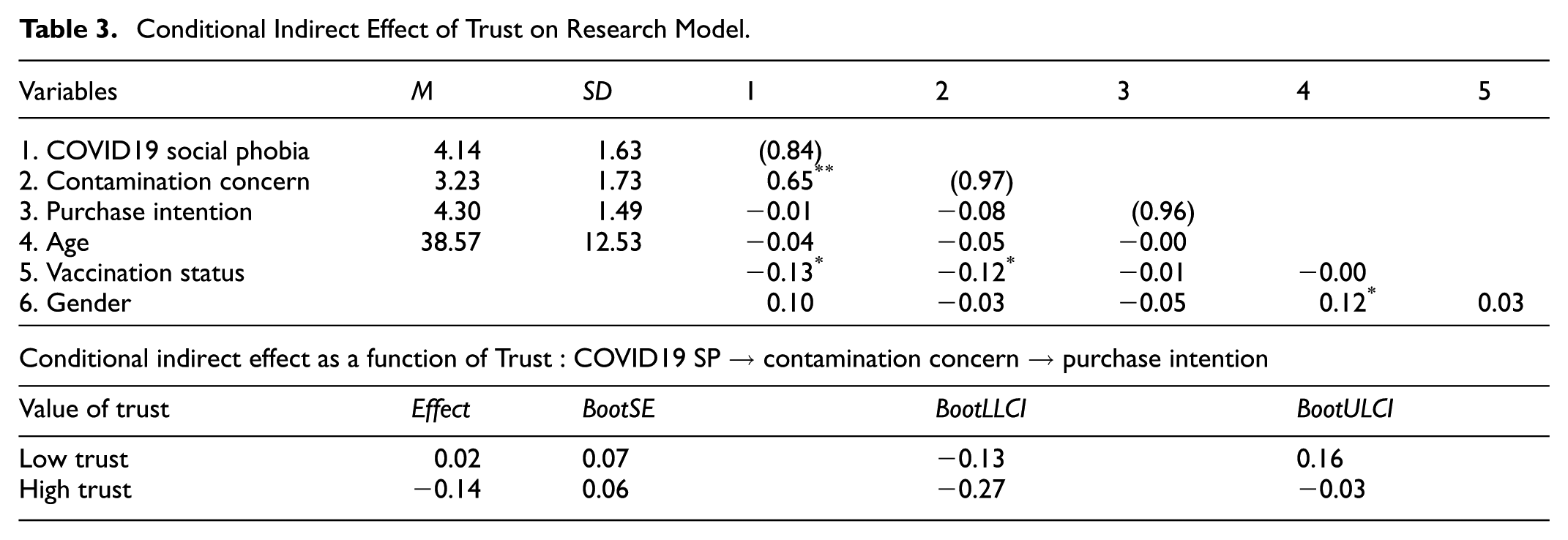
Herein, the mediation of PI was predicted to be affected by COVID-19 SP through CC (
Conditional Indirect Effect of Trust on Research Model.
Discussion
The purpose of this study was to examine how COVID-19 SP and CC influence purchase intention PI in the secondhand market, and whether trust moderates this relationship. The findings showed both consistent and inconsistent results with prior research, as discussed in detail below.
First, it was found that the SP of consumers in the C2C community increased CC during the COVID-19 pandemic. This indicates that fears arising from interpersonal contact may have extended to concerns about the products exchanged in such markets. SP, as previously defined, refers to anxiety that emerges when interpersonal distance is reduced (Mattick & Clarke, 1998). The present findings suggest that COVID-19 intensified this form of anxiety by introducing an added risk of infectious disease, thereby broadening the scope of SP to include CC. This observation is consistent with Yıldırım and Özaslan (2021), who showed that heightened perceptions of COVID-19 severity contributed to increased anxiety levels. Moreover, in the secondhand marketplace, where prior ownership is especially salient, these concerns appear even more pronounced.
Second, the hypothesis that CC reduces online PI was not supported. This outcome differs from prior findings in offline contexts, where CC has been shown to lower purchase likelihood (Argo et al., 2006). A possible explanation is that, unlike offline environments where crowding and physical contact cannot be avoided, online platforms can manage such issues technologically, thereby minimizing direct interpersonal exposure (Blut & Iyer, 2020). As a result, concerns about contact may not directly translate into lower PI in online markets. In addition, the intensity of CC may vary depending on the type of product; for example, a bicycle may elicit weaker concerns than a T-shirt that comes into direct contact with the body. Importantly, the findings also indicate that trust within the community moderates this relationship. Consumers with higher trust appeared more sensitive to CC, which in turn influenced their willingness to purchase, whereas those with lower trust were already skeptical or indifferent, resulting in a weaker effect. This demonstrates that community trust remains an important factor in the link between CC and PI.
Third, the effect of CC on PI varied depending on the level of trust within the community. When trust was high, PI remained higher despite CC. In contrast, when trust was low, the conditional effect was not significant, suggesting that reducing CC alone was insufficient to increase PI. Notably, the conditional effect reached statistical significance only under high trust conditions, emphasizing that community trust served as a critical moderating factor in buffering the negative influence of CC during the COVID-19 crisis. This moderating role of trust parallels the findings of Green and Yıldırım (2022), who demonstrated that personal growth initiative mitigated the negative impact of fear of COVID-19 on life satisfaction, demonstrating the importance of protective resources in shaping psychological and behavioral outcomes.
Fourth, the indirect effect of COVID-19 SP on PI through CC was not significant overall. However, the pattern differed when the analysis considered trust levels. When trust was high, the mediating role of CC became significant, indicating that consumers reflected more strongly on their CC in their purchase decisions under conditions of trust. In contrast, when trust was low, the mediating effect was not significant, suggesting that PI was less responsive to variations in CC. These results emphasize that the mediating pathway from SP to PI operates effectively only when community trust is present, which indicates that trust is a key boundary condition in explaining consumer behavior during the COVID-19 crisis.
Implication, Limitations and Future Research
Implication
The findings suggest several actionable insights for businesses responding to pandemic-driven shifts in consumer behavior, as follows.
First, because the SP caused by COVID-19 affects purchasing behavior, corporate managers must deal with the fact that perceptions of infection and contamination lower sales performance. Specifically, managers must understand individuals’ fears of COVID-19 and use psychometric tools to appropriately respond (Ahorsu et al., 2022). Taking human psychological functions into account and linking them with strategies to relieve contamination fears gradually, as advised by healthcare professionals (S. A. Lee, 2020), may help counteract COVID-19 anxiety. In particular, designing consumer experiences that emphasize a sense of safety can help enhance trust as a way to alleviate fear (Veselovská, 2023). A communication strategy under COVID-19 conditions must differentiate consumer groups that are highly susceptible to COVID-19 phobia. For example, highly sociable extroverts may find it difficult to comply with social distancing, while more disciplined people readily accept prevention measures (Carvalho et al., 2020). Research results suggest that such differences in inclination correlate with CC. In this regard, Arslan et al. (2021) showed that personal meaning can mediate the psychological burden of pandemic suffering, suggesting that fostering meaning and purpose may also support consumer resilience and healthier purchasing behavior.
Second, managers handling products in used-goods markets should consider the impact of COVID-19 SP on CC. In the sharing economy, CC issues have been identified as an obstacle to business expansion (Bardhi & Eckhardt, 2012). As COVID-19 spread, CC became a problem needing prompt resolution. Addressing it in the sharing economy required innovation to overcome consumers’ cognitive obstacles (Martin et al., 2016). Individual differences in attitudes about contamination vary. For example, people’s feelings about the residue remaining on a secondhand product differ. Residue sensitivity refers to perceived contamination from the previous owner (Kapitan & Bhargave, 2013) and has implications for online communities in the sharing economy. Residue sensitivity goes beyond simple touch or aversion; it is directly related to market adaptation of consumers who enter the secondhand or refurbished market. They may feel that the product has been contaminated by previous users (Kapitan & Bhargave, 2013). This perceived contamination also affects sellers’ reputations as an inference of the product’s quality (Ou et al., 2006). In market research, the issue of residue sensitivity is considered in social commerce situations in which human exchanges are central (Kapitan & Bhargave, 2013). To communicate more effectively with consumers, managers in the secondhand market should provide traceability for their products to counteract residue sensitivity.
Third, a community operation plan must be created to increase the level of trust in the community. In consumer-centered C2C secondhand markets, the level of trust may be altered by ingroup–outgroup perceptions. To increase the level of trust in consumer-centered communities, policies that emphasize the similarities of consumers participating in the sharing economy should be considered (Hazée et al., 2019). In particular, to foster consumer trust and encourage recommendation exchange among consumers, a secondhand market platform should be designed based on pandemic subjective norms formed during the pandemic (Singh et al., 2024). Connecting through the internet is a proactive coping strategy that reduces loneliness and social isolation (Moore & March, 2022). Likewise, focusing on online communities can be seen as a desire to make up for the lack of human relationships and social connections. In the context of COVID-19, consumers tend to seek alternatives for safer shopping. Therefore, trust must be secured by establishing online commerce with a high sense of connection to reinforce human relationships within the community. Furthermore, long-term consumer trust in secondhand product platforms can be strengthened by conducting eco-friendly information campaigns in the community targeting consumers who have continued to show interest in environmentally sustainable consumption after the pandemic (Wong et al., 2023). Ultimately, this may increase consumers’ PI even under COVID-19′s influence when ineffective and inadequately filtered information caused confusion (Balog-Way & McComas, 2020). Because pandemic fog occurred due to the rapid evolution of knowledge and mixed messages (Fuller, 2020), consumers’ questions related to trust and their purchase-related behavior took on greater importance.
Limitations
This research model has several limitations. First, it did not fully consider variables for individual differences, such as tendencies to worry and general health anxiety. Overexposure to COVID-19-related media or higher levels of perceived threat (loved ones at risk, low-risk control) may increase fears (Mertens et al., 2020). Conversely, people’s sense of efficacy, which can be enhanced through education, becomes an active coping resource (Olesen et al., 2020) to reduce phobias and, in turn, lower CC. Alongside efficacy, resilience (Yıldırım & Çiçek, 2022) and personal meaning (Arslan et al., 2021) may also serve as protective psychological resources. In this case, the situation may become less distressing (Sica et al., 2021).
Second, due to the nature of the research, consumer metrics may be affected by the proximity, frequency, or severity of infection experienced by test participants (Stevenson et al., 2009) or by the extent of their exposure to sensationalist news or dire warnings about the risks. During the pandemic’s peak, environmental factors may have strongly influenced response levels (Asmundson & Taylor, 2020). For example, measurements taken during the most severe expansion of COVID-19 could have been altered by a temporary increase in contamination sensitivity.
Third, response bias may have occurred because this study used a self-reporting scale. In other words, if it is difficult to fully imagine a situation based on social desirability or the reported scenario, this can affect the validity of the measured data (Tull et al., 2020).
Fourth, this study employed a convenience sampling method available from MTurk via CloudResearch to recruit respondents interested in the survey and research scenarios.
Future Research
In future research, even if nonprobability sampling is used due to practical considerations, referring to existing studies and considering a purposive sampling method that more strictly meets specific criteria (e.g., frequency of use of secondhand transaction platforms) is strongly recommended to increase the validity and generalizability of the study (Suleman et al., 2019).
In addition, sensitivity to or intolerance of uncertainty might be considered variables in individual differences that directly affect CC and lead to compulsive behavior (Samuels et al., 2021). Future research should also diversify the moderating factors of trust. In this study’s scenario, to control trust levels, the seller’s trustworthiness was manipulated by physical proximity to the consumer. In the same context, to examine more precisely how social relationships influence community trust, future research should investigate whether policies such as social distancing and lockdown measures exacerbated social inequality by discriminating against specific social groups (Sibley et al., 2020). Distinguishing between ingroups and outgroups can alter consumers’ sense of belonging, which may, in turn, impact community trust and influence purchasing decisions.
Other aspects of trust that consumers consider when assessing trustworthiness should also be explored. For example, in platform design, B2C-based platforms have been shown to reduce CCs more effectively through hygiene management than do C2C-based platforms (N. L. Kim et al., 2023). This suggests that consumers are more likely to feel greater trust in secondhand trading platforms when hygiene and safety standards are clearly defined. Similarly, governments can increase consumer trust by incentivizing platforms that promote environmental responsibility and implementing measures such as the certification of cleanliness and increased transparency of information (Nuttah et al., 2023). This shows the significant role public policy can play in strengthening trust in the secondhand market.
As sharing economy platforms refine their operational strategies, research has confirmed that the reliability and authenticity of reviews have a significant impact on user trust and decision-making (Meenakshi, 2023). Providing transparent transaction information in the secondhand market may help to assess and differentiate various levels of consumer trust. Such future research will facilitate a more precise evaluation of the impact of diverse trust-moderating factors on consumer purchase decisions in the sharing economy and on secondhand product trading platforms.
Conclusion
This study confirms that COVID-19-induced SP increases consumers’ CC, with CC negatively affecting PI only when trust levels are high, while no significant effect is observed when trust levels are low. Furthermore, trust moderates the relationship between CC and PI, as consumers with high trust are more influenced by CC, leading to lower PI, whereas those with low trust are largely unaffected. These findings contribute to the theoretical understanding of consumer trust in the sharing economy and offer practical insights for used-goods market platforms to enhance trust and mitigate CC. By implementing effective trust-building strategies, businesses can foster a more sustainable sharing economy, even during crises such as the pandemic.
Footnotes
Appendix 1
Appendix 2

|
|
| Even if not monitored, I’d trust the community of sellers to do the job right. |
| I trust the community of sellers. |
| I believe that the community of sellers is trustworthy. |
|
|
| After the coronavirus pandemic, I feel extremely anxious when I see people coughing. |
| After the coronavirus pandemic, I actively avoid people I see sneezing. |
| Following the coronavirus pandemic, I have noticed that I spend extensive periods of time cleaning my hands. |
|
|
| To what extent would you be concerned about someone else touching the product you were going to use? |
| To what extent would you worry about using this product if someone else had touched it? |
| I would be concerned about getting a disease when using this product. |
| Touching this product would be a concern to me. |
|
|
| I am likely to purchase the cell phone from this seller. |
| I am likely to purchase products from this seller in the future. |
| I am likely to recommend this seller to my friends. |

Ethical Considerations
All procedures involving human participants were conducted in accordance with the ethical standards of the institutional and/or national research committee and with the 2013 revision of the Declaration of Helsinki. The study was deemed exempt from full IRB review due to minimal risk.
Consent to Participate
Informed consent was obtained from all participants prior to data collection; consent was implied through the submission of the survey.
Funding
The author received no financial support for the research, authorship, and/or publication of this article.
Declaration of Conflicting Interests
The author declared no potential conflicts of interest with respect to the research, authorship, and/or publication of this article.
Data Availability Statement
The data supporting this study’s findings are available from the corresponding author upon reasonable request.