



Abstract
The Malayan Tapir is classified as endangered globally, with threats in Malaysia including forest loss and fragmentation, human-tapir conflicts, and roadkill incidents. The objectives of this study were to determine the knowledge and attitudes of visitors to ex-situ conservation facilities toward the Malayan Tapir and its conservation in Malaysia, to identify the factors influencing visitors’ willingness to pay (WTP) for tapir conservation, and to estimate the WTP among the visitors for the conservation of the Malayan Tapir. Data was collected through a face-to-face survey questionnaire developed using the Single Bound Contingent Valuation Method (SBCVM). A total of 358 respondents were selected using convenience sampling. The results of logit regression analysis indicated that bid, age, and attitude had significant relationship with WTP. The study found that the mean WTP for Malayan Tapir conservation fee was MYR (Malaysian Ringgit) 8.30/USD 2 per person, applicable once per visit annually. The findings will help the Malayan Tapir Conservation Action Plan committee and policymakers in formulating conservation strategies. A conservation fee could be added to the Sungai Dusun Wildlife Conservation Center.
Introduction
The Malayan tapir (Tapirus indicus) is the largest of the four species of tapirs in the world. It is native to Southeast Asia, with populations covering Southern Myanmar, Thailand, Peninsular Malaysia and Sumatra (Donny et al., 2022). Adult Malayan tapirs are distinctive and can be easily identified by their unique black and white coloration. The survival of the Malayan Tapir population is severely threatened by rapid development across the country, which leads to habitat loss and fragmentation, and changes in land use (Zainal Zahari et al., 2001). These factors have resulted in the displacement of the tapir, increasing their vulnerability to human-wildlife conflicts and roadkill incidents (Department of Wildlife and National Parks Peninsular Malaysia, 2021). Due to its declining population, the Malayan tapir is listed as “Endangered” globally (Traeholt et al., 2014) and is totally protected in Malaysia under the Wildlife Conservation Act 2010 (Magintan et al., 2021).
While various conservation initiatives have been implemented by Department of Wildlife and National Parks (DWNP) Peninsular Malaysia including habitat protection, installation of wildlife crossing signage and localized awareness campaigns several critical gaps remain. First, there is insufficient long-term population monitoring, leading to limited understanding of current distribution trends and ecological needs (Jamhuri et al., 2018). Second, habitat fragmentation caused by agricultural expansion and infrastructure development continues to reduce genetic diversity and disrupt movement corridors (Lechner et al., 2017). Third, conservation efforts remain largely country-specific, with limited cross-border collaboration across the species range. Additionally, ex-situ conservation initiatives, such as coordinated captive breeding programs, are underdeveloped and public awareness about the species’ ecological role remains low. Addressing these gaps is important to enhance conservation effectiveness, restore habitat connectivity, foster regional cooperation and community engagement, ultimately ensuring the species’ long-term survival.
Systematic monitoring can aid in addressing data deficiencies, improving conservation strategies (Jamhuri et al., 2018). Enhancing habitat connectivity will promote gene flow and facilitate species movement, helping restore ecological balance and resilience (Lim et al., 2022). Strengthening cross-border cooperation can harmonize conservation policies and amplify the impact of regional initiatives. Robust ex-situ programs, including coordinated captive breeding and reintroduction plans, serve as a safeguard for maintaining genetic diversity. Equally important, raising public awareness fosters community ownership and active participation in conservation, thereby reducing human-induced threats. Understanding the public’s willingness to pay (WTP) for tapir conservation provides valuable insights into potential funding mechanisms, public engagement levels and policy support, ultimately helping to prioritize and implement the most impactful strategies.
Conserving the Malayan Tapir contributes not only to its survival but also to the preservation of its ecosystem and the ecological roles it performs (O’Farrill et al., 2013). Over the past decade, some funding has been directly or indirectly allocated to conserve the Malayan Tapir in Malaysia. Under the Ecological Fiscal Transfer for Biodiversity Conservation (EFT), USD 46,756,300 (MYR 200 million) has been allocated for 2024, to expand protected areas and conserve threatened wildlife. Although the government allocated funding annually and corporate bodies donate for wildlife conservation, funding is still one of the constraints in implementation of wildlife conservation initiatives, including ex-situ conservation programs (Department of Wildlife and National Parks Peninsular Malaysia, 2021).
Given that public knowledge plays a vital role in the management of wildlife (Ostermann-Miyashita et al., 2022). Knowledge is a crucial factor of individual behavior (Frick et al., 2004) and it influences the valuation of environmental commodities (Jakabsson & Andrew, 1996). Attitudes toward wildlife play a crucial role in predicting support for wildlife conservation (Liordos et al., 2017). Specifically, individuals who hold positive attitudes toward wildlife are more likely to support wildlife conservation efforts (Dhungana et al., 2022; Mukhacheva et al., 2022). Zoos and wildlife conservation centers not only provide a space for people to connect with nature and wildlife, but also as educational tools to raise awareness about the ecosystem (Castillo-Huitrón et al., 2020). These ex-situ facilities play a crucial role in teaching the public about the species and conservation programs aimed at restoring populations that are under threat. People who visit wildlife centers tend to be more environmentally aware and more supportive of conservation initiatives (Arbieu et al., 2020).
Studies on the WTP for wildlife conservation, focusing on mammals, have been extensively conducted (see Appendix). The majority of research has centered on the economic valuation of elephants, with notable studies by Nordin et al. (2023), Kaffashi et al. (2015), Bandara dan Tisdell (2005), and Wang et al. (2018) focusing on the African Elephant. Additionally, tigers have been frequently examined for their economic value, with significant studies by Rusdi et al. (2022) and Bhattarai et al. (2021). Other notable research includes studies on pangolins by Tseng et al. (2021), the Mauritian Flying Fox by Jaunky et al. (2021), the Giant Panda by Shuib et al. (2015), the Ryukyu Flying Fox by Vincenot et al. (2015), and the otter water vole by White et al. (1997). Furthermore, Subroy et al. (2019) identified a significant literature gap, noting that only 109 WTP estimates for threatened species have been derived from 47 stated preference studies across 19 countries up to 2017. Most existing studies either include WTP estimates for both endangered species and habitats or combine values for individual and groups of species, sometimes incorporating human interactions such as hunters and endangered species. Specifically, Single Bound Contingent Valuation Method (CVM) studies on WTP, particularly in Malaysia, have received limited attention. Therefore, there is an urgent need for a study focusing on visitors’ WTP for the conservation of the Malayan Tapir.
This study is expected to provide both theoretical and practical contributions. Theoretically, it advances understanding of how public awareness, attitudes, and WTP shape support for endangered species conservation, adding to the limited literature especially on Malayan Tapir. Practically, it provides insights for policymakers and conservationists by informing education campaigns, resource allocation within frameworks such as the Ecological Fiscal Transfer and identifying funding strategies that engage both public and private sectors. Together, these contributions highlight the importance of integrating ecological and social dimensions in strengthening Malayan Tapir conservation. The specific objectives of this study were to: (a) determine the knowledge and attitudes of visitors toward the Malayan Tapir and its conservation in Malaysia, (b) identify the factors influencing visitors’ WTP for tapir conservation (c) estimate the WTP among wildlife center visitors in Selangor for the conservation of the Malayan Tapir.
The hypotheses of this study are as follows:
Hypothesis (H1): The mean level of visitor’s knowledge and attitude is high
Hypothesis (H2): Knowledge, attitudes, and socio-demographic variables have significant relationship with WTP for Malayan Tapir conservation
Hypothesis (H3): Visitors are willing to pay a positive amount for Malayan Tapir conservation
Material and Methods
Study Area
This study was conducted at two ex-situ conservation facilities located in the state of Selangor, Peninsular Malaysia: Zoo Negara (the national zoo of Malaysia) and the Sungai Dusun Wildlife Conservation Center (SWDCC) (Figure 1). These facilities were chosen for their involvement in Malayan Tapir conservation efforts. Zoo Negara conducts the “Adopt an Animal” program and communication, education and public awareness (CEPA) programs that specifically focus on the Malayan Tapir. Meanwhile, the SDWCC conducts both in-situ and ex-situ conservation programs, including rehabilitation, breeding, rescue, translocation, and release initiatives aimed at protecting the Malayan Tapir population (Department of Wildlife and National Parks Peninsular Malaysia, 2021).
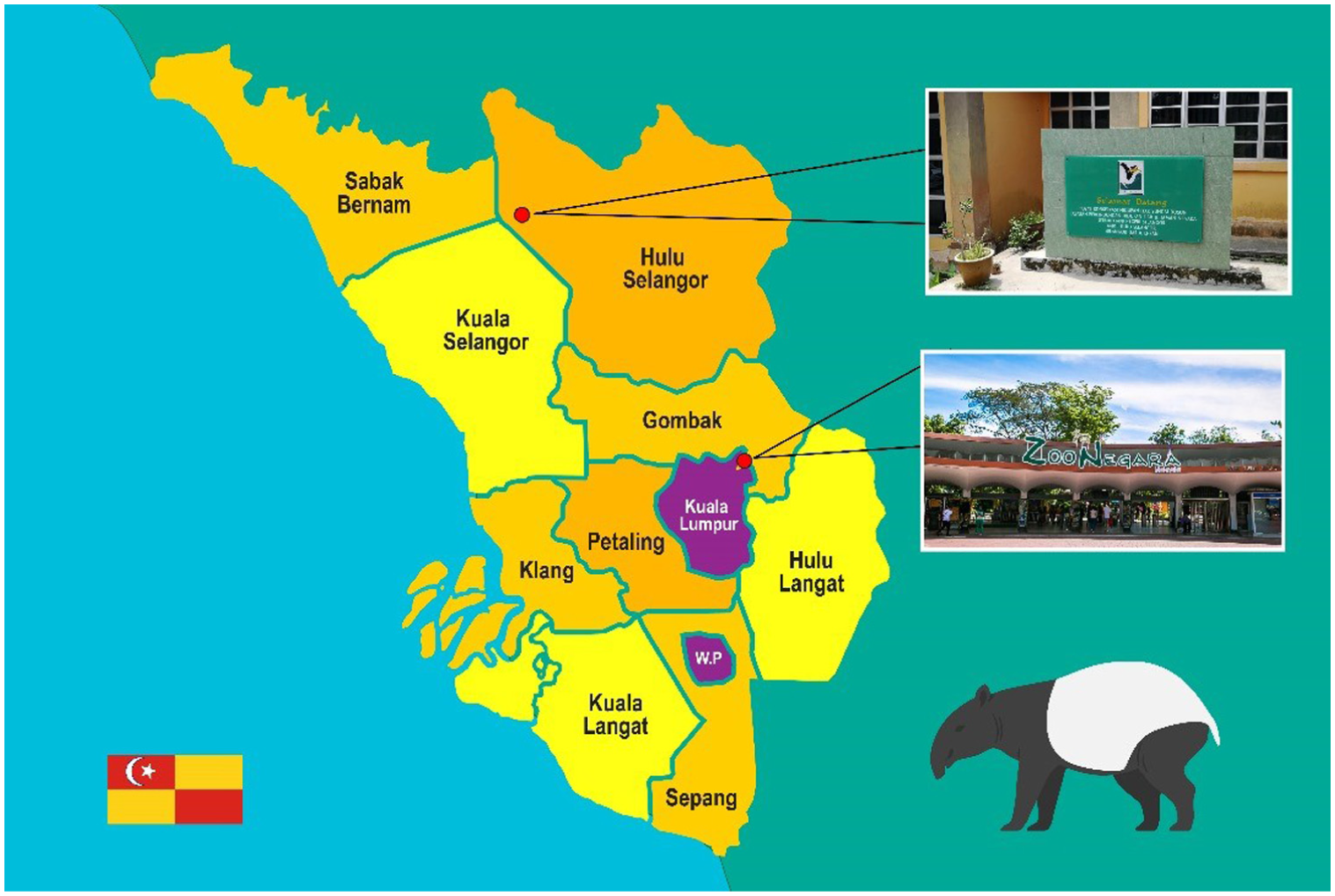
Location of Zoo Negara and Sungai Dusun Wildlife Center in Selangor, Malaysia (Sources: Adapted from Maps of World 2024).
Zoo Negara is located in Ulu Klang, Kuala Lumpur (3°12’35"N 101°45’28"E) and five kilometers from the city of Kuala Lumpur. It was established in November 1963 and is currently home to five (5) Malayan Tapirs. The SDWCC is located within the Sungai Dusun Forest Reserve (SDFR), approximately 120 km north of Kuala Lumpur (3.4075° N, 101.2382° E) (Figure 1). Established in 1964, it is managed by the DWNP. The center is open to the public only during CEPA programs to minimize human-tapir interactions, thereby reducing disturbances once tapirs are reintroduced into the wild. There are no entrance or conservation fees for visitors.
Contingent Valuation Method
The Single Bound Contingent Valuation Method (CVM) was employed to estimate the WTP for Malayan Tapir conservation. CVM is the most prevalent and reliable approach for assessing non-use values, particularly the value of public goods (Mitchell & Carson, 1989). CVM seeks to gather information on individual preferences, demands, or WTP for hypothetical scenarios (Bateman & Langford, 1997). Given that the estimation of the economic value for the Malayan Tapir and other critically endangered species is still in its early stages, especially in Malaysia, the well-established CVM framework was therefore utilized (Ha & Triana, 2020).
The Single Bound CVM was chosen as it is less complicated and easier to understand. Moreover, the Single Bound CVM can minimize potential biases that could be present in the study due to the offered bid value. In comparison, the Double Bound CVM requires more non-payment items and open-ended questions in the second part, while the Single Bound CVM is only conducted in the first part after a hypothetical scenario is given (Jaunky et al., 2021). The conceptual framework is presented in Figure 2.
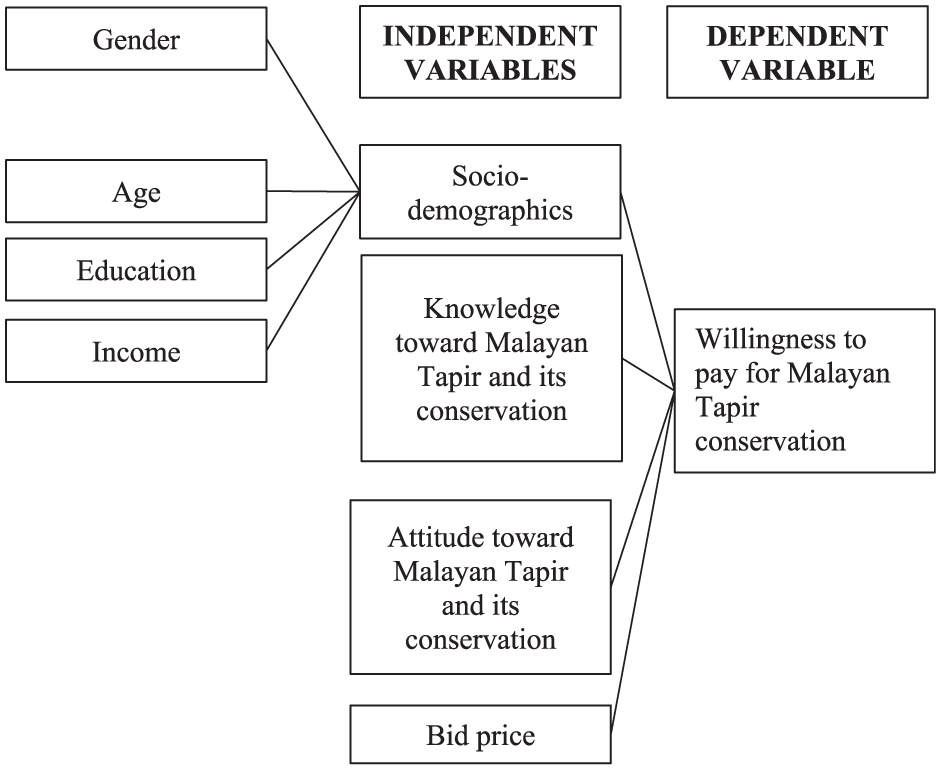
The conceptual framework.
Model Specification
In this study, the Logit Regression Method was employed to examine the relationship between visitors’ knowledge, their attitudes toward Malayan Tapir conservation efforts, and their WTP. The logit regression analysis was performed using Stata 15 statistical software. From the literature, this model is useful when the response variable represents a choice between two categories (dichotomous choice), such as willingness (Yes = 1) or unwillingness (No = 0) to pay for Malaysia tapir conservation efforts (see Table 1). The model estimated the probability that a visitor would be willing to pay as a function of various explanatory variables, as follows:

Variables Used in the Analysis are Listed Below.

Sampling Design
In this study, unknown sampling formula was adopted to determine the sample size, as there was no primary data on the number of local visitors annually at Zoo Negara and SDWCC. According to Israel (1992), a sample size of 200 to 500 is recommended for conducting regression and descriptive analysis. Convenience sampling was employed to target respondents who were easier to reach.
Israel (1992) suggests that a 95% confidence level, a standard deviation of 0.5, and a margin of error of ±5% were considered appropriate. The parameters used to determine sample size are as outlined below:

Where,
n0 = Estimated sample size
z2 = The selected critical value of the desired level of confidence or risk
p = The estimated proportion of an attribute present in the population or maximum variability of the population
e = Desired level of precision or margin of error
The desired values were inserted into the formula as follows:

Based on the calculation, the sample size for this study was about 385 visitors from the infinite number of population size. However, the study was unable to achieve the target sample size and managed to gather data from only 379 respondents. Although this number fell short of the initially calculated sample size, according to Israel’s (1992) recommendations, 379 respondents are still sufficient for analysis.
Reliability and Validity
Before data collection, the questionnaire was validated by three experts from the fields of environmental and social sciences. The questionnaire was designed by including a rating scale ranging from 1 (Not relevant) to 4 (Very relevant) and a comment section. Several amendments were made to items in the sections on knowledge, attitude, and WTP to make the items understandable for the respondents. While this process ensured the questionnaire validation, a key limitation of the study reliance on only three experts. Although Lynn (1986) suggested three experts may be sufficient, recent studies recommend involving at least more than five experts to enhance reliability and reduce potential bias in the questionnaire validation process (Almanasreh et al., 2019; Rodrigues et al. 2017). Therefore, future research should consider incorporating a larger panel of experts to enhance overall validity.
To determine the bid value and assess the reliability of the questionnaire, a pilot study was performed with a smaller sample of 32 respondents. This pilot study was carried out at Zoo Negara on 11th and 12th May 2024. The survey was conducted face-to-face using printed copies. The reliability index focused on Section C, which included Likert scale items. The value from the reliability test Cronbach’s alpha reliability test was .823. The preferred Cronbach’s alpha value should be above .8 (Pallant, 2020). Therefore, the reliability of Section C was deemed good and acceptable.
Questionnaire Design
This study was conducted in person using hard-copy questionnaires, and targeted working adults aged 18 years and above. The questionnaire has four sections (see Table 2). The bid amounts were (MYR 2, MYR 5, MYR 7, MYR 10, and MYR 15) were determined based on the results of the pilot survey. Additionally, if they agreed to pay, they were given a list of options to select where they would like to channel their contribution. For respondents unwilling to pay for Tapir conservation efforts, a follow-up question was asked to understand their reasons, with multiple options provided for them to choose.
The Sections of Survey Questionnaires.

The items for visitors knowledge adapted from Lim et al. (2022), Department of Wildlife and National Parks Peninsular Malaysia (2021), Magintan et al. (2021) and Donny et al. (2022). Visitors attitude toward supporting conservation initiatives items were adapted from Nordin et al. (2023) and Li and Matthew (2021), with modifications to fit the Malayan Tapir context.
The questionnaire was divided into four sections as in Table 2:
A scenario was developed (see Table 3) for Section D (Single Bound CVM) as follows:
A Sample of Section D of the Questionnaire.

The questions were designed to assess respondents’ knowledge of the Malayan Tapir and their understanding of current tapir conservation efforts, in order to accurately estimate their WTP. Data collection at Zoo Negara was conducted during weekends and public holidays, while at the SDWCC, it took place during the CEPA programs from May to June 2024.
Ethics and Informed Consent Statement
This study was conducted in accordance with the ethical principles outlined in the APA Ethical Principles of Psychologists and Code of Conduct (Section 8.05). All participants voluntarily completed an anonymous questionnaire after being informed of the study’s purpose, confidentiality of responses, and their right to withdraw at any time. Informed consent was implied through completion of the questionnaire.
Data Analysis
The data obtained from the survey questionnaire were analyzed using descriptive statistical methods, including frequency, mean, mode, and score levels, with IBM SPSS Statistics version 29. A logit regression analysis was conducted to identify the variables influencing WTP and to determine the WTP value using STATA software version 15.
Results and Discussion
Descriptive Statistics Results
Socio-demographic
A total of 379 questionnaires were distributed among the visitors at both wildlife centers, and all were returned on the same day. After filtering out incomplete and incorrectly answered questionnaires based on the screening question, 358 valid responses were retained for analysis, resulting in an effective response rate of 94.46%.
The results of the survey showed that there were 167 (46.6%) male respondents and 191 (53.4%) female respondents. Table 4 displays the socio-demographic characteristics of the visitors who participated in the survey. The age distribution of the respondents was divided into five groups. Based on Table 4, 131 (36.6%) respondents were aged between 20 and 29 years, and 130 (36.3%) respondents were aged between 30 and 39 years. These groups of respondents were parents with younger children, who preferred to bring their children to the wildlife center to entertain them (Shackley, 1996; Young, 2016). Slightly more than half of the respondents were married, and 151 (42.1%) were single. The marital status of the respondents was consistent with Shackley’s (1996) finding.
Socio-demographics of the Respondents (n = 358).

Regarding education levels, 44 (12.3%) of respondents had completed their education below secondary school. Additionally, 80 (22.3%) respondents had completed either A-levels, a Diploma, or matriculation. The majority of respondents were found to be highly educated, with 188 (52.0%) holding a bachelor’s degree, 39 (10.9%) holding a master’s degree, and 7 (2.0%) having a doctorate. A study conducted by Kiplagat et al. (2022) showed that 68.3% of the green space visitors had tertiary education. Furthermore, the respondents in this study were primarily working adults. The data indicated that 200 (55.8%) were employed in the private sector, 77 (21.5%) were government employees and 37 (10.3%) were self-employed. Regarding monthly income, 98 (27.4%) respondents reported an income ranging from RM 2000 to RM 3500, followed by 97 (27.1%) respondents with an income ranging from RM 3500 to RM 5000. Additionally, 49 (13.7%) respondents each fell into the categories of RM 5001 to RM 6500 and more than RM 6500. Finally, 65 (18.2%) of respondents, earned below RM 2000.
The majority of visitors surveyed were from Selangor (n = 231, 64.5%) and Kuala Lumpur (n = 45,12.6%). The survey was administered on weekends and public holidays, resulting in a smaller proportion of respondents from other states: Johor (n = 23, 6.4%), Perak (n = 16, 4.5%), Terengganu (n = 12, 3.4% ), Negeri Sembilan (n = 9, 2.5%), and Malacca (n = 8, 2.2%). Additionally, Kedah, Pahang, and Kelantan each contributed (n = 4, 1.1%) of the respondents. There was also one respondent each from Penang and Sarawak. The number of respondents who visited Zoo Negara was higher (n = 232, 64.8%) compared to those who visited the SDWCC (n = 126, 35.2%,). This discrepancy can be attributed to the fact that the SDWCC is generally closed to the public for general visits, as it only accepts visitors during CEPA programs.
Knowledge of the Malayan Tapir
The findings indicate that 90.2% of respondents knew that four species of tapirs exist worldwide (Table 5). These species include the Malayan Tapir in Asia, Baird’s Tapir (Tapirus bairdii) in Central America, and the Lowland Tapir (Tapirus terrestris) and Mountain Tapir (Tapirus pinchaque) that inhabit various regions of South America (Brooks et al., 1997).
Respondents’ Knowledge of the Malayan Tapir.
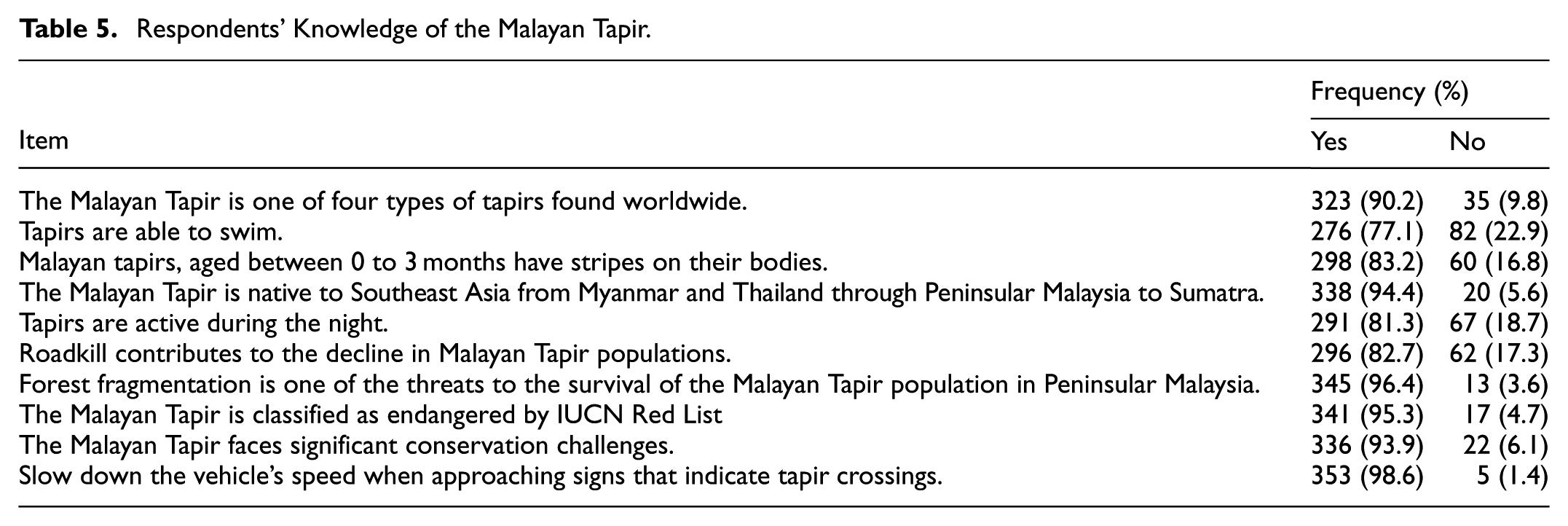
The majority of the respondents (96.4%) stated that forest fragmentation poses a major threat to the survival of the Malayan Tapir population in Peninsular Malaysia. The Malayan Tapir is at an elevated risk of population decline and potential extinction due to severe habitat loss and fragmentation (Magintan et al., 2012; Department of Wildlife and National Parks Peninsular Malaysia, 2021). Forest fragmentation and habitat loss pose significant threats not only to tapirs, but also to other wildlife species such as tigers. This study’s findings align with those of Rusdi et al. (2022) and Ten et al. (2021), who identified habitat loss as a threat to the Malayan Tiger. This study’s respondents as well as those from Rusdi et al. (2022) demonstrated a similar level of knowledge, with a score of 96%.
Additionally, 93.9% of respondents knew that Malayan Tapirs face substantial conservation challenges, and 95.3% understand that they are classified as endangered by the International Union for Conservation of Nature (IUCN). This aligns with a notable decline exceeding 50% of tapir population over the last 36 years (Department of Wildlife and National Parks Peninsular Malaysia, 2021). These findings indicate a strong knowledge level among respondents regarding the conservation status of the Malayan Tapir. However, the respondents exhibited comparatively lower knowledge of specific characteristics and behaviors of the Malayan Tapir. Notably, only 77.1% of respondents were aware that tapirs are capable swimmers, and 81.3% recognized that the species is primarily nocturnal.
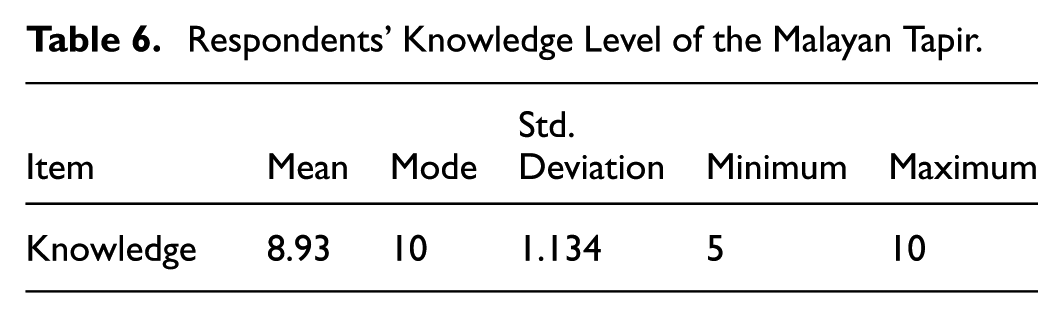
Referring to Table 6, which showed the respondents’ knowledge level of the Malayan Tapir, it is evident that the respondents possessed a high level of knowledge about the species, as indicated by the mean score of 8.93 out of 10.
Respondents’ Knowledge Level of the Malayan Tapir.
Attitude Toward Malayan Tapir Conservation Efforts
The respondents’ response to the attitude section is summarized in Table 7. The results indicate that the highest mean score, 4.65, was associated with supporting government efforts to establish a Tapir Conservation Center for the rehabilitation of tapirs. The studies by Nordin et al. (2023) and Kaffashi et al. (2015) support the establishment of conservation centers for protecting wildlife and preventing extinction. Conversely, the lowest mean score was 3.89 for reading news related to Malayan Tapir, followed closely by a mean score of 3.97 for willingness to donate to Malayan Tapir conservation efforts. Notably, the item “Protecting the species is important to me” received a relatively high mean score of 4.34. In addition, regarding participation in the awareness program, only 33.8% strongly agreed and 38.5% agreed with this item. However, Nordin et al. (2023) reported contrasting results, with 75% of respondents strongly agreeing and 25% agreeing to participate in such programs. Wang et al. (2020) highlighted the importance of public participation in wildlife conservation and awareness programs for protecting wildlife. The respondents indicated with a score of 4.61 that the designation of forests where Malayan Tapirs are sighted as totally protected areas is an effective strategy for ensuring the maintenance and conservation of Malayan Tapir populations. Additionally, the majority of respondents exhibited a Level 3 positive attitude, which indicates that a significant proportion of respondents were neutral or expressed agreement and strong agreement toward the 10 items.
Attitude Toward Malayan Tapir Conservation Efforts.
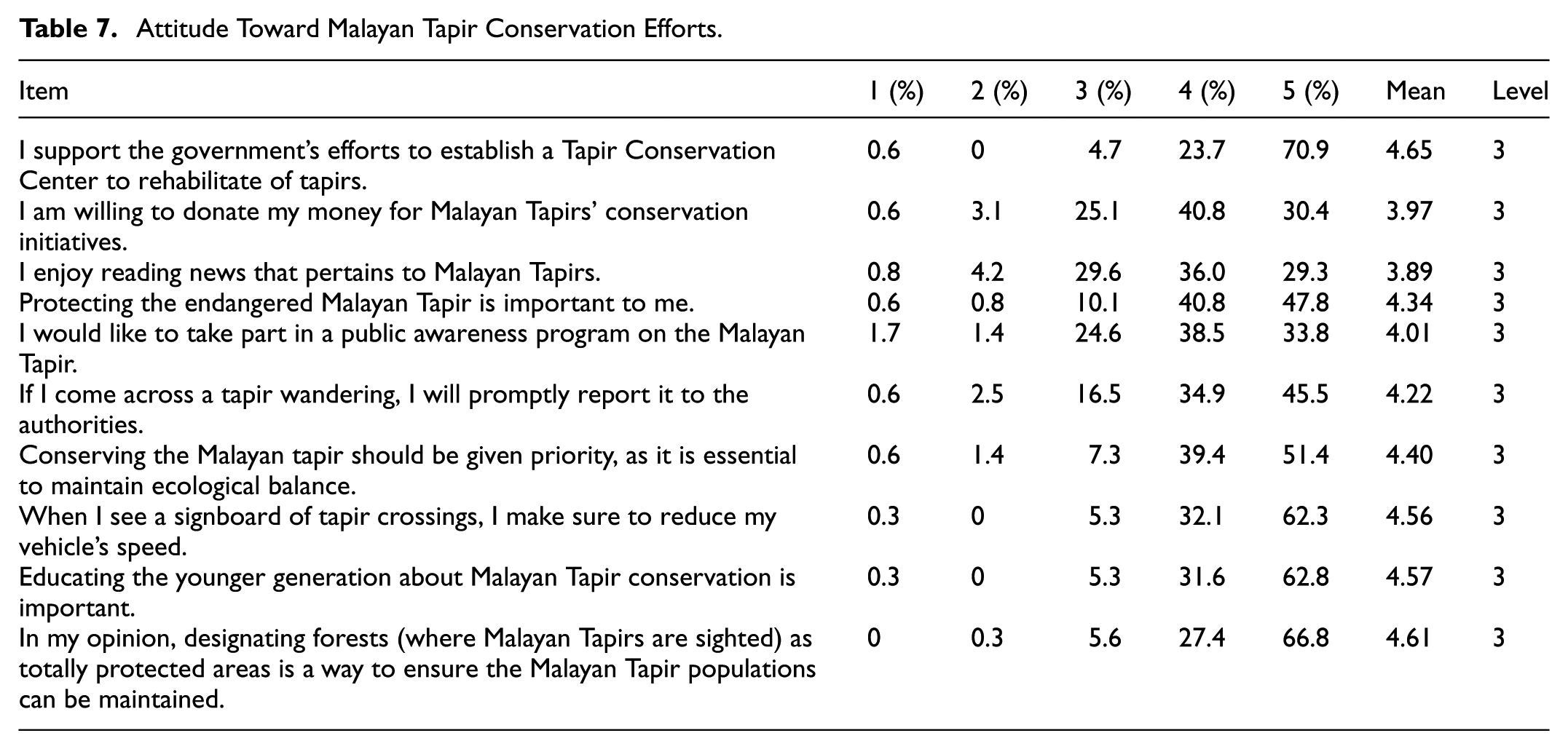
In a 5-point Likert scale, the calculation of statistical categories is determined by the formula: (Highest value – lowest value)/Number of categories, resulting in (5–1)/4 = 1.333. Consequently, the level is delineated as follows: Low (1) = 1.00–2.33, Medium (2) = 2.34–3.67, and High (3) = 3.68–5.00.
Analysis of the Factors That Influence Wildlife Center Visitors’ Willingness to Pay
Visitors’ Willingness to Pay
Figure 3 presents the distribution of responses to the valuation question in Section D, indicating respondents’ WTP for Malayan Tapir conservation efforts at varying bid levels, ranging from RM 2 to RM 15 per visit to the wildlife center. Specifically, 19.83% (n = 71) of respondents agreed to the RM2 bid, 20.39% (n = 73) to the RM5 bid, 18.99% (n = 68) to the RM7 bid, 19.83% (n = 71) to the RM10 bid, and 20.95% (n = 75) to the RM15 bid. The distribution shows a relatively uniform pattern across bid values, suggesting minimal variation in the number of respondents per bid value. However, it is notable that the frequency of WTP responses does not uniformly increase with higher bid amounts. Contrary to the findings of Stanley (2005), this study indicated that responses to WTP are uniformly distributed across bid values rather than declining as bid values increase.

Visitors’ frequency distribution for willingness to pay.
As shown in Figure 3, 55 respondents indicated their unwillingness to pay for Malayan Tapirs conservation efforts. The survey questionnaire also included a question on the potential reasons, and the results are presented in Figure 4. Based on this, 34.55% of the respondents stated financial constraints as the primary reason for their unwillingness to pay, 27.27% expressed doubts about the effective use of funds, while 14.55% felt that additional government funding was not required. Similarly, 14.55% believed that non-governmental organizations did not require additional funds for Malayan Tapir conservation efforts. A smaller percentage (7.27%) stated that supporting Malayan Tapir conservation was not their responsibility.

Reasons for unwillingness to pay for Malayan Tapir conservation efforts.
Factors that Influence the Visitor’s Willingness to Pay for Malayan Tapir Conservation
This study estimated the variables that influence respondents to decide for WTP for Malayan Tapir conservation. The results of the logit regression for visitor’s WTP were presented in Table 8. The explanatory variables used in the model included age Bid (p = .024) (age (p = .030) and attitude (p = .000), were significant at both 5% and 1% level in influencing WTP. The Pseudo R2 value of .0906 is significant (Prob > χ2 = .0005), indicating that the seven explanatory variables account for 9.06% of the variation in the dependent variable. Compared to Ha and Triana’s (2020) study, which had a Pseudo R2 of 45.98% (0.4598), this study’s R2 is lower. However, according to Sulistiyono et al. (2023), an R2 value between 0 and 1 is acceptable for representing the model.
Logit Regression Analysis.

, **, and *** show statistically significant at 10%, 5%, and 1%, respectively.
This study shows that respondents demonstrated a reasonable level of knowledge and positive attitudes toward Malayan tapir conservation based on descriptive statistics. However, logit regression analysis showed that knowledge was not a significant factor of WTP (p = .852), suggesting that knowledge alone does not necessarily translate into financial support. The respondents’ attitudes are statistically significant at the 1% level, reflecting a very strong positive attitude toward Malayan Tapir conservation. This showed that respondents with a more positive attitude are more likely to support conservation efforts of Malayan Tapir. There were several studies that revealed that individuals who hold positive attitudes toward wildlife including brown bear (Liordos et al., 2017), leopard (Dhungana et al., 2022) and tiger (Mukhacheva et al., 2022) exhibited good support and a WTP for the species conservation. Visitors to the wildlife centers, who are generally nature enthusiasts, demonstrate a commitment to preserving the species. This is evidenced by their WTP for conservation, supporting the overall objective of the study. Numerous studies support the conclusion that respondents’ attitude levels are positively correlated with their willingness to contribute to species conservation (Palanca-Tan, 2020; Shuib et al., 2015).
Estimation of WTP
The estimation of visitor’s WTP for tapir conservation follows equation (3) by Cameron (1988).

where β0 = estimated constant; βi = coefficient for the respondent’s socio-economic status; and β1 = coefficient for the offered bids. Thus, the value for mean WTP is estimated using the above equation. MYR8.30 per person/per visit for logit model of this study.
The bid values presented in the survey (MYR 2, MYR 5, MYR 7, MYR 10, and MYR 15) were the specific amounts that respondents were directly asked about, with answers recorded as “willing” or “not willing” to pay. These raw values capture respondents’ immediate choices at each bid level. In contrast, the estimated mean WTP of MYR 8.30 (USD 2) was not taken directly from these bid amounts and respondents’ socio-economic status. It was derived using the single-bounded contingent valuation method, in which a logit regression was applied to model the probability of a “yes” response across all bid levels. This approach generates a statistically reliable mean WTP by accounting for variation in responses and thus provides a more robust measure for informing conservation policy.
Several studies have been conducted to estimate the WTP for wildlife conservation in Malaysia. These studies captured widespread interest among people regarding natural resources, both for their direct use and their indirect value. It highlighted varying levels of WTP for wildlife conservation among respondents, leading to diverse findings (see Table 9). These findings also shed light on public knowledge and attitudes toward conservation efforts.
Differences of WTP for wildlife species conservation in Malaysia.

Referring to Table 9, this study showed lower WTP for the Malayan Tapir compared to the Malayan Tiger, but higher than that for the Asian Elephant. The WTP value of USD 2 per visit for the Malayan Tapir is modest when compared with other species in Malaysia. The Giant Panda recorded the highest WTP at USD 8.90 per visit (Shuib et al., 2015), reflecting its strong cultural symbolism and international visibility, while the Malayan Tiger showed USD 2.43 per year (Rusdi et al., 2022), benefiting from its status as a national icon. The Asian Elephant, with values ranging from USD 1.10–1.70 per visit and RM 4.65–7.09 depending on season (Nordin et al., 2023) showed how socio-demographic variables, together with positive attitudes and perceptions toward conservation, significantly increase WTP, reflecting awareness of its ecological. In contrast, the tapir, though ecologically important, lacks similar cultural and emotional resonance, which may explain its lower valuation. This highlights the need for more effective conservation communication and public engagement strategies to raise awareness and strengthen support for Malayan Tapir conservation.
Study Limitations
This study using CVM relied on responses from visitors to the Malayan Tapir Conservation Center and focused primarily on local visitors. One limitation is the potential sampling bias toward individuals who may possess a higher-than-average interest in wildlife conservation. Such conservation minded individuals may lead to an overestimation of WTP compared to the general public. The second limitation is WTP estimates are based on self-reported responses from a CVM which is inherently subjective and subject to hypothetical bias as what respondents say they are willing to pay may not fully align with their actual behavior. Third, the reliance on convenience sampling limits the representativeness of the results, as it does not ensure that all segments of the population have an equal chance of being included. In addition, this study did not incorporate interaction effects between explanatory variables, such as age, education and income which may jointly influence WTP. Future studies should use more robust sampling, include the general public, apply mixed methods and explore interaction effects to better understand how demographic and perceptual factors shape conservation support.
Conclusion
This study revealed that the respondents provided positive feedback toward the conservation of the Malayan Tapir. They demonstrated positive attitudes toward the species and its conservation initiatives. The findings further showed that attitude and age were significant factors influencing the WTP for Malayan Tapir conservation. The finding indicated that Malaysian highly value Malayan Tapir and its conservation, which is important for developing effective conservation management strategies.
Malayan Tapirs in Southeast Asia are increasingly threatened by deforestation, agriculture and urban expansion, which have caused extensive habitat loss and fragmentation (Jamhuri et al., 2018). The species is largely confined to small, isolated habitat patches (Jamhuri et al., 2020). In Peninsular Malaysia, these habitats include selectively logged forests and peat swamp forests (Jamhuri et al., 2018), whereas in Selangor, tapirs are restricted to highly fragmented urban forest remnants. Forest fragmentation not only limits habitat but also increases mortality risks. According to Magintan et al., (2021), between 2006 and 2019, 115 tapir roadkill incidents were documented in Peninsular Malaysia. In addition, human-tapir conflicts and roadkill cases showing an upward trend from 2011 to 2021 (Lim et al., 2022). Tapirs living near fragmented landscapes, particularly those bordering palm oil plantations, experience higher roadkill rates compared to populations in larger, continuous forests (Jamhuri et al., 2020). These findings highlight the species’ vulnerability in fragmented habitats and emphasize the urgent need to enhance habitat connectivity to secure the long-term survival of the Malayan Tapir.
Various wildlife management actions such as translocation, rehabilitation, release, wildlife crossing structures, tapir crossing signage, wildlife deterrent fencing and replanting tapir food plants have been implemented (Lim et al., 2022). DWNP has identified 94 tapir crossing hotspots across Malaysia, yet fewer than half are currently marked with Tapir Crossing Signage (TCS). Increasing the number of TCS at these sites is a key measure to heighten motorists’ awareness and mitigate roadkill incidents involving tapirs. In partnership with the Malaysian Palm Oil Group (MPOG), DWNP has installed an additional 310 TCS units at hotspots considered high-risk for wildlife–vehicle collisions (Lim et al., 2022). This initiative forms part of DWNP’s broader tapir conservation strategy, which integrates roadkill prevention with habitat connectivity enhancement to support the long-term survival of the species in increasingly fragmented landscapes. In this study, the WTP estimation is USD2 (MYR 8.30) per person per visit. Imposing conservation fee is important for the in-situ and ex-situ conservation initiatives, as well as CEPA programs and research on Malayan Tapir (Lim et al., 2022).
Furthermore, public engagement in tapir conservation can be enhanced through proactive initiatives by DWNP and Zoo Negara. By increasing awareness and understanding of tapir conservation and its importance, public participation and support for related activities are likely to improve. Our study showed that individuals with a positive attitude toward tapir conservation are more inclined to take part in conservation initiatives. To encourage this, DWNP and Zoo Negara could implement targeted campaigns through multiple platforms, including social media, exhibitions, public talks and CEPA programs, to inform and motivate the public to join conservation efforts. In addition, integrating wildlife conservation topics into the formal education curriculum at both primary and secondary levels can expose younger generations to these issues earlier, fostering awareness from an early age. Over time, such educational reforms can strengthen public understanding of tapir conservation and potentially increase willingness to financially support conservation initiative.
In conclusion, this study highlights the key role of public engagement in supporting wildlife protection, particularly the Malayan Tapir, even if it is through an ex-situ conservation approach. Our findings on public knowledge and attitudes toward Malayan tapir conservation can guide DWNP, Zoo Negara and NGOs in designing educational programs for public. In addition, the key findings on factors that influence visitors WTP for conservation initiative can assist in determining appropriate conservation fee for zoos in this region. Encouraging public participation and providing correct information are essential steps toward fostering awareness, support, and coexistence between humans and the Malayan Tapir.
Footnotes
Appendix
Summary of Existing Literature on WTP for Wildlife.

| Researcher | Country | Animal | Method of study | Factors | WTP (per animal) | Remarks |
|---|---|---|---|---|---|---|
| Nordin et al. (2023) | Malaysia | Elephant | CVM (Open-Ended) |
Gender, Age, Education, Occupation, Income, Attitude, Perception | Non-peak season 1.09 USD /person/visit Peak season 1.66 USD person/visit |
Respondents indicated their maximum WTP providing a direct measure of support for elephant conservation. |
| Rusdi et al. (2022) | Malaysia | Tiger | CVM (Payment Card) |
Gender, Age, Educational level, Income, level of knowledge, perception | 1.17 USD – 2.40 USD per person per year | Respondents selected their WTP from a card listing monetary amounts and providing a range-based estimate of support for tiger conservation in Terengganu. |
| Tseng et al. (2021) | Taiwan | Pangolin | CVM (Bidding Value) |
Knowledge, Conservation Preferences, Gender, Age, Education level, Occupation, Childhood Residence, and Income | 8.06 USD for pangolin-friendly rice, 11.46 USD for pangolin-friendly tea and 25.81 USD for pangolin-friendly coffee | Respondent was shown one specific bid price for a pangolin-friendly product (rice, tea, or coffee) and asked “Yes” or “No” if they would pay that amount. |
| Bhattarai et al. (2021) | Nepal | Tiger | CVM (Bidding Value) |
Age, Gender, Household size, Income, Participation in package tour, International travel cost, Environmental affiliation | 59.05 USD per visit | Respondents were each given with one specific bid amount and asked a Yes/No question about their willingness to pay for tiger conservation |
| Jaunky et al. (2021) | Mauritius | Mauritian flying fox | CVM (Double-Hurdle Model) |
Age, Gender, Education level, Residential area, Monthly income level, marital status, NEP scale, Perceived ability to contribute (reverse), Knowledge, Aesthetic and Negativistic attributes | 0.79 USD | Assessing respondents’ willingness to contribute to a Mauritian flying fox conservation fund (yes/no) and subsequently modeling the contribution amount among those willing to pay. |
| Wang et al. (2018) | China | African elephant | CVM (Open-Ended & payment card, Single-Bounded Dichotomous Choice) | Gender, Age, Occupation, Collection, Education, Income, Household, Payment vehicle, Ivory trade, Region | 12.59 USD and 23.88 USDper year per household | Conducted an online survey distributed to netizens using four different questionnaire versions to cover the open-ended, payment card, and single-bounded dichotomous choice formats. |
| Kaffashi et al. (2015) | Malaysia | Elephant | CVM (Double Bounded) |
Perception, Satisfaction, Gender, Age, Citizenship, Education level, Marital status, Employment, Average annual visit, Group tours visit. | Domestic visitors = 1.20 USD and International visitors = USD 2.40 | Respondents were presented with an initial entrance fee bid, followed by a higher bid if accepted or a lower bid if declined. |
| Shuib et al. (2015) | Malaysia | Giant Panda | CVM (Single – Bounded) |
Age, Gender, Education, Income, Occupation, repeat visit, perception, frequency of visit | USD 8.77 per person per visit | Respondent is presented with one specific bid amount (e.g., “Would you pay RM 30 to support panda conservation?”) and asked to answer “Yes” or “No |
| Vincenot et al. (2015) | Japan | Ryukyu flying fox | CVM (Double-Bounded, Linear bids |
Gender, Age, Experience, Income, Household size, Awareness, Opinion conservation measures, Opinion crop protection measure | USD 2.03 per household per year | Respondents provided with an initial bid, followed by a higher or lower bid based on their first response, with fixed-increment adjustments to refine WTP estimation. |
| Bandara and Tisdell (2005) | Sri Lanka | Elephant | CVM (Bidding value) |
Age, Awareness, Pro-conservation perception, Income, Years of Schooling, Non-consumptive | USD 1.26 per month | Respondents were presented with a specific bid amount and asking whether they would pay that amount (yes/no); based on their response, a higher or lower follow-up bid was offered to refine the estimate of their maximum willingness to pay. |
| White et al. (1997) | Britain | Otter Water Vole |
CVM (Bidding value) |
Gender, Age, Income, Species, knowledge, behavior, and attitude | Otter - USD 15.82 Water Vole – USD 9.88 |
Respondents first answered “yes” or “no” to a stated bid, and a follow-up bid was offered, higher if they answered “yes” and lower if they answered “no” to refine their maximum WTP |
Acknowledgements
The authors would like to thank to the three validators for their assistance in validating the questionnaire for this research. A special thanks to Education Department of Zoo Negara, the Department of Wildlife and National Parks, and the Sungai Dusun Wildlife Conservation Center for their approval to conduct the research.

Ethical Considerations
This study was conducted in accordance with the ethical principles outlined in the APA Ethical Principles of Psychologists and Code of Conduct (Section 8.05).
Consent to Participate Statements
Informed consent was obtained from all participants prior to their inclusion in the survey. Participants were provided with information about the study’s purpose, procedures, and their rights, including the option to withdraw at any time.
Funding
The authors received no financial support for the research, authorship, and/or publication of this article.
Declaration of Conflicting Interests
The authors declared no potential conflicts of interest with respect to the research, authorship, and/or publication of this article.
Data Availability Statement
Data available on request due to privacy/ethical restrictions.