



Abstract
Marine protected areas (MPAs) are essential for the conservation of Malaysia’s marine resources. Since January 1999, local tourists visiting Pulau Payar Marine Park (PPMP), Kedah, Peninsular Malaysia are required to pay a conservation fee of RM5 per person. This fee has not been revised for the past 24 years. Currently, PPMP does not have a separate conservation fee imposed during the peak season. Hence, the research aimed to (i) identify the local tourists’ perception and attitude toward the conservation of PPMP, (ii) determine the factors influencing local tourists’ willingness to pay for conservation fees during the peak season, and (iii) determine the conservation fees during the season via an open-ended Contingent Valuation Method (CVM). Through interviews with 384 local tourists using convenience sampling, Tobit regression analysis revealed that marital status, income, education level, and positive attitudes significantly affect willingness to pay. The average willingness to pay was found to be RM14.54, exceeding the current fee of RM5.00 and RM30.00 for adult citizens and non-citizens, respectively. This indicating that local tourists value conservation efforts more than the current fee reflects. These findings suggest that revising the conservation fee structure, especially during peak seasons, is crucial for sustainable resource management in MPAs. This study contributes to the development of policies that align conservation fees with users’ perceived value and usage, ensuring the responsible management of marine resources.
Introduction
Protected areas (PAs) have historically been created to preserve iconic landscapes and wildlife, but they now promise to accomplish a growing number of conservation, social, and economic objectives (Watson et al., 2014). PAs currently cover one-sixth of the worldwide terrestrial surface, making it critical to determine how well they moderate the increasing stresses on nature that characterize the Anthropocene; playing a vital role in global conservation strategy for protecting wildlife and slowing biodiversity loss (Geldmann et al., 2019). In relative to terrestrial habitats, the protection of marine habitats has more recently gained a more prominent role in international policy (Lubchenco & Grorud-Colvert, 2015; Olson & Dinerstein, 2002) and marine protected areas (MPAs) are the foundation of marine conservation. MPAs are areas designed to safeguard all or part of a marine ecosystem, and they are an essential tool for reversing the worldwide degradation of marine life. Understanding how marine protected areas target the threats they are designed to address is critical for conservation decision-making and optimization. It is estimated that the overall fish biomass in marine protected areas is on average 343% larger than it is in partially protected MPAs, and it is 670% higher than it is in surrounding unprotected zones (Sala & Giakoumi, 2018). MPAs can facilitate the restoration of ecosystem complexity through various biological impacts, such as trophic cascades, when animal populations have undergone adequate recovery (Roberts et al., 2017).
The area covered by MPAs has increased by more than 14% since 2000 (Maestro et al., 2019). MPAs were initially established in the early 1900s. By the year 2021, the number of MPAs is projected to increase to almost 18,000, encompassing nearly 8% of the world’s oceans. When effectively administered, MPAs have the potential to yield various advantages for the preservation of biodiversity, ecosystem vitality, fisheries, and human welfare (Estradivari et al., 2022). Globally, about 30% of the total area of MPAs is made up of Australia, the Cook Islands, New Zealand, and Mexico; the remaining 50% is made up of the United States, France, and the United Kingdom, as well as their respective overseas territories (UNEP-WCMC et al., 2018).
In Malaysia, based on the National Policy on Biological Diversity 2016 to 2025, it is targeted that 10% of coastal and marine areas are to be conserved through a representative system of protected areas with critical marine ecological corridors being identified, restored and protected by 2025 (Ministry of Natural Resources & Environment Malaysia, 2016). The country currently has 42 and 12 marine parks in Peninsular and Bornean Malaysia, respectively, in addition 14 turtle sanctuaries and fisheries prohibited areas, covering 1.4% of the Malaysian waters of 453,186 km2. The majority of these marine parks have both terrestrial and aquatic elements. The establishment of a marine park has many purposes, the most significant of which is to permanently protect, conserve, and manage vital marine ecosystems, particularly coral reefs and the flora and fauna that inhabit these areas (Harun & Ja’afar, 2021). There are 3,600 km2 of coral reef areas in Malaysia (Mohamed Rashidi et al., 2021). Most of the coral reefs in Peninsular Malaysia are protected as marine parks. The main purpose of MPAs is to protect the reef areas from fishing as well as conserving the reef ecosystem and other activities that may damage the ecosystem. In terms of MPA management, Malaysia practices a top-down (centralized) approach in managing these areas which requires better coordination between the federal and state governments as well as local community engagement. Many MPAs in Malaysia are famous tourist spots that generate substantial income yet suffering from the various problems such as pollution (Fauziah et al., 2021; Khodzori et al., 2019).
The Kedah Marine Park or also known as Pulau Payar Marine Park (PPMP), comprises four distinct islands, namely Pulau Payar, Pulau Lembu, Pulau Kaca, and Pulau Segantang. The number of people visiting PPMP today is putting a strain on the park’s resources. Every year, there are more people who visit PPMP, bringing the park’s total tourist count to a higher level. Overall, there were 198,162 tourists to PPMP from 2018-2022, with local tourists accounting for 30.04% of the total while international tourists accounting for 69.96% (see Table 1). However, in 2020 and 2021, there was a significant decline in tourist numbers, likely due to the COVID-19 pandemic and related travel restrictions. In 2020, there were only 16,056 international and 7,142 local tourists and it was 27 international and 943 local tourists in 2021. There was a slight recovery in 2022 with 3,548 international and 3,059 local tourists. Overall, the decline in tourist numbers seems to be mostly driven by a decrease in international tourists, with local tourists remaining relatively stable over the years.
The Number of Visitors to Pulau Payar Marine Park From 2018 to 2022.
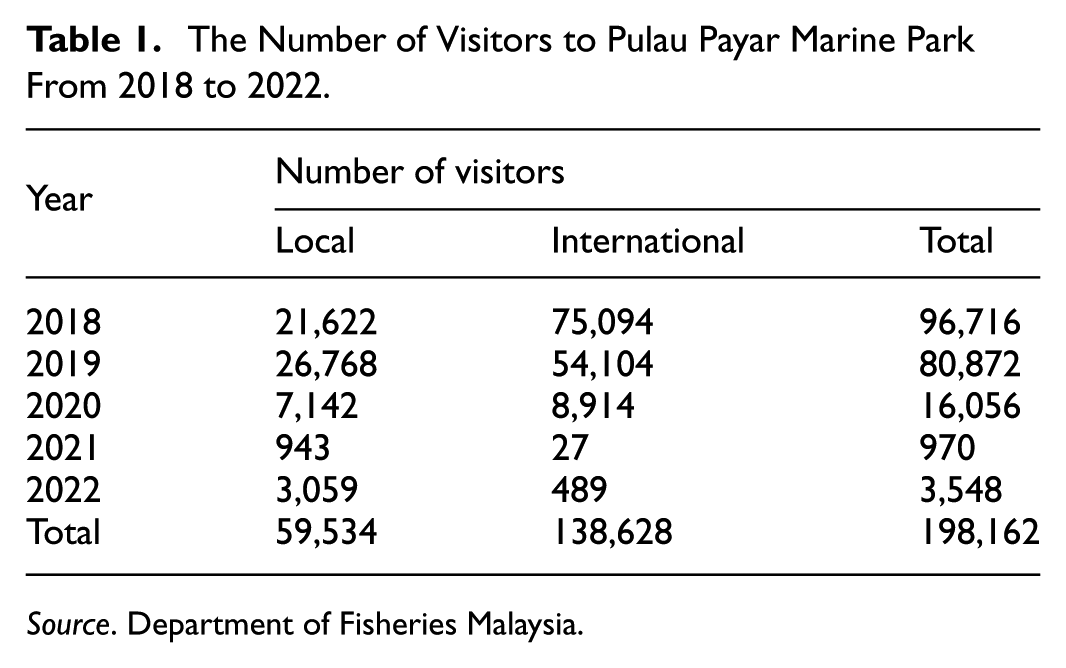
Source. Department of Fisheries Malaysia.
In PPMP, inadequate management practices pose a significant risk to the sustainability of MPAs, resulting in the deterioration of coastal ecosystems due to untreated water, suboptimal domestic waste management, and tourism-related waste (Herdiansyah et al., 2021). One of the primary concerns regarding PPMP is the potential negative impact of dive tourism and water sports activities on the marine ecosystem (Shokri & Mohammadi, 2021). These activities cause damage to the seabed using anchors, as well as trampling and touching of coral reefs and marine wildlife (Abidin & Mohamed, 2014). The preservation of ecosystem sustainability at PPMP presents a formidable challenge, as the conduct of various stakeholders such as residents, resort and cabin proprietors, scuba diving operators, and boat service providers constitute a potential menace to the local ecosystem (Saad & Rahman, 2021). The recreational business at PPMP, with its abundance of water activities, has caused substantial localized damage to the reefs. This damage, along with a lack of understanding about the reefs among tourists, has the potential to create irreparable damage to the local reef environment (Islam et al., 2017; Khodzori et al., 2019).
To enhance resilience against climate change impacts, protecting marine parks like Pulau Payar is essential. Marine ecosystems are crucial in mitigating climate change by sequestering carbon dioxide and offering coastal protection (D. Yang et al., 2024). Effective conservation measures can strengthen the resilience of these ecosystems to climate stressors, including ocean acidification and rising sea levels (Santojanni et al., 2023). Collecting conservation fees from park visitors aligns with the principle of social responsibility in protecting natural habitats and biodiversity, reflecting the environmental dimension of the Environmental, Social, and Governance (ESG) framework (Bagh et al., 2024). These fees provide a sustainable financial source for environmental protection and ecological restoration, thereby supporting the long-term preservation of biodiversity (Aseres & Sira, 2020). Moreover, tourists’ willingness to contribute financially to conservation efforts signifies societal endorsement of sustainable practices and environmental stewardship.
Previous studies on the Pulau Payar Marine Park (PPMP) have primarily focused on coral reef and aquatic ecology, tourism management, and tourist experiences. Khodzori et al. (2019) investigated the structure and health of coral communities, while Ismail et al. (2024) assessed the health of aquatic vertebrates and coral reefs during the COVID-19 pandemic. Saad and Rahman (2021) explored environmental management best practices by tour operators, and Salim and Mohamed (2014) examined tourists’ snorkeling experiences and satisfaction. Despite this focus, recent studies addressing the economic valuation of PPMP are scarce. The last relevant study by Yacob et al. (2009) examined tourists’ willingness to pay (WTP) for PPMP ecotourism resources but did not account for seasonal variations in WTP. Since then, research on tourists’ WTP and its economic valuation, particularly concerning seasonal effects, has been limited. Therefore, an in-depth study on tourists’ WTP for conservation during peak seasons, along with the factors influencing it, represents a significant gap in the current body of PPMP research.
Since January 1999, the Malaysian Fisheries Department has been charging conservation fees to both the local and international tourists. Local tourists visiting the Pulau Payar Marine Park are obliged to pay a conservation charge of RM5 and RM30 per person (for adult Malaysian citizens and non-citizens) following Fees Act 1951, Fees (Marine Parks Malaysia) Order 2017 and it the fees remain unchanged for the past 24 years. Currently, the Pulau Payar Marine Park does not charge additional fees for the conservation of resources during peak seasons (such as school holidays, public holidays, and international holidays). However, it is commonly known that marine reserves utilize a greater quantity of natural resources and contribute to increased congestion at the busiest times of the year (Jaafar & Maideen, 2012). With emphasis on peak season of tourist influx, this research aimed to establish the appropriate conservation charge during the season at Pulau Payar Marine Park, Langkawi Kedah. The specific research objectives were to (1) identify the local tourists’ perception and attitude toward conservation of the Pulau Payar Marine Park, (2) determine the factors influencing their willingness to pay for conservation fees on peak season, and (3) determine the amount that they were willingness to pay as conservation fees of the area on peak season.
By focusing on willingness-to-pay (WTP) assessments during peak seasons, this study provides a more precise economic analysis of seasonal demand fluctuations and their influence on conservation payments. Rather than limiting the analysis to ecological or management dimensions, the study examines tourists’ actual willingness to financially support environmental protection, particularly through conservation fees. This intersection of environmental protection and economic valuation offers policymakers robust data to inform the development of rational conservation fee policies. In addition to assessing tourists’ WTP, the study explores various factors influencing this willingness, such as tourists’ attitudes and perceptions of conservation’s importance. These insights hold significant value for sustainable tourism management and the future financing of PPMP.
Methods
Study Area
Pulau Payar Marine Park is strategically situated, lying 19 nautical miles south of Langkawi, 32 nautical miles north of Penang, and 15 nautical miles west of Kuala Kedah. Accessing PPMP is facilitated from the Kuah Jetty in Langkawi. This pristine marine park encompasses the four islands mentioned above. Pulau Payar itself boasts four 200 m sandy beaches which attract many water enthusiasts for various activities such as scuba diving, snorkeling, and swimming. Additional tourist sites within PPMP include the Grouper Farm, Japanese Garden, Garden Reefs, and Platform Reefs. The island features palm-fringed landscapes, soft sandy beaches, crystal-clear waters, and vibrant coral reefs and marine life (Saad & Rahman, 2021).
Method
The Contingent Valuation Method (CVM) was selected owing to its capability to assess the financial gains or losses associated with prevailing alterations in environmental conditions. In this instance, the CVM was employed to estimate the economic worth of enhancing the health of the reef through the implementation of improved PPMP management initiatives. The outcomes of this study hold significant value, as they have the potential to benefit not only park management but also policy makers. Specifically, the findings can aid in comprehending the methodology for determining the comprehensive benefits of natural marine resource conservation in PPMP, thereby enabling a balance between economic growth and environmental sustainability (Kamaludin et al., 2021).
Framework
Theoretical Framework
To date, various studies have considered a variety of WTP estimation approaches. The most prevalent modeling approaches have been logit models, Tobit models, and ordinary least squares (OLS). Considering the nature of the data in this study, Tobit models are the preferred technique to estimate WTP (Ren et al., 2020; X. Yang et al., 2018). A Tobit regression model was used in this case because the WTP values were not normally distributed. In this case, if

and

Where X denotes the matrix of explanatory variables and the error term ε is normally distributed with mean zero and standard deviation σ. The estimate for the regression coefficient α and β is obtained through maximum likelihood (ML) techniques. These estimates cannot be compared directly with those derived from OLS.
Model Specification
The Tobit regression model was employed in this study due to the non-normal distribution of the willingness to pay (WTP) values. Multiple regression analysis assumes that the dependent variable follows a normal distribution, an assumption that may not hold true if the data are censored or truncated (Dănăilă & Buiu, 2024). In contrast, the Tobit model is well suited to this type of data because it takes into account the fact that WTP is censored to zero. This allows for more accurate estimation by incorporating both the positive WTP values and those respondents who are unwilling to pay, addressing the limitations of standard regression models in such cases. Tobit regression relaxes the normality requirement and allows the dependent variable to be modeled with a normal distribution while allowing for filtering or truncation (Afroz et al., 2005). This approach allows the model to handle both cases where respondents are willing to pay a positive amount and cases where they report zero willingness to pay. Tobit regressions are particularly well-suited for situations where the dependent variable, such as WTP, is constrained or censored, providing a more accurate and reliable estimation of the factors influencing WTP compared to conventional regression methods. In this study, Tobit regression was used to determine the correlation between the dependent variable willingness to pay and the independent variables that affect the willingness of local tourists to pay conservation fees in PPMP through the econometric software STATA. The following regression model was used in this study (Equation 3);

Where,
WTP* = Local tourists’ willingness to pay for conservation fees on peak season in PPMP
β1–β8 = Coefficients to be estimated (the details presented in Table 2)
List of Independent Variables.

Note.ε = Random error.
Willingness to Pay Estimation
According to Tassie et al. (2024), the willingness to pay estimate for the open-ended contingent valuation method was as follows (Equation 4);

Where,
N = The total number of respondents
α = The exponential function
Design of the Questionnaire
The open-ended questionnaire, prepared in Malay and English, required the respondents to indicate their willingness to pay conservation fees to visit PPMP. The questionnaire was divided into five sections; Section A: Socio-demography, such as visitor characteristics, the purpose of visit, and frequency of visit; Section B: Environmental satisfaction of PPMP pertaining to the impact of snorkeling, diving, recreational, snorkeling, and camping at the site; Section C: Perceptions regarding the significance of marine park conservation; Section D: Attitude toward willingness to pay for conservation fees; Section E: Willingness to pay based on a scenario. We considered the level of satisfaction from the scores of the responses and classified them into the following five levels of the Likert scale (Table 3).
Category of Satisfaction Level.

Source. Sungkhawan et al. (2012) .
Section E: Scenario
Since January 1999, the Malaysian Fisheries Department has collected conservation fees from tourists. Local visitors are obliged to pay an RM5 conservation fee (adult). Nevertheless, the conservation fee has not been revised within the past 24 years. Furthermore, PPMP does not employ dual pricing, in which the conservation fee is a flat rate regardless of peak or off-peak season. However, more significant usage of natural resources and congestion are noted during the peak season (school/public holidays) in PPMP. Hence, a higher conservation fee than the present RM 5 per adult would be beneficial to minimize overcrowding and assist coral conservation initiatives (e.g., coral replanting efforts and marine conservation awareness programs).
An open-ended item was used to ask respondents for the maximum willingness-to-pay amount. The key question was as follows.
Would you support increasing the current conservation fee of RM 5 per adult?
A. Yes (Go to Question 2)
B. No (Go to Question 4)
How much would you be willing to pay (beyond the current conservation fee of RM 5/adults) as a conservation fee during peak season (school/public holidays) to visit PPMP?
The maximum fee per visit is (RM)_________________
Test of Validity and Reliability
To perform a reliability test, a pilot study was conducted with 30 questionnaires collected offline to test the reliability of the scales in Sections B, C, and D. The data obtained were coded and analyzed using the SPSS version 25, with a reliability test of 0.854 for the 6 items in Section B on satisfaction with the environment of PPMP, 0.725 for the 9 items in Section C on perceptions of the significance of marine park conservation, and 0.708 for the 7 items in Section D on attitudes toward willingness to pay conservation fees. A Cronbach’s alpha of .9 or higher indicates good reliability, .8 to .9 indicates good reliability, and .7 to .8 indicates acceptable reliability (Al-Osail et al., 2015). This questionnaire was only validated by one university professor, so no further validation analysis was performed.
Fieldwork
The latest tourist’s data shown by the Malaysian Fisheries Department, PPMP’s local tourists count in 2022 was 3,059. Therefore, based on the minimum required sample size suggested by Krejcie and Morgan (1970), the required sample size should be at least 342 for a population N = 3,059, confidence level = 95%, and margin of error = 5%. A non-probability technique of convenience sampling was used in the PPMP survey. The questionnaire contained instructions such as being at least 21 years old, a local tourist, and having a source of income to determine eligibility to participate in the questionnaire. Respondents aged 21 and above were selected to ensure they possessed the financial capacity to provide meaningful responses to the Willingness to Pay (WTP) question. The sample survey was conducted between February and March 2023. Questionnaires for face-to-face interviews were used at PPMP. Two university students assisted in interviewing the respondents Kuah Jetty and beaches at PPMP. Where respondents were selected based on their convenience of access or availability to the study. Local tourists who were instantly available for interviews were selected based on the respondents’ availability and willingness to participate in the survey.
Results and Discussion
Descriptive Analysis
The socio-demographics of the respondents are presented in Table 4. The survey results showed that 161 female respondents accounted for 41.9% of the total respondents whereas 223 male respondents accounted for 58.1%. Married tourists were 86.2% and single tourists were 13.8%. Regarding age distribution, the number of respondents varied from the four age groups. 134 were between 21 and 30 years old, 94 were between 31 and 40 years old, 130 were between 41 and 50 years old, and 26 were over 50 years old. They accounted for 34.9%, 24.5%, 33.9%, and 6.7%, respectively. Most respondents were between 21 and 30 years old (34.9%) and 41 to 50 years old (33.9%). In terms of education, only 20 respondents (5.2%) had no formal education, 52 respondents (13.5%) had obtained a primary education, and 146 respondents (38.0%) had obtained a Diploma. There were 166 respondents with higher education, that is, 33.6% had a Bachelor’s degree, 6.8% had a Master’s degree, and 2.9% had a Doctorate. Most respondents were students in the youth category and had higher education.
Socio-Demographics of the Respondents.

Respondents between the ages of 21 and 30 (who tended to be male) proved to be the most enthusiastic about visiting PPMP. Only 16.2% of respondents reported an annual income below RM2,500, while 14.3% reported an annual income between RM4,000 and RM4,500, 12.8% reported an annual income between RM5,000 and RM6,000, 12.5% reported an annual income between RM3,501 and RM4,000, 10.9% reported an annual income between RM5,000 and RM6,000, and 10.5% reported an annual income between RM5,000 and RM6,000.
Table 5 shows the environmental satisfaction affecting local tourists toward the PPMP. Based on the data provided, the highest satisfaction rating was 3.75 for the diversity of wildlife species in the PPMP, with 44% of respondents giving it a rating of 4 out of 5, and 23.4% with a rating of 5 out of 5. The attractiveness of the scenery also received a high satisfaction rating which was 3.6, with 28.9% of respondents giving it a rating of 4 out of 5 and 29.7% rated 5 out of 5. Based on this data, the diversity of wildlife species and the attractiveness of the scenery are the main attractions for local tourists visiting PPMP.
Satisfaction on the Environmental Aspects of Pulau Payar Marine Park.

The lowest satisfaction rating was 3.33 for the diversity of fish species in the PPMP, with only 12.5% of respondents giving it a rating of 2 out of 5 and 14% rated 1 out of 5. The beach’s cleanliness also received a low satisfaction rating of 3.33, with 16.4% of respondents rated 2 out of 5 and 12.2% rated 1 out of 5. The cleanliness of the beach and the diversity of fish species need improvement. In a study by Jayaratne et al. (2023), which indicated common destinations for viewing rare fish species, 93% of respondents said they were nature lovers when asked if visitors appreciated the beauty of nature. Studies have shown that the diversity of fish in a park contributes to the overall beach experience as it enhances the area’s natural beauty and ecological richness (Tribot et al., 2018). Tourists often appreciate and enjoy observing the variety of fish, which can increase their satisfaction level. Satisfaction with the beach itself strongly predicts overall beach tourist satisfaction. Moreover, clean beaches provide a pleasant and comfortable environment for tourists to enjoy their experience. When a beach is well-maintained and debris-free, it creates a positive impression and contributes to tourist satisfaction (Dodds & Holmes, 2019).
The second-lowest satisfaction rating was 3.5 for the congestion level in the PPMP, with 33.3% of respondents rated 4 out of 5 while 24.5% rated 5 out of 5. The results of the study support the findings by Islam et al. (2017), which suggest that the primary factors contributing to the deterioration of coral and the decline in fish variety in Malaysia are the substantial influx of tourists in marine parks, the establishment of tourism-related infrastructure on land, fishing activities, and the pollution caused by waste disposal and littering. Another study by Hurtado et al. (2021) of the Florida Keys National Marine Sanctuary investigated user satisfaction, crowding levels, and their relationship. Effective management and monitoring of recreational use are critical for marine sanctuaries, and higher levels of crowding were associated with lower user satisfaction.
The coral reef conditions in the PPMP received a medium satisfaction rating of 3.38, with 26.8% of respondents giving it a rating of 4 out of 5 and 26.6% a rating of 5 out of 5. The medium satisfaction rating for the coral reef conditions suggests that more efforts could be made to improve the condition of the coral reefs in the park because of the commercial development of the PPMP, the existence of tourist pollution on the beaches, and the development of various recreational programs that have an adverse impact on the local coral reefs (Safuan et al., 2021). A study by Cowburn et al. (2013) at Watamu National Marine Park, Kenya, investigated the interaction between coral reef conditions and visitors’ satisfaction. If coral reef conditions declined, tourist satisfaction with the marine park was negatively impacted. This highlights the importance of coral reef conservation and management strategies to maintain visitors’ satisfaction and ecological sustainability. On the other hand, the overall average satisfaction level for the environmental aspects of PPMP was 3.48 out of 5, indicating room for improvement regarding the tourists’ satisfaction with the park’s environmental conditions. Generally, the data suggest a need for continuous monitoring and improvement of the environmental conditions in PPMP to enhance tourist satisfaction.
Table 6 shows nine items on local tourists’ perceptions toward the significance of marine park conservation. The highest mean satisfaction level was for the statement “Marine protected areas provide opportunities for scientific research and monitoring,” with a mean satisfaction of 3.68. The conservation of marine parks is perceived to promote sustainable lifestyles and safeguard the environment. In this study, the respondents expressed a high level of agreement regarding the potential of MPA to facilitate scientific research and monitoring and their positive effects on human welfare. The study by Lemmen et al. (2023) used an online survey to determine user profiles and their environmental perceptions related to marine protected areas. The study revealed that visitors were most concerned about pollution-related threats to resources and supported marine conservation. The highest average satisfaction was with the statement, “MPAs provide opportunities for scientific research and monitoring which corroborated with our finding.”
Perceptions Regarding the Significance of Marine Park Conservation.
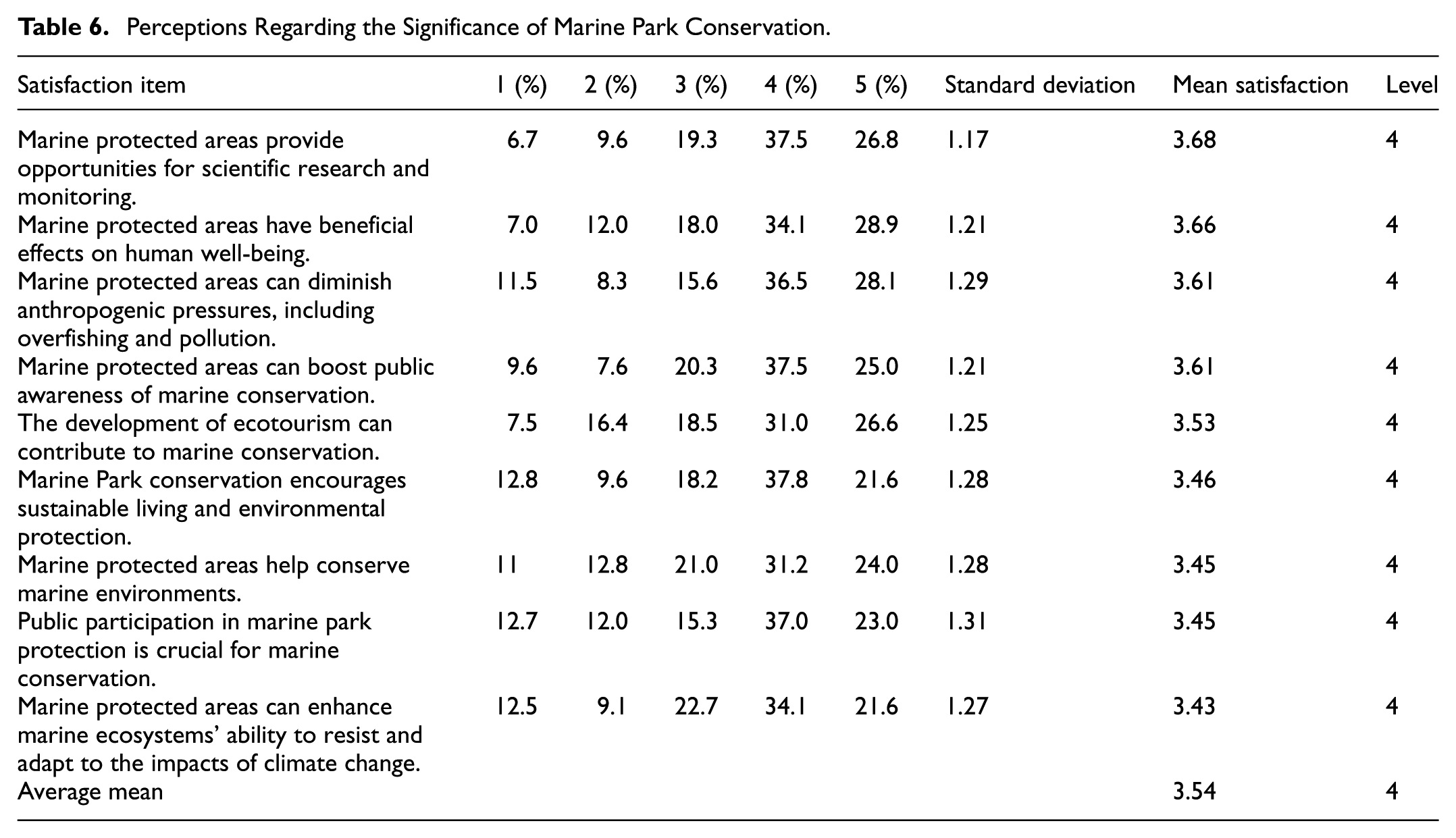
The medium mean satisfaction level was obtained for the statement “The development of ecotourism can contribute to marine conservation,” with a mean satisfaction of 3.53. The data revealed a medium mean of satisfaction among local tourists that the development of ecotourism can contribute to marine conservation. As compared to another study on marine parks in Peninsular Malaysia, more than 70% of the respondents agreed or strongly agreed that ecotourism can contribute to marine conservation, indicating that ecotourism can be a potential tool for marine conservation efforts (Masud et al., 2017). If properly implemented, ecotourism can promote biodiversity conservation by raising tourists’ awareness of the importance of marine ecosystems and the need to protect them (Samal & Dash, 2023). Ecotourism activities within MPAs are consistent with the principles of sustainable development and offer alternatives to traditional marine resource use.
The first lowest mean satisfaction level was obtained for the statement, “Marine protected areas can enhance marine ecosystems’ ability to resist and adapt to the impacts of climate change,” with a mean satisfaction of 3.43. In contrast to alternative programs, the respondents indicated a slightly lower inclination to concur with the assertion that MPA is efficacious in safeguarding the marine ecosystem. While in another study, there was an awareness and knowledge gap among the visitors to Ningaloo Marine Park, western Australia, with a low level of awareness of marine protected areas among visitors. They needed more information to carry out activities in the park while complying with the regulations (Tuohy et al., 2022).
The second lowest mean satisfaction level was found for the statement “Marine protected areas help conserve marine environments,” with a mean satisfaction of 3.45. The observation above could be attributed to the notion that implementing MPA in isolation may not safeguard the marine ecosystem, necessitating additional protective measures (Mascia et al., 2017). Mallo et al. (2022) argued that tourists’ perceptions of the recreational environment and management of marine protected areas would influence their satisfaction and willingness to return. Factors such as natural attractiveness and tourists’ awareness of protected areas play an important role in their overall experience; positive perceptions can lead to greater support for marine conservation efforts.
The overall average mean satisfaction level was 3.54. It is evident that the respondents held a favorable perspective regarding the significance of conserving marine parks. The mean satisfaction level across all programs was higher than the neutral Likert scaled point of 3, suggesting a generally favorable disposition toward conserving marine parks. The results support the findings of McNeill et al. (2018), where several respondents expressed positive attitudes toward marine protected areas, stating that they are beneficial to the environment and help protect marine ecosystems from the negative impacts of fishing and regional population growth, having more marine parks would better prevent overfishing and damage to the marine. The data indicates that the participants favor preserving marine parks and acknowledge their significance in safeguarding the environment, conducting scientific investigations, and promoting human welfare.
Referring to Table 7, seven items related to attitude questions that determine the willingness of local tourists to pay conservation fees regarding the PPMP were shown. The average total mean was 3.46, indicating that most local tourists maintain a positive attitude toward the PPMP in support of park conservation. The results showed that the highest score was 3.62, that is, about the state of natural resources in PPMP in influencing the attitude of local tourists deciding to pay higher conservation fees during the peak season. This implies that young people have a caring attitude toward the natural resources of the marine park, realizing that the state of natural resources in PPMP in affecting ecotourism development. This is similar to the study by Getzner et al. (2016), where the state of natural resources does influence the attitudes of local visitors who decide to pay higher conservation fees. Respondents expressed a higher willingness to pay for biodiversity conservation, and visitors who value the natural environment were more willing to pay higher conservation fees.
Attitude Toward Willingness to Pay for Conservation Fees.

Secondly, the lowest score of 3.28 was for the attitude toward the density of tourists in the PPMP in influencing the local tourists to pay higher conservation fees in the peak season. The level of this item is 3, which indicates that most of them had a neutral attitude toward the density of tourists, although there were still positive responses for the willingness of local tourists to pay a fee. In contrast in the study by Pulido et al. (2021), tourists were willing to pay higher conservation fees to avoid high congestion during visits to the reef, $120 per visit to prevent an expected decrease in visibility, and $190 per visit to avoid an expected decrease in biodiversity.
The second highest score was 3.56 obtained for the statement about the effectiveness of marine park management in protecting the marine environment and in turn influencing the attitude of local tourists to pay higher conservation fees during peak season. It indicates that most of the tourists were concerned about the management of marine environmental protection, which was a concern toward the state of the reefs with the marine park’s wildlife and PPMP. From a marine management perspective, this is similar to the findings of Ison et al. (2021) where integrated management plans for marine parks were seen as the most beneficial, with respondents willing to pay $25 more to fund the implementation of such plans as compared to tourism or scientific research. In a way, this implies that tourists recognize the need to balance multiple activities, including tourism and conservation, to achieve sustainability.
In addition, the site accessibility and convenience, as well as the affordability of the price of recreational activities, scored 3.36, showing that most tourists may focus on the experience of the tourism process and consider the impact of the degree of economy (Mayer & Vogt, 2016). Most respondents were neutral or agreed on the willingness to pay conservation fees for the PPMP for the seven items discussed above. The results of a study by Ariesta et al. (2020) showed that accessibility and facilities significantly affect the willingness to revisit Wakatobi Regency marine tourism in Indonesia. Destination image maintained through marine tourism has a good influence on tourist quality and impressions making a visit pleasant and comfortable. This means the better the image on a destination, the higher the willingness to revisit the destination.
Overall, the literature suggests that the state of an area’s natural resources is an important factor influencing tourists’ willingness to pay conservation fees, as well as their knowledge of and attitudes toward environmental protection. Secondly, visitors’ perceptions of the effectiveness of marine park management in protecting the marine environment were found to be influenced by the management approach of park managers, and these perceptions would affect visitors’ willingness to pay for conservation fees. In addition, site accessibility and convenience were important factors that influence tourists’ willingness to pay for the fees as well. However, the specific impact of accessibility may depend on the characteristics of the park and the number of tourists.
Tobit Regression Analysis
Table 8 presents the Tobit model’s estimation results. The findings indicated that eight explanatory variables determined the maximum local tourists’ willingness to pay for PPMP conservation. LR chi2(8) = 22.92 with a p-value of .0035 and a log-likelihood value of −1293.826, showing that the model’s variables account for 22.92% of the proportion of the dependent variable. Based on the significance levels provided, Ms and Edu were statistically significant predictors of willingness to pay. Inc and Atti had critical significance whereas Age, Gender, Env, and Per factors were statistically insignificant. Based on the model, the coefficient of marital status was −3.2749, with a p-value of .002, indicating that marital status had an influence on the willingness to pay; married local tourists are less willing to pay than single or divorced tourists. Being single often has greater autonomy in their personal finances and lifestyle choices (Steckermeier, 2021). This autonomy may translate into a sense of responsibility for environmental issues and a willingness to take action (including financial contributions) to address these issues (Rasheed, 2020). This group of people may see support for MPAs to positively impact marine conservation and exercise autonomy in promoting sustainable practices.
Maximum Log Likelihood Estimates of Tobit Model.
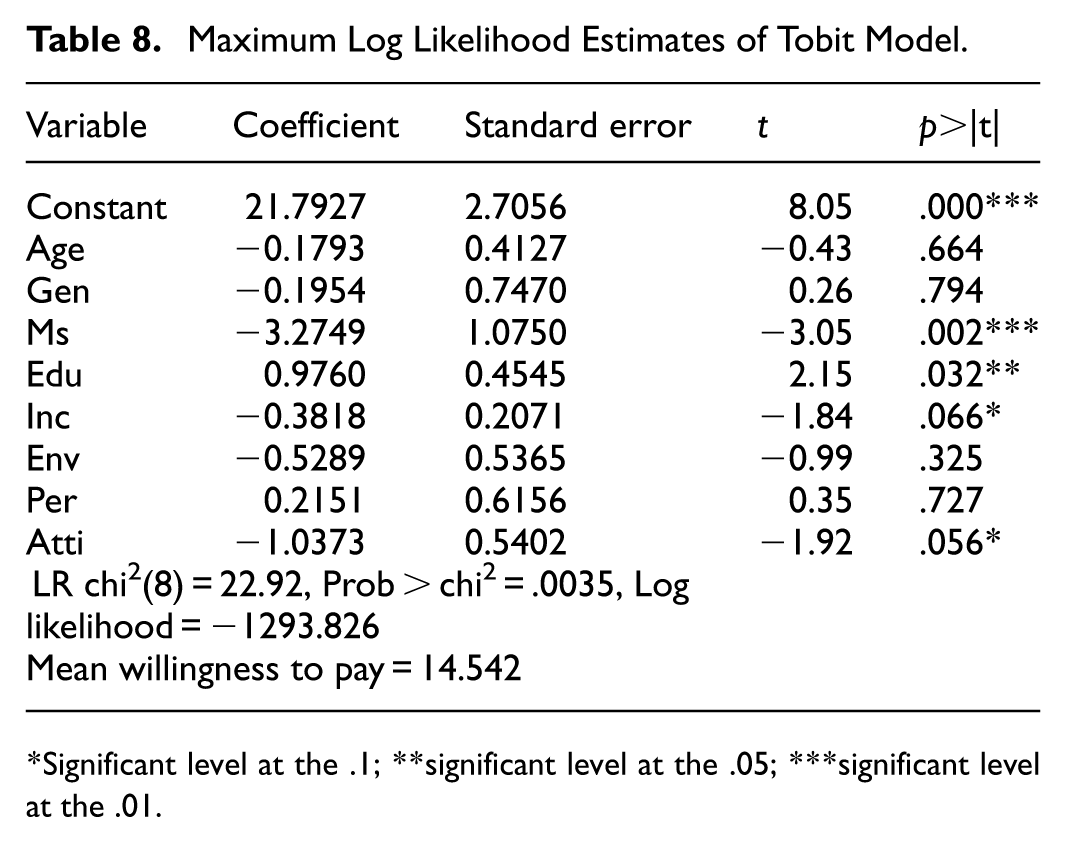
Significant level at the .1; **significant level at the .05; ***significant level at the .01.
Education level was found to be statistically significant in predicting the willingness to pay of the respondents. This suggests that individuals with higher education may have higher maximum willingness to pay. In other words, local tourists with higher education level are expected to be more willing to pay for or contribute to marine park conservation projects (Yu et al., 2018). In other words, better-educated tourists have a greater awareness or understanding of the importance of conservation efforts and are likely to support such initiatives. They may also better understand the long-term benefits of conservation and the potential consequences of not taking action to protect the environment (Ibrahim et al., 2023).
Based on the Tobit model, income is statistically significant in predicting the dependent variable. The model indicates that as income increases, there is a decrease of 0.3818 points in the predicted willingness to pay for conservation fees. However, this is slightly different from the results of previous studies regarding income level and willingness to pay, for instance, Schuhmann et al. (2019) and Gao (2021). While individuals with higher incomes generally possess the capacity to offer larger average contributions, this does not unequivocally establish income as the primary determinant of willingness to pay (WTP) for conservation efforts. The observation that some visitors prioritize conservation and are willing to pay more, irrespective of their income, underscores the significance of individual commitment to conservation over purely financial considerations. For instance, Yu et al. (2018) demonstrated that although income does influence the amount tourists are willing to pay, personal environmental awareness exerts a more substantial impact on their willingness to contribute. This suggests that intrinsic values and environmental concerns can often supersede financial considerations, motivating individuals across different income brackets to engage actively in conservation initiatives.
Lastly, the coefficient of Atti is −1.0373 with a p-value of .056, close to the significance level of .05. On average, a 1% increase in “Atti” is associated with a 1.0373 Malaysian Ringgit decrease in the maximum willingness to pay. However, this is a discrepancy with the results of previous studies. Respondents in the Brouwer et al. (2016)’s study were found to have a positive relationship between their willingness to pay and attitudes associated with the information provided in the survey on marine protected areas. Tourists with more negative attitudes toward paying for conservation efforts may have less value in supporting such initiatives or less likely to trust in how the funds are spent. Being concerned about park management’s effectiveness, transparency, or accountability, tourists may be less willing to support MPAs through their willingness to pay (Schuhmann et al., 2019).
In summary, the analysis indicates that marital status, education, income, and attitudes are all significant predictors of willingness to pay for PPMP. Individuals who are not married as well as those with higher education levels, and with more positive attitudes toward paying for conservation efforts tend to have a higher willingness to pay. However, income has a vague relationship with willingness to pay, with some studies suggesting a positive correlation and others showing a negative association. Overall, these findings highlight the importance of considering socio-demographic factors and attitudes when designing effective strategies for marine park conservation and willingness to pay programs.
Willingness to Pay
The mean willingness to pay (WTP) is calculated by dividing the sum of willingness to pay by the total number of willingness to pay items; where 1 is the total number of willingness to pay, N is the total number of respondents, and α is an exponential function. The equation is as follows (Equation 5).

Where,
Mean WTP = 14.54
The estimated willingness to pay for conservation at the PPMP. The minimum and maximum amount was RM6.00 and RM55.00, respectively, and the mean willingness to pay tourists was RM14.54. This means that local tourists were willing to add an extra RM9.54 as the current conservation fee during the peak season, with the median of RM23.00. The study found that 24 (6.25%) local tourists said they were not willing to pay conservation fees while 360 respondents said they were willing to pay.
Conclusion
This study examined the willingness of local tourists to pay for conservation in Pulau Payar Marine Park (PPMP) during the peak season, revealing an average willingness to pay of RM14.54—substantially higher than the current RM5.00 fee levied on adult citizens. These findings offer valuable insights into the economic valuation of ecosystem services and conservation initiatives within PPMP. The use of the open-ended Contingent Valuation Method (CVM) provides flexible, real-world data on the monetary value local tourists assign to conservation, which is crucial for designing sustainable financial mechanisms to support long-term park management and preservation efforts. The findings of this study will assist policymakers and park authorities in developing and updating effective conservation fee policies. Adjusted fees for local tourists will provide critical funding to support marine park conservation measures, research, monitoring, and enforcement activities. By establishing sustainable tourism financing through well-structured conservation fees, the long-term viability of PPMP can be ensured, while also benefiting local communities through continued tourism activities. Additionally, economically sustainable conservation efforts will facilitate a balance between ecological preservation and local economic interests, promoting both environmental and socio-economic well-being.
This study also investigates the factors influencing local tourists’ willingness to pay for PPMP conservation during the peak season. This analysis is crucial as it highlights the economic, social, and psychological determinants of tourists’ decisions to support conservation financially. Understanding these factors will aid in designing a fair, efficient, and sustainable pricing structure for conservation fees. By identifying the key drivers behind tourists’ willingness to contribute, stakeholders can develop more targeted campaigns that promote environmental stewardship and sustainable tourism. Additionally, tour operators, environmental organizations, and conservation NGOs can leverage these findings to align their marketing, educational, and conservation programs with the attitudes and values of local tourists. The results of the study also reveal local tourists’ perceptions and attitudes toward PPMP conservation, with respondents reporting a moderate level of overall satisfaction. Their perceptions are closely influenced by park policies and ongoing conservation initiatives, making this information crucial for understanding how local visitors view such efforts. Key factors, including environmental satisfaction, the perceived importance of conservation, and willingness-to-pay attitudes, can play a significant role in shaping future conservation strategies and campaigns aimed at increasing visitor engagement and participation in conservation activities.
Malaysia is renowned for its rich terrestrial and marine biodiversity, encompassing a variety of ecosystems. The establishment of protected areas, including marine sanctuaries, underscores the critical importance of preserving these ecosystems. These areas not only sustain diverse forms of life but also provide significant economic benefits to human populations through their interconnected ecosystem services. Many of Malaysia’s marine protected areas are notable for their tourism activities, which play a vital role in supporting the livelihoods of local communities. Based on the findings of this study, the authors recommend the implementation of effective management and monitoring strategies for recreational use of PPMP. Managing tourist influx and minimizing tourism-related infrastructure are crucial steps to improving visitor satisfaction by mitigating the decline of fish populations and the degradation of coral reefs. Additionally, increasing tourists’ awareness and appreciation of marine ecosystems through educational programs and guided tours can promote a sense of responsibility for conservation, further enhancing the long-term protection of these ecosystems. In terms of the management of Marine Protected Areas (MPAs), beach cleanliness can be enhanced through regular cleaning and maintenance activities, the implementation of effective waste management systems, and the promotion of responsible visitor behavior. Providing adequate waste disposal facilities, such as litter bins and recycling options, encourages proper waste disposal and helps reduce pollution. Collaborative efforts between marine park management, local communities, and relevant stakeholders are essential for addressing these issues effectively and ensuring the long-term sustainability of the protected areas.
The sustainability of natural resources in MPAs must be supported by the implementation of comprehensive management plans and practices. Conservation fees serve as a critical mechanism to fund conservation efforts in MPAs, while also helping to regulate visitor numbers and minimize their environmental impact on marine ecosystems. Over the past 40 years, significant advancements have been made in the management of MPAs in Malaysia, including the establishment of MPAs in 1983, the creation of the Marine Parks and Marine Protected Areas Trust Fund (MPMTF) in 1987, and the introduction of the Marine Parks Protection Fee (MPPF) in 1998, which was revised in 2017 after nearly two decades. Given the growing number of tourists and their increasing awareness and attitudes toward nature conservation, this study can serve as a reference for revising these fees in one of the country’s earliest MPAs, the Pulau Payar Marine Park (PPMP). Implementing conservation fees not only generates funding for preservation but also raises awareness of the importance of marine conservation, encouraging visitors to appreciate and value marine ecosystems.
Nevertheless, the use of convenience sampling in this study presents significant limitations regarding generalizability. Convenience sampling involves selecting participants who are easily accessible, which may not provide a fully representative sample of the broader population of local tourists visiting PPMP. This approach may introduce bias, as it could lead to an overrepresentation of certain visitor demographics. Consequently, the findings may not accurately capture the willingness to pay (WTP) or attitudes of the entire visitor group, limiting the study’s external validity. Furthermore, the focus on local tourists, without including international visitors, restricts the broader applicability of the study. International tourists may exhibit different attitudes, perceptions, and WTP toward conservation efforts, making the findings less relevant to the overall visitor population of PPMP. To enhance the relevance and applicability of future research, it will be important to include a wider range of visitor groups and incorporate cost-benefit analyses and selection models for implementing various conservation fee structures, particularly during peak tourist seasons. Additionally, future studies would benefit from measuring income level as a continuous variable. This approach allows for more precise and nuanced analysis, as it captures the full range of income variation among respondents rather than categorizing them into predefined brackets.
Footnotes

Consent to Participate
Informed consent was obtained from all individual participants included in the study.
Funding
The authors received no financial support for the research, authorship, and/or publication of this article.
Declaration of Conflicting Interests
The authors declared no potential conflicts of interest with respect to the research, authorship, and/or publication of this article.
Data Availability Statement
Data sharing not applicable to this article as no datasets were generated or analyzed during the current study.