




Abstract
The wild giant panda population has increased to 1,864 and its status has been updated from endangered to vulnerable. This attests to China’s fruitful efforts in wildlife conservation and the promotion of biodiversity. However, existing evidence implies that additional financial support is crucial to support giant panda conservation endeavors. This study aimed to (i) determine the local visitors’ level of knowledge, awareness, and attitude toward the giant panda conservation, (ii) identify the factors influencing local visitors’ willingness to pay (WTP), and (iii) estimate local visitors’ WTP for an increase in the entrance fee at Chengdu Research Base of Giant Panda Breeding (CRBGPB). The study utilized the contingent valuation method (CVM) based on double-bounded dichotomous choice (DBDC) technique to elicit the respondents’ WTP. The results revealed a high level of awareness and positive attitude among respondents about giant pandas and the significance of their conservation. The age, gender, knowledge, awareness, and attitude are key factors that influence WTP among local visitors. The estimates indicate that respondents’ WTP for an increase in entrance fees ranged from CNY 29.38 to CNY 37.40 per visit. These findings offer valuable insights for the CRBGPB and stakeholders to devise conservation strategies and pricing policies for giant panda conservation.
Plain Language Summary
The wild giant panda population has increased to 1,864 and its status has been updated from endangered to vulnerable. This attests to China’s fruitful efforts in wildlife conservation and the promotion of biodiversity. However, existing evidence implies that additional financial support is crucial to support giant panda conservation endeavors. This study aimed to (i) determine the local visitors’ level of knowledge, awareness, and attitude toward the giant panda conservation, (ii) identify the factors influencing local visitors’ willingness to pay (WTP), and (iii) estimate local visitors’ WTP for an increase in the entrance fee at Chengdu Research Base of Giant Panda Breeding (CPB). The study utilized the contingent valuation method (CVM) based on double-bounded dichotomous choice (DBDC) technique to elicit the respondents’ WTP. The results revealed a high level of awareness and positive attitude among respondents about giant pandas and the significance of their conservation. Moreover, the results indicated that age, gender, knowledge, awareness, and attitude are key factors that influence WTP among local visitors. These findings offer valuable insights for the CPB and stakeholders to devise conservation strategies and pricing policies for giant panda conservation.
Keywords
Introduction
Globally, ecosystem services and biodiversity provided by species communities significantly contribute to the economic value of ecosystems (Brander et al., 2024; Hungate et al., 2017). This highlights their essential role in supporting ecosystem sustainability. The giant panda, recognized as a vital umbrella species, directly contributes to economic value through tourism revenues and conservation funding. Simultaneously, it indirectly enhances ecosystem services and biodiversity, promoting the health and sustainability of its habitat and associated ecosystems (Y. Li & Song, 2022). According to the latest data from the IUCN Red List of Threatened Species, the global wild population of giant pandas has gradually increased to approximately 1,864 individuals, leading to their reclassification from “endangered” to “vulnerable” (IUCN, 2024).
Despite conservation efforts, substantial evidence indicates that giant pandas continue to face significant threats. Habitat loss and fragmentation are among the most critical challenges. Key disturbance factors in giant panda habitats include livestock grazing, road construction, herbal medicine collection, and logging (Kang, 2021). Free-ranging livestock has severely degraded the understory layer of giant panda habitats, making restoration efforts particularly challenging (Fan et al., 2023). Additionally, poorly designed roads and bridges in or near protected areas have exacerbated habitat fragmentation (Lu et al., 2023). Several national nature reserves have suffered severe deforestation, with the destruction of primary forest areas and high levels of fragmentation drastically reducing the habitat available for giant pandas (J. Wang et al., 2023).
The Chengdu Research Base of Giant Panda Breeding (CRBGPB) is one of China’s leading visitor centers for captive giant pandas. In 2019, the Chengdu Municipal Bureau of Planning and Natural Resources initiated the construction of a new area for the CRBGPB, aiming to enhance the quality of habitats and provide adequate space for giant pandas. The projected total operating cost for the expanded area is estimated at CNY 455,926,697.6, covering personnel expenses, resource protection, maintenance, asset depreciation, loan interest, and other operational costs (Chengdu Research Base of Giant Panda Breeding [CRBGPB], 2022a, 2022b).
However, the CRBGPB’s financial performance has been significantly affected by the COVID-19 pandemic. In 2021, its total revenue and expenditure decreased to CNY 306,284,600, marking a reduction of CNY 144,224,500 (32.01%) compared to 2020 (CRBGPB, 2022a, 2022b). In May 2023, the Chengdu Municipal Bureau of Planning and Natural Resources proposed a site layout reform plan to promote resource conservation and sustainable development within the facility (Chengdu Municipal Bureau of Planning and Natural Resources, 2023). These developments highlight the urgent need for additional financial support to strengthen the CRBGPB’s conservation efforts.
The Contingent Valuation Method (CVM) is a widely used non-market valuation technique that employs hypothetical markets to assess individuals’ willingness to pay (WTP) or willingness to accept (WTA; Mitchell & Carson, 1989). Numerous studies have successfully applied CVM to estimate the economic value individuals attribute to wildlife conservation. For instance, X. Sun et al. (2023) used CVM to evaluate local willingness to pay for the conservation of Elliot’s pheasant (Syrmaticus ellioti) in Qianjiangyuan National Park, estimating an annual total willingness to pay of CNY 179,312. Similarly, CVM has been employed to assess the economic value of multiple species. J. Yang et al. (2022) investigated tourists’ willingness to pay for the conservation of four rare animal species in a protected area in the Qinling Mountains of China, finding that tourists showed a higher willingness to pay for giant pandas and golden monkeys, which are more familiar and popular species.
Factors influencing willingness to pay (WTP) can be broadly divided into two categories: demographic variables, such as age, education, and income level, and non-socio-economic attributes, including knowledge, awareness, and attitude (Jin et al., 2018; Song et al., 2021). For example, H. Li and Nitanan (2022) investigated the WTP for fireflies among local visitors in Malaysia and found that age, education, gender, and attitude were statistically significant predictors of WTP. Similarly, Jaunky et al. (2021) identified income and knowledge level as significant factors affecting the public’s WTP for Mauritian fox bats. The Theory of Planned Behavior (TPB) suggests that an individual’s perceptions directly or indirectly shape their preferences and intentions (W. Sun, 2019). Specifically, individuals with higher levels of awareness and positive attitudes are more likely to exhibit a greater willingness to pay for wildlife conservation (Ren et al., 2022; X. Sun et al., 2023).
Previous research on giant pandas has primarily examined their population distribution, habitat selection, and preferences (Bai et al., 2020; Fu et al., 2022; Z.-X. Liu et al., 2020), as well as the impacts of anthropogenic activities on their populations and habitats (Kang, 2021; Kang et al., 2020; Zhang et al., 2024). Additionally, numerous studies have assessed habitat quality and suitability for giant pandas (Ma et al., 2024; Mu et al., 2024; Ruan et al., 2021; X. Sun et al., 2021; H. Yang et al., 2021) and have investigated habitat restoration and protection in depth (Kang, 2022; Shang et al., 2024). On the other hand, research on the Chengdu Research Base of Giant Panda Breeding (CRBGPB) has primarily focused on veterinary medicine and the management of captive giant pandas (Huang et al., 2023; X. Wang et al., 2024; Q. Wang et al., 2024; Yuan et al., 2024). Some studies have also addressed operational management issues, including travel demand forecasting (He et al., 2022), strategic adjustments for post-COVID-19 development (Xue & Zhang, 2022), and the development of a code of conduct for zoos (Fennell & Guo, 2024).
The existing literature has made significant strides in the conservation of giant pandas and their habitats, yet notable research gaps remain. First, studies on public willingness to pay (WTP) are relatively limited. While ecological research on habitat conservation is extensive, quantitative investigations into visitors’ WTP and its influencing factors are scarce. Moreover, research on giant pandas predominantly emphasizes ecological and biological aspects, with insufficient focus on multidimensional analyses of visitor behavior. Specifically, the relationships between visitors’ knowledge, conservation awareness, and WTP have not been fully examined, particularly in the context of how these behavioral factors influence economic decision-making.
Research on the environmental economics of the Chengdu Research Base of Giant Panda Breeding (CRBGPB) remains limited. While some studies have addressed its operation and management, there is a notable lack of research on visitor participation, willingness to pay (WTP), and the factors influencing these behaviors. Existing studies fail to adequately examine the interactions between visitors’ WTP and conservation objectives or to provide a systematic economic evaluation. This study addresses these gaps by employing the CVM to assess visitors’ WTP for increased entrance fees to support giant panda conservation and by analyzing the factors influencing their WTP. The findings not only establish a baseline for conservation funding but also offer empirical support for improving the CRBGPB’s operation and management strategies.
This research serves as a preliminary study to explore local visitors’ WTP for an increased entrance fee at the CRBGPB. To provide a deeper and more multidimensional understanding, the study has three primary objectives: (1) to assess local visitors’ knowledge of giant pandas, their awareness of conservation importance, and their attitudes toward WTP; (2) to identify the factors influencing local visitors’ WTP; and (3) to estimate the average WTP among local visitors for an increased entrance fee at CRBGPB. The hypotheses of the study are as follows:
The findings reveal that respondents display a high level of awareness and positive attitudes toward giant pandas and their conservation. Key factors influencing local visitors’ willingness to pay (WTP) for increased entrance fees include age, gender, knowledge, conservation awareness, and attitudes. The estimated WTP per visit ranges from CNY 29.38 to CNY 37.40. These results offer valuable insights for the CRBGPB and its stakeholders, facilitating the formulation of targeted conservation strategies and evidence-based pricing policies to support giant panda conservation.
Materials and Methods
Study Area
The research area and sampling location for this study is the Chengdu Research Base of Giant Panda Breeding (CRBGPB), located at No. 1375 Panda Avenue, Chenghua District, Chengdu City, Sichuan Province, China (see Figure 1). The total area of CRBGPB is 3,570 acres, with an expansion area of 2,535 acres. Figure 2 presents the official internal map of the base. This base was selected over other giant panda reserves due to its global reputation in ex-situ conservation, scientific research, breeding, public education, and educational tourism (Ayala et al., 2022; G. Zhou, 2020). As of 2022, the base is home to 237 giant pandas, making it the largest captive breeding population of giant pandas in the world (Rong et al., 2022). Moreover, no other zoo, national park, or nature reserve in China houses such a large population. Additionally, CRBGPB attracts a significant number of visitors annually.

Location of Chengdu research base of giant panda breeding.
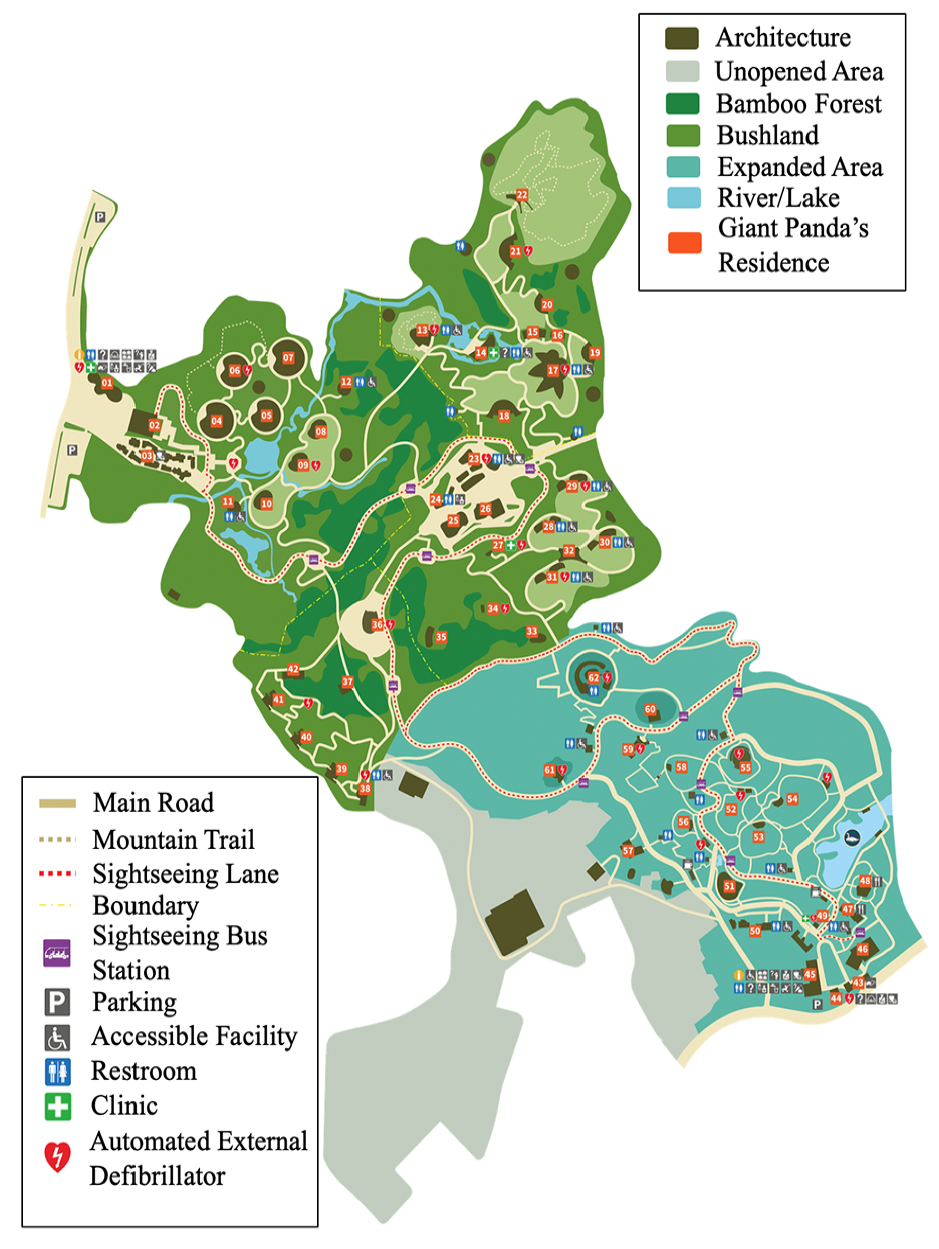
Chengdu research base of giant panda breeding internal map.
Contingent Valuation Method
In environmental management, various non-market valuation methods are employed to assess the value of environmental resources, including the Travel Cost Method (TCM), Choice Experiment Method (CEM), and Contingent Valuation Method (CVM; Laurila-Pant et al., 2015). The TCM estimates the economic use value of ecosystems or recreational sites based on the costs incurred by individuals to visit or utilize them (Cetin et al., 2021; Juutinen et al., 2022; Xu & He, 2022). While the TCM is appropriate for evaluating the value of recreational venues, this study focuses on wildlife conservation, thus excluding it from consideration. The CEM is frequently used to estimate the economic value of non-market environmental goods and services (Duijndam et al., 2020; Kunwar et al., 2020; Xiao et al., 2023). It is particularly suited for assessing trade-offs between multiple attributes, such as improvements in biodiversity (Amaya et al., 2020).
In contrast, this study addresses a specific problem, for which the Contingent Valuation Method (CVM) using the double-bounded dichotomous choice (DBDC) heuristic technique is the most appropriate approach. CVM is highly flexible and widely used for estimating non-market values, owing to its broad applicability and strong operational feasibility (Chu et al., 2020). It is also the only recognized method for capturing both the use and non-use values associated with non-market goods (Johnston et al., 2017). Furthermore, numerous studies have demonstrated that CVM is a suitable method for estimating willingness to pay (WTP) for endangered species conservation (Jin et al., 2018).
The double-bounded dichotomous choice (DBDC) method, being the most widely used technique, offers the advantage of simulating the dynamics of conventional markets while encouraging respondents to align their answers with their underlying motivations (Venkatachalam, 2004). Under hypothetical market conditions, respondents were asked to either accept or reject proposed prices. In the context of this study, one initial bid value was presented, and the second bid was determined based on the respondent’s response to the first question. DBDC is more statistically efficient than single-bounded dichotomous choice methods (Kanninen, 1993). It also generates more detailed and reliable data, which enhances the efficiency of willingness to pay (WTP) estimation (Song et al., 2021). Figure 3 presents the conceptual framework of the study.
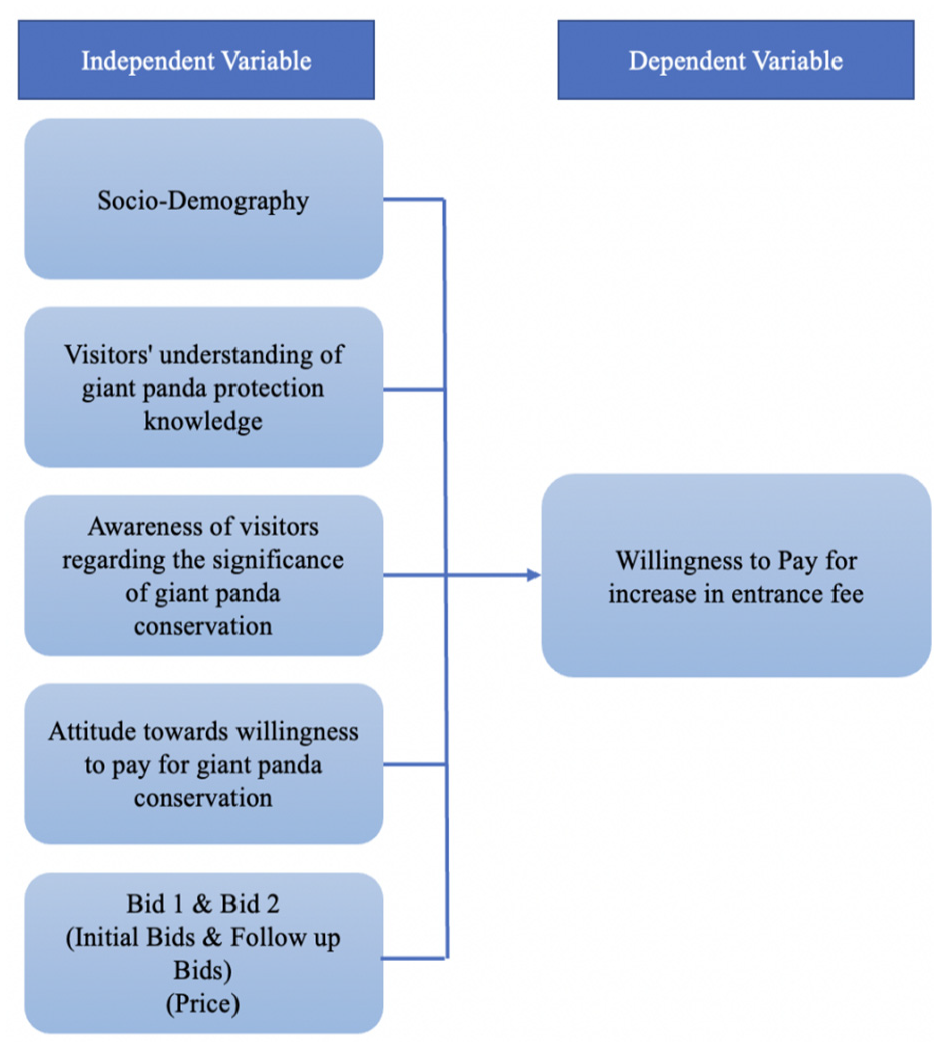
Conceptual framework.
Questionnaire Design
The questionnaire is entirely based on the Contingent Valuation Method (CVM). Respondents are informed about the purpose of the WTP study and provided with relevant environmental details regarding the CRBGPB. The questionnaire is structured into five sections. Section A collects socio-demographic information, including gender, age, income, and education level. Section B assesses visitors’ knowledge of the giant panda species. Section C evaluates visitors’ awareness of the significance of giant panda conservation. Section D explores visitors’ attitudes toward paying for giant panda conservation. Finally, Section E examines respondents’ willingness to pay for an increased entrance fee.
Sample Size
The respondents of this study are local visitors to the CRBGPB. According to telephone interviews with staff, the CRBGPB hosted an estimated 441,600 local visitors in 2022 (CPB Management, personal communication, May 5, 2023). Based on this visitor volume, we used the sample size calculation method developed by Krejcie and Morgan (1970) to determine the required sample size. According to the calculation, the sample size for this study is 384.
Sampling Technique
This study employed a purposive sampling technique, selecting only visitors who had previously visited the CRBGPB to participate in the survey regarding their willingness to pay for an increase in the entrance fee. The target population consisted solely of local visitors from Sichuan Province and Chongqing Municipality. This selection was based on the difference in entrance fees, as visitors from these regions are charged half of the standard entrance fee compared to international visitors or those from other provinces. Consequently, these visitors may be more receptive to potential fee increases. Additionally, the survey specifically targeted individuals aged 21 and above, as those with stable financial incomes are better positioned to provide informed responses regarding their willingness to pay. This age group is supported by the fact that, under the contemporary Chinese educational system, individuals typically complete their academic studies and begin their professional careers in their early twenties, achieving financial independence (National Bureau of Statistics of China, 2023).
Validity and Reliability
Three experts in wildlife ecology, resource economics, and environmental economics validated the questionnaire using a four-point scale for all items. The Content Validity Index (CVI) and Aiken’s V method were used to assess the validity of Sections A to E. The recommended value for the I-CVI and Aiken’s V is at least 0.78, and the recommended value for the average item quality (S-CVI) should be no less than 0.8 (Shrotryia & Dhanda, 2019). Based on the validation results, the questions in Section C of the questionnaire were modified or deleted according to the recommendations provided by the validators. A pilot study was conducted at the CRBGPB with 38 visitors, representing 10% of the sample size. For Section B, which includes Yes/No questions in the knowledge section, the Kuder-Richardson reliability coefficient (K-R20) yielded a value of 0.6127, indicating a “strong” level of reliability (Kuder & Richardson, 1937). For Sections C and D, the values of Cronbach’s alpha were .836 and .922, respectively, indicating “Good” and “Very Good” levels of reliability (Pallant, 2020).
Data Analysis and Model Specification
The study used SPSS v29 to perform a descriptive analysis of socio-demographics, knowledge, awareness, attitudes, and willingness to pay. Frequencies, percentages, rankings, means, and score levels are presented in tabular form to highlight key insights. For the 5-point Likert scale, the following formula was applied to calculate statistics: (highest value – lowest value)/number of categories. The resulting ranges were: low (1) = 1 to 2.339, medium (2) = 2.34 to 3.669, and high (3) = 3.67 to 5.00. Inferential analyses were performed using STATA v18, with probit regressions to estimate willingness to pay (WTP) and the factors influencing it.
The study utilized the theoretical framework and formula proposed by Alejandro (2012) to estimate willingness to pay. If the visitors respond negatively, their response is denoted as “yi = 0,” while a positive response is indicated as “yi = 1.” These responses are elicited when visitors are asked about their willingness to pay for entrance fees increase “ti,” which varies randomly among individuals. Respondents’ WTP is therefore estimated by treating it as a linear function, expressed as follows:

Where, “

If we assume that “ui” is normally distributed with a mean of 0 and a variance of σ2, we can deduce the following:

Where “vi” is drawn from a standard normal distribution with a mean of 0 and a variance of 1, and “Φ(x)” represents the standard cumulative normal function. Given the inclusion of the additional variable “ti,” it is currently possible to use the “probit” command in Stata as part of the analysis, where “ti” is used as an additional explanatory variable. To clarify, the outcomes derived from the “probit” command are as follows:
Beginning with the assumption of normality and referencing Equation 1, it can ascertain that the anticipated value of willingness to pay is represented as: E (DAP
i
| zi, β) =

Where, “
The probit regression was employed in this study to determine the factors influencing respondents’ willingness to pay as shown in Table 1. The regression model for this study is as follows:
Variables Used in the Analysis.


Result and Discussion
The Sociodemographic of the Respondents
The socio-demographic information of the respondents is presented in Table 2. The results indicate that the largest age group among the respondents was 26 to 35 years, comprising 29.9% of the sample. Although respondents from all age groups were included, only 5.2% (20) were over the age of 55. Additionally, the sample had a higher proportion of female respondents, who accounted for 54.5% (210), compared to male respondents, who represented 45.5% (175). Regarding marital status, 45.7% (176) of respondents were single, while 54.3% (209) were married.
Socio Demographic of the Respondents.

Among the respondents, seven individuals (1.8%) reported having no formal education. Over half of the respondents had access to higher education, with the largest proportion holding a bachelor’s degree (37.1%, or 143 respondents). Additionally, 31.4% (121) of respondents reported a monthly income between CNY 4,001 and CNY 6,000, making this the largest income group. A further 16.1% (62) reported a monthly income between CNY 8,001 and CNY 10,000. All 385 respondents were Chinese residents, with 89.6% (345) from Sichuan Province and 10.4% (40) from Chongqing City.
Visitors’ Knowledge on the Giant Panda Species Current Status
Table 3 presents local visitors’ understanding of the current status of the giant panda species. According to the study results (Knowledge 1), the majority of respondents (97.7%, or 376) identified habitat loss and fragmentation as one of the main threats to giant pandas. For Knowledge 2, most respondents (97.4%) recognized the importance of establishing nature reserves for giant panda conservation. The findings (Knowledge 3) also revealed that 97.4% (375) of respondents understood that conserving bamboo forests is crucial for panda preservation. Furthermore, regarding Knowledge 4, 79.5% (306) of respondents were aware that the reproduction rate of giant pandas is low, making it difficult for their population to recover. Finally, Knowledge 5 shows that 77.9% (300) of respondents knew that the giant panda population in China is growing slowly.
Visitors’ Knowledge on the Giant Panda Species Current Situation.

The results show (Knowledge 6) that 76.6% (295) of respondents are aware that giant pandas are a vulnerable, protected species. Additionally, 74.5% (287) of respondents (Knowledge 7) correctly identified the Upper Yangtze Valley in China as the giant panda’s main natural habitat. Knowledge 8 indicates that 73.5% (283) of respondents knew that the average lifespan of giant pandas in the wild is 18 to 20 years. Furthermore, Knowledge 9 reveals that 61% (235) of respondents understood that giant pandas consume about 30 kg of bamboo daily. Finally, 59.7% (230) of respondents knew that giant pandas prefer to live in dense bamboo forests at altitudes between 1,500 and 3,000 m.
Awareness of Local Visitors on the Significance of Giant Panda Conservation
Table 4 illustrates local visitors’ awareness of the importance of giant panda conservation, with an overall mean score of 3.81, indicating a high level of awareness. As a result, Hypothesis 1 (H1) is accepted. It is evident that educating the younger generation about the protection of giant panda habitats is considered highly important, as reflected by the highest mean score (Mean = 4.04) among all statements (Awareness 1). The findings (Awareness 2) also reveal strong agreement among respondents (Mean = 3.92) regarding the role of giant panda conservation in preserving cultural and ethnic heritage. With regard to Awareness 3, respondents showed strong agreement that giant panda conservation contributes to China’s diplomacy (Mean = 3.82). Furthermore, Awareness 4 shows a strong consensus on the critical role of giant panda conservation in global biodiversity conservation (Mean = 3.72). Finally, for Awareness 5, the results indicate a moderate level of agreement among respondents about the role of giant panda conservation in maintaining ecosystem balance (Mean = 3.54).
Awareness of Local Visitors on the Significance of Giant Panda Conservation.

Note. 1 = strongly disagree, 2 = disagree, 3 = neutral, 4 = agree, 5 = strongly agree.
Attitude Toward Willingness to Pay for Giant Panda Conservation
Table 5 presents respondents’ attitudes toward willingness to pay (WTP) for giant panda conservation, with an overall mean score of 3.82, indicating a high level of support and confirming the acceptance of Hypothesis 1 (H1). The results (Attitude 1) show strong agreement among respondents regarding the impact of financial contributions on the survival of giant pandas (Mean = 4.17). Additionally, (Attitude 2) respondents expressed high agreement on the importance of providing financial support for giant panda conservation efforts (Mean = 4.05). The findings (Attitude 3) also reveal that respondents strongly agree they would support an increase in the entrance fee if the additional funds were used for panda conservation (Mean = 3.97).
Attitude of Local Visitors on The Significance of Giant Panda Conservation.

Note. 1 = strongly disagree, 2 = disagree, 3 = neutral, 4 = agree, 5 = strongly agree.
The results (Attitude 4) show strong agreement among respondents regarding the long-term environmental benefits of investing in giant panda conservation (Mean = 3.94). According to (Attitude 5), respondents expressed high agreement that conserving giant pandas is a cause worthy of their financial support (Mean = 3.75). (Attitude 6) reveals high agreement among respondents regarding their responsibility to contribute to giant panda conservation (Mean = 3.69). Additionally, (Attitude 7) shows moderate agreement among respondents about their willingness to allocate a portion of their funds or savings to giant panda conservation efforts (Mean = 3.63). Finally, (Attitude 8) indicates moderate agreement that the conservation of giant pandas should be a priority, regardless of the costs involved (Mean = 3.37).
Willingness to Pay
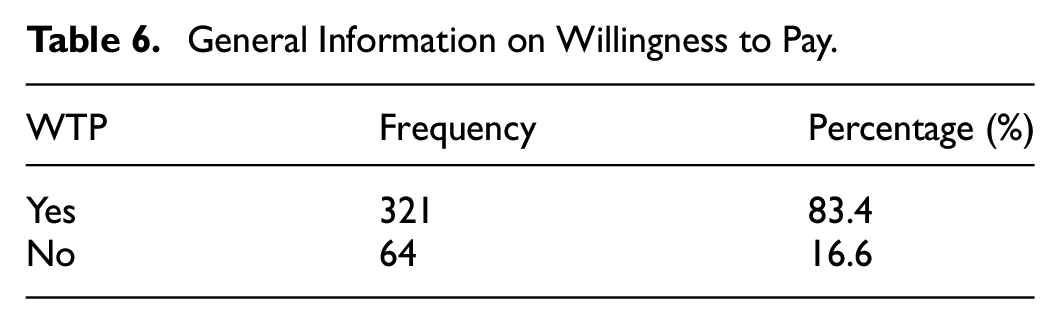
Table 6 shows the visitors’ preferences regarding their willingness to pay. The results indicate that the majority of respondents (83.4%) expressed a willingness to pay a higher entrance fee for the Chengdu Research Base of Giant Panda Breeding (CRBGPB). In contrast, only 16.6% of respondents were unwilling to accept an increase in the entrance fee.
General Information on Willingness to Pay.
Single Bound CVM (Modified)
The analysis results indicate that the model’s independent variables explain 57.5% of the variation in the dependent variable, as indicated by the Pseudo R2 (Table 7). With the exception of education, all other variables—age, gender, knowledge, awareness, and attitude—are significantly correlated with willingness to pay (WTP). Specifically, bid 1 is significant at the 5% level (p = .010). The negative coefficient (−.041) suggests an inverse relationship with WTP, indicating that as the bid increases, respondents’ willingness to pay decreases. The age variable is significant at the 1% level, with a negative coefficient (−.645), meaning that older respondents are less willing to pay. In contrast, the gender variable is highly significant at the 1% level, with a positive coefficient (.799), indicating that females are more willing to pay. The knowledge variable is significant at the 10% level, with a positive coefficient (.09), suggesting that respondents with higher knowledge scores are more willing to pay. Furthermore, the awareness variable is significant at the 1% level, with a positive coefficient (.594), indicating that higher levels of awareness are associated with greater willingness to pay. Finally, the attitude variable is significant at the 1% level, with a positive coefficient (.796), showing that respondents with more positive attitudes are more likely to be willing to pay.
Single Bound CVM (Modified).

Significant at 1% level, **significant at 5% level, *significant at 10% level.
Double Bound CVM (Modified)
For the modified double-bound contingent valuation method (CVM), the results in Table 8 indicate that all independent variables, except education, exhibit varying levels of significance in relation to willingness to pay (WTP). The age variable is significant at the 1% level, with a negative coefficient (−6.453), suggesting that younger respondents are more willing to pay for an increase in the entrance fee. The gender variable is also highly significant at the 1% level, with a positive coefficient (8.686), indicating that female respondents are more willing to pay for the fee increase. Additionally, the knowledge variable is significant at the 5% level, with a positive coefficient (.805), suggesting that respondents with higher knowledge scores are more willing to pay for the increase in entrance fees. The awareness variable is similarly significant at the 5% level, with a positive coefficient (3.395), indicating that respondents with higher awareness levels are more willing to pay. The attitude variable is significant at the 1% level, with a positive coefficient (5.791), implying that respondents with higher attitude scores are more willing to pay for the entrance fee increase. Furthermore, Hypothesis 3 (H3) is supported, as knowledge, awareness, and attitude levels are all positively correlated with WTP.
Double Bound CVM (Modified).

Significant at 1% level and **significant at 5% level.
Discussion on Factors Affecting Willingness to Pay
The results of this study indicate that the age variable significantly influences WTP, which aligns with findings from similar studies on conservation efforts. For instance, Haefele et al. (2019) and Z. Wang et al. (2018) both found that age had a significant effect on WTP, with younger respondents demonstrating a greater WTP for species conservation. Similarly, Song et al. (2021) found that the gender variable significantly impacted WTP, with females showing a higher WTP. According to Pang (2020), females are more likely than males to exhibit altruistic values, which underpins their concern for environmental issues. The socialization process encourages females to develop qualities such as empathy, compassion, morality, and cooperation, while males tend to prioritize traits like independence and competitiveness. As a result, females are generally more inclined to demonstrate helpfulness and selflessness.
However, in contrast to some studies (Mzek et al., 2022; X. Sun et al., 2023; J. Yang et al., 2022), there is no evidence that education level significantly impacts WTP. In the context of wildlife conservation, emotion-driven factors tend to have a greater influence on individuals’ conservation preferences and WTP than ecological or social factors (Colléony et al., 2017; Martín-López et al., 2007). Thus, visitors with a strong personal connection to giant pandas may exhibit a higher WTP, regardless of their education level. Moreover, consistent with the majority of CVM-based wildlife conservation studies (Jaunky et al., 2021; Jin et al., 2018; Ren et al., 2022; X. Sun et al., 2023), our study suggests that knowledge, awareness, and attitudes—non-socioeconomic factors—positively influence WTP.
Willingness to Pay Estimation
Under the Modified Single-Bound CVM, the estimated willingness to pay (WTP) of local visitors for an increase in the entrance fee at CRBGPBis CNY 37.41 per visit (Table 9). In contrast, the estimated WTP for an increase in the entrance fee at CRBGPB, based on the Modified Double-Bound CVM, is CNY 29.38 per visit (Table 10). These results support the acceptance of Hypothesis 3 (H3). This data can serve as a reference for CRBGPB in formulating a new entrance fee structure. Given that the current entrance fee is CNY 27, the total estimated entrance fee after the increase would range from CNY 56.38 to CNY 64.41. This estimate is higher than that of J. Yang et al. (2022), who reported a mean WTP of CNY 36.2 per year for giant pandas in another protected area.
Willingness to Pay Estimation (Single Bound Modified).

Significant at 1% level.
Willingness to Pay Estimation (Double Bound Modified).

Significant at 1% level.
Factors Impact WTP
Factors for Willing to Pay
Figure 4 illustrates the reasons why local visitors are willing to pay for an increase in the entrance fee. The results show that personal connection and emotional attachment are the most significant factors, accounting for the highest percentage (34%) of responses. This finding is supported by Casola et al. (2023), who reported that the most common motivation for donations in their study was respondents’ personal connection to wildlife and their desire to contribute to conservation efforts. Following this, 25% of respondents cited cultural and heritage protection as their reason for willingness to pay. This result aligns with the findings of Sengkhamyong et al. (2022), who observed that visitors who valued the cultural and historical significance of protected areas were more willing to pay for conservation.

Reasons why local visitor is willing to pay.
The results also revealed that 13% of respondents indicated that their willingness to pay was driven by scientific and educational value. X. H. Zhou et al. (2016) highlighted the importance of wildlife conservation for the education and scientific research of future generations. Additionally, 11% of respondents cited ecological balance and ecosystem services as their reason for willingness to pay. Furthermore, 7%, 6%, and 4% of respondents identified esthetic and entertainment value, economic benefits, and ethical and moral responsibility, respectively, as motivations for their willingness to pay.
Factors for Unwilling to Pay
Figure 5 shows the reasons why local visitors are not willing to pay for an increase in the entrance fee. The results show that the majority of respondents who are unwilling to pay believe that the government should bear the cost of giant panda protection, accounting for 33%. This finding aligns with Bhat and Sofi (2021), who reported that 57.3% of respondents in their study, who were not willing to pay, felt that the government should be solely responsible for conservation costs. Additionally, 26% of respondents expressed support for giant panda conservation, but only if it did not require any additional payment. Another 16% of respondents stated that they support conservation efforts for giant pandas, but do not consider it worthwhile for them to contribute financially.
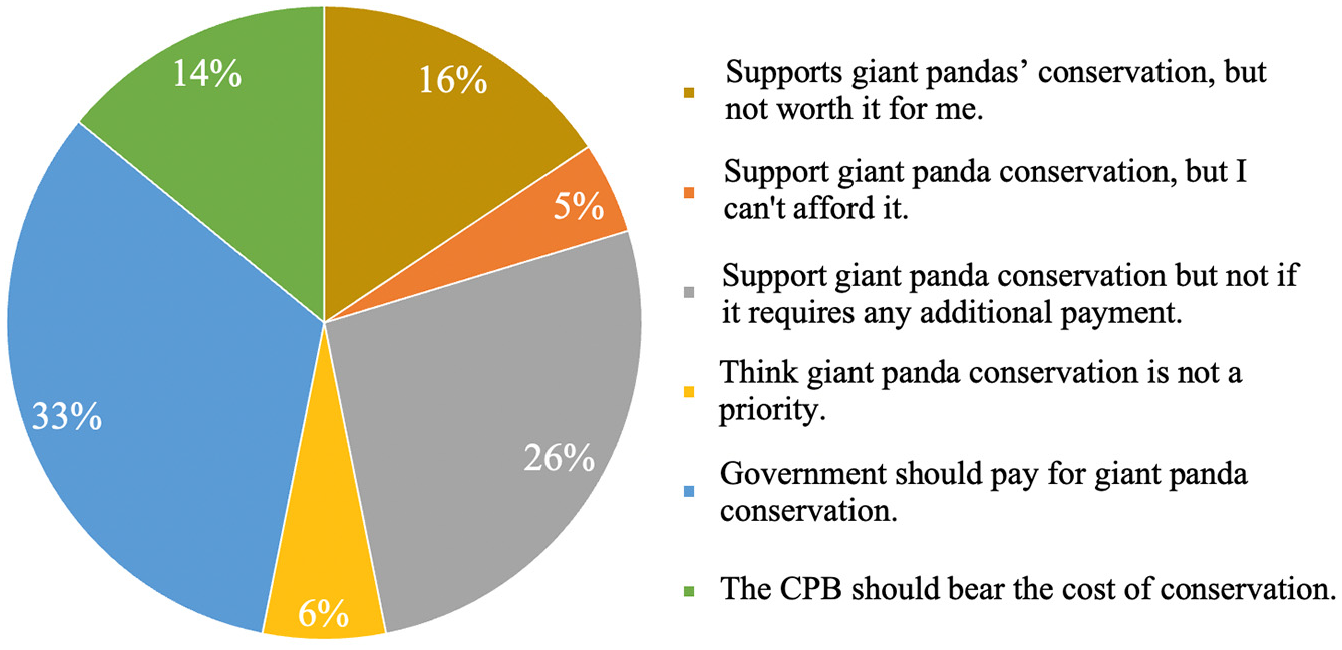
Reasons why local visitor is unwilling to pay.
The results also indicate that 14% of respondents who are unwilling to pay believe that the Chengdu Research Base of Giant Panda Breeding should cover the conservation fee. Additionally, 6% of respondents view giant panda conservation as a low priority. Another 5% of respondents stated that although they support giant panda conservation, they are unable to afford the additional cost. This finding aligns with Bhat and Sofi (2021), who noted that some respondents’ low income or poor financial status prevented them from being willing to pay.
Conclusion
This study aimed to explore local visitors’ willingness to pay (WTP) for an increase in the entrance fee to the Chengdu Research Base of Giant Panda Breeding (CRBGPB) using the Contingent Valuation Method (CVM), as well as to identify the key factors influencing visitors’ WTP. The survey revealed high levels of awareness and positive attitudes among local visitors regarding giant panda conservation, suggesting a promising outlook for the conservation of this iconic species. The results further indicate that age, gender, knowledge, awareness, and attitude are the key factors influencing local visitors’ WTP. Additionally, local visitors expressed a willingness to pay the increased entrance fee to support giant panda conservation efforts.
In light of these findings, we propose several policy recommendations. Given that knowledge, awareness, and attitude are positively correlated with WTP, it is recommended that the Chengdu Research Base of Giant Panda Breeding (CRBGPB) enhance its educational and outreach efforts. This could include expanding science education initiatives and increasing public awareness. Digital tools, such as the development of conservation-themed apps or more targeted social media campaigns, could be employed to broaden the reach of educational programs. Free interactive exhibitions, expert lectures, and educational programs for children should also be established to increase awareness of the importance of giant panda conservation. Additionally, initiatives such as the “Giant Panda Adoption” program could be introduced to foster greater public participation and support, ultimately improving attitudes and enhancing visitors’ willingness to pay for species conservation.
The study’s findings underscore the need for the Chengdu Research Base of Giant Panda Breeding (CRBGPB) to revise its entrance fee policy, as the current fee is considered undervalued. Currently, CRBGPB charges an entrance fee of CNY 27 for visitors from Chongqing and Sichuan provinces. According to the study, local visitors are willing to pay an additional amount ranging from CNY 29.38 (Double Bound) to CNY 37.41 (Single Bound) for an increase in the entrance fee. Based on these findings, it is recommended that management consider maintaining the current fee of CNY 27 during off-peak seasons, while adjusting the fee to between CNY 56.38 and CNY 64.41 during peak seasons. The increased revenue could be allocated to support giant panda conservation and management efforts at CRBGPB.
Increasing entrance fees could generate additional funds for giant panda conservation, but it also presents several challenges. Higher fees may deter visitors, particularly those with limited financial resources, thereby reducing accessibility and undermining the CRBGPB’s role in fostering inclusive environmental education. Moreover, if visitor services and experiences are not simultaneously enhanced, the higher fees could place CRBGPB at a competitive disadvantage relative to nearby attractions, potentially leading to visitor dissatisfaction and reputational damage. Additionally, a lack of transparency regarding the allocation of funds and conservation outcomes could raise concerns, eroding public trust and support. Therefore, any fee increases should strike a balance between economic efficiency and public acceptance, supported by improved services and diversified revenue streams to ensure both financial and social benefits.
While the study provides valuable insights into local visitors’ willingness to pay, it is limited by its exclusion of non-local and international visitors. Visitors from other Chinese regions and from abroad may have distinct preferences and attitudes shaped by their cultural backgrounds and varying levels of exposure to conservation efforts (Filimonau et al., 2018; He & Filimonau, 2020; Packer et al., 2014). Their diverse experiences and expectations could offer unique perspectives, and their exclusion limits the study’s applicability to a broader and more diverse audience. Future research should include both out-of-province and international visitors to compare willingness to pay across these groups, offering valuable insights for pricing strategies. Furthermore, employing more rigorous sampling methods could enhance the generalizability and robustness of the findings.
Footnotes
Acknowledgements
The authors would like to thank all validators for their invaluable support and guidance throughout the course of this research.

Ethical Considerations and Informed Consent Statements
Informed consent was obtained from all participants prior to their inclusion in the survey. Participants were provided with information about the study’s purpose, procedures, and their rights, including the option to withdraw at any time.
Funding
The author(s) disclosed receipt of the following financial support for the research, authorship, and/or publication of this article: The publication fee for the article was funded by the Research Management Centre, Universiti Putra Malaysia.
Declaration of Conflicting Interests
The author(s) declared no potential conflicts of interest with respect to the research, authorship, and/or publication of this article.
Data Availability Statement
The data that support the findings of this study are available from the corresponding author, Nitanan Koshy Matthew, upon reasonable request.