



Abstract
The field of female entrepreneurship has gained increasing scholarly attention over the past few decades due to its significant role in economic development and social transformation. This study conducts a comprehensive bibliometric analysis to map the intellectual structure and identify emerging trends within female entrepreneurship research. Using the PRISMA (Preferred Reporting Items for Systematic Reviews and Meta-Analyses) methodology, we identified and screened a collection of 500 research articles published between 2000 and 2023 from the Scopus database. Techniques such as co-citation, co-authorship, and keyword analysis were employed to explore research patterns, prolific authors, influential publications and core research themes. Findings reveal that major themes include gender-based entrepreneurial challenges, empowerment, innovation, and access to financing. Visualizing the relationships between the articles then helps to clarify the phenomenon. We also found that several topics, including ‘performance’, ‘inspiration’ and ‘challenge’, have not been thoroughly investigated. The findings of the study indicate a gap in scholarly cooperation and correspondence on this topic, which presents a chance for investigation. Furthermore, our study also offers suggestions for future research directions on the subject of female entrepreneurs.
Introduction
Women as business entrepreneurs have recently drawn the attention of numerous scholars due to their significant global development (Fanaja et al., 2023). A growing body of research shows that women can contribute significantly to economic growth and entrepreneurial activity in terms of job creation and GDP growth, with positive effects on poverty and social exclusion (Hechevarría et al., 2019). However, fewer women than males opt to pursue entrepreneurial careers, and this difference widens as the level of development of the nation increases (Coduras & Autio, 2013). The Global Entrepreneurship Monitor (GEM) reported in its 2018/2019 Women’s Entrepreneurship Report that 231 million women had either established or were operating new enterprises in 2019 (Elam et al., 2019). Over time, academic study on women entrepreneurs has risen dramatically, with a focus on a variety of problems such as causes, challenges, risks, and commercial outcomes (Deng et al., 2020; Santos et al., 2018).
United Nations (UN) reported on the The Sustainable Development Goals Report 2022 that between 2018 and 2021, there are just 26% of nations in the world have comprehensive systems in place to monitor public funding for gender equality, 59% have some components of one, and 15% do not have the bare minimum (Bush & Zetterberg, 2023). To explain and evaluate how research on women’s entrepreneurship is organized, several scholars have carried out detailed literature analyses. Men and women engage in entrepreneurial activities differently because of several barriers to entry or challenges (Hendrayati et al., 2022). highlights difficulties including being unable to obtain help (institutional, family, and financial), being afraid of failing, evaluating one’s own perception of gender differences and being subject to adverse public assessments as examples (Johansen, 2013).
Self-efficacy and fear of failure are two significant barriers that stop women from entering commercial occupations, according to Noguera et al. (2013). In succeeding years, different results have been attained by other authors (Wieland et al., 2019). Despite these challenges, statistics show that there are more women-owned businesses than ever before, and they have a lot of room to grow and succeed. The 2022 Annual Report from the National Women’s Business Council (NWBC) boasts that women-run enterprises ‘contribute substantially to entrepreneurship in several developed countries, mainly United States’. According to the most recent statistics (from 2019), 1.2 million of all enterprises with employees are owned and operated by women. In contrast to the 5.2% growth rate for enterprises owned by men, these companies saw 16.7% growth between 2012 and 2019. Additionally, during that time, sales for employer enterprises owned by men increased 34.2% while they surged ‘exponentially’ (51.9%) for women-owned businesses. 10.8 million people were employed by women-owned businesses in 2019, an increase of 28% from 2012. This was significantly stronger growth than that of employer businesses owned by males, which saw a workforce growth of 10.8% (Fanaja et al., 2023).
To design strategies for empowering and supporting them as well as maximizing their potential, politicians, educators, and business leaders must first understand the motives and experiences of women entrepreneurs (Sulastri et al., 2023). This is in line with one of UN’s goals, which is to ensure women have equal chances for leadership at all levels of decision-making in political, economic, and public life, as well as full and effective involvement (Bush & Zetterberg, 2023).
By employing a bibliometrics technique to examine the research on women entrepreneurs, our work adds a new perspective in the literature (Marín-Palacios, 2023). The bibliometric methodology uses specialized indicators, including citation indexes, made feasible by data-analytical algorithms that can handle large volumes of data and visualization techniques to uncover research themes and trends within a particular area of interest (Mahajan & Bandyopadhyay, 2021; Raman et al., 2022; Valtakoski, 2020). Our objectives of this study comprise of the use bibliometric methods to map the evolution and intellectual structure of research on female entrepreneurship in a methodical manner, to determine which writers, books, journals, and cooperative networks are most important in the field of female entrepreneurship, as well as to identify current trends, obstacles, and research gaps by analyzing the main themes, subjects, and keywords in studies of female entrepreneurship. Besides, our study also focuses on emphasizing the diversity of female entrepreneurship studies worldwide and suggesting future lines of inquiry and viewpoints that can enhance the landscape of female entrepreneurship, including cutting-edge fields like intersectionality, digital entrepreneurship, and sustainable practices. These objectives seek to advance knowledge of the field and provide insightful information to scholars, practitioners and policymakers.
Therefore, the following research questions are discussed: (1) According to recent bibliometric data, what are the main themes and areas of study in the field of female entrepreneurship? (2) How has scholarly research on female entrepreneurship changed over time? (3) Which studies and authors have the most citations in the field of female entrepreneurship? (4) What opportunities and common problems have been noted for female entrepreneurs in the literature to date? (5) Based on bibliometric analysis, what are the new research gaps and potential paths for studies on female entrepreneurship? The flow of the article includes the elaboration of used methodology, result and discussion and conclusion.
Methodology
The Scopus databases are frequently used by researchers as their data source for the sampling strategy. This database was selected because of the wide range of excellent articles it covers. As a database, Scopus includes built-in analytics and structured export features that facilitate a robust and efficient bibliometric workflow, allowing for more systematic and replicable results. Many recent high-impact bibliometric studies in entrepreneurship have relied solely on Scopus due to its comprehensive coverage and compatibility with supporting tools (N. Chen & Shabbir, 2025; Siddiqui et al., 2024).
We gathered the data in early 2023 using the term ‘women entrepreneurs’. For bibliometric analysis and co-word analysis using keyword co-occurrence, this study used publication mapping (Santos et al., 2018). To find publishing patterns, we used the main themes or problems that emerged in the text to perform a word co-occurrence analysis. The findings also plotted the primary contributors, such as the source name, author and institution (Indarti et al., 2021). To visualize the findings, we used the VOSViewer tool, which was developed by Leiden University researchers, to graphically display the data (van Eck & Waltman, 2010). Additionally, this study’s research was conducted in five stages in order to gather data, do a complete analysis, and choose the most significant studies (Fahimnia et al., 2015). These phases are depicted in Figure 1.

Five stages of bibliometric literature study method.
We used ‘female entrepreneurs’, ‘female entrepreneurship’, ‘women entrepreneur’, ‘women entrepreneurship’ and combined them with more general keywords such as ‘family business’ and ‘entrepreneurship’. After gathering the data, we deleted any publications that were redundant, unnecessary, or simply the wrong types (for example retraction notes and book chapters). The process of filtering the data and the review protocols are also explained using PRISMA framework (Figure 2). We have also registered the review protocol in an online registry database of literature reviews under DOI 10.17605/OSF.IO/G597Q.
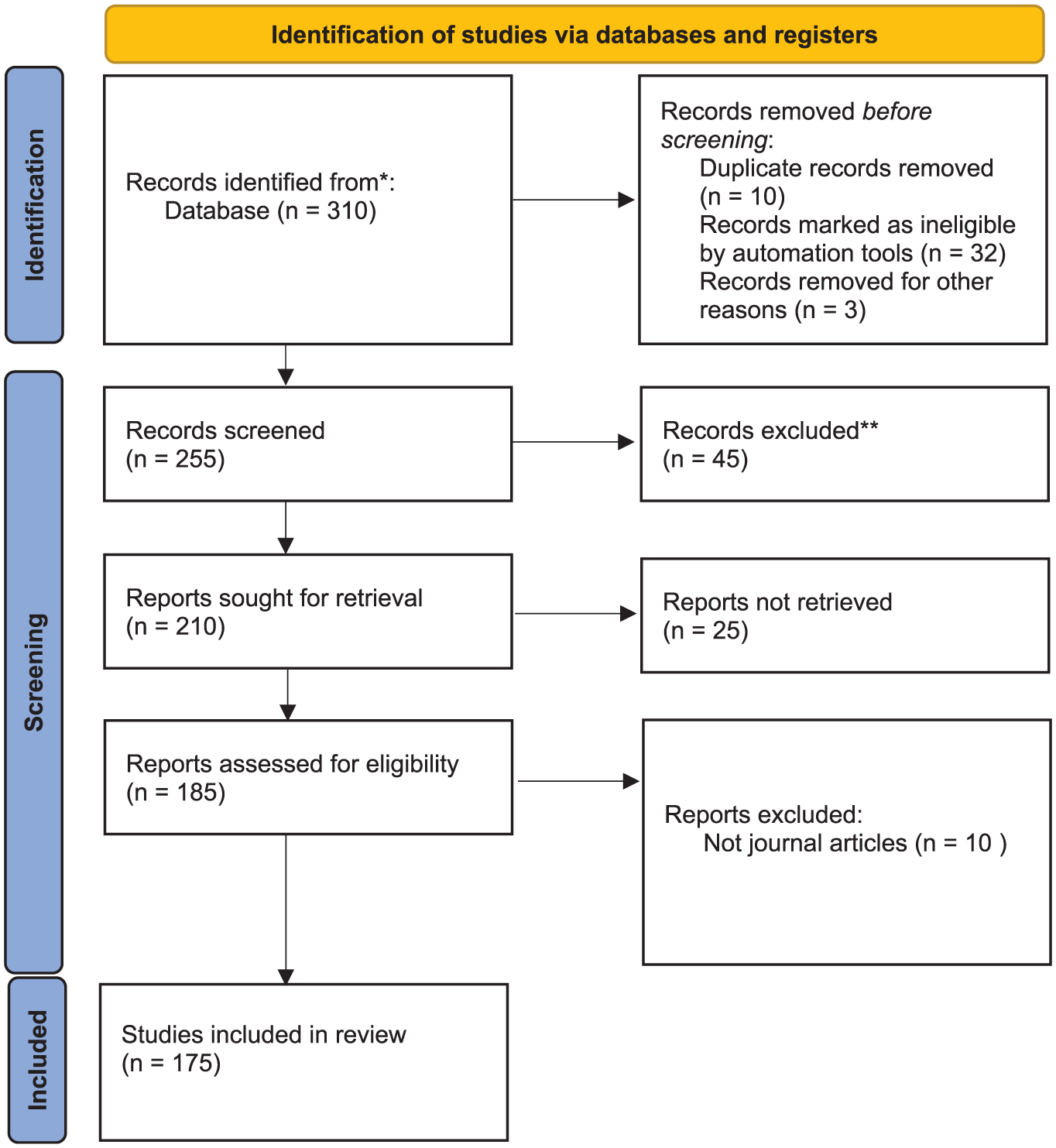
Five stages of bibliometric literature study method.
Result and Discussion
Our result shows that 175 publications on female entrepreneurs are examined in this study. Between 2009 and 2012, there was the most research on this topic, with 21 papers released. There were just four publications on ‘women entrepreneurs’ or ‘female entrepreneurs’ in 2003, and the number of publications increased year after year from 2004 to 2006. However, by 2020, the number of publications on ‘women entrepreneurs’ or ‘female entrepreneurs’ had dropped dramatically, with only one publication on the topic (Table 1).
Number of Paper.
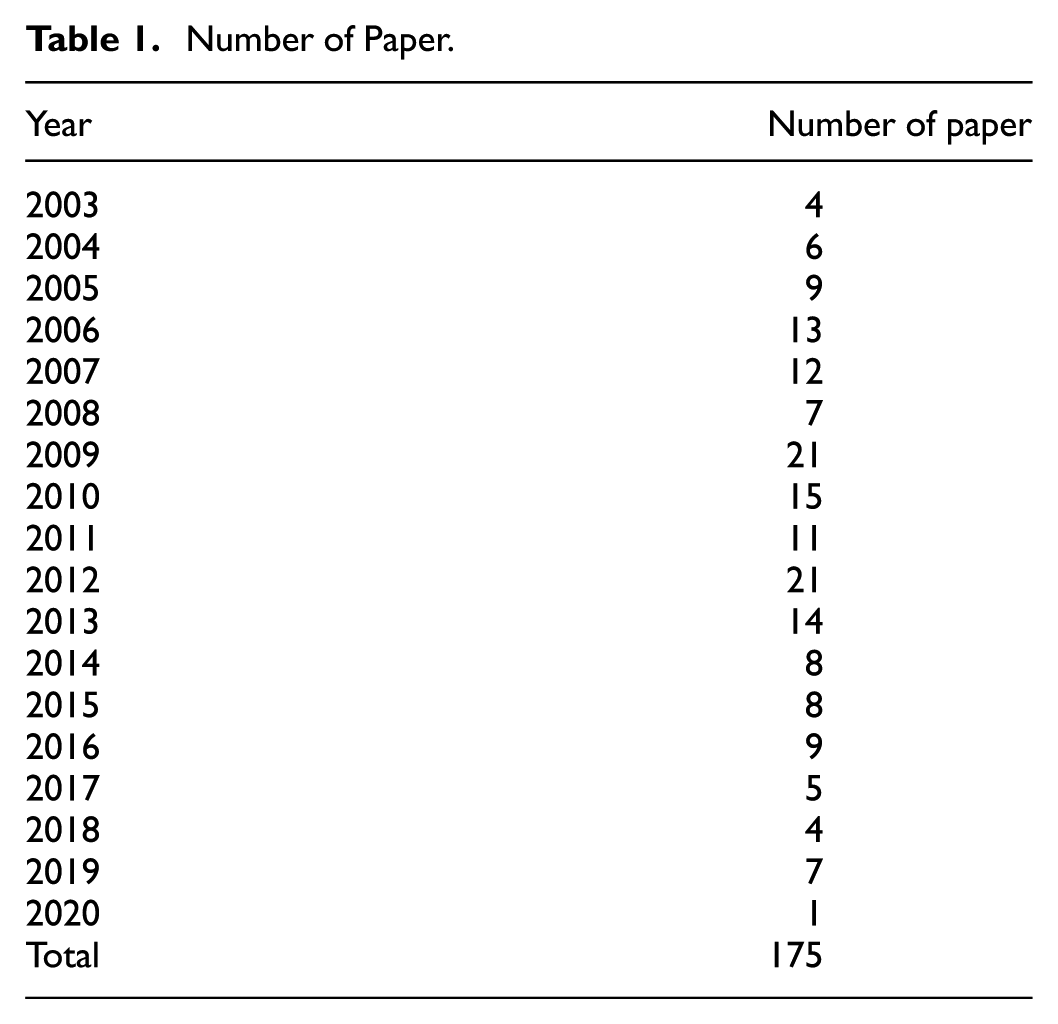
Figure 3 shows the tendency for the number of papers to fluctuate every year, where in 2003 there was an increase from 4 papers in 2006 to 13 papers, and the peak of the most published articles occurred in 2009 and 2012, namely 21 articles, but in 2014 there was a decrease in the number of published articles on ‘women entrepreneurs’ or ‘female entrepreneurs’, so that there is only 1 article in 2020. Because 2023 will not be completed until December 2023, our data is still temporary, and it is still possible to add to the collection of articles in this research.

Number of paper.
The Scopus database was used to achieve the goal of this study, which is to explore publications about female entrepreneurs. As the visualization parts of this study, VOSviewer was used to analyze the data, and three separate aspects of the data analysis were displayed: co-authorship, co-accuracy, and citations. The findings of the analysis are shown in the explanation that follows.
Co-Authorship
The authors’ connections are shown in Figure 4. Since none of the authors in Figure 3 are related to one another, it is hoped that more researchers would collaborate in the future to produce research findings of a better calibre (Pradana et al., 2023). The 152 authors in this list examine female entrepreneurship or topics related to women business owners.

Co-authorship.
Co-Accuracy
Additionally, we employed a co-occurrence analysis phrase, and our entire counting method yielded 60 keywords with at least one co-occurrence (Pradana et al., 2023). The frequency of phrases used in publications is displayed using keyword co-occurrence analysis (Gaviria-Marin et al., 2018). This is shown in Figure 3 with a display of keyword co-occurrence information.
The terms that are frequently used to describe a circle’s circumference are shown in Figure 4. Figure 4 shows a mapping and grouping of structures in the context of female entrepreneurs. Each group is represented by a distinct hue to emphasize the significance, closeness, and connectivity of each. This indicates that as one gets closer to the region of interest, the element’s density rises while decreasing as one gets farther away (van Eck & Waltman, 2010). Figure 5 demonstrates that the terms ‘women entrepreneur’ and ‘barrier’ appear the most frequently. Given these findings, which indicate a significant relationship between hurdles and female entrepreneurs.
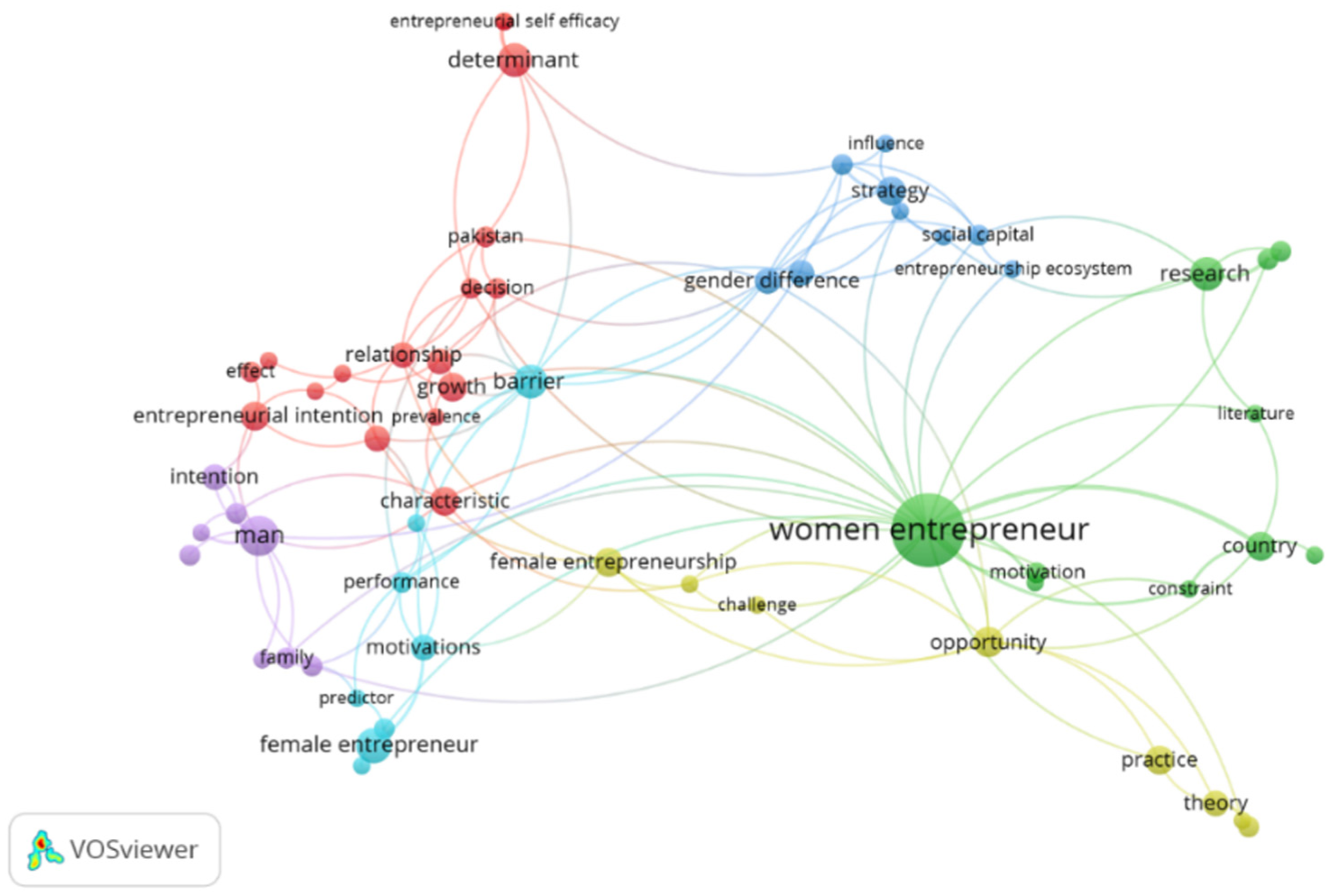
Co-accurrence (keywords).
The challenges faced by female entrepreneurs when they launch and expand their businesses are numerous. These barriers, which may manifest as challenges on the economic, social and cultural fronts, can severely restrict the expansion of women-owned firms. Female entrepreneurship may face significant challenges due to a lack of entrepreneurial management, which may cause risk aversion, slower development, poorer financial rewards, a higher chance of business failure and a diminished propensity to engage in entrepreneurial activities (Fanaja et al., 2023). Lack of financial resources was identified as a significant barrier to women’s entrepreneurship, resulting in risk aversion, slower growth, less financial advantages, a higher possibility of company failure, and a reduced inclination to engage in entrepreneurial activities. The role of finance in driving company growth and revenue generating.
Figure 6’s visualization overlay may demonstrate how keyword density rises over time. The colours indicate that the more yellow the cluster, the more recent the study (Pradana et al., 2023). The majority of the terms in blue, which represent the years 2005 to 2015, show that the increase of keywords has decreased recently in Figure 5. For words painted yellow, it is practically unnoticeable. These findings might serve as a springboard for further investigation to find keywords pertinent to female entrepreneurs.

Overlay visualization co-accurance (keywords).
Figure 7 displays the density of linked phrases as well as the quantity of nearby nodes (Hall, 2020). The yellow nodes, which display the level of saturation, reflect the number of phrases that appear frequently. The most often occurring keyword, ‘women entrepreneurs’, is in the yellow node, indicating that this topic has garnered the most investigation. There are various topics on the green nodes, including ‘performance’, ’inspiration’ and ‘challenge’. Green nodes show subjects which have not been thoroughly investigated.

Overlay visualization co-accurance (keywords).
Citation
The study was performed to discover which articles influenced women entrepreneurs the most. Table 2 contains further information on the top 10 women entrepreneurs listed.
Top Citations.

The top 10 most-cited publications are listed in Table 2 from the time of their publication until the writing of this article. The majority of citations come from studies released in 2006. The work with the most citations, ‘The mediating role of self-efficacy in the development of entrepreneurial intents’, written by Zhao et al. (2005), had a total of 1,542 citations, according to Table 2. Zhao et al. (2005) sought to understand the mediation function of self-efficacy in the formation of students’ intents to become entrepreneurs. Research The article Zhao et al. (2005) appeared in the Journal of Applied Psychology.
Table 3 lists the top authors who contributed the most to publishing their papers on the topic of women entrepreneurs out of all the authors whose papers were examined.
Top Authors.

According to Table 3, two authors produced four paper titles that were published on the subject of female entrepreneurs (Ahl, 2006; Kirkwood, 2007). ‘Exploring the Dynamics of Gender, Feminism, and Entrepreneurship: Advancing Debate to Escape a Dead End?’ was one of the four papers written by Ahl, aside of ‘Comparative analysis of state discourse in Sweden and the United States on how policy puts women entrepreneurs’ and ‘Why research on women entrepreneurs needs new paths’. The other is ‘Igniting the entrepreneurial spirit: Is the role parents play gendered?’ which was the title of one of the four papers by Kirwood.
According to these studies, female entrepreneurs’ performance depends greatly on motivation. The need for both personal and professional fulfilment, the desire to contribute positively to society, and the need for financial stability and independence are some of the key drivers for women in business (Ahl & Nelson, 2015). In order to increase the motivation of female entrepreneurs, it is essential to provide them with access to mentoring, networking opportunities, education, and training (Fanaja et al., 2023). Furthermore, it is crucial to recognize and celebrate the successes of women in business and to provide them the encouragement and support they require to be successful.
Some other angles can be used in analyzing the increasing existence of female entrepreneurs, For example, feminist perspectives challenge the traditional, male-centred paradigms of entrepreneurship by highlighting the influence of gendered structures on entrepreneurial processes (Hendrayati et al., 2025a). This approach not only critiques the invisibility of women in mainstream entrepreneurship research but also emphasizes the value of alternative entrepreneurial goals, such as community impact, empowerment, and relational leadership. It encourages recognizing women’s agency in transforming economic participation and redefining success beyond profit maximization (Franzke et al., 2022).
Social capital theory also focuses on the value derived from relationships, networks and social structures. Women often face limited access to formal financial and business networks, hence their reliance on informal and community-based networks becomes a strategic asset (Sharifi-Tehrani et al., 2024). This theory highlights the importance of trust, reciprocity, and network embeddedness in enabling or constraining women’s entrepreneurial ventures. We can also take a cultural perspective, where norms, values and societal expectations influence entrepreneurial behaviour. In many societies, cultural constructs about gender roles shape perceptions of women’s capabilities and appropriate economic activities (Zheng et al., 2025). Cultural barriers such as expectations of domestic responsibilities or restrictions on mobility can inhibit women’s entrepreneurial potential (Pounder, 2021). However, cultural theory also allows for the exploration of how women negotiate, resist or adapt these norms through entrepreneurship, creating hybrid identities that blend economic activity with traditional roles (Franzke et al., 2022).
Another big problem that women company entrepreneurs must handle is a lack of capital and resources. This can be particularly difficult for women starting businesses in sectors that have historically been controlled by males or for those who reside in areas with limited financial access (Fanaja et al., 2023). To overcome this issue, governments, banking institutions, and other organizations must provide female entrepreneurs with access to grants, loans, and other forms of financing. Women should have access to networking, mentorship, and business education and training programmes so they may build the relationships and skills essential for success (Cherotich et al., 2022).
Discussion
Several major themes that emphasize the distinctive contributions, difficulties, and opportunities for women in the entrepreneurial landscape come to light when talking about female entrepreneurship through bibliometric analysis (Deng et al., 2025). This conversation discusses the analysis’s findings and suggests future directions that might influence the field of study and its policy ramifications. According to the bibliometric analysis, research on female entrepreneurship has been steadily increasing, indicating a growing understanding of its significance (Hendrayati et al., 2025b). The goal of early research was to comprehend the socioeconomic and demographic traits of female entrepreneurs. Research has expanded over time to cover a range of topics, including the economic effects of female-led businesses, social capital, obstacles and motivations (Fanaja et al., 2023). With a focus on inclusive growth and social impact, this evolution indicates a continued interest in comprehending the subtleties of female entrepreneurship beyond conventional business metrics.
The particular set of obstacles faced by female entrepreneurs has been identified as a prominent area of research. The growth potential of female-led businesses is still hampered by gender-based issues like work-life balance, cultural norms and financial access (Brush et al., 2009). Numerous studies emphasize that, in comparison to their male counterparts, women may be constrained by less powerful networks and frequently face more stringent financing requirements. In order to overcome these challenges, this conversation highlights the necessity of specific policies and support systems, such as programmes that facilitate capital access, mentorship programmes and laws that take family obligations into account (Hendrayati et al., 2025b). Multiple studies have demonstrated that social networks as well as human capital are important resources for female entrepreneurs (Ahl & Marlow, 2012). Networks impact the running of business as they provide an otherwise elusive resources, knowledge, and opportunities. Other factors that increase the entrepreneurial skills and performance include the human capital aspects like education and experience (Hendrayati et al., 2025a). The bibliometric analysis emphasizes the importance of social support in enhancing the ability to withstand adversity in entrepreneurship, particularly in cases where women entrepreneurs are likely to face societal hurdles.
Technological change has also become one of the major drivers for women’s entrepreneurship, particularly after the COVID-19 pandemic (Nevi et al., 2025). The investigation recognizes a developing intrigued in advanced business enterprise, which brings down conventional boundaries to passage, such as physical space and capital prerequisites (Bruni et al., 2004). Technology-driven stages and e-commerce have engaged ladies to set up and scale businesses from domestic, hence relieving a few gender-specific challenges. This drift recommends that future inquire about ought to dig more profound into the computerized openings accessible to ladies, investigating both the benefits and potential dangers, such as cybersecurity and computerized proficiency (Hendrayati et al., 2025a).
This research gives a organized bibliometric investigation of inquire about on female enterprise, a moderately modern and advancing region of think about. By utilizing Scopus-indexed sources over the final two decades, our study distinguishes the patterns, primary points and compelling works inside this specialty. It highlights topics inside female entrepreneurship – such as ‘execution’, ’motivation’ and ‘challenge’– that have been insufficiently inspected, signalling crevices within the writing and indicating analysts towards promising ranges for advance examination. Our result reveals a need of scholastic collaboration and communication around female business enterprise investigate in creating nations, recommending an opportunity for more prominent information sharing and organizations. The discussion offers particular proposals for future inquire about on female business enterprise, directing researchers on where to centre their endeavours to develop understanding and contribute to the field. This paper also maps out a pathway for future considers, improving the academic exchange on female business enterprise in creating economies. Rather than merely tracking existing trajectories, our bibliometric analysis reveals several original insights that extend the academic conversation on female entrepreneurship.
Conclusion
Female entrepreneurs must contend with a number of challenges that might sap their enthusiasm and productivity, including discrimination, a lack of resources and networks, and juggling work and family obligations. Women from underprivileged or at-risk backgrounds may approach these difficulties with considerable energy. In the end, finding mentors and role models, creating communities and networks of support, and using training opportunities are a few tactics that may assist female business owners overcome these obstacles and achieve at their highest levels. Organizations and governments may assist create an environment in which women may thrive as entrepreneurs and contribute to economic growth and development by addressing these issues and giving women entrepreneurs the support which they need.
Female business entrepreneurs might be able to get beyond these barriers and succeed with the right tools and support. The same finding was reached in this study, which reviewed earlier works on female entrepreneurship based on co-authorship, co-occurrence, and citation. We searched the Scopus database for papers published between 2003 and 2023 and eliminated those that were repetitive, superfluous, or merely the incorrect type of publications (for example retraction notes and book chapters). Using clauses restricted by keyword density and other variables, 175 articles were found and analyzed. By utilizing bibliometric analysis and scientific mapping techniques, this study has presented its contribution in objective investigation of the underlying structure and growth of the female entrepreneurship domain.
Academic Implications
The academics can contribute in the female entrepreneurship sector by examining informal sector and non-traditional forms of women’s entrepreneurship often excluded from mainstream datasets. The entrepreneurial studies should focus on how cultural norms affect motivation, identity, and legitimacy of female entrepreneurs. Universities may also begin to develop entrepreneurship labs or accelerators within universities for female students and alumni and involve established female entrepreneurs to share knowledge and experience to motivate future entrepreneurs.
The implications of the study can also be outlined across various levels, providing insights for academic research, policy-making, industry practices, and social development. The analysis reveals under-researched areas in female entrepreneurship, guiding scholars towards topics such as intersectionality (e.g. the experiences of women entrepreneurs across different races or socioeconomic backgrounds), studies that are specific to a given industry and the part that digital technology plays in women-led businesses. The most popular research methodologies are highlighted to educate scholars about current practices and create opportunities for the use of a variety of approaches, including mixed methods, comparative cross-cultural analyses, and longitudinal studies, to enhance findings. New theoretical frameworks tailored to female entrepreneurship can be developed based on emerging themes, which may include gender-sensitive elements like social networks, funding availability, and juggling work and family responsibilities. Our mapping demonstrates a decisive transition in scholarship: early work preoccupied with profiling the who of women entrepreneurs has now given way to inquiries into the why and how of their impact. This signals a maturing field that positions female entrepreneurship not as a niche demographic curiosity but as a structural force in inclusive growth and social innovation. The bibliometric patterns highlight a striking lack of cross-country collaboration, particularly in the Global South. This fragmentation underscores missed opportunities for comparative insights and co-created knowledge, yet also points to a fertile frontier: the need to build collaborative networks that transcend geographic and cultural silos.
Practical Implications
We also propose some practical implications. The findings suggest that the academics have not been in touch much in the topic of female entrepreneurship which signs that collaboration and communication between organizations, nations, and scholars are lacking. Academic articles on female entrepreneurship need stronger collaboration between experts on this field in business, economics, or any other related sectors. Our study was also limited on one major constraint. We focused on exploring Scopus database and did not consider any other database due to our lack of access. Future study may solve this issue by broadening the data sources taken from multiple databases, thus can provide a more extensive bibliometric analysis. Insights from research on female entrepreneurship can be used by a variety of organizations to develop programmes that assist women-led enterprises, such as partnerships with women-owned businesses or supplier diversity initiatives.
Investors and venture capitalists can promote gender diversity in portfolios by making more informed and inclusive investment decisions by identifying industries where female entrepreneurs are underrepresented or particularly active. Businesses that support female entrepreneurs, particularly in cultures that prioritize family, can address the particular difficulties that women may encounter by implementing policies like remote work options or flexible work schedules. The findings can help policymakers develop targeted support systems, such as grants, incubation programmes, and gender-sensitive financial policies, to help female entrepreneurs raise money and overcome structural barriers. The development of training programmes that target particular needs, like mentorship in areas like financial literacy, digital skills, and scaling strategies, can also be guided by data on the difficulties and patterns in female entrepreneurship. Last but not least, identifying nations with strong research and support networks for female entrepreneurs can promote global cooperation, facilitating the exchange of knowledge and the creation of international best practices.
While studies repeatedly document barriers such as financing, networking, and cultural norms, our synthesis reframes these not as static obstacles but as actionable points for intervention. The results stress that policy design must move beyond gender-neutral support towards gender-responsive ecosystems – where mentorship, digital literacy, and family-sensitive regulation are not optional add-ons but foundational requirements. Our findings highlight digital platforms as both democratizers of access and potential amplifiers of inequality. Female entrepreneurs benefit disproportionately from digital tools that remove traditional entry barriers, yet they also face amplified risks of exclusion through low digital literacy and heightened cybersecurity vulnerabilities. This duality suggests future research must interrogate digital divides within digital solutions. Instead of treating culture as an explanatory aside, our analysis elevates socio-cultural dynamics as a central determinant of entrepreneurial outcomes. The findings invite scholars to localize theory-building: rather than applying universalist models, studies must develop context-sensitive frameworks that capture how norms, values, and policy interact to shape women’s entrepreneurial agency.
Limitations
We also had limitations in exploring underexplored topics such as motivation, performance, and resilience, which are remain less examined despite being critical to long-term entrepreneurial sustainability. Our research is disproportionately concentrated in developed economies, leaving developing-country contexts underrepresented. However, by highlighting these patterns, our study does not simply aggregate what is known – it reconfigures the research agenda. We propose that the next wave of scholarship must be deliberately comparative, context-anchored, and intervention-oriented, ensuring that academic insights translate into tangible support for women entrepreneurs globally.
Future Research Directions
Based on the bibliometric analysis, future research should address there is a need to explore how different identities (e.g. race, class, disability) intersect and influence the entrepreneurial experience for women. Few studies provide a long-term perspective on the growth trajectories and sustainability of female-led ventures. Longitudinal data would offer insights into the long-term impact of female entrepreneurship. Research could further explore the efficacy of specific policies and institutional programmes in supporting female entrepreneurs, identifying best practices across different regions. There is a growing interest in sustainable and socially impactful businesses. Investigating how female entrepreneurs contribute to social change and environmental sustainability could provide a fresh perspective on their role in the economy.
Footnotes

Funding
The authors received no financial support for the research, authorship, and/or publication of this article.
Declaration of Conflicting Interests
The authors declared no potential conflicts of interest with respect to the research, authorship, and/or publication of this article.
Data Availability Statement
Data sharing not applicable to this article as no datasets were generated or analyzed during the current study.