



Abstract
The study evaluates the present state of global research on financial inclusion and well-being of female entrepreneurs, including the identifications of key contributors, patterns of collaborations, a thematic map, and the intellectual and social structure that supports this domain. A bibliometric analysis was conducted on a sample of 332 documents pertaining to women entrepreneurship and financial well-being. The analysis was centered on inclusion-exclusion criteria that were established using a specific search technique on the Scopus database, encompassing the time frame from 2010 to 2023. The bibliometrix R and VOSviewer tools were utilized for the research. The findings indicate that the interdisciplinary domain of women’s entrepreneurship and financial well-being has transformed. This research uncovers the conceptual structure, illuminates the intellectual framework, and focuses on the most critical concerns in this sector, namely, how to accomplish sustainable objectives (SDG 8) through integrating female entrepreneurs in the financial ecosystem. This study offers valuable insights for researchers, policymakers, and practitioners, promoting a more nuanced understanding of female entrepreneurs’ financial inclusion. This research highlights the significance of multidisciplinary collaboration and the opportunities given to female entrepreneurs in attaining sustainable development goals and promoting financial inclusion.
Plain language summary
This research assesses the current status of international studies on financial inclusion and the well-being of female entrepreneurs. It also identifies important contributors, examines collaboration patterns, provides a thematic map, and examines the intellectual and social framework supporting this field. A selection of 332 documents about women’s entrepreneurship and financial well-being were subjected to a bibliometric study. The focus of the analysis was inclusion-exclusion criteria that were developed by means of a particular search method on the Scopus database, covering the period from 2010 to 2023. For the investigation, VOSviewer and bibliometrix R were used. The results show a transformation in the interdisciplinary field of women’s financial well-being and entrepreneurship. This study reveals the conceptual framework, sheds light on the intellectual framework, and addresses the most pressing issues in this field, specifically, how to achieve Sustainable Development Goal 8 (SDG 8) by including female entrepreneurs into the financial ecosystem. This study contributes to a more sophisticated knowledge of the financial inclusion of female entrepreneurs by providing insightful information to researchers, policymakers, and practitioners. This study emphasizes the value of interdisciplinary cooperation as well as the chances that female entrepreneurs have to realize sustainable development objectives and advance financial inclusion.
Introduction
Financial well-being is a relatively new research topic that has received a lot of attention in the last few years (Nguyen, 2022). Financial well-being is the capacity to meet the present and future obligations and requirements of one’s lifestyle (Brüggen et al., 2017). It is a component of overall well-being. According to the literature, financial well-being management is crucial since it affects many aspects of life (Xue et al., 2019). Further, financial well-being is vital for attaining the Sustainable Development Goals for safeguarding the earth and promoting human prosperity by 2030 at National and International levels (Fu, 2020). In addition, financial well-being, particularly among female entrepreneurs, is critical to accomplishing sustainable development goals. SDG 8, which discusses decent work and economic growth, is an important target to encourage long-term, inclusive, decent work for all, especially women entrepreneurs. By incorporating female entrepreneurs into SDG, they access a more comprehensive range of resources, including capital and cutting-edge technology. The United Nations underscores the significant potential of women entrepreneurs in fostering sustainable solutions to a multitude of global issues, such as poverty, education, inequality reduction, and human rights. Sustainable Development Goal 8 (Decent Work and Economic Growth) encompasses specific objectives and targets aimed at explicitly advancing sustained economic growth, creating employment opportunities, and ensuring decent work for all individuals, including women. It is imperative to enhance our comprehension of research development concerning women entrepreneurship and sustainable development, particularly in light of the remarkable increase in women entrepreneurship within developing countries, as insights derived from such research can substantially contribute to the 2030 Agenda (Agarwal & Lenka, 2018; Tripathi & Singh, 2018). Moreover, empirical evidence suggests that the cognizance of sustainable development matters among women entrepreneurs is on the increase. Female entrepreneurs associate their commercial endeavors with sustainable development objectives such as mitigating economic distress within communities, advancing gender parity, and implementing environmentally sustainable practices (Bartik et al., 2020; Grandy et al., 2020). Improving the financial stability of rural women entrepreneurs is essential for achieving Sustainable Development Goal 8, which aims to promote equitable and sustainable economic growth, ensure full and productive employment, and create good job opportunities for all. This research supports local economic engagement and growth by providing women with financial resources, information, and skills, ultimately benefiting the entire community. When women entrepreneurs are financially secure, they can create jobs, drive innovation, and reduce economic inequalities, which helps formalize the economy and push for fair working conditions. This link to Sustainable Development Goal 8 highlights that boosting rural women’s financial well-being benefits individual entrepreneurs and accelerates progress toward broader economic growth and sustainability goals. The importance of financial services, including microfinance, is emphasized in SDG 8. Moreover, access to these services is critical for women entrepreneurs’ financial well-being, as it enhances their confidence and encourages financial inclusion, contributing to their overall well-being. Thus, financial well-being is a prevalent issue among scholars worldwide, with numerous methodologies used (Nguyen, 2022).
While multiple studies have employed bibliometric analysis to examine trends in financial well-being, there needs to be more research explicitly focusing on the financial well-being of women entrepreneurs. The financial inclusion of female entrepreneurs is strongly connected to their financial access and well-being. Access to financial services such as finance, market access, and credit facilities can help women entrepreneurs grow their businesses. It improves their financial well-being and inclusion, promoting economic growth and development. Therefore, the present study offers remarkable insights into the research patterns in women entrepreneurs’ financial well-being and inclusion. This study also offers a deeper understanding of how the improvement of women’s financial well-being and entrepreneurship is significantly contributing to the attainment of the Sustainable Development Goals (SDGs). As a result, the main goal of this research is to discover and analyze major studies on the financial well-being of female entrepreneurs to identify the most significant authors, organizations, nations, and journals in this specific domain. Furthermore, it sheds insight into the present concerns and societal impact. The primary objective of this article is to gather academic literature and offer responses to relevant queries concerning this field of study.
The primary contributions of the study are:
The study revealed the primary determinants that enhance the financial prosperity of female entrepreneurs.
The study found the main list of authors, countries, and groups regularly working on women entrepreneurs’ financial well-being and inclusion.
The study identified prevailing trends in research within this domain and proposed prospective trends in research topics.
Additionally, the study ascertained the collaboration structure among countries and the most pertinent authors, co-authors, and authors concerning future research endeavors.
The structure of the paper is outlined in the following manner. Section 2 presents an overview of the study’s background by conducting a thorough review of the available literature. Section 3 describes the approach, search strategy, and data extraction process. Section 4 presents the discussions and findings of the study. Section 5 represents the conclusions, followed by section 6, which signifies the study’s practical implications. Lastly, the limitations and future scope of the study are mentioned in section 7.
Literature Review
Given the distinct obstacles that women encounter in the domain of financial planning and security, it is crucial to acknowledge and comprehend the significant ramifications that these issues have on women (Sundarasen et al., 2023). The participation of women in both domestic and professional spheres has played a crucial role in the advancement of society across several global indicators (Parmar & Gahlawat, 2020). In essence, financial well-being is a multidimensional concept that reflects an individual’s subjective impression of their current and future way of life and their ability to experience financial independence as influenced by relative judgments (Bashir et al., 2024). Although women’s entrepreneurship promotes economic growth and development, the growth rate of women entrepreneurs in India is not promising (Bosma & Kelley, 2018). According to Love et al. (2023), female entrepreneurs in low and middle-income countries exhibit lower levels of well-being, but in high-income countries they exhibit higher levels of well-being. Women entrepreneurs who have attained higher levels of education tend to have more financial prosperity.
Harry (2021) suggests a positive correlation between the level of financial inclusion among women entrepreneurs and their overall financial performance. However, Ademola et al. (2022) indicated that irregular income of women entrepreneurs, distant bank branches, illiteracy, and poor educational levels of women are critical barriers to financial inclusion. Therefore, these barriers limit women’s entrepreneurial endeavors. Islam et al. (2020) also finds that access to information significantly impedes women entrepreneurs’ capacity to capitalize on the possibilities provided by regulators. Also, financial literacy issues hinder the financial health of Indian women, leading to severe problems. Over time, women recognize the value of savings and investing for their financial well-being.
Moreover, including women entrepreneurs in financial inclusion will promote national progress (Baluja, 2016). Women’s economic and social empowerment may be significantly enhanced via their participation in financial systems. It offers extensive remedies to address poverty, foster equitable development, and contribute to achieving Sustainable Development Goals (SDGs). Women and women-owned firms can gain financial independence and contribute to economic progress by utilizing a range of internet-based services as strategies (Choudhary & Jain, 2023). Saluja et al. (2023) observed that economic and financial interventions can be effectively employed to develop meaningful strategies to promote entrepreneurship among women. Thus, it is crucial to ensure that these interventions are not merely theoretical but are implemented and utilized for the intended purpose.
Research Methodology
The present investigation utilizes bibliometric analysis to scrutinize the extant academic literature and discussion concerning the financial well-being of female entrepreneurs. The analysis of this study starts with selecting the database, which is then followed by the collection of data using the search technique (Figure 1).

Documents selection process.
The data required for this study were extracted after recognizing and choosing an appropriate database. Scopus was selected to meet the objectives of the current study. The specific database is chosen for its exhaustive and all-encompassing collection of research output from various academic disciplines worldwide. This was followed by executing a search query containing the optimal combination of multiple keywords. The dataset is subjected to analysis utilizing software tools after being compiled as per the necessary inclusion and exclusion criteria. The data were acquired from the Scopus database in a CSV (comma-separated values) format. The following search criteria were used on December 26, 2023 to shortlist the relevant papers.
Search Query
TITLE-ABS-KEY (“women entrepreneurship” OR “female entrepreneurship” OR “women entrepreneur” OR “female entrepreneur” OR “entrepreneur” OR “women” AND “financial inclusion” OR “financial wellbeing” OR “economic wellbeing” OR “financial access” OR “financial literacy”) AND PUBYEAR > 2009 AND PUBYEAR < 2,024 AND (LIMIT-TO (SUBJAREA, “SOCI”) OR LIMIT-TO (SUBJAREA, “ECON”) OR LIMIT-TO (SUBJAREA, “BUSI”) OR LIMIT-TO (SUBJAREA, “ARTS”) OR LIMIT-TO (SUBJAREA, “MULT”)) AND (LIMIT-TO (DOCTYPE, “ar”) OR LIMIT-TO (DOCTYPE, “re”)) AND (LIMIT-TO (LANGUAGE, “English”)) AND (LIMIT-TO (PUBSTAGE, “final”)) AND (LIMIT-TO (SRCTYPE, “j”)) AND (LIMIT-TO (OA, “all”))
Bibliometric Analysis
Information and data are extracted from the Scopus database for this study and analyzed utilizing Biblioshiny and the VOS viewer software. This study used documents from the Scopus database, renowned for its comprehensive coverage and wide selection of journals, making it one of the most comprehensive abstract and citation databases globally (Sharma et al., 2023). Scopus is a dynamic database that receives updates often. Bibliometric analysis is used to evaluate trends in a researcher’s work, provide evidence for the impacts of a researcher or area of study, and deconstruct scientific field dynamics (Shan et al., 2023). This investigation utilizes biblioshiny and VOS viewer to identify latent themes in a body of texts by analyzing word co-occurrence patterns (Sundarasen et al., 2023). The integration of diverse bibliometric methodologies such as Bibliometrix R, Biblioshiny, and VOS viewer significantly enhances the research framework by facilitating a comprehensive assessment from various perspectives. Each instrument possesses distinct advantages that, when utilized in conjunction, yield a more resilient and multifaceted comprehension of the academic literature. Furthermore, the study incorporated Bibliometrix software, which improved the analysis of the quantitative data obtained about authors, papers, affiliations, and countries (Martínez-Falcó et al., 2024). Biblioshiny, as a derivative of Bibliometrix, presents an interactive and user-centric interface, rendering intricate bibliometric analyses more accessible while offering a range of visual representations for enhanced understanding. To conduct a more thorough investigation, the study used Vos Viewer to generate a network and overlap map. This tool was crucial in determining the prevailing keywords in the published work and monitoring their development over time (Ingale & Paluri, 2022). VOS viewer serves to augment these tools by allowing for the development and investigation of intricate network diagrams, elucidating the interconnections among keywords, authors, and research themes. The combined use of these tools ensures a more comprehensive and reliable bibliometric assessment in comparison to depending on a single or restricted set of methods, so precisely capturing the complexities of the research field and strengthening the conclusions of the study with a strong evidence-based foundation. Specifically, a bibliometric analysis technique provides comprehensive scientific findings by employing critical methodologies such as three-field plot analysis, core sources according to Bradford’s law, tree map analysis, theme map analysis, bibliographic coupling, etc.
This bibliometric study aims to address the following research questions:
What is the present level of knowledge and research trends concerning the financial well-being and inclusion of female entrepreneurs?
Which are the most significant sources, authors, and organizations in this specific field of study?
Which countries made the highest contributions and collaborations in this field from 2010 to 2023?
What is the thematic framework of women’s entrepreneurship and financial well-being research?
What is the intellectual and social structure that supports this particular field of research?
The above research questions for this study lead to the following research objectives:
To identify and assess the most influential authors, sources, and organizations and quantify current knowledge on financial well-being and inclusion of women entrepreneurs.
To identify and analyze the contributions and collaboration made by various nations regarding financial well-being and women entrepreneurs between 2010 and 2023.
To develop a thematic framework and map the social and intellectual foundation that underpins the studies on the financial well-being of female entrepreneurs.
Both network analysis and descriptive analysis are utilized to accomplish the goals outlined effectively.
Analysis Using Biblioshiny
The analysis was initiated by employing Biblioshiny, an advanced and intuitive web application developed to streamline the bibliometric procedure (Afjal, 2023). By facilitating the extraction, visualization, and analysis of intricate research data, this software empowers researchers to optimize their research methodology within the domain of scholarly literature.
The data obtained from the Scopus database was analyzed using the Biblioshiny R package. The resulting dataset, which focuses on publications related to women entrepreneurship and their financial well-being and inclusion, is displayed in Table 1. It furnishes significant perspectives regarding the assessment of research within this particular field. Despite extracting 1,167 articles, 332 papers were identified as relevant for the study after filtering several inclusion criteria. The papers were published in a total of 206 sources, with an average citation score of 18.79. Additionally, the percentage of international co-authorship was 32.83%.
Main Information About the Dataset.

Source. Biblioshiny.
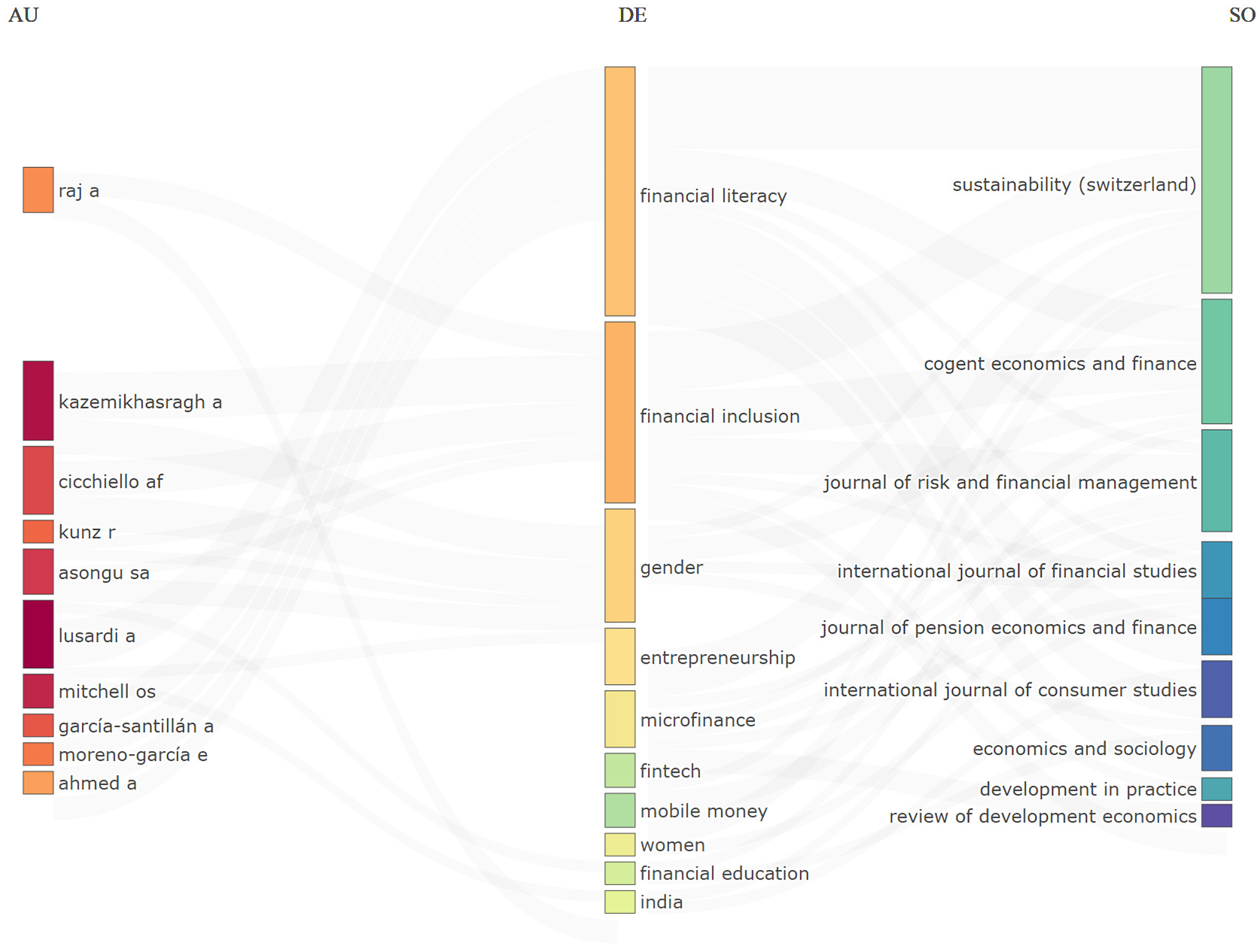
Authors, keywords and source.

Annual scientific production.
Annual Scientific Production
Figure 3 illustrates the study outcome of women entrepreneurs’ financial well-being and inclusion. It displays the total number of papers published between 2010 and 2022 in the most prestigious journals in the subject area of women entrepreneurs’ financial well-being and inclusion. The data indicates a rising volume of published articles, suggesting an expanding level of interest in the subject. Between 2010 and 2016, the study area had a moderate but constant growth in the number of published articles, but after 2017, it rose significantly, with 71 papers in 2022 and 70 papers in 2023. While there has been a consistent growth in the number of publications on this subject, it has yet to achieve a state of maturity.
Most Relevant Sources
The Figure 4 illustrates a bibliometric analysis of the primary sources pertinent to financial inclusion, financial well-being, and women entrepreneurship. It presents a list of the top 10 most referred journals, ordered by the number of papers published, emphasizing significant publications in the area. Sustainability, which contains 22 articles, PLOS One, which contains 12 articles, and Cogent Economics and Finance, which contains 10 research articles, are the top three pertinent sources for research in this field. The sources with the fewest publications in this field are the Review of Development Economics, the International Journal of Consumer Studies, and Economics and Sociology.

Most relevant sources.
Bradford’s Law
The concept of Bradford’s law of dispersion delineates three distinct hierarchical zones (Figure 5). These zones can be described as forming a geometric sequence. The figure provides a concise overview of the divisions inside the nucleus.

Core sources by Bradford’s Law.
Sources’ Local Impact
The 10 most influential journals in the field, as ranked by h-index, are illustrated in Figure 6. The h-index is a measure that represents the highest value of “n,” where “n” is the number of journals that have published “n” articles with at least “n” citations (Tony & Desai, 2020). The h-index may serve as a more reliable measure of an individual article’s excellence and the overall caliber of a publication.

Source’s local impact by H-index.
Sources’ Production Over Time
Figure 7 depicts the temporal evolution of research on the relationship between women’s entrepreneurship, financial access, and financial well-being. It specifically highlights the top 6 most significant sources from 2010 to 2023. The leading publications in women’s entrepreneurship and financial well-being include Cogent Economics and Finance, Development in Practice, International Journal of Financial Studies, and Journal of Pension Economics and Finance.
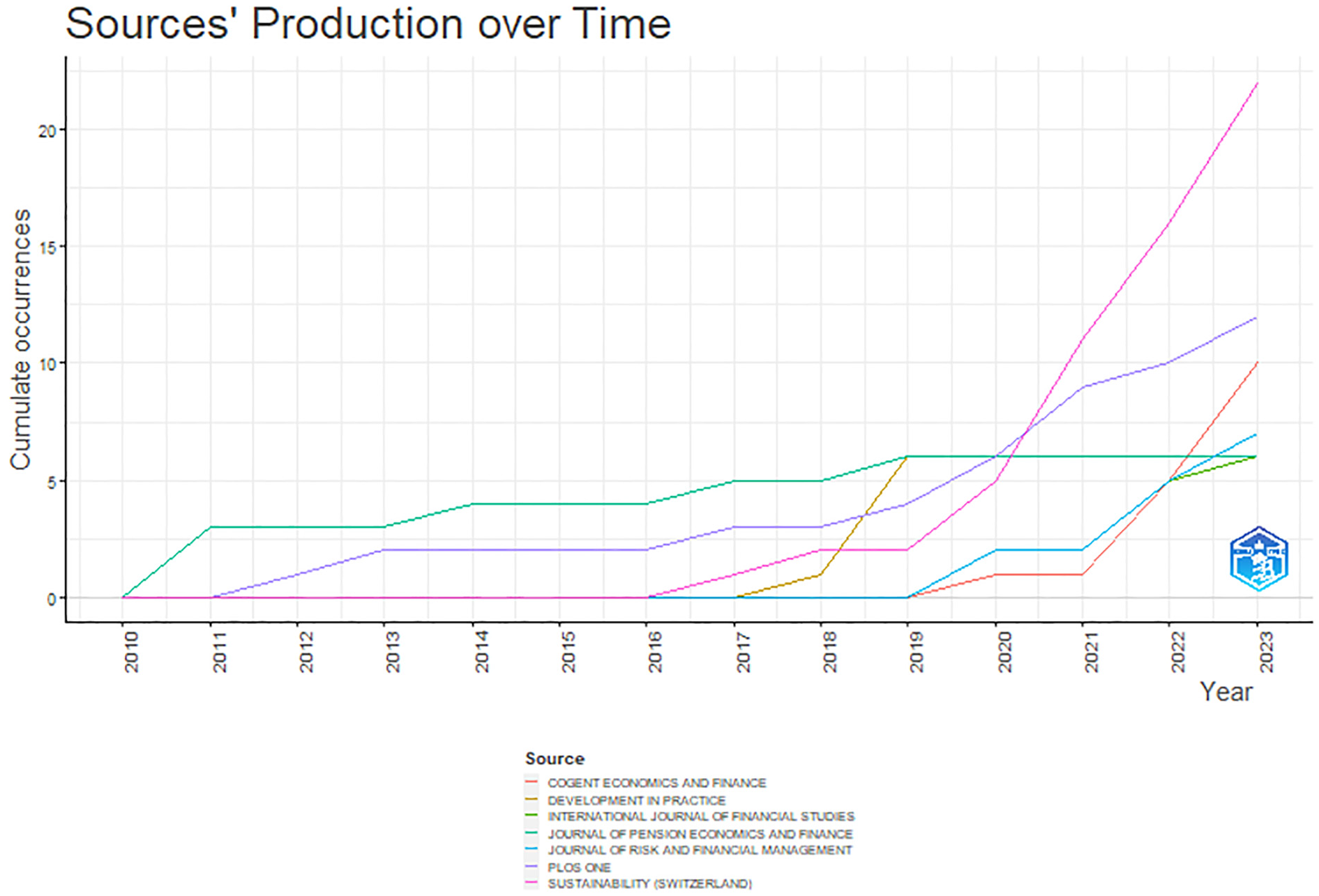
Sources’ production over time.
Most Relevant Authors
Figure 8 displays the top 10 authors who are most significant in the study area of female entrepreneurship, financial inclusion, and the promotion of financial well-being. An essential aspect of comprehending the leading contributors in this discipline is the understanding of the production trends of top authors over time. Lusardi A is the most prolific author, having authored seven papers. Following closely are Kazemikhasragh A and Mitchell OS, each with four publications. This data provides researchers with valuable insights into women’s entrepreneurship, financial inclusion, and well-being, intending to collaborate with domain experts and expand upon their contributions to the body of knowledge.

Most relevant authors.
Authors’ Production Over Time
Figure 9 depicts the top 10 authors’ research productions overtime on the subject of the financial well-being of women entrepreneurs. The figure presents information on the authors, publishing years, total citations, and yearly citation rates. Lusardi A is the most prolific author, with publications from 2011 to 2017 demonstrating different citation counts.

Authors’ production over time.
Corresponding Author’s Countries
As indicated by the countries of the corresponding authors, Figure 10 depicts the list of the most significant contributors. This suggests that articles have appeared in publications from both a single-country publication (SCP) and multiple-country publications (MCP). India, the United Kingdom, and the United States of America are the top three countries in terms of the number of articles written on the subject. In contrast, Bangladesh and Japan are the least contributing nations.

Corresponding Author’s countries.
Country Scientific Production
The geographical locations of all contributing countries are depicted in Figure 11. The number of publications is denoted by a progression from dark to light blue, with gray signifying the absence of any contribution. United States, India, and Indonesia make the largest contributions.
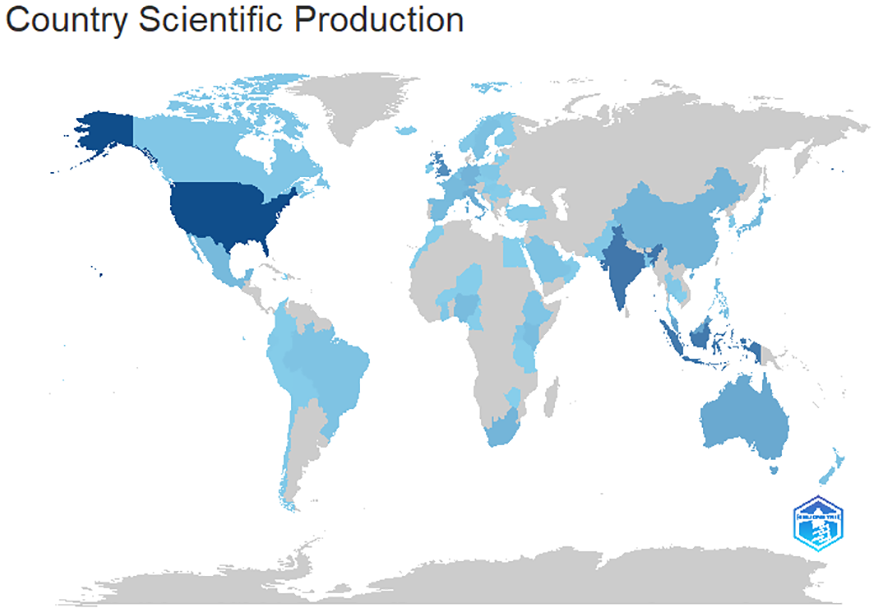
Country scientific production.
Researchers can discover major nations and collaborations that contribute significantly to the advancement of the study area by reviewing their collaboration global map. Figure 12 depicts a collaborative world map in the study field of women’s entrepreneurship and financial well-being, emphasizing their critical role in financial inclusion.

Collaborative World Map.
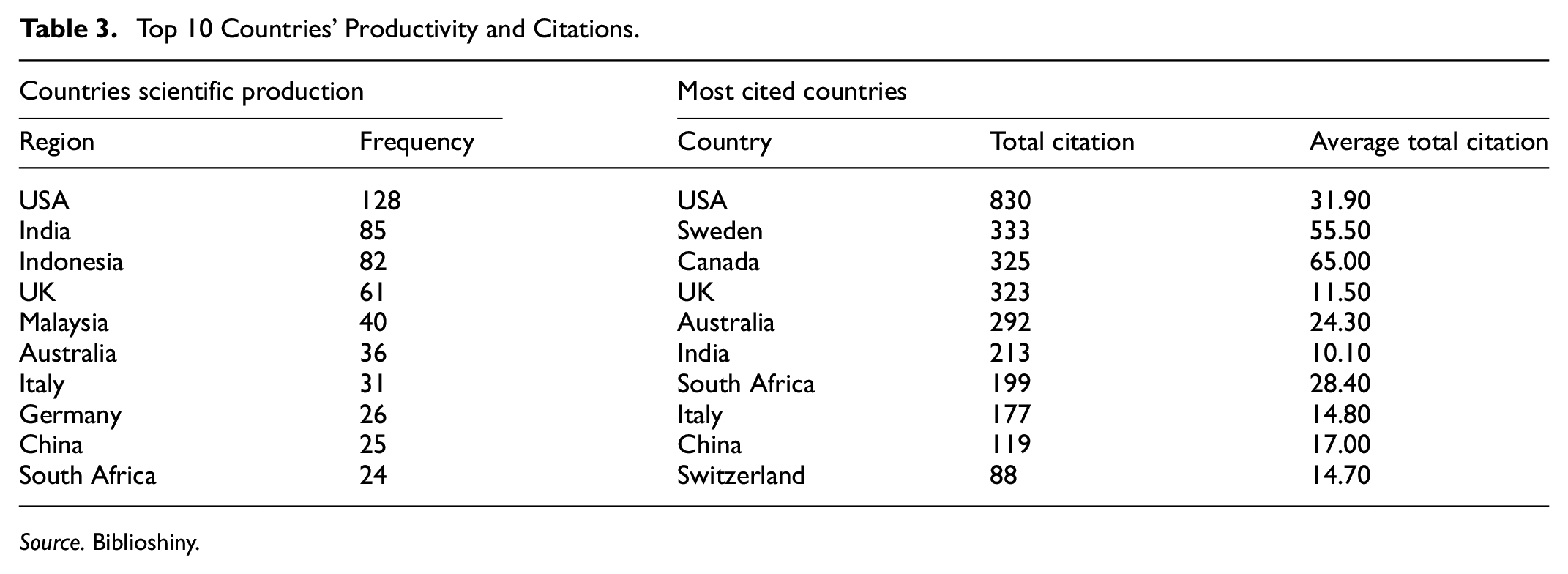
The table illustrates the relative contributions of different nations to the subject matter. It indicates that the most substantial contributions to the extant body of literature have originated from countries with advanced economies. Most articles in the region were from the US, with India coming in a distant second. Additionally, the number of publications in the field correlates with the number of citations the papers receive. Regarding citation performance, bibliometric data indicates that the USA and Sweden are at the forefront, followed by the UK, Canada, Australia, and India.
Most Global Cited Documents
In the realm of research concerning women entrepreneurs and financial well-being, the documents that have received the most global citations are displayed in Figure 13. With 747 citations annually, LUSARDI A. is the author who gets the most citations on a worldwide scale. Notably, Drexler and Bucher-Koenen have made substantial contributions to this field, with 276 and 231 citations respectively.

Most global cited documents.
Word Cloud
The keyword frequency analysis within the article revealed that the term “female” was utilized the most, occurring a total of 44 times. This was followed by terms such as “adult,” “human,” “male,” and “entrepreneur,” etc. The Figure 14 illustrates a word cloud, which serves as a graphical depiction of the word frequencies present in the document. Since 2016, there has been a significant surge in the frequency of word occurrences. The word cloud indicates that these studies have examined several elements that are crucial in determining the financial prosperity of female entrepreneurs.

Word Cloud.
Trend Topics
Figure 15 illustrates the increasing popularity of the most prevalent topics using a two-dimensional scale. The frequency of occurrence is exhibited on the vertical axis, while the years of publication are represented on the horizontal axis. An intriguing trend was discovered after an examination of the issues that have been discussed during the past 5 years. There is a consistent upward trend from 2018 to 2023, with adults and females being the most prominent themes in 2018.
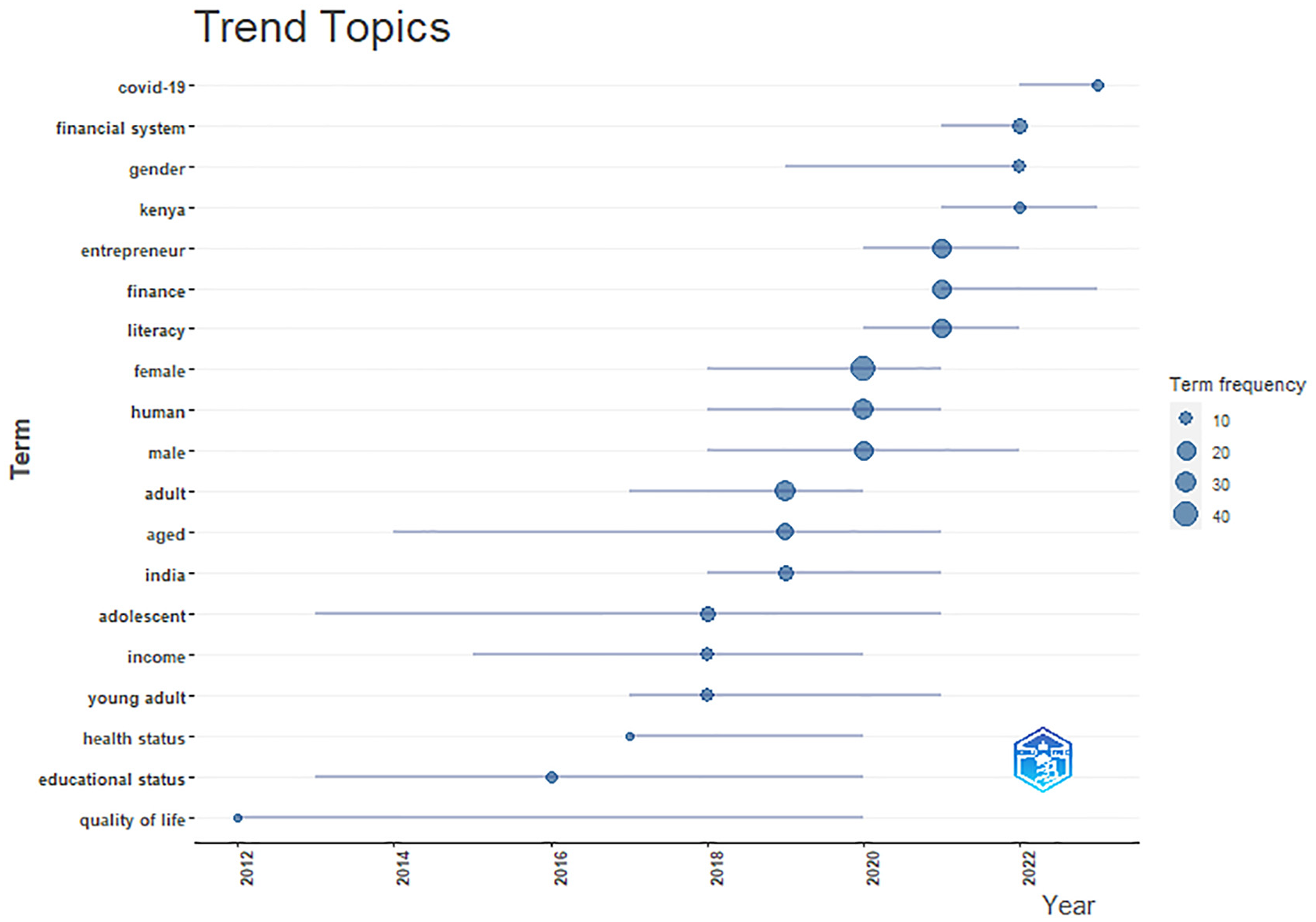
Trend topics.
Tree Map
Figure 16 provides a visual representation of the tree map that illustrates the most significant author’s word dynamics within the context of this research. Tree maps are illustrative depictions of hierarchical data wherein layered rectangles represent the nodes (Lada et al., 2023). A tree map is composed of dimensions and measurements. The values inside the dimensions will determine the layout of the structure (Kumar & Kumar, 2023) . The utilization of the keyword “female” is the most prevalent at 8%, as illustrated in the diagram below.
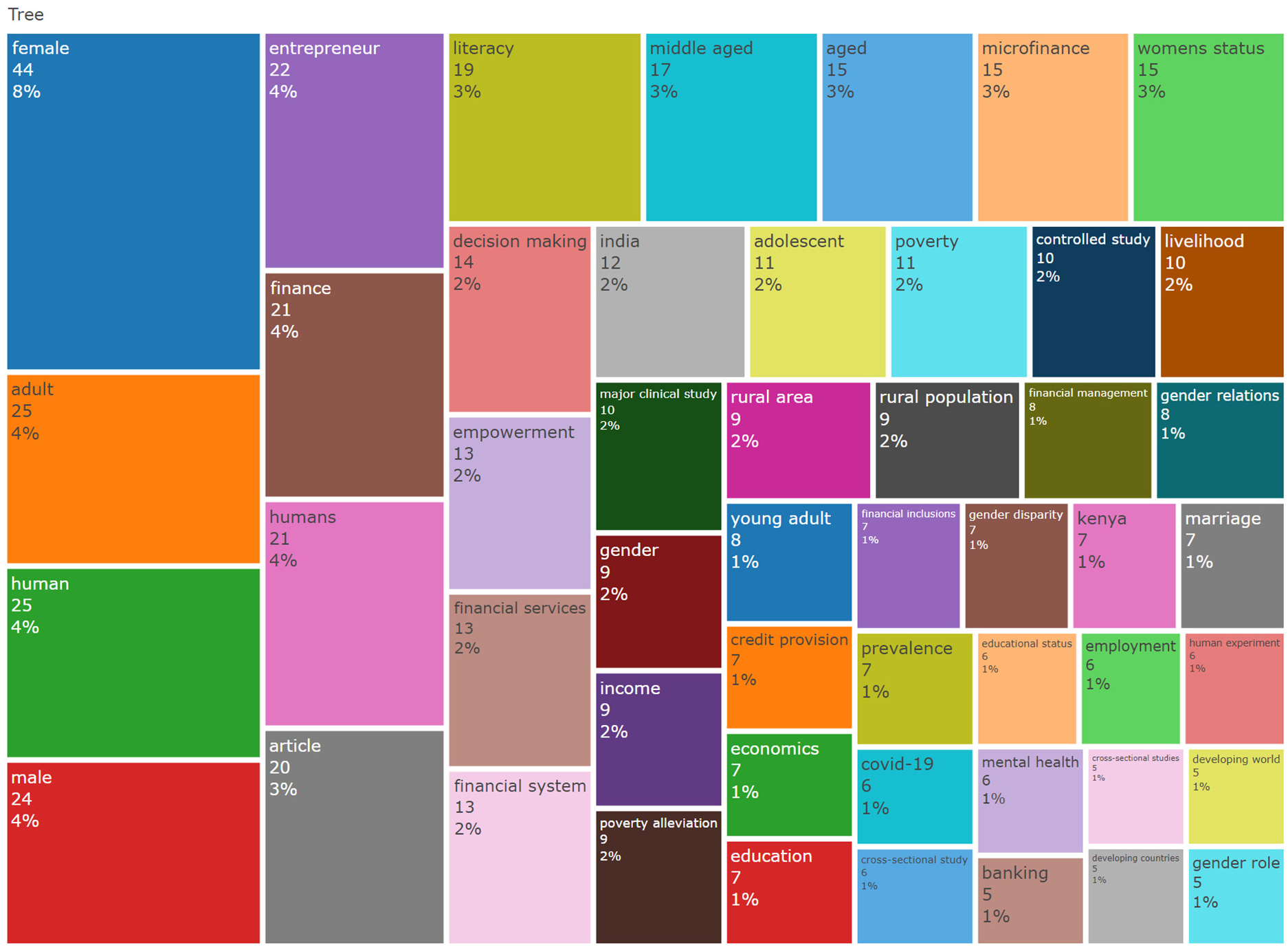
Tree map.
Thematic Analysis
Co-word analysis is used to find keyword clusters that form themes in the study topic. Figure 17 depicts a thematic map analysis of the research on the financial well-being of female entrepreneurs. Each quadrant corresponds to a distinct study subject. The themes are organized into four distinct quadrants. On the map, each theme is depicted by a bubble. The figure’s upper-right quadrant depicts motor themes with high centrality and density. Niche topics are represented by the quadrant in the upper-left corner of the thematic map. The concepts of “female,” “human,” “entrepreneur,” “finance,” and “literacy” are visually symbolized through the use of bubbles as themes. Including the topics mentioned above in the research is crucial due to their widespread usage and relevance. Specifically, the themes of finances, literacy, and entrepreneurship are paramount.

Thematic map analysis.
Analysis Using VOSviewer
According to the total number of citations and publications, Table 4 illustrates the 10 most prominent authors, institutions, and countries. Lusardi A is the leading author with a total citation count of 1,127 and 2 publications. Following closely are Drexler A. and Bucher-Koenen T., with 276 and 231 citations, each with one publication. Regarding the leading institution, George Washington University has the highest rank, with three publications and 1,358 citations. The University of Pennsylvania and the London School of Economics rank second and third, respectively, with citation counts of 1,127 and 276. The United States of America is the most prominent nation, with 3,329 citations and 61 publications. The United Kingdom ranks second with 831 citations and 42 publications, while South Africa ranks third with 453 citations and 18 publications.
Bibliographic coupling uses citation analysis to identify similarities between publications. This occurs when two works cite the identical third work in their bibliographies (Fayaz et al., 2022). The document connections analysis provides insights into significant articles on the financial well-being of female entrepreneurs. This analysis offers researchers a framework to identify pertinent literature in their respective fields of interest, thereby facilitating the advancement of their research. The threshold for the analysis is set as follows: A paper should have at least 30 citations. Of the 332 papers, 98 match the criteria. The work authored by Lusardi A. and Mitchell O.S. achieved the highest level of influence, with a remarkable total of 747 and 380 citations.
Figure 19 showcases a comprehensive list of the most prominent writers and their global contacts with other authors. It aids prospective scholars in identifying the foremost writers in their respective domains for future collaboration. The criteria for the analysis were established as follows: an author must have a minimum of one document and a minimum of three citations. 212 out of 327 authors satisfy the selection criteria. With 1,127 citations, Lusardi A. and Mitchell O.S. are the preeminent authors in their respective disciplines, followed by Drexler A. and Fischer G. with 276 citations. Bucher-Koenen is also the area’s leading author, with 231 citations.
In the realms of female entrepreneurship, financial inclusion, and financial well-being, the bibliographic coupling country-network analysis provides exceptionally insightful information regarding the mutual dependency of nations. By setting the threshold for the minimum number of documents of a country to 2 and the minimum no of citations of a country to 0, 55 out of 81 countries fulfill these criteria. According to the findings, the United States of America, the United Kingdom, and South Africa are the top three nations regarding the number of papers and citations. The United States ranks first with 61 publications and 3,329 citations, while the United Kingdom follows with 42 papers and 831 citations.
Co-Authorship
A co-author network is a graph with nodes representing authors and edges connecting those who have published a paper together. Determining a co-authorship relationship between two authors is contingent upon the total number of authors for each co-authored article and the number of documents co-authored by the authors (Kumar & Kumar, 2023). Articles were chosen based on a minimum of one document and 20 citations in the Scopus database to ascertain significant author collaborations. 63 out of 327 authors satisfy the criterion, from which 40 were chosen for the final analysis (Figure 21). As shown in Figure 22, our research also found networks of collaboration between 27 countries with a minimum of five papers and at least zero citations from the analysis of co-authorship for each of those documents.
Discussion and Findings
Several emerging scholars have recognized these concerns as crucial concerning the financial well-being and participation of women in entrepreneurship. By employing bibliometric analysis, the current research sought to discern the prevailing pattern in academic research studies concerning women entrepreneurs’ financial well-being and inclusion. The study started by importing the data using keywords such as “women entrepreneurship” AND “financial well-being” OR “financial access” OR “financial inclusion” and identified over 1,167 publications from the Scopus database. The filter was then narrowed down to 332 articles after removing irrelevant sources based on subject and time frame. The 332 final papers that were chosen were imported and transformed into CSV format. The analysis encompasses the time frame spanning from 2010 to 2023. The data were analyzed for visualization using bibliometric R, Biblioshiny, and VOSviewer software. This paper investigated and analyzed several findings. A concise summary of the findings is provided in the following paragraph.
According to the findings, annual scientific productivity has expanded dramatically in recent years. It is noteworthy since several studies on women’s entrepreneurship and financial well-being were published after 2017. A total of 71 articles were published in the year 2022. This acceleration emphasizes the potential of women’s entrepreneurship to improve financial well-being and inclusiveness and its significance to sustainable development goals. Table 1 provides the most essential information about the dataset. It reveals that the annual growth rate is 38.65%, the average citation per document is 18.79, the total number of references is 17,721, the authors’ keywords (DE) are 935, and the international co-authorship percentage is 32.83. Figure 1 depicts the inclusion and exclusion criteria used to identify 332 relevant publications for final analysis. Figure 4 shows the most pertinent sources. The leading journals in this field of study are Sustainability, with 22 publications, and PLoS One, with 12 papers.
Table 2 presents data on the leading authors and their published documents, including the total and average number of citations each year. Lusardi A is the most prominent author, with 747 citations and an average of 57.46 annually. Figure 5 depicts the publications in the primary journals about the investigation of Bradford’s scattering law. The ranking unveiled the top 10 primary sources. The top three journals in this ranking are Sustainability, PLoS One, and Cogent Economics and Finance. Figure 8 lists the most significant writers in female entrepreneurship and financial well-being. Lusardi A, Kazemikhasragh A, and Mitchell OS are the most prominent authors on this list.
Top 10 Authors, Article, Sources and Citation.

Note. TC = total citations; TCPY = total citations per year.
Table 3 displays the productivity and citation counts of the 10 most cited nations. The United States of America is ranked first with 128 publications. With 85 papers, India is the second highest-ranking nation. Regarding the nation with the highest citations, the USA again takes the top spot with 830 citations and an average of 31.90. The country collaboration map is displayed in Figure 12. Figure 14 displays the word cloud representing the examination of keyword frequency. The analysis found that the most commonly utilized keywords are “female,” “entrepreneur,” “literacy,” and “finance.”Figure 15 illustrates the current hot topics. Few clues are provided by the dimensions and measurements comprising the word dynamics tree map (Figure 16).
Top 10 Countries’ Productivity and Citations.
Source. Biblioshiny.
Table 4 lists the top 10 authors, organizations, and countries regarding total citations and publications. Lusardi A ranks first on this list, with 1,127 total citations and two publications; the top institution is George Washington University, with 1,358 citations and three publications. The United States is the top country, with 3,329 citations and 61 publications. Figure 17 illustrates the analysis of the thematic map. It offers four distinct categories of themes: basic, emerging, niche, and motor. It demonstrates that finance, entrepreneurship, and literacy are fundamental concepts in this field. Figures 18 to 20 illustrate the bibliographic coupling of documents, authors, and nations from the perspective of the bibliographic network. The primary writers constitute a cohesive group, as evidenced by the co-author network analysis. It has been observed in Figures 21 and 22.
Top 10 Authors, Institutes, and Countries (Based on Citations).

Note. TP = total publications; TC = total citations.

Bibliographic coupling of documents.

Bibliographic coupling of authors.
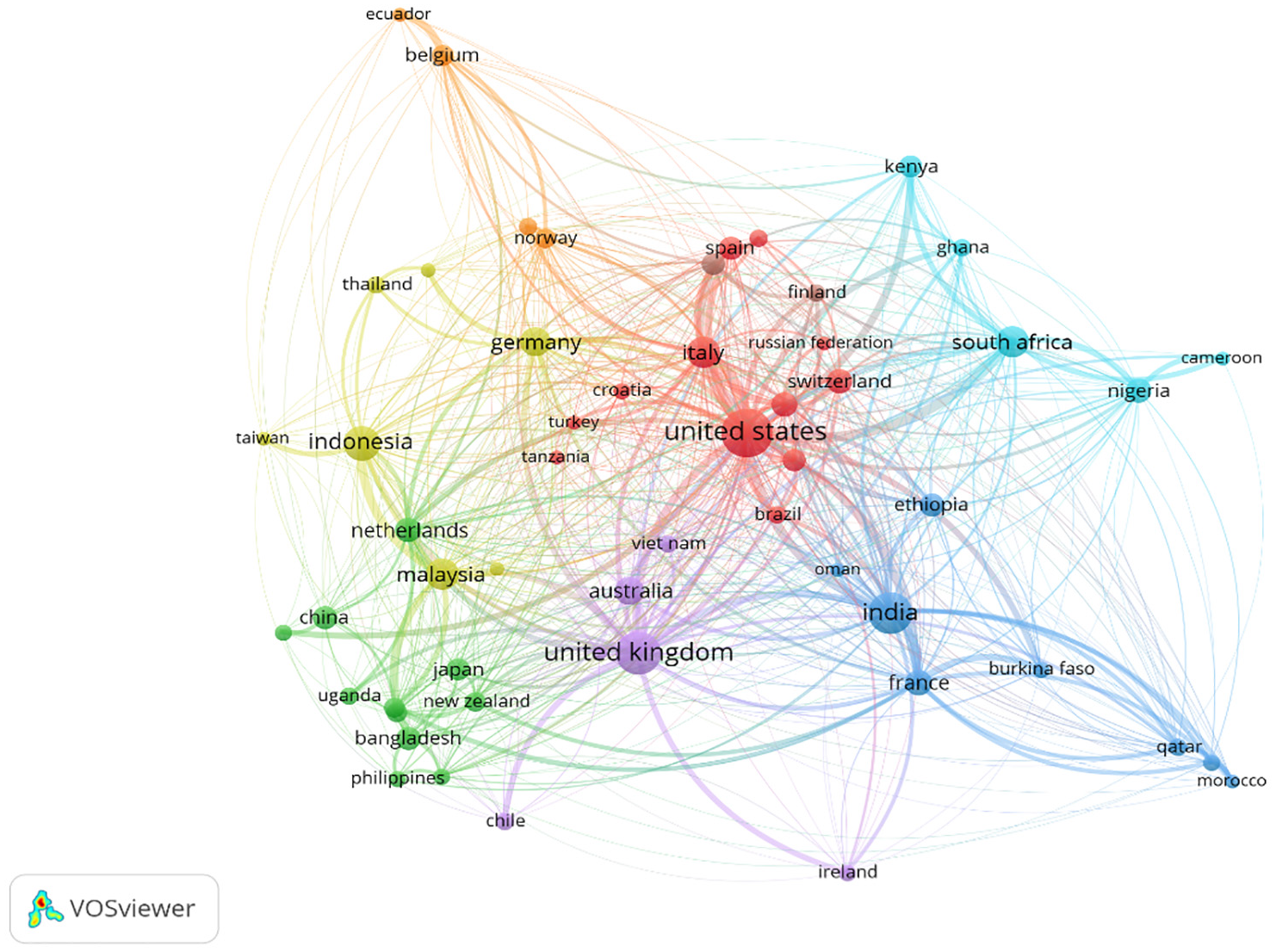
Bibliographic coupling of country.

Co-author network.

Country collaboration.
Moreover, by analyzing patterns of publications in terms of co-authorship, bibliographic coupling, country collaboration, and thematic map analysis utilizing bibliometric analysis, they can investigate potential avenues for research. As a result, this study aims to create a road map for academics and practitioners to grasp existing information better. Additionally, researchers may investigate potential avenues for investigation by employing bibliometric analysis to analyze publication patterns such as co-authorship, bibliographic coupling, collaboration across countries, and thematic map construction.
Finally, this research examines the existing bodies of literature on two important topics: the financial well-being of women entrepreneurs and its influence on sustainable development. To accomplish the Sustainable Development Goals (SDGs), it is imperative to discover and support female entrepreneurs by providing them with the necessary resources, opportunities for development, and supportive networks needed for their success. In addition to promoting economic development, their governance also yields beneficial social and environmental outcomes. Women entrepreneurs play a crucial role in achieving the Sustainable Development Goals (SDGs) by making significant contributions to environmental sustainability (Thomas, 2024).
Conclusion
This study has thoroughly analyzed and presented scientific publications on financial well-being of women entrepreneurs. The bibliometric study reveals a growing scholarly interest in financial well-being and inclusiveness, with a particular emphasis on the well-being of women entrepreneurs. The study utilized two highly valuable and essential analysis tools, VOS viewer and biblioshiny to examine various article patterns. These patterns included authors, references, sources, countries, co-authorship analysis, local impact of sources measured by H-index, most cited documents, countries, and thematic analysis. This study would help future scholars gain a more comprehensive understanding of their field. Hence, this study aims to establish a comprehensive framework that enables researchers, academics, and practitioners to grasp the existing content fully.
This study’s findings can assist novice and experienced researchers in identifying new areas of research, pertinent sources, and chances for cooperation, enabling them to make well-informed judgments. These tools are chosen for their versatility and user-friendliness. The dataset for this research was compiled utilizing the Scopus database. Finally, the study provides an exciting overview of the present research level in financial well-being and women’s entrepreneurship. It helps to accomplish inclusive, sustainable development goals for overall economic development. Also, this research illuminates the primary contributors and underscores the interdependence between research and the attainment of sustainable development objectives, with a particular emphasis on SDG 8 (Decent work and economic growth). In this context, the pursuit of improving the financial welfare of individuals can function as an instrumental mechanism for the realization of the United Nations 2030 Agenda, as financial welfare contributes to the economic advancement of nations (Nanda & Banerjee, 2021). As a result, it establishes a linkage with several pivotal Sustainable Development Goals including SDG 8 (Bashir & Qureshi, 2023; Fu, 2020).
In a nutshell, women entrepreneurs’ financial well-being and inclusion are highly significant and vital for society and the nation. Government-funded financial education initiatives, public education campaigns, and mentorship can improve financial decisions and inclusion policies. This will significantly boost women entrepreneurs’ financial literacy level, helping them achieve financial autonomy and increase their financial well-being. Notwithstanding these significant outcomes, it is critical to acknowledge the study’s limitations and the necessity for additional investigation.
Practical Implications
This study contributes from the managerial point of view to institutions and practitioners interested in organizing financial education programs to enhance the financial well-being of women involved in diverse entrepreneurial activities. The study is advantageous for the public, research scholars, and practitioners collectively. This bibliometric study examines 332 essential publications on the financial well-being of women entrepreneurs, offering contemporary literature to aid future researchers in gaining a deeper grasp of the topic. By implementing financial inclusion initiatives and formulating crucial policies, policymakers can enhance the financial well-being of female entrepreneurs. This study can also assist government agencies in promoting the financial health of women engaged in income-generating activities, which helps to reduce financial exclusion and improves financial stability. This provides forthcoming researchers with insights into the emerging themes and potential avenues for collaboration in these domains. Further, these research papers may offer crucial perspectives that can inform the development of financial education and literacy policies. Additionally, the theoretical consequences contribute to the intersectionality of finance and gender studies. This integration contributes to the advancement of theoretical knowledge in the specific domain of women entrepreneurs’ financial well-being. The data collected from this study can provide policymakers with guidance in formulating policies that promote the financial well-being and involvement of female entrepreneurs. This, in turn, contributes to SDG 8’s goal of fostering decent employment and economic growth.
Limitations and Future Scope
Despite these significant outcomes, it is vital to contemplate the study’s limitations and the necessity for additional investigation. In addition to identifying the prominent conceptual framework that supports future research, the authors propose feasible avenues for future investigation. The study’s primary limitation is that it exclusively includes articles written in English, indicating a bias against other languages. Subsequent researchers have the potential to integrate more languages to get more optimal outcomes. The dataset was exclusively obtained from Scopus, excluding other widely recognized databases such as Jstor, Google scholar, web of science etc. Combining data from various sources may yield even more accurate results when analyzed. This research is based on a restricted set of keywords, such as “financial inclusion,” “women entrepreneurs,” AND “financial well-being,” which may exclude pertinent studies that could provide a more comprehensive depiction of the broader body of literature on this particular subject. Additional keywords might be used in the search to find more literature about this topic. Another setback of this study is that the researchers focused mainly on financial well-being and inclusion. In the future, academics can concentrate on additional study issues such as financial competence, financial fragility, anxiety, awareness, and so on, providing more information and insights into the field. The primary emphasis of this study was exclusively on bibliometric analysis. Researchers may undertake a systematic literature review and meta-analysis in the future. Furthermore, this study collected data from distinct fields such as economics, finance, econometrics, management, arts, and humanities. It would be intriguing to witness increased interdisciplinary research by integrating additional subjects from other domains.
Footnotes
Acknowledgements
The authors will be highly grateful to the Journal’s anonymous referees for their valuable suggestions to improve the article’s quality.

Funding
The author(s) received no financial support for the research, authorship, and/or publication of this article.
Declaration of Conflicting Interests
The author(s) declared no potential conflicts of interest with respect to the research, authorship, and/or publication of this article.
Data Availability Statement
Data will be made available on reasonable request.