




Abstract
Innovation capability serves as a crucial driving force for regional economic growth. In this empirical study, we investigate if and how government funding for science and technology (GFS) can promote regional innovation capability (RIC), by taking Chengdu-Chongqing Economic Circle as an example. The Circle is a key economic zone in China, with a population of more than 98 million and GDP of more than 1.1 billion USD. Using the panel data of all 44 prefecture-level cities (districts and counties) in the zone from 2011 to 2020, a systematic research methodology, consisting of panel model, mediating effect model, and threshold effect model, is adopted in the analysis. The results demonstrate that GFS significantly promotes RIC, as confirmed by multiple robustness tests. GFS exerts a more substantial driving effect on RIC in less innovative regions, with heterogeneity observed. Specifically, GFS in the Chongqing region exerts a stronger positive effect on RIC than the other part in the Circle. In terms of mediating mechanisms, GFS enhances RIC through R&D human capital accumulation and increased R&D capital investment. Further testing identifies a single threshold effect for R&D human capital and a double threshold effect for R&D capital investment in the relationship between GFS and RIC.
Keywords
Introduction
With the acceleration of technological revolution and industrial transformation, competition among nations and regions is becoming increasingly fierce. Innovation has become a new engine propelling economic development (Bilbao-Osorio & Rodríguez-Pose, 2004; Romer, 1990). It is a key manifestation of comprehensive national strength and a core element in international competition (Özçelik & Taymaz, 2004). Currently, China’s economy has transitioned to a new phase characterized by the adjustment of development models, optimization of economic structures, and conversion of growth drivers (Xu & Deng, 2022; Zhao et al., 2020). Within this transitional context, innovation has emerged as a pivotal strategic foundation for constructing a modern economic system. Innovation functions as the principal impetus fostering high-quality economic development (Shan et al., 2023), which has led to many positive developments, such as emerging industries, including the new energy vehicle industry (Jiang & Xu, 2023), sustainable development (Ahmad et al., 2023), and improved environment (Yu & Zhang, 2024).
Regional innovation can accelerate the convergence of innovative elements, including knowledge, technology, and talent. This is highly significant for transforming regional economic structure, promoting high-quality economic development, and further enhancing national comprehensive strength and international competitiveness (Bernier & Plouffe, 2019; Rodríguez-Pose & Crescenzi, 2008; Zhuang & Zhao, 2022). The government is a vital participant in the construction of regional innovation systems. Government funding for science and technology (GFS), which serves as a pivotal instrument for government involvement in regional innovation, significantly supports and directs regional innovation activities (Gao & Yuan, 2022; Zhang & Li, 2023). In recent years, as the government has placed increasing emphasis on technological innovation, GFS has been on a continuous upward trajectory, providing robust support to regional innovation capability (RIC) (Wolff & Wessner, 2012). However, the effect of GFS on innovation demonstrates significant regional heterogeneity, attributable to variations in economic development stages and institutional contexts. While the optimal allocation of GFS has enabled certain regions to achieve transformative improvements in innovation capacity, in some regions the increase of GFS locks the system into a low-efficiency trap, driving the role of GFS in innovation away from its optimal path (Hall & Rosenberg, 2010).
As the fundamental components of innovation systems, both R&D human capital (RH) and R&D capital investment (RC) critically influence RIC. RH serves dual functions in knowledge generation and technology transfer and catalyzing innovation (Lei et al., 2025; Qian, 2018). Concurrently, RC constitutes a fundamental material basis that facilitates regional innovation activities, fosters knowledge accumulation, and enhances innovation output (Schiuma & Lerro, 2008). GFS represents a crucial policy instrument for implementing innovation-driven strategies through macroeconomic intervention, particularly in innovation resource allocation optimization. Understanding the impact of GFS on RIC, including its transmission mechanisms through R&D factors, carries substantial theoretical and policy significance.
Based on the above background, this empirical study analyzes the effect of GFS on RIC, while simultaneously elucidating the underlying mechanisms. Specifically, it systematically examines three core research questions: (a) Does GFS exert a significant effect on RIC, and what is the directionality of this effect? (b) Through which mediating mechanism (RH and RC) does GFS influence RIC? (c) Do threshold effects exist in the relationship between GFS and RIC, particularly regarding how RH and RC levels moderate GFS effectiveness?
The research contributions can be summarized below. Firstly, by employing the prefecture-level city (districts and counties) data from a strategically important economic and technological innovation zone in China (i.e., Chengdu-Chongqing Economic Circle) to study the impact of GFS on RIC, it enriches the literature and provides empirical support on how to optimize the science and technology policies for enhancing RIC. Secondly, by integrating R&D human capital and R&D capital investment into the analytical framework, it systematically investigates the mediating and threshold effects of GFS on RIC. The findings offer new empirical evidence and policy recommendations for the government to optimize the coordinated allocation of innovation factors, prioritize the accumulation of R&D human capital and R&D capital investment, and enhance the effectiveness of GFS. Thirdly, the results can help the government to tailor the fiscal and technological support policies according to local conditions, narrow the disparities in innovation development within a region, and amplify the positive effect of GFS. Moreover, the finding may further facilitate the execution of innovation-driven development strategies in China, while simultaneously offering valuable insights for policy formulation in other nations and regions.
The remaining parts of the paper are organized as follows. Literature review and research hypotheses section provides a brief literature review and formulates theoretical hypotheses; Research models and data description section introduces the research model, target economic zone, and data collection; Empirical results and analysis section analyzes the empirical results of the effect of GFS on RIC; Impact mechanism analysis section investigates the mechanism of how GFS affects RIC. The final section summarizes research findings, policy implications, and the limitations and outlook.
Literature review and research hypotheses
Brief literature review
Regional innovation can refine the allocation of regional production factors and boost total factor productivity. It also drives the upgrading of the regional industrial structure and promotes high-quality economic development. RIC has become a crucial factor determining both regional competitiveness and economic performance (Hasan & Tucci, 2010; Zhou et al., 2021). It constitutes a complex systemic process influenced by both internal innovation factors and external economic environment factors. Regarding internal innovation factors, extant literature primarily concentrates on the roles of human capital and financial resources. The nexus between these inputs and RIC was formalized in the knowledge production function (Grossman & Helpman, 1991). Human beings are the main body of innovation, and human capital and other human factors are important parts of regional innovation processes, which significantly influence innovation performance (Martinidis et al., 2022). Empirical evidence demonstrates that higher education development accelerates knowledge creation and application, elevating human capital quality and technological innovation capacity (Foddi et al., 2013; Wu & Liu, 2021). Similarly, substantial research affirms that financial investment exerts a positive influence on RIC. The endogenous growth theory points out that, as a carrier for regional technology absorption and diffusion, it represents a critical driver of regional technological advancement and innovation performance (Nelson & Phelps, 1966; Romer, 1986). For instance, a study demonstrates that EU-wide R&D outlays stimulate innovation overall, and the magnitude of this effect is contingent on socio-economic context (Bilbao-Osorio & Rodríguez-Pose, 2004).
With respect to external economic environment factors, studies highlight financial development, digital economy, and foreign direct investment as critical determinants. Financial systems facilitate innovation investment, with national financial infrastructure serving as an institutional prerequisite for RIC development (Meierrieks, 2014). Digital finance alleviates financing constraints, enhancing regional innovation output while generating positive spatial spillovers (Dong & Pan, 2024). The digital economy propels RIC by narrowing information asymmetries, intensifying market competition, and pressuring firms to upgrade their technological capabilities (Li, Chen et al., 2022). Moreover, the regional innovation environment can moderate the RIC effect of foreign direct investment, with more open environments amplifying its innovation-enhancing impact (Li et al., 2018). Notably, the government, as an important subject affecting RIC, exerts a nonnegligible influence on RIC by using GFS (Lee, 2011).
Regarding the impact of GFS on RIC, the existing research generally presents two different perspectives. One view suggests that GFS has a positive impact on RIC (Branstetter & Sakakibara, 2002). The government can promote technological innovation (Montmartin & Massard, 2015; Qi et al., 2020), enhance regional innovation capability, accelerate the gathering of innovation resources, and facilitate industrial structure upgrading and optimization through investments scientific research financial and human capital (Wu & Liu, 2021). Meanwhile, GFS is conducive to enterprise innovation, which can effectively ease the constraints on enterprise investment in science and technology. Preferential policies including tax relief and financial subsidies are expected to improve firms’ innovation performance and innovation ability, and stimulate the growth of regional total factor productivity and economic development (Gao, et al., 2023; Hall & Harhoff, 2012; Saleem et al., 2019; Tang et al., 2022). GFS can also encourage firms to increase their R&D investments and positively increase the R&D employment, promoting enterprise innovation capability (Klímová et al., 2020). For instance, P. Xu et al. (2020) empirically demonstrated that government subsidies significantly enhance regional sustainable innovation outputs, based on an analysis of small and medium-sized enterprises in China. Li and Qi (2023) established that GFS significantly enhances both aggregate and stage-specific regional innovation efficiency. Similarly, Liang and Li (2023) employed provincial panel data to empirically validate the positive influence of government support on regional innovation ecosystem resilience. Li and Wu (2021) further investigated the spatial effects of GFS on RIC in China, demonstrating that innovation subsidies significantly enhance innovation quality in neighboring regions through spatial spillover effects. Their findings also revealed distinct regional heterogeneity, with differential GFS impacts observed between China’s eastern and central-western regions. Additionally, the allocation and coordination of GFS among innovation entities can enhance the efficiency of regional innovation resource allocation and foster regional industry-university-research collaboration, strengthen the output and transformation of scientific research achievements, accelerate knowledge diffusion and spillover among innovation subjects, and promote RIC (Y. Liu et al., 2020).
The other view on the impact of GFS on RIC is that GFS does not play a promoting role in RIC. GFS may exert a “crowding out effect” on enterprise R&D expenditure. Specifically, government-funded enterprises are inclined to substitute private R&D expenditures with GFS, consequently leading to reduced corporate R&D investments and innovation outputs (Acemoglu et al., 2018; David et al., 2000; Wallsten, 2000). Affected by the promotion tournament mechanism and facing assessment pressure, local governments have the motivation to invest limited financial resources in productive projects with high returns and short cycles, rather than investing in innovation activities with long return cycles, high risks, and uncertain returns. This investment preference, which emphasizes production while neglecting innovation and pursues maximum economic benefits, may result in the distortion of the incentive mechanism of GFS on RIC (Borge et al., 2014; Weingast, 2009). Bai and Li (2011) examined the influence of local governments on regional innovation efficiency using provincial-level data from China. Their analysis revealed a negative correlation between government R&D funding and innovation efficiency. Furthermore, the study identified adverse effects from universities, research institutes, and financial institutions, underscoring the critical need for enhancing the regional innovation environment. Guan and Yam (2015) conducted an analysis of more than 1,000 Chinese manufacturing firms, revealing that targeted financial subsidies not only lacked efficacy in enhancing innovation-related economic performance but in certain cases exerted adverse effects.
Furthermore, limited studies have investigated the mechanisms through which GFS influences RIC. Employing provincial-level panel data from China, Gong (2021) identified a nonlinear relationship mediated by knowledge accumulation. When knowledge accumulation surpasses a critical threshold, GFS transitions from exerting negligible effects to significantly enhancing RIC. Similarly, Zhao and He (2024) analyzed provincial-level data from China, demonstrating that human capital and upgrade of industrial structure mediate the positive relationship between government expenditure efficiency and RIC. Min et al. (2020) analyzed South Korean technology development and commercialization data, revealing that GFS effectiveness in improving regional innovation efficiency depends on contextual factors, particularly innovation network size.
To sum up, while extensive research has been conducted, consensus has not been reached on whether GFS can promote RIC, and such a relationship deserves further research. Furthermore, the mechanism by which GFS can compensate for the externality of innovation activities and participate in regional innovation activities, and thus affect RIC, remains to be investigated. Regarding the scope of research, extant studies have predominantly concentrated on the enterprise level or provincial level instead of the regional level using data from prefecture-level cities (districts and counties). In terms of research methods, most scholars only studied the linear relationship between GFS and RIC, ignoring the nonlinear relationship between the two. In addition, such a relationship has not been studied for the Chengdu-Chongqing Economic Circle, one of the most critical economic regions in China.
Research hypotheses
The construction of the regional innovation system is critically influenced by governments (Guan & Chen, 2012). It directly participates in regional innovation activities by allocating scientific and technological funding via subsidies or grants, which are crucial to the rational allocation of innovation resources (Bai & Li, 2011). According to public finance theory, innovation activities are non-competitive and non-exclusive, and have the attributes of quasi-public goods. The externality of innovation dampens the inclination of enterprises and other innovation entities to engage in R&D activities. If only relying on market regulation, innovation investment is difficult to achieve the optimal situation, which will in turn result in insufficient market supply, and may result in disordered competition and market failure. The use of GFS to lead and participate in regional innovation activities can effectively correct the shortcomings of pure market mechanisms and ensure innovation output. Essentially, this forms the theoretical and practical foundation for the government’s participation in regional innovation activities through GFS (Czarnitzki & Hussinger, 2004; Martin & Scott, 2000). GFS can fill the R&D funding gap of innovative entities and boost RIC. It can solve the externality problem of innovation activities, and support regional innovation activities by providing timely and effective financial support to reconcile the private and social benefits of innovation activities. From the other perspective, government funding can effectively promote collaborative innovation among various innovation subjects. Accordingly, the following research hypothesis is proposed:
Meanwhile, GFS indirectly enhances RIC by influencing other innovation elements. R&D human capital facilitates knowledge acquisition and application, forming the foundation for regional independent innovation. Endogenous growth theory suggests that it serves as a crucial driver of technological advancement through regional technology absorption and diffusion (Nelson & Phelps, 1966; Romer, 1986). Externality theory indicates human capital generates positive spillovers, improving both individual productivity and overall innovation systems through knowledge diffusion (Lucas, 1988). Moreover, R&D human capital’s stock and structure directly impact regional innovation output and industrial upgrading. GFS can optimize regional talent structure through financial incentives for scientific talents, enhancing knowledge absorption and regional attractiveness, thereby increasing R&D human capital accumulation and RIC.
Innovation activities fundamentally require R&D funding. The knowledge production function and its extended formulations serve as the theoretical framework for analyzing technological innovation, highlighting R&D capital as a pivotal innovation output determinant (Griliches, 1979; Jaffe, 1989). Technology development and transformation demand substantial R&D investment. However, innovation uncertainty may reduce funding willingness, limiting regional innovation. GFS can guide enterprises to increase R&D expenditure, attracting financial, and social capital (Doblinger et al., 2019), while optimizing technological structure and innovation output (Almus & Czarnitzki, 2003; Szczygielski et al., 2017). Consistent with signaling theory, government investment signals innovation potential by stimulating capital inflows (Lerner, 1999; Wu, 2017). Studies show GFS effectively leverages other innovation subjects’ R&D investment (Czarnitzki & Licht, 2006; González & Pazó, 2008), positively contributing to RIC. Based on the above analysis, the following research hypothesis is proposed:
GFS serves as a foundational source of funds for RIC, fostering regional innovation systems and conducive environments. According to absorptive capacity theory, GFS effectiveness depends on regional absorptive capacity, determined by key innovation factors like R&D human capital and capital investment (Cohen & Levinthal, 1990; Lund Vinding, 2006). Different R&D human capital and R&D capital investment may affect the role of GFS in RIC.
Regions with limited human capital exhibit constrained absorptive capacity, impairing innovation potential (Nelson & Phelps, 1966). Low R&D human capital reflects underdeveloped structures, potentially reducing talent competitiveness and regional innovation (S. Y. Lee et al., 2010; X. Xu et al., 2025). In such cases, GFS may underperform in facilitating knowledge absorption. However, human capital accumulation strengthens both talent foundations and knowledge absorption (Lund Vinding, 2006; Yan et al., 2024), potentially increasing GFS marginal returns for RIC. R&D capital investment drives knowledge production and innovation systems (Moutinho et al., 2015; Rodríguez-Pose & Crescenzi, 2008). In regions with insufficient R&D investment, GFS may be misallocated to infrastructure, yielding diminishing innovation returns (Y. S. Chen et al., 2009; Zhu et al., 2020). Conversely, substantial R&D investment enables GFS to catalyze additional funding, mobilize private capital, and create innovation virtuous cycles that accelerate RIC (Aghion & Durlauf, 2013). Based on this analysis, the following research hypothesis is proposed:
In summary, the impacting mechanisms of GFS on RIC can be illustrated by the schematic shown in Figure 1. It delineates the direct effects of GFS on RIC, along with its transmission channels through RH and RC, including both mediating and threshold mechanisms.

Schematic of impacting mechanism of government funding for science and technology on regional innovation capability.
Research models and data description
Empirical analysis procedure
Figure 2 summarizes the empirical analysis procedure employed in this study. The analysis comprises two key components: (a) impact analysis to examine the effect of GFS on RIC and (b) mechanistic analysis to investigate the underlying mechanism. Within the impact analysis framework, this research first conducts a benchmark model regression to test the impact of GFS on RIC. Secondly, quantile regression is conducted to test the impact effect at different quantile levels. Moreover, regional regression and robustness testing are conducted. In the impact analysis section, the mediating mechanism of GFS on RIC is examined, and the threshold regression analysis is employed to investigate the nonlinear relationship between GFS and RIC.
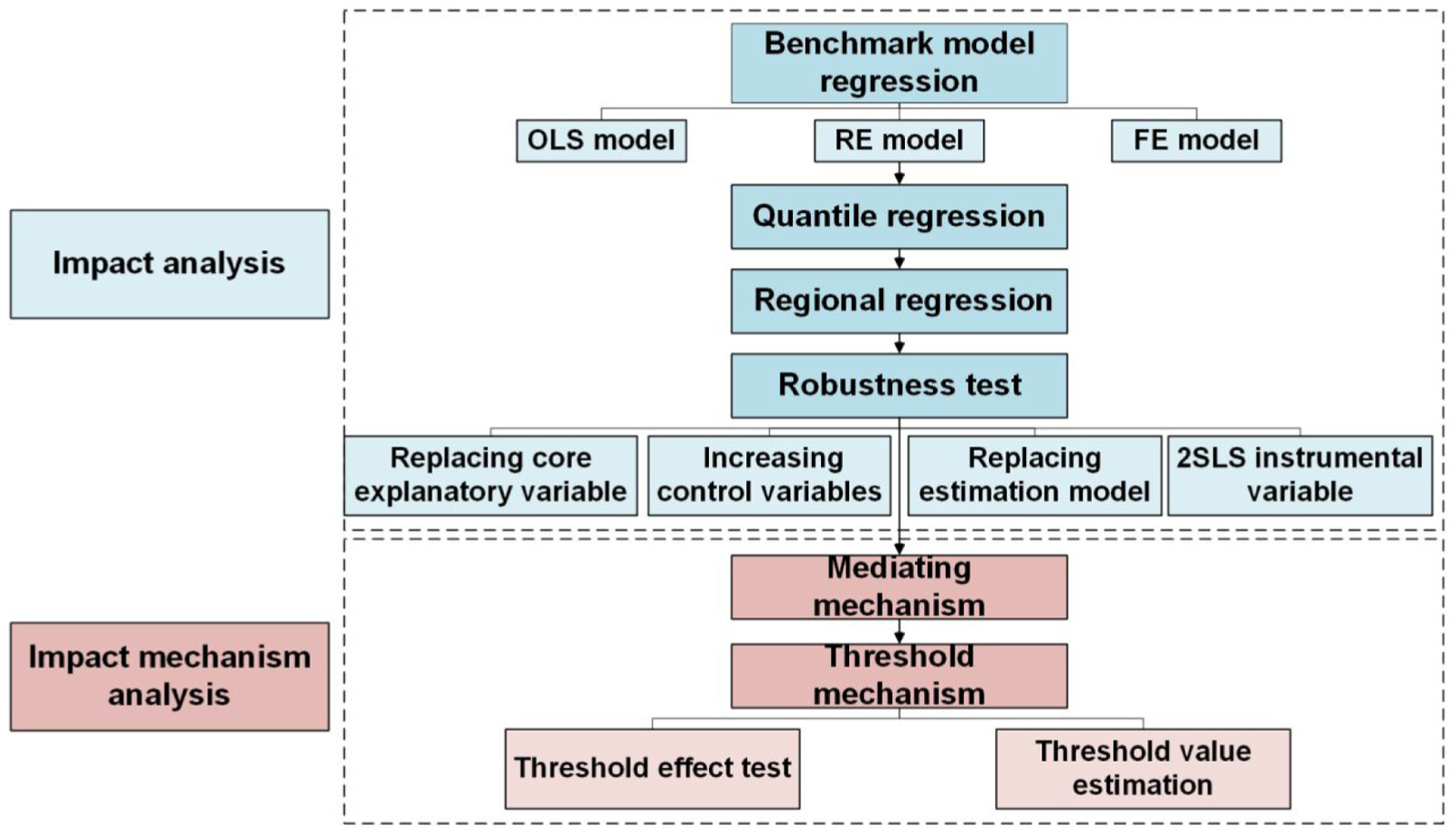
Framework and procedure of this empirical analysis.
Model specification
To examine the impact of GFS on RIC, the benchmark regression model (Aastveit et al., 2017; Edison et al., 2002) is set as follows:

where i represents the region and t represents the year; RIC is the explained variable; GFS is the core explanatory variable; CV represents the control variables;
To examine the mechanism of GFS on RIC, the following mediating effect model is constructed by referring to the research of (Baron & Kenny, 1986; Wen & Ye, 2014).


where M represents the mediating variable, and the remaining variables are consistent with those in the benchmark regression model. The test steps are as follows:
Step 1: Regression based on the benchmark regression model, Equation (1), to test whether the coefficient
Step 2: Test whether the coefficient
Step 3: Make determination based on the obtained coefficients
Variables
The explained variable is regional innovation capability (RIC). Most existing studies use the number of patent approvals as a regional innovation output indicator to measure RIC. Considering the differences in population size among different regions, drawing on existing research (Zhang et al., 2020), the number of patent approvals per 10,000 people in each region is selected as a measurement indicator.
The core explanatory variable is government funding for science and technology (GFS). Most existing research measures GFS or its relative proportion. Considering the differences in regional economic development level and government financial situation, referring to existing research, the proportion of government funding for science and technology to the entire government spending is used to reflect the measurement of GFS.
The control variables in this study include the levels of economic development (GDP), opening-up (OP), fixed assets investment (FAI), industrial structure (IND) and financial development (FD) (Fan et al., 2020; Lee & Wang, 2022a; Li, Wen et al., 2022; Yang & Lin, 2012). Among them, GDP is expressed as the logarithm of the per capita GDP of each region based on 2011; OP is expressed as a logarithm of the total import and export trade volume; FAI is denoted by the logarithm of fixed assets investment; IND is measured by the secondary industry’s output share in regional GDP; FD is calculated as the ratio of financial institution loan balances to GDP.
R&D human capital (RH) and R&D capital investment (RC) are selected as mediating variables (Hall & Van Reenen, 2000; Lenihan et al., 2019; Teixeira & Fortuna, 2004). Among them, R&D human capital (RH) is represented by the full-time equivalent of regional R&D personnel, and R&D capital investment (RC) is measured as internal R&D expenditure per 10,000 population.
Research target
This study conducts empirical research based on Chengdu-Chongqing Economic Circle (hereinafter referred to as CCEC) of China. CCEC is located in southwest China, including 29 districts (counties) in Chongqing municipality and 15 cities in Sichuan province. Situated at the confluence of “the Belt and Road” initiative and the Yangtze River Economic Belt, this zone serves as a vital anchor for economic activities in western China. It possesses unique locational advantages that facilitate connectivity between China’s eastern region and East Asia, Southeast Asia, and South Asia (Wan et al., 2024; Zhou et al., 2022;). The total area of CCEC is 185,000 square kilometers, with a resident population of 98.5 million people. In 2023, the gross regional product of the CCEC zone reached 8,199 billion yuan (yuan is the unit of measurement for the Chinese currency, around 1,142 billion USD), accounting for 6.5% of the national economy. As the most densely populated area in western China, it has a strong industrial base, formidable innovation capacity, and significant economic development potential. CCEC holds a unique and strategically important position. As a result, the CCEC zone is regarded as one of the regions with national importance for economic activities and scientific and technological innovation in China (Gou & Liu, 2022; Wan et al., 2024). In 2010, the GFS for the CCEC zone was 4,400.59 million yuan. In 2020, the GFS of CCEC reached 18,855.76 million yuan, with an average annual growth rate of 17.55%, exceeding the GDP growth rate (9.89%) and the general public budget expenditure growth rate (9.25%) of the zone during the same period. Among them, the GFS of Sichuan province (region A of CCEC) increased from 3,000.16 million yuan in 2010 to 15,254.32 million yuan in 2020, characterized by a mean annual growth rate of 19.8%. The GFS of Chongqing municipality (Region B of CCEC) increased from 1,400.43 million yuan in 2010 to 3,601.44 million yuan in 2020, with an average annual growth rate of 11.07%.With the continuous increase of the GFS in the CCEC zone, it is also meaningful to investigate what impact the government funding brought to the RIC.
Data collection
The relevant data of 44 prefecture-level cities (districts and counties) in the CCEC zone from 2011 to 2020 are selected as the research samples. The location and coverage of CCEC in China is shown in Figure 3. The research samples in this paper include two regions: One region is 15 prefecture-level cities in Sichuan Province (left part of the blue area in Figure 3, hereinafter referred to as Region A of CCEC). The other region is the central urban area and 29 districts and counties of Chongqing (the right part of the blue area in Figure 3, hereinafter referred to as Region B of CCEC).
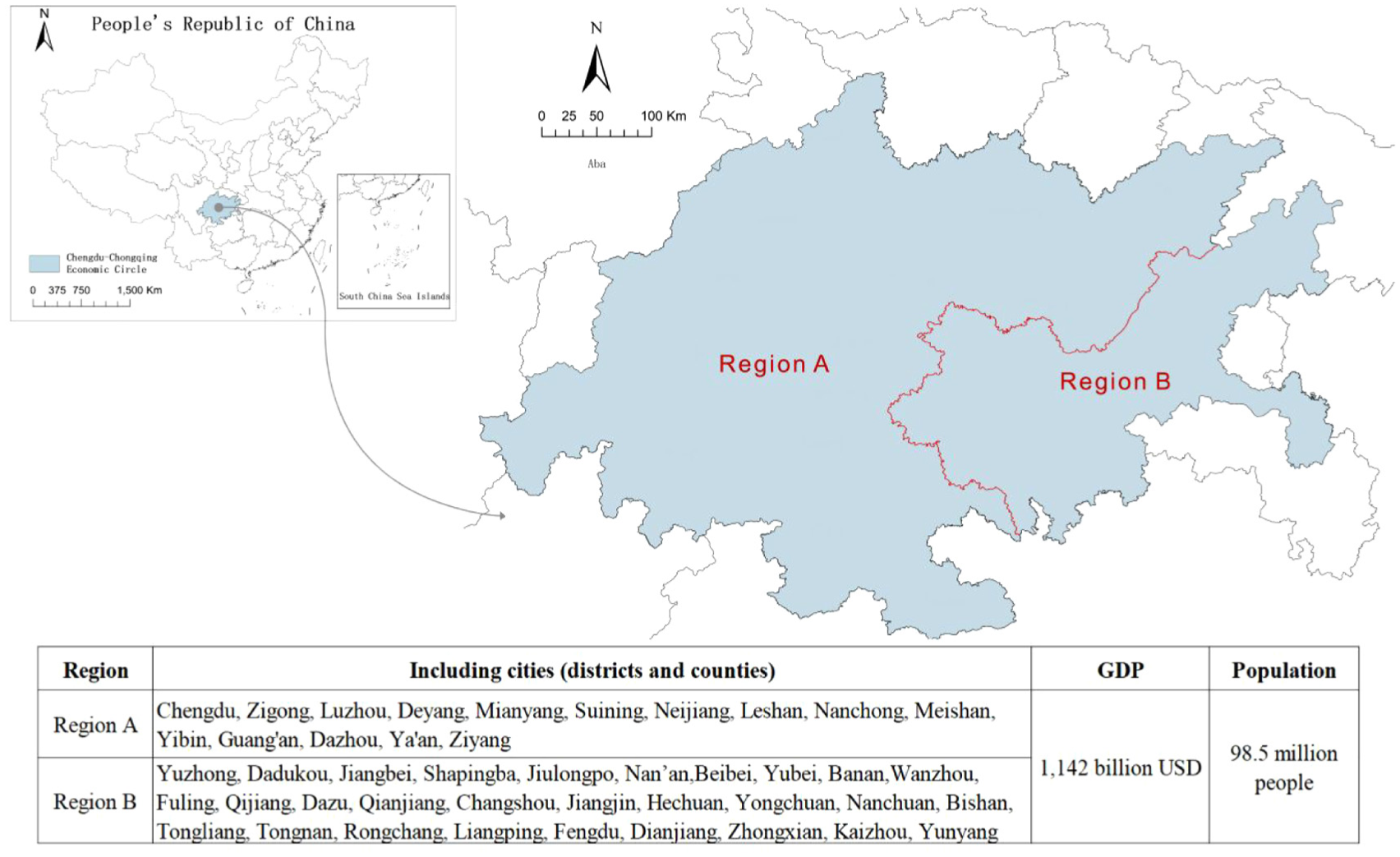
Location and coverage of the Chengdu-Chongqing Economic Circle (CCEC) in China.
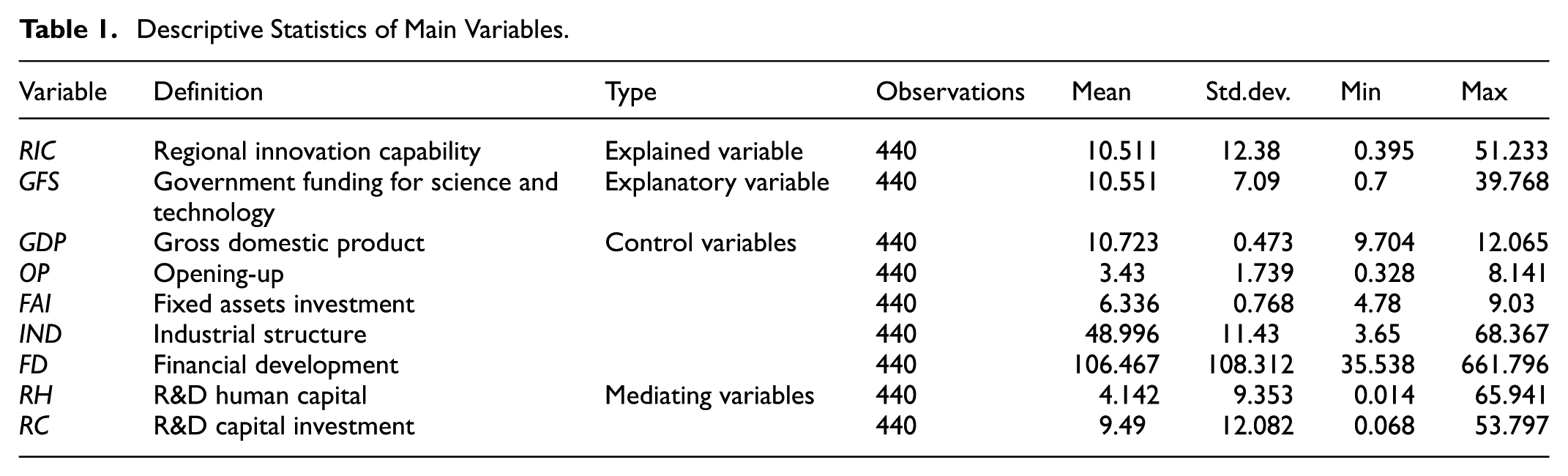
The original data comes from the official yearbook, including Sichuan Statistical Yearbook, Chongqing Statistical Yearbook of Science and Technology, and Chongqing Statistical Yearbook. The publications of the Chongqing Statistical Yearbook of Science and Technology only cover the period of 2011 to 2020. In other words, the latest available data is for the year 2020. Considering the data availability, this study sets the research period from 2011 to 2020. The descriptive statistical results of the main variables are presented in Table 1.
Descriptive Statistics of Main Variables.
Empirical results and analysis
Benchmark model regression
The Fisher-ADF unit root test was conducted on the variables, with p-values of all variables significant at the 1% level, thereby rejecting the null hypothesis of non-stationarity. This confirms that the model variables constitute a stationary sequence. Subsequent multicollinearity assessment using variance inflation factors (VIF) revealed an average VIF of 2.06 across variables, with individual VIF values ranging from 1.46 to 2.90, and well below the conventional critical threshold of 10. These results collectively demonstrate the absence of significant multicollinearity concerns. The benchmark regression results are presented in Table 2, with Column (1) reporting OLS estimates, Column (2) showing random effects results, and Columns (3) to (4) presenting fixed effects estimations. The regression coefficients of GFS across these models (0.281, 0.238, 0.231, and 0.206, respectively) demonstrate statistically significant positive effects on RIC, indicating that GFS can enhance RIC. Employing a two-way fixed effects model to analyze its economic significance, ceteris paribus, a 1% increase in government technology expenditure as a proportion of total spending is associated with a 0.206 rise in patents per 10,000 population in CCEC regions. These results demonstrate that China’s innovation-driven development strategy effectively generates technological progress through increased GFS, thereby enhancing RIC and confirming the positive impact of GFS on RIC. Hypothesis H1 is verified. On one hand, government funding effectively shares R&D costs among enterprises, universities, research institutes, and other innovation entities, serving a pivotal function in addressing innovation market failures and providing fiscal support and strong guarantees for regional innovation activities. On the other hand, it can generate a siphon effect, gathering high-quality innovation resources, accelerating the output of high-quality innovation achievements, and effectively promoting the improvement of RIC. This observation reflects the positive promoting effect of GFS on RIC. This is overall similar to the findings that fiscal technology expenditure can compensate for market defects and promote innovation based on literature (Guellec & Van Pottelsberghe De La Potterie, 2003; Hou et al., 2023; Li & Qi, 2023; Pegkas et al., 2019), although those literature studies were developed by employing data at different levels or by targeting innovation efficiency. The findings from this research have stronger practical significance for promoting RIC.
Benchmark Regression Estimation Results.
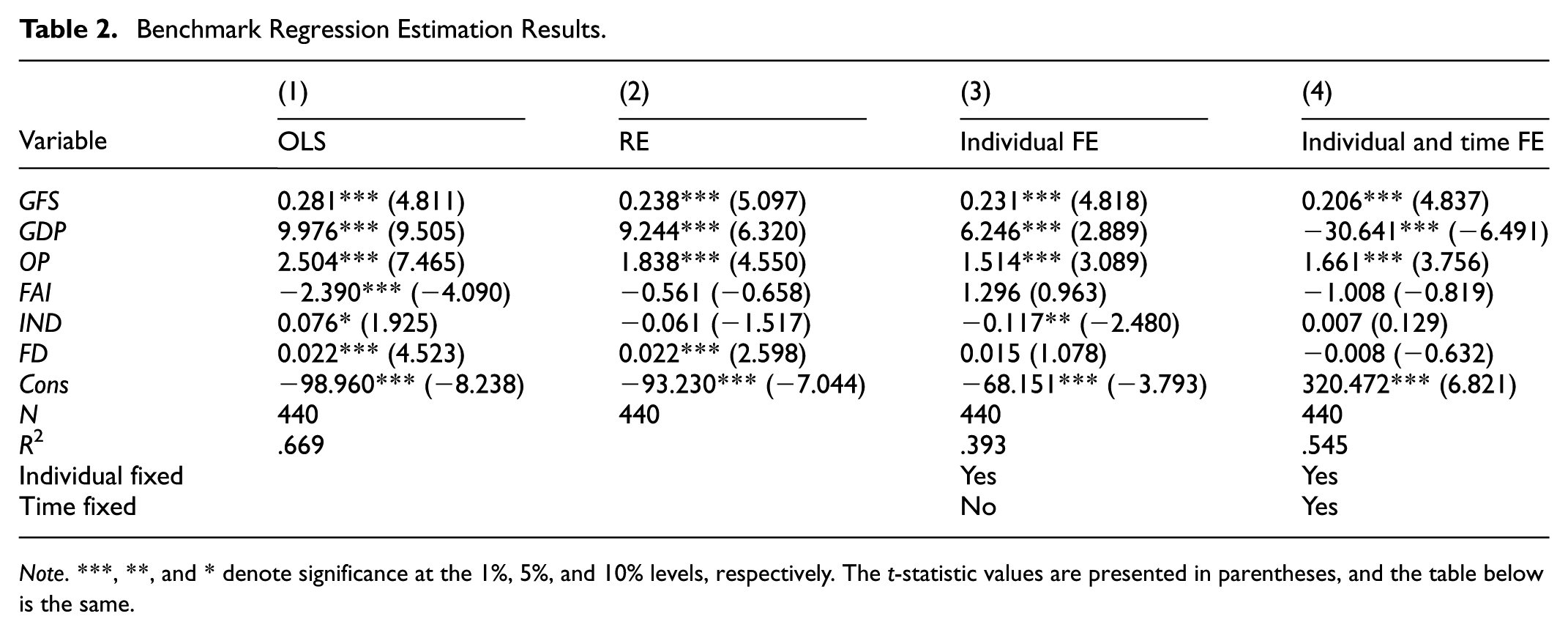
Note. ***, **, and * denote significance at the 1%, 5%, and 10% levels, respectively. The t-statistic values are presented in parentheses, and the table below is the same.
The regression results for the control variables indicate that economic development (GDP) exhibits a statistically significant positive coefficient with RIC, suggesting that regional economic development establishes fundamental support for RIC. Similarly, the level of opening-up (OP) presents a significant positive association with RIC, implying that increased openness facilitates RIC. The other control variables show statistically insignificant effects, indicating limited influence on RIC.
To select the most suitable model, the Hausman test (Hausman, 1978) was first conducted, which rejected the null hypothesis that random effects outperform fixed effects, indicating the suitability of fixed effects models. Therefore, the fixed effects models are used for analysis in the subsequent parts of this research.
Quantile regression results
The quantile regression model enables analysis of how independent variables affect the dependent variable across different quantile levels. It can also eliminate heteroscedasticity in each variable to a certain extent, making the regression results less susceptible to extreme values (Koenker & Bassett Jr, 1978). To test the impact of GFS on RIC at different regional innovation levels, this article selects five commonly used quantiles (10, 25, 50, 75, 90) in panel quantile analysis according to literature (Abrevaya & Dahl, 2008). Table 3 presents the quantile regression results, demonstrating statistically significant positive effects of GFS on RIC across all examined quantiles. With the quantile level of RIC from 0.1 to 0.9, the regression estimation coefficient of GFS decreases from 0.234 to 0.227, demonstrating that with the rise of the quantile of RIC, the impact of GFS on RIC gradually decreases, that is, GFS exhibits a more pronounced effect on enhancing RIC in less innovative regions compared to those with advanced RIC.
Quantile Regression Estimation Results.
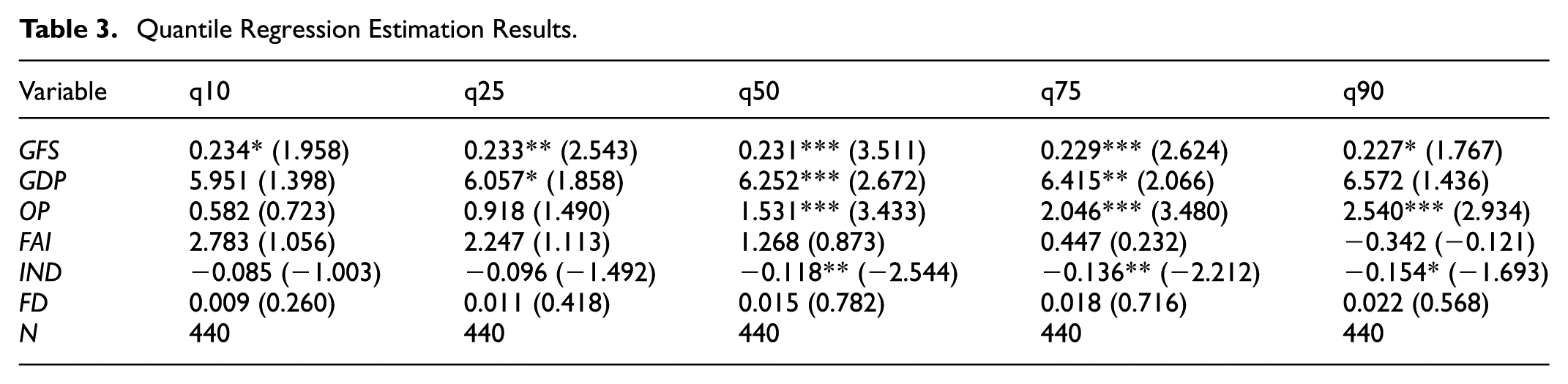
Regions with lower innovation capacity typically exhibit underdeveloped technological innovation environments, limited research infrastructure, and relatively constrained funding acquisition channels. Deficiencies may exist in both R&D personnel availability and essential equipment allocation. Under such circumstances, GFS may serve as the principal financial resource for regional innovation initiatives. It fulfills a critical function in bridging the funding gap, improving the allocation of regional innovation resources, effectively promoting the upgrade of scientific research facilities and equipment, and optimizing regional innovation environments. With the improvement of RIC, regional innovation resources are relatively abundant, and the region also has a better innovation environment. The leverage effect of GFS is also enhanced, which can effectively attract various channels of social capital to participate in innovation activities. As the impact of other R&D capital on RIC gradually increases, the marginal effect of GFS on RIC correspondingly diminishes.
Regression results for individual regions
As introduced in the data collection section, the research sample in this article consists of two regions: Region A and Region B of CCEC. By segmenting the total sample into two subsamples (i.e., Region A and Region B) and conducting regression on Equation (1) on each region, the results are obtained, as presented in Table 4. Columns (1) and (3) present the estimation results from the individual fixed-effects model, while columns (2) and (4) report those from the two-way fixed-effects model. It can be observed that the estimated coefficients of GFS are statistically significant and positive, and both are significant at the 1% level. It suggests that GFS exerts a promoting effect on RIC in both regions of CCEC. A comparison of the regression coefficients for the core explanatory variable across the two regions reveals that the GFS-driven enhancement of RIC is more significant in the Chongqing region than in the CCEC zone. The potential explanations include the following. On the one hand, it is believed that the strategic location of Chongqing (Region B) for China, such as the key connection node for the “Belt and Road” initiative, is the driving force. In recent years, relying on its unique location advantages, Region B has introduced a series of scientific and technological policies, which have cultivated and supported regional innovation in various industries such as information technology and advanced manufacturing for industrial agglomeration and upgrading. On the other hand, Region A is composed of prefecture-level cities, while Region B is composed of districts and counties. Compared with Region A, Region B has relatively weaker comprehensive innovation capability. In alignment with the quantile regression results, GFS exhibits a stronger effect on RIC in regions with weaker innovation capacity. Therefore, the driving effect on the innovation capability is greater for Region B, as compared with Region A.
Regional Regression Results.

Robustness tests
In this section, a number of robustness testing methods were conducted by replacing the core explanatory variable, replacing explained variable, and using the 2SLS instrumental variables method, respectively (Fang et al., 2022; Guo et al., 2024; Hübler & Keller, 2010; Lee & Wang, 2022b).
Firstly, the core explanatory variable was substituted for re-estimation. In this section, the robustness test was conducted by replacing the core explanatory variable with the logarithm of government funding for science and technology (LNG). The regression results are presented in Column (1) and Column (2) of Table 5. The core explanatory variable demonstrates statistically significant positive effects at the 1% level, with marginal variations in both regression coefficient and significance. This test confirms that GFS retains its significantly positive influence on RIC after variable replacement, maintaining a consistent trend with the initial estimation results.
Robustness Test Results.

Secondly, the explained variable was replaced for re-estimation. By referring to relevant works (X. Yang et al., 2021), the number of patent applications can also serve as a measure of RIC. Therefore, in this section, the dependent variable is replaced with the number of patent applications per 10,000 people (patentap) for RIC, and the model robustness is tested under such replacement. The regression results are presented in Table 5. Column (3) and Column (4) respectively display the results of the individual fixed effect model and the two-way fixed model. The GFS coefficient remains significant at the 5% level in both models. This confirms that the positive impact of GFS on RIC persists even after replacing the dependent variable, aligning with the previous results.
Additionally, to address potential endogeneity concerns in the core variable, this section implemented the two-stage least squares (2SLS) instrumental variable (IV) approach to validate result robustness. This causal identification method effectively resolves endogeneity arising from correlation between explanatory variables and error terms (Angrist & Imbens, 1995; Baum et al., 2007; Caselli & Reynaud, 2020). A valid IV must satisfy two key criteria: correlation (correlation with the endogenous regressor) and exogeneity (no correlation with the disturbance term). The IV affects the dependent variable exclusively through the endogenous explanatory variable. The IV in this article needs to meet two conditions: it is related to GFS and not related to RIC.
Considering that employing two IV mitigates weak instrument bias while enhancing estimation efficiency relative to single instrumental variable approaches, and is beneficial for increasing the effectiveness of estimation results (Staiger & Stock, 1994; Stock & Yogo, 2002). According to the aforementioned principles, this research attempts to select two instrumental variables for estimation. One IV is the government funding for science and technology with a lag of one period (L.GF), which is also adopted in literature (Brückner et al., 2012; Haile & Niño-Zarazúa, 2018; Yang et al., 2012). Government expenditure patterns demonstrate both short-term consistency and continuity, suggesting that L.GF may potentially influence the current GFS, thereby satisfying the correlation assumption. Furthermore, L.GF exhibits no direct effect on the current RIC, fulfilling the exogeneity requirement for valid instrumental variables. The other IV, AFS, represents the one-period lagged average government science funding across other cities (districts/counties) within the same province or direct-administered municipality. This is inspired by the relevant research in literature that selects AFS as the IV (Ding et al., 2014; S. Yang et al., 2022). Cities within the same province frequently exhibit strategic interactions in their technology investment decisions, leading to competitive or imitative behaviors, which satisfies the correlation assumption of IV. Meanwhile, AFS exerts a substantially limited effect on local RIC compared to GFS, which to some extent fulfills the exogeneity requirement of IV.
Table 6 displays the 2SLS estimation results. The first-stage regression confirms IV relevance, and the F-value exceeds 10, rejecting the weak instrument problem (S. Chen et al., 2024). The second-stage results show the core variable maintains a 5% level of positive significance, confirming GFS’s positive effect on RIC. The significant Kleibergen-Paap rk LM statistic establishes IV identifiability, while the insignificant Hansen J statistic (p > .1) supports instrument exogeneity. Thus, the estimation results in the previous section exhibit a certain degree of robustness.
Estimated Results Based on the Instrumental Variable Method.

Impact mechanism analysis
Mediating effect analysis
Mediating effect of R&D human capital
R&D human capital is an important guarantee for the output of high-level scientific research achievements and a key factor affecting RIC. Table 7 presents the mediation analysis results testing Hypothesis H2a, that is, whether GFS enhances RIC through R&D human capital (RH) accumulation. Columns (1) to (3) display individual fixed-effects model estimates, while columns (4) to (6) show two-way (individual and time) fixed-effects results. For comparative purposes, columns (1) and (4) present benchmark model results. The results show that GFS exhibits a positive effect on RIC at the 1% significance level, and GFS shows a positive impact on RH. This demonstrates that GFS influences RIC through both direct channels and indirect mediated pathways by RH, verifying the significance of RH in promoting regional innovation development. The mediating mechanism of GFS promoting RIC by RH is established. To verify result robustness, this study conducts bootstrap testing for mediating tests. Following 5,000 bootstrap samplings, the 95% confidence interval for the mediating effect was [0.017, 0.584], and the direct effect was [0.084, 0.333], which both excluded zero, thereby passing the mediating effect test. Hypothesis H2a is verified. On the one hand, government funding can enhance the attractiveness of talents in the region. By attracting high-level talents from other surrounding regions to engage in scientific research activities in the region, the quantity and quality of regional scientific research talents are improved, providing a talent foundation for regional innovation. On the other hand, government funding can effectively motivate researchers, enhance their enthusiasm and efficiency in conducting scientific research activities to a certain extent, thereby accelerating research output and ultimately improving RIC.
Mediating Mechanism Test of R&D Human Capital.
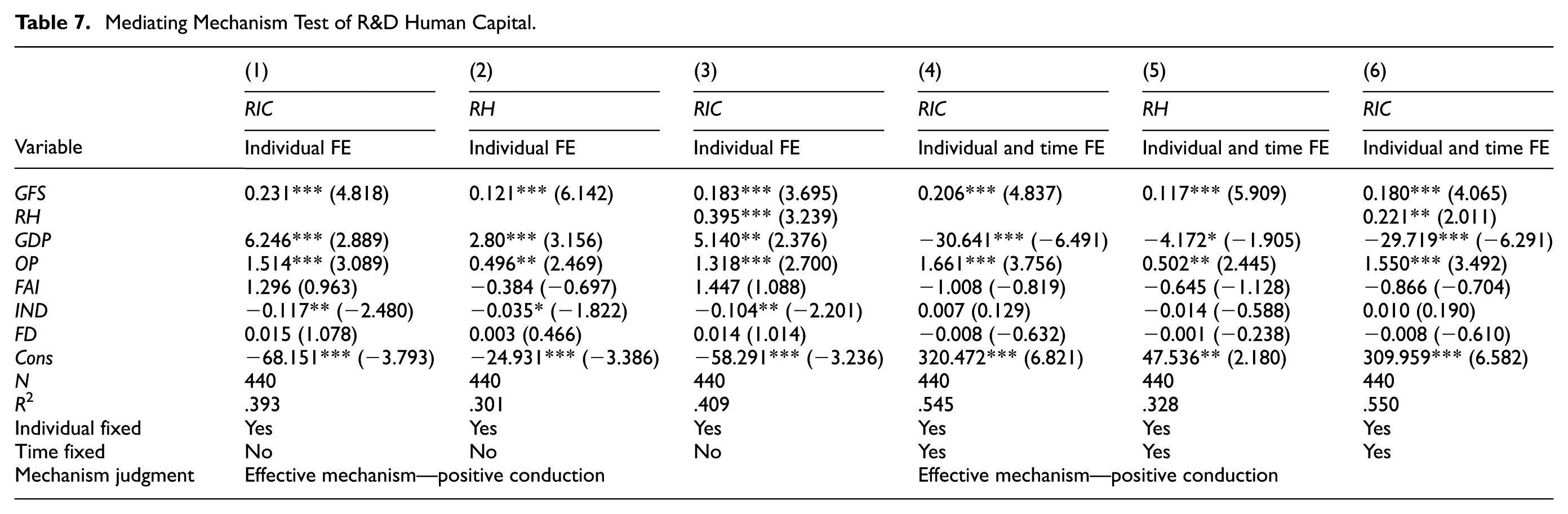
This study indicates that GFS can promote the accumulation of RH and thereby enhance RIC. The positive effects of RH on regional innovation have also been reported in literature (Martinidis et al., 2022; Montmartin & Massard, 2015; Vancauteren, 2018). Moreover, this study reveals the mediating mechanism of GFS affecting regional innovation through RH, and it further deepens and expands the understanding regarding the promoting effect of GFS on RIC.
Mediating effect of R&D capital investment
GFS may guide innovation subjects to increase R&D capital investment (RC), consequently influencing RIC. To test Hypothesis H2b and verify the mediating mechanism of R&D capital investment, this section employs RC as the mediating variable for analysis. Table 8 presents the estimation results, where columns (1) to (3) report individual fixed-effects model outputs and columns (4) to (6) display two-way (individual and time) fixed-effects estimates. For comparative analysis, columns (1) and (4) show benchmark results in Table 7. The results reveal that GFS exhibits positive effects on RC, and both GFS and RC have positive impacts on RIC. Hypothesis H2b is verified. This indicates that GFS can not only directly promote RIC, but also guide and promote RC to indirectly promote regional innovation, the mediating mechanism for GFS to enhance RIC by RC was established. Based on 5,000 bootstrap iterations, the estimated 95% confidence interval for the mediating effect was [0.017, 0.584], and the direct effect was [0.077, 0.302], its exclusion of zero confirms the existence of the mediating effect. The reason for the establishment of the mechanism of action may be that government funding is conducive to guiding various innovative subjects to increase RC, promoting the agglomeration of RC in regions or industries, facilitating the research of new technologies, and enhancing regional innovation through optimized innovation resource allocation and RC effects, thereby bolstering RIC.
Mediating Mechanism Test of R&D Capital Investment.

Threshold effect test
To examine whether a non-linear relationship exists between GFS and RIC, this work refers to Hansen’s (Hansen, 1999) panel threshold model for empirical analysis, which is constructed as follows:

where I (•) represents the threshold indicator function, variable Z in parentheses represents the specific threshold variable selected.
Firstly, 300 rounds of bootstrap loop sampling were conducted to test threshold effects and ascertain the number of thresholds. The threshold effect test results, shown in Table 9, indicate that RH, as the threshold variable, passed the single threshold significance test, revealing a single threshold effect. Meanwhile, RC, as the threshold variable, passed significance tests for both single and double thresholds, indicating a double threshold effect.
Threshold Effect Test Results.

Thereafter, threshold regression analysis was subsequently conducted, with results displayed in Table 10. For RH as the threshold variable, the single threshold value obtained from regression is 4.881. When RH ≤ 4.881, GFS has no significant effect on RIC. However, when RH > 4.881, GFS positively affects RIC. The results confirm the presence of an RH threshold effect, supporting hypothesis H3a. This demonstrates that RH serves as a critical carrier for effective GFS. Scale economies and synergistic “funding-talent” effects emerge only when RH accumulation surpasses a specific threshold. Regions with insufficient RH stocks risk resource misallocation (e.g., equipment underutilization and project inefficiencies) from increased GFS, whereas RC-abundant regions exhibit significantly higher marginal returns to GFS.
Threshold Regression Results.

For RC as the threshold variable, the double threshold values obtained from regression are 25.051 and 32.525. In the first stage (RC ≤ 25.051), GFS has no significant effect on RIC. In the second stage (25.051 < RC ≤ 32.525), the regression coefficient is 0.239, significantly positive at the 1% level. In the third stage (RC > 32.525), the regression coefficient is 0.479, also significant at the 1% level. By comparing the regression coefficients, it is found that with the improvement of RC, the estimated coefficient value of GFS also increases, and the promotion effect on RIC shows the characteristics of increasing marginal utility. In summary, the impact of GFS on RIC varies at different levels of RH and RC, with higher levels of RH and RC resulting in a more pronounced promoting effect of GFS on RIC. The results confirm a non-linear relationship and lend support to H3b. RC indicates both the financial base for regional innovation and the prevailing investment environment. When RC surpasses the first threshold, GFS can exert a pronounced leverage effect, mobilizing supplementary capital from social and corporate actors and thereby amplifying innovative dynamism. Beyond the second RC threshold, elevated RC and heightened marketization further implement a “synergistic amplifier” role with GFS, promoting the output of frontier and core technologies and accelerating the translation of scientific outputs into applications.
Conclusions and policy implications
Conclusions
To bridge existing research gaps regarding the effect and mechanisms of GFS on RIC. This empirical study collects the relevant data of the prefecture-level cities (districts and counties) in the Chengdu-Chongqing Economic Circle from 2011 to 2020, and adopts a set of regression models and rigorous tests in the investigation. The following findings are obtained.
First, the benchmark regression results reveal that GFS has a statistically significant positive impact on RIC, as confirmed by multiple robustness tests. Hypothesis H1 is verified. Compared with regions with strong innovation capability, the driving effect of GFS on RIC is stronger in regions with weak innovation capability. Also, within the two regions of CCEC, GFS in the Chongqing region exerts a stronger positive effect on RIC.
Second, the mediating effects of both R&D human capital and R&D capital investment in the positive transmission mechanism of GFS promoting RIC are established. Hypothesis H2a and H2b are verified.
Third, the threshold effect test reveals that the accumulation of RH exerts a single threshold effect on RIC. Specifically, when RH surpasses the threshold value of 4.881, GFS positively promotes RIC. In addition, RC exhibits a double threshold effect on RIC. When RC exceeds the first threshold value of 25.051, GFS begins to positively promote RIC. Furthermore, when RC surpasses the second threshold value of 32.525, the regression coefficient of GFS increases, indicating increasing marginal effects. Hypothesis H3a and H3b are verified.
Policy implications
From the above results, the following suggestions are proposed for government policy making. Firstly, empirical findings demonstrate that GFS significantly enhances RIC. Consequently, policymakers should prioritize increasing the proportion of GFS within government expenditures while optimizing the efficiency of GFS. To ensure long-term stability, a well-structured growth mechanism for GFS should be implemented. This may include aligning GFS growth targets with fiscal revenue trends and macroeconomic growth, thereby reinforcing its pivotal role in fostering RIC. Meanwhile, the government should increase support for areas with lower RIC and increase the intensity of GFS to support the development of areas with lower RIC. In order to reduce the innovation gap between regions and effectively improve the regional innovation level, corresponding support and preferential policies should be formulated to provide support for innovation activities in regions with weak RIC.
Secondly, in light of the mediating effects of RH and RC in the relationship between GFS and RIC, greater attention must be devoted to the RH and RC. On one hand, governments should recognize the critical role of R&D talents in regional innovation, fostering a conducive environment for R&D talent development. It is essential to enhance innovative talent cultivation (aligned with the region’s industrial development needs), ensuring scientific talent reserve and structural optimization to elevate regional RH level and to strengthen RIC. On the other hand, leveraging the steering function of GFS and helping diversify regional R&D funding sources, encouraging private capital investment in innovation, stimulating financial participation in innovative endeavors, and enhancing overall GFS levels.
Thirdly, in view of the threshold effects exhibited by RH and RC in the relationship between GFS and RIC, regionally differentiated policies should be formulated based on local conditions. Specifically, for regions where RH levels fall below the threshold value, policy interventions should focus on enhancing talent attraction mechanisms while improving supporting infrastructure in key areas, including housing security and healthcare systems, to facilitate RH accumulation. For areas with sub-threshold RC levels, targeted financial instruments such as R&D loan subsidies and equipment purchase incentives should be implemented to address capital shortfalls in research activities. These measures are essential to prevent insufficient utility of GFS resulting from insufficient RH or RC endowments. Furthermore, establishing a performance appraisal system for GFS, and allocation with periodic adjustments based on evaluation outcomes, to enhance GFS efficiency.
While it is imperative to acknowledge the limitations of this empirical study. This study examines the impact and mechanism of GFS on RIC in China’s CCEC zone, but whether the findings in this region are applicable to other regions or countries is not clear. It will be interesting to conduct the same research task for other regions and countries. Similarities and/or differences could be observed among different regions and countries. Future studies could be conducted based on this analysis framework for other regions and countries. Furthermore, cross-regional and multinational large-sample datasets can be employed for comparative analysis to examine potential variations in research findings across different countries or regions, accounting for diverse economic systems or socioeconomic contexts. Additionally, a potential spatial linkage between GFS and RIC remains unexamined in this study; future work can explicitly model this spatial dimension to test for possible spatial spillover effects.
Footnotes

Funding
The authors disclosed receipt of the following financial support for the research, authorship, and/or publication of this article: The first, second, and fourth authors recognize the research supported from Chongqing Social Science Planning Fund (2024NDYB052), and National Social Science Foundation of China (21BGL060), and Chongqing Business and Technology University high level talent research project (2155042).
Declaration of Conflicting Interests
The authors declared no potential conflicts of interest with respect to the research, authorship, and/or publication of this article.
Data Availability Statement
The data that support the findings of this study are available from the corresponding author, upon reasonable request.