



Abstract
Women’s entrepreneurship is well known for its significance in upholding the economic prosperity of many nations. However, in today’s unprecedented environment, rural women entrepreneurs have become increasingly vulnerable to relentless and catastrophic events, raising serious concerns among economies that are predominantly driven by this sector. Various determinants serve as crucial enablers of success for rural women entrepreneurs. Therefore, this systematic literature review aims to profile existing studies on women's entrepreneurship and to deepen the understanding of the determinants of success among rural women entrepreneurs. This paper systematically reviews studies on success determinants in the context of rural women entrepreneurs from 1994 to 2024, based on the PRISMA protocol. A bibliographic coupling analysis was conducted using VOSviewer software to identify the primary research themes and trends related to the relationship. The findings have shown that Tigges and Green have the highest citation rate for their work published in 1994, and most research on rural women’s entrepreneurship was published using quantitative methods. The coverage of women entrepreneurship includes agriculture, arts and humanities, business management, computer sciences, economics, finance, engineering, mathematics, social sciences, and women’s studies. Descriptive findings also indicated that India has the highest interest in rural women entrepreneurship. Lower-middle-income economies have the highest number of publications compared to other income economies. Findings from the bibliometric coupling analysis reveal 10 clusters that indicate the knowledge structure and mapping of research streams in rural women’s entrepreneurship. This study presents a novel framework, providing an in-depth understanding for the research community to explore rural women’s entrepreneurship research and propose future research directions that contribute to the sustainable development of rural women entrepreneurs.
Keywords
Introduction
Rural women entrepreneurs are significant assets and key agents of change, transforming local challenges into opportunities through their entrepreneurial spirit and determination. Thus, empowering rural women entrepreneurs not only improves their livelihoods but also the overall socio-economic development of their communities. Governments are now prioritizing the sustained empowerment of women in rural areas through entrepreneurship as a key strategy to reduce poverty and promote prosperity. Literature on rural women’s entrepreneurship is gaining popularity in response to the ongoing uncertainties faced by women entrepreneurs. For example, Srinivasu et al. (2024) mentioned that rural women entrepreneurs are considered the most disadvantaged in most economies. The primary reasons are due to small entry barriers and reliance on individual clients, as compared to urban women entrepreneurs, who have a better advantage in offering higher-quality products and marketing (Paramashivaiah & Sampath Kumar, 2023; Punitha et al., 1999). More specifically, the dual role of women is another significant issue, as they must balance traditional family responsibilities with business obligations. The obstacles they have been facing include economic problems such as a lack of managerial talent, insufficient finance, a shortage of goods or materials at reasonable prices, inadequate training, and severe competition from their male counterparts.
In line with its wide coverage, the determinants of rural women entrepreneurs’ success are associated with various antecedents in the preceding literature. Numerous scholars have recently linked various tangible and intangible resources and capabilities to explain the success factors of rural women’s entrepreneurship (Adhikary, 2025; Dong, 2024; Kawane, 2024; Victor, 2024). One of the most significant factors is social capital (Ghouse et al., 2017). For example, understanding the inter-clan and inter-tribal relationships from a standpoint creates a conducive climate for women in rural areas to participate in business activities. Others also include support groups and women’s associations as a supportive community. However, some scholars argue that social capital alone can hinder their access to gaining tangible and intangible resources that contribute to success. Thus, the authors suggest that a more structured support system would be necessary to address specific hindrances faced by rural women (Semkunde et al., 2021).
Another significant factor that shapes the entrepreneurial landscape for rural women is the economic factor (Tüzün & Araz Takay, 2017). In comparison to their urban counterparts, their capabilities are driven by necessity and economic pressure. This factor forces them to venture into business out of necessity rather than opportunity (Sternberg, 2009). However, other authors argue that this motivation may not be sufficient when they lack access to resources and capital, which gives urban women entrepreneurs a better advantage. This will inhibit their business sustainability (Nedeljković, 2023).
Other scholars identified the educational dimension as a success factor toward rural women’s entrepreneurship (Klasen & Lamanna, 2009). Initiating educational programs tailored to their unique needs can ultimately enhance their entrepreneurial competencies, for example, financial literacy training and business development through cyberspace (Shao et al., 2022). However, the importance of personal attributes is also significantly highlighted in most literature. For example, Lenka and Agarwal (2017) highlighted that business expertise, interpersonal relationships, and business influencers can impact the growth of rural women entrepreneurs. However, while the crucial success criteria have been thoroughly established and developed over time, there is a scarcity of systematic literature evaluations that specifically evaluate the determinants of the success of rural entrepreneurs in the current literature.
For example, the reviews mainly focused on the various streams, conceptualization, and measurement difficulties related to women’s entrepreneurship. Other reviews highlighted the overall factors, obstacles, outcomes, and theories commonly employed in research on women’s entrepreneurship. More specifically, prior researchers have aptly noted that the advancement of a discipline begins with a thorough understanding of its historical context, which provides valuable insights into its potential future developments (Maurya et al., 2025). Therefore, given the dynamic character of rural women entrepreneurship and its potential to become more widely accepted, this paper seeks to address the following research question: What is the focus of studies investigating entrepreneurship issues in rural women entrepreneurship?
Secondly, several conceptual frameworks exist related to the development and growth of rural women entrepreneurs. For example, Brush et al. (2009), Noguera et al. (2013), and Jamali (2009) highlighted through a gender-aware 5M framework, which includes markets, money, management, motherhood, and macro/meso. This framework is particularly relevant in rural areas, where family duties and institutional constraints are more pronounced. In contrast, other models focus on education, skills, and networks that enhanced self-efficacy (Bandura, 1997; Bates, 1990; McGee et al., 2009), and the success depends on alignment across macro (e.g., policy, norms) and meso (e.g., support institutions), and micro (e.g., individual traits) levels (Acs et al., 2014; FAO, 2011; Welter, 2011). While technology can boost the performance of rural women entrepreneurs, studies such as Donner and Escobari (2010), Salemink et al. (2017), and GSMA (2020) have empirically shown that digital access can reduce rural isolation and open markets, which is facilitated by the assistance of infrastructure quality and cultural norms. From a finance perspective, their performance can be empowered through microcredit and training (Datta & Gailey, 2012; Kabeer, 1999; Pitt & Khandker, 1998).
The question of which framework is most suitable for describing and predicting the growth, development, and even survival of rural women entrepreneurs has not been comprehensively studied. Therefore, learning from other studies about rural women entrepreneurs is essential for rationalizing the challenges and obstacles they face in achieving success. Hence, this comprehensive literature review specifically examines the rural context, recognizing its high importance to the topics being studied and the lack of research on this subject in current literature.
A bibliographic analysis is conducted to identify the patterns and themes in these studies. Additionally, a bibliographic coupling analysis is specially undertaken to visualize the connections between the articles, offering valuable insights for future researchers. While bibliometric analysis provides valuable insights into publication trends, influential works, and thematic clusters, it has inherent limitations that justify the need for a complementary Systematic Literature Review (SLR). First, bibliometric methods are primarily quantitative, focusing on citation counts, co-authorship networks, and keyword co-occurrences. These techniques offer a macro-level overview of the intellectual structure of a field, but they do not adequately capture the depth, context, and nuanced theoretical contributions of individual studies (Aria & Cuccurullo, 2017; Donthu et al., 2021).
An SLR enables a rigorous, qualitative synthesis of findings across diverse sources, systematically assessing methodological rigor, theoretical frameworks, and contextual factors. Combining bibliometric analysis with SLR thus strengthens the study by offering both breadth and depth: the former maps the research landscape, while the latter critically interprets and integrates knowledge to address research gaps and propose a forward-looking agenda. Thus, this study aims to (a) analyze trends in rural women’s entrepreneurship, (b) identify key determinants of entrepreneurial success, and (c) propose a future research agenda.
The article begins with a brief introduction of the study, followed by details of the methodology used. Next, it presents the findings related to the descriptive analysis and bibliographic coupling analysis. Subsequently, the discussion section provides a framework for the determinants of success among rural women entrepreneurs. The next section focuses on the conclusion and highlights the study's limitations. The final part proposes a direction for future work.
Review Methodology
The methodology involves rigorous steps that examine the required papers within the scope of rural entrepreneurship and its determinants of success. This systematic literature review used the Preferred Reporting Items for Systematic Reviews and Meta-Analysis (PRISMA) approach (Moher et al., 2009) to examine the current literature from two significant academic databases (Scopus and Web of Science).
Researchers primarily adhere to standard reporting methods, which serve as recommendations for the review’s resources, inclusion and exclusion criteria, review process, data abstraction technique, and analysis (Shaffril et al., 2020). After screening titles and abstracts, 29 studies were included for final analysis. Figure 1 depicts the entire process of doing the systematic literature review.
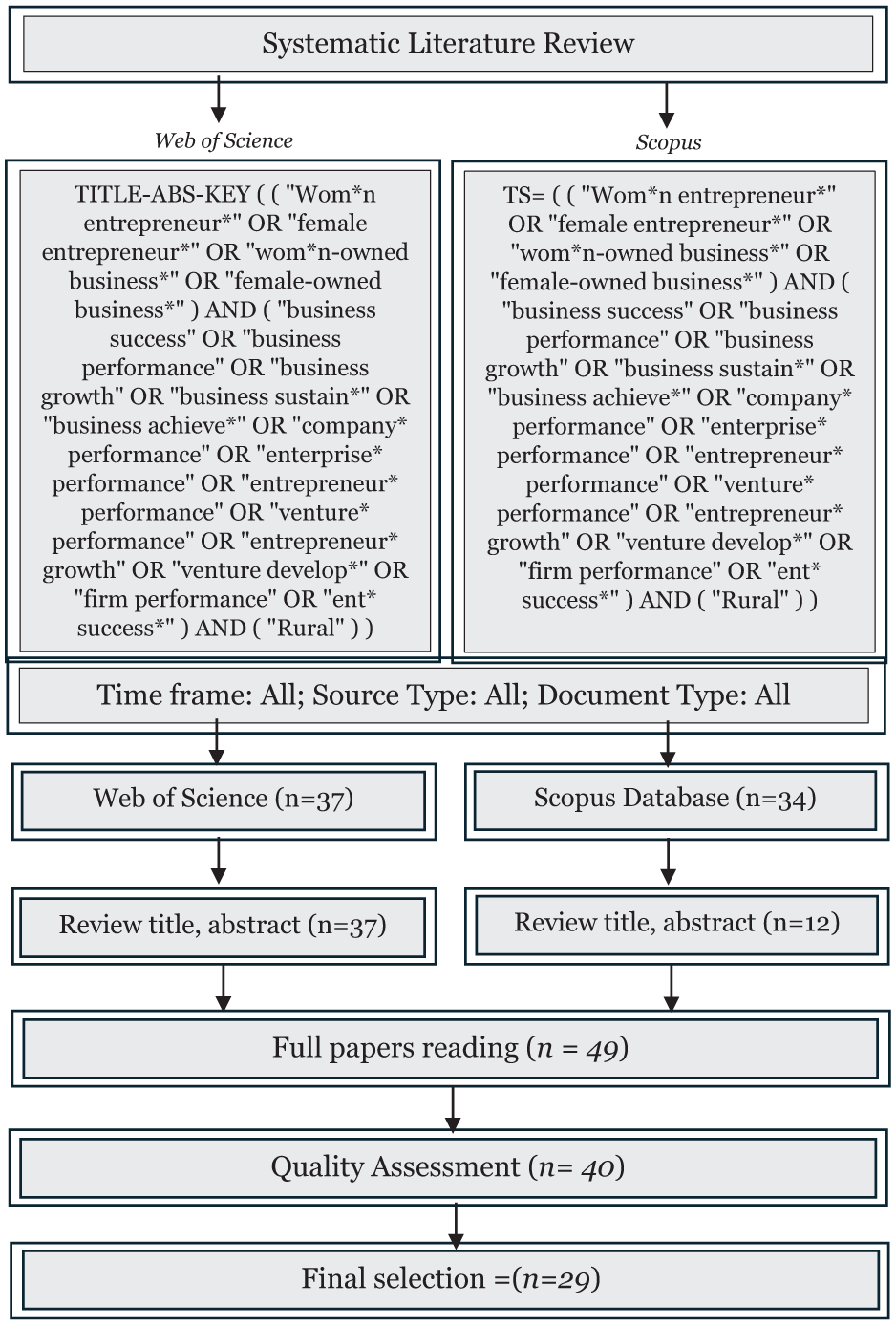
PRISMA flowchart showing article selection steps across Scopus and Web of Science databases.
The usage of PRISMA is justified by the benefits it provides in terms of systematic scientific discovery of academic knowledge based on guided research questions. Previous systematic literature review studies have heavily relied on these two robust academic databases because they cover most subjects extensively and provide greater access to diverse key research matrixes such as all-inclusive back files, citation counts, keywords, and open abstracts (Cooper et al., 2018; Gusenbauer & Haddaway, 2020). Next, many eligibility and exclusion criteria were set to ensure the scientific rigor of the findings, with a focus on transparency and a comparable review procedure. As a result, the review considers various inclusion criteria, including only publications with empirical backing, the use of English as a writing medium, and research coverage that focuses on determinant elements explaining the success potential of rural women’s entrepreneurship. Only peer-reviewed empirical articles in English were included to ensure quality and comparability of studies. Table 1 sets out the inclusion and exclusion criteria of this systematic review.
Inclusion and Exclusion Criteria for the Systematic Review.

To ensure rigor, credibility, and consistency in the analysis, the study applied a clear set of inclusion criteria. Only peer-reviewed journal articles indexed in Scopus and Web of Science were considered, as these databases are internationally recognized for maintaining high academic standards and comprehensive coverage across disciplines. Publications were restricted to those written in English to ensure comparability of findings and avoid potential translation biases. In terms of scope, only empirical studies were included, as the research objective is to map the determinants of rural women’s entrepreneurial success based on evidence and observable data, rather than theoretical debate. The time frame was set between 1994 and 2024, beginning with Tigges and Green’s (1994) seminal work and extending three decades to capture the field’s growth and evolution in a longitudinal perspective.
Correspondingly, several exclusion criteria were applied to refine the dataset. Non-indexed journals were excluded to avoid incorporating articles with uncertain peer-review standards that might compromise data quality. Conference proceedings, book chapters, and theses were also excluded, as they often lack standardized peer review and have limited visibility in bibliometric analyses, which can potentially distort indicators such as citation counts and bibliographic coupling. In addition, conceptual papers and literature reviews were excluded because they do not present original data, which is necessary for mapping empirical determinants. Finally, publications written in languages other than English were omitted to maintain analytical consistency. While this inevitably limits representation of some regional perspectives, it was considered a necessary trade-off to ensure methodological rigor and comparability across studies.
Search String
As the terminology for rural women entrepreneurs and business success varies in the literature, the authors searched for similar terms in dictionaries and thesauruses to ensure that essential terms were not overlooked. Among other terms used for business success are “business performance,”“business growth,”“business achievement,” or “business sustainability.” Thus, the search string for the article search is as follows: “Wom*n entrepreneur*” OR “female entrepreneur*” OR “wom*n-owned business*” OR “female-owned business*”) AND (“business success” OR “business performance” OR “business growth” OR “business sustain*” OR “business achieve*” OR “company* performance” OR “enterprise* performance” OR “entrepreneur* performance” OR “venture* performance” OR “entrepreneur* growth” OR “venture develop*” OR “firm performance” OR “ent* success*”) AND (“Rural”).
Analysis Results
Descriptive Analysis
The descriptive analysis results of all 29 articles provide a comprehensive overview of the literature linking factors that contribute to the successful development of rural women’s entrepreneurship. The distribution of the studies is presented by key attributes, including total publications by year, source title, contributing countries, authors, citations, and research type. Figure 2 illustrates the total number of publications by year, spanning from 1994 to 2024. For 30 years, we have observed an increase in publications regarding women’s entrepreneurship. Although some years, including 2013, had no publications, at least one paper was published regarding this topic. However, the number of publications is low, as the maximum number of publications in any year was four. It indicates that research on rural women’s entrepreneurship has considerable potential for exploration and contribution to the body of knowledge.

Total publications by year.
Regarding the research area, the coverage of women entrepreneurship could be considered wide. It has covered from agriculture to arts and humanities to business management to computer science, as well as economics, finance, engineering, mathematics, social sciences, and women’s studies (see Table 2). Altogether, articles have been published in 26 research areas related to rural women’s entrepreneurship.
Coverage of Research Areas and Source Title.

The majority of research on this topic was published using quantitative methods (18 publications, 62.07%), compared to qualitative methods (8 publications, 27.59%; see Figure 3). While only three publications (10.34%) employed mixed methods to understand the phenomenon.

Total publications by research methods.
Next, we also analyze the number of citations in comparison to the authors. Figure 4 shows that Tigges and Green have the highest citation for their work, which was published in 1994. From 1994, this paper has been cited 57 times. Meanwhile, Ntseane’s work (2004) has been cited 38 times. Other than that, more than 10 authors have received citations ranging from 10 to 30 times. For example, research by Lourenço et al. (2014) has been cited 28 times, Osei and Zhuang’s (2020) paper has been cited 27 times, and Weber’s (2007) paper received 25 citations. Another group of 10 authors has been cited less than 10 times. Papers published in later years, such as those by Mogashoa (2014) and Saada and Sofer (2017), have been cited at least once.
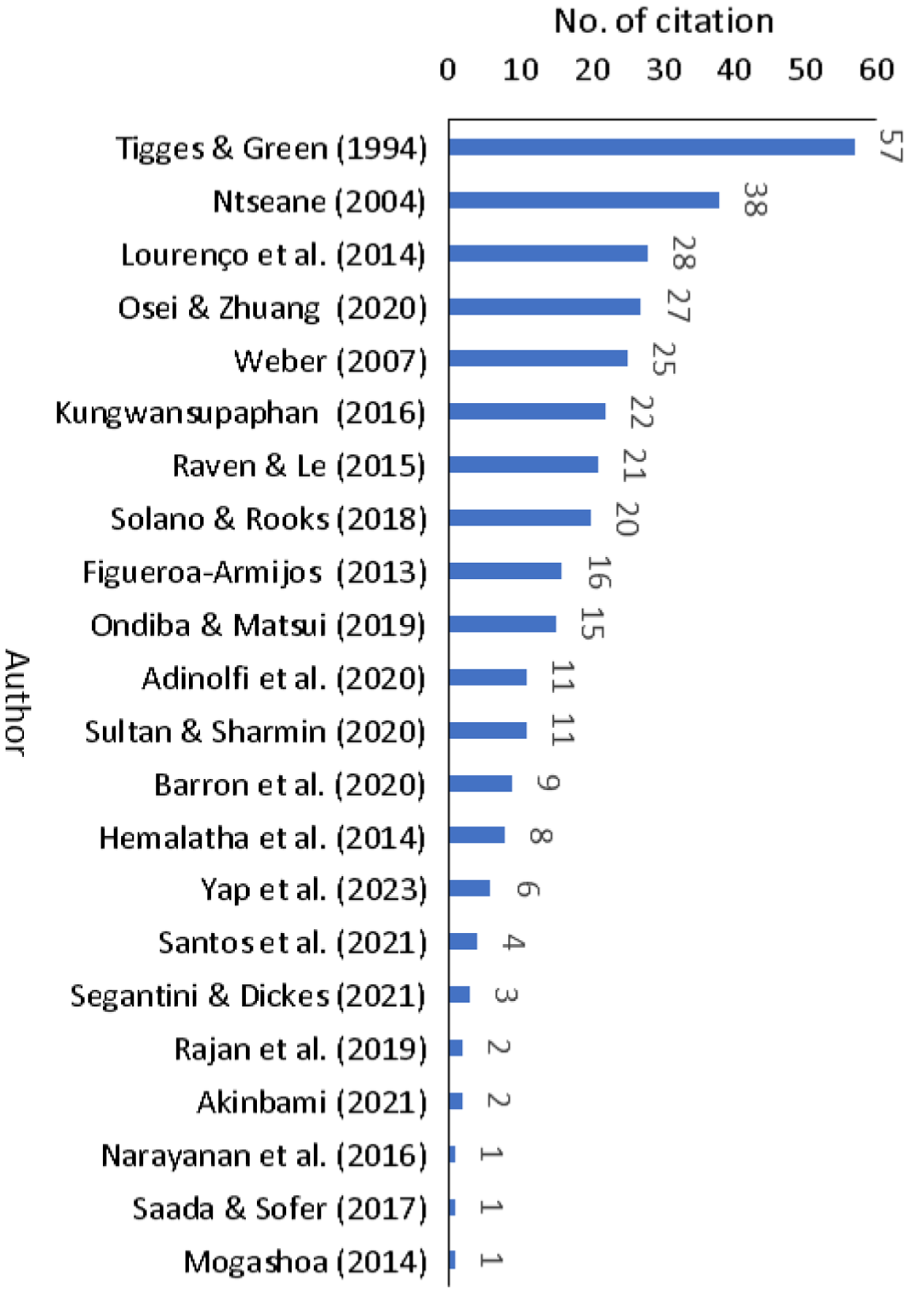
Frequency of citations by articles.
Figure 5 presents the distribution of studies on rural women entrepreneurship by country. The overall distribution indicates that the most productive nations for the theme being studied are a mix of developed and developing nations, such as India, the United States, and Sub-Saharan Africa. This can be attributed to the increased awareness of the importance of such research in both countries. Most likely, there are many women involved in entrepreneurship in these countries. For example, India (in South Asia) has taken numerous initiatives to encourage rural women to engage in entrepreneurship, and consequently, there are five studies in that country.

Geographical distribution of articles by country.
Regarding the geographical regions, Table 3 and Figure 6 display the number of publications by country, while the regional distribution is illustrated in Figure 7. India has shown a high interest in rural women’s entrepreneurship, with five publications, followed by the United States with four publications. The United States is known as a developed country, but the higher number of papers could be attributed to its advanced research activities in terms of funding and knowledge. India is considered a developing country, and entrepreneurship plays a crucial role in driving economic growth. Additionally, women in rural areas are more likely to engage in entrepreneurial activities to support their families’ income. Meanwhile, Uganda, Africa, and Lebanon have published two papers, and other countries, including Malaysia, Vietnam, and Italy, have published at least one paper related to rural women’s entrepreneurship.
Coverage of Research Based on Regional Classification.


Note. Blue colored cells denote developed countries, others represent developing countries.

Distribution of articles by country.

Distribution of articles by regions.
Analysis of Bibliographic Coupling
Bibliographic coupling analysis is used to reveal similarities between concepts through shared references across all publications, identifying connections between studies and primary research issues related to the determinants of success among rural women entrepreneurs (Nwagwu, 2024). It was conducted using VOSviewer software (van Eck & Waltman, 2010). This specialized software tool is designed for visualizing bibliometric networks, enabling the formation of visual representations that explain the relationships among research papers. The papers were analyzed irrespective of citation count to ensure the inclusion of all recently published publications in the analysis. In comparison to co-citation, this analysis can capture more distinct research on rural women entrepreneurs (Kleminski et al., 2022). This analysis produced 10 clusters from a total of 29 articles, as depicted in Figure 8. It further shows explicitly the number of citations and total link strength, where the 10 groups are unrelated to one another. Re-examining representative articles within the clusters and synthesizing them based on shared themes and research streams is how the clusters are identified using inductive interpretation.
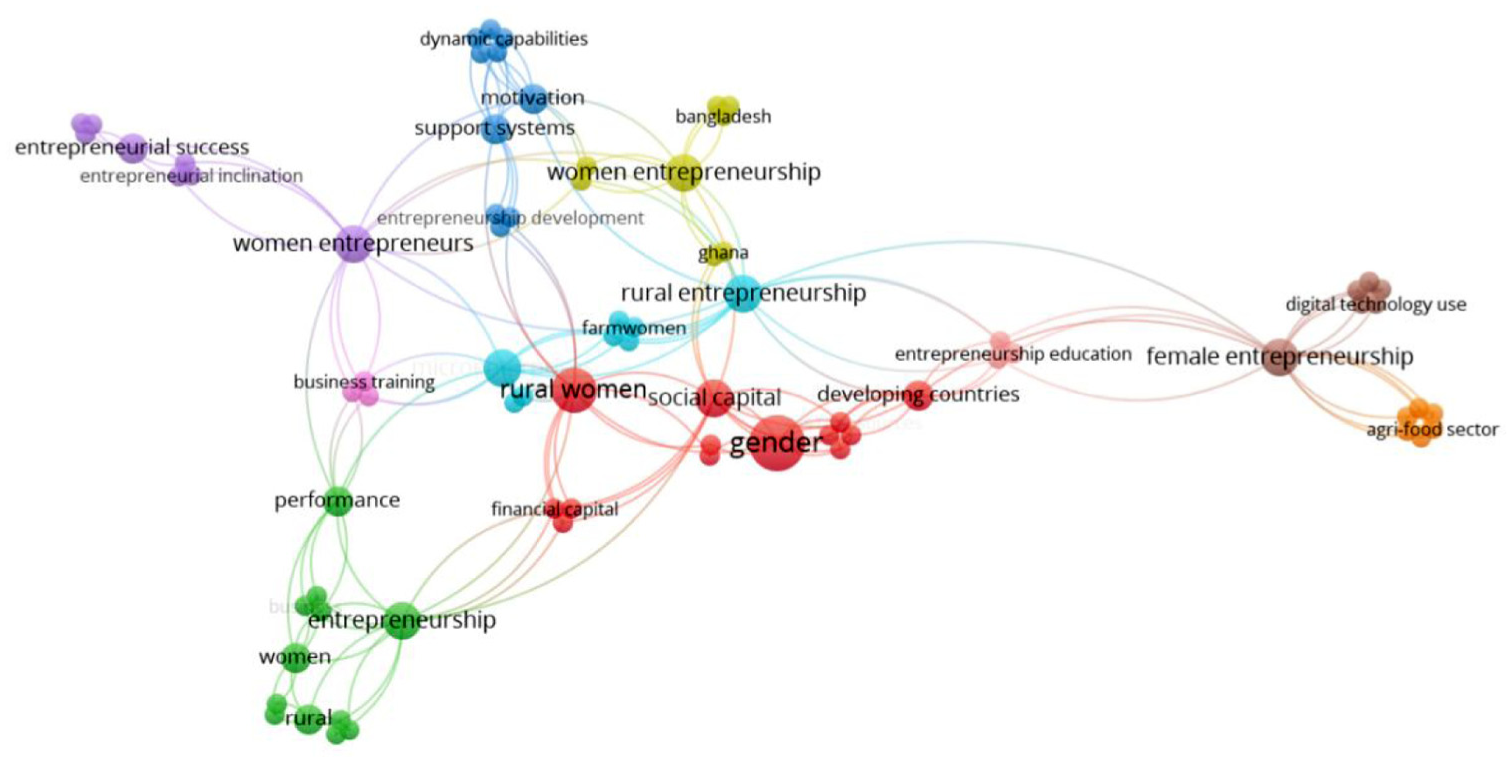
VOS viewer visualization of a term co-occurrence network.
Figure 9 represents the word cloud of the author’s keywords. The subsequent sections, as outlined in Table 4, examine each of the 10 clusters based on their themes and the primary knowledge contributions made by the authors. The 10 clusters encompass factors influencing the success of rural women entrepreneurs, including institutional, financial, family, physical, organizational, social norms, social factors, economic, individual, and demographic elements.

Word cloud of author’s keywords.
VOS Viewer Classification of Clusters Based on Author’s Keywords.

Cluster 1 (13 items): Institutional Factors that Contribute to the success of Rural Women Entrepreneurs
Most of the articles in this cluster focus on institutional factors that can influence the success of rural women entrepreneurs. This includes evolving market trends, facilities and service infrastructure, funding complexities, access to reliable and credible information, social security, personal safety, the cost of services such as utilities and transportation, access to training and technical assistance, mentoring programs, and access to properties, including land and business premises. A study by Ghouse et al. (2021) examined 183 rural women entrepreneurs in Oman and found that many of them struggled with several major issues. This mixed-methods study found that not having proper social security, limited chances to join training or mentoring programs, and a lack of facilities and service support are some of the challenges to growth.
Likewise, Rahman et al. (2022) did a smaller study with seven rural women entrepreneurs in Bangladesh. Most of the women reported that it was challenging to keep their businesses running due to high costs, particularly for utilities and transportation, as well as a lack of skills. This is due to their remote rural locations and limited means of ensuring timely payments from customers, which reduces their perseverance in business. Moreover, the use of technology, such as online payments, is still low due to a lack of skills and training, as well as a lack of information and educational opportunities. This also affects the failure to market their products by using the proper distribution channel due to skill-related challenges. In a similar vein, Kyrgidou and Petridou (2013) also found that e-mentoring programs contribute to the success of a business, especially for rural women entrepreneurs. Their study aims to investigate e-mentoring support that can contribute to the success of rural women entrepreneurs in Greece. The results of the study revealed that the mentoring program can increase mentees’ knowledge, skills, and self-confidence, especially when faced with uncertain business situations, and make them more flexible and innovative in introducing their products to the market. This proves that institutional factors are crucial to the success or failure of a business, especially for rural women entrepreneurs.
Hence, based on the above previous studies, institutional support plays a key role in the success of rural women entrepreneurs, demonstrating real-world decision-making with a focus on infrastructure, digital access, security, guidance, and policy integration. This can be done by expanding e-mentoring through mobile and regional hubs, upgrading rural roads, expanding internet access in rural areas, launching local digital literacy campaigns, facilitating applications, introducing community credit models to reduce the under-utilization of government credit initiatives, and providing logistics and market networks to overcome the difficulties of selling traditional products nationally and internationally.
Cluster 2 (12 items): Financial Factors that will Lead to the Success of Rural Women Entrepreneurs
Most articles classified in this cluster emphasized financial factors, including financial aid and the capability to get funding for current needs and future business prospects. Qualitative research by McDonagh et al. (2024) shows that a lack of financial assistance is a major factor hindering the success of rural women entrepreneurs, particularly in the agri-food sector in Europe, in expanding their businesses. The results of this study also found that the process of obtaining financial assistance and loans is a major obstacle to the development of their business, and some of the respondents were unaware of the financial assistance provided by various parties to help them in running their business, especially in the initial stage of the business.
Likewise, a qualitative study by Yap et al. (2023) also revealed that rural Indigenous women entrepreneurs in Sarawak, Malaysia, also face the same problem related to financial factors, where most respondents deliberate that it is difficult to obtain financial assistance or loans because most financial institutions want to look at strong financial capability to pay back loans. This causes them to depend on family assistance, such as financial savings, to support their business. The results of this study also revealed that the majority of the respondents acknowledged the importance of funding assistance at the early stage of the business, and failure to obtain financial support can weaken their enthusiasm for running a business, especially for rural Indigenous women entrepreneurs who lack the financial capital to start a business.
However, the results of the previous studies are incongruent with a study by Hemalatha and Senthil Nayaki (2014), which involved 10 rural women entrepreneurs in India. They found that financial assistance is not the main factor that contributes to business success, since the main source of motivation to start up a business was due to intrinsic factors, including self-motivation. More than 30% of respondents acknowledged that the reasons they want to venture into a business were due to recovering from a failed marriage, especially those who have experienced divorce, reducing poverty and increasing the standard of living, and assisting families with health problems.
This cluster confirms that financial factors are important for the success of rural women entrepreneurs. Access to finance encompasses not just availability but also accessibility and appropriateness. Decision-makers in the real world must restructure rural financial systems, acknowledging that women encounter distinct challenges related to formality, geography, documentation, and self-confidence. For instance, establishing language assistance centers, streamlining forms, and conducting roadshows can simplify the intricate loan application process. Additionally, finance seminars can be held in collaboration with local authorities and entities that possess digital literacy to enhance the financial literacy of rural women entrepreneurs. Implement non-collateral loans and legalize, as well as encourage, communal savings schemes through grants or training to reduce reliance on familial savings, which can also be implied.
Cluster 3 (10 items): Family Factors that Contribute to the Success of Rural Women Entrepreneurs
Most of the articles in this cluster are closely related to family factors, such as acquiring support from family members, time constraints, and work-life balance, which can lead to business success for rural women entrepreneurs. Solano and Rooks (2018) investigated the social capital of entrepreneurs in Uganda, highlighting the critical role of family in entrepreneurship, particularly in providing access to financial resources. That means rural women entrepreneurs often depend heavily on family support, especially when it comes to obtaining funds or financial capital. This shows that family support, especially from their husband or male relative, plays a vital role in determining the success of a rural woman entrepreneur’s business because female entrepreneurs generally have less financial power than men, due to difficulties in accessing financial resources via loans by formal institutions, and a lack of control over finances in the household.
Additionally, work-life balance is closely related to the success of businesses run by rural women entrepreneurs. A study by Loscocco and Bird (2012) demonstrates that women entrepreneurs are more concerned about achieving a work-life balance in running their businesses. This means that they are more concerned about the business conducted close to their home, as they want to focus on the business while also not neglecting their family, which will lead to the development of their business. Some of them fail to balance family and business and end up having to sacrifice business development because they want to focus more on family, especially for women entrepreneurs who have many children.
However, the results of a study by Rajan et al. (2019) of 400 women entrepreneurs in micro-small and medium enterprises in India did not show any relationship between family support and the success of a business. While familial support and advantageous industrial networking are significant, the success of businesses operated by rural women entrepreneurs is primarily contingent upon factors such as skills, business acumen, marketing proficiency, and the ability to generate high sales and profits, rather than solely on family background and industrial connections.
This cluster illustrates that family factors can significantly impact the success of rural women entrepreneurs. To be successful, rural entrepreneurship policy must integrate family-inclusive strategies with digital enablement and individual skill development. Furthermore, government and related agencies can provide support to home-based businesses through grants and flexible training to enhance work-life balance and proximity. Additionally, they can offer flexible, modular training and mobile learning tools, as well as promote individual empowerment through the development of digital and marketing skills. This will ensure that not all rural women entrepreneurs rely on family support.
Cluster 4 (8 items): Physical Factors that will Lead to the Success of Rural Women Entrepreneurs
The physical factors emphasized in most articles within this cluster result in geographical challenges, including climate, seasonal income fluctuations, and remote locations, which will lead to a loss of incentives in rural areas. The considerable distance from urban areas, where business activities are more vibrant, exacerbates this issue. Therefore, if women entrepreneurs do not take the opportunity to utilize the latest technology in running their businesses, such as online business and e-marketing, then this physical factor will be an obstacle to the development of women entrepreneurs’ businesses. Gurbuz and Ozkan (2020) investigated the environmental impact and risk assessment in rural women entrepreneurs. A quantitative study was conducted among 384 respondents in Turkey to analyze the extent to which the effects of environmental pollution and climate change can impact rural women entrepreneurs. The results of their study found that the environment has a significant impact on the success of rural women entrepreneurs, as it can affect their source of income and livestock, and reduce the quality of raw materials, which in turn can affect the sustainability of their business. Similarly, a study by Hasan (2020) found that rural women entrepreneurs in Pakistan face more challenges in their businesses compared to their urban counterparts due to a less conducive geographical environment, which makes it difficult for them to access better educational and market linkages, training, financial facilities, and high-density business activities. A study by Muhammad and Ximei (2022) on 504 home-based women entrepreneurs in Pakistan is consistent with the results of the above study. They found that business location has a significant influence on the success of rural women entrepreneurs, as it impacts the availability of resources and banking facilities for financial aid. Ensuring the availability of these factors leads to business viability and sustainability.
This cluster is significant in influencing access, viability, and sustainability for rural women entrepreneurs, as indicated by prior research. To address the scarcity of banks and training centers in remote and inaccessible areas, decision-making must consider terrain, infrastructure, and connectivity. It is essential to empower women through technology, adaptation strategies, and mobility tools. This can include the implementation of mobile banking and training services, provision of seasonal aid, promotion of income diversification practices, and the offering of offline digital literacy programs and device subsidies. This can help increase digital penetration and reduce the distance to financial services in rural areas.
Cluster 5 (8 items): Organizational Factor that Contributes to the Success of Rural Women Entrepreneurs
Most of the articles in this cluster focus on the availability of skilled workforce, government support, access to specialized suppliers and raw materials, access to new markets, demanding customers, and basic infrastructure. A mixed-methods study by Ghouse et al. (2019) involving 142 cottage-based women entrepreneurs revealed that government support for current business needs, access to specialized suppliers for staying ahead of the competition, and the reasonable price of raw materials are crucial for the success of Omani rural women entrepreneurs. The results of this study also found that marketing-oriented problems were of the least concern to respondents. Most respondents suggested that to reduce the cost of supplies, backward integration of supply chains is necessary to minimize the use of imported raw materials.
Therefore, the government needs to give more support to the local producers to supply the raw materials. This, in turn, can help increase the income of rural women entrepreneurs by reducing the cost of raw materials, lowering the price of products marketed, and achieving a “win-win situation” among sellers and buyers. The results of this study are also congruent with the research by Narayanan et al. (2016) on 97 rural women entrepreneurs in the agricultural sector in India, who found that government and NGO support are among the most important factors in determining the success of their businesses.
The support includes education and training to enhance the managerial competencies and motivation of rural women entrepreneurs, who are often underrepresented in the agricultural sector. In addition, the government needs to provide adequate basic infrastructure facilities to facilitate business processes, especially for those operating in rural areas. A study by Pueyo et al. (2020) demonstrates that basic infrastructure, such as government-provided power supply, is crucial to the development of rural women entrepreneurs in Tanzania, as rural electrification remains low in the country. This makes it difficult for business development carried out by entrepreneurs outside urban areas, including women entrepreneurs, to run business processes, particularly those involving machines and automation.
This cluster suggests that the success of rural women’s enterprises is contingent not only on individual initiative but also on institutional collaboration, infrastructure, and structured support systems. Real-world decisions should prioritize the establishment of an ecosystem that ensures the accessibility and organization of resources, raw materials, and expertise to facilitate long-term commercial sustainability for rural women entrepreneurs. Government and affiliated agencies can initiate women-centric rural business upskilling programs, facilitate market linkages, subsidize certifications, and promote cooperative selling to address the lack of access to certifications and e-commerce tools for rural women entrepreneurs. Additionally, integrating rural electrification into entrepreneurial support zones can enhance infrastructure in rural areas.
Cluster 6 (8 items): Social Norms that will Lead to the Success of Rural Women Entrepreneurs
Most of the articles in this cluster discuss limited mobility and family care, which are highly influenced by traditions and norms. In this line, Ondiba and Matsui (2019) investigated the social attributes associated with the success of rural women entrepreneurs in Kenya. Most respondents acknowledged that earning respect within their family and society is crucial for fostering business growth. The results of this study also revealed that rural women entrepreneurs in Kenya need permission from their husbands to engage in activities outside their homes, as this is a traditional social norm. The family is the backbone of rural women entrepreneurs, providing them with financial assistance. Moreover, social community support is also crucial to the success of their business. It can be achieved through a sound social community sustenance in various social activities among local communities, including social networking groups, so that rural women entrepreneurs can be more inspired and motivated, particularly during challenging times in conducting their business.
Likewise, Franzke et al. (2022) also opined that family ties and social norms play a significant role in the leadership style of rural women entrepreneurs in Eastern cultures, particularly in Asian countries. Most women entrepreneurs adhere to the traditions of cultural and social norms, whereby tolerance and a harmonious business culture are emphasized in doing business, fostering trust and good relationships between entrepreneurs and customers. This can simultaneously increase a business’s profit and success by cultivating loyal customers, while also attracting new ones. This demonstrates that the socio-cultural system has a profound impact on women’s entrepreneurial motivation, as it creates and shapes societal norms and beliefs, particularly in Asian countries. In another study, Ukanwa et al. (2022) reported that culture and social norms can significantly influence the success of businesses for rural women entrepreneurs.
The results of their qualitative study, involving 30 women ecopreneurs in rural South-Eastern Nigeria, found that social norms and traditions limit business activities and hinder the development of businesses in rural areas. This is because the rural Nigerian respondents were embedded in a socio-cultural context in which their sources of reliable information, including microfinance information, were perceived to come from local traditional and religious leaders rather than microfinance officers. This makes it difficult for the concerned parties to convey information related to entrepreneurship for business development.
This cluster demonstrates that the success of rural women entrepreneurs transcends mere economic activity, being intricately linked to social norms, including culture, religion, and gendered social expectations. Practical decisions should adhere to social norms while gradually influencing mindsets, fostering local advocates, and creating culturally appropriate entrepreneurship initiatives. Government and related agencies can localize training, promote digital tools, and organize village-level exhibitions to address the issue of the limited mobility of rural women entrepreneurs. Additionally, they can provide local recognition awards and promote role models to enhance the status and social respect of rural women entrepreneurs. Utilize religious or community institutions, such as mosques and surau, for program dissemination and information channels, as prior research indicates that religious figures are more trusted by rural women entrepreneurs than banking institutions.
Cluster 7 (6 items): Social Factors that Contribute to the Success of Rural Women Entrepreneurs
Most of the articles in this cluster focus on access to strategic social networks, acquiring trust and credibility from others, including peers, as well as the lack of societal acceptance, social security, and personal safety. Kungwansupaphan and Leihaothabam (2016) conducted in-depth interviews with seven rural women entrepreneurs in India. They discovered that robust social networks facilitate the sharing of experiences, information exchange, capital sharing, and risk mitigation, ultimately fostering business connections and advisory support that contribute to business development.
The results of this study are congruent with those of Parvin et al. (2012), who confirmed that social factors such as the freedom to work, a desire for higher income, and a desire for higher social status may have induced rural women to take micro-entrepreneurship as a means of self-employment in Bangladesh. Similarly, Osei and Zhuang (2020) researched to investigate the social capital factors that led to the growth performance of agribusiness women’s entrepreneurship and rural poverty mitigation in Ghana. The study’s results showed that social factors, such as trust, obligations, and reciprocity, demonstrated by women entrepreneurs in their social networks with family members, business partners, and community members, are crucial in determining the long-term success of a business and its development. The existence of strong social capital relationships with other parties provides opportunities to access market opportunities and information, which are vital to improving their business performance and growth.
This cluster illustrates that social factors will contribute to the success of rural women entrepreneurs. Trust, reputation, and peer networks are essential components for this cluster. Practical policy and entrepreneurial initiatives need to go beyond mere technical training and actively cultivate social ecosystems that support, protect, and respect women. Promoting relationship-based marketing training is essential for enhancing trust and credibility, as rural women entrepreneurs previously relied heavily on word-of-mouth trust. Furthermore, local entities such as cooperatives and women’s societies can establish organized networks to help rural women entrepreneurs devise effective social strategies. Media and local leaders can be utilized to normalize and promote women entrepreneurship, hence enhancing societal acceptability of rural women entrepreneurs.
Cluster 8 (6 items): Economic Factors that will Lead to the Success of Rural Women Entrepreneurs
The majority of the articles in this cluster address topics such as limited purchasing power, access to microfinance, and the role of government assistance in assisting rural women entrepreneurs to improve their economic status. For example, Segantini and Dickes (2021) stated that finance plays a crucial role in predicting corporate performance by accessing government funds provided by financial institutions. Similarly, Farooq et al. (2024) examined 400 women entrepreneurs in Pakistan who joined the National Rural Support Program’s Microfinance and Enterprise Development initiative. They found that the program not only supported these women in growing their businesses but also helped them escape poverty in low-income communities.
This is due to the training provided through the program, which empowers them to take charge of their businesses wisely and effectively. Nevertheless, in contrast with the results of previous studies, Ukanwa et al. (2017) found that the income earned from doing business on a small scale for rural women entrepreneurs in Nigeria is prioritized for meeting the needs of the household and family for basic consumption needs and paying school fees, and not for business growth. Most respondents also believe that microcredit is a form of debt and carries a high risk if they fail to repay the loan. Moreover, the perceived risk becomes an obstacle to the success of rural women entrepreneurs in Nigeria because they are hesitant to take risks and run their businesses on a small scale, primarily for survival and to meet basic needs.
Economic factors influence the decisions of rural women entrepreneurs and policymakers. Addressing issues such as poor purchasing power, microfinance access, government support, and loan-related anxieties is crucial. Effective decision-making in real-world scenarios requires the integration of comprehensive strategies that encompass finance, education, community involvement, and risk management, specifically adapted to the unique contexts of rural areas. Government and related agencies can enhance access to micro-finance for rural women entrepreneurs by simplifying access, improving financial literacy, and promoting group lending. Integrate financing with training, enhance outreach, and improve loan guarantees, interest subsidies, and alternative financing to mitigate risk perception regarding loans among rural women entrepreneurs.
Cluster 9 (3 items): Individual Factors that Contribute to the Success of Rural Women Entrepreneurs
Most of the articles in this cluster emphasized individual behavior, such as a lack of confidence in making riskier business decisions, a lack of knowledge due to incompatible training, and poor communication skills that can hinder business success. Raven and Le (2015) investigated the impact of training on women who own microenterprises in Vietnam. The results of the study revealed that training microcredit recipients programs in business skills will increase rural women entrepreneurs’ motivation and enhance their business performance. Business training may mitigate risk aversion, which is frequently regarded as a critical attribute of entrepreneurs. Similarly, Mandongwe and Jaravaza (2020) conducted a study involving 192 women entrepreneurs in the rural markets of Manicaland Province, Zimbabwe, which found that individual factors such as rural women’s innovativeness and risk-taking ability are important factors that rural women entrepreneurs need to possess to achieve success and grow their businesses.
Rural women entrepreneurs also need to be more proactive in their marketing strategies and continually innovate their products so that they can be accepted and recognized by others. In the same vein, Mogashoa (2014) presented a critical review of the concepts associated with women entrepreneurs in rural areas in South Africa. The study’s results found that individual characteristics, such as proactiveness and risk-taking, are necessary for building business growth and ultimately leading to business success. The study also found that the lack of planning for resources prevents most rural women entrepreneurs in South Africa from succeeding. The results of this study are also consistent with those of Priyanka and Preeti (2022), who investigated motivational factors as the primary catalyst for the success of rural women entrepreneurs in Uttarakhand, India. They found that the self-esteem and motivation of women entrepreneurs increase when they see their business gaining more and more acceptance among customers. Self-respect among the local community is also growing toward them when they see the success achieved in business, which will motivate them to continue succeeding and expanding their business in the future.
Individual factors, such as confidence, relevant training, innovation, planning, and social recognition, critically shape the success of rural women entrepreneurs. Decision-makers should prioritize customized capacity-building programs, risk management support, and community recognition initiatives that enable women to take proactive measures in advancing their businesses. The government can customize training to suit rural contexts, thereby enhancing the necessity for relevant training for rural women entrepreneurs. Establish innovation hubs and offer grants for product development to strengthen innovativeness and proactiveness among rural women entrepreneurs who currently rely heavily on traditional methods. Community recognition programs and social media campaigns are essential for enhancing self-esteem and social recognition among rural women entrepreneurs.
Cluster 10 (3 items): Demographic Factors that will Lead to the Success of Rural Women Entrepreneurs
Articles categorized in this cluster emphasized gender discrimination and low educational levels, which hinder the success of businesses led by female entrepreneurs. In this regard, Saada and Sofer (2017) found that gender plays a crucial role in ensuring continuity and supporting the survival of agricultural family farms in Israel. Rural women entrepreneurs are seen to have a significant impact on the vitality and economy of their families. However, the study’s results found that most women entrepreneurs prefer to run their businesses in areas close to where they live, as they need to adhere to family obligations and balance business responsibilities with family commitments. Sometimes, it is difficult for enterprises to establish wider business connections and overcome commercial isolation due to their distance from central markets.
In another study, Santos et al. (2021) found that gender influences the perceptions of feasibility and desirability as antecedents of entrepreneurial activity of entrepreneurs in the agri-food sector in Portugal. Women entrepreneurs have a significant influence on access to financing, particularly for start-ups. Furthermore, women entrepreneurs are more likely to form homogeneous connections, primarily influenced by familial counsel rather than professional guidance, in contrast to men. This disparity affects their perception of opportunities, leading to suboptimal commercial connections and hindered business development. Likewise, Lourenço et al. (2014) also exposed the existence of gender inequality in business in Uganda.
Demographic issues, including gender discrimination, educational gaps, and conventional family roles, significantly influence the opportunities and limitations for rural women entrepreneurs that contribute to success. Practical decision-making should prioritize policies and initiatives that eradicate prejudices, enhance access to education and financial literacy, and foster conditions that harmonize familial responsibilities with economic development prospects. For example, the government might enhance gender equality policies and offer gender sensitization seminars to mitigate gender prejudice and elevate the social positions of women. Furthermore, awareness initiatives and the engagement of local leaders to change norms may help diminish cultural stigmas that restrict women’s financial roles. Networking skill development and access to microfinance programs can lessen dependence on familial networks.
Discussion
In this study, the success of rural women entrepreneurs is multifaceted and includes promoting self-advancement through the development of personal skills and capabilities, which contributes positively to household income and enhances family livelihoods, ultimately benefiting broader economic growth within their communities. Figure 10 illustrates the research framework derived from the literature, unveiling the determinants that contribute to the success of rural women entrepreneurs. The conceptual framework, which encompasses four dimensions of an individual’s demographic profile, personality traits, business-related competencies, and strategic actions, identifies the most common factors associated with human capital, as compiled from previous studies in Table 5. These factors are all crucial to the success of rural women entrepreneurs. Demographically, individuals with formal education and marital status often bring additional stability and support to their entrepreneurial ventures. In terms of personality traits, characteristics such as self-belief, perseverance, self-efficacy, and resilience play a crucial role in the success of these women.
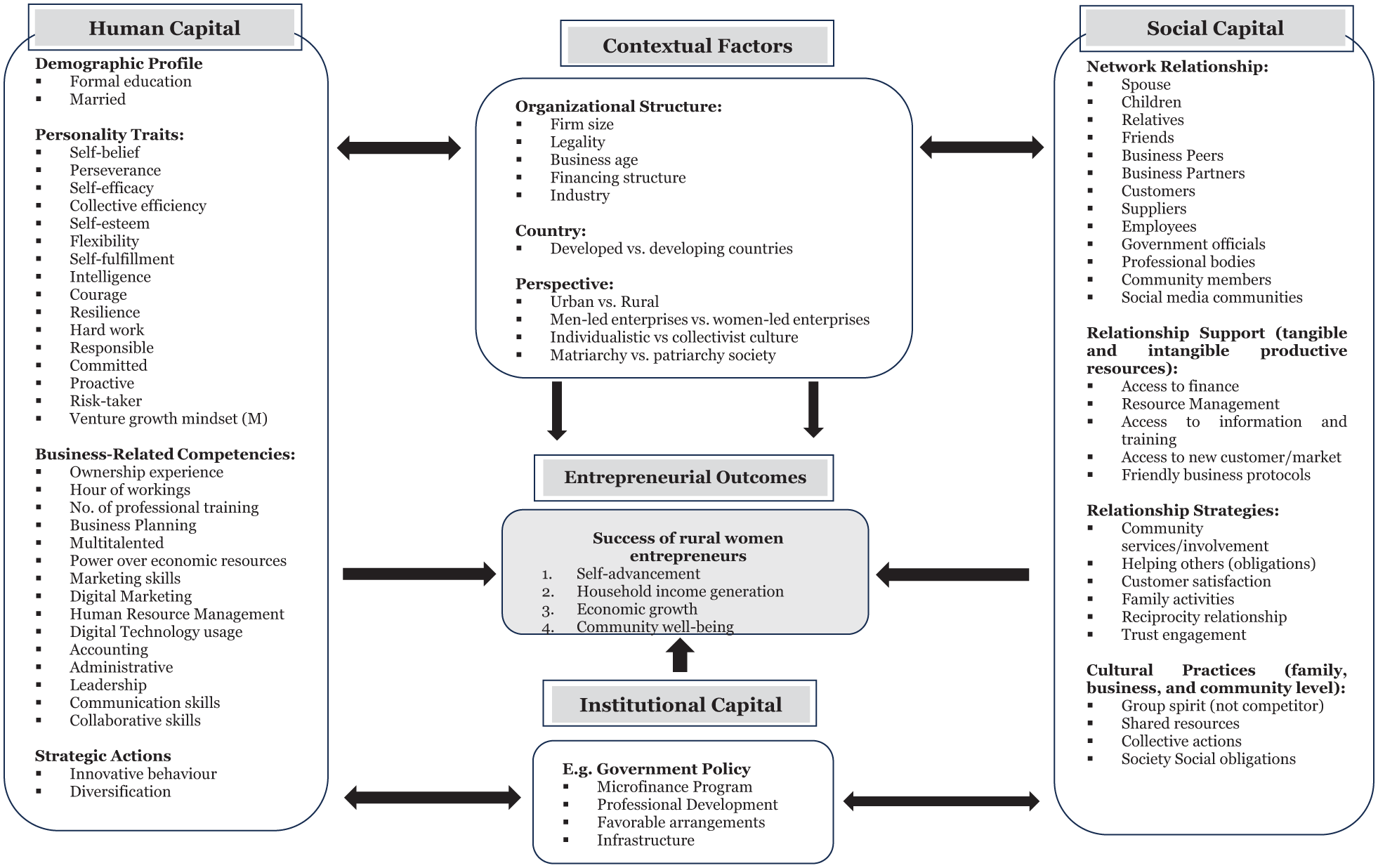
Framework on determinants of success among rural women entrepreneurs.
Findings According to Personal Characteristics, Functional Competencies, Social Networks, Organizational Characteristics, and Government Support.
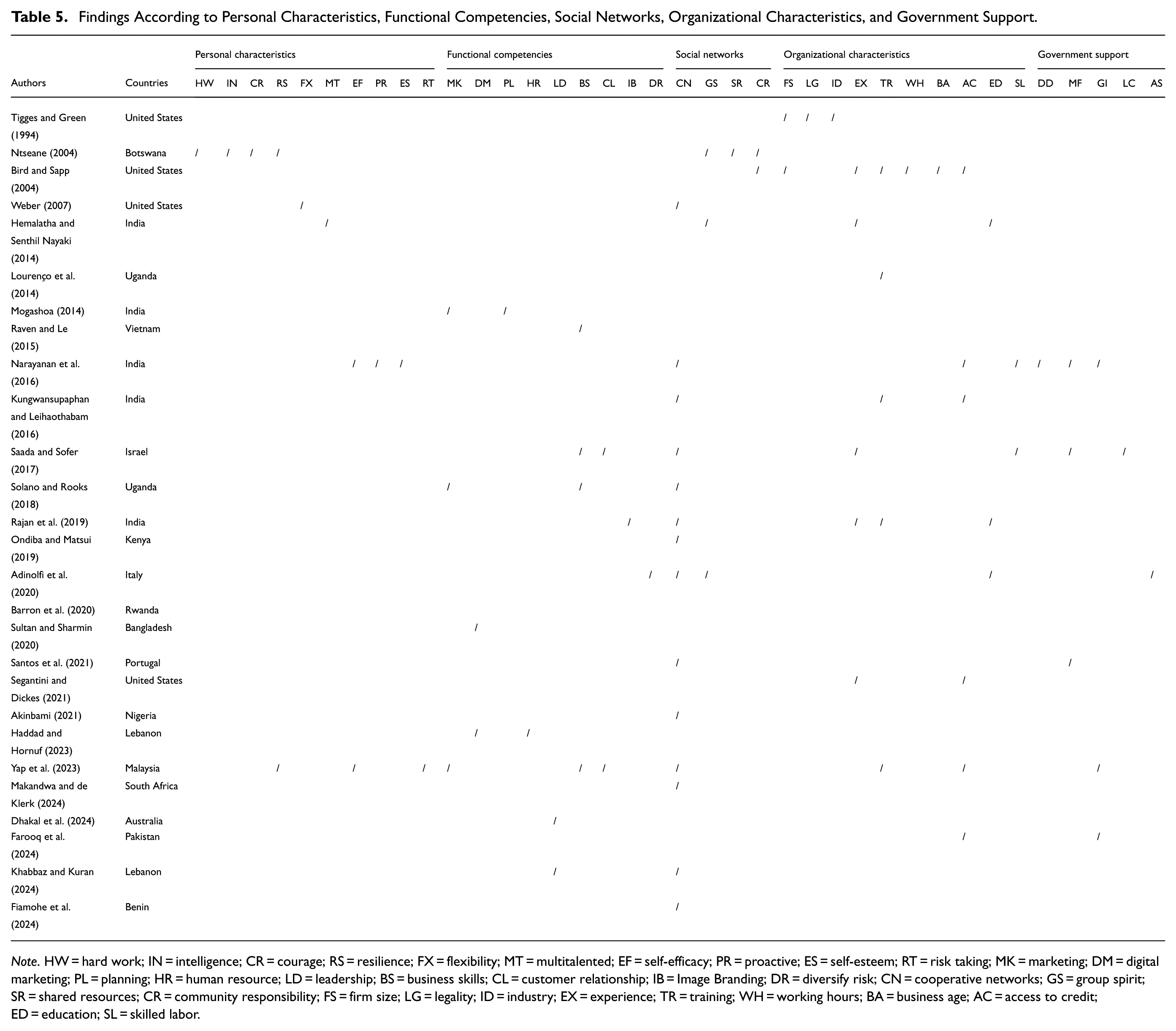
Note. HW = hard work; IN = intelligence; CR = courage; RS = resilience; FX = flexibility; MT = multitalented; EF = self-efficacy; PR = proactive; ES = self-esteem; RT = risk taking; MK = marketing; DM = digital marketing; PL = planning; HR = human resource; LD = leadership; BS = business skills; CL = customer relationship; IB = Image Branding; DR = diversify risk; CN = cooperative networks; GS = group spirit; SR = shared resources; CR = community responsibility; FS = firm size; LG = legality; ID = industry; EX = experience; TR = training; WH = working hours; BA = business age; AC = access to credit; ED = education; SL = skilled labor.
These findings suggest that individual-centric resources have a substantial impact on the development of successful entrepreneurial initiatives among rural women entrepreneurs. These insights resonate with the mainstream entrepreneurship literature that underscores the broad application of self-motivational theories (i.e., psychological trait, self-determination theory), entrepreneurial competencies-based theories (i.e., human capital, resource-based view theory), and entrepreneurial actions theories (i.e., theory of planned behavior) as the backbone framework explaining the entrepreneurial success. In a rural context, individual factor characteristics become more crucial in mitigating various structural barriers embedded in entrepreneurial ecosystems, emphasizing the need for self-efficacy and resource capability building to transform challenges into profitable opportunities. A growth mindset attitude facilitates resilience to overcome difficulties. Likewise, the role of skills in business planning, marketing, digital technology, and leadership is found to be a significant driver of continuity, allowing organizations to manage resources efficiently and make informed decisions (Kungwansupaphan & Leihaothabam, 2016). Their strategic actions, characterized by innovative behavior and diversification, enable rural women entrepreneurs to adapt to market demands and seize new opportunities (Brush et al., 2001).
The second factor, social capital, comprises four dimensions that significantly influence the entrepreneurial success of rural women. The first dimension, network relationships, includes connections with spouses, children, relatives, friends, business colleagues, partners, customers, suppliers, employees, government officials, professional organizations, community members, and social media communities. These relationships facilitate collaboration and provide critical support for business operations. The second dimension, relationship support, encompasses both tangible and intangible productive resources, including access to funding, resource management, information and training opportunities, access to new customers and markets, and favorable business protocols.
The findings can be well elucidated based on two prominent theoretical grounds that advocate for the dynamic nature of rural women’s entrepreneurial settings. The rural women’s entrepreneurial experience interacts closely with the prevailing social and cultural demands, allowing them to mitigate the negative impact of challenges they face across various stages of the business cycle. Accordingly, Feminist Theory and Social Capital Theory are often invoked to explain how traditions shape their entrepreneurial outcomes and how social factors underscore the importance of building various network relationship strategies to create a more supportive environment that could dismantle patriarchal practices. In context of rurality, building trust with key social actors such as husband, family members, community leaders have more transformative and sustainable values for women’s entrepreneurial success than institutional support in a sense that it fosters effective and economic use of shared resources through collective responsibility, and social obligations (Kungwansupaphan & Leihaothabam, 2016; Osei & Zhuang, 2020).
The third factor of the framework emphasizes the importance of contextual aspects that contribute to the success of women entrepreneurs in rural areas, particularly from the perspectives of organizational structure, country characteristics, and societal perspectives. Key elements, such as firm size, legality, firm age, financing structure, and industry, play a critical role in shaping the way firms operate and succeed, dictating the resources available to entrepreneurs and the regulatory environment in which they must operate. In addition, the distinction between developed and developing countries leads to different levels of infrastructure, access to resources, and market opportunities, resulting in various challenges and benefits for entrepreneurs.
The differences between urban and rural areas also impact access to networks, markets, and resources, while the distinctions between male- and female-led businesses reveal gender-specific challenges and opportunities. In addition, cultural factors such as individualistic versus collectivist societies and matriarchal versus patriarchal structures shape the entrepreneurial landscape by influencing social norms, support systems, and the distribution of resources. Taken together, these contextual factors contribute to the varied experiences and outcomes of entrepreneurs, emphasizing the importance of understanding the specific environment in which they operate.
This insight offers policymakers valuable guidance on enhancing support systems for rural women entrepreneurs by developing targeted programs and resources that address the unique challenges they face within their specific environment. The phenomenon of entrepreneurship necessitates consideration of the context and environment in which entrepreneurs operate, particularly in analyses that encompass both developed and developing countries (Dileo & García Pereiro, 2019; Shane & Venkataraman, 2000). The “one size fits all” principle is insufficient, as it overlooks the difficulties that different entrepreneurs experience depending on their location, social norms, and organizational structure.
Accordingly, institutional capital has emerged as a crucial success factor, providing various support systems that encompass access to training, mentoring, infrastructure, information, and service facilities. All these resources play a foundational role in enabling growth in entrepreneurship. On one hand, prior studies highlight that inadequate institutional support—such as limited training opportunities, poor infrastructure, and weak social security—significantly constrains women’s entrepreneurial outcomes (Ghouse et al., 2021; Rahman et al., 2022). On the other hand, interventions such as e-mentoring programs in Greece have been found to help rural women become more resilient, creative, and skilled in marketing (Kyrgidou & Petridou, 2013). This suggests that institutional factors act as the underlying enabler of other success determinants, including financial access, family support, and individual motivation, making them a critical foundation for sustainable entrepreneurial growth.
Specifically, we argue that major highlights from the existing literature provide strong support for the need for policy reforms to strengthen institutional capital, thereby creating a more favorable climate and fostering resilience-focused initiatives. Evidence from this review shows that Institutional Theory becomes the most influential theory used by scholars to develop a framework ascertaining the key foundational determinants of rural women entrepreneurs’ success. This theoretical lens allows for a rich explanation of how policy design may foster or inhibit the equality agenda to create a well-balanced society. Recognizing that rural women’s success in entrepreneurial endeavors is not merely driven by their individual and social connections, findings from the literature suggest that government engagement is crucial in mitigating women’s constraints in entrepreneurial spheres. However, while regulations and programs help to establish an enabling environment (Kitole & Genda, 2024), providing too much support might lead to reliance. In the long run, this can stifle growth and inhibit innovation. Ideally, policies should support independence while still encouraging it (Ridzuan et al., 2020).
Conclusions
The objectives of this study are to: (a) analyze trends in rural women’s entrepreneurship, (b) identify key determinants of entrepreneurial success, and (c) propose a future research agenda. The findings demonstrate that over the past three decades, research on rural female entrepreneurs has increased progressively across 26 disciplines, ranging from agriculture and business management to economics, social sciences, and even computer science. This multidisciplinary spread underscores the complexity and relevance of the topic. The bibliometric analysis further shows that while quantitative methods dominate, qualitative and mixed-method approaches are gradually gaining traction, signaling a growing effort to capture both measurable patterns and lived experiences. India, the United States, and Sub-Saharan Africa have emerged as leading contributors, reflecting the growing recognition of the importance of this research area by both developed and developing countries. The citation influence of Tigges and Green’s seminal 1994 work also demonstrates the longevity and foundational value of early studies in shaping subsequent scholarship.
In addition, bibliographic coupling revealed 10 thematic clusters of determinants—including institutional, financial, family, social, organizational, and individual factors—that collectively shape the entrepreneurial journey of rural women. Synthesizing these themes, the study developed a research framework emphasizing human capital as a core driver of entrepreneurial success. Within this framework, demographic characteristics, personality traits, business-related competencies, and strategic actions emerge as critical dimensions that influence outcomes. Together, these findings enrich the literature by mapping both the breadth of research activity and the depth of key success factors, while also laying the groundwork for future investigations that can further refine our understanding of how rural women navigate entrepreneurship in diverse cultural and socio-economic contexts.
Implications
Theoretical Implications
The present study offers significant implications for the entrepreneurship of rural women. The framework combines multiple capital theories—human, social, institutional, and contextual—to form a unified model that explains their interdependence in promoting entrepreneurial success. This integration improves our understanding of how these different types of capital interact and contribute to the entrepreneurial ecosystem, especially for rural women.
The focus on disparities between urban and rural settings, as well as between developed and developing countries, contributes to the literature that considers local conditions and cultural contexts. This study also contributes to the theoretical discourse, particularly in relation to the significant role of social capital, by suggesting that entrepreneurs’ reliance on various forms of social networks shifts as their ventures evolve from the early stages to the more established phases. Accordingly, this study supports Social Capital Theory and Institutional Theory by emphasizing the importance of networks in obtaining crucial resources and gender-sensitive policies for the business development of rural women entrepreneurs.
Practical Implications
These findings are helpful for governments looking to encourage rural women’s businesses. By highlighting the specific constraints and enablers associated with human, social, and institutional capital, the framework will be able to develop more tailored initiatives that meet these women’s real-life needs. The framework also serves as a resource allocation guide, demonstrating that investing in education, training, and social networks can yield significant returns in terms of business success. Ultimately, legislators and development agencies could prioritize funding for activities that directly improve these forms of capital, making the business environment more favorable to rural women.
Additionally, this framework emphasizes the need for community involvement by encouraging women to join a support group to share resources and build resilience together. This approach establishes a support network that empowers women while also increasing social capital and entrepreneurial confidence. Furthermore, governments will be able to implement targeted financial programs and digital literacy training, creating more empowered entrepreneurs who can adapt in a volatile business environment.
Limitations
Some limitations should be acknowledged that may affect the interpretation and comprehensiveness of the present study. First, focusing specifically on the keywords of determinants of success and rural entrepreneurship may overlook similar contexts without the keywords’ rural entrepreneurship’ or ‘determinants of success’. Furthermore, being selective about specific types of publications (i.e., Journal, English-written manuscript) may introduce bias in understanding the important insights relevant to the current review.
Future Work
Future research should focus on a digital-centric framework that may be tailored to benefit rural female entrepreneurs, particularly in terms of cost efficiency and scalability. Investigating the methods by which digital tools can improve entrepreneurial skills and expedite business operations in rural areas (Liu, 2024). Furthermore, the convergence of social entrepreneurship and rural planning offers a promising avenue for future research. Rural planners can leverage the synergy between these professions to address local concerns, such as housing, food security, and community participation (Angelidou & Mora, 2019).
Other future research could draw from integrated resource theories, such as job demands-resources (JDR) theory and conversion of resources (COR) theory, to initiate research that uncovers the interplay between adaptability and entrepreneurial outcomes in the context of adversities and challenging work demands faced by rural women entrepreneurs. Future studies should also examine how rural citizens can collaborate to develop sustainable solutions for their communities, particularly in the areas of food systems and environmental sustainability. This method can empower residents and instill a sense of ownership in local entrepreneurship efforts. Understanding how economic policy uncertainty impacts rural innovation and entrepreneurship is also crucial for developing effective strategies to support business growth.
Footnotes
ORCID iDs

Ethical Considerations
This study is a systematic literature review based on previously published research. It does not involve the collection of new data from human participants or the use of personal or identifiable information. Therefore, ethical approval and informed consent were not required.
Funding
The authors received no financial support for the research, authorship, and/or publication of this article.
Declaration of Conflicting Interests
The authors declared no potential conflicts of interest with respect to the research, authorship, and/or publication of this article.
Data Availability Statement
Data sharing not applicable to this article as no datasets were generated or analyzed during the current study.