




Abstract
This study investigated students’ attitudes towards using mobile- data-driven learning (M-DDL) to support their writing instruction within resource-constrained environments. While corpora and DDL are recognised for their potential in enhancing language awareness and writing skills, challenges hinder widespread adoption. These challenges include infrastructure limitations and insufficient teacher training. Such issues are particularly prominent in developing country settings. To overcome these barriers, we introduced an M-DDL approach integrating corpus consultation into regular EFL classrooms. By creating a supportive environment using smartphones, non-DDL syllabi, the KWIC (keyword in context) mode, and minimal training, we aimed to facilitate seamless implementation. A purposive sample of 26 intermediate-level EFL students participated in this study. This study assessed their experiences and perceptions of a mobile-based corpus approach. Data were collected through a 26-item Likert-scale questionnaire and focus group interviews. Questionnaire data were analysed using descriptive statistics, calculating means and standard deviations for each of items, while a thematic analysis was applied to the interview transcripts. The results indicated that students generally had positive attitudes toward M-DDL, reporting increased motivation, improved vocabulary and grammar understanding, and better error correction abilities. However, some students expressed frustration with the difficulty of concordance analysis and the presence of incomplete sentences in the corpus. These findings suggest that M-DDL has potential for supporting EFL writing, even with limited resources, but highlight the need to address challenges related to corpus data interpretation and quality.
Plain Language Summary
Background: Using large collections of text (corpus) and data-driven learning (DDL) can improve writing skills in second language (L2) classes. DDL is an approach to language learning and teaching that utilises authentic language data from corpus. However, these methods are often difficult to use because of technology needs, resources and training requirements. Objectives: This study created a simpler, more accessible version of DDL that uses smartphones and fits into regular classes. This makes DDL easier to use in developing countries. Methods: We studied 26 intermediate English as a Foreign Language (EFL) students in a developing country. We used surveys and focus groups interviews to learn about their experiences using mobile data-driven learning (M-DDL) for writing. Results: Students felt that using text corpora significantly improved their writing. Most students had positive experiences with M-DDL. They liked using corpus in their writing classes as a learning tools to know how to use the target language. Conclusion: Students had positive views of using M-DDL. This suggests that smartphones are a good tool for using text corpora to improve writing in developing countries, because students already use them widely
Introduction
The utilisation of corpora and data-driven learning (DDL) has been widely researched. This research has shown corpora and DDL to be effective in improving writing proficiency and addressing the challenges faced by English as a Foreign Language learners (EFL) (Yu & Altunel, 2023; Zhu, 2021). Corpora provide large collections of authentic language data that can give insights into real-world language usage patterns. DDL approaches enable students to explore corpus data independently and inductively discover language patterns and usages for themselves. Gilquin and Granger (2010) define DDL as a pedagogical approach that leverages authentic language corpora to enable learners to independently explore and analyse language data. In simple words, DDL is “[t]he use of corpora for language teaching and learning” (Crosthwaite & Steeples, 2024, p. 2). According to Milton (2006), corpus use can compensate for limited experience with the target language and its cultural context, as well as insufficient L2 intuition. Empirical evidence indicates that concordance adoption provides teachers and learners with a range of authentic inputs for language teaching/learning. Despite this evidence, corpus use remains surprisingly low in real-world classes (Boulton, 2020; Vyatkina, 2020). This can be explained by a lack of awareness about the availability and benefits of corpora among learners and teachers (Gilquin & Granger, 2010; Muftah, 2023; Xue, 2021). Moreover, research on DDL over the past three decades has mainly featured experts introducing concordance use to advanced language learners in higher education settings (Boulton, 2009; Vyatkina, 2016). This trend indicates that DDL is primarily utilised by experts, highlighting its domain as a specialised area of expertise. These higher education contexts offer favourable conditions for research. They include a conducive environment, flexible teaching schedules, and abundant time and resources (Boulton, 2010).
Furthermore, there are numerous factors that explain why corpus linguistics has yet to permeate mainstream classrooms. Research highlights various obstacles that contribute to this lack of adoption (Chambers, 2019; Crosthwaite et al., 2021; Curry & McEnery, 2025; Gilquin & Granger, 2010; Pérez-Paredes et al., 2019). These challenges include technological difficulties, limited corpus literacy among educators, and curriculum developers. Additionally, time restrictions imposed by established curricula pose challenges to integrating corpus consultation and DDL exercises, which tend to necessitate substantial time investments.
These challenges are often exacerbated in contexts with additional limitations. For example, in Libya, students have limited opportunities to use English in authentic contexts due to political issues. These issues encompass a 7-year English teaching ban (1986) and international embargoes from 1992 to 2003 and from 2011 onwards (Baresh, 2022).
In addition, traditional Libyan classes often use the Grammar Translation Method, resulting in limited target language use and passive student learning (Baresh, 2022). To foster more natural language acquisition and learner autonomy, instructional methods using authentic materials are needed. This approach presents a revolutionary way to empower students and enhance their acquisition of grammar, vocabulary, and syntax. It enables them to interact with authentic language samples and take ownership of their learning (Martins et al., 2025). In this study, DDL was utilised to facilitate the teaching of writing to Libyan students. As researchers, students in our study discover how the English language works. Their learning is driven because every student is a researcher. Moreover, this discovery approach helps students solve their writing problems, improve their vocabulary, and generate new ideas in writing (C. Kennedy & Miceli, 2001). During the current study, we experienced various obstacles, namely inadequate infrastructure and a lack of qualified instructors. The most significant challenge was the reluctance of Libyan administrators and teachers to embrace the corpus and DDL. Seeking to implement the M-DDL approach, we spent over a year meeting with administrators and faculty from multiple universities across Libya. Our goal was to gain support for integrating The approach into their courses. However, most expressed their hesitation due to entrenched traditional teaching methods and uncertainties about this new data-driven paradigm. Despite these challenges, the authors of this study believe that the implementation of M-DDL can bring about a revolution (Chambers, 2019) in Libyan education. It can also provide students with authentic sources to enhance their English language skills. M-DDL refers to an educational approach that combines DDL and corpus consultation with the accessibility of mobile devices for language instruction. This method allows learners to use smartphones and other portable devices to interact with authentic language data, fostering a more autonomous and personalised learning experience.
This study illuminates Libyan students’ perspectives on integrating hands-on DDL via smartphones in traditional classrooms by addressing gaps in the literature. First, it explores M-DDL in a developing nation, expanding upon a limited number of previous M-DDL investigations conducted in advanced economies (Pérez-Paredes et al., 2019; Quan, 2016). Second, it introduces DDL to typical Libyan classrooms with inherent constraints by elucidating how students engage with DDL in under-resourced environments. Specifically, we explore perceptions of the usefulness of DDL for L2 writing improvement, challenges encountered, and willingness to use corpora in future. Both quantitative survey data and qualitative insights from focus group interviews are gathered to provide a multi-faceted understanding of learners’ perspectives. By illuminating student attitudes and experiences, this research seeks to inform efforts to integrate DDL into existing language curricula and support a broader acceptance of corpus-based methodologies. The findings will contribute to bridging the research-practice gap and shaping pedagogical applications of corpora without requiring extensive training or classroom restructuring.
Literature Review
One aspect of the revolutionisation of language education is using a corpus in the classroom (Boulton & Cobb, 2017; Chambers, 2019; Godwin-Jones, 2017; Granger, 2015). Boulton (2015, p. 3) defined a corpus as “a large collection of authentic texts in electronic format, designed to be representative of a language variety,” while Gilquin and Granger (2010, p. 359) describe DDL as “using the tools and techniques of corpus linguistics for pedagogical purposes.” In general, any use of a language corpus in EL/SL classrooms is DDL (Boulton, 2012). It is a learner-centred, inductive problem-solving approach. During DDL activities, learners behave like researchers when “every student” espouses the role of “Sherlock Holmes” (Johns, 1997, p. 101). They interact with the corpus, analysing the data to find answers to their questions about the target language. This approach can provide numerous benefits, such as exposing students to authentic language use (Sun & Park, 2023), identifying and addressing common errors (Crosthwaite, 2017), promoting learner autonomy (Sah, 2015) and critical thinking (Rasikawati, 2020), and facilitating the teaching of vocabulary, grammar, and discourse patterns (Fauzi, 2021; Yu & Altunel, 2023). Moreover, this exposure to authentic language helps learners develop a better understanding of language in context, including discourse conventions, and register variations (Coxhead & Byrd, 2007).
The meta-analyses by Lee et al. (2019), Boulton and Cobb (2017), and Mizumoto and Chujo (2015) generally report positive effect sizes, demonstrating the benefits of corpus use in language learning and teaching. According to Charles (2018), the corpus can be employed at all stages of the writing process: pre-writing, during writing, and post-writing. She explains that learners can check a corpus independently to search for appropriate items before writing and to verify their language as they write and edit their final drafts. As they are writing, learners can consult the corpus data on word frequencies, synonyms, and collocations to improve their vocabulary and phrasing. Finally, in the post-writing/editing stage, learners can use the corpus to identify and correct errors in their work. The simplest type of DDL activity is guiding the learner to determine whether a particular form they have used in writing is actually used by native speakers or not (Forti & Spina, 2019). There have been several DDL studies that demonstrated its positive effects on: collocations (Saeedakhtar et al., 2020; Wu, 2021); “be” usage (Moon & Oh, 2017); passive voice (Smart, 2014); abstract nouns (Huang, 2014; Yılmaz, 2017); linking adverbials (Cotos, 2014); lexical bundles (Lay & Yavuz, 2020); errors correction (Tono et al., 2014); self-editing (Reynolds, 2016); the discovery of novel concepts and lexical items (Vyatkina, 2016); and meta-cognitive development (H. Yoon & Jo, 2014).
In a similar vein, M-DDL utilises the widespread availability of smartphones and tablets to provide students with flexible access to language corpora for self-directed language study. Traditionally, learners have been restricted to accessing corpora only in computer labs or libraries. However, M-DDL represents a shift that leverages the ubiquity of mobile devices to allow students to interact with corpora anywhere, anytime, through their personal smartphones or tablets. This significant change promotes a more integrated approach to language learning that is not confined to formal study sessions. By taking advantage of the mobility and constant connectivity of personal mobile devices (Ogata et al., 2024), M-DDL enables on-demand analysis of corpus data outside of the classroom for ad hoc language discovery. The goal of M-DDL is to give learners constant access to language corpora through their smartphones. This allows for more authentic language data exploration and learning incorporated into daily life. Mobile-assisted language learning (MALL), while offering advantages like resource accessibility and cost reduction, presents risks such as cheating during assessments, misuse of devices (e.g., social media browsing), classroom disruptions, and data security vulnerabilities (Solihin, 2021).
English Language Teaching and Learning in Libya
Lusta (2012) describes Libya’s English language education history as turbulent, influenced by political shifts and ideology. English was part of the national curriculum from the early 1970s to mid-1980s, but was banned in 1986 because of strained relations with Western countries. For 7 years, English instruction and resources were prohibited as the government promoted Arabic and viewed English as a colonial symbol (Gherwash, 2024).
In 1993, the government attempted to reintroduce English as a compulsory subject in both primary and secondary schools. The English language was introduced to elementary students in the fifth grade and above in 2006 (Mohsen, 2014). However, the long “No-English” policy had significant negative impacts. Many teachers lacked recent experience, and there was a shortage of qualified teachers due to the closure of ELT university departments. The Ministry of Education’s initiatives to enhance education, including training language teachers abroad and implementing a new communicative curriculum, have been hampered by the impact of the ongoing civil war. The conflict has disrupted the educational system and impeded the implementation of measures intended to improve the quality of education (Gherwash, 2024). Libya’s education system, impacted by conflict, faces challenges such as underqualified teachers, traditional teaching methods, and limited exposure to English. These issues negatively affect students’ language skills (Lusta, 2012). Furthermore, years of cultural isolation due to embargoes have reduced opportunities for real-life English usage; for instance, airport announcements are only in Arabic.
Upon the eventual resumption of English courses after 1993, education systems faced numerous challenges. They had to rebuild English language programmes from limited resources and address gaps in student/teacher proficiency resulting from the prolonged absence of instruction. As a result, it is not surprising that students face difficulties in writing. As an “onerous skill” for learners, many of them around the world find writing problematic (Bulqiyah et al., 2021, p. 61). In the Libyan context, Shweba and Mujiyanto (2017) found that spelling, capitalisation, and punctuation errors were the main challenges for first-year English college students at Al Merghib University in their writing. Similarly, Hamed (2018) concluded that his Libyan participants struggled with spelling, capitalisation, tenses, punctuation, articles, vocabulary variety, subject-verb agreement, and prepositions. Interestingly, even Libyan students who had exposure to native speakers encountered problems in their writing. Elraggas (2014) found that among 100 Libyan graduate students in the U.S., over a third struggled with grammar in English writing. Other challenges included word choice, paragraph organisation, and, to a lesser extent, spelling, limited vocabulary, and paragraph transitions. Reviewing this research, it appears most Libyan learners experience difficulties with writing. As Al-Khairy (2013) notes, writing is complex to learn and teach, requiring sophisticated cognitive processes. A shift towards learner-centred pedagogical approaches, focused on diagnosing individual weaknesses and providing tailored scaffolding, could prove more effective than a one-size-fits-all model.
Furthermore, educational technology enhances learning by improving engagement, motivation, and academic achievement (Abdelaty, 2023). Globally, education systems are integrating digital tools, like computers and smartphones, revolutionising teaching methods and learning experiences (Lacka et al., 2021; Van et al., 2021). Key benefits include greater mobility, instant access to information, efficient storage, and time savings. However, developing countries like Libya struggle with challenges such as inadequate infrastructure, limited time, lack of technical support, and low digital literacy among educators and students (Ghawail et al., 2021; Omar, 2021). Mobile phones, particularly smartphones, have become ubiquitous in these nations, presenting opportunities for innovative learning approaches. Libya, for instance, has witnessed a substantial increase in mobile phone penetration, with 121 mobile phone subscriptions per 100 people according to the latest data from the International Telecommunication Union (Beleid et al., 2020). Moreover, Libya boasts some of the most competitive broadband prices in the Middle East, further facilitating the integration of mobile technologies in educational settings. The prevalence of mobile devices enables DDL approaches that allow students to use their personal devices for educational purposes. This extends learning beyond the physical classroom and helps mitigate resource limitations.
According to Hbaci et al. (2021), many Libyan educators possess at least basic computer operation skills. This indicates a foundational level of technological competence among the teaching workforce. Salem (2019) report a generally positive attitude among EFL lecturers towards utilising technology in their teaching practices. Yet, these educators still faced a range of barriers, including institutional, pedagogical, and socio-political challenges These obstacles hindered their ability to fully leverage the potential of educational technologies in their classrooms. This mixed landscape underscores the complexity of technology adoption in Libyan higher education. Pockets of both readiness and resistance coexist across different disciplinary and organisational contexts.
Nonetheless, there is limited research focusing on the application of MALL in the Libyan context (Tawir & Baharum, 2022). However, some studies have reported the effectiveness of MALL for English language learning, finding that students enjoyed and engaged more with MALL over traditional methods (Alsied, 2019; Alzarga et al., 2021; Shalbag, 2014). This suggests that further exploration of MALL could uncover valuable insights and opportunities for enhancing technology integration in Libyan language education.
DDL in the Teaching and Learning of L2 Writing
The use of concordancing in language learning provides learners with a rich and authentic learning experience. It requires learners to compare their own language use to the examples displayed by the concordancer, which fosters a research-oriented approach to language learning. This ongoing process of investigation and discovery encourages learners to actively search for and analyse examples of the target language (Johns, 1988, as cited in Larsen-Walker, 2017). Ultimately, concordancing injects authenticity into the language learning process and promotes a deeper understanding of the target language. When students conduct a search using a keyword, the software offers usage patterns. The format of these samples is one example per line with key words in context (KWIC). Each example demonstrates how to use the particular word or phrase in a context. Students may find it very helpful to observe how a certain word is used in a particular context and what terms come before or after the word. Frequency, distribution, collocation, and how items are utilised in different registers can be found in a corpus (Boulton, 2010). C. Yoon (2011) addresses the benefits of concordancing in L2 writing instruction. Concordancing exposes students to written language patterns and allows identification of genre-specific language features through specialised corpora. It serves as a valuable data source for verifying meaning and finding relevant vocabulary. Furthermore, corpora can function as research tools for pattern identification or as reference tools for resolving writing challenges.
Zhu’s (2021) study investigated the effectiveness of DDL in reducing writing errors among Chinese students. Four students successfully corrected errors in articles and prepositions using DDL as a self-learning tool, with positive qualitative feedback. Their teacher acknowledged a number of disadvantages to DDL, including the limited knowledge and expertise of DDL, the time-consuming process of producing DDL materials. Students also faced obstacles in accessing online databases in China. The teacher nonetheless maintained that DDL-mediated error correction was a beneficial activity for supporting student-oriented learning and improving students’ writing accuracy.
Birhan et al. (2021) studied the effect of corpus-based instructional mediation on EFL learners’ academic writing. Using a quasi-experimental design with 72 mechanical engineering students, an experimental group and a control group were formed. Those in the experimental group received corpus-based instruction. The control group received conventional teaching and were outperformed by the experimental group. The corpus-based learners also used metadiscourse and lexical bundles more effectively in their argumentative and data interpretation essays.
Muftah’s (2023) study examined the medium-term impact of DDL on EFL writing using a pre-post quasi-experimental design and semi-structured interviews with 64 Arab undergraduate students. Comparing BNCweb (experimental group) to Sketch Engine (control group), results showed improved writing fluency and consistency in the BNCweb group, but no significant difference in complexity. Qualitative data revealed that although there were challenges in implementing DDL activities in the writing process, students had a positive attitude towards using BNCweb.
Most studies conducted over the past 30 years demonstrate the positive impact of DDL and corpus use in language teaching and learning. They show that incorporating corpus consultation and DDL approaches in language classes can result in an improvement in students’ language proficiency, vocabulary acquisition, reading comprehension, writing, and critical thinking skills. Furthermore, the use of these approaches can enhance student motivation, engagement, and autonomy.
Students’ Attitudes Towards DDL
Recent years have seen a significant increase in the study of attitudes among language researchers. Most of the research papers on the topic have come to the conclusion that students’ attitudes are an integral aspect of learning and should, therefore, become a crucial part of second or foreign language learning pedagogy. Studies on students’ attitudes towards language learning are essential for a variety of reasons, according to Getie (2020). First, it is claimed that attitudes towards learning have an impact on behaviours. Second, it has been observed that success, performance, and attitudes are connected. The assumption that success shapes attitudes rather than the opposite is supported by research. Since attitudes influence behaviours and inner moods, they also promote learning. Therefore, achievement is significantly impacted by both negative and positive attitudes. Wenden (1991) suggested a broad definition of the term “attitude.” He claims the word “attitudes” refers to three related concepts: cognitive, affective, and behavioural. The beliefs and ideas, or views, about the theme of the attitude constitute the cognitive component. The affective component describes one’s emotions and feelings towards an object, such as “likes” or “dislikes,”“with,” or “against.” The final component is behavioural, which deals with one’s actions or behavioural intentions with regards to the object. Nevertheless, the components’ relationships are so close that assessing any one of them will yield sufficient data about a person’s attitude.
DDL needs to be thoroughly reviewed, just like any other teaching strategy. According to Boulton (2008 in Gilquin & Granger, 2022), three different kinds of evaluations can be conducted: assessments of attitudes (what do users think about DDL?), practices (how well are users employing DDL?), and efficacy (can users benefit from DDL?). Efficiency should ultimately be the deciding factor in establishing whether or not DDL is worthwhile, despite the importance of attitudes and practices. If students do not learn anything from DDL, even if they enjoy it and are skilled at it, there is no use in applying it to a curriculum that is already overburdened (Gilquin & Granger, 2022). Regarding learners’ opinions, research has so far produced a variety of findings. While most studies have shown that learners revealed a positive attitude toward employing corpora for their learning (Inpanich & Somphong’s, 2022; H. Yoon & Hirvela, 2004), others have shown that students disregard the value of using corpus (Hafner & Candlin, 2007; Quan, 2016).
C. Kennedy and Miceli’s (2017) study explored 24 students’ experiences using a monolingual corpus to improve their writing. Students engaged in “pattern hunting” (enriching content and language) and “pattern refining” (editing for lexico-grammatical accuracy). Analysis of autobiographical chapters, reflection forum, and student interviews revealed that most students found the corpus useful, primarily employing an “observe-and-borrow” approach.
Pérez-Paredes et al. (2019) examined the attitudes of 130 students towards mobile language learning using an AI-powered app. The students were divided into three groups, namely, those from Spain, Belgium, and the United Kingdom. These groups were given access to the vocabulary profiler, text analyser, and language resource of an app. The app was introduced during class via a 10-min presentation for the Belgian and Spanish participants. A face-to-face briefing introduced the app to the British participants. Attitudes were assessed through focus groups, questionnaires and written feedback. The study found that immediate, personalised feedback was a key factor contributing to positive attitudes towards M-DDL. Additionally, access to multiple tools also played a significant role in fostering these positive attitudes. Another study is that of Quan (2016), who investigated whether or not DDL could be merged with portable devices. He also examined whether learners would be comfortable using mobile devices in self-directed learning. The instruments of the study were a questionnaire, a focus group interview and the monitoring of the activities of students through automatic logging. A total of 28 intermediate learners used a concordancing app on their tablets to enhance vocabulary learning. The findings indicated that M-DDL displayed the potential to promote vocabulary learning through proven, beneficial and efficient methods. Despite the fact that the students had easy access to the corpus due to mobile technology, they disliked M-DDL. This was because they struggled to address the overload of concordance lines. Thus, selecting the appropriate response from a glut of examples was difficult for them. Moreover, 75% of learners reported they may not use a concordancing app in the future.
The literature review began by establishing the benefits of DDL for language learning based on previous research, with a focus on improving L2 writing skills. The context of English language education in Libya was then examined. This highlighted ongoing challenges facing students and the need for more effective pedagogical methods. A review of prior studies investigating student attitudes towards DDL revealed mixed findings, demonstrating a need for further research contextualised within new educational environments.
Objectives of the Study
This study investigated Libyan university students’ attitudes and experiences regarding the British National Corpus (BNC) Written Key Word In Context (KWIC) format use. The study focused on the impact of this format on English language writing skills at a Libyan university. Students were encouraged to use the corpus to investigate specific points that arose during their writing process. According to Chambers (2019), empirical studies of corpora have a research-practice gap. These studies, carried out by experts, are disconnected from the actual application and use of corpora in real-world practice. Thus, this study intends to fill this gap by introducing M-DDL into an everyday class.
As mentioned above, the use of corpus and DDL in developing countries’ academic institutions encountered various impediments. These impediments included inadequate technological infrastructure, time constraints of curriculum incorporation, and a shortage of appropriately trained, digitally proficient teachers (Gilquin & Granger, 2010). As a result, the researchers worked to establish a framework that is integrated into the normal classroom environment. The class was constructed using available resources, including a regular teacher and a non-DDL syllabus, while replacing traditional computing facilities with smartphones. Moreover, to enable student familiarisation with the corpus, a two-step approach was taken: first, under the guidance of the teacher; and second, by developing students’ autonomy and assisting them in learning how to independently analyse and interpret concordance lines. According to Lusta et al. (2023), DDL involves learners constructing knowledge by analysing corpus data, but the risk of “no learning (O’Keeffe, 2021)” exists due to the potential for incorrect conclusions or lack of meaningful results. Scaffolding, guided by Vygotsky’s zone of proximal development (ZPD) and sociocultural theory, helps learners overcome these challenges. With assistance from a more knowledgeable other (MKO), learners can progress from their current level to the next. Explicit/implicit instructions, feedback, and clear guidelines help them draw valid conclusions from corpus data.
The aim was to make the adoption of DDL more feasible and accessible and make it an integral part of a writing lesson (Chambers, 2019). The present study explores whether students viewed M-DLL as a beneficial tool in their learning process.
In this study, the term “corpus use” encompasses the utilisation of language corpora for corpus consultation, DDL, and M-DDL.
In what ways do students think corpus use is beneficial for learning EFL writing?
What difficulties do students experience in their use of a corpus?
Methodology
Participants and Context of Study
The study included 26 intermediate-level English language undergraduate students from the University of Tripoli Alahlia, Libya. They were participating in an English language writing course. The primary aim of the course was to enhance the writing skills of the students. The participants ranged in age from 19 to 21 years old, with 24 of them being female and only 2 being male. None of the participants had any exposure to the use of corpora before. The instructional approach used in the study was a process-based writing method. This method comprised prewriting, drafting, revising, and editing stages and allowed students to seek corpus-based assistance for error correction and language input. A total of seven writing assignments were assigned to the students. Five tasks were executed in a classroom setting and two were take-home assignments, each having a minimum word count of 250 words. The study was conducted within regular classroom settings, utilising the students’ smartphones, which were connected to the 4G network. All research procedures adhered to the highest ethical standards, including participant consent, data protection, and confidentiality (Appendix A).
Instruments
Corpus Choice
The course utilised the Lextutor Mobile Concordance tool (https://lextutor.ca/m/conc/), which is a component of Compleat Lexical Tutor (Figure 1). This tool was used to access the British National Corpus (BNC) Written using Key Word In Context KWIC format. This corpus contains about 1 million words and was declared suitable for language education by Chambers and O’Sullivan (2004). This easily accessible corpus does not require the download of policies and procedures. It also does not necessitate the installation of software or the creation of passwords, logins, or registrations. These characteristics were regarded as essential when choosing the corpus as the focus of this study. This choice does not just consider time but also technical glitches. This is given that a group of students is considered a single user when they use an identical Internet protocol (IP) address when accessing their school’s Wi-Fi (Williams, 2020). Researchers in the current study also found that participating students “[did] not want to download or store any data on their smartphones.”

Screenshots illustrating Lextutor Mobile Concordance’s interface and concordance output for the search term “technology” in the Brown Corpus.
Five-Point Likert Scale Questionnaire
The learners’ perspectives regarding the use of the corpus were evaluated through a 26-item Likert scale questionnaire that used a five-point rating system. This questionnaire was an altered version of the one developed by H. Yoon and Hirvela (2004). Reverse-scored items, (e.g., “Using the corpus for my English writing is frustrating and confusing”) were included to mitigate the impact of acquiescence bias, as recommended by Suárez-Alvarez et al. (2018). To that effect, responses were subjected to reliability testing, which yielded a Cronbach Alpha of .934. The instrument was thus considered to be internally consistent, given that this value was found between 0.7 (Abraham & Barker, 2014) and 0.95 (Tavakol & Dennick, 2011). A post-hoc power analysis estimated the statistical power to be (d ≈ 0.70). While this suggests a medium-to-large effectiveness, it also implies that a larger sample size (N ≥ 40) could enhance the robustness of the findings in future studies.
Focus Groups
Focus groups were used to capture and understand the experiences of participants. After the treatment, students raised issues, problems, challenges, and successful points regarding the use of concordances in improving their writing. Students were divided into three separate focus groups (9, 9, and 8 students in each), and each interview lasted 72 to 81 min.
The guiding questions were:
Did your opinion change, from positive to negative or negative to positive, when you were working with the corpus?
What did you like most about using the corpus?
What do you think is the main weakness of using the corpus?
What changes or additions do you think would make the corpus more useful?
Did you prefer working independently or with the teacher’s guidance when using the corpus? Why?
The guiding questions were used, and the follow-up questions (e.g., why? Explain? Please tell me more) were asked in response to the students’ answers to each question. The interviews were conducted in English, and some students used Arabic words when they did not know the corresponding English words (e.g., nidam takop). The focus group interviews with the students were audio-taped, and there was a moderator, an assistant moderator, and the first author present. The first author observed the focus groups to ensure a neutral stance and to avoid influencing participants’ views (Chioncel et al., 2003).
Procedure
The study was conducted during the winter semester of the 2020 to 2021 academic year. The participants in this study enrolled in a single weekly 90-min class for 8 weeks. Week 1 began with a 15-min presentation on the corpus, DDL, and Lextutor Mobile Concordance. In weeks 2, 3, and 4, after receiving instruction on how to use the corpus, students used it under the teacher’s supervision. The second phase, which was completed by DDL students alone using the corpus, was weeks 5, 6, and 7. The questionnaire was completed during week seven. In week 8, the students attended the focus group interviews.
Teacher Training and Preparation
The researchers and teacher met four times in one-hour sessions over a 1-month period to prepare the teacher for the implementation of the DDL method. The pre-course workshops were face-to-face and focused on essential topics. The researchers first provided information on the design and goals of the research project. They then provided information on the basic concepts of corpora and their use in language learning and academic writing. The teacher was introduced to various corpora, tools, and techniques and was encouraged to read relevant academic articles. The workshops were hands-on, as the teacher used her smartphone and laptop to enter and explore the corpus. The workshops continued until the teacher was comfortable with the DDL method.
In addition, the teacher was encouraged to incorporate DDL into her normal teaching practices. She selected the topics for tasks, created the lesson plans, used her usual teaching approach, and provided feedback.
Student Training
The teacher provided training on DDL to students, according to the following stages.
Introducing the corpus and DDL: The researchers afforded the instructor autonomy in the method of showcasing the corpus and the DDL. The instructor chose to use an overhead projector to display slides in order to illustrate both the corpus and the consultation procedures to the entire class (there were no smart boards or computers in these classrooms). She explained KWIC, gave examples, and described the various search options for Lextutor Mobile Concordance in BNC, for example, where to type target items and terminologies (namely hits). She explained the corpus consultation process to students and gave them examples of the search string. She also noted how concordance lines could represent the required language points or features and described how to find texts. The teacher clarified how to utilise concordance outputs in their writing and warned that outcomes could be contaminated by irrelevant examples (hits), even if they matched the search terms. Then, the teacher answered the students’ questions.
Using the corpus and DDL for the first time: The teacher confirmed with her students that they understood what was expected of them. Then, she invited them to apply the same steps on their smartphones and to practise searching the corpus. If anyone encountered difficulties, she helped them. The training session lasted one class, as the goal of the first class was to acquaint students with the corpus before proceeding to work on written pieces.
Practice using the corpus and DDL: In the next classes, students started to use the corpus to help them with their writing in the classroom. To increase students’ familiarity with the corpus, they were given homework consolidation tasks. The purpose of the homework was to further practice using the corpus and to keep a record of what had been done during the class.
Students were encouraged to consult the corpus at the planning and prewriting stages for new inputs in the target language. According to C. Kennedy and Miceli (2001), this is called “treasure-hunting,” as learners search the corpus for new ideas, words, and patterns. Students were encouraged to correct their errors using the corpus when revising and editing (Crosthwaite, 2017).
The teacher gave written feedback on each student’s first draft. After revising and editing their writing, students submitted their final drafts for scoring.
In the first phase, the teacher responded to 21 questions (e.g., Should I type the preposition after the verb in the box search? Can I use this word in my writing?) She helped 18 students following their requests (e.g., Show me which icon I tap to find the BNC Written on IPhone). In addition, she reviewed their first drafts and highlighted what they needed to check in the corpus. Students were instructed to underline corrections made via corpus consultation and to use brackets to indicate they had inserted a new input after corpus use (e.g., lexical items, grammatical structures). In the second phase, all students started to consult and analyse the corpus data as part of their learning process. They worked more smoothly, and only five students asked for help. No written feedback was given for the first drafts in the second phase. This progression aligns with Vygotskian scaffolding principles, where initial high support gradually faded as learners internalised DDL strategies through smartphone-based practice.
Data Analysis
A 26-item questionnaire was used to conduct a survey among students to inquire about their experiences using corpus. With all items being measured on a five-point Likert scale (1 = “Strongly disagree” to 5 = “Strongly agree”), the objective was to retrieve the opinions of students and classify the statements in descending order of means, depending on the extent to which students agreed with them. It is to be noted that eight statements were negatively formulated so that their responses were reverse-coded prior to data entry and analysis in SPSS. Reverse-coding was essential in order to prevent the internal consistency measure from being seriously affected by varying directionality in the items (Salazar, 2015). Data analysis involved calculating descriptive statistics (means and standard deviations) for each of the 26 Likert scale items assessing students’ attitudes towards M-DDL. To facilitate interpretation, items were grouped thematically based on aspects of the M-DDL approach (e.g., ease of use).
The data from the interviews were coded and analysed by thematic analysis. The transcripts from the interviews were systematically coded using an open, axial, and selective coding approach. This allowed us to identify key concepts, categories, and themes that emerged directly from the data without imposing any preconceived ideas. Thematic analysis involves several steps, including familiarising the coder with the data, generating codes, identifying themes, defining and naming themes, selecting core categories, developing a theoretical framework, writing up the findings, and revising the work. We analysed the interview transcripts line-by-line to develop initial codes representing concepts and patterns. These initial codes were then grouped into analytical categories through constant comparison between codes and categories as the analysis progressed iteratively. Memos were written to help refine the emerging categories and develop relationships between them into overarching theoretical constructs. By following thematic analysis through coding, categorisation, and theory development, the analysts were able to gather meaningful insights about themes directly supported by the data from the focus group interviews. The results provide an understanding of participants’ perspectives placed firmly in their own words and experiences. We followed recommendations for reporting mixed methods research (Levitt et al., 2018).
Research Findings
A five-point Likert scale questionnaire and focus group interviews were used to gain a comprehensive understanding of the students’ perceptions and challenges in using the corpus for writing.
Likert Scale Questionnaire
The study participants were surveyed on their views regarding the benefits of utilising the corpus for enhancing their writing skills and the difficulties they faced in the process.
Table 1 presents the descriptive statistics (i.e., frequency, percentage, mean, and standard deviation) obtained for the responses. The mean scores for the 26 items range from 1.88 to 4.27, with the highest mean score being for the item “I enjoyed using the corpus to help me in my writing” and the lowest mean score being for the item “I expect to spend considerable time on analysing concordance outputs.”
Descriptive Statistics of Students’ Attitudes Towards the Corpus and DDL.

The questionnaire results demonstrate overwhelmingly positive student attitudes toward corpus use in language learning, particularly through mobile devices. Students strongly endorsed the corpus as an effective learning tool, with 92.3% acknowledging its benefits for understanding language usage and word meanings, while 96.1% reported improved grammar knowledge. In terms of specific learning outcomes, 65.3% of students noted the corpus’s effectiveness for vocabulary and collocation acquisition, while 76.9% found it helpful for addressing immediate language challenges, and 73% reported improved writing accuracy.
However, despite the overall positive feedback, some students identified challenges. For instance, 34.6% mentioned issues with incomplete sentences, and 38.5% expressed frustration with unfamiliar vocabulary. Additionally, 23% reported difficulties in analysing concordance outputs, indicating areas where further support may be needed. While 84.6% found the corpus easy to use, 61% acknowledged the necessity of substantial training to utilise it effectively. Nevertheless, 80.7% felt that the time and effort invested in learning to use the corpus were worthwhile, suggesting a general consensus that the benefits outweigh the challenges. The data also suggest that students feel capable of independently searching for and learning target items using the corpus, as indicated by a high mean score of 3.92, which reflects the empowerment and autonomy fostered by these tools in developing writing skills. Moreover, high mean scores for ease of use (3.92) and ease of understanding (3.88) demonstrate that students generally find corpus tools accessible, a crucial factor for encouraging ongoing use in their writing tasks. A mean score of 3.62 indicates that students perceive the information retrieved from the corpus as relevant to their writing needs, which is essential for motivating effective use of corpus data. These high mean scores suggest that students successfully integrated corpus tools into their writing practice and developed autonomous learning skills. While some areas for improvement exist, particularly in training and support, the overall findings indicate that students recognise the value of corpora in enhancing their writing skills and learning experience. The statistical analysis of means illustrates that the majority of students found the corpus very useful (M = 3.81, SD = 0.77), compared to fewer students who faced difficulty addressing this aspect (M = 2.68, SD = 0.55) (Figure 2).

User perceptions of corpus use: mean scores by theme.
Focus Group Interviews
Focus group interviews were employed to explore students’ opinions, generate new ideas, gain insight into their experiences, and obtain rich and detailed data. Five main themes emerged from the interviews: (1) the importance of the teacher’s role; (2) a sense of trust; (3) smartphones versus computers; (4) students’ writing engagement and motivation; and (5) the future of M-DDL from a Libyan perspective (Appendix C
The Importance of the Teacher’s Role
Overall, students appreciated the teacher’s role as a motivator and guide during the DDL process, as reflected in students’ comments: It is new; in other classes if teacher see[s] you looking in another direction and smiling, you are dismissed. In this class, teacher trusts me not just in using my phone during the class but she also gives me chance to adopt new study manners and linked with native speakers writing. (Participant 4) This new method is very worrisome. For me, there are no clear rules and when my teacher stopped helping us, I thought I was drowning in a sea of words. (Participant 8) When I saw concordance lines for the first time, I thought, what shgabit [ An Arabic word meaning scribbles]. This lady is impossible to think that we would use this, but when she explained how researchers collected all these authentic patterns in one group, I understood and learnt how to handle it over the time. I do not say it is very easy but if you need help ask your teacher. But the most charming thing about it we learn from native speakers not from dictionaries. (Participant 20) I am relieved to know that she has my back during my interaction with corpus. (Participant 13)
These comments reveal that effective teacher support extended beyond direct instruction. By fostering an environment of trust and offering emotional reassurance, the teacher empowered students to take risks and embrace a new mode of learning. This finding aligns with research emphasising the importance of teacher scaffolding in technology-enhanced language learning (Lusta et al., 2023). The teacher’s role in explaining complex concepts, such as concordance lines, and providing ongoing emotional support was particularly vital for student success.
Sense of Trust
In the survey data, out of the 26 students surveyed, a significant majority of 24 students indicated that utilising corpus had a positive impact on their grammatical knowledge, vocabulary usage, and understanding of word meanings. Nineteen students found the search results accurate and relevant to their needs. The interviews further elucidated these findings, with a consensus among participants expressing a preference for corpus in their writing endeavors.
One student who was against DDL commented, “Why do I spend too much time knowing how to use a word; just Google it. It is easier and we always do it.” (Participant 10)
Another student commented, “I think it is more about academic use and native speaker’s use.” (Participant 17)
Another student added, “…for me as a student, the one-billion-dollar question is: do native speakers use this word academically?” (Participant 6)
A former student said, “…me too; I think I trust corpus more than Google” (Participant 17). Another student stated: Let me say something; I tried both of them and I think Google gave you what they think you were trying to search for based on your search history, while corpus I do not know if they have nidam takop [“a tracking system” in Arabic] but I think in most query results, you will get what you are looking for and what native speakers use. I do not want answers based on my geographic location or interest. No, I want academic results. (Participant 11)
Nevertheless, the high regard that students had for the corpus does not necessarily mean that Google (or other online resources) are no longer used,
I will use it (the corpus) in the future, but maybe with other tools like Google and an online dictionary (Participant 22) …I am to be honest, I will open other websites with it … Google and Google Translate, Oxford Dictionary. (Participant 26)
In a discussion about what they liked and disliked about Lextutor Mobile Concordance, one student reported that she had problems when checking punctuation errors: “I do usually put a comma after ‘unfortunately’, but it does not appear on the screen in some lines. This confuses me” (Figure 3). (Participant 15)
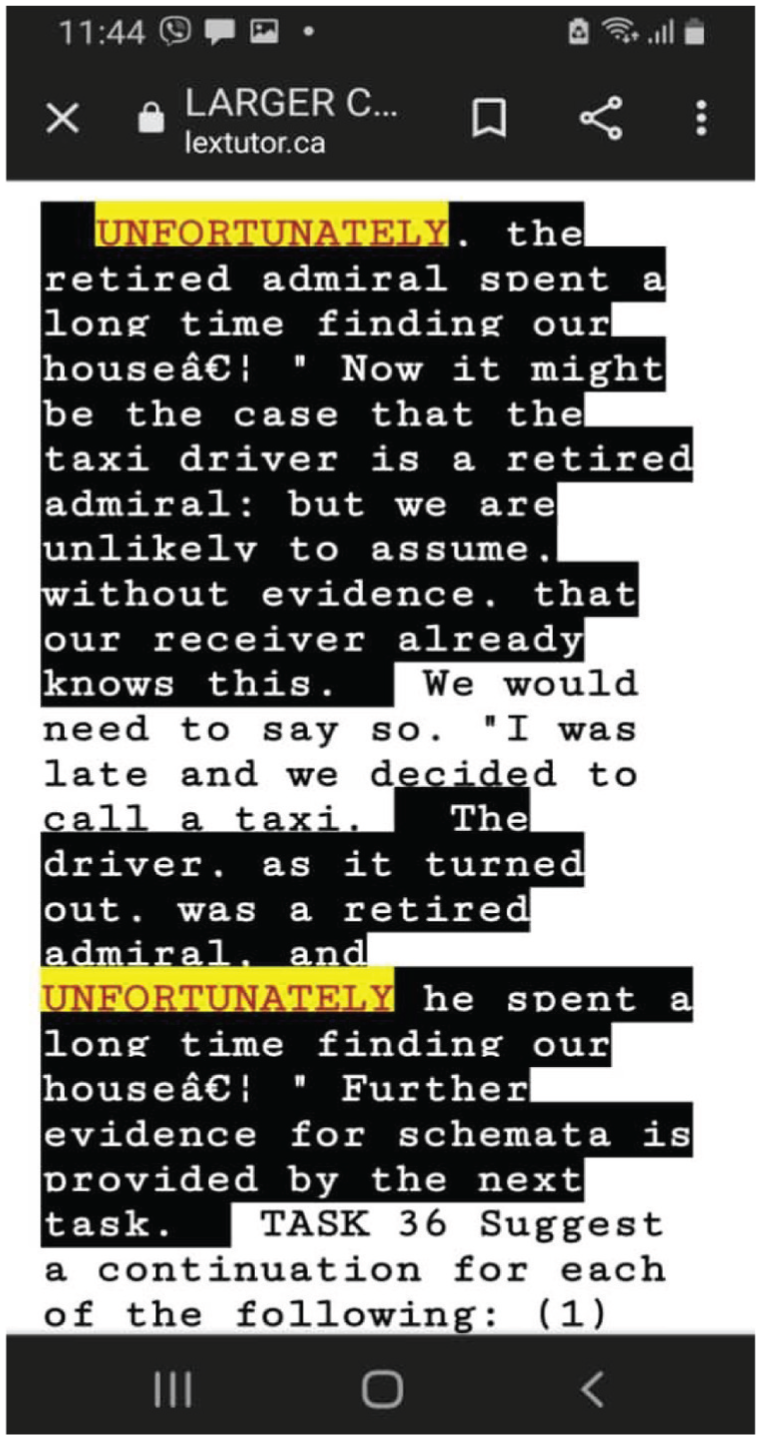
Screenshot of the word “unfortunately” in context in Lextutor Mobile Concordance.
Some students said “I can’t open another window at the same time.” (Participant 2)
On the other hand, most students stated that they liked its ease of access without compulsory registry settings or logins: What I like about corpus or DDL experiences, well, no registration or login is required for accessing at the beginning of each session. (Participant 23)
Another student added, “No cookies” [laughs]. (Participant 5)
The preference for corpus data over Google reflects a perceived higher level of academic authenticity and relevance. Students valued the corpus’s focus on native speaker usage and its independence from personalised search algorithms. However, the comments also reveal a blended approach, suggesting that students may integrate corpus consultation with other online resources (Fauzi, 2021). This highlights the potential for corpus use to complement, rather than replace, existing learning tools.
Smartphones Versus Computers
The survey results indicated that a significant majority of students favoured using corpus via smartphones, with 19 students (73.1%) agreeing and 5 students (19.2%) strongly agreeing with the statement that smartphones are better than computers for this purpose. The mean score for this survey question was 3.96, while only 2 students (7.7%) strongly disagreed. Qualitative data from interviews further supported these findings. Computers (PC or laptop) for DDL were less popular among these students than their smartphones: …They are easy, thus, I spend more time on the task umm writing … I start writing while my iPhone is on the desk to check words when I am not sure. It is simple, easy and quick. (Participant 6) My phone, of course, it is easily carried around. (Participant 1) …As compared to my computer, I can carry it (smartphone) anywhere… I am OK with my mobile. (Participant 21)
The majority of participants expressed satisfaction with using smartphones for language learning. Otherwise, two students said they were happy to use a computer for corpus consultation.
Actually, I like to use my laptop to analyse the corpus data. It is much more convenient … it has a large and clear screen, no need for zooming in all the time to read sentences and it enables me to open many tabs to follow my search. (Participant 8) Another thing, the huge number of lines in corpus needs a big screen. (Participant 10)
Additionally, one participant noted that smartphones have a perception of being an informal and less serious tool for academic purposes.
No, I prefer using the laptop. During the task, I received a call. This distracts me. Even at home if I study using my mobile, nobody believes you. But the laptop comes with the respect as a studying device. Another thing, the huge number of lines in corpus needs a big screen. (Participant 3)
The interviewer asked how many students used their smartphones for other tasks (follow up question). Some students admitted to opening multiple apps simultaneously on their smartphones during classes (five said they checked Facebook, three checked Viber, and one student received a call).
These comments reveal a key tension in MALL: the balance between the immediacy and portability of smartphones, aligning with prior research (Ogata et al., 2024), and the functionality and perceived seriousness of laptops for in-depth academic work. This divergence suggests that while M-DDL provides considerable flexibility, educators and developers must carefully balance convenience with the functional demands of in-depth analysis and address potential multitasking distractions.
Students’ Writing Engagement and Motivation
The survey data on students’ increased motivation to improve their English writing after using the corpus aligns with the focus group participants’ remarks. The survey data shows that the majority of students agreed (65.4%) or strongly agreed (30.8%) that they enjoyed using the corpus to help with their writing.
The quantitative and qualitative data converge in their overall positive assessment of the impact of the M-DDL approach on students’ writing engagement and motivation: I hate writing, not the right words… I am scared when I am writing but when she [teacher] gives us chance to use corpus during lectures, you know, we can use Internet help for homework but in the lecture, we cannot before. So, it makes me feel better about writing, come with new ideas, sentences, correct my errors, look for the proper preposition de facto I have problem with a phrasal verb, so it helps me too much. Interviewer: Do you think you are cheating? Participant: …big no, we are not native speakers we learn, we mimic the examples. Now I enjoy writing. (Participant 26) I used to be afraid of and worry about writing assignments, but now I feel excited to start them. (Participant 22) We can say that this had a positive impact on my writing. It made writing more interesting for me. (Participant 13) I was motivated to use the corpus because I really wanted to boost my writing skills and earn better grades. (Participant 1) It kept me engaged and made learning fun. (Participant 23)
The comments indicate that the corpus functioned as an empowering tool that demystified the writing process. By offering access to a rich repository of authentic language examples, it alleviated writing anxiety and fostered a sense of agency among learners. Students consider it a valid learning strategy (Inpanich & Somphong’s, 2022), which reframed the act of writing into an investigative journey rather than a test. This convergence of qualitative and quantitative data provides evidence that the M-DDL approach can effectively enhance student motivation and engagement in academic writing.
The Future of M-DDL According to the Participants
Besides giving their opinions on the use of the corpus, students were asked to make suggestions for improvement: I think to add a phonetic transcript for target terms (Participant 12) It’s hard to know how to pronounce a word just by looking at it, and the transcription will give me a clear guide. (Participant 23)
and
What Google translate does with the highlight vocab … the audio pronunciation. (Participant 7) [ The new version of COCA corpus (March 2020) shows the pronunciation.] Ensuring the mobile corpus is compatible with screen readers (Participant 3) Being able to just click a word and hear it pronounced clearly is so good. (Participant 25)
Students feedback strongly indicates a desire for M-DDL applications that bridge the gap between reading, writing, and pronunciation, reflecting the view that language skills are interconnected, not isolated. Students’ recommendations point to a need for future applications to evolve beyond text-only analysis by incorporating multi-modal features like audio playback and phonetic transcription. This input offers a clear directive for developers: to create more holistic and effective mobile language learning environments.
Discussion
The survey’s findings showed that students feel relatively positive about the employment of the corpus and DDL in writing. Students agreed that they felt more motivated to improve their English writing after using the corpus. They concurred that using corpora was especially beneficial for understanding the usage of vocabulary, grammar, the meaning of words, and improving their writing. Moreover, they also strongly acknowledged that the corpus solved their writing and language problems (e.g., error correction, finding new vocabulary, and ideas). These findings are congruent with previous empirical evidence (e.g., Luo, 2016; Poole, 2016).
On the negative side, some students found that the use of corpus for English writing was sometimes frustrating and confusing. Few students complained of difficulties that arose when analysing concordance outputs. These difficulties included challenges in interpreting the corpus data; this process was perceived as time-consuming by a small portion of students. About a third of students (34.6%) expressed dissatisfaction regarding the presence of incomplete sentences. Similar results were found in Geluso and Yamaguchi (2014); H. Yoon and Hirvela (2004); and Xue (2021). Other than that, all recorded difficulty statements had a rating lower than 3 (Means), suggesting that the students experienced minor difficulties while using the corpus. As similarly found in a previous study by H. Yoon and Jo (2014), the teacher’s guidance and assistance within the DDL process was key for successful corpus consultation. Moreover, teacher explanations helped the students overcome their “first aversion” (Johns, 1986, p.157) regarding the “startling physical appearance of concordances” (Lamy et al., 2007, para. 1). Participant opinions contradict Crosthwaite’s (2020) findings that taking the teacher out of the DDL equation was successful. This might be because the 302 participants in the study by Crosthwaite were postgraduate students. Crosthwaite made an amendment in his conclusion, stating that this self-guided learning approach is not suitable for all learners. While DDL and MALL theories emphasise learner autonomy and technology-mediated discovery, this study underscores the indispensable role of the teacher as a mediator and scaffold within these frameworks. Drawing on Activity Theory (Engeström, 2014) and Sociocultural Theory (Vygotsky, 1978), the teacher is conceptualised as a critical agent who bridges the gap between learners and technology. This is particularly true in low-resource contexts where limitations in infrastructure and digital literacy exist. The teacher’s guidance enhances learners’ ability to interpret corpus data, fosters trust in digital tools, and supports self-regulated learning processes.
Due to its user-friendly interface and efficient search capabilities, Google was the potential rival to the corpus in our classroom. Indeed, many studies discuss the use of the web as a corpus (e.g., Boulton, 2015; Geluso, 2013); although, for many participants in this study, the Google search results did not meet their needs. The non-academic content and personalised search results are a major drawback of Google in this context.
Particularly interesting is that students have used the web (in this case, Google) for longer than they were exposed to the corpus, yet many chose to trust the corpus and value it for their academic studies. They trusted the text (Sinclair, 2004) when its source was representative (Boulton, 2012); although, they had no knowledge of the characteristics of the corpus, the content (authentic academic language) was their priority. Those students acknowledged the academic and native speaker-oriented nature of corpus searches.
It is important to bear in mind that multi-tasking skills and parallel processing are aspects of digital natives’ learning experiences (Yong & Gates, 2014). As a result, some students expressed a desire to use the corpus in conjunction with other search engines or online dictionaries. Research by Pérez-Paredes et al. (2011) noted similar behaviour amongst their sample. In addition, the combination of search engines and the corpus provides more evidence of language use (Han & Shin, 2017). Moreover, researchers reported that the most frequently asked question by students in the first class was, “Do I need to download the application?” Students across the three focus groups shared similar perceptions of this key characteristic, namely, that the source offered easy, direct access to data and trustworthy academic content.
The majority of participants (92.3%) expressed satisfaction with using smartphones for language learning, which affirms the ubiquitous nature of smartphones and resonates with the findings of Şad et al. (2022) and Alsied (2019). The students’ responses highlighted two of the key advantages of m-learning identified by Tu et al. (2020): its portability and immediacy. The mobile component of this study was implemented as a practical workaround to enhance accessibility for participants with limited access to traditional computer resources.
Two students thought that smartphones might not be appropriate for searches of the corpus. Indeed, Zhang and Pérez-Paredes (2019) noted the small screen size of smartphones as a hindrance to learning. Furthermore, most new generations of smartphones have multi-window views that allow for the simultaneous running of multiple apps on a screen. However, students complained that they could not open multiple windows of the same app (in this case, Mobile Concordance). It is noteworthy that more than half of the participants in Pérez-Paredes et al.’s (2019) research saw themselves as using computers to access the corpus. They also expressed their annoyance at the lack of simultaneous multi-app usage on smartphones. Additionally, advantages such as a full-sized keyboard, a global view of the text, and the ability to properly scroll down a computer page were mentioned in their responses. We propose the development of a more flexible and robust M-DDL environment by providing students with the ability to access and transition between their work on mobile devices and larger screens (e.g., laptops or tablets). Cloud-based storage, synchronisation, and cross-device integration are potential solutions that would allow students to continue their learning activities from any device, enhancing their overall M-DDL experience. Moreover, Lusta et al. (2023) highlight that the presence of incomplete sentences within a corpus—a characteristic of the data itself—underscores the need for an intuitive and user-friendly interface. They argue that mirroring the simplicity of web search engines would significantly enhance accessibility for users lacking extensive technical expertise. This would leverage users’ familiarity with these interfaces to reduce the learning curve associated with corpus tools.
The use of smartphones to play games, watch videos, and surf social media means that they are viewed as less serious and acceptable as learning tools within Libyan society. This raises the issue of potential social obstacles in M-DDL use outside of the classroom. Upon being queried by the interviewer, all students acknowledged using M-DDL to complete their homework.
In line with previous research (McCoy, 2016; Mendoza et al., 2018), the results have demonstrated that smartphones create learning distractions in the classroom. For instance, McCoy (2016) found that his 675 participants were distracted, spending an average of 20.9% of class time using their digital devices for non-academic activities. Mendoza et al. (2018) suggested that digital distractions could be prevented by implementing break intervals for students and teachers to restore attention. Furthermore, it is recommended to enhance self-regulation skills to maintain focus and avoid the temptation of non-academic mobile use during instruction time. Educators play a pivotal role in guiding students to cultivate self-regulation strategies, including time management, cognitive control, and emotion regulation techniques. Encouraging a culture of self-directed learning empowers students to set goals, stay focused, and engage proactively amidst technical distractions.
Student engagement and motivation are the basic determinants of success in student learning and achievement, particularly in EFL writing contexts. Siddique and Madhawa Nair (2015) claimed that the use of smartphones gave a further boost to students’ engagement in writing and raised their level of motivation. In Zohairy’s study (2012), pre-intermediate participants were highly motivated to perform grammar tasks in a DDL context, illustrating that the DDL approach motivated students to actively participate in the learning process. The responses from the focus groups confirmed the questionnaire’s results. The majority of students thought that the use of M-DDL enhanced their writing engagement and motivation and helped them to improve their writing skills.
Although this was a writing class, the students’ suggestions were about the pronunciation of English words. A possible reason for this suggestion is that pronunciation is a problematic area for most students in Libya (Breime, 2019). While Libyan students were keen to provide suggestions on knowing how to use the target language, participants in Pérez-Paredes et al.’s (2019) study expressed the desire for a visual representation of their learning progress. They specifically wanted this through the use of a graphical representation of the CEFR levels utilised in their text, which would be updated with each submission. It can be proposed that students from traditional classroom settings may view technology as predominantly a means of obtaining information rather than a tool for evaluation in formal education.
Conclusion
This study aimed to highlight the voices of Libyan students. It combined multiple data instruments (a questionnaire and interviews) in order to better understand the role of corpus technology in improving EFL writing skills. Few studies, in particular, have looked closely at students’ perceptions of M-DDL in relation to their writing processes. It is important to take into consideration the attitudinal outcomes, suggestions, and concerns of students based on their experience with M-DDL. The authors believe that this is the first study to evaluate the perceptions of students towards online corpora in a Libyan setting, which is one of the most underrepresented countries in research. According to Boulton and Vyatkina’s (2021), in the past 30 years of DDL research, from 1989 to 2019, there have only been nine publications on the subject in Africa. Moreover, there have only been two studies on M-DD: Pérez-Paredes et al. (2019) and Quan (2016).
It is hoped that the study findings, together with the evidence from other published research on related topics, may help DDL break out of its mould as a method for experts. This may help integrate corpora and concordancing into normal classrooms, especially if it can be shown that DDL works in regular classrooms involving regular teachers and students. The researchers present a supportive environment for smooth DDL implementation by using smartphones, non-DDL syllabi, the KWIC mode, and little training. These suggestions are based on an extensive review of the literature and the realities of life in developing countries. Though limited by a small sample size, making broad generalisations to other populations difficult, this study still provides valuable insights. The results demonstrate that students in a developing country are open to the idea of using M-DDL and view it as a potential tool for improving their learning outcomes. These findings are particularly significant, as they suggest that M-DDL may be a viable solution for enhancing educational opportunities in under-resourced environments. In these environments, access to technology and other educational resources may be limited. Johnson et al. (2016) highlight that technological integration requires regular and reliable access to a digital device. This aspect is an issue in developing countries, where access to technology is limited. The lack of robust infrastructure and limited access to technology pose significant barriers to the effective implementation of digital language learning approaches (Ndibalema, 2025). However, mobile phones, especially smartphones, are widely popular in these countries. There are more than seven billion mobile users worldwide (Taylor, 2024), which suggests that many internet users in developing countries use mobile devices. Moreover, between January 2024 and January 2025, mobile devices generated 75.73% of the website traffic in Africa, whereas desktop usage (computers and laptops) comprised only 23.27% (Statcounter, 2025). Thus, this universality of personally-owned devices could move DDL closer to normalisation, even in resource-constrained contexts. According to Ioannou-Georgiou (2006), the use of portable phones has enabled personalisation (easy access, comfort with the use of the device, and a sense of ownership of the technology) that helps for effective incorporation of any technology. In essence, the prevalence of mobile devices in developing regions presents a unique opportunity to leverage these ubiquitous technologies and apply the research findings to enhance the execution of ELT practices in resource-limited settings. This approach can help bridge the digital divide and ensure more equitable access to a wealth of educational resources that were previously unavailable in these contexts (Adzifome & Agyei, 2023; Ugwu et al., 2024).
This study has several limitations that need to be addressed. Firstly, the sample size of 26 students may not sufficiently represent the broader population of EFL learners, indicating the need for a larger sample to improve the generalizability of findings. Additionally, the study did not investigate the actual impact of M-DDL on writing performance. Future research should include measures of writing improvement to link attitudes with concrete learning outcomes. Another limitation is the absence of data on teachers’ experiences or perceptions regarding M-DDL. This data could provide valuable insights into the implementation challenges and pedagogical strategies of this approach. Moreover, relying solely on questionnaires and focus groups for data collection may introduce bias, as students may offer socially desirable responses rather than expressing their true feelings about M-DDL. Also, we acknowledge the limitation of relying solely on qualitative data to demonstrate writing improvement. Future research will address this by incorporating quantitative measures, such as pre- and post-writing assessments, to directly evaluate the impact of corpus use on writing quality.
Supplemental Material
sj-docx-1-sgo-10.1177_21582440251386904 – Supplemental material for Breaking the Stereotype of Data Driven Learning: Students’ Experiences of Mobile Data-Driven Learning in a Developing Country
Supplemental material, sj-docx-1-sgo-10.1177_21582440251386904 for Breaking the Stereotype of Data Driven Learning: Students’ Experiences of Mobile Data-Driven Learning in a Developing Country by Amel Lusta, Özcan Demirel and Behbood Mohammadzadeh in SAGE Open
Footnotes

Ethical Considerations
This study adhered to ethical principles and guidelines, obtaining informed consent from all participants (Appendix A).
Author Contributions
Funding
The authors received no financial support for the research, authorship, and/or publication of this article.
Declaration of Conflicting Interests
The authors declared no potential conflicts of interest with respect to the research, authorship, and/or publication of this article.
Data Availability Statement
Data are available upon request from the corresponding author.
Supplemental Material
Supplemental material for this article is available online.
References
Supplementary Material
Please find the following supplemental material available below.
For Open Access articles published under a Creative Commons License, all supplemental material carries the same license as the article it is associated with.
For non-Open Access articles published, all supplemental material carries a non-exclusive license, and permission requests for re-use of supplemental material or any part of supplemental material shall be sent directly to the copyright owner as specified in the copyright notice associated with the article.
