




Abstract
Recently, the integration of computer-based feedback (CBF) systems, as assistive tools for instructors, into EFL writing contexts has attracted researchers’ attention. However, EFL learners’ perceptions toward such tools’ application remain under-investigated. Therefore, this study investigates EFL learners’ perceptions toward integrating CBF into writing classrooms in the Saudi higher education level. We adopted a quasi-experimental research design with a mixed-method approach for data collection and purposive sampling as sampling technique. We administered pre-questionnaires to two groups of Saudi male EFL undergraduate students undertaking an English program (n = 40). The experimental group’s participants developed four multiple draft essays after receiving automated feedback on each essay (i.e., the treatment), after which post-questionnaires were administered to measure shift in their perceptions. The findings suggest that majority of participants held positive views on this tool, and some of their views positively changed at a statistically significant level after practice. However, we identified few student concerns regarding these systems. Thus, although integrating such tools into writing classes provides learners with positive experiences and encourages their engagement in learning, instructors must ensure the students’ access to functional devices and appropriate Internet connections.
Introduction
Over the past decades, English has been adopted as the language of instruction in many disciplines in various higher education institutions worldwide, thus, creating an increasing demand for learning English in non-English-speaking countries (Richards & Pun, 2021). For example, in Saudi Arabia, it is the language of instruction in several disciplines such as English language and literature, medicine, dentistry, administration, and management (at the BA, MA, and Ph.D. levels) (Alkhannani, 2021). In Saudi Arabia and many other EFL countries, when it comes to teaching and learning English and other foreign languages, attention is paid to all four language skills, particularly writing skills. This is evident by the numerous studies exploring how English as a Second Language (ESL) and English as a Foreign Language (EFL) learners learn L2 writing and what factors/tools can promote the development of their writing skills. This is because writing holds particular significance to learning and teaching in general (e.g., Bitchener & Ferris, 2012; Canagarajah, 2022; Cho & Schunn, 2007; Gibbs & Simpson, 2004).
Further, feedback (FB) provision is a learning tool that has been found to positively impact learning (e.g., Gibbs & Simpson, 2004; Haigh, 2007; Lee, 2007; Miller, 2009; Svetieva & Lopes, 2022; Torrance, 2007). It is argued that FB can play an integral role in learning languages, as it can positively impact linguistic skills, encourage learning in general, and improve language accuracy (Hyland & Hyland, 2006). The literature identifies the FB types to be provided to L2 learners, such as teacher FB, peer FB, and computer-based FB. The former two types have been thoroughly investigated in the literature (e.g., Bitchener & Ferris, 2012; Ferris & Roberts, 2001; Gielen et al., 2010; Hu, 2005; Lalande, 1982; Reid, 1997; Rollinson, 2005; Shang, 2022; Zhang & Hyland, 2018); however, the latter (computer-based FB, henceforth, CBF) is a relatively new topic that has been attracting a growing number of researchers, practitioners, readers, and investors recently (e.g., Attali, 2004; Burkhart et al., 2020; Chang et al., 2017; El Ebyary & Windeatt, 2017; Education Testing Service (ETS); Lachner & Neuburg, 2019; Zaini & Mazdayasna, 2015). In addition to investigating the role of CBF in EFL/ESL learning, other fields of science have examined the effects of its integration into their learning domains, such as medicine (e.g., Chang et al., 2017) and accountancy (e.g., Helfaya, 2019).
Traditionally, scholars were interested in students’ perceptions of the FB types they receive in writing classes (e.g., Cohen & Cavalcanti, 1990; Hedgcock & Lefkowitz, 1996; Leki, 1991; Lizzio & Wilson, 2008; Peterson & Irving, 2008). More recently, several studies have explored learners’ perceptions of learning contexts in general (e.g., Chien et al., 2020; Fu et al., 2019; Sletten, 2017; Wei & Chou, 2020), In this respect, several scholars have argued that technology can have a positive impact on language teaching and learning (e.g., Cheung & Slavin, 2012; Li, 2006, 2021; Zaini & Mazdayasna, 2015), and that its integration can allow for introducing more innovative methods to language teaching and learning and create an active learning environment, thus deepening the engagement of learners in the learning process (e.g., AlSaied & Akhtar, 2021; Chang & Windeatt, 2021; Walker & Patel, 2018). Further, the extant literature has found that positive perceptions of technology are necessary for future use in instructional settings and for achieving intended learning outcomes (e.g., Alzahrani & O’Toole, 2017; Joyce & Kirakowski, 2015; Wei & Chou, 2019), and can allow for deeper learning (Mohamed, 2008). That said, Saudi EFL learners’ perceptions of the integration of CBF into writing classrooms have not yet been explored. Studies concerning CBF and EFL in the Saudi context have mainly addressed questions in relation to areas other than learners’ perceptions of the nature of CBF, with the exception of the Alnasser’s (2018). study, which addressed a different scope (i.e., whether CBF and peer FB jointly can replace teacher FB). Therefore, this study is the first to address this literature gap. Additionally, it contributes to the existing literature by providing recommendations for practitioners and future researchers.
Writing and Higher Education
It is commonly observed that L1 and L2 learners suffer from deficiencies in their writing skills (Bailey & Bizzaro, 2022; Cho & Schunn, 2007), which explains why many studies have focused on this particular skill. McCutchen (2011) and Gomez et al. (1996) claim that there is a correlation between writing skills and other language skills, the better the mastery level of writing, the better other skills can become. Moreover, proficient writers are argued to be more successful in many disciplines owing to the fact that most disciplines require a written demonstration of knowledge (Cho & Schunn, 2007). Furthermore, higher education institutions in English-speaking countries permit international students to join different academic programs if they meet specific conditions, one of which is achieving a certain level in an English standardized test (e.g., TOFEL, IELTS). Commonly, most universities set an additional criterion that requires achieving a specific performance in the writing component, thus acknowledging the importance of mastering advanced writing skills to succeed in higher education.
The exploration of the impact of FB on developing writing skills and how it is best approached goes back to over four decades. As early as the 1970s, there was a shift toward learner-centered approaches to teaching writing, most of which discussed the integral role FB plays in promoting writing skills (Hyland & Hyland, 2006; Zhang & Hyland, 2022). There is substantial evidence that FB provision is crucial to writing development since it highlights weaknesses in learners’ writings and provides formative explanations as to why they are considered problematic (Phuwichit, 2016). Furthermore, the method of FB delivery has a significant impact on the learner’s motivation and perception of the learning experience (Grabe & Kaplan, 1996; Pearson, 2022; Shang, 2022). In this regard, the literature suggests two main characteristics that effective FB should preserve: timely provision and adequacy. On the one hand, adequate FB can be described as a “detailed feedback which addresses global concerns in a text, use metalanguage to diagnose textual problems, and suggests specific revisions” (Van Steendam et al., 2010, p. 319), and can have a greater impact on the learning process (Tang, 1999; Van Steendam et al., 2010; Zhu, 1995). On the other hand, timely FB is offered instantly after performing a certain task (Brown et al., 2006; Organization for Economic Co-operation and Development, 2005; Rodríguez et al., 2022). Research on FB addressed issues such as whether FB should be provided on macro-and micro-level concerns (e.g., Hyland, 2003; Min, 2008; Truscott & Hsu, 2008) and the provision of focused or selective FB (e.g., Ferris, 1995; Gibbs & Simpson, 2002).
Nevertheless, it may not be feasible for writing instructors to provide their learners with timely and adequate FB for several reasons. For example, an increasing number of students in higher education institutions are required to undertake writing classes as part of their preparation for university studies (Huxham, 2007). Additionally, writing is considered a complex skill that is difficult to master, and that learning writing requires developing multiple drafts as part of the writing process. (Min, 2008). This creates a situation in which the instructor encounters difficulty in delivering FB to his/her students (Grimes & Warschauer, 2010; Lee et al., 2009; Rodríguez et al., 2022). Additionally, Huxham (2007) argues that there is a sense of dissatisfaction among L2 learners concerning FB in general, owing to its insufficiency and quality. One possible solution that can help the instructors provide timely and adequate FB to each learner on each written draft is the integration of the “intelligent computer-assisted language learning (CALL).” The term refers to “computer applications which can interact with the material to be learned, including providing meaningful feedback and guidance” (El Ebyary & Windeatt, 2010, p. 122; also see Wang, 2022).
Intelligent CALL: CBF Model
With the rapid development of artificial intelligence in recent years, many researchers and practitioners have been interested in technology integration to enhance the learning experience in general (e.g., AlSaied & Akhtar, 2021; Burkhart et al., 2020; Chang & Windeatt, 2021; Walker & Patel, 2018). Additionally, the Coronavirus disease 2019 (COVID-19) pandemic caused interruptions in educational systems worldwide, forcing them to integrate technology into the educational context, mainly through distance learning (e.g., Morgan, 2020). The current pandemic promoted the active use of computers in online teaching, online submissions, online testing, the use of electronic materials and databases, and so on. For example, in Saudi Arabia, the Ministry of Education instructed all practitioners in public schools and university professors to teach through online platforms (e.g., Blackboard, Zoom) during the pandemic (e.g., Hoq, 2020; Tanveer et al., 2020).
Although few researchers have held a traditional view of writing instruction and have not favored the concept of using “technology in writing classrooms” by claiming that it might negatively impact writing skills, as it (for example) does not allow much hand practise with the pen and paper and is susceptible to auto-corrects errors (e.g., Chen et al., 2011; Jarom et al., 1991), the vast majority have strongly recommended the integration of technology in writing classes, especially in higher education contexts (e.g., Alnasser, 2018; Attali, 2004; Burkhart et al., 2020; El Ebyary & Windeatt, 2017; Lachner & Neuburg, 2019). Nonetheless, many of these studies have focused on assessing writing, that is, summative assessment (e.g., Rudner & Liang, 2002), comparisons between how computers and instructors score texts (e.g., Wang & Brown, 2007), examining the validity of writing rating systems (e.g., Powers et al., 2001), investigating the validity and reliability of such systems (e.g., Dikli, 2006), exploring instructors’ perceptions of CBF (e.g., Li, 2021), and validating the effectiveness of CBF with respect to students’ written texts as a formative tool (e.g., Attali, 2004; Coniam, 2009; Deane et al., 2011).
From a formative perspective, CBF can be employed to support the second language learning theories. For example, El Ebyary and Windeatt (2017) imply that Vygotsky’s (1978) concept of “Zone of Proximal Development (ZPD)” is possibly achievable through CBF. This FB type may, to some extent, play the role of the “expert” that learners need to reach the next advanced learning zone. In other words, FB can scaffold students’ learning by providing better, more learning opportunities and experiences when developing their writing skills (Hyland & Hyland, 2006).
Although the research on CBF addressed several questions in relation to text quality and how learners act upon automated FB, learners’ perceptions toward this FB type in EFL contexts (e.g., the Saudi context) remain under-conceptualized and under-researched. Thus, the current study aims to fill this literature gap by investigating EFL learners’ perceptions of integrating computer-based feedback into writing classrooms.
Materials and Methods
This study investigates Saudi male EFL students’ perceptions of automated FB (i.e., CBF) in their written texts. It also explores whether students’ perceptions change after exposure to automated FB. We adopted a quasi-experimental approach for data collection. Additionally, we used pre- and post-questionnaires to obtain quantitative and qualitative data by measuring students’ responses before and after exposure to the treatment (CBF). The research questions set out for the investigation were as follows:
RQ1: What perceptions do Saudi EFL learners have toward the integration of CBF into their writing classrooms?
RQ2: Does the integration of CBF into writing classrooms impact Saudi EFL students’ perceptions? If so, how?
Participants
The research adopted a non-probability purposive sampling technique. The participants of the study were male Saudi EFL students enrolled in a BA English language program at a Saudi University. They had already successfully completed the first year of the program, during which they undertook language skills courses. Before joining the BA program, the participants studied the English language in public schools for 8 years (elementary, intermediate, and secondary). The researcher took over a level 3 writing course (first level of year 2), and a different section of the same course was included in the study and taught by a different instructor. The total number of students who participated in the two sections was 40 (experimental group n = 21; control group n = 19). A final remark to make here is that it was not possible to involve male students in the study owing to some cultural issues that prevented access to them at the time of data collection.
Research Instrument and Procedures
For data collection, we used pre- and post-questionnaires. The questionnaires were researcher-made, and were validated by two university professors who were experts in the field. Then they were piloted using 9 EFL students from the same English language program, but their responses were not part of the study. All the received FB was used to produce the final version of the questionnaire. The questionnaires included an introductory part explaining the purpose of the study and keyword definitions. The first section inquired about students’ background, namely, writing skills level, frequency of receiving teacher FB, and previous experience with CBF. The second section included eight items addressing learners’ perceptions toward the integration of CBF in writing classes, evaluated using a five-point Likert scale (strongly agree, agree, not sure, disagree, strongly disagree). Finally, the third section was open-ended to allow students to express any additional thoughts. The last two sections were identical in the pre- and post-questionnaires.
Regarding the procedures, after obtaining students’ consent in both groups to participate in the study, the pre-questionnaires were administered simultaneously. In accordance with the teaching curriculum, students in the experimental group (n = 21) learned how to write essays for 2 weeks, 3 hours a week. The participants examined exemplar essays and developed ones by themselves, on which the teacher FB was provided. This was followed by training on how to submit their essays to the automated FB system (i.e., Criterion—a system provided by ETS) and how to incorporate the FB they receive to develop an improved draft. In the following weeks, participants went through four cycles of essay writing. In each cycle, they developed one essay, submitted it to the automated system, received CBF, and finally developed a second draft based on the CBF. They developed four multiple-draft essays over a duration of 10 weeks. Lastly, the post-questionnaires were administered to measure the change in students’ perceptions, if any, after exposure to the treatment.
Before embarking on the analysis of the obtained data, it is worth briefly describing the followed analysis procedure. SPSS software was used to examine the quantitative data obtained from the pre- and post-questionnaires. The reliability of the questionnaire items was tested (as discussed below). Then the questionnaire items were analyzed by calculating frequencies, percentages, means, and standard deviations. Moreover, for the purpose of making a comparison between pre- and post-responses, the Paired Sample T-Test was administered. According to Larson-Hall (2010), this test is used when two mean scores are obtained from the same subjects. The final part of the analysis was the qualitative analysis of the open-ended section of the questionnaire, where participants’ comments from the pre- and post-questionnaires were categorized and analyzed in light of the scope of the study.
Results
To measure the inter-item reliability of the eight items, the Cronbach’s alpha test was conducted on the participants’ perceptions scale. We found that the subscale had an adequate level of inter-item reliability of 0.860 (Table 1).
Survey Scale Inter-Rater Reliability.

Participants’ Background
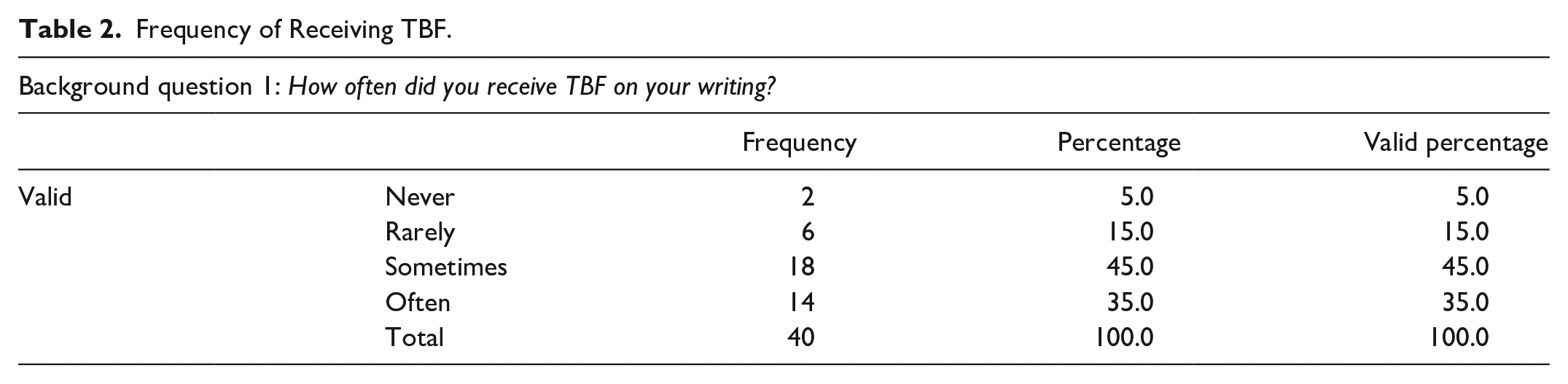
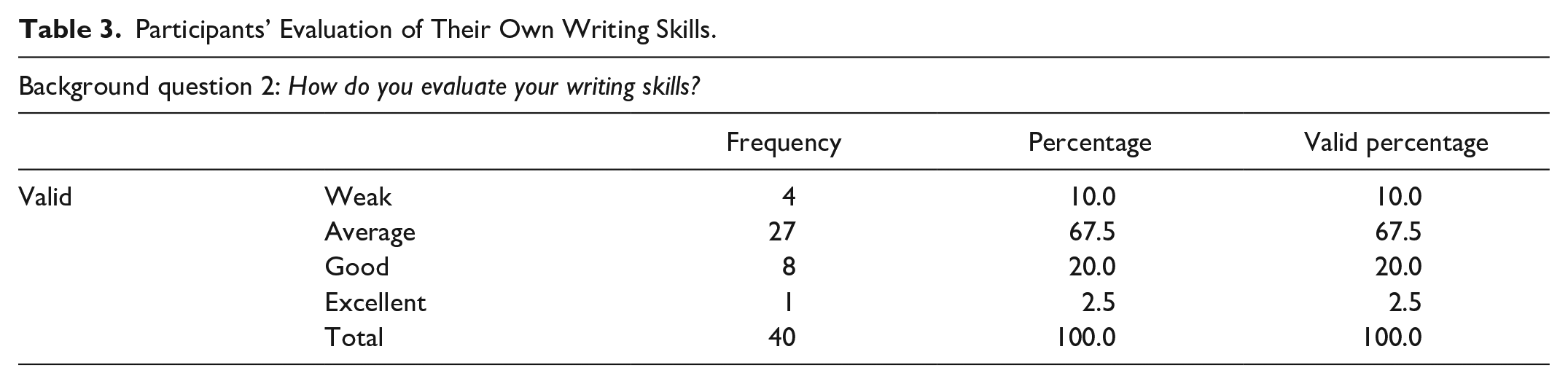
As described earlier, the total number of participants in both groups was 40. Their responses to the first section of the questionnaire were analyzed using SPSS (Tables 2–4). The participants responded to the following questions:
(1) How often did you receive FB from your teacher?
(2) How do you evaluate your writing skills?
(3) Have you received automated FB in the past?
Frequency of Receiving TBF.
Participants’ Evaluation of Their Own Writing Skills.
Receiving Automated FB in the Past.

The majority of the respondents (65%; n = 26) deemed the amount of teacher FB they received in the past as infrequent or rare. However, a proportion of the participants reported receiving frequent FB from their teachers. This may suggest that a significant number of Saudi students do not receive sufficient FB on their writing. Additionally, the majority of the respondents (67.5%; n = 27) evaluated their writing skills as “average,” whereas a small proportion (22.5%; n = 9) evaluated their skills as good or excellent, with only 10% of the participants (n = 4) regarding their writing skills as “weak.” This may suggest that the majority of the participants maintained average and high writing skills, which seems logical since the participants were in the second year of their academic program. In other words, the participants maintained homogeneity and could be relatively indicative of the perceptions of a wider population. Regarding the participants’ previous experience with CBF, a significant majority (85%; n = 34) reported not receiving it in the past, with only a small proportion (15%; n = 6) having previous experience. This finding may explain the scarcity of studies from Saudi Arabia in relation to the integration of CBF into writing classes and forms a further rationale to explore this context in particular.
Pre-responses to Perceptions Items
In general, Table 5 shows that Saudi EFL learners’ perceptions of the nature of CBF are relatively positive. Nonetheless, it is observed that the standard deviations for most of the items are statistically large (with an overall average of SD = 0.992). Therefore, a thorough examination of the data is particularly important at this stage. The analysis of item 1 shows that the majority of the respondents (75%; n = 30) reported their agreement with the notion that automated FB is interesting, with only a small proportion (25%; n = 10) reporting their hesitance to agree or their disagreement with the notion (Table 6).
Summary of Means of Responses to Perceptions (8 Items).

The Use of CBF as an Interesting Tool.

Regarding item 2 (Table 7), respondents responded to the “negative” statement that CBF was “unnecessary” for improving writing skills. Interestingly, the majority (67.5%; n = 27) disagreed with this statement, which indicates their positive perceptions that CBF is necessary for writing development. The responses to this negative item may validate other positive responses obtained from the other items. In other words, it suggests that respondents provided valid responses and did not complete the questionnaire carelessly.
Necessity of CBF for Improving Writing Skills.

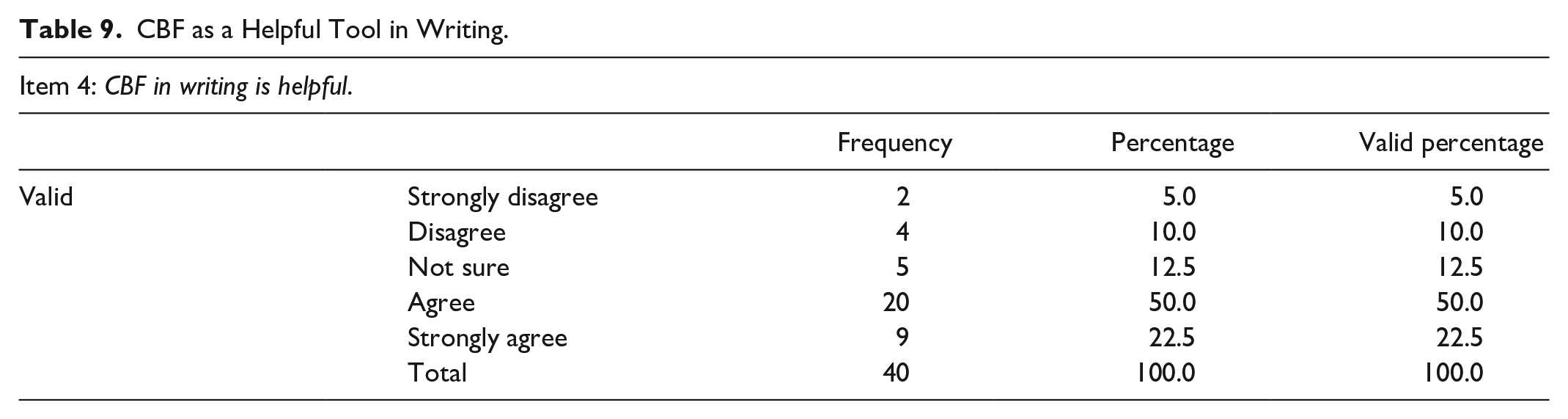
The results of item 3 (Table 8) show that the majority of the respondents (72.5%; n = 29) agree that CBF can be a fair evaluation tool for their essays. Conversely, the minority either were not sure (17.5%; n = 7) or disagreed (10%; n = 4) with this notion. In other words, most students maintained the perception that automated FB can produce good-quality FB. Regarding item 4 (Table 9), a large proportion (72.5%; n = 29) reported having the perception that CBF can be helpful when integrated into writing classrooms. Conversely, the minority was either not sure (12.5%; n = 5) or disagreed (15%; n = 6) with this notion. This suggests that students felt the need for CALL applications for writing development, especially in a context known for commonly adapting traditional teaching methods (i.e., Saudi Arabia).
Fairness of CBF for Evaluating Written Texts.

CBF as a Helpful Tool in Writing.
Interestingly, the pattern of responses to item 5 (Table 10), which inquired about perceptions toward the “reliability” aspect of automated FB, slightly differed from the above results. Although the majority (55%; n = 22) considered CBF as a reliable source of information, a considerable proportion (35%; n = 14) hesitated to make a decision in this regard. A general scan of the results from most of the other perception items does not show such hesitance on the part of the participants. Here, hesitance can be linked to the learners’ prior perceptions that the most reliable source of information is the teacher (Yang et al., 2006). This could also be linked to the fact that most of them did not have previous exposure to CBF (see Table 4 above). Overall, the general maintained perception remained positive. Responses to item 6 show that the majority (70%; n = 28) disagreed with the “negative” notion that CBF is useless to them, which reflects their positive perceptions in this regard (Table 11).
Reliability of CBF.

CBF as a Useless Tool to Learn How to Use.

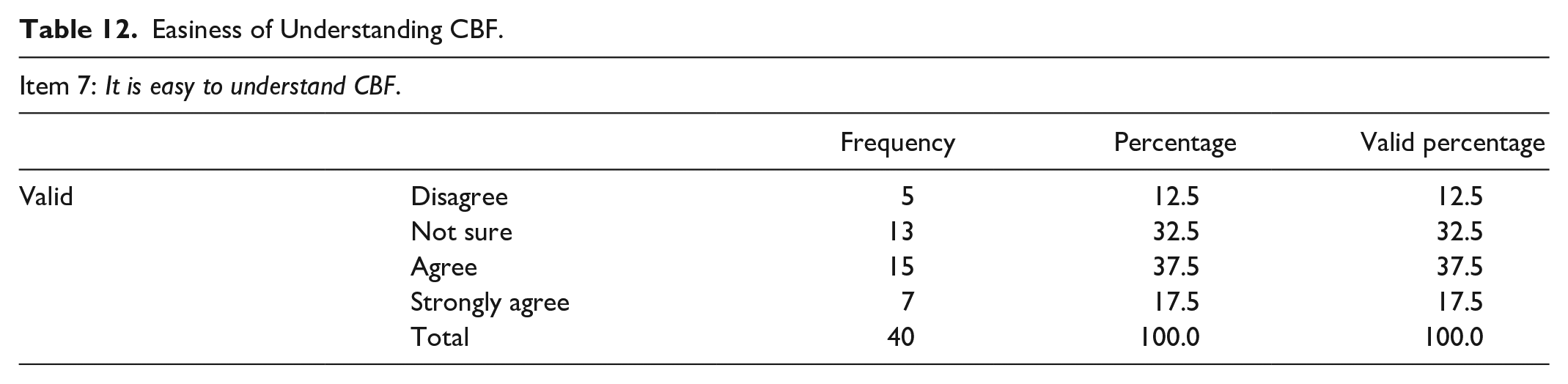
Furthermore, over half of the respondents (55%; n = 22) agreed that the FB generated by the computer was easy to understand; however, a considerable proportion (32.5%; n = 13) were hesitant to either agree or disagree with this notion (Table 12; item 7). Such hesitation can be linked to the reliability concerns reported in relation to item 5; that is, when learners do not understand the FB generated by the computer, they may start questioning its reliability. Regarding the final item (no. 8), the participants responded to whether they would recommend CBF for future writing classes. Interestingly, 70% of them (n = 28) either agreed or strongly agreed with the recommendation of CBF for future classes, while only 20% (n = 8) were not sure, and 10% (n = 4) stated that they would not recommend it (Table 13). This finding is an overall statement by the majority of the participants that CBF is approved by them and perceived as beneficial for writing classrooms.
Easiness of Understanding CBF.
Recommending CBF in Future Learning.

Post-responses to Perception Items
As explained earlier, only participants in the experimental group were exposed to CBF (i.e., treatment) and completed the post-questionnaires. To measure the shift in the participants’ perceptions of CBF (if any), the data of the experimental group (n = 21) were isolated from the data obtained from the other group. Then, the means of responses in the pre-questionnaires were compared to the means of responses obtained in the post-questionnaires. We conducted the Wilcoxon signed-rank test using the data of the eight items to determine whether there were statistically significant differences in the respondents’ perceptions of the integration of CBF into writing classrooms (Table 14). A note to make here is that the “negative” items were reversed to allow the SPSS software to read data in one direction (i.e., in a positive direction), which is recommended in statistical research to obtain valid data (cf. Kinnear & Gray, 2012; Larson-Hall, 2010).
Comparison between the Means of Pre- and Post-Questionnaires (Paired Sample t-Test).

The results suggest that there are statistically significant differences in participants’ responses concerning the three items. In detail, statistically significant differences were found in the participants’ perceptions toward the fairness of CBF (Z = −2.968; p = .003), the notion that CBF is a helpful tool (Z = −2.140; p = .032), and recommending it to future classes (Z = −2.179; p = .029). Additionally, there was a positive statistical difference concerning the usefulness of CBF in writing classes (item 6); however, this change was near, but not at, a significant level (Z = −1.697; p = .052). The obtained results suggest that the majority of the participants maintained positive perceptions of CBF before having any prior experience with it, while their perceptions changed significantly in some areas after their exposure to it.
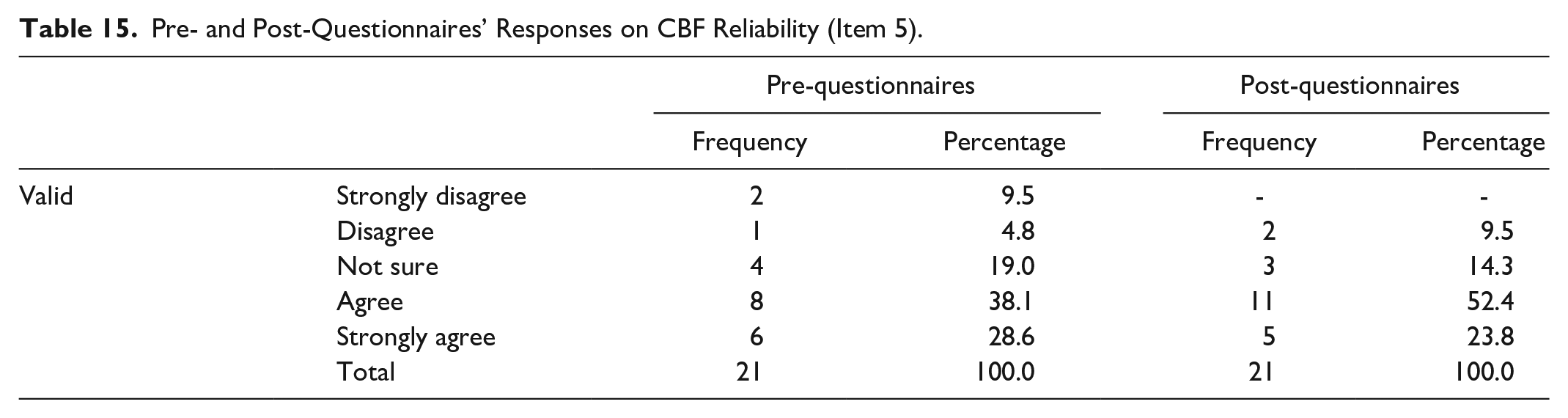
Considering the earlier findings, we conducted a post hoc analysis of the experimental group data in particular, as observing this group’s changes from before to after practice with the CBF system for each item might provide more insightful findings. Therefore, we thoroughly analyzed all items to identify the changes in responses to the reliability item (Table 15). In detail, the pre-questionnaire results show that two respondents “strongly disagreed,” one respondent disagreed, four were “not sure,” eight “agreed,” and six strongly agreed’ with accepting CBF as a reliable source. However, in the post-questionnaires, after receiving the treatment, none of them “strongly disagreed,” two “disagreed,” three were “not sure,” eleven “agreed,” and five “strongly agreed” with the statement. This suggests that the participants started off with a relatively high level of concerns about the reliability of automated FB, and interestingly, some of these concerns shifted after receiving the treatment to become more positive.
Pre- and Post-Questionnaires’ Responses on CBF Reliability (Item 5).
The Open-ended Section
The participants (in both groups) provided several interesting comments in the open-ended section (Table 16). The comments were responses to the following two statements:
Describe the strengths of using CBF.
Describe the weaknesses of using CBF.
Participants Comments in the Open-Ended Section.
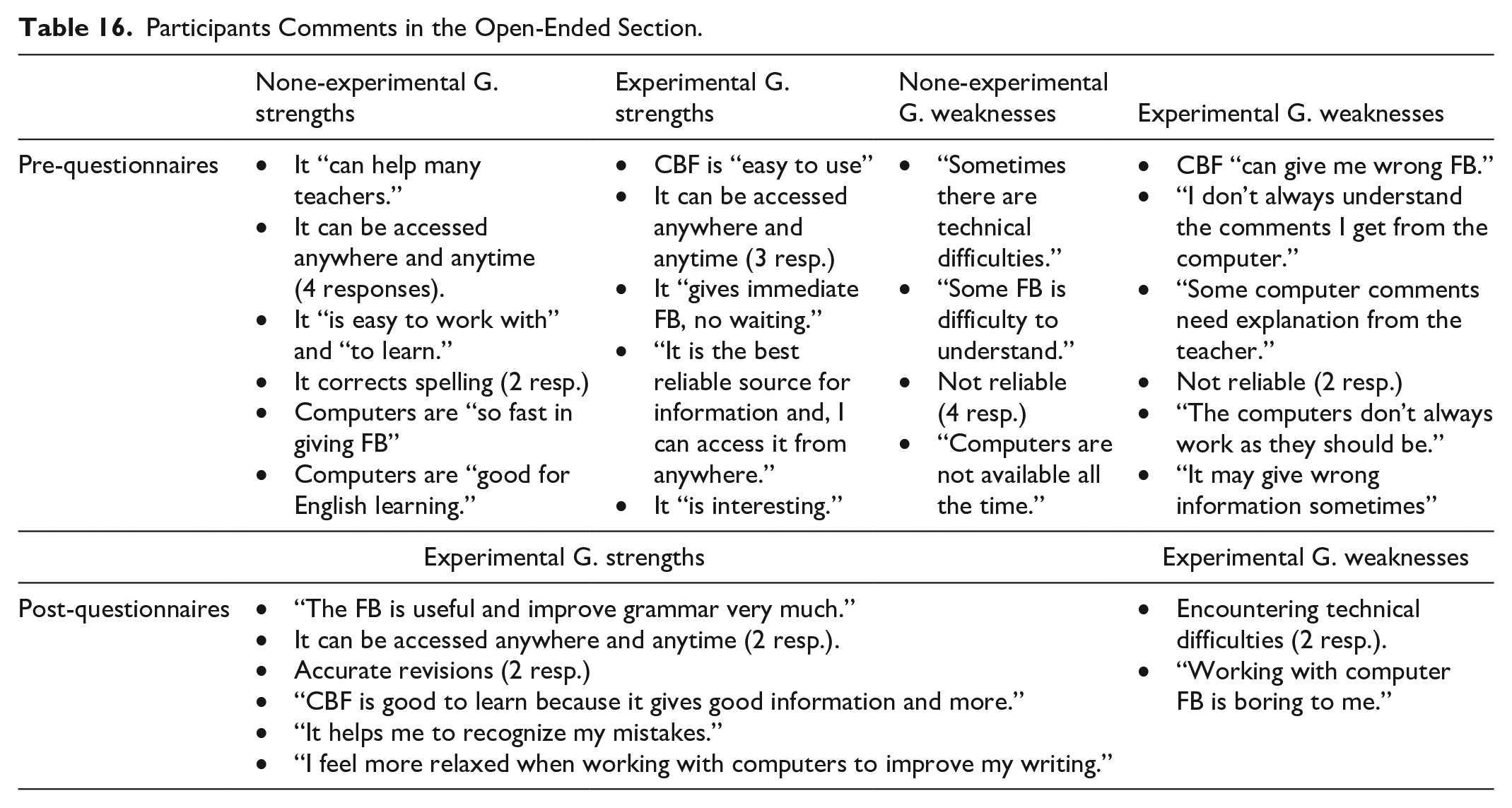
In the pre-questionnaires, several strength points were stated; most commonly, the respondents pointed out that CBF can be accessed anytime and anywhere (reported by seven participants). Additionally, they regarded this FB type as interesting, immediate, easy to work with, and helpful by autocorrecting spelling mistakes. Moreover, one participant stated that it “can support many teachers,” that is, CBF can be a supportive tool for writing instructors. Regarding the points of weakness, the most common point reported was the “reliability” of the CBF (reported by six participants). This concurs with the aforementioned findings (see Table 9) that students may question the reliability of automated FB. Other points reported include expecting to encounter technical difficulties, difficulty in understanding FB generated by the computer, and that computers “may give wrong information.” Possibly, the whole concept of computers playing an active role in formatively assessing their texts was relatively new to the respondents, in accordance with the findings of this study (see Table 4).
By comparing the comments in the pre- and post-questionnaires which the participants in the experimental group provided, we observed that more strengths and fewer concerns (weaknesses) were stated (see Table 16), indicating that they held overall positive perceptions before the introduction of the treatment, with a more positive shift in their perceptions after receiving the treatment. In conclusion, the main perceptions that were maintained were that computers offer flexibility in time and location (unlike classroom-based evaluation methods) and that they can positively impact writing classrooms. Nonetheless, technical difficulties were encountered, as predicted by some participants. Although technical issues were reported, it may not be fair to blame the automated system for such issues as the participants may have attempted to get access to the system using inappropriate equipment. This argument is supported by the fact that the majority did not report any difficulties. In conclusion, the findings from the open-ended section of the questionnaires are in line with the findings from the eight items’ analyses.
Discussion and Conclusions
This study investigates EFL learners’ perceptions of the integration of automated FB systems into L2 writing classrooms and whether these perceptions change after the actual practice. The study was conducted at a Saudi University, with the respondents being students in the BA English language program, where the number of students enrolled in English courses is increasing every year, leading to difficulty in providing sufficient FB to each student. This calls for employing other available resources, such as technology, to support classroom instruction and offer enjoyable positive experiences.
Our literature review suggests the existence of a generally positive impact of the integration of automated FB systems in writing classes on writing development. Although there is a strong encouragement in the Saudi context to adopt more learner-centered approaches to language teaching with the assistance of technology, the findings of the study suggest that the majority of participants did not have any prior experience with CBF. This may be indicative of their instructors’ resistance to innovation in education in the country, which is in line with the findings of Aldosemani et al. (2019). Interestingly, the respondents’ general view toward the automated evaluation of their written texts was positive, and such perception was reported before any exposure to it. They expressed their interest in CBF, its necessity for writing skills development, and other positive views in this regard. This suggests that Saudi EFL learners are eager for innovation in their writing classes through technology, which concurs with the conclusions of Li’s (2021) study. Additionally, it indicates their recognition of the importance of receiving FB on their written texts for writing development, as they reported the lack of teacher FB (see Table 1), with this speculation being in line with what Huxham (2007) has reported that learners can demonstrate their awareness of the necessity of FB to support their learning. In this regard, research has shown that automated FB can bring about changes in writing instruction (e.g., Deane et al., 2011; Dikli, 2006; Li, 2021). Some participants in this study reported that CBF is easy to use, can be accessed anywhere and anytime, and offers immediate FB. By comparing these characteristics to those of other FB types (e.g., teacher and peer FB), CBF is found to be more efficient in terms of time, place, and access. As such, it can reduce the pressure on the writing instructor, offer timely and more frequent FB to students, and consequently offer positive learning experiences. The literature suggests that the method of FB delivery to learners can have a significant impact on their motivation to learn and perceptions of the learning experience (e.g., Grabe & Kaplan, 1996; Pearson, 2022; Shang, 2022), while more positive perceptions can lead to deeper learning (e.g., Alzahrani & O’Toole, 2017; Wei & Chou, 2019). Here, offering learners timely FB can positively impact learning (Rodríguez et al., 2022).
Furthermore, the participants of the study reported greater positive perceptions after experiencing automated FB, which suggests that CBF can exceed learners’ expectations. This finding can be reassuring to writing instructors that EFL learners are willing to work with technology, which is similar to what has been reported in an ESL context (Li, 2021). For example, one of the participants expressed his view that “CBF is good for learning because it gives good information and more,” and another stated that “it helps me recognize my mistakes” (see Table 16 above). Nonetheless, the findings have flagged a few concerns associated with automated FB, with the main concern being that the FB generated by the computer is not reliable. The study thoroughly examined the data obtained in the pre- and post-questionnaires in this regard, with the data showing that some participants were hesitant to accept CBF as a reliable source of information. This finding supports the findings of Liu and Kunnan (2016) and Dikli (2006), but it conflicts with the findings of Li et al. (2015) and Burstein et al. (2003), who reported in their studies that CBF is “a reliable” tool. Participants’ hesitation in deeming CBF as reliable may indicate that some learners are reluctant to trust an active role of artificial intelligence in learning aspects that require human interactions (e.g., FB provision). However, the study found that after their experience with CBF (i.e., treatment), the participants’ perceptions became more receptive to the reliability of the FB generated by computers. Another concern was the technical difficulties that might hinder the use of CBF. Similarly, Ware (2011) reported in her study that some participants were “frustrated” with technical difficulties when working with CBF leading them to refrain from working with this type of feedback, suggesting such issue may hinder the positive impact of technology on the learning process. However, since only a few respondents reported this concern, it is not possible to judge the efficiency of the automated system as the learners might have accessed CBF using inappropriate devices.
Pedagogical Implications
Only pedagogical implications will be addressed here since the scope of the study is concerned with the pedagogical aspect. Technological innovations have allowed for advances in language teaching and learning in the higher education context. In particular, writing instructors need to be innovative in their instruction by introducing effective tools to aid their teaching and focus on the learners and their needs. Among such tools, automated FB systems have been integrated into writing classrooms and found to be rewarding. The current study suggests that the integration of these systems can create positive experiences for learners; particularly, by holding positive perceptions regarding technology; learners can indirectly enhance their “interesting” learning experiences. Furthermore, our findings suggest that practice with CBF can positively change students’ perceptions, even in relation to its reliability. Moreover, automated systems can allow for further learner engagement and overcome the tendency to adopt traditional teaching methods in EFL writing contexts. Instructors can also use CBF to reduce the amount of local and global issues in their students’ texts, an action by which two goals can be achieved: focusing on every single text developed by students and alleviating the workload of the instructor.
That said, the integration of technology into writing instruction can be rather tricky, and instructors need to be careful about how to approach this task. First, the reliability of automated FB is an important concern influencing its acceptance among students. Thus, to mitigate this concern, writing instructors have to reassure their students that CBF will be used as one stage, which will be followed by teacher FB so that their hesitance to fully engage in the process can be lessened. Additionally, instructors may see this concern as an opportunity to develop learners’ critical thinking and direct them to verify the FB they receive from the computer by checking other resources before accepting it. Thereby students can become active learners who hold more responsibility for their development. Second, technical issues can be encountered, thus interrupting the learning process. Therefore, writing instructors must ensure that students access functional devices and appropriate Internet connections before adopting CBF. Since any issues encountered in this regard may impact the students’ perceptions to become more negative, it is the instructor’s role to avoid such situations and create a more organized learning environment.
In conclusion, if employed professionally, technology can bring about positive changes to educational practices. For example, it has been offering reliable solutions for educational systems worldwide during the COVID-19 pandemic and facilitating the students’ progress, thus making the employment of automated FB systems an excellent solution in such difficult times, as well as in regular times. Nevertheless, the integration of technology in writing classes requires instructors to show patience and utilize their expertise so that an optimal learning process can be achieved. Future research should investigate the reliability aspect of CBF and how to raise the students’ confidence in such automated systems.
Footnotes
Acknowledgements
N/A
Declaration of Conflicting Interests
The author declared no potential conflicts of interest with respect to the research, authorship, and/or publication of this article.
Funding
The author disclosed receipt of the following financial support for the research, authorship, and/or publication of this article: This research was funded by both the Deanship of Scientific Research at King Saud University and the Research Centre in the Faculty of Arts at King Saud University.
