




Abstract
Plagiarism in ESL and EFL learning contexts has become a topic engaging many researchers in a hot debate in recent years. Comparisons of student-generated texts with their source texts have shown that students rely amply on source texts in their writings, using copying as a major strategy. The students themselves relate these problems to their confusion of how to cite. Nevertheless, little research has been conducted on what constitutes effective citation practices in student writing. The present study aims at measuring the effects of teaching anti-plagiarism strategy of proper citation on 19 postgraduate and 34 graduate students’ use of multiple sources in their writings. The instructional treatment conducted in 30 min per week for seven sessions, aimed at teaching correct quotation rules and different functions of citation (i.e., presenting the literature in the field, comparing the existing views, supporting the writer’s view, etc.), while emphasizing the recognition of these rules at work. The writing samples of the students were three citation tests and source-based writing tasks assigned before, during, and after the treatment. Then the effective citation strategies of the students were analyzed according to their use of standard citation in APA (American Psychological Association) style. The results of the assigned tasks and one survey question demonstrated students’ perceived growing confidence and significant improvements in their citation skills in their source-based writings. The results can yield insightful implications for writing course designers to treat significant problems of the students in their academic writings.
Introduction
The importance of writing in today’s world is undeniable, and the position and role of writing as an effective way of communication is obvious to all scholars. Writing in any language is a significant way of expressing thoughts and ideas; however, writing in a second language is still an acknowledged difficulty for the majority of language learners. As students enter postgraduate career in English-related fields, their academic needs for improving this skill becomes more obvious. Thus, they should go through different processes to learn how to write appropriately.
Over the past decade, more attention has been paid to the importance of academic writing tasks, and the need for advanced instruction, focusing on writing from sources (Keck, 2006; Leki & Carson, 1997; Li & Casanave, 2012; Pecorari, 2013; Spack, 1997). In addition to describing the types of “text-responsible” writing tasks assigned in university classrooms, researchers (e.g., Keck, 2006; Pecorari, 2003; Shi, 2004) have become more interested in investigating how academic writers attempt to integrate source texts into their own writing. Students’ inappropriate use of source text, in particular, has been the focus of much discussion and debate (e.g., Abasi & Graves, 2008; Elander, Pittam, Lusher, Fox, & Payne, 2010; Keck, 2014).
In this regard, plagiarism in English as a second language (ESL)/English as a foreign language (EFL) learning contexts is a topic engaging many researchers in recent years (Amsberry, 2010; Williams & Carroll, 2009; Yamada, 2003). In the L1 context, plagiarism mainly has been judged as “stealing” and “cheating,” whereas in ESL/EFL contexts, it may be due to variations in cultural perceptions of texts and textual borrowing. Typically, in the context of higher education, as Yamada (2003) believes, student plagiarism is associated with “cheating” and “dishonesty” but educators who work with developing writers argue that, for many students, plagiarism represents not an intention to deceive, but rather their developing competence in text-responsible writing (Currie, 1998; Elander et al., 2010; Keck, 2014). As a dynamic and multilayered phenomenon, some studies have also surveyed the attitudes of students toward plagiarism and academic dishonesty (Pennycook, 1996; Sutherland, 2005). Rodríguez, Yoplac-Lopez, Carpio-Tello, Sihuay-Torres, and Cósar-Quiroz (2017), investigating perception of academic plagiarism by dentistry students, concluded that the perception of plagiarism as a crime is relatively high. The students had an average level of knowledge of what academic plagiarism is and poor level of knowledge about what paraphrasing is. Hu and Lei (2016) in a study of plagiarism in English academic writing, comparing Chinese university teachers’ and students’ understandings and stances, found that the participants, though understanding plagiarism in English academic writing differently from Anglo-American academia, plainly disapproved of identified cases of plagiarism. Their findings also highlighted complex and nuanced understandings of plagiarism and the crucial role of academic socialization in shaping knowledge of and attitudes toward plagiarism. Others have taken a more ideological approach and have questioned the presence of authorship of texts as well as the relevance of plagiarism (Abasi, Akbari, & Graves, 2006; Pennycook, 1996; Yamada, 2003) especially in connection to writing habits of ESL/EFL writers whose cultural backgrounds do not care valuing textual ownership (Yamada, 2003). Hence, as Sutherland (2005) points out the act of plagiarism needs to be understood in relation to a specific context of academic conventions. Also, understandings of textual borrowing ethics are cultural-bond and it is interpreted differently across cultures (Sowden, 2005).
A number of factors have been identified that might explain why developing writers, who write in their native language or in ESL, copy from source texts. In the case of second language writers, differences in cultural attitudes regarding the use of source texts and language proficiency are often discussed as likely explanations for students’ copying (Bloch, 2008, 2012; Currie, 1998; Keck, 2014; Pecorari, 2003). Surveys of Asian students have also found that the students receive limited exposure to writing from sources, and little instruction in summary, paraphrase, and citation (Keck, 2014; Shi, 2006). There was also evidence that inappropriate use of citations was tied to students’ confusion about how to cite, underdeveloped skills of reading comprehension, lack of critical thinking in relation to the authors’ points of view, and limited content knowledge that hindered them from selecting relevant and important references (Bloch, 2012; Shi, 2008; Spack, 1997). Hence, numerous educators’ encounters with student plagiarism have prompted them to conclude that university student plagiarism is “widespread,” and is a problem that must be addressed in academic institutions (Hu & Sun, 2017; Pecorari, 2003, 2008, 2013)
As a way out, Pecorari (2003) suggests the teaching of microskills of using sources. These include choosing the most relevant parts of source texts when quoting, that is, using quotation marks and rewriting the source text precisely; paraphrasing, that is, extensively rewording the source text, and not just sufficing with altering one or two words; and selecting suitable reporting words to introduce a source. Students should find a chance to scrutinize how other writers follow such techniques and to distinctively practice these skills before they are required to present all of them together. Debnath (2016) examines plagiarism in the medical fraternity and discusses its various types, reasons for the growing number of reported occurrences of plagiarism, advantages and disadvantages of using plagiarism detection tools for identifying plagiarism instances (also in Y. H. Zhang, 2016), and role of authors and editors in plagiarism prevention/avoidance. It has been recommended to use professional plagiarism detection tools regularly for similarity checks to positively support the writers to reduce the risk of plagiarism in the manuscripts submitted.
One of the most commonly recommended pedagogical interventions is citation (Keck, 2006; Schuemann, 2008), which is specified as the focus of this study. It is one of the distinguishing features of academic writing and has been an issue that has been of interest to employee assistance program (EAP) scholars (Dong, 1996; Hyland, 2000; Pecorari, 2006; Petric, 2007). Shi (2008) acknowledges the importance of citation by emphasizing that citing a source text is not merely adding a name and a date; it is a subjective procedure through which the author determines how to create new meanings from the existing resources. It is approved that the main role of citation in English for specific purposes (ESP) discourse is both acknowledging others’ works and promoting as well as validating the author’s knowledge claims. Berkenkotter and Huckin (1995) perfectly demonstrate this by the title of their article “You Are What You Cite,” and even liken citations to weapons scientists use to transform previous literature in the field to work to their advantage (as cited in Petric, 2007).
In the studies dealing with citation and source use in student writing, especially in the second language, researchers have predominantly focused on the challenging features, such as students’ difficulties in paraphrasing and summarizing (Campbell, 1990; Petric, 2007), difficulties in expressing one’s voice including lack of having a trend toward the cited text, inappropriate criticizing of other authors, tendency to conveying claims without referring to any previous work, and imprecise division between one author’s own ideas and those of others (Dong, 1996; Petric, 2007). Many other researchers have tried to classify students’ citation strategies in various disciplines, in different ways (e.g., Abasi & Graves, 2008; Berkenkotter & Huckin, 1995; Charles, 2006; Hyland, 2000). To identify effective citation strategies in student writing, Petric (2007) compares citation strategies in high- and low-rated master’s theses, classifying the rhetorical functions of citations in high- and low-rated theses into nine different categories. The findings show that citation use related to higher grades is characterized by the use of citation for a greater variety of rhetorical functions as well as by greater use of citation for functions other than attribution. In another study, Charles (2006) underlies the importance of phraseological patterning that occurs in reporting clauses used to make references to others’ research, by drawing upon two corpora of theses written by native speakers.
Fewer researchers publishing in the library and ESL literature offer practical tools on teaching proper strategies to avoid plagiarism. Among them, Garber, Berg, and Chester-Fangman (2017) in a case study created an online academic honesty video tutorial, which could notify students about academic honesty and dishonesty, mainly emphasizing responsible decision making rather than negative consequences. “Plagiarism: Making the Right Choices” video tutorial has been embedded in the university’s learning management system, besides the library’s website, making it available from a variety of electronic devices. Smedley, Crawford, and Cloete (2015) also evaluated the change in nursing student’s knowledge and awareness of plagiarism before and after an educational treatment in Sydney, Australia. They concluded that an educational intervention can enhance knowledge and understanding of plagiarism among nursing students.
A great deal of the library literature centers around the ways through which instructors can help combat student plagiarism by collaborating with faculty members in designing research assignments, teaching information literacy, and supplying plagiarism prevention resources (e.g., Lambert’s [2014] Combating Student Plagiarism: An Academic Librarian’s Guide). Many of the feasible guidelines for instruction focus more specifically on younger students or highlight reading and speaking instead of writing. Sowden (2005), for instance, recommends oral presentations with the aim of practicing appropriate summarizing skills. Hyland (2009) focuses on the reading comprehension element of summarizing. Moniz, Fine, and Bliss’s (2008) research found no significant differences in a student’s perceptions about of plagiarism disregarding the specific teaching method. Hammill’s (2009) research study was based on class sessions with a pre and post evaluations, including broad questions about the concept of plagiarism and questions on whether specific incidents were considered as illustrations of plagiarism. In addition, students had to compare an original piece to rewrites to identify the plagiarized ones and the underlying reasons. As a final point, it comprised a survey study to help improve the instruction. Unlike Moniz et al.’s study, this research project was dedicated predominantly to having students practice writing summaries of articles through using correct citation.
In sum, research shows that students have problems in using sources in academically standard ways and that research on citation within applied linguistics has predominantly examined disciplinary variations, cultural differences, and grammatical changes in citation use (Pennycook, 1996). Fewer studies have focused on the effects of using an intervention program in the form of instructions and consciousness-raising workshops to EFL learners on improving their source-use attempts in their L2 academic writing assignments. Aiming to contribute to this growing literature, this study is interested in investigating the effects of teaching one anti-plagiarism strategy of citation on inexperienced writers’ use of multiple sources in their writings. The treatment aims at teaching correct citation rules, while emphasizing the recognition of these rules at work. Therefore, this study aims to use empirical data to seek answers to the following research questions:
Method
The objectives of this study were achieved through following different stages. At first, the effect of teaching one anti-plagiarism strategy of citation on inexperienced writers’ use of multiple sources in their writings was explored. The course which was conducted in 30 min per week for seven sessions, aimed at teaching correct citation rules and skills, while emphasizing the recognition of these rules at work. The activities in the classroom were conducted along with teacher’s feedback and revisions of the students’ writings in the classroom.
Then the writing samples of the students were analyzed before, during, and after the treatment to find improvements in their citation skills. In fact, the study used a test–retest design. The pre-, mid-, and post-test were three testing tasks at each stage checking the citation skills (see Table 1). The citing behaviors of the students were analyzed based on the standards and mechanics of documentation proposed by Sharpe (2013) and Petric (2007). Hughes (2003) and O’Malley and Valdez Pierce (1996) lay out components for testing writing; these components, scoring guides, and sample rubrics were addressed in the assessment sections.
Weekly Schedule.
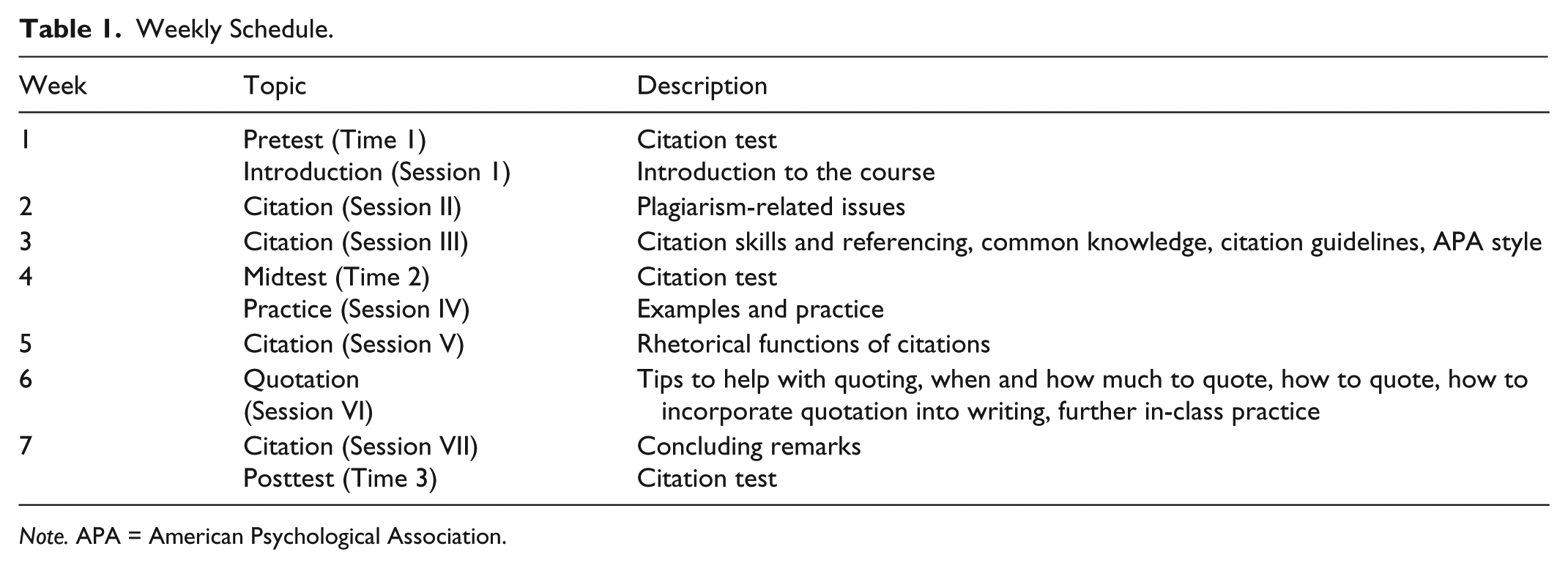
Note. APA = American Psychological Association.
Finally, the students perceived improvements in their self-confidence in writing, after the treatments was also surveyed. The participants of the study were asked a question about how much they thought the course was helpful for them to improve their confidence in writing. In fact, this was aimed to reveal some information about students’ conceptual perceptions about the effectiveness of the courses on students’ appropriate textual borrowing, in this academic context.
Participants
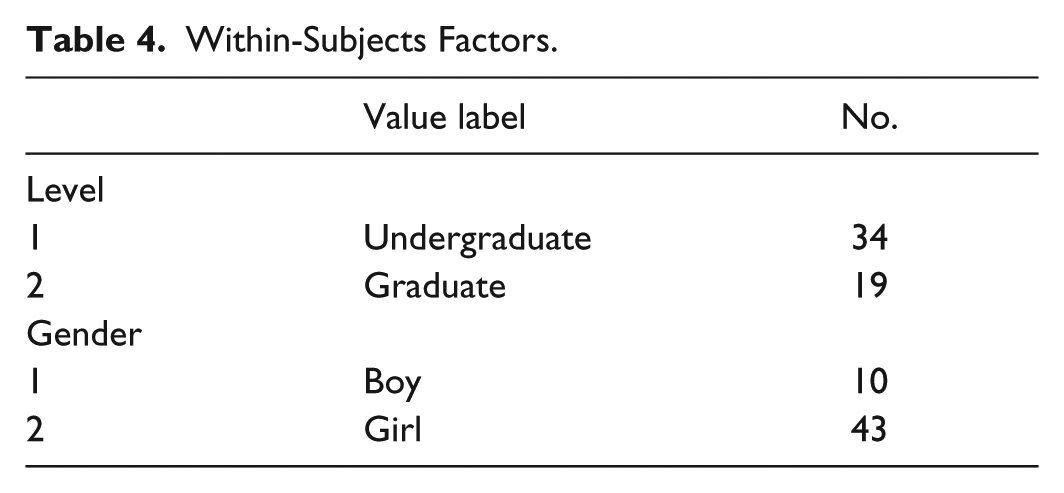
The data of this study were collected from 53 students (19 postgraduate and 34 undergraduate), who were studying in a spring term at the English department of Yazd University, Iran. The postgraduates were doing their studies for an MA degree in teaching English as a foreign language (TEFL). Due to the nature of their studies and assignments (e.g., publishable term papers), these students were more dealing with academic texts and more in need of academic writing skills. The undergraduates were selected from junior students of English language and literature who were taking their essay writing course and were still in their early stages of learning how to write research papers. All 53 students (43 females, 10 males) were from different cities of the country, aging from 21 to 30 years, learning English as their L2 in an EFL context.
Procedure
The course of treatment was conducted in 30 min per week for seven sessions. The aim was to teach correct citation rules and the different functions of citation. Based on the method used by Sharpe (2013), the researcher focused on many different issues including (a) how to introduce the source before quoting or paraphrasing and how to mark quotations, (b) how to apply different functions of citations in writing, (c) how to use verbs to report ideas, and (d) finally, how to mention the source appropriately. In addition to these issues, the syllabus also included some introductory definitions as well as general remarks about plagiarism-related issues, for example, cultural issues, penalties, plagiarism checker software, and so on. Course handouts in 40 pages (see sample classroom notes and exercises in Appendix A), adopted from different academic writing resources, were prepared and submitted to students during the treatment. The underlying reasons and benefits of adapting TOEFL (Test of English as a Foreign Language) exercises and other sources included assuring a measure of structure, consistency, and logical progression in the class; allowing the learners to review material or preview other lessons; meeting a learner’s needs or expectations of having something concrete to work from and taking home for further study; providing multiple resources, such as self-study exercises, illustrative examples, and so on; and providing the instructors with a comprehensive, step-by-step procedure.
As it was presented in Table 1, after an introduction to the course in which plagiarism-related issues and the importance of correct citation was emphasized, it was pointed out that citation is a means through which we give credit to the source. When we want to cite other people’s ideas, particularly when they are definitions, opinions, unique expressions, or research data, which are not considered as common knowledge, we need to introduce the source correctly. In this regard, a lot of information was provided for the students about the mechanics of citation, direct/indirect quotations, and referencing.
As an example, several phrases and clauses like “according to X,” “in the words of X,” “to quote X,” “as X puts it” and others were introduced, which can be used to cite appropriately the source before paraphrases or quotation marks.
Example 1. Original: Professor Brown (2001): “A mirage is an optical illusion in the atmosphere” (p. 22). Written quote: To quote/According to Professor Brown (2001), “A mirage is an optical illusion in the atmosphere” (p. 22).
Another part of the discussions during the course, for example, aimed to present information about indirect quotations. Using strong “verbs” to report the idea and convey the meaning was emphasized and practiced. The writers had to choose verbs that expressed certainty (e.g., argue, assert, conclude, confirm, etc.), neutrality (e.g., indicate, illustrate, mention, note, etc.), or doubt (e.g., suggest, propose, assume, believe, etc.) in their reports (Sharpe, 2013).
Example 2. Quotation: Computer entrepreneur Gates (2005) said, “The key for Microsoft has always been hiring very clever people” (p. 10). Neutral report: Computer entrepreneur Gates (2005) indicated that the important factor in Microsoft’s success had always been employing very smart people. National Museum of American History, January 11, 2005.
During the treatment, appropriate and proper citations were also presented and discussed. For example, the appropriate pattern to mention the source more than one time was highlighted in the presentations and handouts. The point is exemplified in the following citation:
Example 3. Source: Maria Montessori (2011) -proposed educational model -not transmission knowledge -free to develop -success child working independently The above parts can be rewritten as the following excerpt: “Montessori (2011) proposed an educational model that has become known as the Montessori Method. Montessori insisted that education should not be merely the transmission of knowledge but the freedom to develop as person. She felt her greatest success was achieved when a child began working independently” (p. 124).
A lot of information as well as many examples were also presented in the classroom discussions to raise students’ consciousness about different rhetorical functions of citation. It was emphasized that the best academic writings are judged according to their use of citation for a higher variety of rhetorical functions based on Petric (2007). Working examples were provided to show how citation is used for different functions including presenting the literature in the field, comparing the existing views, and supporting the writer’s view. The treatment also provided examples of correct citation and how to properly integrate someone else’s writings into a research paper from other sources, such as The Everyday Writer (Lunsford, 2005). In The Allyn and Bacon Guide to Writing (Ramage, Bean, & Johnson, 2014), a complete chapter is dedicated to using, citing, and documenting sources. An article was selected from that chapter, and students are asked to reflect on how the material could be incorporated in a research article. Furthermore, some of the activities asked the students to read an article and write an acceptable summary including appropriate quotations of the article.
Instruments
Three citation tests, adopted from TOEFL (iBT) guidebook (Sharpe, 2013), and survey questions inquiring about students’ confidence in writing (adopted from L. Zhang, Sheng, & Li, 2014) were used for the collection of the data. The tests were assigned to the learners on three occasions, to check for students’ achievements at different time intervals across the course: first, just prior to the beginning of the treatment (Time 1); in the middle of the course, after 3 weeks (Time 2); and 6 weeks later, toward the end of the treatment (Time 3).
Therefore, the items of each citation test were based on materials covered in the treatment. Based on the table of specifications of the course and to ensure content validity of the tests, in each 25-item test (see sample test items in Appendix B), five items referred to citing direct quotations and the use of phrases or clauses like “As X puts it” or “According to X.” Seven items of each test were related to the use of “doubtful, neutral, and certain” categories of reporting verbs in indirect quotations to convey the meanings that students wished to attribute to the idea. Seven items of the test covered the teaching material of the course that required the students to form a meaningful mini passage and note how to appropriately mention the source more than one time (see Example 3 above). The final six scores were considered for citation summary tasks in which the students were asked to provide a brief summary of a passage by attending to the original (primary and secondary) sources. The passage included different quotations from different authors. In these tasks, phrases conveying acknowledgment and source citations, such as “(Singer, 1983),” were scored for their presence/absence and for whether they observed citation conventions properly. Also, the effective citation strategies of students, before and after the treatment, were analyzed and scored according to their use of citation for a high variety of rhetorical functions and following the standard citation style. Therefore, the three tests were conducted based on (1-25) score system. Two independent raters rated the three citation tests to ensure interrater reliability of the tests results. High interrater agreement was found for ratings of the citation tests (k = .86).
The survey questions were adopted from the second part of questionnaire that originally was composed of three parts. Part 2 was composed of 12 items about the students’ perceptions of their improvement in different aspects of writing after taking the course. Four related items were chosen that were in line with the targets of the treatment in this study. Items in this part were rated on a 5-point Likert-type scale (1-strongly disagree, 2-mildly disagree, 3-neutral, 4-mildly agree, 5-strongly agree).
The survey questions were included in the third citation test to measure the students’ perceived level of confidence toward writing in academic contexts. The questions read as follows:
I am more confident in writing after this course.
I can write academically (academic writing conventions).
I develop research skills by writing the research paper.
This course helps me complete writing assignments of other subjects.
Classroom observation was made throughout the course to get more knowledge of how learners used citations in their source-based writings, or to generate explanations for some unusual phenomena occurring in the course.
Two independent raters rated six randomly chosen tests at first. An interrater reliability check on scoring students’ citation practices in these essay-type tests, based on six randomly chosen tests, yielded 90% interrater reliability on citation scores in the first six citation tests (Cohen’s kappa = .90).
The results of these three citation tests were analyzed using ANOVA and chi-square. The ANOVA analyses provide information about the differences between the students’ performances in different groups (postgraduate and undergraduate, male and female) and for the citation tests, at different time intervals: pretest (Time 1), midtest (Time 2), and posttest (Time 3). The chi-square analysis could furnish us with information about the differences between the students’ perceived growing confidence in source-based writing after the treatments.
Results
A Comparison of Students’ Citation Scores at Three Different Time Intervals
The analysis was conducted to reveal information about the first research question that aimed at exploring the effects of teaching correct citation rules and functions on postgraduate and undergraduate students’ academic writings. The descriptive statistics of the students’ performances and the results of one-way ANOVA comparing all 53 students’ performances at three citation tests (pretest, midtest, and posttest) are presented in Tables 2 and 3.
Descriptive Statistics of the Students’ Performances on the Three Citation Tests.

One-Way ANOVA Results of the Three Citation Tests.
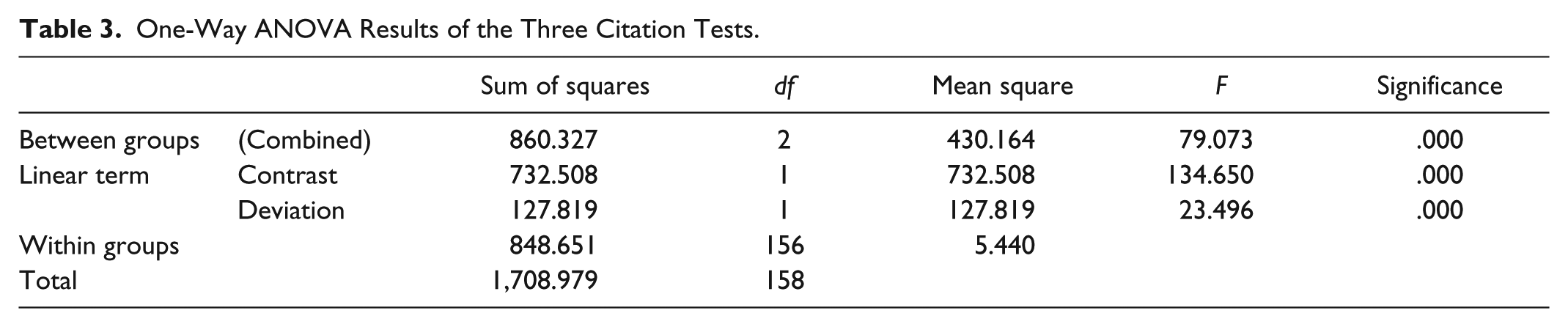
Table 2 shows that the students’ mean score (M = 15.65) at pretest (Time 1) is much lower than the mean scores at midtest (Time 2) and posttest (Time 3), which are 20.18 and 20.90, respectively, indicating students’ achievements in their citation skills in the course of treatments.
As it is shown in Table 3, the results of a comparison between all of the 53 students’ performances at the three citation tests show that their performances were significantly different (F = 79.07, df = 2) at p = .000, which is much lower than p < .05 set for the study. It shows that the treatment could significantly affect the students’ citation skills.
A Comparison of Students’ Performances at Different Gender and Level Groups
In a further more complete analysis, running the ANOVA with repeated measures, a comparison was drawn between different gender and different level groups of the students’ performances at the three tests (see Tables 4, 5, and 6). The results show that the treatments could considerably affect all the different groups, regardless of the gender and graduate levels (F = 56.29, df = 2) and p = .000, which is significant at p < .05. Therefore, there was no significant difference between the performances of different genders at three tasks, nor at the two levels (postgraduate and undergraduate) of the three tasks.
Within-Subjects Factors.
Between-Subjects Factors.

Comparison Between Different Gender and Level Groups (Tests of Within-Subjects Effects Measure).

As can be seen from Table 6, the difference between the effects of the treatment on improvement of citation skills of different levels (undergraduate/postgraduate) of the students is not significant (F = 1.93, df = 2) at p < .05, because probability level in this case is .149. This shows that the students’ education level as a moderating factor, though they might have different motivation levels in learning to write source-based assignments, has had no effects on their achievements from the treatment. The same result was revealed with regard to gender factor in the analysis. As it is shown in Table 6, the interaction between gender and treatment factor was not significant.
Analysis of the Students’ Answers to the Survey Questions About the Course Effects
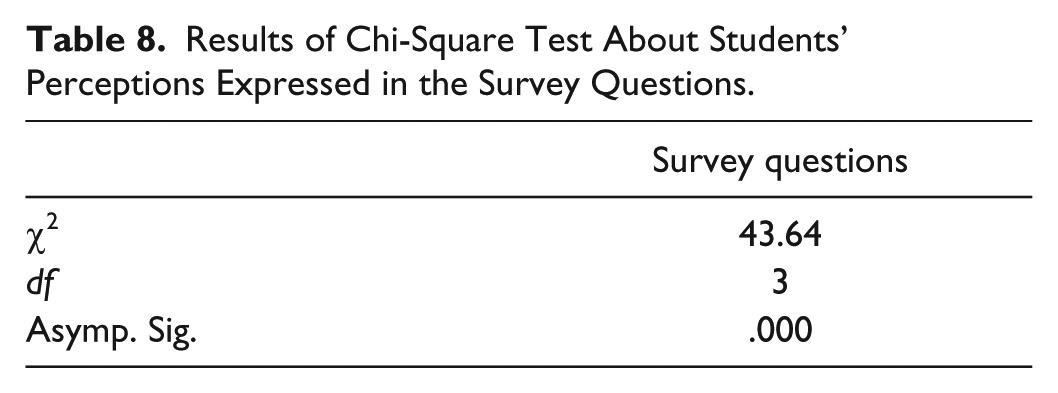
To obtain information about the last research question, chi-square test was run to analyze students’ answers to the question about their perceptions regarding the effectiveness of the course and how much it could succeed in increasing students’ self-confidence in their attempt to write good academic writings. The students, either positive or negative, generally had similar ideas about all of the questions.
As it can be seen from Tables 7 and 8, chi-square is 43.64, with df = 3, which is significant at p = .000. The significant result shows that while most of the students believed the course could successfully help them very well to improve their self-confidence in academic writing, few students thought that the course could not help them very much. None of the students had a negative view in answering this question, for nobody chose the choice strongly disagree among their answers. Not only did they believe they were more confident in writing after this course and that they could write academically (following academic writing conventions) but they also had developed research skills by writing the research paper. Moreover, most of the learners assumed that this course could help them complete writing assignments of other subjects as well.
Descriptive Statistics About Students’ Perceptions Expressed in the Survey Questions.

Results of Chi-Square Test About Students’ Perceptions Expressed in the Survey Questions.
Discussion
A comparison of the analytic scores given by the raters on each criterion used to assess the tests at pretest/posttest indicates an improvement in students’ skills in their writings from sources and higher levels of cautiousness about citations and attributions in their source-based writings. They followed correct rules and standards of citation, after the treatment at the second and third citation test times. It seems that a significant improvement was achieved over the 7 weeks of treatment. It may be that extensive practice in writing assignments was sufficient, during a period of almost one semester, to improve the learners’ knowledge of academic citation skills. These major findings are inconsistent with Moniz et al.’s (2008) research that had resulted in no significant differences in a student’s general understanding of plagiarism disregarding the teaching method. However, they are in line with Hammill’s (2009) findings that was based on class sessions with a pre- and post-assessment and revealed improvements in students’ practice of writing summaries of articles using proper citation. The positive results of an intervention program in this study were also consistent with Garber et al. (2017) and Smedley et al. (2015) studies.
Analysis of students’ performances at the citation pretest (Time 1) shows that most of the attributions or citations were integrated into the students summaries of the mini passages, without an accompanying reporting phrase or clause, and this was the case for both the postgraduate and undergraduate writers. This suggests that while most students did not feel it was necessary to cite the source text author every time they borrowed his or her language (i.e., each time they selected an excerpt for copying or paraphrase).
It is important to note, however, that while individual selections observed in this study were typically not accompanied by attribution at Time 1, most postgraduate and undergraduate writers mentioned the source text author at least once in their summaries at Time 2 and Time 3 after the treatment. In fact, many of the students appropriately attributed the sources and added reporting phrases or clauses to excerpts they had selected later in the course, when they were explicitly instructed about the mechanical rules and strategies of citation. It can be implied that these results may be due to the fact that the mere consciousness-raising activities conducted at the beginning sessions were sufficient enough to lead to the prime effects on the students’ performances. Generally speaking, students benefited from the course. Likewise, in L. Zhang et al.’s (2014) study, a large majority of students held the perception that they became more confident in writing and their writing competence had been improved academically. The instructions could draw the students’ attention to the importance of attending to the standards and rules of academic integrity, something that might have been disregarded by them beforehand. This result may support the assumption that many of the international students may commit plagiarism unintentionally, due to their lack of knowledge about standard citational acts or because of their different cultural perceptions about the conventional citing forms.
The finding that, despite great improvement in their scores in the midtests (Time 2) and posttests (Time 3), some of the citations were still incorrect at Time 3 was to some extent surprising considering the emphasis on correct citations in the course handouts. Pecorari (2006) suggests that low possibility of the learners’ receiving of sufficient feedback on their incorrect citations from their instructors may lead to a wrong assumption that their citations are correct. She suggests that learners should be provided with explicit feedback on inappropriate source use, and this was tried to be attended to in the course of treatments in this study. All in all, this study confirms the importance of citation as one of the distinguishing features of academic writing, which is consistent with other researchers’ ideas (e.g., Berkenkotter & Huckin, 1995; Dong, 1996; Hyland, 2000; Pecorari, 2006; Petric, 2007; Schuemann, 2008; Shi, 2008).
In addition, with respect to students’ performances in different groups, the findings suggest the girls performed slightly better, but not statistically significant, compared with the boys, which may be due to the unequal number of the boys and the girls in the population. Although the postgraduate students received slightly higher scores compared with the undergraduates, the differences were not statistically significant. In fact, in some of the tests, these two groups performed almost equally, which implies the important fact that there is an urgent need in higher education, to address these issues more seriously in the classrooms at different levels, that is, the EFL students genuinely need greater focus on the rules of textual borrowing and intertextuality to be included in their research curricula, not only at BA levels but also at MA levels where the students will considerably require to learn more about the conventions of academic writing, due to the nature of their practices.
Furthermore, the results confirm students’ perceived growing confidence in attempting academic writings. The fact that more than 80% of the EFL students, both undergraduate and postgraduate, considered the course as very helpful and effective in increasing their confidence in writing from the sources can considerably guide the academic writing course designers to detect which problematic areas are perceived as somehow more confusing for the learners and need to be highlighted in the writing courses. On the contrary, the problem even may lie in the fact that focusing on these citation rules and strategies and academic literacy on the whole have not been dealt with explicitly and well enough by the writing courses and instructors; hence leaving the EFL writers with confusion and no other choice except committing unintentional plagiarism.
In conclusion, this study mainly aimed at expanding our understanding of EFL students’ citation problems and strategies including both postgraduate and undergraduate writers. In particular, the study has tried to demonstrate that, though much of our attention has recently been focused on instances of copying in students’ work, copying without proper acknowledgment is still one of the most common errors that students, especially international writers, make when attempting to use within text citation. A continuum of a wide range of strategies, including major grammatical and lexical changes as well as citation skills can be offered to the students to help them in their writing assignments. The significant results of this study are drawn from explicit focus on instruction of citation rules and skills that can shed more lights on what the writing instructors can rely on more to help students avoid committing plagiarism in their writings.
Footnotes
Appendix A
Appendix B
Declaration of Conflicting Interests
The author(s) declared no potential conflicts of interest with respect to the research, authorship, and/or publication of this article.
Funding
The author(s) received no financial support for the research, authorship, and/or publication of this article.