




Abstract
The digital transformation has changed the working process of organizations, launching unprecedented ethical challenges for leaders which navigates emerging technologies, artificial intelligence, big data, and social media. The older and traditional ethical leadership frameworks require the adaptation to notify the facts such as algorithmic bias, data privacy, and digital inequality. The systematic literature review methodology has been employed to investigate the theoretical foundations of ethical leadership in the digital era, identify key challenges posed by digital technologies, and synthesize frameworks that inform leadership practice. A comprehensive literature review has been run by using multiple databases (Scopus, Web of Science, Google Scholar, Business Source Premier, IEEE Xplore), which covered the research publications from 2002 to 2024. The search strategy has followed systematic inclusion/exclusion criteria, resulting in 156 relevant articles for analysis. The review article identifies four critical aspects of digital ethical leadership, such as data stewardship and privacy governance, digital inclusion and accessibility, algorithmic fairness and bias mitigation, and transparency and accountability in semi-automated and automated decision-making. Cultural variations play a vital role in ethical frameworks, with Western emphasis on individual rights contrasting with Eastern collective responsibility approaches. In this research, different case study analyses have revealed that successful digital ethical leadership needs integration of traditional virtue-based approaches along with contemporary stakeholder theory and care ethics. Firms must generate comprehensive ethical frameworks that acknowledge cultural diversity while maintaining the consistent core principles. Leaders require enhanced competencies in technology governance, cross-cultural sensitivity, and stakeholder engagement to navigate digital ethical dilemmas effectively across different cultural contexts. Ethical leadership in the digital age demands a fundamental reconceptualization that combines classical ethical theories with contemporary digital challenges, emphasizing cultural adaptability and stakeholder-centered approaches.
Keywords
Introduction
Due to the digital revolution, today’s people live, work, and connect differently, and therefore, ethical leadership is central to the modern discourse around organizational and societal issues. Ethical leadership is a process of leading with integrity and fairness and taking responsibility for serving the interests (well-being) of stakeholders (Brown & Treviño, 2006). That takes a moral philosophical underpinning to decision-making that goes beyond ordinary leadership practices. As business operations, social dynamics, and global connectivity continue to evolve continuously through digital technologies, integrating ethical considerations at strategic and practical business levels is always a topical need.
It’s a time of the digital age, where artificial intelligence (AI), big data, blockchain, and the Internet of Things (IoT) mean unprecedented opportunities for innovation and growth. Now, organizations use these digital technologies to better optimize existing operations and individual customer experiences, as well as gain a competitive advantage. For all of us, these advancements were contributing hugely in bringing benefits big time, but big time in the negative sense too: from data privacy to algorithmic bias and everything in between, and so on; this is why ethical leadership is important in case of using digital technology in an organization. Understanding the implications of the Internet of Things and digital interconnection on what it means to be responsible ethically in the future, however, is forcing a rethink of traditional leadership models because these problems demand a more complex understanding of the concept than has traditionally been accepted (Titareva, 2021). Ethical leadership is important in the digital age. But as industries are being redefined and human experience is being reshaped by technological innovations, ethical oversight is urgently needed. Ethical leadership is essential for organizations in order not to destroy stakeholder trust, ruin reputations, or increase social inequalities instead. Conversely, ethical leaders can create a catalyst for change, encouraging the development of a culture founded in practical transparency, equity, and sustainability. All of these play a crucial role in ensuring that developing and existing technologies fit into a larger pattern of societal forward motion (Hegarty & Moccia, 2018).
Furthermore, ethical leadership in the digital age has no one industry or region. The principles are universally applicable and apply to problems that cross sectors and geographies. Facets of ethical management can be illustrated with examples such as how AI provides ethical use to industries like healthcare, finance, etc., education, and entertainment, to name a few. The same concerns over data privacy and cybersecurity affect organizations in developed and developing economies alike. The importance of universal ethical leadership is underscored by the complexity and interconnectedness of challenges that demand, and make sense of, new collaborations and sensitivities to foreign cultural standards.
Despite of having scholarly interest in both ethical leadership and digital transformation, current literature exhibits few critical gaps that limit our understanding of how leaders can navigate ethical challenges in digital contexts. First, existing studies largely focus on Western organizational contexts, with limited exploration of how cultural differences influence digital ethical frameworks and leadership practices (Gupta et al., 2024; Liu & Chen, 2023). This Western-centric bias restricts the generalizability of findings to global organizations operating across diverse cultural contexts.
Second, while different studies analyses individual digital technologies such as artificial intelligence, social media, or big data in isolation, few deliver comprehensive frameworks that integrate multiple digital technologies as well as their related ethical implications (Rodriguez et al., 2024). This fragmented approach disappoints to address the actual scenario that modern organizations deploy multiple digital technologies simultaneously, creating complex ethical challenges that require holistic leaders’ responses.
Third, there is a lack of the systematic analysis of literature regarding how traditional ethical leadership theories adapt to digital contexts, particularly regarding their implementation across different cultural settings (Thompson, 2024). While classical ethical frameworks deliver valuable foundations, their application to algorithmic decision-making, data privacy, and digital inequality requires theoretical development as well as empirical validation.
This systematic literature review point out these gaps through four primary objectives: (1) synthesize theoretical foundations of ethical leadership that are relevant to digital organizational contexts, (2) identify and categorize key ethical challenges created by digital technologies for contemporary leaders, (3) analyze cultural variations in digital ethical frameworks as well as their implications for leadership practice, and (4) integrate insights from case studies with theoretical perspectives to create practical guidance for leaders navigating digital ethical dilemmas through out different cultural contexts.
This review contributes to the literature by providing the first comprehensive, culturally-sensitive framework for ethical leadership in the digital age. Unlike previous reviews that focus on single technologies or cultural contexts, this study offers an integrated approach that addresses the complex, interconnected nature of digital ethical challenges while acknowledging cultural diversity in ethical reasoning and implementation.
However, digitalization has enlarged the field of and complexity of leadership responsibilities. Some examples: leaders have to handle ethical issues around the collection and use of personal data in ways consistent with global data protection regulations such as the General Data Protection Regulation (GDPR). Similarly, the leaders have to address the ethical considerations for AI decision-making, which is all well and good unless they’re only perpetuating the existing systemic bias and discrimination without addressing them. As the leadership landscape keeps getting more complicated with social media, there has been higher transparency and scrutiny of leaders, and hence leaders must reflect the essence of authenticity and accountability in their digital communications (Kelemen et al., 2023).
Seven sections are contained in this paper. In the third part, the theory of ethical leadership is investigated based on theoretical aspects of ethics and leadership that are relevant to the digital age. The last section focuses on problems of digitalization, that is, data privacy, AI ethics, and social dynamics of social media. In the section “Responsibilities of Ethical Leaders in Digital Contexts,” ethical leaders’ responsibilities are outlined along with practical guidance for building ethical practices within the digital context. Practical case studies of the use of ethical principles are shown in Section “Real-World Applications and Case Studies in Ethical Leadership.” The final section identifies future direction and recommendations from emerging challenges and opportunities for ethical leadership. Finally, this paper concludes with a summarization of key insights as well as a call to action for leaders to follow through with ethical strategies in their digital campaigns. Ethical leadership itself is now a challenge and an opportunity as the world is experiencing some of the most rapid technological disruptions in recent memory. Through a grasp and resolution of the moral dilemmas of an electronic age, leaders will set the course for a modern society that is equally and sustainably built.
Methodology
This systematic literature review methodology has been conducted by following established guidelines for comprehensive academic reviews to confirm the overall coverage of ethics in digital leadership.
Search Strategy and Data Collection Method
The data which is secondary in nature of this research has included Scopus, Web of Science, Google Scholar, Business Source Premier, IEEE Xplore, which are known for their multidisciplinary coverage with strong view in business.
Search Period: the search period for data in this research is January 2002 to December 2024 because this particular timeframe captures the actual evolution and wide range use of digital technologies in different section of business and their ethical implications. These include the beginning of early internet adoption in official purpose and the extending with current AI and digital transformation developments.
Inclusion and Exclusion Criteria
The inclusion criteria for the research encompass peer-reviewed articles focused on ethical leadership within organizations’ digital and technological contexts. The sources include empirical studies, theoretical papers, conceptual frameworks, and case studies published in reputable journals related to the research objectives. The exclusion criteria focused on eliminating articles that are not connected with research topic, duplicate publications or multiple versions of the same study and publications those are written in other language than English.
Selection Process and Results
The search process started with an initial retrieval of 347 articles from the selected databases. After finalizing a title and abstract screening, 156 articles were shortlisted for further use. After a full-text review and quality assessment, the number of articles came to 60 that met all inclusion criteria and were included in the final analysis.
Conceptual Framework
Digital Ethics: The issues related to ethics that examine moral aspects arising from digital technologies and its impact on employees, organizations, as well as society, including the considerations of privacy, transparency, fairness, and accountability in the digital practice of the organizations.
Ethical Leadership in Digital Context: The application and adaptation of traditional ethical leadership principles which include fairness, moral courage, care for others integrity, and to address the potential and actual challenges and opportunities created by emerging technologies, digital transformation, and AI in organizations.
Digital Transformation: The comprehensive integration of different digital technologies such as AI, big data analytics, social media, Internet of Things, and cloud computing, which are used in daily organizational operations, decision-making processes, culture, and fundamentally changing how organizations create and deliver the maximum value to their stakeholders.
Theoretical Foundations of Ethical Leadership
Ethical leadership rests upon moral principles and values, which guide decision-making, behavior, and relationships within the organizational and societal levels. The rapid advent of digital technology in today’s digital age has changed the landscape of leadership; therefore, one needs to know the theoretical underpinnings of ethical leadership. In the second segment, classical ethical theories as well as leadership models and the ethics of ethical leaders are discussed and form the foundation for treating the problems and obligations connected with ethical leadership in the age of digitalization.
Ethical Theories Relevant to Leadership
Ethical leadership theories are better informed by classical ethical theories. These are theories by which to assess the moral dimensions of leadership decisions and actions.
Virtue Ethics
Aristotle’s philosophy-based virtue ethics focuses on the virtues and character of the leader rather than outcomes or rules about how specific actions should take place (Morrell & Dahlmann, 2023). From this standpoint, ethical leadership is all about growing things like integrity, empathy and courage. As their name suggests, these virtues are praiseworthy, admired and boasted about by society, and relevant in the digital age to inspire leaders to build trust and authenticity despite the many technologies dominating cyberspace, such as artificial intelligence (AI) and social media platforms, that would challenge conventional ideals of transparency and accountability.
Deontology
Deontological ethics is thought of by Immanuel Kant, which is to say, ethics that is concerned with moral duties and principles—and not with creating the greatest good or least harm. Deontology leaders just want to do what is right and not worry about outcomes (Benlahcene et al., 2018). Through this perspective, issues such as data privacy become especially crucial since leaders are not permitted to jeopardize the people’s rights even if that disregard would also be of competitive advantage.
Consequentialism
It means consequentialism considers whether an action leads to good outcomes or bad outcomes. Leaders in this framework emphasize the positive results for stakeholders (Burnes & By, 2012). In the digital contexts, consequentialist approaches can apply to their decisions on the use of technology to promote innovation and social good. But the complexity of being able to predict long-term consequences—and especially in a rapidly changing digital system—underscores the importance of careful consideration and broad stakeholder engagement.
Care Ethics
Care ethics involves relationships, empathy, interconnectedness, faces, stories, assumptions, and particulars (Koggel & Orme, 2019). From this perspective, ethical leadership is defined as the development of supportive, mutually respectful workplaces. With only a fraction of employees working from the office or a physical workspace, care ethics emphasize that in the digital workplace, ensuring the well-being of employees and building an inclusive digital culture must be a priority.
When these theories are synthesized, they can be used by ethical leaders to develop a well-balanced way to work through the moral intricacies that are inherent in the digital age. Merging virtue ethics, deontology, consequentialism, and care ethics allows leaders to overcome multi-faceted ethical dilemmas posed by digital technologies by striking between principles, outcomes, and relationships.
Leadership Models
There are several leadership models to help make and behave ethically. In the digital age, these models are particularly relevant, given that leaders have even greater complexity and ambiguity to manage.
Transformational Leadership
Transformational leadership is the inspiring and motivating of followers towards attainable shared goals and an opportunity for personal and professional development. Someone who is transformational as a leader will have a vision, integrity to their principles, and commitment to ethical principles. In these kinds of digital contexts, transformational leaders can steer an organization through technological disruptions through the demonstration of innovation in the face of ethical standards. The leaders take the lead in making sure that any responsible AI development happens through initiatives with technological advancements aligned to values and principles. The following Figure 1 shows the common traits of transformational leaders.

Transformational leadership.
Servant Leadership
Servant leadership is when the need is put above the leaders and thereby is ready to serve employees, customers, and the general community (Eva et al., 2019). This model is very close to the model of care ethics since it has empathy and self-effacement of stakeholders. With the entry of the digital age more and more, servant leaders are indispensable in solving issues like digital inclusion and ethical use of data. Doing this will allow them to create sustainable and equitable digital ecosystems. The following Figure 2 shows the comparison between traditional leadership and servant leadership.
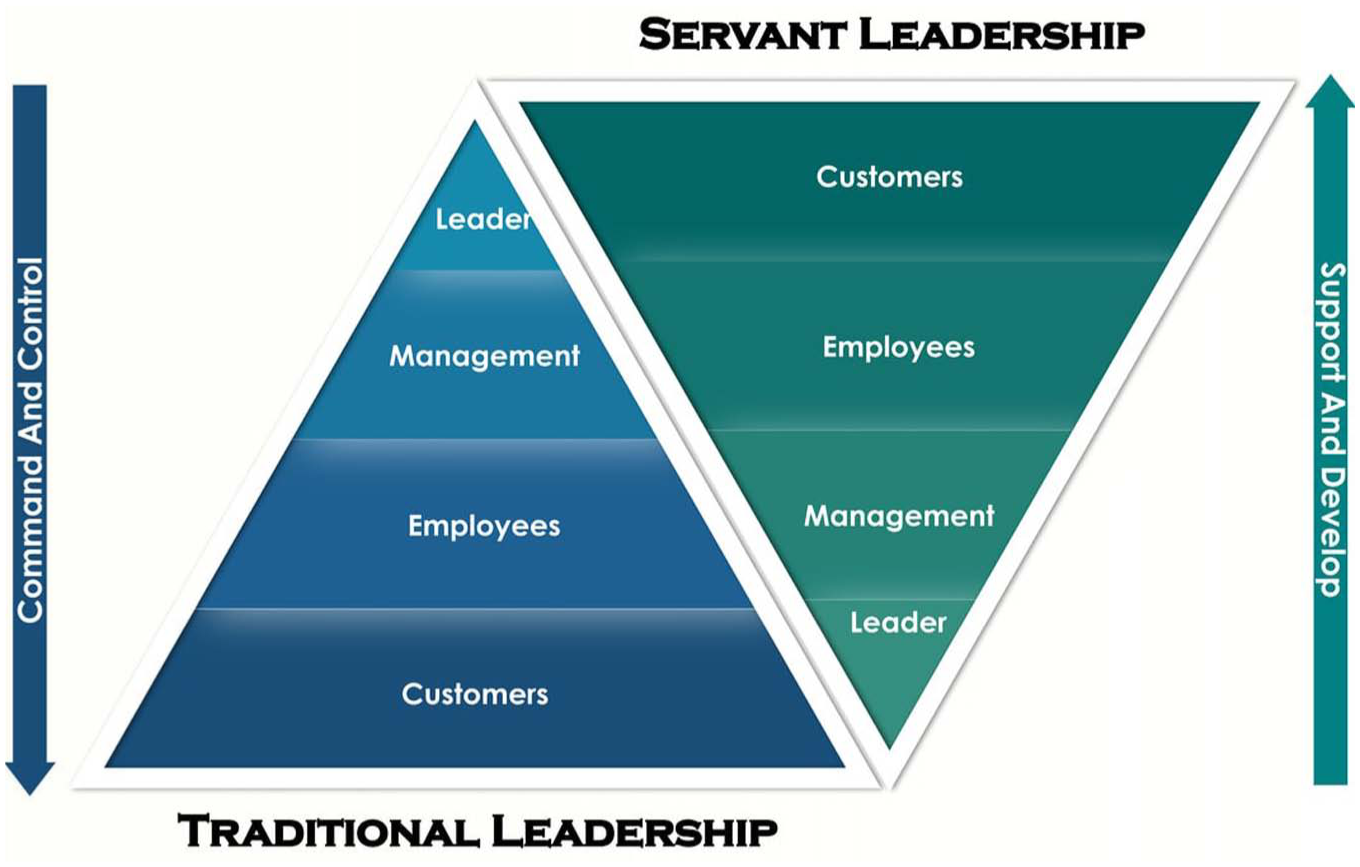
Servant leadership.
Authentic Leadership
Self-awareness, transparency, and one’s values consistently and authentically are what make an authentic leader. Realistic leaders communicate and encourage their employees to do the same (Caza & Jackson, 2011). Managing the reputational risks that come together with social media and public involvement is exactly what this model is about. Authentic leaders can be trusted to navigate the digital communication complexities with integrity and build trust with stakeholders.
Ethical Leadership Model
It can be argued that the ethical leadership model conveys creating ethics in an organizational setup. Unlike traditional models, this model has clear ethical standards in place, nurtures a culture of accountability, and leads by example. Under this framework, ethical leaders are role models who demonstrate integrity and fairness in what they do. In addition, they serve as a link from the ethical principles of digital organizational policy to embedding the ethical principles in organizational policy and following guidelines for responsible data usage and data operation. These models elucidate thematically the challenges arising from the digital age. Several servants, transformational, authentic, and ethical leadership models differ on which aspects of an ethical leadership practice to focus upon and from which ethical dimension to base one’s focus. Each provides the leader with a diverse set of tools from which to draw, depending on the situation presented.
Key Characteristics of Ethical Leaders
Ethical leadership is addressed not only by the theories, frameworks, and models adopted by the leaders but also by the personal features and behaviors they exhibit. The following characteristics are essential for ethical leadership in the digital age, which have also been portrayed through Figure 3 below:

Key characteristics of ethical leaders.
Integrity
Ethical leadership entails integrity, which means the act of a leader committed to honesty, fairness, and consistency (Crews, 2015). In the digital era, the integrity of the leaders generates trust among the stakeholders, especially when the trust zone is struggling with the complexities of the technology.
Empathy
Empathy allows leaders to understand and prioritize the needs and cares of stakeholders. Empathy is crucial to tackling digital exclusion, algorithmic bias, etc., in digital contexts because of how technology benefits every class in society.
Accountability
Ethical leaders are responsible for their actions and their decisions, have a sense of responsibility for their actions, and build a culture of responsibility within organizations (Den Hartog & Belschak, 2012). In digital ecosystems, it’s about finding ways to monitor and assess the ethical implications of technologies like AI and data analytics.
Vision
An organization must have a clear and compelling vision to help walk through the uncertainties of the digital age (Piccolo et al., 2010). Ethical leaders set a vision that leverages technological innovation to align such values with societal values that inspire stakeholders to practice ethically.
Courage
Leadership courage allows leaders to do some tough things and stand behind their values even when they’re being resisted. In the digital age, courage is needed to call out misconduct, such as the misuse of data or the exploitation of digital labor, and to help effect the changes that must be made (Lee & Cheng, 2010).
Adaptability
There is a need to be flexible and seasoned leaders to move fast with new challenges and opportunities that come along with rapid technological change (Özbağ, 2016). Ethical leaders possess an open mind and a willingness to learn and advance; their decisions remain aligned with existing and emerging ethical considerations.
Transparency
Transparency is involving those stakeholders in open communication in an honest manner and creating trust and accountability. In the digital space, transparency is very important in areas such as data privacy where data is to be used by some or stakeholders must have trust to do so (Guo, 2022). This can be achieved by developing these characteristics as ethical leaders who are capable of undermining the complexity of digital life to navigate through this time. These traits have a positive impact not only on individual ability to lead but also on the development of such ethical organizational cultures.
Ethical leadership provides theoretical foundations by which to stand, understand, and engage with the moral challenges of the coming digital age. Classical ethical theories of virtue ethics, deontology, consequentialism, and care ethics supply whatever regard to a way to cope with extreme situations. Leadership models of transformational, servant, authentic, and ethical leadership are offered with actionable strategies for furthering ethical behavior in organizations. Leaders are required to be equipped with the tools to build trust and foster innovation and those ethical standards in the ever-digitizing world, through integrity, empathy, accountability, vision, courage, adaptability, and transparency. More and more, the world of today demands not only mission and change but a digitally redefined ethic of ethical leadership. Leaders need to understand these theoretical foundations and act on them to understand how technology advances, so businesses do not just play catch-up but find ways where technology is somehow harnessed to the betterment of humankind.
Challenges of Ethical Leadership in the Digital Age
Innovation, growth, and enhanced connectivity are the opportunities of prospects in the digital era of ethical leadership, but it has also unforeseen ethical challenges (Allioui & Mourdi, 2023). For leaders, the difficulties of managing a digitally driven world require a delicate balance between leveraging technology for progress and ensuring responsible, fair, and sustainable practices (Kulkov et al., 2024). Ethical leadership in the digital age is defined by adherence to moral principles and the ability to navigate dilemmas that arise from digitalization’s rapid and often disruptive influence (Khan, 2016). This paper explores the key challenges that ethical leaders face in the digital age, including data privacy and security, artificial intelligence (AI) and automation, social media and public perception, globalization and cultural sensitivity, and work-life balance and employee well-being. These challenges are pictorially presented through Figure 4 below:

Challenges of ethical leadership in the digital age.
Data Privacy and Security
Data is one of the valuable assets that is referred to as new oil nowadays for any organization because it involves substantial economic value (Nolin, 2020). There are a lot of challenges to managing and protecting data in the present era. For enhancing decision-making, optimization of services, and competitive advantages, organizations hire a huge number of personal, behavioral, and transactional information (Niu et al., 2021). But this dependence on data raises critical ethical issues: How is this data obtained, maintained, and applied? Who possesses this information, and how is this consent safeguarded?
Obeying regulations is one of the main legal aspects ethical leaders must achieve and, at the same time, build trust and openness with different parties (Labadie & Legner, 2023).
Furthermore, the advancement of big data analytics and technology adds to the ethical considerations (Mittelstadt & Floridi, 2016). There is a need for clear policies for data governance, ensuring that the principles of fairness, accountability, and transparency are upheld (Boppana, 2023).
Artificial Intelligence and Automation
AI and automation continuously transform any industrial sector, which is the healthcare, education, manufacturing, and finance sectors. However, as the technology improves, ethical concerns become more pressing. One of the most challenging problems is the problem of algorithmic bias (Abulibdeh et al., 2024).
Since AI systems are developed on the basis of historical data, it is possible for them to have built within them societal bias (Shin, 2024). Take, for instance, hiring algorithms that create discrimination in certain demographic groups or the most common facial recognition systems, which are not only racially but also gender biased. As far as there is concern about fairness, inclusivity, and equity, ethical leaders must be seen to deploy such technologies (Cachat-Rosset & Klarsfeld, 2023).
An additional complication is the problem of transparency in AI systems that use such black boxes and make determinations that are often impervious (Smyth & Banks, 2012). We need leaders to push for explainable AI so that algorithms are understood by all stakeholders.
This situation negatively affects the level of trust towards AI technologies, and especially in high-impact sectors such as justice or finance, it undermines the level of accountability. We need leaders to push for explainable AI so that algorithms are understood by all stakeholders (Faynleyb, 2024).
Social Media and Public Perception
Leaders benefit significantly as they can share their vision with the world without any limitations while being as transparent as possible (Pearce, 2004). Despite that, the omnipresence of social media has, on the other hand, also posed a threat in terms of ethical behavior.
One of the most important challenges is the dissemination of misinformation. Social media networks provide a fertile ground for enhanced rapid dispersal of untruthful information, which may affect the level of trust in that society or cause potential instability in the governance structures of that country as well as disturb social integration. Leaders have to be very careful in this area, as this type of communication should be accurate and reasonable (Hargie et al., 2004). They have to fulfill the task of combating misinformation and developing media literacy within their organizations and employees and other stakeholders.
Moreover, the expectations and the pressure put on leaders to positively uphold a certain public persona have also become a vice. Social media results both in increased awareness of success and also of failure, and therefore leaders are often ridiculed and judged by the public (Alexander, 2014).
Globalization and Cultural Sensitivity
Globalization calls for leaders to promote completeness in their organizations and development environments that respect and utilize diversity (Gotsis & Grimani, 2016). This entails challenging unconscious prejudices, advancing fairness in chances, and building digital systems and solutions that are open to everyone.
Work-Life Balance and Employee Well-Being
Digital technologies have reduced the gap between work and life. They connect employees more readily, making stress easier (Ter Hoeven et al., 2016). Continuous availability is expected through email, chat applications, and remote working sites, causing huge ethical problems for leaders.
Ethical leadership implies understanding the necessity of work-life balance and taking proactive measures to ensure employee wellness (Schwepker Jr et al., 2021). It determines work boundaries and encourages the employees to switch off with appropriate mental health resources. Ethical leaders must address the unique issues raised by remote work, such as isolation and the near total lack of collaboration and professional development (Kniffin et al., 2021).
This has significantly altered the way ethical leadership has been done and created new avenues of challenges within the arena (Lemoine et al., 2019). Navigating data privacy, AI ethics, and impacts around the peripheries of social media, globalization, and work-life integration would still complete the full range of issues addressing ethical dilemmas that leaders would have to handle.
These would require ethical leadership that is adaptable, future-ready, and committed to ethical foundations. Through transparency, accountability, and empathy, leaders build trust, innovate, and make institutions and communities positively memorable for future generations (Haleem et al., 2024). Though the digital age brings interminable challenges, it actually has opened doors for ethical leaders to inspire change. Having defined the major challenges of ethical leadership in the digital age, the next step will consider the responsibilities placed on ethical leaders to move these ethical complexities (Sims & Brinkman, 2002). Knowing those issues raised in this paper prepares leaders better for the ethical work of guiding their organizations toward success that does not end.
Responsibilities of Ethical Leaders in Digital Contexts
Nowadays, ethical leadership also involves preventing ethical pitfalls; they proactively confront many complex challenges in fostering trust and then shaping responsible innovations (Cortellazzo et al., 2019). The rapidly emerging technologies and the increasing diversity of stakeholder expectations cause ethical leaders to be ever more burdened by the interconnectedness of global ecosystems and the constant change in these systems, all while the moral foundation remains untouched (Sterman, 2012). This part of the paper delves into the multilayered ethical leadership responsibilities in today’s digital age that include promoting digital literacy, ensuring accountability in digital decisions, encouraging ethical innovations, creating ethical organizational cultures, and collaborative engagement with stakeholders, and these responsibilities are portrayed through Figure 5 below.

Responsibilities of ethical leaders in digital contexts.
Promoting Digital Literacy
One of the most essential tasks of ethical leaders in this digital age is to inspire digital literacy among employees, stakeholders, and society (Cortellazzo et al., 2019). Technical efficiency without the understanding of the ethical dimensions of technology, responsible navigation of the digital world, and critical analysis of information credibility represent digital literacy.
Advancing Critical Thinking
Leaders can develop an atmosphere of inquiry that encourages employees to consider the effects of information technologies on society and whether they are aligned with the organization’s values (Chatterjee et al., 2015).
Empowering Stakeholders
Ethical leaders will find it necessary that they become part of such a broad societal responsibility by empowering external stakeholders, including customers and communities, with knowledge on the following topics: digital rights, online safety, and threats posed by emerging technologies (Maak & Pless, 2006). Thus, digital literacy will themselves furnish people to negotiate the digital environment while also strengthening the organization to develop ethical innovations and foster trust in its stakeholders.
Ensuring Accountability in Digital Decisions
Accountability is one of the crucial pillars in ethical leadership, and in this digital age, it demands careful oversight of decisions involving technology (Bamberger, 2009). Artificial intelligence, machine learning, and big data analytics increasingly assume critical functions in organizational decision-making. Hence, accountability needs to be established in the systems as well as in transparent leadership.
Transparency in Decision Making
Ethical leaders would need to further promote transparency with respect to how decisions are made, especially when such decisions are determined by algorithms or automated systems; in effect, they would have to explain their logic and deal with questions related to bias or other inaccuracies in decision making (Lepri et al., 2018).
Auditing and Monitoring
A leader has the duty to assure that auditing is conducted on the digital systems as well as correct ethical lapsations (Fong, 2023). For example, he ought to evaluate whether an algorithm perpetuates discrimination or if the usage of data adheres to privacy regulations.
Accountability does not only mean rectifying any number of mistakes made in the past; it also implies anticipating events that will occur in the future and preventing them from happening. Ethical leaders must find a balance between the promised benefits of technology while offsetting much of the potential harm to individuals and society.
Fostering Ethical Innovation
Innovation has marked the age of digital, yet it is often accompanied with ethical dilemmas that need great skill to avoid. Ethical leaders will play a role in the directions for innovation aligned to what is good for society rather than what leads to a quick profit (Pandza & Ellwood, 2013).
Embedding Ethics into the Innovation Process
Leadership should ensure that ethics are going to be part of each stage in the full life cycle of innovation—from ideas to design, deployment, and evaluation. In such a situation, an ethical leader can think of analyzing likely biases, unintended outcomes, and alignment with human rights principles when developing an AI application (Shneiderman, 2020).
Using All the Different Voices
Ethical innovation happens when everybody has a voice. Get people from different cultures, jobs, and experiences around the table—they set those names straight, increasing innovation industry-wide.
Finding the Balance Between Profit and Purpose
The ethical leader finds a balancing act between profitability and its impact on society. By stressing sustainability, equity, and social good, the leaders are actually showing that ethical innovation makes a lot more than sense (Fry & Egel, 2021). Creating ethical innovations also establishes a firm lead player among organizations as pioneers in responsible technology use, and the public reputation gets enhanced for the more entrenched trust among stakeholders.
Building Ethical Organizational Cultures
An ethical organizational culture is the foundation on which sustainable and responsible leadership rests in the digital age (Voegtlin et al., 2012). Leaders are to create environments where ethical principles are neither only articulated nor active practice.
Modeling Behavior
Ethical leaders need to show behavior such as demonstration of their integrity, transparency, and fairness at work. That signals employees in general what to expect in terms of ethical behavior across the organization (Den Hartog & De Hoogh, 2009).
Define Ethics
Leaders should set and then communicate very clear ethical guidelines by which some digital issues will have to include such issues as data security, online bullying, misinformation, and so forth. These standards need to be updated in tune with fast-shifting technologies and changing societal norms.
Create Ethical Dialogue
Open lines of communication are the reasons for ethical cultures. Those spaces should equip employees to raise ethical problems, report unethical behaviors, and think about the impact of using digital strategies.
Reward Ethical Behavior
An ethical leader will identify and reward the employee who lives the company values. It not only maintains the values, but it might also encourage others to emulate (Grojean et al., 2004).
Building ethical cultures requires sustained effort, but this hard work is necessary for realigning organizational practice with the social contract at a time when digitally delineated national conditions are able to change rapidly.
Stakeholder Engagement and Collaboration
We are now in the digital age, which has increased the number of stakeholders and ushered in engagement that spans many more groups with divergent and interlinked interests (Lunt & Livingstone, 2011). The primary focus for ethical leaders is on collaboration and approaches that create an emphasis on trust, mutual respect, and shared responsibility.
Decision-Making
Leaders should involve multiple stakeholders, including employees, customers, regulators, and communities in decision-making processes (Doh & Quigley, 2014). For example, if you own a business that develops data-driven products, collaborating with privacy activists and consumer organizations before the final release will be extra beneficial so that the final version of your product fits the values of society.
Promoting Ethical Frameworks
Harnessing their position, leaders can work towards pushing for policies and regulations that ensure ethical behavior across the digital space (Cortellazzo et al., 2019). The role digital technology plays in addressing these issues is vital, and you ask how we can support initiatives that promote digital literacy, equitable access to technology, and protecting vulnerable populations.
There are various roles for ethical leaders in the digital age; the roles are creating form and degree to scope—they go from endorsing digital literacy and accountability. In all digital decisions for innovation and ethical cultures while working in hand with relevant stakeholders (scope—the role is played by such leaders in shaping a future model where technological devices have human interests at their best). Ethical leadership is a static and dynamic exercise that has to deal with the ever-changing, fast-evolving challenges brought about by the present era. The principles and responsibilities of ethical leadership are described in the next paper, focusing on real-life applications and case studies of ethical leadership, where it highlighted the basis for understanding how theory translates into practice when it comes to meeting ethical dilemmas in the digital age.
Real-World Applications and Case Studies in Ethical Leadership
The conceptual basis and obligation of ethical leadership in the digital age turn up vividly in real-world applications. The following case studies help us to understand the way of managing ethical dilemmas. Additionally, these case studies give us knowledge of how leaders strike a balance between competing priorities and which strategies are suitable for organizations and fulfill public interest. Examples from various industries give a proper outline of the principles of ethical leadership, reason for their failures, and highlight their successes.
Case Study: Data Privacy and User Trust—The Facebook-Cambridge Analytica Scandal
Facebook and Cambridge Analytical Scandal 2018 are popular ethical failures in the digital age. Cambridge Analytica, a political consulting firm, had collected the personal data of thousands of Facebook users without the permission of users (Hinds et al., 2020). In the 2016 U.S. presidential election, this firm used public personal data for political campaigns.
Key Ethical Issues
Consent and Transparency: Using public personal information without consent violated ethical standards and proved Facebook’s lack of transparency.
Accountability: The ignorance of Facebook about the misuse of data shows Facebook’s poor commitment to accountability.
Public Trust: Public trust in social media platforms had been decreased by the Facebook incident. Additionally, it shows the public the risk of giving all personal data on various social media platforms.
Lessons for Ethical Leaders
Proactive Governance: By ensuring strong data governance frameworks, ethical leaders can maintain transparency and privacy and give importance to user consent.
Swift Action: Swift action can mitigate the harm to an organization’s reputation. So leaders should take proper ethical action without any delay.
Building Trust: Considering the situation of financial or competitive pressures, ethical leaders have to build trust along with ethical principles.
Case Study: Amazon AI Recruitment Tool—Theoretical Analysis
In 2018, Amazon had decided to not to continue an AI-powered recruitment tool after discovering it systematically discriminated against its female candidates. The algorithm, trained on historical hiring data from the predominantly male tech industry, learned to penalize resumes containing words associated with women, such as “women’s chess club captain” or graduates from women’s colleges. The system promptly taught itself that male candidates were preferable, reflecting the gender imbalance in Amazon’s technical workforce over the previous decade (Dastin, 2022).
Theoretical Framework Analysis
Rawlsian Justice Theory Application
From Rawls’ (1971) theory of justice, this case fundamentally violates the principle of fair equality of opportunity. Under the “veil of ignorance” test, rational agents who do not know their gender would not accept a hiring system that systematically disadvantages women. The algorithm perpetuated historical inequities rather than creating fair procedures, failing Rawls’ requirement that social institutions be designed to benefit the least advantaged members of society.
Transformational Leadership Analysis
The case demonstrates critical failures across multiple dimensions of Bass’s (1985) transformational leadership model:
- Intellectual Stimulation: Leaders failed to question the assumptions embedded in historical hiring data, accepting biased patterns as neutral inputs rather than recognizing them as reflections of past discrimination.
- Individualized Consideration: The AI system counted the job candidates as data points instead of unique individuals who have qualifications and potential contributions.
- Inspirational Motivation: The discriminatory outcomes had immediately contradicted Amazon’s publicly stated commitment to diversity and inclusion.
- Idealized Influence: Leadership failed here to model ethical behavior in using technology deployment, prioritizing efficiency over fairness.
Care Ethics Perspective
Applying Nel’s (2018) care ethics framework, the AI system disappointed to address the relational aspects of hiring decisions and the contextual factors that led to historical gender imbalances. Care ethics provides attention to particular relationships and contexts instead of abstract principles, suggesting that ethical hiring requires understanding individual circumstances and systemic barriers that affect various groups.
Cultural Considerations in Ethical Analysis
Western Liberal Democratic Framework
From a Western perspective emphasizing individual rights and equal opportunity, the bias demonstrates a clear violation of fundamental fairness principles and anti-discrimination laws. The priority is on procedural justice and ensuring equal treatment regardless of gender.
Confucian Relationship-Based Ethics
Eastern philosophical traditions, particularly Confucian ethics, focus on collective harmony and social responsibility. From this perspective, the AI bias disrupts organizational harmony by developing unfair advantages for some groups while disadvantaging others, violating leaders’ obligations to ensure technology serves community well-being.
Ubuntu Philosophy (African Ethics)
The Ubuntu principle of “I am because we are” shows that harming one group (women) ultimately create damages over the entire organizational community. This interconnectedness perspective needs leaders to consider how technological decisions affect all stakeholders.
Leadership Implications and Governance Requirements
Swift Governance Framework Requirements
Diverse Development Teams: Ensure AI development includes different perspectives from design through deployment, with particular attention to underrepresented groups who may be affected by algorithmic decisions.
Bias Auditing Processes: Develop regular algorithmic auditing with both internal and external validation which includes statistical testing for disparate impact and ongoing monitoring of outcomes across demographic groups.
Stakeholder Engagement: Include affected communities in system design as well as evaluation processes, moving beyond technical experts to incorporate voices of those who will be impacted by algorithmic decisions.
Transparency Mechanisms: Provide clear declaration on AI decision-making processes to candidates and internal stakeholders, enabling accountability and trust-building.
Cultural Adaptation Strategies
- Western Organizational Contexts: Emphasize compliance with anti-discrimination laws, individual rights protection, and procedural fairness in algorithmic design.
- Eastern Organizational Contexts: Frame initiatives as collective responsibility as well as organizational harmony preservation, emphasizing how fair AI systems benefit the entire community.
- Global Organizations: Develop mixed approaches that provides respect to local cultural values while maintaining core ethical principles across all operations.
Broader Applications and Lessons
This case illustrates several critical principles for digital ethical leadership:
Proactive Ethics Integration: Instead of retrofitting ethics into existing systems, leaders must embed ethical considerations from the initial design phase of any AI or algorithmic system.
Cultural Intelligence: Recognizing how different cultures perceive fairness, justice, and collective responsibility is essential for establishing ethical AI systems in global organizations.
Stakeholder Capitalism: Balancing efficiency gains with broader social responsibilities requires leaders to consider impacts beyond prompt organizational benefits.
Continuous Learning and Adaptation: Counting ethical challenges as opportunities for organizational growth and improvement rather than problems to be solved once and forgotten.
The Amazon case ultimately proves that ethical leadership in the digital age requires not just technical competence, but deep understanding of how technology intersects with human values, cultural differences, and social justice concerns.
Case Study: Ethical Leadership in Crisis—New Zealand Prime Minister Jacinda Ardern
In 2019, when the Christchurch mosque was attacked, New Zealand Prime Minister Jacinda Ardern became an example of an ethical leader. She gets appreciation all over the world for her instant response to the tragedy, which shows sympathy and motive to help the victims and their families (Wilson, 2025).
Key Ethical Actions
Empathy and Compassion: The well-being of the victims and their families are the first priority of Ardern during the crisis, which shows her empathy (Khorana, 2022).
Decisive Policy Changes: For public safety, the government takes strict gun control policy.
Global Collaboration: A global initiative was led by Ardern, which was named “Christchurch Call to Action.” The aim was to reduce online extremism.
Lessons for Ethical Leaders
Human-Centric Leadership: Ethical leaders focus mainly on the well-being of individuals and communities during crises.
Decisive Action: Reliability and trust of the public should be achieved through decisive action.
Global Responsibility: Global collaboration can help ethical leaders develop the capabilities of facing global challenges of the digital era.
Case Study: Corporate Sustainability: Patagonia’s Ethical Practices
By maintaining commitment to ethical and sustainable business practices, an outdoor apparel company named Patagonia became prominent. The ethical leadership of Patagonia became a benchmark for other organizations only because of their environmental responsibility (Ryan, 2020).
Key Ethical Practices
Sustainability: Repair rather than replace products is the main concept of Patagonia. They inspire customers by introducing environmentally friendly materials and encouraging investment in recycling initiatives.
Transparency: Transparency in supply chain practices and continuous improvement ensure corporate sustainability.
Advocacy: Ethical commitments in business practices are effectively ensured by Patagonia doing no harm to the environment.
Lessons for Ethical Leaders
Alignment with Values: Organizational strategies and core values are strictly maintained by ethical leaders even when they are in the situation of financial sacrifices.
Long-Term Vision: Ethical leaders must ensure commitment to future generations by investing in sustainable practices.
Transparency: Building trust and reliability among stakeholders can be possible by discussing the challenges and sharing progress.
Case Study: Ethical Challenges in Social Media Moderation—Twitter and Content Regulation
Ethical dilemmas are issues of concern for social media platforms nowadays. For example, recently Twitter has faced a problem of hate speech, misinformation, and online harassment. As a result, Twitter suspended some of the high-profile accounts. Fairness, consistency, and accountability of Twitter become questionable after using new moderation policies (Dhiman, 2023).
Key Ethical Issues
Freedom of Expression vs. Harm Reduction: The key ethical challenge of leaders is to maintain user freedom of speech and save them from harm.
Transparency: The accountability and fairness of Twitter become questionable due to the random use of their policies.
Global Contexts: Cultural diversity and legal and social norms should be considered while taking content moderation decisions.
Lessons for Ethical Leaders
Clear Guidelines: The consistency and fairness of the organization can be ensured through clear guidelines of decision-making by ethical leaders.
Stakeholder Engagement: Developing more effective ways of content regulation can engage diverse stakeholders.
Continuous Improvement: Regular revision and correction of policies by ethical leaders ensure continuous improvement of the organization and its stakeholders.
Key Takeaways from the Case Studies
Learning for ethical leadership in the digital age is the main focus of these case studies.
Proactive Governance: Assuming and maintaining ethical challenges of the digital era is possible by implementing a strong governance framework.
Transparency and Accountability: Being Opened up in communication and willingness to take necessary responsibility are required to create trust with stakeholders.
Empathy and Inclusivity: The well-being of individuals and communities as well as the stakeholders should be the first and foremost duty of ethical leaders.
Collaboration and Global Responsibility: Ethical challenges can be solved by applying global collaboration across various industries and sectors.
Long-Term Vision: A proper balance of short-term objectives with long-term sustainability is essential to achieve organizational goals and long-term vision.
The case studies show the significance of ethical leadership for managing the challenges of the digital era in the organizations. Ethical leaders should inherit the capabilities of managing crises moments among the employees, maintaining sustainability, and managing data privacy and for building a sustainable future for the organization.
Future Directions and Recommendations for Ethical Leadership in the Digital Age
Due to rapid technological changes in the digital age, it has brought new challenges and opportunities. Ethical leaders have to use different strategies for predicting future trends and solving complex ethical dilemmas for social well-being. Adaptability to new challenges, enhancing digital governance, and new innovation can lead the future direction of ethical leadership.
Embracing Responsible Innovation
Innovation, along with moral principles and commitment to greater well-being, should be the main aim of ethical leaders in the digital age.
Integrating Ethics into Design: Ethical standards should be followed for future innovation. During the development of technologies such as artificial intelligence (AI), block chain, and the Internet of Things (IoT) ethical leaders should consider ethical impact.
Encouraging Cross-Disciplinary Collaboration: Strong collaboration with various disciplines, including law, society, philosophy, and a combination of technical experts and ethicists, is required for the innovation and solution of ethical challenges.
Prioritizing Human-Centric Design: Human values like privacy, autonomy, and dignity should be given importance by the leaders while authorizing new technologies. For instance, human decision-making must not be replaced fully by AI systems.
Enhancing Inclusivity and Diversity
Ethical leaders are responsible for maintaining technological ecosystems, diversity, and equity within the organization as a protector.
Addressing the Digital Divide: Digital literacy campaigns, affordable internet policies, and equal distribution of technology by ethical leaders can help marginalized communities get easy access to digital tools and technology.
Promoting Workplace Diversity: By working with diversified teams within the organization, ethical leaders can reduce biases, boost creativity, reduce biases, and meet the demands of different user groups.
Designing Inclusive Technologies: Organizations as pioneers for positive change should give priority to equity, and leaders should consider the needs of disabled people, underprivileged groups and different cultural groups inclusively.
Strengthening Digital Governance and Accountability
Strong governance frameworks are required to reduce ethical risks, safeguarding accountability, and that makes digital technology more universal.
Developing Ethical Guidelines: Clear ethical strategies and guidelines for using digital technologies can ensure data secrecy and algorithmic clarity.
Collaborating with Regulators: To form ethical guidelines, leaders should collaborate with governments, industry bodies, and civil society. Collaboration and regulatory structures are important for balancing innovation with public interest.
Implementing Accountability Mechanisms: The ethical effect of digital mechanism and strategies such as independent audits, ethics committees should be measured to observe and ensure ethical standards that develops trust and justice of stakeholders.
Preparing for Emerging Ethical Challenges
In the era of speedy technological advancement, leaders have to face and deal with new ethical challenges.
AI and Autonomous Systems: Replacement of human labor, human decision-making, and maintaining accountability are the main problems that arise due to the use of AI and autonomous systems by ethical leaders. Moreover, AI should focus on the policies that ensure humankind’s best benefits.
Deep fakes and Misinformation: A huge threat to truth and public trust is created by misinformation and deep-fake technology. Leaders can work on this and emit this threat by promoting media literacy, ethical leaders can mitigate the threat faced by the various stakeholders of the organization.
Biotechnology and Digital Health: In ethical leadership, the leaders should pay attention on privacy, consent, and equity raise because of using biotechnology and digital health technologies like wearable devices and genetic editing. While using new innovations in the organization justly and fairly ethically, leaders should solve this problem with giving extra time and care.
Climate Change and Digital Sustainability: Sustainability is a vital issue in the modern business era. Energy-intensive data centers and electronic waste are the environmental impacts of using digital technologies in the organization which should be identified to maintain digital sustainability by the ethical leaders. Additionally, digital sustainability can be achieved by the leaders through investment the firms’ capital in green technologies.
Recommendations for Ethical Leadership Practices
Valuable recommendations for ethical leaders in the digital age are discussed in the following paper.
Continuous Learning and Adaptation: Leaders have to invest in continuous learning and need to be updated about technological developments, social requirements, and ethical arguments.
Fostering Ethical Cultures: A strong ethical culture within an organization can be developed by rewarding ethical behavior and openly discussing ethical dilemmas with the team.
Engaging Stakeholders: Collaboration and engagement of various stakeholders like employees, customers, communities, and regulators, are needed while taking ethical decisions.
Leveraging Technology for Good: For managing and dealing with global challenges like poverty, climate change, and inequality, leaders can use technology effectively.
Advocating for Ethical Standards: Ethical standards and policies have a great significance for promoting ethical practices—for example, equal access to technology and reducing harm to users.
The Role of Global Collaboration
Ethical challenges like data privacy, cyber security, and climate change can be solved by global collaboration.
Building International Partnerships: In order to develop shared solutions for global challenges, worldwide organizations, NGOs, and governments should work together, and this can build international partnerships.
Promoting Cross-cultural Understanding: Ethical leaders should follow universal principles to work with various cultures.
Supporting Global Initiatives: Commitment to ethical leadership on a global scale can be achieved by involving in global initiatives like Sustainable Development Goals. A sustainable digital future can be ensured by global collaboration that needs contributions from ethical leaders.
Rapid development of AI and different technologies creates both opportunities and challenges for ethical leaders. For achieving a better position in the digital age, leaders need commitment to moral principles and adaptability to new technology. Technology should serve humanity’s best interests, and dedicated ethical leaders can create a world that is equitable and sustainable.
Conclusion
Along with different ethical challenges, technological advancements in the business era have created many opportunities for innovation. Promoting the benefits of technology and reducing its risks is the most important challenge of ethical leadership in the digital age. The importance of technological advancement aligned with ethical leadership cannot be neglected because it ensures human interest, fairness, and equity. In the digital era, to control the business organization, ethical leadership is a strategic necessity, not a moral obligation to follow. For building trust among the employees and achieving sustainable success, leaders should take into account ethical considerations while taking decisions. The digital age presents unique challenges, including data privacy, AI bias, misinformation, and sustainability concerns. Leaders must develop certain qualities to predict challenges, adaptability to new challenges to maintain data privacy, reduce misinformation, and solve the issues of AI bias that will lead us to a sustainable future. Diversity and inclusiveness are necessary elements of ethical leadership. By developing equal access to technology and creating inclusive workplaces, leaders can mitigate disparities and ensure a sustainable future.
Limitations
Despite offering a comprehensive review, this study has certain limitations. First, the review was limited to peer-reviewed articles published in English from 2002 to 2024, which may have excluded relevant studies in other languages or unpublished sources. Second, while the selected databases (Scopus, Web of Science, Google Scholar, Business Source Premier, IEEE Xplore) provide broad coverage, they do not encompass all potential outlets. Third, as a secondary analysis, the findings depend on the scope and quality of existing research and cannot fully capture emerging technologies or empirically validate the frameworks proposed. Finally, although cultural differences were considered, the literature remains largely Western-centric, which restricts the generalizability of the findings across diverse global contexts.
Future research should therefore include cross-cultural empirical studies, incorporate non-English scholarship, and explore rapidly evolving technologies such as generative AI and digital health systems to refine and extend the proposed framework.
Footnotes
Acknowledgements
The authors express their appreciation to the Deanship of Scientific Research at King Khalid University, Saudi Arabia, for funding this work through a research group program under grant number RGP-2/684/46.

Ethical Considerations
There are no human participants in this article.
Funding
The authors disclosed receipt of the following financial support for the research, authorship, and/or publication of this article: The work was funded by Deanship of Scientific Research at King Khalid University, Saudi Arabia, through a research group program under grant number RGP-2/684/46.
Declaration of Conflicting Interests
The authors declared the following potential conflicts of interest with respect to the research, authorship, and/or publication of this article: The authors declare that they have no known competing financial interests or personal relationships that could have appeared to influence the work reported in this chapter. Generative AI and AI-assisted technologies have been used in the writing process to improve the readability and language of the work only. After using this tool, the authors reviewed and edited the content as needed and take full responsibility for the content of the publication.
Data Availability Statement
All data generated or analyzed during this study are included in this published article.