




Abstract
This study investigates customer perceptions and preferences regarding Korean restaurants in the United States through a machine-learning analysis of over 1.2 million Yelp reviews spanning two decades (2004–2024). It applies Herzberg’s two-factor theory to uncover key restaurant attributes and identify evolving factors influencing customer satisfaction and dissatisfaction. Topic modeling and topic network analyses reveal that, while specific Korean dishes are essential, service quality, operational efficiency, and cleanliness are also crucial in shaping customer experiences. This study highlights the distinction between drivers of satisfaction and dissatisfaction, with operational issues—such as service and billing management—leading to negative reviews. Simultaneously, cleanliness, attentive staff, and convenient dining options also contribute to positive feedback. Temporal analysis reveals significant shifts in customer interests, such as a growing focus on specific food items and service quality, alongside a declining emphasis on traditional aspects of the restaurant experience. Based on these findings, we recommend that restaurateurs enhance operational efficiency and maintain high service standards alongside culinary authenticity to improve customer satisfaction and sustain competitiveness in the dynamic U.S. dining market.
Plain Language Summary
This study investigates customer perceptions and preferences regarding Korean restaurants in the United States through a machine-learning analysis of over 1.2 million Yelp reviews spanning two decades (2004–2024). The research applies Herzberg’s two-factor theory to uncover key restaurant attributes and identify the evolving factors influencing customer satisfaction and dissatisfaction. Topic modeling and topic network analyses reveal that, while specific Korean dishes are essential, service quality, operational efficiency, and cleanliness are also crucial to shaping customer experiences. The study highlights the distinction between drivers of satisfaction and dissatisfaction, with operational issues like service and billing management leading to negative reviews. At the same time, cleanliness, attentive staff, and convenient dining options contribute to positive feedback. Temporal analysis uncovers significant shifts in customer interests, such as a growing focus on specific food items and service quality, alongside a declining emphasis on traditional aspects of the restaurant experience
Introduction
The growing global appeal of Korean culture, often referred to as the “Korean Wave” or Hallyu has had a notable impact on the dining scene in the United States (U.S.), with Korean cuisine taking center stage. Over the past year, the number of Korean restaurant locations in the U.S. has increased by 10% (Circana, 2024), reflecting the growing demand. In New York City, 11 Korean restaurants have earned Michelin stars, with one restaurant receiving a prestigious upgrade to three stars in the 2024 Michelin Guide for New York, Chicago, and Washington (Chosun Daily, 2024).
Korean restaurants abroad serve as cultural ambassadors, promoting Korea’s image and heritage. Ethnic restaurants, including Korean establishments, offer distinct food and cultural experiences that captivate diners through unfamiliar ingredients and preparation techniques. Exotic dining experiences, influenced by cultural differences, often evoke positive emotions and satisfaction. Research has demonstrated that favorable perceptions of ethnic culture significantly enhance diners’ satisfaction (Hwang et al., 2018).
Although cultural distinctiveness makes ethnic restaurants unique, the localization of offerings often determines their success (Oh & Kim, 2020). For many Americans, dining at ethnic restaurants represents more than just a culinary experience; it also serves as a gateway to engaging with different cultures. This connection illustrates how cultural curiosity often underpins the choice to dine at such establishments (Wood & Muñoz, 2007). Yelp.com has become an important medium allowing customers to text and rate their eating experiences using a five-star system. Previous studies have shown that online reviews can have an important effect on a restaurant’s success (Anderson & Magruder, 2012). Nonetheless, while most studies have employed review data to measure overall satisfaction, there has been a relatively limited examination of the particular aspects that contribute to consumer satisfaction or dissatisfaction (Bi et al., 2019; Li et al., 2020).
Herzberg’s (1966) two-factor theory offers a significant viewpoint for understanding the consumer experience, specifically within the context of Korean restaurants formed by cultural globalization. It differentiates between influences that lead to satisfaction and those that cause dissatisfaction, suggesting that they are managed independently. When applied to Korean dining establishments in the U.S., the growing global appeal of Korean culture—popularly known as Hallyu—introduces unique motivational drivers. The widespread interest in Korean entertainment, fashion, and lifestyle has amplified the symbolic and cultural value of dining at Korean restaurants (Chung et al., 2016). Thus, for many patrons, the act of eating Korean food is intertwined with a desire for novel experiences, cultural exploration, and a form of social expression (Jin, 2016). These motivators help explain why customers express satisfaction even in cases where food or services may not differ significantly from other ethnic cuisines. Conversely, dissatisfaction tends to stem from failures in basic service expectations, which is consistent with Herzberg’s identification of hygiene factors. This framework helps bridge cultural globalization and customer satisfaction by showing how global cultural currents such as Hallyu enhance the motivational dimensions of the dining experience, while still operating within the practical constraints of service delivery.
Despite the significance of ethnic restaurants in the food service industry, research on this topic remains limited (Ebster & Guist, 2005; Jang et al., 2011; Su, 2011). Existing studies have largely focused on customer motivations, factors influencing ethnic dining choices, and authenticity. Research specifically examining Korean restaurants and their attributes is scarce. Given the importance of glocalizing ethnic cuisines to enhance a nation’s cultural influence (Mak et al., 2012), this gap warrants attention. This study analyzes Yelp reviews of Korean restaurants in the U.S. to identify factors shaping customer experiences over the two decades from 2004 to 2024. The research objectives are to 1) identify themes in online reviews of Korean restaurants and their relative importance using topic modeling, 2) explore interconnections among themes through topic network analysis, 3) examine how satisfaction and dissatisfaction influence the frequency of topic mentions, and 4) analyze temporal trends to understand evolving customer perceptions.
Literature Review
Ethnic Food and Ethnic Restaurants
Ethnic cuisine generally refers to the traditional food of specific cultural or national groups that is embraced and consumed by individuals beyond those groups (D. Y. Kwon, 2015, p. 1). For many consumers, engaging with ethnic food is closely tied to their desire to explore new and unfamiliar experiences (Sean et al., 2025). Beyond the attraction of novel flavors, patrons are often drawn to the wider cultural context—an immersive, sometimes exotic atmosphere that enriches the overall dining experience (Ting et al., 2019). Exposure to these foods is often facilitated by global cultural means, such as music, film, and art—which reflect transnational cultural phenomena like the Korean Wave (Hwang et al., 2018). Consequently, authenticity in both taste and environment becomes a main aspect for patrons seeking significant cultural relationships (Salem et al., 2024).
Ethnic restaurants perform a dual role by not only providing meals but also acting as space for cultural exchange (Karaosmanoğlu, 2020). Particularly in urban areas where global diversity is more accessible, these sites accept customers to symbolically engage with other cultures through food (Reddy & van Dam, 2020). In response to the growing emphasis on cultural authenticity and multicultural combination, researchers have underscored the significance of “glocalization”—a strategic blending of ethnic identity with local cultural norms to rise acceptance and relatability (Xueling et al., 2024). Nonetheless, while previous studies have investigated individual perceptions (Hwang et al., 2018; Keller & Kostromitina, 2020), few have simultaneously examined satisfaction and dissatisfaction, leaving a gap in understanding the complexities of individual experiences. To measure customer satisfaction and dissatisfaction, previous studies have applied Herzberg’s two-factor theory to ethnic dining, involving cultural globalization trends (e.g., Hallyu).
Customer Satisfaction and Two-Factor Theory
The evaluation of customer satisfaction and dissatisfaction has gained attention in hospitality and tourism management (Li et al., 2020). Measuring customer satisfaction and dissatisfaction as opposing a linear spectrum overlooks their independent effects (Park et al., 2019). Previous studies have explored the distinct aspects that affect separately. Nevertheless, these factors do not frequently mirror each other and can differently influence consumer behaviors (e.g., loyalty or word-of-mouth; A. Chen et al., 2014; Ou & Sia, 2010).
Herzberg’s two-factor theory draws a critical distinction between motivators (satisfaction) and hygiene factors (dissatisfaction). The former involves elements such as cultural engagement, emotional resonance, or atmosphere. It enhances customer satisfaction but does not cause complaints. In contrast, hygiene factors (e.g., cleanliness, service efficiency, etc.) are fundamental expectations. Although they may not increase customer satisfaction when present, their absence leads to customer dissatisfaction. This can result in dissatisfaction.
Within the hospitality and tourism contexts, this theory has been applied to provide insights into how different types of experiences affect individuals’ reactions (Shin & Nicolau, 2022). In ethnic restaurants, particularly in Korean establishments, globalization has presented new motivators that enrich the dining experience in ways that traditional service quality metrics cannot fully capture. Therefore, Herzberg’s theory offers a robust conceptual framework for comprehending how cultural and operational factors jointly shape individual sentiments. Previous studies focused on user-generated online content to examine these dimensions more deeply.
Online Customer Reviews in the Hospitality Fields
Online reviews (e.g., Yelp) have become important tools for assessing restaurant performance and exploring customer perceptions. While relevant studies have emphasized hospitality and tourism contexts, few have examined how online reviews mirror satisfaction and dissatisfaction in restaurant contexts (Levy et al., 2013).
Online reviews offer more than numerical ratings—they provide qualitative insights into patron sentiment, engagement, and emotional responses (Sun et al., 2022; Xu, 2018). Previous studies have used online reviews to classify the determinants of satisfaction and dissatisfaction during dining experiences (Berezina et al., 2016; Xiang et al., 2015). Research has recognized the growing interest in emerging themes, such as the credibility of AI-driven platforms, manipulation of digital feedback, and the role of online brand advocacy (Boukis et al., 2024; Hu & Min, 2025; Mansoor et al., 2025).
When employing Herzberg’s theory to ethnic dining, researchers can employ an ideal data source for investigating online customer reviews. It enables scholars and practitioners to classify cultural and operational determinants that drive customer sentiments in real-world settings. Researchers are increasingly employing computational text analysis methods to extract significant patterns from this unstructured data.
Methods for Measuring Customer Satisfaction in the Hospitality Field
Within the hospitality and tourism context, gauging satisfaction relies on traditional quantitative techniques, such as surveys and interviews (Han & Hyun, 2018; Liu et al., 2018). However, these approaches can limit the depth and scope of insights into multicultural dining contexts. In addition, scholars have used topic modeling, content analysis, and text-link analysis to reveal nuanced sentiment patterns in online reviews (Bi et al., 2019; J. Chen et al., 2022).
In recent years, scholars have accepted Latent Dirichlet Allocation technique to classify themes and topics within large volumes of textual data (Yalcinkaya & Just, 2022). In particular, unlike traditional approaches (i.e., surveys), this method allows for unseen drivers of satisfaction (especially emotional and cultural factors). Scholars can track how individuals’ sentiments and perceptions change over time and across demographics when methods (e.g., temporal trend analysis or co-occurrence mapping) are combined.
Some studies still rely on previous qualitative and quantitative methods despite the development of statistical techniques (Gan et al., 2017; Mathayomchan & Taecharungroj, 2020). However, these traditional approaches do not capture the changing dynamics of current hospitality and tourism environments. This study provides a robust analytical framework in four major areas: ethnic food motivations, two-factor model of satisfaction, online review analysis, and computational text methods.
Methods
Data Collection
This study analyzed changes in consumer perceptions and thematic expressions of Korean restaurants in the U.S. based on Yelp reviews accumulated over the past 20 years (2004–2024). The analysis period coincided with the period when interest in Korean food increased along with the spread of the Korean Wave, making it possible to capture changes in consumer behavior patterns and expectations and conduct an in-depth analysis of long-term trends.
A Python web scraping tool was built based on BeautifulSoup and Selenium to collect in-depth information from Yelp review pages. Purposive sampling techniques were applied to reflect the regional and temporal diversity of customer experiences, and data collection was conducted primarily in the top 150 populous cities in the U.S. This study collected particularly rich review data centered on major metropolitan areas such as Los Angeles (71,464 reviews), New York (50,929 reviews), Las Vegas (33,303 reviews), San Francisco (32,826 reviews), San Diego (25,367 reviews), San Jose (20,904 reviews), Honolulu (18,828 reviews), Garden Grove (18,429 reviews), Santa Clara (17,605 reviews), and Chicago (17,354 reviews).
Given that Korean restaurants are mainly concentrated in large cities, cities with large populations were prioritized in the analysis (Circana, 2024). This approach can effectively reflect the spread of Korean restaurants in the U.S. and the regional distribution of consumption demand, while large cities tend to generate a larger number of online reviews, which is advantageous for securing data necessary for text-based topic modeling and long-term change analysis. To reduce the bias of focusing only on city centers in the analysis, the Yelp search system was set to include restaurants in suburbs and adjacent small cities outside the city, resulting in data collection from a total of 735 cities and regions, strengthening geographical representation.
To ensure the accuracy of the dataset, only reviews that explicitly mentioned “Korean” or “Korea” in restaurant descriptions on Yelp or TripAdvisor were included. Based on this criterion, reviews of non-Korean restaurants were excluded from the analysis, ensuring a clear focus on Korean food. Through this process, 1,228,596 reviews were obtained from 4,585 Korean restaurants.
In addition to basic restaurant-related information (e.g., restaurant name, address, and star rating), detailed information on each review—such as date, star rating, review content, and language of writing—was collected. Moreover, reviewer-related information—such as the total number of reviews written by the reviewer and the number of “likes” received—was collected to analyze the impact of the level of reviewer participation on public perception. Reviews were collected across a variety of price ranges, overall star ratings, and locations, preventing bias toward popular or high-end restaurants, thereby providing a more comprehensive view of Korean restaurants in the U.S.
Topic Modeling Analysis
Text Cleaning Before Topic Modeling
Before topic modeling, text cleaning was performed to increase the interpretability of text data and minimize noise to ensure the accuracy and meaning of the outputs. This preprocessing was implemented using Python, and the main libraries included NLTK for natural language processing, Pandas for data structuring, and Scikit-learn and spaCy for efficient text processing. First, raw text was divided into words through tokenization, and all tokens were converted into lowercase text to ensure consistency in capitalization. Subsequently, elements containing non-alphabetic characters such as numbers and symbols were removed to prevent meaningless information from affecting the analysis. In addition to the predefined list of stopwords, words that did not have much meaning in the analysis or appeared too frequently, such as “restaurant” and “food,” were also removed.
Furthermore, parts-of-speech tagging was applied to leave only nouns, verbs, and adjectives with main meaning; adverbs that made a low contribution to identifying the core topic were removed. Word pairs or trigrams (bigrams, trigrams) that frequently appeared together were extracted, and phrases such as “Korean BBQ” and “rice cake” were maintained to be analyzed as a single concept unit. Subsequently, words were normalized using lemmatization and stemming. Lemmatization organizes words into dictionary form—such as converting “running” to “run”—while stemming removes affixes to leave only the root of a word. This process contributed to increasing consistency between topics by integrating word transformations. Finally, words that appeared in less than two documents or excessively in more than 40% of the documents were removed. This procedure improves the quality of topic modeling by filtering out rare or overly common words, thus allowing us to focus on core words.
Model Diagnostics and Topic Model Selection
This study implemented R-based structural topic modeling (STM) to derive the hidden structure between topics in large-scale text data such as Yelp reviews. STM can simultaneously analyze the interaction between topics and metadata such as time, region, and platform, and is widely used in the social sciences. This advantage was leveraged in this study.
One of the most important processes in STM, which is based on unsupervised learning, involves setting an appropriate number of topics. Accordingly, in addition to statistical indicators, such as coherence score and held-out likelihood, a manual-based topic interpretation review was conducted, and the searchK function was used to compare the model fit across varying numbers of topics. Consequently, it was confirmed that 40 topics were most suitable for analysis and that they were at a level that could secure both the clarity of topic interpretation and the statistical stability of the model.
Quantitative indicators (e.g., coherence score and held-out likelihood) and qualitative evaluations were used to determine the optimal number of topics (Figure 1). To review the validity of the topics and assign labels, two researchers with PhDs in hospitality conducted an iterative manual review. First, the top words associated with each topic were identified, and 30 representative samples of reviews related to each topic were independently reviewed. This ensured that each topic was consistent and had clear thematic boundaries. Subsequently, the researchers discussed the interpretation results and refined the topic names through a consensus, thereby improving the clarity and validity of the topic structure.

Model diagnostics for topic number selection in topic modeling analysis.
STM Implementation and Topic Network
After determining the number of topics, topic modeling was performed using the stm function in R. In this process, the document-word matrix and the number of topics (40) were set as input values. After running the model, the labelTopics function was used to derive representative words to interpret the meaning inherent in each topic. Based on this, the meaning of the core topics was identified and appropriate labels were assigned.
To explore the correlation between topics, a topic-topic network was created using the topicCorr function in the stm package of R. This function calculates a correlation matrix between topics, thereby allowing the identification of closely related topics and their cluster structures. The igraph package in R was used for visualization, and the strength of the correlation between topics was expressed as the thickness of the edges in the network graph. This network analysis clearly identified the correlation between topics and clusters of topics that frequently appear together in reviews.
In addition, an optimal community detection algorithm using the cluster_optimal function of the graph package was applied to analyze the structural relationships between topics more precisely. This algorithm identifies groups (communities) of strongly connected topics within the topic network, and each community reflects a higher-level thematic framework or hierarchical structure. During the visualization process, colors were assigned to each community to allow an intuitive understanding of how various attributes of Korean restaurants, such as food quality, service, and atmosphere, are interconnected.
Utilizing Review-Level Metadata to Estimate Topic Weights
STM can estimate the influence of these variables on topic weights by incorporating review-level metadata (e.g., star rating and year of review) into the model. STM’s regression-based framework allows for analyzing how metadata, including covariates, affect topic weights, which is considered a particularly useful tool in social science text analysis (Roberts et al., 2014). In this study, two key metadata variables—star rating and year of review—were used for regression analysis of topics to understand how customer satisfaction and temporal dynamics affect topic weights in Korean restaurant reviews.
To analyze the role of customer satisfaction, this study divided reviews into satisfied (4–5 points) and dissatisfied groups (1–2 points) based on star ratings. Through this comparative analysis, we identified differences in the topics emphasized by the two groups and derived the strengths and areas for the improvement of Korean restaurants. The changing patterns of customer perceptions over time were analyzed with the review year as a covariate, and changes in topic weights from 2004 to 2024 were tracked. This study identified how topical patterns have changed over time and the differences in the evolution of topics between satisfied and dissatisfied customers.
Results
Overview of Key Topics About Korean Restaurant Dining Experiences
Through topic modeling analysis of online reviews of Korean restaurants in the U.S., core topics frequently mentioned by customers in relation to restaurant attributes and overall dining experiences were derived. Table 1 summarizes the labels assigned to each topic, representative words related to the topic, and their relative weight in the entire dataset. Topics with high proportions can be interpreted as important attributes in forming customer experiences, reflecting key elements of customer perceptions of Korean restaurants.
Summary of Key Topics Identified in the Topic Modeling Analysis of Online Reviews for Korean Restaurants in the U.S.

The most prominent topic, General Restaurant Service (T1), which includes terms like “service,”“server,”“waitress,”“check,” and “waiter,” held the highest topic proportion at 6.9%. This indicates that general service quality is critical to customer satisfaction and is frequently discussed in reviews. One relevant review stated, “The waitress was not welcoming at all. She checked up on us once and was checking up on the other tables around us multiple times. I hope the manager finds this review and speaks to her” (Reviewer ID: 98771, written in 2023, 1 Star, a restaurant in New York). This review reflects customer dissatisfaction when receiving inadequate attention from staff, emphasizing the importance of attentive services.
The second most-discussed topic, Billing and Service Issues (T2), with a topic proportion of 5.0%, reflected customer concerns related to billing practices and the transparency of payment processes. This theme underscores the importance of trust and clear communication in billing as pivotal to customer experience. For instance, one review stated, “Take a picture of your merchant receipt for your tip and total amount. They cheated and manipulated our receipt, making unauthorized changes on the printed receipt” (Reviewer ID: 719257, written in 2022, 1 Star, a restaurant in Elkins Park). This review highlights the fact that billing issues can severely affect trust and lead to negative feedback.
In addition, topics such as Grilled Meats and Cooking (T5) and Korean BBQ Experience (T6), with substantial topic proportions of 5.1% and 2.6%, respectively, highlighted specific culinary preferences toward meat menus. An example review of T5 noted, “A good place if you want a cheaper Korean barbeque place and aren’t looking for a quality cut of meat. This place will do its job to fill you up and get your meat cravings out of the way” (Reviewer ID: 725294, written in 2020, 3 Star, a restaurant in Alpine). This reflects the focus on meat quality and cooking techniques. An example review for T6 stated, “Wow…first time having Korean food in Jacksonville, Florida, and I’m impressed! The Bolgogi short ribs are so delicious” (Reviewer ID: 104231, written in 2018, 5 Star, a restaurant in Jacksonville). These topics illustrate the significance of cooking quality and specific dishes, such as the Korean BBQ in the dining experience, marking them as central to the authenticity and enjoyment of Korean cuisine.
Seating and Wait Times (T18), with a topic proportion of 5.5%, and Cleanliness and Staff Service (T39), with a topic proportion of 5.5%, were identified as crucial factors. Although these topics were relevant to service attributes, the sentiments differed. While T18 had many negative reviews, T39 was dominated by positive reviews. An example review of T18 stated, “We had to wait 40 minutes to get seated (which was fine since the store is small), but when we got seated, we had to wait another 30 minutes to receive our food” (Reviewer ID: 283086, written in 2022, 1 Star, a restaurant in Los Angeles). This reflects the customer frustration with long wait times. In contrast, an example review for T39 noted, “Great space, the staff is very attentive. The restaurant layout is inviting and comfortable” (Reviewer ID: 608166, written in 2023, 5 Star, a restaurant in Colorado Springs). This demonstrates how cleanliness and attentive service can create positive impressions and increase customer satisfaction.
Community Detection of the Topic Network in Online Reviews for Korean Restaurants
The topic network generated from topic modeling is shown in Figure 2. The diameter of this topic network is 8, which means that the longest path between any two topics is 8 steps. This suggests that the overall connectivity between topics is strong. The average path length is low at 0.280, indicating that most topics are closely connected and that the structure allows for efficient information diffusion. The density of the network is 0.083, which means that, although only approximately 8.3% of all possible connections exist, the information transfer efficiency is maintained due to the short path length. The mean degree centrality is 3.250, indicating that each topic is directly connected to approximately 3 other topics on average, indicating an appropriate level of interconnectivity. In addition, the mean betweenness centrality is 29.550, which shows that certain topics play a key role as gatekeepers of information flow within the network. As such, this network can be interpreted as a sparse but efficient structure with low density but short connection paths, in which major topics play a central role and maintain connectivity throughout the structure.

Community detection of topics in online reviews for Korean restaurants in the U.S.
Furthermore, community detection analysis of the topic network identified 13 communities, each representing a cluster of topics that share similar characteristics (Table 2). These communities represent distinct clusters of related topics within the overall network, offering insights into key themes and areas of focus in online reviews of Korean restaurants.
Summary of Communities Detected in Topic Network With Degree, Closeness, Betweenness, and Eigenvector Centrality.

Community 6 (Diverse Dining Options) is the largest, encompassing topics such as Asian Noodle Dishes (T8), Lunch Specials and Portions (T14), Authentic Korean Cuisine (T15), and Efficient Service and Dining (T40). This community reflects various dining experiences ranging from lunch specials to fusion foods. Efficient Service and Dining (T40) has exceptionally high centrality scores, indicating its critical role in connecting diverse topics and facilitating efficient information flow.
Community 7 (Korean Comfort Foods) focuses on traditional Korean comfort dishes: Rich and Comforting Broths (T9), Korean Tofu and Stew Dishes (T11), Traditional Korean Soups (T23), and Korean Bibimbap Varieties (T37). These topics emphasize the warmth and familiarity of traditional Korean cuisine, with Traditional Korean Soups (T23) and Seafood Specialties (T26) exhibiting high eigenvector centrality, making them particularly influential within this community.
Community 8 (Casual Dining and Snacks) captures five topics associated with casual dining and snack options: Crispy and Fried Foods (T10), Snacks and Fast Foods (T12), and Spicy Food Options (T16). This community focuses on comfort foods, with Spicy Food Options (T16), notable for its high betweenness centrality, acting as a key bridging topic within the network.
Community 1 (General Restaurant Services) includes four topics: General Restaurant Service (T1), Billing and Service Issues (T2), Seating and Wait Times (T18), and Kitchen Operations (T31). This community focuses on core aspects of restaurant operations, including seating logistics, billing procedures, and kitchen management. Topics such as Seating and Wait Times (T18) and Kitchen Operations (T31) have high centrality scores, indicating their importance in connecting other topics within the network.
Community 4 (Korean BBQ Varieties) includes four topics: Grilled Meats and Cooking (T5), Korean BBQ Experience (T6), Korean BBQ and Wraps (T24), and Korean BBQ and Hotpot Buffet (T35). This community revolves around various Korean BBQ experiences, ranging from grilled meats to wraps and hotpot buffets. With its high betweenness centrality, Korean BBQ and Wraps (T24) plays a key role in connecting topics within this community.
Community 5 (Bar and Dining Ambiance) includes three topics: Bar and Late-Night Drinks (T7), Dining Ambiance and Music (T32), and Cleanliness and Staff Service (T39). This community highlights the nighttime dining experience, focusing on ambiance, music, and cleanliness. Cleanliness and Staff Service (T39) demonstrates strong betweenness centrality, making it a crucial connector within this group.
Community 2 (Japanese and Seafood Offerings) includes two topics: Japanese Sushi and Rolls (T3) and Fresh Seafood Options (T27). This community focuses on specialized food items, particularly Japanese cuisine and fresh seafood. Due to its higher centrality, Fresh Seafood Options (T27) plays a key bridging role.
Communities 3 and 9–13 consist of single topics. Community 3 (Outdoor and Drive-Thru Services) is solely represented by Drive-Thru and Outdoor Seating (T4), emphasizing the convenience and accessibility of nontraditional dining services such as drive-thru options. Community 9 (Desserts and Sweets) contains only Desserts and Sweet Treats (T13), focusing on dessert offerings such as ice cream and pastries. Community 10 (Asian Market and Shopping) consists solely of Asian Market and Shopping (T30), highlighting the shopping experience in Asian markets and emphasizing the variety and availability of specialized food products. Community 11 (Asian Fusion Noodle Dishes) contains only Asian Fusion Noodle Dishes (T33), centering on fusion dishes that blend various Asian culinary traditions. Community 12 (Cost and Value Assessments) focuses on Price and Value Perception (T34), discussing customers’ perceptions of pricing and value in their dining experiences. Finally, Community 13 (Environmental Comfort) consists solely of Environmental Comfort (T38), which focuses on the physical dining environment, including factors such as temperature control and the restaurant’s overall atmosphere.
Comparison of Topic Prevalence by Customer Satisfaction/Dissatisfaction
A comparative analysis of topic prevalence based on customer satisfaction/dissatisfaction levels revealed several key differences in online discourses emphasized by satisfied versus dissatisfied customers, demonstrating areas of strength and improvement in Korean restaurants (Figure 3). In the figure, topics skewed to the left with negative values are more likely to be mentioned by customers with dissatisfied experiences who gave 1–2 stars, whereas topics skewed to the right with positive values are more frequently cited by customers with satisfied experiences who gave 4–5 stars.
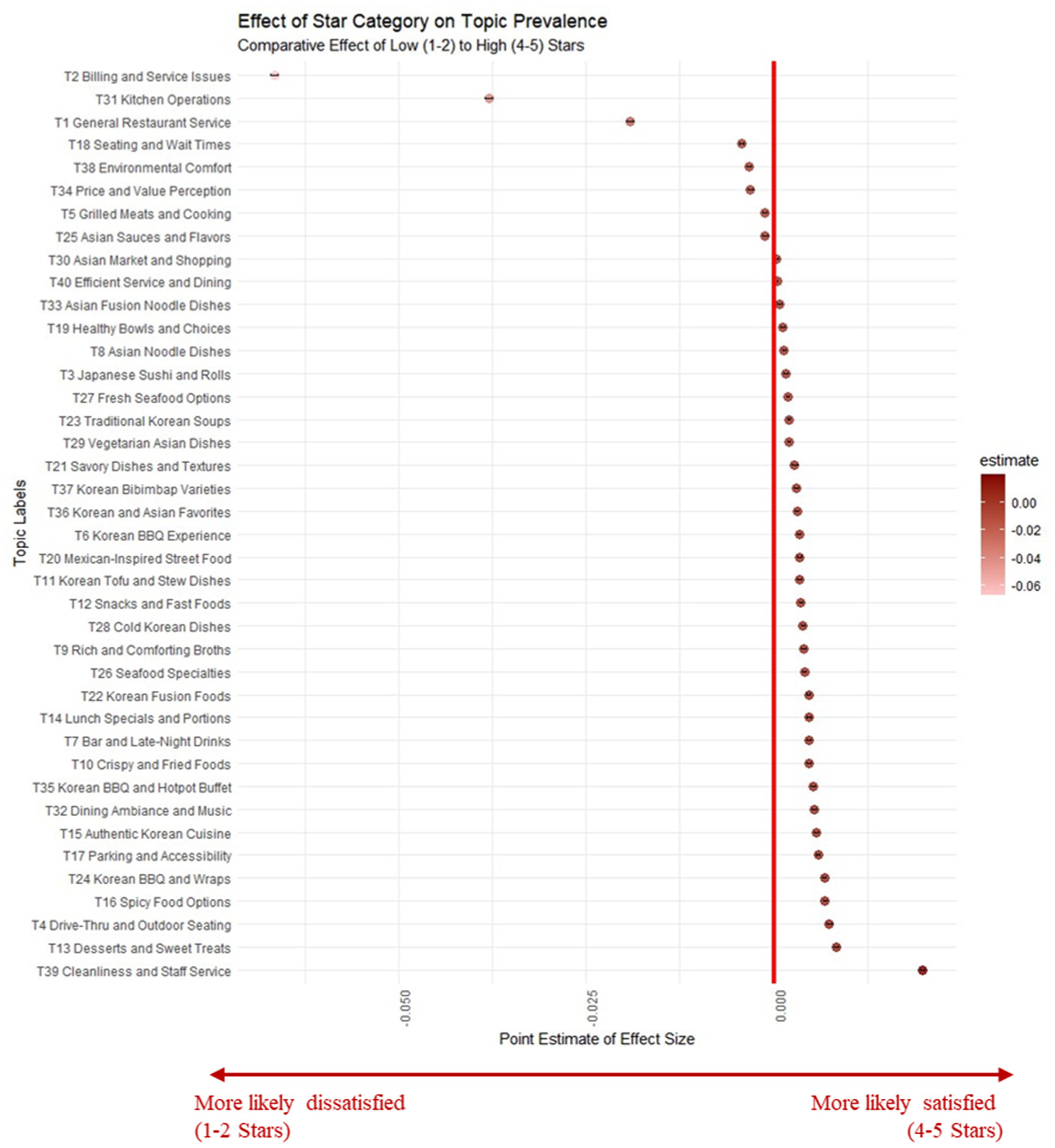
Comparative effect of satisfaction/dissatisfaction levels on topic prevalence in Korean restaurant reviews.
As a result of estimating the effects of customer satisfaction/dissatisfaction on topic prevalence, specific topics were found to be more likely mentioned by dissatisfied customers (1–2 stars). For example, T2 (Billing and Service Issues) exhibited the most significant effect size in negative reviews, indicating that concerns related to billing, charges, and payment discrepancies were considerable pain points for dissatisfied patrons. Similarly, T31 (Kitchen Operations) frequently appeared in low-rated reviews, suggesting that issues with internal operations such as delays, food preparation, or order handling contributed to customer dissatisfaction. T1 (General Restaurant Service) was another prominent topic, reflecting complaints about overall service quality, particularly staff interactions and service inefficiency.
By contrast, reviews from satisfied customers (4–5 stars) highlighted different issues and dining experiences. T39 (Cleanliness and Staff Service) was one of the most positively associated topics, indicating that customers who provided high ratings appreciated the cleanliness of the restaurant and staff attentiveness. T13 (Desserts and Sweet Treats) also showed a high effect size, with satisfied customers frequently mentioning their enjoyment of dessert offerings, such as ice cream and pastries, which enhanced their overall dining experience. In addition, T4 (Drive-Thru and Outdoor Seating) was often mentioned in positive reviews, suggesting that the availability and convenience of outdoor and drive-thru options were particularly appealing to customers who rated their experience highly.
Evolution of Topic Proportions Over Time
The topic prevalence over time was examined to understand the evolution of customers’ interests related to Korean restaurants over the past two decades (Figure 4). Topics such as T10 (Crispy and Fried Foods) and T13 (Desserts and Sweet Treats) showed an upward trend, indicating growing interest in these food items. Conversely, topics such as T1 (General Restaurant Service) and T6 (Korean BBQ Experience) gradually declined, suggesting that these aspects have become less salient in customer reviews. Other topics such as T15 (Authentic Korean Cuisine) and T9 (Rich and Comforting Broths) have remained relatively stable in their proportions, reflecting consistent customer interest in traditional and authentic Korean dishes.
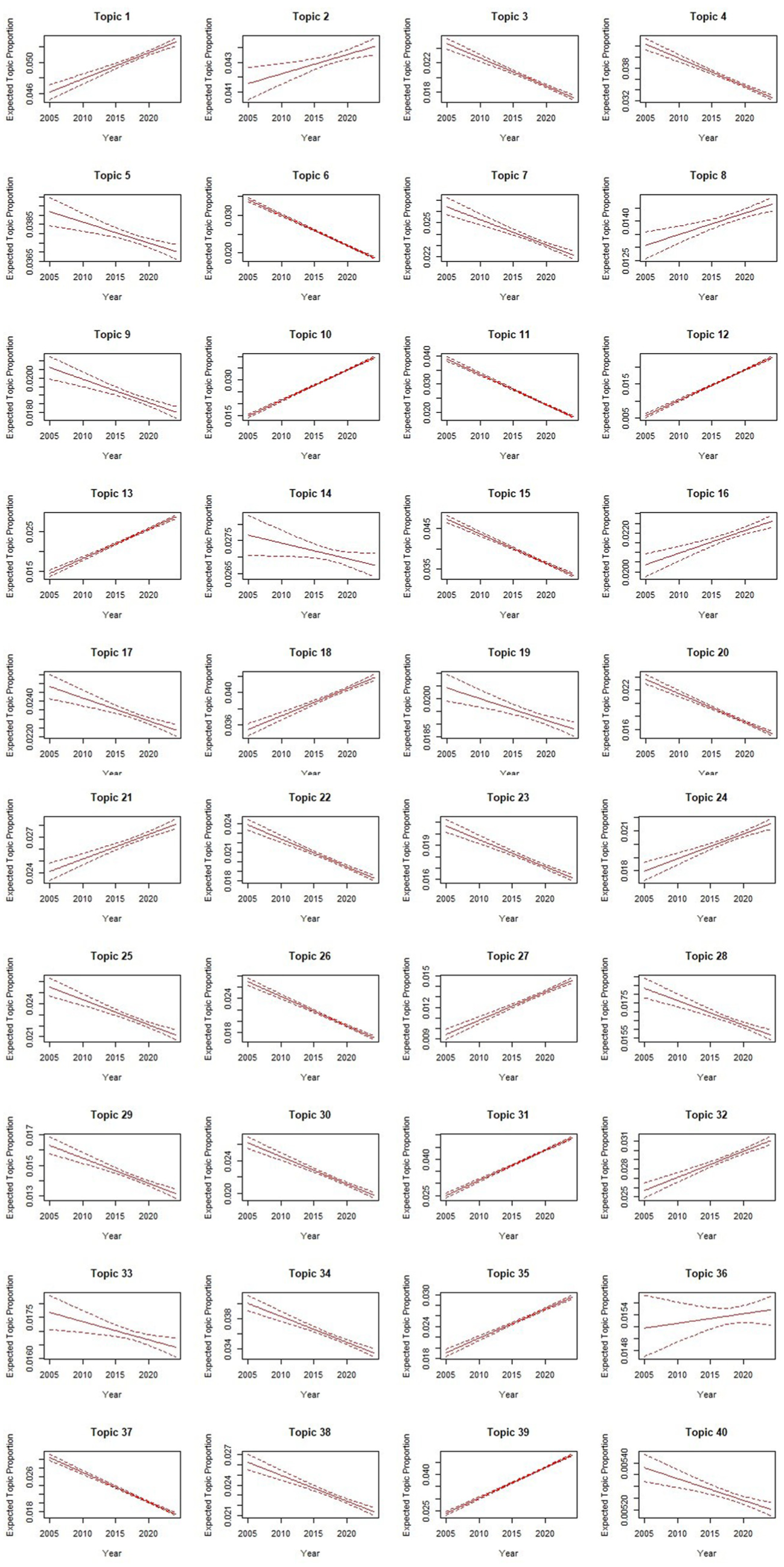
Evolution of topic proportions over time (2004–2024).
Furthermore, 40 topics were categorized based on their overall prominence (median topic proportion of 0.023) and temporal trends (increasing, stable, or declining), as shown in Table 3. This classification provides a valuable framework for understanding customers’ shifting priorities and preferences over time.
Topic Classification Based on Topic Proportion and Temporal Trends.

The analysis revealed mixed trends in the high-proportion category (topics with proportions equal to or greater than the median of 0.023). Increasing topics such as T10 (Crispy and Fried Foods), T39 (Cleanliness and Staff Service), and T25 (Asian Sauces and Flavors) suggest that these restaurant attributes have become increasingly important to customers, reflecting a growing focus on specific food items and the cleanliness of the dining environment. Conversely, declining topics, such as T1 (General Restaurant Service), T2 (Billing and Service Issues), T6 (Korean BBQ Experience), and T31 (Kitchen Operations), indicate a shift away from operational concerns that were once more central to customer reviews. Stable topics within the high-proportion category, such as T5 (Grilled Meats and Cooking), T15 (Authentic Korean Cuisine), and T14 (Lunch Specials and Portions), show consistent customer interest over time, suggesting that these attributes and experiences continue to be important to customers.
In the low-proportion category (topics with proportions below the median of 0.023), specific issues are experiencing significant growth despite their relatively low prevalence. For example, increasing topics such as T4 (Drive-Thru and Outdoor Seating), T13 (Desserts and Sweet Treats), and T22 (Korean Fusion Foods) highlight emerging trends that restaurants could focus on, primarily as customers express growing interest in convenience, dessert options, and fusion cuisine. Conversely, declining topics such as T3 (Japanese Sushi and Rolls), T16 (Spicy Food Options), and T26 (Seafood Specialties) are not only less prevalent but are also becoming even less central to customer reviews over time, indicating areas that may attract less attention and interest from customers. Meanwhile, stable topics in the low-proportion category, such as T9 (Rich and Comforting Broths), T12 (Snacks and Fast Foods), and T19 (Healthy Bowls and Choices), suggest that while these topics do not dominate customer discussions, they maintain a steady level of importance, continuing to meet specific customer expectations.
Discussions and Implications
As Korean culture continues to permeate global markets, this study provides critical insights into how the popularity of Korean culture has shaped customer perceptions, preferences, and restaurant landscapes in the U.S. Given this cultural background, this study aims to uncover key restaurant attributes from online reviews of customers who visited Korean restaurants in the U.S. and examines how customer perceptions and preferences have evolved. This study comprehensively analyzed customer feedback on Korean restaurants in the U.S. over the past 20 years using machine learning techniques based on over 1.2 million Yelp review data. Various dimensions of customer experience were derived through topic modeling and topic network analysis, and the results were consistent with those of previous studies that emphasized service quality and cleanliness as key factors in forming customer satisfaction in the restaurant industry. For example, Kim et al. (2021) reported that both objective cleanliness through the ATP test and perceived cleanliness (cleanliness perceived by customers) have a significant impact on customer evaluations. Martins et al. (2024) emphasized that environmental cleanliness plays an important role in improving not only the perception of food quality but also the overall dining experience.. These previous research results are consistent with the fact that “Cleanliness and Staff Service” (T39) was one of the most closely associated with customer satisfaction. This suggests that Korean restaurants should focus continuously on cleanliness management and strengthening employee service capabilities to increase customer satisfaction.
The importance of attentive staff response and overall service quality emphasized by “General Restaurant Service” (T1) and “Efficient Service and Dining” (T40) topics align with the findings from previous studies. For example, Samsa (2024) found that the physical environment and staff behavior in the fast-food restaurant context strongly influence customers’ emotions and revisit intentions. In addition, Kayumov et al. (2024) confirmed a close relationship between service quality and customer loyalty in a study targeting halal-based ethnic restaurants. These results suggest that operational attributes, such as cleanliness management, attentive staff response, and operational efficiency, are key factors driving customer satisfaction and loyalty in ethnic restaurants, including Korean restaurants.
Moreover, the findings of this study confirmed a clear distinction between the factors causing customer satisfaction and dissatisfaction. Dissatisfied reviews primarily focused on operational issues related to services, payments, and kitchen operations; these issues were more likely to lead to negative evaluations. Conversely, cleanliness, attentive staff responses, and convenient dining environments such as drive-throughs and outdoor seating were repeatedly mentioned in positive reviews and were found to significantly contribute to customer satisfaction. These results clearly suggest that actionable areas should be intensively managed to improve the customer experience in Korean restaurants.
As online customer reviews continue to influence restaurant reputation and consumer perception, recent studies have highlighted the importance of effectively managing this digital feedback ecosystem. For example, privacy concerns and AI transparency in the digital service environment (Hu & Min, 2025), the risks of customer intimidation and review manipulation (Boukis et al., 2024), and opportunities to promote positive customer advocacy through digital capabilities and brand image (Mansoor et al., 2025) are emerging as key issues. These insights highlight the importance of strategies for Korean restaurants to actively monitor and respond to online reviews to increase customer satisfaction and loyalty.
Theoretical Implications
The change in the proportion of topic prevalence based on customer review data analysis over 20 years demonstrated that customer interest and perception of Korean restaurants have changed significantly over time. In general, customer interests have changed dynamically, as interest in specific food items, service quality, and flavor has increased, while interest in operational elements and traditional attributes has gradually decreased. Although this study did not directly measure the impact of Hallyu on the growth or cultural diffusion of Korean restaurants, it demonstrated how consumer demand and perception have changed by analyzing time series trends from 2004 to 2024.
This study classified topics into high and low proportions based on trends over the past 20 years and described the changing patterns. This classification provides practical suggestions for restaurant managers to identify key areas requiring future marketing and improvement. By identifying areas in which customer interest is increasing, stable, or decreasing, restaurant operators can adjust menu composition, service provision, and space design to meet customer expectations, thereby strengthening market competitiveness and sustainability.
Traditionally, satisfaction has been measured directly through surveys (Han & Hyun, 2018). However, these methods are prone to consumer memory bias, exaggerated ratings, and delayed responses (J. Chen et al., 2022; W. Kwon, 2023). With the rise of e-commerce and social media, consumers are now generating a significant number of online reviews that are objective, authentic, and informative (T. Yang et al., 2023a, 2023b). Analyzing this big data can provide fresh perspectives on service attributes that are commonly explored in the hospitality sector (Zarezadeh et al., 2022). Moreover, consumer-generated reviews are more accessible, cost-effective, and efficient than surveys (Guo et al., 2017; M. Yang & Han, 2020). Few studies have applied this theory to analyze customer satisfaction with restaurant brands on online review platforms. By considering the factors that influence customer satisfaction and dissatisfaction, this study seeks to expand the application of this theory by providing a deeper understanding of customer satisfaction in the context of social media.
Importantly, this study differed from previous ones in that it attempted to apply Herzberg’s two-factor theory in the context of ethnic dining. The results showed that topics such as Cleanliness and Staff Service (T39) and Efficient Service and Dining (T40) serve as satisfiers that significantly increase customer satisfaction, but their absence does not necessarily lead to negative reviews. This is consistent with the findings of previous studies in the restaurant industry. For example, Bilgihan et al. (2018) reported that positive service experiences and pleasant atmospheres exceed customer expectations and lead to positive word-of-mouth. Shin and Nicolau (2022) found that staff service acts as a typical satisfier in winery experiences. They emphasized that excellent service greatly increases satisfaction, but its absence does not necessarily lead to strong dissatisfaction. Similarly, this study empirically confirmed that in culturally centered dining spaces such as Korean restaurants, excellence in cleanliness and attentive service creates satisfaction that exceeds basic expectations.
In contrast, Billing-Services Issues (T2) and General Restaurant Service (T1) conceptually align with dissatisfiers or hygiene factors, which are basic service elements that consumers assume are present and likely to react to their absence with dissatisfaction and negatively tainted reviews, which is consistent with earlier findings. For instance, Bilgihan et al. (2018) explicitly positioned slow service and unfriendly staff behaviors as key dissatisfiers—both operational failures—in restaurant settings, whereas Li et al. (2020) classified service quality and value-related issues as fundamental factors that lead to dissatisfaction when performance expectations are not fulfilled. Consistent with these perspectives, revelations of billing transparency issues and failures in general service provision can be considered as hygiene factors in the ethnic dining context, such that their absence or poor quality would lead to strong negative reactions from customers.
Finally, this study demonstrates how cultural content and fundamental service expectations influence ethnic restaurant customers’ evaluations (Youn, 2024). Using topic modeling of massive online review data, this research contributes to an empirical generalization of two-factor theory beyond applications in lodging (Li et al., 2020) or general restaurant settings (Bilgihan et al., 2018) to enhance the understanding of the interplay between satisfaction and dissatisfaction in culturally rich dining experiences.
Practical Implications
For restaurant managers who currently operate or plan to open Korean restaurants in the U.S., this study provides practical strategies to improve customer satisfaction and meet evolving consumer preferences. This study identifies key topics closely related to customer satisfaction and reveals key areas that cause positive and negative experiences, thereby providing specific elements that managers should manage carefully.
First, while the proportion of service quality- and payment-related issues decreases over time, they remain key factors in preventing negative customer experiences. Accordingly, restaurants need to adopt standardized billing practices and mandatory training for their staff for transparent billing, so that all employees can clearly explain the details of the billing and respond professionally to related inquiries. In addition, regular service quality checks should be conducted to identify and improve operational problems early, thereby preventing them from escalating into customer complaints.
Second, cleanliness and attentive employee responses are particularly strong satisfaction factors for customers who gave high star ratings. Establishing a systematic hygiene management protocol and creating an environment that intuitively conveys cleanliness, such as regular deep cleaning, providing hand sanitizers, and visualizing kitchen hygiene, are effective in forming positive perceptions. Furthermore, continuous education and feedback systems that strengthen employees’ customer service capabilities can induce positive reviews and contribute to securing customer loyalty.
Third, this study highlights topic trends that provide additional guidance for menu and service innovation. For instance, the rising prominence of issues related to fried foods, sauces, and outdoor seating options suggests that consumers are looking for convenience, variety, and unique flavors. Restaurants could consider developing new menu items that balance traditional Korean flavors with creative fusion concepts and investing in flexible seating configurations (e.g., outdoor patios, efficient takeouts, and drive-thru setups) to meet these evolving preferences.
Moreover, the results provide different insights into various types of Korean restaurants. Casual Korean restaurants can leverage the increasing trend of Korean fusion items, fried foods, and convenient dining formats to attract younger and more price-sensitive customers by emphasizing digital marketing, takeout options, and visually engaging menu presentations. Premium Korean restaurants should reinforce their focus on authenticity, exceptional service, and a refined dining atmosphere, and can use high-quality visual storytelling on their digital platforms to convey these brand values. Maintaining high standards of meat quality and grilling experience remains essential for Korean BBQ-focused restaurants.
Beyond being a customer-focused metric, satisfaction can serve as a broader evaluation tool for assessing restaurant performance. When integrated with internal data (e.g., operational KPIs and sales trends), satisfaction enables managers to gain a comprehensive understanding of the restaurant’s competitive standing in the market. Furthermore, for indirect stakeholders, such as online platforms, tourist sites, and governments, consumer satisfaction derived from big data can help them evaluate restaurant value more effectively and accurately, allowing them to provide more tailored services and establish stronger relationships with restaurants.
Limitations and Future Research
This study has some limitations. Although data collection covered 735 cities, the analysis may still be skewed toward larger metropolitan areas due to the higher volume of reviews in these regions, potentially underrepresenting smaller towns and limiting the generalizability of the findings across all geographic areas. Based on this limitation, future research should include a more geographically diverse dataset that provides greater representation of smaller towns and rural areas, allowing for a more balanced understanding of customer perceptions across different regions.
While this study provides a broad, longitudinal view of customer satisfaction with Korean restaurants across the U.S., future research could benefit from a more geographically focused approach. In addition, because this study conducted the analysis solely based on Yelp reviews, it is possible that it did not fully reflect the experiences of all customer groups. Future research should include data from other review platforms such as Google Reviews and TripAdvisor, or conduct surveys or interviews targeting customers who have visited Korean restaurants to gain a more precise and comprehensive understanding of customer experiences. Although this study analyzed long-term data spanning 20 years, it did not sufficiently consider the impact of external factors such as the COVID-19 pandemic, economic recession, and changes in food culture trends on customer behavior. These exogenous variables may have caused fluctuations in customer perceptions over time, which may not have been fully captured in this analysis. Therefore, future research should investigate the impact of these external environmental factors on changes in customer perceptions.
Footnotes

Funding
The authors disclosed receipt of the following financial support for the research, authorship, and publication of this article: Inha University provided financial support to conduct this study.
Declaration of Conflicting Interests
The authors declared no potential conflicts of interest with respect to the research, authorship, and/or publication of this article.
Data Availability Statement
Data sharing not applicable to this article as no datasets were generated or analyzed during the current study.