




Abstract
This study aimed to design and develop the Sustainable Development Goals Problem-Based Learning (SDGPBL) Strategy to enhance students’ motivation in learning mathematics and then adopted a quasi-experimental mixed method to test the effectiveness of the strategy. Totally 68 senior one students (32 for experimental group and 36 for control group) from a high school in Ningbo participated in this experiment and seven students were selected to participate in the semi-structured interview. The ARCS motivation questionnaire surveys were conducted among the experimental and control group students before and after the intervention. Descriptive statistics of mean, percentage, standard deviation (SD), one-sample t-test, and independent sample t-test by SPSS Statistics 29 were utilized for quantitative data analysis. Thematic analysis method was used to analyze the transcript obtained from the interview session. The findings showed that the experimental group students’ motivation in learning mathematics has been improved after implementing the SDGPBL strategy and attention, relevance, confidence, and satisfaction were the successful dimensions of motivation in learning mathematics during this study, which indicated that the SDGPBL strategy has been successfully designed and developed. Majority of the students had positive comments about their learning experiences while using the SDGPBL strategy as some of the 21st century learning pillars and 10Cs of the students were developed, which showed that the learning strategy really support and improve their level of engagement in mathematics classroom.
Keywords
Introduction
Motivation is a key factor in influencing how well students perform in mathematics (Karakis et al., 2016). Many researchers have examined motivation as a mediating element and stressed its importance in affecting mathematical achievement (S.-Y. Chen & Lin, 2020; Ning, 2020; Tran & Nguyen, 2021; Wong & Wong, 2021). When learners are motivated, they tend to concentrate more, perform better in mathematical activities, and show persistence even when tackling complex problems (Arroyo et al., 2014). The application of information technology was often emphasized to enhance students’ motivation in learning mathematics (Bright et al., 2024). It is imperative to ensure and sustain students’ motivation toward learning mathematics (Schukajlow et al., 2017). Placing emphasis on getting students to use their mathematical skills in everyday situations and nurturing a genuine personal interest in the subject has also been highlighted (Fuqoha et al., 2018). Students who engaged in practical applications were more likely to recognize the relevance of mathematics to their lives and showed higher willingness to learn (Schoenherr, 2024). Based on the importance of motivation to mathematics achievement, strategies that can ensure and sustain students motivated should be the focus of studies. Therefore, this study focuses on improving students’ motivation in learning mathematics by integrating real life situations into mathematics classes.
China has regularly achieved outstanding results in the 2018 Program for International Student Assessment (PISA) which included 600,000 participants from four Chinese provinces (Beijing, Shanghai, Jiangsu, and Zhejiang). China ranked first across all three subjects among 79 participating countries and educational systems (V. Strauss, 2019). However, the study conducted by Gokhale (2019) showed that strong PISA results do not necessarily translate into higher motivation. At present, there is a noticeable decline in enthusiasm for mathematics in China, with many students intentionally avoiding the subject (Ng, 2018; Y. Zhang et al., 2023). R. Zhang et al. (2023) investigated the motivational levels of senior high school students using data collected from 623 Chinese learners over 2 years. Their results showed a blend of intrinsic and extrinsic motivation, though overall levels remained limited. The prevailing examination-focused education system could potentially lead to a decrease in students’ motivation for learning, which sheds light on why Chinese students, while showcasing adept numeracy skills, might not excel in addressing intricate open-ended problems (J. Cai et al., 2020). Under the influence of the belief that mathematics has no practical utility in real life, some students perceive mathematics as irrelevant to practical everyday situations. The emphasis of Chinese teachers on fostering student motivation is evident in their recognition of the practical applications of mathematics, with some believing that learners’ interest will grow once they understand its practical value (Wang, 2022).
The discourse and formulation of sustainable development revealed that education is essential for sustainability (Mckeown et al., 2002). Education is widely recognized as a cornerstone of sustainability, with the concept of Education for Sustainable Development (ESD) adopted internationally by the United Nations (UN). The purpose of ESD is to equip learners with the capacity to make well-informed choices and take responsible actions that uphold environmental integrity, economic stability, and social justice for both current and future generations, while honoring cultural diversity (UNESCO, 2017). The UN has set forth an extensive framework comprising 17 Sustainable Development Goals (SDGs) to address sustainability challenges, encompassing efforts such as combating climate change, eradicating poverty, promoting quality education, fostering sustainable cities, eliminating hunger, ensuring gender equality, providing clean air and water, advancing renewable energy, and encouraging responsible consumption and production (Semiz & Baykal, 2020). ESD emphasizes critical thinking and encourages student-centered classrooms, aligning with modern educational trends in the post-industrial era (Fekih Zguir et al., 2021). It emphasizes connecting lessons to the situations that happened in the students’ real life, encouraging their active participation and critical thinking. By implementing these approaches, students become more engaged with their surroundings and are motivated to actively contribute to finding solutions for contemporary challenges (Griswold, 2017).
Although integrating ESD into school subjects is challenging, it is also an opportunity to promote school subjects (Zowada et al., 2021). The relationships between ESD and a variety of research agendas in mathematics education have been established by the studies (Alsina, 2022). Embedding ESD into mathematics lessons can foster mathematically meaningful learning, enabling students to apply mathematical knowledge to address real-life issues (Coles, 2023; Hamilton & Pfaff, 2014). By incorporating sustainability, the aim is to highlight the practical relevance of mathematics for learners, while also nurturing values and positive attitudes toward the subject (Lafuente-Lechuga et al., 2020). Learning resources should align with the competencies promoted through ESD, and problem-solving tasks should be designed in accordance with the SDGs. This approach ensures that the provided mathematical material becomes more relevant and beneficial for students, simultaneously enhancing teachers’ skills and creativity in designing problems that reflect real-life scenarios (Widiati & Juandi, 2019). Integrated mathematics learning ESD is not only linked to mathematical knowledge but also applies mathematical knowledge to address real-life challenges (Martin et al., 2019). According to the situation mentioned above, this study aims:
To design and develop Sustainable Development Goals Problem-Based Learning (SDGPBL) strategy that will enhance students’ motivation in learning mathematics.
To test the effectiveness of the SDGPBL strategy in enhancing students’ motivation in learning mathematics.
To explore the process that students get motivated in learning mathematics and experiences during SDGPBL strategy.
Theoretical Background
ARCS Motivation Model
A widely recognized framework for studying motivation in education is the ARCS model, which stands for attention, relevance, confidence, and satisfaction (Li & Keller, 2018; Zabala-Vargas et al., 2022). The ARCS model developed by Keller (1984) is built on four elements: attention, relevance, confidence, and satisfaction (see Figure 1). The four components significantly influence students’ motivation during the process of learning mathematics (Khakpour et al., 2016). The expectancy-value theory is the theoretical foundation of ARCS model (Keller, 1987). In addition to focusing on instructional design, the ARCS model functions as a means of evaluating how teaching materials impact learner motivation and has been successfully utilized for more than 40 years (Dinçer, 2020).

ARCS motivation model.
The aim of the attention component is to draw learners’ focus through a variety of instructional strategies and presentation formats (Izmirli & Izmirli, 2015). A practical way to keep students engaged in mathematics is to provide varied and creative approaches for presenting mathematical ideas, such as the use of computer software, multimedia resources, or group-based tasks, all of which help maintain students’ motivation (Novak, 2014). Teachers can enhance relevance by relating mathematics lessons to potential real-world applications in students’ futures (Izmirli & Izmirli, 2015).
Possible strategies include: (1) creating links between the mathematics curriculum and real-life situations, (2) meeting the educational needs of individual learners, (3) connecting current topics with future applications, (4) clearly stating learning objectives, (5) encouraging teamwork, and (6) giving learners personalized guidance (Milman & Wessmiller, 2016). Students’ confidence is tied to their ability to begin and successfully complete mathematical activities, which involves taking personal responsibility and developing self-efficacy (Hodges & Kim, 2013). Highlighting students’ skills and offering chances to apply them, as well as present their work, fosters pride in their achievements (Milman & Wessmiller, 2016). Satisfaction relates to how learners perceive the mathematical tasks they have accomplished.
Students often take pride in completing a mathematics task, and this pride naturally brings them a sense of personal satisfaction (Izmirli & Izmirli, 2015; Keller, 2009).
The ARCS model has been used in different ways to examine whether it improves learning motivation in recent years, and the results were proved to be encouraging (Chang & Chen, 2015). Many scholars have developed questionnaires based on the ARCS model to investigate students’ motivation in mathematics learning, and this approach has shown to be a reliable tool for evaluation (Bakar et al., 2010; Hsu, 2020; Wong & Wong, 2021). Therefore, this study chooses to use the ARCS-based questionnaire to investigate students’ motivation in learning mathematics.
Instructional-Learning Model Applying Problem-Based Learning Enabled by ICTs
Problem-based learning (PBL) approaches are designed to bridge the gap between theoretical concepts and their application in real-life contexts (Dreifuss-Serrano & Herrera, 2022). In the PBL setting, teachers guide students to tackle problems rooted in everyday situations, prompting them to analyze the scenario, identify the challenge, and work toward a solution (Amalia et al., 2017). While PBL enables students to connect real-life knowledge with required syllabus content, they may struggle to link it to prior knowledge (Botty et al., 2016). Research had consistently shown that PBL fosters mathematical problem-solving skills, mathematical reasoning, and communication skills more effectively than conventional teaching methods (Amalia et al., 2017; Napitupulu et al., 2016; Suparman et al., 2021). Motivation is another crucial factor influencing the success of PBL for that PBL positively impacts students’ motivation and collaborative learning (Hasrawati et al., 2020; Linda et al., 2018).
Nowadays, there exists a widespread consensus on the pervasive integration of information and communication technologies (ICTs) within the realm of education. Educational professionals and learners face a major challenge in narrowing the gap between the knowledge and skills offered by today’s educational systems and those needed to ensure individuals’ future well-being in an emerging knowledge-driven society (Makrakis & Kostoulas-Makrakis, 2017). The ESD was significantly impacted by the development in ICT (Al-Rahmi et al., 2020). Through the use of ICT-based infrastructure in technology-supported learning, it becomes possible to promote effective and sustainable educational practices via ICT tools and processes (Robinson et al., 2008). ICTs play an important role in people’s everyday lives and these tools are designed to facilitate the advancement of a sustainable future by addressing issues such as poverty reduction, enhancement of healthcare and education systems, and an overall enhancement in the quality of existence for a substantial number of individuals (Fernández-Portillo et al., 2019).
Makrakis and Kostoulas-Makrakis (2017) argued that the traditional 4Cs framework—communication, collaboration, creativity, and critical thinking—was insufficient and proposed an expanded 10Cs model. This broader model incorporates elements such as critical consciousness, connectivity, reflective thinking, shared responsibility, intercultural awareness, and knowledge construction, taking into account the sustainability crisis and the growing role of ICTs as tools for transformative learning. They stressed the need to progress from the 4Cs to the 10Cs in a time marked by rapid technological growth, the widespread use of ICTs, and the expansion of human knowledge, while tackling urgent sustainability challenges that pose risks to humanity’s future (Figure 2).

ICTs as enabling tools for the 10Cs.
The sustainability crisis encompasses environmental, economic, social, and cultural challenges, as well as personal and moral dimensions stemming from human activities. Addressing these issues requires a shift in mindset that transforms how we exist in the world (learning to be), how we understand others by understanding ourselves (learning to live together), how we acquire knowledge (learning to know), and how we translate that knowledge into action (learning to do) (Makrakis & Kostoulas-Makrakis, 2017). In 2012, UNESCO introduced a fifth pillar of learning—“learning to give and share”—aimed at integrating volunteerism, social engagement, and education. Later, Makrakis and Kostoulas-Makrakis (2016) proposed a sixth pillar to further merge these elements with transformative learning. These six learning pillars are named 21st century learning pillars (shown as Figure 3). PBL is one of the educational and learning strategies that can greatly encourage such a change by stressing contemplation and action to provide problem solutions. Within this framework, PBL plays a vital role by encouraging student-centered approaches, fostering teamwork, promoting cooperative learning, and nurturing positive interdependence, proactive engagement, and personal responsibility, making it a valuable tool for advancing the 21st-century learning agenda (Gupta, 2022; Patange et al., 2019).

21st century learning pillars.
The concept of 21st-century learning pillars combined with ICTs and the 10Cs framework has evolved into a more sustainable approach to education (Makrakis, 2017; Makrakis & Kostoulas-Makrakis, 2013). Drawing on these ideas, Makrakis and Kostoulas-Makrakis (2017) introduced a problem-based learning model. This model consists of several interconnected processes that explain PBL both as a teaching method and as a curriculum strategy. Each process incorporates a range of skills derived from the 10Cs (see Figure 4).

The key skills integrated into the PBL processes.
Design and Development of Sustainable Development Goals Problem-Based Learning Strategy
The ARCS motivation model and the instructional-Learning Model Applying Problem-Based Learning Enabled by ICTs were applied to design the classroom instruction sustainable development goals problem-based learning (SDGPBL) strategy systematically in such a way that it will emphasis on “real-life” sustainability problems solving process, group collaboration and the integration of various skills drawn from the 10Cs, 21st learning pillars. This study applied ADDIE model to design and develop the classroom instruction for this study to enhance students’ motivation in learning mathematics. Content validation by experts was performed after designing and developing the strategy.
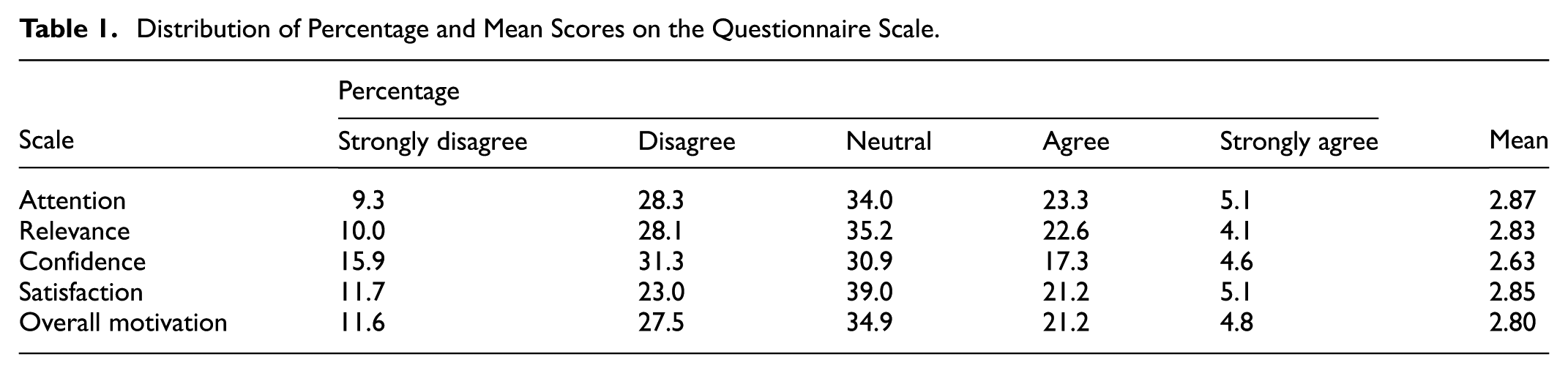
Analysis is the first stage of ADDIE model, which is the most crucial part and serves as the foundation for all other phases. In this study, the researcher explored the necessity of applying the SDGPBL approach in mathematics classrooms to boost high school students’ enthusiasm for learning mathematics. To assess the motivation levels of Ningbo high school students in mathematics and to inform the analysis phase of ADDIE, the first questionnaire survey was conducted. This highlights the importance of adopting a learning strategy that connects the SDGs’ real-world issues with problem-based learning, thereby encouraging students to see mathematics as a valuable tool for addressing practical challenges and increasing their motivation to study the subject. The ARCS model was applied to design the questionnaire as same as the questionnaire in pretest and posttest. A total of 384 high school students selected according to Morgan table from six high schools in Ningbo participated in this questionnaire survey. These 6 schools include 2 high-level high schools, 2 medium-level high schools, and 2 lower-level high schools. Table 1 presents the percentages and averages for each option within the four dimensions of the questionnaire, along with the overall motivation score. Results revealed that the mean overall motivation score was 2.80, below the benchmark of 3.0, with “confidence” scoring even lower at 2.63. Figure 5 showed that there have more negative respondents than positive respondents in each dimension and overall motivation. The results from the mean and percentage indicated that students’ motivation in learning mathematics was generally low.
Distribution of Percentage and Mean Scores on the Questionnaire Scale.
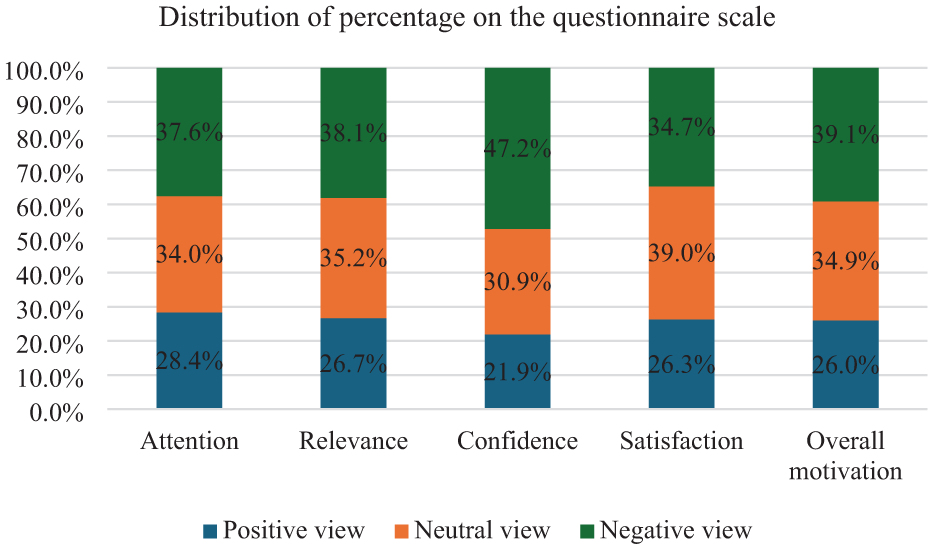
Distribution of percentage on the questionnaire scale.
During the design phase, considering the methods available to students to collect data and the current critical situation with water resources and carbon emissions, and how relevant these two issues are to their daily lives. SDG 6 “Clean Water and Sanitation” and SDG 13 “Climate Action” were engaged in the mathematics classes. Students worked in groups to investigate water shortages which is related to SDG 6 and carbon emissions which is related to SDG 13 using the statistics knowledge learned in Chapter 9. Decisions were made on the topics, materials, and lessons that would be included in the program. Additionally, the objectives to be achieved after the program is implemented were determined, along with the strategies for accomplishing these objectives. A system plan and SDGs module were designed by the researcher to meet the learners’ requirements and provide guidance for the teacher. The plan included the identification of the topics to be addressed, time will be spent on each lesson, learning activities, lesson plan, tasks to be used and assessment instruments and media. The SDGs module presented the sustainable development goals, pillars of sustainability, 10Cs enabled by ICTs and 21st century learning pillars that to be developed in the SDGPBL strategy. The SDGs module provided to the teacher as guidance includes 4 contents: issues, lesson plan, SDGPBL strategy, and six parts of the activities. The researcher designed the SDGPBL based on the PBL Organizing framework as well as the ARCS motivation model that will have positive impact on learners’ motivation to learn mathematics.
During the development phase, the researcher collected all the information and the materials needed and then developed videos and materials, slides, group workshop, and group presentation assessment rubric. The main purpose of the videos and materials was to propose relevant questions based on them and attract students’ attention in class. These slides matched the teaching content of each lesson and served as an important reference for the teacher’s explanation at the part “linking claims to evidence.” Group workshop was an important reflection of group cooperation and group presentation assessment rubric provides a reliable standard for group presentation evaluations.
To ensure the implementation phase can be carried out successfully, the following three steps were taken into account: training the teacher, preparing the students, and creating the suitable learning environment. During the intervention, students work together as the center of the classroom to explore problems, collect and analyze data and propose solutions to problems following the steps of PBL enabled by ICTs and ARCS model. The teacher acted as facilitators in this process to explain knowledge to students, answer questions, check student activities and provide technical guidance. The whole experiment lasted for 7 weeks (Table 2).
Implementation Process of SDGPBL Strategy.

In this study, evaluation happened at two levels, namely formative and summative. To gather data on each stage of the optimization process, formative evaluation is implemented. At the end of the program, a summative evaluation is carried out to thoroughly assess its influence on learning quality and students’ overall achievement (Widyastuti & Susiana, 2019). The formative evaluation was conducted throughout the entire process to assess the functionality of the SDGPBL strategy, and any feedback received was included into the development phase. developmental phase. The summative evaluation was conducted following the implementation of the final version of the instruction to evaluate the overall effectiveness of the SDGPBL strategy using the questionnaire survey and interview, which informed the researcher on the success of SDGPBL strategy in developing students’ motivation in learning mathematics.
Method
This research employed a quasi-experimental mixed-method design. To assess the effectiveness of the SDGPBL strategy, students’ motivation toward learning mathematics was measured both before and after the intervention. Motivation questionnaires were administered twice to both the experimental and control groups—once prior to the intervention and again afterward. The experimental group was taught using the SDGPBL method, while the control group continued with conventional instructional approaches. Within the experimental group, students were organized into eight small teams, each consisting of four members. The small group members worked together to use statistical knowledge and information technology software to explore and solve life problems related to SDGs. In the final stage, each group completed the group presentation through collaboration. The control group received instruction through a conventional teaching method, which primarily involved teacher-centered lectures and textbook-based exercises. The learning process focused on step-by-step procedural explanations, followed by individual practice on mathematical problems without the incorporation of technology or problem-based contexts.
Questionnaires based on Keller’s ARCS model were used to conduct the motivation surveys, and the results were analyzed to compare whether the students’ motivation was improved. Then seven students selected from the experimental group according to their posttest results were interviewed to get a closer understanding of the students’ motivation. Before conducting interview, the researchers adhered to ethical guidelines, which included outlining principles for conducting the study responsibly, obtaining informed consent from participants, and assigning identification codes to ensure confidentiality (Creswell et al., 2012; Nieuwenhuis, 2013). For data analysis, a deductive coding approach was applied to identify codes and themes within the interview transcripts by examining each student’s verbatim responses. The implementation process is shown as Figure 6.

Implementation process.
Participants and the Selection Process
A total number of 68 senior one students (32 students in experimental group and 36 students in control group) from a high school in Ningbo participated in this study. Two classes are randomly selected as the samples of the study from the nine classes in the first grade of this high school using simple balloting method. In addition, the selected classes were randomly assigned to the experimental and control groups through a hat draw. From the experimental group, seven students were chosen to take part in the interview. The principle to select the students was based on their posttest result (Silverman, 2016; A. Strauss & Corbin, 2016), consisting of two students whose motivation was highest level, three students whose motivation was moderate level and two students whose motivation was lowest level. Before the experiment, the researchers informed the president and the parents of the participants about the details of the study and obtained their consent form. Participants also signed the consent form and a certificate of voluntary participation. To ensure that the students’ normal course progress at school was not affected, the researchers discussed the course progress with the teachers and the instructional design followed the normal progress.
Research Instrument
The same ARCS motivation questionnaire was the research instrument for both pretest and posttest. In the pretest, it was used to assess students’ prior experiences in learning mathematics, while the posttest measured their motivation after studying the topic “Statistics.” The experimental group was instructed using the SDGPBL approach, whereas the control group received traditional teaching. The questionnaire adopted a 5-point Likert scale (1 = “strongly disagree” to 5 = “strongly agree”), with each question offering five response options: Strongly Agree, Agree, Neutral, Disagree, and Strongly Disagree. To evaluate its reliability and validity, Cronbach’s Alpha (α) was calculated alongside expert review. An α value above .7 was considered evidence of strong reliability, and in this study, the coefficient reached .944. Table 3 presents the reliability for each scale. Two experts examined the questionnaire content, resulting in a revised version with 22 items that assessed attention, confidence, and satisfaction related to mathematics learning, as well as the perceived relevance of mathematics to students (6 items for “Attention,” 5 for “Relevance,” 5 for “Confidence,” and 6 for “Satisfaction”). For the semi-structured interviews, an interview protocol was used as the main instrument, enabling the researcher to confirm, verify, or challenge the impressions formed from other sources such as observations and documents.
Cronbach’s Reliability Analysis Test.

Data Collection and Data Analysis
Both quantitative and qualitative approaches were applied to gather the research data. For the pretest, questionnaires were used to assess students’ motivation to learn mathematics before the intervention. This pretest was carried out in both the experimental and control groups. The posttest was administered after the implementation of the SDGPBL strategy in the experimental group. Posttest data were collected using the same questionnaire to measure students’ motivation to learn mathematics in both groups. Qualitative data were obtained through a semi-structured interview, with each participant interviewed for 30 min. To analyze the survey results, motivation scores from the pretest and posttest were compared. Statistical analysis of the questionnaire data included descriptive measures (mean, percentage, and standard deviation), as well as one-sample t-tests and independent-sample t-tests, conducted using SPSS Statistics 29. The interview transcripts were examined through thematic analysis. The data obtained from the interview were descriptively coded at first and were further summarized by interpreting, interconnecting, and conceptualizing to find themes. Figure 7 as shown below is a flowchart illustrating the study process.

Flowchart illustration of the study.
Results
ARCS Motivation Questionnaires
Table 4 shows the Shapiro–Wilk test outcomes used to check the normality of pretest and posttest results for both the experimental and control groups. The analysis revealed that the data were normally distributed, as the p-value exceeded .05. In addition, visual checks of histograms, Q-Q plots, and box plots confirmed that the scores from both the pretest and posttest were roughly normally distributed for the two groups.
Data Normality for the Pretest and Posttest Scores of Both Groups.

The pretest and posttest outcomes for the experimental group were analyzed using a one-sample t-test. Because some questionnaires were invalid, the pretest and posttest data could not be paired for certain students. Instead, the average score from the pretest was calculated and used as the benchmark for comparing the posttest mean scores through a one-sample t-test (Gleason et al., 2022; Huang et al., 2016). The results of this analysis are summarized in Table 5.
One-Sample t-test of Posttest Scores of the Experimental Group.

Note. Test value = 3.23.
The one-sample t-test results demonstrate that the posttest scores of the experimental group are noticeably higher than the pretest mean of 3.23. With a t-value of 8.562 and p-values less than .001, it can be concluded that the intervention has had a significant positive effect on the experimental group students’ motivation in learning mathematics. The mean difference of 0.85 provide further evidence of this improvement. To further study the differences of students’ motivation in learning mathematics between the pretest and posttest scores of the experimental group, One-sample t-test was used to analyze each dimension of ARCS motivation as shown in Table 6.
One-Sample t-test of Posttest Scores for Each Dimension of the Experimental Group.

All the p-values of four dimension were lower than .001. Results from the one-sample t-test for Attention, Relevance, Confidence, and Satisfaction revealed statistically significant increases in posttest mean scores compared to the pretest averages. The positive mean differences, along with confidence intervals that excluded zero, provide further evidence that the intervention had a clear and beneficial effect on students’ motivation to learn mathematics in each of these areas.
To determine whether a notable difference existed between the control group’s pretest and posttest mean scores, a one-sample t-test was conducted, as presented in Table 7. The pretest mean was 3.03, while the posttest mean was 3.17, resulting in a mean difference of 0.15. The standard deviations for the pretest and posttest were 0.72 and 0.55, respectively. For the control group’s posttest, the t-value was 1.482, and the p-value was .075, indicating that the change in scores from pretest to posttest was not statistically significant.
One-Sample t-test of Posttest Scores of the Control Group.

Note. Test value = 3.03.
To further study the differences of students’ motivation in learning mathematics between pretest and posttest scores of control group, one-samples t-test was used to analyze each dimension of ARCS as shown in Table 8. From Table 8, the results suggest that the control group did not experience significant changes in Attention and Confidence with t(29) = 0.204 and t(29) = 0.833 and p > .05. There was a significant improvement in Relevance with t(29) = 2.781 and p < .05, while Satisfaction showed a marginally significant decrease.
One-Sample t-test of Posttest Scores for Each Dimension of the Control Group.

Students’ performances were further examined through an independent sample t-test. The analysis compared the pretest and posttest scores of both the experimental and control groups to assess their initial equivalence and to evaluate the impact of the SDGPBL strategy. To determine whether any significant differences existed between the pretest scores of the two groups, an independent sample t-test was conducted, as shown in Table 9.
Independent-Sample t-test of the Pretest Scores.

The test produced a value of 1.050 with a p-value of .149, which is above the .05 threshold. This means there was no meaningful difference in the pretest scores between the experimental and control groups. The mean gap was 0.20, and the 95% confidence interval [−0.18047, 0.57937] crossed zero, supporting the conclusion that the difference was not significant. To look further into variations in students’ motivation for learning mathematics, an independent-samples t-test was carried out for each ARCS dimension, as shown in Table 10.
Independent-Sample t-test of the Pretest Scores for Each Dimension.

For “Attention,” the t-value was 1.024 with a p-value of .155, higher than the .05 level, indicating no clear difference between the two groups. The mean gap stood at 0.21, and the 95% confidence range [−0.20246, 0.62679] included zero. In “Relevance,” the t-value reached 0.742 (p = .231), while “Confidence” recorded 0.826 (p = .206); neither result pointed to any meaningful variation. For “Satisfaction,” the t-value was −0.866 and the p-value .195, again suggesting no difference. All confidence intervals at the 95% level contained zero, confirming the lack of significant change. After the intervention, both groups took the same posttest to measure any effect of the treatment. Table 11 shows the posttest mean score comparisons.
Independent-Sample t-test of the Posttest Scores.

The t-value is 6.367 with a p-value of <.001. Since the p-value is less than .05, it rejects the null hypothesis. This indicates that the scores of the experimental is greater than the control group in posttest significantly. The mean difference is 0.90, and the 95% confidence interval [0.61752, 1.18382] does not include zero, further confirming the significance of the difference. To further examine variations in students’ motivation to learn mathematics between the two groups after the posttest, an independent-samples t-test was conducted for each ARCS dimension, as presented in Table 12.
Independent-Sample t-test of the Pretest Scores for Each Dimension.
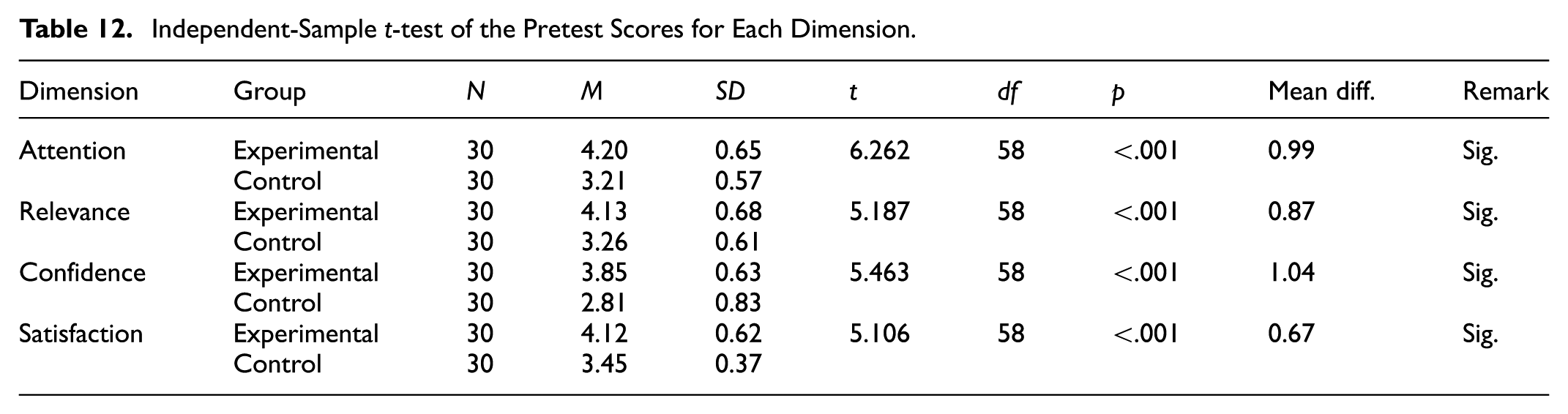
As shown in table 5.13, t(58) = 6.262 and p < .001 for “Attention”; t(58) = 5.187 and p < .001 for “Relevance”; t(58) = 5.463 and p < .001 for “Confidence”; t(58) = 5.106 and p < .001 for “Satisfaction.” It can be seen that there have statistically significant difference in scores between the experimental and control groups in posttest among all the dimensions through the results. The confidence interval does not include zero, confirming the significance of the difference. The experimental group achieved markedly superior scores compared to the control group across all dimensions in the posttest, suggesting that the intervention had a substantial positive effect.
Semi Structures Interview
The interview findings were organized into five overarching themes, which served as the framework for the interview protocol. One theme was aligned with the four dimensions of students’ motivation (Attention, Relevance, Confidence, and Satisfaction). The other two themes related to the influence of the 21st-century learning pillars, namely the 10Cs in the SDGPBL strategy, focusing on group collaboration and the teacher’s role, which reflected the learners’ perceptions of the new learning experience. In presenting the results, illustrative quotes from students were used to highlight each theme. Individual students were identified by assigning a letter that represented their motivation level, followed by a numerical code to specify the student. For example, “H2” referred to the second student categorized under high motivation.
ARCS Motivation
The results of this theme showed a positive outcome as it demonstrated all the four dimensions of the ARCS motivation. The demonstrated dimensions of motivation in learning mathematics complement the findings of the quantitative analysis (see Table 12) which shows a significant difference in the four dimensions of motivation in learning mathematics of attention, relevance, confidence and satisfaction. The students’ comments appeared to be positive and all of the students were able to respond to the questions asked by the researcher. From the comments of the seven students, it can be seen that the feedback on the “attention” dimension is the most. The SDGPBL strategy attracts students’ interest in various aspects and makes them pay more attention in the class.
In addition, the relevance of mathematics to real life also makes them more interested in mathematics. The integration of sustainable issues into mathematics classes makes students more motivated to explore and solve problems.
21st Century Learning Pillars
The inquiry regarding students’ perspectives on SDG 6 and SDG 13 showed favorable results as it demonstrated five out of the six learning pillars. Students’ comments indicate that the integration of these two SDGs in mathematics classroom has made them respond to a sustainability. All the seven students learned about the issues related to these two goals and the challenges in sustainable development during the learning process of the SDGPBL strategy (Learning to know).
Through this intervention, these seven students gained ideas about how to make their own lives sustainable (Learning to be) and change their previous behaviors and the events in the society that are not in line with the values of sustainability (Learning to transform oneself and society). The results of this analysis show that the application of the SDGPBL strategy in mathematics learning has a positive impact on sustainable development.
10Cs
Eight aspects of 10Cs are reflected in students’ experience in using knowledge of the topic “Statistics” to solve SDGs-related problems. In this process, students first realized that it’s our co-responsibility to achieve sustainability and then developed critical consciousness and critical thinking about SDGs-related issues. They collaborated and communicated with group members to solve the problems step by step. Besides, students also had critical reflections on these sustainability issues from their daily lives. This indicates that learning process has taken place (Buckler, 2016) as there is a change in the students’ behaviors. Although not achieving all 10Cs under the SDGPBL strategy, the students gained a lot in this process.
H1: Everyone can play their part in sustainable development (co-responsibility).
To solve the water and carbon emissions issues raised in class, we discussed and collaborated in group to come up with solutions (collaboration, communication).
Group Collaboration
Six out of seven students agreed that the group collaboration have positive impact on them. They commented positively on the group work aspect of the SDGPBL strategy. They think the process of group collaboration is interesting, active, necessary, and practical (Barkley et al., 2014; Berlanga et al., 2024; Zubiri-Esnaola et al., 2020). The students pointed that they could concentrate more when completing group tasks, which helps them master mathematics knowledge better. The most profound feeling these students have been the sense of accomplishment they get after completing the group work (Onyekwere & Azubuike, 2023; Tiantong & Teemuangsai, 2013).
Only one student had negative comments on group collaboration. He thought that group work took up too much class time and thus he could not learn as much mathematics knowledge as possible in the limited class time. At the same time, the uneven contribution of group members to group work also gave him a bad impression of group collaboration. However, the student still found the group work process interesting.
I think that sometimes the explore activities in class last too long, taking up about 20 min. In this case, in fact, not much knowledge is learned in class, and I don’t support group collaboration that much. But I still think it is interesting.
Teacher’s Role
All students agreed that the teacher’s role have changed in the new learning experience and they found that the teacher was no longer the leader in the classroom. From the codes “The teacher is more like a guide,”“The teacher is like an organizer,” it can be seen that the mathematics classroom under the SDGPBL strategy is no longer teacher centered. The code “Give students more time to explore on their own” can reflect that the students take a greater role in the learning process now and the teacher play a role in assisting the students. This indicates that learning process has taken place (Buckler, 2016) as there is a change in the teacher’ role.
Discussion
Design and Development of Sustainable Development Goals Problem-Based Learning Strategy
The SDGPBL strategy provided the students with lots of ideas and opportunities to have some new experiences to learn mathematics in a broader context leading to motivating students to learn the content. The mathematics content taught using the SDGPBL strategy has the potential to be comprehended, internalized, and retained more effectively than content taught using conventional methods, where students are passive learners because the activities in the SDGPBL strategy are designed to enhance students’ motivation in learning mathematics through integrating real-life problems related to SDGs into mathematics classroom. According to Hammond (2000), smaller collaborative groups make it simpler to motivate students who are not actively participating. This leads to a greater sense of presence and involvement, as well as enhanced individual contributions. Preparing students for group projects, organizing groups, assigning group-work tasks, and guiding student involvement via teachers’ discourse with small groups and with the class help the teacher to promote good group dialogue (Fereday & Muir-Cochrane, 2006). This study indicated that the group collaboration component in SDGPBL strategy exerted a beneficial influence on students’ motivation to learn mathematics in the classroom. The role of the teacher has also changed due to the setting of the group collaboration part, and the teacher became the facilitator of the group collaboration.
Nevertheless, the SDGPBL strategy is helpful to enhances students’ learning in the mathematics classroom, as demonstrated by the study’s findings. The designed learning instruction proves to be effective in improving students’ performance and motivation in mathematics. A notable limitation of this study lies in the restricted scope of instructional content, as only the topic “Statistics” was integrated with the SDGPBL strategy in the instructional design. “Statistics” was selected due to its strong alignment with PBL principles, especially its focus on data interpretation and real-world problem-solving. In contrast, other mathematical domains like algebra, geometry, or calculus involve different conceptual structures and problem-solving demands. These differences may offer new opportunities for adapting and refining the SDGPBL framework.
The Effectiveness of the SDGPBL Strategy in Enhancing Students’ Motivation in Learning Mathematics
Results of students’ motivation were substantiated by posttest result of both experimental and control groups. The result of the independent sample t-test from Table 11 showed a statistically significant mean difference, implying that the student that used the SDGPBL strategy were more motivated after undergoing the intervention than the students taught using conventional method. This was supported by the Cohen’s d value for the test as it appeared to have an effect size that is large in the difference of mean (Cohen et al., 2002). The findings conform to the finding that connecting lessons to the situations that happened in the students’ life, encouraging their active participation and critical thinking, students become more engaged with their surroundings and are motivated to actively contribute to finding solutions for contemporary challenges (Griswold, 2017). The comparison of posttest mean scores for each dimension of students’ motivation in mathematics was carried out using an independent sample t-test. As shown in Table 12, all four dimensions “attention, relevance, confidence, and satisfaction” showed significant differences between the two groups. The findings reveal that students in the experimental group scored notably higher in these areas compared to those in the control group. This suggests that the SDGPBL approach played a meaningful role in enhancing motivation toward mathematics learning across all measured aspects (see Table 12). The Cohen’s d values showed a substantial effect size in the mean differences (Cohen et al., 2002). These findings further support the role of the SDGPBL approach in improving learners’ motivation in mathematics.
According to the ARCS framework, increasing student motivation involves four key elements: (1) drawing and keeping learners’ attention; (2) making clear why the material is worth learning; (3) helping students believe they can succeed through their own effort; and (4) encouraging feelings of achievement and satisfaction (Keller, 1987). It can be concluded that using the SDGPBL strategy for students to learn mathematics succeed improving their performances as well as their motivation in learning mathematics. This result is similar to the findings of Y. Chen (2019), Gu and Lee (2019), Hsu (2020) and Wong and Wong (2021) who found out that the students’ motivation in learning mathematics can be enhance through the inventions which catching students’ attention, connecting real life with mathematics, inspiring students’ confidence, and satisfaction. The findings of this study indicate that introducing SDGS-related problems in the mathematics classroom through videos and materials can capture students’ attention in class (attention); Students were aware of the relevance of mathematics to real life using the knowledge of statistics to analyze SDGS-related problems (relevance); Students gained confidence in working in small groups to explore and solve problems and complete the group presentation (confidence); Students had great sense of accomplishment after solving problems through exploring by themselves (satisfaction). These are all attested and demonstrated by the student’s comments during the conduct of interview when they were asked about the learning process in the SDGPBL strategy intervention.
This study was conducted in a single medium-level high school, which means that the sample primarily represented students with moderate academic performance in mathematics. Under these conditions, the SDGPBL strategy was found to effectively enhance students’ learning motivation, as reflected in the four ARCS dimensions: Attention, Relevance, Confidence, and Satisfaction. However, the potential impact of the SDGPBL strategy on students from higher-level and lower-level schools remains an open question. If experimental conditions had permitted, a stratified sampling approach involving students from high-, medium-, and low-level high schools to form both experimental and control groups would have been preferable. Such a design would enable direct comparison of the SDGPBL strategy’s effects across different academic levels, providing deeper insights into how variations in prior knowledge, learning habits, and motivation influence its effectiveness.
The Process that Students Get Motivated in Learning Mathematics and Experiences During SDGPBL Strategy
The verbatim quotes from the students’ interview provided additional confirmation of the findings from the quantitative study as the students achieved all the four dimensions of motivation in learning mathematics which shows the same result as in Table 12 of a significant differences between the experimental and control groups posttest mean scores of all the four dimensions. It revealed that learners were able to develop all the four dimensions of motivation in learning mathematics after integrating the SDGPBL strategy into their learning process. The most frequent identified code is “attention” which appeared in 21 different places based on their responses. It is in line with the studies of Hao and Lee (2021), Ma and Lee (2021) and Ithnin et al. (2023) who pointed that attention was consistently the most significant factor influencing students’ motivation. The second most commonly occurring code in the students’ direct quotes was “relevance,” appearing in fourteen instances. This indicates that students could relate mathematics to real-life situations. Moreover, according to the students verbatim quotes, “confidence” was the third most frequently identified code, appearing in 12 different places. “Satisfaction” was the fourth most frequent code, coded in nine different places. This indicates both are important, though less common than other codes. Confidence-building strategies significantly improved students’ willingness to participate in Zhu and Huang (2023) and satisfaction strategies, such as recognizing achievements and providing rewarding experiences, are essential for keeping students motivated over time (Goksu & Islam Bolat, 2021). Therefore, both quantitative and qualitative outcomes show a significant difference in the motivation in learning mathematics processes of attention, relevance, confidence, and satisfaction.
Majority of the students’ comments about their learning experiences while using the SDGPBL strategy were positive as they were improved by six learning pillars, 10Cs, group collaboration and the teacher’s assistance during the learning experience. Except for “learning to give/share,” a total of five out of six learning pillars have been achievement according to the codes obtained by the seven students’ responses. “Learning to know” and “Learning to be” both are the most frequent identified code achieved which appeared in eleven different places based on the students’ responses. This result is consistent with the improvement of students’ motivation in learning mathematics in this study, for that “Learning to know” encourages curiosity, analytical skills, and the ability to learn independently (Lawale & Adams, 2010) and “Learning to be” is crucial for personal accomplishment and the development of a sense of belonging and purpose (Delors, 1996). The code “Learning to transform oneself and society” appeared eight times and all the seven students mentioned about it. This indicates that in this study, not only the students’ motivation in learning mathematics has been improved, but also shifted their unsustainable values, behaviors, and actions, working together to transform themselves and contribute to building a more sustainable society.
The students’ response to their experience in using knowledge of the topic “statistics” to solve the SDGs-related problems was coded as 10Cs. Out of the 10Cs, students achieved eight in total, with “Collaboration” and “Communication” emerging as the most frequently identified codes, each appearing seven times in the students’ responses. Through problem-based learning, students are encouraged to cooperate in small groups to address real-world issues (Alexander et al., 2024; Trullàs et al., 2022). In this study, the students in the experimental group were divided into groups of four and a total of eight groups for learning and exploring. Therefore, students should have more collaboration and communication in the small groups. In addition, the students developed critical consciousness and critical thinking in the process and then had critical reflection. PBL encourages students to critically reflect on their knowledge and its application to issues related to the SDGs, enhancing their critical consciousness and competence in addressing sustainability issues (Grindsted & Nielsen, 2022). The issues of water shortage and carbon emissions introduced in the classroom in this study are very relevant to the lives of these students, and it is easier to stimulate these critical abilities of students.
Learning in small groups was a new experience for these students in learning mathematics and the teacher’s role has changed along with the change of learning strategy. Most of the students’ comments about the group collaboration while using the SDGPBL strategy were positive as they think group collaboration is “active, interesting, necessary, practical, novel, efficient, helpful to acquire knowledge.” They commented that they better focused and had a sense of accomplishment when completing tasks in group, which consistent with the study findings of Osman et al. (2011) and R. Zhang et al. (2023). Besides, there were some negative comments such as “I think it’s unfair that some group members don’t contribute much,”“I think that too much time is spent on group activities and not enough knowledge is learned.” But the student still found the group work process interesting. Students perceived the teacher as no longer the leader of the classroom but an organizer or guide, and the teacher assisted the students while giving them more time to explore and solve the problems on their own. These support the idea that in PBL settings, teachers assist students in exploring and solving problems independently, reinforcing the shift from traditional leadership to a more supportive role (Keiler, 2018). However, it is worth noting that one of the interviewees mentioned that there was an uneven contribution of group members in the group collaboration process, which affected his attitude to the explore activities. Gross et al. (2025) demonstrated that allowing individuals to choose interactions can minimize uneven contributions and foster a more effective cooperation mechanism, transcending limitations imposed by strict group boundaries. This study’s design could better facilitate interactions among group members during group formation, thereby addressing the issue of unequal participation.
Conclusion
The SDGPBL strategy was designed systematically in such a way that it gave more emphasis on the relevance with SDGs issues, group collaboration and student-centered. It includes a systematic process by which lesson materials are designed, developed, and implemented (Forest, 2014) as well as provide series of guidelines that describe the way it would be carried (Forest, 2014; Türel & Demirli, 2010). The quantitative analysis results shows that the students’ motivation in learning mathematics has improved significantly after the use of the SDGPBL strategy instruction leading to a conclusion that the SDGPBL strategy has been successfully designed and developed. It also showed that all the four dimensions of ARCS motivation where statistically significant leading to a conclusion that: attention, relevance, confidence, and satisfaction were successful during this study. This method was successful in enhancing students’ motivation in learning mathematics.
Seven students took part in interviews aimed at understanding their experiences and what motivated them to learn mathematics while being taught through the SDGPBL strategy instruction. The interview was transcribed and analyzed using thematic analysis. Students’ comments on their learning processes in SDGPBL strategy show that they have demonstrated attention, relevance, confidence, and satisfaction. Majority of the students had positive comments about their learning experiences while using the SDGPBL strategy as some of the six learning pillars and 10Cs of the students were developed, which shows that the learning strategy really support and improve their level of engagement in mathematics classroom. Besides, students’ comments about group collaboration and the teacher’s role in the class were mostly positive. It is therefore concluded that students have enhanced their motivation and developed their learning pillars and 10Cs as their responses complement the findings in the quantitative data (and they also have positive experiences while using the SDGPBL strategy.
It is necessary to mention some limitations even the SDGPBL strategy was proved to be effective. It took a long time to train the teacher and students to use technology software in this study. It is recommended that subsequent researchers incorporate technology software that teachers and students were already proficient in into their instructional design. This will save teachers’ training time and ensure the application of information technology in the study. The topic “Statistics” was selected to be combined with SDG 6 and SDG 13 for instruction design. The limited topics limits the choice of sustainable development goals. More SDGs are expected to be integrated into mathematics classes in conjunction with the SDGPBL strategy.
Footnotes
Acknowledgements
My deep appreciation goes to my parents for the vital role they played in raising me up and their tireless supports morally and financially. My gratitude also goes to Prof. Zhang Fengjuan and Prof. Zaleha Ismail for their help and their contribution to this article.

Ethical Considerations
In order not to affect the participants’ normal mathematics course learning progress in school, the researchers had meetings with the mathematics teachers to determine the class topics and content before the experiment. The instruction was designed based on the school’s course progress. Besides, due to the limited class time in school, the researcher and the mathematics teacher discussed and decided to let students complete some group cooperation tasks which would take a long time on the weekend. Many studies have shown that motivation to learn mathematics has positive impact on students’ mathematics achievements. In China, high school learning is very important for students and mathematics is essential as a major learning subject in high school. Students’ achievements will determine their future university choices. Therefore, this study has a potential positive impact on students’ mathematics achievement and their future university choices while improving their motivation to mathematics. This study involved high school participants. Before conducting the study, the participants, president and parents were informed of the contents of the study in detail and invited to fill out a consent form. Only those who signed to participate, students’ data were included in the study.
Consent to Participate
Informed consent was obtained from participants.
Funding
The authors received no financial support for the research, authorship, and/or publication of this article.
Declaration of Conflicting Interests
The authors declared no potential conflicts of interest with respect to the research, authorship, and/or publication of this article.
Data Availability Statement
The datasets generated during and/or analyzed during the current study are available from the corresponding author on reasonable request.