




Abstract
Sustainable Development Goal 4 (SDG 4) aims to ensure inclusive and equitable education for all, fostering learning opportunities by 2030. This research seeks to assess the educational landscape in Haryana, India, to evaluate the effectiveness of current educational facilities and their alignment with SDG 4 targets. The primary objectives are to analyze the impact of improved accessibility, infrastructure, and technology integration on education quality. This study also examines the influence of curriculum design, teaching quality, and parental involvement on learning outcomes. A sample size of 471 respondents was surveyed to gather comprehensive data. The findings highlight that variables like curriculum design, infrastructure, teaching quality, student support services, parental and community involvement and gender equality have significant positive effects on educational quality and other variables, like accessibility and infrastructure improvements, showed less impact. This study concludes that achieving SDG 4 in Haryana requires targeted efforts of government and educational institutions to enhance teaching quality, infrastructure, and community involvement with a stronger focus on addressing inequalities in rural education.
Plain Language Summary
This research examines education in northern India, in light of Sustainable Development Goal 4 (SDG 4), which aims for inclusive and equitable quality education by 2030. The study looks at how well current educational facilities meet SDG 4 goals and evaluates various factors that impact education quality, such as infrastructure, technology, teaching quality, curriculum design, and community involvement.
Keywords
Introduction
Education serves as the foundation of personal growth, social development, and economic progress by promoting critical thinking, problem-solving abilities, and cultural awareness, which further helps in making significant contributions to the communities as these skills are needed to navigate complexities and adapt to dynamic situations (Chankseliani & McCowan, 2021). In addition to academics, education instills values, ethics, and social responsibility, which promotes inclusivity, equality, and sustainability. Education is crucial in breaking the vicious cycle of poverty and improving livelihoods and economic stability at national and global scales, especially in developing countries (Kurangking et al., 2023).
In India, where bustling cities meet quite villages, a silent revolution has been unfolding- one that shapes the minds and futures of millions. Education, the backbone of progress, has been expanding rapidly across the country (Mathew et al., 2016). With over 1.5 million schools dotting the landscape and nearly 1 lakh higher education institutions, India stands proud as one of the largest education systems in the world (Education Intelligence Unit, 2019). In every corner, from remote hamlets to urban centers, children fill the classroom with dreams in their eyes, eager to learn and explore. With a population of approximately 1.4 billion, India has been taking significant initiatives in terms of education access policy and schemes in terms of better pedagogy, vocational training, and updation of the education sector (IBEF, 2024). During 1964 to 1966, the Kothari Commission was established to develop a uniform and forward-looking vision for the Indian education system with 20 education sector experts (Tilak, 2019). After that, in 1968, the National Education Policy (NEP) was set up with the recommendation of the commission to encourage access to education irrespective of caste, gender, region, language and others, while it was again updated in 1992 and in 2020 to have comprehensive reforms in school and higher education with a focus on Skill development and inclusivity (Kumar et al., 2021; Yenugu, 2022). The policy’s objective is to attain a 100% Gross Enrollment Rate (GER) while bringing in more than 20 million students into the mainstream, and the policy focuses on teaching students in their regional languages till class 5 (Ministry of Education, 2020). Beyond these, a lot more initiatives were taken by the government of India to facilitate the education sector in India, such as Sarva Shiksha Abhiyan, the Mid-day meal scheme, the National Programme for Education of Girls, the Right to Education Act, the Education Quality in Madrasas, Digital India Initiative and many more. The National Curriculum Framework of Teacher Education (NCFTE) was adopted in 2009 with the vision to develop the skills of educators (Education & Governments, 2018).
Over the years, student and teacher education in India had significant transformations; despite these efforts, India is still facing hurdles in providing education access to its entire population due to rapid population growth, inadequate resources, disparities in school levels, scarcity of teachers and insufficient public funding which can be seen via results such as overall literacy rate increased from 40.76% (1981) to 76.32% (2022), while literacy rate increased from 54.84% (1981) to 83.45% (2022) and 25.68% (1981) to 69.1% (2022) for males and females respectively (Statista, 2024).
Current Status of School Education in India
To make elementary education universal, the government has launched several initiatives. The government has developed several programs to guarantee that everyone has access to an equal education per the tenets of the National Policy of Education. By increasing the number of good schools, fostering equity, and raising the standard of education, these programs seek to improve access to high-quality education. The Table 1 presents a snapshot of key education-related program policies and their objectives, highlighting their significance.
Government Initiatives for School Education in India.
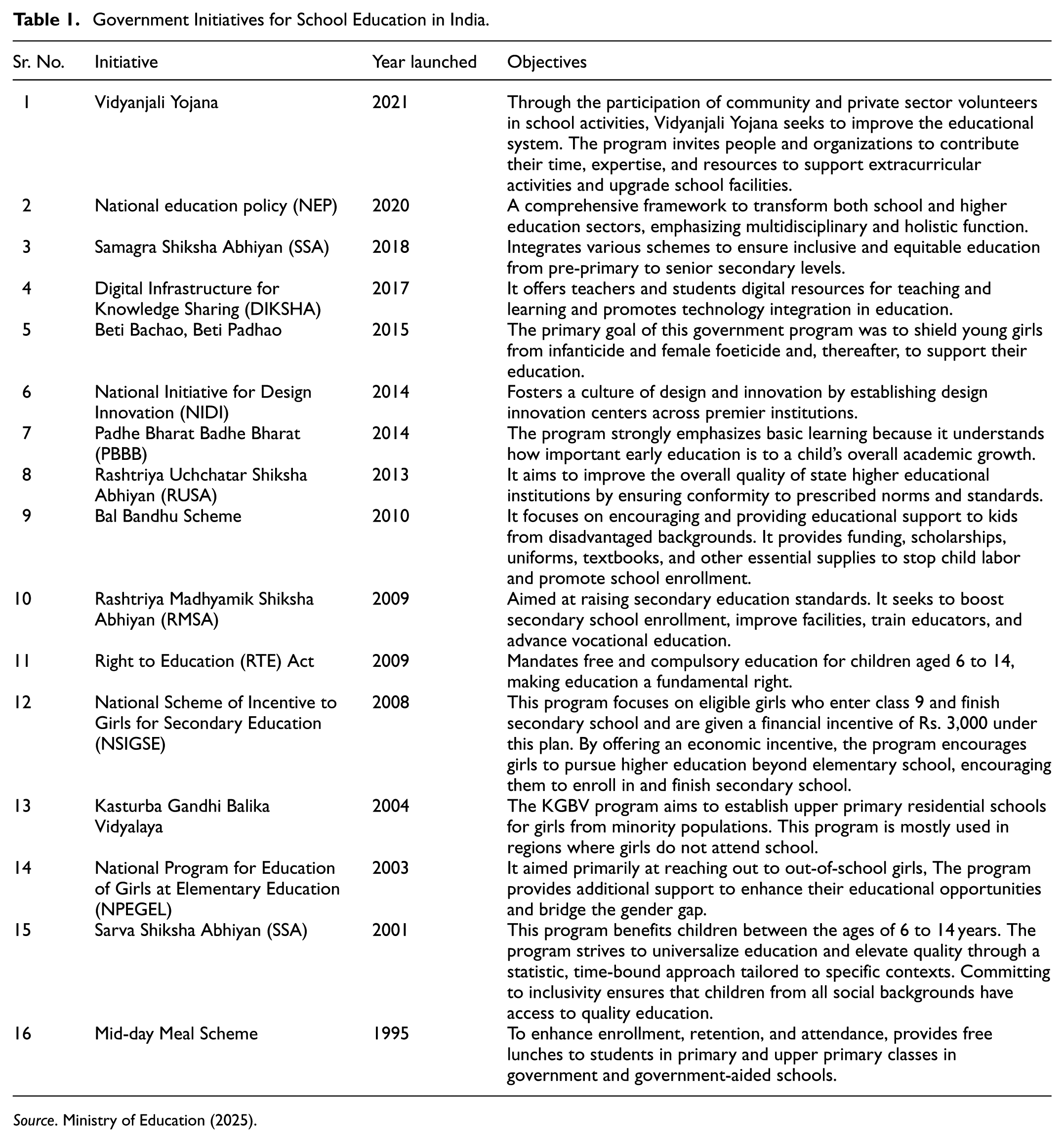
Source. Ministry of Education (2025).
Factors Affecting Quality Education
The quality of education is influenced by various factors which play a crucial role in shaping students’ learning outcomes. The most critical factor is physical infrastructure, which includes well-maintained buildings, sanitation facilities, digital connectivity, and classroom attributes that directly affect students’ education outcomes (Z. Yang et al., 2013). Moreover, a relevant and updated curriculum is essential for preparing students for modern challenges and future employment, and the same was published by Wen et al. (2022) in their studies, stating that course structure was one of the significant factors that affected the students’ satisfaction. Also, parents and the community play an essential part in students’ lives in adapting to the school environment and understanding school functioning. Active involvement from parents and the community is associated with better school governance, resource allocation, and student outcomes, resulting in better human development (Mohd et al., 2024). Family and community are significant factors in addressing childhood obesity (Kehm, 2015). Further, quality education and innovation help develop creative thinking among the students and accelerate their understanding and learning outcomes, whereas societal factors directly affect education quality (Elumalai et al., 2021; Garira, 2020). The quality of education is further affected by teaching quality, innovation, and student support services (Amtu et al., 2020).
Quality Education and SDGs
Achieving quality education is directly linked with the United Nations Sustainable Development Goals, particularly SDG 4, which aims to ensure inclusive and equitable quality education for all by 2030. Quality education empowers individuals with the knowledge and skills to contribute to economic development, which helps address issues related to poverty, inequality, health, and the environment (Chankseliani & McCowan, 2021). Integrating environmental education in the curriculum and state and national government initiatives in terms of policies and schemes depicts the alignment of educational improvements and sustainability goals (Owens, 2017). Moreover, achievements toward SDG 4 also impact the targets of other SDGs (Chisika & Yeom, 2024). Hence, this study formulates three research questions (RQ):
How do improved accessibility, infrastructure, and technology integration in educational facilities contribute to achieving the targets of Sustainable Development Goals (SDG) 4 in India?
How do teaching quality, curriculum design, and student support services impact student learning outcomes and the overall effectiveness of educational facilities in India?
How do parental and community involvement, along with gender equality initiatives, influence the accessibility and quality of education facilities in the context of SDG 4?
The educational facilities were selected as the focus of this study because of their key role in providing Sustainable Development Goal 4 (SDG 4), which is to “Ensure inclusive and equitable quality education for all.” To achieve SDG 4, this research proposes to examine how infrastructure, technology, and teaching quality all contribute to education, therefore putting educational facilities at the center of the purpose to achieve SDG 4 targets. Furthermore, educational systems that have significant education access and quality issues—especially those in under-served areas—represent barriers to equitable education. Haryana was selected as the state for the research because it is a representative sample of Northern India, reflecting both urban and rural areas within the same state. The combination of urban and rural areas will allow the research to provide an in-depth examination of the challenges and successes of educational facilities and systems. Lastly, the state of Haryana represents an educational context with both state level progress and state level barriers. The mixed educational context makes for an ideal educational space to examine the impact of government initiative and policy to enhance education overall. The chosen state of Haryana intends to provide useful information on the effectiveness of education improvement strategies and their chances of achieving beneficial changes to education more broadly in Northern India.
Research Gaps and Novelty
The study reveals that there are several gaps in the educational landscape, particularly in rural areas with poor infrastructure and limited access to quality education. Although the study recognizes the importance of technology, it does not fully address the digital divide and its relationship to demographic factors such as, gender, rural-urban, and economic differences that affect access to technology. The existence of gender equity policy is addressed, however there is not a specific examination conducting a comparative analysis of policy effectiveness across regions. The study acknowledges the issue of teacher training, but fails to allow a deeper examination of the content and long-term effectiveness of teacher training programs on student outcomes. Attention is given to student support services, but again the study does not go into much depth describing how these services differ in effectiveness across regions or socio-economic groups. While research pointed out parental and community engagement, it does not compare engagement as a government-driven initiative versus a community-driven initiative. Finally, while the study acknowledges the role of technology, it does not give enough detail about which tools can be most effective for learning, particularly in underserved areas. Each identified gap suggests an avenue for continued detailed study and research on the factors influencing demographic factors, policy effectiveness, and targeted intervention strategies to improve outcomes.
This research illustrates substantial deficiencies in Haryana’s educational system, especially in rural areas where limitations in facilities and inequitable access to high-quality education have not been improved. To be sure, the state government has made some advances in tackling these issues. However, persistent issues surrounding the digital divide, gender equity, and disparities that still exist will need to be addressed. The contribution of this publication is particularly noteworthy in how it adapts a structural model identifying the link between improvement in infrastructure, technology use, and community engagement and success on SDG 4 in the rural-urban context of Haryana, and offer meaningful application for educational policy and practice. The implications for future action identified in these findings provide actionable next steps for policymakers, educators, and community leaders to improve educational infrastructure and access. The study also aims to assess the influence of learning environment (accessibility, infrastructure, and technology) on SDG 4, explain the influence of curriculum design, quality of teaching, and student support services on learning outcomes, and explore how parental and community involvement and gender equity efforts strengthen educational quality and access. The overall intention of this study is to inform educational sector reform and action to meet the needs for Education 2030.
Literature Review
The Sustainable Development Goals (SDG-4) represent a commitment to establishing educational environments where every student, irrespective of gender or ability, can thrive. The study conceptualizes educational facilities as dynamic learning ecosystems instead of merely static physical assets. The interplay between structural integrity and technological interaction cultivate a synergistic effect that acts as a key factor in enhancing student achievement (United Nation, 2024). Malik et al. (2025) highlights the importance of curriculum design, teacher quality, and student support services in enhancing educational effectiveness and promoting lifelong learning, in accordance with global frameworks that advocate for qualified educators and sufficient resources to address the diverse needs of learners. Sengupta et al. (2025) demonstrated that numerous challenges exist in infrastructure and technology, along with gaps in teacher preparation and restricted community involvement, which hamper progress toward educational equlity. This study indicates that local policy action and increased community involvement are crucial for closing these gaps. The essential element of quality education lies in the provision and accessibility of educational infrastructure Zorde and Lapidot-Lefler (2025) demonstrate that enhanced infrastructure and increased accessibility correlate with improved educational outcomes. In the Indian policy landscape, frameworks like the National Education Policy (NEP) 2020 offer a strategic roadmap for the integration of quality, infrastructure, and community engagement approaches. However, implementation challenges continue to persist, particularly in rural and underserved contexts (Press Information Bureau Government of India, 2025). The foundational aspect of quality education is the availability and accessibility of education infrastructure. Studies consistently show improved infrastructure and easy accessibility are linked to better educational outcomes. Garg et al. (2024) emphasize that rural regions in India suffer from infrastructure limitations that negatively impact school attendance rates and learning outcomes. Moreover, Dhingra and Sharma (2022) highlight that infrastructural investments can bring educational disparities, especially in rural and semi-urban areas (Figure 1).

Graphical representation Literature review.
Incorporating technology into educational facilities is another transformative factor. Sharma et al. (2024) underscore the need for digital tools and internet access in classrooms to facilitate dynamic learning environments, which have been shown to enhance student engagement and comprehension. The National Education Policy (NEP) 2020 also advocates a significant push toward digital education to equalize learning opportunities across urban and rural India. According to Goel et al. (2021), implementing smart classrooms in northern India has improved learning outcomes and student attendance. However, challenges remain, as (Diwakar & Viswambaran, 2022) point out, concerning the digital divide, which disproportionately affects underprivileged students, thus hindering the full potential of technology in achieving equitable education. The quality of teaching and curriculum design’s effectiveness play integral roles in influencing student learning outcomes. Ventista and Brown (2023) note that well-trained teachers, with access to ongoing professional development, are better equipped to address diverse student needs. Harris and Sass (2011) find that teacher quality correlates strongly with student performance, particularly when teachers are trained in modern pedagogical methods and equipped with relevant subject knowledge. NEP 2020 has placed significant emphasis on teacher training and curriculum reforms aimed at fostering critical thinking, creativity, and problem-solving skills in students (Ministry of Human Resource Development, 2020).
Student support services, including counseling and career guidance, have also been highlighted as key contributors to student success. Morin (2022) suggests that supportive learning environments positively influence student mental health, enhancing academic outcomes. Student support services, such as tutoring and mental health resources, are available, which contributes to improved retention and achieved rates, especially for students from socio-economically disadvantaged backgrounds (Belando-Montoro et al., 2022).
The role of parental and community involvement in education has been widely documented. D. Yang et al. (2023) note that active parental involvement is linked to the highest student motivation and engagement. Community-led education initiatives, particularly in rural areas, have been found to bolster student attendance and academic achievement (Series, 2023). Community engagement in school also fosters a sense of accountability, which can positively impact educational standards and resources.
Gender equality remains a crucial focus area, as outlined by the United Nations, sustainable development goals, which emphasize inclusive and equitable quality education for all. Narwana (2015) highlights that educational policies promoting gender equality, including scholarship programs and awareness campaigns, have increased female enrollment in schools. However, O’Connor (2020) argues that societal norms and biases still challenge attaining full gender parity, suggesting more targeted policies to support female students’ retention and progression.
Inclusivity in education, particularly for students from marginalized communities and those with disabilities, is essential for equitable learning opportunities. Kefallinou et al. (2020) emphasize that inclusive educational policies and programs improve academic outcomes and foster social cohesion. Including children with special needs in mainstream education settings is gradually being embraced and supported by policy frameworks such as the Rights of Persons with Disability Act 2016 (NCERT, 2016).
Accessibility and infrastructure: For the proper functioning of educational facilities, accessibility and infrastructure provide a foundation and are crucial for education development. Existing studies have revealed that the progress of expanding access to higher education and increasing institutional capacity was notable in India. However, there still exists a lack of proper infrastructure, faculty, curriculum relevance, and research productivity (Ochieng & Gyasi, 2021), while Ochieng and Gyasi (2021), during their research observed that these factors, especially the available infrastructural facilities affect the quality of education. Prus and Sikora (2021) examined the impact of infrastructure on socio-economic development in rural areas and observed that the quality and quantity of infrastructure facilities available in rural areas significantly impact the socio-economic development of that area. The government schemes are mostly aligned toward the improvement of infrastructural facilities such as “Sarva Shiksha Abhiyan” aimed for the betterment of elementary education, providing essential facilities like school buildings, transportation, access to digital resources for quality education (Boobalan et al., 2024; Haleem et al., 2022). To determine the same, the below hypothesis has been framed:
The quality of teaching influences the effectiveness of education facilities in enhancing student learning outcomes: The quality of teaching, which is directly related to teacher characteristics such as teacher knowledge, communication skills, and teaching methods, has always been a crucial determinant of student learning outcomes (Wallace & Hellmundt, 2003). A similar study was conducted by Stronge (2013), which compared the impact of practices of more effective and less effective teachers on student learning outcomes and concluded that more effective teachers positively impact student learning outcomes. Further, Ventista and Brown (2023) stated in their study that education policies that focus on professional development directly and positively impact teaching standards and student achievement. To verify the same, the below hypothesis has been framed:
The improvement in curriculum design and learning outcomes influences the quality of education facilities: Innovative and continuously updated curriculum design leads to education reforms. Kilag et al. (2023) examined the impact of teacher-led curriculum development on learning outcomes and stated that it had a significantly positive effect as it empowered educators to personalize students’ content and learning experience. Similarly, Yağcı (2022) during their study determined a positive correlation between a well-designed curriculum and learning skills among the science student’s performance in tests and examinations, while C. Williamson et al. (2024) and Almulla (2020) observed the effectiveness of project-based learning on the development of critical thinking among the students. To examine the same, the below hypothesis has been framed:
The integration of technology and innovation influences the development and quality of education facilities: Over the years, technology has been recognized within various sectors, and the education sector has been dramatically impacted by the growth of technology in enhancing the quality of education provided to students. Walsh et al. (2020) studied the role of digital technologies in education while achieving the United Nations’ Sustainable Development 2030 agenda and revealed that digital technologies not only help enhance the teaching-learning process but also introduce self-paced learning, reduced use of hard copies and providing quality education at ease, while the same results were supported by Haleem et al. (2022). Further, Cheshmehzangi et al. (2023) stated the role of reducing the digital divide during the Covid period in enhancing and providing education to the students scattered in various areas. To establish a similar relation, the below hypothesis has been framed:
The quality and accessibility of education facilities are influenced by the availability and effectiveness of student support services: Well-structured student support services such as counseling, mentorship, career guidance, and financial aid play a crucial part in student’s academic success. Existing research shows that service quality in higher education directly affects the student’s perspective (Abbas, 2020), while the same fact is supported by Rasheed and Rashid (2024) via their findings research conducted by them. Further, Borazon and Chuang (2023) disclosed via their research that these student support services help reduce the learning barriers among the students, provide a better environment to foster learning outcomes among the students and contribute toward the overall development of quality education. To establish the same, the below hypothesis has been framed:
The parental and community involvement level influences the quality and development of education facilities: One of the factors affecting the quality of education might be parental and community involvement. Some existing research supported this fact and stated that Parental participation in the students’ academic activities significantly affects the students’ social and educational outcomes (Berkowitz et al., 2017). However, Kelty and Wakabayashi (2020) and (Mocho et al., 2024) studied the importance of family engagement in schools for better relationships, communication, and learning and determined the need for developing more family engagement practices at education institutions. To study the same, the below hypothesis has been framed:
The quality and accessibility of education facilities are influenced by the promotion of gender equality and inclusivity: Gender equality has always been a significant problem among various sections of society to tackle, whereas the promotion of gender equality and inclusivity influence the accessibility of education facilities and help in better educational outcomes (Shittu et al., 2024). At the international level, all the countries are adopting methods to promote gender equality and inclusivity to enhance learning outcomes and ensure the proper and equitable distribution of educational facilities (Ainscow, 2020). Further, Takyi et al. (2021) in their study stated that gender inequality worsens educational outcomes in terms of literacy rate and determined that an increase in gender equality would lead to better academic outcomes and better and equitable accessibility of educational facilities. To examine the same, the below hypothesis has been framed:
Methods
Research Variables
Data were collected using a questionnaire-based survey technique. The framework (Figure 2) includes the following latent variables: Education Facilities (EF; four items); Improved Accessibility and Infrastructure (IAI; four items); Quality of Teaching (QTP; four items); Curriculum Design and Learning (CDL; four items); Integration of Technology and Innovation (ITI; four items); Availability and Effectiveness (AES; four items); Parental and Community Involvement (PCI; four items); and Promotion of Gender Equality (PGE; four items). Table A1 provides information on the variables and items taken from existing research. The construct’s components are scored on a 5-point scale (1: “Strongly disagree”; 5: “Strongly agree”; 3: “neither disagree nor agree”).
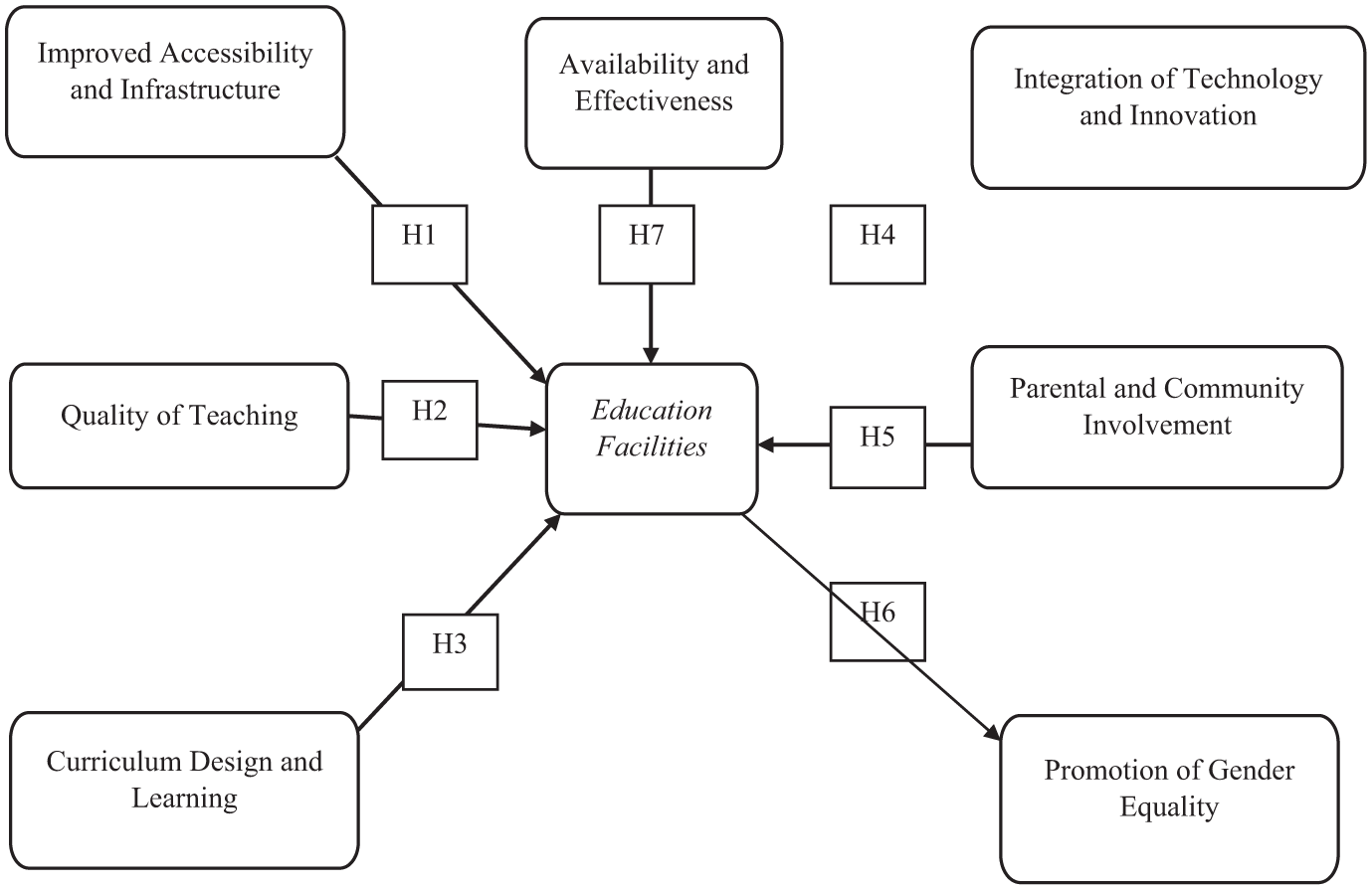
Diagrammatic representation of dependent and independent variables used in the research.
Data Collection
The data collection was facilitated by distributing questionnaires among the respondents in Northern India. The sampling strategy employed in this study was simple random sampling to select respondents. These methods were chosen to ensure that each individual in the population had an equal chance of being included in the sample, minimizing selection bias (Mweshi & Sakyi, 2020). A total of 554 responses were found to be relevant and accurate for further analysis. The study’s sample size was validated using G*power software. The software suggests a minimum sample size of 153 based on the predictive variable employed in the research (in this case, 7; see Figure A1). This indicates that the research has suitable samples for further analysis.
Data Analysis
We utilized IBM SPSS 26 to examine the demographic features of the Respondents (Table 2). Male respondents represented the majority (65.61%), followed by female respondents (34.39%); of the education credentials, 41.61% were in graduate courses, while the remainder were in senior secondary or below, and 20.60 were post-graduate courses. Most pupils (32.48%) are farmers in other occupations, such as homemakers, self-employed, government employees, laborers, and students.
Profile of Respondents.

Source. Original.
This study assessed the “construct validity” (convergent validity and discriminant validity) and “reliability” of the measuring items to ascertain their practicality. Composite reliability (CR) and Cronbach’s alpha are used to evaluate the measuring items reliability and internal consistency (Fornell & Larcker, 1981). The study also investigated the average variance extracted (AVE) to see if each construct was convergent (J. Hair et al., 2017). Bagozzi and Yi (1988), J. F. Hair et al. (2010) recommended a range for CR between 0.6 and 0.95, for Cronbach’s alpha around .6 and .95, and for AVE to be higher than 0.5. Table 3 demonstrates that all values lie within the specified limit, confirming the construct items’ reliability and validity.
Construct Reliability and Validity.

Note. EF = Education Facilities; IAI = Improved Accessibility and Infrastructure; QTP = Quality of Teaching; CDL = Curriculum Design and Learning; ITI = Integration of Technology and Innovation; AES = Availability and Effectiveness; PCI = Parental and Community Involvement; PGE = Promotion of Gender Equality.
Discriminant validity assessment is evaluated based on the Heterotrait-Monotrait ratio (HTMT) and the Fornell-Larker criterion (J. F. Hair et al., 2019). Discriminant validity was determined (Table 4) by HTMT values below 0.85 (Roemer et al., 2021). Fornell-Larcker criterion, the AVE is greater than the squared latent variable correlations consistent as per (Voorhees et al., 2016; Table 5). Thus, the scale utilized in this study is valid and reliable.
Discriminant Validity (HTMT).

Note. EF = Education Facilities; IAI = Improved Accessibility and Infrastructure; QTP = Quality of Teaching; CDL = Curriculum Design and Learning; ITI = Integration of Technology and Innovation; AES = Availability and Effectiveness; PCI = Parental and Community Involvement; PGE = Promotion of Gender Equality.
Fornell and Larcker.
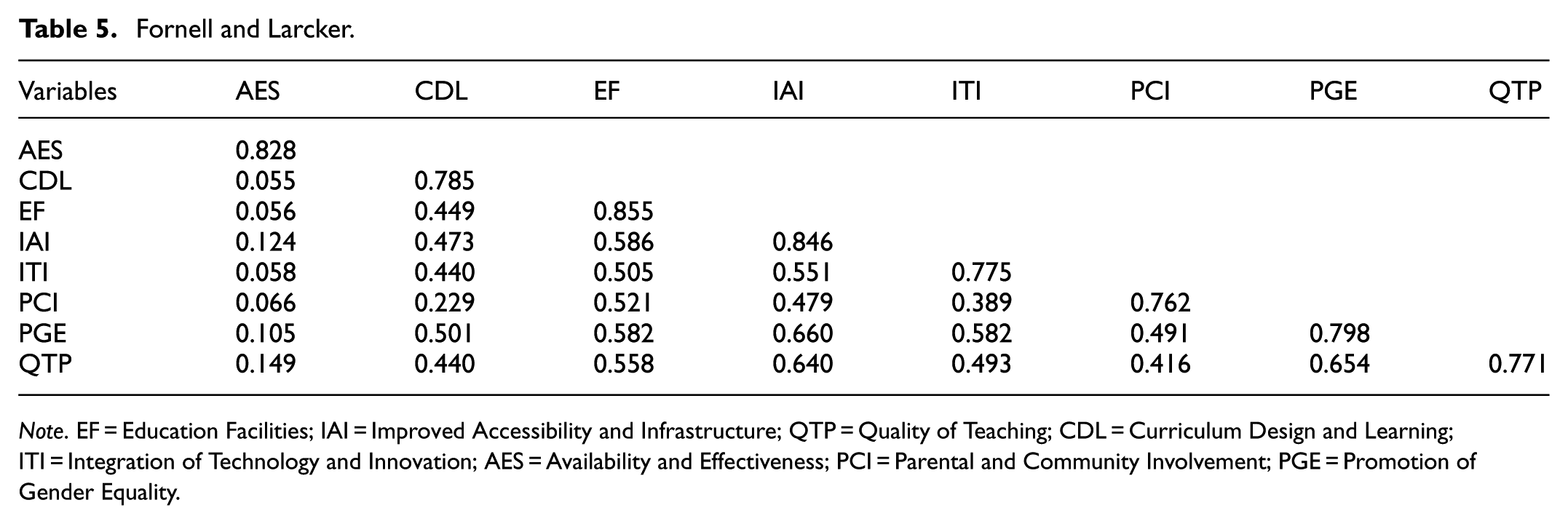
Note. EF = Education Facilities; IAI = Improved Accessibility and Infrastructure; QTP = Quality of Teaching; CDL = Curriculum Design and Learning; ITI = Integration of Technology and Innovation; AES = Availability and Effectiveness; PCI = Parental and Community Involvement; PGE = Promotion of Gender Equality.
Structural Model Assessment
The research used SEM to analyze the relationships among the variables by assessing the model’s fit with the collected data. The first step in deriving conclusions from SEM data is to examine “fit indices.” The fit indicator showed a significant fit with the assessment model in this study. The model’s GFI is 0.841, and CFI is 0.914, above the required threshold of 0.90 (Bentler, 1990). The previously stated fit indices confirm the model’s validity. The overall findings of the analysis are shown in Table 6.
Result of Goodness-of-Fit Indices (Measurement Model).

Bias Analysis
Multiple measures were implemented to diminish common method bias (CMB) to the greatest extent possible. The dependent variables are evaluated after the variables of independent constructs. The authors assured potential respondents that their responses would be kept confidential and utilized exclusively for research objectives in the Questionnaire. In addition, respondents were assured that there was no “correct” response to any of the inquiries and were advised to respond based on facts rather than their emotions (Podsakoff et al., 2003). CMB is not a concern, as it accounts for only 44.47% of the overall variation, according to data analysis conducted using Harman’s single-factor test (Podsakoff et al., 2003). The variance inflation factor (VIF) test findings are employed to evaluate the CMB in the study. All VIF values are less than 5 (Table 7), eliminating concerns regarding multi-collinearity (J. F. Hair et al., 2017). Consequently, the CMB is not a concern in this investigation.
Variance Inflation Factor and Factor Loading.

Source. Original.
Result
A structural model evaluation was performed after the measurement model provided reliable results (Figure 3 and Table 4). The PLS-SEM bootstrapping approach was used at a 5% level of significance. Bootstrapping is a non-parametric approach for evaluating structural model productiveness, including R2 and path coefficients (J. Hair & Alamer, 2022). Figure 3 displays the R2 value for Education Facilities, which is 49.9%. R2 shows a substantial coefficient of determination (J. Hair & Alamer, 2022) and excellent predictive capacity (Vinzi, 2010). Table 8 explains the findings of the hypothesis in which the relationship between various indicators of the educational facilities (EF is the dependent variable), with each indicator, the Improved Accessibility and Infrastructure (IAI), has a sample mean of 0.173, a standard deviation of 0.066. A t-statistic of 2.509, having a p-value of .014, indicates a statistically significant positive impact of IAI on EF. Similarly, Quality of Teaching (QTP) shows a strong positive effect on EF, with a mean value of 0.162, a standard deviation of 0.047, a t-statistic of 3.446, and a p-value of .001, indicating a strong significance. Curriculum Design and Learning (CDL) also shows a significant favorable influence, with a mean of 0.140, standard deviation of 0.045, t-statistic of 3.037, and p-value of .003. Integration of Technology and Innovation (ITI), with a mean of 0.112, standard deviation of 0.044, and a t-statistic of 2.590, with a p-value of .011, suggests a significant positive effect on EF. Availability and Effectiveness (AES) has a negative mean effect of −0.015 with a standard deviation of 0.032 and a low t-statistic of 0.967, leading to a non-significant p-value of .336, indicating no significant impact on EF. Parental and Community Involvement (PCI) show the highest significance level, with a mean of 0.238, a standard deviation of 0.042, a t-statistic of 5.811, and a p-value of .000, underscoring a robust positive association with EF. Finally, the Promotion of Gender Equality (PGE) shows a similar significant positive effect with an EF with a mean value of 0.110, a standard deviation of 0.044, a t-statistic of 2.587, and a p-value of .011.

Research model with path analysis value.
Summary of Hypothesis Testing.

Source. Original.
Discussions
The quality of education is influenced by various factors, which have been mentioned in Bandura’s Social Learning Theory and Social Cognitive Learning Theory. According to these theories, learning is affected by the social context through observation, imitation and modeling, which is important for shaping students’ academic behaviors and achievements.
The statistical results of the study reflect that improved accessibility and infrastructure factors such as easy accessibility of local schools, sufficient classrooms in schools, clean and well-maintained school premises, and adequate availability of toilets for students in school influenced the development and quality of education facilities. The theory determines the role of self-efficacy, where the effectiveness of student’s engagement with their educational environment is affected by the availability of supportive infrastructure, these outcomes emphasize the significance of accessibility, providing new perspectives on its effects. The significance of the result emphasizes the necessity of being more intentional in improving access to educational resources, despite the effect size being moderate and suggesting implications of other contributing factors, social cognitive learning theory determined the impact of digital tools and resources in teaching that enhance observational learning. The researchers stated that the re-infrastructure of the education system, especially the digital transformation, could yield better student learning outcomes (B. Williamson et al., 2023). Also, the role of infrastructure could be determined by comparing the outcomes of public and private institutions, which clearly shows that the learning outcomes of private institutions are much better than public institutions due to the availability of such technologies (Chakrabarti et al., 2009). Likewise, the study’s results revealed the significant impact of integration of technology and innovation on the development and quality of education facilities. It is observed that factors like the availability of adequate ICT facilities, integration of digital tools and resources in teaching, the inclusion of ICT skills as a part of school curriculum and quality internet access in the schools for educational purposes have a positive impact on the quality of education by improving students’ cognitive and social skills. Existing research also supports the results of the study such as (Johar et al., 2023) and (Du et al., 2023) study disclosed the application of adequate and appropriate use of ICT tools enhances self-directed learning and social interaction resulted in better teaching and learning outcomes and emphasized the need for schools and professional development bodies to improved ICT pedagogy. Further, during his study, Azim (2023) observed the positive and significant role of websites, applications, online systems and supporting tools on learning outcomes, especially during the online education era. Also, students must be involved in information literacy education to use these updated technologies. In their study, the same was stated (Du et al., 2023): information literacy education plays a crucial role in enhancing students’ learning outcomes and determining the factors affecting information literacy cultivation among students. This depicts that technology and innovation factors must be integrated with other factors to transform the education sector. These arguments are in favor of RQ1.
Further, the findings depict that the quality of teaching significantly and positively influences the effectiveness of education facilities in enhancing student learning outcomes, which denotes that high-quality teaching not only includes content delivery but emphasizes punctuality of teachers and students, subject clarity, use of a variety of teaching aids, encouragement and motivation of students to ask questions and engage in discussions, students approach teachers outside class hours and adapting and developing new methods of teaching plays a crucial role in improving learning outcomes among the students, these factors come up from the principles of modeling and reinforcement from Social Learning Theory. The existing studies also have similar findings explaining that the classroom environment and teacher competency significantly and positively impacted academic performance and student engagement (Jiang & Peng, 2024). The acceptance of this hypothesis indicates the need to prioritize teacher development initiatives in terms of training, mentorship, and professional development (Zaini et al., 2023). Also, improvement in curriculum design and learning outcomes leads to a significant enhancement in the quality of education facilities with well-structured curriculum that would improve educational facilities. This depicts that improvements in curriculum design must be implemented in association with other factors such as quality of teaching, technology, innovation, student support services, and involvement of parents and community, which might have positive and significant effects on the quality of education. In addition, the results of the study indicate significant results indicating that the quality and accessibility of education facilities are positively influenced by the availability and effectiveness of student support services. Observed during the study about Bandura’s idea determined student support services such as adequate career counseling services, active parent-teacher association, a variety of extracurricular activities and sports, psychological and emotional counseling services, and support services for students with special needs are available which in turn enhances academic performance of the students. In a similar study by Raaper et al. (2024), student support services’ significant and positive impact on their learning outcomes was determined during the Covid-19 pandemic. Accepting this hypothesis highlights the role of a supportive environment in enhancing the student’s learning outcomes and, as a result, improving the quality of education. These arguments are in favor of RQ2.
Moreover, the impact of parental and community involvement has a significant positive effect on the quality and development of education facilities, which depicts the importance of regularly informing parents about their child’s progress, providing opportunities for parents to be involved in school activities, collaborating with local communities for educational initiatives, support of community leaders for school activities and programs and participation of schools in local events and festivals. Similar results were published by Silitonga et al. (2023), stating the positive impact of social support groups, including peers and family, on improved access to education with suggestions to authorities to develop programs to provide necessary academic skills to the underprivileged groups; these findings resonate with Social Cognitive Theory highlighting the importance of social interactions and community involvement toward better learning outcomes. During their study, more factors were identified by Calderon-Villarreal et al. (2025); among them, parental engagement and support were some of the major factors affecting the academic performance of undergraduate students. It can be stated from the above facts that schools should integrate parents and the community in their regular operations to have an insightful impact on the student’s learning outcomes and quality of education. Lastly, it is confirmed by the results of the present study that gender equality and inclusivity have a significant impact on the quality of education, which Bandura also emphasizes in his Social Cognitive Theory, stating that social norms and roles, including gender, influence learning behavior. Various existing studies, such as Eriksson and Strimling (2023) in their study observed gender discrimination among girls and boys, stating that the number of boys attending school was more than that of girls if they belong to rich families, whereas in the case of low-income families, it was opposite. Also, it was determined that the large number of children in a family widens this gender gap, and it directly impacts the accessibility and quality of education. Browne et al. (2023) examined the changes in education attainment and found that with the government’s efforts in policies and programs, the inequality among various sections decreased, and quality education reached multiple sections of society. This highlights the necessity of a holistic approach that emphasizes integrating all factors to have significant results. These arguments are in favor of RQ3.
It is evident from the results that improvement in education facilities positively contributes to the achievement of Sustainable Development Goals (SDGs). The results indicated that improvement in educational facilities substantially works toward the achievement of targets related to SDG 4 by enhancing educational facilities, reducing inequalities, improving infrastructures, integrating technology and innovation, and involving parents and community in the learning process of students. Quality education empowers individuals with the knowledge and skills to contribute to economic development, which helps address issues related to poverty, inequality, health, and the environment (Tyagi et al., 2021). The integration of environmental education in the curriculum initiatives by state and national governments in terms of policies and schemes depicts the alignment of educational improvements and sustainability goals (Altassan, 2023). Moreover, achievements toward SDG 4 also impact the targets of other SDGs (Reimers, 2024). Further, the achievement of targets of SDG 4 would have a positive impact on the fulfillment of targets of other SDGs, such as SDG 7 (Affordable and Clean Energy), SDG 10 (Reduce inequalities) and SDG 13 (Climate Action) by incorporating sustainable practices in the education sector.
Theoretical Implications
This study supports the idea that education quality is shaped by multiple interrelated factors, as explained by established learning theories. It highlights the role of self-efficacy, social context, and technological advancements in enhancing students’ academic performance. The findings emphasize how infrastructure, teacher quality, digital tools, and community support improve learning outcomes. Furthermore, it underlines the importance of inclusivity and social engagement in education, suggesting that external influences, including family and community involvement, significantly impact students’ academic success.
Practical Implications
The research highlights the necessity of improving educational facilities, integrating technology in classrooms, and enhancing teacher training programs to foster better learning environments. Schools should focus on curriculum development incorporating digital literacy and innovative teaching methods. Strengthening student support services, such as career counseling and extracurricular activities, can improve overall academic performance. Encouraging parental and community participation in education can lead to more holistic student development. Additionally, aligning educational improvements with global goals, such as reducing inequalities and promoting sustainability, can contribute to long-term societal progress.
Conclusion
The study highlights the significant role of various factors in shaping the quality of education, focusing on the influence of infrastructure, technology integration, teaching quality, student support services and community involvement. The findings underscore the importance of improved educational facilities to enhance student learning outcomes. By improving infrastructure technology and fostering an inclusive and supportive learning environment, academic institutions can contribute to the achievement of SDG 4, which is aimed at ensuring inclusive and equitable quality education. Student support services played a crucial role in enhancing the quality of education by providing inclusive and accessible support and fostering better learning outcomes. The study also underscored the importance of promoting gender equality in educational institutions. Also, the study determined the need for teacher development, community engagement and gender equality to create a more effective and holistic education system.
Future Recommendation
It is recommended that government and educational institutions prioritize investments in infrastructure, especially focusing on accessibility, the provision of adequate facilities, and the integration digital tools in the classroom. To improve the learning results, schools should include ICT skills, ensure access to high-quality internet and develop ICT capabilities of the students. Teacher development programs, including innovative training, new teaching methods and technological integration, should be planned to improve educational quality. Additionally, schools must improve student support activities and strive to enhance parents and community involvement to encourage collaboration of students, parents and the community in the learning environment resulting in better outcomes.
Limitations
This study highlighted several limitations of related to the rural education infrastructure and access in northern India. While many aspects are covered including the need to improve infrastructure, integrate technology into education, and provide better teacher training; much more can be done to examine the impact digital divides have on race, rural and urban areas, and socio-economic differences which limit or affect access to technology. There also needs to be a performance comparison of how effectively gender equity policies have been implemented in different regions. Furthermore, while teacher training is mentioned as an issue in the study, the authors focus extensively on how important parent and community involvement is to student success, there is no discussion of comparing government-supported programs to community developed. The lack of specific technology tools identified within this study limits the effectiveness of the results in low resourced areas.
Footnotes
Appendix A
Details of Research Variables and Items, Along With Their References.

| Sl. No. | Variables | Items | Code | References |
|---|---|---|---|---|
| 1 | Education Facilities | I am satisfied with the overall quality of education at the school. | EF1 | Thomas et al. (2024) |
| 2 | The school has met my expectations in providing quality education. | EF2 | ||
| 3 | I recommend this school to other parents. | EF3 | ||
| 4 | A child is happy and motivated to attend school. | EF4 | ||
| 5 | Improved Accessibility and Infrastructure | The local school is easily accessible from our home. | IAI1 | Thomas et al. (2024) |
| 6 | The school has sufficient classrooms. | IAI2 | ||
| 7 | The school premises are clean and well-maintained. | IAI3 | ||
| 8 | There are enough toilets available for students. | IAI4 | ||
| 9 | Quality of Teaching | Teachers are punctual and attend classes regularly. | QTP1 | van de Grift (2014) |
| 10 | Teachers explain subjects clearly and effectively. | QTP2 | ||
| 11 | Teachers use a variety of teaching aids and methods. | QTP3 | ||
| 12 | Teachers encourage students to ask questions and engage in discussions. | QTP4 | ||
| 13 | Curriculum Design and Learning | The school curriculum is relevant and up-to-date. | CDL1 | Fisher et al. (2001) |
| 14 | The syllabus is completed on time. | CDL2 | ||
| 15 | The school balances practical and theoretical knowledge well. | CDL3 | ||
| 16 | Regular assessments are conducted to monitor student progress. | CDL4 | ||
| 17 | Integration of Technology and Innovation | The school has adequate computer facilities. | ITI1 | Lima et al. (2023) |
| 18 | The school integrates digital tools and resources in teaching. | ITI2 | ||
| 19 | Computer skills are part of the school curriculum. | ITI3 | ||
| 20 | The school has internet access for educational purposes. | ITI4 | ||
| 21 | Availability and Effectiveness | The school provides adequate career counseling services. | AES1 | Reyes-Fournier et al. (2020) |
| 22 | The school has an active parent-teacher association. | AES2 | ||
| 23 | The school offers a variety of extracurricular activities and sports. | AES3 | ||
| 24 | Psychological and emotional counseling services are available for students. | AES4 | ||
| 25 | Parental and Community Involvement | Parents are regularly informed about their child’s progress. | PCI1 | Walker et al. (2005) |
| 26 | Parents have opportunities to be involved in school activities. | PCI2 | ||
| 27 | The school collaborates with the local community for educational initiatives. | PCI3 | ||
| 28 | Community leaders support the school’s activities and programs. | PCI4 | ||
| 29 | Promotion of Gender Equality | The school promotes gender equality in its programs and activities. | PGE1 | Semykina and Linz (2013) |
| 30 | Girls and boys have equal access to all school resources and facilities. | PGE2 | ||
| 31 | The school addresses issues of gender-based violence and discrimination. | PGE3 | ||
| 32 | Specific programs encourage girls’ education. | PGE4 |

Ethical Considerations
This study used human volunteers in survey research but excluded human experimentation. All methods complied with Section 8.05 of the APA Ethical Principles of Psychologists and Code of Conduct.
Consent to Participate
All participants in the research provided informed consent.
Funding
The authors received no financial support for the research, authorship, and/or publication of this article.
Declaration of Conflicting Interests
The authors declared no potential conflicts of interest with respect to the research, authorship, and/or publication of this article.
Data Availability Statement
The datasets used in this research are accessible from the corresponding author upon reasonable request.*