




Abstract
There are limited studies that listed theories in the social media analytics context. This research aims to investigates the up-to-date social media analytics literature in corporate studies to provide a comprehensive examination of the theories related to social media analytics by reviewing the relevant literature. A systematic literature review guided by PRISMA protocol was utilised to analyse the data. This study combined articles that investigated social media analytics theories in corporate studies. Articles published in the past two decades were selected for this systematic review. The research findings indicated that TAM1, TAM2, TAM3, UTAUT1, UTAUT2, UTAUT3, CST, DOI, ISS, ATA, DI theory, and TOE model are the most prominent theories and models that have been used in social media analytics literature. The results of this systematic review offer a list of theories and their implication to help other researchers implement more studies on social media analytics research area.
Plain Language Summary
This study presents a systematic literature review (SLR) of social media analytics theories in corporate studies. By analyzing 58 articles published over the last two decades, the research identifies prominent theories such as TAM1, TAM2, UTAUT1, UTAUT2, CST, DOI, ISS, and others. The review, based on PRISMA protocol, covers a range of databases including ProQuest, ScienceDirect, Scopus, and Google Scholar. The findings provide a comprehensive list of theories that have shaped social media analytics in corporate research, helping to guide future studies and offering insights into the application of these theories in the corporate context.
Introduction
Theories provide explanations for natural or social behaviour, events, or phenomena. A scientific theory is a set of constructs (concepts) and propositions (relationships between those constructs) that together give a logical, systematic, and cohesive explanation of a phenomenon of interest under certain assumptions and boundary conditions (Bacharach, 1989). A model is a phrase that is frequently used while discussing theory. A model is a representation of all or part of a system that is built to research that system (e.g., how it works or what causes it). A model attempts to depict a phenomenon, whereas a theory seeks to explain it. Models are frequently employed by decision-makers to make critical judgments based on a specific collection of data. For example, marketing managers may use models to determine how much money to spend on advertising for various product lines depending on characteristics such as the previous year’s advertising costs, sales, market growth, and rival items.
The theoretical background is crucial within the field of business research to progress the understanding and its applicability. According to Kerlinger (1979) theories include associated terms, definitions, and statement declarations that come up with a logical structure of phenomena; they reveal characteristic interrelations of certain variables. Theories can be present in research as concepts, assumptions or images that help in the explanation and prediction of phenomena. Theories are used to maintain consistency and organisation in study proposals, being common in quantitative research and less in quantitative research, although increasing; they are the frame of sound scientific endeavour (Schwandt, 2014).
Big Data refers to vast quantities of data that traditional data management tools cannot handle effectively. These immense data sets are too large, complex, or fast-changing to be processed and analysed using standard methods and software. As a result, specialised techniques and technologies are required to manage, store, and analyse big data. This includes utilising advanced algorithms, distributed computing, and powerful storage solutions. The sheer volume, variety, and velocity of big data present unique challenges, necessitating innovative approaches to derive meaningful insights and make informed decisions. In essence, big data represents a significant shift from traditional data handling practices, demanding more sophisticated and scalable solutions to harness its full potential (Faaique, 2023).
Recently, the growing trend of big data has posed new challenges and possibilities for every business and researcher. Big data is distinguished by its size, growth rate, range and unpredictability; storage and analysis of big data demand better and more sophisticated techniques (Akoka et al., 2017). Such a shift has increased awareness of big data analytics in diverse fields, with social media analytics (SMA) becoming one of its categories. SMA encompasses the process of gathering, tracking and analysing user engagement and posts on social media platforms and applications, including Twitter, Facebook, and Instagram, amongst others, as prescribed by Rathore et al. (2016). This way, SMA helps to reveal patterns, study customers’ behaviour, and improve marketing approaches.
Background
The role and importance of social media sites have escalated over the years such that they now impact virtually all communications, business, and culture. In the form of videos, pictures, and text, Instagram, LinkedIn, and TikTok, amongst other platforms, host billions of users that create data in massive proportions daily, affording businesses the capability to understand customer trends and markets (Miah et al., 2017). When leveraged well, this data helps organisations better interact with their audiences more strategically and overall leads to better decisions being made. SMA includes the number of followers and the extent of users’ engagement, and more than that, it includes an understanding of the customers’ sentiments and trend recognition. Zeng et al. (2010), therefore, define SMA as the process of developing and using tools to measure, analyse, and monitor social media.
In addition to customers’ attitudes, SMA allows viewing of competitors’ activities, which extends the understanding of the market even further. For instance, Garg et al. (2020) show that SMA can help increase the level of customer interaction and organisational outcomes in the retail/IT industries. Many theoretical conceptualisations, including the Technology Acceptance Model, have been used for exploring SMA in different settings. For example, Alyoussef and Al-Rahmi (2022) employed TAM for understanding big data adoption in the education sector, similarly, Liu (2022) incorporated natural language processing with TAM for analysing user reviews. Likewise, Madila (2024) used to assess the effect of SMA on tourism SMEs. The predictions made in these studies further affirm the role of theory in explaining the use of SMA in various business sectors. Nevertheless, the majority of the current works have a particular framework or application, and, therefore, there is a lack of comprehension of the key theoretical contributions of SMA in corporate settings.
Recent scholarship has highlighted a significant paradox in Social Media Analytics (SMA) research: while its adoption in corporate environments continues to accelerate, theoretical development remains notably constrained. Our systematic review of the literature reveals that existing research predominantly focuses on practical applications or relies heavily on singular theoretical frameworks, particularly the Technology Acceptance Model (TAM) (Al-Qaysi et al., 2020; Karimiziarani, 2023). Despite the apparent diversity of theoretical approaches in SMA research, there has been no systematic effort to categorize and analyze these theoretical underpinnings comprehensively. Even industry-specific studies, while offering valuable insights into sector-specific SMA applications, often lack robust theoretical foundations that could enhance our understanding of corporate SMA practices.
This theoretical gap presents a critical opportunity for advancing both academic understanding and practical applications of SMA in corporate contexts. Therefore, this study aims to systematically analyse and synthesize the theoretical foundations underpinning SMA research in corporate studies, with particular attention to their practical implications for business operations. To address this research objective, we pose three fundamental questions:
What are the predominant theoretical frameworks employed in corporate SMA research?
How do organisations translate these theoretical frameworks into practical SMA applications?
What theoretical gaps exist in current corporate SMA research, and what directions should future research explore?
Multiple systematic literature reviews (SLRs) have discussed the features of social media analytics (SMA), but they do not conduct a comprehensive, theory-based mapping with a view to relevance in corporations. Table 1 below compares four recent SLRs using a comparison table that helps in determining how this review is different and what value it creates.
Comparison of Relevant SLRs on Social Media Analytics.

Note. SEM = structural equation modeling; SLR = systematic literature review; SMA = social media analytics.
The contributions of this study are threefold. First, from a theoretical perspective, this research advances our understanding of SMA and big data analytics by providing a comprehensive mapping of theoretical frameworks employed in this domain. This mapping not only catalogues existing approaches but also identifies potential theoretical intersections and gaps that warrant further investigation. Second, methodologically, this study employs a rigorous systematic literature review (SLR) approach to analyze and synthesize theoretical frameworks in SMA research. This methodological approach ensures a comprehensive and unbiased examination of the theoretical landscape, providing a robust foundation for future research. Finally, from a practical standpoint, this research offers valuable insights for both researchers and practitioners. For researchers, it provides a comprehensive overview of theoretical frameworks applicable to SMA studies, facilitating more informed theoretical choices in future research. For practitioners, it bridges the gap between theoretical understanding and practical application, enabling more effective implementation of SMA initiatives in corporate settings.
Research Methodology
PRISMA stands for Preferred Reporting Items for Systematic Reviews and Meta-Analyses, which is a guideline for conducting a systematic literature review. PRISMA focuses on the review report that assesses randomised trials, but this can also be used as the basis for reporting systematic reviews for other kinds of research (Moher et al., 2009). However, Sierra-Correa and Cantera Kintz (2015) asserted that PRISMA also fit the social sciences because it articulated the research questions towards the requirement of a systematic review even though PRISMA is typically used in medical research and, at the same time, provides an understanding of the inclusion and exclusion criteria of a certain study. Furthermore, PRISMA studies a huge amount of scientifically peer-reviewed publications up to a certain period, which makes it possible to perform a precise search of terms concerning the analysis of social media. Other than that, PRISMA can be used to keep coded information regarding future reviews of social media analytics.
Data Resources and Search Strategies
The review methods of the present study were conducted using many databases, including ProQuest/ Clarivate, Sage, ScienceDirect/ Elsevier, Scopus/ Elsevier, Emerald, Springer, IEEE, Web of Science/ Clarivate, Google Scholar, Taylor & Francis, and Wiley since they are reliable and contain articles from nearly all fields including social media related fields. However, it should be mentioned that there are a lot of flaws and an absence of some sources in every database, including Scopus and Web of Science. Using the aforementioned databases, relevant articles were retrieved through the repeated search process that was conducted in these sources.
The Systematic Review Process for Selecting the Articles
Identification
The process of conducting the systematic review in selecting several relevant articles for the present study involved three steps. The first step is the identification of keywords, and the second step is the searching for related and similar terms according to the thesaurus, dictionaries, encyclopaedias as well as previous studies. The databases were combed through using main keywords ([“social media analytic*”] OR [“social media theory*”] OR [“big data analytic*”] OR [“big data theory*”] OR [“big social media data”] OR [“social media data”] OR [“social media metric*”] AND [“corporate study*”] OR [“corporate research*”]).
Screening
The first pass of screening was done to filter out duplicate papers from the database. At this stage, 165 articles were removed, while at the second stage, the researchers screened 283 articles based on the inclusion and exclusion criteria. The first criterion was publication type, and the researchers decided to restrict the study only to published articles. Therefore, this further means that non-published work was kept out of the current study. It should also be mentioned that only articles written in English were considered in the present review. Also, the type and the time frame used in this strategy were selected intentionally: the 20 years were chosen as the period (2004–2024). Apart from that, only those articles which presented full-text data were searched for. Also, to enhance the likelihood of identifying related articles, articles that have been published in the field of big data analytics and social media analytics were involved. In total, based on each of these criteria, 385 articles were excluded from the analysis.
Eligibility
Of the 184 articles that were developed for the third stage, 184 correspond to the eligibility. At this stage, but on a more important note, only the titles, abstracts and the main contents of all the identified articles were reviewed to ascertain whether they met the inclusion criteria and were appropriate for use in the present study to meet the objectives of the current research. Therefore, a total of 127 articles were removed from the study as they did not feature social media analytics or big data analytics. Lastly, 58 articles are filtered down to the level that is ready for analysis.
Included Articles
All research papers chosen were representative of social media analytics, which is the context that this study aims to address in detail using a qualitative technique for article selection. Articles published in the past two decades in full text were selected for this systematic literature review. In total, 58 articles were finalised for this systematic literature review
Data Coding and Analysis
The collected social media analytics studies were classified into the database, data analysis, theory, and location.
Quality Assurance Checklist (Appraisal of Quality)
In order to maintain the quality of the selection process, all the confirmed articles underwent a quality assurance check. In this process, all selected articles were assessed by the members using the PRISMA checklist. Three of them were screened based on their background in either social media, corporate communication, or big data. Through the meta-analysis evaluation, the effectiveness of articles must be confirmed and approved by the committee members. Some queries were debated and argued out to deduce the relevance of articles to include. This process was paramount to achieving the main objective of assessing the applicability of the provided articles to the defined criteria. The final set concerning articles was established when all members of the evaluation committee complied.
The systematic review conducted is depicted in the flowchart of the current PRISMA checklist in Figure 1. Existing articles were searched using electronic sources, using a range of keywords to search. All articles were determined by searching the databases in the publications’ reference lists only. All the articles that have been selected after going through the screening criteria are from the last two decades. At the end of the qualitative synthesis for confirmation, the remaining set of articles was identified with the required characteristics as highlighted.
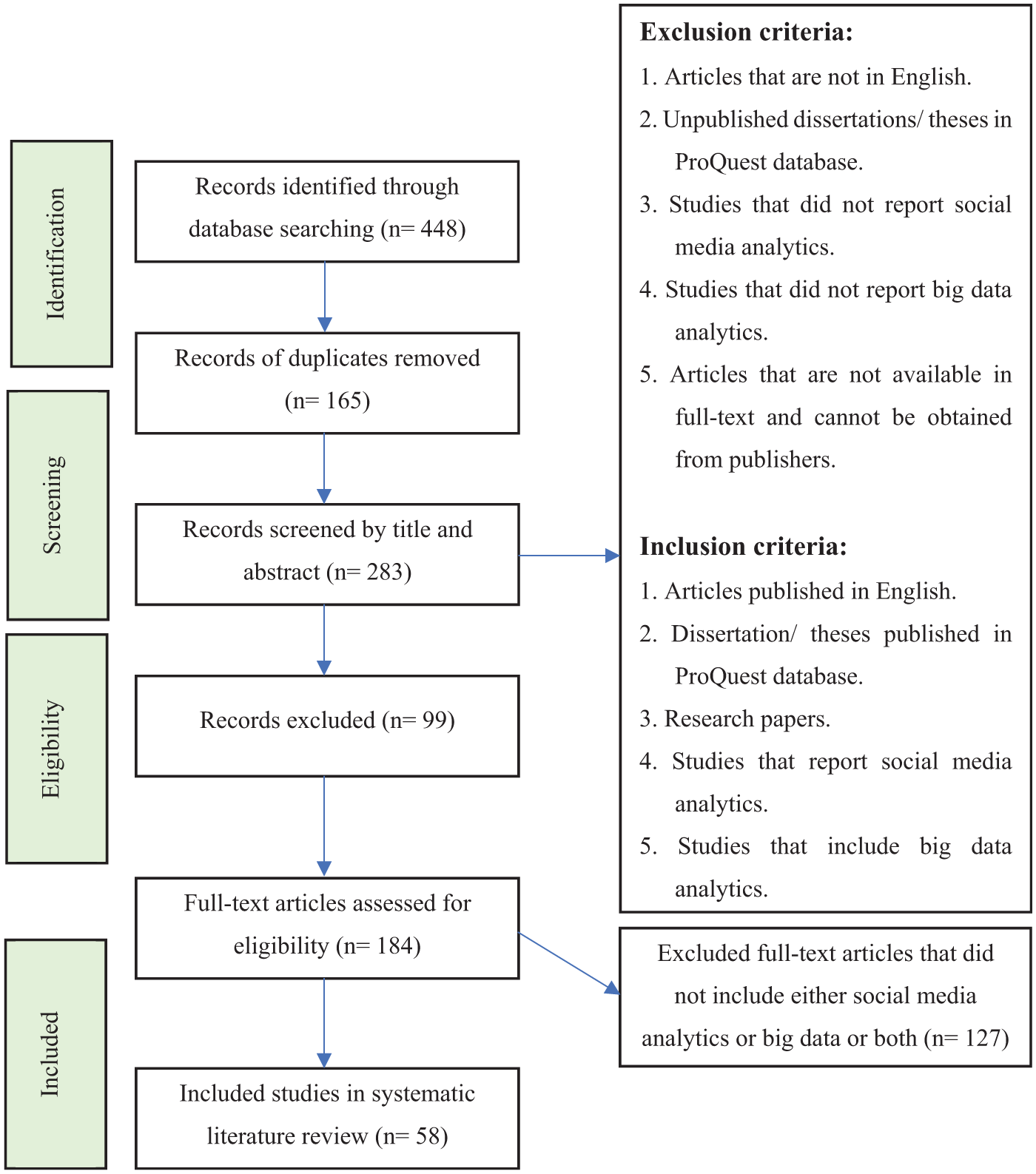
The PRISMA flow diagram illustrates the process of selecting articles for this systematic literature review.
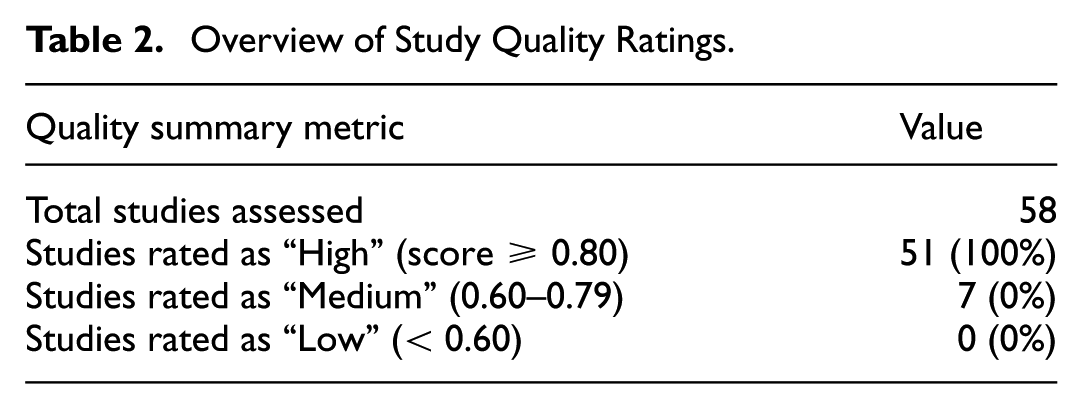
Regarding the qualitative assessment of quality, Petticrew and Roberts (2008) proposed that the researchers should consider the quality in three states: high, intermediate, and low. Quality assessment in CC-SLR methodology prioritises high and intermediate-ranked articles while excluding low-quality ones. The evaluation process acknowledges that methodological perfection is unrealistic, and articles may receive different quality ratings across various assessment tools. The quality assessment aims not to identify flawless articles but to select literature that adequately addresses the review’s objectives, balancing rigour with comprehensive coverage. Kmet (2004) checklist for assessing the quality of qualitative studies was used in the present research paper (see Appendix 1) (Table 2).
Overview of Study Quality Ratings.
Results
Descriptive Analysis
Publication by Year
The publication trend of the articles over the years shows an increasing trend in the amount of academic interest in carrying out social media analytics in the corporate sector. The number of publications has grown over the years, and it illustrates the growing understanding and acknowledgement of social media analytics as an essential tool in managing business actions. This trend demonstrates an increased academic interest in line with increased digitalisation in corporate settings. Publication by year is shown in Figure 2.

Publication trend by year.
Journal Contributions
The review indicates that there is a relative diversification of the journals that engage in the discourse of social media analytics. They consist of 48 journal articles, one book chapter, five conference proceedings, and six dissertations. Journals are Computers in Human Behaviour, which has three articles; International Journal of Information Management, which has two; and Technological Forecasting & Social Change, which has four articles. This is an indication that the topic is multidisciplinary and has interaction with technology, business and social sciences.
Publication by journals is shown in Table 3.
List of Selected Articles From Journals.

Publication Types
The majority of contributions are from peer-reviewed journal articles, which form 81% of the entire data set. This predominance would spare no doubt that there is an overreliance on methodologically sound research. However, thesis (6) and conference proceedings (5) are included, signifying the fact that this field is receptive to novel ideas, which are usually first debated and discussed in conferences before actually finding a place in peer-reviewed journals. These contributions are beneficial in enriching the discourse because they have introduced new perspectives on practice and theoretical reflection. The included study types in this SLR are shown in Table 4.
Publication Type Included in SLR.

Note. SLR = systematic literature review.
Methodological Approaches
This paper identified methodological heterogeneity in the number of reviewed studies, which indicates the multifaceted approach to the analysis of social media analytics. The survey, interview and archival data collection methods are typical, showing that there are both quantitative and qualitative approaches involved. Sophisticated techniques, including sentiment analysis, occurred often, which pointed to the fact that this discipline utilises empirical findings to study theoretical concepts. Types of methodology are depicted in Figure 3.

Types of methodology.
Data Collection Techniques Used in the Included Articles
The SLR combines different data collection methods across the articles, which can be seen as a highly rigorous methodological framework. The methods employed are mainly surveys, interviews, and archival data collection, revealing most of the field’s primary and secondary data collection. Surveys are often used to gather quantitative data from respondents, comprising corporate executives and employees, concerning their views and uses of social media analytics. Interviews, on the other hand, offer qualitative data collection. This helps to understand some of the decision-making and key issues likely to be encountered when adopting analytics solutions. Archival methods rely on previously collected data from published research articles, Complexity industry reports, and organizational cases, giving it a historical and reference perspective. The use of different data-gathering methods guarantees a broad perspective on the importance of social media analytics in business environments. Nevertheless, an emphasis on the single methods of data collection, like surveys, can lead to some specific bias and question the reliability of the findings. The use of mixed-method research is another method of carrying out research that could help bring accuracy and depth into future research work. The data collection is shown in Figure 4.

Data collection techniques used in SLR.
Data Analysis Techniques Used in the Included Articles
The studies analysed in the current paper highlighted diverse methods of data analysis that depict the advancement in the analysis of social media. Quantitative paradigms gain prominence as the principal research strategies identified include statistical methods, machine learning algorithms, and sentiment analysis. Numerical methods involving regression analysis and structural equation modelling (SEM) are used enthusiastically to hypothesise and infer about interrelated variables. Articles on advanced analytics tend to use Python to analyse and extract decision-making and predictive rules from large social media data. Keyword extraction is used to assess the opinions and emotions of users as well as the attitude towards products and services in a particular domain, for instance, in the form of reviews and comments on social networks and mass media. Nonetheless, the low utilisation of qualitative methods, including thematic analysis, indicates that there is a missing link in explaining contextual and narrative approaches to business SCM analytics. The data analysis techniques are shown in Figure 5.

Data analysis techniques used in SLR.
Geographic Distribution of Included Studies
The articles under review cover a broad spectrum of geographical settings, which is evidence of the international focus on corporate social media analytics studies. Most of the research was done in developed countries, including the United States, the United Kingdom, Germany, Australia, Finland, and Ireland, reflecting the leadership of these countries in implementing and assessing modern social media trends. Further, China, Malaysia, Indonesia, Saudi Arabia, Turkey, and South Africa are rising economies, which have been highlighted in the study to reflect the increasing trend of research on social media analytics in developing global economies. Some of these countries are Jordan, Egypt, Oman, and UAE; the region has shifted its focus towards digital transformation. In addition, investigations carried out in the Brazilian context, Thailand, Ghana, and Caribbean Areas illustrate attempts to examine the application of SMM in various cultural and economic environments. The top 10 countries of origin for the sample include Belgium, Egypt, Germany, Greece, Ireland, Italy, Poland, Portugal, Turkey, and the United Kingdom, with participating organisations from diverse industries and of varying sizes across Europe. These geographical distributions are shown in Figure 6.
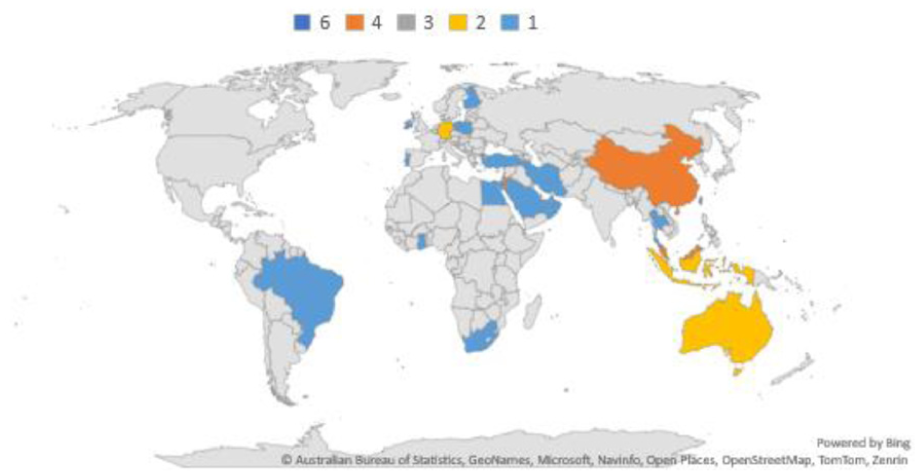
The countries discussed in the included studies.
Co-Authorship Patterns
The co-authorship analysis, performed through VOSviewer, yielded 56 clusters, 155 items, and 209 links, which give an overall link strength equivalent to 216. The biggest set included ten items connected by 45 links, which means that researchers collaborate closely with each other. This connectedness indicates an active and thriving body of scholars in which publications and authors are constantly working together, thus allowing for the exchange of ideas across different theories.
Keyword Analysis
The keyword analysis gave 31 clusters with 118 items, 179 links, and a link strength of 189. The largest cluster, which was further divided into four sub-cluster, had 12 items and 22 links. This clustering identifies key areas that include predictive analytics, user engagement, and business decision-making in contextual social media. Here, the focus is on how these themes relate to the overall goals of the existing research on corporate social media analytics. Keyword co-occurrence analysis is shown in Figure 7.

Keyword co-occurrence analysis.
Temporal Trend in Theories
An examination of the use of the theory over the years shows that there is a clear shift in interest in the research. Initial research (2012–2015) was based on previous models, including TAM, TRA, and DOI, exhibiting a strong emphasis on the personal acceptance of technology. Between 2016 and 2019, theories such as UTAUT2, TAM3, and constructivist theories became prominent, extending the theoretical domain into the experience, social influence, and learning. A gentle movement into affective models (ATA), organisational frameworks (TOE), and strategic theories such as CST and Disruptive Innovation Theory was evident in the period between 2020 and 2024. This trend has indicated a growing discipline that has become inclusive of user behaviour, emotional criteria, organisational preparedness, and strategic alignment. The fact that multi-theory and hybrid frameworks are increasingly used demonstrates the striving of the researchers to deal with the complexity of corporate social media analytics (Figure 8).
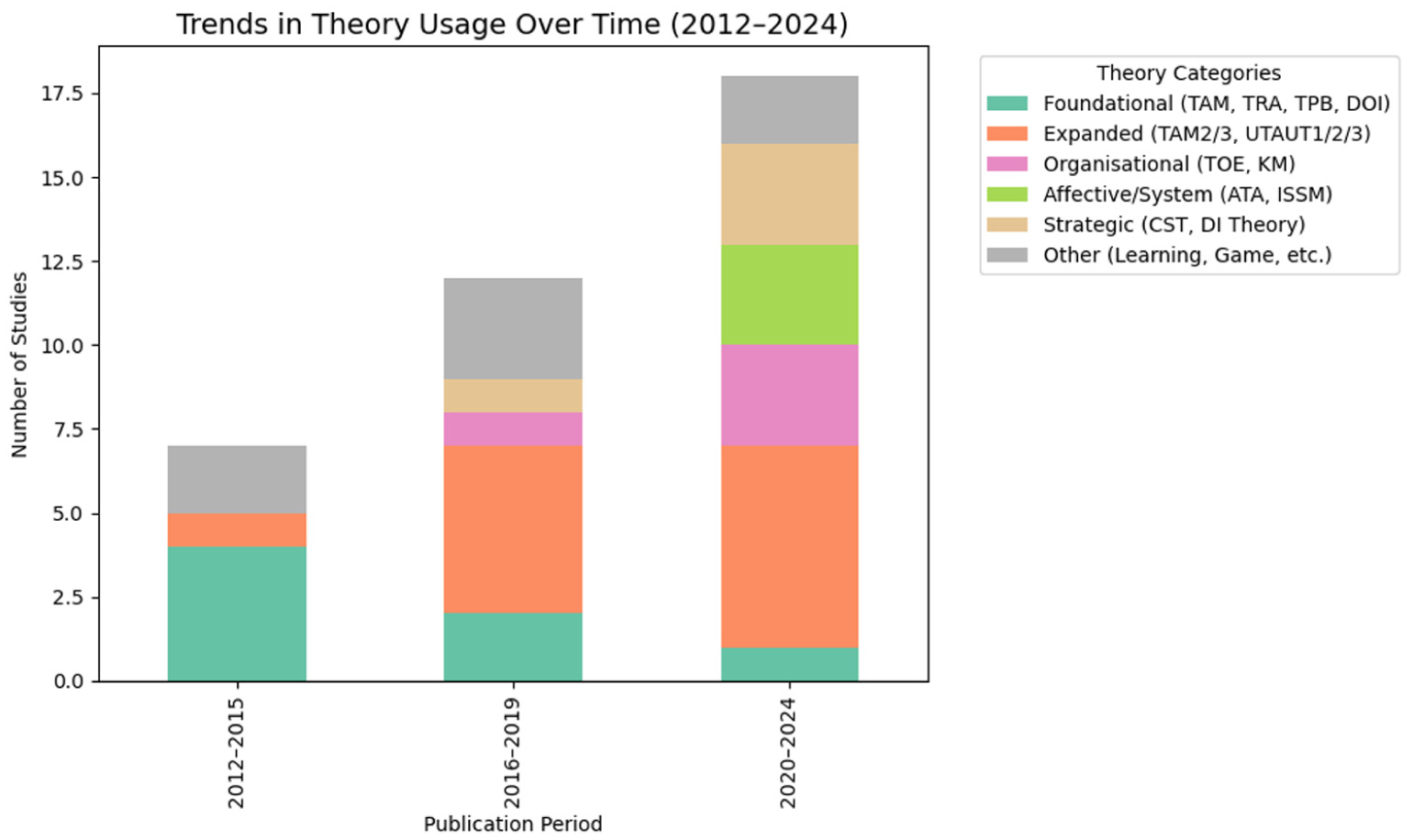
Trend in theory usage over time (2012–2024).
Predominant Theories in Social Media Analytics
The systematic literature review identifies different theories as central to explaining the adoption and utility of social media analytics in corporate contexts:
Technology Acceptance Model (TAM): TAM is probably the most widely known and still widely used model presented by Davis in 1989. It proposes that users’ attitude toward the technology is determined by perceived usefulness (PU) and perceived ease of use (PEOU). An extension to the technology acceptance model (TAM) was developed by Venkatesh and Davis in 2000. It outlined perceived usefulness and usage intentions as they related to the processes of social influence and cognitive instrumental. TAM2 aimed to enhance the explanatory power and predictive capability of the original model by incorporating additional factors and constructs. Venkatesh and Davis (2000) incorporate TAM2 and the model of perceived ease of use with its factors and introduce a new model, namely the technology acceptance model 3 (TAM3). TAM3 included factors that are useful for the managers for their decision-making intercessions (Akar & Mardikyan, 2014; Al-Qaysi et al., 2020; Ali et al., 2017; Alwreikat et al., 2023; Alyoussef & Al-Rahmi, 2022; Ayasrah, 2019). TAM, TAM2, and TAM3 models are shown in Figure 9 (B), (A), and (C), respectively.

TAM, TAM2, and TAM3 models (B, A, C represents TAM, TAM2, and TAM3 respectively).
Unified Theory of Acceptance and Use of Technology (UTAUT): Derived from the theoretical integration of prior models according to Venkatesh et al. (2003), UTAUT focuses on performance expectancy, effort expectancy, social influence, and facilitating conditions. Subsequently, some other extensions of UTAUT have been developed, such as UTAUT2, which adds hedonic motivation, price value, and personal innovativeness, while Farooq (2017) introduced the UTAUT3 framework, including a new independent variable, ‘Personal innovativeness in IT’. The UTAUT3 model has proposed that PE, EE, SI, HM, HB, FC, and personal innovativeness (PI), along with behavioural intention (BI) to usage behaviour, are the prime factors leading to the intention to use technology (Akbar, 2021; Al-Adwan et al., 2018; Ali et al., 2017; Ayasrah, 2019; El Alfy & Kehal, 2024; Gertze & Petersen, 2024; Gupta et al., 2023; Oechslein et al., 2014; Pinto et al., 2022). UTAUT, UTAUT2, and UTAUT3 models are shown in Figure 10 (A), (B), and (C), respectively.

UTAUT, UTAUT2, UTAUT3 models.
Competitive Strategy Theory (CST): Michael Porter in his CST (1980) highlights approaches such as cost leadership, differentiation, and focus for gaining competitive advantage. The theory aids in understanding how analytical insights help in identifying consumer value and thus form a strong theoretical framework to have an evaluation of the fundamentals of social media analytics in corporations today (Agyapong et al., 2016; Williams Smith, 2021) (Figure 11).

Competitive strategy theory.
Diffusion of Innovation (DOI) Theory: To elaborate, Rogers (1962) developed DOI to explain the extent of adoption of innovations in social systems. These elements are innovation attributes (relative advantage, compatibility, complexity), and the roles of the innovators and first adopters. This framework has been applied often in studying how corporations and industries adopt social media analytics over the same period (Bhatt et al., 2023; Bhatti et al., 2021; Grover et al., 2019; Nyamboli, 2021; Reinhardt & Gurtner, 2018; Saheb, 2020; Wright, 2019) (Figure 12).

Diffusion of innovations.
Information System Success Model: DeLone and McLean (1992) integrated the previous measures of success and put forward the ISS model with six factors. Some of the relationships listed in DM1992 have been empirically examined in subsequent published works, and the various postulated relationships have been generally affirmed. The ISSM was conceived to offer a parsimonious yet holistic view of IS success by identifying, describing and explaining the relationships among six of the most important dimensions of IS success along which information systems have been traditionally evaluated (i.e., information quality, system quality, service quality; system usage intentions, user satisfaction and net system benefits) (Hii et al., 2023) (Figure 13).

Information systems success model.
Affective Technology Acceptance Model: Hoong et al. (2017) proposed the Affective Technology Acceptance (ATA) model, which is an extension of the TAM, and hypothesised that the effect of PA NA has a direct relationship with the intention to use the technology, which is also called behavioural intention. Effect pertains to simple feelings like feelings and moods, which can be positive to negative and high to low. Whereas negative affect (NA) refers to experiences such as feeling nervous, angry, or afraid, positive affect (PA) can include feeling enthusiastic, excited, or alert. The effect can guide a person’s focus, assist in decision-making, and control behaviour. This relationship has been evidenced by research. Other research has shown that PA and NA affect the acceptance of technology in the case of a mobile phone (Hoong et al., 2017; Jessup et al., 2023; Mnif et al., 2021a) (Figure 14).

ATA model.
Disruptive Innovation Theory: Christensen (1997) defines disruptive innovation as in technologies or processes that disrupt the status quo. Social media analytics is such a disruption that reconstructs customers’ engagement and offers means of fresh strategic insights to organisations on consumers’ behaviour (Bhatt et al., 2023; Reinhardt & Gurtner, 2018; Wright, 2019) (Figure 15).

Key factors and relations of disruptive innovation theory.
Technology Organization Environment (TOE) Framework: The model used in this study is the Technology, Organization, Environment model, which was constructed in 1990. This framework complements corporate attempts at the internalisation of social media analytics by simultaneously considering internal capacity and external demand (Choi & Siqin, 2022b) (Figure 16).

Technology -organization -environment framework.
The prominent theories in the reviewed literature are shown in Table 5.
The Prominent Theories.
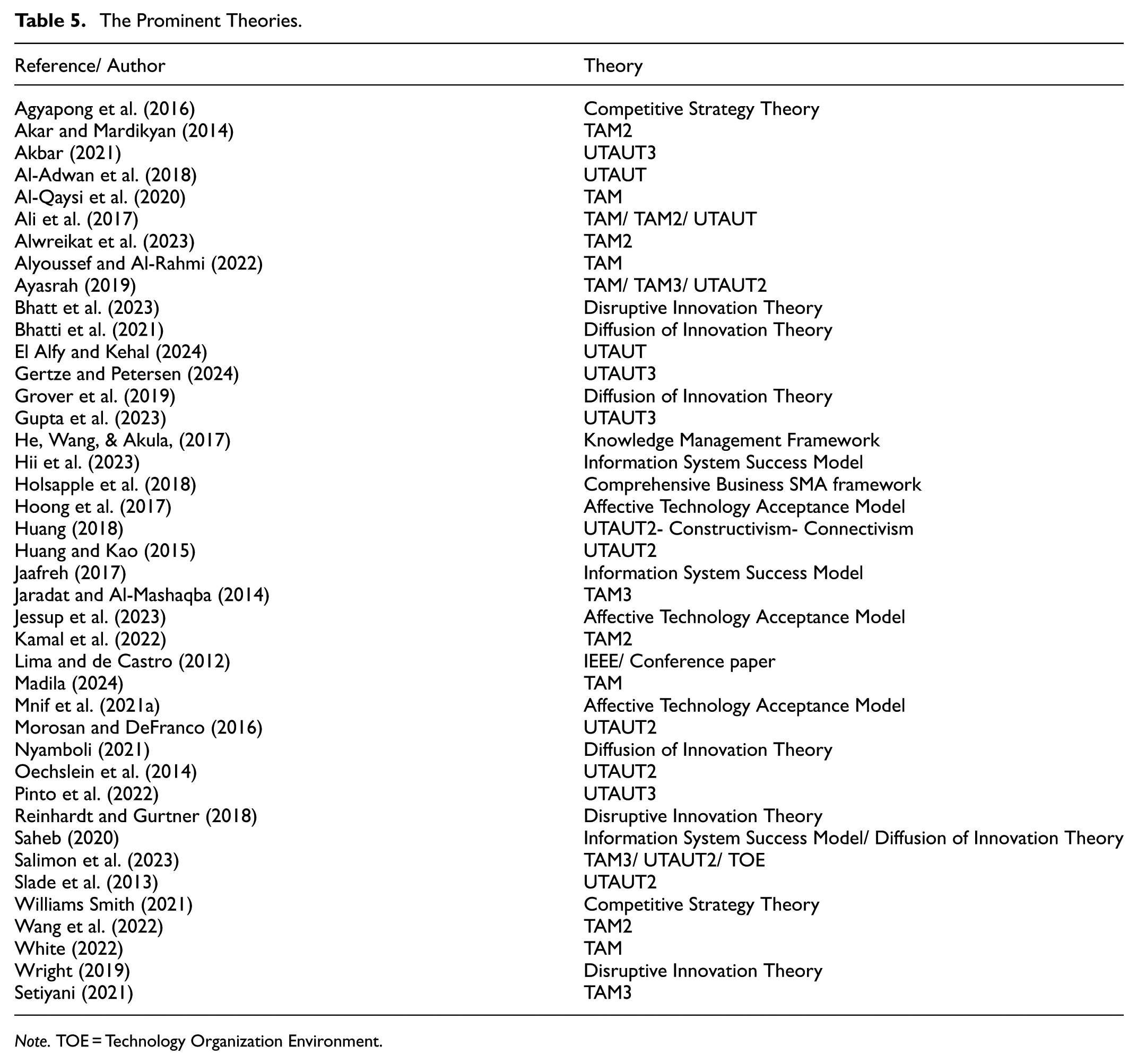
Note. TOE = Technology Organization Environment.
To facilitate theoretical comparison, Table 6 summarises the scope of each of these theories, their main strengths, and limitations as suggested in the available literature. Such synthesis helps to better understand where each of the frameworks can be useful in corporate social media analytics, as well as where they require additional work.
The Summaries of Each of These Theories.

Note. ATA= Affective Technology Acceptance; CST= Competitive Strategy Theory; DI= Disruptive Innovation; DOI= Diffusion of Innovation; ISSM= Information System Success Model; TOE= Technology–Organization–Environment;
Application of Theories in Corporate Practices
Such theories are used by corporations for the adoption, integration and optimisation of social media analytics. Specific applications include:
Guiding Technology Implementation: TAM and UTAUT models are widely used to develop analytics tools for easy usage and quantifiable advantages. Corporations can enhance usage among employees and other stakeholders by attempting to influence two-key beliefs about a given technology: perceived ease of use and perceived usefulness (as defined as performance expectancy) (Akar & Mardikyan, 2014; El Alfy & Kehal, 2024).
Strategic Decision-Making: According to Competitive Strategy Theory, there are a number of frameworks that can be used by organisations in order to understand the markets and occupy competitive positions. Porter explained that using social media analytics in conjunction with CST helps businesses accomplish differentiation and obtain knowledge about customer preferences (Williams Smith, 2021).
Understanding Innovation Diffusion: The DOI Theory is employed to plot the progression of the diffusion of new analytics tools in the organisational structures. The deployment of innovation in organisations is thus dependent on the identification of early adopters and the measurement of innovation attributes to fit key strategies (Grover et al., 2019).
Addressing Disruption: As per the principles of the Disruptive Innovation Theory, social media analytics are revolutionising the world. For example, its capability to provide real-time information shifts the relationship dynamics with customers, which opens new opportunities for competitive differentiation (Bhatti et al., 2021; Grover et al., 2019; Nyamboli, 2021; Saheb, 2020).
Balancing Internal and External Factors: It helps corporations define internal technological readiness, organisational structure, and external market demands to take a systemic view of social media analytics integration for corporations (zi & Siqin, 2022).
In short the identified theoretical models in this review have been used in various business and corporate environments, and this makes the theoretical models quite useful. As an example, TAM and UTAUT variations were recurrently employed to recreate consumer adoption of technologies in the education(Al-Qaysi et al., 2020; Alyoussef & Al-Rahmi, 2022), tourism (Madila, 2024), retail and banking industries(Slade et al., 2013), assisting organisations to optimise the ease of use of the systems and consumer interest. The theory of Diffusion of Innovation (DOI) (Bhatti et al., 2021; Grover et al. 2019a)was notable in plotting innovative adoption in the sectors of logistics, healthcare, and finance, and provided a strategic aspect of staggered implementation.
Implications for Business Practices
The integration of these theories into corporate practices offers several strategic advantages: Enhanced Technology Adoption: Through behavioural factors and contextual environments, models like TAM, UTAUT and TOE can be aligned easily to social media analytics tools.
Strategic Differentiation: Analytically, Competitive Strategy and Disruptive Innovation presented conceptual platforms that outline how organisations can build their distinct market niches.
Sustainable Innovation: The Diffusion of Innovation and TOE frameworks help organisations and other business institutions understand the process of innovation so that more innovations can occur at the organisational level and the overall social level so a business firm can occur in the long term (Choi & Siqin, 2022; Nyamboli, 2021).
Theoretical Gaps and Future Research Directions in Corporate Social Media Analytics
This systematic analysis of the 58 reviewed articles reveals the existing theoretical deficiencies and a research agenda for the future. The conclusions shed light on the limitations of the existing theoretical applications and suggest directions in which the knowledge can be advanced.
Methodological Gaps
Nonetheless, evaluating corporate social media-based research reveals some concerns regarding methodological commitment. Several studies include only similar samples, like university students or some particular age group, which limits the possibility of expanding the results to other populations (Al-Adwan et al., 2018; Alyoussef & Al-Rahmi, 2022; Gupta et al., 2023; Oechslein et al., 2014; Pinto et al., 2022). Additionally, the use of self-estimated data results in such biases as social desirability or inaccurate recall that reduce the credibility of the findings (Al-Adwan et al., 2018; Büttner & Rudert, 2022; Gupta et al., 2023; Nyamboli, 2021; Pinto et al., 2022). The overreliance on cross-sectional approaches adds another limitation because such studies only depict a single moment in people’s lives and do not allow for the determination of whether certain patterns are causal (Grover et al., 2019; Hassani & Mosconi, 2022; Salimon et al., 2023; Salunke et al., 2013). Furthermore, small datasets collected from a single site, such as Facebook or Twitter, delete many patterns and produce broad results and huge ideas, ignoring patterns across genres, media, and technologies (Drivas et al., 2022; Grover et al., 2019; Misirlis & Vlachopoulou, 2018; Xing et al., 2022a).
Contextual Gaps
A considerable portion of the studies is geographically or contextually bounded. Several works consider only a particular country like Malaysia, Poland or China, which limits the generalisations of the results on the international or cross-cultural level (Ali et al., 2017; Alwreikat et al., 2023; Drivas et al., 2022; Garg et al., 2020; Wang et al., 2022). In addition, research focuses on specific areas, for example, health care, electronics, and SMEs, while overlooking corporate social media analytics in areas such as education, finance, and tourism (Benslama & Jallouli, 2022; Hassani & Mosconi, 2022; Reinhardt & Gurtner, 2018). The identified focus on developed countries deepens these constraints towards sustainable and fair uses of social media analytics (Agyapong et al., 2016; Wright, 2019).
Technological Gaps
Current and emerging technologies in analytics tools, including artificial intelligence, blockchain, and machine learning, are not adequately utilised in analysing corporate social media data. Unfortunately, there is little research on how these innovative technologies fit into current structures and, therefore, the possibilities as well as the consequences (Choi & Siqin, 2022; Grover et al. 2019; Williams Smith, 2021). Furthermore, articles underpin that studies are frequently insufficient in terms of discussing methodological detail involving analytical approaches, not considering the ways they could be applied in different contexts of the firms (Benslama & Jallouli, 2022; Choi & Siqin, 2022). The focus on concrete platforms, e.g., Facebook or Weibo, again makes the picture even more narrow and does not capture the multi-platform approaches that are commonly observed in the current corporate practice (Drivas et al., 2022; Xing et al., 2022a).
Theoretical Gaps
Even though TAM and UTAUT are popular dominant models, they fail to capture emotional and identity-based factors, therefore limiting their explanatory powers. As an example, psychological ownership (Wangia, 2022) and affective influences demonstrate the influence of emotions and perceived control on adoption, but these dimensions are not used fully. This portrays a major loophole in consolidating user confidence, anonymity, and defiance on the net and in digital spaces.
Moreover, various articles indicate the lack of theoretical models that concern real-time decision-making, cross-platform user behaviour, and ethical aspects of data collection that are critical to present-day analytics-based strategies (Choi & Siqin, 2022; Reinhardt & Gurtner, 2018; Williams Smith, 2021 . Organisational frameworks such as TOE and CST were commonly used, but very minimal analysis has been done to expand them and allow cultural, sector-specific or ecosystem-level specifications as indicated across numerous industries such as healthcare, education and retail. Finally, a general body of literature falls short in providing the theoretical backing of interdisciplinary or cross-functional decision-making, particularly in the areas of analytics, IT, marketing, and leadership. All of these trends speak of the necessity of more integrated or hybrid frameworks that will combine behavioural, emotional, strategic, and contextual information to advance corporate social media analytics research and practice more effectively.
Future Research Directions in Corporate Social Media Analytics
Methodological Advancements
Some of the works highlight the necessity of increasing the methodological quality of the research. Some of the recommendations include the use of mixed methods to enhance the credibility of the findings (Al-Adwan et al., 2018) and the use of longitudinal research to capture dynamics in technology acceptance and social media strategy (Ayasrah, 2019; Gupta et al., 2023; Morosan & DeFranco, 2016; Nyamboli, 2021; Salimon et al., 2023). As recommended Wangia (2022), continuing elaboration of survey instruments to improve the measurement of such phenomena as social identity and intimate knowledge is also recommended. Furthermore, the use of qualitative research and the integration of quantitative and qualitative research can enrich knowledge about corporate social media engagement (Drivas et al., 2022; El Alfy & Kehal, 2024; White, 2022).
Broader Contextual Applications
Due to these findings, future studies should expand the coverage of social media analytics to other sectors that have not been investigated before, like bioenergy, entrepreneurship and SMEs (Benslama & Jallouli, 2022). To analyse further, its application in primary and secondary education and contexts other than university education is also suggested (Hii et al., 2023). Cross-industry and cross-region research is needed to check the applicability of models to comparable industries and to scrutinise how cultural differences might affect the integration of technology (Garg et al., 2020; He et al., 2013; Wang et al., 2022; Wright, 2019). It is suggested that further research involving social media analytics should consider addressing social concerns such as the financial inaccessibility of digital financial services in low socio-economic status areas (Gertze & Petersen, 2024).
Technological Integration
As for the future development of the assumptions of social media analytics frameworks, one can discuss more developmental technologies, including blockchain, AI, and ML (Choi & Siqin, 2022; Grover et al., 2019; Williams Smith, 2021). Three important directions are including social media’s real-time data in companies’ decision-making and evaluating the advantages and disadvantages of analysing structured and unstructured data in medical and corporate environments (Batko & Ślęzak, 2022; Holsapple et al., 2018). Yet the promotional contents, such as S3M, need to be far better developed and systematically applied to research the given sphere, the social media marketing strategies (Misirlis & Vlachopoulou, 2018). In Addition, examining public opinion dynamics by utilising multiple social media platforms will increase the audience’s understanding (Xing et al., 2022a).
Theoretical Refinements
Theoretical models TAM2, UTAUT, and their expanded forms should be cross-tested in various cultural and industrial environments that are different from the ones in which they were developed (Alwreikat et al., 2023; Jaafreh, 2017). Future studies should add other variables like perceived risk, the corporate image of a website, user trust, and others, to enhance the current models (Kamal et al., 2022; Salimon et al., 2023). More specifically, there is a need to research mediating/moderating roles of factors such as cultural differences, trust, and management directives in adoption models (Ayasrah, 2019; Jaradat & Al-Mashaqba, 2014; Wang et al., 2022). Research frameworks that capture multidimensional constructs and embeddedness should be designed to deal with complex adoption behaviours more effectively (Reinhardt & Gurtner, 2018; Salunke et al., 2013).
Industry-Specific Applications
Theory sector alignments are also brought to the fore in the review to inform future research. UTAUT2 and TAM3 are valuable in representing learner participation in the educational process and their orientation toward technological implementation (Alyoussef & Al-Rahmi, 2022; Bhatt et al., 2023). TAM are only applicable to the tourism sector, as it is an area that has innovation and peer influence to drive the uptake (Madila, 2024). At retail, such models as ATA, ISSM, and CST aid in the exploration of the competitiveness and emotional involvement (Gupta et al., 2023; Reinhardt & Gurtner, 2018). In the case of healthcare, TOE and ISSM can be used as measures to evaluate readiness and the quality of a system (Choi & Siqin, 2022; Williams Smith, 2021). The industry-specific observations allow a more specific and theory-based implementation of social media analytics.
Discussion
This systematic literature review (SLR) of social media analytics (SMA) and corporate studies highlights key findings on adoption, usage, and theoretical constructs in this field. The study provides a robust background for the evaluation of the theoretical framework, research techniques, and application of SMA within the corporate environment.
Theoretical Insights and Application
It is noteworthy that most of the proposed approaches are rooted in well-developed theories: Technology Acceptance Model (TAM), Unified Theory of Acceptance and Use of Technology (UTAUT), and Diffusion of Innovation (DOI). These frameworks tirelessly point out matters explaining SMA tool adoption in organisations, specifically identifying aspects like perceived usefulness, perceived usefulness, and innovation characteristics (Alyoussef & Al-Rahmi, 2022; Bhatt et al., 2023). However, the extensions of TAM and UTAUT, like TAM2, TAM3, UTAUT2 and UTAUT3, reveal the addition of constructs such as hedonic motivation, price value and culture (Pinto et al., 2022)
Diffusion of innovation theory provides an additional perspective by embracing the concept of the innovation process plus the role of early adopters, which is essential in the application of SMA tools in the corporate world (Grover et al. 2019; Nyamboli, 2021). Further, theories such as Competitive Strategy Theory (CST) and Disruptive Innovation Theory show that SMA constitutes a key strategic dividend in creating differentiation and re-establishing the industry’s competitiveness (Reinhardt & Gurtner, 2018; Williams Smith, 2021). Both of these frameworks help the transition between business analytics and competitive strategy and give the corporation a theoretical way to look at the strategies they are implementing.
However, the limited use of more recent theories like the Affective Technology Acceptance Model (ATA) and Information System Success Model (ISSM) shows that there are new areas for understanding SMA in terms of emotional and qualitative characteristics, although these theories can be widely applied (Hii et al., 2023; Jessup et al., 2023).
Although popular models like TAM and UTAUT focus on constructs such as perceived usefulness, effort expectancy and facilitating conditions, their individual-level and static nature constrain their ability to explain a complex, longitudinal, or socio-organisational situation(Al-Qaysi et al., 2020; Ali et al., 2017). Conversely, the Diffusion of Innovation (DOI) theory (Bhatti, Mubarak, & Nagalingam, 2021; Grover et al. 2019) implements a time and process-oriented view, recording how innovations diffuse through adopter categories and through time. This is combined with the micro-level focus of TAM/UTAUT to locate individual acceptance within the system and societal dynamics, an aspect not as readily seen in TAM-based models. Moreover, strategic and interactive elements are introduced by non-traditional frameworks like game theory (Ghani et al., 2019), which specifies the conditions of how to make decisions under interdependent conditions, which is especially relevant in the spheres of competitive digital ecosystems. In the same fashion, the concepts of psychological ownership and co-ownership (Wangia, 2022) give more cognitive and affective insights into perceptions of control and identities of users towards data and platforms, and the assumptions of utility and ease-of-use are not sufficient drivers of acceptance. These theoretical juxtapositions have a major limiting aspect: the deterministic, utility-driven approaches overlook the socio-emotional, institutional, and relational processes of applying and adopting technology.
Thirdly, the variety of studies reviewed is based on cross-sectional surveys and single-site data, especially Facebook (Drivas et al., 2022). This constrains theoretical validity, in that paradigms such as TAM and UTAUT may frequently be verified within unchanging, scenario-focused environments, which may exaggerate them and overestimate their predictive capability. Platform features may affect the important constructs, including ease of use or behavioural intention, decreasing generalisability. In an effort to counter this, future studies ought to use longitudinal landscape, multi-platform comparison, and mixed methods to reveal changing behaviours and enhance the strength of theories.
Methodological and Practical Contributions
The analysis shows a high level of methodological diversity, ranging from quantitative methods related to surveys and SEM to qualitative methods, including interviews and thematic analysis. State-of-the-art methods such as sentiment analysis and machine learning studies demonstrate the quantitative nature of SMA research (Mnif et al., 2021b; Rathore et al., 2016). Nevertheless, shaping the dominance of single-method investigations, the necessity of applying mixed-method research to balance quantitative accuracy and qualitative richness is defined. There is extensive literature stressing SMA’s usefulness for technology management, decision-making, and diffusion of innovation. For example, TAM and UTAUT have played the role of developing SMA tools that can easily be adopted by employees and other stakeholders (El Alfy & Kehal, 2024).
There are 12 theoretical models described in this review that can be used in different business scenarios. The sets of TAM, TAM2 and TAM3 were frequently applied in the field of education (Al-Qaysi et al., 2020; Alyoussef & Al-Rahmi, 2022), healthcare (Batko & Ślęzak, 2022) and e-commerce (Salimon et al., 2023) to measure ease of use and intention of the user. UTAUT, together with UTAUT2 and UTAUT3, promoted studies in mobile banking (Slade et al., 2013), virtual learning (Gupta et al., 2022) and social media (Huang, 2018) through amalgamations of social and motivational aspects. Staged adoption in industries such as logistics and public administration was explained in the Diffusion of Innovation (Choi & Siqin, 2022). Competitive Strategy Theory and Disruptive Innovation Theory helped to explore the issues of market changes and business positions. The Information System Success Model, Knowledge Management Framework, and Affective TAM, as somewhat less-used models, provided more insights regarding user satisfaction, knowledge sharing and emotional engagement, but their practical applications are scarce.
The review also points to the fact that SMA is practised in countries as developed as the USA and as developing as China, Saudi Arabia and South Africa. However, this diversity also refers to certain methodological shortcomings: many of the works relate to particular countries or industries, so analyses are not readily comparable. Extending research on SMA to other geographic locations and sectors might offer a better understanding of the subject’s effectiveness and adoption.
There are some theoretically dense frameworks that have not been extensively used in the research on corporate social media analytics yet, but they have great potential to be applied in the future. For example, psychological ownership (Wangia, 2022) and service bricolage (Salunke et al., 2013) provide explosive explanatory capability in emotional, social, and innovation-focused applications, Affective Technology Acceptance Model (ATA) covers emotion-based and psychological aspects of user interaction, which are essential in experience and interface-centred platforms, but featured in only a few works (Hoong et al., 2017; Jessup et al., 2023; Mnif et al., 2021a). In the same regard, Information System Success Model (ISSM) provides useful measures to scrutinise system quality, satisfaction, and organisational impact, particularly in data-oriented firms such as healthcare and finance (Choi & Siqin, 2022).
The Disruptive Innovation Theory, which is not applied as frequently, can provide some strategy-oriented insights concerning how organisations respond to settings of digital transformation and market disruption through analytics(Reinhardt & Gurtner, 2018). These models need to be tested in the specificities of sectors and intersected with such models as TAM or TOE, and empirically confirmed that they could be used to make real-time decisions and support the implementation of SMA tools in cross-functional teams.
Theoretical and Methodological Gaps
Some voids arise from the analysis, especially concerning theoretical development and the methodological credibility of SMA research. Prior research does not pay much attention to the interaction between factors such as cultural factors, perceived risk, and perceived trust while adopting TAM and UTAUT in their research (Ayasrah, 2019; Kamal et al., 2022) . Structuralist theories such as ATA, which incorporated affective components, are particularly overlooked even though they can contribute to a higher level of user behaviour comprehension (Hoong et al., 2017). There are no Cross-sectional studies, which contributes to the lack of understanding of the development of SMA adoption and time-dependent organisational change (Nyamboli, 2021; Salimon et al., 2023). Instead, there, we use small and homogeneous groups and a specific list of SM platforms (Facebook, Twitter, etc.), which weakens the generalisation of findings. In addition, little attention has been paid to the possibility of the use of multiple platforms at once and bringing in real-time data, which is important for describing contemporary SMA practices (Xing et al., 2022b).
Theoretical Integration: Toward a Unified Meta-Model
To summarise the theoretical results of this review, a single meta-model is provided that incorporates all twelve found frameworks. These theories are categorised into four overlapping levels, namely: (1) user-level adoption (TAM, TAM 2, TAM 3, UTAUT 1-3), (2) organisational readiness and innovation setting (TOE, DOI), (3) strategic positioning (CST, Disruptive Innovation Theory) and (4) system and emotional evaluation (ISSM, ATA). Individually, the layers can bring in distinctive constructs, such as behavioural intention, innovation traits, system quality, or affective response, but together they can provide a multi-level appreciation of social media analytics adoption in corporate environments. The visual model (Figure 17) highlights theoretical overlaps and extensions, allowing future researchers to choose or synthesize models more efficiently based on sector, functionality, or research purpose.

Meta-model of 12 theories.
Limitations
Although this study has made a strong contribution to the literature in exploring the theories addressed by previous studies about social media analytics and big data, there are some limitations that should be acknowledged. This research examined only 58 articles, which may limit the possibility of coming up with generic indicators about the theories and models that were used in social media analytics and big data studies. In addition, a literature review method is context-specific and relies on the researcher’s skills and interpretations, which makes it likely that there may be difficulty in replicating studies to get the same findings. Moreover, data collection and analysis in qualitative studies are often lengthy and labour-intensive due to the in-depth and detailed nature of the process. Last but not least, the included articles were limited to a single language (English).
Future Scope
Considering the limitations of this study, future studies may include a large number of articles to get more insights and indicators about the prominent theories in social media analytics studies. Furthermore, future research can include articles from different languages, not just English. This will help scholars to compare research findings based on language factors. Also, this review was conducted by using the Arksey and O’Malley framework; future studies can utilise different frameworks to compare similarities and differences among research results. Lastly, future studies may benefit from the systematic review results to conduct more research on a particular model or theory, whether through qualitative, quantitative, or mixed research approaches, which provide robust data from different contexts.
Conclusion
There were a good number of systematic reviews with respect to social media analytics and big data. However, there were no studies that provided a comprehensive list of theories in social media analytics studies and their implications. Some previous systematic reviews were conducted to obtain a broad perspective of the social media big data analytics research topic. Other research articles were done to review the literature based on a specific theory or model in social media analytics studies. This research aims to provide a systematic literature review that investigates the up-to-date social media analytics and big data literature to provide a comprehensive examination of the theories and models related to social media analytics and big data by reviewing the relevant literature. Furthermore, this paper classified the collected articles in social media analytics and big data in terms of different perspectives. This classification included databases, research methods, data analysis, and countries. Upon adhering to a five-step scoping review, this study combed through articles that looked into social media analytics retrieved from many databases. Articles published in the past two decades were selected for this scoping review. As a result of reviewing 58 selected research papers, there were five stages to conceptualise the research process and list theories related to social media analytics within the research process. The main research findings indicated that TAM1, TAM2, TAM3, UTAUT1, UTAUT2, UTAUT3, CST, DOI, ISS, ATA, DI theory, and TOE model were the most prominent theories and models that have been used in social media analytics literature. The results of this systematic review offered a list of theories and their application, limitations and future recommendations in previous literature that could guide other researchers to implement more studies in social media analytics and big data research areas.
Footnotes
Appendix
Checklist for Assessing the Quality of Qualitative Studies (Yes = 2, Partial = 1, No = 0).
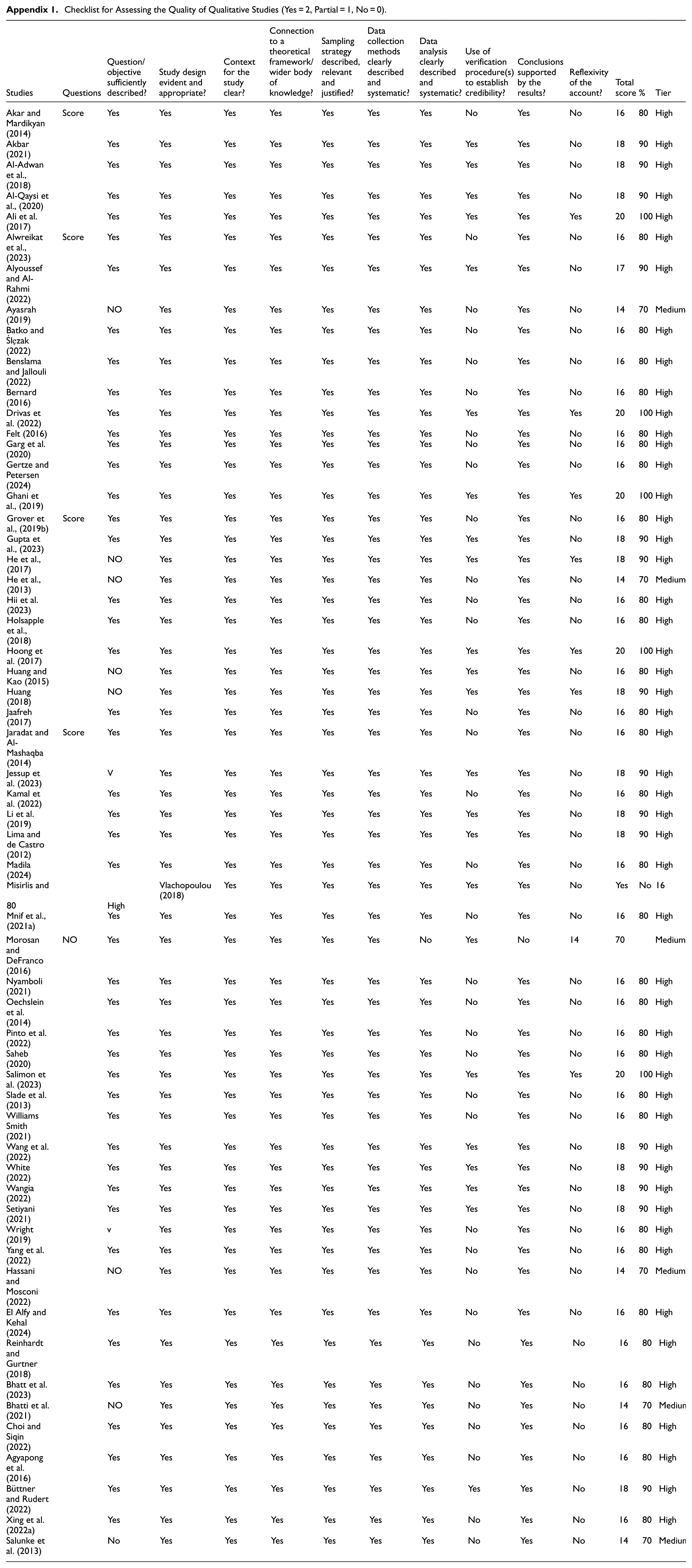
| Studies | Questions | Question/ objective sufficiently described? | Study design evident and appropriate? | Context for the study clear? | Connection to a theoretical framework/ wider body of knowledge? | Sampling strategy described, relevant and justified? | Data collection methods clearly described and systematic? | Data analysis clearly described and systematic? | Use of verification procedure(s) to establish credibility? | Conclusions supported by the results? | Reflexivity of the account? | Total score | % | Tier |
|---|---|---|---|---|---|---|---|---|---|---|---|---|---|---|
| Akar and Mardikyan (2014) | Score | Yes | Yes | Yes | Yes | Yes | Yes | Yes | No | Yes | No | 16 | 80 | High |
| Akbar (2021) | Yes | Yes | Yes | Yes | Yes | Yes | Yes | Yes | Yes | No | 18 | 90 | High | |
| Al-Adwan et al., (2018) | Yes | Yes | Yes | Yes | Yes | Yes | Yes | Yes | Yes | No | 18 | 90 | High | |
| Al-Qaysi et al., (2020) | Yes | Yes | Yes | Yes | Yes | Yes | Yes | Yes | Yes | No | 18 | 90 | High | |
| Ali et al. (2017) | Yes | Yes | Yes | Yes | Yes | Yes | Yes | Yes | Yes | Yes | 20 | 100 | High | |
| Alwreikat et al., (2023) | Score | Yes | Yes | Yes | Yes | Yes | Yes | Yes | No | Yes | No | 16 | 80 | High |
| Alyoussef and Al-Rahmi (2022) | Yes | Yes | Yes | Yes | Yes | Yes | Yes | Yes | Yes | No | 17 | 90 | High | |
| Ayasrah (2019) | NO | Yes | Yes | Yes | Yes | Yes | Yes | No | Yes | No | 14 | 70 | Medium | |
| Batko and Ślęzak (2022) | Yes | Yes | Yes | Yes | Yes | Yes | Yes | No | Yes | No | 16 | 80 | High | |
| Benslama and Jallouli (2022) | Yes | Yes | Yes | Yes | Yes | Yes | Yes | No | Yes | No | 16 | 80 | High | |
| Bernard (2016) | Yes | Yes | Yes | Yes | Yes | Yes | Yes | No | Yes | No | 16 | 80 | High | |
| Drivas et al. (2022) | Yes | Yes | Yes | Yes | Yes | Yes | Yes | Yes | Yes | Yes | 20 | 100 | High | |
| Felt (2016) | Yes | Yes | Yes | Yes | Yes | Yes | Yes | No | Yes | No | 16 | 80 | High | |
| Garg et al. (2020) | Yes | Yes | Yes | Yes | Yes | Yes | Yes | No | Yes | No | 16 | 80 | High | |
| Gertze and Petersen (2024) | Yes | Yes | Yes | Yes | Yes | Yes | Yes | No | Yes | No | 16 | 80 | High | |
| Ghani et al., (2019) | Yes | Yes | Yes | Yes | Yes | Yes | Yes | Yes | Yes | Yes | 20 | 100 | High | |
| Grover et al., (2019b) | Score | Yes | Yes | Yes | Yes | Yes | Yes | Yes | No | Yes | No | 16 | 80 | High |
| Gupta et al., (2023) | Yes | Yes | Yes | Yes | Yes | Yes | Yes | Yes | Yes | No | 18 | 90 | High | |
| He et al., (2017) | NO | Yes | Yes | Yes | Yes | Yes | Yes | Yes | Yes | Yes | 18 | 90 | High | |
| He et al., (2013) | NO | Yes | Yes | Yes | Yes | Yes | Yes | No | Yes | No | 14 | 70 | Medium | |
| Hii et al. (2023) | Yes | Yes | Yes | Yes | Yes | Yes | Yes | No | Yes | No | 16 | 80 | High | |
| Holsapple et al., (2018) | Yes | Yes | Yes | Yes | Yes | Yes | Yes | No | Yes | No | 16 | 80 | High | |
| Hoong et al. (2017) | Yes | Yes | Yes | Yes | Yes | Yes | Yes | Yes | Yes | Yes | 20 | 100 | High | |
| Huang and Kao (2015) | NO | Yes | Yes | Yes | Yes | Yes | Yes | Yes | Yes | No | 16 | 80 | High | |
| Huang (2018) | NO | Yes | Yes | Yes | Yes | Yes | Yes | Yes | Yes | Yes | 18 | 90 | High | |
| Jaafreh (2017) | Yes | Yes | Yes | Yes | Yes | Yes | Yes | No | Yes | No | 16 | 80 | High | |
| Jaradat and Al-Mashaqba (2014) | Score | Yes | Yes | Yes | Yes | Yes | Yes | Yes | No | Yes | No | 16 | 80 | High |
| Jessup et al. (2023) | V | Yes | Yes | Yes | Yes | Yes | Yes | Yes | Yes | No | 18 | 90 | High | |
| Kamal et al. (2022) | Yes | Yes | Yes | Yes | Yes | Yes | Yes | No | Yes | No | 16 | 80 | High | |
| Li et al. (2019) | Yes | Yes | Yes | Yes | Yes | Yes | Yes | Yes | Yes | No | 18 | 90 | High | |
| Lima and de Castro (2012) | Yes | Yes | Yes | Yes | Yes | Yes | Yes | Yes | Yes | No | 18 | 90 | High | |
| Madila (2024) | Yes | Yes | Yes | Yes | Yes | Yes | Yes | No | Yes | No | 16 | 80 | High | |
| Misirlis and Vlachopoulou (2018) | Yes | Yes | Yes | Yes | Yes | Yes | Yes | No | Yes | No | 16 | 80 | High | |
| Mnif et al., (2021a) | Yes | Yes | Yes | Yes | Yes | Yes | Yes | No | Yes | No | 16 | 80 | High | |
| Morosan and DeFranco (2016) | NO | Yes | Yes | Yes | Yes | Yes | Yes | No | Yes | No | 14 | 70 | Medium | |
| Nyamboli (2021) | Yes | Yes | Yes | Yes | Yes | Yes | Yes | No | Yes | No | 16 | 80 | High | |
| Oechslein et al. (2014) | Yes | Yes | Yes | Yes | Yes | Yes | Yes | No | Yes | No | 16 | 80 | High | |
| Pinto et al. (2022) | Yes | Yes | Yes | Yes | Yes | Yes | Yes | No | Yes | No | 16 | 80 | High | |
| Saheb (2020) | Yes | Yes | Yes | Yes | Yes | Yes | Yes | No | Yes | No | 16 | 80 | High | |
| Salimon et al. (2023) | Yes | Yes | Yes | Yes | Yes | Yes | Yes | Yes | Yes | Yes | 20 | 100 | High | |
| Slade et al. (2013) | Yes | Yes | Yes | Yes | Yes | Yes | Yes | No | Yes | No | 16 | 80 | High | |
| Williams Smith (2021) | Yes | Yes | Yes | Yes | Yes | Yes | Yes | No | Yes | No | 16 | 80 | High | |
| Wang et al. (2022) | Yes | Yes | Yes | Yes | Yes | Yes | Yes | Yes | Yes | No | 18 | 90 | High | |
| White (2022) | Yes | Yes | Yes | Yes | Yes | Yes | Yes | Yes | Yes | No | 18 | 90 | High | |
| Wangia (2022) | Yes | Yes | Yes | Yes | Yes | Yes | Yes | Yes | Yes | No | 18 | 90 | High | |
| Setiyani (2021) | Yes | Yes | Yes | Yes | Yes | Yes | Yes | Yes | Yes | No | 18 | 90 | High | |
| Wright (2019) | v | Yes | Yes | Yes | Yes | Yes | Yes | No | Yes | No | 16 | 80 | High | |
| Yang et al. (2022) | Yes | Yes | Yes | Yes | Yes | Yes | Yes | No | Yes | No | 16 | 80 | High | |
| Hassani and Mosconi (2022) | NO | Yes | Yes | Yes | Yes | Yes | Yes | No | Yes | No | 14 | 70 | Medium | |
| El Alfy and Kehal (2024) | Yes | Yes | Yes | Yes | Yes | Yes | Yes | No | Yes | No | 16 | 80 | High | |
| Reinhardt and Gurtner (2018) | Yes | Yes | Yes | Yes | Yes | Yes | Yes | No | Yes | No | 16 | 80 | High | |
| Bhatt et al. (2023) | Yes | Yes | Yes | Yes | Yes | Yes | Yes | No | Yes | No | 16 | 80 | High | |
| Bhatti et al. (2021) | NO | Yes | Yes | Yes | Yes | Yes | Yes | No | Yes | No | 14 | 70 | Medium | |
| Choi and Siqin (2022) | Yes | Yes | Yes | Yes | Yes | Yes | Yes | No | Yes | No | 16 | 80 | High | |
| Agyapong et al. (2016) | Yes | Yes | Yes | Yes | Yes | Yes | Yes | No | Yes | No | 16 | 80 | High | |
| Büttner and Rudert (2022) | Yes | Yes | Yes | Yes | Yes | Yes | Yes | Yes | Yes | No | 18 | 90 | High | |
| Xing et al. (2022a) | Yes | Yes | Yes | Yes | Yes | Yes | Yes | No | Yes | No | 16 | 80 | High | |
| Salunke et al. (2013) | No | Yes | Yes | Yes | Yes | Yes | Yes | No | Yes | No | 14 | 70 | Medium |

Ethical Considerations
The study is not about the clinical trial on humans and animals so the ethics approval was not applicable.
Consent for Publication
All the materials have been cited and permissions obtained from Other Sources if necessary.
Funding
The authors received no financial support for the research, authorship, and/or publication of this article.
Declaration of Conflicting Interests
The authors declared no potential conflicts of interest with respect to the research, authorship, and/or publication of this article.
Data Availability Statement
Data is available from corresponding author on request.