




Abstract
Public building abandonment has a detrimental impact on the advancement of a nation such as Nigeria. Rebuilding such infrastructure sustainably poses several challenges, as identified in the literature. A flexible and dynamic approach is required by decision makers that draws on a range of attributes, alternatives and criteria. This study aims to assess a sustainable, accessible and flexible tool that decision makers can use in place of engaging with complex mathematical calculations and formulas. To test the validity of the tool, two sets of participants (first Demonstration/pilot study – 7 participants and second Demonstration/Expert Validation − 11 participants) were identified for the testing and the validation of the tool. A quantitative data collection approach, making use of a survey and a case study, was considered the most appropriate approach for this study following the demonstration of the model to the participants. From the four alternatives: Refurbishment, Conversion, Demolition and Outright selling, supported with embedded mathematical formulas and calculations, the validated tool presented refurbishment as the most flexible and optimal solution. This study argues that the integration of this tool into the redevelopment process enhances the recognition of a range of solutions for abandoned public buildings in Nigeria. In addition, it concludes that incorporating suitable model configurations into an appropriate tool can foster appropriate decision-making procedures.
Plain Language Summary
Abandonment of public buildings has an unfavourable effect on nations especially Nigeria. Restorations of these buildings pose their own challenges especially the dynamic and flexible approach required by the decision makers in addressing the problems. Some of the approaches, which include TOPSIS model, demand mathematical calculations to arrive at the best alternative solutions. The four alternatives; refurbishment, conversion, demolition and outright selling through the TOPSIS Model tool developed were tested with two sets of participants (1st Demonstration −7 No, and 2nd Demonstration and Expert Validation – 11 No) for demonstration and validation of the tool. With the application of the tool by the participants, the validated tool presented refurbishment as the most flexible and optimal solution for redeveloping the abandoned public buildings thereby enhancing effective decision making.
Introduction
The challenges posed by abandoned public buildings remain unresolved, with ripple effects on the construction industry and the entire economy (Damoah et al., 2020; Doraisamy et al., 2015; Ogunnusi et al., 2022). These include unhealthy and unsafe conditions, environmental nuisance and increased prevalence of criminal activities (Abdul et al., 2018; Oyedele 2012; Tavakoli et al., 2021). In fact, the abandonment of these structures has an adverse effect on nearby residents of these structures in several ways (Akogun, 2014; Buitelaar et al., 2021). Prioritising the redevelopment of existing structures over the construction of new ones (projects) is the most effective way the built environment will assist with the net-zero target by 2050 (Humphrey, 2023). According to Adeyemi et al. (2017), abandonment of infrastructure considered as built assets triggers unsustainability in the built environment in many nations including developing countries. With a global call for sustainability and net zero, if nothing is achieved in addressing this abandonment and the current rate of abandonment slides into 2035, undoubtedly, a percentage of new structures will be abandoned inevitably (French, 2022).
Despite recommendations from scholars such as Akande et al. (2021) and Abdul et al. (2018), resolutions to the problem of what to do with abandoned public buildings are yet to be attained, resulting in a diverse range of alternative suggestions. Notably, none of these studies has endeavoured to proffer a systematic method for tackling the challenges presented by abandoned structures. Following an extensive review of relevant literature, the examination of advantages and disadvantages of various Multi Criteria-Decision Making (MCDM) techniques, and the collection of a range of empirical data, Ogunnusi (2023) through the application of the Technique for Order of Preference by Similarity to Ideal Solution (TOPSIS) model have identified sustainability attributes, criteria and alternatives to address the redevelopment of abandoned infrastructure in Nigeria by decision makers. The fact that TOPSIS is underpinned with mathematical formulas, and calculations may not fully allow for a flexible decision-making process (Ghorpade & Vasatkar, 2015). The assessment of the criteria against alternatives should present a dynamic decision-making process. For effectiveness, this study will explore different tools and select the most appropriate tool for the model application by policymakers.
To address some of the aforementioned challenges in the buildings domain related to complex decision-making when sourcing for optimal solutions for tackling the problem of abandoned public buildings in Nigeria, recent studies have proposed that advanced tools such as Building Information Modelling (BIM) can be used as a decision support system for sustainable optimisation of the selection of sustainable building components (Fazeli et al., 2019), in residential building renovation (Amorocho & Hartmann, 2022), and in achieving sustainable demolition waste management (Han et al., 2024). However, despite their proven efficacy, these advanced tools face significant obstacles in regions with low BIM uptake due to various barriers that are elaborated on in the literature. El Hajj et al. (2021) identified some of these challenges to include the lack of knowledge and skills, huge investment costs and limited client demand. These limit the accessibility and utility of BIM-based tools in resource-constrained settings, thereby creating a gap between technological innovation and their practical applicability in such contexts. This prevalent issue accentuates the critical need for alternative models that are affordable, simple and intuitive, to widen the level of participation in decision-making regarding what to do with abandoned public buildings and empower decision-makers at all levels to address critical issues such as the redevelopment of abandoned structures which are common in developing regions.
In this context, following the existing Ogunnusi et al. (2023) study on the application of TOPSIS techniques and principles, this paper introduces a decision-making applicable tool grounded in the TOPSIS model, integrating multiple criteria into a transparent and easily implementable model designed to facilitate decision-making processes by policy-makers and experts, particularly for prioritising redevelopment alternatives in a manner that balances social, economic, environmental, political and technological (SEEPT) attributes. This tool ultimately addresses the urgent demand for accessible solutions that can bridge the gap between complex models and practical application in under-resourced settings. With the three pillars of sustainability signifies by Thatcher (2013) as social, environmental and economic, the role of political and technological sustainability highlighted by Vizzarri (2020) and Pavlovskis et al. (2017) necessitate the need to consider these two additional sustainability to arrive at the five pillars of sustainability used in this study.
The goal of this study is to provide a flexible application of the TOPSIS without the rigorous engagement of mathematical formulas or calculations during the decision-making process needed for sustainable redevelopment of abandoned public office buildings. Secondly, more than other sophisticated models such as BIM, machine learning models and Generative AI, this model will be user-friendly, accessible and flexible for decision makers and SMEs in the construction industry and built environment. Currently, there is a dearth of evidence regarding the application of BIM, Generative AI and machine learning in developing countries within the context of the sustainable redevelopment of abandoned public office buildings, which is the focus of this article. Hence, a mathematical TOPSIS model (TOPMod) tool was developed and validated. With multiple options of solutions provided as alternatives in Ogunnusi et al. (2023), the aim of this study is to design a tool for policymakers to underpin the decision-making process of ideal sustainable solution choices. Enagi and Van Belle (2019) define decision-making as the act of selecting the most reliable option from a set of alternatives by thoroughly evaluating probable alternatives and constraints. Hence, the objective is to design, test and validate a tool that will enhance the decision-making process. The subsequent sections are structured as follows: the Literature Review section provides a review of the discussion of the application of TOPSIS, decision-making tools and sustainability in different literature. The Methods and Materials section provides the demographics of the two sets of participants and the model development via the Excel tool. The discussion and the conclusion section evaluated the findings in line with the reviewed literature and conclusions.
Literature Review
With Pavlovskis et al. (2017) assertion that sustainable development should inculcate the erection of new developments and the redevelopment of existing /abandoned environments, the development of these abandoned structures sometimes poses to government and policy makers, diverse questions about what may represent a sustainable development (Bianchi & de Medici, 2023). The decision makers are frequently presented with diverse redevelopment options and objectives that must be considered in such decisions (Ministry of Defence, 2016). Hence, systematic approaches that recognise different alternative solutions will be of benefit to the decision-makers in arriving at major decisions about how abandoned infrastructure can be addressed. Winters et al. (2020) suggest that a decision-making model should be useful to “help formulate better decisions,” conceptualisation of the alternatives/criteria and attributes in the form of a model and translate “decision-making models into practice.” Driving it closer to infrastructure by government to implement decision making process to be adhered to by stakeholders, Khahro et al. (2023) developed a model for creating the criteria weight with alternatives, however, the criteria to enhance the efficacy of the decision-making model were not clearly defined.
Therefore, reiterating Chisengantambu-Winters et al. (2020) claim on “dearth of information on translating decision-making models into practice,” and Khahro et al. (2023) of “none of the existing models fits,” some factors such as accessibility, flexibility and usability were considered and informed the decision to develop a practical model.
Rocco et al. (2021) developed a model on ethics and decision making, while Yuan et al. (2020) also developed a sport decision-making model based on neural networks and data mining. Even when specific to TOPSIS, diverse models were built by different authors from TOPSIS techniques as listed in Table 1.
Literature reviews of TOPSIS Model.

Source – Adapted by Author From Several Literature as Denoted in the Table.
The TOPSIS Model as a version of the wider MCDM models, can be applied to provide a solution to multifaceted collection issues, including multiple criteria and alternatives (Wang et al., 2020). All these models mentioned in the table above were not considered applicable in this study due to their use of pure mathematics and insufficient user friendliness for application by policy makers in an abandoned buildings decision-making scenario. Umar (2019) and Akande et al. (2021) hence indicated the need for the development of a tool as a practicable model that is applicable towards abandoned municipal facilities restoration.
Limitations of BIM for Revamping Abandoned Infrastructure in Nigeria
Some literature suggests the utilisation of innovative technology such as Building Information Models (BIM) (Volk et al., 2014). Some of the publications suggesting innovative tools to tackle abandoned infrastructure include:
The demonstration of University of California, Los Angeles (UCLA) Professor Greg Lynn’s application of BIM in redesigning the abandoned Packard Plant in Detroit, United State of America (Cheshire, 2017)
The application of BIM in the retrofitting for the geometric, spatial and information performance of the building in 3D’ models (Cascone & Sciuto, 2018)
Adoption of Infrastructure BIM (I-BIM) for transport infrastructure study by Fabozzi et al. (2021) and Biancardo et al. (2023)
The application of green BIM for remodelling a big cotton mill into a Puuvilla Shopping Complex in Poland
Combination of BIM and MCDM through systematic literature review (Tan et al., 2021). Pavlovskis et al. (2017) also proposed the combination of BIM and MCDM (with the application of criteria systems and ranking of alternatives) and for the redevelopment of abandoned buildings
The remodelling of the Polish cotton mill was made possible with the use of green BIM (gBIM) Laser scanning. Although gBIM can help with enhanced decision making, as noted by Bynum et al. (2013) and Azhar et al. (2011), this is only at the initial stage of the project. With these, gBIM may not be capable of completely solving abandonment in Nigeria without further development.
This study argues that none of this literature has been able to provide a sustainable solution to the issues of redeveloping abandoned public office buildings in Nigeria.
Decision-Making Tools and Sustainability
The sustainable development of abandoned infrastructure will continually pose several questions for government and policymakers around what constitutes sustainable development (Bianchi & de Medici, 2023). Decision makers will repeatedly encounter several redevelopment options, objectives and underpinning interests that must be factored into such decisions (Ministry of Defence, 2016). At times, the array of available options may be conflicting and overwhelming for decision makers (Bris et al., 2019; Hodkinson, 2019). Coupled with the innovative tools listed above, decision makers will benefit from systematic approaches that identify the diverse alternative solutions and the diverse interests (decision criteria) in arriving at dynamic decisions about addressing an abandoned infrastructure. There are several decision-making tools available as outlined in Table 2.
Decision Tool Obtained From Literature.
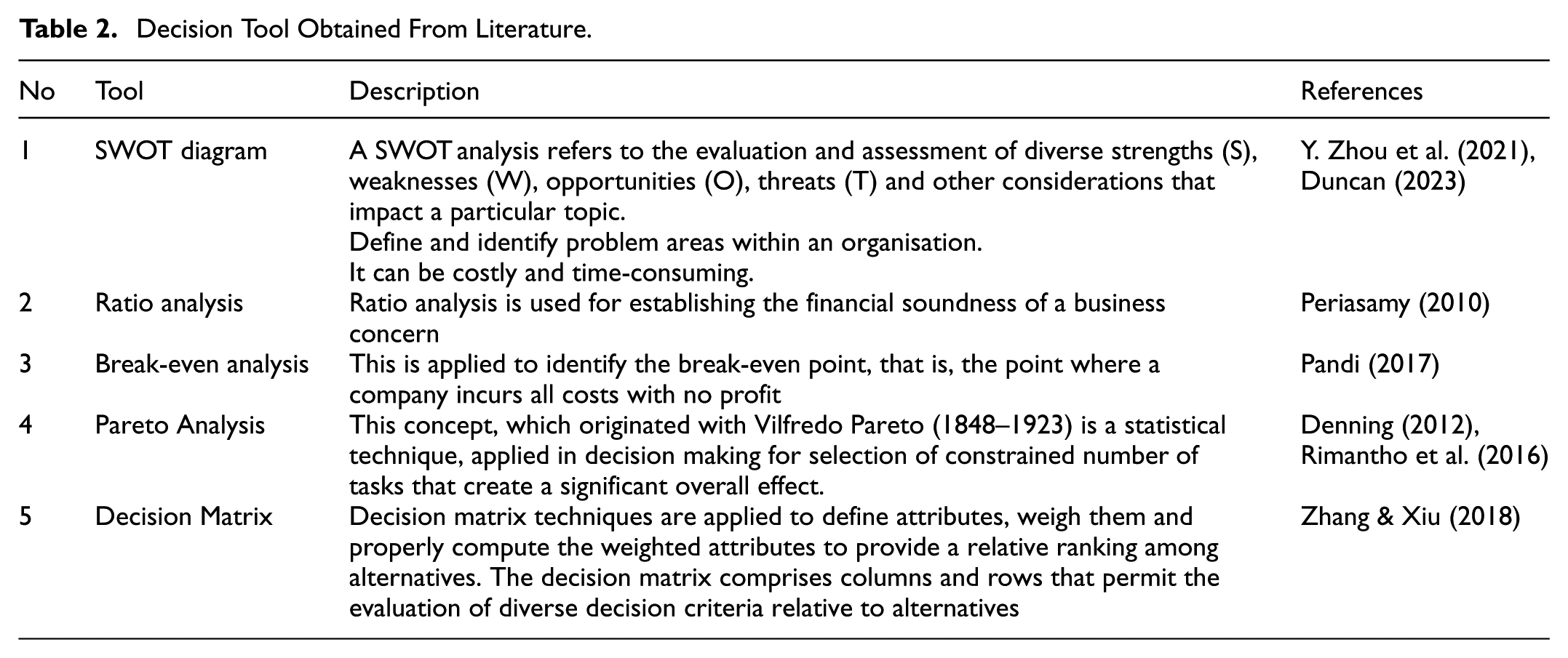
SWOT Analysis encourages stakeholders’ engagement with their diverse perspective in decision making, but lack prioritisation of elements due to inability to numerically rank them making it challenging to identify the most critical factors (Jayaprakash & Swamy 2022; Ruá et al., 2021). Despite the financial strength of Ratio Analysis in evaluating the profitability, solvency, liquidity and financial performance in business, there exists a disregard for non-financial elements or attributes such as social, economic, environmental, political and technological factors (Faster Capital, 2024).
Break-even Analysis is a risk management tool that assists in recognising the occupancy rate or minimum revenue required to cover redevelopment cost, however, traditionally assumes cost behaviour that is averse to fluctuating pricing and demand (Tajani et al., 2023). With 80/20 distribution, Pareto Analysis can be used for systemic challenges and site-specific issues, but does not always hold true in redevelopment situations where multiple criteria may contribute evenly to project stagnation (DesigningBuilding, 2023; GeeksforGeeks, 2024). With limited sensitivity analysis, Decision Matrix can be enhanced with the TOPSIS method by enabling the integration and the evaluation of sustainability attributes such as social, economic, environmental, political and technical attributes, alternatives and criteria relating to MCDM study on abandoned building redevelopment by Ogunnusi (2023) and Pavlovskis et al. (2017).
The interesting thing is that some of these papers also relate a model to a tool, the tools are the platform through which the model is presented to enhance the decision-making process. Ogunnusi et al. (2023) emphasised the need to evaluate the abandonment with model development that includes choosing the best alternatives through the application of TOPSIS Methods. This model will be tested and validated by built professionals (Architect, Project Manager, Builder, Quantity Surveyor, Civil Engineer, Contractor and Construction Manager) within academia and among built environment professionals to adopt a sustainable strategy for redeveloping abandoned infrastructure. The model will create an enabling platform for the evaluation of attributes, criteria and alternatives to support the selection of the ideal best alternatives. However, Ogunnusi (2023) observed that an innovative tool that will be critically needed at this point to enhance not only the development of the model but also ensure selection of refurbishment as the ideal alternative is a sophisticated tool that will consist of both quantitative and qualitative content.
For instance, a study conducted by Ogunnusi et al. (2021), addressing possible remedies for abandoned projects, among other questions including “Designing with deconstructability in mind (DDM)” and “Changing procurement methods (CPM),” identified the need for innovative management tools. Bossink and Vrijhoef (2008) addressed innovative management tools to initiate opportunities for managers of organisations to enhance innovativeness for their structures and processes.
In essence, the use of this tool will lead to an enhancement of the application of the TOPSIS techniques among the decision makers in realising the optimum solution. This tool will include the development of a graphic user interface (GUI) to adequately present TOPSIS as a tool for a decision-making approach.
Methods and Materials
This research conducted a quantitative data collection of a survey with a case study. According to Creswell and Creswell (2018), the quantitative method exhibits a more diverse method to scholarly examination than the qualitative approach’s reliance on text and image data. To demonstrate the practicable model embedded within a tool as advised by Umar (2019) and Akande et al. (2021), the iconic and abandoned Federal Secretariat building, Lagos, Nigeria, was adopted as a case study to demonstrate how the proposed model can be applied. With the robust advantage of TOPSIS being appropriate for large-scale and relatively simple data, Ogunnusi et al. (2023) applied the TOPSIS technique with the attributes, alternatives and criteria to identify the best optimum solution for the redevelopment of this public building. It is necessary to ensure direct practical application of this technique by the decision maker in understanding the process of identifying the outcome through the selection process and the demonstration of the Decision-Making Model (DMM), MS Excel tools. Editing output from Statistical Package for the Social Sciences (SPSS) as against MS Excel could be difficult as noted by Rahman and Muktadir (2021). A quantitative research method is beneficial and recognised as being useful as it focuses on the use of statistical data as a tool for saving resources and time (Daniel, 2016). It emphasises numbers and figures in data collation as identified by Ogunnusi et al. (2023), where a quantitative method (with the use of the TOPSIS technique) was adopted to address the abandonment. This study was conducted with two groups of participants (first Demonstration/pilot study and second Demonstration/Expert Validation). The aim of constituting the first group is to ascertain the effectiveness, functionality and aesthetics, that is, the Graphic User Interface (GUI) of the tool, while the second group is to test and validate the tool.
Demography of the Two Sets of Participants (Academic & Built Environment Professional)
Seven academics (90% of whom are based at UK institutions and 10% from Nigerian Institutions) and 13 Nigerian professionals from the built environment were contacted through purposive sampling for the first and second model demonstration, respectively. For the second demonstration and validation, 12 professionals (75% of them operating in the public sector) accepted the invitation for the model demonstration, and 11 respondents eventually participated in the demonstration and validation process due to availability challenges. Over 90% of these participants have over 15 years’ experience, indicating the rich knowledge base of the participants as noted in Table 3. The selection of the participants within Nigeria context is due to the country’s infrastructure decision based on national priority. This is the same for every region in Nigeria as seen in Table 3. Hence, the TOPMod tool is based on all the alternatives and criteria that are peculiar to Nigeria. For ease of political and regional administration, Nigeria is divided into six geopolitical zones including South-West, South-East, North-West, North-East, North-Central and South-South (Bakare, 2015).
Demography of the Participants.

The model structure will be validated by these experts through beta testing for the decision-making process of addressing infrastructure abandonment in Nigeria. In this paper, the model development (including demonstration) was based on the integration of the attributes, alternatives and criteria assessment executed on the specific building identified as a case study. As mentioned in section Methods and Materials, a case study has been employed to proffer a narrative and a context to the working model, leading to the transition of the model development from concepts to reality.
Case Study – The Federal Secretariat, Lagos, Nigeria
With critical reflection of the study conducted by Ogunnusi (2023) on abandoned infrastructure in Nigeria, about 60% of the participants refer to the prominent Federal Secretariat (FS) building (refer to Figure 1), making it a popular choice. Moreso, this Federal Government building considered for this reason is among the array of public abandoned buildings as a result of relocation of the Federal Government seat from Lagos State to the Federal Capital Territory (FCT) in Abuja in 1991 (Wahab, 2020). Secondly, Nwannekanma and Gbonegun (2019) and Ayeyemi’s (2021) estimation of the Federal Secretariat building at (£128 million) suggests a potential income generation to the Federal government, if reformed into luxury apartments. Given this, it is imperative to examine this FS building with the tool.
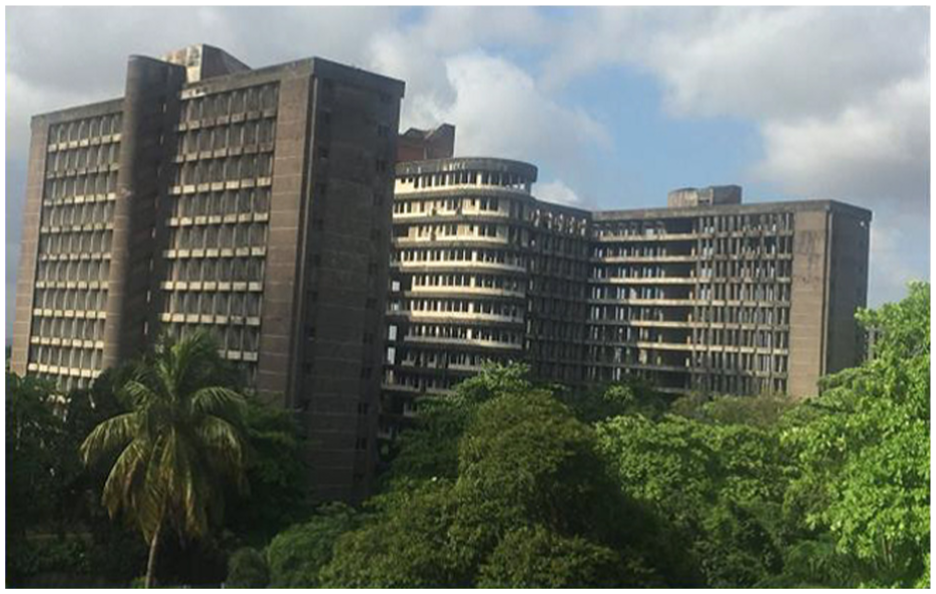
Case study – The Federal Secretariat, Lagos, Nigeria.
The Model Development
The choice to develop this model into a tool is influenced by the fact that it ensures flexibility, accessibility and friendliness and ease of use of the decision-making model to the stakeholders in achieving the identification of an optimum solution without embarking on the complex TOPSIS mathematical calculations and formulas. The different steps in the mathematical calculations include;
(1) Normalising the Matrix,
(2) Obtain a weighted normalised matrix,
(3) Calculate the Positive ideal best (PIB) and Negative ideal worst (NIW) values,
(4) Calculate Euclidean distance from the ideal best,
(5) Calculate the Euclidean distance from the ideal worst,
(6) Calculate the performance score as obtained from Ogunnusi et al. (2023):


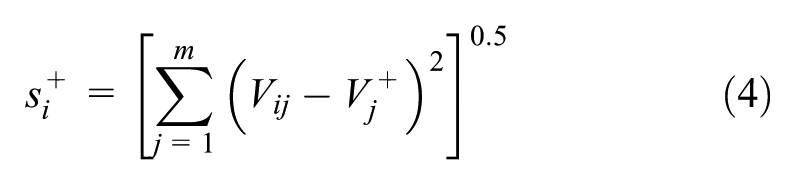

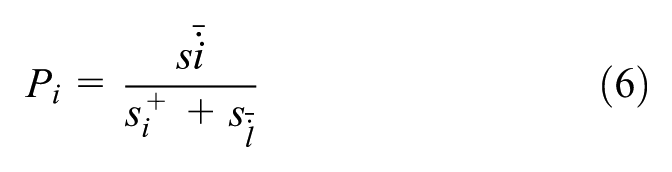
TOPSIS Formula (Source –Ogunnusi et al., 2023).
The steps listed above ensure that a system enables the integration of the conceptual model into the MS Excel software-based tool. The most effective and inclusive method of accomplishing this is through the adoption of the five SEEPT sustainability attributes (refer to Figure 2), the alternatives (namely Refurbishment, Conversion, Demolition and selling) and the criteria (i.e., Creation of employment opportunities, Project preparation and coordination, Energy efficiency, Waste generation/prevention, CO2 emissions, Preservation of historical value, Investments, Profitability, Government regulations and policies, and Structural integrity and foundation).

The hierarchical structure of attributes, criteria and alternatives for sustainable development of abandoned infrastructure.
Despite that it is observed that the extensive decision-making model is a unified system, the nine steps depicted in Figure 3 have iterative points and a discrete interface as seen from the sequence flow. The conceptual sequence of the model as seen in the complete form in the Figure 4 is imperative for the demonstration and the validation of the tool.
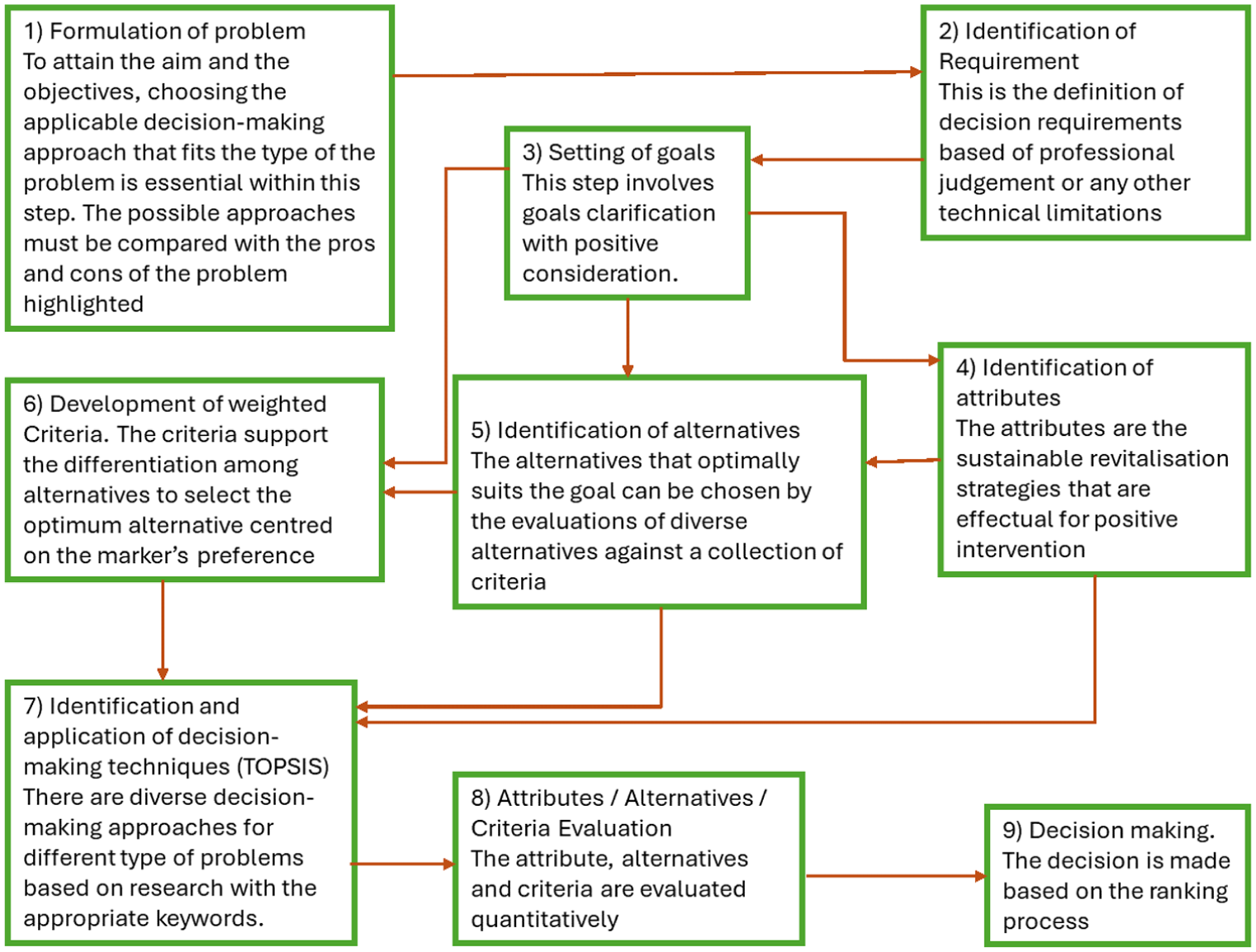
Nine step procedure with flow of sequence for TOPMod tool application at the first and second demonstration.
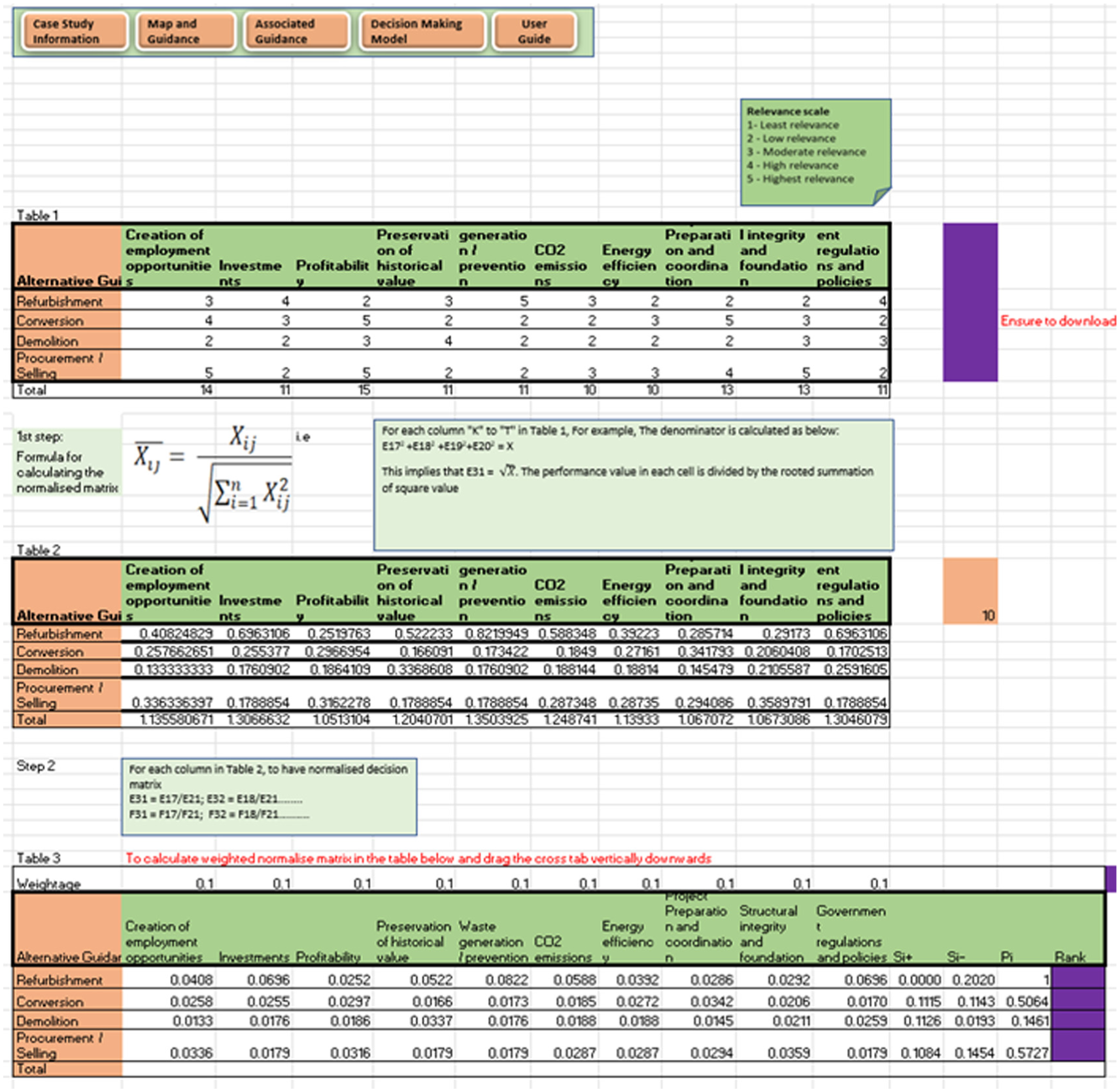
Decision making worksheet (DMM), first demonstration.
It is deemed necessary to identify the relationship between the integration of the MCDM TOPSIS technique and the process of decision-making, including decision alternatives. The decision alternatives include the characteristics of the alternatives and how the decision spaces are being created. The decision space is the term representing the pattern of all probable alternatives that could be recognised with the decision model.
The decision space was designed to include a discrete (finite) number of possible alternatives in contrast to a hypothetical continuous (infinite) array of selections (Mota et al., 2013; Ramesh & Zionts, 2013; Taherdoost & Madanchian, 2023). Secondly, the alternative characteristics also signify the measurement of the criteria and how the alternatives can be measured (Ogunnusi, 2023). The different mathematical approach can be utilised in the process. With these, the technique choice is achieved centred on the extent of the complexity allotted to the decision-making approaches (considering the pros and cons), and also on the characteristics of the issues. In essence, “criteria” in this context is a vital component for the decision makers.
During the testing and demonstration process of the model with the MS Excel tool, this study adapted a nine-step MCDM process in Figure 3 from Wilson (2013), Karunathilake (2020), Sabaei et al. (2015), Ogunnusi (2023) and Vizzarri (2020) to enhance the flow of the sequence of the demonstration.
The Decision-Making Model (DMM) tool comprises a table containing the computation of the comparison of the attributes, alternatives and criteria, and the scale of relevance utilised with the support of the formula. The model user/decision makers are required to click the drop-down menu in each of the cells to select the appropriate alternatives or criteria, as the case may be. Within the GUI, the green rows (refer to Figures 4 and 5) contain all the criteria as listed under level 3 in Figure 2, while the brown Column (refer to Figures 4 and 5) are the four alternatives as listed under level 4, Figure 2. The alternatives and the criteria can be updated. The worksheet is configured with the calculations and formulas. After the comparison of the alternatives and the criteria with the support of the scale of relevance, “the performance score” and the ranking will be updated automatically to present the best sustainable solution selection. The Scale of Relevance is in order as:
1 - Least relevance
2 - Low relevance
3 - Moderate relevance
4 - High relevance
5 - Highest relevance
The selection of the alternatives and the criteria can be done collectively as a focus group or individually. For individual selection, a member of the decision-making team will gather the performance score and determine the average ranking for each of the alternatives.

Decision making worksheet (DMM), second demonstration. (Refer to Appendix 1 for a wider view of Tables 1–3.)
The Model Graphic User Interface (GUI)
The graphic user interface (GUI) and the model will be portrayed with the case study. A GUI characterises the major correlation between software components and the end users (Mulders et al., 2022). Mylevaganam et al. (2015) applied it as an interface to develop a 3D Hydrological process of a soak-away rain garden, with Rosenzweig (2015) describing it based on the composition as follows:
Icons: Conceptual graphical illustration
Windows: The representation of the view and part of a larger data system.
Labels: Name or title of functions in a file or the software.
The worksheets developed in the model are macros (protected) with some of the cells developed to be duplicated as a blank template within the model to allow for further elements and sub-elements to be considered for future development of the model. The sustainability initiatives of the model entail the collation of the attributes, alternatives and criteria. The filtering procedure was also conducted in this worksheet to classify and investigate the most significant criteria necessary for the demonstration of the case study. The filtering process is attained with the 5-point Likert scale concept within the decision-making (Adil, 2019; Roller et al., 2016). The formation of this decision-making system is to augment a flexible decision-making process of evaluating the attributes against the alternatives and criteria with the application of navigation tools and drop-down menus (Figure 5). The drop-down menu automatically displays the contents as a structure in the decision-making sheet.
With this, and appropriate weight consideration by the decision makers, the tool requires only the input based on the criteria, alternatives and attributes identified by the decision maker in a given scenario without applying mathematical rigour. It is imperative to initiate the main assessment of the criteria and alternatives, which allows the subsequent “mathematical structure” of the weighted and ranked model. Kabir and Hasin (2012); Pavlovskis et al. (2017), Balioti et al. (2020) and Ogunnusi (2023) approach was utilised in this study to allow the objective identification of criteria and alternatives. The “reductionist approach” was also considered to help with the identification of a well-defined number of attributes, criteria and alternatives, and identify their collection, filtering and combinations (Duignan, 2020). The model then allows the fusing of the quantitative with the qualitative, and subjectivity with objectivity. The technological, environmental and economic attributes were adapted from Pavlovskis et al. (2017), while the political and social attributes were adapted from Vizzarri (2020) and McGuinn et al. (2020). Mean weightage criteria calculation and entropy weight method were also adopted from Odu (2019), Mohare (2021) and Kumar et al. (2021). For instance, Odu (2019) presented the criteria mean weight calculation, Wij as 1/n where n = number of criteria when the information is not adequate, absent or available to obtain the decision needed to be made. Therefore, the (10) criteria weightage for each criteria is 1/10, that is 0.1. The 0.1 (Option 1) criteria weightage calculation was written in each cell in Figure 5. To reflect the preferences of different stakeholders or dynamically adjust the weight within the tool, the (Option 2) is an already configured entropy weight calculation within the tool. Alternatively, the stakeholders can manually insert preferred weightage, that is, the 0.1 can be manually updated.
With the final weight allocation, the alternatives are then reflected on and ranked by the decision makers (collectively and individually) based on the criteria weightage assessment. This ensures objectivity in the decision-making processes. The ten criteria and the four alternatives were adopted with the aim of ascertaining the applicability of the decision-making tool. The criteria choices can be re-examined in the future to include other criteria, as the case of the project can be adaptable to other projects where decision-making is required. The model is customised with the aid of the drop-down menu restricting the decision maker to a choice of the ranking regarding the scale. The impact of each criteria on the final ranking can be transparently tracked. The model also provides an actionable and clear ranking that supports investment and policy decisions. The model serves as a guide to the stakeholders to rescue the abandoned piece of infrastructure. With the model, the calculations and the formulas have been automated with the “Excel formula functions.” In essence, the model must hold the capability to integrate into the Nigerian decision-making systems as well as any other part of the world especially with the abandonment and redevelopment.
Wilson (2013), Pramanik et al. (2021), Cerneviciene and Kabasinskas (2022) and Fattoruso (2022) applied MS Excel software to create a decision-making sheet in Italy, the United Kingdom, Lithuania, France, Germany and India. However, none of such research was conducted in Nigeria and neither were the decision makers in Nigeria familiar with the usage of such tools from the literature. Even during the demonstrations and the testing of the model, the participants were not familiar with it either. This was evidenced in the positive response from the participants about the need for the decision-making model as represented in section Demonstration of the Tool and Validation. The model will be developed with a scale of relevance (Figures 4 and 5) and a selection of options that the respondents will provide during the demonstration of the model.
Demonstration of the Tool and Validation
Testing and validating the model is an essential part of the model development, and hence, an iterative approach with a first demonstration study was imperative for feedback and improvement where required. It is also necessary for the testing and validation of the model by experts in the industry or potential built environment professionals (Obi et al., 2021). Quantitative feedback, which is survey scoring (Likert scale of 1 − lowest score to 5 − highest score) and additional comments, was obtained from the demonstration participants. This will be presented to ensure the user’s experience and the acceptability through the beta testing of the model (Adil, 2019; Roller et al., 2016). Beta testing was anticipated to be coordinated with the real users in-house to ensure functionality, scalability and performance but this was impossible due to the locations of the participants (Cser, 2019).
First Demonstration/Pilot Study
The development and validation of the TOPMod tool involved a systematic two-stage process. The first Demonstration aimed to authenticate the model’s functionality and efficacy. Seven academics took part in the first demonstration (see Figure 4 and Table 4). The Model testing suggests reliability, accuracy and correctness of the model (Anderson et al., 2015), hence, the need to develop an applicable and adequate methodology, by creating a physical channel of interaction, and to also ascertain the model’s applicability to the redevelopment of the abandoned structure. The testing procedure comprises three major areas:
The user experience and satisfaction
Efficiency of the working model
Effectiveness of the tool
First Demonstration of the Tool by the Academics.

The model testing with aspects of these three major areas was conducted by presenting the case study to the academic participants and by working through the worksheets methodologically. It is equally important to understand that the affirmation of these three major areas is presented in Tables 4 and 5. At the end of the process, the respondents were provided with an opportunity to reassess and re-test any facet of the design or the model functions if needed. As soon as the activity is considered complete and agreed upon, the individuals will offer scored card comments quantitatively with the help of a Likert scale and additional comments (optional). The quantitative comments allow the results to be statistically presented to assess any variance between the findings of the expert.
Second Demonstration and Tool Validation by Built Environment Experts.

Feedback from this stage informed further refinements to the tool, enhancing its usability and relevance to real-world applications. A real-life case study was presented to demonstrate TOPMod’s effectiveness, and to systematically evaluate five SEEPT sustainability attributes (Ogunnusi, 2023). The demonstrations validated the mathematical functionality and user-friendliness of the Excel-based tool. It is important to conduct the test and the process earlier on prior to the identification and the eventual invitation of the second participants/industrial experts. Moreso, the first Demonstration (refer to Table 4) also ensured the focus on functionality and the effectiveness of the model compared with attention to aesthetic and/or format. The participants in the first Demonstration were academics with expertise in the design and building management fields. Their background includes architecture, construction project management, project management, town planning and quantity surveying.
Rather than using construction participants in the first Demonstration, academics were contacted and used. This was a constraint during the first Demonstration and was justified on the premise that the first Demonstration was not aimed at real-world data collection. Notwithstanding, this point also emphasised the criticality of identifying and engaging a suitable and credible sample population to be involved in the testing and demonstration activities. Viable suggestions during the first Demonstration, such as the need for automation of the column to capture the rank of the values in higher orders by PhD Student 2, and the need for improvement in the graphic user interface (GUI) by Senior Lecturer 1. Additionally, the information page of the model was not adequate for some of the participants. This was accepted as constructive criticism, and the researcher’s defence was the lack of sufficient information on the case study adopted. All the comments were considered and updated before the second Demonstration.
Second Demonstration/Expert Validation
The viability of testing the model is an essential part of the research design, hence, the presentation of the model via Zoom meeting instead of forwarding it to the participants. Eleven expert practitioners in the built environment were involved in the second demonstration and validation process (refer to Table 5 and Figure 5). The researcher debriefed participants that the model can be applied in a decision-making scenario (abandoned infrastructure). The considerable aspect is the design process of the testing phase as a one-on-one online workshop, thereby duplicating the factual individual decision maker in a decision-making team. The demonstration of the model was designed for participation by individual professionals. The availability and timing of the participants at a specific date and time for a focus group/workshop were one of this study constraints. Therefore, this model was presented individually to the participants, with their comments and feedback recorded. It is also imperative to note that the model can be applied either collectively as a group or individually.
With the aid of the drop-down menu, the participants compared the alternatives and criteria for each of the sustainability attributes using the scale of relevance in the decision-making worksheet. The style of demonstration adopted by the researcher and the level of interaction between the individual participant and the researcher facilitated a natural and fluid engagement during the session. The model is expected to enhance the prioritisation of decisions as a benefit to the stakeholders and the decision makers at the proposal or decision-making stage. It is expected to support policymakers in the agencies, government and/or industrial professionals in the decision-making process. The case study provides a platform for discussion on the model in particular, while the individual participants were able to discuss the utilisation of the model in a sustainability context and other possible projects and needs. The participants found the tool intuitive, with features like drop-down menus and a visually appealing GUI making it easy to navigate and interact with. The interactive GUI in Excel made the decision-making process more accessible, eliminating complexities associated with manual TOPSIS calculations (Mulders et al., 2022).
With the participants’ recommendation and visualisation of the model resulting in a “tool” and also the suggestion by Akande et al. (2021), it can be confirmed that the MS Excel spreadsheets in reality signified the tool in which the model was portrayed. The cumulative scoring result collated in Table 5 reflects the approach applied throughout the primary data collection activities.
With the Likert scoring of Scale 1 to 5, the minimum and maximum results from the scoring are 3 and 5, respectively. The mean was calculated at 4.39 with the average standard deviation scoring at 0.69 which relatively indicate a high standard deviation relative to the mean. This is evidenced in the data recorded from the survey at the end of the overall demonstration. This indicates a high level of agreement from the participants during the survey scoring of the demonstration and also displays the demonstration results. To ascertain the effectiveness of the tool and user satisfaction, the survey presents an average total score of 4.30 and 4.39 for first Demonstration and second Demonstration respectively out of 5.0. The .09 increase in the mean score from first Demonstration to second Demonstration is due to the improvement of the worksheet based on the comments from the academics during the first Demonstration.
In general, the results denote a high response, which is positive to the testing and validation of the model, for example, the usage, entry and ease of navigation in the model. Participants expressed the need to make decisions from available data. The sustainability factors were highlighted for consideration. The initiative of embedding the mathematical formula and calculations in the model development to ensure a sturdy decision-making tool was also commended:
I think it’s really important to know how, what to do with abandon structure in Nigeria or any place and this kind of tool can really be useful for the decision makers, and you know like policy actors to take the right decision on how to do it. (Research Fellow – first Demonstration). You see, most of decision makers we have in Nigeria presently, I think they need guidance and one of those guidance is appropriate tool like your (the researcher’s) decision making model (DMM). If they have the tools, it will enable them to make accurate decisions, just by looking at the data that you have presented. (ARC 3 − second Demonstration).
ARC 3 eventually envisaged the model resulting in a tool to enable “accurate decision making.” Unlike the first Demonstration/pilot in Table 6, where refurbishment was considered through evaluation by all participants as the highest ranked, assessment of the criteria and the alternatives after the second demonstration signifies refurbishment, conversion, demolition and selling in order of selection while refurbishment is the highest in overall ranking.
Demonstration of the Model by the Academics and the Built Environment Expert.


Note. The yellow colour shade in table signifies the 1st position ranking of Refurbishment as the sustainable and optimal ideal solution compared to all other alternatives by the Academics and the Built Environment Experts.
The potential underlying reasons for refurbishment emerging as the highest ranked option by both the academics in the first Demonstration and the industry expert in the second Demonstration could be due to the need to align to the sustainable development goals SDG 9 (Industry, Innovation and Infrastructure) and SDG 11 (Sustainable Cities and Communities) with emphasis on infrastructure resilience and reuse (Ogunnusi et al., 2022, 2023). Refurbishment lessens construction waste, pressure from land use and embodied carbon, thereby aligning with worldwide climate goals. It is more money-saving than a new building, stimulating the regional economy through job creation and support for SMEs in building and services. Refurbishing historical infrastructure also improves public morale, resulting in more trust in governance.
On the other hand, with infrastructure deficit in Nigeria, conversion is another sustainable, cost-effective and viable option to close the massive infrastructure gap (Alao & Jagboro, 2017). In other words, if this Federal Secretariat is converted to luxury apartments as emphasised by Nwannekanma and Gbonegun (2019) and Ayeyemi (2021), it could generate housing income for the federal government. More often than not, demolition is considered in Nigeria due to change in government. The project may be abandoned by new administrator without due regard to the initiation by the predecessor. However, rapt attention should be paid to safety hazards and structural instability of these abandoned structures, especially with prolonged exposure to vandalism or environmental elements making them not structurally suitable for redevelopment.
All in all, the result evidenced a high positive response from the demonstration and the validation of the model tool. Although, this model tool was developed for public buildings, it is adaptable for application in other types of infrastructure, for instance, energy infrastructure, transportation infrastructure, other building types of infrastructure such as schools, hospital etc. Moreso, the demonstration was done virtually, face to face demonstration can be considered for future research. In addition, future studies can consider the integration of this tool with Generative AI for wider public accessibility through free website such as guide Sheet, Smart Sheet, Airtable or Google sheet.
Discussion
This section critically discusses the application of the TOPSIS-based decision-making model (TOPMod) and the development, demonstration and validation of a simple Excel-based tool designed to facilitate optimal decision-making for abandoned infrastructure redevelopment. The discussion assesses the efficiency and benefit of the decision model, the solutions identified for abandoned infrastructure sustainability, and the process of designing and validating the tool.
The Advantages of the TOPMod Tool Over Existing Tools
This TOPMod tool can accommodate large-scale data with enormous number of alternatives and criteria (Balioti et al., 2018; Kabir & Hasin, 2012). On the other hand, Pareto analysis does not provide solutions to problems, rather assists in recognising some substantial causes liable for a lot of the problems (Akyildiz & Ekmekci, 2020). Moreso, the TOPMod will be readily available for the decision maker with simple MS Excel whereas, high implementation cost of BIM could be an issue (Valdepenas et al., 2020). Other challenges that could be experienced from BIM application over the TOPMod tool are interoperability issues, complexity in Implementation, contractual or legal risks and resistance to change amongst others. Compared with other MCDM tools or techniques, the TOPMod tool is conceptually intuitive, straightforward and easy to implement by ranking alternatives from positive ideal solution to negative ideal solution based on their geometric distance, making it applicable and accessible for the decision makers without the need for complex mathematical computations (Madanchian & Taherdoost, 2023). With extensive adaptability and applicability, TOPMod has been effectively applied in diverse fields such as environmental assessment, supply chain management and technology selection, often outperforming other methods regarding clarity and decision making (Hsu-Shih & David, 2022; Pandey & Dincer, 2023).
For instance, TOPSIS involves computational speed and simplicity with fewer pairwise comparisons than the Analytical Hierarchical Process (AHP). It also avoids the complex consistency checks than AHP, which makes it more scalable and faster for large decision matrices (Ccatamayo-Barrios et al., 2023). In addition to this, TOPSIS is suitable for large problems that involve large numbers of criteria and alternatives without requiring exponential growth in comparisons, unlike AHP (Madanchian & Taherdoost, 2023). TOPSIS also embrace the flexible integration of objective weighting methods such as Entropy which can significantly enhance transparency and reduce bias unlike AHP that heavily relies on subjective pairwise comparison for determining the weight (Ccatamayo-Barrios et al., 2023). Unique advantages of TOPSIS compared to other MCDM tools as adapted from Madanchian and Taherdoost (2023) are highlighted in Table 7.
Advantages of TOPSIS Over Other MCDM Techniques.

Source. Adapted from Madanchian and Taherdoost (2023).
TOPSIS in Sustainable Development and Building Reuse Application
TOPSIS had been applied innovatively and successfully in building materials and industrial heritage adaptive reuse by (a) supporting decision makers in balancing profitability with environmental impact in reuse situations, (b) ranking materials or buildings based on criteria such as CO2 saving, structural integrity, economic feasibility and historical value (c) possible integration of entropy with TOPSIS to objectively assign weight to criteria reducing prejudice (Ali & Hussein, 2025; Meng et al., 2023). Furthermore, TOPSIS has increasingly been applied in sustainability assessment due to its capability to underpinning regional planning by ranking projects or areas based on sustainable development goals (SD Goals); and integrating different sustainability indicators such as emissions, energy use and social equity (Stecyk, 2019).
Decision Model Efficiency
The TOPMod model assesses and ranks alternatives by integrating sustainability attributes, alternatives and criteria within a structured decision-making model. Incorporated into an MS Excel spreadsheet, TOPMod’s efficiency was validated through application in decision-making activities related to public building infrastructure in Nigeria. The use of MS Excel as a decision-making tool is well-established globally, having been employed in countries like the United Kingdom, Lithuania, France, Germany and Italy for its simplicity and accessibility (Cerneviciene & Kabasinskas, 2022; Fattoruso, 2022; Pramanik et al., 2021; Wilson, 2013). As shown by the views of experts who were engaged in the demonstration and validation exercises (refer to Tables 4 and 5), the incorporation of navigation tools and drop-down menus within the Excel tool significantly enhances user-friendliness and facilitates streamlining the systematic, logical and realistic assessment of sustainability attributes.
The utility of TOPSIS in not only improving accessibility but also promoting efficiency, particularly in scenarios involving large datasets and multiple criteria was acknowledged by Kabir and Hasin (2012). The authors highlighted its simplicity compared to other MCDM methods such as AHP, which often involve complex pairwise comparisons, and advanced expertise to execute effectively. More recent studies by Umar (2019) and Akande et al. (2021) have echoed the importance of such user-centred designs, especially the intuitive interfaces, in encouraging wider adoption of decision-making tools. The simplicity of TOPSIS, as demonstrated in its implementation to facilitate optimal decision-making for an abandoned infrastructure redevelopment in Nigeria, does not compromise analytical robustness, making it suitable for diverse applications ranging from infrastructure planning to sustainability assessments.
Additionally, the weighted assessment capability of TOPSIS further enhances its flexibility, allowing decision-makers to modify the model to reflect local priorities and conditions. Roy et al. (2019) demonstrated how the weighted assessment capability available in TOPSIS procedure can be adapted based on stakeholder input to different projects and regions. This procedure is particularly appropriate for the Nigerian context, where the diversity of infrastructure challenges demands flexible yet reliable and streamlined decision-support models, often conflicting criteria must be balanced. To extend the applicability of the TOPMod tool, the study adopted mean weightage criteria developed in previous studies, including Odu (2019), Mohare (2021), Kumar et al. (2021) and Ogunnusi (2023). These criteria weights were instrumental in evaluating and comparing multiple sustainability components in the Nigerian case study. Moreover, the application of TOPSIS in this study aligns with broader trends in leveraging MCDM techniques to address persistent challenges in the built environment. Despite its versatility and efficiency, applying TOPMod tool to other contexts requires careful calibration of criteria weights to reflect the unique socio-economic, environmental and any other sustainability conditions of the region.
Probable Solutions for Abandoned Infrastructure Sustainable Development
As shown in Figure 2, TOPMod employs five SEEPT sustainability attributes with corresponding alternatives and criteria derived from the broader literature. Alternatives such as conversion, demolition, refurbishment and sell were considered alongside sustainability criteria, including government regulations and policies, investments, profitability, employment opportunities, waste generation and prevention, carbon emissions and energy efficiency.
Validation of the tool through a survey revealed varying perceptions among experts regarding decision-making processes for abandoned public buildings. Interestingly, many experts did not initially view decision-making as a systematic process requiring structured tools, relying instead on individual experience. This highlights the fragmented nature of decision-making in the sector and underscores the need for innovative tools like TOPMod to provide a more systematic, streamlined and rational approach.
The demand for probable solutions for abandoned infrastructure redevelopment that incorporate innovative yet accessible methodologies, has long been recognised (Akande et al., 2021). This study demonstrates the potential for tools ranging from simple Excel-based models to more sophisticated BIM-based technologies. Nonetheless, the decision to implement innovative digital solutions should also recognise the regional context, in this case, the availability and adoption of the tools. In less developed nations like Nigeria, where technology adoption is low, simple tools like TOPMod can bridge gaps in expertise and resources. Previous research has acknowledged that while decision tools like Pareto analysis, SWOT analysis and Ratio analysis offer valuable frameworks for specific decision-making scenarios, they often lack the multidimensional capabilities of TOPSIS for comprehensively evaluating sustainability attributes, especially in complex decision-making contexts such as infrastructure redevelopment (Ogunnusi, 2023). Pareto analysis for example focuses on prioritising the most significant elements in decision-making but cannot account for interrelationships or evaluate trade-offs among multiple sustainability criteria. SWOT analysis excels in qualitative assessments of strengths, weaknesses, opportunities and threats but is inherently limited in incorporating multiple criteria and handling quantitative data simultaneously. Similarly, Ratio analysis, though widely used for economic assessments, lacks the capability to integrate non-economic criteria such as environmental impacts or social benefits, which are crucial for sustainable infrastructure decision-making.
In contrast, the TOPSIS model offers a more robust framework by enabling decision-makers to simultaneously evaluate multiple alternatives against a set of weighted criteria, reflecting different sustainability aspirations and stakeholder priorities (Wang et al., 2020). Its ability to identify the optimal solution by ranking alternatives relative to an ideal solution ensures a more nuanced and holistic approach to decision-making (Ghorpade & Vasatkar, 2015; Vommi, 2017).
However, to provide logical reasons or meaningful justification, it is also important to acknowledge the limitations associated with TOPSIS, particularly in cases where alternatives are equidistant from positive and negative ideal solutions. In other words, two or multiple alternatives may equally be close to the worst and the best solution, by receiving the same scores, resulting in a tied ranking. Researchers have argued that such scenarios can lead to ambiguous outcomes, necessitating additional validation or the integration of complementary methods (Madanchian & Taherdoost, 2023). Moreover, the TOPSIS method has a great dependence on the weight of each criteria, which may impact the final evaluation results, that is, while the weight setting may be subjective, different weight settings may affect the objectivity of the final evaluation (Liu et al., 2023). Addressing these challenges requires continuous refinement of the tool, incorporating user feedback and ensuring the inclusion of diverse criteria reflective of real-world complexities.
Overall, the development of an Excel-based tool rooted in the TOPSIS model represents a crucial step towards democratising access to sophisticated decision-making frameworks, especially in the domain of infrastructure redevelopment. By balancing analytical rigour with simplicity and usability, this tool not only supports policy and infrastructure planning but also contributes to the broader discourse on sustainable development practices in the infrastructure domain.
TOPMod Tool Validation Insights
The study’s findings highlight refurbishment as the most sustainable solution for the case study, outpacing conversion, demolition and sell. Refurbishment primarily upgrades a building’s functionality to meet present-day demands while retaining the structural integrity of the building. This result highlights the crucial role of adaptive reuse in promoting sustainability in infrastructure settings, as refurbishment often reduces construction waste (Balaras & Dascalaki, 2019; Croatto et al., 2017), minimises carbon emissions and maintains historical and cultural value. Additionally, previous research has recognised the importance of refurbishment in aligning with the United Nation’s sustainable development goal and circular economy principles considering that it extends the lifecycle of existing structures and minimises the demand for new resources. Thus, refurbishment creates employment opportunities and contributes to economic regeneration, particularly in urban areas like Nigeria with high rates of public infrastructure abandonment.
Conversion, the second-ranked option in the case study, supports the transition of buildings to new uses, thereby addressing evolving societal priorities such as housing shortages and urban agglomeration challenges, while preserving core structural elements. Existing research has shown that conversion may require higher initial investments and technical adjustments, which can reduce its feasibility in resource-constrained regions (Gorgolewski, 2008). Outright selling, ranked third, involves liquidating the structure to private entities, which can relieve public sector management burdens but risks neglecting broader sustainability goals, should future development fail to adhere to rigorous environmental or social standards (Entwistle, 2021). The effectiveness of the underpinning model for the TOPMod tool in the current study is its inclusion of a political sustainability attribute that examines criteria related to government regulations and policies. The literature including Alkhani (2020), unequivocally supports the need for robust policy frameworks and regulatory oversight to guide private-sector involvement in abandoned infrastructure management. Finally, demolition, ranking last, highlights its unsustainable nature due to the substantial emission of carbon, generation of waste and potential environmental degradation (Jin et al., 2017). Hence, demolition, when viewed through the lens of key sustainability attributes, also presents additional environmental, economic, technological and social costs. Nevertheless, the age of an abandoned building may be a critical factor in determining the feasibility of demolition, particularly when structural integrity is compromised. Therefore, it is imperative that decision-making should be tailored to the specific requirements of each project. This ranking affirms the importance of prioritising alternatives like refurbishment that offer a balanced approach to SEEPT sustainability aspirations.
Conclusion and Recommendations for Further Studies
This study developed an MCDM tool using the TOPSIS technique to support decision-making in the context of tackling an abandoned public infrastructure. The TOPSIS methodology and associated analytical TOPMod tool were validated through empirical application to a case study involving the abandoned Federal Secretariat building located in Nigeria. The findings provide a robust systematic tool for evaluating and prioritizing sustainable redevelopment options for abandoned buildings, with a focus on user-friendliness, simplicity and flexibility. Through the application of a multidimensional sustainability framework encompassing SEEPT attributes, the analytical tool facilitated a systematic and comprehensive evaluation of four alternatives (refurbishment, conversion, demolition and sell) across ten assessment criteria. The findings revealed that refurbishment is the most sustainable solution for the case study, followed by conversion, sell and demolition, highlighting the TOPMod tool’s capability to inform practical and strategic decision-making.
The findings underscore a significant theoretical advancement in the understanding of the role of systematic decision-making tools in addressing infrastructure abandonment. Unlike conventional decision tools like SWOT analysis and Pareto analysis, which lack the multidimensional capabilities of MCDM techniques, the structured approach of TOPSIS offers policymakers and built environment professionals a transparent, systematic, objective and replicable methodology for evaluating alternatives against a diverse set of criteria. This is particularly valuable in developing regions like Nigeria, where resource constraints and low technological adoption often hinder the application of advanced tools like BIM or machine learning models. The development of a generic tool, like TOPMod, based on the TOPSIS model represents a substantial practical contribution to the existing literature. The TOPMod tool combines simplicity with user-friendly functionality, offering features like drop-down menus and navigation tools that enhance user interaction and ease of use, within the widely accessible Microsoft Excel application. The validation of the tool, conducted through engagement with academics and practitioners from both the built environment sector and policy domains, demonstrated its practical relevance, reliability and adaptability. Additionally, the tool’s accessibility to the intended users (policy makers and experts) through an online website which could be distributed by the government agencies, makes it a feasible substitute for more complex software, promoting wider adoption and acceptability across various stakeholders in different projects and regions, especially where complex technology adoption is low. The extended user will be trained in the subsequent use of the tool and with onward support provided within the tool. In addition to this, there is a user manual/guide as an additional support document for the user.
Recommendations for Further Study
This study opens several opportunities for future research. First, while the model was demonstrated in the Nigerian context, in which it was found to be effective for decision making about abandoned infrastructure, future studies could explore its applicability and effectiveness in other regions and sectors. For instance, complementary studies could explore how geographical variations in sustainability priorities and weighting systems influence decision-making outcomes, considering variations in social, economic, environmental, political and technological attributes. Additionally, these studies could explore whether there are differences in stakeholder perspectives and how this could impact the practical application of sustainability criteria. This would in effect contribute to more nuanced, region-specific and context-sensitive systematic decision-making tools.
Second, there is a need to transform the model from a static planning tool into an active decision support system, capable of adapting to emerging opportunities and issues. Thus, further studies could explore the integration of real-time data into the model by incorporating dynamic data streams from digital twins, IoT sensors and building management systems. Machine learning (ML) algorithms could be employed to identify patterns and trends in the data streams, and facilitate more sophisticated scenario modelling of attributes, criteria and alternatives, allowing stakeholders to visualise and evaluate the real-time impacts of different decisions. This would be particularly useful in urban contexts where interconnected systems create cascading effects across sustainability domains. Although, integrating real-time data streams enabled by complex software and ML techniques would be particularly valuable in contexts requiring rapid decision-making such as disaster response, and where access to complex tools and technology adoption is high, these efforts could enhance responsiveness of decision makers to changing conditions and enable predictive analytics capabilities. There is need therefore for further research to investigate the feasibility, technical requirements and computational frameworks necessary to achieve the dynamic integration of MCDM with real-time data, while maintaining system simplicity, user-friendliness and accessibility.
Third, while this study focused on abandoned public buildings, the framework could be extended to other types of public infrastructure such as transportation systems, energy and industrial facilities. Because of their uniqueness, each of these infrastructure types present distinct issues requiring bespoke criteria and alternatives exploration. Further research could adapt the TOPMod model to these infrastructure contexts and explore how different infrastructure types influence the development of criteria weights and alternatives, leading to the selection of the optimal solution. This multisectoral analysis could reveal trends and patterns in decision-making priorities and identify core principles that transcend specific infrastructure types, thus generating new insights about the scalability of the TOPMod tool.
Footnotes
Appendix 1
Acknowledgements
Sincere appreciation to Dr Liam Waldron for his advice and support.

Ethical Considerations
The Ethics Review Committee at Robert Gordon University on 12th May 2021, approved the collection of primary data for the Thesis, from which further analysis for the development of this manuscript was carried out. Respondents gave written consent for review and signature before starting the study.
Funding
The authors disclosed receipt of the following financial support for the research, authorship, and/or publication of this article: The author is grateful to Leeds Beckett University for providing the fund that covers the publication and open access readership of this article. The funding information is ISPF Research Collaborations Programme (Global)-1203563630.
Declaration of Conflicting Interests
The authors declared no potential conflicts of interest with respect to the research, authorship, and/or publication of this article.
Data Availability Statement
Data sharing not applicable to this article as no datasets were generated or analysed during the current study.