




Abstract
In the school of development thought, growth has been identified as a viable alternative to the challenge of poverty and economic backwardness. However, the ecologists have continuously challenged the growth position in relation to environmental degradation and depletion. It is against this background; this study examined the limits to growth in Nigeria beyond which there will be inimical consequences for the environment. The study employed time series data that spanned between 1970 and 2014. These data sets were sourced from the World Development Indicators. Based on the assimilation model, threshold estimates were used to identify optimal growth regions, whereas regression estimates were used to measure growth effects. It was discovered that below the identified growth limit, there are currently significant negative impacts on the quality of the environment in Nigeria via economic growth. This study is a single-country case, that is, Nigeria; hence, the study can be expanded to include other sub-Saharan African countries. The study adds to knowledge by establishing the prospects for sustainability in the quality of the environment in the long run; therefore, policies designed in this areas have higher likelihood of attaining sustainability.
Introduction
Since the 19th century, the issue of continuous growth has dominated the classical and neoclassical schools of economic thought. This is because growth has always been a desirable outcome of economic activities because of its chief usefulness for poverty reduction. Meanwhile, it has been asserted in the literature that there are limits to growth (Stokey, 1998). This has generated issues on sustainable growth, thereby giving a platform for the ecological approach to growth which is conventionally referred to as green growth (Ekins, 2002, 2011; Hallegatte et al., 2011). Basically, the central issue the theorist of eco-sustainability emphasizes is the extent to which growth can be pursued without inimical consequences to sustainability. In other words, the concern is how to find the optimal growth level that will not become counter-productive with regard to adverse environmental impacts on health capital and human development, as they are important growth determinants (Hussen, 2000). Thus, the intervening policy redirection for the emerging economies including Nigeria is advancing the promising features emanating from growth and reducing the negative spillovers on human welfare. This challenge has prompted a public health dimension to critically assess the threshold level of growth for environmental and health capital sustainability, so that the growth which creates the wealth of nations will not jeopardize sustainable development objective among nations
The natural environment no doubt is an ultimate determinant of human state and survival. However, striking the balance between the use of the environment by humans to sustain its needs and the preservation of the environment to sustain man is another concern. Previous studies assume the earth to have an infinite ability to maintain ecological balance. However, some other studies maintained that the earth possesses an upper limit of the natural system, known as assimilative capacity, “throughput constraint,” or optimal level (Hussen, 2000; Jhingan & Chandar, 2008). It is expected that beyond this assimilative capacity, there could be adverse reaction on human capital development. This could be reflected in indices such as human health and existence, which could consequently compromise future development in terms of labor productivity and growth sustainability. Thus, a central question that may emanate from this thought is “To what extent is continued economic growth consistent with maintaining the environmental quality?”
Some previous studies led by Meadow et al. (1972, 1992) on the Limits to Growth and Beyond Limits, respectively, were used to explain possibilities of a near collapse of the Planet. Meadow et al. discussed cases where growing population could either stay within the limits of the environment, deviate, and return to eco-limits or overshoot the eco-limits. In the light of this, the model predicted that given an exponential population growth and consumption rate, it is possible that there will be a collapse by the 21st century, which will bring about the world economy reaching its physical and eco-limits. It is further postulated that if the population growth and industrialization of the world continue, resource depletion remains unchanged; in hundred years (which is about 60–70 years from now), growth limits will be attained.
Until 2013/2014, when recession was experienced, the Nigerian economy has experienced continuous growth at an average rate of 6% (Central Bank of Nigeria [CBN], 2016). However, this growth has been contingent on resource depletion and overutilization. For instance, crude oil exploration and exportation, which is a major component of the gross domestic product (GDP) growth, accounts for more than 90% of foreign earnings in Nigeria (CBN, 2016). Incidentally, these mining activities have been associated with gas flaring and burning of fossils which releases chlorofluorocarbons and carbon monoxide into the environment. Although, contrary to the expectations of Meadows et al. (1972, 1992) of a Planet collapse in the 21st century, there are indications that the environment is endangered even in Nigeria. This is made feasible by the consumption rate of commodities and nonrenewables, population growth rate (which is the highest in Africa), and resource depletion rates (via mining, desertification, and land degradation). Therefore, focusing on Nigeria, this study examines the limits to growth or threshold to growth after which there will be adverse effects on the environment. Following the determination of the growth threshold, the effects of growth on the environment before and after the threshold point will be equally ascertained.
Literature Review
The classicists are of the opinion that economic growth produces pollution and wasteful consumption that contribute nothing to human beings. According to them, the tenets of economic growth need to be reviewed as it can affect the quality of life negatively. For instance, it was believed that the golden path of economic growth cannot be achieved without subjecting people to necessary pressures; although these pressures will increase the stages and rate of economic growth, this will be at some cost to the environment and human beings through health impairments. Brown et al. (2015) also added that given current economic growth, the costs from environmental pollution usually outweigh its benefits. These costs include rapid depletion of natural resources, urban problems such as congestion and noise pollution, and problems in the rural areas such as deforestation, hence the impetus for eco-balance.
Among the classicists, Malthus expressed concerns over population growth and environmental crisis. Inherent in the Malthusian population trap model are some inherent social and environmental crisis. Malthus believes “population has a constant tendency to increase beyond the means of subsistence, and that it is kept to its necessary level and thus humankind, is confined in room by nature” (Weil, 2009). Thus, Malthus, preempting the future, saw humanity being deprived given the possibility of consumption being outweighed by available resources, which could therefore lead to resource exploitation/overuse and eventual environmental depletion.
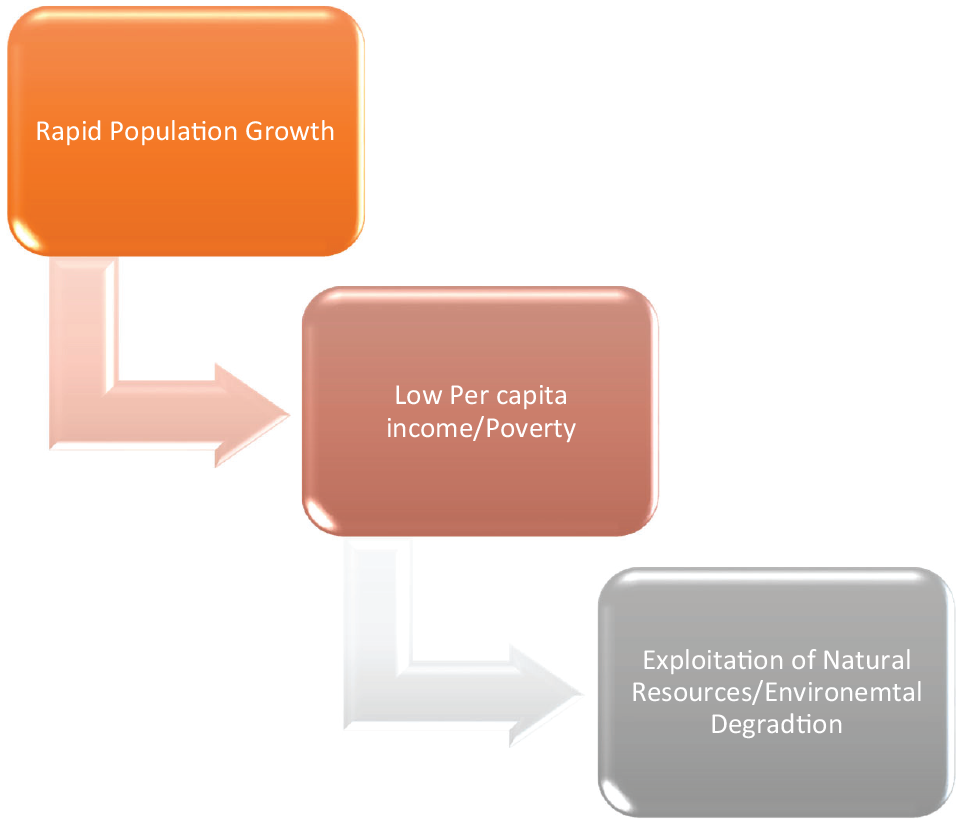
Figure 1 presents the neoclassical view on the relations between population growth and the plausibility of maintaining quality environment as a process.
Population growth and the environment.
Basically, it is assumed that rapid population growth leads to poverty and low economic status of family members. Furthermore, scarcity of land and housing facilities pushes people to ecological-sensitive areas which could lead to exploitation of natural resources, thereby causing environmental degradation (Jhingan, 2013).
A further analysis on the population, growth, and environment nexus was equally explained by the Solow growth model. Solow (1956) treats population growth as exogenous because it concentrates on the effect of population growth on the income of an economy. Solow specified that the differences in countries’ growth rate of population can explain the reasons for growth differentials among countries (see Barro & Sala-i-Martin, 2004). However, he inquired that “if population is examined what happens if the capital (both physical, human and natural capital) of an economy remains stagnant and the population keeps growing?” Modifying Figure 1, Solow’s thought is depicted in Figure 2, where it is expected that there will be a negative effect of population growth on capital per worker, which is known as capital dilution. This will further lead to a decline in the amount of output produced per worker which could result in exploitation and a decline in productivity. But if there is a increase in population, capita per worker can be maintained by investing a large fraction of its output (which accounts for growth) in building new capital, and in the case of maintaining natural capital, investment in recycling possibilities will be an option (Weil, 2009). This would lead to a modification/extension of Figure 1.

Neoclassical view on the growth.
Incidentally, human and physical capital can be built. Natural capital may be recycled, but cannot be increased, thus the growth–environment dilemma. This has accounted for the proposal of the endogenous growth models where an economy is expected to display some sense of productivity and efficiency within the limits of its resources, capital, and environmental carrying capacity, which has been described as real economic growth (Rebelo, 1991). Meanwhile, through the tenets of the steady-state model, the growth–environment dilemma can be neutralized. As shown in Figure 3, the steady-state economic system which otherwise depicts equilibrium in the ecosystem has been characterized by stability, where contrasting elements embedded in physical, environmental, and human resources sustain a balance via dynamic interrelationships and feedback mechanisms. In other words, the steady state is an arrangement that integrates the ecosystem with economic systems to provide existence and sustenance. Hence, economic activities must be such that is kept within ecological limits.

Growth for sustainability: The steady-state model.
The ecologist argues for a minimal flow of materials and utilization of energy resources that minimize waste and maximize or at least preserve income growth and human welfare. This type of growth implies that to achieve ecological balance, economic systems should integrate its activities with a view to preserving the natural systems, especially given the reliance of economic growth on resources from the natural space. One major approach to actualizing a balance in the environment and economic systems is via the use of clean technologies that boost productivity, minimize waste, emphasize the production of quality goods and services, and still preserve natural systems for future generations (Jhingan, 2013). Thus, while it is understood that resource utilization and consumption are inevitable, the model asserts that input–output flows (resource generation-waste emission) must be kept within eco-limits; this implies a more efficient use of energy (for instance, reuse, recycle, and reduction of energy) and other resources.
An Overview of the Growth Environment in Nigeria
Emphasis has also been placed on the bottom-up approach to solving environmental issues in Nigeria. Toward this end, some programs have been initiated which focus on communal and national approach to maintaining environmental quality. For instance, some progress has been made in a few areas, including a significant reduction in gas flaring, the success of which is attributable to the high levies imposed on oil companies for gas flaring. Besides, with gradual increases in water productivity, it appeared that policies geared toward maintaining or reducing water pollution appeared to more effective than air pollution in Nigeria. Another area of success is the demand for environmental impact assessment before any new industrial or major project can be implemented (National Environmental Standards and Regulations Enforcement Agency [NESREA], 2011; World Development Indicators [WDI], 2015).
Furthermore, an overview of the Nigerian environmental policies/regulations reveals that most of the international policies on environment with regard to pollution and waste management have been localized (see Appendices A and B). Despite the laudability and comprehensive nature of the Nigerian environmental policies, the realities of poor waste disposal and management, as well as crude production technology, indicate a situation of poor or nonimplementation of policies. For instance, the consumption of nonrenewable energy sources outweighs renewable energy consumed in Nigeria. Furthermore, activities that promote deforestation and desertification are leading causes of environmental degradation in Nigeria. Specifically, activities of deforestation and poor waste management have increased the problems of flooding and loss of habitat for species. Also, ailments that have direct bearing with pollution challenges such as tuberculosis and diarrhea have equally been on the increase in Nigeria which is an indication of declining health capital. (NESREA, 2011; Nnanna et al., 2003; WDI, 2015).
In addition, the cities are still littered with industrial and human waste that deface the environment and pollute the air. Noise and other pollutants are common features of the neighborhoods, whereas the water is still contaminated by dangerous industrial and human wastes, chemicals, and oil spills. Although, since May 1999, a full-fledged Federal Ministry of Environment has been in charge of the Nigerian environment, a lot still needs to be done to achieve a cleaner environment conducive to national sustainable socioeconomic development. It is also a fact that the Ministry cannot do it alone; the cooperation and assistance of all stakeholders is required. These include interministerial departments linked with ensuring safe environment (such as the Niger Delta Development Commission), private sector, especially industrial establishments, the oil companies, and the citizens as a whole. Already, specific areas of influence include waste management, desertification and deforestation control, and industrial pollution control, including oil and gas pollution (WDI, 2015).
A cursory assessment of some of the environmental resources in Nigeria gives a clue to these required influences. A typical measure of the environmental quality in any country is the state or pattern of agroforestry in Nigeria. The specific aim of agroforestry in Nigeria is to encourage afforestation, reseeding, reforestation, and forest conservation of vulnerable regions and rehabilitation of degraded lands. In addition, it involves rehabilitating the natural vegetation through tree planting and control of forest exploitation which will introduce a reversal in desertification trend. Specifically, the government policy in Nigeria aimed at accomplishing the 25% national forest cover as prescribed by United Nations Food and Agricultural Organization (UNFAO) as this will encourage self-sufficiency in wood and other forest resources. Besides, this will enhance ecological integrity and reduce drastically the effects of climate change.
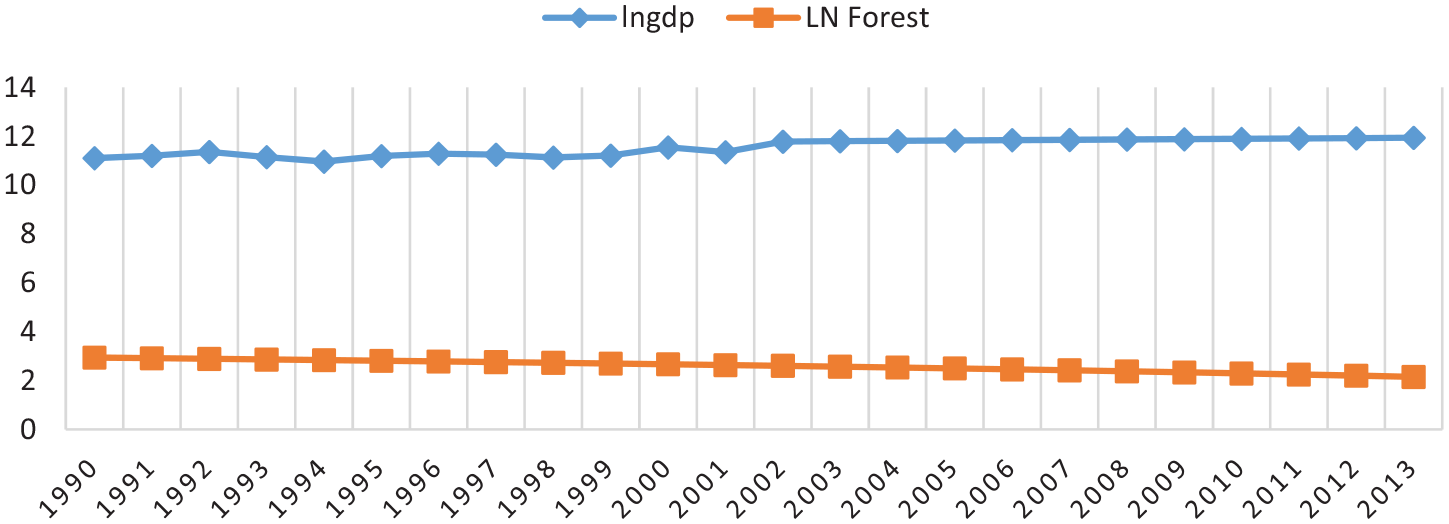
From the available statistics in Nigeria, from 1990 to 2013, it can be deduced that desertification is increasing rapidly in Nigeria. Besides, since 1990, till 2013, Nigeria has not achieved the 25% feat of agroforestry set by the FAO. Specifically, Figure 4 reveals the natural depletion rate of forest cover in Nigeria as against the natural growth rate of income (GDP).
Growth rate of forest area in Nigeria, 1990–2013.
At a natural GDP growth rate of about 11%, it was seen that the rate of decline in forest area was about 3% in the mid-2000s. However, this depletion since 2010 is gradually on the decrease with a rate of about 2.5%. This probably is due to an increase in environmental awareness and campaigns by the government. However, the information through the WDI revealed that percentage of area covered in Nigeria is constantly on the rise. This is revealed by Figure 5 where the uncovered land area is depicted in Figure 5, where the nonforest area rose from 80% to more than 90% in 2010 and about 92% in 2013.

Comparison between agroforestry and nonforestry in Nigeria, 1990–2013.
The implication of this is that land degradation remains an economic activity, that is, eroding environmental quality in Nigeria and as such there may be the need to design policies that will engineer local content adaptation, prevention, and curation. This is with a view to consolidating the benefits of afforestation and mitigating the negative consequences of deforestation which include erosion, health impairments from excessive sun rays, and flooding.
Method
Theoretical Framework: Assimilation Model
A simple model of positive linear relationship is hypothesized between waste and production or economic activities—this implies that as economic activities increase, it is expected that more waste is generated. This relation is graphically depicted in Figure 6.

The theoretical relation between economic output and waste discharge.
From Figure 6, the X-axis is seen to represent output of economic activities, whereas the Y-axis captures an unspecified amount of waste emitted to the environment. While the point
Deductions from Figure 6 show that points
Modeling
To identify the thresholds and the impact of economic activities (which is subsumed in economic growth) on the environment, this study employs the threshold analysis where breakpoints are identified. Specifically, the environmental quality is denoted


Analytical Technique
To ascertain the limits to growth, the equations are presented in a nondynamic fixed effect form with Nigeria as the country of interest. Therefore, the series employed are in form of time series and the scope of the series is from 1970 to 2014. Specifically, Hansen (1999) developed the bootstrap procedure which has been utilized for identifying threshold points or breakpoints through the Chow test. This technique further generates effects in form of the least squares estimates results. Therefore, beyond the identification of the limits to growth, the regression estimates give a clue on the effects of economic activities on the environment before and after the threshold point. This is such that we can ascertain whether economic activities are already having adverse effects on the environment, or we are able to identify the point where these adverse conditions begin to take to manifest. This study utilizes Stata 12.0 software for estimation purposes.
Data Sources and Measures
The sources of the data used and the measures for each variable of interest are presented in Table 1.
Data Source and Variable Measures.

Results
Before the main analysis, it is imperative to verify the stability of the series to be employed. The usual descriptive statistics include maximum and minimum values, as well as the mean and median values. The distribution of the series is captured by the kurtosis and skewness properties. From Table 2, the mean value for the GDP is 25% (as it has been transformed to its natural logarithmic form), whereas the mean showing the intensity of carbon is 0.9 metric tons. In other words, most of the series revolve around their mean values. Besides, the mean value of the economic growth will inform further on the expected threshold for environmental sustainability.
An Overview of the Descriptive Statistics.

Note. Critical values of
and ** denotes the acceptance of the null hypothesis that the variables are normally distributed at 5% and (1%) significant level.
To capture information about the symmetry of the series as well as the thickness of tails, the skewness and kurtosis statistics are verified. By the rule of the thumb, the series of variables are expected to lie between 1.0 and −1.0; therefore, as the skewness of GDP and carbon intensity (COI) are 0.39394 and 0.24255, respectively, it can be inferred that the distribution of the series follows a normally skewed. Besides, for a symmetrical distribution, the Gaussian distribution is deemed to have kurtosis of 3.0 (Wooldridge, 2013). From Table 2, the kurtosis values are within the range of 3; therefore, it is concluded that the distribution is fairly normal.
Threshold Analysis Between Economic Growth and Environmental Quality in Nigeria
The task of identifying a precise level of growth limits (which explains economic activities) beyond which environmental quality will be affected required estimating the threshold level of GDP growth rate, beyond which it begins to correlate with the quality environment in Nigeria. The optimal threshold is the level of economic activities that shape environmental quality or a point at which there is a break point. The estimation of the model in Equation 2 shows that threshold level occurs at the point where the natural economic growth rate exceeds 25% (see Figure 7).

Break point (optimal point) between economic growth (GDP growth) and environmental quality (carbon intensity) in Nigeria.
Following the threshold point which has been estimated, threshold effects between the two variables were also estimated as shown in Table 3. This was with a view to expound the arguments on threshold point and lend more meaning to the results generated in Figure 7.
Break-Point (Threshold) Estimates of the Relationship Between Economic Growth and Environmental Quality (Dependent Variable—COI).

Source. Author’s computation (Stata 12.0).
Note. COI = Carbon Intensity; GDP = gross domestic product.
Table 2 presents the break-point regressions for the relationship between economic growth and environmental quality. Specifically, the threshold level before and after growth that could accelerate environmental degradation was estimated. In the regression, it was discovered that before the break point, an increase in emissions economic activities had significant effect on the environment. It was such that a percentage increase in economic growth caused environmental quality to reduce significantly by 11% (t = 3.4; p = .02). But beyond the break point, an increase in economic activities showed that there was still an increasing effect on environmental quality but appeared insignificant; specifically, a 1% increase in economic growth caused environmental quality to reduce by 0.07% (t = 1.31; p = .29).
The implication of this result is that increases in economic growth resulting from increased economic activities are already resulting in environmental degradation in Nigeria. However, estimates after the threshold point revealed that there are potential prospects for maintaining environmental quality via mitigation strategies (through environmental policies, technological development, and use of cleaner processes) and adaptation efforts (as a result of improved income). Hence, there is the indication of room for stabilizing environmental quality through a technological reordering and human economic activities.
Discussion of Results
The results on the growth limits for the ecosystem revealed that beyond a break point of 25% growth rate, there will exist a positive but insignificant effect of economic growth on the environment in Nigeria. Interestingly, the results appeared inconsistent with theoretical postulates on growth limits which expect that as population and economic activities increase, resource depletion will occur, such that growth limit will be reached, thereby resulting in the decline of resources and economic output (Meadows et al., 1974). Beyond the optimal point instead of an adverse reaction on the environment, it is discovered that continuous economic activities had a negative but insignificant effect on the environment, thus indicating mitigation and adaptation possibilities. A number of explanations for the mild effects of economic activities on the environment have been documented.
First, this insignificant relationship is consistent with the argument of Soroos (1997) where it is expected that modern technology has the capacity to shift environmental impacts that may be hazardous; that is, advancement on technological processes will further enhance productivity and mitigate environmental challenges. Also, advances in technology which have been identified as an indicator of human capital development can be a threshold breaker and modifier (Bueno et al., 2014; Goklany, 2007; Schilirò, 2010). Moreover, eco-friendly technologies are consistent with the propositions on sustainability of the natural ecosystem. Thus, if the advent in technology brings about positive changes, the challenges that could emanate from continuous growth processes could even out in Nigeria in the long run. Meanwhile, it has been argued that technology could be a primary source of pollutants (Commoner et al., 1971; Sun et al., 2006) as this has been made visible through the excessive use of synthetic organic products such as plastic, detergents, paper products, rubbers, pesticides, herbicides, wood pulp, production of energy and electricity, petroleum-driven vehicles, production of cements, aluminum, chlorine, petroleum, and other petroleum products—all of which produce heat, radiation, and other greenhouse gases that are hazardous . At the same time, it has been widely accepted that modern technology has been successful in shifting the environmental impact of growth than in removing it. However, the neoclassicals upheld improvement in abatement technologies as capable of moderating the negative influences of growth beyond the threshold point.
The arguments of the environmental Kuznets curve (EKC) hypothesis on the environment–growth relations is another plausible explanation for the insignificant effects on the duo. According to Kuznets (1955), economic growth which causes increased income per capita could eventually lead to demands for cleaner environment as explained by the cubic function of the EKC estimate in Nigeria (see also Adejumo, 2018; Panayotu, 2003). Therefore, enactments of environmental regulations that promote equitable income distribution could result in the people demand that is tilted toward environmentally friendly products. This is in addition to advancing emission control technologies and environmentally preserving processes, for instance, by adopting the 6Rs of rethink, refuse, reduce, reuse, recycle, and replace, that could enhance the quality of the Nigerian environment (Yang et al., 2013).
Again, the position of the Material Balance Theory (MBT) situates another explanation for the marginal effects of growth beyond the threshold point. The MBT argues that it is expected that the environment has the ability to adjust in the long run to imbalances that occur from economic activities (Hussen, 2000). Thus, the expected long-run adjustment of the environment from pollutants emanating economic activities can account for the insignificant effects beyond the growth limit. While the MBT is a possibility, some further studies will be required to actually ascertain whether imbalances in the environment truly even out or escalate.
Meanwhile, the threshold analysis shows that below the optimal point of growth, economic growth is currently environmental quality more in Nigeria. This findings are consistent with the findings of Balibey (2015) and Ozturk and Acaravci (2013). Some factors that accounted for the current significant negative effects of the environment–growth nexus in Nigeria are increasing human population, high consumption rates of natural and economic resources, low income level, and low level of technical know-how (Aigbedion & Iyayi, 2007; Babanyara et al., 2010; Omofonmwan & Osa-Edoh, 2008). This has resulted in a less stable environment and increasing vulnerability of the population to hazards from increased economic activities that trigger pollution (Allen & Barnes, 1995; Rudel, 1989). In the mean time, this analysis provides a basis for the Malthusian idea that increased population growth contributes directly (through struggle for space as seen in high deforestation rates) and indirectly (production and consumption) to environmental stress.
Conclusion and Recommendation
In all, the current trend of growth–environment nexus in Nigeria reveals that the response rate to challenges emanating from economic activities appears to be low. This is because despite the current efforts of government to check environmental challenges vis-à-vis economic activities, more pertinent issues that have aggravated the challenge of environmental degradation include poverty, consumption, political upheavals, conflicts, socioeconomic developmental factors, struggle for survival, and comfort.
As zero emission is impossible, there is no doubt that production of noneconomic materials such as emissions and waste will be an ongoing process from economic activities. Therefore, the government of Nigeria needs to mainstream environmental policies and regulations in its economic growth agenda. Thus, in addition to policies that will improve income levels and living standards of the Nigerian people, technological best practices in economic activities and processes that can promote and maintain environmental resilience is a viable option.
Footnotes
Appendix
The National Environmental Policies of NESREA.

| Environmental policy (focal area) | Source | Policy objective |
|---|---|---|
| Soil Erosion and Flood Control | FRNOG No. 39, Vol 98; Government Notice No. 125 (FGP68/72011/400(OL 34) |
● Protection of human life and the environment ● Minimize losses due to flood and erosion and reduce their effects on land vulnerable areas by regulating land-disturbing activities. ● Control accelerated soil erosion, flooding, and sediment disposition in water bodies and water courses to prevent pollution of water resources. |
| Desertification Control and Drought Mitigation | FRNOG No. 40, Vol 98; Government Notice No. 126 (FGP72/72011/400(OL 35) |
● To provide an effective regulatory framework of areas affected by desertification and protection of vulnerable lands. ● Public sensitization on desertification dangers. ● Encouragement to use efficient and energy-saving devices and alternative energy sources. Encourage reforestation, reseedling, reforestation, and conservation of vulnerable and degraded areas. ● Ensure sustainable agriculture, range management practices, improved animal husbandry, and water resource management. ● Attain 25% national forest cover as prescribed by the United Nations Food and Agricultural Organization (FAO) so as to promote self-sufficiency in forest resources and enhance ecological integrity. ● Global partnership with international bodies such as United Nations Convention to Combat Desertification and Drought Mitigation (UNCCD), and United Nations Framework Convention on Climate Change (UNFCCC) |
| Base Metals, Iron, and Steel Manufacturing/Recycling Industries Sector | FRNOG No. 41, Vol 98; Government Notice No. 127 (FGP74/72011/300(OL 0) |
● To prevent and minimize pollution from all operations and ancillary activities of the sector in the Nigerian environment through activities such as inspection of all organizations Environmental Impact Assessment (EIA, EAR, and EMP) by NESREA. |
| Control of Bush, Forest Fire, and Open Burning | FRNOG No. 42, Vol 98; Government Notice No. 129 (FGP70/72011/300(OL 38) |
● To prevent and minimize the destruction of the ecosystem through fire outbreak and burning of any material that may affect the health of the ecosystem, especially through the emissions of hazardous air pollutants. |
| Domestic and Plastic, Rubber and Foam Sector | FRNOG No. 44, Vol 98; Government Notice No. 131 (FGP67/72011/400(OL 40) |
● To prevent and minimize pollution from all operation and ancillary activities of the domestic and industrial plastic, rubber, and foam sector to the Nigeria environment. This is achieved through the inspection of all organizations Environmental Impact Assessment (EIA), Environmental Audit Report (EAR), and Environmental Management Plan (EMP) by NESREA. |
| Coastal and Marine Area Protection | FRNOG No. 45, Vol 98; Government Notice No. 132 (FGP63/72011/300(OL 42) |
● To provide a regulatory framework capable of preserving the ecological conditions of beaches, estuary, and barrier island system so as to perpetuate the natural productivity as well as their biological, economic, and aesthetic values. ● To ensure sustainable resources, preservation and conservation of coastal resources using preventive, precautionary and anticipatory approaches to reduce risks of irreversible effects on the marine environment. |
| Control of Vehicular Emissions from Petrol and Diesel Engines | FRNOG No. 47, Vol 98; Government Notice No. 134 (FGP73/72011/400(OL 44) |
● To restore, preserve, and improve the quality of air. ● To reduce and prevent air pollution the usage of quality automobiles. ● To improve the health of Nigerians especially in urban areas with high incidence of air pollution due to increased use of road automobiles. |
| Non-metallic Minerals, Manufacturing Industries Sector | FRNOG No. 48, Vol 98; Government Notice No. 134 (FGP69/72011/400(OL 45) |
● To prevent and minimize pollution from all operation and ancillary activities of the nonmetallic minerals manufacturing sector to the Manufacturing Sector of the Nigerian environment. |
| Electrical/Electronics Sector | FRNOG No. 50, Vol 98; Government Notice No. 137 (FGP75/72011/400(OL 47) |
● To prevent and minimize pollution from all operations and ancillary activities of the electrical/electronic sector to the Nigerian environment. These regulations shall cover both new and used electrical/electronic equipment. |
| Wetlands, River Banks and Lake Shore | FRNOG No. 58, Vol 96; Government Notice No. 279 (FGP105/102009/1000(OL52) |
● To provide conservation and wise use of wetlands and their resources in Nigeria. ● To ensure water catchment conservation and flood control. |
| Telecommunications and Broadcast Facilities | FRNOG No. 38, Vol 98; Government Notice No. 124 (FGP65/72011/300(OL 33) |
● To ensure consistent application of environmental laws in telecoms and broadcast industry in Nigeria. ● To protect the environment and human health, ensure safety and general welfare, as well as reduce or remove losses due to activities within the sector. |
| Watershed, Mountainous, Hilly and Catchment Areas | FRNOG No. 59, Vol 280; Government Notice No. 280 (FGP110/102009/1000(OL53) |
● To control activities that are inconsistent with good land management practices especially in areas prone to landslide, floods, drought, desertification, siltation, heavy sediments loads, fires, and wind. |
| Construction Sector | FRNOG No. 46, Vol 98; Government Notice No. 133 (FGP64/72011/400(OL 43) |
● To prevent and minimize pollution from construction, decommissioning, and demolition activities to the Nigerian environment. |
| Sanitation and Waste Control | FRNOG No. 60, Vol 96; Government Notice No. 281 (FGP112/102009/1000(OL54) |
● To adopt sustainable environment-friendly practices in environmental sanitation and waste management to minimize pollution. |
| Permitting and Licensing System | FRNOG No. 61, Vol 96; Government Notice No. 282 (FGP114/102009/1000(OL55) |
● To enable consistent application of environmental laws, regulations, and standards in all sectors of the economy and geographical location. |
| Access to Genetic Resources and Benefit Sharing | FRNOG No. 62, Vol 96; Government Notice No. 283 (FGP107/102009/1000(OL56) |
● To mitigate activities that could have adverse effect on the ecosystem, lead to the introduction of exotic species, and unsustainable use of natural resources. |
| Mining of Coals, Ores and Industrial Minerals | FRNOG No. 63, Vol 96; Government Notice No. 284 (FGP111/112009/1000(OL57) |
● To minimize pollution from the mining and processing of coal, ores, and industrial material, by encouraging efficient and cleaner technologies. |
| Ozone Layer Protection | FRNOG No. 64, Vol 96; Government Notice No. 285 (FGP108/102009/1000(OL58) |
● To prevent the importation, manufacturing, installation, offer for sale, buying or selling of refurbished products that are ozone-depleting. |
| Textile, Wearing Apparel Leather and Footwear Industry | FRNOG No. 66, Vol 96; Government Notice No. 287 (FGP113/1020091/1000(OL61) |
● To prevent and minimize pollution from all operations and ancillary activities from the garment and footwear industry to the Nigerian environment through the preparation and inspection of an EAR, EIS, and EMP. |
| Chemical, Pharmaceutical, Soap and Detergent Manufacturing Industries | FRNOG No. 68, Vol 96; Government Notice No. 289 (FGP109/102009/1000(OL62) |
● To prevent and minimize pollution from all operations and ancillary activities from the sector to the Nigerian environment through the preparation and inspection of an EAR, EIS, and EMP. |
| Control of Alien and Invasive Species | FRNOG No. 96, Vol 100; Government Notice No. 212 (FGP009/22014/1200(OL95) |
● To prevent the decline, minimize the modification and destruction of the ecosystem, economy, and human health caused by alien and invasive species. |
| Pulp and Paper, Wood and Wood Products | FRNOG No. 98, Vol 100; Government Notice No. 214 (FGP10/22014/1200(OL97) |
● To prevent and minimize pollution from all operations and ancillary activities from the sector to the Nigerian environment through the preparation and inspection of an EAR, EIS, and EMP. |
| Motor Vehicle and Miscellaneous Assembly Sector | FRNOG No. 99, Vol 100; Government Notice No. 215 (FGP009/22014/1200(OL98) |
● To minimize pollution and waste from all activities of the motor vehicle and miscellaneous assembly sector to the Nigerian environment. |
Source. NESREA (2011).
Note. NESREA = National Environmental Standards and Regulations Enforcement Agency; EIS = environmental impact statement.
Declaration of Conflicting Interests
The author(s) declared no potential conflicts of interest with respect to the research, authorship, and/or publication of this article.
Funding
The author(s) received no financial support for the research, authorship, and/or publication of this article.
