



Abstract
The study investigates the impact of strategic purchasing (SP) on manufacturing firms’ economic, environmental, and social sustainability. It also examines the moderating impact of blockchain technology (BCT) between SP and sustainability performance. The study additionally applied importance-performance map analysis (IPMA) to analyze BCT benefits to sustainability performance in Jordanian manufacturing sector. The study is quantitative in nature, and the data collected through a structured questionnaire from managers at different levels of management within manufacturing firms in Jordan resulted in 316 responses. The results of the study showed that SP has a significant and positive impact on all dimensions of sustainability performance. Additionally, the study revealed that BCT has a significant moderating impact on the relationship between SP and sustainability performance. Finally, the study identified BCT benefits importance that affect each type of sustainability performance along with their priorities. This study made a theoretical contribution by developing a framework that will help researchers gain a better understanding of the SP, BCT, and sustainable performance. Moreover, the study provided practical insights for strategic decision-making in the manufacturing sector. It highlighted SP’s role in sustainability performance and how companies can invest in BCT to improve sustainability. The study warns against generalizability and emphasizes the need to conduct the study in specific industries or countries.
Plain language summary
The study examines how strategic purchasing (SP) from different suppliers affects manufacturing firms’ economic, environmental, and social sustainability performance. It also examines how blockchain technology (BCT) enhance the relationship between SP and sustainability performance. Additionally, the study examined BCT benefits to Jordanian manufacturing sustainability performance using importance-performance map analysis (IPMA) that show the priority of investment for BCT. A questionnaire was used to collect 316 responses from managers at various levels in Jordanian manufacturing firms. The study found that SP practices improve all sustainability performance dimensions and BCT significantly enhances the SP-sustainability performance relationship. The study concluded that BCT benefits affect each type of sustainability performance with different priorities. This study recommended that firms adapt and innovate in changing environments based on their available resources and they should prioritize BCT investments based on sustainability goals. To ensure reliability and generalizability, the study recommends conducting the study in other industries or countries.
Introduction
The concept of strategic purchasing (SP) encompasses a comprehensive framework that extends beyond the fundamental components of purchasing (Althabatah et al., 2023; Patrucco et al., 2023). The main goal of SP is to gain and utilize reliable information to reduce supply errors, control costs, and offer support to the procurement team at every stage of the purchasing process (Allal-Chérif et al., 2021; Greay et al., 2020). Additionally, SP is crucial to other internal departments within the firm. Effective communication and cooperation among procurement and different internal departments can help in many functions such as new product development, marketing, manufacturing, quality, and design (Arora et al., 2020). Moreover, SP even focuses on the transactional tasks performed during the production stages. As per Schütz et al. (2020), these activities involve ways to cut costs in areas like bulk purchases, and purchase order processes.
SP activities can enhance the firm sustainability performance and by incorporating technology and effective data management, the adoption of sustainable business practices can be improved (Arora et al., 2020; S. A. R. Khan et al., 2022). Nowadays, an increasing number of businesses are adopting automation and digitization in their purchasing procedures, resulting in a reduction of paper waste and enhanced data management (Jum’a, Zimon, & Madzik, 2024; Singh & Chan, 2022). According to the study of Hallikas et al. (2021), digitalized purchasing processes help manage real-time data and analyze trends. This allows for being proactive in conducting sustainable actions. Therefore, using technologies in the SP is necessary for improving sustainability performances. The study of Seyedghorban et al. (2020), emphasized that the increasing use of digital technology in purchasing has prompted numerous companies to optimize their operations for better efficiency and effectiveness.
As highlighted by Jum’a (2023), blockchain technology (BCT) has the potential to significantly enhance firm performance. Focusing on implementing SP practices is decisive for organizations looking to enhance their sustainability performance. The adoption of BCT can significantly help in achieving this enhanced performance (Khan, Godil et al., 2021; Sun et al., 2022). According to the study of Jum’a et al. (2022), sustainable performance that is also known as the triple bottom line consists of three main dimensions: economic, environmental, and social. These dimensions are used to evaluate the sustainability of a company’s operations in various aspects. The sustainability dimensions include the organization’s reliance on limited resources, waste management, employee engagement, workplace management, compliance with regulations, and positive impacts on the environment and local community (Jum’a, Zimon, & Madzik, 2024; Long et al., 2023). Previous studies indicated that the integration of BCT and its associated advancements in technology can have an impact on an organization’s ability to conduct economically viable and sustainable operations (Z. P. Li et al., 2021; Khan, Zia-ul-haq, et al., 2021; Yin & Ran, 2021).
Since there has been a noticeable shift toward digitalization in the purchasing field, extensive research has focused on the impact of SP on organizational sustainability (Hallikas et al., 2021; Kunkel et al., 2022; Wehrle et al., 2022). However, research is limited on the relationship between SP and sustainability performance along with the impact of technology on this relationship (Afum et al., 2020; Denicolai et al., 2021; S. A. R. Khan et al., 2022; Y. Li et al., 2020). Thus, this study aims to fill the existing research gap by investigating the impact of SP on sustainability, and the moderating impact of BCT between SP and sustainability performance. This study provides a valuable contribution because of the limited empirical research on the moderating impact of BCT on the association between SP and sustainability (Chin et al., 2021; Kamble et al., 2023; Wamba et al., 2020). Additionally, the study aims to explore the importance of BCT benefits in relation to each type of sustainability performance using the importance-performance map analysis (IPMA), which considered a contribution for an additional gap in the existing literature.
This study made use of two theories, namely dynamic capabilities theory (DCT) and resource-based view (RBV). The choice of DCT and RBV as fundamental theories arises from their complementary viewpoints on organizational adaptation and resource optimization. DCT is well-suited for this study because it highlights the importance of organizational flexibility and innovation in addressing rapidly evolving sustainability challenges, which is essential for the adoption of BCT to achieve sustainable performance (Lenuwat & Boon-itt, 2022). Conversely, the RBV emphasizes the strategic deployment of internal resources, including BCT investments, to develop capabilities that provide competitive advantages within the sustainability framework (Ullah & Narain, 2021). These theories collectively offer a comprehensive framework for analyzing the role of dynamic capabilities and resource management in attaining sustainability objectives. In addition, using DCT and RBV also resonates with the emerging consensus that sustainability is not reactive accommodation to external stakeholder pressure; but rather requires strategic positioning and resource commitment within a firm (Jum’a, Zimon, & Madzik, 2024). DCT provides some explanation of how firms can constantly adapt their practices and embed the BCT to strengthen sustainability outcomes. In contrast, RBV emphasizes the importance of valuable unique internal resources like technology skills and knowledge in creating for sustained competitive advantage (Ullah & Narain, 2021). Together, these theories offer a powerful frame for understanding how firms use both dynamic capabilities and firm-specific assets to develop staying powerful in dynamic markets.
Accordingly, SP has been an important factor changing sustainability performance for manufacturing companies especially in Jordan. SP strongly focuses on long-term suppliers relationships, cost-effectiveness and resource utilization, which are the vital conditions for sustainable operations (S. A. R. Khan et al., 2023). However, the BCT substantiates this relationship through supply chain transparency, traceability, and accountability, these features are not present in this relationship (Jum’a, 2023). According to research, BCT can reduce problems concerning unethical practices and increase data accuracy while supporting the compliance with environmental standards, thereby increasing the effect of SP on sustainability performance (Rauniyar et al., 2023). Of the numerous advantages of BCT, there are opportunities like real-time data sharing, enhanced trust between players and reduced operation inefficiencies that correlate directly with the sustainability agenda of manufacturing organizations (S. A. R. Khan et al., 2022). The synergistic effects between SP and BCT highlight the mutual significance of both initiatives toward ensuring sustainability in Jordans manufacturing industry (Kamble et al., 2023; Rauniyar et al., 2023).
Thus, the following research questions aim to fill the gap in the literature by exploring the impact of SP on sustainability performance and the moderating role of BCT since this field remains underexplored in the context of manufacturing industries in developing countries: Is there a significant relationship between SP and sustainability performance? To what extent does BCT influence the association between SP and sustainability? And what BCT benefits could be of most priority to sustainability performance of manufacturing firms? The paper is divided into different sections. The second section focuses on the literature review, which focuses on previous research relevant to the study’s aims. Next, the paper presents the proposed hypotheses alongside the conceptual model. In the third section, we explain the methodology employed for this study. In section four, the study’s outcomes and discussions will be presented. After that, in section five we will present the study’s limitations and conclusions.
Literature Review
The Relationship Between SP and BCT
There has been an increasing interest in examining the effects of BCT, a form of distributed ledger technology, on SP. SP is defined as an approach that measures the effectiveness of how buying goods or services from suppliers aligns with your overall objectives and strategic plan (Patrucco et al., 2023). This includes selecting suppliers and building relationships with them that not only emphasize cost savings but also quality, sustainability, and risk management (Patrucco et al., 2023). On the other hand, blockchain is essentially a digital platform that facilitates a transparent and immutable record of transactions, where all the participants have the capability to see each change made to the ledger and where these changes are made only by consensus of the participants (Yadav et al., 2022). Also, it facilitates automated “smart contracts,” where contractual clauses and their implementation can be self-executed by the BCT, thus lessening the opportunity for any party in the supply chain (SC) of circumventing the stated objectives and practices in the contract (Drummer & Neumann, 2020). It can also help to check the completion of the terms of the contract and make self-execute the contractual enforcement upon the occurrence of a pre-specified condition, and decentralize the procurement process (Omar et al., 2021).
Furthermore, blockchain helps to relieve the problems of fake materials in any stage of their life cycle within the SC management, by supplying a powerful platform to track and check the validity and the root of a material (Jum’a, 2023; Liu et al., 2021). By ensuring materials safety, this will accomplish the aim of enhancing the operation and effectiveness in the physical management of renewable and non-renewable resources (Kumar et al., 2023). Blockchain delivers excellent promises in helping procurement processes to be effective and significant in seeking the best for public interest—reaching sustainable and environmentally favorable results in today’s procurement initiatives (Arora et al., 2020). All the mentioned potentials from blockchain empowerment provide viable and groundbreaking means of improving the procurement treatments. It signifies that the chance of altering the whole style of procurement from a procedure-based process into an approach based strategic initiative might be realized (Gunasekara et al., 2022).
Such dynamic shift in the belief of blockchain and the potential benefits for the reform in procurement management provide further justifications and supportive discussions to policy makers and analysts in the procurement area (Varriale et al., 2021). Finally, international regulatory bodies are promoting harmonization and raising the credibility of not only procurement procedures but also the accomplishment in the aspirations of an open and agnostic procurement landscape (Aslam et al., 2022). Blockchain presents itself as a fantastic facilitator and a catalyst for the modernization in the procurement procedures (Rane & Thakker, 2020).
SP and Economic Sustainability
Economic sustainability refers to the practices that make companies economically sustainable. They entail being efficient with the resources over time to support an economic growth and stability in a long term period (Jum’a et al., 2022). Therefore, the best way to reduce costs through purchasing is to use spending analysis. This is a process that involves so many steps including collecting data, analyzing the data to identify saving opportunities and measuring the realized saving (Allal-Chérif et al., 2021). Spend analysis is also a form of a risk management process and helps to reduce the companies’ exposure to risk such as fraudulent activities (Luo, 2022). When the right analysis is done, it creates efficiency in purchasing and that contributes to an overall efficiency and profit maximization in the whole SC (Jing et al., 2021). The contribution of SP has been measured with four purchasing cost indicators, namely, the total purchasing cost, the process cost, the production cost, and the product cost (Tarigan & Siagian, 2021).
Blockchain has the potential to enhance the procurement process and bring about improvements in sustainability and economic performance, as highlighted by Rane and Thakker (2020). Using blockchains for procurement provides a significant benefit in terms of transparency and traceability (Özkan et al., 2021). Through meticulous selection of the right material and merchandise level, it is feasible to meet the given requirements while reducing waste and ultimately cutting costs (Jum'a & Bushnaq, 2024). Moreover, considering the economic impact of SP on sustainability can improve operational efficiency and financial stability, leading to the creation of value that meets industry standards. As a result, waste is reduced and costs are minimized (Arora et al., 2020; S. Chen et al., 2023).
Currently, companies are implementing this online process by utilizing sophisticated systems. In this kind of circumstance, BCT adoption is forecasted to take the conventional procurement to new heights. This is because procurement regulations frequently vary between different areas and states, necessitating the frequent requirement of adaptability to handle quite different procurement requirements (Kamble et al., 2021; Tezel et al., 2020).
SP plays a crucial role in a company’s economic performance by effectively managing the procurement process and optimizing costs (Tarigan & Siagian, 2021). The usage of BCT in procurement will serve to facilitate the capacity to comprehensive international contracts concerning such things as consulting work and construction agreements by providing a transparent and permanent listing of the procurement procedure (Gunasekara et al., 2022). This might have an excellent financial incentive for both buyers and vendors equally. On the one hand, the surrender of an international contract would be streamlined—saving money and time while increasing efficiency and improving SC performance (Datta et al., 2023). On the flip side, using blockchain with a permanent record of the procurement procedure listed from start until conclusion, procurement managers who follow the conventional procurement process in addition to the specific rules very unique to a given job, reap the benefit of an increased quantity of comfort letters in these kinds of jobs (Choi et al., 2020). Hence, based on the preceding discussion, the following hypothesis is suggested:
Hypothesis H1. SP has a positive and significant impact on economic performance.
SP and Environmental Sustainability
Environmental sustainability involves practices that keep the environment sustainable. These practices minimize negative impact on the environment, helping ensure natural resources are used in a way that not only meets current needs but does so whilst ensuring future generations (Jum’a et al., 2021). Consequently, companies have increasingly prioritized the procurement of sustainable materials to guarantee environmentally conscious manufacturing (Jum’a et al., 2021; S. A. R. Khan et al., 2022). According to Colorado et al. (2020), sustainable materials refer to those that undergo extraction, processing, and manufacturing processes that aim to minimize their environmental impact. There is a growing recognition among companies regarding the importance of effectively managing the lifecycle of materials and products to minimize resource consumption and the release of toxic substances (Jum’a et al., 2021). In contrast, the practice of sourcing preservatives has detrimental effects on the environment and poses a threat to the sustainability of human, economic, and social aspects (Changotra et al., 2024).
According to S. A. R. Khan et al. (2022) and Jum’a et al. (2022), empirical research indicates that adopting sustainable material sourcing practices can be regarded as a strategic investment for the long-term. Through the reduction of material acquisition footprints and the adoption of lean thinking in regenerative material flows, industries are ipso facto ensuring that the demand for finite materials is alleviated on a large scale (Zils et al., 2023). This approach accelerates progress toward United Nations’ goals, reduces energy consumption, emissions, and promotes human health. Procuring energy-efficient products and technology from sustainable sources will minimize transmission system stress (Kumar et al., 2023).
SP practices are also linked to the conservation of natural resources to deliver on environmental sustainability (Jum’a, Alkalha, & Alaraj, 2024; S. A. R. Khan et al., 2022). It is important to understand that the extraction and use of natural resources leads to pollution through industrial waste and emission of greenhouse gases and other poisonous CO2 gases. Therefore, the more we use virgin natural resources, the more would be the ecological damage and resultant carbon footprints (Balsalobre-Lorente et al., 2021). To avoid or reduce the damage to the environment, it is necessary for organizations to take serious steps in preparing their purchasing management strategies that can reduce the use of natural resources (Khan Ahmad, & Majava, 2021). This is where SP comes in. First, by diverting the purchasing focus from looking mainly on the cost of goods and services to a strategic move where they procure goods and services that are long-term environmentally friendly (Moshtari et al., 2021). This is because suppliers and manufacturers are more receptive to green production ideas, by producing goods and services that are eco-friendly. Such a move will significantly add to the process of environmental conservation based on reducing pollution, energy-efficient production, less wastage, and reducing the depletion of virgin natural resources (Viale et al., 2022). Second, another main SP way of reducing the use of natural resources comes from the idea of embracing e-purchasing processes (Singh & Chan, 2022). E-purchasing is a general term for utilizing computer and online network technology in managing the activities starting from the purchasing itself, the procurement, and till the payment processes (Singh & Chan, 2022). Through using e-purchasing processes, companies can greatly reduce the natural resources which are tied to paperwork, pilferage common in the traditional purchasing processes, and reducing the quantity of purchased goods (Singh & Chan, 2022). Consequently, based on the preceding discussion, the following hypothesis is intended:
Hypothesis H2. SP has a positive and significant impact on environmental performance.
SP and Social Sustainability
SP can have a profound social impact, especially in developing countries where multinational corporations operate complex SCs to capitalize on the low-cost factors of production (Kshetri, 2021; Nekmahmud & Fekete-Farkas, 2020; Zhang & Dong, 2020). Social sustainability focuses on the practices that allow for the maintenance of or enhancement in well being and quality of life within individuals and communities (Jum’a et al., 2022). Whether SP activities concern the sourcing of raw materials, components or finished products, by aligning the organization’s strategy with the social needs of the places and people in the locations where the corporations’ SCs operate, corporations can exercise their corporate social responsibilities and enhance local community development (Yosef et al., 2023; Zimon et al., 2020). Nowadays, consumers are increasingly considering the ethical stance of the corporations that they procure goods and services from (Du & Xie, 2021). Many studies have shown that investing in ethical sourcing not only helps in building a good image and reputation, but it also impacts profitability of the organizations by increasing customer loyalty and creating a distinctive brand in the market (Chukwu et al., 2023; Le, 2023; Shafiq et al., 2020). This allows such organizations to charge premium prices for their products and provides organizational resilience (Yuan et al., 2022).
A comprehensive understanding of the concept of SP is employed and the strategic importance of social impact on the recipient end (Charles & Benson Ochieng, 2023). Such impacts are experienced where many manufacturers, especially from western countries, have established their SCs in developing nations because of globalization (Tasnim, 2020; Yosef et al., 2023). Most of these manufacturers subscribe to the concepts of “lean manufacturing” where obtaining the least cost of inputs and materials is the main focus on the corporation’s overall purchasing strategy (Jing et al., 2021). This means the likelihood of SP with a focus on cost-effectiveness becoming popular in an enterprise is high and likely to have implications on both the business performance and the broader social impact (Greer et al., 2020).
In addition, employees are crucial for businesses, particularly in manufacturing and retail. Companies provide support through healthcare, maternity leave, training, and incentives. Welfare laws regulate creating a safe work environment, including provisions for harmful substances (Mondol, 2021). This enhances worker satisfaction, productivity, and reduces injuries, legal issues, and turnover, benefiting the business (Susanto et al., 2023). In addition to these internal measures, companies also have a responsibility to address the social impact of their purchasing decisions to promote sustainability (Lashitew, 2021). An effective way to achieve this objective is by adopting SC transparency, where companies openly share information about their vendors (Taghipour et al., 2022). Brun et al. (2020) argue that transparency is crucial for empowering consumers and communities to make informed choices and encouraging businesses to prioritize ethical concerns. According to Barros et al. (2021), the implementation of SP has the potential to empower consumers and communities, allowing them to have a say in political, social, and economic frameworks. According to Wieland (2021), the use of BCT in SCs has the potential to bring about significant changes. By providing decentralization and transparency, BCT ensures that traceability and accountability are maintained throughout the SC. Researchers have found that using BCT can potentially improve transparency in SCs and address sustainability concerns (Wieland, 2021). Consequently, based on the preceding discussion, the following hypothesis is suggested:
Hypothesis H3. SP has a positive and significant impact on social performance.
Moderating Effect of Blockchain Adoption Between SP and Sustainable Performance of Firms
BCT has been recognized as a transformational approach for improving transparency, visibility and data sharing in SCs (Jum’a, 2023; Kaushik & Jain, 2021). Blockchain thus provides an immutable digital ledger of transactions, which means it can store data securely and without risk of corruption (Centobelli et al., 2022; Taloba et al., 2021). This distinctive ability fosters trust among SC participants and provides solutions for key obstacles like data integrity and fraud prevention (Raja Santhi & Muthuswamy, 2022). BCT facilitates a more resilient and efficient ecosystem by enabling the digitalization of SCs and connecting digital operations with physical processes (Babu et al., 2022; Hockenberry, 2021).
Consequently, several studies have empirically tested the effect of BCT as a moderating variable. BCT showed the ability to moderate the positive influence in associations among different constructs like SP as a supply chain practice and sustainability performance constructs (Y. Li et al., 2020; Ijaz Baig & Yadegaridehkordi, 2024).
Through BCT, the economic, social, and environmental dimensions of sustainability performance can be greatly improved. From an economic perspective, BCT adds consumer value by enabling ethical manufacturing and minimizing possible health risks (Sunny et al., 2020). From an environmental perspective, BCT offers carbon emission tracking to reduce carbon footprints and meet regulatory compliance requirements such as ISO 14000 (Tiwari et al., 2020; Wang et al., 2020). From a social perspective, products, employees, and minority groups benefit from the transparent and traceable records that blockchain generates (Fernandes et al., 2023; Padilla-Rivera et al., 2020).
On the other hand, senior management’s commitment to SP practices includes the purchase of eco-friendly raw materials, the establishment of standard operating procedures (SOPs), and maintaining certifications to enhance sustainability performance (Long et al., 2023; Tiwari et al., 2020). Despite this, the effectiveness of SP practices may differ depending on the country and its economic condition, awareness, and financial viability for the practices to gain traction, especially in developing nations (Charles & Benson Ochieng, 2023). The existing practices stand reinforced with the incorporation of BCT as moderating variable, which helps with tracking product detailed information, avoidance of fraud, and quality compliance across the SC (Leng et al., 2020; Raja Santhi & Muthuswamy, 2022).
Also, the decentralized nature of blockchain makes the SCs more resilient against crash attacks, as it removes the single point of failure and identifies incorrect behaviors quickly that make them less susceptible to abuse (Babu et al., 2022; Y. Chen et al., 2021). Its smart contracts also make transactions secure and transparent, allowing tracking and accountability of product origins and distribution histories (Centobelli et al., 2022; Vegesna, 2022).
As one of the cornerstones of any economy, the manufacturing industry is under increasing pressure to adopt sustainable practices (Acerbi & Taisch, 2020). In particular, the capability of BCT to track and improve SC operations’ transparency meets these sustainability aspirations, and therefore puts blockchain as a potential moderator between SP and sustainability performance. Through the application of BCT combined with SP, manufacturing enterprises can accomplish enhanced economic, environmental, and social results and promote transparency, traceability, and accountability across their operations. The following hypotheses are presented based on the foregoing discussion.
Hypothesis H4a. BCT moderates the relationship between SP and economic performance.
Hypothesis H4b. BCT moderates the relationship between SP and environmental performance.
Hypothesis H4c. BCT moderates the relationship between SP and social performance.
Therefore, from the previous discussions, Figure 1 depicts the proposed conceptual framework for the study.
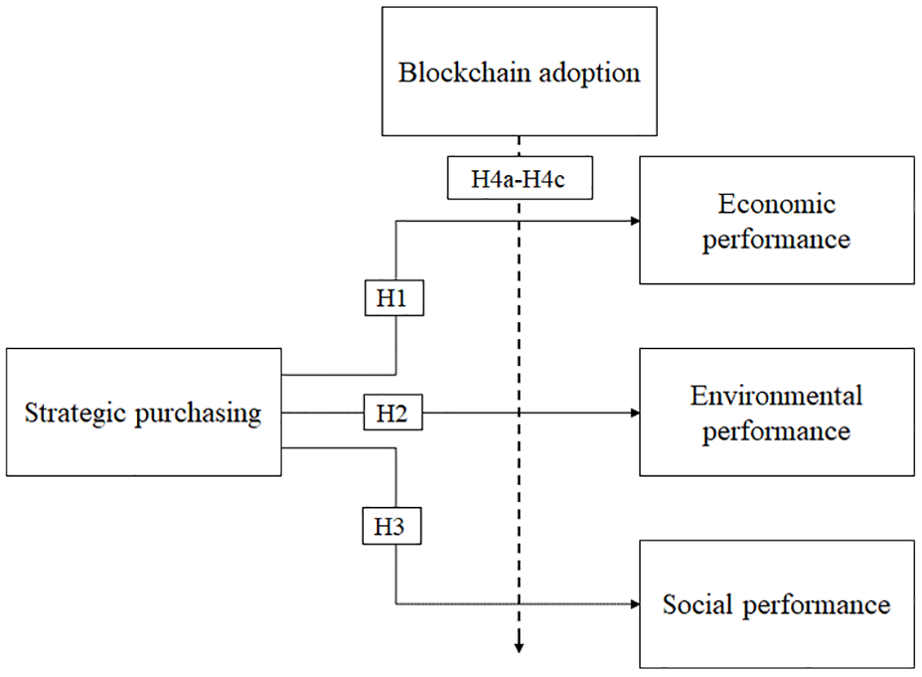
The conceptual framework of the study.
Blockchain Benefits for Manufacturing Firms
There are various reasons behind our focus on manufacturing enterprises in Jordan. Firstly, the manufacturing sector is an essential component of Jordan’s economy, with a substantial share of GDP and employment (Jum’a & Bushnaq, 2024). Despite these potential benefits, sustainability remains an important aspect with challenges like resource constraints, rising energy prices, and environmental pressures (Rane & Thakker, 2020). Second, Jordan, as a developing country with scarce resources, is an excellent setting to investigate the relations between the adoption of SP and BCT on sustainability performances (Jum’a, 2023; Patrucco et al., 2023). Third, the early stage in which BCT is being adopted in Jordan provides a unique environment to better understand the influence and potential advantages of such technologies within an emerging environment (Acerbi & Taisch, 2020; Jum’a, 2023). Lastly, restricting to a single country, and a single sector minimizes variation in contextual factors, and therefore, enables a more controlled, and accurate assessment of the hypothesized relationships (Jum’a & Bushnaq, 2024).
BCT may bring many benefits to manufacturing firms in the context of SP. First, BCT provides the benefit of improving SC transparency and traceability. It allows for the creation of a permanent and easily accessible record that records all transactions taking place within the SC (Sunny et al., 2020). This technology enables manufacturers to easily track the origin and transportation of raw materials, components, and finished goods. This ensures the incoming materials authenticity and compliance with quality standards (Raja Santhi & Muthuswamy, 2022).
Moreover, BCT helps in the integration of smart contracts and automating supplier interactions, thereby simplifying supplier relationship management (Jum’a, 2023). Smart contracts possess the ability to execute predetermined conditions independently including fulfilling orders, releasing payments, and enforcing penalties for non-compliance (Bottoni et al., 2020). In addition, BCT allows for seamless inventory management by providing the ability to track inventory in real-time along the SC. Manufacturers can greatly reduce the risk of stockouts or excess inventory by gaining a thorough vision and anticipation of their stock levels. According to recent research by Gohil and Thakker (2021), adopting this approach can lead to enhanced production planning and cost reduction.
Moreover, BCT plays a vital role in ensuring quality assurance by using records that cannot be changed. With blockchain records, you can be assured that once quality assurance data is captured, it cannot be changed. As per the research conducted by Iftekhar et al. (2020), this BCT benefit provides a reliable and immutable record of quality inspections, certifications, and compliance with industry standards. In addition, BCT helps reduce counterfeiting and makes it easier to verify the authenticity of products. BCT ensures the authenticity of components and products, reducing the risk of counterfeit items entering the SC. This matter holds immense importance in sectors such as manufacturing sector, where the existence of counterfeit goods can pose safety risks or lead to legal consequences (Mhatre et al., 2023). BCT can help in achieving efficient procurement procedures. These procedures can be optimized through a decentralized database, eliminating the need for a centralized authority to manage procurement data. Manufacturing firms can achieve more efficient and streamlined procurement procedures, leading to a reduction in bureaucratic obstacles and delays (Elalaoui Elabdallaoui et al., 2021).
Data security is another BCT benefit that is significantly enhanced by cryptographic techniques, which BCT utilizes to protect data. As explained by Dwivedi et al. (2020), the adoption of BCT ensures the protection of valuable information such as intellectual property, trade secrets, and transaction details. BCT can effectively prevents unauthorized access or tampering. In addition, BCT plays a vital role in promoting collaboration with SC members. It allows for the safe and controlled sharing of data among authorized parties within the SC. As stated by Babu et al. (2022), this promotes better collaboration among manufacturers, suppliers, and other relevant parties, while ensuring the security of data. Finally, BCT plays a fundamental role in helping with regulatory compliance by offering records that can be audited. The clear and verifiable nature of BCT simplifies the process of following industry norms and standards. As per Bakarich et al. (2020), manufacturers can provide authorities with comprehensive and reliable documentation of their SC operations. Thus, based on the previous discussion, there are nine major benefits for BCT in the context of SP namely, SC transparency and traceability, supplier smart contracts, inventory real-time tracking, quality assurance, reducing counterfeiting, efficient procurement procedures, data security, collaboration with SC members, and regulatory compliance.
Methodology
Sampling Procedure
The survey was conducted with managers based in Amman, the capital and largest city of Jordan. The survey responses were collected using a technique called judgmental sampling. Malhotra (2010) argues that even though non-probability sampling has its limitations, it can still provide valuable insights that can be used to estimate population parameters. In addition, the study employed judgmental sampling to ensure the selection of respondents with specialized knowledge and relevance to the research problem. While this method allowed for a great deal of fine detail to retrieve from people who were directly involved in or had expertise on the phenomenon under study, it does obviously put limits on how generalizable one’s results may be. The aim of a judgmental sample is to collect rich, contextual data, not build a statistically representative sample. Consequently, the results may not be representative of those in other populations and should be considered within the context of the sampling population (Bougie & Sekaran, 2019).
Based on the research conducted by Hair et al. (2019), it is suggested that a sample size of 200 or more is ideal when using partial least square structural equation modeling. To collect survey data, participants were given a structured questionnaire. Data collection took place between August 2023 and January 2024. After receiving 316 responses, the data was carefully analyzed using appropriate statistical analysis methods.
It is worthwhile to mention that there are some methodological limitations of this study that should be addressed. To begin, biases pertaining to personal perceptions of respondents should not be ruled out as the research relies on self-reported data gathered via a structured questionnaire. Secondly, the cross-sectional nature of this study does not allow for causal inferences to be made about the relationship between the investigated variables. In order to address and minimize these limitations, a number of actions were taken in this study. We maintained the anonymity and confidentiality of respondents to minimize bias for self-reported data. Furthermore, recall bias was minimized through the rigorous design of the questionnaire and clear, neutral and non-ambiguous questions. These cross-sectional designs put limitations in interpreting the results as causative relationships; therefore, SEM was used to uncover such associations among constructs as it accounts for complex interrelationships between variables and simultaneously provides valid conclusions irrespective of the data being cross-sectional.
Measurement Items
The measurement items used in this study were taken from previous research studies, as indicated in Table 1. The SP was based on research conducted by Arora et al. (2020). The items related to the elements of sustainability, specifically environmental sustainability, economic sustainability, and social sustainability, were sourced from Jum’a et al. (2024). The items about the adoption of BCT was obtained from research conducted by Wamba and Guthrie (2020). The initial section of the questionnaire included questions about demographic information. In the second section of the questionnaire, the scale questions were assessed using a 5-point Likert scale. In the third section of the questionnaire, participants were asked to rate the significance of BCT benefits on a scale ranging from 1 to 5.
Constructs and Measurement Items.

Characteristics of the Respondents
Table 2 provides a depiction of the demographic distribution observed among the respondents included in the survey. It is worth noting that a considerable proportion of participants are male, comprising 92.7%, whereas females account for 7.3%. Most respondents, accounting for 44.9%, belong to the age group of 31 to 40 years. Additionally, individuals over the age of 50 make up 9.8% of the sample. With regards to professional background, a notable percentage (42.4%) possess a range of 5 to 10 years of experience, closely trailed by individuals with less than 5 years (28.5%) and those with more than 10 years (29.1%). In relation to educational background, a considerable proportion of individuals possess a bachelor’s degree (81.3%), whereas those who have obtained a master’s degree or higher account for 15.8%. The sample is primarily composed of first line managers, accounting for 73.4% of the positions, followed by middle managers at 17.1% and top managers at 9.5%. The distribution of respondents according to the number of employees revealed that 19.9% were employed in organizations with fewer than 20 employees, 39.6% were employed in organizations with 20 to 100 employees, and 40.5% were employed in organizations with over 100 employees.
Demographic Profiles of the Respondents.

Source. Amman Chamber of Industry.
Findings and Discussion
Descriptive Analysis
Mean, standard deviation, skewness, kurtosis, and standard error were all included in the descriptive analysis. According to the findings, economic sustainability generated the highest mean score with a value of 4.0633 and a standard deviation of 0.85802. Social sustainability, on the other hand, generated the lowest mean score with a mean of 3.8272 and a standard deviation of 0.93965. Table 3 shows the detailed results of descriptive statistics.
Descriptive Statistics (N = 316).

Structural Equation Modeling
Both the structural model and the measurement model were utilized in the two-stage structural equation modeling approach. The study utilized the statistical tool SmartPLS version 4 and the Importance-Performance Map Analysis (IPMA; Ringle et al., 2015).
Data analysis was conducted using Partial Least Squares Structural Equation Modeling (PLS-SEM) due to its ability to manage complex models with multiple constructs, particularly in the case of explanatory research design. Given the foregoing, PLS-SEM entertains both measurement and structural models at the same time very effectively. PLS-SEM was selected as the ideal method for our study considering the complex relationships between constructs proposed in our model. PLS-SEM helps in measuring both direct and indirect effects making it useful in understanding the latent mechanisms in data.
Measurement Model Analysis
During the analysis phase of the measurement model, convergence validity and reliability were established using different measures. These measures included average variance extracted (AVE), factor loading, construct reliability measured by Cronbach’s alpha, and composite reliability.
Based on the research conducted by Hair et al. (2019), it was discovered that all the Cronbach’s alpha and composite reliability values surpassed the recommended threshold of .70. The results showed strong convergent validity, with factor loading values of 0.70 and AVE values above 0.50 (Hair et al., 2019). The study successfully confirmed the convergence validity and reliability of the latent variables used as shown in Table 4.
Construct Reliability and Validity.

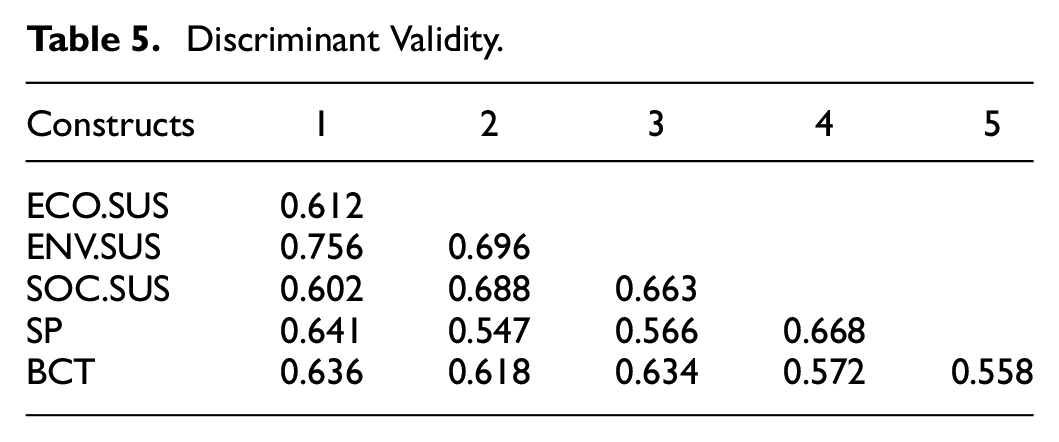
The investigation of discriminant validity involved comparing the correlation coefficients of the constructs with the square roots of the average variance extracted (AVE) values.
Fornell and Larcker (1981) argue that to establish adequate discriminant validity, it is necessary for the square root of the average variance extracted (AVE) to exceed the magnitude of the correlations. The results are presented in Table 5.
Discriminant Validity.
Structural Model Analysis
The structural model in SmartPLS was executed using the bootstrapping method, employing 5,000 sub-samples as shown in Figure 2. The r square values indicated the proportion of the variation in the dependent variable that could be accounted for by the model.

Structural model diagram.
The study revealed that the model demonstrated the ability to explain approximately 46.2% of the variability observed in the economic performance, 59.5% of the variability observed in the environmental performance, and 50.1% of the variability observed in the social performance. According to Byrne (2013), it is recommended that the NFI should exceed 0.90, while the SRMR should be below 0.09. Based on the model fit criteria, the PLS analysis yielded the values SRMR (0.031) and NFI (0.94).
The results of the structural model included the path relationships, beta values, t statistics, and p values associated with each hypothesis as shown in Table 6.
SEM Results.

p < .05. **p < .01. ***p < .001.
The findings demonstrated that SP had a statistically significant influence on environmental/economic/social sustainable performances at p < .05 and p < .001 respectively so hypotheses H1, H2, and H3 are supported. Moreover, the results of moderating effects showed that blockchain adoption significantly and positively moderated the relationship between SP and environmental/economic/social sustainability. Thereby, hypotheses H4a-H4c were supported.
Our study supports Hypothesis H1, showing that SP improves economic performance. This confirms prior studies on SP’s importance in organizational performance (Allal-Chérif et al., 2021; Jing et al., 2021; Rane & Thakker, 2020). The positive association in our analysis shows that smart procurement practices boost economic performance.
Moreover, we found that SP improves environmental performance, supporting Hypothesis H2. Sustainable procurement can improve environmental outcomes, as shown by previous studies (Changotra et al., 2024; S. A. R. Khan et al., 2022; Moshtari et al., 2021). The literature supports our findings that SP promotes environmentally responsible company operations.
Additionally, our analysis supports Hypothesis H3, showing that SP impacts social performance. This result aligns with previous research who claimed that procurement techniques have beneficial social consequences (Charles & Benson Ochieng, 2023; Kshetri, 2021; Zhang & Dong, 2020), and that SP can foster organizational social responsibility.
As for the results of the moderating impact of BCT. Our study supports Hypothesis H4a that BCT moderates SP and economic performance. This result aligns with the studies that examined how BCT might optimize SC processes and increase economic performance (Padilla-Rivera et al., 2020; Tiwari et al., 2020).
Furthermore, our study results confirmed Hypothesis H4b that BCT moderates SP and environmental performance. Supporting H4b is in line with previous studies on the role of BCT in promoting environmentally sustainable performance (Long et al., 2023; Padilla-Rivera et al., 2020).
Finally, our study supports Hypothesis H4c that BCT moderates SP and social performance. This outcome comes in line with prior studies that showed the role of BCT in improving social responsibility by assuring fair labor and transparent SCs and then the social performance of firms (Fernandes et al., 2023; Padilla-Rivera et al., 2020).
Importance–Performance Map Analysis (IPMA)
The IPMA is a valuable tool that enhances the conventional reporting of path coefficient estimates. As explained by Hauff et al. (2024), it incorporates an additional dimension that considers the average values of the latent variable scores. The IPMA aims to assess the impact of a predictive variable that is BCT benefits on a target construct that is the sustainability performance by comparing it to the average scores of their latent variables, which is an indicator of the performance level (Fakfare & Manosuthi, 2023).
According to Haverila et al. (2021), researchers can use IPMA to improve a particular target construct that is the sustainability performance by combining the analysis of importance and performance constructs. By applying this approach, variables can be prioritized at either the component- or indicator-level within the measurement model (Haverila et al., 2021).
In previous studies, researchers have employed various techniques to classify and rank indicators, including analyzing path coefficients and their levels of significance. However, it has been discovered that these techniques offer only a narrow viewpoint when it comes to prioritization and implications especially when compared to IPMA (Hauff et al., 2024). The results given by the IPMA suggest that it is important to prioritize specific attributes at the indicator level (Fakfare & Manosuthi, 2023).
Currently, IPMA has gained popularity as an analytical method among researchers in various domains such as SC management (Sternad Zabukovšek et al., 2022). IPMA can be considered when the research objective is to prioritize variables of a specific construct, but it has been infrequently employed to examine sustainability issues (Fakfare & Manosuthi, 2023). This study utilizes the IPMA framework, and the objective is to ascertain the primary benefits of BCT and determine the significance of these advantages in improving various aspects of sustainability performance. This study builds upon previous research that employed IPMA using PLS-SEM.
According to Martilla and James (1977), the four quadrants in importance-performance analysis are defined as follows:
Category A named “Concentrate here”—high importance, low performance: necessitates prompt attention for enhancement and represents significant vulnerabilities.
Category B named “Keep up with the good work”—high importance, high performance: signify prospects for attaining or sustaining a competitive advantage and are significant strengths.
Category C named “Low priority”—low importance, low performance: are minor weaknesses and do not require additional effort.
Category D named “Possible overkill”—low importance, high performance: suggest that allocating business resources to these attributes would be excessive and should be reallocated to other areas.
The analysis conducted an IPMA for each type of performance as shown in Figures 3 to 5.

IMPA—Economic sustainability.
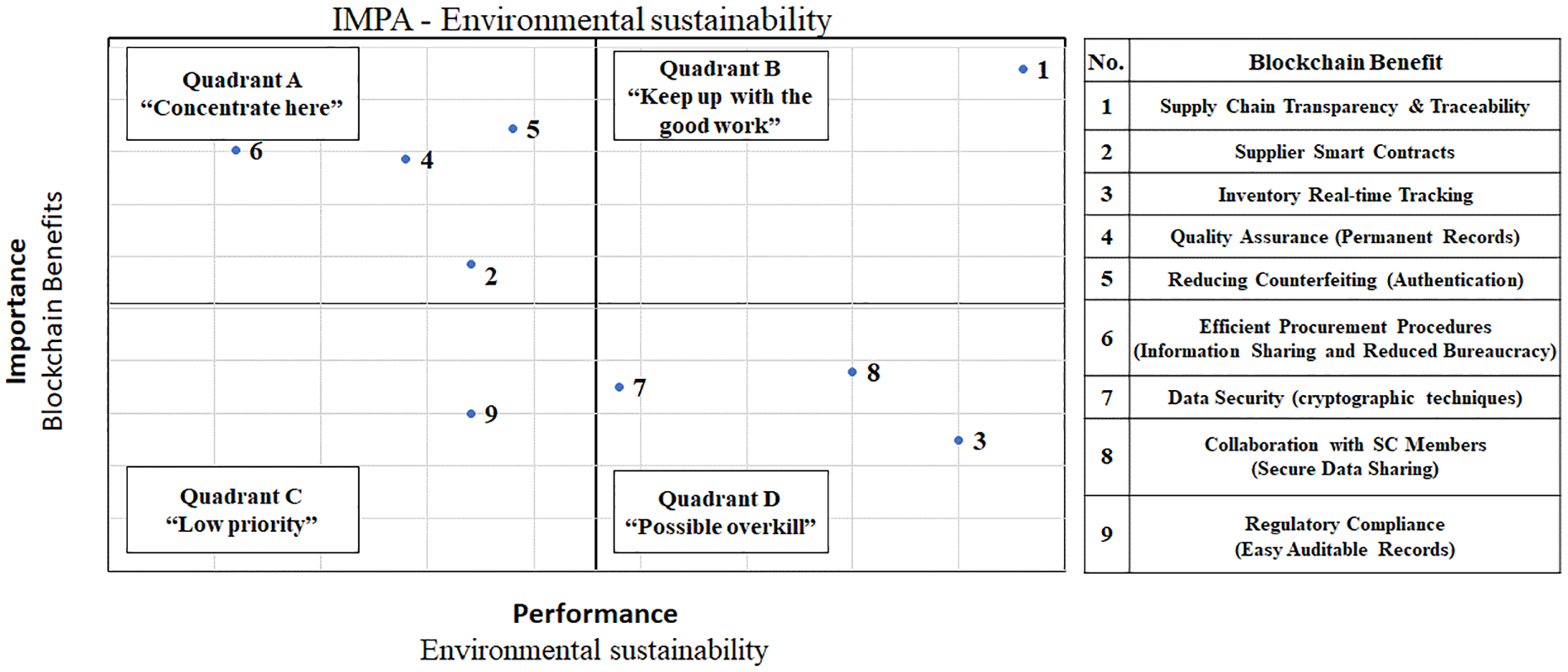
IMPA—Environmental sustainability.

IMPA—Social sustainability.
Table 7 outlines various blockchain benefits categorized into four groups: Category A (Concentrate here), Category B (Keep up with the good work), Category C (Low priority), and Category D (Possible overkill). The categorization provides a strategic perspective on prioritizing blockchain applications based on their potential impact in economic, social, and environmental performances.
Blockchain Benefits According to IPMA/Sustainability Performance.

As for the SC transparency & traceability (benefit 1), minor economic and social weaknesses (A) indicate room for improvement in addressing their concerns. This blockchain benefit is a major strength (B) that needs immediate attention for sustained improvement on the environmental front. The environmental impact is significant, making continued improvement essential.
As for supplier smart contracts (benefit 2), it is a major strength (B) for economic and social considerations and requires ongoing optimization. Supplier smart contracts are major strengths (B) economically and socially, indicating that efforts should be maintained and improved to maintain a competitive advantage in these dimensions. While it is a weakness in regard to the environmental performance which requires immediate improvement.
Regarding the inventory in real-time tracking (benefit 3), it is economically and socially are rated as low priority (C), indicating that current efforts may be sufficient. Real-time inventory tracking is a minor weakness (D) for environmental performance, meaning no immediate effort is needed and the investment should be redirected to other benefits.
As for quality assurance and having permanent records (benefit 4), environmentally, maintaining quality through permanent records is a minor weakness (A) that requires sustained attention for improvement. It is a major economic strength (B) that needs constant consideration. Socially, it is marked as a possible overkill (D), requiring reassessment and resource reallocation.
Moreover, reducing counterfeiting through authentication (benefit 5), requires ongoing attention for more enhancements for environmental factors (A). The reduction of counterfeiting through authentication is a major strength (B) economically and socially, so efforts should be maintained and optimized for competitive advantage.
In addition, economic considerations are a major strength (B) that requires sustained focus for efficient procurement procedures (Benefit 6). Environmentally, efficient procurement procedures are a weakness (A) that needs constant improvement. From a social perspective, it may be overkill (D), requiring reassessment and resource reallocation.
Regarding data security and cryptographic techniques (benefit 7), it is considered a possible overkill (D) both environmentally and economically, indicating that they require reassessment and resource reallocation. Socially, it is a major strength (B), requiring sustained efforts to maximize its impact.
As for the collaboration with SC members and securing data sharing (benefit 8), secure data sharing is a low priority (D) for social performance, and current efforts may be sufficient, and reallocation of resources might be needed. Due to its economic weakness (A), it requires ongoing attention for more improvement and enhancement. Environmentally, it is low priority (C), meaning more effort may not be needed immediately.
Finally, regulatory compliance and easy auditable records (benefit 9), are a low priority (C) for environmental performance, suggesting existing efforts may be sufficient for regulatory compliance. Economically, it is a possible overkill (D), requiring reassessment and resource reallocation and since strength (B) for social performance, it needs constant optimization.
Theoretical and Practical Implications
The study has both theoretical and practical implications for both SC managers and the literature of sustainability studies. This study presents a framework that elucidates the multifaceted impact of SP on economic, environmental, and social sustainability. This study introduces a novel perspective by demonstrating the moderating role of BCT, thereby enriching existing theoretical frameworks and providing a more nuanced understanding of the complex relationship between blockchain benefits and sustainable outcomes.
The results of this study contain a number of practical implications for firms seeking to develop the role of their purchase function strategically within companies. One of the key implications is to make sure that the purchasing function is built into the strategic planning of the organization. This entails establishing a clarity of purpose and performance measures for procurement professionals aimed at aligning those objectives with the organization’s ones. Placing buying requirements within this broader strategic context renders it more significant, and companies can better harness its power to shape organizational performance.
Another implication is that of investing in the professional growth of purchasing professionals. This development supports the purchasing function to make better decisions and adapt to an ever-changing business context, which ultimately enhances the competitive position of the organization.
Moreover, long-term purchasing planning is needed. Therefore, a documented long-term vision for the purchasing department is needed in order to sustain the continuous success. A plan of this nature should detail the desired materials or services to be obtained, as well as tactics on fostering relationships with different suppliers. Proactively looking at its suppliers not only allows the purchasing department to anticipate future needs and mitigate risks but also to ensure reliable sources of supply and hence plays a role in developing long term stability for the company, aiding further growth.
Another point, top management has an important part to play in increasing the strategic visibility of purchasing. The purchasing department thereby makes certain that the purchasing function is recognized at corporate level, and that the strategic importance of buying be appreciated by top management. It is the responsibility of top management as well to adequately back sourcing and reminded its strategic importance by aligning it with critical decision-making processes, in order to achieve this also through the support of other parts of the business.
In addition, the results of this study provide decision-makers with important implications in manufacturing companies to optimize strategic initiatives and resource allocation and minimize environmental disruptions and improve sustainable business practice through the IPMA analysis. To improve economic sustainability, BCT enhances financial transparency and efficiency, offering insights to help make better investment decisions and advising on financial strategies. Using the capabilities of BCT, businesses can simplify feed operations, decrease costs, and raise profits.
The benefits of BCT in terms of environmental sustainability are clear; it adds more to supply chain traceability and strengthens environmentally sustainable actions. It allows businesses to monitor and verify the environmental impact of their supply chains, ensuring compliance with sustainability standards. This is relevant on one front for organizations looking to lower their carbon emissions and improve the sustainable development of their production.
In the end, BCT is also strongly related to social sustainability. BCT supports trust and accountability amongst stakeholders by ensuring the reliability of smart contracts and improving supply chain integrity. This enhances the social sustainability and the relationships with suppliers, customers and other business partners, leading to long-term partnerships as well as shared social responsibility.
Conclusions, Limitations, and Future Studies
Our study proposed a conceptual framework that aims to investigate the impact of SP on three different dimensions of sustainability performance. Additionally, we examined the moderating impact of BCT on these connections within the manufacturing industry. Furthermore, the present study examined the benefits of BCT, evaluating its impact on various aspects of sustainability performance using an importance-performance map analysis (IPMA). Moreover, this study was based on two fundamental theories namely DCT and RBV. This arises from their complementary viewpoints on organizational adaptation and resource optimization.
The study is quantitative in nature, and the data collected through a structured questionnaire from managers at different levels of management within manufacturing firms in Jordan resulted in 316 responses. The results of the study showed that SP has a significant and positive impact on all dimensions of sustainability performance. Additionally, the study revealed that BCT has a significant moderating impact on the relationship between SP and sustainability performance. Finally, the study identified BCT benefits importance that affect each type of sustainability performance along with their priorities.
This study contributed to the literature theoretically by enhancing existing theoretical frameworks with a deeper understanding of the intricate relationship between the benefits of blockchain and sustainable outcomes. Moreover, the study offered practical insights about SP’s role in sustainability performance and how companies may invest in BCT to enhance sustainability Consequently, companies should prioritize BCT investments in accordance with their sustainability objectives.
There were several limitations in our study which may be taken as an opportunity for future research. First, as the data collection was limited to manufacturing firms in Jordan, it might not necessarily be generalizable to other sectors or regions. This conceptual representation may need to be tested further within different industries and geographical settings in future studies. Second, the study had a cross-sectional design and therefore we cannot infer causality. Potential future longitudinal studies could expand further insights on the interrelation between SP, BCT and sustainability performance over time. Finally, additional research might examine other potential moderating or mediating variables such as organizational culture or technology readiness to better understand the process among SP, BCT and sustainability outcomes.
Footnotes
Acknowledgements
“The authors thank German Jordanian University, Birzeit University, and Palestine Technical University – Kadoorie for their support in this research.”
Declaration of Conflicting Interests
The author(s) declared no potential conflicts of interest with respect to the research, authorship, and/or publication of this article.
Funding
The author(s) received no financial support for the research, authorship, and/or publication of this article.

Data Availability Statement
The data presented in this study are available on request from the corresponding author.