



Abstract
The integration of travellers and their interactivity in order to facilitate their integration into the smart community is currently an important lever to strengthen the tourism industry. Despite the crucial role played by hedonic and utilitarian features in tourist value co-creation (TVC), the mechanisms between the two components remain insufficiently documented. The current research provides insights into the value co-creation process in the tourism industry through the direct impacts of hedonic and utilitarian features and the mediating effects of relational trust (RT), tourism service innovation (TSI) and smart technology adoption (STA). The research focused on perceived ease of use (PEU), perceived usefulness (PU), and attitudes towards using technology as main dimensions of smart technology adoption. We applied the Partial Least Square Structural Equation Modeling (PLS-SEM) in the case of 374 tourists visiting Saudi Arabia and after having operated the appropriate pilot test addressed to hotel managers in smart tourism. Our results revealed that hedonic and utilitarian features significantly and positively affect the TVC directly and through the mediating effects exerted by both relational trust and tourist service innovation. Unlike the perceived usefulness and attitude towards using technology which significantly mediate the relationship between hedonic and utilitarian features, and TVC, the dimension specific to smart technology adoption and relative to perceived ease of use does not play any mediating role. The study outcomes serve tourism industry managers, practitioners, and policymakers by proposing a comprehensive value co-creation model integrating key mediating factors of success on the behavioral, socio-psychological, and technical levels.
Keywords
Introduction
Hedonic features (HF) in tourism, such as fun, fantasy, and arousal, improve user engagement by incorporating interactive and social elements, gamification, and visually pleasing designs (Ozturk et al., 2023). These features enhance the online experience by fostering social interaction and promoting leisure activities rather than productivity (Siahaan et al., 2021). On the other hand, the utilitarian features (UF) crucial for e-retailers prioritize functionality, user-friendliness, and problem-solving (Etemad-Sajadi & Ghachem, 2015). These features are specifically designed to enhance practicality and efficiency, in line with strategies aimed at promoting services for tourists. International tourism witnessed a greater extent of growth and development (Chuang, 2023). Tourism in this way continued to reflect resilience especially the industry pursuing a path to recovery based on innovation that is driven through the adoption of the right technology. In this meantime achieving growth, the industry looks for innovation in six major areas, that is, marketing, public service, technology, product, policy and organizational structure. Innovation in the context of tourism is a dynamic and fluid concept that changes the entire meaning. Such advancement within the industry led to a large number of tourism innovation-related research that relies on the interdisciplinary perspective to create a bridge to innovation management with tourism development (Ratten & Braga, 2019). Growing involvement in innovation and smart tourism thus led the industry to focus on co-creation of values, especially in the customer-to-customer platforms (Moon & Han, 2019). Co-creation of value enables taking the optimum advantage of the tourism innovation model to collaborate and maximize efficiency in tourism activities by focusing on better yet more focused approaches in relationship marketing (De Pelsmacker et al., 2018). The prospects of value co-creation (VC) thus help to create a way towards open innovation for the lodging businesses within tourism innovation.
In the present era of data informatization, tourism companies have undergone various strategic marketing changes. The rise of digitalization and increased inclusion of technology resulted in the elimination of traditional marketing practices. At rising historic moments, the new approach to marketing such as online marketing and data-driven techniques emerged, making tourism companies utilize big data to make their marketing decisions and carry out associated activities efficiently (Zimeng et al., 2023). However, the technological advancement in the context of tourism resulted in facing unprecedented challenges as well in terms of knowing the ways to process data and utilize the right mechanisms that support innovation for companies. Although various offline and online tourism and travel companies established their specific data centers and platforms for data processing, the bigger advantage received by these companies was through big data analytical applications and technologies (Buhalis, 2020). These technologies are, however, at their preliminary stage of exploration and their integration into tourism innovation models seems to be in their emerging phase.
The current study contributes to the existing literature on the value co-creation process as follows: The research on smart tourism, relationship marketing, and tourist co-creation has yet to be explored. In this regard, Buhalis and Foerste (2015), Vaz Serra et al. (2023), and Bhuiyan et al. (2022) have examined how SoCoMo marketing and smart tourism technologies affect the co-creation of value, but little is known about how HF and UF affect RT and service innovation in tourism. While Shulga et al. (2021) and Shen et al. (2020) have examined RT in co-creation, its articulations with hedonic and utilitarian motivations were neglected. Although some research has investigated the importance of e-trust in conditioning VC (Daabseh & Aljarah, 2021, Rodríguez-Negrón & Ojeda-Castro, 2022), they have been conducted in the context of e-marketing and scarcely have been targeted for the tourism industry (Arıca et al., 2023).
In addition, although there are few studies on VC that are targeted for open innovation, consumer-centric approach, and service innovation (Nájera-Sánchez et al., 2020), those that have focused specifically on smart tourism remain few. So, it appears from the literature that although the determinants of VC have been widely examined, few studies have paid attention to the factors considered under the technology service innovation perspective. Smart technology, a crucial aspect of smart tourism, has been discussed in terms of PU and ease of use (Hu et al., 2023; Ozturk et al., 2023), but its role as a mediator between HF, UF, and TVC needs further investigation. According to Gomez-Oliva et al. (2019) and Casais et al. (2020), technology is increasingly shaping tourist experiences, making this gap notable. In addition, tourism is increasingly dependent on technology. To understand how VC in the modern tourism industry works, this study will combine findings from Lee and Kim (2018), Rahman et al. (2017) and Talari and Dehghani Ghahnavieh (2019). The present study aims to develop a comprehensive value co-creation model integrating both behavioral factors, namely hedonic and utilitarian features, a socio-psychological variable relating to RT, and technical aspects relating in particular to TSI and STA. To this end, the central questions to which the research attempts to provide answers are the following: How do hedonic and utilitarian features (Smart tourism relationship marketing) affect relational trust and service innovation? How do relational trust and service innovation affect tourist value co-creation? And, how does smart technology adoption (PU, PEU, and attitude towards using technology) mediate the nexus between smart tourism relationship marketing and tourist value co-creation?
Literature Review and Theoretical Framework
Hedonic and Utilitarian features, Relational Trust and Tourist Value Co-Creation
Previous studies on the underlying factors of value creation in the tourism sector highlighted that smart tourism, which combines hedonic and utilitarian elements, affects relationship-marketing trust. Within the tourism industry, Carvalho et al. (2023) explained that the idea of VC involves customer willingness and customer engagement to co-create. Sarmah et al. (2017) stated that customer involvement mainly refers to their willingness and active participation in the creation, development, and delivery of innovative services to the community. When clients consider engaging in co-creation activities, it provides them with significant benefits rather than incurring additional costs. Busser and Shulga (2018) claimed that customer co-creation within tourism has five dimensions associated with co-creations among which customer contribution, collaboration with them and emotional response are important components from the co-created perspective. In addition, Cain et al. (2018) further incorporated five types of VC involving co-innovation, co-recovery, experience co-creation, and co-marketing. According to these authors, it is found that these types result in focusing on shaping up an entire personalized tourism experience, which is accompanied by modern information systems and digital transformation.
HF, which focus on emotions and experiences, engage and entertain tourists. Lee and Kim (2018) and Kapil (2022) found that users’ satisfaction and loyalty increase when they use these features, suggesting that pleasure is crucial to RT. Indeed, hedonic elements of smart tourism, such as immersive and interactive experiences enabled by advanced technologies, build trust between tourists and service providers through enjoyable and memorable experiences. However, UF emphasize the tourist experience’s practicality. Ozturk et al. (2016) and Hu et al. (2023) found that the efficiency, convenience, and informational value of smart tourism platforms significantly affect users’ trust and continued use. Smart tourism’s reliable information, seamless navigation, and personalized services meet tourists’ pragmatic needs, boosting their trust in technology and service providers. The study conducted by Ghosh and Jha (2024) on tourism marketing also emphasized the importance of HF and UF as key socio-psychological factors in mobilizing consumers’ intentions to webrooming.
Hedonic and utilitarian features in smart tourism relationship marketing create a comprehensive framework that affects RT. Indeed, combining these features can empower the co-creation of value, where tourists enjoy the experience and find it valuable and relevant to their needs (Buhalis & Foerste, 2015; Vaz Serra et al., 2023). Tourists trust the platform because it meets their emotional and functional needs. These elements create a deeper sense of reliability and credibility, essential for building and maintaining RT in the dynamic and competitive tourism industry. Based on these ideas, the first central hypotheses of the study are formulated as follows:
Smart Tourism Relationship Marketing and Tourism Service Innovation
Tourism service innovation plays a pivotal role in enhancing tourist co-creation by providing platforms for personalized experiences and engagement, as demonstrated in studies by Buhalis and Foerste (2015). The core element for the development of tourism today is accompanied by innovation, involving a new way and approach to thinking, which encompasses creativity and ways to resolve problems efficiently. In addition, Buhalis and Foerste (2015) and Buonincontri and Micera (2016) found that TSI drives tourist co-creation by providing personalized experiences and engagement platforms. Smart technologies as a valuable output of innovation allow tourists to contribute to service development and customization, creating more meaningful and customized travel experiences (Chen et al., 2017; Chuang, 2023). Previous research showed that innovative services enhance tourist-provider collaboration and co-creation (Bhuiyan et al., 2022; Polese et al., 2018) and help in working on imaginable possibilities that lead to maximizing the satisfaction of tourists at each level. Hence, policies are needed to facilitate change and tourism development by focusing on creative aspects to enable smart tourism.
Studies such as those carried out by Medina-Muñoz et al. (2013), and Ronningen and Lein (2014) found that tourism studies emphasized on elements associated with innovation processes from the networking, human resources and marketing orientation and thus, they are not limited only to the manufacturing and industrial sectors (Narduzzo & Volo, 2018). In addition, Vaz Serra et al. (2023) emphasize the shift from traditional ICT to smart tourism experiences, allowing tourists to create their travel experiences actively. Bhuiyan et al. (2022) propose a smart tourism hedonic and utilitarian feature that enables tourists to interact more meaningfully with their environment and create sustainable value. Smart technologies improve operational efficiency and enhance the tourist experience with personalized and interactive services. Another important aspect of smart tourism is how smart hotel technology enhances guest experiences and encourages co-creation. Yang et al. (2021) examine how mobile apps and IoT devices improve hotel guests’ experiences. Buonincontri and Micera (2016) showed how smart tourism technologies help guests customize their stays and create more immersive and personalized travel experiences. According to Chuang (2023), smart tourism service platforms are crucial to TVC. These platforms connect tourists with service providers and promote an integrative view of smart tourism services, emphasizing collaborative innovation and social interaction. From their side, Polese et al. (2018) and Gomez-Oliva et al. (2019) examine how social innovation in smart tourism ecosystems and communication channel transformation aids sustainable VC, emphasizing the role of technology and institutional support.
Moreover, smart technologies have revolutionized the concept of relationship marketing. According to Carvalho et al. (2023), relationship marketing is recognized as one of the approaches under the industrial or service marketing theories, which gained greater attention from marketers in the service-based industries. Likewise, Maggon and Chaudhry (2015) claimed that relationship marketing establishes the capability of a business to adopt strategies, which helps in achieving customer retention. Further, according to Rahimi et al. (2017), relationship marketing is recognized as one of the marketing approaches that focuses on building effective and long-term relationships with consumers by focusing on fulfilling their needs. Bataineh and Al-Smadi, (2015) found that relationship marketing previously was limited to forming relationships with customers. However, today technological advancement and innovation have changed the meaning of relationship marketing, which is beyond traditional approaches and practices.
Within the context of hospitality management and tourism, relationship marketing plays a fundamental role as the service industry greatly involves higher interactivity between the customer and the service provider. Moon and Han (2019) found that the internet provided a wider opportunity for peer-to-peer platforms in the tourism industry to build an innovative model that aims to maximize customer involvement and participation. Chandna and Salimath (2022) asserted that variables such as word of mouth, trust and reviews hold greater significance in building an opinion for consumers that results in influencing their purchase decision. Rahimi et al. (2017) further claim that due to technological developments, e-tourism and e-commerce changed ways how relationship marketing works. Generally, customers have become more informed and due to this, they demand a personalized experience. Kandampully et al. (2018) claimed that hospitality and tourism are not only based on the accommodation or quality of food, but also on how the information was delivered to customers and what approaches service providers adopt that are innovative and capable of meeting customer needs differently. Managing customer expectations and fulfilling their needs is crucial for tourism companies for which they require a customer-centric marketing approach to build communication.
Relationship marketing, focusing on hedonic and utilitarian features, drives service innovation, keeping the tourism industry dynamic, competitive, and aligned with global travelers’ changing preferences (Etemad-Sajadi & Ghachem, 2015; Ozturk et al., 2023). Hedonic factors emphasize tourist pleasure and satisfaction and motivate service providers to create more engaging, enjoyable, and immersive experiences. These features improve customer engagement and satisfaction (Buhalis & Foerste, 2015) and Lee and Kim (2018), suggesting that tourism services’ emotional and experiential appeal can drive service innovation. Personalized experiences, augmented reality tours, and interactive platforms satisfy tourists’ hedonic needs, making their trips more memorable and unique. On the other hand, Utilitarian efficiency, functionality, and convenience require continuous service delivery and operational process innovation. Ozturk et al. (2016) and Hu et al. (2023) show how booking ease, navigation ease, and personalized information dissemination can affect tourists’ decisions and satisfaction. These features force tourism service providers to use AI, IoT, and mobile apps to improve operations and offerings.
The combination between hedonic and utilitarian features in smart tourism, when enhanced by relationship marketing encourages service innovation. According to Chuang (2023) and Bhuiyan et al. (2022), these features meet tourists’ basic needs and exceeds their expectations through innovative and differentiated experiences. Based on the above idea, additional hypotheses are formulated as follows:
Tourism Service Innovation, Relational Trust and Tourist Value Co-Creation
For a customer-centric marketing approach, the factor that plays a crucial role is trust (Kapil, 2022). Trust results in building the credibility of any brand, which eventually shares the competence, benevolence, and integrity of a business to meet customer expectations (Al Abdulrazak & Gbadamosi, 2017). Thus, within the tourism industry, collaboration among more than a single aspect such as food, accommodation, cleanliness, etc. helps in building a greater level of trust that influences co-creation dynamics within the innovation of service (Chen et al., 2017).
HF like enjoyment, novelty, and emotional satisfaction deepen engagement. Indeed, Zhang et al. (2022) show that RT reinforces tourists’ online VC behaviors due to altruistic motivations, which often align with hedonic experiences. Hedonic motivations and trust make tourists view co-creation as reliable and emotionally fulfilling, strengthening their commitment to shared value creation. When combined with trust, utilitarian motivations like functional efficiency, cost-effectiveness, and practical benefits drive tourist co-creation. Likewise, Nkoulou Mvondo et al. (2022) showed that a trustworthy co-creation environment increases brand trust and evangelism, highlighting the practicality of co-creation experiences. Referring to a sample of 394 online shoppers, the outcomes of Wang’s (2017) study highlighted that both utilitarian and hedonic values positively and potentially influence relationship commitment. From their side, Chagas and Aguiar (2020) unveiled that utilitarian motivations drive VC in platforms like Airbnb, and trust makes these exchanges safe and rewarding for tourists. Based on the literature evidence, the hypotheses are proposed:
Moreover, relationship marketing enhanced by smart technologies with hedonic and utilitarian features is transforming the travel and tourism industry by using information and communication technology (ICT) to help tourists, service providers, and destinations and thus facilitate VC (Etemad-Sajadi & Ghachem, 2015; Ozturk et al., 2023). The tourism industry focuses on enabling improvement within the informatization level so that the adoption of technologies to build innovation may help in improving the tourist experience (Sibi & Abraham, 2017). The deep integration of various digital technologies (IoT, AI) helps in boosting tourism through product innovation, enables virtual tourism spaces, and catalyses new scenes for tourism development mainly in terms of creating immersive experiences, digital twin scenic spots, digital exhibitions, and digital museums. He et al. (2018) also endorsed that the innovation results in maximizing the effectiveness of the tourist experience, which helps in building a positive impact on customer satisfaction. According to Zhang and Shang (2022), an additional aspect involves the fact that informatization helps to improve the distribution capabilities and marketing management of the industry. Berné et al. (2015) mentioned that tourist innovation is mainly seen since the advent of the Internet took place, which resulted in maximizing direct communication and interactivity between the tourist and the supply side. To enable innovation, companies focus on investing in big data sources as an innovative approach that helps them to take advantage of resources, technology, and other aspects through which regional tourism intensifies (Huang et al., 2020). Zhang (2025) highlighted that increased competition helps to promote innovation so that tourists may receive an exceptional experience, and this results in enabling tourism development for certain destinations. Especially, the capability of tourism to connect it to secondary and tertiary industries demands innovation and technological development to fill the gaps within the market and make the maximize use of resources to support socio-economic stability.
Although there are several recent studies that have examined the direct effects of hedonic and utilitarian motivations on trust and consumer engagement (Barrett et al., 2024; Dutta et al., 2025; Osei et al., 2024), their indirect effects on co-creation value through RT have been little investigated. Based on the above-mentioned ideas, we formulate the following additional axial hypotheses:
Smart Tourism Relationship Marketing, Smart Technology Adoption, and Tourist Value Co-Creation
Numerous tourism and technology studies support the hypothesis that STA significantly and positively mediates the nexus between HF and TVC. In this regard, Buhalis and Foerste (2015) showed how SoCoMo marketing in travel and tourism empowers VC through HF, which enhance the tourist experience. Akdim et al. (2022) explain how utilitarian and hedonic factors affect the intention to use social mobile apps, suggesting that their enjoyment encourages sustained engagement, an essential aspect of co-creation. In addition, Yang et al. (2021) examine how smart hotel technology improves guests’ engagement, suggesting that STA is a bridge that uses HF to enrich co-creation. Chuang (2023) highlighted that smart tourism service platforms promote TVC by integrating and adopting technology to deepen and improve tourist-service provider interactions. From their side, Gomez-Oliva et al. (2019) and Polese et al. (2018) showed how technology transforms communication channels and enables social innovation in smart tourism ecosystems, emphasizing the mediating role of STA. According to Madi et al. (2024), augmented reality makes tourism experiences immersive and engaging, which boosts electronic word-of-mouth (e-WOM). Singh et al. (2022) note that smart technology-driven positive attitudes toward online travel platforms increase tourists’ co-creation intentions. When HF and user-friendly technology combine, tourists find such platforms more appealing and efficient for sharing experiences and insights, turning individual enjoyment into active co-creation. Additionally, Kumari and Biswas (2023) note that PU and PEU significantly affect digital service co-creation participation, adding that technology turns satisfaction into a sustained engagement. Chen and Lee (2023) add that smart technologies improve service quality and perceived value, making co-creation more enjoyable and valuable. HF alone may not drive co-creation without smart technology that simplifies and enriches the experience.
On the other hand, UF like practicality, efficiency, and functionality meet tourist needs and expectations. Bendary and Al-Sahouly (2018) apply the Unified Theory of Acceptance and Use of Technology (UTAUT2) to mobile commerce and found that PU and ease of use, key utilitarian factors, strongly influence STA. In addition, Vaz Serra et al. (2023) show how integrating ICT into smart tourism experiences enhances the utilitarian aspects of the tourist experience, enabling VC. This integration makes service more personalized, efficient, and accessible, encouraging tourists to co-create their experiences. Yang et al. (2021) show that smart hotel technology’s utilitarian benefits improve guests’ experiences, suggesting that STA mediates the nexus between UF and tourist engagement and co-creation.
Smart technology adoption, which includes how useful people think it is, how easy it is to use, and how people feel about it, plays a big role in the connection between UF and tourist co-creation by making VC more useful in real life. Chuang (2023) defines smart tourism service platforms as integrative systems that use technology to improve TVC. These platforms use UF to meet tourists’ functional needs and encourage and facilitate their active participation in personalized tourism experiences. The tourism offering is enhanced by giving tourists the tools and interfaces to share their preferences, feedback, and content. Focusing on participants from 33 countries, the findings of Akdim et al. (2022) highlighted the crucial role played by PU, PEU alongside perceived enjoyment, user experience and satisfaction on the continuance intention to use social mobile Apps, while reporting that in the case of hedonic Apps perceived enjoyment prevails over utilitarian Apps and vice versa when it comes to utilitarian variables. According to Chen and Lee (2023), perceived service quality and crucial utilitarian characteristics impact co-creation behaviors. When perceived as valuable and easy to use, technologies like augmented reality boost the utilitarian benefits of destination experiences, fostering e-WOM (Madi et al., 2024). Tourists who positively perceive and adopt smart technologies turn convenience, efficiency, and functionality into co-created activities, improving their value-driven interactions. Kumari and Biswas (2023) also argue that PU and ease of use motivate users to co-create with technology, especially on service-oriented platforms. These features improve the practicality and functionality of utilitarian offerings, making tourist co-creation efficient and rewarding. Singh et al. (2022) note that positive attitudes toward technology encourage tourists to use it for collaborative engagement, mediating utilitarian motivations and co-creation intentions. Smart technologies help tourists understand the practicality of their contributions, bridging utilitarian motivations and co-creation. However, the beneficial effects of smart tourism relationship marketing on PU have not been unanimously confirmed by past studies. Indeed, based on a sample of 250 retailer users, although the research of Widjaja et al. (2023) highlighted the positive influence of hedonic and utilitarian values on Omni-Channel Shopping, their findings revealed that HF have no effect on PU. Based on the literature evidence, the research hypothesis is proposed:
This research focuses on three dimensions of the variable relating to STA, which are PEU, PU and attitudes toward using technology. To this end, Shin et al. (2018) and Nikou (2019) highlighted that PEU and PU are the main underlying factors of STA by referring to an extended TAM and also adding the component related to compatibility. We integrate in this study the item attitudes toward using technology in accordance with the approach of Talari and Dehghani Ghahnavieh (2019) and Singh et al. (2022). The Technology Acceptance Model (TAM) was used in this study because it provides a solid framework for studying how perceived utility, convenience of use, and user attitudes affect technology uptake in tourism settings. Prior research has shown that TAM is useful in explaining mobile commerce adoption (Bendary & Al-Sahouly, 2018), smart tourism technology experiences and their impact on tourist satisfaction and revisit intentions (Pai et al., 2020), and guests’ acceptance of smart hotel technologies in shaping visiting intentions (Yang et al., 2021). This study uses TAM to capture the mediating function of STA in the interaction between smart tourism relationship marketing and tourist co-creation, providing deeper theoretical insights into technology-driven service innovation and RT in smart tourism. Figure 1 summarizes the conceptual model on the relationship between HF, UF, and TVC.

Conceptual model on the nexus between HF, UF, and TVC.
Methodology
In order to test the axial hypotheses of the research, we refer to the structural equation modeling (SEM) technique. This method has the advantage of its ability to investigate the repercussions of the underlying factors of TVC more core variables related to HF and UF, RT and TSI, although our conceptual model incorporates constricted latent and a high number of observed variables (Lowry & Gaskin, 2014). As disclosed in Table 1, our research integrates eight latent variables and accordingly, the items retained for each of them were developed in the light of a thorough investigation of the existing literature and an appropriate pilot test. Given that some items appear simultaneously in several studies providing different methods, and in order to avoid iterations and skewed results, we chose to drop some items from our measurement model. Furthermore, we used the bootstrapping technique based on Smart PLS 4 in order to determine the significance of the first order indicators in shaping both RT, TSI, and TVC. In order to examine the effects of HF and UF on TVC, we formulated 32 questions based, in addition to the outcomes of the pilot test, on the Technology Acceptance Model (TAM) and Theory of Acceptance and Use of Technology (UTAUT2).
Core Variables and Items Specific to the Study.

Note. TVC = tourist value co-creation.
Data Collection and Sampling
In the current study, during the data compilation process, we previously followed a pilot study (10 surveys) addressed to hotel managers to avoid making inappropriate choices of the different constructs. We will refer to the qualitative pretest to identify the most appropriate core items that are formally associated with the theme of our research during the period June to August of 2023. The selection of participants is not arbitrary but is based on the purposeful criterion sampling method in order to locate the desired information of the research (Patton, 2002). All respondents have applied the smart tourism experience and are well informed about the different technologies adopted and formally connected to the hotel clientele. The key concepts of the study, such as the smart tourism relationship, TSI and tourism VC, were explained to the respondents and the questionnaire began with interviewees’ demographic information.
After conducting the pilot test, we proceeded to content validity by sending the questionnaire to hotel managers and three university academics to ensure the relevance of the questionnaire and the suitability of the items selected. Feedback was received for this purpose, providing each of them with a relevance score. The scores are ranked and the magnitude is organized according to four ratings as follows: 1/item is inappropriate; 2/item is somewhat appropriate; 3/item is appropriate and requires minor revision; 4/item is very appropriate. After receiving all the comments, it appears that some items needed minor revisions regarding their wording without affecting their contents, and subsequently, the questionnaire was distributed to tourists visiting Saudi Arabia. To ensure the robustness of the retained sample, the sampling process adopted in this study emphasizes that the selection of respondents matters more than its size (Boreham et al., 2020; Mooi et al., 2018). Therefore, missing and outlier responses were excluded from our analysis. The study uses both online sources (WhatsApp, YouTube, and email) and face-to-face contact. Similarly, this study follows the sample-to-variable ratio approach of Hair et al. (2018), which recommends that a minimum observation-to-variable ratio of 15:1 or 20:1 be preferred. Our conceptual model incorporates eight variables, and therefore a minimum number of 120 to 160 observations is adequate. After filtering out missing and outlier responses, our sample containing 374 observations meets these standards and can be used for subsequent confirmatory data analysis. In order to avoid over-framing, the respondents benefit from a deeper discussion and, thus, allow the respondents to freely express their opinions, and the study proceeds by semi-structured questions left space (Jarvenpaa & Lang, 2005). Once the data was collected, we referred to the three-stage analysis protocol of Miles and Huberman (1994) by first filtering the data, exposing it, and finally making a synthesis, including data reduction, data display, and conclusion drawing. For this purpose, the responses were carefully observed and subsequently coded and classified on the basis of the main constructs. As advocated by Hulland et al. (2018), to avoid non-response bias, we checked that the demographic profiles of the respondents were consistent with the sampling frame.
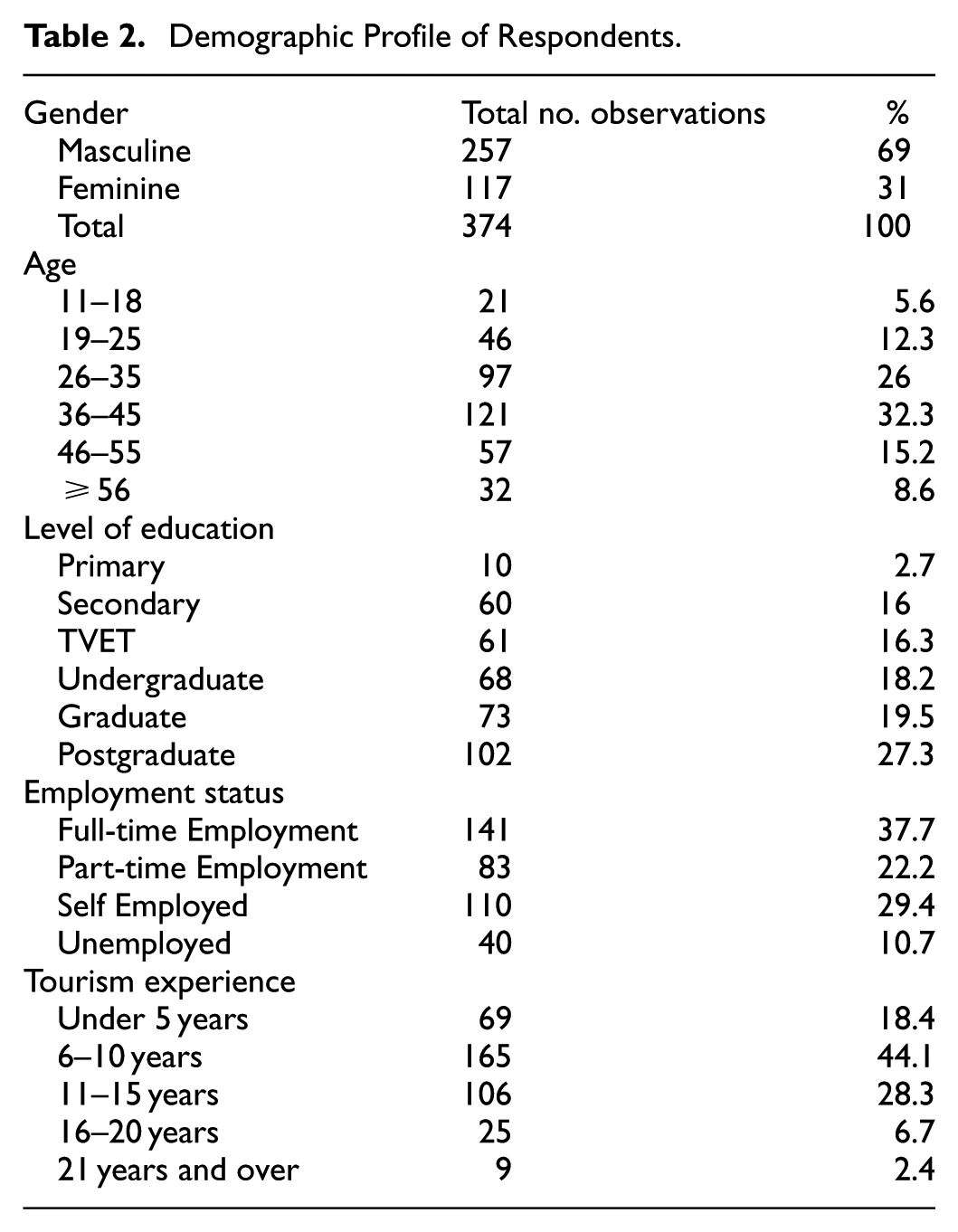
The demographic characteristics of the selected sample are shown in Table 2, from which it appears that the individuals selected do not present any non-response bias. To ensure that the respondents provide a true score that goes with the measurement method, we determined common method variance (Kock, 2015). To avoid this risk of bias, the questions were placed in an alternating manner while isolating the criteria from the predictive variables, and we hid the respondent profile (Hulland et al., 2018). In addition, the research is based on a five-point Likert scale and the responses were structured according to a scale ranging from strongly disagree (scale 1) to strongly agree (scale 5). In addition, we proceeded to the examination of internal consistency by determining the correlation between the different values and calculating Cronbach’s alpha. The questionnaire was sent to participants via social media channels and in some cases by mail and messaging apps. Feedback from different participants was collected following a descriptive statistical analysis and applying the PLS-SEM. We consider that this technique best answers our research questions since the driver’s construct of TVC relative to our conceptual model integrates several underlying factors. The study proceeds with confirmatory-explanatory analysis, and the data are non-normally distributed (Hair et al., 2019). In addition, the present study aims at locating and identifying predictive factors and not simply testing already examined relationships (Richter et al., 2016).
Demographic Profile of Respondents.
Sample Characteristics
A total number of 395 respondents to the questionnaire were finally collected after filtering out the aberrant and incomplete responses from a total of 620 participants, which resulted in a response rate of 63.7%. Missing responses exceeding a threshold of 5% were eliminated (Hair et al., 2017) and from this primarily filtered sample, 21 responses were discarded due to their invalidity, which resulted in a total sample on which the study is based of 374 responses. As shown in Table 2, our sample is composed of 69% male and 31% female. Most of the respondents who represent more than half of the total sample are in the age category between 26 to 35 and 36 to 45, and therefore adults are those most loyal to TSI. The majority of the participants are well educated, since the category with a status below undergraduate forms only 35% of the entire sample. In addition, more than half of the respondents have had an experience with smart tourism services of less than 10 years.
Results
Robustness Check of Measurement Model and Structural Model
Before conducting a discussion of the results found by proceeding with PLS-SEM analysis, we first evaluated the relevance and consistency of the MM and SM (Hair et al., 2010). In this regard, we proceeded by the convergent validity (CV) and discriminant validity (DV) tests relative to the measurement model (MM) through confirmatory factor analysis. The latter is investigated via SmartPLS 4.0. The examination of the individual item reliability reveals relevant results given that the majority of the items present outer loadings greater than 0.7. Only items HF3; UF4; TVC1; and TVC4 have outer loadings lower than this threshold value. As advocated by Hair et al. (2010), we chose not to discard these items since both CV and degrees of freedom (DF) are fulfilled and their eradication can lead to losing critical information on the conclusions. By referring to Awang (2015), the value 0.6 serves as a cut-off for acceptable loadings, and therefore items presenting a loading factor beyond this value are considered acceptable, and when combined with the value taken by the AVE (which exceeds 0.5), they indicate good aggregate validity. The Internal consistency in this study refers to the Fornell-Larcker Criterion and Hetrotrait-Monotrait Ratio (HTMT), which indicates the reliability based on the correlation of the observed constructs.
We refer to the commodity reliability (CR) to test internal consistency, and Table 3 shows that the MM model is consistent since the CR values are all greater than 0.7 as recommended by Hair et al. (2017). From Table 3 it appears that the AVE index is greater than 0.5 which further confirms the convergent validity (Hair et al., 2017). In order to test the discriminant validity, as suggested by Henseler et al. (2015), it is possible to refer to HTMT and so, we use in this regard the cutoff criterion of 0.85. Our findings reveal that all the values recorded for all the variables are lower than this value and, therefore, the discriminant validity is confirmed. So, from the outcomes of the study, the reliability and validity of the retained model are well confirmed.
Outcomes of Measurement Model.

Note. AVE = Average Variance Extracted; HF = Hedonic features; PEU = Perceived ease of use; PU = Perceived Usefulnes; RT = Relational trust; TSI = Tourism service innovation; UF = Utilitarian features; VIF = variance inflation factor.
In order to verify the collinearity problems between the latent constructs and avoid the problem of common variance bias, we used the variance inflation factor (VIF), and according to Hair et al. (2016), a value exceeding five reflects the presence of this type of issue. The results found indicate the absence of multicollinearity and the values displayed are lower than the conservative threshold of three as advocated by Sarstedt et al. (2019). Table 4 presents the findings of correlations between the constructs in accordance with the approach of Fornell and Larcker (1981) and shows that AVE’s square root on diagonal values exceeds the corresponding correlations’ values and thus, the results found meet the criteria. Regarding the HTMT outcomes, the results depicted in Table 4 indicate that no pair of relationships was above the cutoff set at 0.85, which again reflects the absence of multicollinearity and allows proceeding later to the interpretations relating to the structural model.
Discriminant Validity.

Note. HF = Hedonic features; PEU = Perceived ease of use; PU = Perceived Usefulnes; RT = Relational trust; TSI = Tourism service innovation; UF = Utilitarian features; TVC = tourist value co-creation.
Structural Model Outcomes
Before investigating the underlying factors of TVC, more particularly the role of HF and UF in managing the tourism industry, it is first necessary to test the model fit specific to the research model. By carrying out the robustness check of the model, the standardized root mean square residual (SRMR) statistic presents a value of 0.071, which is below the threshold value set at 0.08 adopted by Hu and Bentler (1999) and subsequently retained by Rutkowski and Svetina (2014) and Reußner (2019). This finding indicates a good model fit. Moreover, our results yielded values of 0.980 for NFI, respectively, which satisfy the minimum accepted values (NFI > 0.95) and reflect in turn the suitability of retained data (Gronemus et al., 2010). Figures 2 and 3 plot the importance-performance maps relating to the constructs HF and UF in the explanation of RT and TSI. It appears that the item HF2 is the most important and performing element of the hedonic feature that affects RT while the item “I like email alerts of special offers from this smart tourism-booking website” occupies a backward position in the conditioning of both RT and TSI. Similarly, it appears that HF1 and HF2 present close importance in the determination of TSI with a relatively higher performance of HF4. Therefore, items HF2 and HF4 are considered among the most important dimensions of HF that enhance customer trust and motivate service innovation in the tourism sector. This result confirms that of Wang and Li (2019) and Tariyal et al. (2022) and reflects that travellers both enjoy and value the travel website and its services when it best meets their preferences.

Importance-performance map of the variable hedonic features.
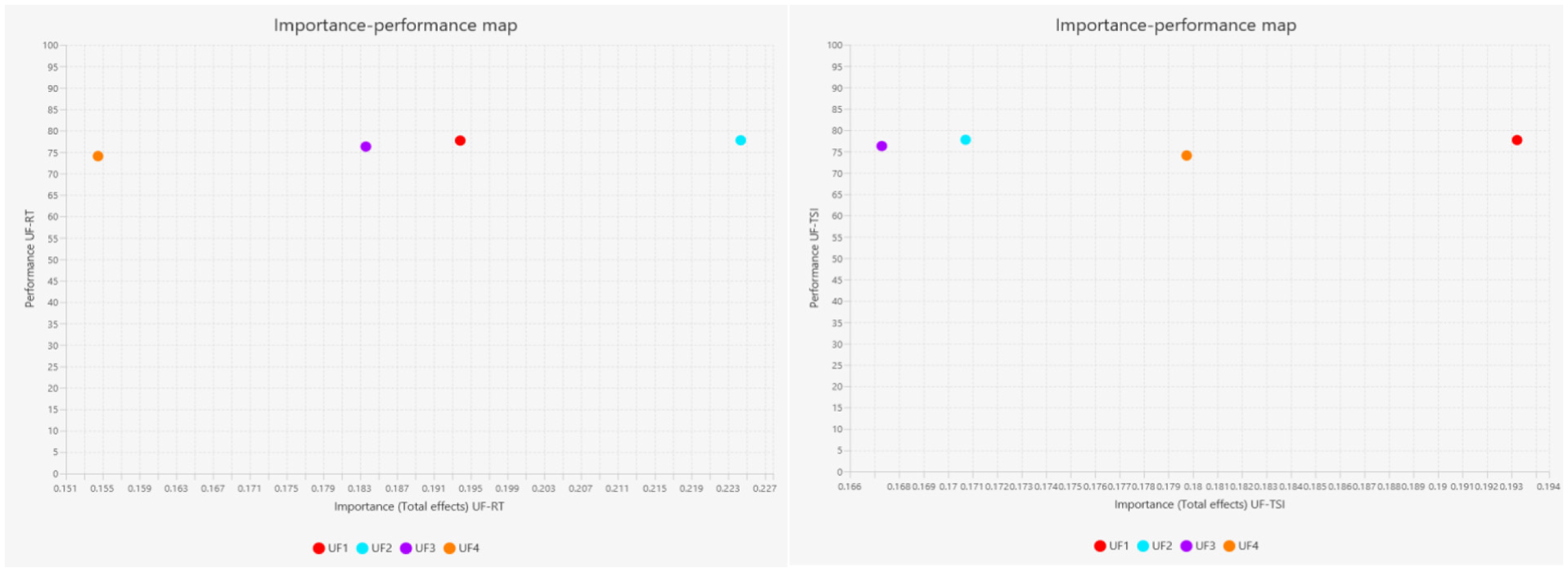
Importance-performance map of the variable utilitarian features.
It also appears that UF1 and UF2 record high and equal importance in the conditioning of both RT and TSI and an advanced performance of UF1. Furthermore, Figure 3 shows that among the utilitarian feature items, UF1 is the best performing item in determining TSI and UF2 presents the highest performance in conditioning RT.
Besides the outer model weights traced by the importance-performance maps, it is recommended to also examine the T-values (Gefen & Straub, 2005) in order to analyse the underlying factors of RT, TSI, and TVC. As shown in Table 5, both HF and UF significantly affect RT (β=.264; p-value = .000) and TSI (β=.434; p-value = .000), which confirm hypotheses H.3a and H.3b. Similarly, the direct effect of HF on TSI is higher (β=.396; p-value = .000) than those exerted by UF (β=.322; p-value = .000), and the opposite case is recorded when it comes to the effects on RT. Although the effects of RT and TSI significantly condition TVC, it seems that the RT woven between the tourism service provider and the customer constitutes the most important component. In addition, the outcomes of the study highlight significant and relatively equal impacts of HF and UF on TVC, thus validating the two central hypotheses H1 and H2. The results found support the findings of Prebensen and Rosengren (2016) who highlighted that the dimensions of HF and UF stimulate service experience value, but contradict those of Chagas & Aguiar (2020) who revealed that utilitarian motivations are not related to VC in a hosting service.
Direct and Indirect Repercussions of Hedonic and Utilitarian Features on TVC Through Relational Trust and Tourism Service Innovation.

Note. HF = Hedonic features; RT = Relational trust; SRMR = standardized root mean square; TSI = Tourism service innovation; TVC = tourist value co-creation; UF = Utilitarian features.
Our findings further indicate that RT and TSI mediate the effects of HF and UF on TVC. Therefore, the outcomes of the study validate hypotheses H7 and H8. Similarly, these outcomes consolidate those found by Ozturk et al. (2016) by showing that utilitarian and hedonic values significantly and positively affect users’ continued usage intentions. The pleasure felt in the smart tourism experience and the utility derived from it therefore constitute a crucial factor in ensuring interaction in the smart community and the creation of added value in the tourism industry.
The Figure 4 synthesizes the factorial contributions of the different constructs relating to the central variables of the selected structural model (SM) as well as the extent of the impacts exerted both on the RT and the TSI, to which are added those of mediator types led by the latter on the TVC.

Outcomes of the structural model on the effects of hedonic and utilitarian features on TVC through relational trust and tourism service innovation.
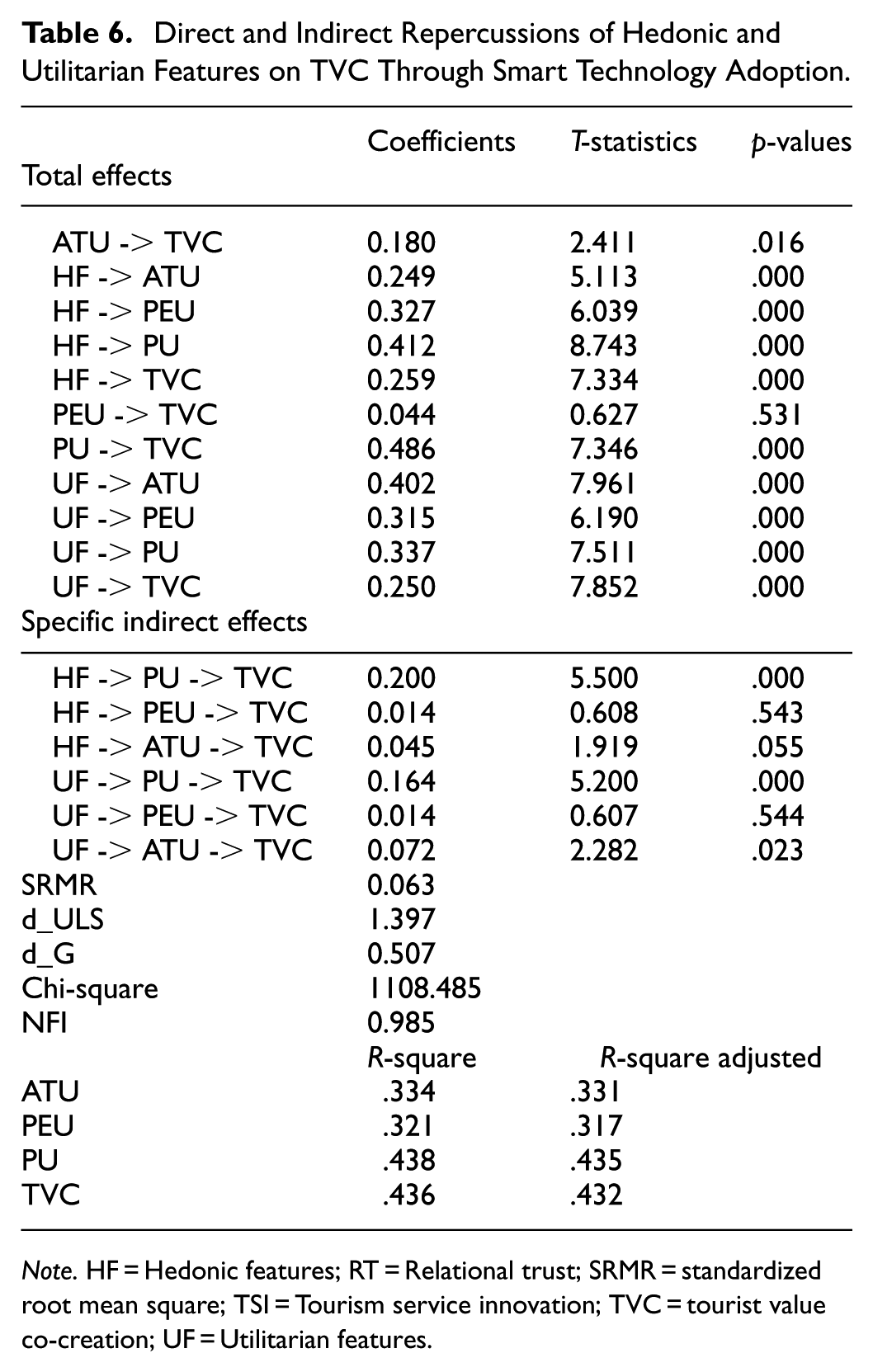
Regarding the second part of the research related to STA as a mediating variable, it emerges from the results disclosed in Table 6 that HF and UF both significantly and positively affect the PU, PEU, and attitude towards using technology. In addition, the construct related to the PEU does not exert any significant effect on the TVC, which reflects the willingness and curiosity of hotel customers to master sophisticated applications and seek satisfaction in such technological services. From the outcome of the study, TVC is significantly and positively dependent on PU (β=.486; p-value = .000) and attitude towards using technology (β=.180; p-value = .016). These results consolidate those of Akdim et al. (2022) concerning the motivating effects of PU on the continuance of intention to use social mobile apps and, therefore, the full involvement in the community through online interaction and the expression of personal opinions freely in smart communities.
Direct and Indirect Repercussions of Hedonic and Utilitarian Features on TVC Through Smart Technology Adoption.
Note. HF = Hedonic features; RT = Relational trust; SRMR = standardized root mean square; TSI = Tourism service innovation; TVC = tourist value co-creation; UF = Utilitarian features.
However, our findings contradict the results of these authors regarding the positive effects of PEU on TVC. By retaining a significance threshold of 10%, only the perceived uselessness and the attitude towards using technology play a mediating role in the relationship between the HF and UF on one side, and the TVC on the other side.
The PEU has no mediating effect through which the HF condition the TVC. So, referring to the approach followed by the Technology Acceptance Model, our results confirm those found by Lavuri et al. (2022), who revealed that hedonic and utilitarian values significantly condition shoppers’ online buying attitudes. HF and UF create a positive opinion and push to operate smart tourism services. Based on the above-mentioned results, it turns out that STA partially mediates the nexus between hedonic and TVC given the absence of a mediating effect of perceived ease in the structural model. However, STA exerts total mediating effects in the relationship between UF and TVC.
The factorial contributions as well as the impacts exerted by the different constructs on PEU, perceived uselessness, and attitude towards using technology, to which are added the mediating effects of these through which the HF and UF affect the TVC are traced and summarized in Figure 5.

Outcomes of the structural model on the effects of hedonic and utilitarian features on TVC through smart technology adoption.
Discussion and Conclusion
Strengthening the tourism industry in a country requires the loyalty and satisfaction of hotel customers, and this state requires the revival of TVC. In the current study, we conducted a detailed analysis on the impact of HF and UF on TVC in the Saudi context. Although the effects of HF and UF on tourist intentions have been extensively investigated, those affecting TVC remain insufficiently documented. Our results showed that HF and UF significantly and positively affect TVC. Although both types of features positively condition RT, the one emanating from UF is higher than that exerted by HF. Similarly, the findings disclosed that HF and UF positively condition TSI. Furthermore, the outcomes of the study disclosed that RT and TSI both mediate the relationships between HF and UF on one side, and TVC on the other side.
General Discussion
The findings show that both HF and UF have an impact on RT and TSI, with RT emerging as the most powerful predictor of TVC. These findings are consistent with Prebensen and Rosengren (2016), who found that hedonic and utilitarian characteristics drive service experience value, underscoring the notion that the dual nature of tourist incentives is crucial for improving co-created experiences. Furthermore, the larger impact of HF on tourist service innovation compared to utilitarian ones is consistent with Ozturk et al. (2016), who demonstrated that both values significantly influence continuing usage intentions in mobile hotel booking scenarios. This indicates that pleasure-oriented experiences in smart tourism not only increase service innovation but also improve RT, emphasizing the interconnected pathways that facilitate tourist participation and co-creation. The mediating effects of RT and TSI on the link between hedonic/utilitarian features and co-creation of tourist value support hypotheses H7 and H8, respectively. These findings are consistent with the broader literature on technology-driven tourism (Pai et al., 2020; Yang et al., 2021), which emphasizes the importance of perceived experience and trust in promoting satisfaction, revisit intentions, and co-creative behaviours. The balanced but separate contributions of hedonic and utilitarian qualities to VC imply that both emotional satisfaction and functional utility are required to maintain engagement within smart tourism ecosystems. Thus, the study not only validates but also expands on previous theoretical discoveries by incorporating RT and TSI as essential mediators, providing a more comprehensive view of how smart tourism relationship marketing promotes VC.
Finally, our findings highlighted that STA materialized by the dimensions relating to PU, PEU, and attitude towards using technology partially mediates the relationship between HF and TVC and totally the relationship between UF and TVC. The beneficial effects of PU on TVC reflect its major contribution to achieving efficient development of the e-tourism system, as advocated by Alharmoodi et al. (2024) through their study applied to the case of the UAE. However, the outcomes of the study revealed that the dimension of STA relating to PEU has no significant effect on TVC. This result contradicts that found by Lam et al. (2020) who revealed, by focusing on the case of a sample intended for travellers in Kuala Lumpur, that perceived ease-of-use alongside aesthetics, homophily, and PU potentially affect the platform co-creation experience. Faced with the rise of big data and the expansion of artificial intelligence systems materialized by the use of natural language processing, metaverse tourism and virtual reality, chatbots, and machine learning, customers do not find difficulties in handling booking services and tourism websites (Solakis et al., 2024). Therefore, TVC does not depend on ease of use but rather on the quality of the informational content and the quality of the electronic services provided, which according to Taheri et al. (2024) positively condition their trust.
Theoretical Contributions
This study contributes to the existing literature by addressing unexplored links between hedonic and utilitarian aspects of smart tourism relationship marketing, RT, TSI, and tourist co-creation. Previous research has widely acknowledged the role of hedonic and utilitarian values in influencing consumer behavior and satisfaction in a variety of service contexts (Adams, 2016; Akdim et al., 2022; Hu et al., 2023; Ozturk et al., 2016), but few studies explicitly link these dimensions to RT and service innovation within smart tourism ecosystems (Berné et al., 2015; Casais et al., 2020). By making an overview of previous studies, there is a lack of understanding of how TSI can enhance tourists’ willingness to co-create (Buonincontri & Micera, 2016; Chen et al., 2017). It emerges from the outcomes of this research that hedonic elements have a greater influence on service innovation, whereas UF have a greater effect on RT. This nuanced distinction adds to theory by expanding our understanding of how dual motivating elements operate differently in smart tourism settings. The findings further support the mediating roles of RT and service innovation, extending the Technology Acceptance Model (TAM) to the field of smart tourist relationship marketing. Furthermore, while models such as TAM and UTAUT2 have identified perceived usefulness, ease of use, and attitude as key mediators of technology adoption (Bendary & Al-Sahouly, 2018; Pai et al., 2020; Yang et al., 2021), the literature has yet to fully integrate these mediators into the relational marketing-co-creation nexus in tourism (Chuang, 2023; Kumari & Biswas, 2023).
Practical Implications
For tourism industry managers and practitioners, the findings emphasize the importance of creating service experiences that cater to both hedonic and utilitarian characteristics. The stronger impact of hedonic features on service innovation implies that providing pleasurable, immersive, and emotionally engaging experiences can stimulate innovation and increase tourist satisfaction. The significant impact of utilitarian aspects in increasing relationship trust emphasizes the necessity of dependability, efficiency, and ease in smart tourism services. Managers should strike a balance between emotional engagement and functional utility when creating smart tourism platforms and services. Furthermore, improving RT through open communication, personalized treatment, and consistent service delivery can dramatically increase tourists’ readiness to participate in co-creation activities, resulting in long-term loyalty and positive word-of-mouth.
The study also includes actionable recommendations for tourism service providers and policymakers. Smart tourism technology should be used not just to improve operational efficiency, but also to enhance tourists’ experiential value. For example, the introduction of mobile applications, virtual reality technologies, and AI-driven service innovations can boost hedonic enjoyment while maintaining utilitarian simplicity of use, increasing tourist engagement. Governments and tourism organizations should support technology-enabled efforts that foster co-creation by facilitating trust-building mechanisms, such as digital transparency standards, user-friendly service platforms, and collaborative innovation projects. These methods will allow tourist providers to use both hedonic and utilitarian principles to improve co-creation and competitiveness in the business.
Limitations and Future Directions
Despite its merits, the study has certain shortcomings that suggest areas for further investigation. The data collection was limited to a sample size of 374 tourists visiting Saudi Arabia, which, while suitable for SEM analysis, may not adequately represent varied cultural or regional contexts. Future research could use cross-cultural comparisons to see how the relative importance of hedonic and utilitarian qualities differs across tourist markets. Furthermore, the study focused on self-reported perceptions, which may be biased; longitudinal designs could better capture how relationship trust and TSI change over time. Expanding the study to include additional mediators like perceived risk or digital literacy, as well as moderators like destination image or ethical tourism practices, would help us better understand how smart tourism relationship marketing generates long-term visitor value co-creation.
Footnotes

Ethical Considerations
The study was approved by the committee of Research Ethics at Qassim University, reference number 24-91-19.
Consent to Participate
Informed consent was obtained from all individual participants included in the study. Participants provided their consent in writing before participating in the research.
Authors Contributions
Abrar Alhomaid: Conceptualization, writing, reviewing and editing.
Tarek Bel Hadj: Methodology, Writing- Original draft preparation, Software., Writing- Reviewing and Editing.
Funding
The authors disclosed receipt of the following financial support for the research, authorship, and/or publication of this article: The Researchers would like to thank the Deanship of Graduate Studies and Scientific Research at Qassim University for financial support (QU-APC-2025).
Declaration of Conflicting Interests
The authors declared no potential conflicts of interest with respect to the research, authorship, and/or publication of this article.
Data Availability Statement
The data are available upon demand by request to the corresponding author.
References
 ,
,