




Abstract
Despite considerable research highlighting the significance of relational governance in inter-organizational relationships, few have involved the connections between relational governance and innovation ecosystems. This study explores this issue to discover the influential mechanisms of relational governance in innovation ecosystem co-evolution. Building an evolutionary game model, we embody trust and reciprocity (two dominance of relational governance) into co-evolutionary relationships of an innovation ecosystem composed of focal firms, research institutes, customers, and governments, and discuss how relational governance affects innovation strategies of actors. Moreover, the impacts of benefit distribution are also examined. We reveal that (1) focal firms and governments prefer cooperative strategies; (2) reciprocity and trust foster cooperation; increasing benefit distribution drives all actors to collaborate except research institutes; (3) governments finitely encourage cooperation through regulation; and (4) the power of relational governance is restricted due to the below-the-average strategies of customers and research institutes and the neutralizing effects of benefits. Our findings offer a complementary and novel framework for relational governance and extend a deeper understanding of innovation ecosystem studies.
Introduction
Innovation ecosystem has been a hit in practice and research in recent years (Granstrand & Holgersson, 2020; Jacobides et al., 2018), such as Apple’s ecosystems including a product-centered hardware ecosystem and an APP Store-centered software ecosystem (Kapoor & Agarwal, 2017; Park, 2011). Innovation ecosystems possess the characteristics of interdependent multi-actor, dynamic co-evolution, symbiosis (Gao et al., 2019; Phillips & Ritala, 2019).
Interactions or relationships among multiple actors, hidden behind these characteristics, are indispensable for innovation ecosystems, and they change in each stage of ecosystems (Gao et al., 2019). Nevertheless, for this reason, opportunistic behaviors, such as free-riding and latent mismatches between technological skills and strategic know-how (Bstieler & Hemmert, 2015) will be born in ecosystem co-evolution due to asymmetric information (Cao & Lumineau, 2015) and bounded rationality (Kostova et al., 2016), which will affect the efficiencies of innovation ecosystems in achieving innovation (Zhou et al., 2018). Thus, governance should be addressed to overcome potential opportunisms and risks (Brockman et al., 2018). As Williamson (1996) put that effective functioning of economic organizations cannot be achieved without good governance mechanisms. This is also appropriate for innovation ecosystems (Galvin et al., 2021).
In practice, firms and other entities usually spontaneously join in open-ended relational networks without formal agreements, which heavily highlights the building of good relationships (Shaikh & Levina, 2019). Furthermore, the openness of innovation ecosystems heavily calls for relational governance over other types of governance (Shaikh & Levina, 2019). Relational governance can greatly alleviate opportunism (Dong et al., 2017). For instance, it eases opportunisms in Apollo Intelligent automobile ecosystem of Baidu and helps to achieve disruptive innovation (Li et al., 2021). Throughout previous governance studies, we can find that: (1) overall, relational governance is one of dominating governance foci (e.g., Benitez-Avila et al., 2018); (2) its substitution or complementarity with other governance (e.g., Cao & Lumineau, 2015; Poppo & Zenger, 2002) and its impacts on performance (e,g., Park et al., 2017) are mainly attended, but insufficient on strategy interactions and choices among actors; (3) alliance (e.g., Man & Roijakkers, 2009) and supply chain situations (e.g., Liu et al., 2009) are highly concentrated, but rare in innovation ecosystem scenarios; (4) reciprocity, trust, and the impacts of reciprocity on trust are mainly discussed (e.g., Beatriz et al., 2020; Priscila et al., 2018), their separating functions on strategy interactions between entities are blurry; and (5) methodologically, case analyses (e.g., Barbic et al., 2016) and empirical tests (e.g., Benitez-Avila et al., 2018) are principally applied, other methods (such as game theory) are relatively less used. Previous game analyses stress bilateral (e.g., Gao et al., 2021) or trilateral (e.g., Cao et al., 2020) issues, which only reflects parts of economic reality.
In innovation ecosystems, relational governance is evolutionary due to evolutionary relationships between actors (Ness & Haugland, 2005; Steinbruch et al., 2022). However, the analyses of influential mechanisms of relational governance on strategy interactions between actors in co-evolution of innovation ecosystems are still ambiguous. To sum up, several puzzles about innovation ecosystems still are noteworthy: (1) How does relational governance mechanism evolve with the co-evolution of innovation ecosystems? (2) What are the roles of relational governance in co-evolution of innovation ecosystems? (3) How does relational governance impact the strategies of each actor in co-evolution of innovation ecosystems?
Additionally, coopetitive relationships exist in innovation ecosystems (Bacon et al., 2020; Gomes et al., 2018). Coincident interests and value propositions will nurture cooperation, and divergent ones will generate competition (Adner, 2017). Competition can impel co-evolution of innovation ecosystems as well as cooperation (Hannah & Eisenhardt, 2018). Although an innovation ecosystem ostensibly symbolizes a cooperative organization, strategy interactions among actors signify competitive relationships, which can be analyzed through game theory (Megnigbeto, 2018). Furthermore, relational co-evolution necessitates to be relatively stable through many repeated games, and the willingness to cooperate shows the change from a lower level to higher one to maximize benefits of rational actors (Adner, 2017; Argyres et al., 2020). Thus, evolutionary game theory (EGT) is suitable to elucidate the evolutionary mechanism of interactions among actors within innovation ecosystems (Chen et al., 2021). Despite some scholars stressing the significance of modeling in innovation ecosystem studies (e.g., Phillips & Ritala, 2019; Ritala & Almpanopoulou, 2017), few undertake relevant analyses. In relational governance, trust and reciprocity are primary (Argyres et al., 2020; Priscila et al., 2018). Furthermore, innovation ecosystems are more artificially designed (Oh et al., 2016), and each type of actor consists of a group of entities (Clarysse et al., 2014; Lin, 2018). Therefore, based on the above issues, this study devises an innovation ecosystem including a group of focal firms, a group of research institutes, and that of consumers and governments. With building a game model and numerical simulation, two preferential genres of relational governance-trust and reciprocity-are depicted into the model to jointly unveil the roles of relational governance in co-evolutionary process of the innovation ecosystem and their effects on strategies of actors. Moreover, benefit distribution ratios are applied to delineate their impacts on strategic selections of actors. We prove that focal firms and governments much favor cooperative strategies; reciprocity fosters all the actors to cooperate, so does trust, especially for customers; the enhancement of benefit distribution ratios pressurize focal firms and customers to strategize cooperation but research institutes to breach. Furthermore, we show that relational governance is finitely efficient thanks to the below-the-average strategies of customers and research institutes, and the offsetting effects of benefits to reciprocity and trust, which signifies relational governance should be bonded with other ones to collectively work in innovation ecosystems.
Following contributions has been made:(1) uniting the dynamics co-evolution of an innovation ecosystem, and embedding governance mechanism, the functions of relational governance on strategic choices of actors in an innovation ecosystem co-evolution are explored; (2) It is further focalized ecosystem coopetition and co-creation through evolutionary relationships and governance among actors due to ecosystem co-evolution; and (3) methodologically, an evolutionary game is adopted, which conforms to dynamic co-evolution of ecosystems. Additionally, analytical context is expanded to a four-participant, which is relatively more aligned with the status quo of an innovation ecosystem.
This study is structured as follows. Section 2 reviews related literature. In Section 3, the design of the entire study is shown. Numerical simulation and analysis are conducted in Section 4. Section 5 elucidates the conclusions, theoretical contributions, managerial implications, limitations, and future research.
Literature Review
The term “innovation ecosystem” was formally defined by Adner (2006), as “the collaborative arrangements through which firms combine their individual offerings into a coherent, customer-facing solution.” Subsequently, a growing of attempts to define innovation ecosystems has taken off in recent years. For instance, Guerrero et al. (2016) noted an innovation ecosystem as a set of interconnected actors, entrepreneurial organizations, innovative organizations, and innovative process, which coalesce formally and informally, and are mediated by governments to improve innovation. Gomes et al. (2018) typified an innovation ecosystem as a set of interdependent networked actors, which jointly create value, and co-evolve in an innovative process. Granstrand and Holgersson (2020) novelly regarded an innovation ecosystem as an evolving set of actors, activities, artifacts, institutions, and coopetitive relations. Although the understandings about an innovation ecosystem vary, the three main characteristics—interdependent multi-actor, dynamic co-evolution, and symbiosis—become common knowledge (Gao et al., 2019). Based on the above descriptions, we define that an innovation ecosystem is a dynamic co-evolutionary network composed of interconnected relationships and interactions among multiple actors. These simultaneously competitive and cooperative interactions foster ecosystem co-evolution toward innovation capabilities, technologies or skills, resources integration, and motivate actors to co-create value and achieve benefits. Innovation ecosystems stress the significance of relationships and interactions, which, however, also threatens ecosystem health, causing to urgently seek relational governance (Phillips & Ritala, 2019).
Based on the above features and connotations, the following sub-sections explore the co-evolutionary relationships, value co-creation, and relational governance of innovation ecosystems.
Co-Evolutionary Relationships in Innovation Ecosystems
Ecosystem studies prefer the co-evolutionary logic, which focuses on ecosystem-based dynamics and evolution (Aarikka-Stenroos & Ritala, 2017). Co-evolution cares more about interactions among actors of a system through competitive and cooperative activities which contribute to dynamics of entire system (Kolloch & Dellermann, 2018). Although multitudinous ecosystem works consider co-evolution as the interactions between ecosystem per se and its socio-technical environments (e.g., Walrave et al., 2018), relationships within an innovation ecosystem are essential (Moore, 1993; Rong et al., 2015). Actors in innovation ecosystems form various types of symbiotic relationships through networks of interactions (Scozzi et al., 2017). These relationships rely deeply on multilateral interdependence which cannot be simply disassembled into multiple dual relationships (Hou & Shi, 2021). Although an innovation ecosystem has the characteristics of dynamic co-evolution, this is mainly due to the dynamic evolution of these relationships (Song, 2016).
Prior research primarily focuses on the whole evolution of innovation ecosystems (e.g., Maximilian et al., 2020), technology (e.g., Adner & Kapoor, 2016), and knowledge (Fang & Wu, 2006) evolution in ecosystems, but rarely on the co-evolution of relationships between actors within ecosystems. Although several scholars noticed that interactions among actors and the significance of interactive patterns that foster evolution of innovation ecosystems (e.g., Kolloch & Dellermann, 2018; Song, 2016), the works on how ecosystem actors interact in an innovation ecosystem co-evolution are still scarce. Methodologically, considerable studies adopted empirical tests and cases to analyze interactions between actors and the evolution of ecosystems themselves (e.g., Chen et al., 2016). EGT is efficient to elaborate the co-evolutionary law of strategy relationships among actors in innovation ecosystems (Chen et al., 2021; Yang et al., 2021), which is emphasized seldom. This will be used in current study.
Value Co-Creation in Innovation Ecosystems
Value often is co-created in complex innovation networks due to the shift of innovation paradigm from in-house producer-led to collaborative-led (Ritala et al., 2013). In ecosystem perspectives, value co-creation increasingly happens among multiple actors, such as firms, customers, research institutes, governments (Broekhuizen et al., 2021; Pathak et al., 2020). It means that value co-creation includes a series of dynamic links between actors due to blur boundaries, which requires firms within an ecosystem to interact with their complementors (Sun & Zhang, 2021). In ecosystem co-creation, both the perspectives of service ecosystem and innovation ecosystem are two burgeoning areas for exploration. A service ecosystem, grounded in service-dominant logic, is conceptualized as a relatively self-contained and self-adjusting system that connects resource-integrating actors by shared institutional arrangement and mutual value creation through service exchange (Lusch & Nambisan, 2015; Vargo & Lusch, 2016). An innovation ecosystem, as stated earlier, is a dynamic co-evolution network consisting of multiple interactive actors. Although both service ecosystems and innovation ecosystems underscore the impacts of interactions between multiple actors on value co-creation (Song, 2016; Tiziana et al., 2017), the dominating differences are that service ecosystems highly emphasize the significance of institutions on value co-creation and interactions between actors can influence or influenced by institution (Vargo et al., 2015; Vargo & Lusch, 2016), while innovation ecosystems underscore how actors dynamically interact with each other to co-create value in co-evolution (Ritala & Almpanopoulou, 2017; Schaeffer et al., 2021), institutional arrangements are important but inferior to service ecosystem scenarios thanks to the prevailing cognition that informal relational interactions is more appropriate in innovation ecosystems (Dedehayir et al., 2018; Lin, 2018; Tiziana et al., 2017).
In innovation ecosystems, continuous coopetitive interactions between multiple actors co-contribute to value creation and dynamic co-evolution of ecosystem per se (Letaifa, 2014). In innovation ecosystem co-creation, coopetitive interactions happen among actors for their own benefits or others (Vargo, 2007; Vargo & Lusch, 2011), which pertains to strategic relationships between actors (Gomes et al., 2018; Megnigbeto, 2018). In these regards, we define value co-creation in innovation ecosystems as some activities which multiple actors spontaneously and jointly engage in and drive dynamic co-evolution of innovation ecosystems through coopetitive strategy interactions.
Previous researches on value co-creation in innovation ecosystems place highly emphases on the interactions between actors (e.g., Frow et al., 2016; Ramaswamy & Ozcan, 2018). Yet the explorations to decision-making choices or interactions in value co-creation of an innovation ecosystem co-evolution are inadequate. This spares sufficient space for this work to probe into strategy selections of actors in value co-creation of ecosystem co-evolution, and further deepens understandings of the relationship between value co-creation and ecosystem co-evolution.
Relational Governance in Innovation Ecosystems
In innovation ecosystems, informal relationships can indispensably link actors, maintain cross-organizational collaboration, further promote health, and evolution of ecosystem (Jacobides et al., 2018). From another perspective, relationships can be drawn on to be informal adjustment mechanism since they may lead to potential opportunism (Pomegbe et al., 2021), even included in formal contracts (Ryall & Sampson, 2009; Shaikh & Levina, 2019). Focal firms and other complementors often involve voluntarily in innovation ecosystems without formal contracts, which desiderates heavily good relationships between actors (Dahlander & Magnusson, 2005; Dedehayir et al., 2018), and openness of innovation ecosystems requires ecosystem governance to prefer relational governance over other types (Cenamor & Frishammar, 2021; Dedehayir et al., 2018; Felin & Zenger, 2014; Lin, 2018).
Relational governance is identified as a mechanism that centers on social interactions and relationships in economic activities (Granovetter, 1985; Liu et al., 2009) and promotes social trust and identification (Hoetker & Mellewigt, 2009; Shaikh & Levina, 2019). In general, relational governance consists of two dominating types—trust (Benitez-Avila et al., 2018; Hendrikse et al., 2015) and norm of reciprocity (Hoppner & Griffith, 2011; Liu et al., 2018). Trust is viewed as a psychological sense that each actor can count on the commitments made by other actors (Dong et al., 2017). It shows a willingness and an expectation that other actors will meet commitments fairly, ethically, and benevolently (Chams-Anturi et al., 2020; Mayer et al., 1995; Welter, 2012). Trust, embedded into relationships of innovation ecosystems, is an enabler of ecosystem innovations through enhancing collaboration, openness of information, understandings of conflicts (Chams-Anturi et al., 2020; Steinbruch et al., 2022), and further mitigates opportunism (Carson et al., 2006). Reciprocity represents the exchanges of supports or assistance between parties (Dong et al., 2017) and a social norm requiring a counterpart or compensation which one entity asks for from the others (Hoppner & Griffith, 2011). Through impartially sharing risks and profits, reciprocity maintains the cooperation within ecosystems (Goldstein et al., 2011), and facilitates innovation (Huang & Li, 2017).
A wealth of studies pay heavy attention to trust and reciprocity (e.g., Benitez-Avila et al., 2018; Li et al., 2010). Some authors analyzed the impacts of reciprocity on trust (e.g., Liu et al., 2018), but overall, little separated these two governance types to respectively explore their influences on ecosystem co-evolution. Although numerous works have confirmed the significance of relational governance to inter-organizational relationships from various aspects, few focus on innovation ecosystem scenarios. The roles and effects of relational governance in innovation ecosystem co-evolution, particularly on decision-making interactions of actors, are still indistinct, which are exactly crucial parts of our analysis.
Research Design
In this section, we will analyze relevant game relationships among our four groups of actors, and propose hypotheses to build the evolutionary game. Accordingly, payoff matrices, replicated dynamic equations, and evolutionary stable analysis are all needed.
Game Relationships in an Innovation Ecosystem
An innovation ecosystem is artificially designed (Oh et al., 2016). Given that, an innovation ecosystem is devised with four groups of actors, viz. the group of focal firms (GFF), the group of research institutes (GRI), the group of customers (GC), and the group of governments (GG). Each group of actors is deemed as an entirety. In the co-evolutionary process of innovation ecosystems, actors will usually make decisions to maximize their own interests due to bounded rationality (Su et al., 2021), which can be analyzed through game theory. As decision-makers, both GFF and GRI strategize cooperation or default, GC and GG decide whether to cooperate in innovation ecosystem co-evolution. Specifically, game relationships among the four types of actors are as follows:
GFF and GRI
GRI is one of the important members who co-innovate with GFF in innovation ecosystems, and occupies a decisive position in ecosystem chains (Adner, 2017). Supports from GRI assistant GFF to break technological bottlenecks, reduce risks, and improve profits (Intarakumnerd & Goto, 2018). In ecosystems, whether GRI provides GFF with R&D assistance becomes its strategies. When GRI determines to aid GFF, cooperation will benefit to both parties, such as improving innovative efficiency and realizing achievements transformation. When GFF defaults, it is likely to benefit from other innovative activities (Fang & Wang, 2019), but GRI suffers losses in revenue and higher costs. Thus, both GFF and GRI will weigh the pros and cons and optimize their own decisions.
GFF and GC
GC is indispensable for value co-creation of innovation ecosystems (Shirazi et al., 2021). Firstly, the functions of innovative products are realized by consumers. GC’s product satisfaction and loyalty are key factors to measure a product’s success (Calza et al., 2020). Secondly, GC in ecosystems will exert their spillover functions on product design, developing product processes, formulating marketing information, controlling sales channels (Prahalad & Ramaswamy, 2004), and feedbacking information (Bereczki & Tidd, 2019). GC’s behaviors on products can reduce costs of GFF and improve old products or create diverse new products (Bereczki & Tidd, 2019). Thus, strategy interactions between GFF and GC will both affect their expected returns. When GFF innovates, GC’s purchases and feedbacks will bring spillover benefits to GFF through improving product quality, and GC gains higher value-in-use of products (Auh et al., 2007; Bereczki & Tidd, 2019). If GFF defaults and engages in other innovation activities, it will reap additional benefits (Fang & Wang, 2019), while GC’s benefits will be damaged and costs will increase.
GFF and GG
In most innovation activities, government regulation can reduce uncertainty and failure (Stiglitz, 2015). GG is the advocate, supporter, and supervisor of GFF’s cooperative behaviors in innovation ecosystems (Calza et al., 2020). In general, GG has two kinds of decisions in games: to cooperatively participate in innovation or not. For one thing, GG can conduct in-depth supervisions and incentives on innovation behaviors of GFF through policies to avoid opportunism, such as cheating compensation caused by information asymmetry; for another, GG also penalizes GFF for its deviation from cooperation to ensure the sustainability of cooperative innovation in ecosystems (Cao et al., 2018a). In return, GG will get social benefits from cooperative innovation of various actors (Cao et al., 2020). Moreover, the default of GFF will damage social benefits.
GRI and GG
In innovation ecosystems, GG guides GRI to innovate with GFF and subsidize GRI’s R&D events to encourage sustainable cooperation, such as to a certain extent, relieving stress for GRI to apply for research programs. Additionally, GG also punishes GRI for its deviation.
GC and GG
Under GG’s participation, GC’s behaviors are guided, subsidies and incentives are given to encourage further GC to collaborate. GG’s regulations also penalize GC who deviate from its cooperation.
Assumptions, Variables
EGT derived from biology, regarded actors as bounded rational, and presented that actors interact with each other (Chen et al., 2018). In an innovation ecosystem, actors make optimal strategies through repeated interactions, mutual learning, and trial and error (Zan et al., 2019), dedicating to dynamic co-evolution of ecosystems (Song, 2016). EGT integrates game theory with the analysis of dynamic evolution (Smith, 2008), which is extremely proper for our analysis. Therefore, based on ETG, related assumptions are proposed:
Basic assumptions (BA)
Payoff relationships assumptions
Payoff relationships assumptions (PRA) mean the possible strategic interactions among the four groups of actors involved in this work and their corresponding payoffs. To clearly expound strategic relationships and payoff mechanisms among the four groups of actors, this work subdivides these relationships, depicts payoffs with variables and incorporates them into following sub-assumptions.
(2) Profit distribution ratios (β between GFF and GRI and γ between GFF and GC) yield cooperative benefits
(3) Considering relational governance, this study focuses on trust and reciprocity-two primary relational genres (Argyres et al., 2020; Priscila et al., 2018). First, reciprocity has positive impacts on innovation performance (Al-Ubaydli et al., 2015; Goldstein et al., 2011). Combined with the impacts of benefit distribution, reciprocity levels (
(2) Additional incomes,
Table 1 lists the various symbols used in the study. Alliances in the innovation ecosystem will be born and dynamically change under various strategic interactions. Despite several extreme relationships existing in above assumptions (e.g., PRA 5b), they do impact strategic interactions between these actors and their payoffs, further alliances’ stabilities and the ecosystem’s health. Thus, they are incorporated into our analyses.
Symbols in the Game Model.

Payoff Structures and Replicated Dynamic Equations
In order to facilitate analysis, this study centers on the innovative strategies of GFF, and explores the decision-making changes of four groups of actors in ecosystem co-evolution and their impacts on expected payments from strategy interactions. Additionally, it is hypothesized that the probability of GFF cooperatively innovating is x, the one of GRI is y, the probability of GC participating is h, and that of GG is z; and
Strategic Cases of Actors in the Innovation Ecosystem.

Assuming all actors get non-negative payments, the payment matrices of various cases are shown in Tables 3 to 10.
Payoff Matrix of Case ①.
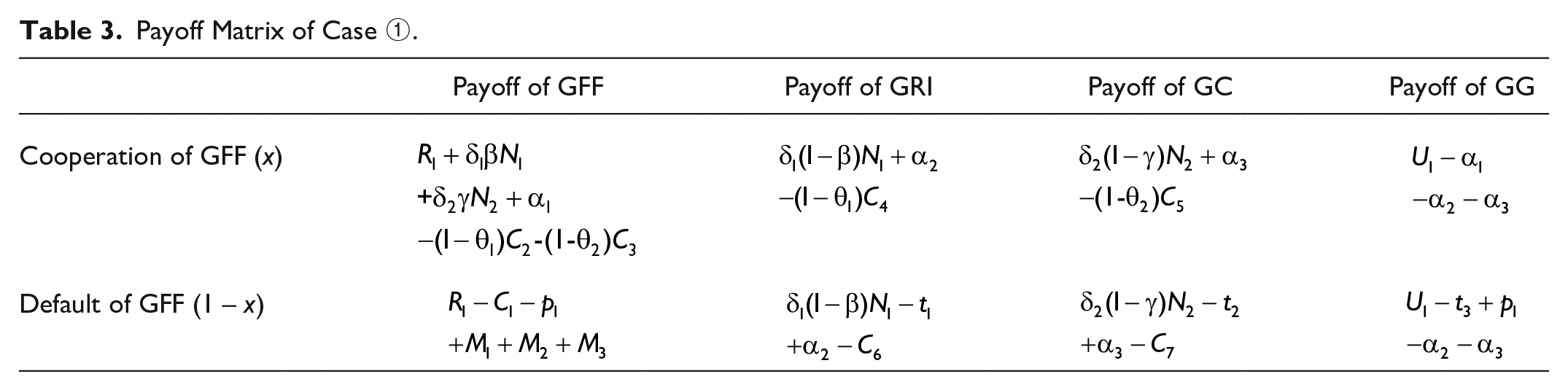
Payoff Matrix of Case ②.

Payoff Matrix of Case ③.

Payoff Matrix of Case ④.

Payoff Matrix of Case ⑤.

Payoff Matrix of Case ⑥.

Payoff Matrix of Case ⑦.

Payoff Matrix of Case ⑧.

Note. That zero-sum situations may exist in our game, but abundant works have verified that innovation and value co-creation activities in innovation ecosystem scenarios generally nurture non-zero-sum outcomes (e.g., Bhargava, 2021; Ranjan & Read, 2021; Visscher et al., 2021), even so in co-evolution of innovation ecosystems (e.g., Benitez et al., 2020; Breslin et al., 2021; Steinbruch et al., 2022). Thus, following their works, we proceed with our analysis under a non-zero-sum context. Based on the above payoff matrices, the replicated dynamic equations of GFF, GRI, GC, and GG can be calculated severally as follows:

The evolutionary stable analyses are showed in Appendix since it affects little the following discussions.
Numerical Simulation and Analysis
Numerical simulation is needed to explicitly reveal innovation strategies of actors in innovation ecosystem co-evolution under relational governance (Ritala & Almpanopoulou, 2017). Regarding that parameter assignment is prerequisite.
Parameter Assignment
Parameters are assigned based on aforesaid replicated dynamic equations. However, the actual data on innovation ecosystems is untoward to acquire due to tremendous constraints on reality. In order to rationally set parameters and ensure the reliability and generalizability of conclusions, this study referred to the works of Cao et al. (2016, 2018a, 2018b, 2020), and invited 50 experts through social network relationships to consult how to assign parameters. A total of 50 experts contain 14 professional technical and management personnel in hi-tech firms (which are extremely eager to collaborate with other actors in innovation ecosystems to achieve innovation, Wu et al., 2018), and 36 related specialists and scholars of universities and research institutes (including 16 experts in the field of innovation management and simulation, 13 ones in customer behavior, and 7 ones in innovative policy). Moreover, the proportions of doctorate, master and bachelor degrees of these experts are 72%, 18%, and 10%, respectively; the proportions of experts with 10 years or more working experience, more than 5 years but less than 10 years, and less than 5 years are 60%, 24%, and 16%, respectively. For these specialists and scholars in universities and research institutes, the proportions of professors, associate professors and lecturers or other scholars are 63.89%, 22.22%, and 13.89%. Thus, the work or research fields, education backgrounds, working experience, and professional titles of invited experts are as consistent as possible with our research design. Consults were conducted by emails, phones, and face-to-face interviews. Based on Cao et al. (2016, 2018a, 2018b, 2020), the contents of consultation include two primary aspects-fixed parameter values in replicated dynamic equations (e.g., additional incomes of GFF, subsidies, and penalties of GG) and influential values of variable parameters (e.g., benefit distribution ratios, reciprocity, and trust) on strategic interactions between actors in innovation ecosystem co-evolution.
For fixed parameters, all the assignments stem from the calculated mean values of each parameter in terms of sorted and analyzed experts’ advice (Cao et al., 2016, 2018a, 2018b, 2020). These assignments only reflect general situations, but cannot affect the results of evolution. The detailed assignments are shown in Table 11. For variable parameters, the numerical values with the largest numbers of experts’ approvals are selected (Cao et al., 2016, 2018a, 2018b, 2020). Therefore, the simulation values of variable parameters are set as follows: (1) The reciprocity levels between GFF, GRI, and GC is represented by 0.9 (higher), 0.5 (general), and 0.2 (lower); (2) Similarly, the trust level is set to 0.9 (higher), 0.5 (general), and 0.2 (lower); (3) The benefit distribution ratios are assigned as 0.8 (higher), 0.5(average), and 0.1(lower).
Fixed Parameter Assignments of Payoff Matrices.

Simulation and Analysis
Simulation is carried out through NetLogo and Matlab, and the benefit distribution ratios, reciprocity, and trust levels among GFF, GRI, and GC are discussed respectively.
Effects of benefit distribution ratios on strategies of actors in innovation ecosystem co-evolution
(1) When benefit distribution ratios β and γ change among 0.8, 0.5, and 0.1, trust level
(2) When the benefit distribution ratiosβ and γ change among 0.8, 0.5, and 0.1, the trust level
(3) When the benefit distribution ratios β and γ change among 0.8, 0.5, and 0.1, the trust level
As shown in Figures 1 to 3, when relational governance is fixed, in same figures, the increasing ratios of benefit distribution enhance entirely the possibilities of cooperative innovation among actors, all actors evolve toward cooperative strategies. Regardless of trust and reciprocity, the changing ratios of benefit distribution cannot reverse the conclusion that the speed of decision-making evolution of GFF is much higher than that of other actors. This can be understood theoretically and intuitively because linking other actors to collectively achieve innovation breakthroughs, is a dominant purpose of GFF constructing or embedded into an innovation ecosystem (Adner & Kapoor, 2010). Only by undertaking cooperative initiatives can GFF better link other complementors and integrate resources to promote innovation (Song, 2016). Furthermore, strong cooperation willingness of GFF will accelerate mergers among actors, and promote ecosystem evolution (Dedehayir et al., 2018). The higher the ratios of benefit distribution, the higher the possibilities of cooperation between GFF and GC, but surprisingly, the higher the possibilities of GRI’s deviation. This is because the increasing distribution ratios endows more benefits to GFF with shrinking that of GRI, which causes GRI to obtain insufficient expected benefits from its cooperative strategy so that it is prone to deviate.
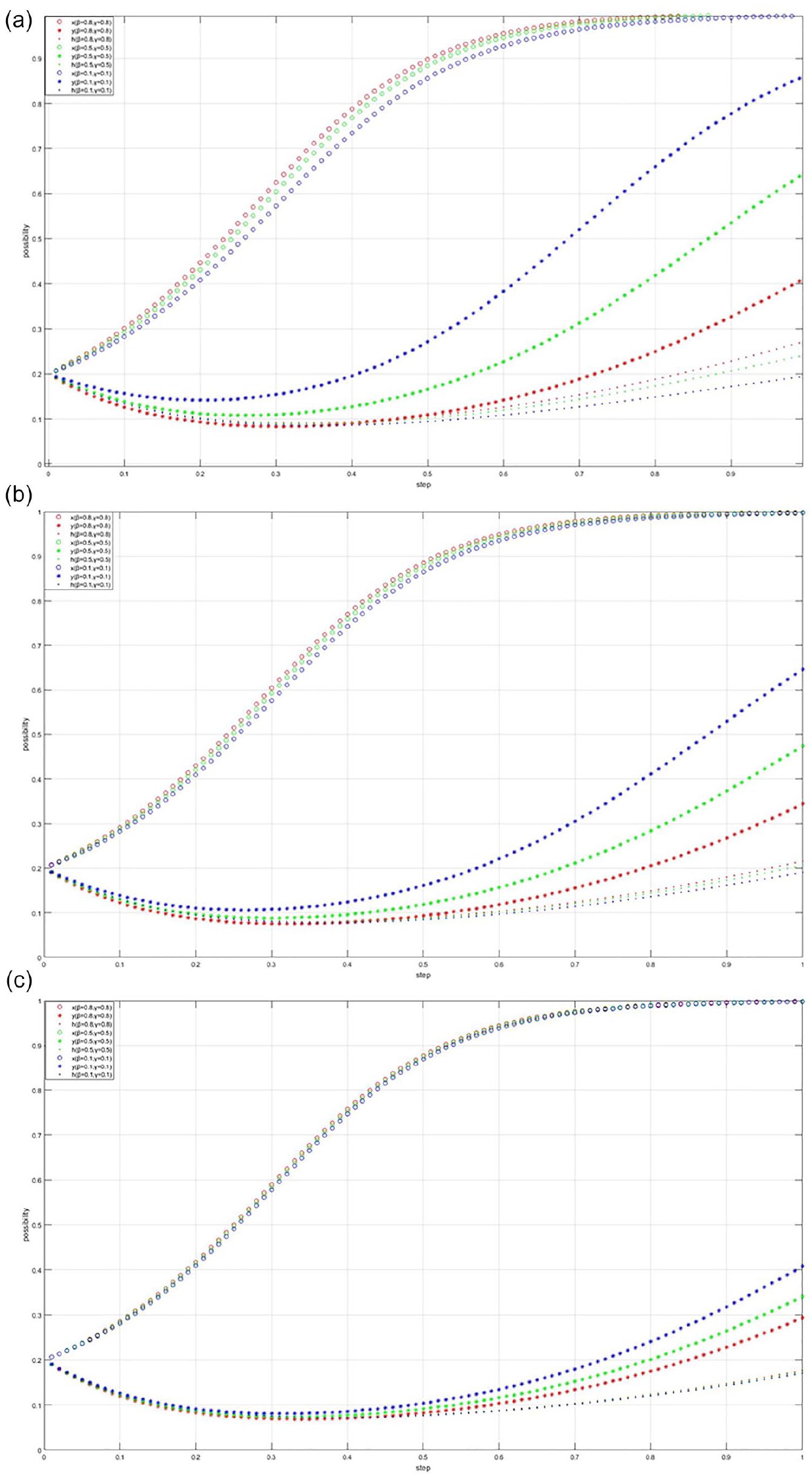
Strategic evolutionary trajectories of actors in the innovation ecosystem under the higher trust level, fixed reciprocity levels, and changing benefit distribution ratios: (a) higher trust, higher reciprocity, and changing benefit distribution ratios, (b) higher trust, general reciprocity, and changing benefit distribution ratios, and (c) higher trust, lower reciprocity, and changing benefit distribution ratios.

Strategic evolutionary trajectories of actors in the innovation ecosystem under the general trust level, fixed reciprocity levels, and changing benefit distribution ratios: (a) general trust, higher reciprocity, and changing benefit distribution ratios, (b) general trust, general reciprocity, and changing benefit distribution ratios, and (c) general trust, lower reciprocity, and changing benefit distribution ratios.

Strategic evolutionary trajectories of actors in the innovation ecosystem under the lower trust level, fixed reciprocity levels, and changing benefit distribution ratios: (a) lower trust, higher reciprocity, and changing benefit distribution ratios, (b) lower trust, general reciprocity, and changing benefit distribution ratios, and (c) lower trust, lower reciprocity, and changing benefit distribution ratios.
For cross-figure comparisons, firstly, exampling (fixing) the higher level of trust (see Figure 1), our study finds that with the growing of reciprocity, the increasing ratios of benefit distribution drive GFF and GC to evolve toward ecosystem cooperation, but GRI to default. Especially, when benefit distribution ratios are lower, the evolution of GRI’s strategies is more dramatic. Secondly, fixing the higher reciprocity, shown in Figures 1a to 3a, with the growth of trust, the increases of benefit distribution ratios will accelerate the evolutionary speed of GC’s cooperative strategy but GRI is more inclined to default. Finally, when reciprocity and trust work simultaneously (see Figures 1–3), the enhancements of distribution ratios hearten GFF and GC to cooperate and participate respectively, but opposite for GRI. Noteworthily, the decision-making levels of both GRI and GC are mostly lower than the average in ecosystem co-evolution, especially GC. This may be that benefits are paramount and offset the functions of reciprocity and trust, which conforms to the bounded rationality assumption. GC will evolve toward the strategy of non-participation in most cases but the one under higher trust levels because trust enables GC more commitments from other actors (ad hoc GFF), prompting GC to collaborate (Andrew & Luis, 2006; Grayson et al., 2008). In addition, the benefits of GC are mainly derived from the value-in-use of product purchases and the influential values of product co-creation (Ho et al., 2012). Therefore, the ratios of benefit distribution have limited impacts on GC.
GG is also essential in governance and co-evolution of an innovation ecosystem. In accordance with the above analysis, instancing the higher trust level, shown in Figure 4a to c, GG’s behaviors evolve toward the strategy of participating in cooperative innovation with the increases of distribution ratios. To some extent, GG mitigates opportunism and interest conflicts between actors. As shown in Figure 4b, the lower distribution ratios cause GRI to default. Through subsidies and punishments, governments can pull GRI and GC toward cooperative strategy, which is more drastic and conspicuous for GRI. However, the pull function of GG is limited. The decision-making levels of GRI and GC in most situations are still below the average value, which signifies that they squint to default and non-participate. Thus, the formations and evolution of alliances in the innovation ecosystem are unstable, and the innovation ecosystem itself remains unhealth in co-evolution.

Strategic evolutionary trajectories of GG and other actors in the innovation ecosystem under the higher trust level: (a) strategic evolutionary trajectories of GFF and GG in the innovation ecosystem under the higher trust level, fixed reciprocity levels, and changing benefit distribution ratios, (b) strategic evolutionary trajectories of GRI and GG in an innovation ecosystem under the higher trust level, fixed reciprocity levels, and changing benefit distribution ratios, and (c) strategic evolutionary trajectories of GC and GG in an innovation ecosystem under the higher trust level, fixed reciprocity levels, and changing benefit distribution ratios.
Effects of reciprocity on the strategies of actors in innovation ecosystem co-evolution
(1) When the reciprocity level
(2) When the reciprocity level
(3) When the reciprocity level
Akin to “Effects of Benefit Distribution Ratios on Strategies of Actors in Innovation Ecosystem Co-evolution Section” (see Figures 5–7), when benefit distribution ratios and trust level are fixed, in same figures, with the deepening reciprocity, the decision-making levels of each actor is gradually improved, and the decision-making level of GFF is still higher than that of other actors. Compared with the situations of benefit distribution, when reciprocity is intensified, GRI will enhance cooperation rather than default. This indicates that reciprocity between GFF and GRI, to some extent, improves the innovation benefits of both parties, and makes GRI deviate from default (Goldstein et al., 2011).

Strategic evolutionary trajectories of actors in the innovation ecosystem under the higher benefit distribution ratios, fixed trust levels and changing reciprocity: (a) higher benefit distribution, higher trust, and changing reciprocity, (b) higher benefit distribution, general trust, and changing reciprocity, and (c) higher benefit distribution, lower trust, and changing reciprocity.
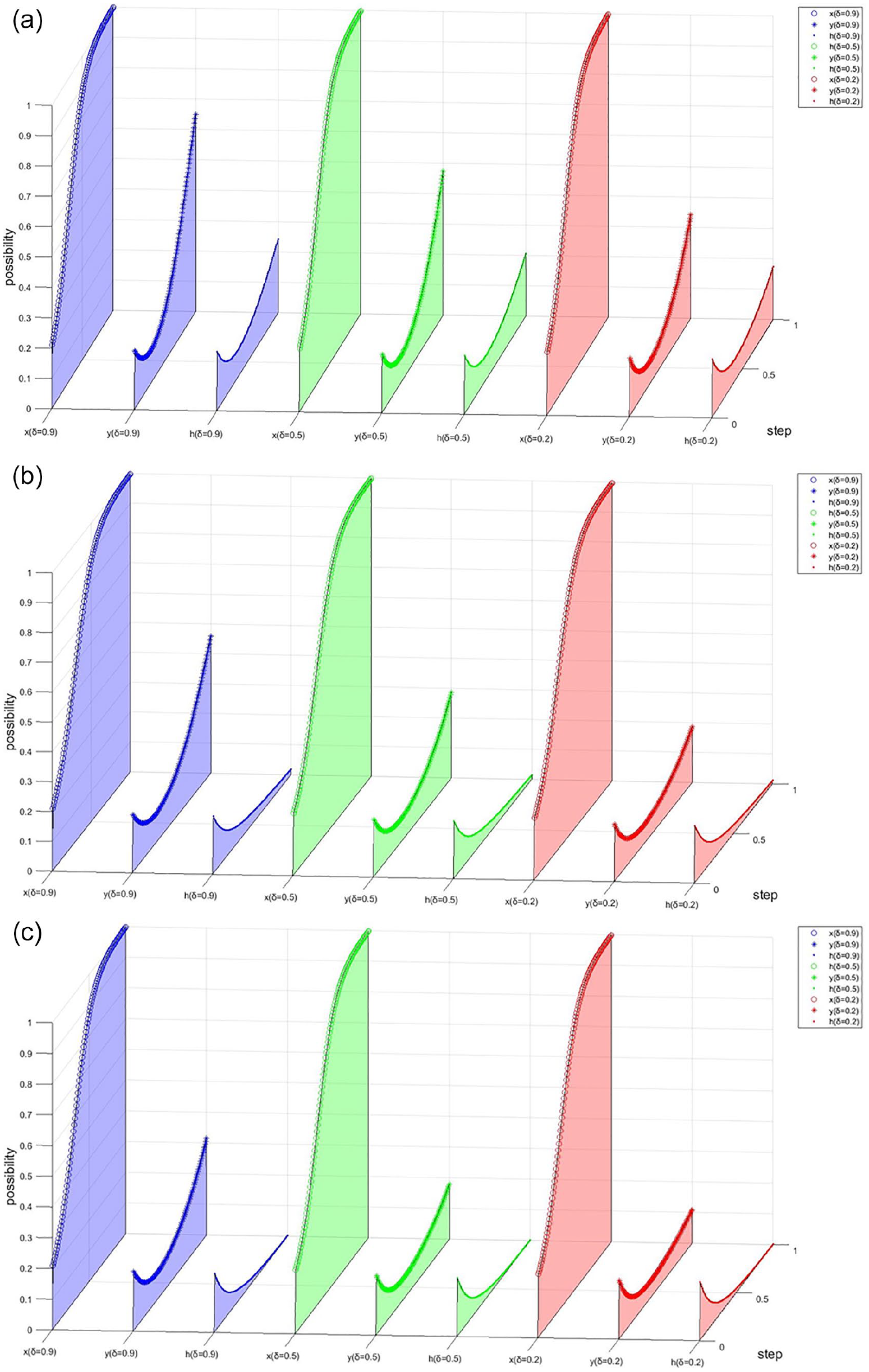
Strategic evolutionary trajectories of actors in the innovation ecosystem under the average benefit distribution ratios, fixed trust levels, and changing reciprocity: (a) average benefit distribution, higher trust, and changing reciprocity, (b) average benefit distribution, general trust, and changing reciprocity, and (c) average benefit distribution, lower trust, and changing reciprocity.

Strategic evolutionary trajectories of actors in the innovation ecosystem under the lower benefit distribution ratios, fixed trust levels, and changing reciprocity: (a) lower benefit distribution, higher trust, and changing reciprocity, (b) lower benefit distribution, general trust, and changing reciprocity, and (c) lower benefit distribution, lower trust, and changing reciprocity.
For cross-figure analysis, the current study firstly is fixed to the lower benefit distribution ratios (see Figure 7), and reveals that with the increases of trust levels, the positive evolution of reciprocity ameliorates the decision-making levels of each actor. Especially for GC, reciprocity drives GC to participate in ecosystem cooperation as much as possible. Secondly, instancing the higher trust, with the increasing benefit distribution ratios, reciprocity improves the decision-making levels of GFF and GC (shown in Figures 5a–7a), but still reduces that of GRI. The potential reason is like “Effects of Benefit Distribution Ratios on Strategies of Actors in Innovation Ecosystem Co-evolution Section,” namely the increasing ratios of benefit distribution harvest more benefits for GFF, leading GRI to lose more cooperative payments and behave disobediently. Thirdly, while trust and benefit distribution work simultaneously (see Figures 5–7), the cooperative possibilities of GFF and GC will grow but decline for GRI with the growth of reciprocity. Additionally, the cooperative probabilities of GRI and GC are both lower than average levels since the functions of reciprocity may be limited by benefits. When the trust evolves toward a higher range, the evolution of GC’s participation strategy accelerates with the enhancement of reciprocity. However, the fact still cannot be changed that GRI and GC, in most cases, oppose GFF.
Similarly, GG’s strategies profoundly impact innovation ecosystem co-evolution. As shown in Figure 8, fixed to the lower benefit distribution ratios, GG will participate in cooperation with the deepening reciprocity. It has insignificantly pulling effects on the deviation of GRI and GC, especially for GC. Hence, both alliances in the innovation ecosystem and the ecosystem per se show dynamical instabilities.

Strategic evolutionary trajectories of GG and other actors in the innovation ecosystem under the lower benefit distribution ratios: (a) strategic evolutionary trajectories of GFF and GG in the innovation ecosystem under the lower benefit distribution ratios, fixed trust levels, and changing reciprocity, (b) strategic evolutionary trajectories of GRI and GG in the innovation ecosystem under the lower benefit distribution ratios, fixed trust levels, and changing reciprocity, and (c) strategic evolutionary trajectories of GC and GG in the innovation ecosystem under the lower benefit distribution ratios, fixed trust levels, and changing reciprocity.
Effects of trust on the strategies of actors in innovation ecosystem co-evolution
(1) When the trust level
(2) When the trust level
(3) When the trust level
Figures 9 to 11 unveil that when benefit distribution ratios and reciprocity are fixed, in same figures, the deepening trust expedites the evolution of cooperative strategies of all actors. Analogous to the above analyses, cooperative strategies of GFF are evolving considerably faster than that of GRI and GC.

Strategic evolutionary trajectories of actors in the innovation ecosystem under the higher benefit distribution ratios, fixed reciprocity levels, and changing trust: (a) higher benefit distribution, higher reciprocity, and changing trust, (b) higher benefit distribution, general reciprocity, and changing trust, and (c) higher benefit distribution, lower reciprocity, and changing trust.

Strategic evolutionary trajectories of actors in the innovation ecosystem under the average benefit distribution ratios, fixed reciprocity levels, and changing trust: (a) average benefit distribution, higher reciprocity, and changing trust, (b) average benefit distribution, general reciprocity, and changing trust, and (c) average benefit distribution, lower reciprocity, and changing trust.
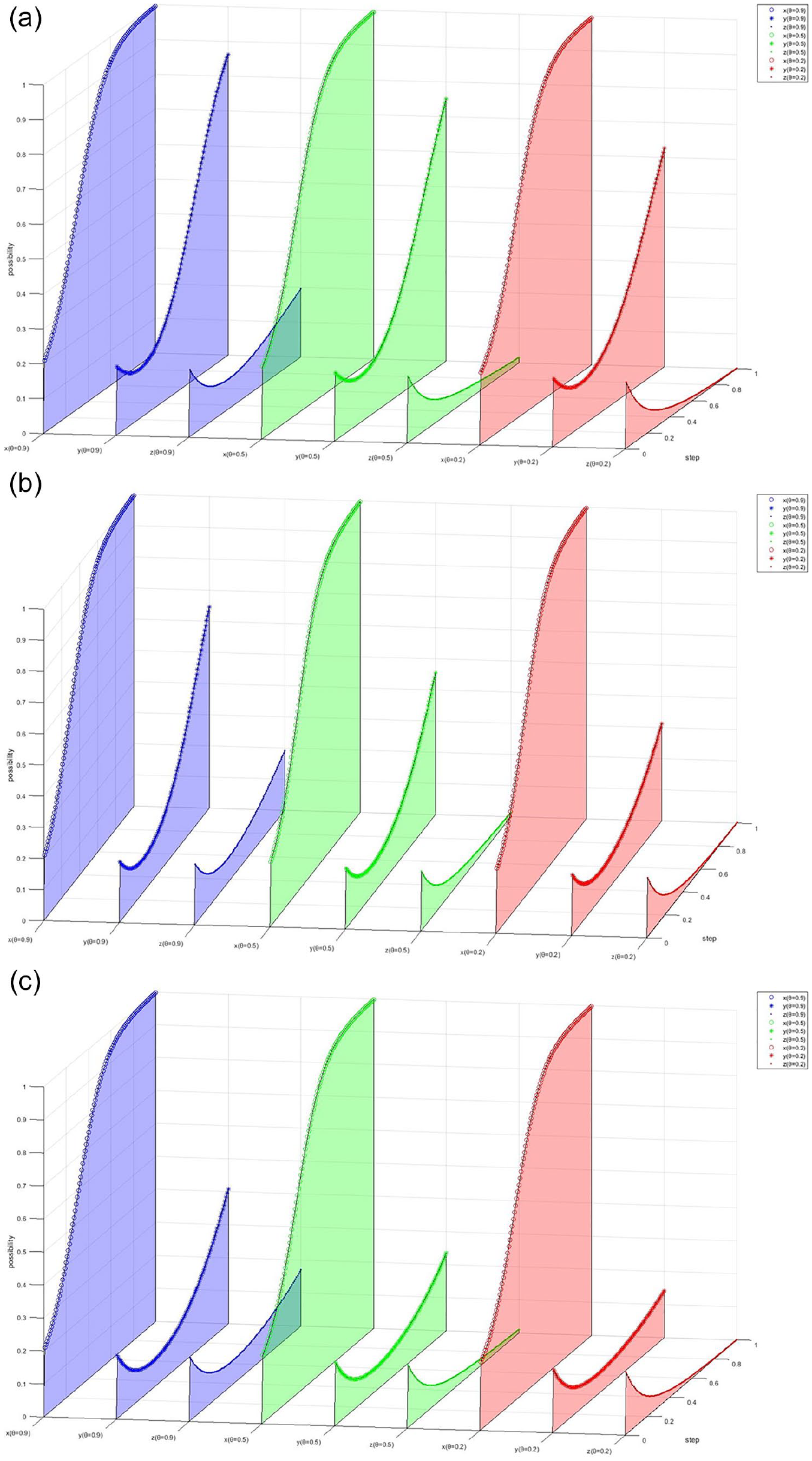
Strategic evolutionary trajectories of actors in the innovation ecosystem under the lower benefit distribution ratios, fixed reciprocity levels, and changing trust: (a) lower benefit distribution, higher reciprocity, and changing trust, (b) lower benefit distribution, general reciprocity, and changing trust, and (c) lower benefit distribution, lower reciprocity, and changing trust.
With respect to cross-figure analysis, echoing above-mentioned sections, this work first examples the higher reciprocity. Under the evolution of benefit distribution (see Figures 9a–11a), GFF and GC evolve toward cooperative strategies on account of the intensified trust, while GRI evolves to default. Second, fixing the lower benefit distribution (see Figure 9), with the growing of reciprocity, the deepening trust propels GFF, GRI, and GC to collaborate. Then when benefit distribution and reciprocity function simultaneously (shown in Figures 9–11), changes of trust level will urge both GFF and GC to cooperate, especially for GC. However, the lower distribution ratios can prompt the collaborative evolution of GRI and the decision-making levels of GRI and GC are much lower than the average levels, which signifies benefits can limit the efficiency of trust, GRI and GC prefer default or non-participation, and the innovation ecosystem still suffers the risks of ill-health.
In addition, instancing the higher reciprocity (see Figure 12), the intensified trust encourages GG to behave cooperatively in the innovation ecosystem. In line with the above analyses, GG’s subsidies and punishments actuate GRI and GC toward cooperative strategies and participation, but the power is restricted. And alliances in this innovation ecosystem or ecosystem itself are still unstable.
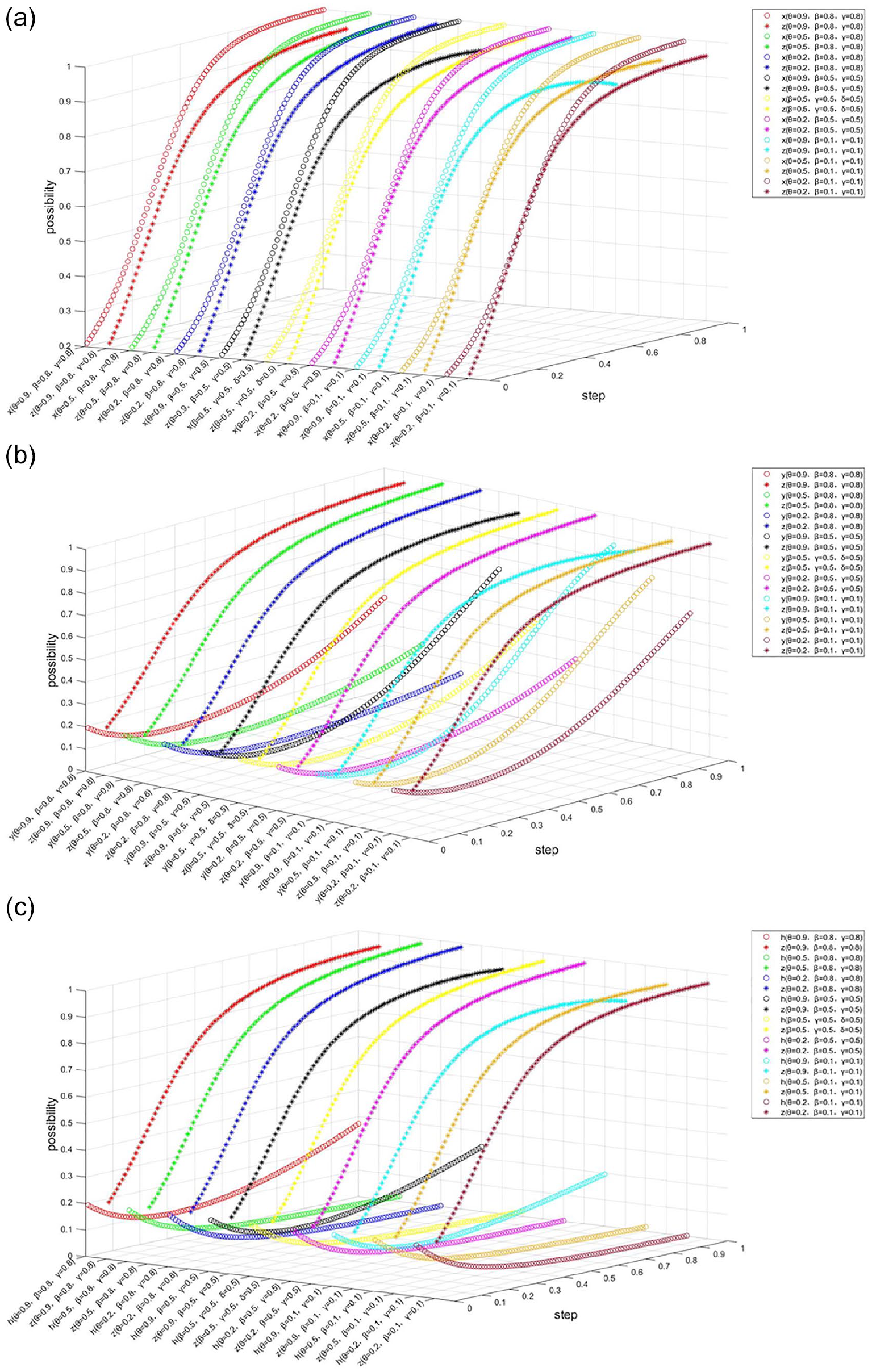
Strategic evolutionary trajectories of GG and other actors in the innovation ecosystem under the higher reciprocity level: (a) strategic evolutionary trajectories of GFF and GG in the innovation ecosystem under the higher reciprocity level, fixed benefit distribution ratios, and changing trust, (b) strategic evolutionary trajectories of GRI and GG in the innovation ecosystem under the higher reciprocity level, fixed benefit distribution ratios, and changing trust, and (c) strategic evolutionary trajectories of GC and GG in the innovation ecosystem under the higher reciprocity level, fixed benefit distribution ratios, and changing trust.
Conclusion
The dynamic co-evolution of an innovation ecosystem is instigated by relationships between interdependent actors, which reversely gives rise to dynamics of relationships between actors in ecosystems (Gao et al., 2019; Ritala et al., 2013), and further contributes to the dynamic evolution of relational governance (Steinbruch et al., 2022). Based on the characteristics of innovation ecosystems and the theories of relational governance and evolutionary game, an evolutionary model, about how reciprocity and trust—two primary forms of relational governance—affect the relationships between actors and their strategies in co-evolution of an innovation ecosystem composed of a group of focal firms, a group of research institutes, a group of customers, and a group of governments, is built. Furthermore, the benefit distribution mechanism is embedded into the model to jointly explore its roles on strategic interactions between actors in the innovation ecosystem. NetLogo and Matlab are applied to simulate and analyze, and conclusions are as follows: (1) focal firms and governments strongly prefer cooperation than other actors. (2) Reciprocity promotes all actors in ecosystems to cooperate; so does trust, especially for consumers; the increases of benefit distribution ratios foster focal firms and customers to strategize cooperation but default for research institutes. (3) Although relational governance extremely matters in co-evolution of innovation ecosystems, in most cases, research institutes and customers are more likely to default and not participate in cooperative innovation since benefits may weaken the functions of reciprocity and trust (which exactly examines the bounded rationality assumption). (4) The participation of governments can hearten research institutes and consumers to cooperate and participate with limited capabilities. Summarily, both the instabilities of alliances in the innovation ecosystem and the unhealth of the ecosystem itself will occur. (5) Relational governance is necessary but limited in innovation ecosystem co-evolution. Thus, relational governance should be integrated with others, such as contractual governance (Bstieler & Hemmert, 2015), to jointly maintain the stabilities of alliances in innovation ecosystems and further the health of ecosystems in dynamic co-evolution. This validates the conclusions of some researchers (e.g., Cao & Lumineau, 2015; Galvin et al., 2021) from a complementary and novel perspective.
Theoretical Contributions
This work contributes to innovation ecosystem and relational governance literature in several ways. We detailedly explicate the vision where both relationships and relational governance will evolve with innovation ecosystem co-evolution. Previous studies noticed that dynamic co-evolution is one of prominent characteristics of an innovation ecosystem (Hou & Shi, 2021; Phillips & Ritala, 2019), relationships or interactions among actors can foster co-evolution (Kolloch & Dellermann, 2018; Phillips & Ritala, 2019), and relationships among ecosystem actors need governance (Bstieler & Hemmert, 2015; Galvin et al., 2021). However, the evolution of governance, attached to co-evolution of innovation ecosystems, is profoundly neglected. Contemporarily, ecosystem coopetition is little attended (Bacon et al., 2020). We argue that relational governance will be evolutionary due to the evolution of simultaneously competitive and cooperative relationships in innovation ecosystems, which inspires future in-depth research on the connections between governance and innovation ecosystems.
We provide a complementary framework to explore how relational governance is embedded into innovation ecosystem co-evolution, and understand its roles on strategic interactions and value co-creation between actors. It’s important to match relational governance with the evolutionary feature of innovation ecosystems because it can dynamically affect strategies of actors, and further their benefits and costs, as borne out by our analysis. Thus, we not only gain insight into functioning mechanisms of relational governance, but obtain nuanced understandings on how relational governance and innovation ecosystems are bonded.
We simultaneously concentrate on relational governance and benefit distribution, allowing us to further disclose the strategies or conditions where organizations enter or quit alliances in dynamic evolution, which immensely influences stabilities of alliances in innovation ecosystems (Bakker, 2016). Previous works concerned the antecedents of alliances’ evolutionary stabilities (e.g., Ferreira et al., 2021), still infrequently involved strategic interactions between organizations and their impacts on stabilities of evolutionary alliances. Moreover, we uncover the tension between informal relationships and benefits in inter-organizational behaviors, and argue that benefits generate limited utilities of relational governance, which stoutly answers the assumption of bounded rational organizations and guides organizations to dynamically strategize to stabilize alliances. Thus, our results deeply enrich the knowledge of relationships between inter-organizational behaviors and stabilities of dynamic alliances.
Furthermore, we extend alliance or supply chain to ecosystem scenarios. Prior governance literature ignored the fact that inter-organizational interactions will evolve toward more diversity and complexity to cope with more intricate economic environments where innovation ecosystems were born. Therefore, the discussion on relational governance not only comprehends its functions, but whether it works in organizations with more relational complexity, such as innovation ecosystems.
In addition, methodologically, an evolutionary game is adopted. Prior literature addressed the significance of case analyses (e.g., Cislaghi et al., 2021) and empirical tests (e.g., Benitez-Avila et al., 2018). However, strategic interactions between actors are more likely to be explained through EGT, which accords more with the features of innovation ecosystems. Considering that an innovation ecosystem includes numerous actors, we expand prior contexts of two-player or three-player to a four-player, with relatively aligning with the real state of an innovation ecosystem.
Managerial Implications
This study has some practical implications based on assumptions and obtained results. First, note that various strategic selections and interactions cause different interactive relationships and payoffs. Organizations dynamically enter or exit alliances based on differentiated strategies, which will vastly affect the stabilities of alliances in innovation ecosystems. Obviously, organizations should balance and timely adjust their strategies when involved into interorganizational behaviors to maximize their payoffs and further maintain stabilities of dynamic alliances. Our results show focal firms and governments in innovation ecosystems strongly prefer cooperative strategies. It goes without saying that they (especially for focal firms) should spontaneously guide other actors (e.g., research institutes, customers) to collectively innovate and benefit them all.
Second, given the significance of interactive relationships and their risks, we highlight the essentiality of relational governance in innovation ecosystems (Cenamor & Frishammar, 2021; Dong et al., 2017; Lin, 2018). By exploring the impacts of reciprocity and trust (two major forms of relational governance) on ecosystem actors’ strategies, our findings suggest that reciprocity and trust should be strengthened among actors. From the perspective of focal firms, for one thing, focal firms should initiatively build reciprocity and trust with other actors through intensifying skills and knowledge, benevolence and integrity. For another, focal firms should actively share knowledge and experiences in cooperative innovation and facilitate mutual exchange of information with diverse communication methods. For other actors, besides their zealous cooperation with focal firms, they should concern commercial value of focal firms, such as marketizing patents with the help of research institutes and enhancing products’ qualities after consumers’ feedback.
Third, our research discovers that benefit distributions may weaken the roles of relational governance. In this regard, a reasonable and fair mechanism of distribution benefit should be applied to inter-organizational relationships in innovation ecosystems. Thus, innovation benefits should be evaluated impartially and allocated according to continuous contribution of each other in entire innovation process. These can offset the negative effects of benefit distribution on relational governance. Moreover, other governance (such as formal contracts) can be involved with relational one to jointly handle risks from benefit distributions and dynamically maintain stabilities of alliances in ecosystems and health of innovation ecosystems.
Additionally, governments are found to finitely function through their regulations of “subsidy plus punishment” in this study. They still can optimize inter-organizational interactions via intensifying regulations, improving incentives, and offering platforms.
Limitations and Future Research
Although some valuable contributions have been made, this work has limitations. As noted, this study centers mainly on four groups of actors in a devised innovation ecosystem, which is far away from the characteristic of multi-actor of innovation ecosystems. Further, the heterogeneity of diverse groups of actors is considered in this study, but that of each actor composing of diverse groups is ignored. Future in-depth research can underline this imperfection. Then due to the constraints of survey objects and conditions, parameters’ assignments of our work just mirror the general situation and lack the support of actual data. This is where further research is needed. In addition, although this study verifies that relational governance desiderates to be incorporated with other governance in innovation ecosystem co-evolution, how they match the characteristics of innovation ecosystems and embody into innovation ecosystem co-evolution still necessitates more validations, which will be intriguing topics for future research.
Footnotes
Appendix: Evolutionary Stable Analysis
Acknowledgements
The authors acknowledge the fundings from the National Natural Science Foundation of China. The authors thank Peng Zhang for the technical guidance.
Declaration of Conflicting Interests
The author(s) declared no potential conflicts of interest with respect to the research, authorship, and/or publication of this article.
Funding
The author(s) disclosed receipt of the following financial support for the research, authorship, and/or publication of this article: This work was supported by the National Natural Science Foundation of China [Grant Number 71872027 72172024 71764004 71972026].
