




Abstract
As legal tender created using advanced digital technology, Central Bank Digital Currency provides new opportunities for driving rural revitalization. This paper empirically assesses the impact of Central Bank Digital Currency on rural revitalization by conducting a quasi-natural experiment on China’s e-CNY pilot, using multi-temporal double-difference empirical analyses of city-level data from 2011 to 2022. The study found that Central Bank Digital Currency significantly enhances rural revitalization, and this still held after the endogeneity analysis and various robustness tests were conducted; the mechanism analysis showed that Central Bank Digital Currency can promote rural revitalization by upgrading rural residents’ consumption structures, easing rural residents’ financing constraints, and improving rural residents’ environmental management practices; the heterogeneity analysis showed that the impact of Central Bank Digital Currency on rural revitalization was more pronounced in the more complete digital infrastructure areas, regions governed by larger governments, the eastern region generally, areas with higher levels of financial development, and areas that are not old-industrial bases. Based on the findings, targeted policy recommendations are proposed to map out a feasible path to diversifying Central Bank Digital Currency rural applications and optimizing the impact of Central Bank Digital Currency on rural revitalization.
Introduction
Rural areas comprise the main homes of the global poor; there are still 667 million people living in extreme poverty worldwide, the vast majority of whom live in the countryside. The implementation of a rural revitalization strategy is crucial to promoting the common prosperity of all peoples and building a globally integrated and modernized economic system (Shaban et al., 2024). To date, countries around the world have conducted a great deal of research on practical means of realizing rural revitalization. The exploration of rural revitalization in developed countries began after the second industrial revolution. To recover from the poverty and unemployment brought about by the Great Depression, developed countries, which took the lead in industrialization and urbanization, carried out rural reconstruction to revive their economies. To date, the strategy for rural revitalization in developed countries has assumed a practical approach involving: (1) policy support; (2) technical guarantees; (3) social participation; and (4) comprehensive evaluation. The exploration of rural revitalization in developing countries started later. In the mid-20th century, many developing countries began to focus on rural development after achieving independence, seeking to address the backwardness of rural land use and farming through land reform, infrastructure development, and agricultural modernization. Drawing on the successful experiences of developed countries in implementing rural revitalization strategies, developing countries have given priority to the development of large domestic cities, adopting a specific policy strategy of (1) providing policy support, (2) conducting pilot interventions and garnering the lessons learned from those, and (3) conducting comprehensive evaluation. In promoting rural development, countries have recognized the significance of rural revitalization in reducing global poverty, guaranteeing global food security, enhancing the sustainability of agriculture, protecting global cultural diversity, and addressing global climate change and other environmental challenges (Ward & Brown, 2009).
Due to the intrinsic constraints imposed by the unequal nature of the urban-rural economic structure, rural revitalization faces many challenges, such as insufficient digital infrastructure, limited access to financial services, talent shortages, and digital divides. Since 2014, the rapid development of information technology has driven technological changes in the financial sector, and countries such as Ecuador, the United Kingdom, Sweden, and China have initiated research into, and issuance of, Central Bank Digital Currencies (CBDCs); these may be key to solving the development challenges inherent to rural revitalization. Against the backdrop of the ever-expanding applications of financial technology, CBDC, using national credit as the guarantee and digital technology as the enabling platform, combines digital finance and advanced digital technologies to promote the continuous innovation of financial products and services; it creates new opportunities for rural citizens to cross the digital divide, reduces financial exclusion, and enables green development of the countryside, not least because of its unique quality of universality (Barbier, 2025). One of the core design principles of CBDC is its security and universality. As a new retail payment infrastructure and an innovation in digital finance, it helps to improve the operational efficiency of the payment system and the liquidity of actors engaged in financial and merchant exchanges. At the same time, through the execution of smart contracts, it can realize more advanced payment functions such as conditional payment and guaranteed payment; it can accurately distribute rural subsidies to rural areas and carry out effective supervision to ensure that funds go directly to farmers; it improves the efficiency of the use of subsidy funds; it promotes the livelihoods of rural residents (Keister & Sanches, 2023), the prosperity of rural industries, and the effectiveness of governance, driving the revitalization of the countryside.
The implementation of China’s rural revitalization strategy is crucial to building a modernized economic system and is a necessary measure in ensuring the achievement of common prosperity that transcends the urban-rural divide. The revitalization of the countryside cannot be achieved without innovative financial support, and, in the context of comprehensively driving rural revitalization, the emergence of CBDC brings new opportunities for widespread, multi-sectoral rural development (Alora et al., 2024). In January 2022, China’s State Council issued the “14th Five-Year Plan for the Development of the Digital Economy,” emphasizing “solid research and development of CBDC, and orderly promotion of controlled pilots.” At present, China’s piloting of its CBDC has achieved remarkable results, with applications steadily expanding and related services continuously extending, providing a powerful driver of the rural revitalization strategy (Wang, 2023). As an important aspect of digital finance, CBDC has several unique advantages, such as having no intermediary, no network, no electricity double offline, zero commission, full controllability and anonymity, and being programmable. It is able to resolve the challenges of the complexity and expense of financing needed to drive agricultural industry revitalization, which is difficult to achieve using the traditional financial services model (Auer et al. 2022); it is also able to efficiently harness rural skills and human capital by promoting the development of rural industries, increasing employment opportunities, and attracting talent back to the countryside. Green loans issued using CBDC have strong traceability and promote rural ecological revitalization (Yang et al., 2023). As top-level policy initiatives at the national level, CBDC and rural revitalization strategies have been implemented by various countries. States have assessed them for their social effects, economic impacts, and key barriers to effectiveness. However, there is still a lack of research into how these two policy levers can be combined and synergized. Therefore, an in-depth discussion of how the digital RMB can drive rural revitalization and how it can be utilized to maximum effect is of great practical significance in promoting the implementation of China’s rural revitalization strategy.
Based on this gap in the research, this paper selected 284 prefecture-level areas in China as the research sample, all of which were targets for the pilot policy of the e-CNY. The study focused on the driving factors of rural revitalization, analyzing the effects and mechanisms of CBDC in enabling rural revitalization. This paper attempts to provide theoretical insights and use empirical evidence pertaining to China and the issuance and promotion of CBDC to assess the impact of the CBDC on the rural revitalization strategy, the construction of a new rural financial ecosystem, and the promotion of common prosperity that transcends the urban-rural divide.
Literature Review
Central Bank Digital Currency (CBDC)
In this study, we used CiteSpace software to cluster and analyze the keywords of CBDC-related studies indexed by SSCI in the past 10 years and extract the cluster labels using the LLR algorithm, as shown in Figure 1. The Figure shows that at the early stage of research into CBDC, governments and academics discussed the concept, issuance, and operational framework of CBDC. As early as 2013, Shoaib et al. (2013) referred to digital currencies issued under the control of central banks or governments as “official digital currencies.” Subsequently, the Bank of England, Yao (2017), Kirkby (2018), and various financial institutions and academics discussed the issues of legal digital tender, classification criteria, circulation mechanisms, technical support, and other factors. The Bank for International Settlements defined the concept of CBDC in 2018, describing it as a digital form of the central bank’s currency, distinct from the digital funds deposited by traditional financial institutions in central bank margin accounts and clearing accounts. As the depth and scope of the research have grown, academics have explored the impacts of CBDCs. At the macro level, the main focus is on the macroeconomic growth effects of CBDC (Barrdear & Kumhof, 2022), the impact on the financial system (Keister & Sanches, 2023), the potential effect on monetary policy (Bitter, 2025), and the difficulty of risk regulation (Fernández-Villaverde et al., 2021); at the micro level, scholars have explored how CBDCs affect the micro-behaviors of individuals, such as the protection of financial consumer rights and interests (Bijlsma et al., 2024), citizens consumption patterns (Lee et al., 2025), and citizens’ and enterprises’ financing behaviors (Umar et al., 2024).

Clustering network mapping for CBDC.
Rural Revitalization
As the research on rural revitalization is well established and comprises a number of publications, this paper used CiteSpace software to screen the publicly available rural revitalization-related studies that contained multiple references to sources indexed by the SSCI in the past 10 years; it generated a keyword clustering network map of rural revitalization (see Figure 2). Among them, scholars and policymakers in China, the United States, the United Kingdom, and Australia have conducted particularly in-depth studies on rural revitalization. (Among the publications analyzed in this paper, Chinese scholars accounted for 41.88% of the total number of articles, American scholars accounted for 13.99%, British scholars accounted for 17.77%, and Australian scholars accounted for 14.94%). Policy support is an important enabler of rural revitalization. The United States has adopted a host of agricultural legislation and rural policies, the United Kingdom has implemented a rural conservation strategy, the European Union has enacted a common agricultural policy, and China has adopted its rural revitalization strategy. Scholars argue that macro factors such as the development of the digital economy (Salemink et al., 2017), the industrial base (Hu et al., 2023), access to ecological resources (Lyu et al., 2024), and the food supply chain (Marsden et al., 2000) all affect rural development; micro factors such as rural citizens’ digital literacy (Chen et al., 2024), their consumption patterns (Patel et al., 2015), and farmers’ willingness to innovate (Y. Liu et al., 2021) also affect the degree of rural revitalization and mediate the effectiveness of policies. There may be heterogeneous impacts based on differences in location (Ward & Brown, 2009) and levels of infrastructure development (Zhang & Wu, 2022). In addition, some scholars provide in-depth analyses of international rural development cases, such as the Latin American agricultural model (Key & Runsten, 1999), China’s urban-rural transformation (Y. Li et al., 2015), microgrid development in Kenya (Kirubi et al., 2009), and land management in Central and Eastern Europe (Pašakarnis & Maliene, 2010).
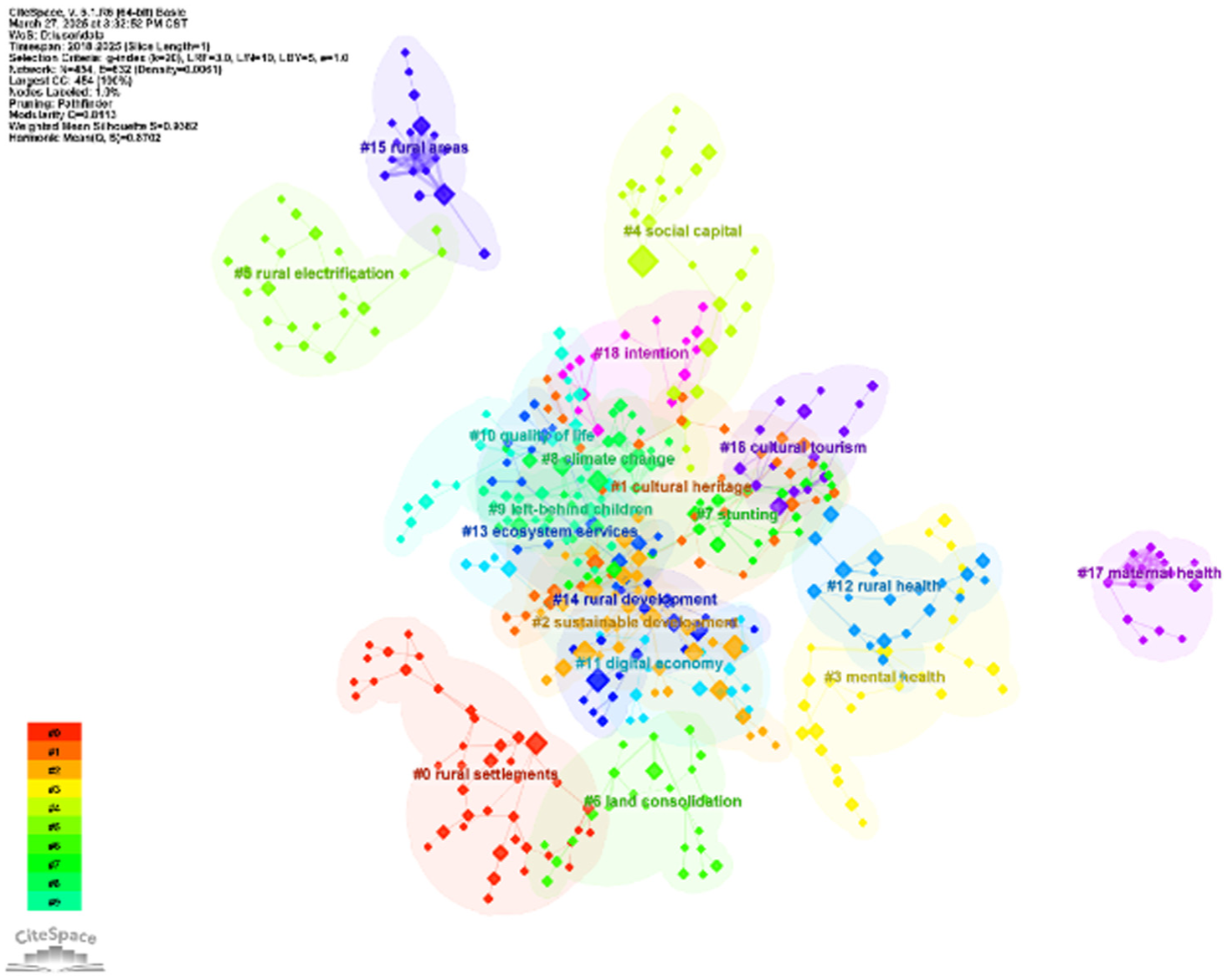
Clustering network mapping for rural revitalization.
CBDC and Rural Revitalization
There are relatively few studies of how CBDC affects rural revitalization. Y. P. Liu and Wen (2023) explored the theoretical mechanisms and realization paths of CBDCs as a means of driving rural revitalization at the theoretical level. In rural areas, access to traditional financial services is insufficient, and CBDCs can promote financial market competition (Dunbar, 2023), enable digital transformation of the industrial chain (Ozili, 2022), improve the efficiency of digital payments, reduce transaction costs, and enhance financial inclusion (Foster, 2021). CBDC enables farmers and micro- and small-sized enterprises to reduce payment fees and intermediate costs through digital payment systems (Luu et al., 2023), and at the same time it alleviates information asymmetry through the data chain bar, which can significantly reduce transaction costs and match increasing demand for financial services from rural residents (Fujiki, 2024). This increases real income, bridges the urban-rural digital divide, and promotes rural revitalization. Some studies suggest that CBDCs can be used to support green agricultural projects by ensuring that funds are dedicated to environmental protection projects and sustainable agricultural practices through smart contracts and blockchain technology, improving the rural environment and promoting economic development (B. Xin et al., 2024). L. S. Li et al. (2021) found that CBDCs have a significant impact on the proliferation of green credits, green bonds, and green credit cards, and they claim that the overall green financial system can be improved. Table 1 summarizes the key findings of the sampled literature.
Key Literature Summaries.

From this comprehensive analysis of the existing literature, the study found that there are still shortcomings in the international evidence base on rural revitalization: First, research on the impacts of CBDC mainly focuses on government behavior and macroeconomics, while fewer scholars have paid attention to the application of CBDC in rural areas as a driving factor behind rural revitalization. Secondly, most of the more pertinent literature analyzes the relationship between CBDC and rural revitalization from the perspective of policymakers and to garner theoretical insights, meaning the findings lack objectivity and empirical validity. There is, to date, a dearth of quantitative empirical research into this specific relationship. Finally, although some scholars have focused on the link between CBDC and rural revitalization, few studies have included evaluation of the micro-behavior of rural residents and its mediating function in terms of CBDC-enabled rural revitalization. The present study seeks to redress these gaps in the scholarship to date.
Against this backdrop of the existing literature, the contributions of this paper are as follows: Firstly, this paper uses China’s establishment of the e-CNY pilot intervention as a study case and applies the entropy method to develop a rural revitalization index across five dimensions: (1) industrial prosperity; (2) ecological livability; (3) rural civilization; (4) effective governance; and (5) affluence. The study uses this index to empirically test the impacts of CBDC on rural revitalization and to identify the mechanisms of its action. Second, this study analyzes the role of CBDC in driving rural revitalization while considering the micro-behaviors of rural residents; this adds to the evidence base on the micro-impacts of CBDC and enriches theoretical understanding of rural revitalization. The findings of this paper deepen understanding of the beneficial effects of CBDC, providing empirical evidence of how CBDC can be used to promote rural revitalization. Explaining the mechanisms of CBDC (how it enables rural revitalization), and exploring its shortcomings and areas for improvement, extends the applications of CBDC and enables a widening of the scope of digitalization policies.
Mechanisms of Action and Research Hypotheses
CBDC is an innovation in finance. It is legal tender built using advanced technology, and a novel form of finance which can influence the behaviors of rural residents and play a key role in rural revitalization. This paper discusses the mechanisms through which CBDC influences rural revitalization in terms of three processes: (1) the upgrading rural residents’ consumer behaviors; (2) the alleviation of rural residents’ financing constraints; and (3) the improvement of rural residents’ environmental governance.
First, CBDC can promote the upgrading of rural residents’ consumption structures and thereby drive rural revitalization. CBDC is highly programmable by virtue of its embedded smart contract mechanism and this does not affect its basic functions as a measure of value and a means of circulation, meaning it can facilitate payment transactions according to pre-set rules and conditions (Bijlsma et al., 2024). By using this programmability to target rural residents with payment tools such as red packets, vouchers, and subsidies that have a limited duration, are equivalent to cash, and are time-sensitive, the “wealth effect” of rural consumers is effectively increased, reducing excessive risk averseness and savings incentives in the rural population and increasing their incentive to buy and invest (J. J. Kim et al., 2022). CBDC enables the provision of new opportunities for leisure and practical life in rural contexts, such as public transportation, medical care, and access to scenic spots (Park, 2025). These new digital currency-enabled activities, which are convenient, easy to pay for, and can be conducted without the need for the Internet, mean rural residents are not limited to the traditional consumer options of clothing, food, housing, and transportation. Spending on communications, education, culture, entertainment, and leisure is enhanced (Lin & Xia, 2023), promoting the realization of rural consumption patterns focused on a broader array of products and services. Furthermore, as the basic force driving economic growth, the optimization and enhancement of consumption can help spur domestic demand, thereby fostering rural economic growth (Marsden, 1999), stimulating rural production, and creating employment opportunities. This will ultimately boost the incomes of rural households, improve the quality of life of rural residents, and enhance the overall revitalization of the countryside (He et al., 2012).
Second, CBDC can alleviate the financing constraints encountered by rural residents. Compared with existing digital micro-credit, CBDC is a legal tender in digital form issued by the central bank, with the same legal status and economic value as physical fiat currency (Castrén, 2022). This feature affords CBDC a higher degree of trust and acceptance in terms of rural residents’ financial transactions. CBDC, with its unique account loose coupling, opens up a new path of value transmission for rural residents without the need to rely on bank accounts, realizing instant settlement of transactions, promoting the popularity of offline transactions, and avoiding the imposition of exchange and circulation fees (Son, 2023). The transaction costs for rural residents are reduced, and the efficiency of rural residents’ financing is improved. In addition, the transaction process when using CBDC creates a huge amount of data, and through artificial intelligence and big data analysis, it is possible to develop the credit portrait of the lender and improve symmetry of information. This can, to a certain extent, resolve the problem of financial exclusion in rural contexts arising from difficulties in terms of risk identification and credit securitization (Gupta, 2023). As a means of driving rural revitalization, governments can use CBDC to provide special loans for farmers and enable debt issuance through traceability and smart contract functions. These CBDC-enabled forms of special loans enhance the accessibility and inclusiveness of financial services for rural residents and alleviate critical financing constraints (Y. S. Kim & Kwon, 2023). Subsidized Credit Paradigm (SCP) theory pertaining to agricultural credit suggests that poor groups at the bottom of society often have limited productive capacity, which leads to persistently low levels of income and savings, which in turn results in widespread financial scarcity and low economic growth. Easing financing constraints can make it easier for farmers to obtain finance for growth, help them to finance the purchase of advanced agricultural production equipment and adopt new technologies, improve the efficiency and quality of agricultural production, and contribute to the modernization of agriculture (Z. Li et al., 2022).
Third, CBDC can improve environmental governance among rural residents. The mode of issuance of CBDC and its operational mechanisms are inherently environmentally friendly and low-carbon in nature, and its intrinsic attributes are highly compatible with the core concept of green finance, which is a key component of the green financial system (Prodan et al., 2024). The special green credit services and green subsidies provided to rural residents through CBDC can encourage rural agricultural producers to green their production processes. On the one hand, the green credit service enabled by CBDC can address the problem of a lack of intrinsic motivation to engage in environmental governance due to lack of funds; it can also support residents to independently adopt green production modes, and it can encourage farmers to actively engage in environmental management to alleviate the negative impacts of traditional agricultural production methods on the environment. The legal digital currency’s advantage of full-process traceability enables subsidy funds to be efficiently and directly delivered to farmers, avoiding delays caused by intermediaries and mitigating the risk of misappropriation of funds (Luiza et al., 2023). This ensures that the funds are used for the specific research and development initiatives and applications of green agricultural technologies that they were intended to be. CBDC enhances supervision of subsidy funds and ensures the effective allocation of funding to projects that improve farmers’ environmental governance behaviors (J. Xu, 2022). Rural resident-led proactive environmental governance helps to improve the ecological environment in rural areas and drive the uptake of ecologically sustainable practices. The establishment of an ecosystem in which humans and nature coexist harmoniously is the foundation of sustainable rural revitalization (Hindersah et al., 2020).
Based on the analysis of the existing literature, this paper posits the following hypotheses:
Policy Context and Research Design
The e-CNY in China
China has set up an e-CNY pilot intervention to test the impact of CBDC on rural revitalization. The White Paper on China’s R&D Progress on the Digital e-CNY defines the CBDC as “a digital form of legal tender issued by the People’s Bank of China.” The e-CNY is based on a broad account system, involving the participation of a specific operator who supports the loose coupling function of bank accounts. It is equivalent to physical currency. The People’s Bank of China (PBOC) launched an in-depth study on the framework design, core technology, and circulation environment of this CBDC in 2014. By the end of 2017, the PBOC and a number of commercial organizations had launched trials of the CBDC, and, by the end of 2019, the e-CNY pilots were implemented in the cities of Shenzhen, Chengdu, Xiong’an, and Suzhou in China, as well as in the Beijing Winter Olympics. In November 2020, the pilot areas for the e-CNY were expanded to include a number of other regions, such as Hainan, Changsha, Shanghai, Qingdao, and Xi’an. By April 2022, Tianjin, Hangzhou, Guangzhou, Fuzhou, and Xiamen had joined the pilot list. By the beginning of 2024, the e-CNY pilot covered a total of 26 districts in 17 provinces in China. Since the implementation of the e-CNY pilot program in China, the governments of the pilot regions have advocated for the further development of the digital RMB and used the pilot program as an opportunity to take multiple further measures to drive rural revitalization.
Measurement Model
The e-CNY pilot program has been gradually implemented, piloted in cohorts across Chinese provinces and cities, and it can be viewed as a multi-temporal quasi-natural experiment, with regions in China where the digital e-CNY pilot has been set up comprising the treatment group, and the remaining regions being the control group. Drawing on Beck et al. (2010), the benchmark regression conducted here used the double difference method; the model is as follows:

In Equation (1), the dependent variable
Variables
Level of Rural Development (Rural)
This paper draws on the research conducted by X. Xu and Wang (2022) and refers to the “Rural Revitalization Strategy Plan (2018-2022)” to construct a Chinese rural revitalization evaluation index system with five sub-indices: (1) industrial prosperity; (2) ecological livability; (3) rural civilization; (4) effective governance; (5) and affluence. The system set up 30 specific indicators. The total index of rural revitalization and the sub-indices were measured using the entropy method. For individual missing values, the rate of change from the previous year was used to impute and fill in the raw data. The rural revitalization index and specific indicators are shown in Table 2.
Evaluation Index System for Rural Revitalization in China.

Note. The average years of education for rural residents are derived from the level of education attained, which is categorized into seven levels: no primary school, primary school, junior middle school, vocational high school, high school, junior college, undergraduate university, and graduate school. These seven levels are assigned the values “0, 6, 9, 12, 15, 16, 19” respectively.
Policy Pilot Dummy Variable (DID)
If region i became a pilot area for the digital currency in year t, then the DID for this region was coded as 1 for year t and all subsequent years; otherwise, it was 0. This variable was used to determine the impact of the CBDC on rural revitalization. In this study’s sample, China’s e-CNY pilots were categorized into three batches—those launched in late 2019, those launched in November 2020, and those launched in April 2022—in line with other studies that consider regions that start policy pilots in the second half of the year as starting pilots in the following year.
Mechanism Variables
According to the analysis of the previous literature and the theoretical enquiry, this paper selected the following mechanism variables:
Consumption Upgrading (CU)
According to the five-tiered model of human needs in Maslow’s Hierarchy of Needs theory, this study measured the change in the consumption structures of rural residents in terms of the proportion of higher-level consumption. The eight major classifications of residents’ consumption expenditures were classified into subsistence consumption (food, clothing, and housing), enjoyment consumption (household equipment and services, health care, transportation, and communication), and developmental consumption (cultural, educational, and recreational goods and services). The enjoyment consumption and developmental consumption types are high-level consumption types.
Financing Level (FI)
Total loans to rural residents as a share of total deposits and loans of financial institutions was used as a proxy variable for financing level.
Environmental Governance (ENV)
Taking energy consumption of 10,000 yuan GDP as a proxy variable for environmental governance, this indicator represents the efficiency of energy use, and the smaller its value, the less energy is consumed in the process of economic development, and the higher the degree of green development. To avoid interference in the direction of the coefficient, it was taken as the inverse, and considering the possible exponential character of the green development process, it was further taken as the natural logarithm of the indicator.
Control Variables
Consistent with the literature (Cai et al., 2019), this study selected the following control variables: GDP per capita, measured by the natural logarithm of the per capita Gross Domestic Product; Internet access rate (INT), calculated as the total number of Internet-accessed households at year-end divided by the total number of households at year-end; Industrial structure status (IS), measured by the proportion of the secondary industry in the Gross Product; Urbanization rate (UR), calculated as the urban non-agricultural population divided by the total population; Financial development level (FD), measured by the ratio of the sum of deposits and loans of financial institutions to the regional Gross Product. Detailed names and definitions of these are shown in Table 3.
Variable Definitions.

Data Source
In this study, China’s prefecture-level and city-level data from 2011 to 2022 were selected and processed as follows: (1) for regions with less missing data, interpolation was used to fill in the blanks, and regions with more missing values for the main variables were deleted; and (2) city sample data pertaining to cities that were abolished and newly built during the period 2011 to 2022 were deleted. Finally, this study obtained 3,408 balanced panel datasets for 284 prefecture-level cities from the period 2011 to 2022. Among the variables in this paper, the raw data for the synthetic rural revitalization index were sourced from China Rural Statistical Yearbook, China Population and Employment Statistical Yearbook, China Urban and Rural Construction Statistical Yearbook, China Education Statistical Yearbook, China Urban and Rural Statistical Yearbook, China Social Statistical Yearbook, China Civil Affairs Statistical Yearbook, China Tertiary Industry Statistical Yearbook, China Agricultural Products Processing Industry Yearbook, the statistical yearbooks of each province, Wind database, and China’s economic and social big data research platform; the dummy variable for the digital RMB pilot comes from the list of digital RMB pilot cities published on the official website of the People’s Bank of China; GDP per capita, industrial structure, urbanization rate, and the level of financial development data was sourced from the statistical yearbooks of each city published by the National Bureau of Statistics; Internet access rate data was sourced from Statistical Report on the Development Status of the Chinese Internet and Statistical Report on China’s Internet Network Development; the data related to the consumption patterns and access to finance of rural residents was sourced from China Rural Statistical Yearbook; the data on the environmental governance variables was sourced from China Environmental Statistical Yearbook and the official website of the Ministry of Ecology and Environment.
Empirical Results and Analysis
Descriptive Statistics
The descriptive statistics of the main variables are shown in Table 4. The mean value of rural revitalization development level (Rural) is 0.3546, the minimum value is 0.1422, and the maximum value is 0.9366, indicating that the sample’s average rural revitalization level is low. Since there are large differences in population density, economic development level, industrial structure, etc. between the eastern, central, and western regions of China, this study plotted the trend of the national average value of rural revitalization over time based on the respective district. As can be seen from Figure 3, the national average rural revitalization level has been rising year by year, the development level and development speed of rural revitalization in the eastern region are better than those in the central and western regions, and clear regional differences are apparent. Notable unevenness in development is a policy challenge moving forward. The descriptive statistics of the remaining variables are consistent with the existing literature.
Descriptive Statistical Results of the Main Variables.

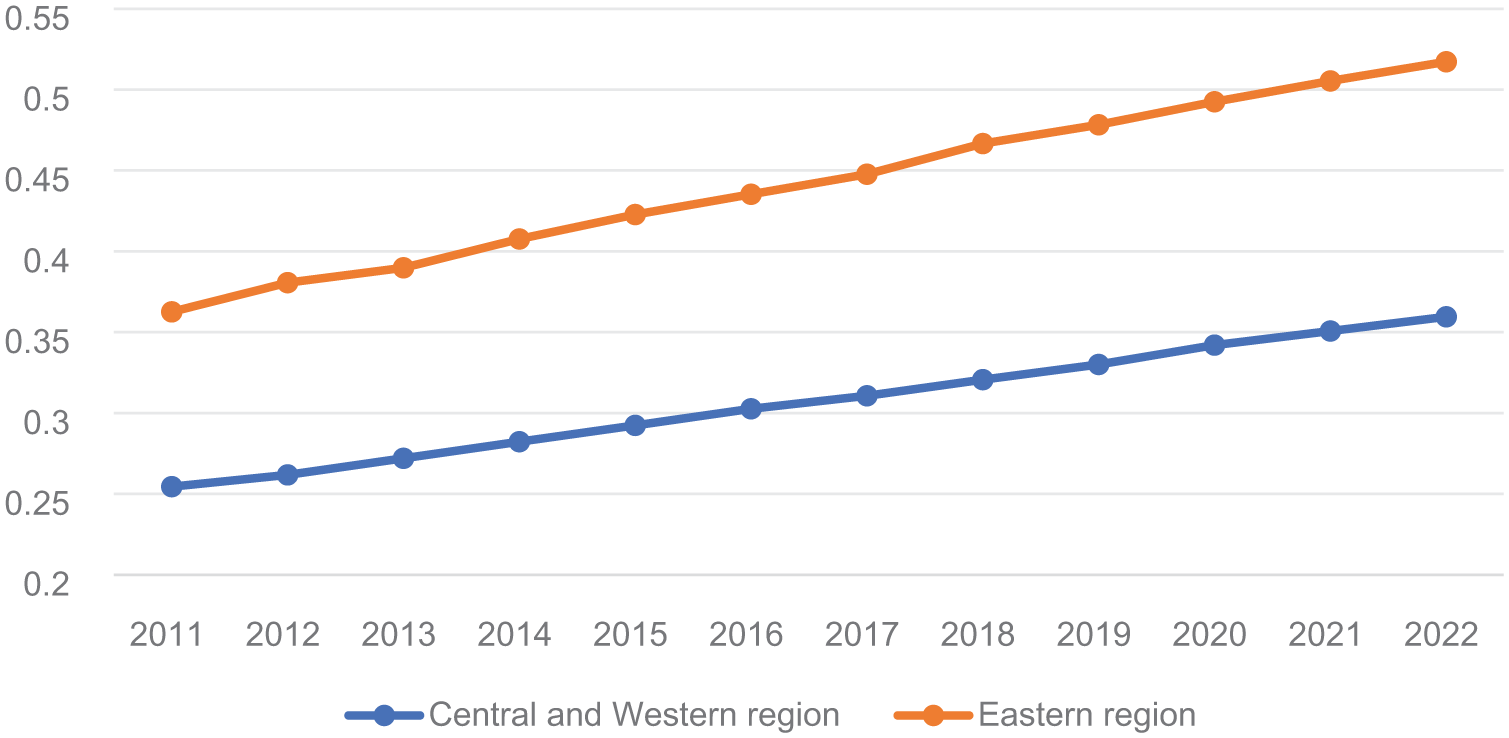
Trend map of rural revitalization variables.
Baseline Regression Results
The results of the multiple regression analysis between CBDC and the level of rural revitalization are shown in Table 5. Column (1) shows the regression results controlling only for year fixed effects and city fixed effects, and column (2) shows the regression results after adding the rest of the control variables. The coefficient of CBDC’s impact on the extent of rural revitalization is significantly positive at the 1% level, regardless of whether control variables were added or not, so hypothesis H1 has been confirmed.
Baseline Regression Results.

Note. The numbers in parentheses are robust standard errors clustered at the group level, with ***, **, and * indicating significance at the 1%, 5%, and 10% levels, respectively. The same applies to the following tables.
The total index of rural revitalization development level was replaced by five secondary indicators for regression analysis to explore the structural impact of CBDC on the level of rural revitalization. As shown in Table 6, CBDC has a significant effect on all five sub-indices of rural revitalization, which further confirms hypothesis H1. The regression coefficients of industrial prosperity, ecological livability, and affluence are 0.0593, 0.0549, and 0.0766, respectively, significantly larger than those of the influence coefficients of rural civilization and effective governance.
Structural Analysis Results of Rural Revitalization.

Robustness Tests
Parallel Trend Test
To examine whether the development trends of rural revitalization levels in the treatment and control groups are consistent before and after e-CNY pilot policy, following the approach of Beck et al. (2010), the model is specified as follows:

In the equation, i and t represent the region and year, respectively;

Results of parallel trend test.
Placebo Test
In order to test whether the impact of CBDC on rural revitalization is affected by other unobservable factors over time, this paper employs a placebo test to identify the contingency of the effect of the CBDC pilot policy. Specifically, a list of treatment groups is generated by random sampling from all samples, and the regression is conducted using the baseline estimation model, which is repeated 500 times to obtain the distribution of 500 erroneous pseudo-estimated coefficients, and the results are shown in Figure 5. The mean value of the regression coefficients of the level of rural revitalization development on the “pseudo-policy dummy variables” is close to 0, and most of the p-values are not significant at the 10% level. The estimated coefficient for the actual pilot is 0.0566, which is significantly different from the results of the placebo test. This suggests that the conclusions drawn above are more reliable.

Placebo test results.
Revising the Measurement Indicators for Rural Revitalization
Acknowledging that the selection of the dependent variable may influence empirical outcomes and to address the potential bias in weights when using the entropy method to calculate rural revitalization indicators, this study further incorporates the Technique for Order Preference by Similarity to Ideal Solution (TOPSIS) method on top of the entropy method to recalibrate the rural revitalization indicators. The regression results using the newly calculated rural revitalization indicators are presented in column (1) of Table 7, where the regression coefficient of the key explanatory variable is significant at the 1% level, thereby substantiating the robustness of the conclusions drawn earlier in the paper.
Robustness Tests.

PSM-DID
Given that the selection of a region into the digital currency pilot program may be associated with factors such as its scale, geographical location, and level of economic development, the model presented earlier may be subject to sample selection bias. To mitigate this issue, propensity score matching (PSM) is employed to rematch the control group for the treatment group. This approach aims to reduce the sample selection bias. The probability of a region being included in the digital currency pilot is calculated using a logit regression, and a kernel regression matching method is applied, with control variables used as covariates for matching. This ensures that there are no systematic differences between the treatment and control groups. Samples outside the matching support range are removed, and a multi-period difference-in-differences (DID) regression is conducted using the formula (1) from the previous section. As shown in column (2) of Table 7, after deleting the samples that are not in the matching range, the regression results are still significant at the 1% level, and the previous conclusion is more plausible.
Other Contemporaneous Policy Disturbances
This paper reviews large-scale policies on rural revitalization since 2011 and finds that the policies of Financial Inclusion Reform Pilot Zone (launched at the end of 2015) and Financial Reform Pilot Zone for Rural Revitalization (launched in 2019) may affect the regression results of this paper. This paper excludes the samples included in the above two policies, and regresses the remaining areas on model (1) again, and the regression results are shown in column (3) of Table 7. Under the condition of excluding the interference of other contemporaneous policies, the regression results are still significant and the previous conclusion is more reliable.
COVID-19 Epidemic Control Policies Interference
The outbreak of the COVID-19 at the end of 2019 brought a brief impact on China’s economy, and many places have adopted “home quarantine,”“silent control,” and other preventive and control measures, which have an impact on residents’ income and consumption, and the intensity of prevention and control varies from region to region. In this paper, we draw on the research ideas of F. Xin et al. (2023), and use the number of medium- and high-risk regions on average per month as a proxy for the intensity of epidemic prevention and control policies to add control variables to re-regress. Column (4) of Table 7 shows that the conclusions of this paper remain robust after excluding the confounding effect of the new crown epidemic prevention and control measures.
Winsorizing Treatment
In order to mitigate the impact of outliers on regression outcomes, this study applies a 1% and 99% Winsorizing treatment to all continuous variables. The model (1) is re-estimated using the Winsorized data, and the results are presented in column (5) of Table 7. The regression coefficient of the key explanatory variable remains significant at the 1% level, confirming the robustness of the conclusions drawn earlier in the paper.
Goodman-Bacon Test
Since this paper uses a multi-temporal double-difference (DID) model, it may be disturbed by biases such as “bad treatment group” or “negative weights.” In this paper, the method proposed by Goodman-Bacon (2021) is used to decompose the DID estimates. Table 8 shows that the inappropriate treatment effect weight is only 0.2%, while the appropriate treatment effect weight is as high as 97.8%. Due to the relatively small weight of the inappropriate treatment effect, it can be confirmed that the benchmark regression model in this paper is more robust.
Goodman-Bacon Tests.

Heterogeneity Treatment Effect
In order to address the possibility of heterogeneous treatment effects when applying the multi-period DID estimation model to identify policy effects, this paper constructs a two-way fixed-effects model considering a multi-temporal DID to more accurately estimate the true parameter

In the above equation,
Endogeneity Analysis
The possible endogeneity of the results could be due to two factors. First, reverse causality may have occurred, whereby the greater the positive change in rural revitalization, the more likely it was to be selected as a legal digital currency pilot. The second factor is that there may have been important variables omitted. Although the study selected regional characteristics such as the level of regional economic development, industrial development, and financial development as control variables to minimize the risk of endogeneity caused by omitted variables, there may still be unobservable omitted variables such as rural cultural differences, the norms and skills of farmers, and the degree of acceptance of CBDC, which may have had an impact on the results. To address possible measurement bias, this study adopted an instrumental variable approach to mitigate potential endogeneity by selecting “the cross-multiplication term between the number of fixed-line telephone subscribers per 10,000 people in China in 1984 (households) and the number of Internet broadband subscribers in the country in the previous year” (IV) as the instrumental variable. Theoretically, the number of fixed-line telephone users in 1984 reflects the level of communications infrastructure in various regions at that time. The degree of improvement in communication infrastructure—measured by the volume of national Internet broadband subscribers—is taken to reflect the subsequent proliferation of digital technology. An increase in the number of Internet broadband subscribers implies improvement in digital technology infrastructure and greater use of digital technology, satisfying the requirement of correlating with the use of CBDC. Data on the number of fixed-line telephone subscribers in 1984 is historical, so it is relatively independent of current economic activities and policy variables. It therefore does not directly indicate the level of development of rural revitalization. The regression results are shown in columns (1) and (2) of Table 9, which reject the hypotheses of “insufficient identification of instrumental variables” and “the existence of weak instrumental variables”; the enhancement effect of legal digital currency on rural revitalization remains significant.
Endogeneity Analysis Results.

Note. Values within () in the K-P Wald F statistic are critical values for the Stock-Yogo test at the 10% level.
Mechanism Analysis
Based on the previous theoretical analysis, the intermediary effect test model is constructed to test the impact mechanism of legal digital currency on rural revitalization from the three perspectives of promoting rural residents’ consumption upgrading, alleviating rural residents’ financing constraints and improving rural residents’ environmental governance.
Mechanism Test for Promoting Consumption Upgrade
The previous theoretical analysis shows that promoting rural residents’ consumption upgrading is an important channel for CBDC’s role in rural revitalization, and this paper constructs structural models (4) and (5) to test the impact of CBDC on rural residents’ consumption structure. According to the theoretical expectation, if the coefficient


Column (1) of Table 10 reports the results of the test of consumption upgrading as an influence mechanism, the regression coefficient of DID on CU is significantly positive at the 1% level, and the mediator variable (CU) is still significantly positive after adding the mediator variable and the core explanatory variables to the model at the same time. Further Sobel test was conducted and the Z statistic passed the statistical test at 1% level, indicating that consumption upgrade is one of the influence mechanisms to enhance the level of rural revitalization.
Mechanism Test Results.

Mechanism Test for Alleviating Financing Constraints
This paper constructs models (6) and (7) to test whether alleviating the financing constraints of rural residents is one of the mechanisms of CBDC empowering rural revitalization.


Column (2) of Table 10 reports the results of the test of the level of financing as an influence mechanism, the regression coefficient of DID on FI is significantly positive at the 1% level, and the mediator variable (FI) remains significantly positive after adding both the mediator variable and the core explanatory variables into the model. Further Sobel test is conducted and the Z statistic passes the statistical test at 1% level, indicating that alleviating financing constraints is one of the impact mechanisms of CBDC to enhance the level of rural revitalization.
Mechanism Test for Improving Environmental Governance
The theoretical analysis above shows that CBDC can improve the level of rural revitalization by improving the environmental governance of rural residents. Therefore, this paper constructs the following models (8) and (9) to test the mechanism.


Column (3) of Table 10 reports the results of the test of environmental governance as an influence mechanism, the regression coefficient of DID on ENV is significantly positive at the 1% level, and the mediator variable (ENV) remains significantly positive after adding both the mediator variable and the core explanatory variables to the model. Further Sobel test is conducted and the Z statistic passes the statistical test at the 1% level, indicating that environmental governance carried out by rural residents is one of the influence mechanisms of CBDC to enhance the level of rural revitalization and development.
Heterogeneity Analysis
Digital Infrastructure Heterogeneity
The digital nature of CBDC makes its application in rural areas limited by the inadequate development of digital infrastructure (Hu & Zhou, 2002). In this paper, we referred to the ideas of M. C. M. C. Li and Feng (2023) and constructed a digital infrastructure evaluation index with six indicators: (1) long-distance fiber optic cable density; (2) per capita Internet broadband access ports; (3) the percentage of employees in the information transmission and computer services and software industries; (4) per capita telecommunication revenue; (5) cell phone penetration rate; and (6) Internet penetration rate. We synthesized the digital infrastructure index using the entropy weighting method. According to the median of the index, the samples were divided into two groups: (1) good digital infrastructure; and (2) weak digital infrastructure. The results in Column (1) of Table 11 show that the better the digital infrastructure, the more pronounced the enhancement effect of CBDC on rural revitalization.
Heterogeneity Analysis Results.

Government Size Heterogeneity
The legitimacy of CBDC requires its popularization and application in rural areas to be driven by the policy guidance and financial support of local governments. Governments at all levels are the major participants in all aspects of rural revitalization, and government support is the cornerstone of rural revitalization (Bruton et al., 2018). Therefore, “local government financial expenditure/regional GDP” was used as a proxy variable for government size, and regression analyses were carried out by dividing the median into groups of large and small government sizes, respectively. This ensured the results reflected different degrees of governmental intervention within the scope of budgetary constraints. The regression results, as shown in column (2) of Table 11, show that the effect of CBDC on rural revitalization is greater in regions with larger governments.
Spatial Heterogeneity
Compared with the less developed central and western regions, rural residents in the eastern region enjoy a higher overall economic development level and exhibit more diversified and modernized consumption behaviors. Regional differences emerged in terms of the effect of CBDC on rural revitalization. In this study, the sample was divided into eastern, central, and western regions, and the regression results are shown in column (3) of Table 12. The results show that the coefficients of the core explanatory variables are significantly positive at the 1% level in the eastern region, but not significant in the central and western regions.
Heterogeneity Analysis Results.

Financial Infrastructure Heterogeneity
In regions with well-developed financial systems, the credit system is more mature, and the transaction data collected via CBDCs can rate the credit of rural residents effectively and alleviate access to finance constraints. A CBDC may have a heterogeneous impact on rural revitalization based on the existing level of financial development. In this study, the financial development level of the regions was measured by the ratio of the sum of deposits and loans of financial institutions (in the region) to regional GDP, and the sample was divided into two groups according to the median. The regression results, as shown in column (4) of Table 12, show that the impact of the coefficient of CBDC on rural revitalization is greater in regions with higher levels of financial development.
Environmental Pollution Heterogeneity
Compared with non-old-industrial areas, old-industrial areas that have relied on heavy industry and resource-intensive industries have witnessed rapid regional economic growth, but this has also brought serious environmental pollution problems and impeded the green development of the countryside. The effects of CBDC on rural revitalization may be heterogeneous due to varying levels of environmental pollution. In this study, according to the National Old Industrial Base Adjustment and Transformation Plan (2013–2022), the samples were regressed in groups, and the regression results are shown in column (5) of Table 12; this indicates that CBDC has a facilitative effect on the level of rural revitalization of both old-industrial areas and non-old-industrial areas, but the effect is stronger in non-old-industrial areas.
Discussion
This study has explored the mechanisms and effects of CBDC as a driver of rural revitalization in China, using the case of the e-CNY pilot program to empirically test a series of hypotheses. Overall, the findings demonstrate that CBDC can enhance rural revitalization, and CBDC is more likely to enhance the level of rural revitalization in terms of industrial prosperity, ecological livability, and affluent living. According to the analysis of the wider literature, policies such as issuing consumption vouchers through CBDC and reducing financing costs for rural residents produce increased income for rural residents and directly promote rural residents’ affluence; green loans and special subsidies issued in the form of a CBDC can improve rural residents’ ability to implement environmental protection measures and this can improve rural residents’ livelihoods. At the same time, through the use of a CBDC, rural residents can more conveniently conduct online transactions, shop, and make payments, and government and the private sector can more accurately understand the needs and preferences of rural residents, broadening the scope of potential consumers and enhancing the market competitiveness of agricultural products. This stimulates the entrepreneurial and innovative vitality of rural residents, promoting increased efficiency, productivity, and diversification of rural industries. Although CBDC also has the effect of improving rural civilization and effective governance, it may take a longer time for CBDC to have a measurable effect on rural customs and governance because these are both variables that tend to change slowly over prolonged periods.
The analysis of the mechanisms through which CBDC drives rural revitalization has shown that the upgrading of rural resident consumption structures, an easing of the financing constraints faced by farmers, and effective environmental management are critical mechanisms. In terms of consumption upgrading, CBDC can optimize the consumption structure by increasing rural residents’ spending on transportation, leisure and entertainment, education, culture and tourism, and other upper-tier consumption types through the issuance of digital coin-directed wallets and increased access to new services. The optimization and upgrading of the consumption structure will serve to boost domestic demand among rural residents, stimulate economic growth, promote rural residents’ affluence, and improve their quality of life. In terms of easing financing constraints, CBDC transactions do not require a bank account and are settled instantly, with no exchange or circulation fees imposed, which reduces financing costs for rural residents. At the same time, the huge amount of data generated in the transaction process can alleviate informational asymmetry, and, to a certain extent, address the problem of the financial exclusion of farmers that arises from challenges to risk identification. An efficient and secure financial market can promote rural economic growth, drive entrepreneurialism, and foster stable rural revitalization. For the environmental governance mechanism, CBDC has key green attributes, and the special subsidies for green agriculture issued in the form of CBDC can be loaded with smart contracts with traceability functions to ensure that funds are specifically used for green production, urging farmers to engage in environmental management and promoting the development of ecological livability. Establishing an ecological civilization is a foundational step in fostering rural revitalization, laying the groundwork for long-term sustainable rural development.
The heterogeneity analysis showed that the impact of CBDC is more apparent in areas with better digital infrastructure, larger governments, higher levels of financial development and no former industrial base. The eastern region specifically tended to exhibit these features. Specific analysis results are as follows:
The construction of digital infrastructure provides a more stable and efficient communication and network environment for rural areas, which allows CBDC to be smoothly implemented in rural areas. The construction of an improved digital infrastructure can help bridge the digital divide between urban and rural areas, so that rural residents can utilize CBDC to further the development and innovation of the rural economy.
Larger governments could take advantage of their financial scale, integrate the resources of financial institutions, science and technology enterprises, and other actors, and at the same time strengthen the communication and cooperation between regional finance departments, agricultural/rural affairs departments, local governments, and other authorities. This meant they could provide coherent and comprehensive policy support for the wide-ranging application of CBDC in the countryside.
The urban-rural economic ties in the central and western regions are relatively weak, and the CBDC applications were relatively homogeneous; the digital currency subsidy policy was not implemented forcefully, and the impact of CBDC in promoting consumption upgrading was relatively limited. In contrast, in the eastern region, the economic links between rural and urban areas are stronger, the urban and rural consumption structures are gradually integrating, the applications of CBDC are more diversified, and the subsidy policy using the CBDC was implemented more effectively, so it has been easier for rural residents to purchase developmental commodities and services using CBDC, thereby achieving consumption upgrading and improving quality of life.
In areas with a weak level of financial sector development, there are fewer bank branches and insufficient coverage of financial services, and rural residents have very limited access to debt products, making financing constraints even more pronounced. Even though CBDC provides new payment methods and financial services, due to insufficient financial development, it may have been more difficult to increase access to financial services in underdeveloped areas as compared with areas with a higher level of financial development. Poor financial sector development in such areas means that CBDC policies struggle to significantly address access to finance barriers for rural residents.
Rural environmental problems in old-industrial areas are more complex and serious, mainly caused by industrial waste, historical legacy pollution, and soil pollution. Although the demand for environmental governance in these areas is more urgent, CBDC had less of a significant impact on these deep-rooted environmental problems in the short term due to the difficulty of organizing the complex governance arrangements required and the high amount of capital and time costs involved. The environmental problems faced by rural areas that are not ex-industrial areas, on the other hand, are relatively fewer and less severe, with less industrial pollution. Rural residents in these areas pay more attention to agro-ecology, green development, and sustainable lifestyles. The pilot CBDC was effective to varying degrees, in improving environmental governance through green consumption, green agriculture, and the purchase of environmentally friendly products, enabling rural residents to build an ecologically sound and livable green environment on their own and thereby driving rural revitalization.
Conclusions and Recommendations
Rural revitalization strategies are an important means of narrowing the gap between the rich and the poor. In this context, this study analyzed panel data for 284 Chinese cities from 2011 to 2022, developed a rural revitalization index using the entropy method, and, using the e-CNY pilot policy as its empirical case for evaluation, assessed the impacts of CBDC on rural revitalization. It used a multi-temporal double-difference model and carried out a series of robustness tests and an endogeneity analysis. The study found that (1) CBDC can significantly drive rural revitalization; (2) CBDC promotes rural revitalization by driving consumption upgrading, addressing rural residents’ financing constraints, and improving rural residents’ environmental governance practices; (3) CBDC has a significant impact on rural areas with better digital infrastructure, larger governments, and higher levels of financial development, as well as on regions that are not old-industrial bases. The eastern region overwhelmingly demonstrated these impacts and it has precisely these qualities.
Based on these findings, this paper makes the following recommendations:
Authorities and other stakeholders should improve rural digital infrastructure. The digitalization of traditional infrastructure in rural areas should be accelerated, and digital transformation and intelligent upgrading should be carried out across infrastructure areas such as road networks, electric power systems, and agricultural production and processing chains. They should accelerate the deployment of cutting-edge infrastructure such as 5G networks, artificial intelligence technologies, and the Internet of Things in rural areas, expand the coverage of communications infrastructure such as fiber-optic broadband and network signals, and increase the accessibility and coverage of new-generation information technology applications in agriculture. To date, the central and local governments of China have continued to promote the application of high-fraction satellite data in agricultural remote sensing, accelerate the construction and application of the national agricultural and rural big data platform, and build a sound system of agricultural and rural data resources. These progressive actions should be built on further by focusing on comprehensive and integrated digitalization in rural areas.
Authorities and other key decision-makers should improve the digital literacy of rural residents. Personalized digital training courses can be developed for groups of farmers of different ages and skill levels. Easy-to-learn digital training courses have been designed for the rural elderly to help them master basic digital payment and information acquisition skills, whilst more in-depth digital economy skills training has been provided to returnee youth and rural entrepreneurs to enhance their ability to utilize CBDC for e-commerce operations, financial management, and so on. A combined online and offline training model has been adopted, using an Internet platform to conduct online courses, while organizing offline training activities and inviting experts and technicians to give on-site explanations and guidance. Rural enterprises are already given tailored subsidies and concessions to encourage them to use CBDC and its various functions. To add to this, authorities should strengthen digital skills training for the existing rural labor force, improve its digital literacy, and develop its entrepreneurial ability. They should also encourage agriculture-focused universities and vocational colleges to offer relevant majors and courses to cultivate talent among individuals who understand both agriculture and digital technology.
Authorities should increase government support for CBDC. Governments at all levels play a crucial role in driving rural revitalization. Government departments provide certain financial subsidies to financial institutions and businesses that promote digital CBDC in rural areas, providing certain tax exemptions or concessions to enterprises and individuals that use digital CBDC for transactions to increase motivation to use CBDC among market participants. The central and local governments in China have also strengthened publicity and education around CBDC through media channels such as television, radio, and the Internet; they have organized financial institutions to carry out training on the use of CBDC and provided on-site guidance and question and answer sessions for rural residents to increase awareness and technology acceptance. Governments should now actively encourage financial institutions to cooperate with agricultural cooperatives and agricultural material traders to create agricultural sector-specific payment applications for the purchase of agricultural materials and the sale of agricultural products.
For regions that are lagging behind in financial sector development, CBDC can be used to provide low-cost and convenient payment and financing services, widening access to financial services. In old-industrial areas, CBDC can be used to promote agricultural carbon sink trading, green finance, various modes of agricultural modernization and management, green agriculture development, ecological restoration, improvements in the environment post-deindustrialization, and overall sustainable development. The roll-out of CBDC pilot interventions should be carefully designed to achieve effective feedback loops and enable continuous improvement. The roll-out of the e-CNY should emphasize the coordinated development of the eastern, central, and western regions, selecting locations in the eastern region with better economic foundations to act as digital RMB demonstration zones and gradually expanding the scope of digital RMB pilots in the central and western regions using a “leadership by example” approach in which the success stories of the eastern region comprise blueprints for policy implementation in the other regions.
Key decision-makers should improve the system of CBDC regulation and institutionalization. Relevant platforms should provide CBDC services that are fully compliant with a clear framework of laws and regulations, ensuring the comprehensiveness and accuracy of information disclosure. This will enable rural users to understand their financial status and potential risks and inform users of their rights and responsibilities. In response to confusion among farmers in understanding the terms of electronic contracts, the platform should provide concise explanations, lower the educational threshold for effective use, fully protect the farmers’ right to access comprehensible information, strengthen user privacy protection measures, and resolutely resist and penalize misuse of information. The issuance and circulation of CBDC have been accompanied by the onset of mass information flows and capital flows, and within this context CBDC has huge commercial value. Government departments, judicial institutions, and supervisory authorities should work together to lay out a coordinated plan to strengthen the supervision of CBDC, improve the quality and scope of risk monitoring, and safeguard data security, technical security, and capital security in the transaction process.
Significance and Limitations
From a theoretical point of view, this paper enriches the existing research on monetary theory, CBDCs, and rural revitalization. The results affirm the positive role CBDC can play in driving rural economic development. The study indicates that there is ample potential for broadening and deepening the impacts of CBDC on rural revitalization. Although key features of CBDC and its effects on rural revitalization have been explored in the literature, the mediating role played by micro-residents’ behaviors has been neglected. This paper used theoretical enquiry to develop hypotheses that CBDC can drive rural revitalization by influencing micro-residents’ behaviors, which broadens the scope of research in this area and makes a key theoretical contribution to this field. It then tested these hypotheses empirically. In terms of practical significance, the findings of this paper provide empirical evidence to support the ongoing use of CBDC as a key component of a wider rural revitalization strategy, and the study has introduced some tentative recommendations that can be further explored in future studies.
Although this study is novel insofar as it explores the mediating effects of micro-residents’ behaviors, there are some limitations to its generalizability and room for expansion and improvement. First, the sample data of this study is 2011 to 2022 panel data at the prefecture and city levels, with a small sample size and only a cross-sectional set of data from one short time period, which may have led to biases in the empirical results. Future scholars could expand the time horizon of the data collected and focus studies on the county level to increase the sample size and improve the validity of the results. In addition, due to data availability issues, there is room for improvement in the development of the rural revitalization index; future research can enrich the rural revitalization index by factoring in indicators of agricultural modernization and farmer satisfaction. The impact of CBDC on rural revitalization may also vary depending on types of digital infrastructure not covered in this study as well as regional cultural differences, and scholars should account for these variables in ongoing research. Finally, future studies would do well to explore whether CBDC has spatial spillover effects.
Footnotes

Ethical Considerations
None. No human participants.
Consent to Participate
None. No human participants.
Author Contributions
The authors confirm contribution to the paper as follows: study conception and design: Muchen Li; data collection: Shining Guo, Qianyi Zhang; analysis and interpretation of results: Shining Guo; draft manuscript preparation: Muchen Li, Shining Guo, and Qianyi Zhang.
Funding
The authors disclosed receipt of the following financial support for the research, authorship, and/or publication of this article: (1) Project of Natural Science Foundation of Fujian Province: Study on the Paths and Countermeasures for the Digital Transformation of Commercial Banks in Fujian Province under the Background of Digital RMB (2023J05166); (2) Project of Social Science Foundation of Xiamen City: Study on the Impact of Fujian Provincial Government-Guided Funds on the High-Quality Development of Local Economy (FJ2024JDZ041); (3) Project of Social Science Foundation of Xiamen City: Study on the Countermeasures for Xiamen to Build a Strong City in Social Sciences (XM2025ZDB16).
Declaration of Conflicting Interests
The authors declared no potential conflicts of interest with respect to the research, authorship, and/or publication of this article.
Data Availability Statement
The datasets used or analyzed during the current study are available from the corresponding author on reasonable request.