



Abstract
The key to global rural revitalization lies in shifting the attention of policymakers toward balancing urban-biased policies. The cadre performance evaluation system (CPES) is an important institutional design for adjusting the attention of officials. However, it remains unclear whether and how it will impact rural revitalization. The article introduces a framework of “incentive target transition
Plain Language Summary
The key to global Rural Revitalization lies in shifting the attention of policymakers towards balancing urban-biased policies. China’s experience demonstrates that, within a mature personnel system, the optimization of the CPES can facilitate the achievement of rural public policy objectives. The article introduces a framework of “incentive target transition–attention reallocation” and employs a Difference-in-Differences (DID) model, leveraging data from 1,645 counties spanning from 2008 to 2022, to delve into the impact of the transformation of the cadre performance evaluation system (CPES), guided by the principle of "beyond GDP-ism," on rural revitalization. The study showed that the level of rural revitalization increased by 5.8 per cent after the implementation of CPES at the county level of government. Mechanism analysis indicates that, following the transformation of the CPES, county-level governments have redirected their efforts by increasing fiscal investments and expanding land transfer areas. These measures are intended to guide the movement of human resources towards rural areas and stimulate agricultural entrepreneurial activity, thereby fostering sustained rural revitalization. The research findings offer policy insights for countries aiming to enhance government capacity to promote rural revitalization and provide empirical evidence supporting the rationality of the "Beyond GDP" initiative in the public sector.
Introduction
With the acceleration of urbanization and industrialization, many factors of production have been concentrated in cities, leading to the decline of the countryside, which has become a global issue. The World Social Report 2021: Reconsidering Rural Development states that rural development should not be seen as a derivative of urban development, but deserves to be at the center of global sustainable development efforts (UN DESA, 2021). However, the “urban bias” in national plans and public policies is widespread in countries around the world and is a major obstacle to rural development. The key to promoting rural revitalization has therefore become how to effectively redistribute policymakers’ attention to the countryside (Y. S. Liu & Li, 2017).
In China, since the reform and opening-up, the central government has devised a rigorous cadre performance evaluation system (hereinafter referred to as CPES) to ensure that its objectives are effectively implemented by local officials. This has fundamentally shaped the behavior of Chinese officials and profoundly influenced socio-economic development (Zhu, 2023). The CPES has even been regarded at times as one of the institutional origins of China’s economic growth miracle, as it effectively stimulated the motivation of local officials to drive economic development (Pang et al., 2023). Research, exemplified by studies on the “official promotion tournament,” has elucidated and summarized the “guiding stick” effect of the CPES (H. Li & Zhou, 2005). It points out that, under conditions of highly centralized personnel authority, the central government has made economic performance a key criterion for officials’ promotion decisions in order to drive economic development. This approach effectively motivates officials to actively engage in local economic development. This promotional incentive effect has been validated across various domains, thereby establishing a close linkage between China’s CPES and socio-economic development (Luo & Qin, 2021). However, for a considerable period, while the GDP-centric CPES effectively promoted rapid economic growth, it also led to the skewed utilization of resources, which consequently exacerbated the disparity between urban and rural areas. Extensive literature indicates that, due to urban sectors being the primary source of economic growth, under the GDP-centric CPES, officials have consistently formulated and implemented economic policies with an urban bias. This has led to a continuous widening of the urban-rural gap and an increasing decline in rural areas (M. X. Chen et al., 2021; D. T. Yang, 1999; Yao, 2000; Yao et al., 2004). Against this backdrop, the principal challenges confronting rural revitalization encompass population decline, suboptimal land utilization, and inadequate investment (Y. S. Liu & Li, 2017). Development policies centered on GDP are not conducive to improving these issues and may even exacerbate them.
A global initiative known as “Beyond GDP” offers insights into addressing the aforementioned challenges (Fleurbaey, 2009). It emphasizes that GDP growth does not necessarily equate to an increase in social welfare, and in particular, it can obscure social development inequalities (Breslin, 2008; Jones & Klenow, 2016). China’s developmental trajectory over the past decade is consistent with this perspective. Since the Xi Jinping administration, the central government has made significant adjustments to the CPES, markedly reducing the weight of GDP indicators. In December 2013, the Organization Department of the Central Committee issued the “Notice on Improving the Performance Evaluation of Local Party and Government Leadership,” which explicitly emphasized the need to correct the “sole focus on economic growth” and to prioritize rural development in certain regions. Subsequently, many counties began to gradually eliminate GDP indicators from the performance evaluations of officials. By 2022, 490 county-level governments had announced the discontinuation of GDP-based assessments, accounting for 17.24% of the 2,843 counties. The specific distribution is shown in Figure 1. It illustrates the distribution of counties that have abolished GDP assessment across different regions of China. In terms of time, the peak period for counties to abolish GDP assessment was from 2009 to 2014. Meanwhile, in response to rural decline, the Chinese government is vigorously advancing the targeted poverty alleviation and rural revitalization strategies. The success of these initiatives hinges on shifting policymakers’ attention and efforts toward rebalancing the urban-biased policies (Y. S. Liu & Li, 2017). The removal of GDP assessment indicators will help free the government from “goal conflict” (the contradiction between GDP growth and rural development; Gao, 2015). Therefore, eliminating GDP-based performance evaluations for officials appears to fortuitously align with the goals of rural revitalization. Consequently, the central inquiry of this study is: Does the CPES shift characterized by the abolition of GDP assessment contribute to rural revitalization, and what might be the underlying mechanism of this impact?
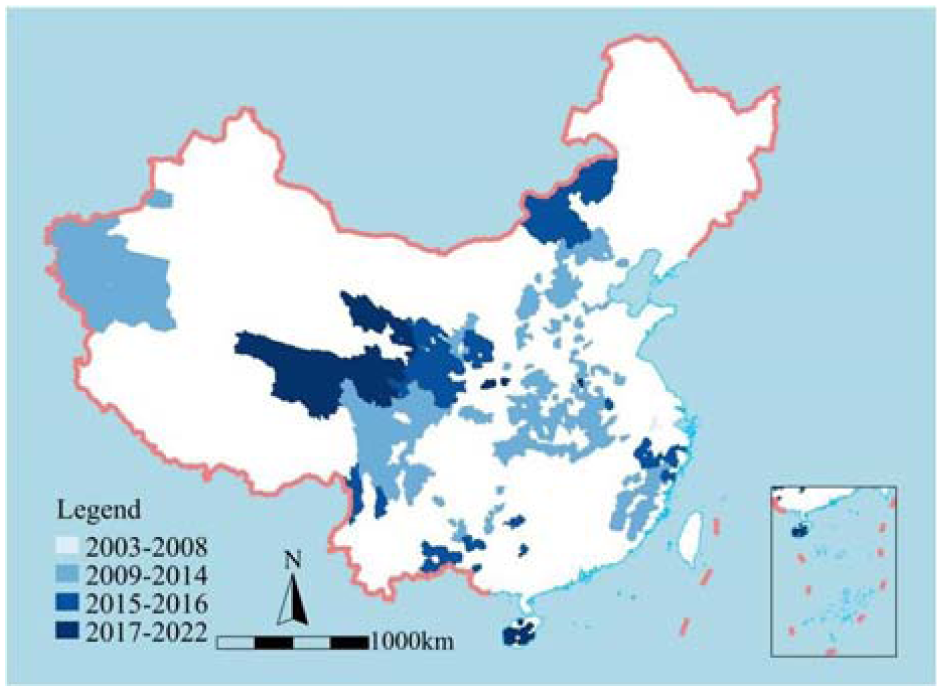
Spatial distribution of CPES shift.
A key challenge in exploring the aforementioned issue is the lack of appropriate research opportunities and high-quality data. In recent years, some county governments in China have begun a reform to abolish the GDP assessment. This provides a good quasi-natural experimental environment to study the above issues. We can address the above challenges through this reform and county-level data. Regarding representation, China, akin to numerous other nations, possesses a multi-level governance framework and CPES. Furthermore, China is also the largest developing country and an ancient agricultural powerhouse. Therefore, understanding how its CPES impacts rural revitalization has broad significance and can provide valuable insights for many countries. Particularly in numerous developing nations, achieving a balance between GDP growth objectives and rural advancement proves challenging. Our research findings can provide suggestive evidence for their decision-making.
Our study contributes to the existing literature in three ways. First, drawing on the official incentive model and attention theory (H. Li & Zhou, 2005; Ocasio, 1997; L.-A. Zhou, 2007), we constructed an “incentive target transition–attention reallocation” framework. This framework clearly illustrates the dynamic changes in government attention before and after the abolition of GDP assessment. It also extends the model of officials’ incentive targets, providing a more generalized model for analyzing the relationship between target shift and official behavior. Secondly, prior studies fall short of theory and hard evidence on CPES’s link to rural revitalization. To our knowledge, this is the first study to link the CPES with rural revitalization. The study confirms that transforming the performance evaluation system can redirect government attention toward rural development, thereby facilitating rural revitalization. It also provides new insights into balancing urban bias policies. Thirdly, the current body of literature exhibits limitations concerning data granularity and deficient causal identification. Unlike prior studies relying solely on provincial data and conventional regression analysis, we employed a difference-in-differences (DID) model and a longer time-series of county-level panel data to clearly identify the causal link between CPES and rural revitalization.
The remainder of this paper is organized as follows: First, we briefly review the relevant literature and develop a theoretical framework. Second, we introduce the data and methods and conduct empirical analysis. Finally, we summarize the findings, initiate discussion, and provide policy implications. The terms “beyond GDP,”“CPES shift,” and “abolishing GDP assessment” used in this article have essentially the same meaning. They are all used to express the idea that GDP should no longer be the sole focus. In subsequent sentences, we chose different terms for description based on the context. “GDPism” refers to a policy stance that regards GDP as the sole indicator of development. The “Beyond GDP” denotes a policy approach encompassing multiple objectives. The “CPES shift” represents a transformation in performance evaluation that transcends GDP-centric approaches, embodying the practical application of “beyond GDP” principles within government. The “Abolishing GDP assessment” refers to a specific policy implemented at the county level, primarily used in empirical analysis. Detailed explanations are provided in Supplemental Appendix A.
Literature, Theory, and Hypothesis
Literature Review
Performance objectives are a crucial component of organizational management and performance systems, profoundly influencing organizational behavior and outcomes (Greve, 2003). In this context, researchers in the fields of organization and management have conducted extensive foundational research on how performance objectives are prioritized (Ma, 2016; Nielsen, 2014; Zhu & Rutherford, 2019) and how these objectives impact organizational performance (Holmstrom & Milgrom, 1991; Lazear & Rosen, 1981; Meyer & Rowan, 1977). Theoretical perspectives such as agency theory, performance gaps, bureaucratic control, isomorphism, goal conflict, and ambiguity provide insightful viewpoints on performance evaluation systems.
Inspired by these theories, many scholars have applied them to the study of the performance evaluation system of the Chinese government and urban-rural development issues, resulting in a wealth of research findings. Drawing on the tournament system within the agency theory framework, L.-A. Zhou (2007) proposed the GDP-centric “official promotion tournament system,” which has become a highly explanatory theory within China’s CPES. Some studies have found that, over nearly two decades of the 21st century, the GDP-centric CPES has remained effective (Luo & Qin, 2021). However, this GDP-focused performance evaluation system has led to an urban bias in policy, resulting in a widening disparity between urban and rural development (D. T. Yang, 1999). Scholars who explain this phenomenon from the perspective of goal conflict point out that, under an evaluation system centered on economic indicators, there is an inherent contradiction between the goals of urban and rural development. Policies aimed at promoting rural development face “incentive incompatibility (Y. J. Chen et al., 2018),” leading to the formulation and implementation of few rural policies (Gao, 2015; Heberer & Trappel, 2013). Other scholars, based on the perspective of goal ambiguity, argue that GDP growth, compared to livelihood performance, possesses clearer and more comparable characteristics. In a culture where promotion is tied to performance, GDP growth is more likely to become a focal point for officials (Ma, 2016). In recent years, alongside the decline in the central government’s GDP assessment and the prioritization of rural policy, several studies have identified that certain regions have been impacted by the abolition of cadre GDP assessment, with a notable increase in the rate of rural development (He et al., 2023).
Additionally, a substantial body of research has accumulated on the factors influencing rural revitalization. Existing studies indicate that rural-oriented policies (Tan et al., 2023), fiscal support (Ren et al., 2024), labor force attraction (Qi et al., 2022), land use and consolidation (Y. Zhou et al., 2020), and digital inclusive finance (Xu et al., 2024) all contribute to the promotion of rural revitalization. Recent research on digital technology has also found that digital rural development (Y. P. Zhao, Zhao & Yang, 2024) and urban mobile government applications (Y. Z. Chen & Ye, 2025a) also contribute to rural development and revitalization. Although existing literature approaches the issue from various perspectives, factors such as policy, financial investment, financial regulation, and labor force attraction are all closely related to government actions. As emphasized by neo-exogenous development theory, networks of local government leaders are actively channeling substantial resources into rural areas, playing a crucial role in bridging the urban-rural gap (Xin & Gallent, 2024).
A literature review identified three limitations in existing research. First, existing research predominantly focuses on political incentives and official behavior under a single objective (Luo & Qin, 2021; Ma, 2016), with limited attention to incentives and behavior following the transition between multiple objectives. We introduce the “incentive target transition–attention reallocation” framework to explain the changes in government behavior following the transformation of the performance evaluation system. This framework uses attention as a unified measure to effectively analyze changes in attention and corresponding behaviors caused by changes in incentive targets. Second, while existing research has noted the increasing resource allocation by the government toward rural revitalization (Ren et al., 2024; Tan et al., 2023; Xin & Gallent, 2024), it has not explored the deeper behavioral logic of officials. However, changes in the officials’ incentive target system are likely to be a key institutional factor driving increased investments in rural areas. We link CPES to rural revitalization to address this oversight. Third, current research on performance evaluation and rural revitalization primarily uses provincial and urban data, failing to provide more granular evidence, particularly with insufficient attention to the county level. Rural revitalization is fundamentally concerned with more micro-level village development, and using overly macro-level data may obscure many nuances and overlook potential conflicts between different levels of analysis (Landry et al., 2018). We overcome this by using county-level data.
Theoretical Framework
Scholars employ various terminologies to describe the CEPS, such as the target responsibility system and the cadre performance objectives framework. However, at its core, this system operates through a mechanism of goal-oriented incentives. Although the attainment of organizational goals depends on the dedication and efforts of officials, it is also constrained by factors such as human resources, financial assets, and material conditions. Consequently, the alignment of organizational objectives with performance outcomes constitutes a complex process. To streamline the theoretical framework and analytical process, this paper incorporates the concept of “attention” as proposed by Simon, with particular emphasis on the extension developed by Ocasio (1997). Ocasio posits that organizational decisions and behaviors are influenced not only by the organization’s resources and capabilities but also by the allocation of decision-makers’ attention. He provides researchers with a straightforward framework for understanding organizational behavior. Although constraints vary among different governments in achieving their objectives, each cadre’s allocation of “time,” or what can be termed as “attention,” is subject to objective physiological limits. Moreover, similar to the “time scarcity” faced by many organizations, where numerous tasks are desired but cannot be allocated sufficient time and resources (Perlow, 1999), this issue is particularly pronounced in government organizations operating under multi-goal scenarios. Therefore, “attention” can provide researchers with a unified metric, facilitating a more comprehensive analysis and understanding of organizational behavior and performance under conditions of multiple objectives (K. L. Chen & Gu, 2022). Following the elimination of GDP assessments, county governments are often assigned new evaluation targets by higher-level authorities. According to the statistics presented in this paper, these new assessment objectives can generally be categorized into four types: prioritizing poverty alleviation, focusing on agricultural development, emphasizing ecological protection, and balancing multiple livelihood objectives. It is evident that with the abolition of GDP assessments, counties simultaneously completed a transition in their incentive objectives. Within the context of a performance-based promotion culture (Rothstein, 2015), this shift in incentive targets will realign officials’ attention, a point that is corroborated by evidence provided by He et al. (2023). Therefore, the elimination of GDP assessments triggers a process of “incentive target transition–attention reallocation,” thereby altering the behavior and performance of government organizations.
From a general perspective, the total allocation of attention among governments of the same tier is broadly equivalent. This figure represents the aggregate of energy or time apportioned to all tasks. Once county-level governments began eliminating GDP assessments, officials’ attention commenced a process of reallocation. The process encompasses the following three scenarios:
Single Dominant Incentive Targets: Following the abolition of GDP assessments, higher-level governments reassign a new, singularly strong incentive objective to county-level governments. Consequently, the attention previously devoted to GDP evaluation is redirected toward this new objective. For instance, in 2014, the Anhui provincial government decided to eliminate GDP assessments for certain counties, redirecting leadership focus toward poverty alleviation and development. In this scenario, poverty alleviation and development replaced GDP as the new dominant incentive objective.
Guided Multi-Objective Targets: Higher-level governments reassign a set of guided, multi-dimensional objectives to county-level governments. Consequently, the attention previously allocated to GDP evaluation is redistributed across these diverse objectives. For example, after the Shanxi provincial government abolished GDP assessments for certain counties in 2014, it placed greater emphasis on improving people’s livelihoods. It introduced a focus on enhancing living standards, social progress, and ecological benefits as key components of performance evaluation.
Absence of Dominant Incentive Targets: In the absence of a strong incentive target set by higher-level governments, county-level governments distribute their previously focused attention on GDP evaluation across the remaining objectives. In this scenario, efforts directed toward GDP growth will decrease, while efforts toward the remaining objectives will correspondingly increase. According to the data presented in this paper, after the elimination of GDP assessments, higher-level governments have allocated new, strong incentive objectives to lower-level governments. The third situation has not occurred in practice.
In summary, regardless of the scenario, the abolition of GDP assessments invariably signifies an increased allocation of governmental attention toward rural revitalization. The theoretical framework is illustrated in Figure 2. Prior to the abolition of GDP assessments, the GDP-centric CPES established a framework of “incentive target locking,” thereby directing the majority of governmental attention toward urban areas. This led to a development model characterized by “urban prioritization” and “urban extraction of rural resources (D. T. Yang, 1999).” Following the abolition of GDP assessments, a process of “incentive target transition and attention reallocation” was triggered. This realignment redirected governmental focus toward rural areas, facilitating the initiation of a rural revitalization model characterized by “emphasis on rural development” and “urban support for rural areas.” Therefore, at a theoretical level, the abolition of GDP assessments contributes to rural revitalization. The subsequent sections will further explore the mechanisms underlying this effect.

Theoretical framework.
Research Hypothesis
After the abolition of GDP assessments, the cadre evaluation system did not undergo structural changes; instead, there was merely a shift in the incentive objectives. This allowed for the maintenance of the political incentive order. According to the theoretical framework outlined above, irrespective of the scenario, the abolition of GDP assessments signifies an enhanced allocation of governmental attention toward rural revitalization. Moreover, with the removal of economic indicators, the urban bias in policies can be alleviated, leading to a greater allocation of resources toward rural development than previously. The aforementioned inference can also be corroborated by the theory of Official Promotion Tournament Model (L.-A. Zhou, 2007), that is, CPES can be leveraged to shape the development of specific fields. Based on this, the following hypothesis is proposed:
Further analysis reveals that after the abolition of GDP assessments, county-level governments acquire new incentive objectives, which vary in their relevance to rural revitalization. Consequently, these differing objectives may produce varying effects. Following the abolition of GDP assessments, the new evaluation objectives can be broadly categorized into four types: prioritization of poverty alleviation, emphasis on agricultural industry development, focus on ecological protection, and a balanced approach to multiple livelihood objectives. The first three categories correspond to single dominant incentive objectives, while the fourth category aligns with guided multi-objective targets. Firstly, according to central policy planning, targeted poverty alleviation is a preliminary task for rural revitalization and is most closely associated with it (He et al., 2023; Tan et al., 2023). Therefore, the impact of prioritizing poverty alleviation is expected to be the most significant. Secondly, rural revitalization encompasses a multi-objective system that includes industry, ecology, civilization, governance, and prosperity (Q. Y. Zhao, Bao & Yao, 2024). Incentives based on a livelihood-oriented, multi-task approach are conducive to addressing these diverse goals. Consequently, the effect of such incentives is anticipated to be second only to that of poverty alleviation prioritization. Thirdly, while prioritizing agricultural industry development directly targets rural areas, it may be constrained by weak rural industrial foundations and labor shortages. As a result, its short-term effects might be less pronounced, potentially even below the average impact of abolishing GDP assessments. Lastly, while prioritizing ecological protection is directly related to the ecological objectives of rural revitalization, it can indirectly support other rural revitalization goals through ecological industries, environmental compensation, and environmental governance. Therefore, although the ecological priority objective can contribute to rural revitalization, its impact is likely to be the weakest among the new evaluation objectives. In summary, this paper proposes the following hypothesis:
How does the transformation of cadre performance evaluation impact rural revitalization? According to the “goal-behavior” perspective in organizational management (Greve, 2003; Ma, 2016; Zhu & Rutherford, 2019), new incentive objectives will alter the direction of organizational efforts and the allocation of attention, leading to changes in organizational behavior that subsequently affect the associated groups. Following the cessation of GDP-based evaluations, the CPES will undergo a transformation, which is anticipated to directly impact governmental behavior, such as increasing resource allocation to rural areas. First, fiscal funds are a crucial resource for achieving rural revitalization and represent one of the most readily allocable resources for the government. Based on fiscal competition theory (Boyne, 1996), local government competition primarily manifests through the acquisition and allocation of scarce fiscal resources to prioritize and develop specific sectors. If fiscal resources cannot be attracted to a particular sector, the development of that sector will be constrained. To gain a competitive edge under the new performance objectives, local governments must increase fiscal investments in rural areas, thereby facilitating the advancement of rural revitalization. Secondly, land resources are essential material resources for rural revitalization, directly influencing agricultural industry distribution and the spatial structure of rural areas (Fei et al., 2021). With the discontinuation of GDP assessments, there has been an increased emphasis on rural revitalization, and land transfer, as a key instrument for local governments to advance this goal, is likely to be further enhanced. In summary, the following hypothesis is proposed:
Simultaneously, group behavior will be influenced by signaling mechanisms and resource allocation processes, potentially leading to an increase in the number of rural practitioners and enhanced agricultural entrepreneurial vitality. A significant cause of rural decline is the outflow of human resources resulting from a lack of development opportunities (Y. S. Liu & Li, 2017). The removal of GDP assessments can guide the government to allocate more policies and resources to rural areas, thereby increasing development opportunities in the countryside. This, in turn, may attract population return to rural areas and infuse rural revitalization with valuable human resources. Furthermore, research in the field of entrepreneurship indicates that the institutional environment is crucial to entrepreneurial activity (Fuentelsaz et al., 2018). Among these, human capital, policy opportunities, and financial support are critical elements in unlocking entrepreneurial potential. The cessation of GDP assessments has led to an increased governmental focus on rural areas, thereby contributing to the enhancement of the institutional environment for agricultural entrepreneurship. Under favorable policy environments and with an increase in human resources, the vitality of agricultural entrepreneurship will be invigorated, thereby fostering sustained rural revitalization. At this point, the paper advances the following hypothesis:
In summary, the research framework of this study is illustrated in Figure 3.

Research framework.
Methodology and Data
Empirical Strategies
The discontinuation of GDP assessments by county-level governments exhibits characteristics of a quasi-natural experiment. Under the control of relevant factors, a multi-period difference-in-differences approach (Time-varying DID) can be employed to estimate its causal effects. This method outperforms ordinary regression analysis in addressing endogeneity problems and capturing the causal impacts of exogenous shocks. Due to the data characteristics of the dependent variable (multi-period shocks), the standard single-period DID model is not applicable. Therefore, the model specification is as follows:

Although the difference-in-differences method effectively mitigates endogeneity issues, this study further incorporates province-year interaction terms to address potential omitted variable concerns.
Variable Design
Explained Variable: Rural Revitalization
The dependent variable is the level of rural revitalization at the county level, which is assessed using a comprehensive indicator system developed for this study. Current academic practices primarily rely on the five key dimensions of rural revitalization defined in the “Rural Revitalization Strategic Plan (2018–2022)” to design indicator systems. These dimensions are: thriving industries, ecological livability, rural culture, effective governance, and prosperous living standards (Geng et al., 2023; Xu et al., 2024; Q. Y. Zhao, Bao & Yao, 2024). This study draws on these existing research frameworks; however, given the limitations of county-level data, it further integrates findings from relevant studies on county-level rural revitalization to inform the design of the indicator system used in this research. Finally, after iterative calculations and comparisons, this study has developed an evaluation system consisting of 5 primary indicators and 11 secondary indicators, as detailed in Table 1. Supplemental Appendix B lists the reasons for selecting each indicator.
Evaluation System for Rural Revitalization Levels.
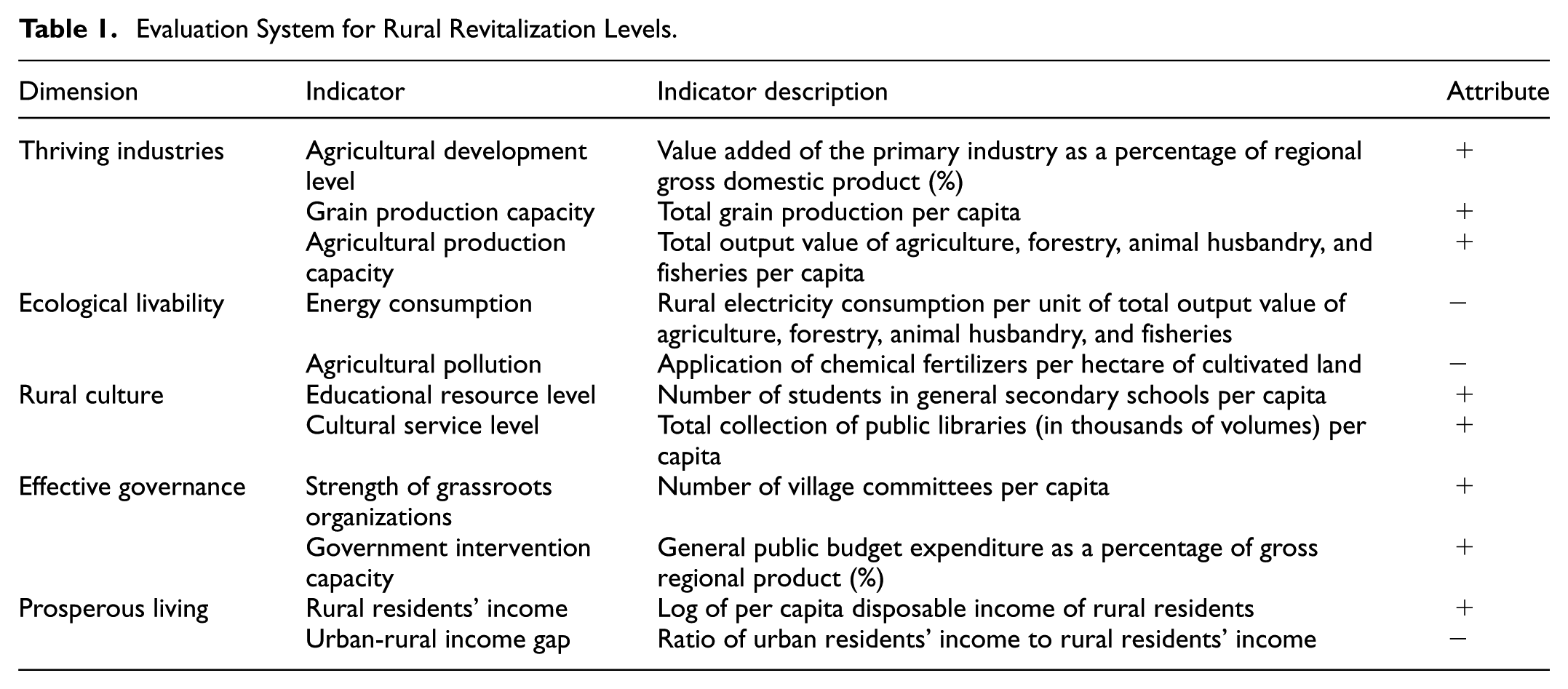
Prior to the calculations, the data were cleaned and organized, resulting in a balanced panel dataset covering 1,645 counties from 2008 to 2022. Given the large volume of data, a 1% winsorization process was applied to mitigate the impact of extreme values. To avoid subjective bias in the calculation of composite scores, this study adopts the entropy weight method to determine weights, following established research (Fan et al., 2023). The final rural revitalization level is obtained by aggregating these weighted scores.
Explanatory Variables
After the central government announced in 2013 that performance should no longer be judged solely by GDP, a transformation toward “beyond GDP” oriented CPES began to be implemented in more districts and counties. Due to missing data, the sample used in this study includes 376 counties that have abolished GDP assessments. The dependent variable in this study is defined as follows: if a county implemented the abolition of GDP assessments in year t, it is assigned a value of 1 for year
Mechanism Variables
The mechanism variables encompass two categories: government actions and collective behaviors. Government actions include agricultural financial expenditures (Finan_agri) and land transfers (Land_trans). Considering the availability of data, agricultural fiscal expenditures are measured by the logarithm of agricultural, forestry, and water-related expenditures in each county. Land transfers are assessed based on the area of rural land transferred in each county. Collective behavior encompasses rural employment and agricultural entrepreneurship. This study evaluates the status of rural human capital through two dimensions: rural population employment (Employ_rural) and employment in the agricultural sector (Employ_agri), using the logarithms of the number of rural workers and those engaged in agriculture, forestry, animal husbandry, and fishery. The vitality of agricultural entrepreneurship (Agri_entre) is measured by the logarithm of the number of newly registered enterprises in the agriculture, forestry, animal husbandry, and fishery sectors.
Control Variables
Drawing on existing research on rural revitalization (Xu et al., 2024; Q. Y. Zhao, Bao & Yao, 2024), this study controls for a range of county-level economic, policy, and geographic variables that may potentially impact rural revitalization. Economic variables include: (1) County-level economic development (Lngdp), measured by the logarithm of county GDP; (2) Financial pressure (Finan), assessed by the ratio of local fiscal budget revenue to local fiscal budget expenditure; (3) Population density (Pop), determined by the ratio of population to county area; (4) Urbanization level (Urban), measured by the proportion of urban population within the total population; and (5) Industrial structure (Indus), evaluated by the share of the value added of the tertiary sector in GDP. Policy variables include: (1) Targeted poverty alleviation policy (Poverty), which is based on the list of 832 impoverished counties published by the State Council Leading Group for Poverty Alleviation and Development in December 2014, and the dates of their exit from poverty, thereby constructing the policy variable; (2) National key ecological function zone policy (Eco), which refers to the 676 counties designated in two batches published in 2007 and 2016. Geographic variables include: (1) Topographic variability (Topog), measured by the ratio of the standard deviation of elevation to county area; and (2) Slope (Slope), assessed by the ratio of the average slope to county area. In handling geographic variables, this study follows the approach of Nunn and Qian (2014) by incorporating time trends. Specifically, topographic variability and slope are each multiplied by a time trend term and then included in the regression model to control for temporal trends and prevent their absorption by fixed effects.
Data Sources and Processing
To examine the long-term impact of eliminating GDP performance assessments on rural revitalization, this study has compiled an extensive dataset, resulting in a balanced panel comprising 1,645 counties from 2008 to 2022, covering 286 cities across China. Data on rural revitalization and economic variables primarily originate from sources such as the China County Statistical Yearbook, the Ministry of Agriculture and Rural Affairs County-Level Crop Database, provincial statistical yearbooks, county-level national economic and social development statistical bulletins, the CSMAR county-level economic database, and the EPS statistical platform. Explanatory variables and policy control variables were compiled by the research team from government official documents. Geographic variables were sourced from NASA ASTER. Within the mechanism variables, data on agricultural fiscal expenditures, rural employment, and employment in agriculture, forestry, animal husbandry, and fishery primarily come from the China County Statistical Yearbook and provincial statistical yearbooks. Missing data on agricultural fiscal expenditures were estimated by disaggregating the provincial expenditure amounts for agriculture, forestry, and water affairs according to the proportion of county-level fiscal expenditure relative to provincial fiscal expenditure. Data on land transfer area were compiled from the China Land Market Network. This study utilizes land transfer information from 2008 to 2022, identifying rural land transfer data that includes indicators such as “village” and “farm.” This information was aggregated at the county level to obtain the land transfer area data. Data on agricultural entrepreneurship were sourced from the “Tianyancha” database. This study uses enterprise registration information from 2008 to 2022, identifying newly registered enterprises in the agriculture, forestry, animal husbandry, and fishery sectors. This information was then aggregated at the county level to determine the number of newly registered agricultural enterprises. Descriptive statistics for the main variables are provided in Table 2.
Descriptive Statistics of Main Variables.

Sample counties for which more than half of the data were missing from the combination of the dependent variable and control variables were excluded. The remaining small amount of missing data was imputed using linear interpolation (LI) and autoregressive integrated moving average (ARIMA) methods (Supplemental Appendix C provides detailed information). These two methods are commonly employed in the literature and do not induce substantial bias when the volume of missing data is small. Analysis of the primary data shows that the mean interpolated data values have an average change of 2.7%. This indicates that the interpolation method does not introduce significant bias. Subsequently, we also conducted randomness checks on the missing samples. The analysis results indicate that the sample missingness is not systematic but random. The results are presented in Supplemental Appendix C. These findings demonstrate that our data processing has minimal impact on the analytical outcomes.
Empirical Analyses
Baseline Results
Table 3 reports the estimation results. Columns (1) through (3) present results with progressively added fixed effects and control variables. The results in Columns (1) and (2) indicate that the transformation of the CPES away from “GDPism” has a significant positive impact on rural revitalization. The results in column (3) demonstrate that following the control of relevant variables, the level of rural revitalization exhibits an average increase of 5.8% (=0.0159/0.274) in counties that have abolished the GDP assessment, in comparison to those that have not undergone the transformation. The economic effect of the program is close to the average growth level of China’s rural revitalization from 2016 to 2019 (6.2%). This result supports H1, indicating that the abolition of GDP performance assessments indeed contributes positively to the advancement of rural revitalization.
Baseline Regression Results.

Note.*** denotes significance levels of 1%. The values in parentheses represent clustered robust standard errors (county level).
Parallel Trends Test
Results of the Parallel Trends Test
For difference-in-differences (DID) results to precisely identify the policy effects, it is imperative that the parallel trends assumption is met (Bertrand et al., 2004). Given that this study utilizes a multi-period DID model, a dynamic DID method is employed to test the parallel trends assumption. To more thoroughly observe the variations in policy effects before and after the intervention, this study uses the year preceding the abolition of GDP performance assessments as the baseline and examines the dynamic effects over the subsequent seven periods. Figure 4a illustrates the dynamic effects of the abolition of GDP performance assessments on rural revitalization, accompanied by 95% confidence intervals. The results indicate that, prior to the abolition of GDP performance assessments, there were no significant differences in rural revitalization levels between the treatment and control counties. However, 1 year after the abolition, the rural revitalization levels in the treatment counties began to increase significantly and demonstrated a marked persistence. In summary, the results validate the parallel trends assumption, and the abolition of GDP performance assessments has a sustained effect on rural revitalization.

Parallel trend testing based on different methods: (a) Two-way fixed effects DID method and (b) Sun and Abraham’s DID method.
However, the use of a multi-period difference-in-differences (DID) approach with two-way fixed effects (TWFE) may lead to estimation biases due to the issue of heterogeneous treatment effects (Baker et al., 2022). The abolition of GDP performance assessments examined in this study also exhibits heterogeneous treatment effects. Some counties, after eliminating GDP assessments, subsequently adopted alternative evaluative focuses, leading to variations in the impact of the policy abolition. To address this, the study employs the “interaction-weighted” approach proposed by Sun and Abraham (2021) for testing the parallel trends assumption (Sun & Abraham, 2021), aiming to mitigate the effects of heterogeneous treatment effects. Figure 4b presents the dynamic effect estimates after mitigating heterogeneous treatment effects. The results indicate that there were no significant differences in rural revitalization levels between the treatment and control groups prior to the abolition of GDP performance assessments. However, following the policy change, the rural revitalization levels in the treatment group experienced a notable improvement. Accordingly, even when accounting for heterogeneous treatment effects, the parallel trends assumption in this study remains valid.
Sensitivity Analysis of Parallel Trends
Recent research suggests that pre-treatment parallel trends tests may be sensitive and low-powered. To address this, Rambachan and Roth (2023) proposed a parallel trends sensitivity analysis to assess the robustness of the parallel trends assumption (Rambachan & Roth, 2023). This study uses the average treatment effects from the second to the fourth periods following the abolition of GDP performance assessments as the basis. Two approaches are employed for the sensitivity analysis: bounding relative magnitudes and smoothness restrictions. The results are presented in Figure 5. The results indicate that under the bounding relative magnitudes approach, the maximum allowable deviation from the pre-treatment trends is 0.4 times, demonstrating that the results are relatively robust. Under the smoothness restrictions, the abolition of GDP performance assessments continues to promote rural revitalization even when the pre-treatment trends deviate by 42.1% (0.0008/0.0019) of a standard error. In summary, even with some deviation from the parallel trends assumption, the conclusion that the abolition of GDP performance assessments promotes rural revitalization remains valid.

Sensitivity analysis of parallel trends: (a) bounding relative magnitudes Mbar and (b) smoothness restrictions Mbar.
Placebo Test
To account for random factors and unobserved variables affecting rural revitalization, this study employs a “time-space” placebo approach. This involves generating 1,000 simulated policy shocks with virtual time and virtual locations for testing. The results are presented in Figure 6. The placebo test reveals that the simulated policy shocks follow a normal distribution, and the p-value on the right side of the baseline regression results is significantly less than .001. This indicates that the effect of abolishing GDP performance assessments on rural revitalization is not due to random chance.
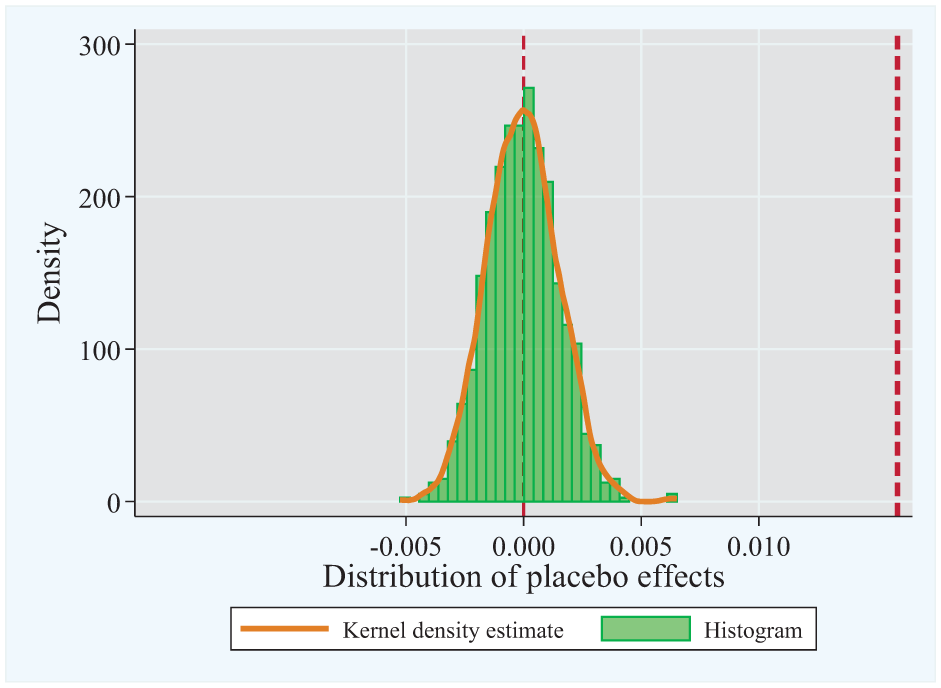
Placebo test.
Robustness Check
To ensure the robustness of the regression results, Table 4 presents a series of robustness checks. Column (1) reports the estimates obtained after recalculating rural revitalization levels using data without winsorization. Considering that city-level policies may also have potential impacts on rural revitalization, Column (2) further includes “city-year” fixed effects in the analysis. To mitigate potential interference from contemporaneous policies, this study identified and accounted for three policies that could potentially impact rural revitalization. These policies are: the National Comprehensive Pilot Program for New Urbanization (New_Urban), the Pilot Program for Rural Entrepreneurship by Migrant Workers and Others (Rural_Entre), and the E-Commerce into Rural Areas Comprehensive Demonstration County Policy (E-Commerce). These three policies promote various aspects of rural development: infrastructure construction, human capital aggregation, and industrial development, respectively, and thus have a certain impact on rural revitalization. Columns (3) to (5) present the estimation results after incorporating dummy variables for each of these policies (with a value of 1 for the years following the initiation of the pilot programs in the counties, and 0 otherwise). Column (6) incorporates both “city-year” fixed effects and the effects of the three policies. The results from Columns (1) through (6) indicate that, after accounting for these potential influences, the abolition of GDP performance assessments still significantly improves rural revitalization at the 1% level, demonstrating the robustness of the results.
Robustness Test.

Note.*** denotes significance levels of 1%. The values in parentheses represent clustered robust standard errors (county level).
While the difference-in-differences (DID) model helps mitigate issues related to omitted variables, the potential endogeneity remains a concern due to the possibility that the abolition of GDP performance assessments is not entirely random. To address this, the study employs a combination of propensity score matching (PSM) and DID methods (PSM-DID) to identify a more appropriate control group for the counties that abolished GDP performance assessments. Currently, when using propensity score matching (PSM), there are two strategies: cross-sectional matching and yearly matching. Each approach has its advantages and disadvantages, but both effectively address sample selection bias. This study uses Logit regression to perform matching via the nearest-neighbor matching method, followed by DID estimation. The results for cross-sectional matching and yearly matching are presented in Table 4, Columns (7) and (8), respectively. Furthermore, after accounting for additional confounding factors, the study faces the issue of having too many covariates. This can lead to problems with dimensionality and model mis-specification in traditional DID models. However, double machine learning, with its algorithmic advantages and semiparametric framework, effectively addresses these issues (Chernozhukov et al., 2018). To address this issue, the study follows the approach outlined by Chernozhukov et al. (2018) and constructs a double machine learning model to mitigate the aforementioned problems and further alleviate endogeneity. Since double machine learning allows for the inclusion of a greater number of control variables, this study further incorporates quadratic terms of economic control variables into the model to account for potential nonlinear effects and mitigate their interference. In terms of specific parameter settings, this study follows the recommendations of J. C. Yang et al. (2020) by employing a more robust gradient boosting algorithm and setting the optimal sample split ratio at 1:4. The estimation results are presented in Table 4, Column (9). Columns (7) through (9) indicate that, after addressing endogeneity issues, the abolition of GDP performance assessments still significantly promotes rural revitalization. Therefore, the baseline results can be considered robust. For more details on the above methods, please refer to Supplemental Appendix D.
Target Shifts and Mechanisms
Effects of Shifting From Strong Incentive Targets
In the principal-agent framework, performance target management is a crucial mechanism by which higher-level governments drive lower-level governments to focus on key objectives (H. Li & Zhou, 2005). After the government abolishes GDP performance assessments, it signals a shift away from the previously stringent incentive targets, redirecting governmental focus toward other objectives. Consequently, the newly established targets will influence rural revitalization to varying degrees. An analysis of official documents related to the abolition of GDP performance assessments reveals that, generally, it is the provincial governments that decide which counties will no longer be evaluated based on GDP. Concurrently, provincial governments allocate new priority targets to these counties, which fall into one of four categories: prioritization of poverty alleviation, agricultural industry development, ecological protection, and a balanced focus on multiple aspects of public welfare.
This study introduces dummy variables for the four new incentive targets and incorporates their interactions with the policy treatment variable into the baseline regression to examine the effects of different incentive targets. The estimation results are presented in Figure 7. Based on this, it can be inferred that all four types of objectives significantly contribute to rural revitalization, with the effects decreasing in magnitude in the following order: poverty alleviation as a priority, multiple livelihood goals, agricultural industry, and ecological prioritization. Thus, H2 is supported.

Diverse impacts of target transformation on rural revitalization.
Regarding the priority of poverty alleviation objectives, it is a crucial policy for the development of agriculture and rural areas in China and represents an initial deployment within the rural revitalization strategy. This objective is closely integrated with rural revitalization goals in aspects such as industry, employment, income, and governance. Consequently, its impact is the most pronounced, aligning with theoretical expectations. For the multiple livelihood objectives, although they do not directly target rural development, they mitigate the urban bias inherent in policies. Moreover, livelihood-oriented multiple goals (such as income increase, employment, and poverty alleviation) are closely related to rural revitalization. Consequently, their impact is comparable to the average treatment effect (with benchmark regression results of .0159 and interaction term results of 0.0156). For the priority given to agricultural industry objectives, although it directly targets rural development, the inherent disadvantages of the agricultural sector result in its effects being somewhat lower than the average expectations. For the ecological prioritization objectives, since they focus exclusively on the ecological aspects of rural revitalization, their impact is the weakest. The aforementioned process reveals the varied impacts of adjustments in CPES performance objectives on rural revitalization, providing insights into how modifications in government performance targets can influence rural development.
Analysis of Mechanisms
After the removal of GDP assessments at the county level, government behavior will be directly affected. Specifically, with a greater emphasis on rural development, this change will prompt the government to address and mitigate the urban bias in its policies. Furthermore, policies that favor rural development will likely lead to subsequent changes in collective behavior. Therefore, the removal of GDP assessments will influence rural revitalization through two pathways: by altering government behavior and by modifying collective behavior. Drawing on the mechanism testing approaches outlined in related research (Y. Chen et al., 2020), the regression results of this study are presented in Table 5.
Results of Mechanism Analysis.

Note.*** and * denote significance levels of 1% and 10%, respectively. The brackets indicate standard error.
In terms of government behavior, existing research indicates that abundant fiscal resources and land assets are beneficial for promoting rural revitalization (Boyne, 1996; Fei et al., 2021; Ren et al., 2024; Y. Zhou et al., 2020), both of which are directly regulated by the government. The results in Columns (1) and (2) indicate that, following the removal of GDP assessments, both agricultural fiscal expenditure and the area of land transferred have increased significantly. The cancellation of GDP assessment for counties leads to an average 6.8% increase in agricultural fiscal expenditure and an average addition of 12 hectares in the area of rural land transfer. On one hand, after the removal of GDP assessments, the government no longer needs to prioritize economic growth concerns, allowing it to confidently allocate more funds to rural areas. This increase in agricultural fiscal expenditure provides ample financial resources for rural revitalization. For instance, many counties that have abolished GDP assessment explicitly state that they will allocate more fiscal funds to poverty alleviation and rural revitalization. On the other hand, to foster rural industry and enhance agricultural productivity, government departments are likely to relax land regulations, allowing for a greater amount of rural land to be transferred. It can contribute to rural revitalization in two aspects. First, land transfer helps to consolidate idle rural land for large-scale agricultural production. It is conducive to facilitating the modernization transition of rural industries. Secondly, after land transfer, it is conducive to facilitating the non-agricultural employment of idle rural labor. This not only enhances agricultural production efficiency but also promotes the income growth of rural residents through non-agricultural employment channels. In summary, the removal of GDP assessments can facilitate rural revitalization by increasing fiscal resources and expanding land transfer areas, thereby validating H3.
In terms of collective behavior, existing research has confirmed that rural human capital and agricultural entrepreneurship are crucial drivers of rural revitalization (Qi et al., 2022; Qin et al., 2020; Shen & Wang, 2024). The results in Columns (3) and (4) indicate that, following the removal of GDP assessments, there is a significant increase not only in the number of employed individuals in rural areas but also in employment within the agricultural sector. Specifically, the two increased by 1.99% and 1.45%, respectively. This suggests that the removal of GDP assessments contributes to the enhancement of human capital in rural areas, thereby providing crucial talent support for rural revitalization. Although the effect was relatively weak, it alleviated the problem of human resource loss in rural areas (Y. S. Liu & Li, 2017). Furthermore, the results in column (5) show that after eliminating GDP assessments, agricultural entrepreneurial vitality significantly improves, with an average rise of 23.5%. This indicates that with increased human resources and a shift in government resources, a favorable environment for agricultural entrepreneurship is being established, thereby stimulating entrepreneurial potential and fostering sustained rural revitalization. In summary, the removal of GDP assessments can also promote rural revitalization by increasing rural human capital and enhancing agricultural entrepreneurial vitality, thereby validating H4.
Heterogeneity Analysis
Impact of Official Characteristics
We construct the following triple difference model to analyze the impact of heterogeneity:

Where
In China, the county party secretary is the top leader in the county. Their characteristics will affect the effectiveness of the policy. We construct dummy variables based on four aspects: whether the age is below the average (48 years old), whether the individual holds a master’s degree or above, whether the individual is female, and whether the individual serves in their hometown. Record as 1 if yes, and 0 if no. The results in Figure 8 indicate that the age, educational level, and location of officials significantly affect the effectiveness of abolishing GDP assessment, while gender has no significant effect.

Heterogeneity analysis results.
First, abolishing GDP assessments has a stronger effect on rural revitalization in counties with younger officials. This is because the CPES mainly takes effect through incentive mechanisms. Younger officials tend to have a higher probability of promotion (Y. Z. Chen & Ye, 2025b). As a result, these counties will respond more actively to the new CPES, thereby better promoting rural revitalization. This finding also indirectly demonstrates that the new CPES has indeed achieved “incentive target transition–attention reallocation.”
Second, in counties where officials hold a master’s degree or above, the outcomes of rural revitalization are better. This may be because these officials possess greater knowledge reserves, enabling them to better comprehend the new CPES and its policy orientation (oriented toward coordinated development).
Third, although the estimated coefficient for female officials is positive, the effect is very weak (not significant).
Fourth, in counties where officials serve in their hometowns, the impact of abolishing GDP assessment is more pronounced. This can be explained by officials’ hometown favoritism, meaning that officials tend to make decisions conducive to the long-term development of their hometowns (Do et al., 2017). Therefore, officials serving in their hometowns are more likely to make decisions beneficial to rural revitalization in the context of abolishing GDP assessment. This finding highlights the role of officials’ local connections in CPES.
Impact of Industrial Bases
China has numerous cities reliant on traditional industries, which are known as old industrial bases. The results in Figure 8 indicate that in old industrial base cities, the abolition of GDP assessment has a stronger effect on promoting rural revitalization. This may be because the transformation and upgrading of traditional industries will cause a short-term slowdown in economic growth. Under the GDP-centered CPES, goal conflicts result in insufficient motivation for local governments to promote the transformation of traditional industries. The elimination of GDP assessment reduces goal conflicts. This subsequently diminishes the drain on rural development caused by traditional industries, thus contributing to the better promotion of rural revitalization.
Impact of Social Trust
Social trust is an important component of social capital. It represents individuals’ expectations of the reliability of others, organizations, or institutions, and serves as the psychological foundation for social cooperation. The results from Figure 8 indicate that in areas with high levels of social trust, the abolition of GDP assessment has a stronger effect on promoting rural revitalization. This is because the process of promoting rural revitalization by abolishing GDP assessments relies on trust mechanisms, such as entrepreneurship and employment. A high level of social trust can reduce the transaction costs associated with rural employment and entrepreneurial activities. Meanwhile, it can also encourage financial capital to flow to rural areas and diminish policy resistance. Therefore, regions with higher levels of social trust can more effectively translate the incremental resources generated by abolishing GDP assessment into tangible improvements in rural revitalization.
Conclusion and Discussion
Conclusion
This study, based on county-level panel data and a quasi-experimental paradigm, provides robust empirical evidence and offers new contributions to the existing literature. First, this paper develops a framework of “incentive target transition–attention reallocation,” elucidating the theoretical logic behind the increased governmental investment in rural revitalization following the removal of GDP assessments. Second, empirical analysis reveals a causal relationship between the transformation of the CPES and rural revitalization. The Chinese government’s initiative to eliminate GDP assessments for cadres in certain counties has triggered a process of “incentive target transition–attention reallocation,” leading to an enhanced focus on rural development by the government. Consequently, the level of rural revitalization in the experimental areas has significantly surpassed that in non-experimental regions. This result remains robust even after undergoing rigorous examination. Furthermore, an examination of the impact of strong incentive targets reveals that the four categories—poverty alleviation priority, multi-faceted livelihood goals, agricultural priority, and ecological priority—each contribute to rural revitalization, with their effects diminishing in that order. Third, the mechanism analysis indicates that the transformation of the cadre performance evaluation system leads to changes in both government and collective behavior that are conducive to rural revitalization. Specifically, the removal of GDP assessments promotes rural revitalization by increasing fiscal expenditure and land transfer areas, as well as by enhancing rural human resources and agricultural entrepreneurial vitality. Fourthly, the heterogeneity analysis reveals that county-level chief officials who are younger, possess higher educational attainment, or serve in their hometowns tend to significantly enhance the practical impact of abolishing GDP assessments. This effect will also be even stronger in regions with industrial bases and higher levels of social trust.
Discussion
The aforementioned conclusions offer several theoretical contributions to the fields of cadre performance evaluation systems and rural revitalization. They provide practical insights for enhancing cadre incentives and advancing rural revitalization efforts.
First, this study enriches and expands the theoretical research on CPES. Existing literature primarily focuses on the impact of cadre performance evaluation system transformations on poverty reduction (He et al., 2023). Building upon this foundation, this study extends the analysis to the field of rural revitalization, thereby broadening the scope of existing research. Given the complexity of the cadre performance evaluation system (CPES), this study introduces “Attention Theory” and develops a framework of “incentive target transition–attention reallocation” to clearly illustrate the dynamic changes in government focus before and after the removal of GDP assessments. In particular, from the perspective of official’s behavior, this study provides a clear elucidation of the emergence and mitigation of urban development bias, thereby offering a valuable extension to the literature on explaining urban development bias (D. T. Yang, 1999; Yao et al., 2004). The framework, by incorporating the unified metric of attention, not only simplifies the analysis but also partially harmonizes the “Relational Theory” (Opper & Brehm, 2007) and “Performance Theory” (H. Li & Zhou, 2005). Regardless of whether officials adhere to the “relationship-based approach” or the “performance-based approach,” they are required to reallocate their attention toward new tasks following the abolition of GDP assessments. Although the extent of this reallocation may vary, it is inevitable that a greater proportion of attention will be directed toward rural development. The empirical results of this study are consistent with this framework. Consequently, the framework extends the model of official incentives and goals, offering a more generalizable model for analyzing the relationship between goal shifts and bureaucratic behavior. This advancement provides a valuable reference for future research endeavors.
Second, from the distinctive perspective of the performance evaluation system for officials, this study elucidates the “organizational motivations” behind rural revitalization in China. Existing theories emphasize that the crux of rural revitalization lies in redirecting policymakers’ attention and efforts toward policies that balance urban and rural development (Y. S. Liu & Li, 2017). However, addressing the incentive mechanism conflict between urban development and rural revitalization has long been a challenging issue in organizational design. This study is the first to confirm that adjusting the performance evaluation system for officials according to the “beyond GDP” concept effectively redirects officials’ attention toward rural revitalization issues, thereby sustaining the momentum for rural revitalization efforts. This not only extends the socio-economic impact of the “Beyond GDP Initiative” (Fleurbaey, 2009; Jones & Klenow, 2016), but also provides evidence from China supporting its applicability in the public sector. Moreover, recent research on rural revitalization, which employs new exogenous and endogenous development theories, has increasingly acknowledged the proactive role of “active party groups” (Eversole & Campbell, 2023; Xin & Gallent, 2024). In particular, new exogenous development theories highlight that the rural revitalization efforts in China since 2013 significantly differ from previous rural development initiatives in that officials have exhibited an extraordinary level of enthusiasm in advancing rural development (Xin & Gallent, 2024). However, these studies have not addressed the institutional reasons driving officials’ behavior, particularly the underlying organizational incentives. This study confirms that the “Beyond GDP” reforms implemented in the official performance evaluation system since 2013 have reshaped the incentive mechanisms within government organizations, resulting in a significant increase in officials’ attention to rural revitalization. This explains the source of officials’ heightened enthusiasm for promoting rural revitalization since 2013. Thus, the findings of this study undoubtedly provide reliable institutional evidence to complement research on China's rural revitalization from the perspective of an “The Promising Government.”
Third, it offers new insights for research in the field of public organizational performance management. Currently, research on the relationship between goal-setting and performance in organizational fields has made significant progress. However, in the realm of public organizations, this research is still in its early stages. In particular, the impact of performance goal shifts on organizational performance and public value creation remains an area ripe for further exploration (Ma, 2016). This study finds that through the shifting of performance goals, government systems can induce behavioral changes within organizations and related groups, thereby achieving policy objectives and creating public value. From the perspective of governing officials, this elucidates the causal chain of “performance goals → government behavior → group behavior → public value.” This implies that public sectors can achieve the creation of public value through performance goal management. Additionally, this study identifies the heterogeneous effects of newly established incentive goals following the abolition of GDP assessments, thereby supplementing existing research (He et al., 2023). The key to achieving the established goals through the abolition of GDP assessments lies in the setting of new incentive objectives. When these new incentive targets have a high correlation with expected performance, they can produce sufficiently effective results. This suggests that the government should periodically adjust the performance evaluation system for officials in alignment with strategic goals to avoid phenomena such as data manipulation (Wallace, 2016) and behavioral distortion (J. Li, 2015), which can lead to “performance failures.”
Policy Implications
In addition to its theoretical contributions, these conclusions also offer substantial practical guidance for global rural revitalization efforts.
Firstly, during the global phase of rural revitalization, the transformation of the CPES based on the “Beyond GDP” concept could be further promoted. Regardless of national systems and stages of development, rural revitalization faces the challenge of “imbalances in government attention and resources between urban and rural areas.” The causal mechanisms revealed by our research provide effective solutions for the whole world. In many nations with well-established government systems, it is possible to reduce or even eliminate the weight of GDP indicators in the CPES. This adjustment would enable officials to better focus their attention on rural areas, providing a basic institution for achieving a win-win situation of integrated urban-rural development.
Second, create differentiated incentives that cater to the priority needs of rural development. Local governments can set “strong incentive targets” based on the most pressing issues in rural areas to improve policy accuracy. For example, for poor regions such as Africa, “reducing poverty rates” can be set as a key performance indicator to drive resources toward poverty alleviation. For traditional agricultural areas like Southeast Asia, priority can be given to assessment indicators of agricultural industrialization (e.g., value-added improvement and brand building) to spur agricultural industrial transformation.
Third, activate production factors and promote the return of finance, land, and talent to rural areas. Local authorities can link rural development performance to fiscal allocations. The government can implement flexible land policy reforms, allowing rural land to be traded in accordance with regulations, thereby promoting the development of the agricultural industry. Local authorities should prioritize performance evaluation metrics for rural talent development programs and rural entrepreneurship incubation platform construction to mitigate the challenge of rural talent drainage.
Fourth, focus on the compatibility between officials’ abilities, regional endowments, and CPES. To promote rural revitalization, young, well-educated local officials can be given priority in official selection. In industrial countries and regions, priority should be given to reducing the weight of GDP assessment for officials to alleviate the crowding-out of rural development resources by industrialization. In countries and regions with high levels of social trust, the weight of GDP assessment can also be reduced to stimulate the involvement of social capital in rural development.
Limitations
Despite our best efforts, there are still some limitations. First, given the availability of data, the accuracy of rural revitalization level measurements can be improved. Future research can utilize geographic remote sensing data and big data from online platforms to address this limitation.
Second, the mechanism can continue to be expanded and deepened. We mainly considered mechanisms from the perspective of the market and the government. However, many mechanisms are still overlooked, such as social capital and local governance system reforms. Future research can continue to explore whether the abolition of GDP assessment has led to changes in local social capital and governance systems, thereby affecting rural revitalization. Due to space limitations, we have not discussed in detail the relationship between incentive target types and mechanisms. Subsequent research can focus on discussing these issues.
Third, the precision of the research data can be further improved. Although this study used county-level data to increase the level of detail, the scale of county-level data is still too large for a single village. Future research can use village-level data (such as rural fixed observation point data) to study more detailed information on rural change. This helps deepen our understanding of the relationship between the abolition of GDP assessment and rural revitalization. Of course, these issues can also be further refined through case studies.
Fourth, the research conclusions still need to be tested more extensively. Future research can use data from other developing countries for verification.
Supplemental Material
sj-pdf-1-sgo-10.1177_21582440251413810 – Supplemental material for Beyond GDPism: The Impact of China’s Cadre Performance Evaluation System Shift on Rural Revitalization
Supplemental material, sj-pdf-1-sgo-10.1177_21582440251413810 for Beyond GDPism: The Impact of China’s Cadre Performance Evaluation System Shift on Rural Revitalization by Yongzhou Chen, Qiuzhi Ye and Linjie Fan in SAGE Open
Footnotes
Acknowledgements
We thank the editor and four anonymous reviewers for their valuable suggestions. We also express our gratitude to the organizations and individuals that provided data support and funding for this study.

Author Contributions
Conceptualization, Data curation and Writing – original draft: YC. Funding acquisition and Writing – review & editing: QY and LF. Methodology and Validation: YC, QY, and LF. All authors were committed to improving this paper and are responsible for the viewpoints mentioned in this work.
Funding
The authors disclosed receipt of the following financial support for the research, authorship, and/or publication of this article: This research is supported by Innovation Project of Guangxi Graduate Education (No.YCBZ2024030).
Declaration of Conflicting Interests
The authors declared no potential conflicts of interest with respect to the research, authorship, and/or publication of this article.
Data Availability Statement
Data are available upon request from the corresponding author.
Supplemental Material
Supplemental material for this article is available online.
References
Supplementary Material
Please find the following supplemental material available below.
For Open Access articles published under a Creative Commons License, all supplemental material carries the same license as the article it is associated with.
For non-Open Access articles published, all supplemental material carries a non-exclusive license, and permission requests for re-use of supplemental material or any part of supplemental material shall be sent directly to the copyright owner as specified in the copyright notice associated with the article.
