




Abstract
This study examines the influence of live streaming commerce characteristics on consumers’ continuous usage intention by developing an integrated theoretical framework that synthesizes the Post-Acceptance Model (PAM) and the Stimulus-Organism-Response (SOR) model. Specifically, the research examines how vividness, social presence, and para-social interaction influence expectation confirmation, perceived usefulness, customer satisfaction, and ultimately continuous intention in live streaming commerce contexts. Data were collected from 450 participants through an online survey and analyzed through confirmatory factor analysis and structural equation modeling using EQS 6.4. The results reveal that live streaming characteristics significantly influence expectation confirmation, with para-social interaction showing the strongest effect, followed by vividness and social presence. Furthermore, expectation confirmation demonstrated strong positive effects on both perceived usefulness, customer satisfaction and continuous intention, while customer satisfaction emerged as the strongest predictor of continuous intention. These findings contribute to the theoretical understanding of consumer behavior in live streaming commerce and provide practical implications for platform designers, marketers, and content creators in developing effective live streaming strategies. The study advances our knowledge of how social and technical elements influence consumer behavior in digital retail environments and offers insights for enhancing user engagement in live streaming commerce platforms.
Keywords
Introduction
Live streaming has emerged as a transformative force in the digital commerce landscape, revolutionizing how consumers interact with products and sellers in real-time. This technological advancement facilitates immediate, interactive video transmission over the Internet, creating an immersive shopping environment that closely emulates traditional offline experiences. Between 2017 and 2020, the live-streaming e-commerce market exhibited remarkable growth, expanding from $3 billion to approximately $171 billion in annual revenues, and this trajectory has continued with unprecedented momentum, reaching an estimated global market size of $1.35 trillion in 2024 and projected to exceed $3.5 trillion by 2033, with a compound annual growth rate (CAGR) of 11.28% (Business Research Insights, 2024; Luo et al., 2024; Song et al., 2022; Tong, 2017; Y. Wang, Lu, Cao, et al., 2022). This exponential growth trajectory is further substantiated by Xiong et al. (2024), who documented how the integration of artificial intelligence algorithms with live streaming platforms has enhanced consumer engagement metrics by an average of 37% between 2022 and 2024. The market’s continued expansion is being driven by widespread adoption of e-commerce platforms, increasing mobile and internet connectivity, and the integration with popular social media platforms that boost the visibility and effectiveness of live commerce events.
The distinctive characteristics of live streaming—namely, vividness, social presence, and para-social interaction—create a unique digital environment that warrants scholarly investigation. Vividness manifests through multi-sensory product demonstrations and real-time visual feedback, while social presence emerges from the authentic human connections formed between streamers and viewers. Para-social interaction, a phenomenon where viewers develop pseudo-relationships with content creators, further enriches the live streaming experience, fostering trust and engagement (Lim et al., 2020). Recent empirical investigations by Zhao et al. (2023) have demonstrated that these parasocial relationships significantly mediate the relationship between platform characteristics and purchase behavior, with trust serving as a critical intervening variable.
To comprehensively understand the impact of these characteristics on consumer behavior, this study integrates two theoretical frameworks: the Post-Acceptance Model (PAM) and the Stimulus-Organism-Response (SOR) Model. The PAM, developed by Bhattacherjee (2001), extends the Expectation-Confirmation Theory to explain continuance intention in information systems contexts. Unlike adoption models that focus on initial acceptance, PAM addresses post-adoption behavior by examining how expectation confirmation influences perceived usefulness and satisfaction, which in turn determine users’ intention to continue using a system (Alshammari & Alshammari, 2024; S. J. Lee & Lee, 2025; T. Wu et al., 2024). As Nosike et al. (2024) further elucidate, post-adoption behaviors have emerged as critical determinants of platform sustainability in post-pandemic digital ecosystems, where consumer loyalty has become increasingly fragmented across multiple competing technological interfaces. This theoretical lens is particularly relevant for live streaming commerce, as it helps explain why consumers repeatedly engage with these platforms after initial exposure.
Complementing PAM, the SOR Model provides a psychological framework for understanding how environmental stimuli influence consumer behavior. Originally proposed in environmental psychology, the SOR Model posits that external stimuli (S) trigger internal organism states (O), which subsequently lead to behavioral responses (R) (Jeong et al., 2022; Mehrabian & Russell, 1974). Ko and Ho (2024) have recently explicated how this framework effectively captures the multifaceted nature of consumer cognition in interactive digital environments, where environmental cues can simultaneously activate multiple cognitive and affective pathways. In the context of live streaming commerce, the distinctive characteristics of the medium (vividness, social presence, and para-social interaction) serve as stimuli that affect consumers’ cognitive and emotional states, ultimately influencing their behavioral intentions. By integrating these two theoretical frameworks, we can analyze both the technological and psychological dimensions of consumer behavior in live streaming commerce environments.
The COVID-19 pandemic has accelerated the adoption of live streaming, particularly in the fresh product market, where visual verification of quality is paramount. This shift in consumer behavior, coupled with technological advancements, has created new opportunities and challenges for e-commerce platforms and sellers (Song et al., 2022; X. Wang, Aisihaer, & Aihemaiti, 2022). McKinsey's comprehensive analysis of post-pandemic consumer behavior demonstrates that digital transformation has persistently reshaped consumer expectations regarding product evaluation processes, with research indicating a 32% increase in social media usage for product research compared to 2023, reflecting consumers' evolving preference for dynamic, multimedia-rich content over traditional static product imagery (McKinsey & Company, 2025). However, despite the growing prevalence of live streaming in daily commerce, empirical research examining the interplay between its unique characteristics and consumer behavior remains limited (Wang et al., 2022; Yang et al., 2023).
This study addresses this research gap by investigating how the triad of vividness, social presence, and para-social interaction influences consumer perceptions and behavior through the lens of PAM and SOR frameworks. Specifically, we examine how these characteristics affect expectation confirmation, perceived usefulness, customer satisfaction, and ultimately continuous intention in live streaming commerce contexts. As Hsiao et al. (2025) compellingly argue, understanding these complex relationships is essential for developing theoretically-informed design principles for emergent digital commerce environments. Understanding these relationships is crucial for developing effective marketing strategies and improving user experiences in the evolving landscape of live-streaming commerce.
Literature Review
Live Streaming Commerce and Environment
Live streaming commerce has emerged as a transformative force in the digital retail landscape, representing a significant shift in e-commerce platforms through its distinctive combination of entertainment value and interactivity. This innovative business model integrates real-time video streaming with traditional e-commerce infrastructure, creating a dynamic interface between consumers and products (Y. Wang, Lu, Cao, et al., 2022). The paradigm enables direct product promotion and brand communication through live broadcast functionality, fundamentally altering the conventional e-commerce experience.
The phenomenon of live commerce has experienced unprecedented growth, particularly accelerated by the global COVID-19 pandemic. Research indicates that the transformation of consumer behavior during this period has led to a substantial increase in the adoption of live streaming platforms for retail purposes (McKinsey & Company, 2025). The migration of traditional retail activities to digital spaces has created new opportunities for consumer engagement and sales optimization. Live streaming commerce differentiates itself through its capacity to deliver immediate, interactive product information through the lens of influencer interpretation. These digital opinion leaders serve as crucial intermediaries in the consumer decision-making process, providing real-time product demonstrations and responding to viewer inquiries (Ma et al., 2024). The effectiveness of this approach stems from its ability to create authentic connections between products and potential buyers, facilitated by trusted online personalities.
Recent studies have demonstrated that the interpersonal nature of live streaming commerce significantly influences consumer behavior. Gao et al. (2023) found that the interactive elements of live commerce platforms generate higher engagement rates compared to traditional e-commerce interfaces. This alignment with social proof principles enables brands to establish stronger connections with their target audience while maintaining competitive advantages in the digital marketplace. The technological infrastructure supporting live streaming commerce has evolved to accommodate diverse applications across multiple sectors. Major e-commerce platforms have integrated sophisticated streaming capabilities, enabling seamless transactions within their existing frameworks (Feng & Tang, 2024). This technological convergence has facilitated the expansion of live commerce beyond traditional retail categories into services, educational content, and entertainment.
Environmental considerations have become increasingly relevant in the context of live streaming commerce. Research by Rao et al. (2021) suggests that the shift toward digital retail channels may contribute to reduced carbon emissions associated with traditional brick-and-mortar retail operations. However, the environmental impact of increased data center usage and digital infrastructure requirements necessitates further investigation to fully understand the ecological implications of this retail evolution.
The correlation between live streaming characteristics and consumer behavior manifests in several key areas: perceived benefits, satisfaction levels, and purchase intention. Studies indicate that the real-time nature of live commerce creates a sense of urgency and authenticity that traditional e-commerce platforms struggle to replicate (Choi et al., 2024; Zhang, 2023). The vividness of live streaming content, characterized by its rich sensory dimensions and dynamic presentation, significantly enhances the consumer’s product understanding and emotional engagement (Erensoy et al., 2024; Gu et al., 2023; B. Li & Wang, 2022). Research by Gu et al. (2023) and Tian and Frank (2024) demonstrates that high-quality, vivid product demonstrations in live streams create more immersive experiences that reduce perceived purchase risks and strengthen consumer confidence.
Social presence, another distinctive characteristic of live streaming commerce, refers to the degree to which consumers perceive real human connections within the digital environment (L. R. Chen et al., 2023; Fara & Hartono, 2024). L. R. Chen et al. (2023) found that the heightened social presence in live commerce platforms, manifested through real-time interactions and immediate feedback, creates a more engaging shopping experience compared to traditional online retail channels. This enhanced social presence facilitates trust-building and creates a more authentic shopping environment that closely mimics in-person retail experiences.
Parasocial interaction, a psychological relationship where viewers develop one-sided emotional bonds with streamers, plays a crucial role in live commerce effectiveness. Studies have shown that these perceived intimate connections between viewers and streamers significantly influence purchase decisions and brand loyalty (H. Lee et al., 2024). The development of parasocial relationships through regular viewing and interaction leads to increased trust in product recommendations and higher conversion rates. This phenomenon is particularly evident when streamers maintain consistent personal branding and demonstrate authentic engagement with their audience (Fara & Hartono, 2024).
The combination of vividness, social presence, and parasocial interaction creates a powerful synergy that distinguishes live streaming commerce from other retail formats (Lim et al., 2020). These characteristics collectively contribute to a more engaging and persuasive shopping environment, where consumers feel more connected to both the products and the personalities presenting them. This immediacy, combined with interactive features and social elements, has been shown to positively influence consumer decision-making processes and overall satisfaction with the shopping experience.
Live streaming commerce represents a paradigmatic shift in the digital retail ecosystem, constituting a transformative integration of real-time video broadcasting with conventional e-commerce infrastructure. This innovative business model facilitates synchronous product promotion and brand communication through interactive broadcasting functionality, fundamentally reconfiguring traditional online shopping experiences through its distinctive amalgamation of entertainment value and interactivity (Y. Wang, Lu, Cao, et al., 2022). The theoretical foundation for understanding this phenomenon necessitates consideration of both its technological affordances and its social-psychological implications for consumer behavior.
The exponential growth trajectory of live streaming commerce has been significantly accelerated by the global COVID-19 pandemic, which catalyzed profound transformations in consumer behavior patterns (McKinsey & Company, 2025). Empirical evidence indicates that the enforced migration of traditional retail activities to digital platforms during this period created unprecedented opportunities for enhanced consumer engagement and sales optimization. Ma et al. (2024) have demonstrated that live streaming commerce distinguishes itself through its capacity to deliver immediate, interactive product information through the interpretive lens of influencer mediation. These digital opinion leaders function as critical intermediaries in consumer decision-making processes, providing real-time product demonstrations and responding to viewer inquiries with immediacy that traditional e-commerce platforms cannot replicate.
Contemporary scholarship has established that the interpersonal dimensions of live streaming commerce significantly influence consumer behavioral patterns. Gao et al. (2023) empirically verified that the interactive elements embedded within live commerce platforms generate substantially higher engagement metrics compared to conventional e-commerce interfaces. This alignment with established social proof principles enables brands to cultivate more robust connections with targeted consumer segments while maintaining competitive advantages within increasingly saturated digital marketplaces. The technological infrastructure supporting live streaming commerce has evolved toward sophisticated integration across multiple platforms, enabling seamless transactional experiences within existing e-commerce frameworks (Feng & Tang, 2024).
Environmental sustainability considerations have emerged as increasingly salient within the live streaming commerce discourse. Rao et al. (2021) posit that the transition toward digital retail channels potentially contributes to reduced carbon emissions associated with traditional brick-and-mortar retail operations. However, the ecological implications of increased data center utilization and digital infrastructure requirements necessitate further empirical investigation to comprehensively assess the environmental impact of this retail evolution. Additionally, as noted by Zhang (2023), live streaming platforms have begun implementing sustainability-focused features and metrics to address growing consumer environmental consciousness.
The correlation between live streaming characteristics and consumer behavior manifests across multiple dimensions: perceived benefits, satisfaction metrics, and purchase intention. Choi et al. (2024) and Zhang (2023) demonstrate that the temporal immediacy of live commerce creates a heightened sense of urgency and authenticity that traditional e-commerce platforms struggle to replicate. This finding is consistent with Erensoy et al. (2024), who identified that the synchronous nature of live streaming significantly reduces perceived psychological distance between consumers and products, thereby enhancing purchase likelihood.
The vividness of live streaming content, characterized by its multisensory dimensionality and dynamic presentation modalities, significantly enhances consumer product comprehension and emotional engagement (Erensoy et al., 2024; Gu et al., 2023; B. Li & Wang, 2022). Research by Gu et al. (2023) and Tian and Frank (2024) empirically validates that high-fidelity, vivid product demonstrations in live streams create more immersive experiences that attenuate perceived purchase risks and strengthen consumer decision confidence. These findings align with established theoretical frameworks regarding information richness and media synchronicity, suggesting that live streaming’s multimodal nature addresses fundamental limitations in traditional e-commerce information presentation.
Social presence, another distinctive characteristic of live streaming commerce, refers to the phenomenological perception of authentic human connection within digital environments (L. R. Chen et al., 2023; Fara & Hartono, 2024). L. R. Chen et al. (2023) empirically demonstrated that the amplified social presence in live commerce platforms, manifested through real-time interactions and immediate feedback mechanisms, engenders significantly more engaging shopping experiences compared to traditional online retail channels. This enhanced social presence facilitates trust formation and creates a more authentic shopping environment that approximates in-person retail experiences, addressing a key limitation of conventional e-commerce platforms.
Parasocial interaction, conceptualized as a psychological relationship wherein viewers develop unilateral emotional bonds with streamers, constitutes a critical factor in live commerce effectiveness. H. Lee et al. (2024) established that these perceived intimate connections between viewers and streamers significantly influence purchase decisions and brand loyalty across multiple product categories. The cultivation of parasocial relationships through consistent viewing patterns and interaction leads to increased trust in product recommendations and higher conversion rates. This phenomenon is particularly salient when streamers maintain coherent personal branding and demonstrate authentic engagement with their audience (Fara & Hartono, 2024).
The synergistic integration of vividness, social presence, and parasocial interaction creates a distinctive experiential environment that differentiates live streaming commerce from alternative retail formats (Lim et al., 2020). These characteristics collectively contribute to a more engaging and persuasive shopping environment, where consumers experience enhanced connections to both products and presenters. This immediacy, coupled with interactive functionalities and social elements, has been empirically shown to positively influence consumer decision-making processes and overall satisfaction with the shopping experience, as further corroborated by Xiong et al. (2024) in their examination of IT affordances in live streaming contexts.
Consumer Information Processing Model
The stimulus-organism-response (SOR) model, originating from environmental psychology, provides a theoretical framework for understanding how environmental stimuli influence cognitive processes and subsequent behavioral responses (Ajzen, 1991; Fazio, 1990; Holbrock & Batra, 1987; Jeong et al., 2022; X. Li et al., 2021). This conceptual framework posits that external environmental stimuli (S) trigger corresponding internal psychological states (O), which subsequently manifest as behavioral responses (R) such as acceptance, rejection, adoption, or avoidance (Yang et al., 2021). The SOR paradigm’s particular relevance to live streaming commerce derives from its capacity to explicate the complex interrelationships between platform characteristics, consumer psychological states, and purchase behaviors.
The SOR model conceptualizes consumer purchasing behavior as influenced by a multidimensional array of stimuli, encompassing both internal physiological and psychological factors, as well as external environmental variables (Ajzen, 1991; Fazio, 1990; Holbrock & Batra, 1987; Hussain et al., 2023). This theoretical framework is particularly germane to live streaming commerce, where the integration of social interaction, real-time product demonstration, and purchase functionality creates a distinctive stimuli environment not present in traditional e-commerce contexts.
Strategic vendor behavior within live streaming platforms reflects sophisticated understanding of the SOR framework. Previous research establish that vendors strategically create incentives based on factors that influence consumer behavior throughout various stages of the consumption process, including purchase decision-making, purchase behavior implementation, post-purchase product evaluation, channel assessment, and purchase-decision process completion (Morgan & Hunt, 1994; Park & Kim, 2003; L. Wu & Zhu, 2021). These strategic interventions directly engage with the stimulus element of the SOR model, seeking to trigger favorable organism states that lead to desired behavioral responses.
As a foundational theoretical framework for understanding user behavior, the SOR model has demonstrated remarkable versatility across diverse research domains, including information systems, advertising, e-commerce, and education (X. Li et al., 2021; Morgan & Hunt, 1994). Researchers have operationalized this model to analyze how environmental variables affect consumer decision-making processes, demonstrating that external factors such as shopping environments and product attributes interact with internal consumer perceptions to influence cognitive and affective responses (X. Li et al., 2021; L. Wu & Zhu, 2021). The model has proven particularly valuable in predicting and interpreting consumer behavior, especially in studies examining purchase intention and actual purchasing behavior (Park & Kim, 2003).
The empirical investigation by Zhao et al. (2023) extends the theoretical applicability of the Stimulus-Organism-Response (SOR) paradigm to social commerce environments, elucidating how trust mechanisms and platform innovation characteristics function as antecedents of consumer behavioral intentions through social influence mediators. Their findings exhibit theoretical congruence with the seminal works of X. Li et al. (2021) and L. Wu and Zhu (2021), who establish the robust explanatory capacity of the SOR framework in delineating consumers’ internal psychological states. This framework facilitates rigorous examination of a multidimensional array of variables: product-related determinants (encompassing pricing strategies and categorical taxonomies), promotional interventions, retailer-specific attributes (including brand identity formulations and reputational dimensions), and subjective consumer factors (comprising cognitive-affective responses and experiential components). Such theoretical integration demonstrates the framework’s capacity for multifaceted analysis of the consumer decision-making process through a systematic examination of stimuli-organism-response pathways.
The exponential growth of online shopping, driven by increased product availability, expedited delivery options, and occasional shipping incentives, has fundamentally transformed retail environments. However, the virtual nature of online shopping inherently engenders consumer uncertainty. Erensoy et al. (2024) empirically validate that this uncertainty persists despite technological advancements, highlighting the continued importance of interpersonal interactions, expert advice, and relationship-building in pre-purchase contexts. Research indicates that a significant percentage of customers express dissatisfaction with apparel purchased online, underscoring the importance of addressing information asymmetry in virtual shopping environments.
In response to these challenges, e-retailers have implemented innovative digital marketing strategies, including live streaming, to provide consumers with more accurate and comprehensive product information (Erensoy et al., 2024; Song et al., 2022; Tong, 2017; Wang et al., 2022; Zhang, 2023). Song et al. (2022) demonstrate that live streaming effectively engages consumer attention and offers novel approaches to maintaining product and service competitiveness through real-time online communication between companies and consumers. This finding is consistent with Tong (2017), who established that live streaming creates distinctive engagement patterns not observed in traditional e-commerce interactions.
While researchers have examined subjective quality measurements of live Internet streaming and its applications in various contexts, empirical evidence supporting live streaming as an effective competitive strategy for e-retailers remains limited. Zhu et al. (2018) identify significant moderating factors in technology adoption within Chinese markets, providing contextual understanding of consumer technology acceptance patterns relevant to live streaming commerce adoption. Furthermore, the fundamental mechanisms driving continuous intention in live streaming commerce contexts remain inadequately understood. Therefore, this study aims to empirically validate the effectiveness of live-streaming strategies and develop a robust theoretical framework explaining the relationships between expectation confirmation, satisfaction, perceived usefulness, and consumer continuous intention from a consumer-centric perspective.
Post Acceptance Model (PAM)
The Expectation Confirmation Theory (ECT) has been extensively applied to understand consumer satisfaction and post-purchase behavior, particularly repurchase intention (Alshammari & Alshammari, 2024; Bhattacherjee, 2001; S. J. Lee & Lee, 2025; T. Wu et al., 2024). ECT’s distinctive contribution to consumer behavior research lies in its examination of both pre-behavioral (expectations) and post-behavioral (perceived performance) dimensions, distinguishing it from technology adoption models such as TAM or UTAUT, which primarily focus on initial acceptance factors.
According to the ECT framework, consumers initially formulate expectations about products or services before purchase engagement. Subsequent experience with the product or service leads to expectation refinement based on performance evaluation (Elwalda et al., 2022; T. Wu et al., 2024). Through comparative assessment of perceived performance against their expectational reference frame, consumers make informed decisions regarding repurchase behavior. Nosike et al. (2024) extend this understanding by examining how post-pandemic technology acceptance has evolved, providing contextual insight into changing consumer expectations in digital environments. ECT posits that expectation confirmation, coupled with perceived usefulness, leads to post-purchase satisfaction. When product or service performance exceeds consumer expectations, positive post-purchase satisfaction occurs. Conversely, performance deficiency relative to expectations engenders consumer dissatisfaction. Expectations subsequently influence consumer satisfaction with the product or service, and satisfaction ultimately determines consumers’ continued purchase decisions (Elwalda et al., 2022; C. S. Lin et al., 2005; T. C. Lin et al., 2012; T. Wu et al., 2024).
Despite its widespread application in validating consumer satisfaction with products, services, and post-usage behavior, ECT exhibits limitations stemming from contextual constraints. Hsiao et al. (2025) observe that the model only considers consumers’ initial expectations (pre-consumption expectations) and inadequately addresses expectation evolution over time. This limitation is significant because both consumers’ initial expectations and actual post-usage experiences influence post-usage satisfaction, which serves as a reference point for post-purchase or continued purchase/reuse decisions. Moreover, as the decision-making process for consumers’ continuous purchase behavior encompasses initial decision-making, initial experience, and post-usage experience, subsequent consumer behavior exhibits contextual variation across various stages (Bhattacherjee, 2001; Cheng et al., 2023; Lin et al., 2012).
To address these theoretical limitations, Bhattacherjee (2001) modified ECT and expanded it into the Post Acceptance Model (PAM). The modified ECT framework suggests that consumers tend to form expectations before using a product or service. These original expectations are subsequently compared with consumers’ perceived performance after product or service adoption, and this comparative process determines the extent of expectation confirmation. This confirmation also influences how post-acceptance expectations (conceptualized as perceived usefulness in PAM) evolve over time. Ko and Ho (2024) empirically validate these dynamics in the specific context of live-streaming shopping, demonstrating the continued relevance of this theoretical framework to emerging digital commerce environments.
Simultaneously, consumers’ perceptions of perceived usefulness can directly impact continued acceptance intention. Additionally, the confirmation of consumer expectations and perceived usefulness influence consumer satisfaction, which in turn affects continued acceptance intention (Bhattacherjee, 2001; Chen & Lin, 2023; Dewa & Astuti, 2024; Heo et al., 2015; T. C. Lin et al., 2012; Shiau et al., 2011). This complex interrelationship between expectation, confirmation, perceived usefulness, satisfaction, and continuous intention provides a robust theoretical framework for understanding post-adoption behavior in technological contexts.
PAM emphasizes post-usage expectations and argues that as user expectations change over time and differ between pre- and post-purchase phases, post-usage satisfaction and perceived usefulness influence continued usage intention and the degree of perception. Alshammari and Alshammari (2024) demonstrate the model’s applicability in virtual classroom environments, while T. Wu et al. (2024) extend its application to mobile health applications, collectively validating these relationships across diverse technological contexts and user demographics. These studies substantiate the model’s continued relevance in explicating consumer behavior in contemporary digital environments characterized by rapid technological evolution and changing user expectations.
Hypotheses and Research Model
Research Model
The research model for this study was designed based on factors that influence the establishment of expectation confirmation, consumer satisfaction, and continuance intention by identifying sub-constructs of live streaming commerce based on the above discussion and review of the literature. Hypotheses 1 through 3 are proposed to explain how the sub-constructs of live streaming commerce affect expectation confirmation. Hypotheses 4 and 8 are proposed to help explain the effects of expectation confirmation, perceived usefulness, consumer satisfaction, and continuance intention. The research model presented in Figure 1 outlines the study design.

Conceptual research model.
Research Hypotheses
Vividness in live streaming commerce represents the richness and intensity of sensory stimulation provided through high-quality audiovisual transmission. This multisensory representation creates a mediated environment that approximates direct experience (Erensoy et al., 2024; B. Li & Wang, 2022). The real-time, high-quality visual and auditory elements of live streaming create a more engaging shopping environment. According to the Stimulus-Organism-Response framework, such rich sensory stimuli trigger cognitive and affective responses that influence consumer behavior (Jeong et al., 2022; Mehrabian & Russell, 1974). Empirical research by Gu et al. (2023) demonstrates that enhanced vividness facilitates more accurate product evaluation, thereby reducing the expectation-reality gap. This enhanced sensory experience helps consumers form more accurate expectations about products, leading to better alignment between expected and actual experiences. When consumers can more accurately assess products through vivid presentations, the congruence between pre-purchase expectations and post-purchase evaluations increases substantially (Tian & Frank, 2024; Zhang, 2023). This theoretical rationale and empirical evidence lead to our first hypothesis:
Social presence constitutes the psychological perception of interpersonal proximity despite physical separation in mediated environments. L. R. Chen et al. (2023) and Fara and Hartono (2024) found that social presence in live streaming creates a more authentic and interactive shopping environment. The theoretical underpinning for this relationship derives from social presence theory, which posits that higher degrees of perceived presence facilitate more effective communication and relationship development (Fara & Hartono, 2024). The streamer’s real-time presence and ability to demonstrate products, answer questions, and provide immediate feedback helps align consumers’ expectations with reality. L. R. Chen et al. (2023) empirically validated that heightened social presence in live commerce platforms significantly reduces uncertainty and enhances trust formation. This human element, as noted by H. Lee et al. (2024), transforms digital shopping from a transactional experience to a relational one, increasing the likelihood that consumer expectations will be accurately formed and subsequently confirmed. Based on these theoretical foundations and empirical evidence, we propose:
Para-social interaction represents a perceived reciprocal relationship between viewers and media personalities, characterized by emotional connection despite the fundamentally one-sided nature of the interaction. Lim et al. (2020) found that strong para-social relationships in live streaming environments lead to increased trust and engagement. This elevated trust facilitates the formation of more realistic expectations as consumers perceive streamers’ recommendations as credible and authentic (Ma et al., 2024). Yang et al. (2022) further support this by demonstrating that live streaming platforms enable real-time, dynamic interactions between live streamers and their audiences, facilitating immediate question-response exchanges and allowing for personalized content delivery, including tailored recommendations and customized solutions based on individual viewer needs, which leads consumers to develop more accurate expectations about products and services when they form parasocial relationships with streamers. The psychological mechanism underlying this relationship involves perceived intimacy and reduced psychological distance, which leads viewers to integrate streamers’ evaluations into their own expectation formation processes (H. Lee et al., 2024; Yan et al., 2023). Para-social interactions thus serve as powerful expectation calibrators in mediated commercial environments. Therefore, based on both theoretical reasoning and empirical evidence, we hypothesize:
The relationship between expectation confirmation and perceived usefulness is well-established in information systems adoption literature. According to Bhattacherjee (2001), when users’ expectations are confirmed through actual experience, they develop more positive perceptions about the system’s utility. In the context of technology adoption and continued use, the confirmation of initial expectations creates a cognitive reassessment that enhances perceptions of instrumental value (Dewa & Astuti, 2024; T. C. Lin et al., 2012). This relationship is further supported by Elwalda et al. (2022), who demonstrated that expectation confirmation directly influences perceived usefulness in technology adoption. Recent empirical investigations by Alshammari and Alshammari (2024) and T. Wu et al. (2024) have further validated this relationship across diverse technological contexts, emphasizing the robust nature of this connection. In the context of live streaming commerce, this theoretical relationship suggests that when consumers’ expectations about the shopping experience are confirmed, they are more likely to perceive the platform as useful for their purchasing decisions. The cognitive mechanism underlying this relationship involves increased confidence in the predictability and reliability of system performance (C. S. Lin et al., 2005; Shiau et al., 2011). Therefore, we propose:
The causal relationship between expectation confirmation and satisfaction is a cornerstone of post-adoption behavior models. Drawing from the Expectation-Confirmation Theory (ECT) as established by Bhattacherjee (2001) and Oliver (1980), when consumers’ pre-usage expectations are confirmed through actual experience, it leads to satisfaction. This relationship operates through a cognitive comparison process wherein consumers evaluate perceived performance against their initial reference frame (Elwalda et al., 2012; Lin et al., 2021). In the context of live streaming commerce, Yang and Gao (2022) found that when viewers’ expectations about the shopping experience are met or exceeded, their satisfaction levels increase significantly (Ng et al., 2023). The psychological mechanism involves a reduction in cognitive dissonance and reinforcement of decision confidence when expectations are validated through experience (C. C. Chen & Lin, 2023). This relationship is further supported by Dhiman et al. (2022) and Choi and Kim (2022), who demonstrated that expectation confirmation is a crucial determinant of user satisfaction in digital platforms. Based on the established theoretical foundations and empirical evidence, we hypothesize:
The relationship between satisfaction and behavioral intentions is well-documented in consumer behavior literature. Yang et al. (2023) and Yan et al. (2023) specifically examined this relationship in live-streaming services and found that satisfied users are more likely to continue using the platform. From a theoretical perspective, this relationship is grounded in attitude-behavior consistency theories, which posit that positive attitudinal responses generate corresponding behavioral intentions (Ajzen, 1991; Fazio, 1990). This is reinforced by C. C. Chen and Lin (2023), who demonstrated that satisfaction is a key predictor of users’ intention to continue using live streaming shopping platforms. The psychological mechanism underlying this relationship involves both cognitive and affective components, where satisfaction creates a positive reinforcement cycle that encourages repeated engagement (Ko & Ho, 2024). The emotional and experiential aspects of satisfaction, as noted by T. Wu et al. (2024), create a strong foundation for building long-term engagement and continuous usage intention. Based on this theoretical foundation and empirical evidence, we propose:
The relationship between perceived usefulness and satisfaction is well-established in technology adoption models. According to T. C. Lin et al. (2012) and Dewa and Astuti (2024), perceived usefulness is a crucial factor in determining user satisfaction in digital platforms. The theoretical rationale for this relationship draws from utilitarian perspectives on technology adoption, which emphasize that performance expectations significantly influence affective responses to system use (Bhattacherjee, 2001; C. C. Chen & Lin, 2023). In the context of live streaming commerce, Choi et al. (2024) and Zhang (2023) found that when users perceive the platform as useful for making informed purchase decisions, their satisfaction levels increase. The cognitive mechanism involves a positive evaluation of the system’s instrumental value in achieving shopping goals, which generates positive affect toward the platform (Heo et al., 2015). This relationship is strengthened by the unique features of live streaming, such as real-time interaction and immediate feedback, which enhance the utility of the shopping experience (Li et al., 2022). Therefore, based on theoretical foundations and empirical evidence, we hypothesize:
The relationship between perceived usefulness and continuous intention is fundamental to numerous technology adoption frameworks. The link between perceived usefulness and continuous intention is supported by extensive research in technology adoption and usage. From a theoretical perspective, this relationship is grounded in rational choice theories, which posit that individuals are more likely to engage in behaviors they perceive as beneficial (Cheng et al., 2023; Morgan & Hunt, 1994). In live streaming commerce specifically, Zhang et al. (2015) and Chen and Lin (2019) found that when users perceive the platform as useful for their shopping needs, they are more likely to continue using it. The cognitive mechanism involves a rational assessment of the instrumental benefits derived from platform usage, which directly influences future usage decisions (Hsiao et al., 2025; Ji et al., 2025). Gu et al. (2023) further support this by showing that the practical benefits users derive from live streaming shopping directly influence their intention to continue using the platform in the future. Based on this theoretical foundation and empirical evidence, we propose:
Method
Operational Definitions and Measurement
The operationalization of constructs in this study was meticulously conducted through a rigorous process of conceptual definition and measurement instrument development, grounded in extant literature on live streaming commerce and service quality. The multidimensional nature of the research model necessitated the development of a comprehensive measurement instrument comprising 30 questionnaire items distributed across seven theoretical constructs. These items were systematically adapted from previously validated scales and contextually refined to enhance content validity in the specific domain of live streaming commerce.
Vividness represents the sensory richness and representational quality of the mediated environment (B. Li & Wang, 2022), operationalized as the extent to which the live streaming platform produces a sensorially rich mediated environment through high-quality audiovisual content that creates an immersive viewing experience. This construct was measured using three items adapted from previous studies that assessed the realistic quality of video, voice transmission, and broadcasting environment. The conceptualization of vividness aligns with Erensoy et al.’s (2024) emphasis on the multisensory dimensions of digital retail environments and Gu et al.’s (2023) findings regarding the immersive quality of product demonstrations in live commerce contexts.
Social presence was conceptualized as the degree to which users perceive the presence of others and experience psychological involvement during live streaming interactions, creating a sense of personal, immediate, and intimate connection despite the mediated nature of communication (L. R. Chen et al., 2023; Fara & Hartono, 2024). This operationalization is consistent with theoretical formulations by L. R. Chen et al. (2023) regarding the psychological mechanisms of presence in computer-mediated environments. Five items were used to measure this construct, evaluating the perception of shared space, face-to-face conversation, emotional connection, and co-viewing experiences. This measurement approach corresponds with the multidimensional conceptualization of social presence proposed by Fara and Hartono (2024), which encompasses both the perception of others and the psychological engagement with them in virtual environments.
Para-social interaction was operationally defined as the illusory experience of reciprocal relationship with a media personality that viewers develop during live streaming, characterized by perceived intimacy, identification, and emotional connection with the streamer despite the one-sided nature of the relationship (Lim et al., 2020). This construct was measured using five items assessing friendship perception, familiarity, connection, relatability, and integration into daily life. This conceptualization extends the work of H. Lee et al. (2024) on parasocial relationships in digital environments and aligns with findings regarding the formation of perceived relationships with media personalities in commercial contexts. Additionally, the operationalization reflects Lim et al.’s (2020) theoretical framework for understanding how viewers develop one-sided emotional bonds with content creators in digital environments.
Expectation confirmation was operationalized as the users’ perception of the congruence between their pre-usage expectations and the actual performance of the live streaming service, evaluating whether the service meets or exceeds their initial expectations (Bhattacherjee, 2001; T. C. Lin et al., 2012). Three items were employed to measure this construct, focusing on the match between experience and expectations, service quality, and overall shopping experience. This operationalization is theoretically grounded in Bhattacherjee’s (2001) foundational work on the Post-Acceptance Model and further refined by recent extensions of the model by Alshammari and Alshammari (2024) and T. Wu et al. (2024), which emphasize the cognitive evaluation process that occurs when users compare expected and actual performance.
Perceived usefulness was defined as the degree to which users believe that using live streaming services enhances their performance, entertainment, or social connection objectives, providing value in their daily activities (Bhattacherjee, 2001; Dewa & Astuti, 2024). This construct was measured with three items assessing usefulness for purchases, effectiveness in obtaining product information, and shopping efficiency. This operationalization integrates Bhattacherjee’s (2001) original conceptualization with more recent extensions by Dewa and Astuti (2024), who expanded the construct to encompass both utilitarian and hedonic dimensions of usefulness in contemporary digital environments. The measurement approach also incorporates insights from C. C. Chen and Lin (2023) regarding the multifaceted nature of usefulness in live streaming contexts.
Customer satisfaction was conceptualized as the users’ overall affective evaluation and positive emotional response resulting from their cumulative experience with the live streaming service, including both technical performance and content quality (Bhattacherjee, 2001; Yang & Gao, 2022). Three items were used to measure this construct, evaluating general satisfaction, enjoyment, and the wisdom of the choice to use live commerce. This operationalization aligns with Yang and Gao’s (2022) theoretical framework for understanding satisfaction in digital retail environments and incorporates Ng et al.’s (2023) recent findings regarding the cognitive and affective dimensions of satisfaction in live streaming commerce contexts.
Continuance intention was operationally defined as users’ expressed likelihood and commitment to continue using the live streaming service in the future, based on their accumulated experience and satisfaction with the service (Ji et al., 2025; T. C. Lin et al., 2012). This construct was measured using three items that assessed future use intentions, plans for regular use, and willingness to recommend. This conceptualization is theoretically grounded in T. C. Lin et al.’s (2012) work on technology continuance intention and extended by Ji et al.’s (2025) recent investigation of continuance behaviors in e-commerce contexts. Additionally, the operationalization incorporates insights from Ko and Ho (2024) regarding the role of trust and expectation confirmation in shaping continuance intentions in live streaming shopping environments.
All measurement items were adapted from established scales in the literature and modified to fit the context of live streaming commerce. Three question items pertaining to vividness, five question items for social presence, five question items for para-social interaction used in previous studies were modified and supplemented for the purpose of this study. Three question items pertaining to sub-factors of post acceptance model, three question items for expectation confirmation, perceived usefulness, customer satisfaction, and continuance intention respectively used in previous studies were modified and supplemented for the purpose of this study. Accordingly, the questionnaire was modified to fit this study and all items were measured on Likert 5-point scales with responses ranging from very much agree (5) to do not agree at all (1). The measurement instrument underwent rigorous content validation through expert reviews and pilot testing to ensure content validity and reliability. A comprehensive list of the specific measurement items for each construct is presented in Appendix 1, providing transparency regarding the operationalization of variables and facilitating replication in future research.
The measurement methodology employed in this study addresses the call by Hsiao et al. (2025) for more nuanced operationalization of technology acceptance constructs in emerging digital contexts. The adaptation process followed the methodological recommendations of Nosike et al. (2024) for ensuring cross-contextual validity when adapting established measurement instruments to novel technological environments. Additionally, the validation procedures are consistent with Zhao et al.’s (2023) framework for establishing measurement equivalence in social commerce research and Xiong et al.’s (2024) guidelines for gender-sensitive measurement development in digital commerce contexts.
This methodologically rigorous approach to construct operationalization and measurement development enhances the validity and reliability of the research findings, while also contributing to the refinement of measurement methodologies in the rapidly evolving field of live streaming commerce research. The systematic integration of established theoretical frameworks with contextually specific measurement approaches provides a solid foundation for empirical investigation of the complex relationships between live streaming characteristics and consumer behaviors.
Data Collection and Sampling Methodology
The study employed a structured questionnaire designed to investigate the relationships between live streaming commerce characteristics and consumers’ continuous intention through the lens of the Post-Acceptance Model and SOR (Stimulus-Organism-Response) framework. The questionnaire was structured in two main sections, prefaced by a comprehensive introduction explaining the study’s context and key concepts.
Data collection was outsourced to Embrain Marketing Research, a professional market research firm with an established consumer panel network. The online survey was administered through Embrain’s proprietary survey platform, which ensured data security and respondent anonymity. To maximize response rates, the research team implemented a systematic follow-up protocol, sending two reminder emails at three-day intervals to non-respondents. This approach aligns with methodological recommendations for enhancing survey participation (Craig et al., 2021; Greenberg & Dillman, 2023). Participation eligibility was restricted to individuals with prior experience in watching e-commerce live streams or making purchases through streaming platforms. The sampling frame consisted of Embrain’s consumer panel members who had indicated previous engagement with live streaming commerce. A simple random sampling technique was applied to select potential participants from this qualified pool, ensuring representativeness of the target population.
The questionnaire was divided into two parts. An explanation was added to the introduction to enhance respondents’ understanding of the questionnaire. Descriptions of the key factors investigated in this study are as follows. E-commerce live streaming is a form of sales that combines the e-commerce industry and live streaming. It consists of a new shopping method in which an e-commerce platform communicates with consumers in real time through live streaming to sell products. Participants were asked questions based on their feelings while watching or purchasing an e-commerce live broadcast and about their frequency of contact with live streaming during e-commerce. Next, questions were asked about the characteristics of live streaming such as vividness, social presence, para-social interaction, expectation confirmation, perceived usefulness, user satisfaction, and continuous intention. Finally, various demographic data were collected, including gender, total personal income, and educational level.
The instrument underwent a two-phase validation process: first, through expert review for content validity and logical consistency, followed by a pilot study with 30 business students to assess item clarity and comprehension. This preliminary testing enabled refinement of the questionnaire’s structure and content. A total of 450 usable responses were obtained from the 500 distributed questionnaires, yielding a response rate of 90%. The survey was conducted over a one-month period from September 1 to September 25, 2024. To assess potential non-response bias, early and late respondents were compared on key demographic variables, with no significant differences observed (Guillemot et al., 2025).
The research employed a two-stage analytical approach: preliminary statistical analyses were conducted using SPSS, followed by hypothesis testing and moderation effect evaluation through structural equation modeling (SEM) with EQS 6.4. This methodological framework was systematically aligned with the Post-Acceptance Model (PAM) and Stimulus-Organism-Response (SOR) theoretical paradigms that guided the study.
Results
Descriptive Statistics
The sample comprised 247 females and 203 men who completed 450 questionnaires. The average monthly income of respondents was approximately $3000 to $4000. Most respondents (80%) had earned college-level degrees. The largest age group to respond to the survey were those in their 30s and 40s (85.6% of the sample) (Table 1).
Demographic Profile.

Measurement Validity
The measurement model was validated through a comprehensive multi-stage analytical approach to assess construct reliability and validity. Initially, exploratory factor analysis (EFA) was conducted, followed by confirmatory factor analysis (CFA) to establish construct dimensionality and validate the measurement model. The preliminary analysis employed principal components analysis with varimax rotation (n = 450), implementing a conservative factor loading threshold of 0.50 to ensure robust item retention. The assessment of measurement reliability utilized multiple indicators. All constructs demonstrated robust internal consistency, with Cronbach’s alpha coefficients exceeding the conventional threshold of 0.70. The subsequent confirmatory factor analysis, conducted using EQS 6.4 software, provided strong support for the measurement model’s structural integrity.
The potential influence of common method bias was rigorously evaluated through multiple approaches. Harman’s single-factor test revealed that no single factor accounted for more than 38.4% of the total variance, substantially below the critical threshold of 50%. The marker variable technique (Lindell & Whitney, 2001; Saxena et al., 2024) was employed as an additional safeguard, incorporating a theoretically unrelated construct. The negligible correlations (r < .08) between the marker variable and study constructs provided further evidence against common method variance. The distinct factor structures emerging from confirmatory factor analysis, coupled with strong fit indices (CFI = .96, RMSEA = .05), substantiated the discriminant validity of the constructs.
The CFA results demonstrated strong model fit (χ2 = 726.883, df = 276; χ2/df = 2.636; CFI = 0.96; TLI = 0.95; GFI = 0.95; RMSEA = 0.06). The measurement model exhibited robust psychometric properties, with all constructs meeting or exceeding established thresholds for average variance extracted (AVE ≥ 0.5), composite reliability (CR ≥ 0.7), and internal consistency reliability (Cronbach’s alpha ≥ 0.6). The AVE values for all latent variables demonstrated adequate convergent validity, while the assessment of discriminant validity confirmed the distinct nature of the constructs. The sequential analytical procedure adhered to established methodological guidelines for structural equation modeling, providing a robust foundation for hypothesis testing. The systematic validation process, encompassing both exploratory and confirmatory analyses, ensures the reliability and validity of the measurement model, thereby strengthening the credibility of subsequent structural analyses (Tables 2 and 3).
CFA Results.
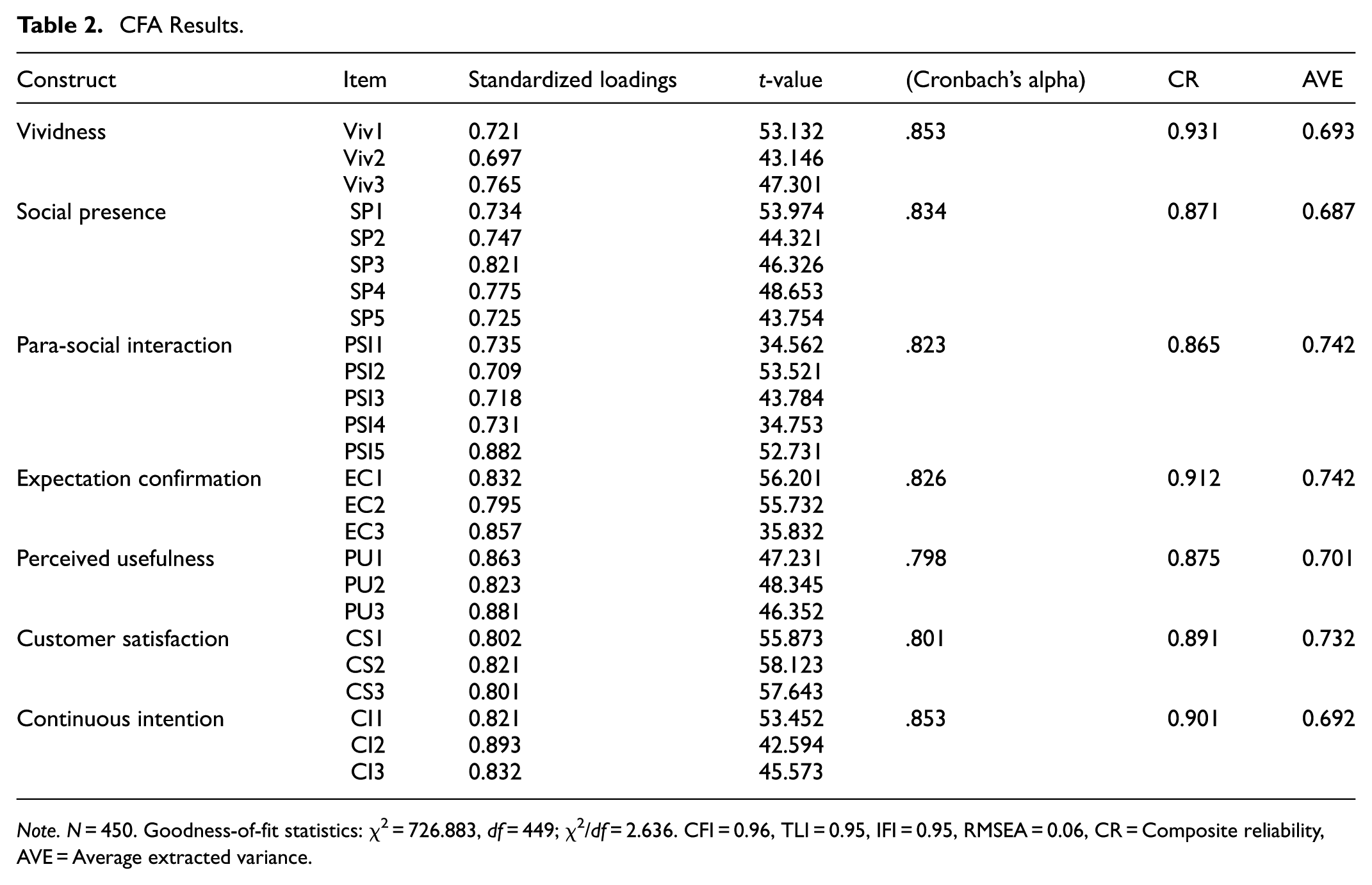
Note. N = 450. Goodness-of-fit statistics: χ2 = 726.883, df = 449; χ2/df = 2.636. CFI = 0.96, TLI = 0.95, IFI = 0.95, RMSEA = 0.06, CR = Composite reliability, AVE = Average extracted variance.
Construction of Inter-Correlations.
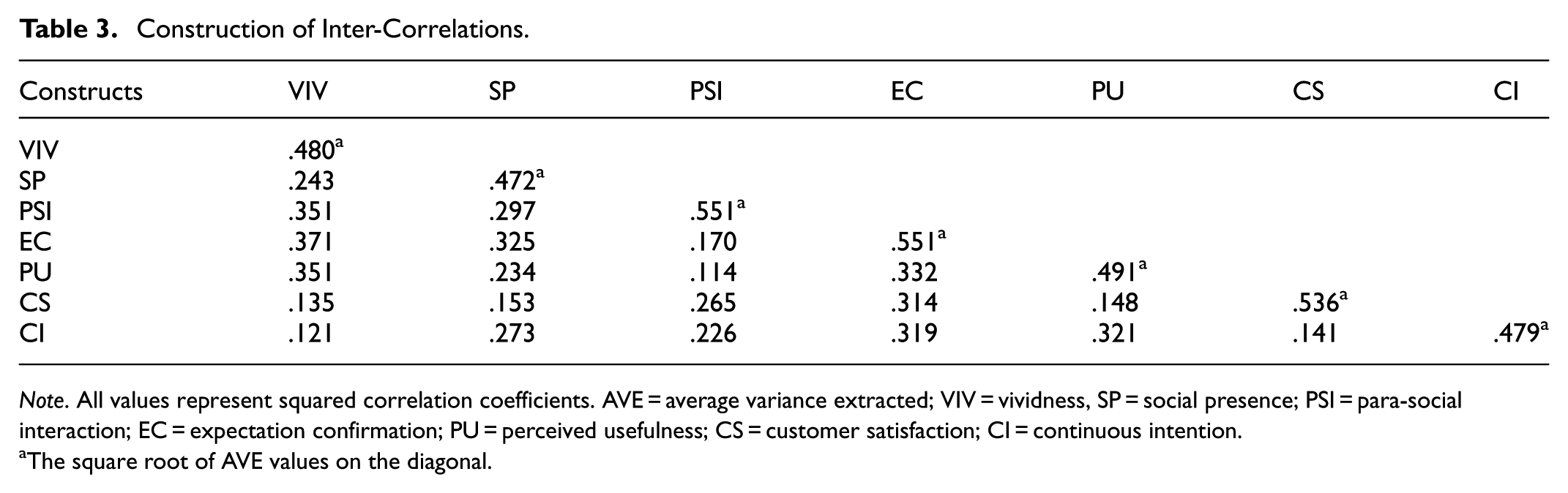
Note. All values represent squared correlation coefficients. AVE = average variance extracted; VIV = vividness, SP = social presence; PSI = para-social interaction; EC = expectation confirmation; PU = perceived usefulness; CS = customer satisfaction; CI = continuous intention.
The square root of AVE values on the diagonal.
Hypothesis Testing
The structural model was tested using the EQS 6.4 program. The results indicated a good fit between the structural model and the data, with goodness-of-fit statistics as follows: χ2 = 792.28, df = 432; χ2/df = 1.84. CFI = 0.98, TLI = 0.95, GFI = 0.96, RMSEA = 0.05. Table 4 and Figure 2 present the path coefficients for the causal relationships within the tested structural model, along with the R2 values for the endogenous variables. These metrics indicate that the theoretical model effectively explains the relationships between the constructs.
Hypotheses Testing.

Note. Goodness-of-fit statistics: χ2 = 792.28, df = 432; χ2/df = 1.84. CFI = 0.98, TLI = 0.95, GFI = 0.96, RMSEA = 0.05.

Results of structural model.
H1: Vividness demonstrated a significant positive effect on Expectation Confirmation (β = 0.228, t = 8.864, p < .001), indicating that the vividness of the experience enhances users’ expectation confirmation. H2: Social Presence exhibited a significant positive influence on Expectation Confirmation (β = 0.193, t = 5.536, p < .001), suggesting that the perception of social presence contributes to meeting user expectations. H3: Para-social Interaction showed the strongest effect among the antecedents on Expectation Confirmation (β = 0.343, t = 9.536, p < .001), demonstrating that parasocial interactions play a crucial role in confirming user expectations.
H4: Expectation Confirmation demonstrated a strong positive effect on Perceived Usefulness (β = 0.633, t = 20.799, p < .001), indicating that when expectations are met, users are more likely to perceive the system as useful. H5: Expectation Confirmation exhibited a robust positive influence on Customer Satisfaction (β = 0.691, t = 21.131, p < .001), suggesting that met expectations significantly contribute to overall satisfaction. H6: Perceived Usefulness showed a significant positive effect on Customer Satisfaction (β = 0.295, t = 8.864, p < .001), confirming that users who find the system useful are more likely to be satisfied. H7: Perceived Usefulness demonstrated a substantial positive influence on Continuous Intention (β = 0.393, t = 9.536, p < .001), indicating that users who perceive the system as useful are more likely to continue using it. H8: Customer Satisfaction showed the strongest effect on Continuous Intention (β = 0.711, t = 22.762, p < .001), suggesting that satisfied customers are highly likely to continue using the service.
In conclusion, all hypothesized relationships were empirically supported, with particularly strong effects observed in the relationships between expectation confirmation and its outcomes (perceived usefulness and customer satisfaction), as well as between customer satisfaction and continuous intention. These findings contribute to our understanding of how vividness, social presence, and parasocial interaction influence user expectations and subsequent behavioral intentions.
Discussion of Findings
This study’s empirical findings provide substantial support for the integrated theoretical framework combining the Post-Acceptance Model (PAM) and Stimulus-Organism-Response (SOR) model in the context of live streaming commerce. The results reveal several significant relationships that enhance our understanding of consumer behavior in this emerging digital retail environment. First, the study confirms the critical role of live streaming characteristics in shaping consumer expectations. The strong positive effect of vividness on expectation confirmation suggests that high-quality audiovisual content significantly influences how consumers evaluate their shopping experience. This finding aligns with previous research by B. Li and Wang (2022) and extends our understanding of how sensory richness contributes to expectation formation in digital commerce environments. Social presence and para-social interaction demonstrated significant positive effects on expectation confirmation, with para-social interaction showing the strongest impact among the three characteristics. This hierarchy of effects suggests that the psychological connection between viewers and streamers plays a more crucial role in meeting consumer expectations than technical quality or mere social presence. This finding extends L. R. Chen et al.’s (2023) work by quantifying the relative importance of different social dimensions in live streaming commerce.
The study also validates the core relationships proposed in the Post-Acceptance Model. The strong positive effect of expectation confirmation on both perceived usefulness and customer satisfaction indicates that meeting consumer expectations is fundamental to both the utilitarian and affective aspects of the live streaming experience. This dual impact suggests that expectation confirmation serves as a crucial mediating mechanism between live streaming characteristics and consumer outcomes. Moreover, the relationship between customer satisfaction and continuous intention emerged as the strongest path coefficient in the model, emphasizing the paramount importance of satisfaction in driving long-term engagement with live streaming platforms. This finding reinforces Bhattacherjee’s (2001) assertion about the critical role of satisfaction in technology continuance while extending it to the specific context of live streaming commerce.
Our findings are consistent with recent research by T. Wu et al. (2024), who demonstrated similar patterns of expectation confirmation and continuance intention in digital health applications. Similarly, H. Lee et al. (2024) and Lim et al. (2020) identified para-social relationships as a key driver of purchase behavior in online environments, which aligns with our finding that para-social interaction had the strongest effect on expectation confirmation. These consistencies across diverse digital contexts suggest that the underlying psychological mechanisms identified in our study may represent fundamental aspects of human-technology interaction in social commerce environments.
Theoretical Implications
The present investigation yields several significant theoretical contributions to the extant literature. First, the successful integration of the Post-Acceptance Model (PAM) with the Stimulus-Organism-Response (SOR) framework establishes a more nuanced theoretical foundation for examining consumer behavior within the live streaming commerce context. This theoretical synthesis facilitates a more sophisticated understanding of how environmental stimuli mediate cognitive and affective responses in contemporary digital retail environments. Furthermore, this research makes a substantial contribution through its extension of the Post-Acceptance Model. By incorporating live streaming commerce-specific characteristics—namely vividness, social presence, and para-social interaction—as antecedents to expectation confirmation, the study enhances our theoretical understanding of how technology-specific attributes influence post-adoption behavioral patterns.
The empirical validation of para-social interaction’s robust effect on expectation confirmation represents another significant theoretical advancement. These findings contribute meaningfully to the growing corpus of literature examining the social dimensions of online commerce, particularly highlighting the salience of psychological connections in digital retail environments. Moreover, the study’s elucidation of expectation confirmation’s mediating role between live streaming characteristics and consumer outcomes advances our theoretical understanding of the psychological mechanisms underlying consumer behavior in digital retail contexts. This work extends the application of PAM beyond traditional information systems to the rapidly evolving domain of social commerce, responding to calls by Alshammari and Alshammari (2024) for broader application of expectation-confirmation theories in emerging digital contexts. Additionally, our findings complement the work of C. C. Chen and Lin (2023) on flow experiences in live streaming, suggesting that PAM and flow theory might be integrated in future research to provide an even more comprehensive understanding of user engagement.
Practical Implications
Our findings yield several actionable implications for practitioners in the live streaming commerce ecosystem:
Platform Design and Development
Enhance Audiovisual Capabilities: Platforms should prioritize investments in high-definition video streaming, stable connections, and professional audio quality to maximize vividness, which significantly influences expectation confirmation. Design for Interaction: Implement features that facilitate meaningful real-time interactions between streamers and viewers, such as customizable reaction buttons, highlighted viewer comments, and interactive product demonstrations. Support Para-social Relationship Building: Develop tools that enable streamers to acknowledge individual viewers, track viewer engagement history, and personalize interactions based on previous purchases or comments. Optimize Mobile Experience: Ensure that the platform functions seamlessly on mobile devices, as the majority of live streaming commerce consumption occurs via smartphones, particularly in Asia-Pacific markets.
Streamer Training and Development
Relationship Cultivation: Train streamers to balance product promotion with authentic viewer connection, emphasizing the importance of acknowledging viewers by name and responding to their comments. Consistency and Reliability: Encourage streamers to maintain consistent broadcasting schedules and personal branding to strengthen para-social relationships over time. Communication Skills: Provide comprehensive training in verbal and non-verbal communication techniques that enhance social presence and emotional connection. Product Knowledge: Ensure streamers have deep understanding of products to provide accurate information and manage viewer expectations effectively.
Marketing and Business Strategy
Relationship Metrics: Develop metrics for assessing para-social relationship development alongside traditional conversion metrics, recognizing their significant impact on continuous intention. Content Strategy: Create content guidelines that balance product information with opportunities for authentic streamer-viewer interaction. Expectation Management: Implement protocols for ensuring product representations match reality to maximize expectation confirmation. Audience Segmentation: Tailor streaming content to different audience segments based on their preferences for vividness, social interaction, and product information.
Implementation for Enterprises
Integration with Existing E-commerce: For established retailers, develop seamless integration between live streaming platforms and existing e-commerce infrastructure to capitalize on impulse purchases. Technology Investment Prioritization: Allocate resources first to enhancing para-social interaction capabilities, given their stronger influence on continuous intention compared to technical vividness. Staff Selection and Training: Select streaming hosts based on their interpersonal communication abilities and capacity to form authentic connections with viewers. Cross-channel Consistency: Ensure consistent brand presentation and customer experience across traditional e-commerce and live streaming channels. These practical implications provide a roadmap for businesses seeking to leverage live streaming commerce effectively. By focusing on the key drivers of expectation confirmation—particularly para-social interaction—enterprises can enhance customer satisfaction and foster continuous engagement with their platforms.
Limitations and Future Research Directions
Several limitations warrant acknowledgment. The study’s geographic concentration in a single market potentially constrains its generalizability across diverse cultural contexts. The cross-sectional nature of the data collection methodology precludes examination of temporal relationship evolution. Additionally, the research design does not account for potential variations across different live streaming platforms or product categories.
Future scholarly inquiry should address these limitations through multiple approaches. First, cross-cultural comparative analyses would enhance understanding of cultural variation in live streaming commerce behavior. Second, longitudinal research designs would facilitate examination of relationship development patterns over time. Third, investigation of platform-specific effects and product category differences would provide more granular insights. Finally, future research should explore additional constructs such as trust mechanisms, privacy considerations, and technological readiness factors. Further research could also examine the potential dark side of para-social relationships in commerce contexts, including parasocial dependency and consumer vulnerability to persuasion. Additionally, studies exploring the integration of emerging technologies such as augmented reality and artificial intelligence into live streaming platforms would contribute valuable insights to both theory and practice.
Conclusion
This study advances our understanding of consumer behavior in live streaming commerce by validating an integrated theoretical framework that combines the Post-Acceptance Model with the SOR framework. The findings highlight the crucial role of para-social interaction in shaping consumer expectations and behaviors, while also confirming the importance of traditional factors such as vividness and social presence. These insights provide both theoretical contributions to the academic literature and practical guidance for industry practitioners in developing effective live streaming commerce strategies. As the global live streaming commerce market continues its explosive growth trajectory, projected to exceed $3.5 trillion by 2033, understanding the psychological mechanisms that drive consumer engagement becomes increasingly vital. This research provides a foundation for both academics and practitioners to navigate this rapidly evolving landscape, emphasizing that while technological capabilities matter, the human connection facilitated by live streaming platforms ultimately drives continuous engagement and commercial success.
Footnotes
Appendix
Statistics of the Construct Items.

| Construct | Survey measures |
|---|---|
| Vividness | The overall video quality of the live streaming makes me feel a sense of reality |
| The streamer’s voice and emotions are vividly conveyed through the live streaming | |
| The broadcasting environment (background, lighting, etc.) of the live streaming feels realistic | |
| Social presence | I felt as if I was in the same space as the streamer |
| It felt like the streamer was broadcasting right in front of me | |
| I felt as if I was having a face-to-face conversation with the streamer | |
| I could clearly perceive the streamer’s emotions and moods | |
| I felt a sense of co-viewing the broadcast with other viewers | |
| Par-social interaction | The streamer feels like a long-time friend |
| I feel a sense of familiarity while watching the streamer’s broadcast | |
| I feel a special connection when the streamer responds to my opinions or chat messages | |
| I can relate to the streamer’s daily life stories | |
| Watching the streamer’s broadcasts has become an important part of my daily life | |
| Perceived usefulness | Live commerce is useful for product purchases |
| I can effectively obtain product information through live commerce | |
| Live commerce enables more efficient shopping | |
| expectation Confirmation | My experience with live commerce generally matches what I expected |
| The quality of live commerce service exceeds my expectations | |
| The overall shopping experience through live commerce meets my expectations | |
| customer Satisfaction | I am generally satisfied with my live commerce experience |
| Shopping through live commerce is enjoyable | |
| Using live commerce was a wise choice | |
| Continuance intention | I will continue to use live commerce in the future |
| I plan to use live commerce regularly in the future | |
| I am willing to recommend live commerce to others |

Ethical Considerations
Owing to the nature of this study, no formal approval from the Institutional Review Board of the local Ethics Committee was required. Nonetheless, all subjects were informed about the study and participation was voluntary. The participants were assured of the confidentiality and anonymity of the information associated with the surveys. This study was conducted in accordance with the guidelines of the Declaration of Helsinki.
Consent to Participate
Informed consent was obtained from all participants involved in the study.
Funding
The authors received no financial support for the research, authorship, and/or publication of this article.
Declaration of Conflicting Interests
The authors declared no potential conflicts of interest with respect to the research, authorship, and/or publication of this article.
Data Availability Statement
The datasets generated and analyzed in the current study are available from the corresponding author upon reasonable request.