




Abstract
Livestreaming commerce (LSC) has transformed the retail business model, introducing it as an integral channel of distribution in social commerce. Numerous existing contemporary research literature highlights the absence of LSC-underpinning theories. The paramount aim of the present study is to furnish a comprehensive reference for forthcoming analyses by conducting an all-encompassing meta-review of the literature. The present study adopted VOSviewer software package to conduct a bibliometric analysis of 75 articles in domain. The conducted comprehensive literature analysis reveals current LSC research segments, classifying significant discoveries into three broad areas of specialization: streamer-focused research, consumer-focused research, and platform-focused research. These subdomains contribute to the existing knowledge base by identifying underpinnings theory, methodologies, and eight core themes that have emerged: behavior, credibility, trust, adoption, costs, information dissemination, purchase intention and knowledge acquisition. A comprehensive study is a valuable tool for pinpointing pivotal research areas that have been extensively examined while establishing a strong foundation for detecting potential obstacles and emerging patterns that could influence forthcoming investigations. This study aims to fill the gap by conducting a comprehensive review of this emerging phenomenon. This study categorizes key findings into three specialization and identifies underpinnings theory, and methodologies for each subdomain. By exploring key themes in the field, this study sheds light on important areas for future research in LSC.
Plain Language Summary
The aim of the present study is to furnish a comprehensive reference for forthcoming LSC research by conducting an all-encompassing the exist literature. The present study analysis 75 typical research articles in domain and identified three broad areas of specialization: streamer-focused research, consumer-focused research, and platform-focused research. These subdomains contribute to the existing knowledge base by identifying underpinnings theory, methodologies, and detect eight core themes that have emerged: behavior, credibility, trust, adoption, costs, information dissemination, purchase intention and knowledge acquisition. This study aims to fill the gap by conducting a comprehensive review of this emerging phenomenon.
Introduction
Exemplified by the captivating “Taobao Live” and Facebook’s foray into it, Livestreaming Commerce (LSC) is a brilliantly innovative type of social commerce that leverages real-time engagement to boost online product sales.(Chandrruangphen et al., 2022; C.-D. Chen et al., 2022). The infusion of diverse information portals has breathed new life into e-commerce enterprises, significantly curbing their marketing expenses. Meanwhile, the outbreak of the coronavirus epidemic in 2020 has accelerated the development of the non-contact, LoT economy, “live stream, and e-commerce has just caught up with the trend” (Cheng et al., 2020; T. Zhang & Tang, 2023). LSC has revolutionized the retail industry and emerged as an incredibly significant sales channel, offering immense benefits to brands, retailers, and marketplaces. It primarily aids in accelerating conversion rates while simultaneously enhancing brand appeal and differentiation—a game-changer for businesses looking to stay ahead of the curve (McKinsey, 2021). Numerous popular social networking and e-commerce sites, including Taobao, Facebook, and TikTok, have incorporated live features to cater to their users. In comparison to e-commerce platforms, live-streaming boasts of temporal proximity with face-to-text communication that allows customers to observe sellers’ identities along with product evaluation options and synchronous interaction with multiple customers (Cai & Wohn, 2019; Wongkitrungrueng et al., 2020).
Undoubtedly, the advent of cutting-edge direct tools for e-commerce enterprises has sparked the evolution of innovative forms of conduct, thereby demanding a more targeted investigation. The main objective of the present research is to investigate the burgeoning realm of LSC research. To accomplish this, the current incorporates Shannon (1948)’s mathematical theory. This theory posits that a communication system is composed of various integral components, including the information source, transmitter, channel, receiver, and destination. The current investigation has ingeniously crafted a theoretical framework that neatly categorizes the existing literature into three pivotal constituents: the dynamic information senders or streamers, the streaming platform, and the discerning viewer or audience. Our principal aim is to furnish an all-encompassing summary of this research domain, empowering forthcoming analyses to be executed with enhanced precision and theoretical profundity. The present study conducted a systematic literature review (Moher et al., 2015), fortified by bibliometric analysis, to unearth the principal research topics investigated and potential challenges and trends for future exploration. Our groundbreaking study endeavors to bridge a crucial void by delving into the emergence of an uncharted realm of investigation and its corresponding subtopics. Employing the esteemed PRISMA protocol (Liberati et al., 2009) and carried out Bibliometric Performance and Network Analysis (BPNA) to evaluate impact while using VOSviewer (van Eck & Waltman, 2010) and CiteSpace (C. Chen, 2006) software for illuminating thematic networks uncovered.
Method
The current research cleverly blended three complementing methodological techniques. The present study used the PRISMA technique (Liberati et al., 2009; Shamseer et al., 2015), which was built mainly for systematic literature and meta-analyses. This necessitated a thorough review of the current literature to define the research topic and determine an agreed theoretical framework. Furthermore, the present study performed a bibliometric performance analysis (BPNA) to assess the scientific effect of diverse contributors (Cobo et al., 2011). Ultimately, a science mapping analysis was conducted using keyword co-occurrence to unveil the thematic and intellectual framework of research on LSC (Zupic & Čater, 2015). Onwuegbuzie et al. (2018) suggest that combining qualitative data obtained from the review with quantitative bibliometric data can effectively elucidate patterns within a particular field or discipline—similar to how quantitative stages aid in developing patterns identified during the qualitative phase. The main features of these applied techniques are below with utmost precision.
Systematic Literature Review
PRISMA is a solidified methodologies technique that assures research transparency and reproducibility (Liberati et al., 2009). It has been utilized in live streaming-specific investigations (Y. Li et al., 2020). The protocol comprises four key stages, with the present study utilizing a single source of information—Web of Science (WoS)—for identification. WoS is owned by Clarivate Analytics and includes several databases. This method may restrict document coverage, but it ensures uniformity in citation format, usage, and classification across research fields. In addition, WoS provides a sufficient number of documents with demonstrated scientific quality and offers data cleansing to rectify errors (Harzing & Alakangas, 2016).
Identification, an extensive array of search phrases was meticulously selected based on early study and encompassed a multitude of combinations of search terms: “live streaming,”; “live-streaming,”; “live streaming commerce,”; “live streaming e-commerce,”: “social live streaming”; “internet broadcast”; “network broadcast”; “webcast”; “twitch”; “twitch. tv”; “Youtube Live”; “Douyin live”; “Taobao live.” The resolute determination was made to encompass all published documents inscribed in the eloquent language of English. No categories of documents were omitted, thereby enabling the incorporation of papers germane to scrutiny burgeoning research domains.
The screening process was filtered by incorporating the keywords “commerce,”“e-commerce,” or “e-commerce” to ensure precision. All documents’ titles, abstracts, and keywords underwent a thorough review. Only those records that pertained to live streaming while addressing the specific topic of commerce or e-commerce were retained, whereas irrelevant ones were eliminated. This empowered us to pinpoint any novel items that could have been overlooked during the primary exploration sequence. For eligibility: the document had to be exclusively related to LSC, even if it was a component of a more extensive study. Secondly, it has been indexed in WoS and has undergone some form of peer review. Also, the full-text document should have been effortlessly retrievable. All references satisfying these rigorous requirements were successfully retrieved. The last step is Included: The full-text documents were meticulously scrutinized, except for those associated with living streaming that were not relevant to commerce or e-commerce, those with a vague primary subject matter, those lacking any research data, and those missing methodology from the text. Ultimately, 75 references were obtained through this process, which included records until April 6th, 2022. A comprehensive overview of the entire process is provided in Appendix Figure A1. Appendix Table A1 extracted from main documents about methodological approach, theoretical, and data sources.
Bibliometric Performance Analysis
Bibliometric performance analysis refers to the using of bibliometric methods and tools to evaluate the research performance, impact, and influence (De Bellis, 2009)). Following many prior studies (Arrigo, 2018; Cabeza-Ramírez et al., 2021), the study utilized several indicators, including indexing categories, document types, countries of origin, and journals within the domain under investigation. Most research was conducted in geographical contexts was conducted in China, followed by USA and Australia. Canada, Thailand, and Finland were simultaneously in the third spot based on the geographical contexts in prior studies (see Figure 1 and Appendix Table A1). Figure 2 illustrates an overview of publications concerns about LSC starting to increase in 2017. From 2019, the number of publications grew exponentially, especially with the pandemic rising. Although, there were mostly from the conference (Cai & Wohn, 2019; C. Chen et al., 2019; Z. Chen et al., 2019; Su, 2019; X. Wang & Wu, 2019). The last but the most stage, 2020–2022, represents the explosion stage. It took off during the covid-19 pandemic as widespread lockdowns and restrictions on physical retail stores. Until 2022 the number of publications is expected to decrease due to the present study tracking data only until April 2022. However, even in the middle of the year, publication rates are projected to be higher than those in 2020. The present study primarily analyses the documents issued during the last 5 years to identify and highlight the trends in LSC development.

Geographical contexts investigated in LSC research studies.
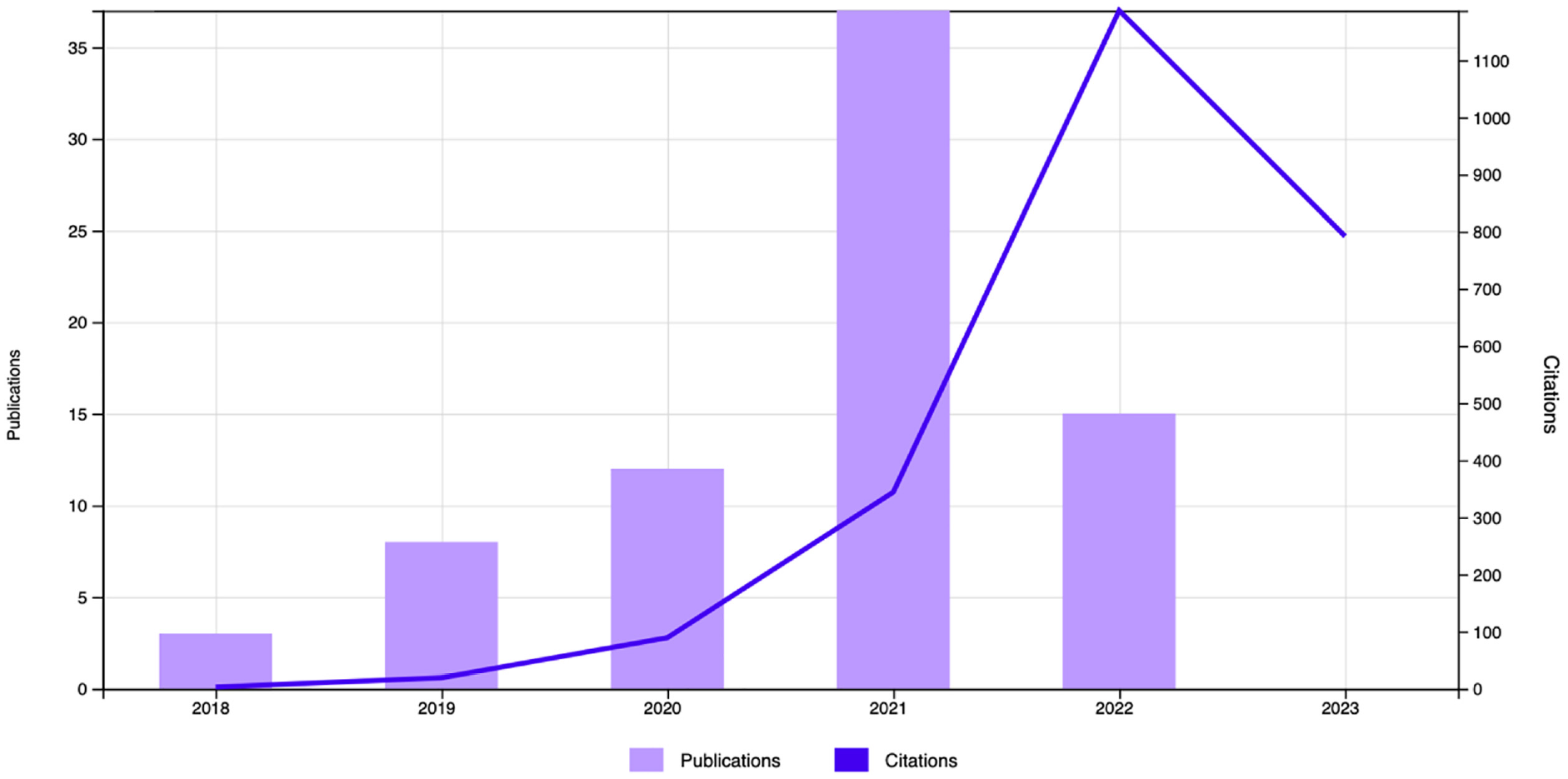
Number of documents and citation over time (from 2017 to 2022).
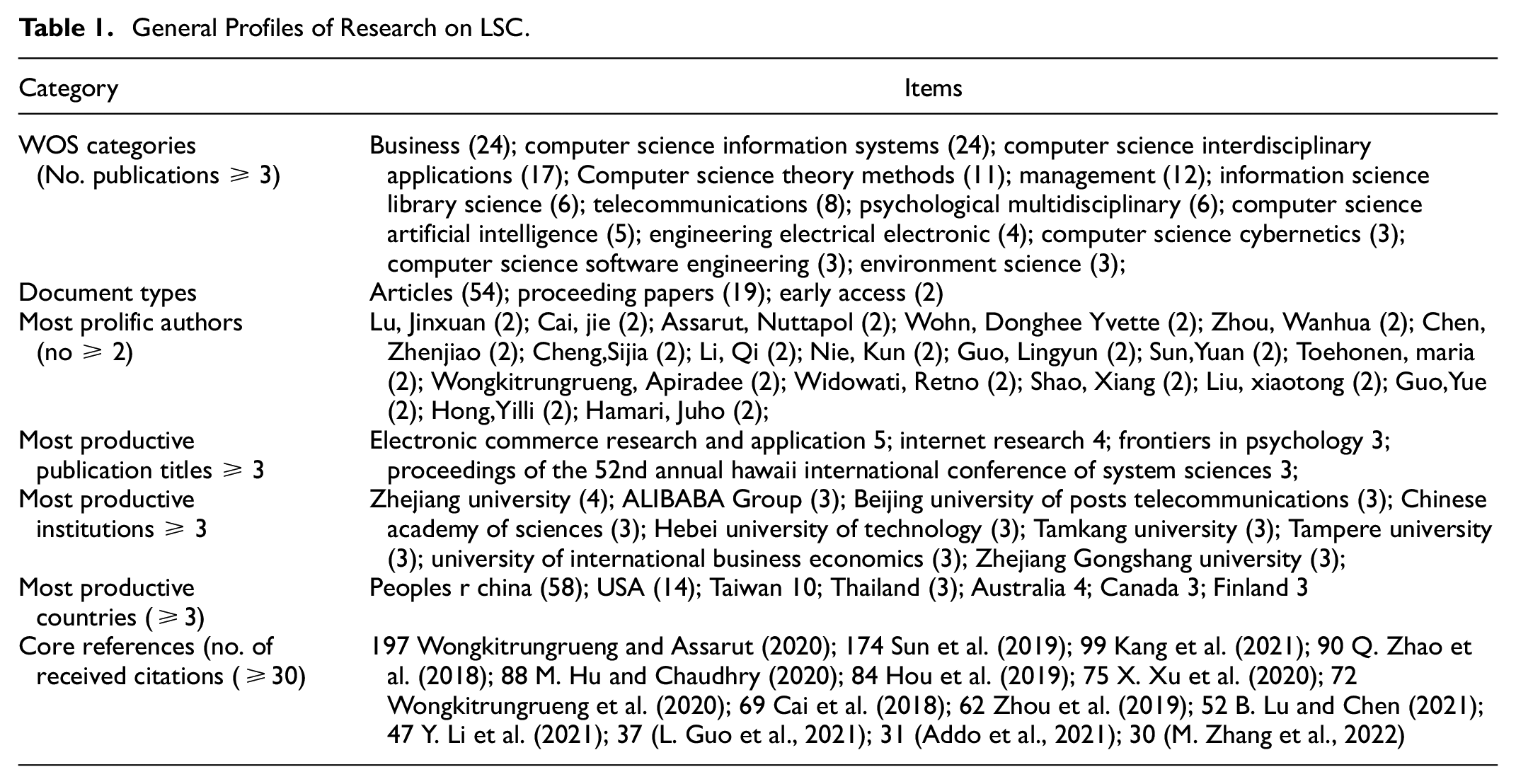
Figure 3 displays the most productive institutions, with Zhejiang University and Zhejiang Gongshang University being the primary ones in Zhejiang province. It is worth mentioning that Zhejiang province is considered the capital of live-streaming e-commerce(Qu, 2021). Additionally, the WOS categories indicated a gradual rise in the research areas involved. Intriguingly, as Figure 4 shows, the co-occurrence analysis of disciplinary categories divulges that LSC is a multifaceted and all-encompassing research topic encompassing numerous disciplines and garners significant scholarly interest. Notably, Table 1 ranks both business and computer science information systems at the top with an impressive count of 24 documents. Followed by computer science interdisciplinary applications with 17 documents, then management 12, Computer science theory methods 11. Besides, psychological multidisciplinary (6), computer science artificial intelligence (5), engineering electrical electronic (4), computer science cybernetics (3), computer science software engineering (3), and environmental science (3) related to LSC. Even though live streaming services are heavily commercialized, the business documents were found to be on par with other computer science information systems. This suggests a promising avenue for future research where innovative techniques from management or economics can be employed to supplement prior discoveries. The same holds for other uncharted domains like environmental science and software engineering in computer science.

Most productive institutions WOS.

Most productive institutions in WOS categories (no. publications ≥ 3).
General Profiles of Research on LSC.
Science Mapping
Crafting a visual representation of the intricate connections between diverse publications, authors, journals, disciplines, or research areas is commonly referred to as science mapping. The application of scientific network analysis has proven to be an effective tool in vividly showcasing these links across various domains (C. Chen, 2017). The network analysis meticulously scrutinized the document’s content by examining keyword co-occurrence. This approach was considered fitting for the early identification of a given research domain’s intellectual structure, as emphasized by X. Chen et al. (2019). Additionally, keywords, titles, and abstracts play a critical role in selecting relevant themes Choi et al. (2011). The resulting network of relations between terms was visualized using VOSviewer (van Eck & Waltman, 2010) and Cite-Space (C. Chen, 2006); both two are open-source software that calculates centrality and strength to reveal the theme of the domain. Nodes represent keywords, with their size indicating importance, while links depict how often keywords appear together, with thickness representing link strength.
In order to ensure a comprehensive visualization of all identified thematic networks, a minimum of n = 2 occurrences was set for the entire domain, given that it is still emerging and only 75 documents were available. A thesaurus file was employed to refine further the data and group synonymous terms or singular/plural forms of certain words. For example, electronic sports, e-sports, and e-sport games were consolidated under the term e-sport. Additional parameters utilized in VOSviewer can be found in Appendix Table A2.
Results
The Domain of Research on LSC
The previous discussion hinted at earlier research endeavors that sought to explore the boundaries of subject matter in order to establish the scope of investigation for LSC. As proposed by Shannon (1948), involves posing four fundamental inquiries: what, how, who, and where? The answers gleaned from these queries enhance comprehension of the phenomena under scrutiny. Subsequently, this literature review addresses the “what” and “how” aspects. The present study alluded to prior studies that aimed to examine the limits of topic areas in order to demarcate the LSC study domain. According to Shirmohammadi et al. (2021), it comprises asking four basic questions: what, how. The responses help to improve knowledge of the phenomena. The following review aids in answering the “what” and “how” questions.
Regarding the phenomenon’s essence, it is noteworthy that implementing of the PRISMA protocol resulted in a remarkable 75 documents. What is more interesting is that all these documents have one thing in common—they delve into the communication process arising from diverse definitions and meanings developed concerning LSC. Shannon (1948) defined the transmission of messages—these messages serve as sources of information that reach their intended destination. Once received, the audience or recipient can share information like engaging conversations, gifts, subscriptions, followers, and purchasing activity with each other or back to the initial source. Moreover, it is crucial to highlight that the transmission of messages involves intricate encoding and decoding mechanisms facilitated by various platforms that serve as intermediaries between senders and recipients. Thus, the present study divided the documents into three groups: source information (streamers), platform, and viewers. Firstly, platform in live streaming platforms are divided into types of platforms (Gong et al., 2020): There are three main ways in which live streaming is being incorporated into commercial activities: firstly, through live streaming platforms that integrate with commerce (such as TikTok); secondly, through e-commerce sites and marketplaces (like T-mall) or mobile apps that include live streaming features; and thirdly, through social networking sites (SNSs) that add live-streaming capabilities to facilitate selling (such as Facebook Live). The key benefit of these approaches is the ability for broadcasters to interact with products in real-time while transmitting their expressions and interactions directly to viewers and customers who may be located elsewhere. This creates a sense of direct synchronous communication between the broadcaster and customer, allowing for immediate feedback via written comments or purchase behavior.
In terms of “how,” the cumulative research is built using multiple theoretical frameworks. Although many publications did not offer the theory they used, they were mostly based on earlier research. It is feasible to identify well-established frameworks that are often employed. Overall, three specialized domains can be recognized from the 75 texts. The publications concentrated mainly on the platform’s usage of well-established concepts such as theory of reasoned action. (D. Li et al., 2018), attachment theory (Y. Li et al., 2021), use and gratifications theory (Jia et al., 2022), Integrating mean-ends chain of lifestyle theory, socialized charismatic leadership theory, and product uncertain theory (Z. J. Chen et al., 2019); social evolutionary game theory (Lv et al., 2022); rough set theory (S. H. Liao et al., 2021). These studies mostly focused on providing the development of applications, for example. Functions provided by live platforms make viewers engaged. Even some studies sought to improve transmission or platform solutions and do not need a firm grounding theory. Such studies come from computer science and engineering, such as F. L. Li et al. (2021, Z. Li et al. 2021).
The second group, which was focused on the receivers/reviewers/consumers, was underpinned by the widely-tested theories: SOR theory (Chandrruangphen et al., 2022; Lee & Chen, 2021; Ma et al., 2022; Ming et al., 2021; theory of para-social interaction (W. Zhang et al., 2021); elaboration likelihood model (Gao et al., 2021); social presence theory (T. Chen et al., 2021; Geng et al., 2020; M. Li & Hua, 2021; Z. Liu et al., 2020); self-efficacy theory (Cao et al., 2022; Gong et al., 2020); social cognitive theory (M. Li & Hua, 2021); information forging theory (X. Wang & Wu, 2019); social learning theory (M. Li & Hua, 2021). The last sub-domain group focused on the streamer employed well-established theories such as the signal theory (B. Lu & Chen, 2021), ground theory (Luo, Cheng, Zhou, Yu, & Lin, 2021); motive theory (W. Wang et al., 2021); social capital theory (P. Xu et al., 2022); social exchange theory (M. Zhang et al., 2021). Table 2 illustrates the comprehensive domain and the widely-accepted theory for enhancing the knowledge base of research on LSC.
Main Theories Applied.

Regarding the methodology, Table 3 shows the main approaches and methodologies applied in all documents. For the areas of consumer/viewer studies, quantitative research prevails, and many studies using structural equation models by adopting primary data (such as surveys and questionnaires). Sampling size range from 214 (Z. Liu et al., 2020) to more than 900 (W. Zhang et al., 2021). Regarding the area of streamers studies, also quantitative methods predominate; these studies adopted massive data by scraping data on live streaming platforms. Additionally, some of using structural equations model methods by exploring characteristics of streamers’ impact on purchase intention. The subdomains focused on the platform are characterized by using more heterogeneous methods for compiling information through application programing interfaces.
Main Methodology Applied.

Thematic Structure of the Research Domain
In the upcoming session, the present study aims to conduct time-zone mapping by utilizing Cite-Space and keywords analysis techniques to identify and explore the primary emerging research topics on a yearly basis, while also examining their prominence. Furthermore, the present study will investigate the emergence of research hotspots by utilizing VOS-viewer to calculate the total strength of co-occurrence links between terms.
Dynamic Evolution of Research Topics
The cite-space analyze all 75 documents’ keyword and terms. Figure 5 illustrates the time-zone mapping of keywords; the current investigation has the potential to unveil the historical progression of research priorities and delve deeper into emerging trends in e-commerce live streaming. Before 2019, the main topics revolved around information communication, technology adoption, booming industry, and behavior intention. During this period, LSC was still a relatively new concept, and research focused on its effectiveness as a marketing strategy. Notable research points included streamer broadcasting motivation (Q. Zhao et al., 2018), platform adoption motivation (D. Li et al., 2018), and live-streaming behavior (Cai et al., 2018). From 2019 to 2020, primary research areas shifted toward motivation, purchase behavior, social presence, and customer engagement, with China emerging as a popular trend. Looking ahead to 2022, attitudes like trust and satisfaction took center stage while exploring new topics like credibility and impulse buying behavior. In 2022, the focus will be on celebrity endorsements type alongside customer engagement strategies and product quality aimed at creating attractive live-streaming interfaces.
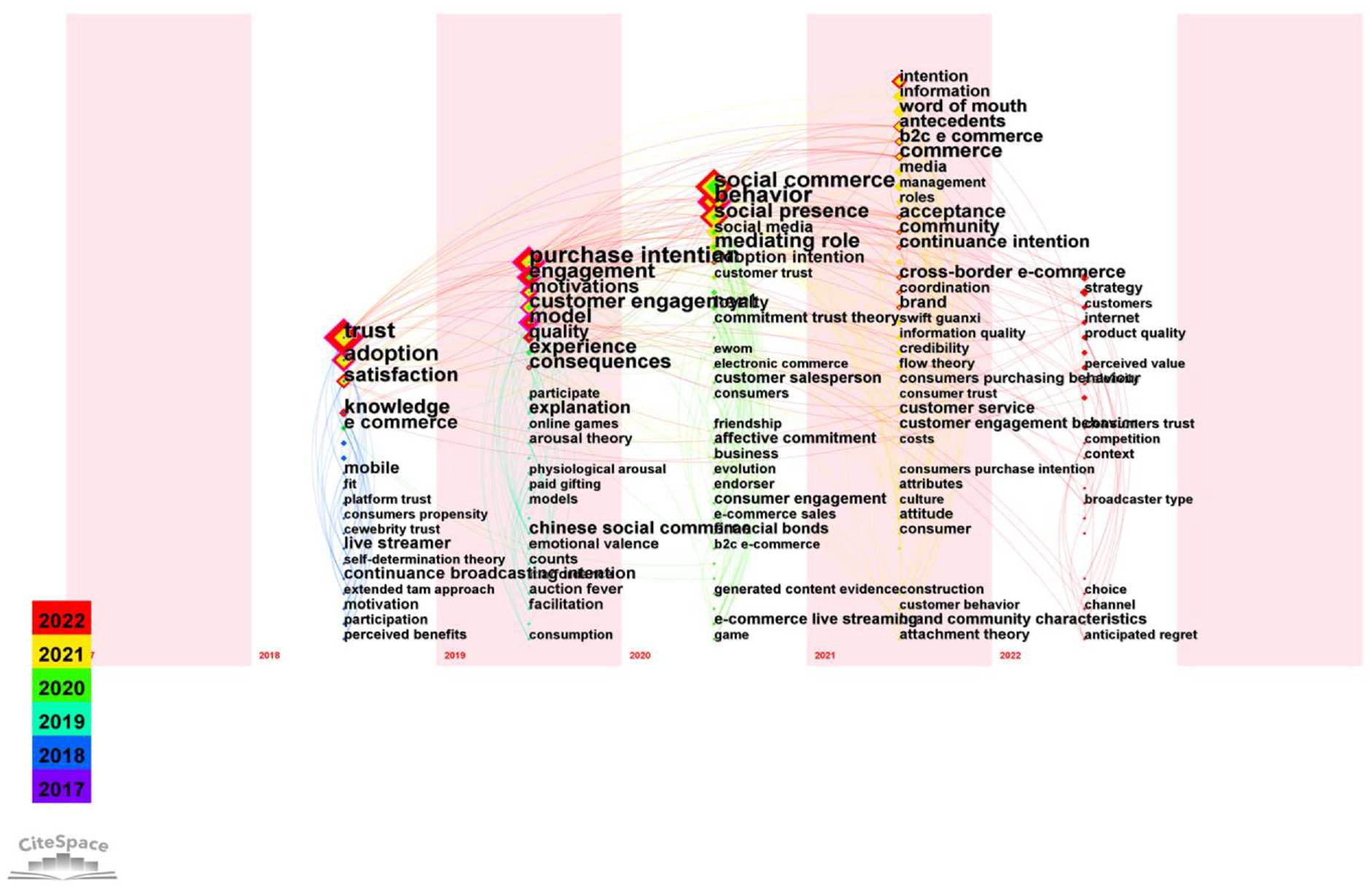
The dynamic keywords related to LSC research.
The current research was left with 466 keywords after using the VOSviewer thesaurus file to filter them. Only 97, however, matched defined threshold of at least two occurrences. After that, the program computed the co-occurrence connection strength between words and chose those with the greatest overall link strength. Figure 6 and Table 4 show the whole list, and theme clusters, linkages, and occurrences. To designate each cluster, sample terms were picked. While certain general phrases connected directly to the domain were included in these clusters, such as live streaming commerce, e-commerce, management, live stream, social media, and business, each instance had a distinct thematic focus. The present study analyzed the aims and results of all papers in our sample set to validate findings from this theme cluster analysis.

Thematic clusters identified in the research domain on the LSC field through VosViewer.
Keywords Identified in Each Cluster.

The thematic cluster associated with behavior (C1), credibility(C2), trust (C3), adoption(C4), costs (c5), information(C6); purchase intention(C7), knowledge (C8), shown Table 4. Subsequently, the main topics on LSC obtained in each cluster are detained. The first cluster covers topics related to the behaviors of consumers and streamers. This complex behavior, for example, the intention to purchase (Sun et al., 2019), continuous watching (Hou et al., 2019), engagement brand activity (M. Hu & Chaudhry, 2020), virtual gift (Z. Guan et al., 2022; Zhou et al., 2019), impulse buying behavior (Lee & Chen, 2021), adoption intention (Z. Liu et al., 2020), interaction behavior (McLaughlin & Wohn, 2021). Even streamer continuance broadcasting behavior (Q. Zhao et al., 2018). The cluster deeply connects with the antecedent of behavior. Thus, occurrences keywords involve the motivations of behavior, including social presence (Z. Liu et al., 2020) and information quality (M. Zhang et al., 2021).
The second cluster primarily focuses on credibility, particularly in the context of LSC. Research has shown that social influence factors like social presence, perceived expertise, and perceived similarity between streamers and viewers can significantly impact the perceived credibility of content and platforms (Y. Guo et al., 2022; P. Xu et al., 2022). Additionally, studies have explored how visual cues such as video quality and overall esthetics affect credibility (M. Zhang et al., 2021). The cluster also highlights price as a significant factor influencing purchasing behavior during live-streaming sessions. Future research should investigate pricing strategies like discounts or coupons to optimize both seller profitability and consumer benefit (Cao et al., 2022). as well as explore the development of an optimal/equilibrium price strategy (L. Guan et al., 2022; J. Liu et al., 2022).
The third cluster brings topics related to trust, covering the need for streamers to build and maintain audiences (D. Li et al., 2018; Wongkitrungrueng & Assarut, 2020). It also involves offering interactivity and facilitating communication with viewers, thereby the trust between them and their audience (Lai et al., 2021). The cluster provides a fresh view that distinguishes it from traditional e-commerce. Research in this area has explored the impact of gamification, such as vertical gifting, and rewards, on engagement, motivation, and retention of viewers in live-streaming platforms (T. E. Hu et al., 2022; Zhou et al., 2019). Utilitarians in LSC, such as convenience, efficiency, and access to a wide range of products, may be more likely to use continuous shopping or watching in the live streaming context (Cai et al., 2018).
The fourth cluster link to adoption. The topic is thus intricately linked with utilizing of advanced technological tools, predominantly on the streamer’s end. It provides a view of the antecedents of adopting new technologies or shopping channels. One subdomain explains that flow experience is relevant in the context of LSC adoption because it suggests that the more enjoyable and engaging the live stream is, the more likely consumers are to adopt it as a new shopping channel (C.-C. Chen & Lin, 2018; Z. Liu et al., 2020; Z. Wang et al., 2022); while another subdomain investigate the rising adopting during the COVID-19 (T. Chen et al., 2021).
The fifth cluster highlights the cost topic. Regarding the subject matter depicted by the chosen keywords, “uncertain,”“pricing,” and “supply chain.” Several studies addressed specific topics such as the type of streamers due to the unsustainability and exorbitant cost associated with celebrity hosts; Several companies have opted for their own branded broadcasters as a means of attracting followers (W. Wang et al., 2021). Additionally, streamers form a complete supply chain by selecting products, estimating sales, purchasing inventory, preparing it for sale, delivering it to customers, and even providing after-sale support (Jiang & Cai, 2021).
The sixth cluster pertains to the keyword “information.” The overarching theme revolves around information elements rooted in SOR (stimulus-organism-response) theory by adopting the SEM model (M. Hu & Chaudhry, 2020; Ming et al., 2021; X. Xu et al., 2020). This encompasses a co-created social experience that fosters dynamic interactions between streamers and viewers (Kang et al., 2021). Also, Live streaming offers a wealth of product information on quality and functionality, enabling consumers to better comprehend the products and dispel any doubts about their authenticity. Thereby enhancing transparency and building trust with consumers (Gao et al., 2021). The final two clusters comprise “purchase intention” and “knowledge.” Interestingly, the seventh cluster’s keyword is detected across all clusters as it represents the primary consequence during LSC. In the case of cluster 8, it can be inferred that streamers are driven by a strong urge to disseminate information about the available tools and sustain viewer engagement (P. Xu et al., 2022).
Future Research Agenda
This paper offers a complete literature evaluation using the PRISMA procedure, which incorporates BPNA and scientific mapping to identify the most critical research issues in LSC. This technique is a pioneering effort toward a comprehensive understanding of this topic. The findings indicated three specialties or subdomains after evaluating 75 documents: research focused on the transmitter or streamer, the receiver or audience, and the channel or platform. These three specialties contribute to the gathered knowledge by developing eight emerging themes: behavior, credibility, trust, adoption, costs, information, buy intention, and knowledge. Based on the results of the meta-review. The present study presents new avenues and numerous prospects for further investigation, which will be elaborated on below (shown Figure 7).

Findings in present study and future research directions.
Regarding the audience, the motivational process for adopting and purchasing LS can be categorized into two dimensions: utilitarian and hedonic social. These dimensions pertain to the perceived benefits of viewers. This aligns with theories based on behavioral studies, such as the uses and gratification theory (Cai & Wohn, 2019; Hou et al., 2019; Jia et al., 2022), SOR theory (M. Hu & Chaudhry, 2020; Ming et al., 2021; X. Xu et al., 2020), One of the most noteworthy discoveries is that consumers are captivated by live streaming shopping due to a multitude of factors, including product information, communication quality, enjoyment, flow, and social presence. This attraction can ultimately elevate their experience and trust toward sellers/products leading them to watch more to watch and purchase. Additionally, technological-related motivations, such as the Technology Acceptance Model and IT affordance (Fengliang & Jianhong, 2021; Gao et al., 2021), also play a significant role in this phenomenon after conducting a thorough analysis of viewer motivation in the sample. This emphasizes the importance of conducting additional research and considering other variables that could potentially impact viewer motivation. Another notable aspect is the virtual gifting behavior. The existing literature has primarily elucidated gifting behavior by relying on economic and social exchange models that underscore the importance of reciprocity (T. E. Hu et al., 2022; Zhou et al., 2019). In detail, the presence of others, social competition, emotional stimuli by similarity, the number of excitement-related words, and gamification design are triggers of gifting behavior. While the virtual gifting is a common practice in virtual communities, limited attention has been given to the motivations and behaviors behind LS gifting in literature (T. E. Hu et al., 2022). Therefore, there is a pressing need to conduct further research and analysis on the sources of motivation through comprehensive theoretical frameworks and empirical investigations.
Regarding the streamer, the present study detected that the main line focused on the characteristics of streamers. In this vein, Y. Guo et al. (2022) revealed that streamers’ characteristics, including attractiveness, competence, and communication, impact consumers’ behavioral intentions. However, popularity only lead to watching intention and no effect on purchase intention. Meanwhile, P. Xu et al. (2022) investigated that a professional, para-social relationship could effectively increase the viewers’ purchase intention while the streamer’s commitment and the scale of live steaming had no significant impact on the viewer’s purchase intention. In such context, some research points out that streamers’ characteristics impact on purchase intention depending on the specific segment market. For example, B. Lu and Chen (2021) investigated streamers’ psychical characteristics and shared value, which can effectively reduce product uncertainty among consumers who share similar physical traits and values in clothes and cosmetics market. Additionally, there is a need to understand better the type of streamers (Huang, 2021). Including a match between streamer type and product type (D. Liu & Yu, 2022), Thus, further research encourages to explore how the profile of ELS streamers could exert an effective influence on a specific segment market (X. Wang & Wu, 2019; S. Zhang et al., 2022; K. Zhao et al., 2021).
Relating to the research on the platform, it will continue to be refined to make the shopping experience through streams seamless, efficient, and compelling for viewers (Y. Li et al., 2021; Z. Wang et al., 2022). Thus, further research enhances high-quality streaming with higher resolution and more immersive streams (He et al., 2021). Additionally, AI and analytics can be leveraged to gain more insights into user behaviors and preferences. This could enable platforms to optimize the live streaming experience, promotion and more effectively match content to the audience (Kim & Park, 2012; S. H. Liao et al., 2021). and anti-fraud models (Z. Li et al., 2021). While platforms use virtual reality and augmented reality technology for product display and interactive experiences, which needs deep understanding (F. L. Li et al., 2021).
Conclusion
This insightful review highlights the essence of LSC and illuminates variations in citation patterns, methodologies, and theoretical frameworks employed across diverse research specializations. While these differences may arise from the varied areas of research involved, they also uncover shared characteristics within this domain. The study establishes strong correlations between subdomains focused on streamers and viewers but observed a disconnect with specializations centered on platforms. Nevertheless, as more research is conducted and information becomes more accessible to all, this gap is expected to narrow down. This article accurately depicts live streaming services based on meticulous analysis of sample documents while underscoring the importance of having a better theoretical understanding of communication processes and interactions inherent in such services. Therefore, it serves as an indispensable resource for researchers keen on exploring this emerging phenomenon.
The results included limitations. Despite the growing academic interest in research on LSC, theoretical contributions remain limited. This includes a lack of clear definition for the phenomenon and its constituent elements, as well as an incomplete understanding of its significance within a rapidly evolving cultural and media landscape. One limitation arises from the data source, as only one data source (WOS) was included to avoid mixing citation formats or subject categories. Future studies can incorporate additional databases to further test the findings obtained here. Lastly, this study provides a momentary glimpse into the current situation, but further investigation is required to track the development of the research domain. Therefore, future reviews are necessary to capture the dynamic nature of all issues presented in this study.
Footnotes
Appendix
VOSviewer Configuration.

| Items | Characteristic/Value |
|---|---|
| Type of Analysis | Co-occurrence |
| Unit | All keywords |
| Counting Method | Full counting |
| Normalization Method | Association strength |
| Layout | Attraction = 2/Repulsion = 0 |
| Clustering | Resolution = 1.00/Min. Cluster size = 10 |
| Visualization Scale | Network and overlay = 1.27 |
| Weights | Occurrences |
| Labels Size Variation | Min. Strength = 0/Max. Lines = 500 |
Declaration of Conflicting Interests
The author(s) declared no potential conflicts of interest with respect to the research, authorship, and/or publication of this article.
Funding
The author(s) disclosed receipt of the following financial support for the research, authorship, and/or publication of this article: This research is part of the spin-off from the Erasmus + CBHE action “Master Degree in Industry 4.0”– 610455-EPP-1-2019-1-MY-EPPKA2-CBHE-JP where Universiti Teknologi Malaysia (UTM) is one of the partner institutions (Ref in Radis UTM PY/2020/04540)

Data Availability Statement
Data sharing not applicable to this article as no datasets were generated or analyzed during the current study.