



Abstract
This study examines the factors influencing users’ purchasing behavior in the context of China’s tourism e-commerce live streaming using an extended UTAUT2 model. A total of 616 online questionnaires were collected for data analysis. The results demonstrate that performance expectancy, effort expectancy, social influence, facilitating conditions, hedonic motivation, perceived personalization, and perceived security significantly affect purchase intention. Furthermore, facilitating conditions, habit, and purchase intention directly influence actual purchasing behavior. The Technology Readiness Index moderates the effects of effort expectancy, social influence, hedonic motivation, and perceived personalization on purchase intention. This study contributes to the empirical research on tourism e-commerce live streaming. Practitioners should prioritize personalized, accessible, and secure user experiences while enhancing live streamers’ professional competencies and implementing regular customer engagement strategies to drive purchasing behavior.
Keywords
Introduction
E-commerce live streaming creates highly immersive consumption scenarios by integrating video content with real-time interactive chat functions. Initially achieving remarkable success in sectors such as retail, fashion, and cosmetics, this business model has progressively extended into the tourism industry amid the wave of digitalization, giving rise to the emerging format of tourism e-commerce live streaming (TECLS). Notably, tourism live streaming has undergone a fundamental shift from promoting physical goods to intangible services—instead of merely displaying products, streamers now dynamically present destination landscapes, answer traveler questions in real-time, and sell experiential products such as attraction tickets, accommodation, and travel packages (Wang & Guo, 2024). This transformation has not only expanded the business boundaries of live streaming e-commerce but also reshaped the marketing paradigm for tourism products. Practices in the Chinese market demonstrate its significant potential. In 2020, James Liang, Chairman of the Board of Ctrip, conducted 118 themed live streams featuring innovative formats such as “virtual store tours” and “immersive experiences,” ultimately generating over RMB 40 billion in pre-sale gross merchandise volume. These results indicate that tourism e-commerce live streaming not only fulfills consumers’ in-depth information needs about destinations but also stimulates travel consumption through limited-time promotions.
The increasing impact of live streaming in e-commerce has sparked attention among scholars. For instance, previous studies have employed UTAUT2 to examine the formation of viewers’ purchase behaviors. In tourism research, streaming media has been found to stimulate users’ viewing and travel intentions (Lv et al., 2022; Zheng & Fu, 2023). Despite these contributions, understanding of how it influences viewers’ behavior in purchasing online tourism products remains limited. For example, no study has integrated UTAUT2 with perceived personalization and perceived security to develop a more complete framework for understanding purchase intention and behavior in the context of TECLS. This constitutes a research gap.
The Technology Readiness Index (TRI) represents a person’s inclination to adopt and utilize new technologies (Parasuraman & Colby, 2015). Prior research has shown that individuals with a strong level of TRI are more inclined to experiment with new technologies when influenced by external factors (Forgas-Coll et al., 2023). In the realm of e-commerce, this characteristic has emerged as a crucial moderating factor. For instance, those with a positive outlook on technology are more prone to making purchases on emerging online shopping platforms, often guided by recommendations from others (Prodanova et al., 2021). However, no existing research has discussed the moderating role of TRI in the context of TECLS, which constitutes another research gap. Focusing on this topic could provide further insights into tourism purchasing behavior in live streaming contexts.
To fill the research gaps outlined above, this study presents two primary research aims: (1) to identify the factors influencing Chinese viewers’ purchase intentions and actual purchase behaviors in tourism e-commerce live streaming based on an extended UTAUT2 model; (2) to investigate how the TRI influences the relationship between latent variables and purchase intention. We utilized the Credemo platform to administer our survey and collected 616 valid responses. These questionnaires were subsequently analyzed using PLS-SEM technique.
The findings enhance theoretical tourism online marketing by highlighting the influences of eight technical features of TECLS onto viewers’ purchase intention and their corresponding actual behaviors. In addition, this study provides valuable recommendations for destination management organizations (DMOs) and tourism practitioners in understanding the stimulation of viewers’ purchase behaviors. Crucially, this study highlights the moderating effect of the TRI on the development of viewers’ purchase intentions.
Literature Review and Research Hypotheses
Tourism E-Commerce Live Streaming (TECLS)
Live streaming is a real-time digital broadcasting technology that enables synchronous transmission of audiovisual content over the internet. Its core functionality encompasses interactive engagement through live chat, instant feedback mechanisms, and virtual gifting systems. This medium has evolved into a powerful tool for social connectivity, entertainment dissemination, and particularly e-commerce transformation. In commercial applications, it facilitates product demonstrations, dynamic audience interactions, and seamless in-stream purchasing capabilities.
TECLS represents a novel attempt by tourism marketers leveraging live streaming technology, demonstrating significant potential. It utilizes real-time video to deliver destination information to viewers and facilitates social interaction between the audience and the streamer. It represents a shopping model based on multiple media, promoting the immediate sale of tourism products and additional merchandise through the implementation of promotional strategies (Wang & Guo, 2024). The technical capabilities of live streaming allow potential tourists to virtually preview destinations and freely engage in discussions with both the streamer and other viewers, thereby enhancing their dependency on the live streaming content. The streamer plays a key role in this process. Their personal traits such as communication style, charisma, expertise, and social influence can effectively drive viewers’ travel consumption behaviors. Moreover, sustained interaction with the audience helps build emotional connections, which enhances viewer loyalty and cultivates habitual purchasing behavior.
Live streaming has been found to promote viewers’ travel intention in tourism studies (Zheng & Fu, 2023). However, few scholars have emphasized the role of live streaming as tourism e-commerce. Only a few studies have found that live-streamers’ social capital, authentic shopping environments, and virtual place attachment may influence TECLS users’ purchase intentions and behaviors (Xu et al., 2022; Yu et al., 2023). There are still significant limitations in understanding the behavior of TECLS users. First, given that users’ purchase intentions and behaviors may be influenced by a range of technical features in the context of digital marketing, the existing literature has not fully explored the possible influencing factors. For example, it is still unknown whether the functionality of personalized recommendations in online marketing and the security of online payments affect the purchase intentions of TECLS users. Second, few studies have compared whether there are differences in the impact of TECLS on client groups with different personal attributes. Therefore, an extended UTAUT2 model is presented in this paper, with perceived personalization and perceived security as extended constructs, as well as a technology readiness index as moderating variables.
The Unified Theory of Acceptance and Use of Technology 2 (UTAUT2)
The UTAUT2 model incorporates seven antecedent variables: habit, social influence, facilitating conditions, price value, effort expectancy, performance expectancy, and hedonic motivation, to predict users’ willingness to adopt a technology and their actual usage behavior (Venkatesh et al., 2012). This model has been applied to multiple fields, including mobile payments, online education, and e-commerce. In the tourism and hospitality domain, there have been many studies based on the UTAUT2 framework to understand tourists’ psychological and behavioral characteristics in technological contexts such as travel location technologies and travel social media (Assaker et al., 2020). Although the UTAUT2 has been recognized in existing literature as a valid lens to explain users’ propensity for technology acceptance, no study has yet tested its applicability in the context of TECLS. This study argues that the UTAUT2 is an applicable conceptual model to explain the psychological and behavioral patterns of users in TECLS. Nevertheless, our research model does not include the price value factor, which pertains to the user’s assessment of the perceived benefits of a technology relative to its usage costs. It was excluded because TECLS is a free and open technology to the general public with no cost of using the technology. Removing this variable does not affect the model’s generalizability, as in the context of free technologies, users do not consider price factors, which have minimal impact on their technology adoption intentions. Additionally, this approach prevents the UTAUT2 model from being confined to paid scenarios, thereby enhancing its explanatory power for free or cost-insensitive technologies.
Performance Expectancy (PE)
PE refers to the degree to which users believe that using a technology will help them gain benefits or improve their performance in certain tasks (Venkatesh et al., 2012). In tourism e-commerce, performance expectancy has been shown to positively influence users’ purchase intentions. For example, research indicates that PE directly enhances users’ intentions to book flight tickets (Escobar-Rodríguez & Carvajal-Trujillo, 2014) and purchase resort tourism services and other digital travel products (Hateftabar, 2023). In the context of tourism live streaming, performance expectancy becomes particularly relevant. Through live streaming, viewers can obtain real-time, detailed information about destinations and tourism products by interacting directly with streamers. This interactive experience helps users make more informed and efficient travel plans. Therefore, it can be hypothesized that when users perceive the practical benefits and convenience offered by TECLS, their intention to purchase tourism products will increase. As stated in the following hypothesis:
Effort Expectancy (EE)
EE describes how easy customers believe it is to learn and use a particular technology (Venkatesh et al., 2012). When a system is perceived as clear and simple to operate, users are more likely to adopt it—a principle that also applies in digital commerce contexts. In tourism and hospitality e-commerce, for example, when booking processes are straightforward and require little mental effort, users become more willing to reserve hotels online or purchase travel planning services. This effect is also visible in live-streaming commerce. A recent study highlighted that audiences are more inclined to buy tourism products during live streams when the purchasing steps feel simple and intuitive (Yu et al., 2023). Applied to TECLS, this means that if viewers can easily search for trips, select dates, and complete payment without confusion or extra effort, they will feel more confident and comfortable making a purchase. Therefore, the article proposes the following hypothesis:
Social Influence (SI)
SI refers to the extent to which an individual’s decision to use a technology is affected by important others such as friends, experts, or influencers (Venkatesh et al., 2012). Previous research has confirmed that social influence positively affects tourists’ intentions to make purchases on online travel platforms (Hateftabar, 2023). This effect is particularly evident in tourism live streaming. When professional and trusted streamers—who are often viewed as opinion leaders—recommend specific tourism products, their suggestions can significantly enhance viewers’ purchase intentions. For example, Zhang et al. (2014) found that endorsements from popular streamers effectively increased viewers’ willingness to book travel packages. In this context, when streamers encourage viewers to book trips through the live streaming platform, viewers are more likely to develop trust and follow the recommendation. Therefore, this study proposes the following hypothesis:
Facilitating Conditions (FC)
FC describe the resources and technical support available to users when they interact with a technology. It is widely recognized that FC can significantly shape both people’s intentions and their actual usage behaviors. Previous research has consistently supported this view: for instance, FC has been shown to positively influence the willingness and actual use of mobile technology (Assaker et al., 2020). Similarly, in social commerce environments, better facilitating conditions help users form purchase intentions and convert them into real transactions (Dogra & Adil, 2024). In the context of TECLS, facilitating conditions become particularly important. When users are equipped with necessary tools—such as stable internet access, compatible mobile devices, and a user-friendly interface—and when they can easily get real-time support during the payment process, their confidence in completing a transaction increases. As Ong et al. (2023) noted, such supportive conditions can enhance users’ purchase intention and ultimately lead to actual purchasing behavior in tourism live streaming.Therefore, this article proposes the hypotheses:
Hedonic Motivation (HM)
HM refers to the fun and pleasure consumers experience when using a technology (Venkatesh et al., 2012). In TECLS, this sense of enjoyment is recognized as a key factor that positively influences viewers’ purchasing decisions. For example, Fu et al. (2024) found that the entertainment value of a live stream directly strengthens users’ intention to buy products. Similarly, when viewers find their interaction with the streamer enjoyable and relaxing, they become more willing to book hotels or other travel services. When the content and interaction in tourism live streams are engaging and interesting, viewers tend to feel more immersed in the experience. This heightened sense of involvement can further increase their interest in the tourism products being shown and enhance their desire to make a purchase (Lv et al., 2022). Therefore, we hypothesize that the higher the hedonic motivation users perceive in tourism live-streaming, the stronger their purchase intention will be. As stated in the hypothesis:
Habit (HA)
Habit reflects an individual’s automatic tendency to engage in a behavior without deliberate thought. Compared to conscious usage intention, habit often serves as a stronger predictor of users’ actual technology adoption behaviors (Venkatesh et al., 2012). This is because habitual behaviors become routine through repeated practice, requiring minimal cognitive effort. In tourism e-commerce, research consistently demonstrates how habit shapes user behavior. Studies show that established habits drive continued engagement with travel social media platforms (Assaker et al., 2020) and significantly influence purchasing decisions on online travel platforms (Dogra & Adil, 2024). Similarly, in tourism live streaming contexts, Lv et al. (2022) found that long-term viewing habits strongly correlate with actual purchasing behaviors, suggesting that repeated usage creates automatic consumption patterns. For this study, we define habit as users’ repeated and regular practice of using TECLS to search for travel information or book trips. Once this behavioral pattern becomes established, it creates a natural tendency for users to automatically turn to live streaming when considering future tourism purchases. This subconscious routine reduces decision-making effort and reinforces continued platform usage. Therefore, the article proposes the hypothesis:
Perceived Personalization (PP)
The use of AI to offer personalized experiences has become a major trend in e-commerce. Simply put, personalization refers to a website’s ability to tailor content and services to individual users by considering their needs, preferences, and past behaviors (Zhang et al., 2014). This capability is a key feature of modern online marketing and has been shown to effectively stimulate users’ intention to buy, whether they are browsing restaurant websites or seeing ads on social media (Lee et al., 2022). In tourism e-commerce, personalized features also play a significant role. For example, when using short-video platforms, travelers are more likely to consider booking a hotel if the recommendations feel relevant to them. Recent research specific to TECLS further supports this: when viewers feel that the products being recommended genuinely match their interests, they tend to trust the streamer more (Fu et al., 2024). This increased trust makes them more willing to follow the streamer’s suggestions and ultimately more inclined to make a purchase. Therefore, we hypothesize that the higher the level of personalization a user perceives in a tourism live stream, the stronger their intention will be to purchase the recommended tourism products.
Perceived Security (PS)
In the digital ecosystem, users’ adoption of technologies is invariably accompanied by an acute awareness of personal information security. This is especially pronounced in e-commerce environments, where perceived transaction security has been extensively documented as a fundamental antecedent to purchase intentions. The significance of security perceptions equally extends to the tourism sector: modern tourists’ online booking behaviors demonstrate substantial correlation with cybersecurity evaluations, as secure payment gateways and data protection mechanisms significantly lower perceived risks (Dogra & Adil, 2024). A representative example can be drawn from the hospitality industry—research indicates that consumers exhibit markedly higher intention to complete hotel reservations via mobile applications when they trust the platform’s capability to encrypt and safeguard sensitive financial data (Morosan & DeFranco, 2016). With the proliferation of livestreaming commerce, the role of transaction security has become even more critical. Recent empirical work by Yun et al. (2023) confirms that in livestreaming e-commerce contexts, users’ repurchase intention is directly and positively influenced by their confidence in the platform’s security infrastructure. Building on this body of evidence, we argue that within tourism livestreaming scenarios, a user’s willingness to purchase tour packages, airline tickets, or hotel stays is likely to strengthen considerably when they perceive that the livestreaming platform offers robust mechanisms to protect their privacy and financial details, as stated in the hypothesis:
Purchase Intention (PI) and Actual Purchase Behavior (AB)
In this study, purchase intention is defined as the viewers’ willingness and propensity to book tourism products via live streaming platforms. Extant literature establishes that behavioral intention captures the motivational drivers behind an individual’s actions and serves as a proximal predictor of actual behavior (Assaker et al., 2020). Within digital tourism marketing, empirical findings confirm a strong positive association between tourists’ online purchase intention and their subsequent transactional decisions (Dogra & Adil, 2024). For example, a user’s expressed intention to reserve eco-friendly hotels significantly correlates with final booking confirmations. Moreover, the unique context of tourism livestreaming amplifies this relationship. The study by Lv et al. (2022) revealed that when viewers develop a purchase desire during tourism livestreams, a majority of them complete their orders within a short period. This behavioral chain of “contextual stimulation, emotional resonance, and immediate decision-making” underscores the catalytic effect of the livestreaming scenario on consumption decisions. As stated in the hypothesis:
Technology Readiness Index (TRI) as a Moderator
TRI measures people’s propensity to use new technologies to accomplish tasks in life and work (Parasuraman & Colby, 2015). An individual’s level of TRI can be assessed in four ways: optimism, innovativeness, discomfort, and insecurity. Optimism reflects a positive belief that technology offers increased control, flexibility, and efficiency in life. Innovativeness signifies a person’s tendency to be a technology pioneer and thought leader, often being among the first to try new tech products. Discomfort indicates a perceived lack of control over technology and a feeling of being overwhelmed by its complexity, leading to unease. Insecurity refers to a fundamental distrust in technology, stemming from concerns about its reliability and potential unintended consequences.
Our study tends to consider only the motivators component of TRI, that is, optimism and innovativeness, because the two dimensions of discomfort and insecurity proved to be not stable in measuring people’s attitudes toward newer technologies in previous studies (Parasuraman & Colby, 2015). Innovation Diffusion Theory (Rogers, 2003) categorizes adopters into five groups based on when they embrace new ideas: Innovators (risk-taking pioneers), Early Adopters (influential opinion leaders), Early Majority (practical followers), Late Majority (cautious skeptics), and Laggards (tradition-bound individuals). This model reveals how innovations spread through social systems over time, providing a foundational framework for understanding technology adoption patterns. Subsequent empirical studies have confirmed that factors influencing technology adoption vary across different adopter segments (Park et al., 2025). From this theoretical perspective, this study employs the TRI as a moderator, as it serves as an operational construct to distinguish users with varying levels of technological receptiveness. This implies that the factors influencing purchase intention in TECLS may differ depending on users’ TRI levels. The moderating effect of the TRI has been empirically validated in tourism research. Specifically, Wang et al. (2017) demonstrated that it influences the connection between the quality of tourism services, customer satisfaction, and the intention to make future purchases. Furthermore, Prodanova et al. (2021) revealed that under the combined influence of social recommendations, perceived controllability of technology, and subjective norms, consumers with positive attitudes toward technology show greater inclination to complete travel service bookings through mobile devices. Building on these established findings, it can be reasonably inferred that users’ purchase intention in TECLS will likewise be moderated by technology readiness. Based on this theoretical foundation, the following hypotheses are proposed (Figure 1):

Research model and hypotheses.
Methodology
Research Instruments
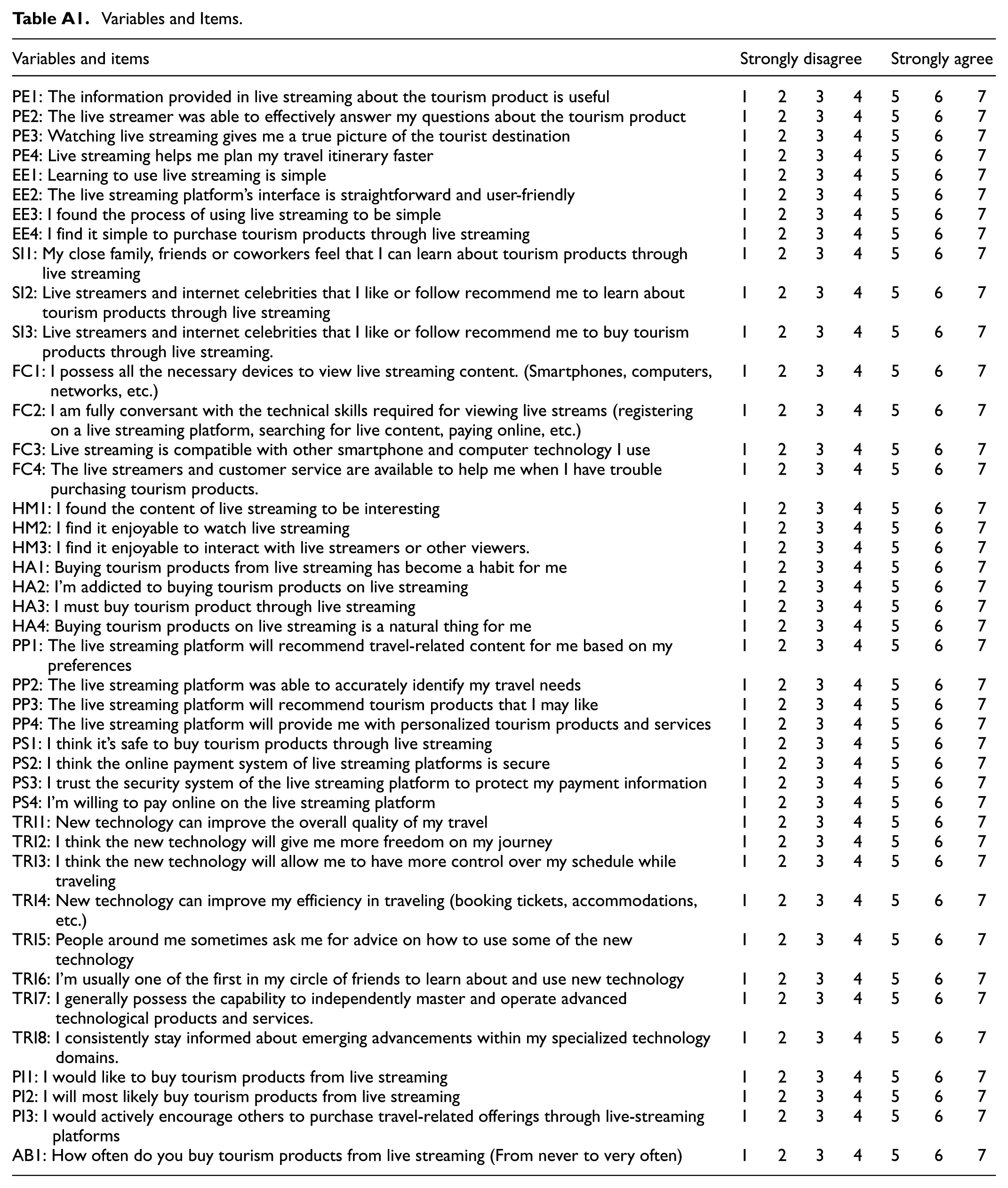
This research seeks to examine the factors that affect users’ purchase intentions and actual buying behaviors in TECLS, employing an expanded UTAUT2 model. Data were gathered via online surveys and analyzed with PLS-SEM. The initial section of the survey focused on participants’ engagement with TECLS. We surveyed respondents about their experience with using TECLS and whether they had made any purchases of tourism products during live streaming sessions. The second part assessed 11 variables using a 7-point Likert scale. The items for PE, SI, EE, HM, FC, HA were referenced from the studies of Venkatesh et al. (2012), Morosan and DeFranco (2016); the measurement of PP used the scale of Zhang et al. (2014); the measurement of PS were taken from the research of Escobar-Rodríguez and Carvajal-Trujillo (2014); items for TRI were adapted from Parasuraman and Colby (2015); items for PI were referenced from Yu et al. (2023); and items for AB are from Assaker et al. (2020). The details of the items are shown in Appendix A, Table A1. By adopting measurement scales that have been empirically validated through previous research, we are able to achieve more precise assessment of the target variables. The third section collected demographic information about the respondents, including their gender, age, education level, and more. Additionally, we also recorded the respondents’ IP addresses (which typically correspond to their actual locations). The questionnaire items were originally developed in English and were subsequently translated into Chinese with the assistance of university-level English language instructors. Subsequently, we invited several professors specializing in tourism to review our questionnaire. We then revised the format, wording, and cultural tone of the instrument based on their feedback. This process enhanced the clarity of the questionnaire and improved its alignment with the core concepts of the target variables. A pre-test was conducted with twenty tourism students to ensure that the questions were understood.
Data Collection
The data collection was conducted from August 9, 2023, to September 12, 2023, lasting 35 days. The electronic questionnaire was created using the Credemo website. Credemo is an online platform designed for conducting and distributing surveys, providing researchers and organizations with an efficient tool to collect and analyze data. This software has been extensively utilized in numerous quantitative empirical studies and has demonstrated robust performance.
The researchers searched for posts related to TECLS on two platforms, Weibo and Ctrip boss live, and distributed questionnaires in the user comment section. Weibo is one of the most widely used social media platforms in China with significant influence. Tourism suppliers, local tourism bureaus, and independent bloggers publish live streaming commerce information on Weibo to gain greater visibility. It also serves as a highly popular live streaming platform with diverse content, demonstrating outstanding performance in tourism live streaming commerce. Ctrip stands as one of China’s earliest online travel agencies to launch TECLS. As early as 2020, live streams led by Ctrip’s CEO achieved remarkable commercial success. Ctrip’s case has established a new direction for online tourism marketing in China. Additionally, both platforms enable viewers to freely discuss tourism-related live streams, which significantly enhances user engagement with TECLS. Therefore, both platforms host a substantial number of users who purchase tourism products through live streams. Conducting surveys on these platforms enables us to efficiently reach our target research participants. This sampling method may somewhat overlook users who do not leave comments or actively engage with the content. However, the study prioritizes highly engaged users, as they are more likely to be attentive to TECLS and have more substantial experience with using such platforms. Their deeper engagement and familiarity with TECLS provide valuable insights, enhancing the credibility and relevance of their responses. By focusing on this active user group, the study aims to capture more informed perspectives, ensuring the quality and reliability of the findings.
This study employed stratified sampling. First, respondents were differentiated by source, with nearly equal numbers of questionnaires collected from two different platforms. Second, TECLS users were grouped by gender and age, and a certain number of respondents were selected from each group. This approach enhanced the representativeness of the sample. We have established the following screening criteria for respondents: they must have used TECLS within the past month and have made at least one purchase of travel products or services during a live streaming session. Only respondents who answer “Yes” to both of these qualifying questions will be permitted to continue with the survey. 700 questionnaires were distributed in our study and 616 valid ones were retained after removing some invalid ones with missing data, duplicated answers, and too short filling time (less than 3 min). We first used anonymous questionnaires to ensure that no personal information would be disclosed and that participants’ privacy rights would not be harmed. Based on this protection, the study can provide practical guidance for tourism e-commerce livestreaming, which will contribute to the advancement of destination marketing. Therefore, the research generates social benefits for tourism marketing development while posing no harm to participants’ privacy. Finally, before distributing the questionnaire, we informed each participant of the study’s purpose and procedures, as well as their right to withdraw at any time. All participants agreed to take part in the survey and consented to the use of the anonymous data collected for the purpose of publishing the paper. A power analysis was performed using G-Power software. It is a widely used statistical software designed for conducting power analysis in various research fields. It helps researchers determine the appropriate sample size required to achieve a desired statistical power for a given effect size and significance level. G*Power supports a wide range of statistical tests, including t-tests, ANOVAs, regression analyses, and correlation tests, making it versatile for different study designs. Based on an effect size of 0.3 and a significance level (α) of .05, it was determined that at least 93 samples were necessary to attain 85% statistical power (1−β). Additionally, this study collected 616 valid responses for 42 questionnaire items, resulting in a response-to-item ratio higher than 10:1. Therefore, our sample is adequate for structural equation modeling.
Descriptive Analysis
Of the 616 respondents, 52.1% were male and 47.9% were female, indicating a relatively balanced gender distribution within the sample. A large portion, 81.3%, fell within the age range of 18 to 45, highlighting the prevalence of young adults in the sample. This demographic is likely more comfortable with and skilled in using online platforms, making them more likely to engage in purchasing travel products through digital channels. In terms of education, 68.6% of respondents possessed at least a bachelor’s degree, suggesting the sample is highly educated. Moreover, nearly two-thirds of participants reported having a minimum of 1 year of experience with TECLS, which underscores their familiarity with the platform and its relevance to the study. Geographically, the sample was diverse, with respondents representing almost every province in China. The largest proportions of participants came from Jiangsu (9.25%), Zhejiang (8.93%), Guangdong (8.77%), Shandong (7.63%), Fujian (6.66%), and Anhui (6.01%), ensuring the sample’s geographical representativeness across the country. This diverse demographic profile contributes to the robustness and generalizability of the findings, making them more applicable to the broader Chinese population (Table 1).
Basic Information About the Respondents.

Results
PLS-SEM was used in our research. It is a statistical technique used to analyze complex relationships between multiple variables. It is particularly useful for exploratory research and small sample sizes, as it does not require strict assumptions about data distribution. PLS-SEM allows researchers to simultaneously assess both measurement and structural models, making it ideal for testing theoretical models with multiple predictors and outcomes. Its flexibility and ability to handle latent variables with reflective and formative indicators make it a powerful tool for understanding intricate, multidimensional relationships in various fields of study. PLS-SEM is an applicable tool for data analysis because our study involves testing the UTAUT2 from a predictive perspective and presents a complex structural model.
Measurement Model
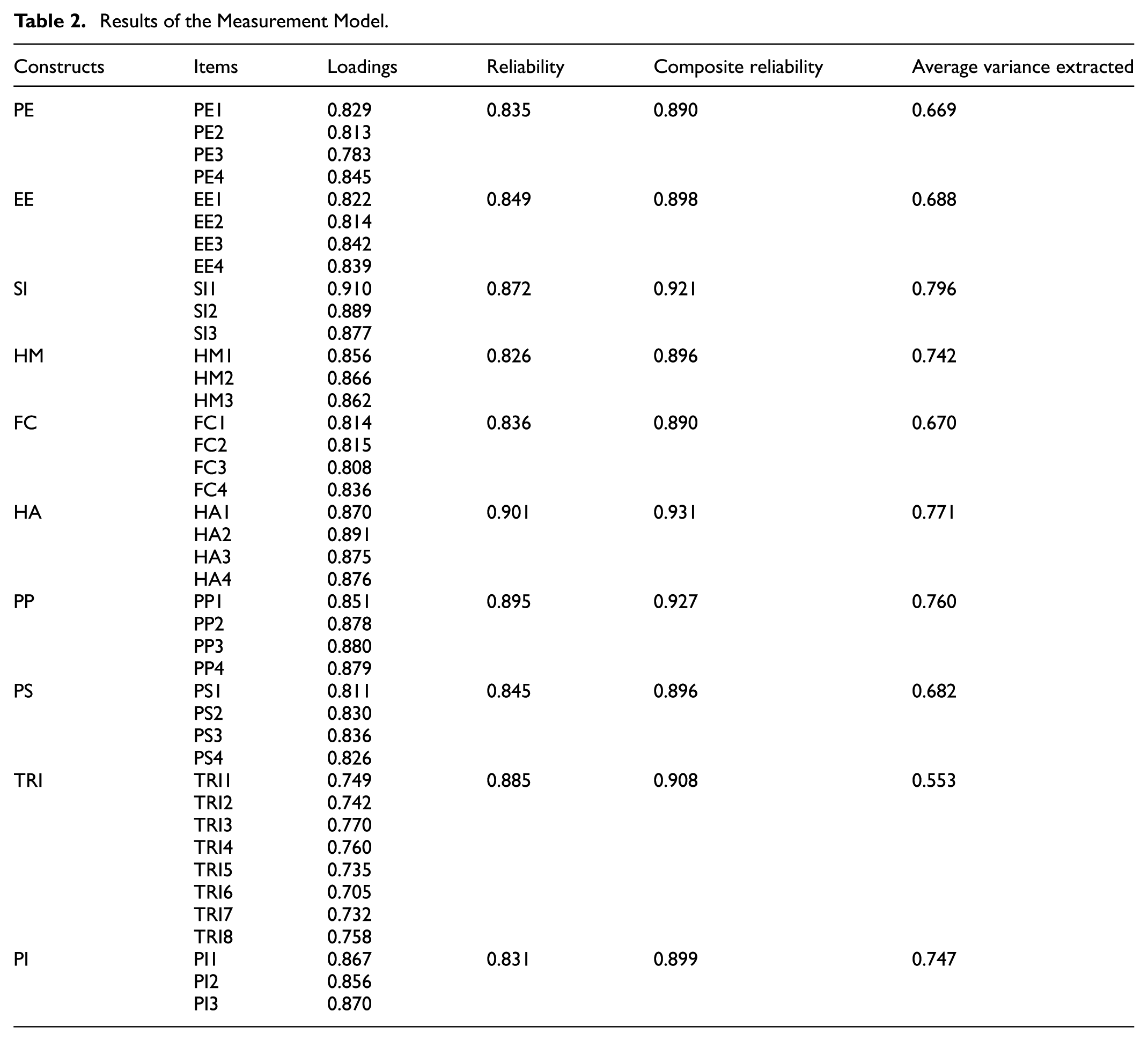
This study first tested the convergent validity (CV) and discriminant validity (DV) of measurement model. According to previous studies, the threshold values for factor loadings, Cronbach’s alpha, composite reliability, and average variance extracted are 0.7, 0.7, 0.7, and 0.5, respectively (Nunnally & Bernstein, 1994). In our study, all factor loadings are above 0.7, all Cronbach’s alpha and composite reliability values are above 0.8, and all average variance extracted values are above 0.5. This indicates good convergent validity (see Table 2). Table 3 describes the results of the HTMT, where all values are less than the threshold of 0.85, which meets the criteria for discriminant validity (Henseler et al., 2015). As such, convergent and discriminatory validity were achieved. This indicates that our measurement tool is reliable and valid, effectively reflecting the relationships between the model’s variables.
Results of the Measurement Model.
Results of the Heterotrait-Monotrait Ratio (HTMT).

Structural Model
In terms of structural model, the study first measured the coefficient of determination (R2). R2 values are said to be substantial, moderate, and weak at 0.60, 0.33, and 0.19, respectively. The results show that the R2 value of PI is 0.606, which is at a high level, while the R2 value of AB is 0.325, which is close to 0.33, and therefore at a moderate level. Next, the Q2 values of PI (0.438), AB (0.313), were above zero, denoting high predictive relevancy of the model. The value of SRMR is 0.039, which is much lower than 0.1, showing the goodness of fit of the model. Table 4 presents the path coefficients (β) of all predictors on PI and AB. The results demonstrate that PE (β = .124, t = 2.944, p = .003), EE (β = .093, t = 2.449, p ;= .014), SI (β = .139, t = 3.372, p ;= .001), FC (β = .096, t = 2.193, p ;= .028), HM (β = .082, t = 2.086, p ;= .037), PP (β = .156, t = 4.747, p ;= .000), and PS (β = .122, t = 2.790, p ;= .005) significantly influence PI. Among these, HM shows the weakest effect on PI, while PP emerges as the most significant predictor. Similarly, FC (β = .129, t = 2.884, p ;= .004), HA (β = .393, t = 10.545, p ;= .000), and PI (β = .187, t = 4.333, p ;= .000) significantly affect AB, with HA being the strongest predictor. Most paths exceeded Cohen’s (1988) f2 threshold of 0.02, while EE→PI (0.014), FC→PI (0.011), HM→PI (0.010), and FC→AB (0.017) showed small effects. However, their statistical significance (p ;< .05) suggests meaningful relationships.
Results of Hypothesis Testing.

Note. EE = effort expectancy; FC = facilitating conditions; PE = performance expectancy; HM = hedonic motivation; HA = habit; SI = social influence; PP = perceived personalization; PS = perceived security; PI = purchase intention; AB = actual purchase behavior.
Multi-Group Analysis
Moderating effect is examined through multi-group analysis (MGA). Multi-group comparison analysis is a valuable technique used to examine whether relationships or patterns within a model differ across distinct groups. By comparing multiple subgroups, such as demographic categories or different user segments, this analysis allows researchers to assess the invariance or variability of constructs in various contexts. It provides deeper insights into how specific factors may affect different groups differently, aiding in the customization of strategies or interventions. This method enhances the robustness of the findings by revealing potential moderating effects that may be overlooked in overall, aggregate-level analyses. Respondents are categorized into a “high technology readiness index group” and a “low technology readiness index group” through median split and used Bootstrap Multi-group Analysis with 1,000 subsamples to examine differences in hypothesized pathways between them. The Difference between coefficient column in Table 5 presents the disparities in path coefficients between the high/low TRI groups. The results reveal significant differences (p < .05) in the paths EE→PI (0.194), SI→PI (−0.172), HM→PI (0.223), and PP→PI (0.214), indicating that TRI moderates these four relationships. Regarding the goodness-of-fit of purchase intentions, the high TRI group was 0.424 better than the low TRI group (R2High TRI−R2LOW TRI = 0.424). This gap can be viewed as the magnitude of the moderating effect between the two groups, suggesting that TRI is an effective moderator.
Moderating Effects of TRI.

Note. TRI = technology readiness index.
Discussion and Conclusion
Discussion
This study examines the factors influencing TECLS users’ purchase intention and actual purchase behavior. Data were collected through online questionnaires and analyzed using PLS-SEM. The findings reveal that PE, EE, SI, FC, and HM all significantly affect PI. Furthermore, FC, HA, and PI were found to significantly influence AB. Therefore, this research provides empirical evidence supporting UTAUT2’s strong explanatory power for technology adoption within an emerging tourism marketing context, corroborating previous studies (Dogra & Adil, 2024; Ong et al., 2023).
Additionally, Perceived Personalization (PP) and Perceived Security (PS) were incorporated into the UTAUT2 model to conceptually expand its explanatory dimensions for technology acceptance. Specifically, PP measures users’ perception of how well a technology adapts to their individual needs, addressing the original model’s oversight of “customized experiences.” This is particularly applicable to digital consumption scenarios emphasizing precision services. PS introduces a risk assessment perspective, enhancing the original model’s consideration of “potential threats in technology use,” particularly applicable to data-sensitive and transaction-security domains. The incorporation of both constructs enables UTAUT2 to better align with the digital economy era’s dual focus on both personalization and privacy protection.
Based on the effect size (f2), PP, SI, PE, and PS exhibit significantly stronger effects on purchase intention (PI) compared to EE, FC, and HM. This discrepancy may stem from users prioritizing utilitarian needs over hedonic and convenience-related demands in TECLS. Specifically, unlike entertainment-oriented travel live stream, the primary objective of commerce-oriented live stream viewers is to gather practical information about travel destinations, products, and services to facilitate purchase decisions. Therefore, hedonic value may not constitute a key motivation for their use of e-commerce platforms. During this process, users are likely to encounter an overwhelming volume of travel product information. Consequently, they tend to rely heavily on algorithm-powered personalized recommendation technologies and streamers’ professional expertise to reduce time costs in decision-making and choice uncertainty (Lee et al., 2022). The security of the information environment remains a critical factor, constituting an inescapable technological concern in online transactions that directly impacts users’ vital interests and financial safety (Dogra & Adil, 2024). In comparison, the ease of use and equipment requirements of live-streaming e-commerce appear less significant. With the widespread adoption of smart mobile devices, the proliferation of e-commerce technologies, and the improvement of digital literacy, users can now effortlessly and seamlessly complete online purchases. Under these circumstances, the time, cognitive effort, and equipment costs associated with learning and using e-commerce technologies are unlikely to play a decisive role in technology adoption behavior.
Habit (HA) has a significantly stronger influence on actual purchase behavior (AB) than purchase intention (PI) and facilitating conditions (FC). The dual-process theory can help explain why HA has a stronger predictive power than PI. Users who habitually use TECLS to purchase travel products may rely on past emotions, memories, and experiences to make purchase decisions. Their behavior is intuitive, rapid, and automated, whereas the formation of purchase intention depends on cognitive processing—it is deliberate and slower. Therefore, purchase habits may trigger actual buying behavior more quickly and spontaneously than intentions. Additionally, as the adoption rate of technological devices continues to rise, facilitating conditions tend to become a basic necessity for users, and their explanatory power over purchase behavior is likely to be weaker than the spontaneously formed purchasing habits of users.
TRI was found to be an effective moderator variable in TECLS, which is consistent with the existing literature (Forgas-Coll et al., 2023). Our study found that in the high TRI group, PE, EE, HM, FC, PP, and PS were able to influence PI while SI could not. These users exhibit high levels of optimism and innovativeness toward technology. They believe TECLS can enhance the efficiency and flexibility of travel decision-making, and they tend to be technology pioneers (Parasuraman & Colby, 2015). Consequently, various positive features of streaming media may motivate them to purchase travel products through this platform. However, high-TRI users may possess stronger self-efficacy in technology operation and information processing, leading them to rely more on their own judgment rather than external opinions (e.g., recommendations from friends or live streamers) when making purchase decisions. This explains why social influence fails to significantly affect their purchase intention. In the low TRI group, PE, SI, and PS had significant positive effects on PI, whereas EE, HM, FC, and PP did not. Users with low TRI levels may feel a sense of insecurity toward TECLS, questioning whether this new marketing medium can truly help them obtain their desired travel products. Simultaneously, they harbor concerns about the potential risks associated with using such technology. As a result, these users tend to place greater emphasis on whether streaming platforms can provide authentic and useful product and destination information. To alleviate their unease in online travel purchases, they rely more heavily on the opinions of professionals or trusted individuals, as well as the platform’s security assurances. This explains the predictive effects of PE, SI, and PS on PI. Additionally, users with low TRI levels may experience discomfort toward TECLS. They tend to perceive themselves as incapable of mastering new technologies and become weary of the cognitive burden imposed by technological innovations. This technological adaptation barrier may prevent them from effectively perceiving the technical convenience and user-friendliness of live streaming environments, diminish their sensitivity to digital entertainment experiences, and lead them to view personalized services as technological intrusions rather than value-added benefits. As a result, EE, FC, HM, and PP fail to enhance their purchase intention.
Theoretical Implications
Despite TECLS’s strong marketing performance, few studies have examined viewers’ purchase behaviors. Notably, no existing studies have investigated viewers’ purchase behaviors through the integrated lens of UTAUT2 theory, perceived personalization and security. Our study addresses this gap by integrating these three dimensions into a comprehensive research model, thereby providing a more complete framework for understanding viewers’ purchase decision-making. The proposed model demonstrates strong explanatory power. Furthermore, this study develops a reliable measurement instrument specifically tailored for TECLS contexts, which can serve as a valuable reference for future quantitative research in this domain.
This study extends the research on group comparisons in TECLS through multi-group analysis. It tests whether a structural model’s relationships are invariant across subgroups. Existing literature has primarily examined the moderating effects of gender, viewing experience, and impulsive consumption tendency on TECLS users’ purchase intention (Lv et al., 2022), but has not yet investigated the influence mechanism of the technology readiness index (TRI). The results demonstrate that TRI leads to significant differences in the effects of EE, SI, HM, and PP on PI between high- and low-TRI user groups. This finding not only confirms TRI’s moderating role but also provides new insights into understanding behavioral differences among viewers.
This study also contributes to the UTAUT2 theory. Although this model has been extensively used in different technological settings, its applicability has not yet been examined in the TECLS setting. Therefore, this study investigates its explanatory power in a novel technological environment. Live-streaming e-commerce, being mobile-based, incurs negligible costs. Under such circumstances, users do not consider cost as a determinant of their adoption of TECLS. Therefore, price value was excluded as it may not be applicable to free technologies. Second, this study extends the UTAUT2 model by incorporating perceived personalization and perceived security, as the original model fails to account for the importance of personalized product recommendations and privacy protection in big data environments (Ong et al., 2023). The results demonstrate that both newly added variables significantly influence users’ purchase intention, thereby enhancing the model’s applicability in evolving technological contexts.
Managerial Implications
Our study provides crucial managerial implications for digital tourism marketing practitioners. Firstly, technology teams should prioritize developing AI-powered recommendation systems that elevate user purchasing journeys. For example, generative recommendation engines could synthesize real-time streaming content, individual preference data, and live comment interactions to produce customized travel product descriptions and personalized itinerary suggestions. Secondly, platforms need to strengthen user confidence through transparent communication regarding data usage purposes and protection protocols. Finally, implementing multi-layered biometric verification during payment processes—combining fingerprint, facial recognition, and voiceprint authentication—will establish robust transaction security frameworks that address growing privacy concerns in digital tourism commerce.
Second, live streamers need to enhance both professionalism and interaction skills to satisfy viewers’ utilitarian and hedonic needs. On the one hand, anchors should offer professional and trustworthy opinions to assist viewers in making informed travel decisions. On the other hand, anchors should be trained to be interactive friends and provide emotional value to viewers. For example, live streamers should maintain a humorous and witty language style, and stimulate viewers’ emotions by displaying their talents (singing, dancing, etc.). They can also add a gamification dimension to the live streaming process, such as some interactive games with coupons. Additionally, anchors can be trained to create short videos to grow multi-channel followings.
Third, it is important for practitioners to ensure a smooth and user-friendly experience on TECLS platforms. A practical step is to integrate a human-like AI assistant directly into the live-stream interface. This assistant can provide instant help and direct links to featured travel products or key platform functions, making navigation easier and increasing viewer interaction. Furthermore, platforms should become more inclusive for diverse user groups. This involves enhancing features like speech recognition for dialect speakers, adding sign language interpretation for the hearing impaired, and incorporating audio descriptions for the visually impaired. These improvements help make live streaming accessible to special groups, including the elderly and individuals with different abilities, ultimately creating a more welcoming and usable environment for all potential tourists.
Finally, marketers should focus on cultivating consumers’ habitual use of TECLS platforms. A key strategy involves consistently demonstrating the platform’s diverse functionalities during live sessions—such as how to book hotels, purchase attraction tickets, and even use travel companion matching services. Beyond the broadcasts, creating dedicated online communities (e.g., WeChat or WhatsApp groups) helps maintain ongoing engagement and strengthen emotional bonds with customers, which is crucial for building long-term loyalty. Furthermore, regularly launching targeted promotional campaigns, like limited-time discounts or exclusive post-stream offers, can effectively encourage repeated purchasing behavior and solidify usage habits.
Limitations and Future Research
This investigation acknowledges certain methodological constraints that warrant consideration. Primarily, the questionnaire distribution strategy—limited to comment sections of TECLS platforms—may have systematically excluded passive viewers who refrain from online interactions, thereby introducing potential sampling bias toward more vocal and engaged users. Furthermore, from a methodological perspective, the application of median split technique in multi-group analysis, while theoretically justified, inherently risks information loss and diminished statistical power due to the artificial dichotomization of continuous variables. To address these limitations in future inquiries, researchers are advised to adopt interaction term analysis within structural equation modeling or regression frameworks, which preserves variable continuity and offers more statistically robust insights into moderating effects.
Here are some worthwhile directions for future research. Our current study focuses mainly on the TECLS market within China. As live streaming technology continues to spread worldwide, it would be valuable to compare how travelers from different countries and cultures perceive and adopt this technology. Understanding these cross-cultural differences in adoption intention could reveal important insights. Such comparative studies would ultimately help develop more effective and culturally-aware tourism marketing strategies, providing useful lessons for the global tourism industry.
The generalizability of our findings is subject to certain limitations regarding platform selection. This investigation exclusively sampled users from two established platforms—Ctrip and Weibo—which, while influential, represent specific segments of the TECLS landscape. Given the substantial variations in interface design, content curation, and user demographics across different streaming services, our conclusions may not fully capture the behavioral patterns prevalent on other prominent platforms. For instance, the dynamic short-video environment of TikTok or the specialized travel community of Mafengwo could yield substantially different user responses. Several international live streaming platforms, such as Amazon, YouTube, and Facebook, could also be considered for investigation. To verify the robustness and cross-platform validity of our proposed model, subsequent studies should implement replication studies incorporating diverse user bases from additional major TECLS platforms.
Our research extends the theoretical application of the UTAUT2 model by establishing an analytical framework for understanding purchasing behaviors in Tourism E-commerce Live Streaming contexts. While this adapted model demonstrates explanatory utility, it does not comprehensively incorporate all relevant technical characteristics of contemporary digital marketing ecosystems. To advance this line of inquiry, future investigations should examine the predictive capacity of additional antecedent variables, including but not limited to: privacy calculus mechanisms, dynamic trust formation processes, and perceived advertising intrusiveness (Lee et al., 2022). Such multidimensional exploration would enhance the model’s robustness and provide deeper insights into the complex psychological mechanisms driving consumption behaviors in immersive digital marketplaces.
Conclusion
Our research focus on the purchasing behavior of users in China’s TECLS. The findings reveal that PP, SI, PE, and PS are the strongest factors influencing purchase intention. Habit demonstrates a stronger predictive power on actual purchase behavior than purchase intention and facilitating conditions. Additionally, the technology readiness index moderates the effects of EE, SI, HM, and PP on purchase intention. These insights provide both theoretical contributions and practical implications for TECLS platform optimization. This study also reflected on certain methodological and cultural contextual limitations of the study and proposed potential directions for future research.
In terms of theoretical contributions, this study advances the understanding of factors influencing purchasing behaviors in TECLS. It supplements existing research by examining group comparisons among TECLS users, explaining behavioral differences between users with varying levels of technological adaptability. Furthermore, the study affirms the relevance of the UTAUT2 model in the context of TECLS, while also broadening the theoretical framework by introducing two additional factors: perceived personalization and perceived security. These factors are shown to significantly influence purchase intention, providing deeper insights into user behavior within this specific domain. By incorporating these elements, the study not only enhances the explanatory power of the original UTAUT2 model but also offers valuable implications for improving strategies aimed at boosting consumer engagement and purchase behavior in the rapidly growing tourism e-commerce sector.
This study offers management insights for tourism e-commerce live streaming. The platform should develop an AI recommendation system to deliver personalized solutions by aligning live content with user preferences, while implementing biometric authentication to ensure secure payments. Anchor training should emphasize both expertise and engagement, providing trustworthy recommendations while incorporating entertainment elements such as talent performances and interactive games. Additionally, the platform should enhance accessibility for special groups by introducing features like dialect recognition and assistive audiovisual technologies. Meanwhile, tourism suppliers should foster user loyalty by integrating booking services and creating membership communities, supplemented by regular promotions to strengthen retention. Crucially, successful TECLS relies on the coordinated optimization of three key dimensions: technological support, content quality, and user experience.
Finally, while our study exhibits certain methodological and contextual limitations, these can be addressed in future research. It is recommended that tourism marketing topics be explored across more countries and live streaming platforms. Additionally, further investigation is needed to examine other potential live streaming features that may influence tourist consumption behavior.
Footnotes
Appendix A
Variables and Items.
| Variables and items | Strongly disagree | Strongly agree | |||||
|---|---|---|---|---|---|---|---|
| PE1: The information provided in live streaming about the tourism product is useful | 1 | 2 | 3 | 4 | 5 | 6 | 7 |
| PE2: The live streamer was able to effectively answer my questions about the tourism product | 1 | 2 | 3 | 4 | 5 | 6 | 7 |
| PE3: Watching live streaming gives me a true picture of the tourist destination | 1 | 2 | 3 | 4 | 5 | 6 | 7 |
| PE4: Live streaming helps me plan my travel itinerary faster | 1 | 2 | 3 | 4 | 5 | 6 | 7 |
| EE1: Learning to use live streaming is simple | 1 | 2 | 3 | 4 | 5 | 6 | 7 |
| EE2: The live streaming platform’s interface is straightforward and user-friendly | 1 | 2 | 3 | 4 | 5 | 6 | 7 |
| EE3: I found the process of using live streaming to be simple | 1 | 2 | 3 | 4 | 5 | 6 | 7 |
| EE4: I find it simple to purchase tourism products through live streaming | 1 | 2 | 3 | 4 | 5 | 6 | 7 |
| SI1: My close family, friends or coworkers feel that I can learn about tourism products through live streaming | 1 | 2 | 3 | 4 | 5 | 6 | 7 |
| SI2: Live streamers and internet celebrities that I like or follow recommend me to learn about tourism products through live streaming | 1 | 2 | 3 | 4 | 5 | 6 | 7 |
| SI3: Live streamers and internet celebrities that I like or follow recommend me to buy tourism products through live streaming. | 1 | 2 | 3 | 4 | 5 | 6 | 7 |
| FC1: I possess all the necessary devices to view live streaming content. (Smartphones, computers, networks, etc.) | 1 | 2 | 3 | 4 | 5 | 6 | 7 |
| FC2: I am fully conversant with the technical skills required for viewing live streams (registering on a live streaming platform, searching for live content, paying online, etc.) | 1 | 2 | 3 | 4 | 5 | 6 | 7 |
| FC3: Live streaming is compatible with other smartphone and computer technology I use | 1 | 2 | 3 | 4 | 5 | 6 | 7 |
| FC4: The live streamers and customer service are available to help me when I have trouble purchasing tourism products. | 1 | 2 | 3 | 4 | 5 | 6 | 7 |
| HM1: I found the content of live streaming to be interesting | 1 | 2 | 3 | 4 | 5 | 6 | 7 |
| HM2: I find it enjoyable to watch live streaming | 1 | 2 | 3 | 4 | 5 | 6 | 7 |
| HM3: I find it enjoyable to interact with live streamers or other viewers. | 1 | 2 | 3 | 4 | 5 | 6 | 7 |
| HA1: Buying tourism products from live streaming has become a habit for me | 1 | 2 | 3 | 4 | 5 | 6 | 7 |
| HA2: I’m addicted to buying tourism products on live streaming | 1 | 2 | 3 | 4 | 5 | 6 | 7 |
| HA3: I must buy tourism product through live streaming | 1 | 2 | 3 | 4 | 5 | 6 | 7 |
| HA4: Buying tourism products on live streaming is a natural thing for me | 1 | 2 | 3 | 4 | 5 | 6 | 7 |
| PP1: The live streaming platform will recommend travel-related content for me based on my preferences | 1 | 2 | 3 | 4 | 5 | 6 | 7 |
| PP2: The live streaming platform was able to accurately identify my travel needs | 1 | 2 | 3 | 4 | 5 | 6 | 7 |
| PP3: The live streaming platform will recommend tourism products that I may like | 1 | 2 | 3 | 4 | 5 | 6 | 7 |
| PP4: The live streaming platform will provide me with personalized tourism products and services | 1 | 2 | 3 | 4 | 5 | 6 | 7 |
| PS1: I think it’s safe to buy tourism products through live streaming | 1 | 2 | 3 | 4 | 5 | 6 | 7 |
| PS2: I think the online payment system of live streaming platforms is secure | 1 | 2 | 3 | 4 | 5 | 6 | 7 |
| PS3: I trust the security system of the live streaming platform to protect my payment information | 1 | 2 | 3 | 4 | 5 | 6 | 7 |
| PS4: I’m willing to pay online on the live streaming platform | 1 | 2 | 3 | 4 | 5 | 6 | 7 |
| TRI1: New technology can improve the overall quality of my travel | 1 | 2 | 3 | 4 | 5 | 6 | 7 |
| TRI2: I think the new technology will give me more freedom on my journey | 1 | 2 | 3 | 4 | 5 | 6 | 7 |
| TRI3: I think the new technology will allow me to have more control over my schedule while traveling | 1 | 2 | 3 | 4 | 5 | 6 | 7 |
| TRI4: New technology can improve my efficiency in traveling (booking tickets, accommodations, etc.) | 1 | 2 | 3 | 4 | 5 | 6 | 7 |
| TRI5: People around me sometimes ask me for advice on how to use some of the new technology | 1 | 2 | 3 | 4 | 5 | 6 | 7 |
| TRI6: I’m usually one of the first in my circle of friends to learn about and use new technology | 1 | 2 | 3 | 4 | 5 | 6 | 7 |
| TRI7: I generally possess the capability to independently master and operate advanced technological products and services. | 1 | 2 | 3 | 4 | 5 | 6 | 7 |
| TRI8: I consistently stay informed about emerging advancements within my specialized technology domains. | 1 | 2 | 3 | 4 | 5 | 6 | 7 |
| PI1: I would like to buy tourism products from live streaming | 1 | 2 | 3 | 4 | 5 | 6 | 7 |
| PI2: I will most likely buy tourism products from live streaming | 1 | 2 | 3 | 4 | 5 | 6 | 7 |
| PI3: I would actively encourage others to purchase travel-related offerings through live-streaming platforms | 1 | 2 | 3 | 4 | 5 | 6 | 7 |
| AB1: How often do you buy tourism products from live streaming (From never to very often) | 1 | 2 | 3 | 4 | 5 | 6 | 7 |

Ethical Considerations
Ethical permission was not applied for this study. The data collection in this study was entirely anonymous. The researcher did not interact with any identifiable private information.
Consent to Participate
All participants were informed in advance about the purpose and procedures of the study and voluntarily agreed to participate. Informed consent was obtained verbally before participation.
Funding
The authors received no financial support for the research, authorship, and/or publication of this article.
Declaration of Conflicting Interests
The authors declared no potential conflicts of interest with respect to the research, authorship, and/or publication of this article.
Data Availability Statement
The datasets generated during and/or analyzed during the current study are available from the corresponding author on request.