




Abstract
This study explores academics’ perspectives on integrating artificial intelligence (AI) into Moroccan higher education (HE). A questionnaire examining perceived benefits, challenges, and influence of demographic factors was distributed to 103 faculty members at the college of Arts and Humanities, Sidi Mohamed Ben Abdellah University in Fez, Morocco. The results reveal that AI offers promising opportunities to enhance educational practices by improving efficiency and providing valuable learning resources. However, participants also expressed concerns that increased use of AI may negatively impact student-instructor interactions and academic integrity. Preliminary analyses suggested age and academic discipline may shape views on AI, but robust statistical testing was needed. Overall, findings indicate AI adoption presents a dual-edged situation for HE. If properly planned and regulated and equity concerns are addressed, AI technologies can transform teaching and learning positively, but unaddressed challenges may undermine educational quality and student experiences. This study provides timely insights into how best to maximize AI’s benefits while addressing its risks as digital transformation increasingly impacts Moroccan universities.
Introduction
As we live in a technological era, artificial intelligence (AI) is rapidly becoming a standard tool for use in various fields, including finance, business, media, and medicine. Education has also been influenced by science and technology. Thus, AI has become an inescapable reality for higher education (HE) institutions. Embracing this transformative technology is fundamental for academics and students to face future learning challenges. It has been argued that the future of HE is connected with the growth of new technologies and computing abilities (Jain & Jain, 2019).
The concept of AI has attracted much attention among scholars since it was revealed in the 1950s (Xia & Li, 2022). Different scholars hold various definitions of the concept of AI. Cristianini (2016) states that the term AI is not new, as it was coined in 1956 by John McCarthy (Cristianini, 2016; McCarthy, 2007). McCarthy (2007) provided one of the most comprehensive definitions of AI: “the science and engineering of making intelligent machines, brilliant computer programs. It is related to the similar task of using computers to understand human intelligence. However, AI does not have to confine itself to biologically observable methods” (McCarthy, 2007, p. 2). Russell and Norvig (2016) sees AI as a distinctive field of study, “the only field to attempt to build machines that will function autonomously in complex, changing environments” (Russell & Norvig, 2016, p. 18). The definition of AI has developed and changed since 1956, as there have been substantial advancements in AI capabilities (Crompton & Burke, 2023). A contemporary definition of AI is “computing systems that can engage in human-like processes such as learning, adapting, synthesizing, self-correction and the use of data for complex processing tasks” (Popenici & Kerr, 2017).
Crompton et al. (2020) argue that AI is rapidly emerging in education as it can potentially improve teaching and learning in HE. AI is being applied in HE to improve the efficiency of educational practices in various areas (Crompton et al., 2020). Zuboff (2023) identifies four major applications of AI in teaching and learning: profiling and prediction, intelligent tutoring systems, assessment and evaluation, adaptive systems, and personalization (Zuboff, 2023). As AI becomes an inescapable reality, most HE institutions worldwide embrace the latest technologies to facilitate and develop teaching and learning processes. Morocco aims to revolutionize and modernize its education system like any other country to provide students with the most proficient and compelling learning experiences. As the internet dispersion continues to extend in Morocco, AI platforms supplement traditional educational tools and enrich the learning process away from the borders of traditional classrooms. Since 2020, particularly during the COVID-19 pandemic, the demand for integrating advanced technologies in HE has increased. However, Morocco has made momentous steps toward integrating developed technology (Fakhar et al., 2024).
Morocco’s HE system has advanced in using AI technology, yet obstacles persist. Internet penetration is at 84.1%, facilitating the “Maroc Digital 2020” program focused on digital education. Prominent universities have integrated AI into their courses and implemented AI-enhanced smart classrooms. During the COVID-19 pandemic, the utilization of AI-driven e-learning systems increased. Nevertheless, only a few universities have enough AI resources, and an even smaller proportion of faculty members are proficient in AI technology. The government is developing a national AI policy for 2025, yet obstacles remain in expanding these initiatives (Youssef, 2023; Zaanoun, 2023).
Despite the increasing push to integrate AI in global HE, Moroccan institutions face unique challenges that hinder effective implementation. These challenges include limited AI resources, varying academic familiarity with AI, and socio-economic disparities affecting students’ access to technology. This study seeks to explore the critical barriers to AI integration in Moroccan universities, focusing on how these factors shape academic perceptions and how they may influence educational practices. The research also aims to uncover AI’s benefits if these challenges are addressed.
Nevertheless, many believe the country needs to modernize HE over time. Therefore, this study is designed to detect academics’ views about the benefits and challenges of implementing AI in Moroccan HE via a structural questionnaire. The current study aims to answer the following questions.
➢ What are the academics’ perceptions about integrating AI in teaching practices in Moroccan higher education institutions?
➢ What are the benefits and challenges of using AI in Moroccan higher education from the perspective of the academics at the college of Arts and Humanities, Sidi Mohamed Ben Abdellah University in Fez, Morocco.?
➢ Do academic specialties and age factors determine academics’ perceptions toward integrating AI in Moroccan higher education?
Literature Review
Benefits of Implementing AI in Higher Education
With the growth of AI and technological innovations, some opportunities will inexorably change how HE operates. It has been argued that AI can personalize instruction and make learning more accessible for academics and students. This is particularly true regarding one-on-one tuition, which is becoming increasingly expensive in some areas and situations with a reported teacher shortage (Chen et al., 2020; Gocen & Aydemir, 2020; Leoste et al., 2021). Thus, the ability of AI to personalize learning for individual students is the primary advantage of technological advances in education as Kelleher and Tierney (2018) argue that AI algorithms can create personalized learning plans for students based on their needs, interests, and abilities to enhance learning outcomes and engagement. AI offers students various resources like translation tools, voice assistants, chatbots, VR, gamification, personalized tutoring, instant assessment, and feedback. Such benefits enhance global classrooms, address learning needs, and create opportunities (Kelleher & Tierney, 2018)
Holmes et al. (2022) state that among many additional applications, virtual and augmented reality, voice assistants, and other tools provided by AI are practical and are now often employed in Western universities and high schools. The AI curriculum, for example, helps students advance more quickly and constructively, enabling them to meet their learning objectives at a speed that suits the dynamic needs of the 21st century (Holmes et al., 2022). It benefits the educational industry (Gocen & Aydemir, 2020). Mandernach (2018) assumes that using AI can help reduce academics’ workload, who can spend less time planning and more time working with individual students (Mandernach, 2018). For example, AI can grade assessments and release academic time for other essential tasks. In addition, AI tools can afford valued data on students’ performance, which can be utilized to notify instructions and develop learning outcomes (Shaun et al., 2014).
AI can help instructors and lecturers by facilitating the constraints enforced by office work, which demands considerable time, like doing administrative work, coordinating documents, analyzing learning patterns, and replying to different questions and tasks using AI (Al-Tkhayneh et al., 2023). Pisica et al. (2023) highlight that the COVID-19 pandemic exemplified the crucial role of advanced technologies, particularly in education, where institutions had to transition rapidly from traditional classrooms to virtual learning environments. Technology, including AI, enabled students to continue their education and develop academic skills despite the crisis. In addition to enhancing remote learning, AI also offers significant advantages for research. They suggested that AI facilitates interdisciplinary and multidisciplinary research by simplifying the process of searching vast amounts of data, connecting different fields, and integrating varied research methods to address complex topics (Pisica et al., 2023). On the other hand, Chaudhary (2017) argues that AI tools in classrooms primarily benefit teaching and learning by promoting cooperative learning and enhancing educational environments. Chaudhary’s study emphasizes AI’s contribution to creating interactive and effective learning experiences for students and educators rather than focusing on research (Chaudhary, 2017).
Recent studies highlight the dual impact of AI on academic integrity, particularly concerning cheating (Xie et al., 2023). A survey revealed that 47% of students believe generative AI, like ChatGPT, facilitates cheating more than ever before, with 33% citing it as a primary concern (Coffey, 2024). Research indicates that students often conceal AI-assisted cheating behaviors, suggesting a significant gap between reported and actual cheating rates (Nguyen & Goto, 2024). Furthermore, educational discussions emphasize the need for educational institutions to adapt their integrity frameworks to mitigate these challenges while leveraging AI’s benefits. To sum up, AI significantly contributes to reforming and changing the traditional landscape of HE. The new methods and approaches emerging from AI help enhance learning and teaching practices and improve students’ academic careers.
Challenges of Applying AI in Higher Education
Despite the advantages mentioned earlier, the use of AI in HE can be accompanied by various challenges or disadvantages. A significant disadvantage is the potential for students to use AI apps to cheat on assessments and tasks. Kavale and Forness (2019) declare that AI can produce papers or complete student assignments, undermining the educational value of the task. As a reaction to this risk, many academics and educators have called for neglecting traditional tasks to assess students and adopting more sophisticated and innovative open-ended tasks that machines cannot solve (Kulkarni et al., 2013).
While beneficial, AI technologies also present significant risks, particularly regarding academic integrity. Cheating has become easier with the advent of AI tools that can generate content or assist in completing assessments. Kavale and Forness (2019) argue that AI can undermine the educational process by enabling students to use AI-driven systems to complete assignments dishonestly, thus bypassing learning outcomes (Kavale & Forness, 2019). To counteract these risks, Kulkarni et al. (2013) recommend that educational institutions shift toward more innovative assessment techniques that focus on open-ended, problem-solving tasks, which are more challenging for AI tools to solve autonomously (Kulkarni et al., 2013). These strategies encourage critical thinking and creativity while minimizing the potential for AI-facilitated cheating. Gee (2003) believes that with the rise of AI in education, it becomes mandatory to develop “human” skills in students, like creativity, critical thinking, and problem-solving, that machines cannot reproduce (Gee, 2003).
Another challenge in adapting AI in HE is that it involves both human and financial efforts. In other words, academics must familiarize themselves with the new methods. Nevertheless, some academics need more training to perform and accomplish their tasks effectively, as the resources to train them are rare and have yet to be previously planned or budgeted (Pisica et al., 2023). Ayala-Pazmiño (2023) also insists that academics must learn how to integrate AI into their teaching practices effectively. Thus, educators should be updated with the newest technologies to improve their teaching strategies (Ayala-Pazmiño, 2023).
Another challenge is linked to the inequality in accessing technology. Liao et al. (2021) confirm that not all students have equivalent access to technology or the Internet, which can generate discrepancies in their capability to get an advantage from AI apps and resources (Liao et al., 2021). Pazmino (2023) argues that integrating AI into education can raise issues related to privacy, bias, and the dehumanization of the learning experience. AI-based apps can gather vast amounts of students’ data, which could be stolen or misused. Crompton and song (2021) states that for AI to be powerful, it needs to gather information about students to comprehend their cognitive level and personal preferences. Here, the role of the faculty is to be acquainted with where the data is going and keep students’ information protected.
Furthermore, integrating AI into the educational system may contribute to the need for more communication between students and tutors. Besides, it hampers the development of social and emotional intelligence (Pisica et al., 2023). These challenges highlight the complexity of integrating AI into HE. Issues such as data privacy, reduced social interaction between students and instructors, unequal access to technology, increased cheating cases, and the need for academics to familiarize themselves with advanced technologies are significant concerns that must be addressed by educators and institutions alike. Successful implementation will require a balanced approach to addressing these challenges while capitalizing on AI’s educational benefits.
The challenges of integrating AI in HE can be summarized in data privacy, lack of social interaction between students and instructors, inequality in accessing technology, the increase of cheating cases, and issues regarding academics’ familiarity with the advanced technology.
Preceding Studies on AI Implementation in Higher Education
Several studies tackled the issue of integrating AI into HE. Al-Tkhayneh et al. (2023) conducted a study to identify the advantages and disadvantages of implementing AI in HE. The study sample consisted of (180) students from Al Ain University in the United Arab Emirates. The research used the quantitative approach, using the questionnaire as the study tool. The results revealed that the students of Al Ain University have an optimistic viewpoint about the possible benefits of AI in education. Nevertheless, there are concerns about the possible adverse effects of AI on traditional educational jobs, missing human relations in classrooms, and the level of control of AI on students’ learning. This study provides significant data, yet its restricted geographical scope raises concerns regarding the generalizability of the findings to other educational settings.
Pisica et al. (2023) aim to identify the cons and pros of using AI in Romanian HE. The study sample consisted of 18 academics from five Romanian universities interviewed between August 2022 and December 2022. The results revealed that AI is double-edged; its cons manifested in providing excellent research assistants who can save time and effort, provide lifelong learning, and positively affect competencies and skills (Pisica et al., 2023). However, AI has its drawbacks, such as alienation, lack of communication, the increased rate of cheating, and data privacy of the students. The study also confirms that Romania has one of the world’s highest internet speeds but a low level of digitalized education. While this qualitative approach captures rich perspectives, a limitation is the generalizability of findings due to the small sample size and applicability to analyze the effects of AI in HE across Romania or even beyond (Morocco). However, the emphasis on a selected number of institutions may lead to the exclusion of various contexts and difficulties educator’s encounter.
Alotaibi and Alshehri (2023) aim to examine the opportunities and challenges that arise from embracing AI-based learning outcomes in Saudi Arabia’s HE institutes. The study employed the PRISMA statement 2020 for records filtration and applied VOS viewer software to classify and organize the literature on AI-based learning outcomes in Saudi Arabian universities. The results indicate that Saudi Arabian universities are adopting advanced technologies very quickly to develop the quality of learning in HE institutes. Besides, results declare that the Kingdom of Saudi Arabia has recently initiated digital programs to modernize HE establishments. While this approach ensures a comprehensive overview of existing literature, it may not address the nuances of local educational contexts or the specific needs of educators within the country, potentially leading to a disconnect between identified opportunities and practical applications in Saudi universities and beyond (Alotaibi & Alshehri, 2023).
Few studies highlight the efficacy of AI in personalizing learning experiences, while others indicate concerns over the possible dehumanization of the educational process (Ayala-Pazmiño, 2023; Kavale & Forness, 2019). By examining these contrasting perspectives, the current study could develop a more balanced perspective recognizing AI’s advantages and obstacles in the college of Arts and Humanities, Sidi Mohamed Ben Abdellah University in Fez, Morocco.
Research Methodology
Research Design
A quantitative survey research design was implemented to examine the perspective of academics on the advantages and difficulties of using AI in the Moroccan higher education (HE). This design was chosen since it allows the administration of structured measures to collect the data, and it is possible to analyze the data statistically, giving the results that can be applied to a bigger population (Creswell, 2003). The descriptive research design was utilized, which seeks to identify and explain the perceptions, attitudes, and practices of faculty members viewed currently toward the integration of AI. Descriptive design is essential to facilitate the study to concentrate on the status quo of an AI integration rather than manipulating any variable (Babbie, 2020). The method serves especially well to quantify the attitudes of a large cohort (Neuman et al., 2011).
Population and Sample
The sampling population was the group of academics teaching staff, at the College of Arts and Humanities, of Sidi Mohamed Ben Abdellah University, Fez, Morocco. This institution was selected since it is among the largest and oldest publicly funded universities in Morocco possessing a wide and diverse body of academic personnel and broad disciplinary fields. It is an epitome of Moroccan higher education, perhaps in humanities, and its significance as the locus of academic progression in the nation makes it an apt venue to explore the perceptions of AI (Alavi & Leidner, 2001). The study was conducted on a sample of 103 participants selected through a purposive sampling method. The sample size of 103 participants was made due to both accessibility and feasibility factors, as participation was voluntary, and a limited number of academic employees were available in the institution in question. The sample size is adequate enough to statistically infer trends and perceptions in the sample population since it is not founded on formal analysis of power (Sekaran & Bougie, 2016). Purposive sampling meant that the chosen participants had the required level of academic background and would have an informed opinion on AI integration in higher education, which is vital in attaining meaningful insights (Jafari & Keykha, 2024).
Data Collection Instrument
A self-administered questionnaire was created and used to gather primary data building on constructs and items found in existing literature on the AI adoption in education (e.g., perceived benefits, challenges, and attitudes). It is an effective way of obtaining the data of a large sample (Cohen et al., 2002). The questionnaires were sent electronically through Google Forms, through emails, WhatsApp, and other social media platforms. It included sections related to demographics, perceived advantages and obstacles of AI, and attitude toward its application in higher education. The pilot test completed on a small sample of faculty members (n = 10) served to ensure a high level of clarity, reliability, and relevance of items (Brooks et al., 2016). The pilot participants were identified within the same university but not considered in the final sample of the study. They commentated the wording, structure of the items, and length of the items which assisted in making the questionnaire more concise, less ambiguous and made logical sense. The updated version was concluded to collect data.
Questionnaire Design
The questionnaire consisted of three sections:
Section 1 provided information regarding gender, age, area of specialization and knowledge of AI.
Section 2 contained 16 items to assess perceptions of the benefits and challenges of AI on a 5-point Likert scale.
Section 3 measured a general inclination regarding the utilization of AI in higher education.
The technology acceptance model (TAM) will inform the design because it has the theoretical background to formulate questions concerning perceptions of usefulness, ease of use, and intention of using AI in an academic environment (Bakı et al., 2018). Cronbachs alpha was used to determine reliability which was good and implies good internal consistency (Nunnally & Bernstein, 1994). Expert review was used to determine content validity using three faculty members with expertise in educational technology and survey-source design who reviewed the questionnaire to determine relevance, clarity, and consistency with the aim of the study (Uddin et al., 2020). Their feedback was used to make some revisions to enhance the quality and consistency of items.
Research Hypotheses
Based on the research objectives and literature review, the following hypotheses were formulated:
H1: Faculty members perceive significant benefits in integrating AI into higher education.
H2: Faculty members perceive significant challenges in integrating AI into higher education.
H3: There is a significant relationship between faculty members’ demographic characteristics (e.g., age, field of specialization, familiarity with AI) and their perceptions of AI integration.
H4: Faculty members with higher familiarity with AI demonstrate greater acceptance of its use in higher education.
These hypotheses guided the structure of the questionnaire and informed the selection of appropriate statistical tests during analysis.
Data Analysis
The SPSS version 27 was used to analyze data collected using the questionnaire. Categorical variables, that is, gender, field of specialization, and familiarity with AI, were characterized by descriptive statistics, including frequencies and percentages. Regarding the continuous variable, like age and Likert scale answers, they used the mean and standard deviation to measure central tendencies and variability in perceptions (Ong & Puteh, 2017). The hypothesis of the study was tested using inferential analysis, including Chi-square tests and correlation analysis, to make conclusions regarding the links between the variables (Pallant, 2020).
Ethical Considerations
This study did not need ethical approval as it is considered an exempted study, which is associated with low risks to the participants (Hammersley & Atkinson, 2019). Data would be treated as confidential and used only in academic research and this was assured to the participants. This research was conducted in accordance to the ethical principles of informed consent, confidentiality and voluntary participation, as recommended by research ethics statements (Israel & Hay, 2007). The researchers informed participants of the right to withdraw during the study at any time without any risk.
Risk Mitigation
To overcome the possible challenges during data collection like the risk of low response rates and the possible bias in responses, risk mitigation strategies have been implemented. Participants were sent reminders to follow-up and improve the responses. The sample of the study was also heterogeneous so as to minimize the risk of bias due to academic background or the level of the knowledge about AI, and to have the wide possible scope of the options (Patton, 2002). Also, data was collected efficiently through the use of electronic survey tools as it greatly reduced chances of data entry errors.
Limitations and Mitigation Strategies
While the quantitative survey design allowed for broad data collection and statistical analysis, it is subject to certain limitations. These include potential response bias due to self-reported data and the inability to capture in-depth individual experiences or contextual nuances. To mitigate these issues, the questionnaire was pre-tested for clarity, and anonymity was assured to encourage honest responses. Moreover, a diverse academic sample was selected to enhance representativeness.
Results
The current study investigates the academics’ perception of the benefits and challenges of implementing AI in Moroccan HE. The results have been explained in three parts: reliability analysis, descriptive analysis, and inferential analysis.
Reliability Analysis
Data reliability was rigorously assessed using various methods. The Kaiser-Meyer-Olkin Measure (KMO) and Bartlett’s Tests were applied to verify the reliability of the data. These tests confirmed that the data were suitable for analysis, with the KMO value indicating good consistency and Bartlett’s Test of Sphericity affirming the study’s significance and the validity of responses. Table 1 shows KMO and Bartlett’s Sphericity test values. The KMO should be 0 to 1, the global index should be greater than 0.5, and our obtained value is 0.8, which is excellent for analysis. Bartlett’s Test of Sphericity also demonstrates the study’s significance and the responses’ validity and applicability to the problem addressed. Bartlett’s Test of Sphericity must be below 0.05 to recommend factor analysis, and our value is 0.00, which is best for analysis.
KMO and Bartlett’s Test for Reliability Analysis.
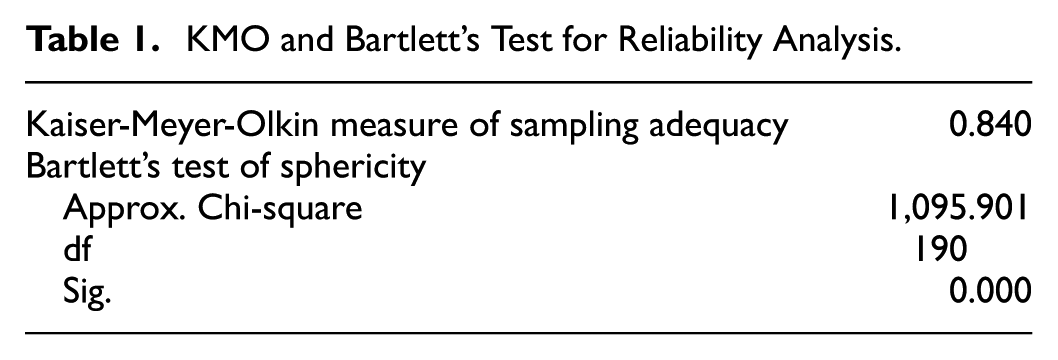
The internal consistency of the variables was evaluated via Cronbach’s alpha, as shown in Table 2. The significant values obtained by Cronbach’s alpha for all the variables indicate the internal consistency of the data. The observed values were >.5, which is excellent for further analysis. The reliability of each variable used in the study is evaluated via factor loadings, which are mentioned in Table 3.
Cronbach’s Alpha for Reliability Analysis.

Factor Loadings for Reliability Analysis.

Descriptive Analysis
Descriptive statistics were used to characterize the participants’ demographics, including age, gender, field of study, and frequency of AI usage in HE in Morocco. Table 4 presents key findings: Most respondents fall within the 36 to 40 age range (29.1%), followed by those aged 36 to 40 (29.1%). These figures indicate a predominantly older respondent demographic, with fewer younger participants. Male respondents represent 29.1% of the sample, while female respondents comprise 50%. Most participants specialized in language studies (French, English, Spanish, and Arabic studies) (63.1%), followed by history and geography. AI usage frequency among participants shows a moderate adoption rate, with 55.3% using AI occasionally and 17.5% consistently integrating it into their teaching. Meanwhile, 27.2% reported never using AI, highlighting a segment of the academic community that has yet to explore AI's potential benefits in HE.
Demographics Characteristics of Participants.

Inferential Analysis
The study hypotheses are evaluated via inferential statics analysis. The results of the inferential statistics in Table 5 provide an evaluation of the hypotheses using Chi-square analysis.
Evaluation of the Hypothesis Via Pearson Chi-Square Analysis.
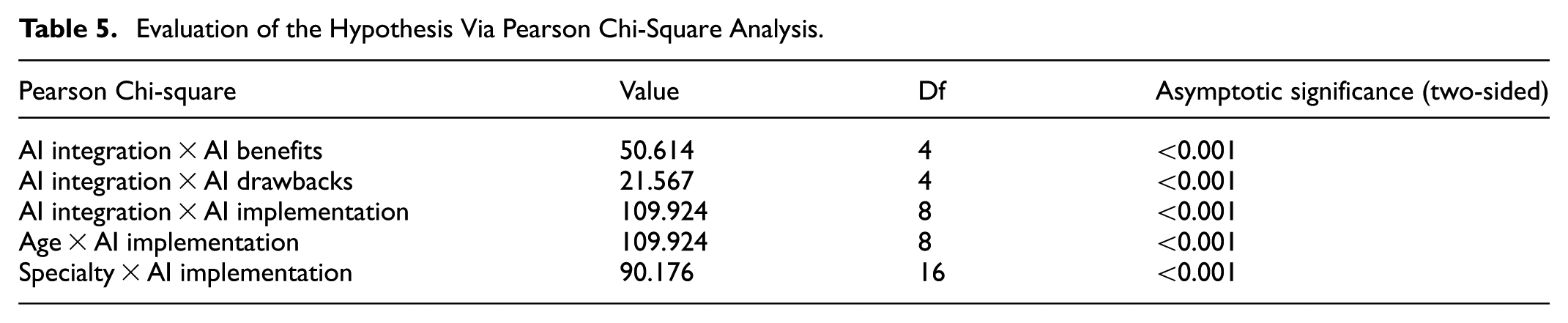
Table 5 demonstrates the associations between AI integration, benefits, drawbacks, and implementation of AI in teaching practices in Moroccan HE from the perspective of academics. Additionally, the associations between academics’ age and specialty and their perceptions of AI implementation in Moroccan education are evaluated. The results show that all Chi-square associations are statistically significant, with p < .001. Moreover, Table 6 shows the frequency and percentage of academics who perceive the implementation of AI in Moroccan HE institutions.
Academics’ Perception Regarding AI Implementation in Moroccan Higher Education Institutions.
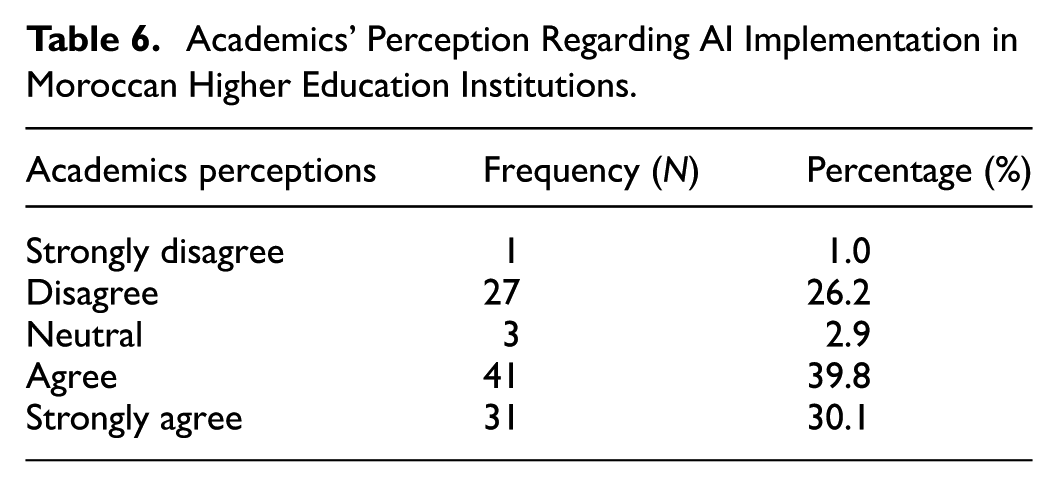
Table 6 indicates that most academics (69.9%) agree or strongly agree with AI implementation, reflecting generally positive perceptions.
Discussion
This study aimed to assess Moroccan academics’ perceptions of implementing AI in HE, evaluating its perceived benefits, drawbacks, and the influence of demographic factors such as age and academic specialty. Through a detailed analysis, including reliability, descriptive, and inferential statistics, key insights have emerged that describe how AI integration is considered in the context of Moroccan HE.
The current study’s findings indicate a strong positive perception of AI’s benefits in HE among Moroccan academics. Most respondents agree or strongly agree that AI integration can enhance educational practices, especially in improving efficiency, providing diverse learning resources, and facilitating administrative tasks. These findings support H1, which posits that integrating AI into teaching practices in Moroccan HE yields significant academic benefits. As evidenced in Table 6, 69.9% of respondents reported agreement or strong agreement with the positive impact of AI, underscoring widespread support for AI as a tool to enhance academic and administrative efficiency. The Chi-square analysis further validates this, showing a statistically significant association between AI integration and perceived benefits (p < .001) in Table 5. These results align with findings from previous studies, such as those by Al-Tkhayneh et al. (2023), Adoui (2024) and Bouincha et al. (2024), which emphasize AI’s potential to streamline administrative tasks, personalize learning experiences, and offer valuable insights into student performance. These findings support H1, confirming that academics perceive AI as a transformative and beneficial asset capable of enriching the higher educational landscape in Morocco.
Despite recognizing the benefits, academics also expressed concerns about AI’s potential drawbacks, especially its impact on students’ cognitive abilities, academic integrity, and social interactions. The Chi-square results revealed a significant association between AI integration and perceived drawbacks (p < .001) in Table 5, supporting H2, which suggests that academics perceive substantial drawbacks related to AI in HE. The findings are aligned with Fakhar et al. (2004) and Cotton et al. (2024). A notable percentage of respondents highlighted concerns that AI might detract from students’ critical thinking, creativity, and interpersonal skills by reducing face-to-face interactions and promoting dependence on automated tools. These findings resonate with global concerns highlighted by Mujtaba, Cotton et al., Moemeke, and Fan & Zhong, who underscore the risk of AI-assisted cheating and its impact on students’ critical thinking. Therefore, there is a need for new approaches to maintaining academic integrity (Cotton et al., 2024; Fan & Zhong, 2022; Moemeke, 2024; Mujtaba, 2024). Furthermore, a key drawback identified is the risk of data privacy issues and inequality in accessing advanced technology, particularly in regions with limited internet infrastructure (Lin & Chen, 2024; Seo et al., 2021). This aligns with Liao et al. (2021) and Ayala-Pazmiño’s (2023) findings on the socio-economic disparities affecting equitable AI access. This indicates a need for careful consideration of AI policies in Moroccan HE to ensure inclusivity and address the challenges of data privacy, accessibility, and maintaining an interactive academic environment.
The study also examined how demographic variables, particularly age and academic specialty, influence academics’ perceptions of AI in HE. The Chi-square analysis revealed statistically significant associations between age, specialty, and perceptions of AI implementation (p < .001) in Table 5. These findings support H3, which posits that academic specialty and age significantly determine academics’ perceptions toward AI integration in Moroccan HE. Younger academics, particularly those aged 30 to 35, showed greater enthusiasm for AI integration, with higher agreement on its benefits and fewer concerns about its drawbacks. This enthusiasm may stem from younger academics’ greater familiarity with technology and openness to adopting new tools in their teaching practices. Conversely, older respondents displayed mixed perceptions, with some expressing apprehension regarding AI’s impact on traditional pedagogical approaches and its potential to reduce meaningful academic engagement. These age-related differences align with Crompton and Burke’s findings, which suggest that generational gaps in digital literacy can affect perceptions of AI in academia (Crompton & Burke, 2023). The findings also align with the Stöhr et al., exploring the students’ adoption and academic perceptions of AI integration in HE (Stöhr et al., 2024).
Similarly, academic specialty emerged as a significant factor influencing AI perceptions (p < .001) in Table 5. Academics in language studies, for instance, showed higher agreement with the benefits of AI, possibly due to their field’s openness to technology in language learning and translation tools. On the other hand, disciplines such as sociology, psychology, and philosophy displayed a more varied response, with some academics expressing concern about AI’s impact on skills that emphasize critical thinking and human interaction. This disciplinary variation in perceptions reiterates the findings of Alotaibi and Alshehri (2023), Saihi et al. (2024), and Stöhr et al. (2024), who observed that academic discipline could shape the adoption and perceived relevance of AI technologies in educational contexts.
The study’s findings hold significant implications for the strategic implementation of AI in Moroccan HE. First, the generally positive perception of AI’s benefits highlights a strong foundation for encouraging wider adoption of AI in academic and administrative processes. However, the reservations expressed by a substantial proportion of academics underscore the importance of addressing AI-related challenges to maintain academic integrity, ensure equitable access, and foster a balanced academic experience.
Policymakers and educational leaders in Morocco should establish explicit standards and support frameworks for effectively incorporating AI. These should resolve data protection issues and AI’s ethical application in educational environments. Institutions might implement data protection measures and offer training for staff and students on ethical AI use. Moreover, investing in infrastructure to provide AI access in all locations, particularly those with few technology resources, is essential for fostering an inclusive educational environment. Moreover, tailored AI training programs for professors across many disciplines can effectively meet the numerous demands and concerns highlighted in the study. By personalizing training to the specific requirements of each academic discipline, institutions may promote a smoother integration of AI-enhanced education, especially in areas where critical thinking, creativity, and interpersonal skills are fundamental to the curriculum.
Conclusion
This study highlights academics’ perceptions regarding the integration of AI in Moroccan HE, emphasizing its benefits and challenges. Key findings show that while AI can enhance efficiency and provide innovative tools for learning, concerns remain about its impact on academic integrity, social interaction, and financial costs. These results suggest that stakeholders, including policymakers, administrators, and educators, must carefully consider the implications of AI implementation, particularly regarding resource allocation, training, and support for faculty and students. The study contributes to the ongoing discourse by offering valuable insights into how AI adoption may reshape educational practices, calling for balanced approaches that address both technological advancements and human-centered learning experiences.
Research Limitations
The current study has two main limitations. First, due to time constraints, the number of participants who responded to the questionnaire is only 103 respondents, which is a number that cannot represent academics from different universities all around Morocco. Therefore, the results of this study cannot be generalized. Nevertheless, the conclusions of this study are helpful from the practical perspective as they may contribute positively to shaping the future of HE in Morocco. In addition, they benefit decision-makers in Moroccan HE institutions when implementing AI by considering the challenges and opportunities of integrating AI into the HE system. Second, this study focused solely on academics’ perspectives. Further research involving students and administrative staff (Deans, employees of students’ affairs, academic advisors, and heads of departments) could provide a more holistic view of AI’s impact and effectiveness in HE. Investigating students’ perceptions, in particular, may reveal valuable insights into how AI affects learning experiences and outcomes, which could inform strategies for effective AI integration in HE. Future research could broaden the sample to include a more diverse range of institutions and regions, offering a more comprehensive understanding of AI perceptions within Morocco.
Recommendations
As mentioned earlier, the current study debates the issue of implementing AI in Moroccan HE just from the instructors’ perspective. Hence, future studies should consider the perceptions of students and decision-makers in Moroccan HE to explain the subject matter comprehensively. Based on the study’s findings, several strategies are recommended for implementing AI in Moroccan HE. First, universities should invest in AI training programs for faculty to ensure effective integration into teaching practices. Second, clear policies must be developed to address data privacy and cheating issues, drawing on global institutions’ best practices. Finally, to overcome disparities in technology access, the government and universities should collaborate to provide necessary resources to underserved regions and institutions, ensuring equitable AI integration across the country.
Footnotes

Ethical Considerations
Ethical approval for this study was not required, as it falls under the category of exempt studies. Participants were assured that their data would be handled confidentially and used solely for academic research purposes.
Consent to Participate
All participants were informed about the nature and purpose of the study, and informed consent was obtained prior to participation. Participation was voluntary, and responses were anonymized to ensure confidentiality.
Author Contributions
Funding
The authors received no financial support for the research, authorship, and/or publication of this article.
Declaration of Conflicting Interests
The authors declared no potential conflicts of interest with respect to the research, authorship, and/or publication of this article.
Data Availability Statement
Data sharing not applicable to this article as no datasets were generated or analyzed during the current study.
Risk and Benefit Consideration
The study posed minimal risk to participants, as it involved a non-invasive questionnaire on perceptions of artificial intelligence in education. The potential benefits to society gaining insights into the integration of AI in higher education outweighed any minimal risks. Participants were free to withdraw at any point without any consequence.