




Abstract
NGOs from developing countries are playing an increasingly prominent role in international humanitarian aid, delivering more rapid and culturally informed responses. Despite this trend, Chinese NGOs remain understudied. Peaceland Foundation is the only Chinese NGO actively involved in front-line humanitarian rescue which holds ECOSOC consultative status, making it a compelling case for operational analysis. This study employs a mixed-methods design, combining document analysis of internal reports and literature with semi-structured interviews. We identify a three-phase operational model: pre-deployment assessment (“before”), on-site coordination (“during”), and post-mission programming (“after”). Our findings show that Peaceland Foundation has developed substantial experience in key operational areas, including decision-making, information acquisition and processing, local cooperation, community awareness-raising and capacity-building, as well as organizational internationalization. However, gaps remain in its pre-operation risk assessment and in the implementation of long-term impact tracking mechanisms. We further argue that for NGOs from developing countries, an initial strategic priority is to enhance visibility and credibility through active engagement in humanitarian aid. We recommend that future research and practice focus on strengthening partnerships among NGOs from developing countries and on establishing robust systems for long-term impact evaluation.
Introduction
According to the United Nations, humanitarian aid refers to material or logistical support provided in response to crises, with the primary goals of saving lives, reducing suffering, and protecting human dignity. In the context of globalization, increased economic, political, and cultural exchanges have promoted international cooperation because crises often transcend national borders (J. Kim et al., 2025). Effective responses now require coordinated global efforts to prevent localized issues from escalating into wider problems. Humanitarian aid thus serves not only practical purposes but also reflects global solidarity and moral responsibility (Quadrelli et al., 2011). Given these complexities, stronger international cooperation and interprofessional collaboration are urgently needed to enhance global governance (Sharma et al., 2025).
To integrate efforts and jointly address these transboundary challenges, the United Nations (UN) put forward in 2015 17 Sustainable Development Goals (SDGs), as shown in Table 1.
Summary of the 17 Sustainable Development Goals.
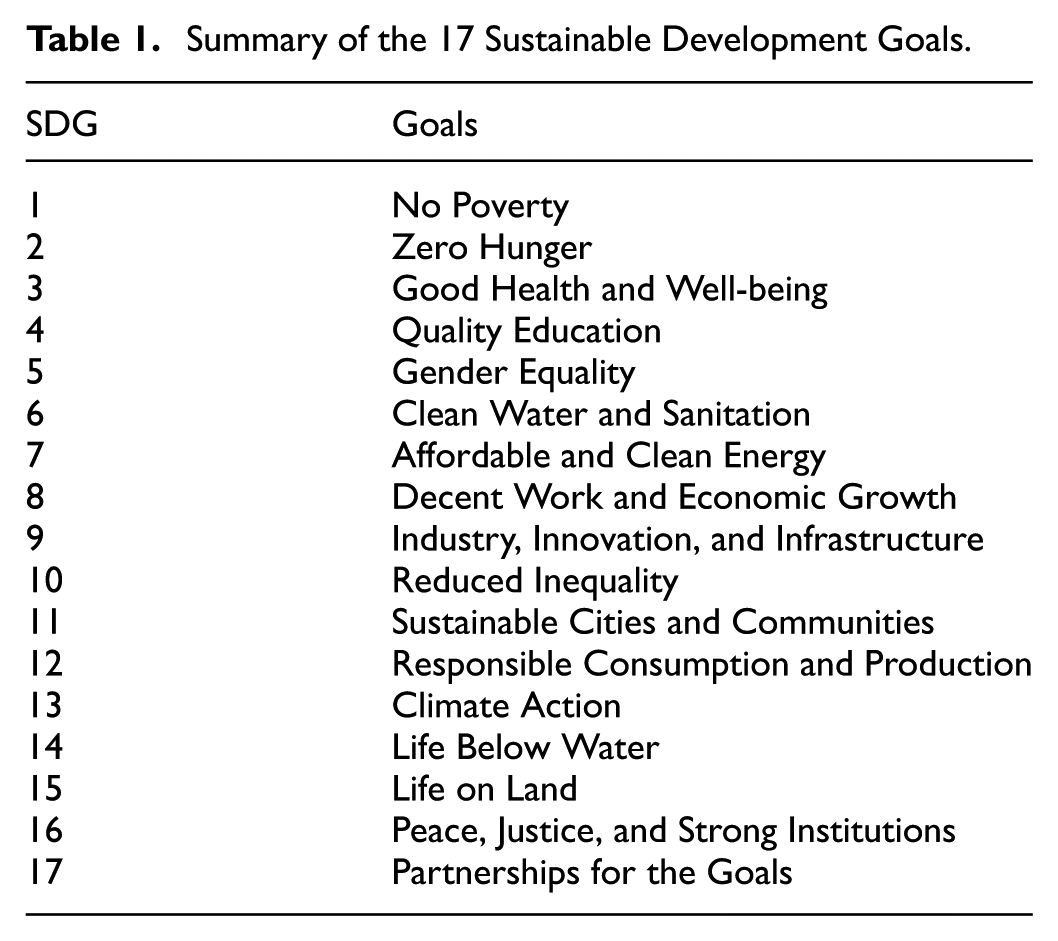
The SDGs serve not only as a long-term development road map but also as guiding principles and operational goals for humanitarian action. Rather than viewing the 17 Sustainable Development Goals as separate domains, they should be understood as interconnected, where progress in one goal can simultaneously drive advancement in others.
Humanitarian aid addresses both immediate survival needs and the root causes of vulnerability. Various stakeholders play different roles in the humanitarian field: central and local governments, (inter)governmental organizations (GO and IGO), and non-governmental organizations (NGO). These actors differ in terms of their mandates, operational capacities, and institutional logic, yet they are increasingly interdependent in addressing humanitarian crises. This structure indicates the multi-level governance nature of humanitarian action, where no single actor operates in isolation. Instead, effective humanitarian response depends on the synergy among these actors, particularly through shared platforms, coordinated funding mechanisms, and joint field operations.
The UN system, as the main intergovernmental organization, plays a key role in promoting humanitarian aid by raising global awareness and developing mechanisms to prevent crises and reduce vulnerabilities (Martinho & Reis, 2022). Its goal is to foster international cooperation by removing economic, social, cultural, and humanitarian barriers. Key UN bodies include OCHA, which coordinates aid efforts, and CERF, providing rapid responses to disasters and conflicts. Other agencies contribute in specialized ways: UNDP supports human security and solidarity (Khoo, 2023); UNICEF addresses child poverty and policy recommendations (Enrique, 2023); UNHCR aids refugees (Ozkul & Jarrous, 2021); WHO offers psychological first aid in conflict zones (S. Y. Kim et al., 2023). The UN serves as a central platform for distributing resources worldwide. However, the UN faces challenges. Political interests of powerful members can affect aid neutrality. Its large bureaucracy often causes slow decisions, delaying urgent assistance. While effective in fostering cooperation, the UN’s complex system can hinder timely humanitarian action.
Governmental organizations also act as major stakeholders. Western governments, like the United States, have long established specialized agencies such as USAID, which has significantly supported maternal and child health in low- and middle-income countries (Coria et al., 2025). In recent years, however, the global humanitarian landscape has evolved significantly with the rise of emerging powers and developing countries, whose voices and influence on the international stage have grown markedly. China, for example, has expanded its humanitarian role in line with UN mandates. It established the China International Search and Rescue Team (CISAR) in 2001 and the China Search and Rescue Team (CSAR) in 2019, both operating at home and abroad. These government-led organizations are effective in logistics and coordination, especially in China and neighboring areas, and help promote regional cooperation. However, state-led responses are often criticized for being less flexible and slower in adapting to urgent needs on the ground.
Besides official IGOs and GOs, a growing number of NGOs have become increasingly active in humanitarian aid and offer important advantages that complement the UN system (Natsios, 1995). Numerous examples demonstrate the significance of NGO involvement. Perhaps the best-known example is the Red Cross, which has made substantial contributions to international humanitarian causes since its foundation in 1863 (Shai, 2020). The Red Cross’s International Federation of Red Cross and Red Crescent Societies (IFRC) serve as international actors overseeing the funding system, strategic elaboration, and decision-making process of the NGO, and tries to collaborate with local actors to have a better understanding of the local context (Alcayna & Al-Murani, 2016). Another is that of Ukraine, which has received significant help for the reconstruction of its agricultural, industrial, medical, and civilian infrastructures, sectors essential to the country’s economic and social stability. Likewise, NGOs can also act as watchdogs to avoid corruption and guarantee the correct usage of aid donations (Bierman & Runde, 2023).
Most experienced humanitarian NGOs are based in or supported by Western developed countries. While they have provided crucial aid to developing nations, growing involvement in local contexts has revealed new challenges. One of them lies in ideological differences between donors and recipients, affecting program implementation, local acceptance, and perceived neutrality. For example, after the Khmer Rouge genocide, Western NGOs offered medical aid in Cambodia. Yet their development-focused approach often conflicted with local views that saw aid as a “gift,” not a long-term strategy (Guillou, 2013). Such mismatches can limit the effectiveness of aid, especially in public health.
Therefore, developing countries need NGOs that possess a deep understanding of their historical trajectories, cultural contexts, and local needs. Locally rooted NGOs are better positioned to design and implement aid programs aligned with community values and on-the-ground realities, thereby enhancing the effectiveness and long-term sustainability of humanitarian interventions. Strengthening such indigenous NGOs is essential for addressing the unique challenges faced by developing countries and fostering genuine, context-sensitive development.
In China, three legally recognized forms of civil society organizations: social groups, private non-enterprise units, and foundations, are collectively referred to as NGOs according to the Ministry of Civil Affairs. All three types are non-profit in nature and oriented toward public service delivery. A number of these NGOs have actively participated in international humanitarian assistance under the framework of China’s official foreign aid system. Traditionally, China’s foreign aid was State-led and policy-driven, guided by a dual-track approach that integrated humanitarian and development assistance, and coordinated by multiple government bodies such as the Ministry of Commerce and Ministry of Foreign Affairs, and implemented through state-owned enterprises and affiliated institutions. Since 1949, the composition of humanitarian actors in China has undergone three major stages of transformation: from a system solely managed by the central government to one of hierarchical management by local governments, and finally to the gradual participation of non-governmental organizations and other social forces (Tao & Feng, 2018). Within this largely state-controlled structure, Chinese NGOs have emerged as complementary yet increasingly independent actors for several intersecting factors. The global context needs the proliferation of complex emergencies to respond to the diversification of global humanitarian needs, thereby creating new spaces for non-State participation. Moreover, domestically, social transformations, including market reforms, civil society expansion, and increased public awareness, have facilitated the institutional development of NGOs with professional expertise and operational flexibility. The government’s growing tolerance and encouragement of social organizations going global has provided implicit legitimacy and political space for international engagement. At the same time, the limitations of State-led aid in terms of agility, access, and grassroots engagement have elevated the value of NGOs as complementary partners, or even functional substitutes in certain contexts. The evolution of Chinese humanitarian NGOs can be divided into three distinct periods as shown in Table 2.
Three Periods of Chinese Humanitarian NGO Development.

From 1949 to the late 1970s, China’s overseas humanitarian aid, limited in scope, mainly involving infrastructure projects and food assistance, focused on Third World countries in Asia, Africa, and Latin America. This politically driven approach aimed to replace the Republic of China (Taiwan) at the UN by securing support from developing nations. During this time, Chinese NGOs were underdeveloped, lacked autonomy, and functioned as extensions of state power.
With the Reform and Opening-Up, Chinese NGOs grew rapidly. Many were founded and began participating in overseas humanitarian relief. Their work became more pragmatic, focusing on actual needs rather than political aims. NGOs gained independence, decision-making power, and engaged with international counterparts to learn best practices. For example, the China Charity Federation (CCF), founded in 1994, was the first Chinese NGO to promote the internationalization, institutionalization, and social integration of charity, especially in youth and child welfare (Zhang, 2023).
Since 2000, Chinese NGOs have expanded their role in global governance, developing unique operational models that have influenced the global humanitarian aid system. By June 2025, 75 Chinese NGOs had gained special consultative status with the UN ECOSOC, working across sectors such as trade, education, health, philanthropy, the environment, youth, and women’s rights. Despite this progress, they remain understudied compared to long-established Western NGOs. As a result, the “international humanitarian system” remains Western-dominated, mainly shaped by OECD states and their frameworks (Slim, 2022). Addressing this imbalance requires examining non-Western actors to promote a more pluralistic humanitarian governance system (Dipendra, 2024). This study focuses on Peaceland Foundation, a Chinese NGO with ECOSOC status and strong field experience. By tracing its role in international aid, the study aims to spotlight the contributions of non-Western NGOs and support South-South cooperation in humanitarian action.
Methodology
This research adopted a qualitative approach, combining literature review and semi-structured interviews as its primary methods. The literature review was structured around three thematic areas: NGOs in international humanitarian aid, research on Chinese NGOs, and a specific focus on Peaceland Foundation as a case study. Building on this theoretical framework, interviews were conducted to gain first-hand insights, as shown in Figure 1.

Methodology.
Literature Review
Existing literature has predominantly focused on the roles of NGOs led by developed countries in fields such as medical aid (Castañeda, 2011), refugee assistance (Hausermann et al., 2021), and protection of women and children (Stillings, 2021). These studies primarily adopt literature review methods to analyze the operational mechanisms, effectiveness, and social impacts of NGOs as a whole. A challenge confronting Western-led humanitarian NGOs is the local reception of their interventions, which are often shaped by universalistic, paternalistic, de-contextualized, and atomistic logic. These assumptions can lead to misinterpretation, resistance, or unintended consequences on the ground (Khan et al., 2010).
In recent years, studies focusing on developing countries have been increasing, especially the relationship between NGOs and States. An anthropological approach toward the Project for Tomorrow, a village-based NGO in Northern Thailand, proved cultural, national, and gendered identities were inevitably shaped by local, national, and global discourses and materialities (Costa, 2001). The impact of traditional philosophy in developing countries can’t be neglected. A case study about Friends of Nature (FON), a Chinese environmental NGO, showed the Confucian understanding of justice as the pursuit of collective interest contributed to the clean energy transition in China (X. Wang & Lo, 2022). These studies demonstrated that the developmental philosophies, historical trajectories, and operational outcomes of NGOs in developing countries differ significantly from those of their counterparts in developed nations. Developing countries share certain common features in terms of development approaches and philosophies. Therefore, it is especially important for them to have their own NGOs.
Research on NGOs from developing countries often favors case study methods, as each country’s developmental history, social structure, and political context differ significantly. The NGOs that emerge from these diverse settings tend to exhibit distinct national and regional characteristics. Case studies allow scholars to explore in greater depth the operational logic, functional positioning, and patterns of interaction and adaptation between NGOs and local societies, thereby offering a more comprehensive understanding of their uniqueness and complexity.
Bibliometric Analysis of Chinese NGOs in International Humanitarian Aid
One research gap is that no bibliometric studies have been published to date that specifically address the participation of Chinese NGOs in international humanitarian aid, let alone studies focusing on Peaceland Foundation. This absence further confirms the originality and relevance of the present study, which aims to contribute to an underexplored but increasingly important area of global humanitarian governance.
As of 2024, a Web of Science search using “Chinese NGOs” and “humanitarian aid” yielded only one relevant study (Zhao & Yang, 2024). This case-based research examines the China Foundation for Poverty Alleviation’s (CFPA) work in Africa and its role in boosting China’s soft power through partnerships with local governments, international NGOs, and UN agencies. This points to growing academic interest in case studies on Chinese NGOs’ internationalization and the need for more context-specific analysis.
A CNKI search using “中国非政府组织” and “人道主义援助” identified 20 publications from 2004 to 2025, covering topics from historical development (Liu, 2012), internationalization (Lv, 2012), to institutional challenges (Li et al., 2020). However, empirical research is limited. Only one case study on CFPA was found (Dong, 2020). Most studies generalize Chinese NGOs, with only brief mentions of specific ones like the Red Cross Society of China and Peaceland Foundation, without in-depth focus. The Red Cross, often cited, operates under a quasi-governmental model, complicating its classification as a true NGO.
The existing literature confirmed the importance of CFPA as the case study subject. Peaceland Foundation represents a distinct operational model. Both hold ECOSOC Special Consultative Status. CFPA focuses on post-disaster recovery, nutrition, and development-based poverty alleviation. Though strong in mobilization and coordination, it lacks extensive frontline emergency experience, with efforts centered on recovery rather than rapid response. In contrast, Peaceland Foundation is a project-based, professional NGO engaged across the full disaster management cycle: preparedness, response, and recovery. It emphasizes local partnerships, long-term action, and alignment with international standards. Its focus on institutionalization and technical capacity earned it ECOSOC status just 4 years after its establishment, making it a uniquely representative Chinese NGO in global humanitarian governance.
Taken together, these bibliometric findings, shown in Table 3, confirm the originality and academic necessity of the present study, which aims to fill this gap by focusing on Peaceland Foundation as a representative case of China’s growing humanitarian engagement.
Comparative Literature Review on Chinese NGOs’ Participation in International Humanitarian Assistance.

This article aims to contribute to both theoretical and empirical dimensions. Theoretically, it expands the analytical scope of international humanitarian aid by foregrounding a non-Western actor from the Global South and examining its engagement in concreted practices. This contributes to a more pluralistic and diversified understanding of global governance, moving beyond Western-dominated perspectives. Empirically, the study draws on first-hand data collected through interviews to understand the NGO’s operational logic, guiding principles, and action pathways. By analyzing its practices in the field, including lessons learned and persistent challenges, the article offers practical insights that may inform and support the engagement of similar NGOs from developing countries in global humanitarian assistance. In doing so, this study builds on and extends existing case study approaches by exploring the gains and limitations of Chinese NGOs thus addressing gaps in the current literature which often treats them as a homogeneous group.
Presentation About Peaceland Foundation
According to the definition of NGOs in China, a foundation is a non-profit legal entity constituted to carry out charitable activities of public utility, using goods donated by persons or legal or other organizations, with a relatively more recent regulatory framework (M. Wang & Liu, 2007).
Peaceland Foundation has undergone several key developmental milestones since its establishment in 2018 in Beijing. In 2019, the organization opened an office in Lebanon and another office in Geneva in 2022. Its working areas can be divided into the following domains with one or two examples provided in Table 4.
Peaceland Foundation’s Working Area and Case Study.

Source. Author-compiled based on Peaceland Foundation’s official site and interview data.
As for the funding preparation and expenditure, Peaceland Foundation is a non-public fundraising foundation, meaning it does not receive direct government subsidies and has no official authorization to independently raise public donations. Instead, it relies on partnerships with three nationally accredited public fundraising foundations: the Chinese Red Cross Foundation, the China Welfare Foundation, and the China Social Assistance Foundation, to legally conduct donation campaigns. As shown in Table 5, at the end of 2024, Peaceland Foundation exhibits a strong degree of financial independence from governmental funding, with 0% of its total annual income derived from government subsidies. Instead, it relies predominantly on donation income (87%), supplemented by service income (4.9%). This profile suggests a diversified and socially grounded funding base, which is critical for maintaining autonomy in decision-making and program implementation.
Key Financial Data of Peaceland Foundation (As of December 31, 2024).

Source. Author-compiled based on Peaceland Foundation’s Annual Report of 2024.
Otherwise, Peacalend Foundation’s expenditure structure further supports its operational independence and mission alignment. Of the total annual expenditure of 13.59 million CNY in 2024, over 93% was allocated to direct program costs, while administrative and fundraising costs accounted for only 6.53% and 0.37%, respectively. Such a high proportion of program-related spending reflects a strong commitment to charitable objectives, minimizing the diversion of resources to overhead or institutional maintenance.
In practice, Peaceland Foundation initiates projects and prepares the necessary documentation and promotional materials, which are then submitted to one of its public foundation partners. Once a partner foundation approves and endorses the project, it takes responsibility for launching the fundraising initiative on major online philanthropic platforms such as Tencent Charity, Sina Charity, and Alipay Charity.
After the campaign is launched, Peaceland Foundation plays an active role in coordinating with the platform operators to promote the visibility of the project. This includes maintaining communication with the hosting public foundations, ensuring real-time updates on the campaign’s progress, and increasing public exposure through targeted outreach. The foundation’s ability to mobilize both corporate and individual donors through online platforms has become a crucial component of its emergency response capability.
Overall, Peaceland Foundation’s fundraising strategy exemplifies the collaborative funding model increasingly adopted by non-public Chinese NGOs, which enables them to operate within the legal framework of China’s philanthropic system while maintaining flexibility and autonomy in project design and implementation.
Interview
To understand the Peaceland Foundation’s concepts, philosophy, principles, and measures, this research adopted fieldwork methods. The data collected in this research came from a collective interview conducted in 2023 at the headquarters of Peaceland Foundation in the district of Haidian in Beijing City, China.
Step 1: Prior to the Interview
Before the interviews, all participants were informed that the study served academic purposes. They were assured of strict confidentiality and full anonymization. Interviewees were selected by Peaceland Foundation based solely on relevant professional experience, and participation was entirely voluntary. To minimize harm, no sensitive or personal data were collected, and identities are not traceable in the published research. Audio recordings were made only with verbal consent and used exclusively for transcription, coding, and academic analysis. The data were used for research, with potential value for the Foundation’s future work and broader societal benefit. All identifying details were removed to ensure anonymization in line with peer review standards.
In selecting interviewees, we considered the organizational structure of Peaceland Foundation. The technique used in this study was purposive sampling, as the research required insights from individuals with direct field experience in humanitarian operations. After communicating our research objectives and criteria to the organization, Peaceland Foundation provided a list of four interviewees who could offer firsthand insights into the operational aspects of humanitarian missions, thereby enhancing the relevance and depth of the qualitative data collected. We assigned codes INT1, INT2, INT3, and INT4 to the four interviewees to ensure their confidentiality. To further protect their anonymity, no gender information is disclosed.
Before going to the headquarter of Peaceland Foundation, the authors familiarized themselves with Peaceland Foundation’s history, operations, projects, and team to get an overall picture of the NGO. We also studied their previous interviews and news reports, which proved useful to understand the dynamics within their team.
Step 2: Interview Time Frames and Settings
To ensure that interviewees felt comfortable, they were allowed to choose the interview time and place. All chose Peaceland Foundation’s headquarters, where visual materials and field documents helped them recall specific aid operations. Interviews were held on weekday afternoons at 2:30 p.m., a time that balanced rest and work without affecting personal weekend time.
Step 3: Guideline of Interview
The objective of this empirical research was to understand how Peaceland Foundation makes decisions and implements its rescue projects, and what Peaceland Foundation does after the operations. Every detail of their operations was important to the research.
In order to investigate the global working framework of Peaceland Foundation, the interview started with a contextual presentation of every operation, before going into details such as obstacles and solutions. Several questions were set, for example: why did Peaceland Foundation decide to respond to this emergency? What kind of problems had to be overcome during the whole process? How did Peaceland Foundation adjust its strategies? What priorities were set for the aftermath of the crisis?
Step 4: Interview
The interview began with each participant introducing themselves. All were experienced staff involved in disaster relief coordination, field operations, and organizational management, including administration and finance.
Conducted in a relaxed atmosphere with active participation, the 3-hr interview covered one to two representative cases from each main area of Peaceland Foundation’s work. The discussion focused on coordination with other relief actors, challenges, solutions, and remaining issues. Though guided by prepared questions, the conversation often went beyond the framework, providing valuable research insights.
Step 5: Data Analysis
In this study, inductive thematic analysis was applied to examine the interview data, using NVivo 14.0 to support the coding and organization process. The analysis followed the six-phase process of thematic analysis proposed by Braun and Clarke (2006), adapted to the specific needs of this study.
Interview recordings were manually transcribed and imported into NVivo 14.0 for analysis. First, the researchers familiarized themselves with the data by reading transcripts line by line. Then, open coding was conducted without pre-set categories, resulting in 101 initial codes grouped into 27 preliminary themes. Frequently mentioned topics included government relations, cooperation models, visibility, capacity building, local engagement, and resource coordination.
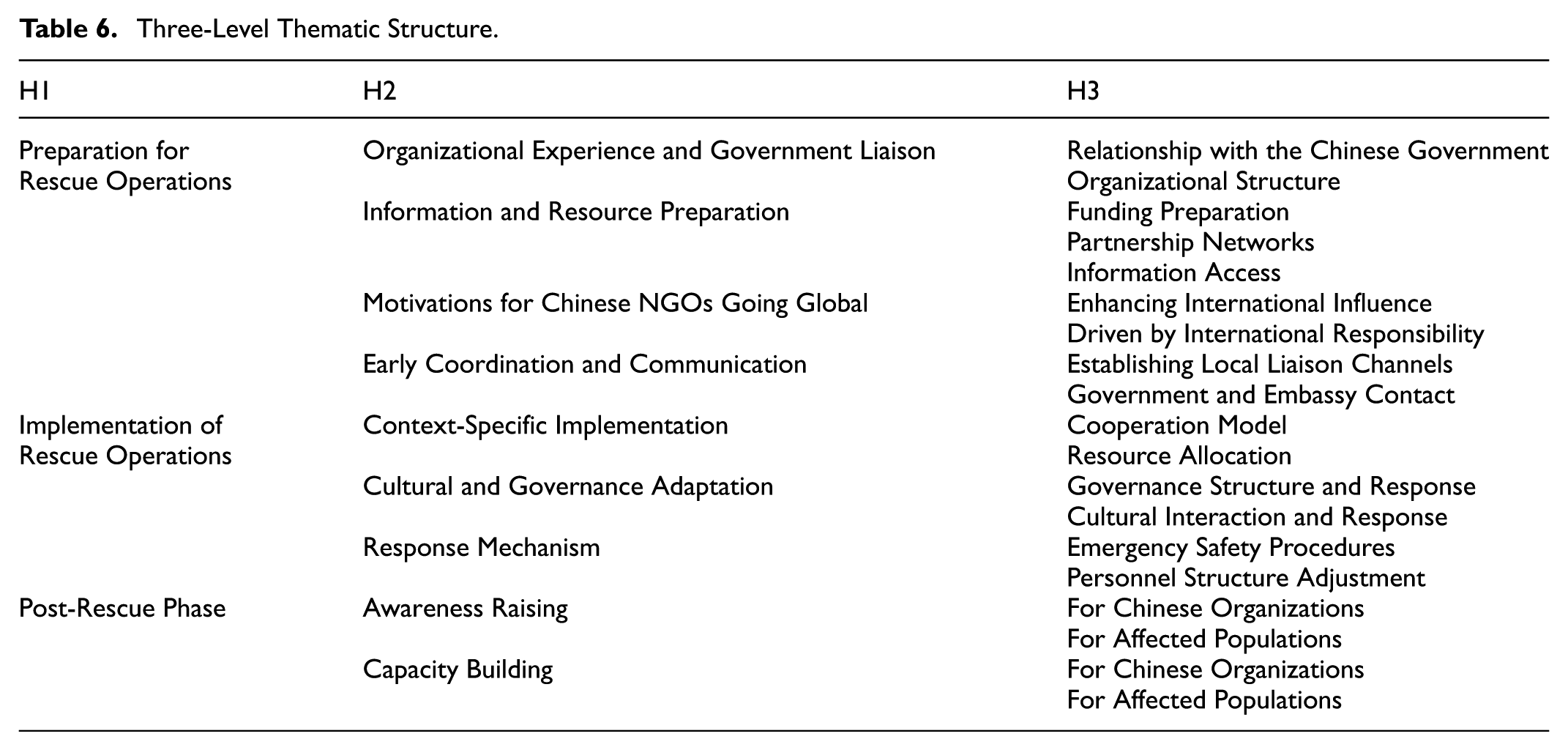
These themes were refined into 13 broader categories, such as organizational structure, motivations for international engagement, coordination mechanisms, cultural adaptation, and awareness raising. Finally, these were synthesized into three overarching domains that structure the findings: preparation, implementation, and post-rescue phase. A hierarchical thematic map shown in Table 6 illustrates this three-level structure.
Three-Level Thematic Structure.
Findings
Thanks to its engagement in a wide variety of operations, ranging from humanitarian aid to environmental protection and other public welfare operations. The present section will discuss, dividing them into three-time frames.
Before the Operation
Before embarking on any operation, Peaceland Foundation undertakes a series of crucial preparatory steps to ensure the feasibility and effectiveness of its interventions. These preliminary measures include conducting thorough evaluations to determine the appropriateness of intervention. To be more specific, it is to evaluate whether an intervention is warranted and feasible.
Peaceland Foundation has established its own early-warning and assessment mechanism to evaluate the necessity of rescue, mainly relying on two indicators: degree of urgency and public concern. The degree of urgency evaluates the need for rescue, in terms mostly of life-saving. Public concern refers to the degree of public involvement in the incident, which is crucial for raising the funds necessary to conduct the operation. Based on this two-indicator system, Peaceland Foundation has established its response mechanism, as shown in Figure 2.
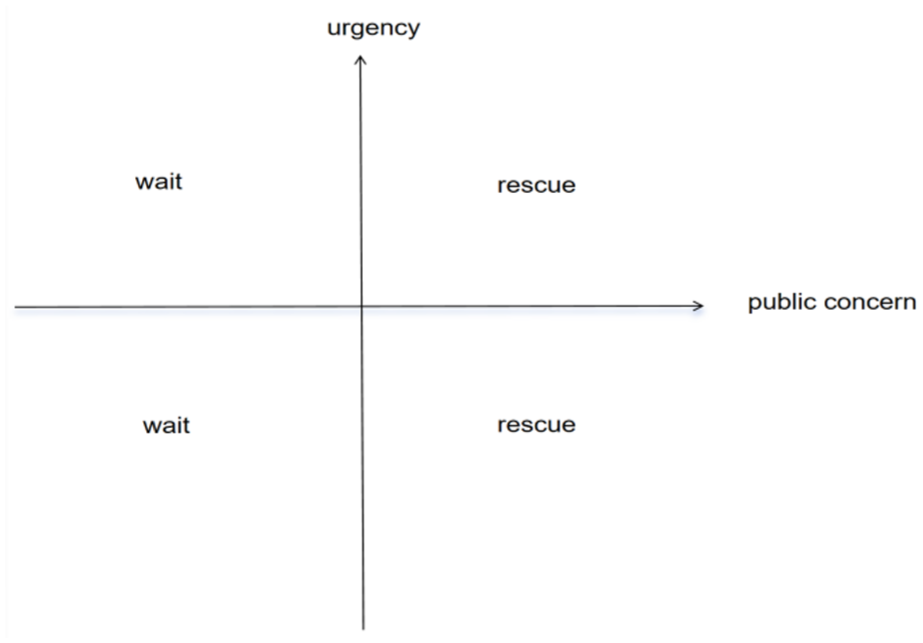
Response mechanism of Peaceland Foundation.
When both urgency and public concern are high, rescue operations should begin immediately. If public concern is high but urgency is low, immediate action is still necessary. If urgency is high but public concern is low, it means local capacity might be enough to deal with the situation, so Peaceland Foundation will wait for more details. When both urgency and public concern are low, immediate rescue is not needed, but the foundation monitors the situation closely.
In the case of the Thai cave rescue, both degrees of urgency and public concern reached a relatively high level. As INT1 explained during the interview:
In the case of the Thai cave rescue, when boys were trapped underground, it was critical to save lives. At the same time, global attention was enormous. The Football World Cup was happening in Russia, yet media coverage of the rescue efforts rivaled the tournament. I remember FIFA’s President even invited the boys to the World Cup final, and even Lionel Messi recorded a video encouraging the boys to “stick together, anything is possible”. Under such circumstances, we decided to respond immediately.
In contrast, as INT3 noted,
Unlike the urgent need to rescue people trapped in caves, anti-poaching efforts in Zimbabwe were less time-sensitive, as wildlife protection requires long-term action. However, the issue drew significant international attention due to criticism of China’s role in ivory trade. Therefore, despite not being a crisis, the team promptly began preparations once the project was considered.
These two examples demonstrated that Peaceland Foundation’s intervention decisions are not solely based on time-sensitive needs but also reputational stakes and broader humanitarian responsibilities, making public concern an equally critical factor in the decision-making process.
During the Operation
Once the decision to intervene has been made, Peaceland Foundation shifts its focus to the complex and dynamic realities of on-the-ground operations. This phase demands timely and accurate information processing, effective coordination with diverse stakeholders, and a nuanced understanding of local contexts. The Foundation emphasizes rapid yet responsible information treatment, fosters collaboration with other rescue forces, and actively works to build trust with local communities through embedded engagement. At the same time, it seeks to raise awareness among affected populations and ensure that its actions are environmentally sustainable while being mindful of economic needs.
Information Acquisition, Evaluation, and Treatment
Access to trustworthy information is crucial for efficient rescue work. Peaceland Foundation has set up its information collection system and resources, assembling several fast and efficient information exchange platforms based on several social media. The biggest difficulty in obtaining accurate information is that the volume of information is often important and the content repetitive, so it must be selected, evaluated, screened, and judged by rescue teams to make the right decision.
During the flood relief operation in Henan, China, Peaceland Foundation got information from the internet that there were a large number of people affected by the disaster in the mountains around Zhengzhou, therefore decided to go to the mountains to help. The terrain there was complex, with problems such as interrupted roads, landslides, mudslides, etc. Peaceland Foundation’s rescue team could only rely on manpower to enter the disaster area. It was easy to waste rescue resources if they couldn’t quickly identify where help was truly needed, and where there were already too many teams on the ground. During this rescue operation, information accuracy and dissemination speed were critical, especially because the rain had cut off traffic routes and they had to rely heavily on secondary sources. As INT3 recounted during the interview:
Rumors spread widely, with viral messages claiming entire villages were flooded and people trapped. Some shared tens of thousands of times. These false reports misled the public and affected our team’s judgment. Therefore, we relied on information from rescue networks on the ground. When a site had enough support, we informed others via WeChat groups so they could focus on areas with greater need. If more help was needed, we called for reinforcements. We also corrected misinformation by posting text and photos on Peaceland Foundation’s official Sina Weibo account to show that situations had improved. Without visual proof, people didn’t believe updates. Managing social media became part of our rescue work.
Information management within rescue forces and with the public helps to prevent redundancy, allocates resources more efficiently, and maintains public trust.
Cooperation With Other Rescue Forces
The delivery of humanitarian aid is often accompanied by experiential learning (Zhang, 2023). Peaceland Foundation has continuously enhanced its organizational capacity and guiding principles through repeated involvement in relief operations. Such cooperation not only enhances the efficiency of humanitarian operations but also helps ensure the safety of the personnel involved.
During the rescue operation in Thailand, Peaceland Foundation cooperated with rescue teams from more than 20 countries, which made Peaceland Foundation realize the importance of multinational collaboration: it may have its strengths, but it still suffers from some deficiencies compared to other international, long-established NGOs. As INT2 indicated:
The mountain path was uneven and slippery with mud, severely hindering the efficiency of transporting rescue supplies. A large amount of equipment was stranded in this section. Several NGOs participating in this rescue worked to sort out the details and introduced their respective areas of expertise. Our strength lay in rope techniques, and within a single day, we set up five zipline systems.
Once the equipment was in place, the next challenge was to determine how to safely extract the trapped individuals. The rescue team of Peaceland Foundation had no prior experience with cave rescues, yet all team members entered the cave without hesitation to carry out the rescue mission. However, a rescuer from another Western NGO pointed out that during the underwater rescue, unlike other rescue works, the rescued person’s hands and feet were out of control; if they were frightened, they might touch the mask on their face or the equipment on the rescuer’s body, which could put both of them in danger. To mitigate this risk, this NGO proposed sedating the trapped individuals, ensuring that they pass through the most perilous sections of the water in a calm and stable condition. This approach not only protects the victims themselves but also safeguards the rescuers.
That experience taught us a valuable lesson: even though we are passionate and capable in many aspects of rescue, we must recognize our limits. It’s better to step back in areas where we lack the necessary expertise and let more qualified teams take over. Passion should never be a substitute for professionalism
Peaceland Foundation has shown a growing awareness of the importance of division of labor and professional boundaries in multinational rescue operations, reinforcing the value of partnership and specialization.
Trust-Building and Embedded Engagement
Trust and opportunity are needed for cooperation (Murdie, 2014). During its wildlife protection mission in Zimbabwe, Peaceland Foundation faced strong local resistance, largely due to persistent stereotypes linking China with ivory consumption. Local conservation groups were skeptical or even hostile, questioning the motives of a Chinese NGO and raising concerns about the safety of its personnel.
As INT4 recalled, “We underestimated how deep the local mistrust ran. Some thought we were there to smuggle ivory or steal elephants and shipped them back in containers! People even tried to sell us ivory or drove us away with accusations.”
Peaceland Foundation recognized that building trust was essential and chose to demonstrate sincerity through action rather than explanation. In response to local concerns, especially the lack of advanced equipment and limited technical skills, it provided targeted support, such as modern conservation tools and hands-on training. The Foundation supplied items like delta wings, rubber boats, helicopters, and night vision devices, and trained local rangers in their use. Peaceland Foundation positioned itself as a collaborative, non-intrusive partner. This strategy reinforced the principle that localization is not about symbolic inclusion, but about complementing and empowering local capacity in mutually beneficial ways. Moreover, despite a tight budget, Peaceland Foundation traveled to Africa during the rainy and dry seasons every year between 2015 and 2019 to implement anti-poaching campaigns. These efforts gradually helped to dispel the initial distrust and demonstrated the Foundation’s genuine commitment to wildlife protection. Over time, the local community began to reassess its assumptions, seeing Peaceland as not a threat, but as a valuable partner.
Awareness-Raising of the Assisted People
Awareness-raising of the assisted people consists of informing and educating them to understand and cooperate with rescuers.
In Cambodia’s demining work, Peaceland Foundation initially educated residents about landmines’ types and safety, but public engagement was low. After careful analysis, the rescue team found out that the content of their explanation was too complex and not necessarily relevant. The team then simplified the message to focus on how to avoid mines and report sightings, which increased interest and saved time. After clearing, experts suggested villagers walk single-file through the cleared area to prove it was safe for farming. Although local officials initially opposed this due to safety concerns, Peaceland’s team insisted. This demonstration boosted public trust, raised awareness, and validated the demining efforts.
Conducting awareness-raising activities for affected populations is essential; however, the content of such initiatives must be carefully tailored to the specific circumstances of vulnerable communities. Overly complex or technical information is not always necessary for the target audience and may, in fact, reduce their willingness to engage. Therefore, awareness-raising content should align with the audience’s cognitive capacity and practical needs, ensuring not only a high level of participation but also the overall effectiveness and sustainability of the initiative.
Balance-Keeping Between Environment Protection and Economic Development
Illegal hunting and poaching activities are rampant in Zimbabwe because the country’s economic development is largely dependent on the wildlife industry, including wildlife tourism, trophy hunting, and crocodile ranching. It is estimated that, in 2019, protected areas generated about 351.9 million USD in photographic and hunting tourism, which represented 27% of total incomes from tourism and 1.7% of GDP while hunting generated about 19 million USD in fees paid to the government (African Wildlife Foundation, 2023). Peaceland Foundation tried to show local communities that it was important to keep the balance between sustainable development, wildlife protection, and economic growth based on legal hunting activities. Peaceland Foundation realized that banning trophy hunting might be detrimental to Zimbabwe’s current socioeconomic situation, so it was urgent to find the balance between these two contradictory points. The foundation is now working on the legal and administrative instruments to regulate trophy hunting and on identifying special zones dedicated to hunting activities, together with the Zimbabwean government and local communities. It is necessary to define the objectives and framework of anti-poaching activities taking into account the local conditions for sustainable development, both environmentally and economically, underlining the importance of culturally informed, context-sensitive project design.
This practice reflects Peaceland Foundation’s rejection of rigid policy frameworks and its preference for a non-confrontational, collaborative approach to development governance. Peaceland Foundation emphasizes the importance of safeguarding ecosystems while simultaneously addressing the livelihood needs of local communities, aiming to achieve a dynamic balance among multiple development goals.
After the Operation
Following the conclusion of on-site emergency activities, Peaceland Foundation places significant emphasis on post-operation processes that ensure long-term impact and continuous improvement. Rather than viewing the end of an operation as a closure, Peaceland Foundation treats it as a starting point for sustainable development and organizational learning. Efforts are directed toward strengthening local capacities to enhance future resilience, and systematically sharing the lessons learned, both internally and with broader humanitarian and policy communities.
Capacity-Building
Over the years, the traditional role of NGOs as implementers of aid programs has shifted to a new model of capability-builders and conveners (Moshtari et al., 2023). Capacity-building is defined by the UN as a process to strengthen and develop the competencies, abilities, skills, instincts, resources, and processes that communities, countries, groups, and even individuals need to survive, live, and adapt in a fast-growing world. It is important for victims, as well as professional rescue forces.
In implementing capacity-building programs for disaster-affected populations, the primary objective is to equip beneficiaries with the skills necessary for independent living in post-crisis contexts. For instance, Peaceland Foundation has actively supported the relocation of Syrian refugees to Lebanon through a range of targeted capacity-building initiatives.
First of all, Peaceland Foundation provides targeted help to vulnerable groups in alignment with SDG 10 (Reduce Inequalities) and SDG 5 (Gender Equality). According to UNICEF’s 2015 data, nearly 2 million Syrian children were living as refugees in neighbor countries. As a refugee-hosting country, Lebanon was inherently vulnerable, while its resources, such as education and health services, were already in short supply. To be able to provide more effective and accessible humanitarian relief services, Peaceland Foundation has launched a cash grant program for refugee families to prevent children from falling into child labor or early marriage and help them grow to adulthood safely. From August 2020 to April 2021, Peaceland Foundation signed agreements with 20 carefully selected families to support each family with 40 USD per month, to be used exclusively for the children’s health and education. For women, Peaceland Foundation created the Women’s Empowerment Program, which designed to empower women and enhance self-confidence in marginalized environments. The program included sewing classes, assistance in establishing e-commerce platforms, and support for marketing and selling handmade products, thereby improving both vocational skills and household income. In addition, Peaceland Foundation also provided targeted courses to equip participants with basic knowledge in digital marketing and product promotion.
Secondly, Peaceland Foundation helped young refugees to better integrate into the local society by providing targeted language courses, in alignment with SDG 4. Language and cultural barriers remain significant obstacles for Syrian refugees seeking stable and appropriate employment in host countries. From June 2020 to March 2021, Peaceland Foundation, in collaboration with the Lighthouse Peace Initiative and Alsama Studio, provided English language classes for young people aged 11 to 29. Beyond language instruction, the program incorporated a series of seminars, as well as one-on-one online conversation exercises between volunteers and students to help them learn and practice language skills. This approach reflects the Foundation’s commitment to sustainable humanitarian assistance, embodying the principle that teaching a person to fish is more valuable than giving them a fish.
Experience-Sharing
Experience sharing among humanitarian NGOs is crucial for mutual learning, capacity building, and trust across organizations and countries. It helps spread innovative practices, identify common challenges, and develop adaptive strategies. In developed countries, structured platforms like Japan’s TOMODACHI NGO Leadership Programme (TNLP) support training in humanitarian principles, advocacy, and networking, promoting sector-wide collaboration (Szczepanska, 2020). For NGOs in developing countries, such cooperation is even more vital due to limited resources and trust challenges.
Peaceland Foundation actively shares its knowledge and resources with similar organizations to improve relief efficiency and expand its professional influence. In March 2019, Peaceland Foundation co-hosted a seminar in Beijing with the Chinese People’s Association for Friendship with Foreign Countries, focusing on China-US cooperation in African humanitarian aid. In April 2021, it co-hosted a conference with the International Committee of the Red Cross on the Syrian crisis, sharing its refugee aid experience. Peaceland also regularly attends the UN’s International Meeting of Mine Action Directors in Geneva, uniquely representing a Chinese NGO.
The international aid system, dominated by developed countries, often creates imbalances that limit the voice and autonomy of Global South actors. Experience sharing among NGOs in developing countries helps counter this by fostering localized knowledge, context-sensitive practices, and mutual learning. These horizontal exchanges reduce dependence on external models and support local capacity building. They also enable NGOs to collectively strengthen advocacy for more resources and policy support at both national and international levels.
Discussion
While the previous section has presented the key operational strategies and experiences of Peaceland Foundation, the following discussion critically analyzes their implications for humanitarian governance and situates the case within the broader academic and policy discourse.
Key Contributions and Transferable Practices
Building on its diverse field experiences, Peaceland Foundation has developed a set of distinctive approaches that not only contribute to its operational effectiveness but also offer valuable insights for the broader humanitarian sector.
Special Collaborative Structure
During its project implementation processes, Peaceland Foundation has developed a distinctive and cost-effective operational model characterized by a three-tier collaborative structure: deployed liaison officer, associated local Chinese diaspora or Chinese students, as well as local population. This model strategically leverages the existing networks of overseas Chinese communities and Chinese students abroad to recruit local volunteers in a context-sensitive manner.
Instead of establishing large-scale local offices or sending large numbers of personnel abroad, Peaceland focuses its resources on ensuring the safety and daily living needs of its deployed liaison officers. These officers serve as core coordinators, working closely with locally based Chinese students and workers who assist in community engagement, language mediation, and logistical support. In turn, these intermediaries facilitate cooperation with residents, ensuring that aid delivery is both culturally sensitive and logistically efficient.
A representative example of this model was seen during the Beirut port explosion in Lebanon. Peaceland Foundation response team included staff from its local liaison office in Lebanon, Chinese students studying in this country, and even Syrian refugees who had previously received assistance from the Foundation. These multi-layered local connections enabled the team to mobilize quickly, navigate complex on-the-ground conditions, and provide timely and culturally appropriate aid. This collaborative approach not only strengthened local engagement but also showcased a cycle of solidarity, where former beneficiaries actively participated in new rounds of humanitarian relief.
This hybrid structure allows Peaceland Foundation to maximize resource efficiency, significantly reducing personnel and administrative costs while maintaining high operational flexibility. It also reflects the organization’s broader strategy of global deployment without heavy infrastructure, aligning with its ambition to expand its presence and influence in international humanitarian spaces through agile and adaptive models tailored to the realities of the Global South.
Public Opinion as a Guiding Force
The decision-making process behind Peaceland Foundation’s intervention demonstrates a shift in how Chinese NGOs determine their engagement in international humanitarian aid. Traditionally, public opinion has often been regarded as a tool utilized by NGOs to pressure governments into action (Clark, 1995) and even prioritize their ideologies (Tortajada, 2016). However, a different role has been shown. It can act as a guiding force that influences the NGO’s own decision to respond to crises. This shift highlights an emerging trend in which NGOs are not merely leveraging public opinion, but are also being guided by it: empowering citizens to indirectly shape humanitarian priorities. By allowing civil society to determine what matters, NGOs can optimize the allocation of limited resources toward missions that resonate with broader societal values.
This decision-making approach departs from the typical top-down governance seen in Chinese NGOs, often viewed as lacking autonomy due to government bodies’ supervision (Y. Wang, 2024). However, Peaceland Foundation shows a more complex reality. Despite regulatory limits, it exercises discretion in choosing interventions based on urgency, public opinion, and feasibility. Mobilizing resources in response to public concern without state orders reflects operational autonomy. This illustrates that even in a regulated context, Chinese NGOs can act independently, especially when their humanitarian work aligns with public expectations and international standards.
Internationalization of Chinese NGO
Peaceland Foundation exemplifies the growing internationalization of Chinese NGOs. Rather than focusing solely on domestic or isolated cross-border missions, it has established offices in both developing regions like Lebanon and global governance hubs like Geneva. This reflects a dual strategy.
Peaceland Foundation has prioritized developing countries that are prone to natural disasters and humanitarian emergencies, such as Lebanon. Establishing a local presence in these regions facilitates rapid mobilization and direct implementation of aid programs. This practice signals an emerging paradigm of South-South humanitarian cooperation, in which developing countries support each other through mutual assistance rather than depending solely on aid from traditional Northern donors. Its presence and work in Lebanon illustrate how Chinese NGOs are beginning to play a more proactive role in reshaping the geography of global aid, contributing new perspectives, operational models, and resources to the Global South. It has also placed offices in cities within developed countries that serve as global governance hubs, most notably Geneva. As home to numerous international organizations and UN agencies, Geneva offers critical opportunities for visibility, engagement, and networking within the global humanitarian system. Such a presence allows Chinese NGOs to participate more meaningfully in agenda-setting discussions and to enhance their legitimacy in international forums.
Beyond physical presence, Peaceland Foundation has also pursued internationalization through active participation in conferences, workshops, and multilateral platforms at various levels. By sharing field experiences and operational models, the organization contributes to global knowledge exchange while also shaping the emerging image of Chinese civil society actors on the world stage. These practices not only broaden the Foundation’s reach but also help integrate Chinese NGOs into the wider humanitarian architecture, offering a model of how non-Western actors can engage with international norms and institutions on equal footing.
Reflections on Early Challenges and Organizational Learning
In the practice of humanitarian aid, the relationship between humanitarian workers, aid recipients, local environment is both inevitable and complex. While the provision of assistance can empower displaced or vulnerable individuals by enhancing their awareness of disaster preparedness, self-protection, and long-term development, it can also give rise to tensions, misunderstandings, or even conflicts. Humanitarian workers, positioned at the intersection of institutional mandates and human suffering, must navigate not only the logistical and operational challenges of aid delivery but also the emotional and social dynamics that emerge from sustained interaction with those they serve.
At the core of humanitarian action lies a fundamental goal: to support affected populations in achieving autonomy and self-reliance. However, the path toward this goal is rarely straightforward. Particularly in protracted crises or resource-constrained contexts, humanitarian actors often face systemic inequalities, limited resources, and conflicting expectations that constrain their efforts (Wagner, 2024). These challenges underscore the need for a critical examination of the technical effectiveness of humanitarian programs, and also of the everyday encounters and power relations that shape their implementation.
Sufficient Risk Assessment and Preparedness Before Deployment
NGO workers are highly exposed to risks and dangers due to the conditions and duration of their stay such as infectious diseases. Yet little is known about their knowledge and their prevention (Goesch et al., 2010), and even less about their awareness and prevention of mental health issues. A distinctive lesson of Peaceland Foundation’s pre-deployment protocol is to provide equal emphasis on assessing risks not only for the affected population but also for the responders themselves. While most humanitarian planning focuses on the vulnerabilities and needs of disaster-affected communities, Peaceland Foundation has realized, especially after the operation in Zimbabwe, incorporated internal risk assessments that address the psychological, physical, and cultural challenges likely to confront its team members. That is to say, before humanitarian operations are carried out, potential risks and threats need to be identified, so professional rescue forces can make effective and safe rescue projects, optimize efforts and resources, and minimize negative impacts both on victims and themselves.
Peaceland Foundation team members lacked the training to understand the threat posed by wild beasts and the tedium of anti-poaching life. Dangers during anti-poaching activities come not only from poachers but also from wild beasts. The team members of Peaceland Foundation lived on desolate and primitive grassland with wild animals like elephants and lions randomly wandering around the tents. Every night their residence was surrounded by animal calls, and on rainy days when elephants were around, the team members could not go out. They could not adapt to this way of life and thus felt extremely lonely, bored, and tired of it. Some team members gradually developed symptoms of anxiety.
Peaceland Foundation recognized that it was very important to assess and communicate all kinds of risks before the rescue and to design responses in advance. An example of response is the subsequent decision of the foundation to invite psychologists to conduct counseling sessions for the team members, to help them overcome instinctive fear and control the impulse to run away when meeting fierce animals.
From then, Peaceland Foundation started to prepare its staff with psychological resilience training, safety protocols, and cross-cultural communication guidance. This holistic approach reflects an understanding that effective humanitarian action depends not only on empathy and capability but also on the mental well-being and preparedness of the aid workers themselves. By institutionalizing care for responders, Peaceland aligns itself with international best practices and further demonstrates its evolving professionalization.
Avoiding Unintended Consequences in Humanitarian Interventions
While immediate response is often the primary focus of humanitarian action, growing attention has been given to the long-term consequences that such interventions may generate. Well-intentioned aid, if implemented without a comprehensive understanding of local dynamics and future implications, may inadvertently exacerbate tensions or create new challenges. This is particularly relevant in contexts where resource distribution, land ownership, or community relationships are sensitive issues. As Peaceland Foundation’s experience illustrates, the sustainability and social impact of a mission should not be considered only after the operation but should be carefully planned.
The demining program in Cambodia caused several problems. Peaceland Foundation did not consider the land tenure before undertaking clearance operations. It turned out that the newly cleared lands did not belong to anybody. The end of the operation therefore triggered an extremely tense conflict among villagers, who all claimed ownership. This taught Peaceland Foundation that, in the future, the distribution of the operation outcomes had to be well-planned before the operation, and that the locals should be involved in the activities.
This case points to a critical violation, although unintentional, of the Do No Harm principle, which is foundational to humanitarian action. While the clearance of landmines in Cambodia significantly reduced physical danger, it inadvertently triggered a new type of conflict among residents.
What was initially a technical solution to a safety issue failed to take into account the social and legal complexities tied to land tenure in the region. As a result, the problem did not disappear but instead shifted into a conflict between people themselves. This underscores the importance of incorporating conflict sensitivity and community consultation into the planning phase of any operation, especially in areas with contested resources or weak legal infrastructure.
Focusing on the Long-Term Impact on Recipient Communities
While reports on Peaceland Foundation’s emergency response offer useful details, there is limited information on its long-term impact. The Foundation lacks systematic mechanisms for monitoring and evaluating the societal effects of its projects. Although it maintains contact with local partners, confirmed by interviewees, such follow-up is neither well-documented nor publicly disclosed, making it difficult to assess outcomes like improved disaster preparedness. In domestic cases such as the Henan flood, Peaceland Foundation released a report on expenditures and donations but no long-term evaluations. For overseas operations, language barriers limited access to data in Thai and Arabic, so this study relies on English and French sources. Notably, despite maintaining the office in Lebanon, no post-relief reports were found after the Beirut explosion. Similarly, in Zimbabwe, the absence of consistent reporting on the balance between anti-poaching operations and legal hunting projects hinders a full evaluation of project effectiveness and sustainability.
This gap is an important area for reflection and improvement. Ongoing monitoring and impact evaluation of recipient communities are crucial for understanding not only the immediate outcomes of relief efforts but also the enduring effects on social, economic, and environmental resilience. Continuous tracking would enable more informed analysis of the initial emergency responses, enhance local awareness-raising efforts, and provide valuable guidance for future disaster preparedness and intervention strategies in similar contexts.
Conclusion
The case of Peaceland Foundation prompts a rethinking of NGO–government relations. NGOs are not simply independent actors opposing the state, nor mere tools of government agendas. In China’s state-led system, the autonomy of NGOs is often questioned, despite their efforts to remain apolitical and focus on service delivery to gain trust and meet regulatory requirements. Western views tend to idealize NGOs as democratic agents, but this binary oversimplifies their political roles (Montes Incin, 2025). In reality, NGOs often work within governance systems, helping to shape and implement policies (Martens, 2003). They can fill policy gaps, enhance humanitarian outreach, and support social resilience. In China, NGOs’ apolitical image may obscure the political impact of their actions. As Wang (2024) notes, Chinese NGOs not only promote development but also advance China’s global influence in Africa. Peaceland Foundation’s anti-poaching efforts in Zimbabwe, carried also geopolitical weight (Lin, 2021) by reshaping perceptions of China’s environmental role.
Based on interviews and case analysis, this study affirms key features of NGOs and supports broader theories of humanitarian behavior. As Kypengren (2017) observes, small NGOs often act with flexibility, enabling fast and adaptable responses. For example, during the Thai cave rescue, Peaceland Foundation arrived on site before government teams had finished coordinating. Consistent with Brown’s (2009) view that NGOs enhance impact by specializing, Peaceland works across diverse areas, including disaster relief, environmental protection, refugee aid, emergency response, and demining. Given this complexity, it has built a professional team with strong field expertise and high operational readiness.
Beyond reinforcing existing research, this study introduces a timeline-based framework to analyze the full humanitarian response cycle of a developing-country NGO, from needs assessment to post-disaster empowerment. This demonstrates the evolving decision-making and adaptive strategies NGOs employ in complex settings. The findings offer practical insights for other developing-country NGOs, which often lack strong domestic support or global legitimacy and must build credibility through fieldwork, visibility, and networks. Peaceland Foundation exemplifies this by operating in conflict zones like Lebanon and attending key forums in Geneva. However, shortcomings remain, including difficulties in localizing efforts, sustaining engagement in unfamiliar contexts, and lacking systems for post-mission follow-up. Notably, Peaceland Foundation has yet to systematically assess public perception or long-term impact, limiting its ability to demonstrate lasting community benefit.
This study also emphasizes that NGOs from developing countries should not seek to replace Western-led counterparts, but rather cooperate with them, learn from them and participate in the construction of a more balanced humanitarian rescue system. This complementary positioning was particularly evident during the Thai cave rescue, where Peaceland Foundation played a supporting role while deferring to the technical leadership of more experienced actors.
Overall, Peaceland Foundation represents a microcosm of China’s evolving role in international humanitarian assistance, from recipient to participant to emerging norm-shaper (Cheng, 2021). A particularly striking case emerged during the Beirut port explosion relief, where Syrian refugees who had once received assistance from Peaceland Foundation later returned as volunteers. This transformation, from aid recipient to active rescuer, vividly illustrates the empowering potential of humanitarian work. In this sense, humanitarian aid is not only about addressing immediate suffering, but also about fostering agency, resilience, and future capacity to help others.
Future research could investigate how NGOs from developing countries can strengthen their partnerships and experience sharing, and also institutionalize sustainable monitoring and evaluation frameworks, and how these mechanisms influence long-term outcomes such as public trust, community resilience, and social cohesion, both domestically and internationally.
Footnotes
Acknowledgements
We thank Peaceland Foundation for all assistance in writing this article and in the initial data-collection phase.

Ethical Considerations
At the time of this study, the author’s institution did not yet have an established Research Ethics Committee, although the development of such a committee was in progress as part of the university’s ongoing governance improvements. Nonetheless, the research was conducted in strict accordance with the ethical principles of the Declaration of Helsinki.
Consent to Participate
Four staff members of Peaceland Foundation voluntarily participated in anonymized, semi-structured interviews. Informed consent was obtained verbally, including consent for audio recording, and all participants were informed that the data would be used solely for academic research and publication. All identifying information was anonymized during transcription and analysis to ensure participant confidentiality.
Funding
The authors disclosed receipt of the following financial support for the research, authorship, and/or publication of this article: This research was financially supported by the Social Science Fund Project of Xi’an (No. 24LW127).
Declaration of Conflicting Interests
The authors declared no potential conflicts of interest with respect to the research, authorship, and/or publication of this article.
Data Availability Statement
The data supporting the findings of this study consist of publicly available information from the official websites of the organizations investigated and interview data collected during fieldwork. The publicly available data can be accessed via the organizations' websites[en.peaceland.org.cn]. Due to confidentiality reasons, the interview data are not publicly available but can be obtained from the corresponding author upon reasonable request.