



Abstract
This study examines the impact of green marketing strategies on consumer green purchase intention in the fast-moving consumer goods (FMCG) industry in an emerging market, investigating the mediating roles of green trust and green brand image. Using a mixed-method approach combining qualitative interviews with PLS-SEM and fsQCA analyses of 275 valid responses, the study reveals that perceived green marketing strategies positively influences green purchase intention, mediated by green trust. Environmental consciousness and social influence emerge as significant antecedents of green marketing strategies. While green marketing strategies positively impact both green brand image and green trust, only green trust demonstrates direct influence on green purchase intention and mediates the relationship between green marketing strategies and purchase intention. Green brand image shows no significant direct or mediating effects. These findings enhance understanding of green consumer behavior in the FMCG sector within emerging markets.
Keywords
Introduction
Environmental concerns have become a paramount global issue, compelling businesses across sectors to adopt green marketing strategies to appeal to the growing segment of environmentally conscious consumers (Carrión-Bósquez et al., 2025). The fast-moving consumer goods (FMCG) industry, with its distinctive characteristics of high-volume sales and rapid consumption cycles, faces particularly intense scrutiny regarding its environmental footprint (Hossain et al., 2024). The FMCG sector is uniquely positioned in environmental discourse due to its massive scale impact, accounting for significant portions of global packaging waste and carbon emissions through supply chain operations, while simultaneously reaching billions of consumers daily through routine purchase decisions (P. Kumar & Polonsky, 2017). In emerging markets specifically, FMCG products represent a critical intersection of economic development and environmental sustainability, where rising consumer purchasing power directly correlates with increased environmental impact from packaging, transportation, and disposal of fast-moving goods (A. Sharma & Foropon, 2019). This scrutiny has precipitated a strategic shift among FMCG companies toward implementing green marketing strategies to enhance their ecological credibility and align with evolving consumer expectations.
Despite widespread adoption of green marketing practices, a critical question remains inadequately addressed in current literature: How effectively do these strategies influence consumer behavior, particularly in the distinctive context of emerging markets? Specifically, this study addresses the following research questions: (1) How do environmental consciousness (EC) and social influence (SI) shape consumer perception of green marketing strategies in emerging market FMCG contexts? (2) What are the distinct pathways through which green marketing strategies influence purchase intention via green brand image (GBI) and green trust (GT) mechanisms? This question is significant because emerging markets constitute the primary growth frontier for the FMCG sector, with environmental concerns increasingly shaping consumer preferences in these regions. Emerging markets present unique challenges for green marketing in FMCG due to distinct characteristics including price sensitivity, limited environmental infrastructure, varying levels of environmental education, and different cultural values regarding sustainability, making consumer behavior patterns fundamentally different from developed market contexts (Paul et al., 2016). The unique socioeconomic, cultural, and institutional characteristics of emerging markets create distinctive consumer response patterns to green marketing that cannot be extrapolated from research in developed economies (White et al., 2019).
The literature on green purchase intention (GPI) has explored various determinants, including environmental concern, perceived consumer effectiveness, and attitudes toward green products (Nekmahmud & Fekete-Farkas, 2020). The Theory of Planned Behavior (TPB) has been frequently applied in this domain (K. Sharma et al., 2023), providing valuable insights into how attitudes, subjective norms, and perceived behavioral control influence consumer intentions. Simultaneously, signaling theory offers a framework for understanding how consumers interpret and respond to marketing signals in environments characterized by information asymmetry. The integration of these theoretical perspectives provides a robust foundation for examining how perceived green marketing strategies (GMS) influences consumer decision-making processes in the FMCG context of emerging markets.
The practical necessity for this research stems from the escalating tension between rapid economic growth and sustainability imperatives in emerging markets (White et al., 2019). As environmental consciousness rises among consumers in these regions, FMCG companies confront the complex challenge of effectively communicating their green initiatives to consumers whose information processing patterns, trust mechanisms, and purchasing power differ substantially from consumers in developed economies (Ogiemwonyi et al., 2023). As consumers become more environmentally conscious, FMCG companies face mounting pressure to adopt and effectively communicate green practices. However, the success of green marketing strategies in influencing consumer behavior remains uncertain, especially in emerging markets where consumer attitudes and purchasing power may differ significantly from developed economies (Paul, 2020). Understanding these dynamics is crucial for FMCG companies seeking to align their sustainability communication strategies with the specific perceptual and decision-making patterns of emerging market consumers, potentially leading to increased market share and brand loyalty while contributing to sustainability goals (Gelderman et al., 2021).
Current literature exhibits several specific gaps that our research addresses. First, there is limited understanding of how SI and EC collectively shape consumer perception of green marketing strategies in emerging markets (Dangelico et al., 2017). Second, the application of signaling theory to low-involvement, high-frequency purchase decisions in the FMCG sector remains underdeveloped, particularly regarding how GBI and GT function as mediating mechanisms in these contexts. Third, while information asymmetry is recognized as a significant challenge in emerging markets, the specific role of trust as a mediating factor in consumer responses to green marketing strategies has not been adequately investigated in these settings. Fourth, the relative importance of trust versus brand image in driving green purchase decisions in emerging markets remains unclear. Finally, the complex interplay between individual factors (such as environmental consciousness) and collective factors (social influence) in shaping perception of green marketing strategies has been insufficiently explored in the context of emerging market FMCG consumers.
The innovation of our research lies in its unique theoretical synthesis and context-specific application. By integrating TPB with signaling theory, we establish a novel theoretical framework specifically calibrated for the FMCG context in emerging markets—an approach that addresses a critical shortcoming in existing literature, which has typically applied these theories in isolation or in contexts markedly different from emerging market FMCG settings. Our framework extends TPB by incorporating signaling elements relevant to emerging market contexts, thereby developing a more comprehensive theoretical model for understanding green consumer behavior in these distinctive settings. Additionally, we advance signaling theory by examining how green marketing signals are interpreted in high-frequency, low-involvement purchase contexts where information processing differs substantially from high-involvement decisions.
The significance of our study extends beyond theoretical contributions to practical implications. By identifying the specific mechanisms through which GMS influences GPI in emerging markets, our research provides actionable guidance for FMCG companies seeking to enhance the effectiveness of their sustainability communication. Moreover, our insights into how trust-building mechanisms differ between developed and emerging markets contribute to a more nuanced understanding of cross-cultural variations in consumer responses to green marketing. Understanding these factors can inform both corporate strategy and policy development, encouraging sustainable practices in the FMCG sector and fostering a more environmentally responsible business ecosystem across emerging markets. By addressing these gaps and making these contributions, our research advances both theoretical understanding and practical application of green marketing in one of the most dynamic and consequential sectors of the global economy—the FMCG industry in emerging markets.
Qualitative Study
Design and Methodology
To investigate the interrelationships between EC, SI, GMS, GBI, GT, and GPI, we conducted in-depth semi-structured interviews with 15 FMCG consumers and 5 marketing experts. We employed criterion-based purposive sampling, selecting consumers based on active FMCG purchasing behavior, environmental awareness, and exposure to green marketing communications. The consumer sample comprised nine female and six male participants, averaging 32.4 years in age. Marketing experts were selected based on their green marketing experience in the FMCG sector. The interview protocol employed open-ended questions designed to explore participants’ experiences and facilitate conceptual model development (Gioia et al., 2013). Consumer interviews included questions about environmental perceptions in consumption decisions, trust in green product claims, social influences on green purchasing, and brand image role in product selection. Expert interviews focused on green marketing strategy development, trust-building challenges, and effectiveness measurement. These exploratory questions enabled rich data collection and informed the theoretical relationships in our proposed model (Braun & Clarke, 2006). Individual interviews lasting 30 to 40 min were conducted, recorded with consent, and transcribed according to established qualitative methodology standards (Creswell & Poth, 2016). Theoretical saturation was achieved after 18 interviews (13 consumers and 5 experts) when no new themes emerged from subsequent data collection, consistent with established qualitative research guidelines (Saunders et al., 2018). Two additional consumer interviews were conducted to confirm saturation, aligning with recommendations for ensuring data sufficiency in qualitative research (Morse, 2015).
Qualitative Data Analysis
We employed reflexive thematic analysis methodology (Braun & Clarke, 2006), implementing a structured six-stage procedure. Open coding was executed through NVivo 15 software, with dual-researcher independent coding achieving inter-coder reliability of 0.89 (Naeem et al., 2023). Inter-coder reliability was established through independent coding of all transcripts by two researchers, followed by calculation of Cohen’s kappa coefficient (κ = .91) and percentage agreement (94.2%), exceeding minimum thresholds for qualitative research credibility (O’Connor & Joffe, 2020). Disagreements were resolved through discussion and consensus, with a third researcher consulted when necessary to ensure coding consistency (Fereday & Muir-Cochrane, 2006). Focused coding integrated themes into six principal theoretical categories: EC manifestations, SI mechanisms, GMS evaluation, GBI formation, GT development, and GPI drivers.
Results
Our analysis revealed six primary thematic clusters as presented in Table 1. EC manifests through personal environmental values and sustainability awareness, with participants noting: “I feel responsible for protecting the environment…it’s part of who I am” (Participant 7) (Y. Chen & Chang, 2012). SI operates through multiple dimensions including peer influence, social norms, institutional influence, and media influence. Participants emphasized peer pressure and social norms: “My friends always discuss eco-friendly products…we influence each other” (Participant 12), while also highlighting institutional and media influences: “Government campaigns about environmental protection influence my choices” (Participant 18) and “Media coverage about climate change affects my purchasing decisions” (Participant 22) (P. Kumar & Polonsky, 2017). GMS is evaluated through credibility and authenticity: “I look for genuine environmental claims…not just green-washing” (Participant 4). GBI forms through environmental reputation, while GT develops through reliability assessment and transparency evaluation. GPI emerges through behavioral commitment and value alignment.
The Results of Qualitative Study.

Source. Authors’ analysis.
Literature Review and Hypothesis Development
Foundational Theories
This research is fundamentally grounded in two complementary theoretical frameworks: the theory of planned behavior (TPB) and signaling theory. TPB, originally developed by Ajzen (1991), has been extensively validated in explaining consumer behavior across various contexts, while Signaling Theory (Spence, 1978) provides insights into how firms communicate their environmental commitments to stakeholders. TPB postulates that behavioral intentions are shaped by three key components: attitudes, subjective norms, and perceived behavioral control. In the context of green consumer behavior, this theoretical framework explains how EC (attitudes) and SI (subjective norms) serve as antecedents to consumer responses to green marketing initiatives (A. Kumar et al., 2021). EC represents individuals’ predisposed evaluations about environmental issues, while SI reflects the normative pressures that shape consumer behavior in emerging markets (H. Wang et al., 2019). On the other hand, Signaling theory complements TPB by explaining the mechanism through which GMS influences consumer perceptions and behavior. According to this theory, firms use various signals (green marketing strategies) to communicate their environmental commitment and reduce information asymmetry between the company and consumers (Mahmoud et al., 2017). In the FMCG context, these signals help form GBI and establish GT, which are crucial mediators in the relationship between marketing efforts and purchase intentions (Y. Chen & Chang, 2012).
While our study primarily employs TPB and signaling theory, alternative frameworks offer contrasting perspectives worth acknowledging. The Value-Belief-Norm (VBN) theory (Stern, 2000) emphasizes moral obligation and personal values as primary drivers of environmental behavior, potentially challenging TPB’s rational choice assumptions by suggesting that GPI stems from internalized environmental values rather than social pressures or attitude-behavior calculations (Klöckner, 2013). Similarly, the Norm Activation Model (NAM) focuses on altruistic motivations and personal responsibility, proposing that awareness of environmental consequences and personal responsibility attribution activate moral norms that drive behavior (Schwartz, 1977). These theories might suggest that moral considerations override the social influence and marketing signal mechanisms emphasized in our framework, particularly in contexts where environmental degradation is highly visible (López-Mosquera & Sánchez, 2012).
The applicability of these theories to FMCG contexts in emerging markets requires specific justification given the low-involvement nature of these products. While FMCG purchases are typically characterized by habitual buying behavior and limited cognitive processing, emerging markets present unique conditions that activate deeper theoretical mechanisms (Sheth, 2011). First, emerging market consumers face heightened information asymmetry regarding product quality and environmental claims due to less developed regulatory frameworks and limited access to independent product information, making signaling theory particularly relevant as consumers rely on marketing cues to evaluate green authenticity (Paul et al., 2016). Second, the collective nature of consumption decisions in emerging markets amplifies the role of SI, as FMCG purchases often reflect family and community values rather than individual preferences, thereby strengthening TPB’s subjective norms component (Kongsompong et al., 2009). Third, the price sensitivity characteristic of emerging markets paradoxically increases the importance of trust formation processes, as consumers seek reassurance that premium-priced green FMCG products deliver promised environmental benefits, making trust a critical perceived behavioral control factor (A. Sharma & Foropon, 2019). Fourth, the habitual nature of FMCG purchases in emerging markets creates opportunities for long-term attitude formation through repeated exposure to green marketing signals, allowing cumulative signaling effects to influence deeply embedded consumption patterns over time (Joshi & Rahman, 2015).
The integration of these theories explains the complex relationships in our research model. While TPB accounts for the formation of GPI through attitudes (green brand image), subjective norms (social influence), and perceived behavioral control (green trust), signaling theory elucidates how GMS serves as credible signals that shape these TPB components. Specifically, when firms implement green marketing strategies, they send signals about their environmental commitment, which consumers interpret to form perceptions about the brand’s image and trustworthiness (J. Wang et al., 2018). The dual theoretical framework also explains the mediating roles of GBI and GT. Through the lens of signaling theory, GBI acts as a collective interpretation of the firm’s environmental signals, while GT represents consumers’ confidence in these signals’ credibility (Y.-S. Chen et al., 2016). TPB then explains how these interpretations translate into purchase intentions, with GT serving as a form of perceived behavioral control that reduces perceived risks in green purchase decisions. This integrated theoretical approach is particularly relevant in emerging markets, where information asymmetry is often high and consumers rely heavily on marketing signals to evaluate green products. The framework explains not only the direct relationships between variables but also provides insights into the mediating mechanisms that transform marketing efforts into purchase intentions in the FMCG industry (Papadas et al., 2017).
FMCG Consumers in an Emerging Market
FMCG consumers in emerging markets exhibit distinctive characteristics that directly influence their response to green marketing strategies and subsequent purchase intentions. These consumers demonstrate increasing environmental consciousness while remaining price-sensitive, creating a complex interplay between sustainability desires and economic constraints (Srivastava & Gupta, 2023). This dual consideration is particularly relevant to this study’s examination of how environmental consciousness affects green marketing strategies. The strong influence of social networks and cultural values on their purchase decisions (C. H. Perera et al., 2023), aligning with the model’s inclusion of social influence as an antecedent variable. Additionally, these consumers often display skepticism toward green claims due to information asymmetry and limited product availability (Upadhyay & Jain, 2022), making green trust a crucial mediating factor in our framework. The rapidly growing middle class and increasing digital literacy in emerging markets have created a more informed consumer base, yet their trust-building process differs from developed markets, supporting our investigation of how green brand image and green trust mediate the relationship between green marketing strategies and green purchase intention.
Green Marketing Strategy, Environmental Consciousness, Social Influence
EC and SI play crucial roles in shaping consumers’ perceptions of green marketing strategies, particularly in emerging markets. Through the lens of TPB and signaling theory, these relationships can be systematically explained. Green marketing strategies refers to a company’s marketing efforts aimed at promoting environmentally friendly products or practices, serving as signals that communicate the firm’s environmental commitment to stakeholders (Y. Chen & Chang, 2012). Therefore, perceived green marketing strategies (GMS) represent consumers’ subjective awareness, understanding, and evaluation of companies’ environmental marketing communications and initiatives (Bhatia & Jain, 2014; Sander et al., 2021; Spears & Singh, 2004). Environmental consciousness, defined as an individual’s awareness of environmental issues and willingness to engage in pro-environmental behaviors, encompasses knowledge, attitudes, and values related to environmental sustainability (Joshi & Rahman, 2019). Social influence represents the way individuals’ thoughts, feelings, and behaviors are affected by others, groups, or societal norms (Wood, 2000).
In this study, EC and SI are positioned as antecedents to GMS rather than direct influencers of GPI in FMCG contexts. These predispositions first shape how marketing signals are perceived before influencing behavioral intentions (Uikey & Baber, 2023). This sequential processing is essential in emerging markets where information asymmetry requires consumers to use their environmental knowledge and social validation to evaluate green marketing credibility (Deng & Yang, 2022). Moreover, the relationship between EC and GMS can be explained through both theoretical frameworks. From the TPB perspective, EC aligns with the attitude component, representing predisposed evaluations that influence how consumers process marketing signals (Papadas et al., 2017). Signaling theory complements this by explaining how environmentally conscious consumers are more adept at decoding and evaluating green marketing signals (Y.-S. Chen et al., 2016). In emerging markets, environmentally conscious consumers demonstrate enhanced cognitive processing and more favorable evaluations of green marketing strategies (A. Kumar et al., 2021). This is particularly relevant in the FMCG sector, where rapid urbanization and growing middle-class populations have heightened environmental awareness. Empirical evidence from emerging markets supports this relationship, with studies demonstrating that EC positively shapes attitudes toward green marketing strategies. Research reveals that customer value positively shapes attitudes toward eco-friendly products, with both value perceptions and product attitudes driving green purchase decisions through EC (Cheung & To, 2019; S. Lin & Niu, 2018). Pakistani consumer research further validates this relationship, showing that green packaging and branding strategies effectively influence GBI, with EC acting as a key driver of consumer responsiveness to green marketing initiatives (Majeed et al., 2022). Additionally, Vietnamese F&B milk product studies demonstrate that eco-labels and green advertising influence purchase intent through enhanced environmental consciousness, suggesting that consumers with higher environmental awareness are more receptive to green marketing communications (Nguyen-Viet, 2022). Therefore:
The relationship between SI and GMS is grounded in TPB’s subjective norms component and enhanced by signaling theory’s perspective on collective signal interpretation. SI operates as a normative pressure that shapes how consumers interpret and respond to green marketing signals (H. Wang et al., 2019). In emerging markets, this relationship is amplified by collectivist cultural orientations and the rapid adoption of digital platforms. Through TPB, SI acts as a subjective norm that influences consumers’ interpretation of green marketing signals, while signaling theory explains how social networks facilitate the collective interpretation of these signals (Mahmoud et al., 2017). In the context of emerging markets, these relationships are particularly significant due to the presence of higher information asymmetry, which makes social networks crucial for signal verification. The strong collectivist cultural orientations in these markets amplify SI, while rapidly evolving consumer awareness of environmental issues and the growing importance of digital platforms continue to shape consumer perceptions. Empirical evidence from emerging market FMCG contexts validates this relationship. Research on Vietnamese F&B consumers demonstrates that social influence significantly affects green purchase intention through enhanced perceptions of green marketing strategies (Nguyen-Viet, 2022). Pakistani studies further confirm that social cognitive factors strengthen the relationship between green marketing tactics and eco-friendly purchase intentions, with brand image and environmental attitudes serving as key mediators (Majeed et al., 2022). Additionally, Malaysian retail studies show that green advertising and green labeling effectiveness is significantly enhanced when social influence mechanisms are present, particularly through attitude change processes (Aldaihani et al., 2024). This context makes emerging markets a unique setting for studying the relationships between EC, SI, and GMS in the FMCG sector. Therefore:
Green Marketing Strategy, Green Brand Image, Green Trust and Green Purchase Intention
Green brand image refers to a set of perceptions of a brand in a consumer’s mind that is linked to environmental commitments and environmental concerns (Y.-S. Chen, 2008). Green trust is defined as a willingness to depend on a product, service, or brand based on the belief or expectation resulting from its credibility, benevolence, and ability about its environmental performance (Y.-S. Chen, 2010). Green purchase intention represents a consumer’s willingness to buy a specific product or service because of its environmental features (Taufique & Vaithianathan, 2018). Through the lens of TPB and signaling theory, the relationships between these constructs can be systematically explained.
The directional relationship between brand image and trust follows a sequential logic where brand image serves as a composite signal that builds trust foundation, particularly in emerging markets where brand perceptions significantly influence trust formation. GBI represents the accumulated perceptions of environmental commitment that consumers form through exposure to marketing signals, which subsequently provides the credibility basis necessary for trust development (Uikey et al., 2025). This directional logic is supported by signaling theory, where brand image acts as a meta-signal that synthesizes multiple environmental communications into an overall brand perception, which then serves as the foundation for trust judgments (Deng & Yang, 2022). Empirical evidence confirms this directional relationship in green marketing contexts, showing that brand image mediates the relationship between green transparency and green brand loyalty, while brand credibility (trust) also mediates this relationship, suggesting both pathways operate sequentially rather than simultaneously (Uikey et al., 2025). The image-to-trust direction is further validated by studies demonstrating that green perceived value influences both self-brand connection (image component) and green brand trust, with these factors subsequently affecting green brand loyalty, indicating that perceptual formation precedes trust development in green marketing contexts (Uikey & Baber, 2023).
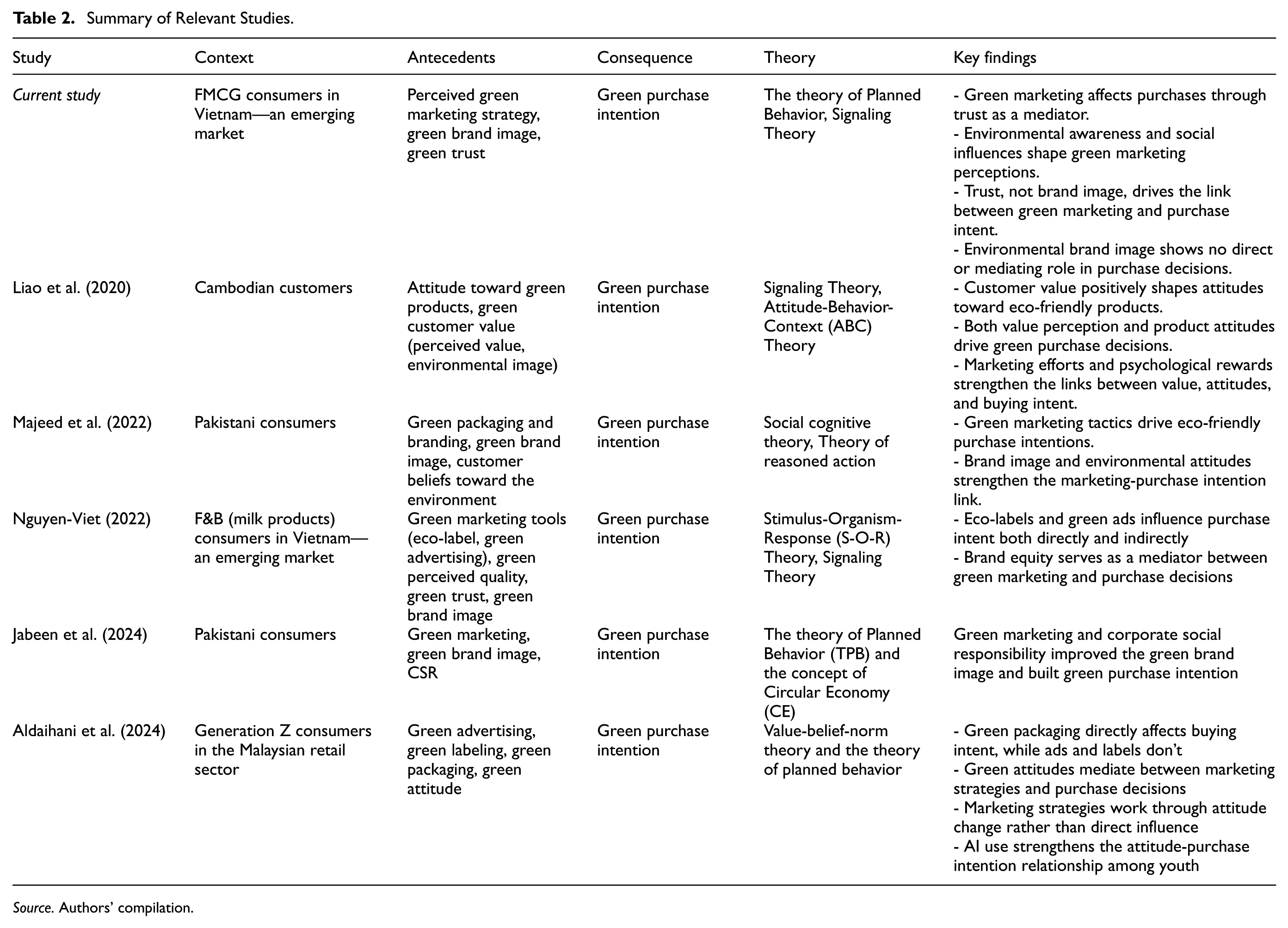
Signaling theory suggests that GMS serves as signals that help form GBI and establish GT, thereby reducing information asymmetry between firms and consumers (Mahmoud et al., 2017). However, in emerging markets characterized by skepticism and potential greenwashing concerns, trust formation requires transparent and credible environmental communication rather than merely promotional claims (Uikey et al., 2025). The effectiveness of green marketing signals in building trust depends on their transparency and verifiability, as consumers in emerging markets demand evidence-based environmental claims to overcome information asymmetry and skepticism toward green marketing efforts (Y.-S. Chen & Chang, 2013). This skepticism necessitates that green marketing strategies focus on credible signals such as third-party certifications, transparent supply chain information, and verifiable environmental performance data rather than superficial green claims (Rahman & Nguyen-Viet, 2023). This is particularly evident in the findings of Nguyen-Viet (2022), where eco-labels and green advertising positively influenced purchase intention through green brand equity dimensions. The relationship between GMS and GBI can be explained through signaling theory, where marketing efforts serve as environmental commitment signals that shape brand perceptions. This aligns with findings from Liao et al. (2020), who found that environmental advertising and green word-of-mouth significantly influence consumer attitudes. Similarly, the direct relationship between GMS and PI is supported by TPB’s attitude formation process, though studies like (Aldaihani et al., 2024) suggest this relationship may be conditional on specific marketing tools. Furthermore, GT’s role can be understood through TPB’s perceived behavioral control component, as trust reduces perceived risks in green purchase decisions. This is supported by empirical evidence from emerging markets, where Majeed et al. (2022) found that green marketing tools significantly affect consumer intentions through trust-building mechanisms. In addition, empirical support comes from Vietnamese F&B market studies demonstrating that green marketing tools such as eco-labels and green advertising effectively build both brand image and purchase intention through brand equity dimensions (Nguyen-Viet, 2022). Pakistani consumer research further validates these relationships, showing that green packaging and branding strategies directly influence green brand image, with environmental consciousness serving as a key mediator (Majeed et al., 2022) (Table 2).
Summary of Relevant Studies.
Source. Authors’ compilation.
The mediating roles of GBI and GT are explained by both theories. Signaling theory explains how marketing signals are interpreted to form brand perceptions and trust, while TPB explains how these interpretations influence purchase intentions. This dual mediation is particularly relevant in emerging markets, as demonstrated by Nguyen-Viet (2022), who found that green marketing tools (eco-labels and green advertising) influence purchase intention through adaptive green brand equity dimensions as a mediating mechanism. Similarly, Liao et al. (2020) provided evidence from the Cambodian market showing that green marketing (environmental advertising and green word-of-mouth) and green psychological benefits moderate the relationships between customer value, attitude toward the green product, and GPI. These findings are further supported by Majeed et al. (2022), who revealed that green marketing and branding techniques significantly affect Pakistani consumers’ intentions to make environmentally friendly purchases through both brand image and trust-building pathways. The relationship between GBI and GT can be understood through signaling theory, where brand image serves as a composite signal that builds trust, particularly in emerging market contexts where brand perceptions significantly influence trust formation. Malaysian Generation Z consumer studies provide additional evidence for these mediation pathways, showing that green advertising, green labeling, and green packaging work through attitude change processes that enhance both brand perceptions and purchase intentions (Aldaihani et al., 2024). Cross-regional studies in Asian emerging markets demonstrate consistent patterns where green marketing strategies strengthen the linkages between value attitudes and buying intent through both brand image and trust mechanisms (Liao et al., 2020).
Based on these theoretical underpinnings and empirical evidence, we propose:
Quantitative Study
Research Design and Research Model
This study employed a sequential mixed-method approach to develop and validate the research model. The research design consisted of two main phases: a qualitative exploratory phase followed by a quantitative confirmatory phase (Dawadi et al., 2021).
In the first phase, semi-structured interviews were conducted with 15 FMCG consumers and 5 marketing experts to explore the relationships between constructs and refine the conceptual framework. This qualitative approach helped identify relevant variables and validate the theoretical relationships proposed in the model (Stamenkov, 2023). The interviews were analyzed using thematic analysis to establish construct relationships and ensure context-specific validity. The qualitative findings revealed several key insights that shaped the research model. First, EC and SI emerged as significant antecedents of GMS, confirming their inclusion as independent variables. Second, participants consistently emphasized the role of trust in their GPI, highlighting the importance of including GT as a mediating variable. Third, the interviews indicated that GBI, while important, might have a more complex relationship with GPI than initially theorized, leading to the incorporation of both direct and indirect pathways in the model. These findings, combined with theoretical foundations from the literature, led to the development of our comprehensive research model with 10 hypothesized relationships (Figure 1).

Proposed research model.
The second phase involved a large-scale quantitative survey to test the hypothesized relationships. Following established scale development procedures, measurement items were adapted from previous studies and modified based on the qualitative findings. The survey instrument was pre-tested with 30 respondents to ensure clarity and reliability. Principal constructs were measured using multi-item scales on a five-point Likert scale. The sampling frame targeted FMCG consumers in Vietnam using a convenience sampling. Data analysis employed Partial Least Squares Structural Equation Modeling (PLS-SEM) for hypothesis testing, complemented by fuzzy-set Qualitative Comparative Analysis (fsQCA) to explore complex causal relationships. This dual analytical approach provided robust insights into both direct relationships and configurational patterns among variables.
Sampling and Data Collection
Survey Questionnaire, Sampling, and Measurement
Our study employed a systematic approach to develop and validate the survey instrument. The measurement scales were carefully selected from established literature and adapted to examine green marketing dynamics in the FMCG context. EC was measured using three items adapted from Y.-C. Lin and Chang (2012). SI incorporated five items from prior research (Stibe & Cugelman, 2019; Venkatesh et al., 2012). In which, besides three items adapted from Venkatesh et al. (2012) measuring traditional peer influence and social norms, two additional items (SI4, SI5) were developed based on: (1) our qualitative study findings which revealed the importance of governmental and media influences in green purchasing decisions, (2) expert consultation within the green FMCG context, (3) theories grounded in institutional theory and media influence theory, showing how formal institutions and information channels create normative pressures that shape consumer behavior (DiMaggio & Powell, 1983; McCombs & Shaw, 1972; Testa et al., 2015), and (4) previous studies demonstrating that governmental environmental campaigns and media coverage constitute essential components of SI affecting green consumption behaviors (Liang et al., 2024; Shah & Asghar, 2023; Xie et al., 2024; Yang et al., 2023). The GMS construct was assessed through 12 items derived from multiple sources (Bhatia & Jain, 2014; Sander et al., 2021; Spears & Singh, 2004). GBI was measured using three items adapted from Y.-S. Chen (2010), while GT utilized three items from Y.-S. Chen and Chang (2013). Finally, GPI was evaluated using four items adapted from Han et al. (2017) and Chan and Lau (2000).
To ensure cross-cultural equivalence, we implemented a rigorous translation-back-translation procedure involving four bilingual experts who translated the questionnaire between English and Vietnamese. Following methodological best practices (Hair et al., 2021), we conducted a pilot study with 30 participants to assess the instrument’s reliability and validity. The pilot results demonstrated robust internal consistency, with Cronbach’s alpha values exceeding .7 for all constructs. Non-response bias was assessed through early-late wave comparison following Armstrong and Overton (1977), comparing responses from the first 25% and last 25% of participants using independent t-tests across all constructs. No significant differences were found (p > .05), indicating minimal non-response bias (Podsakoff et al., 2003). To encourage participation and minimize self-selection effects, respondents were offered shopping vouchers (worth $5–10) and received personalized feedback on their EC scores, following ethical guidelines for survey incentives (Singer & Ye, 2013). The final questionnaire employed a 5-point Likert scale (1 = strongly disagree to 5 = strongly agree), chosen for its ability to capture response nuances and compatibility with statistical analyses. This methodical approach to instrument development strengthens the scientific rigor of our mixed-method investigation into green consumer behavior in emerging markets.
Data Collection
The study employed a mixed-method approach to data collection in the Vietnamese FMCG industry between August 2024 and November 2024. Following established research protocols (Hair et al., 2021), we first conducted qualitative interviews with consumers to gain deeper insights into green purchasing behavior and refine our quantitative instrument. For the main quantitative phase, we utilized a convenience sampling method to collect data from FMCG consumers in Vietnam’s urban areas, where green product consumption is most prevalent. While convenience sampling has limitations, it is widely used in consumer behavior studies due to its practicality and cost-effectiveness. To minimize common method bias, we implemented procedural remedies recommended (Podsakoff et al., 2003), including randomizing question order and using different scale anchors. The survey was administered through multiple channels, including online platforms (social media and consumer forums) and in-person distribution at shopping centers and retail outlets. From an initial distribution of 450 questionnaires, we received 312 responses (69.3% response rate). After screening for completeness and eliminating invalid responses using established criteria (Hair et al., 2011), 275 responses (Table 3) were retained for final analysis. This sample size exceeds the minimum threshold for PLS-SEM analysis and fsQCA, ensuring adequate statistical power for our research model. While the convenience sampling approach may limit generalizability, our sample characteristics broadly reflect the demographic profile of urban FMCG consumers in emerging markets.
Surveyed Participants’ Demographics.

Source. Authors’ compilation.
Data Analysis and Results
Common Method Bias (CMB)
To address potential common method bias concerns, we implemented several procedural remedies during data collection, following established methodological guidelines (Podsakoff et al., 2003). These included ensuring respondent anonymity and implementing strict data protection protocols. We assessed CMB through both Harman’s single-factor test and examination of Variance Inflation Factors (VIFs) in the inner model (Table 4), as recommended by recent methodological literature. The collinearity diagnostics revealed that all VIF values in the inner model were well below the conservative threshold of 3.3, ranging from 1.034 to 2.000. Specifically, the relationships between EC and GMS, as well as SI and GMS, showed the lowest VIF values (1.034). The highest VIF value (2.000) was observed in the relationship between GT and GPI, still well within acceptable limits. These results indicate that common method bias is not a significant concern in our model (Kock, 2015).
VIFs in the Inner Model.

Source. Authors’ compilation.
PLS-SEM and PROCESS Macro Approach
Outer Model and Scale Validation
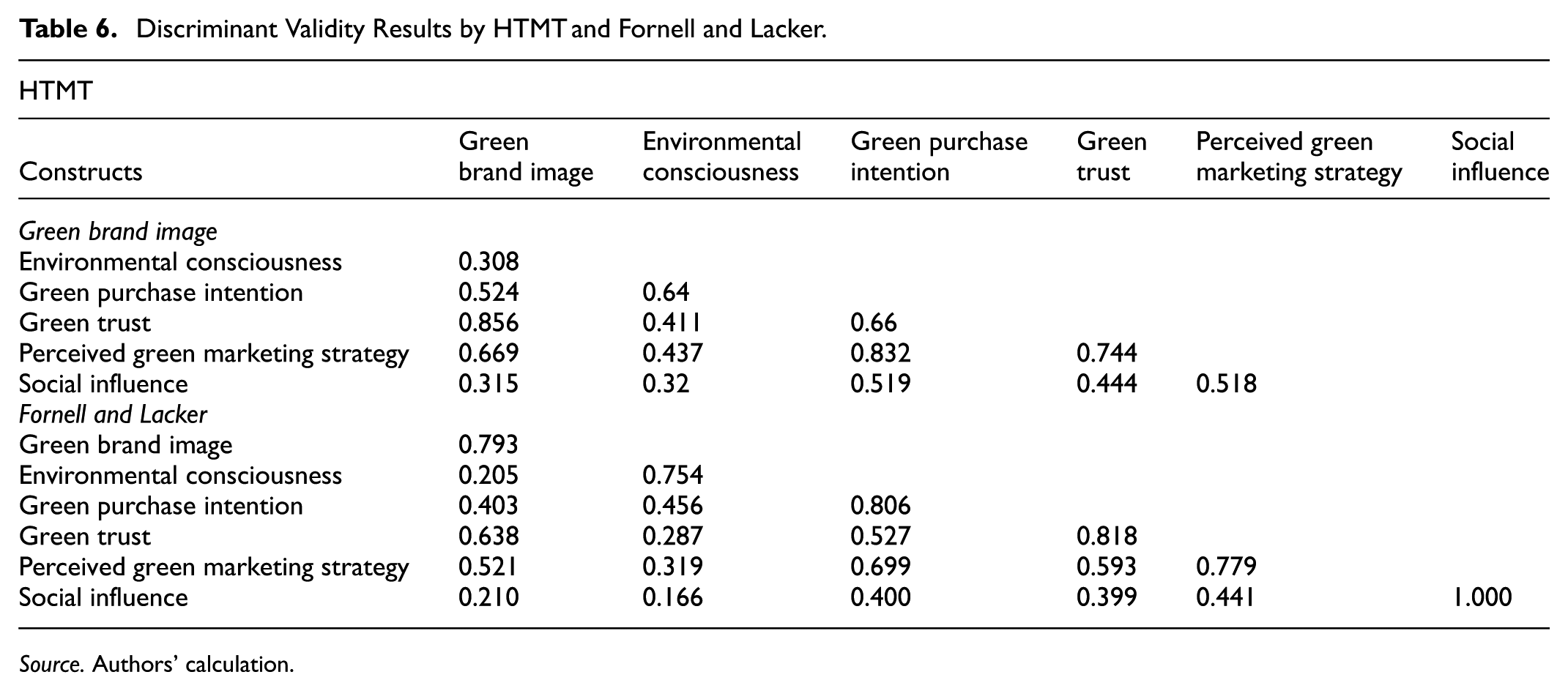
The measurement model’s reliability (Table 5) was assessed through multiple criteria. The outer loadings of individual items demonstrated strong reliability, with values ranging from 0.702 to 0.896, exceeding the recommended threshold of 0.7 (Hair et al., 2021). Internal consistency reliability was confirmed through both Cronbach’s alpha and composite reliability (CR) measures. The CR values ranged from 0.799 to 0.882, well above the conventional 0.7 threshold, with GPI showing the highest reliability (CR = 0.882), followed by GMS (CR = 0.865). Convergent validity was evaluated using Average Variance Extracted (AVE), with most constructs exhibiting values above the 0.5 benchmark (Hair et al., 2021). GT demonstrated the highest AVE (0.668), followed by GPI (0.651) and GBI (0.629). While GMS showed a slightly lower AVE (0.385), its strong reliability metrics and significant item loadings support its retention in the model. The discriminant validity assessment using both the Heterotrait-Monotrait (HTMT) ratio and Fornell-Larcker criterion confirmed the distinct nature of all constructs, with all values meeting their respective thresholds (Voorhees et al., 2016).
Reliability Analysis and Convergent Validity.

Source. Authors’ calculation.
The study employed two methods to assess discriminant validity (Table 6). First, we utilized the heterotrait-monotrait (HTMT) ratio analysis following Henseler et al. (2015). The results demonstrated that all HTMT values fell below the threshold of 0.9 recommended by Gold et al. (2001), with the highest ratio being 0.856 between green trust and green brand image. The second approach applied the Fornell-Larcker criterion (Fornell & Larcker, 1981). In this analysis, each construct’s diagonal value exceeded its correlations with other constructs, as evidenced in the lower section of Table 5. For instance, the green brand image showed a value of 0.793, which was higher than its correlations with other variables. These findings from both methods confirmed satisfactory discriminant validity among the constructs in our measurement model.
Discriminant Validity Results by HTMT and Fornell and Lacker.
Source. Authors’ calculation.
Inner Model Result and Hypothesis Testing
The hypotheses testing was conducted using PLS analysis, and the results are presented in Table 7, including path coefficients, t-statistics, p-values, and testing outcomes.
Summary of Hypothesis Test Results.

Source. Authors’ calculation.
Out of 10 hypotheses tested, eight were supported (p < .05), while two were rejected. The findings confirmed significant direct effects of EC (β = .248, p < .001) and SI (β = .392, p < .001) on GMS. The analysis also validated the positive impacts of GMS on GBI (β = .534, p < .001), GPI (β = .584, p < .001), and GT (β = .359, p < .001). While GT showed a significant positive effect on GPI (β = .212, p < .01), the direct relationship between GBI and GPI was not supported (β = −.032, p > .05). Regarding mediation effects, only the indirect path through GT was significant (β = .076, p < .05). The model demonstrated substantial explanatory power, accounting for 50.7% of the variance in GPI (adjusted R2 = .501), 50.0% in green trust (adjusted R2 = .496), and 28.5% in green brand image (adjusted R2 = .282). The Stone-Geisser Q2 values confirmed predictive relevance with GPI (Q2 = 0.246), GT (Q2 = 0.161), and GBI (Q2 = 0.046), all exceeding zero and indicating satisfactory predictive accuracy (Hair et al., 2019).
To validate the robustness of our results, we conducted further analysis using the SPSS PROCESS macro’s Model 14, applying bootstrapping with bias-corrected confidence intervals to examine the hypothesized moderation effects (Hayes et al., 2017). Our statistical assessment (Table 8) demonstrated that GT acts as a significant moderator in the relationship connecting GMS and GPI, as evidenced by the coefficient values (β = .191, t = 3.403, p = .001) and the 95% confidence interval [0.029, 0.237] which did not contain zero. In contrast, the moderating influence of GBI on the GMS-GPI relationship failed to reach statistical significance (β = .073, t = 1.244, p = .215), with a confidence interval of [−0.033, 0.117]. These analytical outcomes suggest that GT specifically amplifies the effectiveness of GMS in promoting GPI, while GBI does not produce a similar enhancing effect.
Moderation Effect Test by PROCESS Macro.

Source. Authors’ calculation.
FsQCA Approach
Fuzzy-set Qualitative Comparative Analysis (fsQCA) represents a methodological framework that explores complex causal relationships using set-theoretical principles (Ragin, 2014). This approach addresses various aspects of causation including configurational patterns, multiple pathways to outcomes, and asymmetric relationships (L. Wang et al., 2021). While traditional PLS-SEM focuses on variable-centered analysis to determine individual effects, fsQCA employs a case-oriented perspective to explore how different conditions combine to produce outcomes (Pappas & Woodside, 2021). The coupling of PLS-SEM with fsQCA is specifically justified by the need to address distinct but complementary research questions: while PLS-SEM reveals mediation pathways and linear relationships between constructs, fsQCA uncovers alternative configurational pathways that may achieve the same outcome through different combinations of conditions (Kraus et al., 2018). This dual approach is particularly valuable for understanding green purchase behavior because consumers may reach similar purchase intentions through various combinations of EC, SI, and trust perceptions rather than following a single mediation path (Fiss, 2011). Configuration analysis after SEM testing is essential because it reveals equifinality (multiple pathways to the same outcome) and asymmetric causality patterns that linear models cannot capture, providing a more nuanced understanding of how different consumer segments achieve green purchase intentions (Ragin & Fiss, 2017). The fsQCA methodology serves as a valuable complement to PLS-SEM by revealing how variables interact to generate specific outcomes, particularly when dealing with heterogeneous data patterns (Fiss, 2007). Our research implements both approaches—the symmetrical PLS-SEM and asymmetrical fsQCA—to ensure comprehensive analytical robustness.
The analysis begins with data calibration, where original values are converted into fuzzy set memberships between 0 and 1 (Kaya et al., 2020). This process requires establishing three anchors: complete membership, complete non-membership, and the transition point. The calibration anchors (4, 2, 3) were empirically justified using the 90th percentile, 10th percentile, and median values respectively, following established guidelines for five-point scale data (Schneider & Wagemann, 2012). Robustness checks with alternative calibrations (conservative: 4.5, 1.5, 3.0; liberal: 3.5, 2.5, 3.0) yielded consistent results with minimal variation in consistency (±0.03) and coverage (±0.02), confirming solution stability (Fiss, 2011). Through direct calibration, we established values of 4, 2, and 3 for these respective anchors across all constructs. To prevent case exclusion, we added 0.001 to values at 0.50. The fsQCA 4.1 software facilitated this calibration process, generating the fuzzy sets needed for subsequent analysis.
Prior to examining sufficiency relationships, we conducted necessary condition analysis (Table 9). With GPI as the outcome variable and GMS, GT, and GBI as causal conditions, we evaluated necessity based on established thresholds. Following Ragin's (2006) guidelines, conditions with consistency scores above 0.9 are deemed necessary, while those exceeding 0.8 are considered almost always necessary. Our analysis revealed that GMS, GT, and GBI met the criteria for almost always necessary conditions for GPI, establishing their fundamental importance in the causal framework.
Necessary Conditions for GI.

Source. Authors’ calculation.
Third, we condense the truth table rows into reduced configurations logically by utilizing the Quine-McClusky technique.
The fsQCA findings, presented in Table 10, identified two primary configurational pathways (GMS, GT•GBI) leading to elevated GPI levels. The solution demonstrated robust empirical significance with an overall coverage of 0.980 (exceeding the 0.2 threshold) and consistency of 0.841 (above the 0.8 benchmark). Individual configurations exhibited consistency values greater than 0.8 and raw coverage above 0.2. The analysis revealed that GMS independently constitutes a powerful pathway to GPI (configuration 1). Additionally, the combined presence of GT and GBI emerged as another significant route to achieving GPI (configuration 2). These configurational findings align with and reinforce the relationships identified through PLS-SEM analysis.
Intermediate Solution.

Source. Authors’ calculation.
Discussion and Conclusion
Our study findings demonstrate both confirmatory and contradictory results when compared to existing literature. Given H1 and H2, our finding of a significant relationship between EC and GMS aligns with A. Kumar et al.’s (2021) work on attitudinal factors in emerging markets. The stronger effect of SI particularly supports H. Wang et al.’s (2019) emphasis on social pressures in shaping consumer perceptions, extending their findings specifically to the FMCG context. Regarding H3, H4 and H5, the strong relationship between GMS and GBI reinforces Y. Chen and Chang’s (2012) signaling theory framework. Similarly, the robust effect on GPI aligns with Liao et al.’s (2020) findings about environmental advertising effectiveness. The moderate relationship with GT partially supports Y.-S. Chen et al.’s (2016) findings but suggests greater skepticism in FMCG markets. Our finding of a non-significant relationship between GBI and GPI notably contradicts Majeed et al.’s (2022) results from Pakistan’s market. This unexpected finding may reflect the unique market conditions in this study where consumers prioritize functional attributes and price over brand image due to economic constraints and limited green product availability (Nguyen et al., 2017). Additionally, this could indicate theoretical gaps in current green branding models that may not adequately capture the complexity of brand-behavior relationships in emerging FMCG markets characterized by high price sensitivity and skepticism toward corporate environmental claims (Tran & Walter, 2014). However, the significant effect of GT on GPI supports Mahmoud et al.’s (2017) emphasis on trust in reducing information asymmetry in emerging markets. Given H8 and H9, the mediating hypotheses results present interesting contrasts with existing literature. While Y.-S. Chen et al. (2016) emphasized both brand image and trust, our findings show only trust as a significant mediator between GMS and GPI. The non-significant mediating effect of GBI challenges previous theoretical frameworks that positioned brand image as a key mediating mechanism. The significant relationship between GBI and GT (H10) aligns with Y.-S. Chen et al.’s (2016) findings about the interconnected nature of these constructs in green marketing contexts.
Cross-cultural comparisons reveal important variations in green consumption patterns that contextualize our findings. While Western developed markets show stronger brand image effects on purchase intentions, reflecting higher consumer affluence and established green market infrastructures (Leonidou et al., 2013), our emerging market context demonstrates greater reliance on trust mechanisms. This contrasts with East Asian markets like South Korea and Japan, where collective cultural values strengthen both SI and brand image effects simultaneously (Kim & Choi, 2005). Latin American emerging markets show similar trust-dominant patterns to our findings, suggesting regional economic factors override cultural variations in shaping green consumption priorities (Polonsky et al., 2012). European emerging markets (e.g., Eastern Europe) display hybrid patterns combining trust reliance with moderate brand image effects, possibly reflecting transitional economic conditions and EU regulatory influences (Dabija et al., 2019). These cross-cultural variations suggest that economic development level, rather than cultural dimensions alone, may be the primary moderator of green marketing effectiveness mechanisms.
Our model’s explanatory power for GPI and GT demonstrates stronger predictive ability compared to previous studies in emerging markets. However, the lower R-square for GBI and GMS suggests the presence of additional influential factors, such as price sensitivity and economic constraints. Potential confounding variables that may influence these relationships include consumer income levels, product availability, cultural values, and regulatory environment, which warrant investigation in future studies (Ali et al., 2019). The lower explanatory power for some constructs may also reflect omitted variables such as perceived value, product quality perceptions, and situational factors that are particularly relevant in emerging markets (Khan & Mohsin, 2017). These findings extend the application of TPB and signaling theory in emerging markets’ FMCG sector. While supporting some fundamental relationships proposed in previous literature, our results highlight important contextual differences. The findings particularly reinforce (B. Y. Perera et al., 2023) observations about the distinctive characteristics of emerging market consumers, where social networks and cultural values significantly influence purchase decisions, the translation of positive attitudes into purchase behavior is complicated by market-specific constraints, trust plays a more crucial role than brand image in purchase decisions, and the FMCG context presents unique challenges in green marketing effectiveness.
The complementary use of PLS-SEM and fsQCA provides unique methodological contributions to green marketing research. While PLS-SEM revealed linear relationships and explained variance in dependent variables, fsQCA uncovered complex configurational pathways showing that multiple combinations of conditions can lead to high GPI (Fiss, 2011). This dual approach demonstrates that high GPI can be achieved through different pathways - some emphasizing trust-based configurations while others rely on marketing strategy combinations, providing richer insights than either method alone (Ragin, 2008). The fsQCA results particularly revealed asymmetric relationships and equifinality patterns that traditional regression-based approaches cannot capture, offering valuable strategic insights for practitioners seeking to optimize green marketing approaches in diverse market segments (Kraus et al., 2018).
Theoretical Implications
First, our study extends TPB in the context of green marketing in emerging markets’ FMCG sector. Our findings reveal a complex mechanism where SI exhibits stronger effects than EC on GMS. This advances TPB by demonstrating how collective social norms in emerging markets may override individual attitudes, particularly in contexts where purchase decisions are frequently made and socially visible. Second, our research contributes to signaling theory by revealing the differential effects of green marketing signals in FMCG contexts. Unlike premium products, we find that GBI doesn’t significantly affect purchase intention, while trust serves as a crucial mediator. This shows how signal interpretation varies in low-involvement, frequent-purchase contexts, particularly in emerging markets where information asymmetry is high and consumers may be more skeptical of green claims. Third, we advance the understanding of trust-building mechanisms in green marketing. While previous research suggested direct paths from green marketing to purchase intention, our findings demonstrate that trust acts as an essential mediating mechanism. This is particularly relevant in emerging markets where green claims are often met with skepticism, and trust becomes a crucial bridge between marketing efforts and purchase decisions. Fourth, our study contributes to the literature on contextual factors in green marketing by demonstrating the limited role of brand image compared to trust in driving purchase intentions. This challenges traditional brand equity theories and suggests that in emerging market FMCG contexts, trust-building may be more crucial than brand-building for encouraging green purchases. Fifth, we make a theoretical contribution to SI measurement by extending the traditional conceptualization beyond interpersonal influences to include institutional and media dimensions. While conventional social influence measures focus on peer pressure and social norms (Venkatesh et al., 2012), our study demonstrates that governmental campaigns and media coverage constitute distinct yet crucial components of SI in green consumption contexts. This extension is theoretically grounded in institutional theory and media influence theory, showing how formal institutions and information channels create normative pressures that shape consumer behavior (DiMaggio & Powell, 1983; McCombs & Shaw, 1972; Testa et al., 2015). This expanded conceptualization provides a more comprehensive understanding of SI mechanisms in environmental consumption, particularly relevant for emerging markets where governmental environmental policies and media coverage play significant roles in shaping consumer attitudes and behaviors. Sixth, we extend existing theoretical frameworks by demonstrating how EC and SI collectively explain GMS. This suggests the need for a more nuanced theoretical approach that accounts for both individual and collective factors in emerging markets’ green consumption patterns.
Importantly, our findings challenge and refine existing theories in several ways. The non-significant GBI-GPI relationship fundamentally challenges brand equity theory’s universal applicability, suggesting that traditional brand-centric models may be inadequate for emerging market FMCG contexts where functional and economic considerations predominate (Keller, 2016). This finding necessitates theoretical refinement toward context-sensitive models that account for market maturity and economic constraints (Sheth, 2011). Furthermore, our results challenge the dominant linear progression assumed in most green marketing models by revealing asymmetric and configurational relationships through fsQCA, suggesting that traditional cause-effect assumptions may oversimplify consumer decision-making processes (Woodside, 2013). Based on these findings, we propose future theoretical refinements including: (1) developing context-contingent green marketing theories that explicitly incorporate economic development levels and market maturity factors; (2) integrating configurational thinking into green consumer behavior models to capture the complexity of decision-making pathways; and (3) establishing trust-centric theoretical frameworks for emerging markets that position trust as a primary rather than secondary mechanism in green consumption models.
Practical Implications
Based on our empirical findings, several practical implications emerge for FMCG companies operating in emerging markets. Our results regarding EC (H1) and SI (H2) as antecedents of GMS suggest that companies should prioritize social-oriented initiatives while maintaining environmental messaging. Organizations should implement community-based green initiatives within local markets, develop social media campaigns highlighting community environmental actions, and create green consumer reward programs that encourage group participation. These should be supported by establishing partnerships with local environmental groups within each quarter and designing family-oriented green packaging and promotional materials. The strong relationship between GMS and GBI (H3), GPI (H4), and GT (H5) indicates the need for an integrated approach. Companies should implement third-party environmental certifications, develop transparent supply chain tracking systems, and provide detailed environmental impact reports on product packaging. Educational content about green practices should be updated, supported by a consumer feedback system for green initiatives established.
Given the non-significant relationship between GBI and GPI (H6) but significant effect of GT on GPI (H7), companies should reallocate their marketing resources. This includes focusing marketing budget on trust-building activities, reducing spending on pure brand-building, and investing in measurable environmental improvements rather than image campaigns. Organizations should set targets for reducing greenwashing in marketing communications and develop concrete environmental metrics for marketing effectiveness. The mediating role findings, particularly the significant mediating effect of trust (H9) compared to the non-significant mediating effect of GBI (H8), suggest implementing a verification system for green claims, establishing monthly environmental performance reporting, and creating a dedicated customer service channel for green product inquiries. Companies should develop a green promise charter with measurable commitments and set up quarterly environmental audit procedures. To operationalize trust-building strategies, companies should establish transparent reporting mechanisms including real-time environmental impact dashboards, third-party verification systems, and regular community engagement sessions where consumers can directly interact with sustainability managers (Y.-S. Chen & Chang, 2013). Consumer engagement initiatives should include co-creation programs where customers participate in product development, environmental education workshops, and feedback loops that demonstrate how consumer input influences company decisions (A. Kumar et al., 2021).
For policymakers, our findings suggest developing regulatory frameworks that encourage transparency in green marketing communications, establishing standardized green labeling systems for FMCG products, and creating incentive programs for companies demonstrating verified environmental improvements (Testa et al., 2021). Policymakers should also invest in public environmental education campaigns that leverage SI mechanisms and develop infrastructure supporting green product distribution in emerging markets. Environmental NGOs can capitalize on our findings by focusing advocacy efforts on trust-building rather than general awareness campaigns, developing partnership programs with FMCG companies to verify green claims, and creating consumer education initiatives that emphasize SI and community engagement. NGOs should also establish monitoring systems for corporate environmental claims and develop community-based programs that leverage social networks to promote green consumption behaviors.
Considering the significant relationship between GBI and GT (H10) and the FMCG context in emerging markets, organizations should develop cost-effective green packaging alternatives and implement a tiered pricing strategy for green products. This should include creating bulk-purchase options for eco-friendly products, establishing green product lines at different price points, and designing promotional strategies that emphasize long-term cost savings. To address the moderate explanatory power of the model for GMS, companies should conduct bi-annual consumer research to identify additional influence factors, develop market-specific green marketing strategies, and create localized environmental education programs. This should be supported by establishing quarterly reviews of marketing effectiveness metrics and designing adaptive marketing strategies based on consumer feedback.
These practical implications address both the significant relationships found in our study and the unique characteristics of FMCG consumers in emerging markets. The focus on trust-building, SI, and practical environmental initiatives, rather than mere brand image building, reflects the study’s findings about the complex interplay between GMS and GPI in emerging market contexts. Particular attention is paid to the price sensitivity of emerging market consumers and the need for trust-building in green marketing initiatives, ensuring that sustainability goals align with market realities and consumer expectations.
Limitations
This study has several limitations to consider. Our focus on a single emerging market and cross-sectional data collection may limit the generalizability and temporal understanding of findings. The broad FMCG categorization might overlook product-specific variations, while the model’s lower explanatory power for GBI and GMS suggests unmeasured variables. The reliance on self-reported purchase intentions, rather than actual behavior, and the absence of demographic moderating effects and digital marketing channels present additional limitations. These constraints provide opportunities for future research to enhance understanding of green marketing effectiveness in emerging markets’ FMCG sector. To address these limitations, future research should employ longitudinal panel studies spanning 12 to 24 months to capture temporal dynamics (Hair et al., 2019), cross-cultural comparative studies across multiple emerging markets to enhance generalizability, and field experiments in retail settings to measure actual purchase behavior rather than intentions. Studies should also integrate demographic moderators through multi-group analyses and incorporate digital marketing variables including social media engagement and influencer effects.
Footnotes

Ethical Considerations
This study adhered to established ethical guidelines. Participant confidentiality was strictly maintained, data were handled securely, and all procedures complied with relevant institutional and disciplinary ethical standards. Potential conflicts of interest were transparently disclosed.
Consent to Participate
All participants were informed about the purpose, procedures, potential risks, and benefits of the study, and provided their voluntary informed consent prior to participation. Participants were reminded of their right to withdraw at any time without penalty.
Author Contributions
This research paper reflects equal and collaborative contributions from all authors involved. Each author has played a significant role in conceptualizing, designing, and conducting the study. The data collection process, analysis, and interpretation of results were carried out collectively, leveraging the diverse expertise and perspectives of each contributor. Additionally, the drafting and revision of the manuscript have been collaborative efforts, with all authors actively participating in shaping the content and ensuring its scholarly rigor.
Funding
The authors disclosed receipt of the following financial support for the research, authorship, and/or publication of this article: This research is funded by Foreign Trade University under the research program number FTURP01-2020-03 and is partly funded by University of Economics Ho Chi Minh City.
Declaration of Conflicting Interests
The authors declared the following potential conflicts of interest with respect to the research, authorship, and/or publication of this article: We declare that there is no conflict of interest regarding the research. None of the authors has financial or personal relationships with individuals or organizations that could inappropriately influence or bias the content and findings of this research. We confirm that this work is conducted with utmost integrity and transparency, adhering to the ethical standards and guidelines of academic research.
Data Availability Statement
Access this link for the full dataset of this study (Link: 10.6084/m9.figshare.29564852).