




Abstract
Environmental protection is a priority for countries that want to reduce the impact of global warming. Numerous companies strive to create a positive image and are committed to delivering supplementary environmental benefits. However, some companies still make vague statements and lack transparency and authenticity. The purpose of this research study is to examine the impact of green advertising and brand characteristics aspects (including perceived greenwashing) on green purchase intention (GPI) and Green Brand Trust (GBT) as a mediator. The research was based on surveys with 300 green consumers in Ho Chi Minh City using convenience sampling. Data were analyzed using SmartPLS software and Structural Equation Modeling (PLS-SEM). The results indicate that perceived greenwashing (PGW) negatively affects green purchase intention. On the other hand, green advertising receptivity (GAR), green brand image (GBI), and perceived brand authenticity (PBA) will have a positive effect on GBT. Additionally, green brand trust (GBT) positively impacts green purchase intention based on consumer demand. At the same time, Green Brand Trust mediates the relationship between GAR, GBI, PBA, and GPI. In summary, this study provides essential results and insights into the importance of the Theory and practice of implementing green marketing strategies from consumers’ perspective.
Keywords
Introduction
In recent times, the climate on Earth has undergone negative changes. Global temperatures are rising alarmingly, causing numerous adverse effects on life. The International Monetary Fund (IMF) indicates that climate change has the potential to impact more than 12% of Vietnam’s population and diminish the nation’s economic growth rate by 10% (IMF, 2018). Transitioning to a green economy, the Vietnamese government has recognized the challenges posed by climate change and is actively working to mitigate its effects. One of the prominent climate-related issues confronting Vietnam is the escalating carbon emissions within the nation (Rahman & Nguyen-Viet, 2023). Companies increasingly focus on leveraging the green movement to cultivate a positive brand image and demonstrate a genuine commitment to providing enhanced environmental benefits for environmentally conscious consumers (Sun et al., 2020). Many global businesses focus on environmental protection and adopt green marketing strategies (Chang, 2011). Nevertheless, most domestic corporations frequently emphasize portraying themselves as environmentally friendly, while they are simultaneously contributors to environmental pollution (Nguyen et al., 2019). Some companies exploit consumers’ heightened awareness of environmental issues and their desire to be environmentally conscious by pretending to be environmentally friendly. This phenomenon is known as greenwashing, a practice that not only confuses consumers and makes it difficult for them to choose sustainable products and services but also negatively impacts businesses that engage in green practices while trying to remain competitive. Hence, it is essential to increase to raise awareness among Vietnamese consumers about greenwashing. According to the findings of Ha et al. (2022), the term “greenwashing” is described as “activities that mislead consumers about a company’s environmental practices or the environmental benefits of a product or service.” This is a common term in literature. More recently, in November 2023, Greenpeace accused significant Chinese oil companies such as PetroChina and CNOOC of using low-quality carbon offset credits to “greenwashing” the importation of natural gas without committing to reducing emissions. Many instances exist of companies, including fashion brands such as Zara, H&M, and Uniqlo, being discovered engaging in greenwashing. Additionally, bottled water manufacturers like Spring, Evian, and Deer Park, automobile producers such as Volkswagen, as well as FMCG and fast-moving consumer goods manufacturers and producers like Nestle and Coca-Cola (Earthisland, 2021). Furthermore, green consumers often make decisions based on advertisements and company messages, and the credibility of these green claims is being steadily undermined by greenwashing (Ha et al., 2022). Because of this, consumers today cannot make informed decisions about purchasing green products because they need to know whom to trust and what to believe while losing confidence in the green claims made by companies. Consequently, greenwashing can jeopardize the entire green market and be detrimental to the green marketing efforts of transparent and accurate information-providing companies. This trend is growing because of the rising interest in environmentally friendly products, even though customers are becoming more aware of greenwashing behavior (Tahir et al., 2020). The outcome is that consumers need to be more accepting of business activities benefiting from environmental trends. Green marketers will only be able to convince clients of the superiority of their goods if they offer trustworthy information to alleviate consumer doubts about their green claims (Ha et al., 2022). This study analyzed the impact of perceived greenwashing and its influence on intentions to make green purchases using the Stimulus-Organism-Response (SOR) Theory to respond to recent calls for research on green marketing and the effects of greenwashing from a consumer viewpoint (Zhang et al., 2018). In related research studies in this context in Vietnam, most only mention the factors of Advertising Acceptance, Green Brand Image, and Perception of Brand Authenticity that affect green purchase intention. To date, only a handful of empirical works have explicitly tested how perceived greenwashing affects consumers’ intention to purchase green products (Delmas & Burbano, 2011; Lyon & Montgomery, 2015). By offering a large-sample test that integrates both variables in a single framework, our study advances the literature on sustainable consumption. Therefore, the findings from the study can provide marketers with effective strategies to develop green marketing from the consumer perspective, helping to create business value without damaging customer trust. Firstly, this research broadens our comprehension of the mechanisms and context that allow greenwashing to affect consumers’ purchase intentions. Furthermore, the results of this study can assist professionals in developing green marketing strategies that focus on consumers to create business value while maintaining consumer trust. Secondly, this study examines the significance of green marketing strategies, focusing on elements like green advertising receptivity, brand image, perceived brand authenticity, and perceived greenwashing, in establishing brand trust and affecting consumer intentions to make environmentally friendly purchases. Thirdly, this research investigates the mediating effect of green brand trust on the relationship between green advertising receptivity, brand image, perceived brand authenticity, and purchase intention (Lavuri et al., 2022; Szabo & Webster, 2021). In summary, this research will enrich the existing theoretical foundation of the model and serve as a reference for understanding the current impacts related to green brand trust and purchase intention in Vietnam.
This matters because consumers are increasingly alert to environmental claims, yet little is known about how perceived greenwashing shapes their purchasing decisions in emerging economies. Clarifying this relationship enriches theoretical models of pro-environmental behavior and equips firms and regulators with evidence to craft more credible green communication strategies.
Literature Review
As the trend of green consumption is growing, many businesses have taken advantage of this to build an environmentally friendly image, although not truly committed to sustainable values, this phenomenon is increasingly widespread and is also commonly known as “greenwashing.” Greenwashing refers to companies’ deliberate deception or misleading of customers through false, incorrect assertions regarding their behavior and ecological effects to restore their reputation or create a positive image in the public eye (Marquis et al., 2016). It can also be explained as consumers’ reactions to how green advertising messages align with the business’s environmental responsibility (Sun & Shi, 2022). When consumers are well aware of these behaviors, they tend to become skeptical and less likely to establish long-term relationships and minimize green consumption intentions (Chen & Chang, 2013). A series of studies have proven that this skepticism is a significant hindrance to purchasing decisions from companies that show signs of greening (Tarabieh, 2021). While green advertising receptivity pertains to consumers’ level of acceptance, green advertising exposure shapes consumers’ emotions and evaluations, influencing their trust in green brands or other eco-friendly products (Bailey et al., 2016; Rahman & Nguyen-Viet, 2023). For green advertising, receptivity emphasizes the ecological advantages of buying certain items, such as cutting down water pollution and greenhouse gas emissions and promoting biodiversity (Nyilasy et al., 2014). A green brand image refers to the collection of brand views held by consumers that pertain to environmental commitment and issues (Chen, 2010). Thereby, brand image is considered an essential first step in building consumer trust in a brand because it makes it easier for consumers to remember the name, logo, and values of an environmentally friendly brand (Dewi, 2014). The view of researchers Wu et al. (2016) demonstrated that consumers’ tendency to switch to green products is influenced by both their level of satisfaction and their perception of green image. Research by Yang and Battocchio (2021) mentioned that the authenticity of the brand is reflected in the consistency of service commitment and the engagement of products and services with the core value, which helps the brand convey sincerity, thereby strengthening the customer’s belief that the brand truly understands and meets their needs. According to Manthiou et al. (2018), consumer desire for products, services, and authenticity contributes to an unforgettable customer experience. Some of our studies also found that brand authenticity can facilitate the development of brand trust and determine the extent to which consumers believe in a brand’s green promise, because authentic brands tend to deliver on their promises, while consumers trust brands that deliver on what they promise (Huang & Guo, 2021; Portal et al., 2019).
Research conducted by Chen and Chang (2013) shows that the definition of green brand trust is closely linked to a consumer’s willingness to buy a product, service, or brand based on trust or expectations arising from the reliability, policies, and capabilities of the product, service or brand, regarding effective environmental protection. Green brand trust is the trust that drives customers to depend on a brand due to their expectations and trust derived from the environmental performance, reliability, and good behavior of the brand (Pramesthi & Bernarto, 2023). Many researchers have also shown that customer decision-making processes can be influenced by green brand trust levels, especially in today’s era of environmentally responsible consumption (Amin & Tarun, 2020; Pramesthi & Bernarto, 2023). Therefore, green brand trust can lead to stronger consumer green purchasing intentions (Rahman & Nguyen-Viet, 2023). It can be understood that Green purchase intention pertains to the ability and consumer willingness to care about environmentally friendly issues and consciously choose an environmentally friendly product over conventional products that tend to negatively impact the environment during production. As consumers become more and more aware of environmentally friendly products, this awareness becomes the driving force behind green purchasing intentions, as they tend to be attracted to environmental protection options (Bibi, 2019).
In particular, this study will incorporate Psychological Theory S-O-R (Stimulus-Organism-Response). This study’s proposed conceptual framework is founded on the psychological approach theory through studying specific situations and environments. Mehrabian and Russell (1974) proposed the S-O-R (Stimulus-Organism-Response) theory for researchers to examine how psychological and social-emotional influences affect human behavior. The S-O-R framework can explain behavioral differences due to different cognitive factors and marketing stimuli. Earlier research into green consumption has utilized the S-O-R theory to elucidate how external influences affect consumer perceptions and emotions, thereby determining their intentions to act (Nguyen-Viet, 2022; Sun et al., 2020). Therefore, the S-O-R theory is suitable for this study. In this research, the S-O-R model also demonstrates how the reception of green advertising, brand image, perception of brand authenticity, and greenwashing awareness act as stimuli to influence individuals’ internal perceptions, which in turn affect their trust in green brands and, ultimately, their aim is to get involved in green consumption.
Hypotheses
Green Advertising Receptivity
Green advertising receptivity denotes the degree to which consumers notice and develop a positive attitudes, and react positively to advertisements that promote products or companies with environmentally friendly messages (Bailey et al., 2016). Green advertising frequently emphasizes the ecological advantages of buying specific products, including the reduction of greenhouse gas emissions, the diminishment of water pollution, and the increase in awareness regarding organic products (Nyilasy et al., 2014). Green advertising exposure shapes consumers’ emotions and evaluations, influencing their trust in green brands and other eco-friendly products (Rahman & Nguyen-Viet, 2023). Analysis has shown the significance of accurately and honestly conveying messages via advertising, contributing trust and credibility towards the brand (Nguyen-Viet, 2022). When green advertising exposed consumers, their emotions and evaluations influence their trust in eco-friendly brands or products (Bailey et al., 2016). The reception of green advertising positively influences consumers’ trust in green brands (Bailey et al., 2016; Nguyen-Viet, 2022; Sun et al., 2020). Thus, we can hypothesize that:
Green Brand Image
Consumers often believe that a company with a positive brand image is more likely to attract them to buy its products. The green brand image refers to consumers’ perceptions of the brand concerning environmental concerns and commitments (Rahman & Nguyen-Viet, 2023). Considering consumer awareness regarding the environment and stringent international environmental protection regulations, companies need to cultivate a green brand image. Wu et al. (2016) established that consumers’ transition to green products is affected by their satisfaction and perception of the green image. The green brand image favorably affects consumer trust by mitigating perceived risks. Prior research has investigated the connection linking trust and green brand image (Bashir et al., 2020; Nguyen-Viet et al., 2024). Thus, we can hypothesize that:
Perceived Brand Authenticity
Perceived brand authenticity measures the ability and willingness of an organization to maintain consistent information and enhance performance by evaluating expertise and reliability. While reliability is about being willing to keep promises, expertise is about being able to fulfil promises (Huang & Guo, 2021). Brands need help building perceived brand authenticity with consumers due to the increasing greenwashing, which makes consumers sceptical of green marketing claims. However, the literature asserts that perceived brand authenticity is crucial if a company wants to develop its green brand image (Huang & Guo, 2021). Furthermore, perceived brand authenticity helps consumers determine the honesty of green claims (Qayyum et al., 2023). A study by Portal et al. (2019) agrees that brand authenticity can aid in enhancing brand trust and influence the extent to which consumers believe in green promises. Therefore, it can be argued that consumers will trust a brand if they perceive its authenticity (Huang & Guo, 2021; Portal et al., 2019). Thus, we can hypothesize that:
Perceived Greenwashing
Perceived greenwashing is the recognition by consumers of a company’s actions to deceive consumers about its environmental activities or benefits (Parguel et al., 2015). In this way, when customers face greenwashing assertions from specific businesses, they may be less willing to establish long-term relationships with the brand and make purchase intentions (Chen & Chang, 2013). The impact of perceived greenwashing has been examined by several authors, indicating that consumers who perceive a company as engaging in greenwashing exhibit increased skepticism and a reduced likelihood of purchasing products from such companies (Nyilasy et al., 2013; Zhang et al., 2018). As consumers become increasingly skeptical, a negative relationship exists between green marketing and consumer intentions (Albayrak et al., 2011). Some studies have argued that perceived greenwashing hurts green purchase intentions (Amelia, 2023; Nguyen et al., 2019; Tarabieh, 2021; Zhang et al., 2018). Thus, we can hypothesize that:
Green Brand Trust
Green brand trust is the trust that drives consumers to rely on a brand and its products or services based on expectations or beliefs arising from the brand’s environmental performance, reliability, and good behavior (Chen & Chang, 2013). When customers receive comprehensive and rich information about the benefits of a product, they are more likely to trust that product. Researchers have identified that the consumer decision-making process can be influenced by the level of trust in a green brand, especially in the current era of environmentally responsible consumption (Amin & Tarun, 2020; Pramesthi & Bernarto, 2023). According to Tandon et al. (2021), green brand trust positively influences purchase intentions. Therefore, green brand trust can lead to stronger green purchase intentions (Rahman & Nguyen-Viet, 2023). Recent studies support these findings and demonstrate that trust in green brands positively influences green purchase intentions (Amelia, 2023; Amin & Tarun, 2020; Tandon et al., 2021). Thus, we can hypothesize that:
Mediating Role of Green Brand Trust
Furthermore, research has revealed that trust in green brands strengthens the positive relationship between the ability to perceive green advertising and the image of green brands to purchase (Lavuri et al., 2022). To enhance consumer loyalty and brand trust, brands should implement green advertising and enhance their green brand image (Nguyen-Viet et al., 2024). Studies also suggest a positive influence between green brand trust and green purchase intentions (Amin & Tarun, 2020; Tandon et al., 2021). Consumers who have a favorable impression of green brands and their advertising campaigns will increase their trust in the green brand, leading to the intention to make green purchases. Moreover, trust develops when consumers seek reliable brands that have high authenticity to feel more confident in their purchasing decisions (Portal et al., 2019). Pittman et al. (2022) found that high brand authenticity leads to a greater purchase intention. Sung and Kim (2010) argue that trust stems from brand authenticity, and when consumers perceive that a brand will genuinely and authentically represent itself, they are more likely to trust that brand. From there, it can be observed that to increase the green purchase intention, green brands need to emphasize their environmental responsibility through green advertising and positive brand image, as well as brand authenticity through the mediating role of green brand trust (Lavuri et al., 2022; Nguyen-Viet et al., 2024; Portal et al., 2019). Thus, we can propose the following hypotheses:
Proposed Research Model
Based on the S-O-R psychological theory by Mehrabian and Russell (1974) and previous studies, the proposed research model is as follows (Figure 1):
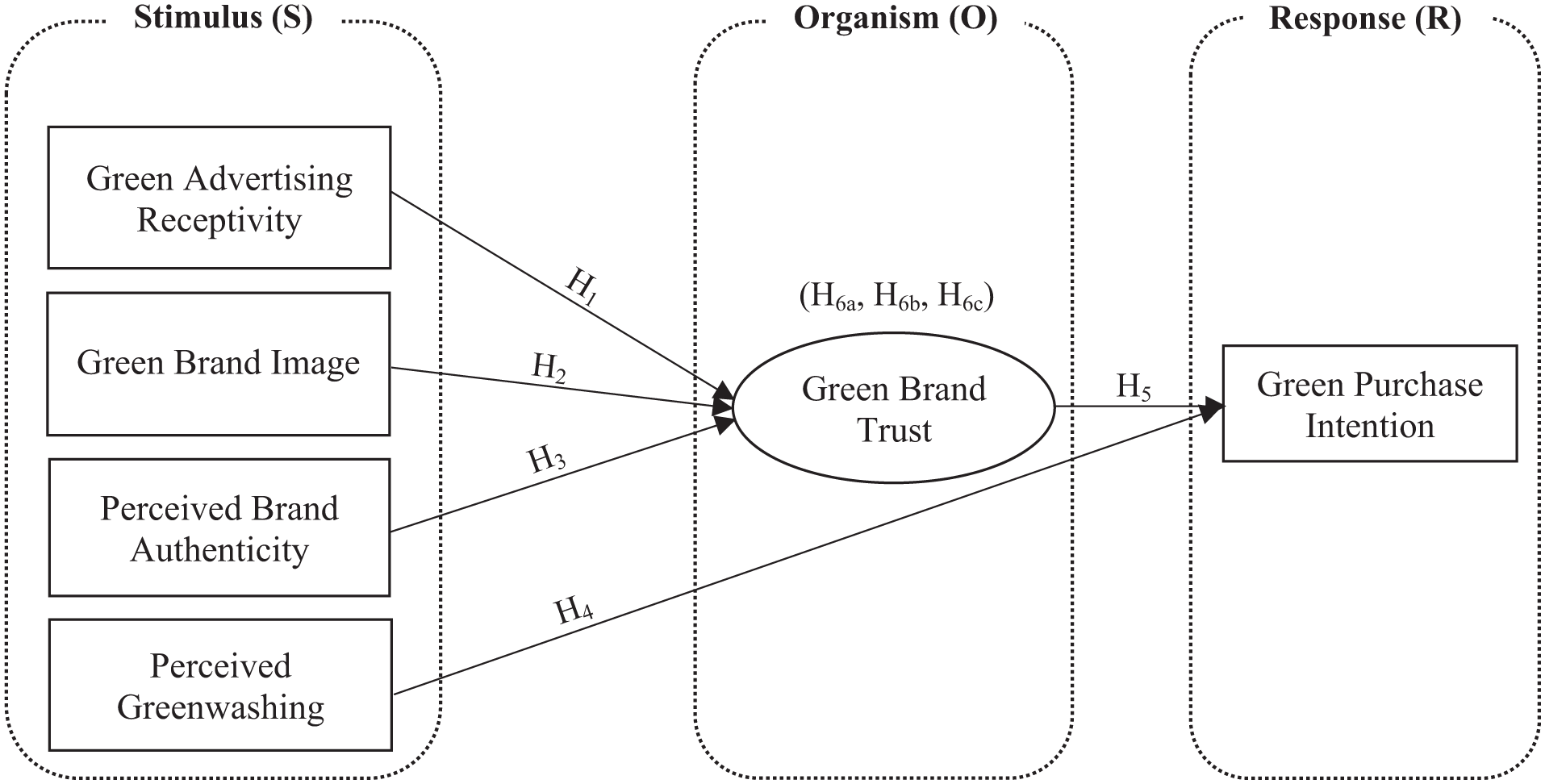
Proposed research model.
Method
Sample and Data Collection Procedure
For the convenience of the study, the author used a non-probability random sampling method to easily access the survey subjects and gather information more efficiently while saving time for conducting the survey. Hair et al. (2010) state that the minimum sample size is min = 50, and the number of variables in the formal research model is calculated with this formula:

Where m is the number of scales and Pj is the number of observed variables for the jth scale. The ratio of samples to analyzed variables (k) is 5/1 or 10/1, and if n < the minimum requirement, the minimum requirement is chosen. Therefore, considering k = 5/1, the minimum sample size for the model will be n = 10*4 + 10*5 + 10*6 + 10*5 + 10*5 + 10*3 = 280 (samples). Thus, the minimum sample size for this study is 280 observations. To account for invalid observations, the author conducted 300 surveys by sending questionnaires directly or online. The research subjects are consumers who have purchased green products and reside in Vietnam.
Research Measurement Scale
All constructs were measured using established multi-item scales rated on a five-point Likert continuum (1 = completely disagree, 5 = totally agree). Perceived Greenwashing was captured with five items adapted from Nyilasy et al. (2014) and De Jong, Harkink, and Barth (2018). Green Advertising Receptivity was measured by four items drawn from Nguyen-Viet and Tran (2024), while Green Brand Image relied on five items from Nguyen-Viet et al. (2024). Perceived Brand Authenticity employed six items adapted from Qayyum et al. (2023). Green Brand Trust was assessed with five items taken from Bashir et al. (2020), and Green Purchase Intention used five items based on Amin and Tarun (2020). All English items were translated into Vietnamese and back-translated following Brislin’s (1980) procedure to ensure semantic equivalence; a pilot test with 30 respondents led to minor wording refinements before the final 28-item instrument was administered in the main survey (See Supplemental Appendix 1).
Sample Description
Respondents have experience purchasing green products, such as buying and consuming green products at least once in the past 6 months (Rahman & Nguyen-Viet, 2023). Respondents were asked to complete a questionnaire while recalling a purchase of a green product from a brand and thinking about the brand’s image, statements, and advertisements. Respondents were informed about the purpose of the data and the security measures to prevent non-response bias. The survey tool was developed using Gg Form templates, and a link to the questionnaire was created. After the survey period, the author obtained 300 responses, of which 18 did not meet the requirements due to respondents providing identical answers from top to bottom or respondents stopping the survey at the filtering section. Therefore, the research sample size was n = 282 respondents. The above sample size is suitable for analyzing the structural equation modelling (SEM) model (Hair et al., 2010).
Results and Discussion
This study employed the partial least squares structural equation modelling (PLS-SEM) technique, utilizing the SmartPLS 3.0 software for data analysis. SmartPLS is a statistical software featuring a graphical user interface for analyzing structural equation modelling (SEM) based on variance through the partial least squares (PLS) path modelling technique. Hair et al. (2010) assert that SEM analysis is appropriate for research involving several constructs represented by various variables, facilitating the estimation of all interrelationships.
Descriptive Statistics Results
The collected data in April 2024 included a survey of 282 consumers living, studying, and working in Vietnam who were aware of or had purchased green products. The number of survey participants was classified according to gender, age group, education level, and monthly income. The proportion of participants in each group was diverse, ensuring a reflection of the actual consumption of green products by the people in Vietnam. The results obtained through descriptive statistics for the 282 participating consumers are as follows: Regarding gender, out of the total 282 respondents, 187 were female, accounting for 66.3%, and 95 were male, accounting for 33.7%. Regarding age, the majority of respondents were under 22 years old, with 92 respondents accounting for 32.6%, followed by the age group of 22-30 years old, with 89 respondents accounting for 31.6%, the age group over 40 years old, with 55 respondents accounting for 19.5%, and the remaining 16.3% in the age group of 31-40 years old, equivalent to 46 respondents. Regarding income, the respondents were diverse, with 74 respondents earning less than 5 million VND, accounting for 26.2%, 70 respondents earning between 5 and less than 10 million VND, accounting for 24.8%, 55 respondents earning over 20 million VND, accounting for 19.5%, 51 respondents earning between 10 and 15 million VND, accounting for 18.1%, and the remaining 32 respondents earning between 15 and 20 million VND, accounting for 11.3%. Based on the data, most survey participants had a higher education level, with 61% having a university or college degree. Most survey participants usually purchased green products such as organic fruits and vegetables and clothing, with the highest frequency of less than 2 times per week (accounting for 53.5%).
Evaluation of the Measurement Model
The first step in evaluating the measurement model involves testing the outer loading coefficients. According to Hair et al. (2017), the outer loading coefficients of observed variables should be greater than 0.7 for these variables to be used to measure a specific concept. This indicates that the latent variables explain more than 50% of the variance in the observed variables, thus providing acceptable reliability of the observations.
Table 1 above shows that all the concepts meet the requirement for outer loading coefficients, as the observed variables for these concepts have values greater than 0.7 (Hair et al., 2017). Therefore, it is appropriate to proceed with further testing.
Summary of Outer Loading Results and Reliability and Convergent Validity Tests.

Table 1 shows that Cronbach’s Alpha coefficients for the 6 scales (GAR, GBI, PBA, PGW, GBT, GPI) are all greater than 0.70. Thus, these scales have reliability coefficients (α) ranging from 0.712 to 0.903. Additionally, each variable’s composite reliability (CR) values fall within the range of 0.839 to 0.927. Therefore, both Cronbach’s Alpha and CR values are greater than 0.70, indicating the internal consistency reliability of the latent variables (Hair et al., 2017).
The Average Variance Extracted (AVE) is used to assess the convergent validity of the scales. The AVE coefficient should be between 0.592 and 0.739, indicating that the latent variables in the study explain more than 50% of the variance in their respective observed variables (Hair et al., 2017). Therefore, all the scales in the research model demonstrate satisfactory reliability.
According to Fornell and Larcker (1981) it is considered that the observed variables to be evaluated are discriminant when the square root value of AVE for each observed variable must ensure higher than all correlations between potential variables with each other in the model.
From Table 2, it can be seen that the coefficients of square roots of the AVE of the variables observed on the diagonal (parts of values at the beginning of each column, in bold) are all greater than the correlation square indices of the other latent variables in the model. Therefore, the distinctiveness of the scales in this study is guaranteed (Fornell & Larcker, 1981).
Discriminant Validity Fornell-Larcker Criterion.

To further validate the discriminant validity of the observed variables in the model, the author conducts further analysis of the Heterotrait Monotrait Radio (HTMT) index. The results of the HTMT index are shown in the following table:
The results in Table 3 indicate that all the HTMT values are less than 0.85, ensuring discriminant validity and indicating that the scales have discriminant value (Hair et al., 2017). Therefore, the scales of the observed variables demonstrate discriminant validity.
HTMT Discriminant Validity Evaluation Index.

Evaluation of the Structural Model
The analysis results in Table 4 show that all the Variance Inflation Factors (VIF) are less than 3, indicating that the model does not suffer from multicollinearity issues (Hair et al., 2019).
Variance Inflation Factor (VIF) Index.

In PLS-SEM analysis, the explanatory power of the structural model is evaluated by the dependent variables’ path coefficients and the R2 values. According to Hair et al. (2019), R2 values of 0.25 indicate weak internal structure, values around 0.5 indicate moderate internal structure, and values of 0.75 indicate high internal structure. From the analysis results in Table 5, it can be seen that the explanatory power of the independent variables on the dependent variable “green brand trust” (GBT) is moderate, with an adjusted R2 coefficient of 0.516. On the other hand, the explanatory power of the independent variables on the dependent variable “green purchase intention” (GPI) is weak, with an adjusted R2 coefficient of 0.380. The adjusted R2 coefficient of 0.380 for the dependent variable “green purchase intention” (GPI) means that the independent variable “green brand trust” (GBT) explains 38% of the variance in the dependent variable “green purchase intention”.
Analysis of the Coefficient of Determination R Square.

According to Hair et al. (2017), the thresholds for evaluating the effect size f2 to assess the importance of independent variables are as follows: f2 < 0.02: extremely small or no effect, 0.02 ≤f2 < 0.15: small effect, 0.15 ≤f2 < 0.35: moderate effect, f2≥ 0.35: significant effect (Table 6). Based on the f2 results in Table 7 and the above conditions, it can be observed that:
Impact Effect Size Test f Square.

Impact Effect Size Test Q2.

According to Hair et al. (2017), if 0 < Q2≤ 0.25, the predictive accuracy is low; if 0.25 < Q2≤ 0.5, it describes moderate predictive accuracy; and if Q2 > 0.5, it describes high predictive accuracy.
Based on the results in Table 7, the Q2 values for the dependent variables Green Brand Trust (GBT) and Green Purchase Intention (GPI) are 0.312 and 0.317, respectively, both falling within the range of 0.25 < Q2≤ 0.5, indicating moderate predictive accuracy for the corresponding component models of the dependent variables (Hair et al., 2017).
Testing the Structural Model (Hypotheses) Using Bootstrap
According to Hair et al. (2017), the Bootstrap method evaluates the importance of path coefficients by resampling 5,000 times. The relationships between the hypotheses are presented as follows:
The results from Table 8 confirm that 5 proposed hypothesis (H1 to H5) in this study have been supported accordingly.
Path Coefficients Correlation.

Testing the Mediating Role of Green Brand Trust
The results from Table 9 are interpreted as follows:
Path Coefficients and Mediating Role Test.
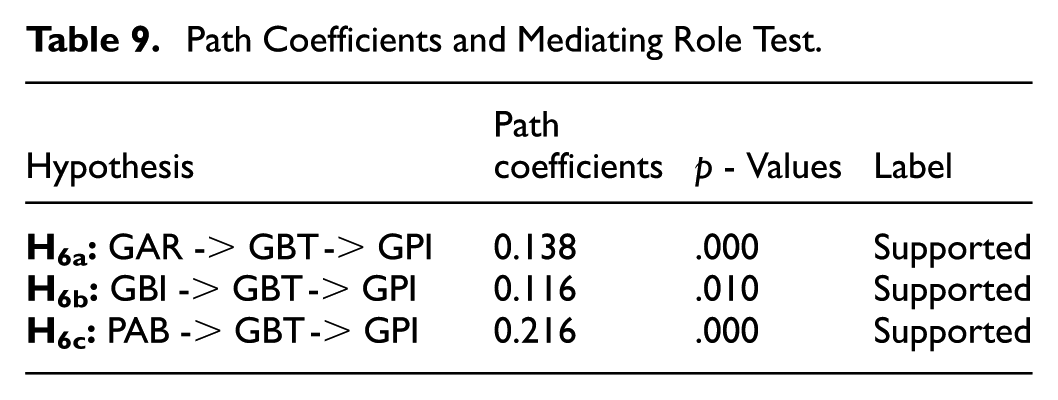
Hypothesis H6 proposes that Green Brand Trust plays a mediating role in the relationship between (a) advertising acceptance, (b) green brand image, (c) perceived authenticity of the brand, and green purchase intention. After conducting the tests, it has been shown that Green Brand Trust mediates the relationship between (a) advertising acceptance, (b) green brand image, (c) perceived authenticity of the brand, and green purchase intention (H6a: β = .138, p < .001; H6b: β = .116, p < .05; H6c: β = .216, p < .05), thus accepting hypotheses H6a, H6b, and H6c.
Discussion of Research Findings
Previous studies in Vietnam have primarily focused on how green advertising, green brand image, and perceived brand authenticity influence consumers’ intention to purchase green products. However, few have examined how perceived greenwashing affects these intentions. This study addresses this gap by introducing perceived greenwashing as a new variable in the model, offering important insights into green consumer behavior.
Hypotheses 1 and 2 are both accepted. The findings show that both green advertising receptivity (H1) and green brand image (H2) have a positive impact on green brand trust. In simpler terms, when consumers find green advertising relatable and consistent with environmental values, and when they view the brand as environmentally responsible, they are more likely to trust the brand. Trust, in turn, is a powerful motivator that influences future purchasing decisions. For example, if an ad promotes eco-friendliness in a way that feels sincere, and the brand’s image supports that message, consumers feel confident supporting the brand. Hypothesis 3 is accepted that the study also confirms that perceived brand authenticity positively affects green brand trust (H3). This means consumers trust brands more when they believe the brand’s environmental claims are genuine and backed by consistent actions. In real life, a company that “walks the talk” not just talking about sustainability but also implementing real changes, consequently, earns more trust from consumers. Hypothesis 4 is accepted as a significant insight from this study is that perceived greenwashing negatively impacts green purchase intention (H4). This means when consumers feel a brand is exaggerating or being misleading about its environmental efforts, they are less likely to buy from that brand. For example, vague or flashy green marketing with little substance can cause doubt, making consumers hesitant or even resistant to supporting the company, regardless of how “green” the product seems. Hypothesis H5 is accepted. Furthermore, the results show that green brand trust has a strong positive effect on green purchase intention (H5). In simple terms, when consumers trust a brand’s environmental commitment, they are more willing to choose its products even if these products are more expensive or less well-known. This emphasizes the role of trust as the bridge between awareness and action in green marketing. Hypothesis H5 is accepted so the study also confirms that green brand trust serves as a mediating factor (H6a, H6b, and H6c) between green advertising receptivity (H6a), green brand image (H6b), and perceived brand authenticity (H6c) and their influence on green purchase intention. This means that even if consumers respond positively to green ads or perceive the brand as authentic and environmentally friendly, those impressions only lead to actual purchase when they result in trust. Without trust, these initial positive perceptions may not translate into consumer action.
This analysis highlights the real-world implication: green marketing must be consistent, honest, and backed by meaningful environmental actions. Greenwashing not only undermines credibility but directly harms consumers’ willingness to support eco-friendly brands. In contrast, when companies build genuine trust through transparency and consistent behavior, they can effectively inspire green consumption behavior.
Conclusion and Implications
Conclusion
First, this study found that the receptiveness to green advertising has a positive impact on green brand trust. This result is similar to previous related studies such as Rahman and Nguyen-Viet (2023), Lavuri et al. (2022), and Sun et al. (2020) on the ability to receive green advertising helps positively strengthen green brand trust. This shows that when consumers are uncertain about the credibility of a statement or advertisement, this can lead to confusion and hinder the effectiveness of a brand’s trust in consumers. Therefore, building consumer trust is a key factor in shaping the green product market, and green advertising becomes the main source of information affecting consumer intentions.
Second, the finding that green brand image has a positive influence on green brand trust. The results of this study are similar to previous studies by Wang et al. (2018); Bashir et al. (2020); Wu and Liu (2022) show the importance of green brand image in building consumer brand trust. In the context of increasing environmental awareness and strict international regulations on environmental protection, owning a positive green brand image is not only a competitive advantage but also an essential requirement for businesses.
Third, through research we see that the perception of brand authenticity has a positive impact on green brand trust. This is fully consistent with previous findings by Huang and Guo (2021), as well as Portal et al. (2019), which argue that a solid perception of brand authenticity promotes trust in green products. This study provides clear evidence of a strong positive relationship between brand authenticity and brand trust. This reflects the key and important role of authenticity in building a successful brand.
Importantly, research has demonstrated that awareness of greenwashing negatively impacts green consumption intentions. This finding is fully consistent with previous studies by Sun and Shi (2022), Zhang et al. (2018), along which clarified the negative association between perceptions of greenwashing and green purchasing decisions. Consumers often have great trust in brands that assert themselves as “green”. However, as soon as they notice signs of greenwashing behavior, it becomes extremely difficult to retain them. Therefore, to truly deserve the title of “green” brand, brands must seize the opportunity to focus on protecting the environment with reliable environmental actions and commitments.
The study also found that green brand trust has a positive impact on consumers’ green purchasing intentions. This is consistent with the results of earlier research by Sun et al. (2020), and Nguyen-Viet and Tran (2024). These studies all confirm that trust in green brands not only helps raise consumer awareness about products but also creates a strong incentive for responsible consumption and awareness of protecting your environment. Once consumers have placed their trust in the brand’s commitment to protecting the environment and promoting sustainable development, they are more willing to choose green products, regardless of whether prices may be higher. Slightly compared to conventional products. The relationship between green brand trust and green consumer intent is not simply a surface interaction, but it also reflects a profound trend in modern consumer behavior, as more and more people are aware of the importance of environmental protection.
Research results show that green brand trust plays a positive mediating role in the relationship between green advertising receptivity (Lavuri et al., 2022), green brand image (Nguyen-Viet et al., 2024), and brand authenticity perception (Portal et al., 2019) to green consumption intentions. Thus, when consumers feel the sincerity, clarity, and trustworthiness of the brand through communication activities and brand image, they will form trust, thereby promoting the decision to buy green products. This highlights the importance of building trust as a bridge to help businesses transform awareness into sustainable consumer behavior.
Implications
Theoretical Contributions
This research enhances current green marketing literature by elucidating the necessity for social and environmental considerations and delineating how companies should transition from profit maximization and consumer deception to transparent communication of environmental commitments, thereby safeguarding brand reputation. The results of this study also once again confirm the suitability of SOR theory. Consumers are stimulated by factors such as green advertising receptivity, green brand image, and brand authenticity perception will form green brand trust and thereby respond by increasing green consumer intent, and greenwashing awareness has a direct effect on green consumer intent. The research contributes to the development of academic content and provides an overall picture of the field by examining the impact of all five factors. In addition, this research demonstrates the existing knowledge of the ways in which companies can use green marketing strategies and methods to communicate their environmental commitments and performance. Additionally, the study explores the mediating role of green brand beliefs in the relationship between green advertising receptivity, green brand image, brand authenticity perception, and green consumer intent. From there, it can be seen that it plays an important role in building trust and awareness of greenwashing among consumers about green brands. Finally, this research result creates a premise for future research that can continue to expand and develop new aspects and factors that affect green consumption intentions.
Practical Contributions
To increase consumers’ intention to purchase green products, managers and brands need to improve the following factors:
A successful advertisement can stimulate and evoke human emotions, especially. Therefore, in green advertising, brands must create elements that evoke emotions, use environmentally friendly colors, and convey concise and clear messages to consumers. Green advertising must reflect truth and consistency with the brand’s actions. The honesty from the green brand will build trust and encourage consumers to continue green actions. Brands should focus on conveying the message about their products while promoting awareness of health and the environment. Brands need to disclose sufficient information to support the environmental benefits of their green products through existing sources, such as product packaging and advertising materials, or additional sources, such as the environment and their social media channels, to truly position themselves as green brands. This will create positive trust in the green brand and the green purchase intention of customers. Businesses need to improve their green image to increase consumer satisfaction and trust in the green brand. To improve their green brand image, green brands should reduce emissions, use renewable energy sources, optimize resource utilization, and comply with standards such as ISO 14001, LEED, etc. Green brands can also develop environmental protection activities, such as participating in green forums.
Limitations and Future Research
Firstly, this study only examines the indirect impact of the ability to perceive green advertising, green brand image, and brand authenticity perception on green purchase intention. Other factors in the model may still indirectly influence green purchase intention, so the indirect impact of these other factors should be considered in future studies. Secondly, the participants in this study were primarily university and college students, so the emphasis on knowledge about green products may be higher among individuals with higher education levels. Therefore, the objectivity of the findings may not be guaranteed. In the future, more in-depth research should focus on other target groups, such as high school students or individuals with lower education levels and post-graduation. Thirdly, this study needs to balance the age distribution among the survey participants, which may affect the study’s results. Additionally, the sample size may need to be bigger to fully represent Vietnamese consumers. Lastly, the generalizability of the results could be better because currently the data collection was conducted limited to consumers in Vietnam, and the sample is mostly made up of university students. So, the research must be expanded to or other countries to investigate whether similar patterns exist among consumers in different areas.
Supplemental Material
sj-docx-1-sgo-10.1177_21582440251385705 – Supplemental material for The Relationship Between Green Advertising Receptivity, Green Brand Image, Perceived Brand Authenticity and Perceived Greenwashing on Green Purchase Intention
Supplemental material, sj-docx-1-sgo-10.1177_21582440251385705 for The Relationship Between Green Advertising Receptivity, Green Brand Image, Perceived Brand Authenticity and Perceived Greenwashing on Green Purchase Intention by Tran Thu Thao, Le Thi Phuong Linh and Nguyen Quoc Cuong in SAGE Open
Footnotes

Funding
The authors received no financial support for the research, authorship, and/or publication of this article.
Declaration of Conflicting Interests
The authors declared no potential conflicts of interest with respect to the research, authorship, and/or publication of this article.
Data Availability Statement
Data sharing was generated or analyzed during the current study, so data sharing does not apply to this article.
Supplemental Material
Supplemental material for this article is available online.
References
Supplementary Material
Please find the following supplemental material available below.
For Open Access articles published under a Creative Commons License, all supplemental material carries the same license as the article it is associated with.
For non-Open Access articles published, all supplemental material carries a non-exclusive license, and permission requests for re-use of supplemental material or any part of supplemental material shall be sent directly to the copyright owner as specified in the copyright notice associated with the article.
