



Abstract
This study concentrates on the subsidiaries of enterprise groups as the research object, explores the impact of knowledge heterogeneity of parent-subsidiary companies on the subsidiaries’ business model innovation, as well as the role of strategic orientation and institutional support in this process. Based on survey data from 292 Chinese subsidiaries, this study employs hierarchical regression and bootstrap analysis to test the proposed hypotheses. The study finds that both explicit and tacit knowledge heterogeneity of parent-subsidiary companies can promote subsidiaries’ business model innovation. Moreover, both explicit and tacit knowledge heterogeneity can further influence subsidiaries’ business model innovation through market orientation and technology orientation. The higher the level of institutional support a subsidiary has, the stronger the effect of parent-subsidiary explicit knowledge heterogeneity and tacit knowledge heterogeneity on subsidiaries’ business model innovation. Therefore, this study provides guidance for subsidiaries, enabling them to harness the diverse knowledge available within the relationships of parents and subsidiaries to formulate tailored strategies that align with their internal goals and external conditions, ultimately driving business model innovation.
Plain language summary
Why was the study done? In corporate groups, subsidiaries rely on their parent companies for resources and guidance. However, differences in knowledge between the parent and subsidiary—explicit (like manuals) and tacit (based on experience)—may significantly affect the subsidiary’s ability to innovate. This study explores how these knowledge differences impact innovation in business models, and how strategic focus and institutional support influence this process. What did the researchers do? The study focused on subsidiaries within enterprise groups, analyzing how knowledge differences between parents and subsidiaries contribute to business model innovation. It also looked at how market and technology orientations (strategic directions) and institutional support (both formal policies and informal networks) play a role. Data was collected through a survey. What did the researchers find? The study found that both explicit and tacit knowledge differences between the parent and subsidiary contributed to business model innovation. Subsidiaries were able to use the knowledge from the parent company to innovate more effectively. The research also showed that focusing on market demands and technological expertise (market and technology orientation) was crucial for shaping new business models. Additionally, institutional support—whether formal (policies) or informal (market connections)—amplified the effect of knowledge differences on innovation. What do the findings mean? This study provides valuable insights for subsidiaries on how to use knowledge from parent companies to innovate. It emphasizes the importance of aligning with market needs and technological advancements. Moreover, institutional support is key to enhancing the impact of knowledge differences, making it essential for successful business model innovation.
Keywords
Introduction
Emerging technologies like big data, cloud computing, and artificial intelligence, along with the ongoing progress of social informatization, have expanded the horizons of business operations. The traditional management model can no longer suffice to meet the demands of the present-day market (F. Zhang et al., 2023). To gain sustainable competitive advantages in a dynamic market environment, enterprises need to either innovate their existing business models or create new ones (Bouncken & Fredrich, 2025; Paiola et al., 2024). In recent years, enterprises like Alibaba, ByteDance, Apple Inc., and Google have emerged as global leaders in digital technology precisely due to their innovative and unique business models. This trend reflects a broader international consensus: business model innovation has become a key strategic response to technological changes and market uncertainties in both developed and emerging economies. Amid the ongoing economic transformation, business model innovation has become a strategic approach for enterprises to navigate market competition, sustain their advantages, and achieve lasting growth. Consequently, delving deep into the factors influencing enterprise business model innovation holds immense significance for the implementation of China’s innovation-driven strategy.
An enterprise group is a common form of business organization in a market economy, comprising one or more subsidiaries (Lu & Niu, 2022). As enterprise groups grow and expand, they should continuously innovate and create new business models to secure a significant market presence. In this regard, Guo et al. (2020) argue that acquiring diverse knowledge can broaden the business scope and bridge knowledge gaps. Within an enterprise group, the parent company and subsidiaries often have varying establishment times, technological development levels, and primary business domains. Consequently, their knowledge reserves and structures differ, resulting in knowledge heterogeneity between parent and subsidiary companies (J. Y. Lee et al., 2020). When subsidiaries recognize their own resource limitations, they proactively seek external diverse knowledge to supplement their innovation efforts and enhance their value. Thus, it is essential to delve into how the knowledge heterogeneity between parent and subsidiary companies influences the subsidiaries’ business model innovation.
A business model is considered the underlying logic that describes how an organization creates, delivers, and captures value (Ghosh, 2025). In general, a business model comprehensively reflects an organization’s policies, culture, systems, and ideology, serving as the core of an organization’s efforts to enhance performance and achieve profit growth. Business model innovation is a dynamic process in which enterprises not only seek to maintain their competitive advantage by modifying certain activities and functions within the model but also explore new architectural designs to create fresh opportunities for the adoption of new technologies in value creation, distribution, and acquisition (Foss & Saebi, 2017; Wang et al., 2025).
Reviewing the relevant literature shows that scholars have already focused on the influencing factors of business model innovation. From a macro perspective, some scholars have examined the impact of the institutional environment (F. Zhang et al., 2023), digital development (Mancuso et al., 2025), and policy mixes (Rezaeian et al., 2024) on business model innovation. From a micro perspective, they have investigated firm resources (Rodríguez et al., 2020), leadership (Colovic, 2022), and managerial failure experience (Nyuur et al., 2023). Despite increasing attention to business model innovation, most existing studies have focused on single firms, top management teams, or inter-firm collaboration, often overlooking the unique knowledge relationships within enterprise groups. Foundational research has emphasized the roles of explicit and tacit knowledge in intra-organizational learning and inter-organizational collaboration (Grant, 1996; Nonaka & Takeuchi, 1995). Studies of multinational enterprises have also explored knowledge flows between headquarters and subsidiaries (Andersson et al., 2002; Gupta & Govindarajan, 2000). However, less attention has been given to the effects of knowledge heterogeneity, as opposed to mere knowledge transfer efficiency, between parent and subsidiary firms on innovation outcomes such as business model innovation, particularly in domestic group enterprises. Furthermore, prior studies have seldom explored how both explicit and tacit knowledge heterogeneity jointly affect subsidiaries’ business model innovation through dual strategic pathways, specifically market orientation and technology orientation, while considering the contextual influence of formal and informal institutional support. In response, this study addresses this gap by examining the mechanisms through which knowledge heterogeneity across parent-subsidiary boundaries contributes to business model innovation within enterprise groups. This integrated approach distinguishes the present research from earlier work that has either focused on knowledge transfer mechanisms (Foss & Pedersen, 2004) or adopted general innovation performance as outcomes (Foss & Saebi, 2017), rather than unpacking how different types of knowledge interact with strategy and institutions to shape innovation in the form of business model renewal.
As a crucial element of an enterprise, knowledge plays a key role in establishing a presence in the market and maintaining a competitive advantage, serving as the intrinsic motivation for enterprises to achieve high-quality development (Jiang et al., 2024). However, only a few scholars have explored the impact of knowledge heterogeneity on business model innovation, and there is a lack of research based on enterprise groups. To bridge this gap, this study employs relevant theories to investigate the direct influence of parent-subsidiary knowledge heterogeneity on subsidiaries’ business model innovation, the mediating role of strategic orientation, and the moderating role of institutional support. This research aims to uncover the mechanisms through which parent-subsidiary knowledge heterogeneity affects subsidiaries’ business model innovation and provides insights for the long-term development of subsidiaries.
Theoretical Foundations and Research Hypotheses
Theoretical Foundations
Knowledge-based theory conceptualizes firms as repositories of knowledge, with performance differences arising from disparities in knowledge stocks and the ability to apply and integrate them effectively (Jiang et al., 2024). A central concern of this theory is how organizations coordinate internal knowledge resources to enhance innovation (Zhao et al., 2024). In enterprise groups, parent and subsidiary firms often differ in establishment time, technological capabilities, and business focus, resulting in heterogeneous knowledge bases. Facilitating knowledge exchange within such structures enables firms to expand their innovation capacity and develop new business models. Building on Park et al. (2022), this study distinguishes between explicit knowledge, which is codified and transferable, and tacit knowledge, which is experiential and difficult to articulate. Accordingly, knowledge heterogeneity is classified into explicit and tacit dimensions. Research on multinational corporations (MNCs) offers useful parallels: subsidiaries often possess locally embedded knowledge, while parent firms hold standardized global expertise. The integration of these knowledge types across entities has been shown to enhance innovation performance (Andersson et al., 2002; Foss & Pedersen, 2004; Gupta & Govindarajan, 2000). These international insights inform the analysis of knowledge dynamics within domestic enterprise groups operating across diverse institutional and market contexts.
Resource-based theory views firms as bundles of heterogeneous, valuable, and inimitable resources that shape strategic choices and competitive outcomes (Kumar & Gembali, 2025). Business model innovation depends not only on the availability of such resources but also on how firms strategically deploy them. Drawing on Noble et al. (2002), this study identifies two forms of strategic orientation: market orientation, which emphasizes responsiveness to customer needs and competitive dynamics, and technology orientation, which emphasizes leveraging emerging technologies for innovation (Gangwani & Bhatia, 2024). These orientations influence how firms leverage internal and external knowledge to pursue innovation under dynamic market conditions.
Institutional theory adds an external dimension, positing that organizational behavior is shaped by the surrounding institutional environment (Greenwood & Hinings, 1996). Institutions include both formal elements, such as laws and regulations, and informal ones, such as social norms and cultural values (North, 1990). Institutional contexts influence the legitimacy and feasibility of innovation activities (Donbesuur et al., 2020). In enterprise groups with geographically dispersed subsidiaries, institutional heterogeneity can affect how knowledge is shared and converted into innovative outcomes, paralleling findings from international business research on institutional distance in cross-border knowledge transfer.
Agency theory offers an additional perspective by focusing on the principal-agent relationship between parent companies and their subsidiaries. In enterprise groups, the parent company typically acts as the principal, while subsidiaries serve as agents responsible for local operations and knowledge management (Tong et al., 2025). This relationship can lead to goal misalignment, information asymmetry, and varying incentives, all of which influence the extent and quality of knowledge sharing across organizational boundaries (Eisenhardt, 1989). For instance, subsidiaries may withhold critical tacit knowledge if they perceive limited benefit or lack of trust. Therefore, governance mechanisms such as incentive alignment, control systems, and cultural integration are essential for facilitating effective knowledge exchange. Integrating agency theory into this study provides a more nuanced understanding of how internal governance structures shape the culture and behavior of knowledge sharing, especially under conditions of knowledge heterogeneity.
Based on these theoretical perspectives, this study constructs a framework integrating knowledge-based, resource-based, institutional, and agency theories. It examines how explicit and tacit knowledge heterogeneity between parent and subsidiary firms affects business model innovation, and how strategic orientation, institutional support, and governance mechanisms mediate or moderate this relationship.
Research Hypotheses
Direct Role of Parent-Subsidiary Knowledge Heterogeneity on subsidiaries’ Business Model Innovation
The essence of business model innovation lies in the acquisition and assimilation of new knowledge (Teece, 2018). In enterprise groups, differences in market environments, developmental backgrounds, management systems, and other aspects between parent and subsidiary companies lead to the formation of distinct knowledge systems. Compared to subsidiaries, parent companies tend to possess more diversified knowledge reserves (S. K. Lee et al., 2024). From the perspective of agency theory, the knowledge-sharing relationship between parent and subsidiary firms is also shaped by principal–agent dynamics. Information asymmetry and goal misalignment may influence knowledge transfer efficiency, making governance mechanisms crucial for promoting effective knowledge exchange. The mutual flow and transfer of different knowledge between parent companies and subsidiaries results in a significant influx of heterogeneous knowledge resources into the subsidiaries. This diversity in knowledge broadens the knowledge base of the subsidiaries and sufficiently equips them for development and innovation (Zhou & Li, 2012). Through the exploration, development, and reconstruction of these resources, subsidiaries have generated new business models and created new business value for the enterprises.
Enterprises can easily and quickly digest, absorb, and understand explicit knowledge (Park et al., 2022). Furthermore, enterprise groups can encode and express explicit knowledge. This process can effectively transfer the heterogeneous explicit knowledge of the parent company to the subsidiaries through written documents. The subsidiaries can swiftly identify the key knowledge necessary for business model innovation and engage in the innovation process by recombining various knowledge elements. Furthermore, heterogeneous explicit knowledge summarized in visual or textual forms can be reused between the parent companies and subsidiaries, ultimately lowering the cost of knowledge transfer (Weinberger & Green, 2022). This enhanced efficiency promotes the subsidiaries’ business model innovation. Compared to explicit knowledge, tacit knowledge is more unstructured, innovative, and dynamically embedded (Duan et al., 2022). The business model innovation process often proposes unexpected and complex problems. In this case, employees involved in innovation activities rely on their work experience, technical expertise, and judgment to generate creative solutions to these challenges (Kajtazi et al., 2023). In enterprise groups, as the heterogeneity of tacit knowledge increases between parent and subsidiary companies, subsidiaries can identify new growth opportunities in complementary technological areas. This identification, in turn, inspires subsidiaries to reconfigure their existing knowledge. When subsidiaries recognize the limitations of reusing their existing business models, they can enhance and refine their operational approaches through tacit knowledge, leading to the development of new business models. Accordingly, this study proposes the following hypotheses.
Mediating Role of Strategic Orientation
(1) Market orientation
Market orientation refers to the behavioral process of collecting, disseminating, and responding to information about current or future consumer needs and preferences (Gangwani & Bhatia, 2024). Enterprises can adjust their operational and development direction while determining their development strategies based on the collected market information. In enterprise groups, the knowledge heterogeneity between parent and subsidiary companies provides subsidiaries with additional market information and enriches their understanding of the market. This provision enables them to make quicker and more informed strategic decisions, utilize existing resources effectively, and create favorable conditions that motivate for business model innovation.
Explicit knowledge is typically easier to express, disseminate, and acquire compared to tacit knowledge (Duan et al., 2022). Explicit knowledge heterogeneity enables subsidiaries to expand their knowledge base, acquire diverse market insights, and facilitate the dissemination of market knowledge. In such scenarios, subsidiaries are inclined to gain a competitive edge by addressing existing market demands. They also develop and adapt new business models that align with the current market dynamics and potential demands, fostering business model innovation. Moreover, easily accessible explicit knowledge deepens subsidiaries’ understanding of their own capabilities. This understanding enables them to better tap into existing market demands and conduct more comprehensive market analysis, ultimately forming market-oriented strategies. In this context, subsidiaries have clear innovation objectives and can uncover latent consumer needs, thus driving business model innovation.
Tacit knowledge is challenging to imitate or replicate, and it represents a core resource for sustaining an enterprise’s competitive advantage, which plays a crucial role in enhancing an enterprise’s innovation capabilities over time (Park et al., 2022). A greater disparity in tacit knowledge between subsidiaries and parent companies can provide essential insights and information to address current market needs and potential demands. It enables adjustments in business direction and strategies based on market information, facilitating swift responses to market fluctuations and promoting the market-oriented development of subsidiaries. Furthermore, tacit knowledge heterogeneity encourages subsidiaries to continue exploring new business opportunities while building upon their existing knowledge base. This approach aims to effectively cater to market and customer needs, establishing market-oriented strategic objectives. Market orientation enhances subsidiaries’ market sensitivity, enabling them to identify emerging markets and promptly monitor competitors’ activities. This, in turn, increases the likelihood of successfully entering new markets, aiding subsidiaries to survive within a highly competitive environment and facilitating business model innovation. Accordingly, this study proposes the following hypotheses.
(2) Technology orientation
Technology orientation signifies an enterprise’s capability and willingness to acquire new technologies due to the enterprise’s ability to enhance its current state (Gangwani & Bhatia, 2024). By integrating various forms of knowledge through technology orientation, it contributes to enhancing the enterprise’s innovation capacity. Enterprises should continually deepen their technical knowledge and establish a certain level of core technical capability to develop a business model that aligns with their needs (F. Khan et al., 2024).
The heterogeneity of explicit knowledge between the parent company and subsidiaries can influence the operational modes of the subsidiaries, altering their knowledge needs and capabilities and affecting their strategic preferences. Upon acquiring heterogeneous explicit knowledge from the parent company that can be easily understood and absorbed, subsidiaries tend to adjust their existing strategic behaviors. They continuously enhance their production and operational methods through technological innovations, allocate more resources to technological research and development, and seek to realize their corporate value through changes and innovations. Business model innovation often coincides with technological evolution, and the impact of technological change on transaction models can lead to modifications in the business model or even the emergence of entirely new business models (Ai et al., 2024). Heterogeneity in explicit knowledge encourages subsidiaries to consistently acquire knowledge pertaining to technological innovation from the parent company. This facilitates the formation of a technology-oriented knowledge system and drives subsidiary strategies that are consistent with technology orientation. Consequently, achieving business model innovation requires a technology-oriented approach.
The tacit knowledge gap between the parent company and subsidiaries motivates subsidiaries to innovate their products and processes with a technology-oriented approach. In particular, the heterogeneity in tacit knowledge between parent and subsidiary helps subsidiaries acquire a substantial amount of diverse scientific and technological knowledge from the parent company. Through frequent knowledge exchange with the parent company, subsidiaries bridge gaps in their own knowledge base and continuously strengthen their technological expertise in specialized fields. This enhancement enables them to create more opportunities for the integration of technological resources. Subsidiaries integrate externally acquired technologies with their existing technology resources, and they are more inclined to shape the enterprise’s development through technological innovation, adopting a technology-oriented strategic approach. During the process of business model innovation, this technology orientation results in an expansion of the enterprise’s reservoir of technological knowledge, facilitating the amalgamation of existing knowledge and the development of new technologies (J. Lee & Huh, 2016). This study proposes the following hypotheses.
Moderating Role of Institutional Support
(1) Formal institutional support
Formal institutional support can facilitate the financing of enterprises through policies such as capital subsidies and tax breaks, and help them obtain key resources for business development and expansion (Agboola et al., 2023), thus stimulating their innovation motivation and reducing innovation risks. In enterprise groups, subsidiaries can everage the parent company’s explicit and tacit heterogeneous knowledge for business model innovation through formal institutional support from relevant government departments.
Formal institutional support guides enterprises in their innovation efforts and addresses issues such as the scarcity of innovation resources within subsidiaries (Escandón-Barbosa et al., 2019). Formal institutional support provides subsidiaries with policy guidance for conducting innovation activities. This support aids them in seizing innovation opportunities and actively seeking necessary innovation knowledge from the parent company to drive business model innovation. In addition, formal institutional support, such as government R&D subsidies to subsidiaries, introduces new innovation resources to them (Xie et al., 2023). The influx of new resources can activate, update, and seamlessly integrate existing resources, leading to an augmentation of various types of explicit knowledge reserves, such as technology patents, and sparking an abundance of innovative ideas and behaviors (C. Zhang & Xu, 2023). Consequently, subsidiaries’ business model innovation can be accelerated. Furthermore, formal institutional support aids in curtailing opportunistic behaviors among peer firms (Kafouros et al., 2022) and enhancing the quality and efficiency of transferred knowledge. This, in turn, enables subsidiaries to fully leverage the diverse explicit knowledge acquired from the parent company, facilitating business model innovation. Accordingly, this study proposes the following hypotheses.
Because tacit knowledge cannot be easily conveyed in words, it is more challenging to comprehend compared to explicit knowledge. Regulations can promote the explicit expression of tacit knowledge (Hoksbergen et al., 2021) and assist subsidiaries in comprehending and mastering the acquired diverse knowledge. Within enterprise groups, subsidiaries can convert the acquired complex and diverse tacit knowledge into a comprehensible format with the assistance of formal institutions. This makes it more accessible, absorbable, and graspable by the organization and its members. It also fosters knowledge interaction, sharing, transmission, and transfer both within and between organizations. This enhances the internalization of external knowledge, leading to the amplification and regeneration of knowledge, ultimately facilitating business model innovation. Moreover, a higher level of legal support can effectively safeguard the enterprise’s intellectual property rights, technical know-how, and other assets (Djibo et al., 2022), reduce the risk of transferring tacit knowledge between the parent-subsidiary companies, and promote a more efficient transfer of tacit knowledge between the parent-subsidiary companies. In this way, it increases the degree of absorption and utilization of tacit knowledge by the subsidiary company, improves the subsidiaries’ innovation response speed, and facilitates business model innovation. This analysis proposes the following hypotheses.
(2) Informal institutional support
Informal institutional support, in addition to formal institutional support, pertains to the assistance that enterprises obtain through their own efforts in establishing political connections. This support is often provided by institutional entities such as the government (Cai, 2017), and is primarily characterized by soft assistance, guidance, and influence at the cultural, normative, and value-based levels (Chen, Hou, & Adio, 2020). For both explicit knowledge heterogeneity and tacit knowledge heterogeneity, acquiring informal institutional support enables subsidiaries to allocate essential knowledge resources and innovation channels, thus facilitating the achievement of business model innovation.
Informal institutional support enables enterprises to access valuable information within the government’s domain, allowing them to seize business opportunities effectively (Escandon-Barbosa & Salas-Páramo, 2023). Within enterprise groups, when subsidiaries receive informal institutional support, they become adept at identifying essential elements within the realm of heterogeneous explicit knowledge. This enables them to overcome innovation barriers and focus on the key knowledge that facilitates business model innovation. Consequently, a favorable environment for business model innovation is nurtured within the subsidiaries. Furthermore, explicit knowledge possesses a broader dissemination pathway (Islam & Chadee, 2023). With informal institutional support, subsidiaries can readily access knowledge from various external perspectives. They can then corroborate and integrate this knowledge with the diverse explicit knowledge obtained from the parent company. This allows them to explore fresh opportunities within market demands, ultimately establishing a new business model that aligns with the existing market. Furthermore, informal institutional support is beneficial for mitigating business risks and transaction costs (Johnson et al., 2013), which strengthens long-term cooperative relationships between the parent company and subsidiaries. In addition, it expands the subsidiaries’ knowledge reserves, and enables the subsidiaries to fully leverage heterogeneous explicit knowledge in achieving business model innovation. Accordingly, this study proposes the following hypotheses:
Tacit knowledge often takes intangible forms, such as experience and know-how, and is typically more secretive and challenging to access. Informal institutional support lends quality endorsement to subsidiaries, which in turn facilitates the establishment of trust relationships between the subsidiary and its stakeholders (Lyu et al., 2023). The greater the degree of heterogeneity in tacit knowledge between subsidiaries and the parent company, the more frequent the communication and innovation activities become between them under the support of the informal system. This facilitates the sharing of knowledge and experience, allowing subsidiaries to fully leverage the diverse tacit knowledge from the parent company to address their own reform and innovation needs. It promotes the development of the subsidiaries’ business model in alignment with the existing environment. Moreover, informal institutional support aids subsidiaries in establishing trust relationships with the external market (Fuentelsaz et al., 2019), which enables them to receive more external strategic guidance. In such cases, subsidiaries can utilize tacit knowledge to respond more flexibly to market competition and enhance their competitive edge, ultimately fostering business model innovation. Accordingly, this study proposes the following hypotheses.
The theoretical model of this study is shown in Figure 1.

Theoretical model.
Research Design
Questionnaire Design
This study adopts a questionnaire-based approach to collect primary data for two main reasons. First, key constructs such as business model innovation, knowledge heterogeneity, strategic orientation, and institutional support are not publicly available and require direct measurement. Second, the questionnaire method is a widely accepted technique in organizational research for obtaining structured and reliable responses from targeted respondents.
Given the widespread presence of enterprise groups in market economies, this study focuses on group enterprises in relevant industries and selects their subsidiaries as the primary units of analysis. The sample covers six major industries, including manufacturing, energy, information technology, construction, transportation, and finance, and spans the eastern, central, and western regions of China, ensuring both industrial and geographic representativeness. A two-stage sampling strategy is employed. In the first stage, a purposive sampling method is used to select diversified group enterprises based on industry and firm size. In the second stage, stratified sampling is conducted to select respondents from senior, middle, and junior management levels within each subsidiary. Managers are targeted because they possess comprehensive knowledge of the firm’s strategic orientation and internal operations, making them suitable informants for this study. To evaluate potential non-response bias, early and late respondents are compared on key organizational characteristics such as industry type, ownership structure, and annual revenue. The results show no significant differences, suggesting that non-response bias is unlikely to pose a serious threat to generalizability.
A pilot survey was conducted prior to the main study to assess the reliability and validity of the questionnaire, ensuring the quality of formal data collection. The formal survey was administered over a period of 3 months, during which 310 questionnaires were distributed and 298 were returned. After removing responses from non-managerial personnel and those deemed insincere, 262 valid questionnaires were retained, yielding a response rate of 84.52%.
To address potential common method bias, Harman’s single-factor test was conducted (Younis et al., 2021). The first factor accounted for 29.45% of the total variance, below the 40% threshold, indicating no serious common method bias. Confirmatory factor analysis (CFA) was further performed to validate this result. The single-factor model showed poor fit indices (RMSEA = 0.175 > 0.08; IFI = 0.385 < 0.90; CFI = 0.381 < 0.90; TLI = 0.336 < 0.90), further confirming the absence of severe common method bias.
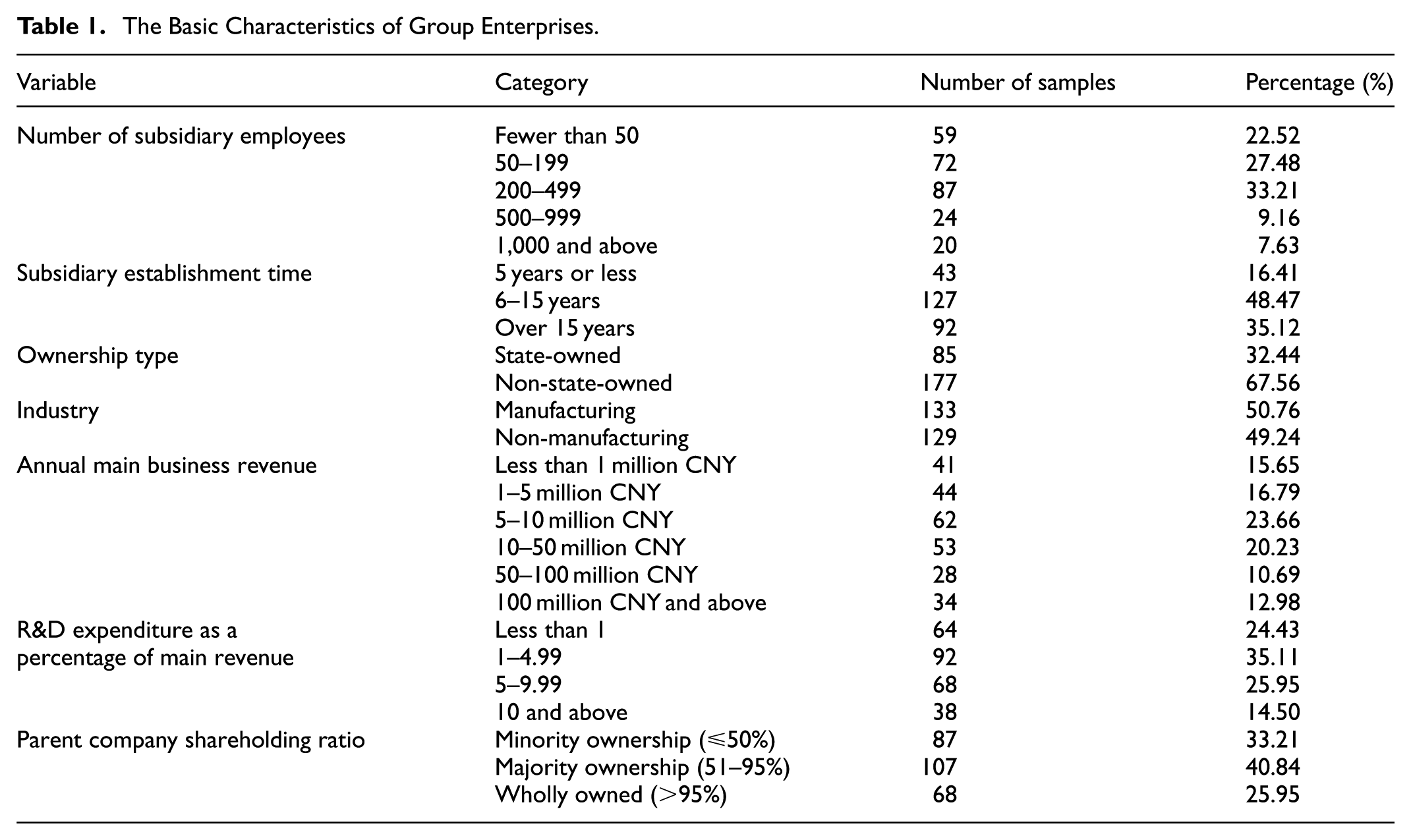
The sample characteristics are shown in Table 1. Descriptive statistics indicate that the surveyed firms are nearly evenly distributed between the manufacturing sector (50.76%) and non-manufacturing sectors (49.24%). Regarding the respondents, the majority are enterprise managers aged over 26 (84.41%) with more than 6 years of work experience (57.79%), who are familiar with their firms’ business models. These characteristics demonstrate that the sample is highly representative and meets the requirements of this study.
The Basic Characteristics of Group Enterprises.
Variable Measurement
The explained variable is business model innovation (BMI). This study modifies and improves Zott and Amit’s (2007) scale for measuring business model innovation in conjunction with its research theme. In this way, it measures business model innovation in five dimensions: whether the business model of the enterprise adopts an innovative transaction method, whether it can provide value-added products or services, whether it creates a new way of earning money, whether it introduces a new point of profitability, and whether the business model is novel.
In terms of explanatory variables, this study follows Park et al. (2022) to categorize knowledge heterogeneity into two components: explicit knowledge heterogeneity (EKH) and tacit knowledge heterogeneity (TKH). The measurement scales used for these variables are adapted from Liu et al. (2015) and Dhanaraj et al. (2004), and further refined to align with the focus of this study. Specifically, parent-subsidiary explicit knowledge heterogeneity comprises four items, which are assessed through differences in enterprise rules and regulations, process manufacturing manuals, production work standards, and business management standards when compared with other documents and coded information. Moreover, parent-subsidiary tacit knowledge heterogeneity consists of four items, which are evaluated based on differences in market experience, technical know-how, management experience, and cultural concepts.
In terms of mediating variables, this study follows Noble et al. (2002) to categorize strategic orientation into two distinct components: market orientation (MO) and technology orientation (TO). Market orientation pertains to a firm’s strategies for organizing production and business activities around market demand, while technology orientation involves a firm’s strategies for aligning its systems, structures, and resources with technology (Gangwani & Bhatia, 2024). To measure these orientations, this study utilizes the research and development scales developed by Sun et al. (2018) and Zhou et al. (2005). Market orientation consists of five items, reflecting an enterprise’s focus on current and future customer needs and its ability to adapt to market changes in response to customer and competitor dynamics. In addition, technology orientation comprises four items, indicating a firm’s inclination to adopt or leverage new technologies, products, or innovations.
In terms of moderating variables, this study assesses the level of institutional support received by enterprises along two dimensions: formal institutional support (FIS) and informal institutional support (IIS), following the framework outlined by North (1990), Chen, Zhang, and Fei (2020), and H. Li and Atuahene-Gima (2001). Formal institutional support encompasses the support that subsidiaries directly receive from the government, including five items, whereas informal institutional support involves support from institutional agents through their own relationship networks, including three items.
This study involves six control variables: (1) Subsidiary size (SS) is the first one. The main body of innovation is personnel, and its scale will affect the utilization of innovation resources, and then affect business model innovation. This study uses the number of employees in subsidiaries to measure the size of the subsidiary company. (2) Nature of subsidiary (SC) is another control variable. The nature of subsidiaries reflects the potential of innovation resources that subsidiaries can obtain, which can affect business model innovation to a certain extent. This study selects the nature of subsidiaries as the control variable, where the state-owned value is 0, and the non-state-owned value is 1. (3) Subsidiary R&D investment intensity (SRD) is the third control variable. The investment intensity of R&D funds reflects the attention of subsidiaries to R&D and their technological innovation ability, which impacts the success of subsidiaries’ business model innovation. We measure the investment intensity of R&D funds by considering the proportion of R&D funds relative to the main business income. (4) Subsidiary main business income (SMBI) is another control variable. The main business income reflects the future development of the subsidiary to a certain extent, which determines its ability to carry out business model innovation. This study divides the annual average main business income into six categories, with values of 0 to 5. The higher the value, the higher the annual average main business income. (5) Parent company shareholding (PCS) is the fifth control variable. The shareholding level of the parent company reflects the close relationship between the parent company and its subsidiaries. To a certain extent, it reflects the difficulty of the subsidiaries to obtain the resources needed for innovation from the parent company, and then affects the business model innovation of the subsidiaries. This study divides the shareholding ratio of the parent company into three categories: equity participation, holding, and sole proprietorship, with values ranging from 0 to 2. (6) Parent-subsidiary geographical distance (PSGD) is the last control variable. Geographical distance can reflect the degree of resource element sharing between parent companies and subsidiaries, and affect the subsidiaries’ business model innovation. This research selects the geographical distance between the parent and subsidiary companies as the control variable, and the values correspond to: same city, different cities in the same province, different provinces in the same region, and different regions in the same country. The greater the value, the farther the distance between the parent and subsidiary companies.
Data Analysis
Reliability and Validity Analysis
This study further employed CFA to evaluate the model’s overall fit. In general, a model is considered to exhibit good fit when the ratio of chi-square to degrees of freedom (χ2/df) falls between 1 and 3, the RMSEA is below 0.08, and the indices IFI, TLI, and CFI all exceed 0.90. The results of the CFA in this study revealed χ2/df = 1.255, RMSEA = 0.031, IFI = 0.981, TLI = 0.979, and CFI = 0.981, all of which fall within acceptable ranges. These results indicate that the measurement model demonstrates a good overall fit.
This study evaluates the reliability of the questionnaire using Cronbach’s α, CR values, and SMC. The analysis revealed that all variables had Cronbach’s α coefficients exceeding .7, indicating good internal consistency of the scale. Moreover, the CR values for all variables exceeded 0.7, indicating a high combined reliability of the scale. Furthermore, each item had an SMC exceeding 0.5, demonstrating that each item met the reliability criteria.
This paper assessed the content validity, convergent validity, and discriminant validity of the scales used. Regarding content validity, this research derived the variables from established scales, refined through expert input, and modified in alignment with the study’s context and suggestions from scholars. In terms of convergent validity, both the factor loadings and average variance extracted (AVE) exceeded 0.5 for each item of the variables in this study, indicating strong convergent validity. For discriminant validity, the square root of the AVE value for each variable was found to be greater than the correlation coefficient between that variable and every other variable, confirming robust discriminant validity. The results of the construct validity are shown in Table 2.
The Results of Reliability and Validity Analysis.

Hypothesis Testing
Test of Direct Effect
This study employs hierarchical regression analysis to construct the regression models of parent-subsidiary knowledge heterogeneity affecting subsidiaries’ business model innovation. First, control variables are put in to constitute model 1-1; second, the independent variables including explicit knowledge heterogeneity and tacit knowledge heterogeneity are put in to constitute model 1-2 and model 1-3, respectively. Table 3 represents the regression results.
The Test Results of the Direct Effect of Knowledge Heterogeneity on Business Model Innovation of Subsidiary.

Note. *, **, and *** denote significance at the 10%, 5%, and 1% levels, respectively.
As shown in Table 3, the regression coefficients for EKH in Model 1-2 and TKH in Model 1-3 are 0.283 (p < .01) and 0.274 (p < .01), respectively, both of which are positive and statistically significant. These results support Hypotheses H1a and H1b, indicating that both EKH and TKH between parent and subsidiary firms significantly contribute to enhancing BMI. Although the magnitude of the standardized coefficients is moderate, such effects are meaningful in organizational and innovation research, where complex behaviors like BMI are typically influenced by a combination of internal resources and external conditions. The findings affirm that structural differences in knowledge between parent and subsidiary companies constitute an important source of heterogeneous resources, providing subsidiaries with strategic input for knowledge recombination and model transformation.
In addition, six control variables were included to account for organizational resources and structural characteristics. While none of the coefficients were statistically significant, the direction of most estimates aligns with theoretical expectations. For example, the coefficients of SC, PCS, and PSGD are consistently positive across models. These patterns suggest that organizational structure and spatial configuration may influence how subsidiaries utilize heterogeneous knowledge in the innovation process. In contrast, variables such as SS and SMBI, which proxy for resource capacity, do not show consistent positive effects, implying that the volume of available resources may not be the primary determinant of innovation outcomes under conditions of knowledge heterogeneity.
Mediating Effect of Strategic Orientation
(1) Market orientation
Table 4 shows the process of testing the mediating role of MO. The tolerance and variance inflation factors in Table 4 indicate no multicollinearity among the variables. The coefficients of EKH in Models 1-2 and 2-1 are 0.283 (p < .01) and 0.538 (p < .01), and the coefficients of EKH and MO in Model 2-3 are 0.130 (p < .05) and 0.285 (p < .01), respectively, which are positive and significant. This result indicates the partially mediating role of MO in the process of EKH affecting BMI, thus supporting Hypothesis H2a. In addition, the coefficients of TKH are 0.274 (p < .01) and 0.390 (p < .01) in Models 1-3 and 2-2, and those of TKH and MO are 0.159 (p < .01) and 0.294 (p < .01) in Model 2-4, respectively, which are positive and significant. This result indicates the partially mediating role of MO in the process of TKH affecting BMI, thus supporting Hypothesis H2b.
The Test Results of Mediating Effect of Market Orientation.

Note. *, **, and *** denote significance at the 10%, 5%, and 1% levels, respectively.
Furthermore, this study uses the Bootstrap method to test the robustness of the mediating effect of MO, setting the sample size to 5,000 and the confidence interval with a 95% confidence level. When the confidence interval does not contain 0, the mediating effect is considered to be significant. Table 5 represents the test results. According to Table 5, the mediating effect value of MO in EKH and BMI is 0.153, and the confidence interval is [0.093, 0.216]; the mediating effect value in TKH and BMI is 0.115, and the confidence interval is [0.063, 0.175]. None of the confidence intervals include 0, indicating a significant mediating effect of MO.
(2) Technology orientation
The Bootstrap Test Results of Mediating Effect of Market Orientation.

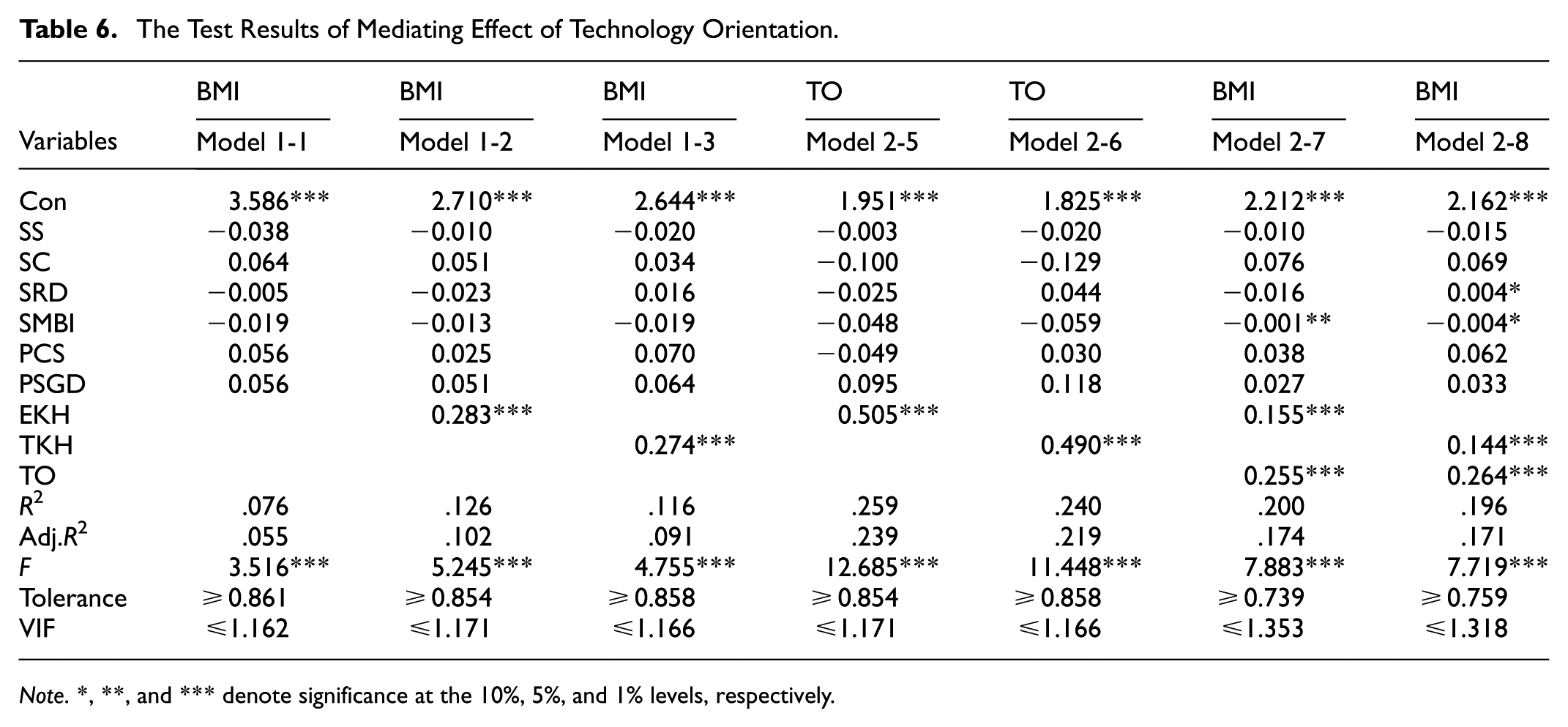
Table 6 shows the results of the test for the mediating role of TO. In Table 6, the coefficients of EKH are 0.283 (p < .01) and 0.505 (p < .01) in Models 1-2 and 2-5, and those of EKH and TO are 0.155 (p < .01) and 0.255 (p < .01) in Models 2-7, respectively, which are positive and significant. These estimations confirm the partially mediating role of TO in the process of EKH affecting BMI, thus verifying Hypothesis H3a. The coefficients of TKH are 0.274 (p < .01) and 0.490 (p < .01) in Models 1-3 and 2-6, and those of TKH and TO are 0.144 (p < .01) and 0.264 (p < .01) in Model 2-8, respectively, which are positive and significant. These results affirm the partially mediating role of TO in the process of TKH affecting BMI, thus supporting Hypothesis H3b.
The Test Results of Mediating Effect of Technology Orientation.
Note. *, **, and *** denote significance at the 10%, 5%, and 1% levels, respectively.
This study set the sample size to 5,000 and the confidence level of the confidence interval to 95%, and used the Bootstrap method to test the robustness of mediating effect of TO. Table 7 represents the results of the Bootstrap test for the mediating effect of TO. According to Table 7, the mediating effect values of TO in the relationship between EKH and TKH affecting BMI are 0.129 and 0.130, and both confidence intervals do not include 0, supporting hypotheses H3a and H3b.
The Bootstrap Test Results of Mediating Effect of Technology Orientation.

Moderating Effect of Institutional Support
(1) Formal institutional support
Table 8 provides the results of testing the moderating role of FIS. Models 1-2, 3-1, and 3-2 are the results of testing the relationship between FIS moderating EKH and BMI. Models 1-3, 3-3, and 3-4 are the results of testing the relationship between FIS moderating TKH and BMI. The results of tolerance and VIF reject multicollinearity problems among variables. Based on the estimations of Models 1-2 and 3-2, the coefficient of EKH of the independent variable is 0.283 (p < .01) and the coefficient of the product term is 0.077 (p < .05), both of which are positive and significant, thus verifying Hypothesis H4a. According to the estimations of Models 1-3 and 3-4, the coefficient of TKH is 0.274 (p < .01) and that of the product term is 0.090 (p < .05), both of which are positive and significant, thus supporting hypothesis H4b.
The Test Results of the Moderating Effect of Formal Institutional Support.

Note. *, **, and *** denote significance at the 10%, 5%, and 1% levels, respectively.
In order to further validate the moderating effect of FIS, we use the Process program in SPSS 25.0 software. The results show that the effect values of EKH and TKH affecting BMI are 0.245 ([BootLLCI = 0.117, BootULCI = 0.373]) and 0.128 ([BootLLCI = 0.011, BootULCI = 0.267]) at the low level of formal institutional support. At the high formal institutional support level, the effect values of EKH and TKH affecting BMI are 0.475 ([BootLLCI = 0.322, BootULCI = 0.629]) and 0.398 ([BootLLCI = 0.250, BootULCI = 0.547]), with confidence intervals that do not include 0, indicating the robustness of the resulted significant moderating effect. With the enhancement of FIS, EKH and TKH promote business model innovation.
Figures 2 and 3 plot the moderating effect of formal institutional support. With regard to Figures 2 and 3, the slope of the straight line of EKH and TKH affecting BMI is larger under the support of high-level FIS, indicating that FIS enhances the impact of EKH and TKH on BMI.
(2) Informal institutional support
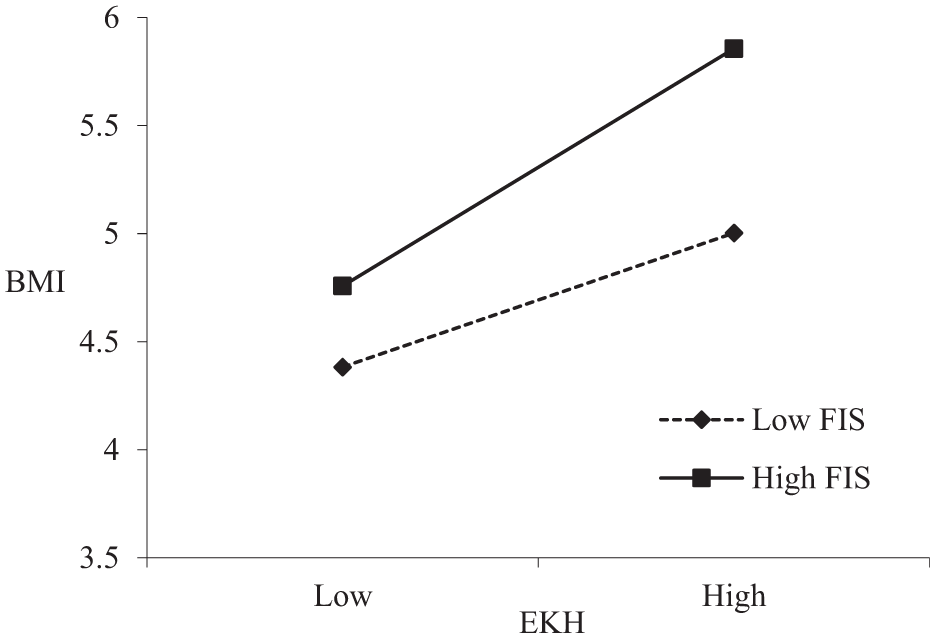
The moderating effect of formal institutional support on the relationship between explicit knowledge heterogeneity and subsidiary’s business model innovation.

The moderating effect of formal institutional support on the relationship between tacit knowledge heterogeneity and business model innovation of subsidiary.
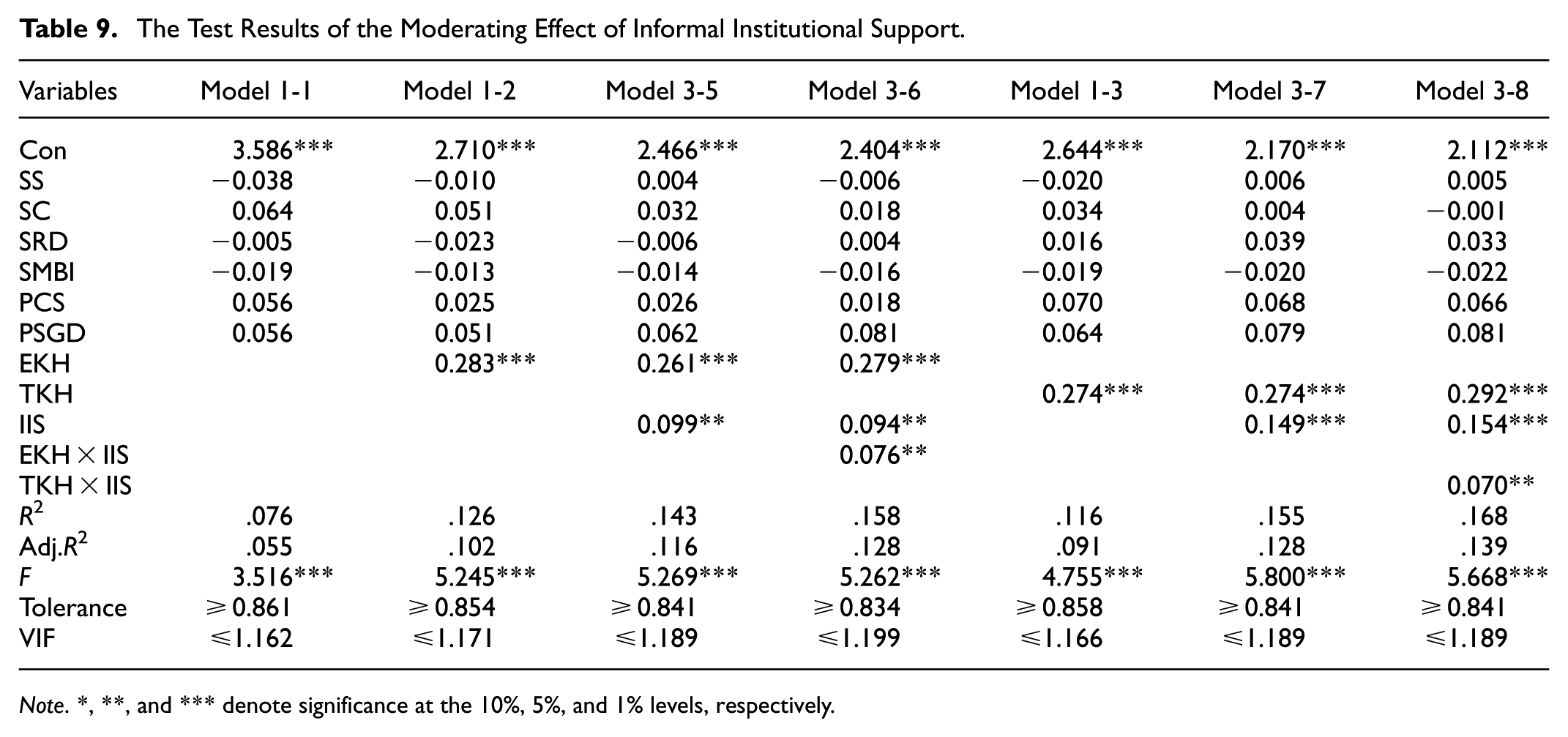
Table 9 shows the estimated moderating role of IIS. Among them, Models 1-2, 3-5, and 3-6 are the test results of IIS moderating the relationship between EKH and BMI, and Model 1-3, Model 3-7 and Model 3-8 are the test results of IIS moderating the relationship between TKH and BMI. The results of tolerance and VIF reject the multicollinearity problem. According to the estimations of Models 1-2 and 3-6, the coefficient of EKH is 0.283 which is statistically significant at 1% level (p < .01) and the coefficient of the product term of EKH and IIS is 0.076 which is statistically significant at 5% level (p < .05), both of which are positive and significant, verifying Hypothesis H5a. From Models 1-3 and 3-8, the coefficient of TKH is 0.274 which is statistically significant at 1% level (p < .01) and the coefficient of the product term of TKH and IIS is 0.070 which is statistically significant at 5% level (p < .05), verifying hypothesis H4b.
The Test Results of the Moderating Effect of Informal Institutional Support.
Note. *, **, and *** denote significance at the 10%, 5%, and 1% levels, respectively.
Similarly, we use the Process program in SPSS 25.0 software to test the moderating effect of IIS. The results show that the effect values of EKH and TKH affecting BMI are 0.170 ([BootLLCI = 0.042, BootULCI = 0.297]) and 0.192 ([BootLLCI = 0.068, BootULCI = 0.316]) at the low-level of IIS. In addition, the effect values of EKH and TKH affecting BMI are 0.421 ([BootLLCI = 0.245, BootULCI = 0.596]) and 0.422 ([BootLLCI = 0.249, BootULCI = 0.594]) at the high-level of IIS, with confidence intervals that do not include 0. This result indicates that the moderating effect is significant and the estimations are relatively robust. The findings show that the enhancement of IIS, EKH and TKH improve the promotion of BMI.
Furthermore, Figures 4 and 5 plot the moderating effect of informal institutional support. According to Figures 4 and 5, the slope of the straight line of EKH and TKH affecting BMI is larger under the support of high-level IIS, indicating that IIS enhances the impact of EKH and TKH on BMI.

The moderating effect of informal institutional support on the relationship between explicit knowledge heterogeneity and business model innovation of subsidiary.

The moderating effect of informal institutional support on the relationship between tacit knowledge heterogeneity and business model innovation of subsidiary.
Discussion
Domestic and international research on business model innovation has been relatively abundant (Colovic, 2022; Mancuso et al., 2025; Nyuur et al., 2023; Rezaeian et al., 2024; Rodríguez et al., 2020; F. Zhang et al., 2023). From a knowledge perspective, some scholars have focused on the impact of customer knowledge management (Wu et al., 2013), knowledge management capabilities (Hock-Doepgen et al., 2021), and employee knowledge sharing (X. Li et al., 2022) on business models. As the basis of enterprise innovation, knowledge provides support for enterprise innovation and development. Enterprises need to obtain heterogeneous knowledge from the outside to expand their knowledge reserves and enhance their innovation capability (A. Khan & Tao, 2022; Wu et al., 2013). However, the literature review shows that few scholars have delved into the impact of knowledge heterogeneity on business model innovation, and there is also a lack of research centered on enterprise groups. To fill this gap, this study focuses on group enterprises and explores the influence of knowledge heterogeneity on business model innovation from the perspective of parent-subsidiary knowledge diversity.
In enterprise groups, the transfer and exchange of diverse types of knowledge between parent companies and subsidiaries provide subsidiaries with a substantial base of heterogeneous knowledge that serves as a foundation for innovation. The empirical analysis supports this argument, indicating that both explicit and tacit knowledge heterogeneity exert statistically significant and positive effects on subsidiaries’ business model innovation. Although the effect sizes are moderate, they are meaningful in light of the complexity associated with innovation activities in organizational contexts. Specifically, subsidiaries can leverage explicit knowledge, which can be rapidly assimilated and understood, to identify the critical elements necessary for business model innovation. Meanwhile, heterogeneous tacit knowledge, which is often unique, embedded in firm routines, and representative of core competencies, offers crucial technical insights that enhance subsidiaries’ innovation capabilities, mitigate risks and uncertainties, and facilitate the innovation process. Although the control variables in the regression models do not reach statistical significance, the positive coefficients associated with subsidiary ownership type, parent company shareholding, and geographic distance indicate potential contextual variations that may shape how knowledge heterogeneity translates into innovation outcomes. These structural attributes at the firm level appear to influence the pathways through which knowledge diversity impacts business model innovation.
From the perspective of the enterprise’s own strategy, both explicit knowledge heterogeneity and tacit knowledge heterogeneity can facilitate the continuous accumulation of knowledge required by subsidiaries and enable business model innovation through both market and technology strategies. Specifically, parent-subsidiary knowledge heterogeneity aids subsidiaries in formulating market-oriented strategies in response to the prevailing market conditions and potential market demands. Through a market-oriented approach, subsidiaries can promptly and accurately discern shifts in the current market environment, allowing them to develop new business models that align with their strategic objectives and cater to the existing market (Crick et al., 2022). In group enterprises, technology-oriented subsidiaries typically exhibit a stronger inclination toward innovation. They can invest in novel ideas, technologies, and methodologies for developing new business models, which, in turn, invigorate the innovative capabilities of their employees (Lago et al., 2023). As the level of technological innovation within subsidiaries advances, they engage in ongoing and in-depth exploration of existing technologies. This accelerates the development of new technologies, reduces costs through technological enhancements, and contributes to the continuous enhancement and expansion of existing products and services. Consequently, this dynamic process fosters business model innovation.
Considering the enterprise’s external institutional environment, both formal and informal institutional support for the explicit and tacit knowledge heterogeneity of parent-subsidiary companies proves advantageous in establishing a conducive institutional environment for the innovation endeavors of subsidiaries. Subsidiaries rely on the institutional context within which they pursue innovation activities, and institutional support can play a pivotal role in cultivating a favorable environment for fostering business model innovation (Djibo et al., 2022). Specifically, formal institutional support, such as government subsidies and tax incentives, can offer financial backing for the innovation activities of enterprise groups, thereby enhancing their motivation to innovate. Simultaneously, formal institutional support fosters an ideal environment for business model innovation and optimally harnesses the facilitating impact of knowledge heterogeneity on such innovation. With informal institutional support, subsidiaries and parent companies forge closer ties, enabling subsidiaries to establish trusting relationships with external markets. This, in turn, enables them to access more external information and support. In this scenario, the heterogeneous knowledge acquired by subsidiaries can be fully harnessed in the necessary innovation processes, ultimately promoting business model innovation.
Conclusions and Implications
Conclusion
According to the knowledge-based theory, resource-based theory, institutional theory, and agency theory, this study incorporates business model innovation, knowledge heterogeneity, strategic orientation, and institutional support into a research framework. Sample data for analysis were collected through a questionnaire survey. This study specifically focuses on group enterprises and, from the perspective of knowledge heterogeneity between parent and subsidiary companies, explores the effects of explicit and tacit knowledge heterogeneity on the subsidiaries’ business model innovation. It also investigates the mediating roles of market orientation and technology orientation, as well as the moderating roles of formal and informal institutional support in this process. The study’s conclusions are as follows:
First, both explicit knowledge heterogeneity and tacit knowledge heterogeneity between parent and subsidiary companies can promote the subsidiaries’ business model innovation. The greater the explicit knowledge heterogeneity between parent and subsidiary companies, the more accessible it becomes for subsidiaries to acquire explicit knowledge that can be swiftly digested, assimilated, and comprehended by the parent company. This, in turn, expands the knowledge reserves of subsidiaries and facilitates their business model innovation. Likewise, greater heterogeneity in tacit knowledge between parents and subsidiaries helps subsidiaries access unique and valuable tacit knowledge that forms the core competitiveness of the enterprise. This enhances the innovation capabilities of subsidiaries, thereby fostering business model innovation.
Second, the heterogeneity of knowledge between parent and subsidiary companies can further influence the innovation of subsidiary business models through market orientation and technology orientation. The heterogeneous knowledge between parent and subsidiary companies can assist subsidiaries in focusing on potential market demand, establishing clear strategic market objectives, and guiding them in the development and design of new business models tailored to the market environment. Moreover, it can encourage subsidiaries to continuously accumulate the technical knowledge they require, formulate strategic technology objectives, and thus facilitate business model innovation.
Third, institutional support plays a moderating role in the process of parent-subsidiary knowledge heterogeneity affecting subsidiaries’ business model innovation. When subsidiaries benefit from a high level of formal institutional support, they receive appropriate policy guidance for conducting innovation activities. This, in turn, enables them to more effectively allocate key knowledge resources to the innovation process, amplifying the impact of knowledge heterogeneity on subsidiaries’ business model innovation. Similarly, when subsidiaries enjoy a high level of informal institutional support, they establish closer ties with the external market. This closeness allows them to easily discover and capture essential knowledge from a wide range of information sources, focusing on the critical knowledge that fosters business model innovation. Consequently, informal institutional support enhances the facilitating effect of knowledge heterogeneity on subsidiaries’ business model innovation.
Implication
This study provides practical implications for subsidiary managers seeking to enhance business model innovation through effective knowledge utilization. Specifically, it offers recommendations from three perspectives: knowledge heterogeneity, strategic orientation, and institutional support.
First, subsidiaries should use different types of heterogeneous knowledge between parent companies and subsidiaries to enhance the innovation ability of subsidiaries and promote business model innovation. For heterogeneous explicit knowledge, subsidiaries should discuss and communicate with the parent company for their own business needs, while obtaining more explicit knowledge from the parent company such as written information related to the market and customers, and relevant technical guidelines and principles. In addition, they should identify the key knowledge needed for business model innovation by recombining various knowledge elements. For heterogeneous tacit knowledge, subsidiaries need to establish a good relationship and communication channels with the parent company, thereby improving their own business level and innovation ability of their business model. In this way, they can enhance their own business acumen through exchanges and cooperation with the parent company and leverage the parent company’s resources and network to establish a new business model. Simultaneously, subsidiaries should fully absorb the tacit knowledge that forms the core competitiveness of the parent company, which involves learning from the parent company’s advanced market experiences, technical expertise, management practices, and cultural concepts. Subsequently, subsidiaries can apply the heterogeneous tacit knowledge to their own core technology domains, transforming it into valuable resources and facilitating the evolution of their business models.
Second, after acquiring heterogeneous knowledge, subsidiaries should focus on the market environment and their technical resource endowment. Guided by different strategic orientations, they should work toward aligning their resources with the external environment to establish competitive advantages and promote business model innovation. From a market-oriented perspective, once subsidiaries obtain heterogeneous knowledge from the parent company, they should categorize and organize relevant information concerning market demand. By combining their own development objectives with the external market environment, they can formulate effective market strategies. Under the guidance of this market-oriented strategy, they should conduct a more in-depth and comprehensive market analysis. This approach enhances the subsidiary’s adaptability to the market, response time, and results in the creation of a business model that is well-suited to the market environment. From a technology-oriented perspective, subsidiaries should acquire a wide range of technical knowledge resources from the parent company for their utilization. By integrating heterogeneous knowledge in a technology-oriented manner, subsidiaries can enhance their technological innovation capabilities, thereby promoting the innovation of business models. In addition, subsidiaries should bolster their own technological R&D and innovation capabilities which is essential for enhancing their technological content and competitiveness, ultimately enabling them to achieve business model innovation under a technology-oriented strategy.
Third, subsidiaries should actively seek various forms of institutional support to create a favorable institutional environment conducive to innovation and development. This can be achieved through both formal and informal institutional support, facilitating the innovation of subsidiary business models within the context of parent-subsidiary knowledge heterogeneity. Regarding formal institutional support, first, subsidiaries should adhere to relevant laws and regulations in their daily operations, build a strong business reputation, and actively fulfill their social responsibilities. This can foster trust with government authorities, leading to increased formal support from relevant government departments. Second, subsidiaries should adapt their development direction in response to changes in government policies, seizing opportunities to establish a first-mover advantage for innovative business models. Lastly, subsidiaries should enhance collaboration with government departments to secure greater legitimacy support. Concerning informal institutional support, subsidiaries should stay updated on relevant policy and regulatory changes in their daily operations. Moreover, they should engage in active communication with relevant departments, maintain political connections, and secure various forms of support. In addition, subsidiaries should actively exchange information with their partners to access additional sources of informal institutional support.
Theoretical Contributions
The study makes three primary theoretical contributions to the literature on business model innovation and knowledge management in enterprise groups.
First, the study advances the understanding of knowledge heterogeneity by simultaneously modeling the effects of explicit and tacit knowledge differences between parent companies and their subsidiaries. Existing research, particularly in the context of multinational corporations such as the work by Foss and Pedersen (2004), has predominantly focused on knowledge flows and transfer processes. However, limited attention has been paid to how knowledge heterogeneity across hierarchical boundaries, rather than the mere transfer of knowledge, shapes business model innovation at the subsidiary level. By distinguishing between explicit and tacit knowledge and empirically examining their respective roles, the study addresses the call by Foss and Saebi (2017) for more granular analyses of knowledge structures in innovation contexts. This dual-knowledge framework reveals that explicit and tacit knowledge heterogeneity influence business model innovation through complementary but distinct mechanisms, providing deeper insights into how knowledge differences operate within complex organizational ecosystems such as enterprise groups.
Second, the study contributes to the literature on strategic orientation by identifying a dual mediation mechanism through which knowledge heterogeneity affects business model innovation. While previous research, including the studies by Noble et al. (2002) and Gangwani and Bhatia (2024), has explored market orientation and technology orientation as separate antecedents or moderators of innovation, the study demonstrates that these strategic orientations serve as parallel mediators. Each orientation translates explicit or tacit knowledge into innovation outcomes. This dual-path mediation mechanism extends strategic orientation theory by illustrating how different types of knowledge activate differentiated strategic responses within subsidiary firms.
Third, the study situates these relationships within the institutional environment by incorporating both formal and informal institutional support as moderating variables. Although institutional theory has emphasized the role of environmental context in the innovation process, as highlighted by Greenwood and Hinings (1996) and Donbesuur et al. (2020), empirical evidence remains limited regarding how institutional conditions shape or amplify the effects of internal knowledge structures and strategic configurations. By addressing this gap, the study responds to recent calls for a more integrated view that combines internally driven capabilities such as knowledge and strategy with externally embedded institutional factors. This integrative approach contributes to a more comprehensive understanding of the mechanisms that drive innovation within enterprise groups.
Limitations and Future Research Directions
The current study makes the following contributions to existing literature. First, the present study incorporates strategic orientation and institutional support as mediating and moderating variables, respectively, without considering potential mechanisms at the individual level. Micro-level factors such as executive collaboration and personnel embeddedness between parent and subsidiary firms may also significantly influence the knowledge transformation and innovation process. Future research could extend the current model by incorporating individual- or team-level factors to offer a more comprehensive understanding of the mechanisms underlying the effect of knowledge heterogeneity on business model innovation. Second, while this study focuses on domestic enterprise groups in China, knowledge transfer is equally important in multinational corporate groups, where differences in culture, institutional frameworks, and language can complicate the transfer and utilization of knowledge. Future research could expand the sample scope to include multinational firms, thereby deepening our understanding of how knowledge heterogeneity operates in diverse organizational and cross-border contexts. Finally, the empirical analysis is based on cross-sectional data, which restricts the ability to identify dynamic patterns and causal inferences. Future studies could adopt panel or longitudinal data to trace the evolution of knowledge heterogeneity and its impact on business model innovation over time, thus uncovering potential lag effects and dynamic pathways.
Footnotes
Acknowledgements
We thank all the managers, employees, and collaborators who supported this research project, as well as the participants involved. This study is part of a broader investigation into the impact of knowledge heterogeneity on business model innovation. The exploration of the relationship between parent-subsidiary knowledge diversity and subsidiary innovation is both novel and distinct from previous studies in the field.

Ethical Considerations
According to regulations of Ethics Committee of Taiyuan University of Technology, the study is a behavior experiment conducted through a questionnaire survey. It does not involve human experimentation or human tissues.
Consent to Participate
All participants have been fully informed if the anonymity is assured, why the research is being conducted, how their data will be used and if there are any risks associated. This study has been granted exemption by Ethics Committee of Taiyuan University of Technology.
Funding
The authors disclosed receipt of the following financial support for the research, authorship, and/or publication of this article: This research was supported by the National Natural Science Foundation of China (Grant No. 72174137) and Shanxi Province Basic Research Program (Industrial Development Category) Joint Funding Project (No. 202303011222001).
Declaration of Conflicting Interests
The authors declared no potential conflicts of interest with respect to the research, authorship, and/or publication of this article.
Data Availability Statement
The data that support the findings of this study are available from the corresponding author upon reasonable request.