




Abstract
The rapid expansion in globalization, changing economic and political conditions, health crisis, advancement in technologies, and customer demand shift have highlighted the business model concept’s growing importance in every business life walk. Despite the agreement on the business model’s role in innovation and firm success, this concept is unnoticed in the legal industry. The growing digitalization has disrupted the legal industry business model by enabling various cooperation, collaboration, value proposition, and value capture mechanism. Digitalization has innovated the legal business model and engaged them in the mundane adaptation in response to external environment changes. However, literature trends reveal that innovation in the legal business model is overlooked by academia. This study applied a case study method to highlight business model innovation in legal firms in the proposed framework of the business model navigator/magic triangle and business model canvas. We also took the market and industry trends and COVID-19 into consideration in the legal business landscape. This study proposed a digital business model and innovation operating model for the legal firms based on the identified fundamental pillars of digital business model components. This study expands the literature on digitalization and business model innovation by focusing on an ignored industry with substantial disruptive potential.
Keywords
Introduction
The legal industry is passing through a transition phase with a shift in law firms’ supply and demand and alternative legal services providers. Law firms’ practice moves from a lawyer-centric approach to a customer-centric marketplace (Brooks et al., 2020). This shift is driven by changing customer demand, fast delivery, and transparency with affordable prices (Hongdao, Bibi, Khan, Ardito, & Khaskheli, 2019). The legal industry is under immense pressure to innovate and transform its traditional business model (Bibi et al., 2020). The advancement in data-driven technologies has spurred legal document automation. Artificial intelligence development promises significant disruption in legal practices such as e-Discoveries, practice management, contract management, business management, and online dispute resolutions (Hongdao, Bibi, Khan, Ardito, & Khaskheli, 2019). The disruptive potential of business model innovations or digitalization is higher in the legal industry as this has underutilized technologies (Brooks et al., 2020).
Digitalization leads to significant alterations in the business model core elements such as customer segments, value proposition, delivery channels, partnership network, and value capture mechanism (Gassmann et al., 2013). Businesses like Amazon, Uber, Airbnb (Gassmann et al., 2013), Rocket Lawyer, LegalZoom, UpCounsel, and LegalMatch (Hongdao, Bibi, Khan, Ardito, & Khaskheli, 2019) recognized early that digitization offers significant possibilities for disruption and implementation of their digital business models. These firms’ digital business model innovations demonstrate to change the rules of competition and business structures of the industries. Digital business models offer new opportunities for business and market expansion (Zott et al., 2011). The revolution in artificial intelligence and automation fueled the proliferation of legal technologies in the legal industry, and it cannot resist innovations any longer (Susskind, 2008). The firm leadership has a vital influence on the successful implementation of the “digital business model (DBM),” for instance, how well a firm understands the limitation of the previous business model, and changes in customer demand.
The economic realities, globalization, political scenario, market trends, and crises like the 2008 recession and the COVID-19 pandemic are changing the business regime. The slump in 2008 changed customer demand for legal services; they demand more for less, force law firms to change their traditional business model based on billable hours. Besides, pressurize law firms to improve their delivery system because the traditional delivery model is psychologically and physically irritating (Hongdao, Bibi, Khan, Ardito, & Khaskheli, 2019). The COVID-19 scenario is very different from previous crises; social distancing has become a new norm; customers prefer online buying and selling (Oldekop et al., 2020). The pandemic halted business operations; people lost their jobs, raised disputes among parties, many business deals were incomplete, gave birth to various ligations, and countless other issues. Law firms who already adopted technologies are reaching their clients online and meeting their needs. The post-COVID-19 market trends call for a resilient, digitalize, innovative strategy, and sustainable business model (Bouchon & Toumi, 2020). The pandemic forces businesses and government organizations to make a shift in their business models (Seetharaman, 2020). Automating business processes from procurement, manufacturing, quality control, marketing, customer relationship, and innovations would result in better quality, customer satisfaction, cost-efficiency, and higher organizational performance (Rehman Khan et al., 2021).
Businesses and individuals use legal services daily and spend billions of dollars globally on an annual basis (Brooks et al., 2020). However, academically less attention has been paid to its business operations, digitalization process, structure, and business model (Hongdao, Bibi, Khan, Ardito, & Khaskheli, 2019). Literature trends reveal that only a handful of studies discussed innovations, business models, leadership, value proposition, and value capturing mechanism in terms of basics (Bibi et al., 2020). This research aims to propose a “digital business model” for the legal firm. This study analyzed some well-known digital legal firms’ business models for the first time to understand their customer segments, value proposition, delivery system, value capture, main activities, partner network, essential resources, and value capture mechanism. We have applied the case study method to analyze various legal business models and to understand their composition in the proposed magic triangle framework of Gassmann et al. (2013), business canvas approach of Osterwalder and Pigneur (2010), and also considered business design activity perspective of Zott and Amit (2010).
Digitalization has shown a tremendous impact on legal delivery, value proposition, customer satisfaction, performance, productivity, and firm revenues. Although a small portion of law firms has adapted legal technologies, however, mostly hesitation is found among legal professionals and legal firms (Brooks et al., 2020). The current scenario of COVID-19 offers legal firms three paths to digitalizing their business models: adoption, acceleration, and innovation. After a detailed analysis, it is found that a firm must answer the questions related to who, how, and what before making any changes to the business model. Based on the analysis of various business models, we proposed a legal tech/digital business model. It is mostly noticed that scholars have proposed business models; however, less attention is paid to the operating mechanism. We have also proposed an innovative operating model that connects the various operating systems of a business model. This study is a novel extension to the prevailing literature because it focuses on an ignored industry where digitalization offers potential disruptions by serving the needs of a dissatisfied and overlooked segment of society. The proposed legal digital business model and innovation operating model are expected to help scholars and practitioners understand the legal business landscape and success factors.
Literature
Digitalization has already nocked the door of the legal profession. Disruptive legal technologies force legal firms and professionals to innovate their products and services, enhance the delivery mechanism, and improve the quality at low cost (Hongdao, Bibi, Khan, Ardito, & Khaskheli, 2019). The legal profession is experiencing a change in the market trend because of disruption, change in delivering services, process model, and business format (Susskind & Susskind, 2015). Legal professionals are traditionally opposed to innovation due to low-profit margins and lack of expertise (Susskind, 2017). Globalization, economic conditions, technological innovations, client preferences, crises and disasters, and political bindings are constantly changing the business paradigms (A. Khan et al., 2022; A. Khan, Bibi, Lyu, Latif, & Lorenzo, 2020; Xiong, Khan, Bibi, Hayat, & Jiang, 2022). Organizations are involved in structuring and redesigning their business models (BM) to meet the market demand, remain competitive, and fight for survival (Bibi et al., 2020). Business model innovations, innovative climate, and leadership transformation become the determinants of competitiveness in the legal industry (Bibi et al., 2020). Leadership commitment to change is fundamental for a shift in the business and delivery model (Hongdao, Bibi, Khan, Ardito, & Nurunnabi, 2019).
In general, a business is a description, a conceptual tool, a statement, a pattern, a set of values, a template of structure, and architecture to create and capture Value (Zott et al., 2011). There are ambiguities and differences in defining business model; however, trends reveal that the business model highlights three underlying phenomena. First, the application of technology and e-business; second, value creation, performance, competitive advantages, and other strategic issues; third, technology and innovation management (Dasi et al., 2017). The business model is a concept of creating, proposing, delivering, and “capturing value for and from the customer.” Theoretically, “a business model encompasses an organization’s three major decisions,” “first, the value proposition for stakeholders, second, value creation, a structure of the value chain for realizing the value proposition; third, value capture, the mechanisms through which the firm appropriates its share of value (Dasi et al., 2017; Zott et al., 2011).”
BM innovations are all about value creation (Weill & Woerner, 2013). Organizations translate their ideas and technologies to commercialize products and services through business models (Chesbrough, 2010). New ideas exploration and technologies alone do not make any difference; it is the business model innovations that matter (Chesbrough, 2007). The business model accomplishes two essential functions: “value creation and value capture” (Zott et al., 2011). “Value creation is a set of activities through which organizations convert their raw materials and ideas to final products and services, generating value at each of the processes” (Chesbrough, 2007). “Value capture is the process of retaining a part of the value generated (Bouwman et al., 2018).”
The digital economy, as compared to the traditional value system, offers organizations the opportunity of experimentation with value creation in network settings with diverse stakeholders for various consumers (Zott & Amit, 2009). “The potential drivers of value creation within the business model framework for an organization are novelty, lock-in, complementarities, and efficiency” (Zott & Amit, 2017), where each value element boosts the success of the other driver (Saebi et al., 2017). Business models should be flexible enough to respond to each dynamic change, for instance, change in customer demand, market trends, innovations in the industry, other forces that can engage and force the organization to innovate its BMs (Gassmann et al., 2013). Business model innovations search for logical techniques to develop and capture value for all stakeholders (Casadesus-Masanell & Zhu, 2013). Business model innovations (BMI) are organizational-level actions that prompt competitive responses with a possible course of activities at the industrial level (Zott et al., 2011). These actions may range from adapting tactical actions to adopting exclusive new business models (Casadesus-Masanell & Zhu, 2013).
Value creation becomes more complex, cut across industries; organizations attempt to create value through collaboration, cooperation, and ventures with multiple partners. It is not about how an organization manages relationships within internal units, but about managing external network relationships with partners. Value creation is the outcome of the efforts performed by the supply chain partners (S. A. R. Khan & Qianli, 2017). The business model in a network design challenges the concept of value capture. Every organization must capture the appropriate value formed through partnership activities. For instance, in the case of digital legal services, multiple stakeholders create value, and just one or a limited number delivers value to the customer. Organizations that are not in direct contact with customers need to innovate their legitimate strategies to capture the right portion of the value created in collaboration (Zott & Amit, 2010). Thus, the organizations must focus on a firm-centric approach when designing their value systems, which would allow each of them to capture the right part of the value created. A business model’s critical elements must form a complete system, where modification in a single element affects the overarching architecture (Teece, 2010). The business model’s design elements or parameters are activity system contents, system structure, and system governance (Zott & Amit, 2010). The activity system contents include what activities an organization have to perform; the system structure is comprised of how the activities are interlinked with each other, and system governance is consists of the decisions about who would perform a specific set of activities (Dasi et al., 2017).
The advancement in communication and information technologies and natural disasters disruptions have highlighted the importance of business model innovation ever than before (Yu et al., 2021; Yu & Rehman Khan, 2021), and legal business is not an exception. The business model concept offers a holistic approach to understanding processes, partners, systems, relationships, and outcomes. The commercialization of new ideas and the use of technology is sometimes mixed with BMI; however, it is a part of BMI rather than the whole. Business model innovations mean the art of enhancing competitive advantages by changing organizational value creation and client value delivery mechanisms and supporting operating systems (Angeli & Jaiswal, 2016).
Theoretical Design
Magic Business Triangle
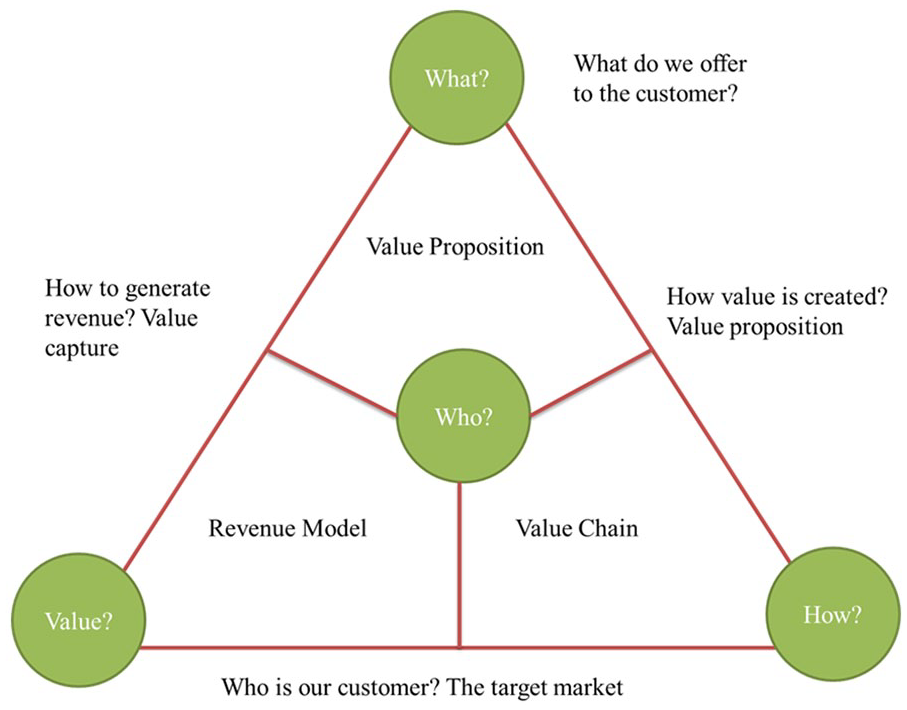
Peter Druker argued that “a good business model answers the questions, who is the customer and what does the customer value? What is the underlying economic logic that explains how we can deliver value to customers at a reasonable cost?” (Fletcher & Nielsen, 2017), the central dimension for a successful business model is to answer “Who, What, How, and the value (Casadesus-Masanell & Ricart, 2011; Gassmann et al., 2013).” Figure 1 explains the associations between BM elements in the context of the magic business triangle.
Magic business triangle.
Who
Every business provides goods and services to a group of customers, which are the central elements of its BM. It is the foremost responsibility of a business leader to answer, “Who is the customer?” (Gassmann et al., 2013). The BM’s success and collapse rely on rightly defining the target market.
What
The second essential dimension of a BM is the value presented to the customer. Customers need/demand a specific set of elements in a product or service; it is usually called customer value or value proposition. “The value proposition is a bundle of benefits that a business offers to the customers” (Teece, 2010).
How
The third critical component of a BM is a firm value chain through which the goods and services are offered to the customer. The value chain of a firm includes all the activities, resources, capabilities, and processes that are targeted to deliver the generated value to the target customer (Morris et al., 2005).
Value
The fourth critical element is the value, such as why the business model is financially feasible. This part of a business model focuses on the capture value; it combines the cost and revenue structure of the firm (Gassmann et al., 2013). It is the fundamental question for any firm on how to earn revenues, which is the essential lifeblood for survival?
A business model permits the business leaders, CEOs, and managers to draw a complete picture of a firm by linking a firm inner and outer environmental factors (Zott et al., 2011). Besides, the BM enlightens in what way a firm generates and captures value for different stakeholders. Thus, innovating, changing, or adopting a business model is a major challenging task for a firm.
Business Model Canvas Approach
“Business model canvas is a management template for developing new business models. Based on his business model ontology work, Alexander Osterwalder initiated the business model approach in 2005” (Osterwalder & Pigneur, 2010). This approach is based on “nine building blocks” describing a firm value proposition, finances, customer, infrastructure, and the rest of the value chain. This tool helps the entrepreneurs understand each business element minutely to stimulate creativity and innovation (Sparviero, 2019). The business model canvas approach has provided a shared business language, which helps in team building, innovative thinking, idea generation, and the creation of infrastructure to implement creative ideas for innovations (Stenn, 2017).
A BM is a proposal that explains by what means a business intends to make money and survey by satisfying the need of a specific group of customers. It explains who are your customers, and how the value created would be delivered to them. A business model canvas helps entrepreneurs define and link the different sets of elements on a single page. This approach simply explains, visualizes, and assesses a business idea and concept in nine blogs representing fundamental business elements, as shown in Figure 2. The right side of the canvas focuses on external factors such as customer and market, whereas the left side concentrates on the internal aspects essential for creating value. The middle of the business model canvas represents value propositions that a business wants to develop, and a customer is willing to pay for it.

Business model canvas.
Methodology
The legal business model innovation or design is understudied in the literature, though this industry is vital to its operation and daily life. Except for a few legal firms and professionals, most of the legal community oppose legal technologies; however, the COVID-19 unprecedented threat forces legal professionals and academicians to rethink the use of technology in the legal business. This study is an extension of Hongdao, Bibi, Khan, Ardito, and Khaskheli (2019); however, various business models from different industries are analyzed to propose a business model focusing on digital transformation and the COVID-19 scenario for the legal industry.
The firm business model analysis required extensive study of literature and the firm business activities. The case study method allows us to explore contemporary BM phenomena germane to real-life business activities (Gauthier & Gilomen, 2016). The case study approach is of great use when obtaining detailed information about any phenomena, event, or real-life situation (Simons, 2009). The data were collected from companies’ websites, policy documents, annual reports, magazines, newspapers, academic articles, and books. The detailed methodological approach followed is given as:
We used a qualitative research case study method because it helps explore “a specific phenomenon within a particular context by using multiple data sources” (Baxter & Jack, 2008). We followed Rashid et al. (2019) proposed four-step case study method process comprised of (a) foundation phase—philosophy, inquiry, and logical research consideration, (b) pre-field phase—case study protocols, method, and interpretation process, (c) field phase—contact and interact, (d) Reporting—case description, relationships description, interpretation and analysis, conclusion.
The authors studied several business cases that utilize the digital business model to serve the end-users. It helps to understand ontologically the resources needed to create customer value and digital delivery to the clients. This research aims to understand the real-life digital business models and actors involved in resource integration, resulting in value creation. Epistemologically a qualitative case study method assumes the subjectivist approach (Rashid et al., 2019). The authors used an interpretative approach to understand the digital value creation, processes, delivery, and actors involved. We used a qualitative case study method to propose an innovative legal business model due to several reasons. First, there is no single instance available that defines the digital legal business model paradigms. Therefore, an in-depth exploration of the phenomena under discussion is required. This exploration will help understand the processes, resources, and actors participating in value construction and distribution. Second, value creation is circumstantial determined by resources utilized and the actors’ efforts involved in the process.
Furthermore, the authors used abductive logic in analyzing multiple case studies. Primarily the objective of the research is to understand the digital BMs. This investigation aims to offer an innovative BM for legal businesses. Therefore, the analyzed case studies’ outcomes will be utilized to generalize and develop an innovative legal business model. As a research protocol, we defined our main and sub-questions. This main study question is how to integrate actors and resources of a legal firm to develop a digitalized business model. The sub-questions are: Who will be the target customers? What channel will be used for the delivery of digital legal services? What will be the value proposition? What will be the key activities? Who will perform these activities? Who will be the partners? What kind of key resources will be required? What will be the revenues streams? What will be the cost structure?
We used “Business Model Navigator and Osterwalder and Pigneur’s (2010) Business Model Canvas approaches” to analyze and interpret the various business models. The themes are recognized and developed around the above-posed questions. Literature from different sources such as research articles, companies’ websites, brochures, books, policy documents, and online material was used during the process. Besides, academicians’ and business experts’ advice was taken from time to time during the analysis.
This scholarship is also going to research the implications of “COVID-19” in terms of legal profession digitalization, second, explore the business model of various businesses to determine (specifically, we focused on digital business models) what ingredients it has in terms of the magic triangle and “business model canvas.” The case study method is a kind of exploration of the concerned issue (Yin, 2003). It would enable us to understand the critical dimensions of a business model in real business life; hence, we can propose a business model for legal firms with theoretical reasoning for using digital technologies.
COVID-19 and Legal Industry
COVID-19 and Business Landscape
The “COVID-19” has marched all walks of life to a high-density digital world and opened up to innovations in business models (Oldekop et al., 2020). It is challenging to precisely predict what innovations would occur in the future business world; however, new digital business models are visible. Customer behavior is mostly inclined toward online shopping during COVID-19 (Dannenberg et al., 2020). Organizations conduct meetings through online platforms (Porpiglia et al., 2020), and colleges, universities, and schools deliver e-learning (Skulmowski & Rey, 2020). People fill out online unemployment insurance plans (Blustein et al., 2020), and corporations solve disputes through online dispute resolution platforms (Shope, 2020). Supply chain management researchers believe that “COVID-19” has enforced businesses to make radical changes to their supply chain system (S. A. R. Khan et al., 2021). These trends recommend that a firm must consider the market forces before designing a business model for the post-COVID-19 era. We have summarized some important market megatrends in Figure 3.

Post-COVID-19 market trends.
The COVID-19 has emerged as a disruptor and innovator, firms and policymakers are looking into the future while working on the economic relaunch (Bouchon & Toumi, 2020). Figure 3 provides a coherent overview of the critical market trends that would impact economic recovery. Understanding the four megatrends in the mentioned figure would enable the managers, CEOs, and others to cognize the long-term development, needs of a firm, and provide relevant advice and initiatives for innovations in the related firm business model.
Digitalization
Long before the pandemic, the digital economy played a “vital role as a potential driver for economic growth and social transformation. During the crisis, digitalization allowed reactions to short-run needs and demands such as distance learning, untouched services, remote working, e-commerce. These trends have the potential to become a long-lasting shift in the digital landscape of the legal profession” (Bouchon & Toumi, 2020). Chinese firms are investing in critical technologies; for instance, big data analytics, IoT, cloud computing, AI, robotics, cybersecurity, and 5G (Cordon, 2020).
Sustainability
The pandemic crisis is an opportunity for the business world to achieve sustainability regardless of the specific industry (Bouchon & Toumi, 2020). For instance, during COVID-19, most of the legal tech-enabled firms could contact clients, help clients fill their insurances, dispute resolution, and provide advice on other vital issues. “Legal firms that embraced legal technologies faced the unexpected demands of COVID-19 armed with the necessary technologies and tools (Winston, 2020). Firms that resisted this movement found themselves disturbingly ill-prepared for the pandemic” (Bouchon & Toumi, 2020). Thus, legal firms and professionals must adapt legal technologies to make their business sustainable and feel their clients relax.
Resilience
“Resilience is the capacity to absorb and adapt to external shocks” (Bouchon & Toumi, 2020). The COVID-19 has taught a lesson to the business world that “vulnerabilities and recovery strategies must focus on building a more resilient economic system.” The COVID-19 is acting as a catalyst for adjustments to our personal and professional lives. For instance, “many businesses are expected to turn to contract analytic solutions to mitigate risk in an uncertain COVID-19 economy, making the contract technology sector a strong spot in a legal market” (Ready, 2020). A handful of legal firms already adopted legal technologies such as document automation, online client meetings such as Zoom, Webex, Wechat, and DingTalk. They were able to interact with their client and proved more resilient during the crisis (Shakespeare, 2020).
Business strategy
Firms must have to reconsider their business strategies, taking into consideration pandemics like COVID-19. “Technologies aiming at supporting business strategies are growing. For instance, business intelligence software enables businesses to make informed decisions based on logical facts involving market trends and consumer buying patterns. To come back stronger, companies should reimagine their business model as they return to full speed. There are four strategic areas to focus on: recovering revenue, rebuilding operations, rethinking the organization, and accelerating the adoption of digital solutions” (Bouchon & Toumi, 2020).
COVID-19 and Legal Business Options
Like other sectors of an economy, the legal services industry suffers from the pandemic’s uncertainty and risk. The COVID-19 is a threat to normal life; however, it also presents businesses’ opportunities to revisit their business models and reconfigure them for the next normal. The legal industry bounced back from the financial crisis of 2008 and brought several changes (Raczynski, 2020). The pandemic challenged the business world’s functionality and economic viability; however, it is always not too late to think about the long-term shocking effects of COVID-19 on the legal industry. Every legal professional and firm should ask a few questions from himself, such as, will we go back to business as usual or need better skills? Will we need a technological change? The COVID-19 pandemic has generated a real breakpoint in law firms to innovate, accelerate, or adapt established modern digitalization norms, as shown in Figure 4.

COVID-19 and legal industry change options (author developed).
The purpose of digital transformation is to restructure institutes, firms, society, and economies on a system level (Bibi et al., 2021; Matarazzo et al., 2021). However, innovation is not always something new; it may exist in other industries or geographical areas; it is a slight variation for the already existed (Gassmann et al., 2013). Legal firms must enhance their adaptability competencies to respond to the shift in the contiguous environment. Firms already on the track of digitalization can accelerate the adoption of legal technologies to meet customer needs and achieve competitive advantages. Those who resist digitalization must adapt technologies to follow market trends. The combinations of different technologies would open unforeseen possibilities to “create radically new products, services, and business models” (Rachinger et al., 2018). However, digitalization in legal firms would require leadership commitment (A. Khan, Bibi, Lyu, Garavelli, et al., 2020), willingness (Hongdao, Bibi, Khan, Ardito, & Nurunnabi, 2019), employee motivation (Farid et al., 2020), innovative culture and climate development (Bibi et al., 2020), training, and allocation of resources (A. Khan, Bibi, Ardito, et al., 2020). These innovations would lead to new collaborations, teamwork, modifications, relationships within the stakeholders, industry, and across industries (Loebbecke & Picot, 2015).
Selected Business Models Analysis
There is no need to reinvent the wheel, describes the fact that only a few phenomena are really new at a closer look. Often, innovations are slight variations of something that already existed elsewhere in other industries or in other geographical areas (Gassmann et al., 2013).
The economic crisis of 2008 perpetually “altered the way law firms function and interact with clients” (Hongdao, Bibi, Khan, Ardito, & Khaskheli, 2019). The COVID-19 outbreak appears as a transformative event for various industries—it is also forcing law firms to reconsider the traditional business model and give birth to a new era of legal operations. It is ill-logical to say that all legal firms would change their business models; however, it is a fact that changes would happen by including digital technologies to their business model to meet their clients’ needs. Every legal professional has a few questions in mind; for instance, “what will legal life look like after the pandemic?” What will lawyers do? What will be the new normal?
Legal professionals must think about these questions in terms of their firm business model to prepare themselves for the next new normal, where clients are more inclined toward using technology to maintain social distancing (Dannenberg et al., 2020; Porpiglia et al., 2020). International clients are motivated to resolve their disputes online more than before (Shope, 2020). However, except for a few examples, such as Legalzoom, Rocket Lawyer, Avvo, and Axiom, most legal firms are still operating with their traditional business model (Hongdao, Bibi, Khan, Ardito, & Khaskheli, 2019). As mentioned earlier, a business model illustrates how a firm operates to achieve its strategic goals. There is a deficiency of scholastic and professional discussion on the legal business model; literature trends reveal that only Hongdao, Bibi, Khan, Ardito, and Khaskheli (2019) proposed a generic business model.
This study applies “Gassmann et al. (2013) Business Model Navigator and Osterwalder and Pigneur (2010) Business Model Canvas for analysis.” These concepts reflect that firms must regularly change their business models to remain competitive. A firm must update the business model by changing one of the four main ingredients (Osterwalder et al., 2011). The changes in one of the four elements lead to changes within the other business model components. Thus, when changes are made to at least two business model components, it refers to business model innovations (Gassmann et al., 2013). If these changes are driven or motivated by digital technologies, for instance, apps, smartphones, high-performance computers, and broadband internet, cloud, and software, then it is called digital business model innovations. This section analyzes some of the business model case studies within the legal industry or from other industries to propose a digital innovated business model for legal firms. We have analyzed the selected “business models in terms of Gassmann et al. (2013) Business Model Navigator,” as displayed in Table 1, and “Osterwalder and Pigneur (2010) proposed Business Model Canvas” framework as shown in Table 2.
Business Model Patterns (Gassmann, Business Model Navigator).

Business Model Patterns (Osterwalder and Pigneur, Business Model Canvas).

Discussion
Business model innovation is the most challenging task of the contemporary business era. Customers have become more informed than ever before. The acceleration in globalization, increased customer focus, high level of competition, economic challenges, advancement in technologies, connectivity between the markets, data availability, crises, and market forces are driving the firms to reinvent their traditional business models and to develop a highly innovative and sophisticated business format to achieve competitive advantages (Teece, 2010). The findings in Tables 1 and 2 reveals that the business model is the choice of CEOs, leaders, and managers to make decisions about how a business should operate, for instance, whom they would serve, what service or product would be offered to the target market, what key resource would be required for operations, how to deliver the services and product to the customer, how to create value for customers, employees, investors, business network partners, and to capture a part of the value for the organization.
A firm business model comprises choices and consequences; for instance, the value capture strategy (choice) influences a firm sales, economies of scale, and bargaining power (consequences). Our analysis reveals that a successful firm’s business model implementation depends on different choices. First, the target market, for instance, Rocket Lawyer incorporates digitally serves individuals and businesses by automated documentation. This segment of the market either cannot afford lawyer services or avoid them due to time, psychological, and physical efforts (Hongdao, Bibi, Khan, Ardito, & Khaskheli, 2019). Second, policies—the course of actions a firm takes to perform its operations; for instance, Airbnb, Uber, Legalzoom, and LegalMatch developed highly automated platforms through which they run their operations. Third, assets—the choice of tangible resources; for instance, Uber resources are taxi, Uber digital platform, pricing, and route algorithms. Fourth, governance—the choice decisions a firm makes; for example, Google partners with many companies and sells their products and services.
The analyses of the selected case studies reveal that both external and internal factors drive digitalization—for instance, the external drives are the availability of technology, market forces, and customer demand (Rachinger et al., 2018). In contrast, internal forces are comprised of cost reduction, delivery efficiency, relaxed working hours, and high productivity (Hongdao, Bibi, Khan, Ardito, & Khaskheli, 2019). Digitalization gives birth to either radical, incremental, or disruptive innovations; for example, Rocket Lawyer and LegalZoom are disruptive innovations. The disruptive innovation displaced the existing market by efficiently providing better services and products to a wider number of customers (Guttentag, 2015). Disruptive business models appear to serve the needs of ignored customers to reduce cost, convenience, and low prices. The Clio Inc business model presents a case of radical innovation, developed legal artificial intelligence software for legal practice management (Frishammar et al., 2016). The Clio cloud-based legal technology has revolutionized the legal industry in terms of customer relationship management, practice management, and other aspects. The business model of TikTok is a present radical innovation that has opened up a new market and attracted a different audience, mostly 16 to 25 years old. “TikTok has brought significant innovations to short-form videos. Its personalization algorithm surfaces the most-relevant entertaining content for its users” (Kim, 2020). Some of the business model cases (general and legal business) are dicussed briefly to have a in-depth understanding of digitalization and business model innovation.
Facebook Case Study
Facebook appears as the greatest radical digital innovation that innovates social communication. However, Facebook has made incremental innovations from time to time to retain its users and have a competitive advantage over the competitors (Christina, 2014). For instance, in 2004 its key feature was “The Wall,” in August 2006 introduced mini-blogging, in September 2006 launched News Feeds streams, in May 2007 organized Marketplace, where one can post free classified ads, in July 2007 began post attachment services, “in December 2009 Facebook adopted a feature innovated by Twitter tagging” (Christina, 2014). Besides, Facebook never gives up the innovation path and introduces many other features such as the like button, gamming, target ads service, messaging, messenger, calling, and timeline services. Thus, a firm radical innovation may become absolute if the firm stops sensing for incremental innovations—the time-to-time innovations of Facebook help in retaining its existing users and attracting new ones. Besides, broaden its value proposition, generate additional value capture opportunities, and add more business partners to its business network (Chen, 2014).
Facebook uses a freemium model (Facebook is free to use); however, advertising throughout the service usage (Zutshi et al., 2014). The differentiation between Facebook and some other services that use the Freemium Model (such as Twitter) is that they supplement the Freemium model with multiple monetization models. It is evident by Facebook’s Virtual Currency, allowing people to purchase Apps and Virtual Goods that people can buy in lots of Facebook Apps (Holm & Günzel-Jensen, 2017).
WeChat Case Study
“WeChat has a complex business model and provides diversified services. WeChat serves both individuals users and service providers; its business model is multi-faced” (Yang et al., 2016). Online services businesses are using four types of business models (Lianghao, 2017). These include (1) Annual subscription charges, ad-free and free downloads, for instance, WhatsApp, (2) “Free for use and ad-free” but charge for download, for instance, “Advance Learners Dictionary App,” (3) “Free for use and download” but posting advertisements throughout the use, for instance, Google web-searching, and (4) Freemium model, “free for download and basic use but charge for premium functions.” In the online business models, customers love the initial free spirit. “WeChat adopts the Freemium Model to sustain its business while acquiring new users. WeChat is free for download, offers free IM, free ads, and Moments services” (Grant, 2019).
Its revenue is mainly generated from value-added services, for instance, virtual stickers, games, and transaction commissions. WeChat business model has many business partners who benefit from networking services (Lianghao, 2017). It permits customers to connect their bank accounts with WeChat to enjoy a cellphone wallet. The customers can purchase goods and services by scanning the QR code at the store or clicking the items on their Wechat through the product official account and pay the required amount by entering the bank account security password to complete the transaction. By doing this, “WeChat has connected offline businesses to an online platform” (Chen, 2017), thus, providing great exposure for retailers. WeChat collects customers’ data, such as products transaction rates, demographics, and customer feedback (Grant, 2019). This massive volume of data helps WeChat to provide suggestions to customers and business partners. Wechat continuously innovates and develops new mini-program and apps working on the same platform for e-commerce (Grant, 2019).
LegalZoom Case Study
“LegalZoom is a reliable online platform, serving businesses and families” to safeguard their legal interests (Figueras, 2012). Since its launch in 2001, the company has helped “over 4 million people to manage their legal needs. Motivated by the faith that accesses to legal help is a fundamental right, LegalZoom remains the principal innovative force in the legal industry. Offering helpful tools and convenient access to attorneys, LegalZoom is the go-to resource for modern legal solutions” (Figueras, 2012). LegalZoom invested heavily in content marketing strategy to offer the right type of information to its online legal help seekers. The firm attempted to keep the users engaged on its webpage by providing education and information through its massive library articles. The search engine optimization (SEO) team of the firm feel that their aim was not only to attract users to the firm’s webpage but also to keep them engaged by consuming more articles.
Thus, LegalZoom decided to create a better customer experience, where customers would find valuable personalized content to enhance their individual experiences. Initially, each content was tagged manually; however, it was unsuccessful because it was a labor-intensive and ineffective solution to providing a truly personalized customer experience. The firm realized that an artificial intelligence solution is required for providing a unique personalized experience. The SEO team decided to test Liftgniter. “LiftIgniter is a machine learning platform that personalizes content and product recommendations in real-time to optimize conversions and provide a better-personalized experience to customers” (LiftIgniter, 2020). The LiftIgniter helps LegalZoom recommend articles to the users in real-time that match their personal needs just with a few clicks of a mouse and resulted in a more engaging customer experience that kept customers on the web page rather than just seeking answers to their legal questions with other firms. Through the use of LiftIgniter, LegalZoom saw a 19.3% increase in its conversion ratio and a 19.2% increase in revenue per user. Beyond this, LiftIgniter has proven to be a great partner to LegalZoom, which sees machine learning and AI-driven solutions as a big part of its future (LiftIgniter, 2020).
Rocket Lawyers Case Study
“Rocket Lawyer is an online legal service firm that prides itself on giving people super simple, inexpensive ways to create legal contracts and provides access to lawyers. The firm has always struggled with how to handle the complex payment schemes that often arise when people enter into legal agreements” (Hongdao, Bibi, Khan, Ardito, & Khaskheli, 2019). Rocket Lawyer experimented with blockchain smart contracts. “By design, a blockchain is resistant to modification of the data. It is an open, distributed ledger that can record transactions between two parties efficiently and in a verifiable and permanent way” (Nofer et al., 2017).
Using smart contracts automates the tacking of agreement performance, “a powerful tool for contractors, small businesses, and others who struggle to get employers to submit payment on time” (Reilly, 2019). Rocket Lawyers has launched Rocket Wallet, a legal contract execution and payment platform on the Ethereum blockchain (Orcutt, 2019). “Rocket Lawyers has partnered the mentioned program with blockchain startup OpenLaw and Ethereum focused investment firm CosenSys. Rocket Wallet uses a stablecoin cryptocurrency that can be used to transfer funds between parties once a contract has been satisfied” (Orcutt, 2019; Reilly, 2019). By using the Rocket Wallet, customers will have the opportunity to use smart contracts to facilitate the creation and execution of their legal contracts and bindings, secure transfer of rights and payments, and track transaction performance on Ethereum blockchain (Orcutt, 2019).
The main feature of the Rocket Lawyers business model is to provide legal services at a low price to the customers with efficient delivery. However, the introduction of blockchain technology is a new addition to the legal firm business model. It has added more value to the firm’s value position system, besides, added potential business partners such as OpenLaw and ConsenSys that strengthen its cost structure and value capture mechanism. This new addition to the Rocket Lawyers business model highlights the sensing capability of leadership and management.
Sensing capabilities
Business sensing capabilities are critical for perceiving market trends and technological developments while analyzing the business model. Sensing capabilities are transformative and manipulative learning processes that combine information about market trends, customer needs, and technologies to invent new BMs (Mezger, 2014). The reconfiguration of the BM requires the capabilities to reintegrate firm activities, structure, and governance; besides, stress the need for partnership integration in the BM (Rachinger et al., 2018). The best examples of sensing capabilities and reconfiguration of business model can be seen on Facebook, Rocket Lawyer, LegalZoom, WeChat, and Google business models. For instance, Google has introduced many allied services such as advertisement, google scholar, apps store, google analytics, Gmail, Google drive, GPS, video conferencing, software, and many other accessories (Carlson, 2014). WeChat has become an e-commerce giant by responding to customers’ and partners’ needs by introducing mini-programs and apps. “WeChat users embraced mini-programs because they can discover and buy products without downloading another app or being redirected to another website, saving time and memory on their phones” (Grant, 2019). Rocket Lawyers and Legalzoom provide easy access to legal documents and provide a self-service interface to the users (Hongdao, Bibi, Khan, Ardito, & Khaskheli, 2019).
The introduction of blockchain technology to the legal firms is a massive breakthrough in Rocket Lawyer in the legal profession, which would resolve various contract management issues such as late payment, modification to the contract, and tracking of contract performance. Tokenized system Rocket Wallet can facilitate smart contracts, ensure secure transactions, and protect personal information. The immutability of blockchain is a gamechanger for the fundamental way law works. By tokenizing Rocket Lawyers, make payments safer, more secure, and more affordable for folks.
Alternative legal service providers disrupt the legal industry business cycle by providing convenient, cost-effective services with an efficient delivery system at flat prices, which shocked the law firms’ bill per hour business model (Bibi et al., 2020). The COVID-19 landscape is calling legal professionals and law firms to adopt legal technologies faster to make their business model more resilient and meet the emerging market trends. The digitalization of legal businesses would allow lawyers and staff to work remotely. The extent of digitalization depends on firm resources, skills, culture, and employees’ learning capabilities (Bibi et al., 2020; A. Khan, Bibi, Lyu, Garavelli, et al., 2020). In the scenario of COVID-19, it is imprudent to advise how much legal firms should innovate their business models, but law firms cannot hide in the shade of billable hours business model anymore. In the next section, we have proposed an overall business model based on the literature reviews, COVID-19 perspective, business models analysis, and detailed discussion on some of the digital business models cases and their innovative strategies.
Proposed Digitial Legal Business Model
Business model innovation (BMI) is valuable in times of crisis, high competition, changing market trends, and evolving opportunities. BMI provides firms with potential openings to break out the “intense competition under which product or process innovations are easily imitated,” and provides inclusive, sustainable advantages over the competitors (Zhenya et al., 2009). BMI addresses market disruptions and enhances the firm’s capability to expand its market by serving a new audience segment. Potential BMI lowers the prices, reduces risks, and costs for the customers. However, BMI is a challenging task; hence, a firm must uncover opportunities before making any business model changes. It is essential to diagnose the current business model and highlight its limitations.
The firm must look closely at each element of the BM (customer segment, value proposition, delivery system, value capturing mechanism) to test how the new choices are aligned with market and industry trends, customer preferences, and what competitive advantages it provides (Zott et al., 2011). Once the firm understands the proposed choices, it can better position itself through brainstorming. Bear in mind that valuable insights are often generated by understanding the needs of unserved or dissatisfied customers. Three kinds of innovation patterns can take place after a comprehensive brainstorming, first, innovations to the value proposition, second, innovations to the operating system (such as activities, resources, delivery system), and third, innovation in business system architecture (such as how innovations are integrated into the business network) (Zhenya et al., 2009).
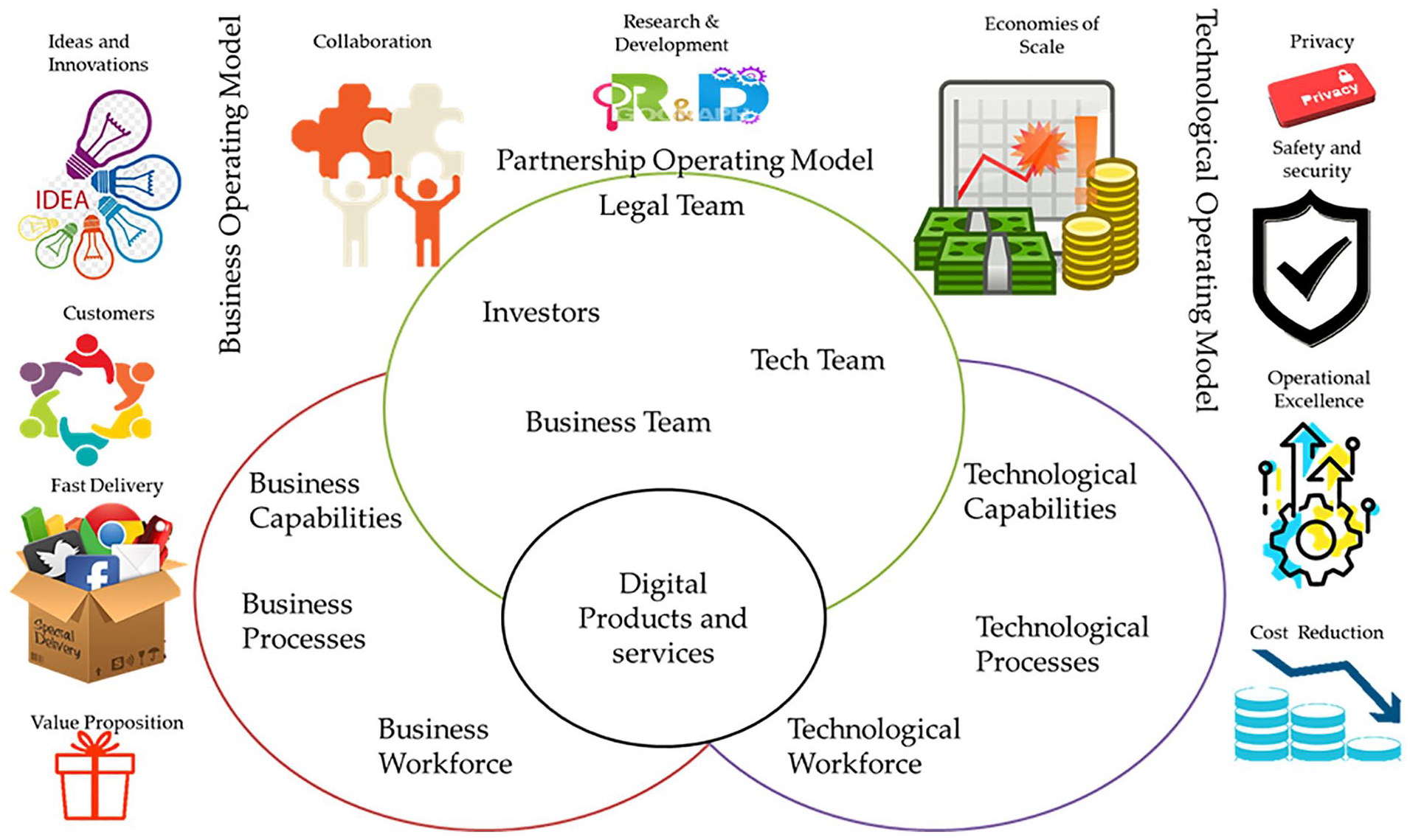
Market trends and technological forces are reshaping the legal market. The “new normal” is characterized by higher market pressure; clients are demanding more for the less, deconstruction of legal services into specialty services, the process of legal services automation (Brooks et al., 2020), and the current pandemic of COVID-19 has accelerated the pace of digitalization in every walk of life (Meng et al., 2021). The pandemic and other previous major crises (such as a recession) accelerate legal work transformation and business model innovations. The volume, velocity, and variety of data have exponentially increased in legal activities such as contract management (for instance, Rocket Wallet), legal advice (for instance, LegalMatch and UpCounsel), practice management (for instance, Clio), and revenue management (such as LegalZoom). The invention of legal technologies enables digitalization and automation of legal activities; hence, interpretation of a massive volume of data in a short period becomes a critical issue to the success of law firms (Christian et al., 2016). In the traditional business model, lawyers screen the document one by one; however, legal technologies can perform these activities in glances, for instance, the case of LiftIgniter in LegalZoom or blockchain technologies in Rocket Lawyers. Regardless of the reasons behind the low adoption rates, law firms that fail to take advantage of legal technologies and hide from the new realities are losing clients to the more forward-thinking law firms (Hongdao, Bibi, Khan, Ardito, & Khaskheli, 2019). In light of the above discussion and arguments, we propose business and innovation operating models for law firms, as shown in Figures 5 and 6. Business model innovation is the intersection of desirability, feasibility, and viability; these three factors group Osterwalder and Pigneur’s (2010) nine-building blocks, Gassmann magic business triangle (2013), and Zott and Amit (2010) activity-based business model design.

Proposed legal tech/digital business model.
Business, partnership, and technological operating model (innovation operating model).
Desirability
“Desirability is about understanding your customer, what motivates them, how they engage with the business, and what makes them purchase” (Bouchon & Toumi, 2020). It reduces customer-related uncertainty by testing the assumption of who and how or who is our customers and how we can reach them. For instance, online legal firms’ customer segments are individuals and businesses that need legal services such as automated document drafting, business management, family and personal issues advice. The legal firms can either serve business to business or business to the customer market or maybe both. For instance, Rocket Lawyer, UpCounsel, and LegalZoom are serving business to the customer market. Besides, Rocket Lawyers also serves business to business market through the blockchain contract management system. Similarly, UpCounsel has performed service to reputed brands such as Airbnb and Visually. The legal tech firms utilize the online platform to reach their target customers with allied services such as video and audio chat, phone calls, Q and A, and personalize chats.
Feasibility
“Feasibility is about how you make everything happen behind the scenes.
It includes hiring the right people, using the right resources, working with the right partners, and focusing on the right set of activities” (Bouchon & Toumi, 2020). These activities are focused on the development of the value proposition. Thus feasibility is a sum of a law firm infrastructure for what she has to create. For instance, an online legal firm’s major activities include platform development and management, legal documents collection, data sorting and storage, packages development, counseling, rating, and matching services.
Further, utilize various combinations of resources to create the target value proposition for enhancing customer experience. Legal tech law firms’ resources are comprised of human resources, clouds system, computers, software, IT infrastructure, libraries, legal data, expertise, and online platforms. However, digital legal firms require several partners for the development of a unique online experience. Law firms are not limited to counseling only; they perform a bunch of activities such as business startup and management plans, real estate planning, contract management and tracking, e-Discovery, etc. Thus, law firms partner with business experts, engineering and IT experts, investors, promoters, platform managers, and others. This part also covers the governance activities of what to share and what duties a partner would perform to create the required experience.
Viability
Viability covers the cost structure and revenue of a firm. It is all about how to make money, cut costs, and justify investments. A revenue model is a component of a firm business model focusing on the revenue streams. This part of the business model is focused on uncovering the financial opportunities and reducing financial risk by testing assumptions around the financial aspects of a business. The cost structure of a digital legal firm is comprised of platform development and maintenance, marketing, human resources, and marketing expenses, research and development activities expenses for continuous innovations. The revenue streams of a legal firm (as analyzed in Tables 1 and 2) consists of subscriptions, registrations, memberships, hourly billing, package prices, fixed prices, commissions, and free trials. Rocket lawyers charge members and non-members with different price packages, besides, offering discounts. Similarly, UpCounsel and LegalMatch answer legal questions; however, they charge the clients according to their choice and experience of an attorney.
Innovative Operating Model
Digital business model development is a complicated process regardless of firm size, resources, and infrastructure (Rachinger et al., 2018). A business model innovation is merely putting ideas on a table for brainstorming to adapt, innovate, or accelerate the process of innovations. However, the most vital part of business model innovation is the process of implementation. This process requires three operating systems in place, as shown in Figure 6, namely, the business operating model, technological operating model, and partnership model. Online legal businesses strongly depend on the successful alignment of the mentioned models, and if appropriately aligned, results in unique digital products and services. Firms must address several overarching building blocks if they want a productive environment where multidisciplinary teams and technology partners create breakthrough customer propositions collaboratively (Parida et al., 2019). These include methods, processes, governance, talent, technology, capabilities, and communications (Zott & Amit, 2010). Together these form the innovation operating model.
The business operating model focuses on the capabilities or products that it provides to customers (Teece, 2018). The technological model is focused on deploying technology capabilities (Zott et al., 2011). The business operating model is looking for speed and agility, where technology provides the required infrastructure and reduces cost (Weill & Woerner, 2013). Highly level of connectivity/communication flow between business and technical teams and partners results in a higher level of resilience, unique production, idea generation, operational excellence, security, performance, maximum profit share per partner.
Those firms that sense opportunities, quickly build teams, adopt emerging technologies, find the right partners, always offer unique value propositions to the customers (Mezger, 2014). Innovative firms focus on collaborative solutions, the business challenge is shared with partners, and solutions are developed in joint workshops (Sawhney et al., 2005). This leads to better solution outcomes at a much faster pace in a strategic partnership. Partners bring their ideas and working solutions onboard for collaboration, directly interacting with business, digital, finance, marketing, legal teams to design, build, enable, and ready a prototype for lunch (Radziwon et al., 2017). The key here is to bring multidisciplinary teams together to create differentiating customer experiences, services, products, and solutions using integrated methods and tools. Thus, the success of the business model depends on the integration of its various operating models. A business model innovation’s ultimate goal is to create unique value in collaboration with different partners using emerging technologies or methods to satisfy customer needs and capture optimum value for all partners in the business network.
Conclusion
Regardless of its size and resources, every business operates its business functions within a non or digitalized business model. A business model identifies various factors such as customer segment, value proposition, delivery system, and value capturing mechanism within the firm’s architecture. A business model’s true spirit is to identify specific customer needs, select the right partners, define the governance structure, categorize activities and cost structure, and develop a suitable value capture mechanism that addresses each stakeholder’s interests. This article aims to advance the business model’s understanding by exploring the unnoticed legal industry and its disruptive digital potentials that need a comprehensive, innovative business model. We attempted to connect the legal digital business model to business strategy, innovation management, and economic theory.
The last few decades witnessed the use of digital technologies and artificial intelligence in various business fields; however, its utilization in the legal industry is found to a minimum because of hesitation and its rigid traditional business model, which is solely based on the billable hour value capture mechanism. The economic and political situation, the boom in globalization, and changing customer needs also shift the legal industry’s business landscape. The major crisis, such as the 2008 recession and the COVID-19 pandemic of 2019, has proven that the legal traditional business model is vulnerable, fragile, unsustainable, and working with a weak business strategy. The legal industry requires a power partnership-based customer-centric digital business model specifically defined around customer needs with low cost and affordable value capture mechanism.
The finding of this research contributes to the literature on business models and digitalization. Literature trends reveal that theoretical approaches were applied to explore business model innovation and the process of digitalization to automobile, retail, accommodation, and transportation sectors. However, no attention has been paid to the legal industry, it may be due to its traditional business model, which law firms want to retain or the slow process of digitalization. We have proposed a digital business model for the legal industry by specifying every critical aspect within a multiple business model framework. Our model offers practical implications for the practitioners by identifying what customer segments they can serve, what value they can offer, how they can deliver services, what business partners would require, and what value capturing options are available. The traditional business model of legal firms solely depends on lawyers. The revenue mechanism is based on an hourly basis which has become absolute due to client unaffordability, time consumption, psychological stress, and high social cost. Legal firms’ traditional delivery system is labor-intensive, and the business model is based on profit maximization rather than client satisfaction. Our proposed model has two essential components the value proposition and operating model. The value proposition answers questions what we offer? to whom we offer? These questions explicitly reflect the choices with three dimensions: Target market: Who are our target customers? What are their needs? Services offer: What we are offering to the client to satisfy his/her needs? And the last thing is the revenue model: How are we compensated for our offer?
Our proposed innovative operating model (implementation strategy) explains how to align business, technological, and partnership models to develop unique customer experiences. Our operating model answers the questions; for instance, how do we can profitably deliver the offering to the clients? It explains the business choice in three critical business areas: Value chain: How to configure and deliver client demand? What changes do we need inside our firm? And what can we outsource from others? The second element of our operating model deals with the cost model and answers the questions: How should we configure our assets and cost to deliver our value proposition profitably? The last element of the operating model deals with the organization mechanism; for instance, what kind of people do we need? What types of skills do we require for achieving sustainable competitive advantages? Therefore, our proposed digital legal business model and its operating model would help the academicians and practitioners to answer these questions easily and innovate their business model accordingly. This study proposed models apply to the COVID-19 and Post-COVID-19 eras. In the COVID-19 era, clients need distance services with fast delivery; however, the clients also need affordable, efficient, and easily accessible services anytime and every time.
Our proposed model is client-centric and offers fast delivery by partnering with technology and business expertise in law firms. Law firms no longer provide only legal advice but become a complete set of packages such as business management, smart contract management, corporate dispute resolution, legal practice management, and legal research analytics. Therefore, today law firms are required to innovate their business model by incorporating technology and business expertise for various reasons: (a) to commoditize their services, (b) offer more at low affordable prices, (c) fast track delivery, (d) maximization of profits through partnership and diverse offers, (e) save lawyers and clients’ time and avoid psychological stress, and (f) easy access and self-service for routine documentation. However, all this depends on a firm’s sensing capabilities, how well firms sense market trends, technological advancement, customer needs, and business landscape lead to the successful development and implementation of the business model. A law firm or any organization can start business model innovation by assessing the firm’s current context, customer needs, and rivalry business model. These steps are needed to complete with full honesty and clarity to identify what elements are working well, what is not working, and what constitutes a better value proposition. Taken it together, all the induced insights from this study represent a valuable, highly relevant contribution to a business field that lacks a business model and understanding of the digitalization process.
Every research has limitations, and this study is not an exception. One of the limitations is that our collected data are mostly from articles, magazines, companies’ websites, newspapers, and annual reports. Second, our models are entirely based on qualitative analysis of documents, and we do not present empirical evidence. Future research should be based on interviews with the different level managers. Direct observation and contact with legal firms and access to empirical data would add more value to business model innovations. Even with several limitations, our study does contribute to an exploration of business model innovation and digitalization in an area, that is, lifted alone for decades.
Footnotes
Declaration of Conflicting Interests
The author(s) declared no potential conflicts of interest with respect to the research, authorship, and/or publication of this article.
Funding
The author(s) disclosed receipt of the following financial support for the research, authorship, and/or publication of this article: National Social Science major project titled Stick to “Fengqiao Experience” in the New Era and promote the Construction of Rule of Law Society. Grant Number 21ZDA117 and Fengqiao Experience Index Project grant number 203000-170207702/001.
