



Abstract
Visual marketing plays a critical role in shaping tourists’ perceptions and behaviors, with the design of promotional materials significantly influencing destination promotion. We investigate how the shape of photos (rectangular vs. rounded) impacts tourists’ propensity for destination promotion, using ocean tourism images as a contextual backdrop. Through three sub-studies, we systematically examine the psychological and behavioral effects of photo shapes, focusing on their influence on tourists’ flow experience and immersion. The findings reveal that rounded photo shapes, compared to rectangular ones, enhance flow experiences and immersion, thereby increasing tourists’ likelihood of promoting the destination. Furthermore, we explore how immersion moderates the relationship between photo shapes and flow experiences, deepening our understanding of how visual esthetics influence tourist behavior. Our research contributes to the field of visual marketing by offering insights into optimizing visual content design, with practical implications for promoting tourist destinations effectively. While ocean tourism serves as the illustrative context, the findings have broader applicability for destination marketing across various industries.
Plain language summary
As a popular leisure activity, Ocean Tourism relies heavily on visual representation to attract tourists and promote destinations. However, the impact of photo shapes (rectangular vs. rounded) of Ocean Tourism images on tourists’ propensity for destination promotion remains unclear. This study systematically analyzes the effects of different picture shapes on tourists’ propensity for destination promotion through three sub-studies. The research findings indicate that compared to rectangular shapes, rounded shapes of Ocean Tourism photos can enhance tourists’ flow experience and immersion, thereby increasing their propensity for destination promotion. Furthermore, we explore how immersion may moderate the relationship between the form of tourism photos and tourists’ flow experiences, thus influencing tourists’ propensity for destination promotion. This study reveals how photo shapes in Ocean Tourism images affect tourists’ propensity for destination promotion through flow experiences and immersion, providing a new theoretical perspective for visual marketing of tourist destinations. The results of this research contribute to enhancing tourists’ propensity for destination promotion by optimizing visual content, thereby promoting the development of Ocean Tourism industry.
Keywords
Introduction
Ocean Tourism combines abundant natural resources and unique cultural landscapes to offer visitors an extraordinary experience while highlighting seasonal and geographical differences (J. Chen et al., 2023; Xu et al., 2023, 2025). Subfields like cruise and coastal tourism further elevate this experience, enriching the visitor’s engagement (N. Chen et al., 2021). The allure of ocean tourism is also enhanced by the mysteries of deep-sea exploration and marine culture (M. Wang et al., 2023; H. Zhang et al., 2022). According to the “2024-2029 China Cruise Tourism Industry Market Survey Analysis and Development Prospects Outlook Report” by the China Industry Research Institute, China welcomed 21.345 million tourists, reflecting a 13.04% growth year-on-year. Notably, domestic tourists accounted for a significant increase, rising by 16.87%, with 12.174 million domestic visitors (China Industry Research Institute). This demonstrates the growing importance of Ocean Tourism, which holds substantial social relevance (J. Chen et al., 2022).
Tourism photography plays a crucial role in the tourism experience (Albers & James, 1988). Beyond its esthetic appeal, tourism photography is a powerful tool for conveying emotional responses and esthetic values, potentially influencing perceptions of destinations (Taecharungroj & Mathayomchan, 2021). Travel agencies and marketers have long invested significant resources in selecting and showcasing images that evoke attraction and excitement while aligning with the destination’s identity (Morrison et al., 2023; Siegel et al., 2023). In recent years, there has been a shift toward more personalized and authentic representations in tourism photography, allowing travelers to connect more deeply with destinations and craft their own narratives (Prideaux & Coghlan, 2010; Sang & Huang, 2023). While it is widely assumed that presentation styles in Ocean Tourism photos may influence preferences, the specific impact of photo shapes—such as rounded versus angular corners—on tourists’ willingness to promote a destination remains underexplored. Interestingly, limited research has focused on understanding how the shape of photo corners can influence tourists’ promotional intentions.
Existing literature on tourism photography primarily examines photos used in destination promotion, focusing on elements like composition, color, and visual esthetics (F. S. Li, 2020). However, much of this research emphasizes overall esthetic appeal and emotional impact, rather than the specific role of photo corner shapes. For example, studies have shown that photos with engaging compositions enhance destination allure, thereby encouraging tourists to visit (K. Zhang et al., 2023). Similarly, vivid colors and high contrast images can evoke stronger emotional responses, increasing tourists’ willingness to advocate for the destination (Deng et al., 2019; Yu et al., 2020). It is plausible that the shape of photo corners—rounded versus angular—may similarly affect tourists’ perceptions. Rounded corners may convey warmth and friendliness, while angular corners may project a sense of professionalism and formality, both of which could influence the viewer’s willingness to promote the destination.
Despite this, the relationship between photo shapes in tourism photography and tourists’ willingness to promote destinations remains unclear. To contribute to the existing body of research, this study explores how photo forms (i.e., rounded vs. angular corners) influence viewers’ psychological processes and their propensity to promote tourist destinations. The shape of the photo may hold symbolic meaning that affects how viewers perceive and emotionally connect with the destination. For instance, tourists viewing photos with rounded corners may experience a sense of warmth and comfort (C. Zheng et al., 2024), which could encourage them to share and promote the destination. Conversely, angular photos may evoke feelings of professionalism and sophistication, leading tourists to perceive the destination as more upscale and therefore more likely to be promoted.
We investigated whether photo shape in Ocean Tourism photos carries symbolic significance that influences tourists’ psychological experiences. Drawing on flow theory, which describes the optimal state of engagement in an activity (Czikszentmihalyi, 1990), we explore how photo shape may facilitate flow experiences and affect tourists’ intention to promote the destination. Previous research suggests that photographs can be analyzed based on their visual properties (e.g., appearance) and the emotions they evoke (Marder et al., 2021; Pan et al., 2014). Thus, we hypothesize that the form of Ocean Tourism photos (i.e., rounded or angular) influences viewers’ flow experiences, which in turn affects their willingness to promote the destination.
The aim of this study is to understand whether, why, and when photo corner shapes in Ocean Tourism photos influence tourists’ propensity to promote the destination. Rather than focusing solely on observers’ perceptions, we approach this issue from the perspective of tourists’ intrinsic experiences, applying flow theory. Our conceptual model, framed through flow theory, examines how corner shapes (angular vs. rounded) influence tourists’ flow experiences and their likelihood to promote the destination. Through a series of experimental studies, we investigate the impact of the symbolic significance of photo corner shapes on tourists’ flow experiences. We test our hypothesis that photos with more harmonious, consistent, or unique corner shapes foster stronger flow experiences, which subsequently enhance tourists’ promotional intentions. Additionally, we explore the robustness of this flow mechanism by investigating whether photo shapes in different tourism contexts further enhance tourists’ flow experiences and promotional intentions. We hypothesize that while flow experiences may arise in the absence of external interactions, they become more pronounced as tourists become increasingly immersed in the photos, amplifying their likelihood to promote the destination.
Our study provides a comprehensive exploration of the causal relationship between photo shapes (angular vs. rounded) in Ocean Tourism and tourists’ propensity to promote the destination. Our study focuses on the mediating role of flow experiences and the moderating effect of immersion in the relationship between photo forms and flow. Theoretically, our research deepens our understanding of how photo forms in Ocean Tourism affect tourists’ promotional behaviors by elucidating the psychological processes that link flow experiences with promotional intentions. Moreover, our findings offer valuable insights for the design of Ocean Tourism photos, contributing to more effective marketing strategies and promoting sustainable destination development.
Theoretical Basis and Hypothesis Development
Ocean Tourism
Ocean Tourism, a distinct and increasingly popular form of travel, is gaining traction among global tourists. This form of tourism encompasses a wide array of activities, including sightseeing, entertainment, and vacationing, all of which leverage marine resources to meet both the spiritual and material needs of tourists (Y. Zheng & Wu, 2023). Ocean Tourism is not confined to coastal and island tourism in near-sea areas; it also includes activities such as deep-sea exploration and maritime sports, thus expanding the horizons of far-sea tourism offerings.
The characteristics of Ocean Tourism can be delineated in several key aspects, which set it apart from other tourism categories (Hernández et al., 2023). First, it offers a unique natural environment, including the undulating waves of the sea, golden beaches, and a diverse array of marine life, all of which contribute to a distinctive visual and sensory experience for visitors (Kurniawan et al., 2023). Second, Ocean Tourism is marked by seasonality and regionality. The availability of marine tourism resources and the climatic conditions vary across different regions, which allows tourists to choose destinations and travel periods that best align with their preferences and needs (Deely et al., 2023). Moreover, Ocean Tourism is imbued with a strong sense of adventure and mystery, with the unknown depths of the sea and rich marine cultures drawing tourists to explore these fascinating realms.
The economic benefits derived from Ocean Tourism are considerable. It generates direct revenue for local economies, as tourists spend on various services such as tickets, meals, accommodation, and other travel-related expenses, thereby boosting the local economy (Siddiqi et al., 2024). Additionally, the expansion of Ocean Tourism stimulates the growth of related industries such as transportation, tourism services, and cultural entertainment. The growth of these sectors creates employment opportunities and improves the standard of living for residents (Fakfare et al., 2024). Furthermore, the development of Ocean Tourism enhances the image and reputation of the host city, attracting more tourists both domestically and internationally, thereby solidifying the foundation for the city’s long-term development. Ocean Tourism provides a unique travel experience through its natural environment and distinctive features, while simultaneously offering significant economic benefits that contribute to the growth and development of local economies.
The Application of Visual Marketing and Flow Theory in the Tourism Domain
With the widespread application of visual marketing in the tourism domain, its impact on tourists’ psychology and behavior has increasingly become a research hotspot. Visual marketing attracts tourists’ attention through visual elements such as color, images, and shapes, and influences their decision-making processes via emotional and cognitive mechanisms (Fu et al., 2024). In tourism marketing, visual stimuli (such as photo shapes) not only capture tourists’ attention but also promote immersive experiences, thereby affecting their perceptions of destinations and their willingness to promote them.
The core of visual marketing lies in eliciting tourists’ emotional responses and cognitive processes through visual elements (Gan et al., 2023). Research has shown that elements in visual design, such as color, shape, and layout, can evoke different emotional reactions, which in turn influence tourists’ perceived value of destinations (Shao et al., 2024). For example, warm colors may be associated with comfort and trust, while cool tones may convey professionalism and efficiency (Kumar, 2017). Moreover, the clarity and organization of visual elements help tourists better understand information, thus facilitating the decision-making process (Sun et al., 2024). Flow theory emphasizes the focus and pleasure experienced during immersive experiences, which is particularly important in visual marketing (C.-H. Wang et al., 2019). Visual stimuli (such as photo shapes) can achieve a state of flow by capturing attention and promoting immersion. In tourism marketing, visual elements (such as rounded vs. angular shapes) not only influence tourists’ visual preferences but also affect their evaluations of and promotional behaviors toward destinations through emotional and cognitive mechanisms.
In recent years, researchers have further explored the impact of visual marketing on tourists’ behavior using eye-tracking technology and experimental designs (W. Yang et al., 2022). For example, eye-tracking experiments have revealed significant differences in tourists’ attention to different types of landscapes (such as architecture, natural elements, and cultural landscapes; Q. Li et al., 2016). Additionally, immersion in visual marketing has been proven to significantly influence tourists’ purchase intentions and promotional behaviors (Yung et al., 2021). These studies provide empirical support for the application of visual marketing in the tourism domain.
Visual media serves as the core sensory form for the dissemination of information about tourism destinations (Agapito, 2020), and it is widely used in various carriers such as movies, micro-movies, promotional videos, and photographic images (Biehl, 2020). These visual elements provide vivid visual experiences, making visitors’ perceptions of destination images clearer and more specific, thereby enhancing memory and stimulating interest in travel (Alyahya & McLean, 2022). For instance, studies have shown that visual stimulation can induce visitors to collect tourist symbols related to the destination, further enhancing their willingness to visit (X. Wang et al., 2024). Visual elements exert a significant influence on tourists’ attitudes and behaviors by evoking emotional resonance (J. Zhang et al., 2024). For example, cultural tourism short videos, through vivid visual presentations and high interactivity, can evoke emotional resonance among consumers, subsequently influencing their tourism decisions (M.-Y. Wang et al., 2025). Furthermore, internet memes, as a form of visual symbolism, can enhance visitors’ positive impressions of destinations and stimulate their participation behavior by conveying positive emotions (Yhee et al., 2024). This emotional trigger mechanism is widely applied in tourism marketing to enhance visitors’ sense of identity and belonging toward destinations. Visual elements not only affect perceptions and emotions but also play a crucial role in the decision-making process of tourists. Research indicates that both visual and informational elements of visual marketing can significantly influence consumers’ impulsive purchase intentions (P. Li et al., 2022).
In the context of tourism visual marketing, visual elements such as photo shapes have a profound impact on tourists’ psychology and behavior (Kim & Stepchenkova, 2015). For instance, rounded photos may enhance immersion and flow experiences, thereby promoting positive evaluations of and promotional behaviors toward destinations. Moreover, visual marketing not only affects tourists’ perceptions but also influences their decision-making processes through emotional connections and trust-building (Meng et al., 2024).
In summary, the application of visual marketing in the tourism domain should not only focus on the attention-capturing ability of visual elements but also delve into their impact mechanisms on tourists’ psychology and behavior. By integrating flow theory with the latest research findings in visual marketing, a more comprehensive theoretical support can be provided for the marketing strategies of tourism destinations.
The Influence of Photo Shapes (Angular vs. Rounded) on Tourist Behavior
While tourists engage in various sensory experiences when visiting destinations, visual elements, in particular, play a pivotal role in shaping their impressions (Gan et al., 2023). Tourists’ visual evaluations of tourism promotional materials are often rapid and subconscious, highlighting the importance of design features. Consequently, visual attributes such as the shape of photo corners (angular vs. rounded) in promotional images may influence tourists’ initial judgments and emotional responses to destinations. According to flow theory, these visual features can impact tourists’ immersion experiences and, in turn, influence their propensity for destination promotion (Park et al., 2023). This study, therefore, aims to explore how the shapes of photo corners (angular vs. rounded) in Ocean Tourism imagery affect tourists’ immersion experiences and their subsequent inclination to promote destinations, from the perspective of flow theory.
Research in design consistently highlights a general preference for rounded shape (Collaud et al., 2022). Rounded forms are commonly associated with esthetic beauty, positive emotional experiences, and attributes such as warmth, harmony, and closeness. These characteristics can enhance favorable impressions of a destination and foster emotional connections with potential tourists (J. Wang et al., 2022). In contrast, angular shapes are often linked with perceptions of toughness, hardness, and even threat, potentially shaping tourists’ emotional reactions and their likelihood of promoting a destination. This dichotomy between rounded and angular shapes underscores their respective roles in eliciting approach versus avoidance motivations.
Previous studies provide various theoretical explanations for the preference for rounded shapes. Jiang et al. (2016) suggest that the preference is automatic and implicit, requiring minimal cognitive effort. Evolutionary theories propose that sharp edges, symbolized by angular shapes, may evoke an innate sense of threat, while rounded shapes are perceived as safer and more comforting (Friedenberg et al., 2023). However, some researchers argue that preferences for curved forms may be tied to individual tastes and esthetic sensibilities, independent of evolutionary fear responses (Gong et al., 2023). Furthermore, rounded shapes are often associated with health, safety, and comfort, while angular shapes may signify danger or discomfort (Zhu & Argo, 2013). These symbolic associations can significantly influence tourists’ emotional engagement with promotional materials.
Within the context of Ocean Tourism, the interplay of shape preferences and emotional responses gains particular relevance. Rounded shapes, such as curved photo corners, are hypothesized to evoke automatic positive emotional responses that enhance visual appeal and attractiveness (S. Q. Liu et al., 2018). This heightened emotional engagement is likely to deepen tourists’ immersion experiences, aligning with the principles of flow theory. Immersion, in turn, may enhance tourists’ overall satisfaction and their willingness to share and promote destinations. In contrast, angular shapes may stand out as bold and distinctive, appealing to tourists seeking adventure or modernity.
Hypotheses arising from this theoretical foundation suggest that promotional materials featuring rounded shapes are more likely to enhance tourists’ propensity for destination promotion due to their visual appeal and the positive emotions they evoke. Specifically, it is proposed that rounded shapes foster approach motivations, making them particularly effective in marketing leisure-focused destinations.
The Mediating Role of Flow
Flow, a psychological concept proposed by Czikszentmihalyi (1990), describes a state of optimal psychological functioning wherein individuals are fully immersed in an activity. In this study, we employ the flow theory to examine how cognitive and affective factors interact in shaping tourists’ engagement with Ocean Tourism photos and their subsequent behavior, particularly in relation to destination promotion (H. Liu et al., 2024; Shen et al., 2025). From a cognitive perspective, tourists perceive, interpret, and evaluate the forms of Ocean Tourism photos, such as the comfort conveyed by rounded corners or the sense of professionalism evoked by sharp angles (Hevner, 1935). On the affective side, tourists respond emotionally to these images, experiencing feelings of pleasure, excitement, or even nostalgia triggered by the photos (Volo, 2021). As such, the theory of flow provides a framework for understanding how the design elements of photos, such as corner shapes, serve as external stimuli that influence tourists’ likelihood of engaging in destination promotion.
We argue that, according to the flow theory, tourists process photo-related information via two parallel cognitive and affective systems. In the context of Ocean Tourism photos, the cognitive system facilitates a rational and deliberate processing of image details, while the affective system generates spontaneous, emotional responses to the visual stimuli (Robinson, 2014). When confronted with images that feature rounded or angular corners, these dual processing systems activate specific cognitive and affective patterns that, in tandem, influence tourists’ behavioral tendencies toward destination promotion. In this sense, Ocean Tourism photos act as contextual stimuli that trigger cognitive-affective responses in individual tourists, ultimately leading to variations in their promotional behaviors.
In the cognitive domain of flow, the visual perception of Ocean Tourism photos (i.e., angular vs. rounded corners) may evoke distinct emotions about the destination. This cognitive process entails activities such as information processing, analysis, and evaluation, which are closely associated with the cognitive system’s function in flow theory. Thus, tourists’ perceptions of the photos’ forms are primarily shaped by their cognitive system and reflect a cognitive response. Conversely, in the affective domain, the visual forms of Ocean Tourism photos can enhance tourists’ emotional connection to the destination’s culture, increasing their identification and acceptance of it (Su et al., 2023). Previous research suggests that when engaging with a destination’s culture, tourists tend to process information in a subjective, affective manner, leading to rapid and intuitive responses (Qu et al., 2024). As such, flow experiences in this context are more strongly influenced by the affective system and manifest as emotional responses. Tourists, emotionally stimulated by the photos, may experience a heightened sense of responsibility and attachment to the destination culture, thereby enhancing their propensity for destination promotion. Consequently, we hypothesize the following:
The Moderating Role of Immersion
Immersion, as defined in this study, refers to the deep involvement and enjoyment experienced by tourists while viewing Ocean Tourism photos (F. Li et al., 2023). Immersion is intrinsically linked to the state of flow, and the flow theory offers valuable insight into tourists’ psychological experiences during their engagement with Ocean Tourism photos (Y. Yang et al., 2023). The degree of immersion may either amplify or diminish tourists’ flow experiences, thus influencing their intention to engage in destination promotion.
Immersion plays a critical role in the decision-making processes of tourists as they view Ocean Tourism photos. It may enhance their emotional engagement with the content depicted in the photos, facilitating the flow experience (Guo et al., 2023). Immersion can trigger tourists’ emotional processing systems, leading to spontaneous behavioral responses, such as a greater intention to promote the destination. We argue that tourists who experience a higher level of immersion in viewing Ocean Tourism photos, especially those that are emotionally appealing, will be more likely to promote the destination due to their deeper personal connection with the imagery.
Moreover, immersion can be conceptualized as tourists’ sense of control and influence over the form of Ocean Tourism photos (i.e., angular vs. rounded), which directly relates to their flow experiences and personal preferences (F. Li et al., 2023). Tourists who feel immersed in the viewing experience may be more inclined to engage in promotional behaviors that reflect their values, emotional bonds with the destination, or desire for social approval (Fu et al., 2023). Therefore, immersion has the potential to shape tourists’ perceptions of the photos’ value, as well as their psychological and behavioral responses toward destination promotion.
Immersion may serve as a moderating variable that influences the relationship between the form of Ocean Tourism photos and tourists’ flow experiences. Tourists with a high degree of immersion may be more inclined to engage in promotional behaviors rooted in their emotional and flow experiences, whereas those with lower immersion may require more cognitive processing to arrive at the same conclusion (Lunardo & Ponsignon, 2020). Tourists with lower immersion may exhibit varying responses to the form of the photos, which could, in turn, influence their likelihood of achieving a flow state and subsequently their intention to promote the destination. Through empirical research, we aim to explore how immersion moderates the relationship between the form of Ocean Tourism photos and tourists’ flow experiences, further affecting their intention to promote. Based on this analysis, we propose the following hypothesis:
The conceptual model is shown in Figure 1. The key findings of the core reference literature are as shown in Appendix A.

The conceptual model.
Research Overview
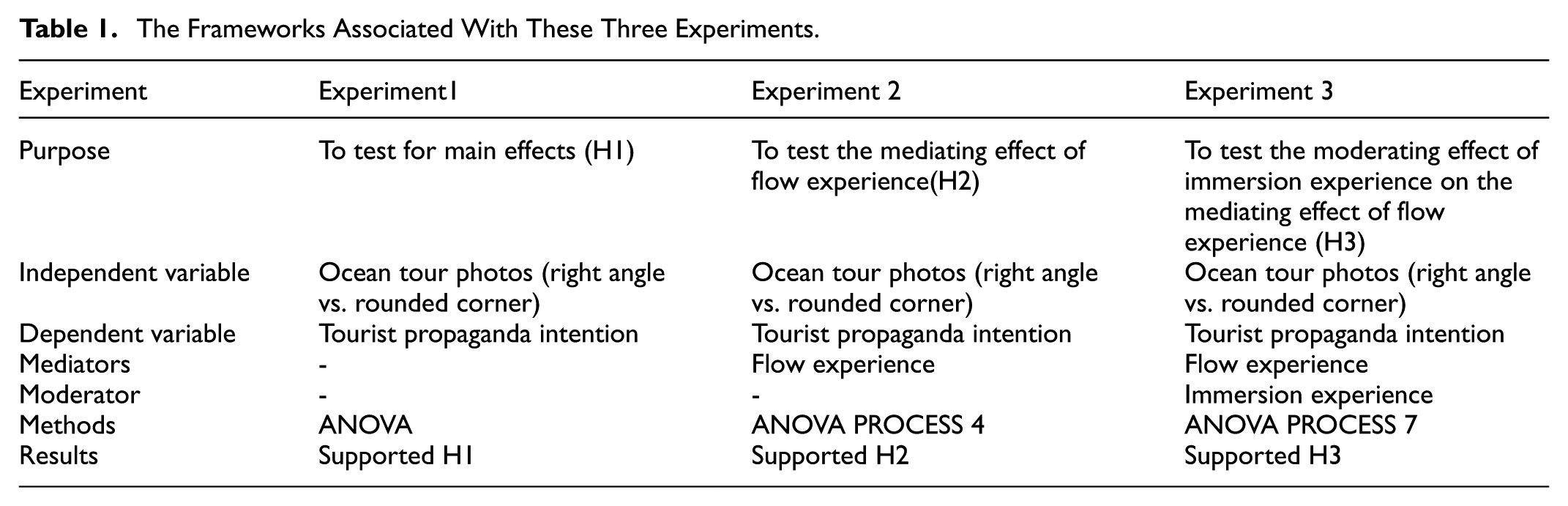
To empirically test the three research hypotheses proposed earlier, we implemented a series of three interconnected experiments. Experiment 1 was designed to investigate the influence of Ocean Tourism photo design (rounded vs. angular) on tourists’ intention to promote the destination, thereby testing and validating Hypothesis H1. To further explore the potential influence of color brightness on participants’ preferences, supplementary experiments—Experiments 1a, 1b, and 1c—were conducted. Experiment 2 aimed to assess the mediating role of flow experience in the relationship between Ocean Tourism photo design (rounded vs. angular) and tourists’ intention to promote, thereby validating Hypothesis H2. Finally, experiment 3 examined the moderating effect of immersion experience on the mediating role of flow experience (second path), thus validating Hypothesis H3. To ensure effective manipulation of Ocean Tourism photo design across the experiments, distinct Ocean Tourism photos and scenario materials were developed for each study. The conceptual frameworks for these three experiments are detailed in Table 1.
The Frameworks Associated With These Three Experiments.
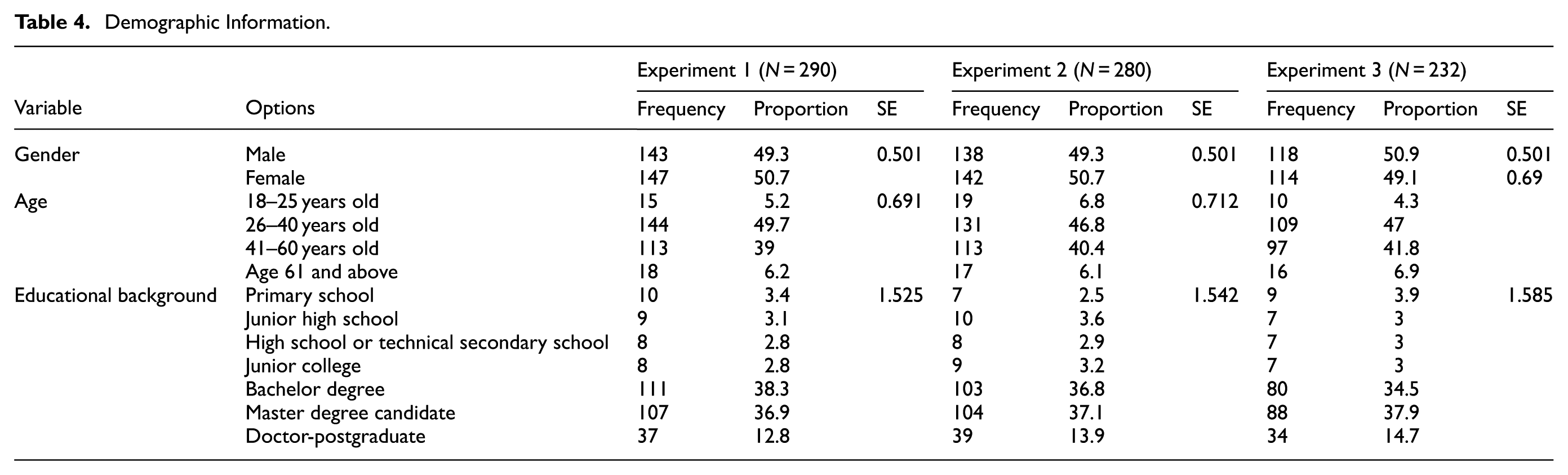
A total of 802 valid questionnaires were collected in this study, with data collection conducted from February to April 2024. The respondents were primarily from three cities in the eastern coastal region of China (Shanghai, Hangzhou, and Nanjing), areas characterized by high tourism activity and rich visual marketing practices. The age range of the respondents was from 18 to 65 years, with a balanced gender distribution (50.9% male and 49.1% female). Their occupational backgrounds were diverse, including students, office workers, freelancers, and retirees, ensuring broad representativeness of the sample. Inclusion criteria were as follows: (1) age between 18 and 65 years; (2) having experienced marine tourism at least once in the past 6 months; (3) proficient use of social media platforms; and (4) voluntary participation in the study with informed consent. Exclusion criteria included: (1) respondents who failed to complete the questionnaire or provided incomplete information; (2) those who did not pass the attention-check questions; and (3) those who could not provide a valid contact method for subsequent verification. Table 2 presents the means and standard deviations of the Likert scale variables used in all experiments. Table 3 presents the specific measurement items for each measured variable. The dataset of this study can be obtained from the corresponding author upon reasonable request, subject to ethical and confidentiality requirements. All respondents provided informed consent before participating in the study, fully understanding the purpose, process, and use of data, and agreed that their data would be used solely for this research.
Summary Table of Variables Employed in the Three Experiments.

Specific Measurement Items for Each Measured Variable Are Shown.

Experiment 1: Ocean Tourism Photo Design on Tourists’ Promotion Intention
Experimental Design
Experiment 1 was designed to examine the effect of Ocean Tourism photo design (roundcorner vs. square corner) on tourists’ intention to promote the destination. A between-subjects design was employed, with participants assigned to one of two conditions based on photo shape: round corner or square corner. A total of 300 participants were recruited through the professional survey platform Credamo (https://www.credamo.com/). After excluding four participants who failed attention checks and six participants who provided incomplete responses, 290 valid responses were retained. The sample consisted of 143 male participants (49.3%) and 147 female participants (50.7%), with the age distribution as follows: 5.2% were aged 18 to 25, 49.7% were aged 26 to 40, 39% were aged 41 to 60, and 6.2% were aged 61 or older. Demographic details are summarized in Table 4.
Demographic Information.
Experimental procedure: First, we guided the two groups of subjects to imagine that they were traveling in a Marine scenic spot, and they were choosing appropriate gifts in a tourist souvenir shop in the scenic spot. Then, all the subjects were informed that two special Marine tourism photos would be launched in the store, which had high publicity value and collection value. We then presented the rounded corner group with ocean tourism photos with rounded borders and the square corner group with ocean tourism photos with square borders. Subsequently, participants completed three items measuring their intention to promote the Ocean Tourism destination. An example item was: “Do you agree that you would recommend this Ocean Tourism and its photo to others?” (1 = Strongly Disagree, 7 = Strongly Agree), adapted from Yi and Gong (2013). Demographic information was collected for subsequent analysis. The marine tourism photos used in Experiment 1 are depicted in Figure 2.

Shows the marine travel photos used in Experiment 1.
Experimental Results
In Experiment 1, we aimed to investigate whether the shape of Ocean Tourism photos (round corner vs. square corner) directly influenced tourists’ intention to promote the destination. A one-way analysis of variance (ANOVA) was conducted with the photo shape as the independent variable and tourists’ intention to promote as the dependent variable.
Equation: Tourists’ Intention to Promote = β0+β1 (Photo Shape)+ϵ\text{Tourists’ Intention to Promote} = \beta_0 + \beta_1 (\text{Photo Shape}) +\epsilonTourists’ Intention to Promote = β0 +β1 (Photo Shape)+ϵ
Where:
Photo Shape\text{Photo Shape}Photo Shape (Round vs. Square) is the independent variable.
β0\beta_0β0 is the intercept.
ϵ\epsilonϵ is the error term.
The results of the ANOVA indicated that the intention to promote was significantly higher in the round corner group (M = 5.99, SD = 0.95) compared to the square corner group (M = 4.68, SD = 0.806). The statistical test showed F(1, 288) = 158.273, p < 0.001, η2 = 0.355, 95% CI [0.27, 0.43]. This suggests that tourists were more inclined to promote Ocean Tourism photos with round corner frames. These findings confirm
To explore potential moderating effects of gender and color brightness, an Analysis of Covariance (ANCOVA) was conducted, with gender and color brightness level as covariates. The results showed that neither gender (F(1, 288) = 85.454, p < .001) nor color brightness had a significant effect on tourists’ intention to promote. These findings further validate
Experiment 2: Mediating Role of Flow Experience
Experimental Design
Building on the results of Experiment 1, Experiment 2 aimed to explore the internal mechanisms underlying the relationship between Ocean Tourism photo design (round corner vs. square corner) and tourists’ intention to promote. Specifically, we hypothesized that flow experience would mediate this relationship.
We employed a one-factor between-subjects design (round corner vs. square corner). A total of 300 participants were recruited via a professional survey platform, with 280 valid responses obtained after excluding 16 participants who failed attention checks and 4 with inconsistent answers. The final sample included 138 male participants (49.3%) and 142 female participants (50.7%). The demographic information is shown in Table 4. Participants were randomly assigned to two groups: the round corner group (n = 140) and the square corner group (n = 140).
Experiment procedure: First, we asked two groups of subjects to imagine that they were traveling in an ocean scenic spot, surrounded by blue sea and golden sand. You enter a Marine style tourist souvenir shop, the store displays a variety of ocean-related souvenirs. The sales staff in the store tells you that they have launched two new special Marine travel photos. We then showed the rounded group ocean tourism photos with rounded edges and the right group ocean tourism photos with square edges. Figure 3 shows the marine travel photos used in Experiment 2. They were then asked to rate their flow experience using three questions based on Pearce et al. (2005), such as: “Do you agree that the combination of mountains and sea in the image makes you like it more?” (1 = strongly disagree, 7 = strongly agree).
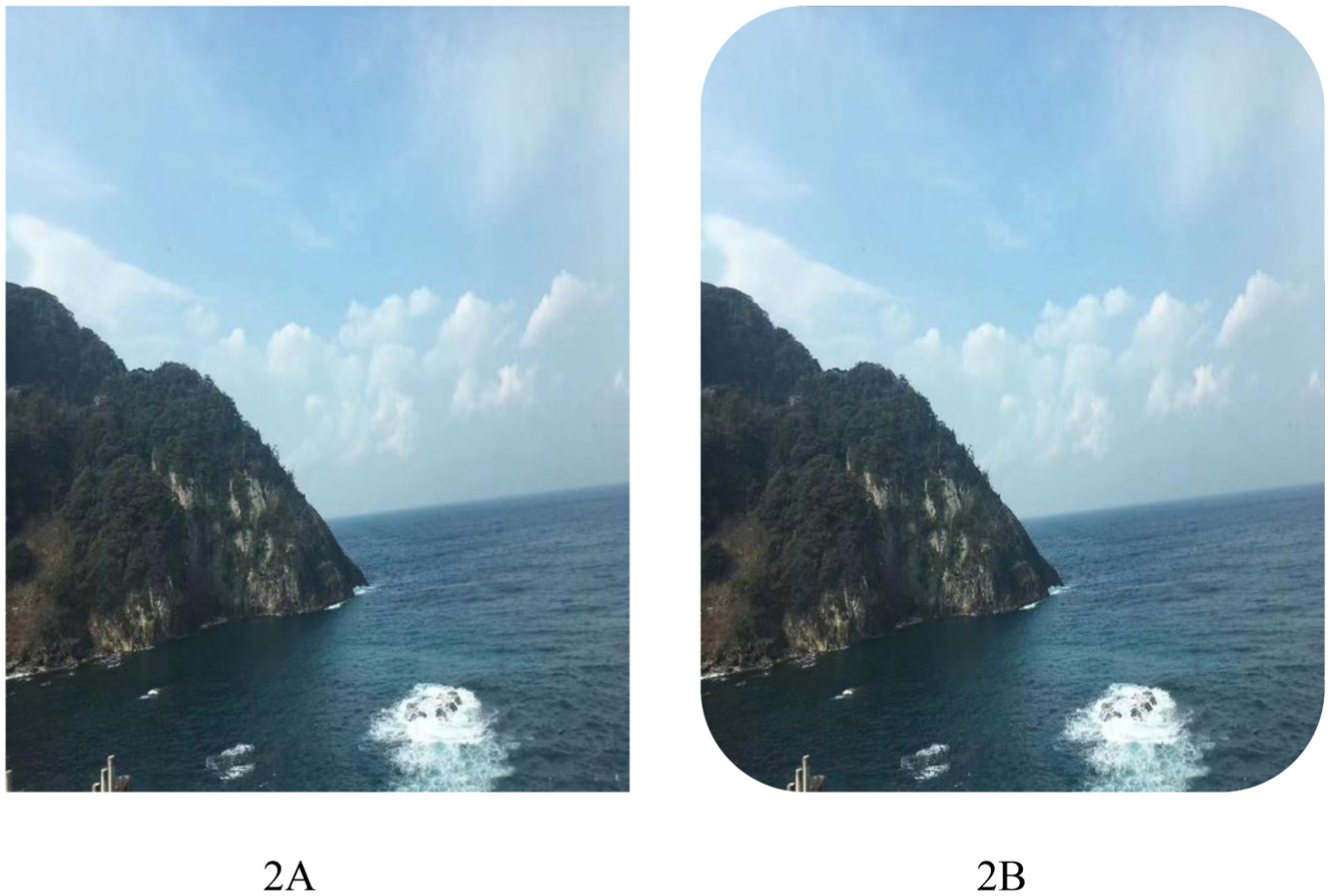
Shows the marine travel photos used in Experiment 2.
Subsequently, participants rated their intention to promote the Ocean Tourism destination using three questions adapted from Yi and Gong (2013), such as: “Do you agree that you would praise this Ocean Tourism and this photo to others?” (1 = strongly disagree, 7 = strongly agree). Participants’ preference for the shape of the photo was also controlled by asking them: “what is your preference for the border style of Ocean Tourism photos?” (1 = strongly disagree, 7 = strongly agree; Jost et al., 2002).
Experimental Results
A one-way analysis of variance (ANOVA) was conducted with Ocean Tourism photo design (round corner vs. square corner) as the independent variable and tourists’ intention to promote as the dependent variable. The results showed that the intention to promote in the round corner group (M = 5.661, SD = 1.27) was significantly higher than in the square corner group (M = 4.69, SD = 0.82), F(1, 278) = 57.562, p < 0.001, η2 = 0.17, 95% CI [0.098, 0.249]. These findings further support
We tested the mediating role of flow experience using Process Model 4. The analysis was conducted with Ocean Tourism photo design as the independent variable, flow experience as the mediator, and tourists’ intention to promote as the dependent variable. A bootstrap sample size of 5,000 was used for the analysis.
The results showed the following:
Ocean Tourism photos significantly affected tourists’ flow experience (β = 0.2905, p = 0.0339).
Flow experience significantly influenced tourists’ intention to promote (β = 0.3727, p < 0.001).
Ocean Tourism photos significantly impacted tourists’ intention to promote (β = 0.8632, p < 0.001).
The indirect effect of Ocean Tourism photos on tourists’ intention to promote through flow experience was significant (β = 0.1083, SE = 0.0482, 95% CI [0.0081, 0.1992]). This confirms

Result plot of mediating effects of flow experience in Experiment 2.
Table of Regression Coefficients for the Mediation Model of Flow Experience.

Note.*p < 0.05; **p < 0.01; ***p < 0.001.
Moderated Mediation Analysis. To further explore the role of potential moderators, we tested for moderated mediation by investigating whether tourists’ preferences for photo shape (i.e., how much they liked rounded vs. square corners) influenced the mediation process. We included preferences as a moderating variable in the mediation model. Using Process Model 8 with 5,000 bootstrap samples, the moderated mediation results showed the following:
The direct effect of Ocean Tourism photo design on tourists’ flow experience was significant (β = 0.2905, p = 0.0339).
Flow experience significantly affected tourists’ intention to promote (β = 0.3727, p < 0.001).
Preferences significantly moderated the effect of flow experience on tourists’ intention to promote (interaction effect β = 0.2492, p = 0.0215), indicating that tourists with a stronger preference for round corner photos experienced a more intense flow and were more likely to promote the tourism destination.
The moderated mediation analysis further revealed that the mediating effect of flow experience was stronger for participants who preferred rounded corner photos, confirming that preferences moderate the mediation pathway between photo design and promotional intention.
In order to further enhance the accuracy of the results of the above mediation analysis, we used multiple linear regression analysis for robustness test. We included gender, age and tourist preference as covariables to examine the influence of tourist photo shape on tourists’ publicity intention and the influence of flow experience on tourists’ publicity intention respectively. The experimental results show that gender and age have no significant influence on tourists’ publicity intention after the inclusion of covariates, while tourists’ preference has a significant influence on tourists’ publicity intention. The shape of ocean tourism photos (β = −0.406, p < .001) and flow experience (β = 0.308, p < .001) had a significant impact on tourists’ publicity intention, which was consistent with the analysis results of Process Model 4, and enhanced the accuracy and robustness of the results. Table 6 shows the coefficients of the multiple linear regression model.
Coefficient Table of Multiple Linear Regression Model.

Note.*p < 0.05; **p < 0.01; ***p < 0.001.
Experiment 3: Moderating Effect of Immersion Experience
Experimental Design
The aim of Experiment 3 was to assess the moderating effect of immersion experience on the mediating role of flow experience. A 2 (Ocean Tourism Photos: Round vs. Square) × 2 (Immersion Experience: High vs. Low) factorial experiment was designed, with 250 participants recruited via the professional survey platform Credamo (https://www.credamo.com/). After excluding 10 participants who failed the attention check and 8 participants who provided inconsistent responses, 232 valid responses were obtained. Demographics of the participants are summarized in Table 4. The sample consisted of 118 males (50.9%) and 114 females (49.1%), with the following age distribution: 4.3% aged 18 to 25, 47% aged 26 to 40, 41.8% aged 41 to 60, and 6.9% aged 61 or above. Participants were randomly assigned to two groups: the Round group (n = 115) and the Square group (n = 117).
Experimental Procedure: First, we asked all participants to imagine that they were traveling on an island, where coconut groves were widespread and the ocean scenery was unique. They had taken many photos there and entrusted them to a photography company for enhancement. Currently, they were in the photography company selecting photos for promotional purposes. The Round group was presented with photos with round corners, while the Square group viewed photos with square corners. Three questions were used to assess immersion experience, adapted from Suh et al. (2017) and Wu and Liang (2011). Additionally, participants completed three questions on flow experience, adapted from Pearce et al. (2005), and three questions regarding their intention to promote tourism, adapted from Yi and Gong (2013). The study controlled for participants’ preferences, and demographic information was also collected. The marine travel photos used in the experiment are shown in Figure 5.

Shows the marine travel photos used in Experiment 3.
Experimental Results
A one-way analysis of variance (ANOVA) was conducted, with Ocean Tourism photos (Round vs. Square) as the independent variable and tourists’ intention to promote as the dependent variable. Results revealed that participants in the Round group (M = 5.744, SD = 1.144) had significantly higher promotional intentions compared to those in the Square group (M = 4.814, SD = 0.862), with F(1, 230) = 48.954, p < 0.001, η2 = 0.175, 95% CI [0.095, 0.261]. These findings support
Moderated Mediation Analysis: Using Process Model 7, we tested the moderating effect of immersion experience on the mediating role of flow experience. Ocean Tourism photos (Round vs. Square) served as the independent variable, flow experience as the mediating variable, immersion experience as the moderating variable, and tourists’ intention to promote as the dependent variable. The results showed a significant negative interaction between Ocean Tourism photos and immersion experience on flow experience (β = 0.2862, p = 0.1202, 95% CI [0.0494, 0.5231]). The coefficient for flow experience on tourists’ intention to promote was 0.5488 (p < 0.001), and for Ocean Tourism photos on tourists’ intention to promote, it was 1.232 (p < 0.001). The indirect effect of Ocean Tourism photos on tourists’ intention to promote through flow experience was significant (β = −0.5275, SE = 0.0965, 95% CI [−0.7361, −0.3554]). The moderating effect of immersion experience on the mediation of flow experience was also significant (β = 0.1571, SE = 0.0712, 95% CI [0.0365, 0.3129]), confirming

Experiment 3: Moderated mediating effect coefficient results.

Experiment 3: Moderating effect results graph.
Regression Analysis Coefficients With Moderated Mediation Effects Are Shown.

Note.*p < 0.05; **p < 0.01; ***p < 0.001.
A covariance analysis was performed with tourists’ preferences as the covariate. The results indicated that preferences did not significantly affect the experimental outcomes (F(1, 230) = 56.779, p < .001), further confirming
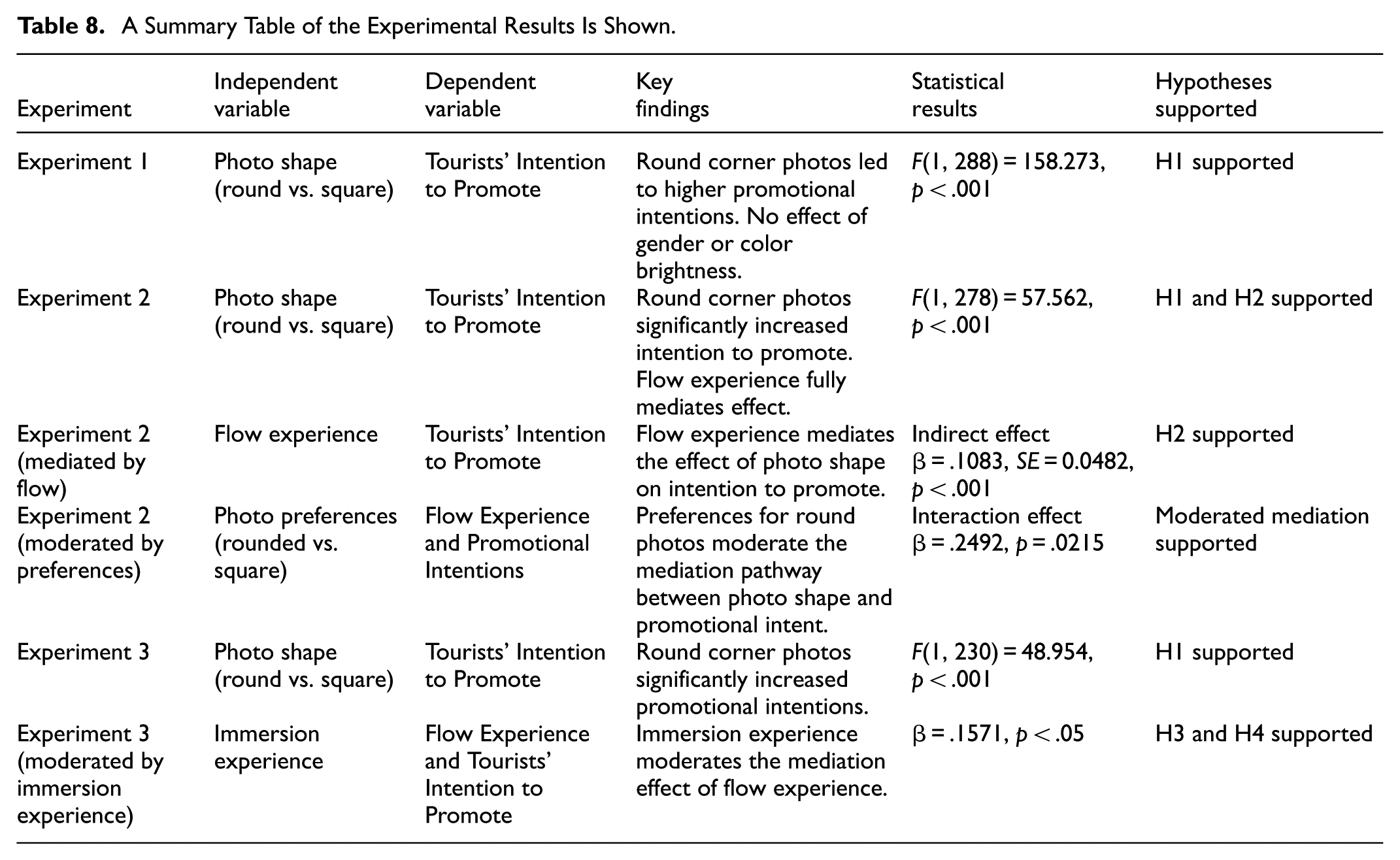
Table 8 presents a summary table of the experimental results.
A Summary Table of the Experimental Results Is Shown.
General Discussion
In Experiment 1, we tested Hypothesis H1. The model results indicated that the independent variable exerted a significant influence on the dependent variable (η2 = .355), according to the criteria proposed by Cohen, an effect size of η2 = .01 indicates a small effect, η2 = .06 indicates a medium effect, and η2 = .14 indicates a large effect. thereby confirming that ocean tourism photos with rounded corners significantly and positively impacted tourists’ intention to promote. This finding highlights the critical role of design elements in shaping tourists’ perceptions and their willingness to engage in word-of-mouth promotion. Additionally, our analysis revealed that gender did not significantly affect the experimental outcomes, which further underscores the robustness and generalizability of the findings across diverse demographic groups.
Despite this confirmation of the relationship between photo design and tourists’ promotional intentions, Experiment 1 did not investigate the underlying mechanisms that could explain this effect. To address this gap, Experiment 2 introduced flow experience as a mediating variable, offering deeper insight into the psychological processes behind tourists’ engagement with Ocean Tourism photos. The results of Experiment 2 supported Hypothesis H2, demonstrating that the flow experience mediated the relationship between photo design and tourists’ intention to promote. Ocean Tourism photos, particularly those with round corners, appeared to evoke a stronger emotional resonance with tourists, allowing them to mentally immerse themselves in the depicted scenes. This emotional connection enhanced their engagement with the destination, which in turn increased their intention to promote the destination to others.
Although Experiment 2 established the mediating role of flow experience, with a model result of η2 = .17 indicating a substantial practical effect, it did not explore potential moderating factors that might influence this relationship. To fill this research gap, Experiment 3 introduced immersion experience as a moderating variable. The objective of this experiment was to examine whether immersion experience moderates the mediating effect of flow experience between marine tourism photograph design and tourists’ promotion intention. The results of Experiment 3 confirmed the mediating role of flow experience and the moderating effect of immersion experience (η2 = .175), with the model effect size also suggesting a high practical effect. Specifically, we observed that different visual effects elicited by rounded and squared frames influenced tourists’ flow experience. Rounded frames conveyed a soft and friendly sensation, making it easier for tourists to immerse themselves, whereas squared frames conveyed a stable and formal feeling, evoking different types of engagement. These differences in immersion experience further influenced tourists’ emotional responses and their intentions to promote the destination.
In sum, the three experiments collectively support the notion that photo design plays a crucial role in shaping tourists’ promotional intentions. Rounded frames in Ocean Tourism photos appear to be particularly effective in eliciting emotional connections and fostering immersive experiences, which ultimately enhance tourists’ willingness to recommend the destination to others. Additionally, the study highlights the importance of considering psychological mechanisms, such as flow and immersion experiences, when designing promotional materials for tourism. These findings offer practical implications for marketers and tourism agencies, suggesting that carefully crafted visual elements can significantly influence tourists’ behavior and engagement.
Theoretical Contributions
Our study make following theoretical insights. First, we extends flow theory into the realm of tourism promotional material design, an area that has not been thoroughly explored. While flow theory has been widely studied in consumer psychology and behavior, its application to tourism promotional materials, particularly with regard to design elements, has remained limited (Taser et al., 2022). By examining how design elements, such as angular versus rounded shapes, influence tourists’ flow experiences and subsequent behavioral intentions, this study contributes to a more nuanced understanding of how emotional engagement through flow can shape consumer responses in tourism contexts. Our study findings identified flow experience as a mediating factor between the design elements of Ocean Tourism photos and tourists’ intention to promote. We demonstrated how different visual cues (angular vs. rounded shapes) evoke varying emotional responses, which in turn foster an immersive experience, ultimately influencing tourists’ promotional intentions. This finding fills a gap in the literature by demonstrating the psychological processes underlying the relationship between visual design and consumer behavior within tourism marketing.
Secondly, our study contributes by introducing immersion as a moderating variable in the flow experience. While immersion has been discussed in various fields, its role in the tourism promotional context has not been fully explored (Nilsson et al., 2016).The results indicate that the extent to which a tourist is immersed in the experience, influenced by the design elements of the photo, strengthens the effect of flow on the intention to promote. This contribution expands the theoretical framework of flow theory by incorporating immersion as a critical moderating factor, further refining our understanding of how tourists interact with visual marketing materials. Furthermore, our study provides the clarification of the boundary conditions under which design elements in Ocean Tourism photos influence tourists’ intention to promote. By identifying specific tourist characteristics that enhance or hinder the impact of visual design on promotional intentions, this study extends flow theory’s application, offering insights into how different types of tourists may respond to various design features. This is a crucial step in refining the theoretical understanding of flow theory in the tourism domain, highlighting the importance of individual differences in shaping the effectiveness of tourism marketing.
Thirdly, we contributed to the broader theoretical debate on the role of emotional versus cognitive processes in consumer behavior. It reveals that the influence of design elements on tourists’ intention to promote is primarily mediated by emotional responses, rather than cognitive evaluations. This finding challenges traditional cognitive-centric models in tourism marketing and emphasizes the importance of emotional engagement in shaping consumer behavior. It suggests that future research should consider emotional processes as key drivers in the development of more effective tourism promotional strategies.
Practical Implications
Our study also provides managerial insights. First, the findings offer significant practical implications for the design and content planning of Ocean Tourism promotional materials, particularly with respect to enhancing tourists’ intention to promote destinations through visual formats. Based on the results, we recommend the use of rounded-shaped photos as promotional materials in the context of Ocean Tourism. Rounded design elements are found to evoke deeper flow experiences and foster greater immersion among tourists, which in turn enhances their promotional intentions (Godovykh & Tasci, 2020). Consequently, it is essential for the design of Ocean Tourism promotional photos to prioritize the integration of rounded edges, as they serve to strengthen emotional connections and visual appeal, thereby more effectively engaging tourists’ emotions and fostering an increased intention to promote the destination. Specifically, rounded-shaped photos should be considered for inclusion in promotional campaigns, as they better convey the characteristics and essence of marine destinations. These designs are more effective in capturing the emotional essence of marine environments and can imbue the visuals with warmth and attraction, facilitating stronger emotional engagement with potential tourists. For example, when showcasing marine creatures or landscapes, rounded shapes can present these subjects in a more vivid and emotionally resonant manner, infusing them with compelling stories that heighten their appeal.
Secondly, our study highlights the role of tourists’ immersion in rounded Ocean Tourism photos, demonstrating that rounded edges are conducive to deeper immersion, as posited by flow theory. Therefore, it is recommended that Ocean Tourism promotional materials employ rounded shapes to encourage immersive flow experiences, thereby enhancing tourists’ emotional investment in the destination and increasing their intention to promote it. Rounded photo formats, by integrating soft edges with emotional visual elements, contribute to more engaging storytelling that strengthens the emotional appeal and effectiveness of the promotional material (Mele et al., 2021).
Thirdly, we suggest that combining rounded design elements with cultural, historical, and lifestyle aspects of Ocean Tourism destinations can further enhance the emotional and cultural connection between tourists and the destination. By incorporating such elements, the design of promotional materials can more effectively convey the value of cultural heritage, allowing tourists to forge a closer connection with the destination. This approach not only enhances the tourists’ emotional engagement but also facilitates a deeper understanding of and appreciation for the cultural significance of the destination. As a result, the use of rounded photo formats to convey cultural heritage can foster a more profound sense of connection, leading to a greater intention to promote the destination.
Limitations and Future Research
This study may have limitations. First, the sample used in this study was predominantly drawn from a specific demographic, which may limit the generalizability of the findings. Although the analysis in Experiment 1 showed that gender did not significantly influence the results, future studies should explore the role of other demographic factors, such as age, socioeconomic status, and cultural orientation, to determine whether these variables impact the relationship between photo design and tourists’ promotional intentions. This would contribute to a more nuanced understanding of how different types of tourists respond to visual design features in tourism promotional materials. Secondly, the study focused solely on the impact of visual elements—rounded versus angular photo frames—without considering other design aspects such as color, lighting, and subject matter. Future research could expand on this by incorporating a more comprehensive examination of visual elements in Ocean Tourism photos and exploring how they interact to influence tourists’ intentions. It would be particularly valuable to explore the combined effect of multiple design features on flow experiences and promotional intentions. Lastly, while this study provides insights into the emotional engagement elicited by photo design, it remains unclear whether these findings hold in real-world tourism promotional contexts where visual materials are often accompanied by text and other media. Future research could extend the study by incorporating a more holistic approach, analyzing how photo design works in conjunction with narrative content, branding, and other elements of tourism marketing materials to influence tourists’ intentions.
Conclusions
In conclusion, this study advances our understanding of how visual design elements in Ocean Tourism promotional materials, specifically rounded photo frames, influence tourists’ intention to promote destinations. By integrating flow theory and immersion experiences, the research demonstrates that rounded frames evoke stronger emotional connections and foster deeper immersion, ultimately enhancing tourists’ willingness to engage in word-of-mouth promotion. The findings offer valuable insights for tourism marketers, emphasizing the importance of carefully designing promotional photos to evoke emotional resonance and immersive experiences. While the study makes significant contributions to the theoretical understanding of flow and immersion in tourism marketing, it also highlights several limitations, including the need for further exploration of underlying psychological processes, moderating variables, and the role of demographic factors. Future research can build on these findings by examining the broader range of design elements and psychological factors that may influence tourists’ engagement with promotional materials, thereby providing a more comprehensive framework for designing effective tourism marketing strategies.
Footnotes
Appendix
Summary of the Literature.

| Sr. no. | Citation | Findings |
|---|---|---|
| 1 | Chen et al. (2023), Xu et al. (2023, 2025) | Ocean Tourism combines natural resources and unique cultural landscapes, highlighting seasonal and geographical differences. Subfields like cruise and coastal tourism enrich visitor engagement. |
| 2 | N. Chen et al. (2021) | The experience in Ocean Tourism is further elevated by specific subfields, such as cruise and coastal tourism, enhancing visitor engagement. |
| 3 | M. Wang et al. (2023), H. Zhang et al. (2022) | Ocean Tourism is enhanced by the mysteries of deep-sea exploration and marine culture. |
| 5 | Albers and James (1988) | Tourism photography is a powerful tool for conveying emotional responses and influencing destination perceptions. |
| 6 | Taecharungroj and Mathayomchan (2021) | Tourism photography influences emotional responses and perceptions, impacting destination choices. |
| 7 | Morrison et al., Siegel et al. (2023) | Travel agencies use photography to evoke excitement and align with destination identity. |
| 8 | Prideaux and Coghlan (2010), Sang and Huang (2023) | There is a shift towards personalized and authentic representations in tourism photography, helping travelers connect with destinations. |
| 9 | F. S. Li (2020), Taylor (2020) | Existing research largely focuses on composition, color, and aesthetics in tourism photography, emphasizing emotional appeal. |
| 10 | K. Zhang et al. (2023) | Photos with engaging compositions enhance destination allure and encourage visitation. |
| 11 | Deng et al. (2019), Yu et al. (2020) | High contrast and vivid colors in tourism photos evoke stronger emotional responses, increasing advocacy for destinations. |
| 12 | C. Zheng et al. (2024) | Rounded corners in photos may convey warmth and comfort, encouraging viewers to promote the destination. |
| 13 | Czikszentmihalyi (1990) | Flow theory explains how immersion in activities influences tourists’ experiences and behaviors. |
| 14 | Marder et al. (2021), Pan et al. (2014) | Photos can be analyzed for visual properties and the emotions they evoke, impacting tourists’ willingness to promote destinations. |
| 15 | S. Q. Liu et al. (2018) | Rounded shapes in tourism photos evoke a positive emotional response, enhancing perceptions of visual appeal and attractiveness. |
| 16 | Jiang et al. (2016) | Rounded shapes are preferred due to their association with warmth and positive emotions, enhancing tourists’ experiences. |
| 17 | Wu et al. (2024) | Preference for rounded shapes is often automatic, tied to positive emotional experiences linked with comfort and safety. |
| 18 | Friedenberg et al. (2023) | Angular shapes can evoke threat or discomfort, influencing emotional responses and likelihood to promote destinations. |
| 19 | Gong et al. (2023) | Rounded shapes may be linked to individual preferences and perceptions of comfort and safety, influencing tourists’ promotion intentions. |
| 20 | H. Liu et al. (2024), Shen et al. (2022) | Flow theory helps explain how cognitive and affective responses to photo forms (rounded vs. angular) influence tourists’ likelihood of promoting a destination. |
| 21 | Hevner (1935), Robinson (2014) | Tourists’ cognitive and affective responses to photo shapes (rounded vs. angular) influence their behavioral tendencies toward promotion. |
| 22 | Su et al. (2023) | Emotional responses to the destination culture may enhance tourists’ willingness to promote the destination. |
| 23 | Qu et al. (2024) | Affective responses in tourism lead to rapid, intuitive reactions, strengthening the likelihood of destination promotion. |
| 24 | Park et al. (2023) | Visual design elements, such as photo shape, can influence tourists’ immersion and promotion intentions. |
| 25 | F. Li et al. (2023) | Immersion amplifies flow experiences, influencing tourists’ intention to engage in destination promotion. |
| 26 | Guo et al. (2023) | Immersion enhances emotional engagement with photo content, strengthening flow experiences and increasing promotion likelihood. |
Acknowledgements
Many thanks to the reviewers and editors who provided comments for this study and made this manuscript better.

Funding
The authors disclosed receipt of the following financial support for the research, authorship, and/or publication of this article: The research was funded by the project “Research on the Mechanism and Pathways of Digital Culture Brand Building for Anhui Cultural Tourism Enterprises” (2024AH053253).
Declaration of Conflicting Interests
The authors declared no potential conflicts of interest with respect to the research, authorship, and/or publication of this article.
Data Availability Statement
All data for this study were provided unconditionally by the corresponding author.