




Abstract
A conceptual framework was proposed to examine the inter-relationships among non-behavioral destination familiarity (self-described, educational, and informational familiarity), destination image, and travel intention in the context of US tourists visiting Singapore. A total of 313 usable online survey responses were collected via Qualtrics; the data were analyzed through Partial Least Square Structural Equation Modeling (PLS-SEM) and fuzzy-set Qualitative Comparative Analysis (fsQCA). The results confirmed that informational familiarity and self-described familiarity all positively influenced prospective US tourists’ destination image perceptions and travel intentions. The findings concluded that destination familiarity, specifically non-behavioral aspects played important roles in shaping tourists’ perceptions and decision-making. Moreover, the cognitive destination image can be influenced by affective destination image, and the former was key to influence tourists’ travel intention. The joint analysis of PLS-SEM and fsQCA provided a fine-graiend insights into the variable relationships. Managerial implications are proposed for tourism organizations to understand tourists’ behaviors better.
Introduction
Familiarity is an important factor to understand consumers’ behaviors, as it can strongly influence consumers’ product purchase decision-making or even risk perceptions (Y. K. Lee & Robb, 2016). High levels of familiarity can spur an individual’s curiosity to acquire information about an object (Choi et al., 2020). The amount of information that consumers possess about a product-related experience is referred as product familiarity (Biswas et al., 2006; Rao & Monroe, 1988). Consumers’ familiarity is predicated on their experiences of previous exposure, information search, word-of-mouth (WOM) communication, and consumption with a brand (Tam, 2008). Similar to tangible products, tourists can also develop a sense of familiarity with tourism destinations. However, the importance of familiarity has always been overlooked (Prentice, 2004). Destination familiarity is a pivotal factor influencing tourists’ destination decision-making, risk perceptions, and destination evaluations (Bianchi et al., 2017; Casali et al., 2020; Elliot et al., 2011; W. K. Tan, 2017).
Tourism researchers have recognized the multi-dimensionality of familiarity (Baloglu, 2001; W. K. Tan & Wu, 2016). However, there is currently no consensus on the operationalization of the components of familiarity (Yang et al., 2009). Traditionally, tourists’ destination familiarity is primarily gauged through a behavioral approach via tourists’ previous visitation, namely experiential familiarity (Milman & Pizam, 1995; W. K. Tan & Wu, 2016; Toyama & Yamada, 2012). However, tourists’ destination familiarity should not equate entirely to their actual visits, as non-visitors also possess a pre-conceived notion about the destination from marketing campaigns (Prentice & Andersen, 2000). Most of the previous research merely examined tourists’ familiarity through the experiential dimension without considering other non-behavioral aspects of familiarity (Kim et al., 2019; W. K. Tan, 2017). Nevertheless, prospective tourists’ destination familiarity can be gained indirectly through education, personal contacts, and mass media contents (Prentice & Andersen, 2000). As such, tourists’ destination familiarity can be tied in with information search and amount of the time processing the information (Hahm & Severt, 2018). Moreover, tourists can use outside information to learn new knowledge, new discoveries, and new insights (Xue et al., 2022). Through secondary information, tourists can develop self-described or self-rated familiarity with a destination without having actual visits (Jansen, 2011; Prentice, 2004). Hence, rather than experiential familiarity, prospective tourists’ familiarity can be captured through non-behavioral ways. In this current study, non-behavioral familiarity encompasses self-described, educational, and informational familiarity (Baloglu, 2001; Prentice, 2004).
Tourists’ levels of familiarity will likely influence their perceptions and decision-making toward destinations (Beerli & Martín, 2004; S. Lee et al., 2008; Sun et al., 2013). Tourists with a high familiarity tend to have more favorable destination evaluations (Beerli & Martín, 2004). This is especially true for potential tourists, as they rely on information searches to compare destinations and relegate risks (Yamashita & Takata, 2020). However, to the authors’ best knowledge, there is a paucity of research employing multi-facets of familiarity constructs to examine the influences on potential tourists’ destination image perceptions and travel intention. The inclusion of familiarity into imagery modeling can provide better interpretations about tourists’ behaviors (Prentice, 2004). Moreover, previous studies utilized number of previous destination experiences to measure familiarity failed to examine its influence on tourists’ destination choices and behaviors (G. Lee & Tussyadiah, 2012; W. K. Tan, 2017). As such, this current study aims to address these research gaps.
This study contributes to the current literature by examining the effects of prospective tourists’ non-behavioral familiarity on their destination evaluations and future travel intention. The current study yields different results and patterns compared with the foregoing research, shedding new light into the tourism literature by analyzing a multifaceted tourists’ destination familiarity through non-behavioral familiarity constructs (i.e., informational, educational, and self-described familiarity). Furthermore, this study contributes to literature at the methodological level. Other than Partial Least Square Structural Equation Modeling (PLS-SEM), this study incorporates fuzzy-set Qualitative Comparative Analysis (fsQCA) to examine the combined configurations of the constructs of familiarity and destination image on tourists’ future intention. The fsQCA method is a configurational approach, which patterned similarity and heterogeneity can be identified through forms of set memberships (i.e., necessary and sufficient conditions; Elliott, 2013; Ragin, 2000). The method of fsQCA is complementary to PLS-SEM, strengthening the PLS-SEM analysis to offer fine-grained insights into variable relationships (Rasoolimanesh et al., 2021). To the authors’ best knowledge, limited research has utilized fsQCA approach in conjunction with PLS-SEM to examine how destination familiarity can influence tourists’ destination perceptions and travel intentions. The symmetric approach can identify variables that are significant; however, the regression coefficients only represent average cases without reflecting any specific cases (Douglas et al., 2020). Hence, the integration of both PLS-SEM and fsQCA in the current study provides depth and breadth in understanding how the constructs of non-behavioral familiarity could affect tourists’ behaviors.
Based on the aforementioned information, this study aims to address the following two research questions; (a) whether non-behavioral destination familiarity affects tourists’ destination evaluations and travel intention; (b) how the joint analysis of PLS-SEM and fsQCA provide unique perspective into tourists’ travel intention. To address these questions, this paper proposes several research objectives: (1) to ascertain whether non-behavioral familiarity can capture tourists’ destination familiarity; (2) to examine the effects of multi-dimensional destination familiarity (self-described, informational, and educational familiarity) on prospective tourists’ destination perceptions and future travel intention; (3) to use fsQCA in conjunction with PLS-SEM to provide more detailed and nuanced insights into the complex causal relationship; (4) to provide managerial implications for tourism organizations in Singapore to tap into the US tourism market.
The following sections of the paper provide literature review and hypotheses development. Then, the study presents methodology, findings of results, and discussion. Discussion includes theoretical implications and practical implications. The last part of the paper includes limitation and future research as well as the conclusion of the study.
Literature Review
Destination Familiarity
The definition of destination familiarity is associated with various aspects such as awareness, knowledge, expertise, or experience (Milman & Pizam, 1995; Sharifpour et al., 2014). Currently, no theoretical consensus has been built to define familiarity. However, in tourism studies, destination familiarity is defined as when individuals know a place, locate, and relate the image they have experienced on a particular trip (Cohen, 1972; Prentice & Andersen, 2000). Destination familiarity is useful to understand whether a destination can shape tourists’ behaviors (Chen & Lin, 2012). The degree of familiarity can determine the effect of tourists’ experience in tourism (Cohen, 1972). As such, a destination becomes more attractive if tourists have a higher level of familiarity (MacKay & Fesenmaier, 1997). Despite tourists’ number of visits to the destination is an important factor to determine their familiarity (W. K. Tan, 2017), tourists’ familiarity may not only occur in actual experience through accumulation of previous visits. Tourists who have not visited a destination can still hold complex images of that place, possibly gaining information and knowledge from secondary informational sources (Chaulagain et al., 2024; Choi et al., 2020; Hui & Wan, 2003). As such, destination familiarity can be the knowledge travelers acquire through information about a destination provided by a travel provider (Webb, 2000). For instance, Huete-Alcocer et al. (2019) found that information sources such as the website of the destination can positively influence tourists’ destination perceptions. Prospective tourists tend to search useful information and sources to guide their travel decisions and gain familiarity (Horng et al., 2012; Oday et al., 2021).
Due to the multidimensionality of familiarity, the concept of familiarity can extend to tourists who consider themselves as unfamiliar with a place (Prentice, 2004). Research has identified three types of tourist familiarity, namely informational, experiential, and self-rated/self-described familiarity (Baloglu, 2001). However, the construct of familiarity can be further divided into proximate, educational, self-assured, and expected familiarity (Prentice, 2004). W. K. Tan and Wu (2016) proffered that educational familiarity and informational familiarity are the two most essential types of familiarity for potential tourists. Prospective tourists derive support from visual cues of destination to form attitudes and judgment when they don’t have existing knowledge about the destination (Roy & Attri, 2022). According to the spreading activation theory of memory, external cues can stimulate information stored in linked nodes (J. R. Anderson, 1983). As such, tourists’ exposure of visual cues can be retained in their minds unconsciously (Roy & Attri, 2022). Additionally, when tourists making travel decisions, their subjective knowledge of a destination could aid their external information search for that destination (Wen & Huang, 2019). In this current study, non-behaviroal aspects of familiarity are mainly captured through self-described, informational, and educational familiarity.
Informational, Self-Described, and Educational Familiarity
Informational familiarity is described as the extent to which informational sources are used in searching for information about a destination (Prentice, 2004). Tourists will likely gain familiarity and enhance their destination perception through exposure to certain information regarding trips to the destination, such as travel information provided by travel agencies, brochures, and advertisements (Campo & Alvarez, 2014; Kim et al., 2019). Furthermore, tourists gain familiarity through the time spent on information processing (Chaulagain et al., 2024). On the other hand, educational familiarity is operationalized as the readership and literary consumption in relation to destination (Prentice, 2004), such as learning from educational institutions, schools, television programs, and films or reading novels and poems about a destination (Prentice, 2004). Lastly, self-described familiarity is generally referred to as tourists’ self-assessed familiarity toward a destination (Baloglu, 2001). Self-described familiarity is the result of both informational and educational familiarity and an attitudinal approach that aims to measure tourists’ subjective knowledge of a destination without paying actual visits (Jansen, 2011; Toyama & Yamada, 2012; Yang et al., 2009). The genesis of self-described familiarity is due to the availability of secondary information at tourists’ disposal (Jansen, 2011). Both informational and educational familiarity can influence tourists’ self-described familiarity (W. K. Tan &Wu, 2016).
The constructs of multifaceted destination familiarity can be inter-correlated (Prentice, 2004). Prospective tourists who gained external information sources can complement their subjective knowledge of a destination when making travel decisions (Wen & Huang, 2019). Accordingly, the following hypotheses were formulated:
H1: Informational familiarity positively affects self-described familiarity.
H2: Educational familiarity positively affects self-described familiarity.
Destination Image
Destination image, which is defined as individuals’ ideas, beliefs, and impressions about a destination, has received much attention from scholars for more than three decades (Afshardoost & Eshaghi et al., 2020; Crompton, 1979; Tasci et al., 2007). Tourists derive destination image either through organic or induced information sources (Fakeye & Crompton, 1991; Gartner, 1989; Gunn, 1972). Both organic and induced information are secondary sources that refer to non-tourism information and tourism marketing-related information toward a destination, respectively (Gunn, 1972). Potential tourists can form destination images through commercial and independent informational sources such as mass media sources without paying actual visits to a destination (Gartner, 1989, 1994; D. Wang et al., 2014).
The dimensions of destination image are based on the hierarchy of cognitive-affective-conative model for explaining tourists’ attitudes (Gartner, 1994; San Martín & Rodríguez del Bosque, 2008; Xie & Lee, 2013). The cognitive component of the destination image is described as tourists’ knowledge, beliefs, and factual information about the destination, while affective destination image refers tourists’ emotional feelings about the destination (Baloglu & Brinberg, 1997; Gartner, 1994; White, 2004). Conative image can be manifested as tourists’ behavioral intention (Zhang et al., 2014).
The Relationship Between Destination Familiarity and Destination Image
Evidence has shown that tourists’ familiarity can influence tourists’ image perceptions (Stylidis et al., 2020; W. K. Tan, 2017). Tourists with higher levels of familiarity tend to have more favorable destination perceptions and evaluations (Beerli & Martín, 2004). The more familiar tourists toward a destination, the more favorable they perceive a destination image than unfamiliar tourists. (Kim et al., 2019; Stylidis et al., 2020). For instance, Baloglu (2001) found that American tourists with higher familiarity toward Turkey tend to have a positive destination image. Other than enhancing their perceptions, tourists with high familiarity can also increase their confidence and reduce their risks in decision-making (Mechinda et al., 2009).
Tourists with high informational familiarity can also develop a more complete destination image than tourists with low familiarity (Sanz-Blas et al., 2019). Previous studies have tested and confirmed the positive relationships of tourists’ informational familiarity on destination image (Santana & Sevilha Gosling, 2018; Yang et al., 2009). By way of illustration, W. K. Tan and Wu (2016) discovered that tourists’ informational familiarity can affect both affective and cognitive destination image. Furthermore, Kiambi (2017) found the US residents gained familiarity toward Ghana through indirect experiences such as online sources and news media, indicated that familiarity could increase one’s perception toward a destination.
Tourists’ self-described familiarity also has a significant effect on destination image (Sun et al., 2013). For example, Marinao Artigas et al. (2015) discovered that tourists’ increased self-described familiarity could indirectly affect the relationships between their cognitive and affective image perceptions and destination reputation. Similarly, key components of educational familiarity such as literary works and movies or TV programs can affect people’s perception and emotional connection with a destination (Ju et al., 2021). W. K. Tan and Wu’s (2016) study revealed that educational familiarity can significantly influence tourists’ cognitive destination image rather than affective destination image toward Hong Kong. Currently, there are paucity of research examining the relationship between educational familiarity on destination images. Therefore, more research is warranted to examine the relationship. Based on the above information, the following hypotheses were proposed:
H3: (a) Informational familiarity, (b) self-described familiarity, and (c) educational familiarity positively affects affective destination image.
H4: (a) Informational familiarity, (b) self-described familiarity, and c) educational familiarity positively affects cognitive destination image.
Destination Familiarity and Travel Intention
Tourists’ familiarity is an overall driver affecting their destination decision-making and visit intention (G. Lee & Tussyadiah, 2012; Milman & Pizam, 1995). Many scholars have found that tourists with high level of familiarity is more inclined to travel in the future (Chen & Lin, 2012; Elliot et al., 2011). For instance, in a study pertaining to Chinese tourists, Yang et al. (2009) found that tourists who gained familiarity with various forms of information about Shanghai had a high likelihood of future visits. Moreover, Kim et al. (2019) found that tourists’ informational familiarity can influence tourists’ future intention. Furthermore, Soliman (2021) revealed informational familiarity can predict tourists’ visit intention to Egypt.
Familiarity obtained from educational sources can determine tourists’ decision-making. Other than informational familiarity, W. K. Tan and Wu (2016) proffered that educational familiarity is one of the essential forms of familiarity for potential tourists to select a destination. Based on self-described and informational familiarity, Chaulagain et. al. (2024) revealed that destination familiarity can determine medical tourists’ travel decision-making. W. K. Tan and Wu (2016) revealed that self-described, informational, and educational familiarity all had a positive effect on potential tourists’ visit intention. Based on the above information, the following hypotheses were proposed:
H5: Informational familiarity positively affects future travel intention.
H6: Self-described familiarity positively affects future travel intention.
H7: Educational familiarity positively affects future travel intention.
Affective and Cognitive Destination Image
The cognitive and affective relationships have been the subject of two competing schools of thought (C. K. Lee et al., 2005). The first school adopts the cognitive-affective causal relationship, stating people’s cognitive responses can stimulate their affective mechanism (Chebat & Michon, 2003). As such, people tend to recognize an object first before they acknowledge their feeling (C. K. Lee et al., 2005). In the same token, most tourism research has found that cognitive destination image is the antecedent of affective destination image (Agapito et al., 2013; Lin et al., 2007). However, the proponent of the other stream of thoughts supports the notion that affective process can be generated without cognitive process being the antecedent, that is, people generate feelings first before they think about the reason why they feel that way (Zajonc & Markus, 1984). Individuals’ cognition and affect can be interactive and reciprocal and are both mental responses to external stimuli (Peter & Olson, 1999; Tasci et al., 2007). Some scholars claimed that there may exist a bi-directional relationship between cognition and affect (Ko & Park, 2000). Indirectly, Y.-J. Lee (2015) confirmed that tourists’ emotional experience can positively affect their cognition. Therefore, individuals’ affective responses can possibly occur prior to their cognitive response in relation to an activity (Walls et al., 2011). The non-conventional directionality from affective image to cognitive image can be justified as a sign of emotional reasoning, which tourists with higher and pleasant moods will dictate their cognitive reactions (Joo et al., 2023). This current study posits that prospective US tourists’ emotional feelings toward Singapore are positive and generated without exposure of cognitive image, and as such, their affective feelings can shape their cognitive evaluations. Based on the above information, it was hypothesized that:
H8: Affective destination image positively affects cognitive destination image.
The Relationship Between Destination Image and Travel Intention
Prior studies have found that destination image can influence tourists’ decision-making (Chi et al., 2020; G. Lee & Lee, 2009). For example, destination image has a positive effect on intention to visit (Chaulagain et al., 2019). Furthermore, Choe and Kim (2018) verified that there is a positive relationship between destination image and tourists’ intention to recommend and visit a destination for food tourism. Prospective tourists who hold a favorable impression and positive perception of the destination can lead to a greater likelihood of future visit intention (Kim et al., 2019). Previous studies have indicated that both cognitive and affective components of the destination can influence tourists’ destination decision-making. For example, McDowall and Ma (2010) found that cognitive image had a significant impact on tourists’ intention to recommend Bangkok. Through a meta-analysis, Zhang et al. (2014) concluded that cognitive destination image can have a direct impact on behavioral intention.
Furthermore, Ramkissoon et al. (2011) stated that affective image is essential to determine tourists’ future travel intention. Compared to cognitive destination image, affective destination image can have larger and more predictable effects than cognitive image on tourists’ travel behavioral intention (Afshardoost & Eshaghi, 2020; Chiu et al., 2016). Tourists can express personal values and intrinsic benefits from the destinations through affective image, which is closely linked to their decision-making (Cai, 2002; Cai et al., 2004). This is also evident in the case of Xu et al. (2017), indicating that tourists’ affective image can more effectively influence their travel intention than cognitive image. Based on the above information, the following hypotheses were examined:
H9: Cognitive destination image has a significant positive effect on tourists’ future travel intention.
H10: Affective destination image has a significant positive effect on tourists’ future travel intention.
Methodology
Study Context
Singapore, a small city-state has been rated as one of the top destinations in the Asia-Pacific region (Hui & Wan, 2006; C. G. Lee, 2012; Tsai, 2011). Although Singapore has drawn millions of visitors from countries in Europe, Asia, and North America (Tsai, 2011), attracting the US tourists to visit Singapore remains challenging, especially for markets that reside outside of the gateway cities of the US eastern and western coasts (C. W. Tan et al., 2019). Despite the success of 2018 film Crazy Rich Asians, a collaboration between Singapore Tourism Board (STB) and Hollywood, raised the US population’s awareness toward Singapore, there is a discrepancy between the image of Singapore portrayed in the film and the actual image held by the average Americans (C. W. Tan et al., 2019). Hence, it is currently yet known whether the film has brought adequate exposure to positively influence US general public’s perceptions and awareness as well as their destination familiarity. Especially, US tourists’ non-behavioral familiarity toward Singapore may affect their destination perceptions and travel decision-making. Moreover, although research pertaining to tourists’ intention has been examined before, the extant literature only presents a limited studies that focused on US tourists in the context of Singapore. Moreover, although the US is the largest economy globally with a highly disposable income per person, only one-fifth of Americans have traveled abroad (Bradford, 2017). This situation presents a huge potential and business opportunities for tourism sector in Singapore to tap into the US outbound travel market. Therefore, new research can shed new light on US tourists’ behaviors about their image perceptions and travel decision-making toward Singapore. Figure 1 is the research framework of this study.

Research conceptual framework.
Data Collection
This study is based on survey research employing Qualtrics panel data through self-administered questionnaire. Qualtrics is a reputable survey company based in the USA. The author of the research signed a contract with Qualtrics and purchased their service for data collection. Subsequently, Qualtrics used their panel data to gather data for this study. A non-probability and convenience sampling technique was employed by Qualtrics to collect data for this study. The criteria of the target population was potential outbound tourists from the US. Before launching a pilot test with 30 samples, the study was proved by the Human Research Protection program in a US southwestern university. A total of 318 responses were collected; however, five responses were not included due to quality issues (e.g., straight-lining questions and did not answer attention check questions correctly). As such, the final data collection resulted a total of 313 usable data. The data includes both male and female samples that were collected from US general public during the fall of 2021. Respondents’ identities remained anonymous throughout the data collection process.
The measurement items were adopted and modified from previous research to fit the scope of this study. Items were mostly anchored on a seven-point Likert scale, ranging from “1 = strongly disagree” to “7 = strongly agree.” The survey consisted of 27 items (Appendix 1) and were adopted from prior research. Self-described familiarity, containing three items, was adopted from Sun et al. (2013). Five items of informational familiarity and four items of educational familiarity were adopted from W. K. Tan and Wu (2016). Cognitive destination image was measured by nine items adopted from Chi and Qu (2008), Hui and Wan (2003) and C. Y. Wang and Hsu (2010). Affective destination image was measured by four seven-point semantic differential scales (Baloglu & Brinberg, 1997). Three items of future travel intention were adopted from Chaulagain et al. (2019) and C. Y. Wang and Hsu (2010). The last section included questions pertaining to respondents’ demographic information.
Data Analysis Process
This research used both symmetric and asymmetric approaches to unravel the causal relationships among proposed variables, For the symmetric approach, this study used SPSS 26 and SmartPLS 3.0 to obtain results for descriptive analysis and structural equation modeling (SEM). PLS-SEM is applied since the complexity of the proposed model and to ensure the predictive power (Rasoolimanesh & Ali, 2018). In addition to PLS-SEM, fsQCA is used to identify any heterogeneity within the sample that identify sub-groups of different combinations led to the same outcome (Douglas et al., 2020; Rasoolimanesh et al., 2021). fsQCA 3.0 was employed to identify sufficient configurations to generate outcomes (Ragin, 2018). The combination of PLS-SEM and fsQCA follows the procedures from Rasoolimanesh et al. (2021).
Fuzzy-Set Qualitative Comparative Analysis (fsQCA)
The fuzzy-set qualitative comparative analysis (fsQCA) is a mixed and cased-based combinatorial approach, which can accommodate both qualitative and quantitative data (Rasoolimanesh et al., 2023). Recently, hospitality and tourism research has started to incorporate fsQCA in conjunction of symmetrical analysis (i.e., SEM) to engage in more robust assessments (Rasoolimanesh et al., 2021). Studies have found fsQCA can be complementary to PLS-SEM, providing more nuanced insights of the causal relationship among variable of interests (Rasoolimanesh et al., 2021) In fsQCA, original values of independent and dependent variables are rescaled between the interval of 0 and 1, and the calibration results both binary and metric at the same time (Rasoolimanesh et al., 2021). Since this study’s measurement scale used seven-point Likert scale, the membership was calibrated as 7 (full membership), 4 (cross-over point), and 1 (full non-membership; Gligor & Bozkurt, 2020).
Findings
Respondents’ Demographics
Table 1 shows the descriptive statistics for respondents’ demographics. Of the total of 313 respondents, 50.5% were female and 47.9% were male; while 41.6% of respondents completed at least some level of college, 33.5% of respondents held graduate degree. About 54.3% of the respondents were in the age group of 60, and about 29.1% of the respondents were in the age bracket of 40 to 59 years of age; 15% of the respondents were in the age group of 25 to 39 years of age. The annual income of most respondents (57.1%) was above $65,000, while 15% of the respondents earned between $50,000 to $64,999 annually; 13.1% of the respondents had annual household income in the range of $35,000 to 49,000; and 29.7% of the respondents earned less than $35,000.
Respondents’ Profile.

Results from PLS-SEM
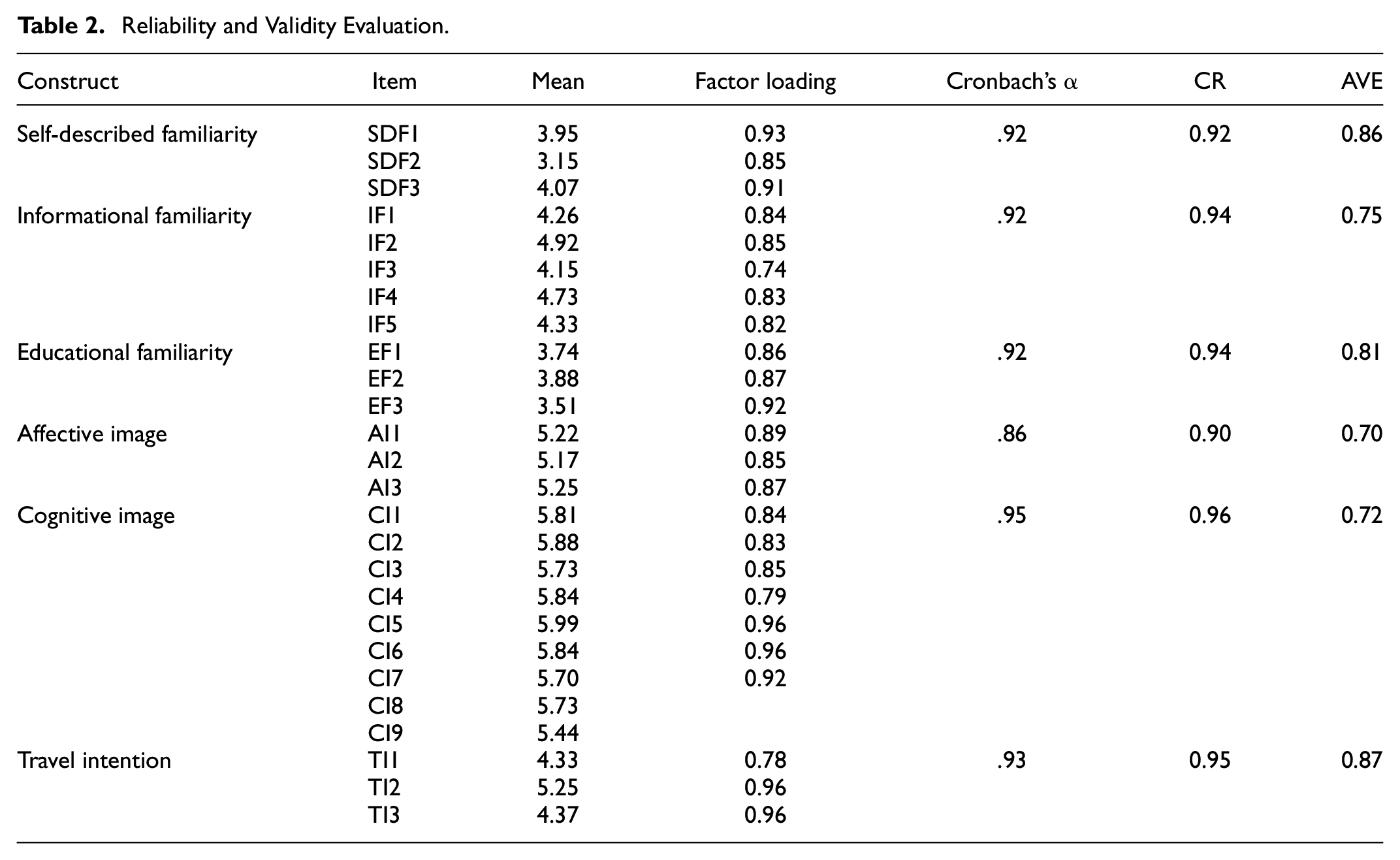
The model assessment of PLS-SEM involves two different stages, namely measurement model and structural model. First of all, the reliability and validity of the measurement model were also assessed (Table 2). Cronbach’s α for all the constructs were greater than the cut-off value of .7 (Nunnally, 1978), ranging from .86 to .95, demonstrating the internal consistency or reliability of constructs. Moreover, composite reliability (CR) of each factor was above the 016 fr.7 threshold (Hair et al., 2006), further demonstrating constructs were internally consistent and reliable. Average variance explained (AVE) ranged from 0.75 to 0.86, exceeded the stipulated 0.5 threshold without any validity concerns (Henseler et al., 2015). Based on Fornell-Larcker criterion, square root of AVE for each construct was greater than the inter-construct correlations, indicating a sufficient discriminant validity of the constructs (Table 3) (Fornell & Larcker, 1981). Based on the preceding evidence, the measurement model was sufficient to provide good reliability, convergent validity and discriminant validity.
Reliability and Validity Evaluation.
Discriminant Validity.

Note. AI = affective image; CI = cognitive image; EF = educational familiarity; IF = informational familiarity; SDI = self-described familiarity; TI = travel intention. Italic. Square root of AVE in bold on diagonosis.
Structural Model and Hypotheses Testing
R-square values and path coefficients for each hypothesized path were measured (Henseler & Chin, 2010; Hair et al., 2010). Based on the number of endogenous variables in the proposed model, the R2 values of cognitive image (0.36), affective image (0.08), self-described familiarity (0.42), and travel intention (0.54) are mostly acceptable, indicating meaningful predictive power of the structural model (Chin, 1998). By employing SmartPLS 3.0, each causal link’s path coefficient and p-value was calculated.
Table 4 shows the results of the hypotheses testing, including standardized regression coefficients and p values. Eleven out of 14 hypothesized paths were significantly supported. Both informational and educational familiarity can positively influence self-described familiarity (H1: β = .30, p < .001; H2: β = .39, p < .001), H1 and H2 were supported. The influence of informational familiarity on affective image were marginal significant and self-described familiarity on affective image were also significant (H3a: β = .15, p = .049; H3b: β = .15, p = .02), supporting H3a and H3b. The path coefficient of educational familiarity on affective image appeared to be negative, indicating no significant effect (H3c: β = .03, p = .71); hence, H3c was not supported. Informational and self-described familiarity positively influenced cognitive image, while educational familiarity resulted insignificant results (H4a: β = .16, ; H4b: β = .26 p < .001; H4c: β = .03, p = .67), H4a and H4b were supported but not H4c. Moreover, informational, self-described, and educational familiarity all significantly influenced tourists’ travel intention (H5: β = .32, p < .001; H6: β = .28, p < .001; H7: β = .15), hence supporting H5, H6, and H7. As the assumption postulated in this study, affective destination image was proven to have a positive impact on cognitive destination image (H8: β = .39, p < .001); thus, H8 was supported. Finally, cognitive image positively influenced tourists’ travel intention rather than affective image (H9: β = .16, p < .01; H10: β = −.03, p = .33).; thus, H9 was supported and not H10. Figure 2 presents the summary of SEM analysis results with path parameter estimates.
Hypothesis Testing of Structural Model.

p < 0.001; **p < 0.01; *p < 0.05.

Standardized path coefficients of SEM analysis.
Results From fsQCA
The results of fsQCA showed combinations of proposed variables as the sufficient configurations to generate travel intention. The results of fsQCA revealed four heterogeneous configurations to lead to the outcome of travel intention. A truth table (Table 5) was created, demonstrating that the consistency is higher than 0.8 and the coverage is greater than 0.2 (Rasoolimanesh et al., 2023). The first configuration (∼ADI) showed that the outcome can be achieved even with a low level of affective destination image. The second configuration (CDI*SDF) showed that the combination of high levels of cognitive destination image and self-described familiarity can generate travel intention. The third configuration (CDI*IF) identified that the high levels of cognitive destination image and informational familiarity can generate travel intention. The fourth configuration (CDI*EF) showed the importance of a high level of cognitive destination image and educational familiarity can generate in predicting travel intention. Based on the results, the study identified a more heterogeneous combinations of variables in predicting the outcome compared to the results of PLS-SEM.
Sufficient Configurations for Travel Intention.

Note. •: Presence of a condition; ○: Absence of a condition; Blank cells: Ambiguous condition; Consistency threshold >0.8; Coverage threshold >0.2.
Discussion
This study aims to ascertain the influences of multi-dimensional destination familiarity (the non-behavioral aspects) on tourists’ destination image and future travel intention. The research framework was tested among potential US tourists toward Singapore. The research questions of this study were all addressed. The study validates that non-behavioral destination familiarity can affects tourists’ destination evaluations and travel intention. Moreover, the joint analysis of PLS-SEM and fsQCA provided a unique perspective of how non-behavioral familiarity can affect tourists’ evaluations and behaviors.
Firstly, based on the PLS-SEM analysis, the study results found that self-described and informational familiarity can positively influence both tourists’ cognitive and affective destination images. A heightened affection and familiarity toward destinations can help potential tourists to shape tourism destination perceptions (Yang et al., 2009). However, among the proposed familiarity constructs, educational familiarity did not influence cognitive and affective destination images. This result contradicts W. K. Tan and Wu’s (2016) findings, which suggested that educational familiarity had a significant impact on destination image for potential tourists. This variance may be attributed to the fact that the exposures of movies, TV programs, or literary works portraying Singapore’s tourism destinations remain scarce among the US audiences. Moreover, this is also reflected in the study participants’ average mean values for educational familiarity, which are relatively low. Prospective tourists will likely visit an international tourism destination if they have at least acquired information through literary works (Ju et al., 2021). Hence, this result implies that US tourists may have less exposure of knowledge and information about Singapore through educational familiarity, resulting in fewer effects on cognitive destination image.
Second, this study found that the three proposed dimensions of non-behavioral destination familiarity can lead to tourists’ future travel intention. Tourists’ received information can stimulate their visit intentions (Yang et al., 2009). This result validated that the non-behavioral destination familiarity can effectively affect tourists’ future travel intention, while most of the previous studies only measured experiential familiarity on tourists’ travel intention (Sun et al., 2013; Wen & Huang, 2019). Furthermore, compared to the destination image, tourists’ destination familiarity is more important to predict future travel intention, as the three proposed destination familiarity factors all significantly influenced US tourists’ future travel intention toward Singapore. Potential tourists’ familiarity with the destination is the basis of perceived destination image, and it also demonstrates that those who are familiar with destinations will retrieve information stored in their memory repository to guide their travel decision-making (Horng et al., 2012; Yang et al., 2009).
Third, unlike previous studies, this research validated that affective image can be the antecedent of cognitive image. The relationship between cognitive and affective image may not always be uni-directional (Ko & Park, 2000). Moreover, consistent with prior studies (Kim et al., 2019; C. Y. Wang & Hsu, 2010), this study found that cognitive image strongly predicted tourists’ travel intention. However, the result did not reveal a significant relationship between affective destination image and travel intention. This result contradicts the prior studies’ findings that tourists’ affective attitudes are critical to determining their destination choice (Cai et al., 2004; Li et al., 2010). The possible explanation of this inconsistency may be due to the fact that the majority of the respondents in this research have no prior travel experiences in Singapore; hence, their travel behavioral intention may not be influenced by their affective feelings. Lastly, according to the results of fsQCA, there are four combinations of variables that predict travel intention under different conditions. Comparing to the previous research, the integration of PLS-SEM and fsQCA analysis in this current study provided unique perspective to predict the outcome, revealing the highly multifaceted causality of destination familiarity on travel intention. The results revealed that fsQCA is complementary to the traditional symmetric methods (PLS-SEM; Douglas et al., 2020). The PLS-SEM analysis revealed that educational familiarity was not a significant predictor of travel intention, whereas the fsQCA revealed that educational familiarity along with cognitive destination image were part of a sufficient condition to predict travel intention. Instead of comparing individual variables, fsQCA examines entire combinations of conditions simultaneously (Kraus et al., 2018).
Theoretical Implications
This study makes several important theoretical contributions to the literature. First, the proposed conceptual model integrated three non-behavioral familiarity: informational destination familiarity, self-described destination familiarity, educational familiarity with destination image perceptions to investigate tourists’ future travel intention, while most of the prior studies only included experiential familiarity or just one or two aspects of non-behavioral familiarity (Kim et al., 2019; G. Lee & Tussyadiah, 2012; Stylidis et al., 2020). Moreover, most of the prior research considered the moderating role of destination familiarity (Chen et al., 2017; Chi et al., 2020), and few research has examined the direct influences of destination familiarity on destination evaluations and travel decision-making (Yang et al., 2009). Through the analysis of the conceptual model, this study provided a new perspective and confirmed that tourists’ non-behavioral destination familiarity can influence their destination perceptions and travel intention. Furthermore, the unique combination of PLS-SEM and fsQCA derived a fine-grained insight into variable relationships (Rasoolimanesh et al., 2023) among destination familiarity, tourists’ perceptions, and travel intention. As such, the combinations of the non-behavioral destination familiarity with other variables can also generate the outcome of tourists’ travel intentions. This study provides the basis for future study that fsQCA can provide new information and comprehensive results. This current study offers a new perspective to understand destination familiarity, particularly the non-behavioal aspects, as tourists’ destination familiarity is not necessarily a result of physical visits to a destination (Srull, 1983), and prospective tourists can depend on external information sources to gain their familiarity (Prentice & Andersen, 2000). The amount of information usage must be considered when gauging tourists’ familiarity (Baloglu, 2001). Therefore, the measurement of tourists’ familiarity should not be confined exclusively to their frequency of past visits. Scholars need to be aware of other aspects of tourists’ destination familiarity to correctly measure their knowledge about destinations. Lastly, although previous studies have found that cognitive destination image positively influences affective destination image, this study has validated that affective image can also directly influence cognitive image. Cognition may not necessarily elicit affect, and tourists’ feelings and emotions can enhance their evaluations of the factual and cognitive aspects of the destination.
Practical Implications
This study also offers a few practical implications for tourism marketers and policy makers. There are huge market opportunities to tap into the tourism market in the US. Despite the US citizens with a high disposable income per person, Americans, in general, do not have a travel culture to visit overseas (Singapore Tourism Board, 2016; C. W. Tan et al., 2019). This provides opportunities for tourism destinations such as Singapore in the world to tap into the potential US outbound tourism markets. To increase US tourists’ travel intention, tourism marketers around the world need to enhance their destination awareness and knowledge. For example, tourism destination organizations can attend various trade shows to promote their destinations and increase potential tourists’ destination awareness about the destination. Tourists who equip awareness of a destination can have positive images toward a destination than those who do not have awareness (Milman & Pizam, 1995). Moreover, tourists who are familiar with the destination are more likely to initiate travel plans (Yang et al., 2009). For tourism operators based in Singapore, it is necessary to identify which aspects of US tourists’ familiarity can function to determine their image perceptions and travel decision-making. For example, knowledge generated by informational sources such as educational sources, media, and travel guides can be helpful to promote tourism in Singapore. Furthermore, both governments of Singapore and the US need to stipulate policies to stimulate the people and tourism exchange among its citizens. For example, Singapore government can host culture events in the US to engage with ordinary Americans in order to enhance their awareness about Singapore. It can be achieved through implementation of good marketing campaigns and promotions. Singapore has the potential to become one of the popular tourism destinations for US travelers since US citizens with a valid passport is allowed to enter Singapore without visa requirements for 90 days (U.S. Department of State, n.d.). Moreover, tourism destination marketers from Singapore need to put more emphasis on developing promotional materials via informational sources to increase potential tourists’ familiarity toward a destination. To this end, marketers need to classify external informational sources into two different categories to increase tourists’ familiarity. For instance, developing marketing pamphlets and brochures related to the destination are increasing tourists’ informational familiarity. Additionally, advertising and promotional materials can also be delivered to tourists electronically. As such, DMOs need to devote resources to create websites or social media contents to promote the destinations. On the other hand, enhancing tourists’ educational familiarity by promoting destinations through TV programs, dramas, and movies to build favorable destination images are also important for building tourists’ awareness (Chiu et al., 2016). Destination marketers can host events with specific themes about the destinations through food, art, music, and TVs to build a destination’s brand and enhance people’s recognition. Through the exposure to external information and promotional materials, tourists’ subjective knowledge toward a destination will also be increased. Tourists’ subjective knowledge about their familiarity toward a destination reflects self-confidence of traveling to the destination (Alba & Hutchinson, 1987). Moreover, DMOs need to customize promotional materials to cater various tourist segments within the US market. For instance, for younger consumers, DMOs can use various social media platforms to match their interests and media consumption habits. Lastly, this study has demonstrated that cognitive destination image is very useful to determine tourists’ travel intention. Marketers can develop destination marketing campaigns featuring the destination’s physical characteristics to enhance tourists’ destination evaluations and intent to travel to the destination.
Limitations and Future Research
Several limitations should be recognized for this research. First, this study did not include all dimensions of destination familiarity that is non-behavioral in nature. In addition to the proposed destination familiarity constructs in this study, Prentice (2004) also proposed proximate, self-assured, and expected familiarity to capture potential tourists’ familiarity. Future studies can incorporate a few more dimensions of familiarity to measure tourists’ behaviors. Different results may likely be generated. Second, the generalizability of this study is limited. This study’s sample size is small, and more than 50% of the participants were above 60 years old. Hence, the results of this study may be subject to bias and not reflect general distribution of typical ages for the US outbound travelers. Future studies can recruit a more diverse population and increase the sample size. Lastly, the constructs of cognitive destination image components are only measured through first-order factors. Constructing destination image constructs with second order factors may provide better comprehension of tourists’ perceptions (Song et al., 2013). Therefore, future studies are encouraged to construct cognitive destination image with multi-attributes, which may yield different results based on the study’s current conceptual framework.
Conclusion
This study examined US tourists’ travel intention toward Singapore by integrating non-behavioral familiarity (informational, educational, and self-described familiarity) and destination image. Potential tourists’ familiarity toward a destination can be gained from accessed information rather than actual visits (Choi et al., 2020), as the results of the study confirmed that non-behavioral destination familiarity played important roles in determining tourists’ evaluations and decision-making. The cognitive destination image can be influenced by affective destination image, and cognitive image plays a key role in influencing tourists’ travel intention. Furthermore, unlike previous studies, the integration of PLS-SEM and fsQCA analysis provided a fine-grained insight into the proposed variable relationships. Drawing from the study results, DMOs need to devise various promotional and marketing materials to enhance potential tourists’ familiarity and awareness toward destinations.
Footnotes
Appendix
Measurement Scales.

| Constructs and items references | References |
|---|---|
| Informational familiarity | W. K. Tan and Wu (2016) |
| I use the following informational sources to obtain information on Singapore | |
| Destination specific brochures/pamphlets | |
| Official website of destination | |
| Newspapers and magazines | |
| Travel guidebook | |
| Travel agency | |
| Self-described familiarity | Sun et al. (2013) |
| I am more familiar with Singapore than my friends. | |
| I am more familiar with Singapore than those who travel frequently. | |
| I am more familiar with Singapore than my acquaintances. | |
| Educational familiarity | W. K. Tan and Wu (2016) |
| I use the following educational information sources to obtain information on Singapore | |
| TV programs | |
| Movies | |
| Educational institutions | |
| Novels | |
| Cognitive image | Chi and Qu (2008), Hui and Wan (2003), C. Y. Wang and Hsu (2010) |
| Good tourist facilities and services are available. | |
| High quality restaurants could be easily found in Singapore. | |
| A wide choice of lodging opportunities could be easily found in Singapore. | |
| There are wide variety of products available in Singapore. | |
| There are many modern buildings in Singapore. | |
| Food is varied and exotic in Singapore. | |
| Singapore has pleasant weather. | |
| There are many gardens and parks in Singapore. | |
| There are many gardens and parks in Singapore | |
| Affective image | Baloglu and Brimberg (1997) |
| Sleepy—Arousing | |
| Unpleasant—Pleasant | |
| Gloomy—Exciting | |
| Distressing—Relaxing | |
| Travel intention | Chaulagain et al. (2019) and C. Y. Wang and Hsu (2010) |
| I intend to travel to Singapore in the future. | |
| I am willing to visit Singapore in the future. | |
| I predict that I would travel to Singapore in the future. |
Declaration of Conflicting Interests
The author(s) declared no potential conflicts of interest with respect to the research, authorship, and/or publication of this article.
Funding
The author(s) received no financial support for the research, authorship, and/or publication of this article.

Data Availability Statement
Data sharing not applicable to this article as no datasets were generated or analyzed during the current study.