




Abstract
The issue this study explores is to investigate the determinants of smart tourism destinations (STDs) on tourists’ experiences. To address this issue, this study purports to identify different configuration paths of determinants that lead to tourists’ positive experiences in STDs and explain the mechanism of the configuration effects of different determinants. The fuzzy-set qualitative comparative analysis (fsQCA) method was adopted to conduct a survey on 266 tourists who went to five Chinese STDs between 2021 and 2022. Smart tourism technologies, smart destination governance, personalized service, and smart infrastructure, co-creation formed distinct combination paths through different configurations. The findings demonstrated that smart infrastructure and co-creation are necessary conditions to arouse tourists’ positive experiences. The results of fsQCA analysis further revealed five causal configurations leading to tourists’ positive experiences. The study provides theoretical and practical implications for STDs to design effective tourism services as well as enhance tourists’ overall experiences.
Introduction
Smart tourism destinations (STDs), with extensively embedded new technologies applied to tourism destinations, have gained enormous attention in recent years and have become a new momentum to influence tourism experiences and support tourism development projects (El Archi et al., 2023). The STD is a cutting-edge tourist destination that utilizes modern technology and data to improve the overall experience for tourists while ensuring the sustainable development of the area (Baggio et al., 2020). Tourists’ positive experiences are the enjoyable, fulfilling, and satisfying encounters and moments they have during their journeys. These experiences play a crucial role in shaping their overall perception and memories associated with STDs. Destination marketers aim to improve the tourists’ experiences as well as destination competitiveness by integrating cutting-edge advanced information and communication technologies (ICTs) into STDs (Azis et al., 2020; Femenia-Serra & Neuhofer, 2018; Jeong & Shin, 2020). However, STDs not only exclusively rely on smart tourism technology (STT), which is regarded as a pillar to make the STDs “smart,” but have also been recognized as a holistic smart destination governance method that assists destinations in considering their physical environment, interactions with tourists and residents, collaborations within and outside of tourism, and the business environment (Gretzel & Scarpino-Johns, 2018; Ivars-Baidal et al., 2019). The ultimate objective of STDs is to employ various methods to improve the tourism experience and boost the efficacy of resource management in order to optimize both destination competitiveness and tourists’ satisfaction (Križaj et al., 2021). Therefore, tourists’ experiences can be influenced by various kinds of factors in STDs.
Previous studies have indicated that many factors in STDs could significantly impact tourists’ experiences. The growing availability of technologies such as mobile applications, social media, virtual reality, and augmented reality provided prospects for enhancing tourists’ experiences (Skinner et al., 2018; Tussyadiah et al., 2017; Xiang & Fesenmaier, 2017; Ye et al., 2020). Tourists’ overall experiences and satisfaction also had a strong relationship with smart destination governance and services, including aesthetic appeal, accessibility, supporting infrastructure, food service, tour guide service, etc. (Albayrak, 2018; Hung et al., 2021; Rašovská et al., 2021). Several authors further highlighted that the interaction between different stakeholders and co-creative value in STDs could affect tourists’ experiences (Binkhorst & Den Dekker, 2009; Carvalho et al., 2021; Koo et al., 2016; Prebensen et al., 2016).
Despite the fact that these notable researchers have investigated the various determinants of SDTs on tourists’ experiences, extant studies have often analyzed these influencing factors from stand-alone views, such as the attributes of STTs, smart tourism governance, etc. There are few studies discussing the determinants from a holistic perspective. Different configurations may exist among the distinct determinants of STDs on tourists’ experiences. Limited research is paying attention to the combination of different determinants of STDs on tourists’ experiences. Furthermore, currently, most studies on STDs focus on evaluating the net impact of multiple antecedents on tourists’ experiences, with regression analysis or structural equation modeling (SEM) as the primary approaches (Ballina et al., 2019; Hung et al., 2021; Liberato et al., 2018; Torabi et al., 2022). However, the relationship between the determinants of SDTs and tourists’ experiences may not be a simple linear relationship but an asymmetric relationship. As a result, it is critical to investigate complex relationships and configurations among antecedents in order to predict certain outcome variables. To fill these gaps, this study used the method of fuzzy set qualitative comparative analysis (fsQCA) to investigate the determinants of STDs on tourists’ experiences. The method of fsQCA can uncover complicated relationships between variables and propose several configurations of the determining variables to explain the results (S. Kumar et al., 2022; Salonen et al., 2021). Therefore, the purpose of this study is to investigate the impact of multiple configurations of determinants in STDs on tourists’ positive experiences by using the method of fsQCA.
This study makes several contributions to the current literature. First, the current research on the relationship between determinants of STDs and tourists’ experiences mainly focuses on a single aspect. This study investigated various determinants from a holistic view and explored the tourists’ overall experiences with STDs. Second, this study used the fsQCA method to conduct research on the determinants of STDs on tourists’ experiences from the perspective of configuration, adding to the empirical research in the field of smart tourism. Thirdly, the obtained findings are significant for research on smart tourism to explore the relationship between different determinants of STDs and tourists’ experiences, which expands the theoretical background on smart tourism, as well as makes the research perspective more systematic and broader.
The remainder of the paper is constructed as follows: the following section provides theoretical background as well as related literature, followed by the research propositions. Section “Research Method” explains the research methodology, including the research process and the data collection procedure. Section “Results” presents the results of data analysis using the fsQCA method. Section “Discussions” discusses the findings, as well as implications and future research suggestions.
Theoretical Background and Research Propositions
Smart Tourism Destinations, Smart Tourism Technologies, and Tourists’ Experiences
Currently, different researchers conceptualized the STD from several aspects, such as a range of products, services, and natural and man-made attractions that attract tourists to a particular location (Mohammad Shafiee et al., 2021), and the digital sphere through the use of the Internet of Things (IoT) and Ambient Intelligence (AI) (García-Milon et al., 2020), etc. The smart tourism destination, which tries to use natural, cultural, and intangible resources within physical and administrative borders, is a collection of tourism facilities and services composed of multiple multi-dimensional attributes and provides compound experiences for tourists (Fabry & Zeghni, 2019). The various current definitions of STDs demonstrate that STDs are dynamic systems with many different components and functions, and a lot of activities and elements must be handled instantaneously to make STDs effective.
Technology advancements such as cloud computing, broad sensor and GPS use, virtual and augmented reality, and the complete embrace of social media and mobile technologies have sparked the emergency of smartness in STDs (Baggio et al., 2020; Xiang & Fesenmaier, 2017). The rapid advancements in information and communication technology (ICT), such as artificial intelligence (AI), mobile devices, big data mining, and social media, have increased the popularity of computing, storage, and communication software and hardware (Shin et al., 2021). Shen et al. (2020) listed 12 sorts of STTs which were applied in smart tourism and concluded these technologies provided real-time connectivity and advanced analysis of the physical environment, assisting businesses and organizations in optimizing business operations and enhancing performance. The role of STTs in smart tourism is crucial in developing tourists’ smart tourism experience and revisiting intention to STDs (Balakrishnan et al., 2021). Lee et al. (2018) and Jeong and Shin (2020) conducted research on STTs in various cities and suggested that STTs created memorable tourism experiences and tourists’ satisfaction. What’s more, by adopting the framework of exploration and exploitation, Huang et al. found the characteristics of exploratory use were strongly correlated with tourists’ overall experiences satisfaction (Huang et al., 2017).
Smart Destination Governance, Personalized Service, and Tourists’ Experiences
Smart destination governance involves the process of utilizing modern technologies and ICT to ensure a collaborative, transparent, participatory, communication-based and sustainable environment for tourists and STDs (Lopes, 2017). Smart destination governance is crucial for creating environments that support open innovation, as well as providing the original motivation and rewards for the growth of smart tourism (Gretzel et al., 2018). For instance, in the context of smart destination governance, STDs use technologies to optimize resources and create new strategies based on more “bottom-up” approaches. And such approaches allow STDs to increase opportunities for exploration and the development of novel tourism experiences by enabling tourists to share knowledge and information (A. Kumar, 2020). Furthermore, some researchers performed a case study on STDs and found that smart governance could enhance tourists’ experiences and destination management (Bulchand-Gidumal, 2022; Femenia-Serra & Ivars-Baidal, 2021; Khan et al., 2017).
Personalized service means providing tourists with experiences that are tailored to their specific needs and preferences (Kontogianni & Alepis, 2020). Personalized service can satisfy tourists’ customization needs and optimize tourists’ satisfaction in tourism destinations and attractions (Lan et al., 2021; Zhang et al., 2022). Personalization frequently makes tourists feel more treasured, which results in greater destination affinity. On the one hand, personalized service decreases the potential cost and length of information searching, thereby increasing tourists’ satisfaction (P. Wang et al., 2021). On the other hand, personalized service provided by STTs increases tourists’ service awareness (Santos et al., 2022). Furthermore, based on shifting tourists’ feedback and circumstances, personalized service can predict and satisfy tourists’ requirements at specific times and/or places (Kabadayi et al., 2019).
Smart Infrastructure, Co-creation, and Tourists’ Experiences
STD is an innovative tourist destination, built on an infrastructure of cutting-edge technology which is accessible to everyone, facilitating the tourists’ interaction with and integration into their surroundings, enhancing the quality of the experience at the destination (Lamsfus et al., 2015). Technology is viewed as an infrastructure rather than as a standalone information system in smart tourism, which includes a number of smart technologies that combine hardware, software, and network technologies to empower tourists to make better-informed decisions (Gretzel et al., 2015). Smart infrastructure involves expanding Wi-Fi network coverage, installing closed-circuit TV cameras, using smart meters for energy grids and sewage systems, outfitting transportation infrastructure with sensors, implementing radio frequency identification (RFID), near-field communication (NFC) technology for mobile payment solutions, promoting beacon technology to push information to mobile apps, and so on (Gretzel et al., 2018). The construction of the smart infrastructure has a substantial impact on offering accurate information, improving decision-making assistance, increasing mobility, and enhancing tourism experiences for both tourists and service providers in the context of smart tourism (Cimbaljević et al., 2021). The smart infrastructure is “hard smartness” and the integration of STTs into physical infrastructure is a critical aspect in STDs to realize true ambient smartness (Boes et al., 2016). Tourists are likely to choose a destination with superior technological infrastructure, such as speedy internet connectivity and robust networking capabilities (Ghaderi et al., 2019).
Co-creation refers to establishing an experience environment in which each member of the ecosystem is deeply engaged in value creation, allowing customers to co-create their own distinct tailored experience (Neuhofer et al., 2015). Tourism co-creation is considered as the total psychological events that a tourist goes through when actively participating in activities and engaging with other people in the experience environment (Campos et al., 2018). Co-creation of the tourism experience significantly contributes to tourists’ satisfaction while staying in a destination, which has a favorable impact on life satisfaction and future behavioral intentions (Lončarić et al., 2019). The advantages of value and experience co-creation are linked to organizations’ and tourists’ ability to collaborate to enhance their satisfaction and expectations (Díaz et al., 2023). Cimbaljević et al. (2021) argued that smart tourism destinations should concentrate on the co-creation of tourists’ experiences and personalization to promote STDs competitiveness. Mathis et al. (2016) deemed that tourists’ co-creation of an experience favorably impacted the holiday experience and loyalty to the service provider. Similarly, Nowacki and Kruczek (2021) confirmed that co-creation, experiences and satisfaction of tourists had close relationships with each other in the tourist attractions.
Research Propositions
A conceptual framework is developed based on the foregoing discussions. Figure 1 illustrates the configuration relationships among the determinants of STDs and their configurational effects on tourists’ experiences. Specifically, the outcome is tourists’ experiences, and the causal conditions are smart tourism technologies, smart destination governance, personalized service, smart infrastructure and co-creation. It is expected smart tourism technologies, smart destination governance, personalized service, smart infrastructure and co-creation form various kinds of configurations affecting tourists’ experiences in STDs.

Conceptual framework: the configuration effects of determinants of STDs on tourists’ experiences.
The QCA approach is founded on a holistic perspective, which is more in accordance with the interdependence and multiple coinstantaneous causalities of complex phenomena. The QCA approach is well suited for identifying and solving the causal complexity. Ragin and Pennings (2005) elucidated three concepts that define causal complexity: equifinality, conjunctural causation, and asymmetry causation.
The equifinality assumption means that multiple complex configurations of the same conditions can lead to the same outcome in some complex phenomena studies (Woodside, 2014). The conjunctural causation denotes that an individual explanatory factor may not have a relationship on its own but could be part of the combination of explanatory factors that relate to the outcome (Fiss, 2011). What’s more, the asymmetry causation suggests even if the presence of an explanatory factor produces the outcome, one cannot assume that the absence of the factor leads to the nonconcurrence of the outcome (Chuah et al., 2021). Based on the above discussion, this study puts forward the following propositions:
Proposition 1. Tourists’ positive experiences can’t be affected by a single causal condition of determinants in STDs but can be achieved through configurations.
Proposition 2. The effect of a single causal condition in the configuration on tourists’ positive experiences is determined by how it is combined with other causal conditions.
Proposition 3. At least one causal condition of smart tourism technologies, smart destination governance, personalized service, environment infrastructure and co-creation should be present in the configurations in order to arouse tourists’ positive experiences.
Research Method
Instrument
This study used an online survey to collect research data. A questionnaire (Appendix 1) was developed by adapting previous studies’ scales regarding evaluating tourists’ experiences in STDs. Specifically, four items measuring smart tourism technologies were adapted from Azis et al. (2020) and Zhang et al. (2022). Smart destination governance which included four items was measured with the scale of Y.-S. Wang et al. (2016) and Mandić and Kennell (2021). Personalized service was measured with the scales of Zhang et al. (2022) and Lee et al. (2018), which contained four items. Smart infrastructure and co-creation were measured with the scales of Y.-S. Wang et al. (2016), Mathis et al. (2016), and Nowacki and Kruczek (2021), each consisting of three items. Finally, tourists’ experiences were measured by three items which were adapted from Jeong and Shin (2020). For each item, the researcher attached a 5-point Likert scale from 1 (strongly disagree) to 5 (strongly agree).
The questionnaire was originally developed in English, and then the researcher translated it into Chinese. The researcher invited eight graduate students who had been to the five Chinese STDs (Appendix 2) between 2021 and 2022 to check the Chinese items to see if these items are legible to respondents. The students gave the researcher some pertinent advice and the researcher modified the items according to their suggestions. Finally, the researcher invited four senior researchers to compare the Chinese version and the English version and determined the accuracy of our questionnaire. No significant errors were found between the Chinese version and the English version.
Participants and Data Collection
This study defined the eligible participants as those who had been to the five Chinese STDs at least one time between 2021 and 2022 and had used the personalized service in STDs as well as participated in some activities which the STDs organized. The researcher first recruited five graduate students as investigators, and then the researcher trained them as to how to collect the data before collecting data. For each participant, the investigators first confirmed they had achieved the requirements and qualifications of our survey and then gave them access to our online questionnaire to them. Before conducting our survey, the researcher obtained informed consent from all participants. The researcher also confirmed that each participant fully understood the questionnaire and attended the survey voluntarily. The investigators provided a clear explanation of the research purpose and emphasized the principles of data confidentiality to the participants. Participants were also informed that they could discontinue their participation if they felt uncomfortable at any time. To conduct the questionnaires, this study utilized an online survey (https://www.wjx.cn/) and employed the snowball sampling technique. This study performed questionnaires in China in January 2023, and all the samples collected were from Chinese individuals. This study collected 273 questionnaires in total. Then two researchers carefully checked the answers and decided that seven questionnaires were invalid. Finally, this study collected 266 valid questionnaires. The descriptive analysis of demographic information is illustrated in Table 1.
The Demographic Information of the Participants (N = 266).

Method
The fuzzy-set qualitative comparative analysis (fsQCA) method was used to analyze the data in this study. The fsQCA technique is a qualitative research method used in social science research to examine complicated causal relationships between variables. It is a form of comparative analysis in which set-theoretic techniques are used to determine the necessary and sufficient conditions for a specific outcome to arise. Unlike conventional quantitative techniques, fsQCA aims to examine complex phenomena that are not easy to measure or manipulate. It is particularly useful for investigating causal relationships between variables when no clear theoretical model exists or when numerous causal paths may be involved (S. Kumar et al., 2022). The QCA method can reveal multiple solutions to the outcome, allowing for a more thorough and in-depth examination of the causal relationships between antecedent conditions and outcome.
The concept of tourists’ positive experiences in STDs involves multiple factors and conditions that can influence tourists’ perceptions and satisfaction. The predominant technique used in current research to understand the factors influencing tourists’ experiences in STDs is regression analysis. This methodology evaluates the impact of one or multiple independent variables on a dependent variable by determining the strength and direction of their relationship. However, regression analysis assumes linear relationships and needs a large sample size, but it may not work well for complex causal structures. fsQCA is particularly useful when studying complex causal relationships involving multiple variables and conditions (Salonen et al., 2021). It can handle both qualitative and quantitative data and does not assume linearity. This study utilized fsQCA to predict tourists’ positive experiences by identifying patterns of antecedents that go beyond simple correlations among the researched variables. The combinations of different factors in STDs arouse tourists’ positive experiences, and the complicated influence mechanism on tourists’ experiences falls into this issue. Therefore, it is particularly suitable to use the fsQCA method in the current research. Figure 2 illustrates the process of fsQCA analysis in this study.
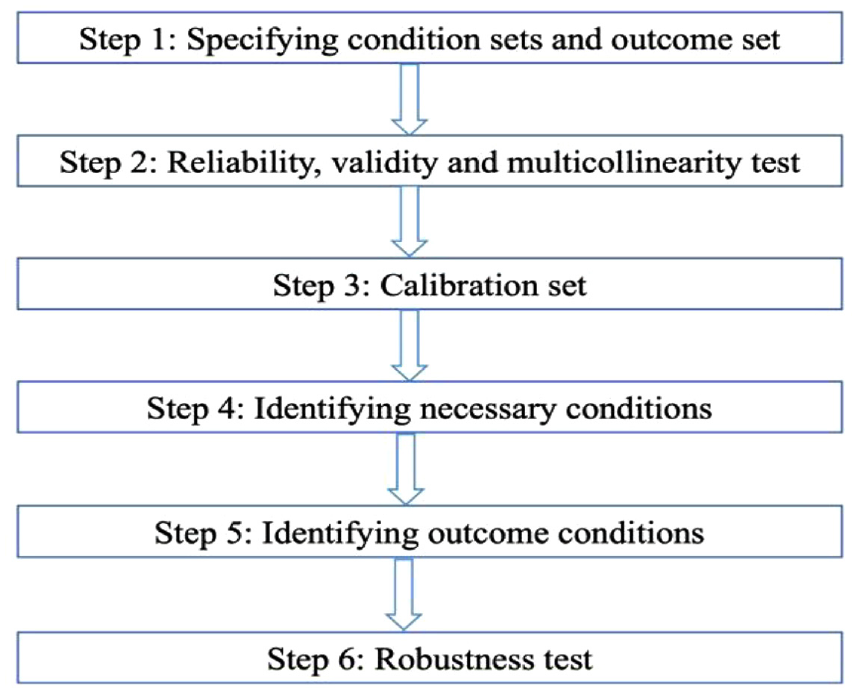
The process of fsQCA analysis.
Results
Reliability, Validity, Multicollinearity, and Common Method Variance Test
Before conducting fsQCA analysis, the researcher used SPSS 26.0 software to test the reliability, validity, multicollinearity and common method variance (CMV) issue of the collected data. Table 2 shows the results of the reliability, validity and multicollinearity test. All of the variables’ Cronbach’s alpha values are above 0.7, suggesting good internal consistency reliability (Karros, 1997). The composite reliability (CR) values exceed 0.7, showing sufficient convergent validity (Karros, 1997). The variance inflation factors value (VIF) of each condition is less than 2, indicating there is no multicollinearity problem among the conditions in the data (Liao & Valliant, 2012).
Assessment of the Construct Measurement.
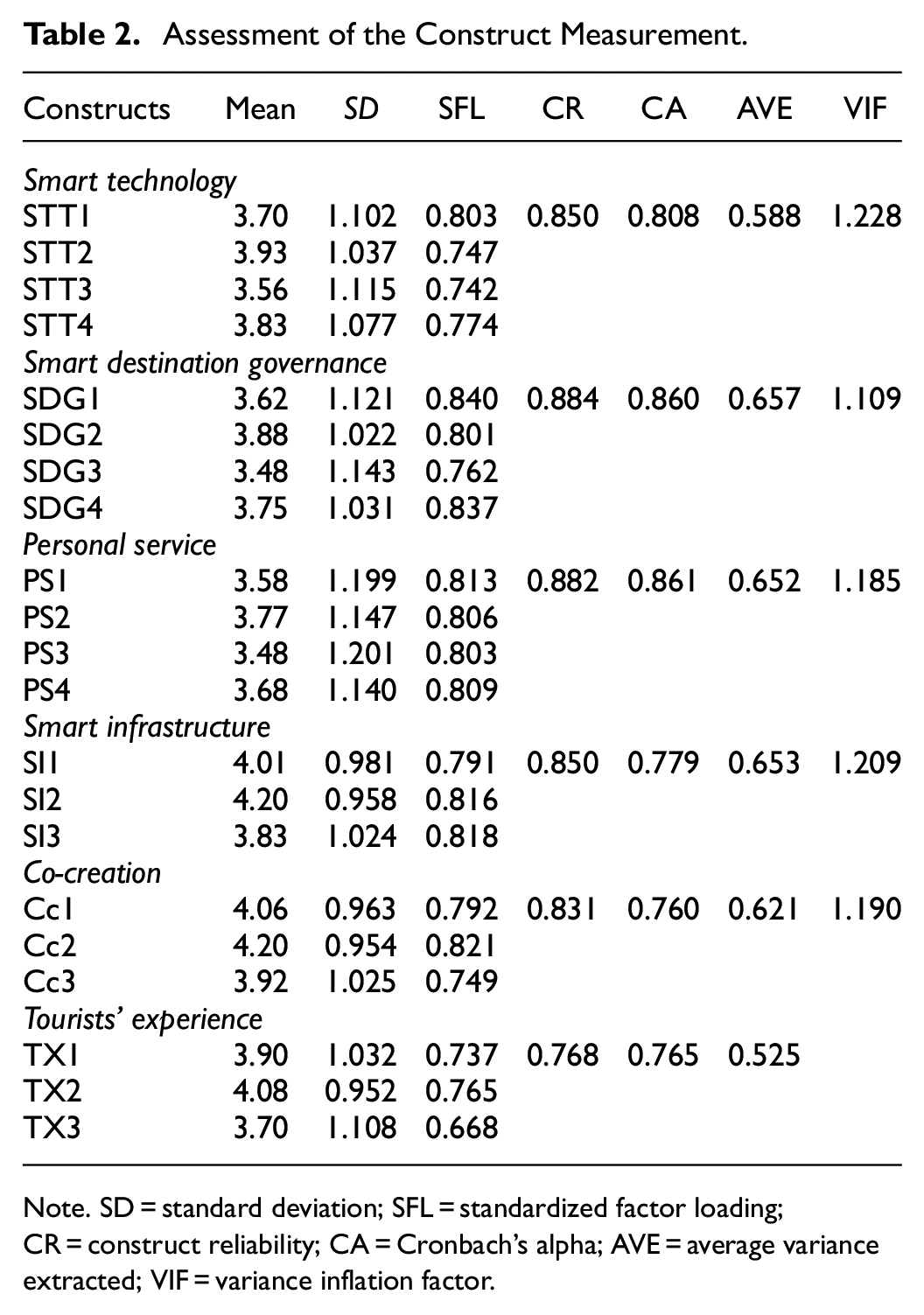
Note. SD = standard deviation; SFL = standardized factor loading; CR = construct reliability; CA = Cronbach’s alpha; AVE = average variance extracted; VIF = variance inflation factor.
What’s more, the research data was collected at the same time from the same participants, so this study need to consider the CMV issue. The researcher performed Harman’s single-factor analysis using SPSS 26.0 software to check the CMV value. Six factors with eigenvalues greater than 1.00 were extracted from the collected data. And the first factor explains 29.029% of all the variances, which is below the commonly used threshold of 50% (Podsakoff et al., 2003). The results demonstrate that CMV is not a serious problem in our research.
As shown in Table 2, the average variance extracted (AVE) values are all above 0.5, demonstrating good convergent validity. Furthermore, the square root values of AVEs for all constructs are higher than the inter-construct correlations, proving sufficient discriminant validity (Table 3).
Results of the Discriminant Validity Test.
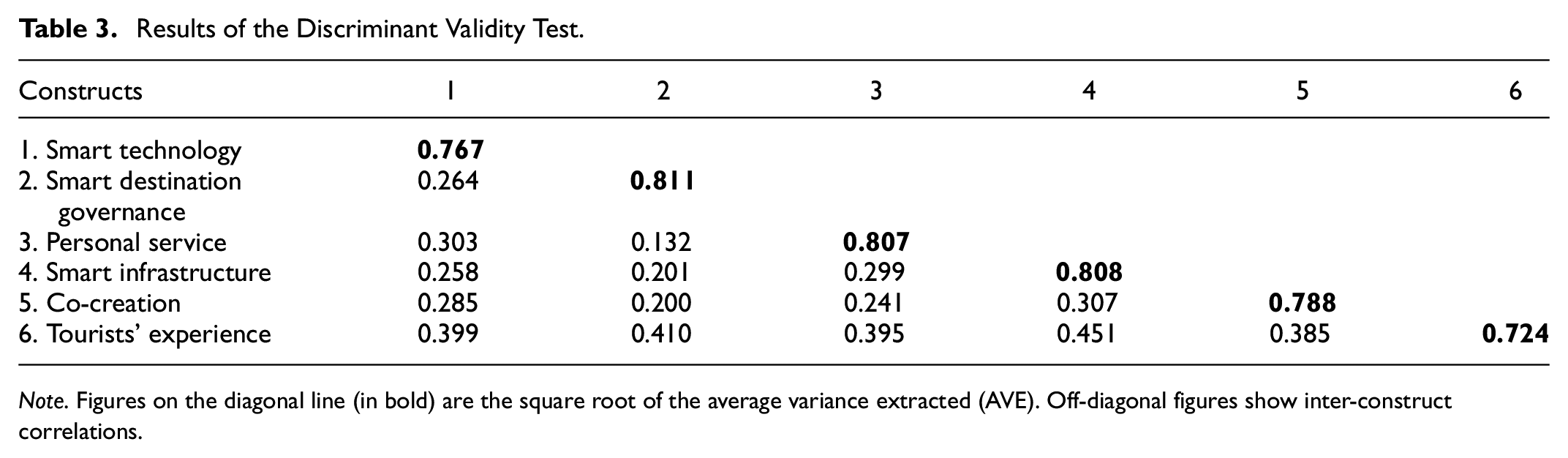
Note. Figures on the diagonal line (in bold) are the square root of the average variance extracted (AVE). Off-diagonal figures show inter-construct correlations.
Calibration
Calibration is the process of transforming unprocessed case data for conditions and the outcome into numerical set membership values (SMVs) that reflect each case’s membership in each condition and outcome set defined in the analysis. Calibration can be divided into direct method and indirect methods according to different data types (Pappas & Woodside, 2021). This study used Likert scale questionnaire data, so the direct method is more appropriate for the set calibration (Cragun et al., 2016). To utilize the direct method, researchers need to identify three qualitative anchors that align with the full-in membership, crossover point, and full-out membership of the fuzzy set, which are determined based on both theoretical and practical expertise (Fiss, 2011). Previous studies suggested that when using a 5-point Likert scale, the values of 5,3,1 can be used as the threshold (Pappas & Woodside, 2021). The researcher also checked the data and found that the answers from the respondents had relatively high values and the whole data presented a normal distribution. Therefore, this study used 5 and 1 to mark the full-in membership and full-out membership for all condition variables respectively. As for the crossover point, this study chose 3. Table 4 demonstrates the results of the calibration points of each condition variable. What’s more, the data with a value of 0.5 after calibration is processed as 0.501 to make sure that no cases are dropped during the analysis.
Calibration Values for Each Condition Variable.

Identifying Necessary Conditions
Following the calibration phase, a necessity analysis can be performed to find any conditions that may be necessary to achieve the desired outcome. According to Ragin (1999), for a condition to be considered a necessity, it must have a consistency value of 0.90 or higher. As can be seen in Table 5, the consistency values of smart infrastructure and co-creation are 0.913 and 0.918 respectively. Thereby, smart infrastructure and co-creation are necessary conditions for tourists’ positive experiences.
The Results of Necessary Conditions Analysis.

Sufficiency Analysis
After identifying the necessary conditions, the researcher performed sufficient analysis along with different configurations leading to tourists’ positive experiences. The fsQCA software provides three solutions: complex solution, parsimonious solution, and intermediate solution. This study focused on the intermediate solution and analyzed the core conditions in the configuration with the parsimonious solution. This study set the raw consistency threshold as 0.9, the proportional reduction inconsistency (PRI) threshold as 0.75 and the frequency thresholds as 2 (Douglas et al., 2020). A condition’s consistency value and coverage value are higher than 0.75 and 0.2, it can be deemed sufficient (Douglas et al., 2020).
As shown in Table 6, five configuration paths are reported to explain tourists’ positive experiences. The findings show that the five solutions account for a significant portion of the variance in tourists’ positive experiences, with an overall solution coverage of 0.922. Both the solution consistency and solution coverage values are above the threshold (>0.75), which meant the empirical analysis is effective. In addition, the overall solution consistency value is 0.895, which indicates that 89.5% of the tourists have positive experiences in all cases that follow the five configuration paths.
Configurations for Tourists’ Positive Experiences.

Note. ● = means the existence of core conditions.
• = means the existence of edge conditions.
⊗ = means the absence of edge conditions.
The space means that the condition can either appear or be absent.
To be more specific, configuration C1 demonstrates a combination of smart infrastructure and co-creation factors, in which both smart infrastructure and co-creation are core conditions. Configuration C2 indicates smart destination governance, co-creation and lack of personalized service can lead to tourists’ positive experiences. In this configuration, smart destination governance is the only core factor. Configuration C3 shows the combination of smart destination governance, smart technologies and smart infrastructure factors in which smart destination governance is the only core condition. Similarly, configuration C4 and C5 represent that the combination of smart destination governance, personalized service, smart infrastructure factors and the combination of smart destination governance, smart technologies, and co-creation factors respectively can arouse tourists’ positive experiences. In configurations C4 and C5, smart destination governance is the only core condition. Figure 3 shows the detailed configuration paths.

The results of fsQCA analysis.
Robustness Test
The evaluation of robustness involves assessing whether outcomes change substantively in reaction to minor changes in analysis inputs. The most common technique of assessing robustness is to modify the settings of pertinent parameters such as the calibration basis, the minimum case frequency, and consistency threshold value, and then examine the adjusted data again to compare the configuration changes and assess the reliability of the outcomes (White et al., 2021). Based on the previous studies (Wu et al., 2021; Xie & Wang, 2020), the researcher modified the values of the raw consistency threshold, frequency threshold, and PRI threshold to analyze the robustness. First, the researcher changed the raw consistency threshold value from 0.9 to 0.8 and kept the frequency threshold value, PRI threshold value unchanged. The researcher gained five configurations which were totally the same as the initial configurations. Then the researcher decreased the PRI threshold value from 0.75 to 0.7, and five configurations were presented among which configurations R6, R8, R9, and R11 were the same as the original configurations C1, C2, C4, and C5. While configuration R7 was a subset configuration of C3. Thirdly, the researcher kept the raw consistency threshold value unchanged and changed the frequency threshold value and PRI threshold value from 2 to 3 and 0.75 to 0.6 respectively. The researcher obtained four configurations of which R11, R13, and R14 were consistent with C1, C4, and C5. The configuration R12 was a subset configuration of C3. The results showed the findings of this study were still robust (Table 7).
The Results of the Robustness Test.
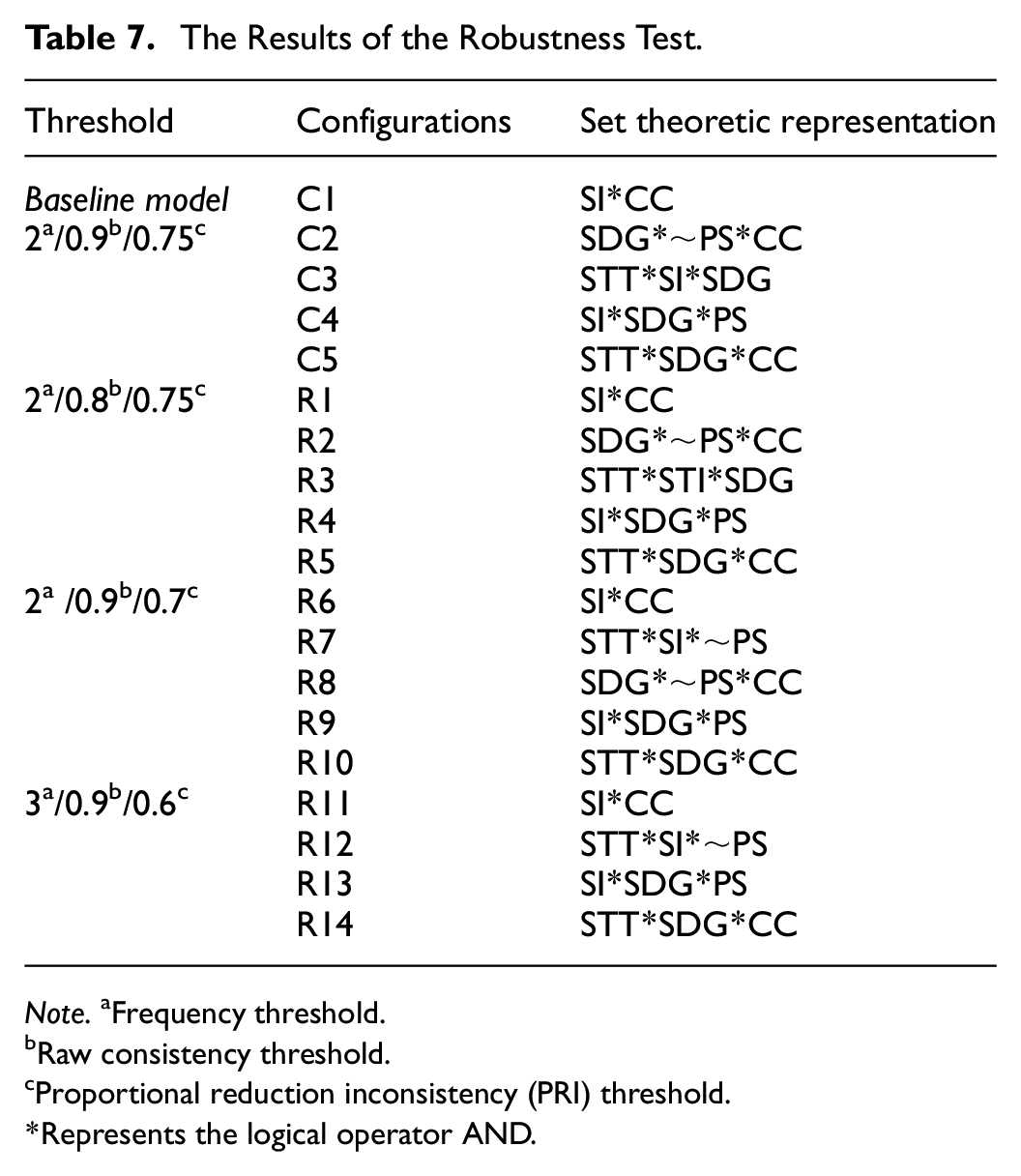
Note. aFrequency threshold.
Raw consistency threshold.
Proportional reduction inconsistency (PRI) threshold.
Represents the logical operator AND.
Discussions
The Five Configuration Paths
Based on the previous studies and complexity theory, this study explored the different configuration paths of determinants of STDs leading to tourists’ positive experiences by performing fsQCA.
The analysis of necessary conditions reveals that smart infrastructure and co-creation are two necessary conditions leading to tourists’ positive experiences. The results correspond to Dabeedooal et al.’s (2019) finding that smart infrastructure is at the heart of smart tourism, where the Internet of Things combined with smart devices can improve the entire tourists’ experiences. Similarly, the findings respond to Gretzel et al.’s (2018) research that smart tourism infrastructure can enhance the STD’s resilience and satisfy tourists’ overall experiences. Furthermore, the findings are also identical to Buzova et al.’s (2022) and Melis et al.’s (2023) research that value co-creation within tourism is an important factor affecting tourists’ experiences.
Sufficiency analysis presents five different configurations leading to tourists’ positive experiences in STDs. Although there are some differences existing in the five configuration paths, smart destination governance occurs in the four configurations, and it is also the core condition in these configurations. This implies that tourists’ positive experiences can be generated when STDs possess high-level smart destination governance in the five Chinese destinations. This finding aligns with Mandić and Kennell’s (2021) research that smart governance plays an important role in SDTs for enhancing tourists’ experiences as well as improving the tourism service of destination management organizations. Meanwhile, Zuo et al.’s (2017) research suggests that governance affects not only the environmental, political, social, and economic aspects of tourism development but also influences the service and products related to tourists’ experiences. What’s more, the results of the sufficient analysis demonstrate most of the elements in sufficient conditions are positive, and the absence of the condition (personalized service) is only present in the combination of smart destination governance and co-creation (configuration C2). According to Ranjan and Read (2016), co-production is an important aspect of co-creation value, meaning the collaboration of tourists and STDs, as well as the shared involvement in the process of developing a good or service. Personalized service can be provided through the process and in some cases co-production overlaps with personalized service.
The results of the analysis of configuration paths also resonate with the three propositions this study put forward in Section “Theoretical Background and Research Propositions”. First, no single condition can lead to tourists’ positive experiences, but the combination of different causal conditions can kick in. Configuration C1 combines two core conditions while configuration C2 combines one core condition with one edge condition and the absence of an edge condition. Configurations C3, C4, and C5 all combine one core condition and two edge conditions. This implies that when one of the five causal conditions acts as a core condition, the other casual conditions can be absent or inconsequent as edge conditions to arouse tourists’ positive experiences. Secondly, the configuration results show that the five different configuration paths can equally arouse tourists’ positive experiences. Different causal conditions combine with each other and form different configuration paths affecting tourists’ positive experiences. To be more specific, this study can ascribe the five configurations to two categories. The first category is the “smart infrastructure and co-creation” double path. Configuration C1 belongs to this path in which smart infrastructure and co-creation are both core causal conditions while other conditions are edge conditions or absent. The other category is the “smart destination governance” single path in which smart destination governance is the only core condition combined with other conditions. Configurations C2 to C5 are typical “smart destination governance” paths.
Thirdly, this study finds that smart destination governance plays an important role in arousing tourists’ positive experiences as smart destination governance acts as the core condition in four out of five configurations. When smart destination governance functions as a core condition, no matter whether other causal conditions can be an edge condition or absent, tourists’ positive experiences can be aroused (configuration C2–C5). Alternatively, tourists’ positive experiences can also be aroused when smart infrastructure and co-creation act as core conditions, regardless of the lack of other causal conditions (configuration C1).
In sum, STDs involve multiple interrelated factors that can influence tourists’ overall experiences. This study has identified five paths that contribute to tourists’ positive experiences, providing a more detailed understanding of their complexity. Instead of relying on linear cause-and-effect relationships, the fsQCA method explores complex causal configurations. By examining multiple dimensions of tourists’ experiences simultaneously, this study considers the interplay and synergistic effects of different influencing factors in STDs. This holistic approach helps to identify combinations of factors that result in tourists’ positive experiences, giving us a comprehensive view.
Implications
Theoretical Implications
This study contributes dual theoretical implications to the current literature. First, this study utilized the fsQCA method to investigate the determinants of STDs on tourists’ experiences and formulates the mechanism of the configurational effects of different determinants. Although previous studies have already explored various determinants in STDs influencing tourists’ experiences, the most common methods used in previous research were linear regression and structural equation models; these statistical methods could only explore the single linear and symmetric relationship between the determinants of STDs and tourists’ experiences. Most of the previous research was conducted the research from an isolated view and could not gain a broad view of the influencing factors of tourists’ experiences. However, building on the context of complexity theory, this study deeply revealed five causal configuration paths leading to tourists’ positive experiences, which are formed by six different determinants. The application of complexity theory to investigate determinants of STDs affecting tourists’ positive experiences adds theoretical perspective and innovative methodology to the current literature. Moreover, the results of the five different configuration paths extend the depth of understanding of tourists’ experiences and further provide theoretical background for researchers to explore tourists’ overall experiences in STDs.
Secondly, this study identified two necessary conditions through the process of fsQCA analysis. Smart infrastructure and co-creation have been discussed in previous studies as influencing factors that prominently impact tourists’ experiences in STDs. However, previous researchers mainly discussed these two factors from a single perspective. This research confirmed that smart infrastructure and co-creation could combine other causal conditions in STDs to form different configuration paths to impact tourists’ positive experiences. The findings expand the current smart tourism theories on tourists’ experiences and offer researchers a deep insight into the mechanism of effects on tourists’ positive experiences in STDs.
Managerial Implications
First, the results of the study provide some practical implications for policymakers for smart tourism. The six causal conditions form different configuration paths leading to tourists’ positive experiences. The five configuration paths indicate that the influencing factors in STDs are diverse and complex. The results of fsQCA provide a holistic perspective for policymakers to design and develop policies for STDs. Different STDs have distinctive characteristics and advantages, so each STD can make its own policy to attract tourists and enhance their experiences. Policymakers can utilize these different configurations to make some policies to promote the development and competitiveness of STDs. Meanwhile, the configuration paths of different determinants may indicate the development trend of tourists’ preferences which can serve as the foundation for making smart tourism policies. Tourists’ experiences are changeable and palpable which is not easy to understand, so these different configuration paths are good references for policymakers to make or change smart tourism policies.
Secondly, tourists’ experiences are core elements for STDs to be popular and successful. Different destination management organizations (DMOs) can refer to the five configuration paths and promote their service and management for tourists. DMOs can gain a holistic understanding of the different configurations of causal conditions that lead to tourists’ positive experiences. By understanding the interrelationships and synergies among various causal conditions, DMOs can develop more comprehensive strategies and interventions to improve tourists’ experiences. It helps DMOs move beyond isolated factors and consider different configuration paths. Furthermore, the fsQCA analysis helps identify the combinations of causal conditions that have the most significant impact on tourists’ positive experiences. It can help DMOs use their resources more efficiently and effectively. By focusing on the key configurations, DMOs can prioritize their investments, allocate budgets, and direct their efforts toward the factors that have the most significant impact on tourists’ positive experiences. In addition, DMOs can develop customized strategies for their STDs by using various configuration paths. This allows DMOs to tailor their approach to the unique context and characteristics of each STD, resulting in more effective initiatives for enhancing tourists’ positive experiences. Finally, DMOs can differentiate their destination from others by understanding and leveraging the key configurations that generate tourists’ positive experiences. A reputation for providing exceptional experiences can attract more tourists, enhance destination competitiveness, and contribute to sustainable tourism growth.
Conclusion
This study used the fsQCA method to explore the different configuration paths that can arouse tourists’ positive experiences in five Chinese STDs. While previous studies have shown that smart tourism technologies, smart destination governance, personalized service, smart infrastructure, and co-creation can have a positive impact on tourists’ experiences, the fsQCA results suggest that smart infrastructure and co-creation are two necessary conditions leading to tourists’ positive experiences. The study identified five configuration paths that lead to tourists’ positive experiences, which can be further categorized into two models: the “smart infrastructure and co-creation” model and the “smart destination governance” model. This study demonstrated that the influence of STDs on tourists’ positive experiences is diverse and nonlinear. Different configuration paths can positively impact tourists’ experiences in STDs. This study provides a deep insight into the impact of various kinds of factors in STDs leading to tourists’ positive experiences, which has not been clearly identified by previous studies. Moreover, this study discovers a causal system that may affect tourists’ positive experiences rather than a single influencing factor, thus revealing the mechanism of STDs’ impact on tourists’ positive experiences.
This study has several limitations. First, this study investigated and identified six causal conditions to form different configurations. The number of causal conditions is relatively small. In the future, more causal conditions of STDs can be explored from the perspective of configuration, and it may obtain some new configurations of determinants of STDs. For instance, such conditions as privacy and safety, etc. can be considered when performing configuration analysis. Furthermore, this study performed surveys in five Chinese STDs which are at the top level of STDs in China. These five STDs may have some gaps compared with other countries’ STDs, so the researchers don’t know if the configuration paths are effective in other countries. More studies should be performed to validate the proposed configuration paths. In the future, research sites can be expanded to more countries and even researchers can conduct some comparative research on different STDs in different countries.
Supplemental Material
sj-docx-1-sgo-10.1177_21582440241248226 – Supplemental material for Configurational Paths to Arouse Tourists’ Positive Experiences in Smart Tourism Destinations: A fsQCA Approach
Supplemental material, sj-docx-1-sgo-10.1177_21582440241248226 for Configurational Paths to Arouse Tourists’ Positive Experiences in Smart Tourism Destinations: A fsQCA Approach by Junjie Gao, Dandan Xu and Younghwan Pan in SAGE Open
Footnotes
Appendix
Five Chinese Smart Tourism Destinations.

| No. | Name of the SDTs | City | Location |
|---|---|---|---|
| 1 | Palace Museum | Beijing | North China |
| 2 | Niushou Mountain Cultural Tourism Zone | Nanjing | Southeast China |
| 3 | Mount Wuyi Scenic Area | Nanping | Southeast China |
| 4 | Lijiang | Lijiang | Southwest China |
| 5 | Huangguoshu Scenic Area | Anshun | Southwest China |
Acknowledgements
The authors would like to thank all the participants in this study for their time and willingness to share their experiences and feelings.
Author Contributions
Conceptualization, J.G. and Y.P.; methodology, J.G.; software, D.X.; validation, J.G.; formal analysis, J.G. and D.X.; investigation, J.G.; data curation, D.X.; writing—original draft preparation, J.G.; writing—review and editing, J.G.; visualization, J.G.; supervision, Y.P. All authors have read and agreed to the published version of the manuscript.
Declaration of Conflicting Interests
The author(s) declared no potential conflicts of interest with respect to the research, authorship, and/or publication of this article.
Funding
The author(s) disclosed receipt of the following financial support for the research, authorship, and/or publication of this article: This work was partly supported by Research Projects of Philosophy and Social Sciences in Universities of Jiangsu Province in 2021 [Grant Number 2021SJA2367].
Institutional Review Board Statement
Not applicable.

Supplemental Material
Supplemental material for this article is available online.
References
Supplementary Material
Please find the following supplemental material available below.
For Open Access articles published under a Creative Commons License, all supplemental material carries the same license as the article it is associated with.
For non-Open Access articles published, all supplemental material carries a non-exclusive license, and permission requests for re-use of supplemental material or any part of supplemental material shall be sent directly to the copyright owner as specified in the copyright notice associated with the article.
