




Abstract
The aim of this conceptual article is to propose a comprehensive model that explains the impact of different relational variables on tourists’ behavioral intention (i.e., revisit intention and recommendation intention) and the relationship between those relational variables. Based on the existing studies and findings, the proposed model is strongly related with destination personality, self-congruity as well as tourists’ emotional experience and behavioral intention. Particularly, self-congruity performed as a potential mediator between destination personality and behavioral intention; meanwhile, the model incorporated tourists’ emotional experience as a potential moderator between self-congruity and behavioral intention. This conceptual article makes significant contributions to tourism literature by proposing an integrated model. It serves as a reference for tourism marketing practitioners who can derive insights into the potential economic advantages such as tourists’ loyalty and tourists’ behavioral benefits in the form of revisit intention and recommendation intention which can result from the effective implementation of marketing strategies.
Introduction
Tourists’ experiences are essential in tourism and hospitality industry. As competition is getting more intensified, there is an increasing recognition that destinations must provide their consumers with unforgettable tourism experiences so that their competitiveness can be strengthened (Neuhofer et al., 2012, 2015). When consumers opt for a traveling destination, they often recollect prior experiences. Internal information search is the first step during tourists’ information search process (J. H. Kim, 2014). Recently, behavioral intention has attracted the attention of researchers and practitioners. Behavioral intention is the best predictor of future behavior and represents a new benchmark. When tourists’ positive postpurchase intentions for the destination are high, they willingly revisit the place and recommend family/friends/others to travel to the destination (Bowen & Shoemaker, 2003). In the current conceptual article, the behavioral intention of tourists is operationalized based on two dimensions which are intention to revisit and intention to recommend (Chen & Tsai, 2007; Han et al., 2020; Sthapit et al., 2019). The investigation of the antecedence of tourists’ behavior intention is important to tourism industry because researchers argue that attracting repeated visitation is a cost-effective and desirable market segment for destination marketing organizations (DMOs; Zhang et al., 2014). Tourists’ favorable behavioral intention is helpful to make relevant strategies for destinations in achieving competitive advantages in the long term (Almeida-Santana & Moreno-Gil, 2018). Therefore, it is necessary to further analyze phenomenon of tourists’ behavior intention.
To predict tourists’ behavioral intention, a coherent body of research has recognized the construct of revisit intention and recommendation intention which have been empirically tested in a significant number of theoretical models. As a result, this has led to several modeling antecedents, which include destination personality (Chen & Phou, 2013; Ekinci & Hosany, 2006; Kiliç & Sop, 2012; N. Su & Reynolds, 2017; Yang, Isa, & Ramayah, 2019), self-congruity (Edina & Beykan, 2016; Usakli & Baloglu, 2011; Yang et al., 2020), and behavior intention (intention to revisit and intention to recommend; Apostolopoulou & Papadimitriou, 2015; S. Huang et al., 2015; Z. Liu et al., 2019; Usakli & Baloglu, 2011) remaining as a widespread research agenda in tourism. Most of these studies have successfully validated theory of self-congruity by providing empirical evidence in a variety of destinations studies (Z. Liu et al., 2019; N. Su & Reynolds, 2017; Usakli & Baloglu, 2011; Yang et al., 2020). From the theoretical point of view, Sirgy (1982) argued that theory of self-congruity is based on the multidimensional nature of actual self-congruity, ideal self-congruity, social self-congruity, and ideal social self-congruity, which are frequently associated with the explanation and prediction of consumers’ behavioral intention. Tourists often have intention to visit a destination if the destination personality is congruent with their own personality (Litvin & Goh, 2002; Sirgy & Su, 2000). Nevertheless, other scholars argued that there is a need in conducting further studies with the aim of developing and testing global or integrative models that have been developed in recent years (Chen & Phou, 2013; Elliot et al., 2011; Zhang et al., 2014).
However, not all travel experiences can be translated into memorable tourism experiences and lead to their behavioral response to destination (Zhang et al., 2018). Tourists’ experience with their emotions might not be stable during the trip. Their emotions can vary in terms of the intensity on a day-to-day basis during their trip (Nawijn et al., 2013). Several scholars identified that emotion is ubiquitous in tourism due to its significant role in defining memorable traveling experience, and it is regarded as the most relevant and influential component in tourism industry (Aho, 2001; Mitas et al., 2012; Tung & Ritchie, 2011). Kwortnik and Ross (2007) concluded that tourists are able to experience a variety of positive emotions, such as comfort and pleasure in the planning process of their vacations. Prior studies acknowledge the importance of studying emotions (Hosany & Gilbert, 2010; J. Lee, 2014; Nawijn et al., 2013) and argue that emotion is the central variable to predict tourist behavior intention (Prayag et al., 2013). For instance, when tourists’ emotional experiences are positive, they might return to destination or recommend destination. To understand the complexity of emotion among tourists, Hosany and Gilbert (2010) develop the Destination Emotion Scale (DES) such as joy, love, and positive surprise of tourists as the main components of emotion. However, further studies are still needed to incorporate DES into conceptual framework which can promote holistic understandings of tourist experience (Hosany et al., 2015).
While existing studies theorized interrelationship between destination personality, self-congruity, and behavioral intention (i.e., Chua et al., 2019; W. Kim & Malek, 2017; Z. Liu et al., 2019; Sop & Kozak, 2019; N. Su & Reynolds, 2017; Yang et al., 2020), incorporating tourists’ emotional experience in their conceptualization has been largely omitted. The lack of examining tourists’ emotional experience leads to the failure of generating comprehensive understandings about tourists’ behavioral intention. To fill this gap, the current article proposes an integrated conceptual framework among destination personality, self-congruity, and behavior intention by incorporating the construct of tourists’ emotional experience.
Taken together, first, the aim of this article is to develop a conceptual framework by proposing the direct and indirect relationship between destination personality, self-congruity, and behavioral intention to revisit and intention to recommend. Second, the focus is on the synergistic impact when tourists’ emotional experiences (i.e., love, joy and positive surprise) are integrated with self-congruity to propose moderating effect which leads to intention to revisit and recommend. This conceptual model is drawn on the basis of self-congruity theory and Plutchik’(1980) typology. Moreover, this conceptual article is possessed of both academic and practical value. Academically, the current article draws attention to complex associations between destination personality, self-congruity, and behavior intention, incorporating a pivotal construct that has yet been explored in the related literature, namely tourists’ emotional experience. From a practical viewpoint, our proposed conceptual framework can help tourism industry, policy makers, and DMOs to make informed decisions when it comes to implementing effective marketing strategies.
Literature Review
Destination Personality
Destination personality is described as brand personality in the context of tourism literature. Moreover, the Brand Personality Scale (BPS) has been routinely applied in numerous other contexts, including tourism at different travel destinations, especially in large urban regions (e.g., Las Vegas, New York, Miami, Paris). In this case, destination personality can be viewed as brands with tangible and intangible attributes that offer various functional and symbolic benefits (Ekinci & Hosany, 2006; Morgan et al., 2002). In regard to this matter, a considerable amount of scholarly studies have been conducted to study destination personality. Majority of the studies that utilized Aaker’s (1997) BPS further stressed brand personality with measurement as a starting point by either confirming its applicability to destinations or providing related alternative measurement (Ekinci & Hosany, 2006; Forristal & Lehto, 2009; S. Kim & Lehto, 2013; H. J. Lee & Suh, 2011; Murphy et al., 2007a, 2007b; Opoku & Hinson, 2006; Usakli & Baloglu, 2011). More importantly, it should be noted that different approaches have led various qualitative techniques to be employed with the aim of capturing the personality of destinations by several scholars (e.g., Prayag, 2007; Vaidya et al., 2009).
Furthermore, it is crucial to realize that some of the dimensions in Aaker’s BPS failed to be captured in certain destination contexts, despite the attempts of academics and practitioners in identifying the salient personality characteristics in international tourism destinations. Ekinci and Hosany (2006) were the first ones who managed to examine the applicability and validity of BPS by applying the brand personality framework developed by Aaker (1997) in the context of tourism destinations. The findings of the study established that destinations have personalities that reflect several characteristics, namely, sincerity, excitement, and conviviality. In relation to effort, d’Astous and Boujbel (2007) proposed a Destination Personality Scale (DPS) that was specifically designed for certain countries which is incorporated with six dimensions, namely, agreeableness, wickedness, snobbism, assiduousness, conformity, and unobtrusiveness. A recent study on destination personality conducted by Xie and Lee (2013) in Beijing, China, revealed four salient dimensions, namely, competency, excitement, sophistication, and ruggedness. In regard to this matter, it is surprising that sincerity failed to emerge as one of the most significant personality dimensions captured in previous research. However, it should be noted that Chinese tends to use different words and descriptions in expressing their understanding of sincerity (Xie & Lee, 2013). In addition, past research on destination personality conducted in Istanbul managed to capture only two dimensions of DPS which are sincerity and competence (Sahin & Baloglu, 2011). In conjunction with the above, N. Su and Reynolds (2017) discovered that only the DPS dimension of sophistication was omitted, whereas the other four dimensions are deemed applicable in hospitality industry in the United States. More recently, increasing literature has witnessed the application of destination personality to alternative tourism contexts such as spa tourism (Rutelione et al., 2018); Islamic historical tourism (Khazaei Pool et al., 2018); tourism real estate products (Z. Liu et al., 2019); and sky lounge (Chua et al., 2019). These studies concluded that the antecedence of behavior intention is the destination personality.
Self-Concept and Self-Congruity
Self-concept has been widely regarded as a useful concept in understanding and explaining consumers’ behavior in regard to their choice. Moreover, self-concept suggests that consumers tend to prefer products or brands that can adhere to how they see or would like to see themselves (Landon, 1974; Malhotra, 1988; Sirgy, 1982). In marketing literature, several scholars focused on how brand personality enables consumers to express themselves (Belk, 1988; Birdwell, 1968; Dolich, 1969; Malhotra, 1988). In general, self-concept (also referred to as self-image) has been defined as “the totality of individual’s thoughts and feelings having reference to himself as an object” (Rosenberg, 1979, p. 7).
A considerable amount of earlier studies conceptualized self-concept as a unidimensional construct by treating it as the actual self-concept, whereas later scholars conceptualized self-concept based on two components, namely, actual and ideal self-concepts (Malhotra, 1988). The theory of self-congruity is a natural extension of the theory of self-concept (Usakli & Baloglu, 2011). In consumer research, Sirgy (1982) explains that self-congruity theory reinforces the idea that consumer perceptions, or leanings, in favor of certain items are achieved by means of a match between the product idea/image and the consumer’s self-perception. The greater the congruency between product/image and consumers’ self-concept, the higher the intention to purchase the product/service. Sirgy (1982) further made some progress beyond the duality dimension by developing a multidimensional construct of self-congruity consisting four major components, namely, actual self-congruity, ideal self-congruity, social self-congruity, and ideal social self-congruity known as the self-congruity multidimensional construct. Specifically, the actual self-congruity describes how an individual actually perceives him or herself, whereas the ideal self-congruity indicates how an individual would like to perceive him or herself. On another note, social self-congruity refers to how an individual thinks others perceive him or her, whereas ideal social self-congruity reflects the approach whereby an individual desires to be perceived by others (Sirgy, 1982). However, tourism scholars indicate that self-congruity is perceived as a multidimensional construct that consists of actual self-congruity and ideal self-congruity (Chua et al., 2019). In tourism study, Usakli and Baloglu (2011) noted that the multiple dimensions of self-congruity which have received the most theoretical consideration and empirical support are actual self-congruity and ideal self-congruity. However, recent tourism studies suggested that self-congruity can be viewed as the unidimensional construct to predict behavior intention (W. Kim & Malek, 2017; Z. Liu et al., 2019; Matzler et al., 2016). To reduce complexity, the benefit of selecting unidimensional construct is that the number of hypotheses to be estimated is reduced with no influence on the accuracy of measurement (Koufteros et al., 2009). Therefore, the current conceptual article adopts self-congruity as unidimensional construct.
Emotional Experience
According to the academic literature, a considerable amount of studies has attempted to provide a comprehensive understanding on the role of emotion in the context of tourism and hospitality. In regard to this matter, it is crucial to understand that emotions tend to influence various stages of the travel experience (Bigné et al., 2005; Ene & Schofield, 2011; Prayag et al., 2013). At the pretrip stage, emotions play a fundamental role in encouraging tourists’ motivation (Gnoth, 1997; Goossens, 2000) as well as the process of decision-making in selecting travel destination (Chuang, 2007). Meanwhile, emotions can vary in terms of the intensity on a day-to-day basis during the trip (Nawijn et al., 2013). Finally, emotions tend to affect destination loyalty (revisit destination and recommend destination; Bigné et al., 2005; Jang & Namkung, 2009; Prayag et al., 2013; L. Su & Hsu, 2013; Yuksel & Yuksel, 2007) at the postvisit stage considering that emotions are regarded as a segmentation variable for leisure and tourism services (Bigné & Andreu, 2004). Existing studies adopted the construct of tourists’ emotional experience with other behavioral constructs such as destination attachment (Tlili & Amara, 2016); destination features (Rashid, 2013); and destination satisfaction (Prayag et al., 2013). These studies confirm that tourists’ emotional experience can be independent variables and mediator variables. Findings of their study contribute to implementations of marketing strategies (Prayag et al., 2013; Rashid, 2013; Tlili & Amara, 2016).
In relation to tourism purchase intention, a few scholars have investigated the impact of emotions on purchase decisions of tourism and leisure services (e.g., Chuang, 2007; Kwortnik & Ross, 2007). In addition, Kwortnik and Ross (2007) found tourists are able to experience a variety of positive emotions, such as comfort and pleasure in the planning process of their vacations. However, it is crucial to realize that empirical evidence on the role of emotion in the context of tourists’ destination remains sparse. In particular, up to the present time, there is a very limited number of studies which empirically investigated the dimensions of tourists’ emotional experience responses toward tourism destination, despite the fact that emotional responses of tourists toward their immediate environment have been recognized (Machleit & Eroglu, 2000) expect for studies conducted by Hosany et al. (2017), Prayag et al. (2017, 2013), and L. Su and Hsu (2013). Apart from that, tourists’ destinations are rich in terms of experiential attributes as well as its greater potential in evoking emotional response among the tourists (Otto & Ritchie, 1996).
Theoretical Background
In their book, Pine and Gilmore (1999) stress that the world economy is changing from service economy into experience economy. Particularly, this notion has triggered consumers’ awareness to experience. As a consequence, a new concept known as tourist experience is developed. Previous studies have explored the concept of tourist experience in multiple areas, such anthropology, psychology, phenomenology, and consumer behavior. Examining tourist experience is gaining importance as multidisciplinary concept. Tourist experience is highly correlated to their perceived evaluation of their visit according to their desires. Sirgy (1982) further adds that the theory of self-congruity confirms that consumers’ attitude toward a product/brand is influenced by the matching of the product user image with consumers’ self-concepts. A large body of literature focused on the congruence between consumer’s self-congruity and product/brand image with the aim of predicting different facets of consumer behavior, such as product/brand attitude, product/brand use, purchase intention, behavior, and loyalty (Sirgy, 1982, 1985; Sirgy et al., 1991, 1997). On a similar note, other studies also support that the theory of self-congruity is able to predict behavioral intention (Mannetti et al., 2004), brand loyalty (Kressmann et al., 2006), and brand preference (Aaker, 1999).
Moreover, majority of the studies generalized the theoretical model that is linked with product brand, self-congruity, and behavioral intention. In particular, it must be understood that self-congruity acts as the mediator between product brand and behavioral intention which has been proven by previous tourism scholars who examined self-image congruence construct with the aim of explaining tourists’ behaviors (Litvin et al., 2001; Litvin & Goh, 2002; Sirgy & Su, 2000; Todd, 2001). As previously mentioned, most of the recent tourism studies have utilized self-congruity as the mediator between destination personality and behavioral intention to revisit and recommend (Z. Huang et al., 2017; Kiliç & Sop, 2012; Rutelione et al., 2018; N. Su & Reynolds, 2017; Usakli & Baloglu, 2011).
Emotions are described as affective states that are further characterized by episodes of intense feelings associated with a specific referent (such as a person, object, or event) as well as instigate specific response behaviors (Cohen & Areni, 1991). Plutchik (1980) in psychology literature adopted psychoevolutionary theory on the basis of eight basic emotional dimensions, which include fear, anger, joy, sadness, acceptance, disgust, expectancy (anticipation), and surprise. Furthermore, emotions based on dimensional approaches are conceptualized by applying a few dimensions such as positive and negative (Watson et al., 1988), or pleasure and arousal (Russell, 1980; Walsh et al., 2011). However, it must be understood that there is no difference between particular positive (joy, happiness, and excitement) and negative (fear, regret, and disappointment) emotions under the dimensional approach.
On a similar note, Plutchik (1980) adopted psychoevolutionary theory in his study which revealed that primary emotions have the main adaptive function considering the fact that human emotions can exist with various degrees of intensity. Meanwhile, human emotions serve as a form of behavioral adaptation toward survival and other significant life events (Kulviwat et al., 2016). However, the wide application of Plutchik’(1980) typology with eight primary emotions has been questioned in terms of the applicability, reliability, and validity of psychological emotion scales in consumer research (Laros & Steenkamp, 2005; Schoefer & Diamantopoulos, 2008). In regard to this matter, a single study further highlighted that the scales of emotion from psychological discipline with specific context have often failed to capture the richness of tourists as well as the characteristics of destinations. Apart from that, it is crucial to note that existing emotion scales tend to ignore the complexity of positive emotions (Fredrickson, 1998) that are commonly related to travel experiences (Nawijn et al., 2013).
Overall, the relation between the theory of self-congruity and Plutchik’(1980) typology will enable the assessment of the interrelationship between these variables, which then leads to the development of the integrated theoretical model. In addition, it is crucial to note that DES dimensions are theoretically consistent with the conceptualization of emotion in marketing (Batra et al., 2012) as well as tourism research (e.g., Crotts & Magnini, 2011; Faullant et al., 2011; J. Lee & Kyle, 2013) from the perspectives of Plutchik’(1980) typology. In regard to this matter, J. Lee and Kyle (2013) identified the emotional experiences (joy, love, and positive surprise) of tourists as the main components of emotion. However, the incorporation of the variable (tourists’ emotional experience) from the perspectives of theory of self-congruity will further support and strengthen the relationship between self-congruity and behavioral intention. Hence, the current article attempts to respond to the call for research by Hosany et al. (2015) through the incorporation of DES into the conceptual framework that promotes holistic understanding of tourists’ experiences. Apart from that, this article emphasizes the importance of tourists’ emotional experience by responding to Sirgy’s (2018) call for research in multidisciplinary settings to extend the body of knowledge in the tourism research.
Destination Personality, Self-Congruity, and Behavioral Intention
The basic theoretical assumption of self-congruity theory describes the intention of consumers to select products or brands that correspond to one’s self-concept. For instance, consumer tends to select a brand that represents the brand personality which reflects themselves. Previous marketing scholars have proven that greater perceived self-concept of brand personality is more likely to cause the brand to be perceived as consistent with the consumers’ self-concept (Ekinci & Riley, 2003; Klipfel et al., 2014). Over the last decade, findings of tourism research indicated that better congruence between self-concept and perceived destination personality may lead to higher probability for the destination to be revisited and recommended (Chen & Phou, 2013; C. R. Liu et al., 2012). In hospitality and tourism context, several studies tested the model on destination personality and self-congruity. These studies agree that destination personality strongly affects self-congruity (Z. Huang et al., 2017; Sop & Kozak, 2019; N. Su & Reynolds, 2017). Therefore, based on previous empirical studies, the proposition is made as follows:
On another note, modeling on tourists’ behavioral intention remains a substantial topic in marketing and tourism research. Chen and Chen (2010) emphasized that favorable behavioral intention represents behavioral loyalty. As a result, prior scholars (e.g., Cronin et al., 2000; Ladhari, 2007; Soscia, 2007; Zeithaml et al., 1996) chose to operationalize tourists’ behavioral intention based on two dimensions, namely, intention to revisit and intention to recommend. Das (2014) found that the antecedence of consumer behavior loyalty is the construct of self-congruity. The level of purchasing intention depends on how consumers perceive their self-concept. Therefore, self-congruity is known to have a direct effect on behavioral intention. Particularly, a relatively small number of tourism studies managed to confirm the relationship between self-congruity and intention to revisit (Kiliç & Sop, 2012; Yang et al., 2020) as well as intention to recommend (W. Kim & Malek, 2017; Rutelione et al., 2018). Others also established the relationship between self-congruity and tourist loyalty (i.e., revisit intention and recommend intention; Sop & Kozak, 2019). Accordingly, these empirical perspectives inform the following propositions:
Furthermore, a model was developed on the basis of theoretical assumptions with the aim of investigating the mediating impact of self-congruity on the relationship between brand personality and consumer behavior. The original model was proposed by Sirgy and Su (2000) who stated that tourists will have a favorable attitude toward that destination if the destination personality matches their own personality, which leads to higher intention to visit destination. To confirm these statements, tourism scholars also demonstrated the empirical support for the role of self-congruity as a mediator between destination personality and behavioral intention to revisit and recommend (Z. Liu et al., 2019; N. Su & Reynolds, 2017; Usakli & Baloglu, 2011; Yang et al., 2020). More importantly, modeling also indicated that destination personality has an indirect effect on the intention to revisit as well as intention to recommend through self-congruity. Therefore, the following propositions managed to be derived:
Moderating Role of Tourists’ Emotional Experience
According to Gretzel et al. (2006), it is imperative for destination marketers to be more responsible in understanding the symbolic value as well as experiential qualities of tourism offerings with the aim of overcoming the issue of intensified competition in tourism market. Meanwhile, the success of strategic tourism marketing is dependent on the distinguished and unique characteristics of tourists’ traveling experiences (Perdue, 2002). Travel experiences are defined as the “subjective mental state felt by participants during a service encounter” (Otto & Ritchie, 1996, p. 166). In regard to this matter, several studies sought to understand the travel experience that occurs in various settings. For instance, a few past studies (e.g., Beeho & Prentice, 1997) have explored tourists’ experiences in natural and heritage environments. In addition, Chhetri et al. (2004) stated that tourists can be categorized in terms of the nature and magnitude of their emotions that are experienced by them within their vacation period. More importantly, it should be understood that tourists tend to seek pleasure and memorable experience through the consumption of their vacation (Currie, 1997).
In addition, a coherent body of research managed to establish the relevance of consumer emotion in the context of tourism and hospitality. In regard to this matter, a considerable amount of past studies have investigated the determinants of postconsumption emotions (e.g., Muller et al., 1991), the relation between emotions and tourists’ loyalty (e.g., Barsky & Nash, 2002), tourists’ behavioral intentions (e.g., Bigné et al., 2005; Jang & Namkung, 2009), and emotions as a segmentation variable for leisure and tourism services. Apart from that, other research (e.g., Chuang, 2007; Kwortnik & Ross, 2007) managed to investigate the impact of emotions on the decisions to purchase tourism and leisure services. Hence, a past study indicated that tourists tend to experience various positive emotions, such as comfort and pleasure as well as surprise and joy in the process of planning their vacations. Therefore, the extension of arguments and suggestions presented in the current research on the role of emotional experience gained from the review of past studies must be further explored with other variables based on more empirical evidence.
A few empirical studies arrived at a comprehensive conclusion regarding the influence of self-congruity on behavioral intention. In regard to this matter, Kastenholz (2004) confirmed that self-congruity has insignificant effect on behavioral intention to recommend. Meanwhile, several past studies concluded that ideal self-congruity does not have any significant impact on behavioral intention to revisit and recommend (Giraldi, 2013; Üner et al., 2013). In addition, a very recent study conducted by Rutelione et al. (2018) concluded that there is a weak correlation between self-congruity and behavioral intention to recommend as well as the intention to revisit. More importantly, the disparities revealed by past studies call for an exploration of other potential moderators on the relationship between self-congruity and behavioral intention to revisit and recommend. In the context of the present study, the selection of tourists’ emotional experience was performed based on the extant literature.
Moreover, the relationship between emotions and behavioral intention to revisit and recommend has been confirmed by previous studies based on the perspectives of tourists’ emotional experience (Bloemer & de Ruyter, 1999; Jang & Namkung, 2009; Y. K. Lee et al., 2008). On another note, it has been discovered that emotions are related to behavioral responses (Derbaix & Vanhamme, 2003; Zeelenberg & Pieters, 2004). Furthermore, several studies found the impact of tourists’ emotional experiences such as joy, love, and positive surprise on behavioral intention to revisit and recommend in the tourism context (Prayag et al., 2013; L. Su & Hsu, 2013). Therefore, it is reasonable to expect that tourists’ perceived self-congruity and behavior intention to revisit and recommend depend on their emotional experience. To be specific, tourists with high degree of self-congruity are more possibly to revisit/recommend a destination when they have different types of emotional experiences such as joy, fun, and positive surprise. Hence, these perspectives inform the following propositions:
Conclusion and Outlook
On the basis of a critical and extensive literature review, the primary aim of this article is to explore relationships among destination personality, self-congruity, and behavioral intention with tourists’ emotional experience as a moderator. To achieve overall aim, the exploration has led to the development of a comprehensive theoretical model presented in Figure 1. Particularly, it was postulated in the current theoretical model that destination personality exerts an indirect and positive influence on tourists’ behavioral intention to revisit and recommend based on its positive influence on self-congruity. In addition, self-congruity is posited to have a direct and positive influence on tourists’ intention to revisit as well as intention to recommend apart from being proposed as the principal mechanism which mediates the effect of destination personality on tourists’ intention to revisit and recommend.
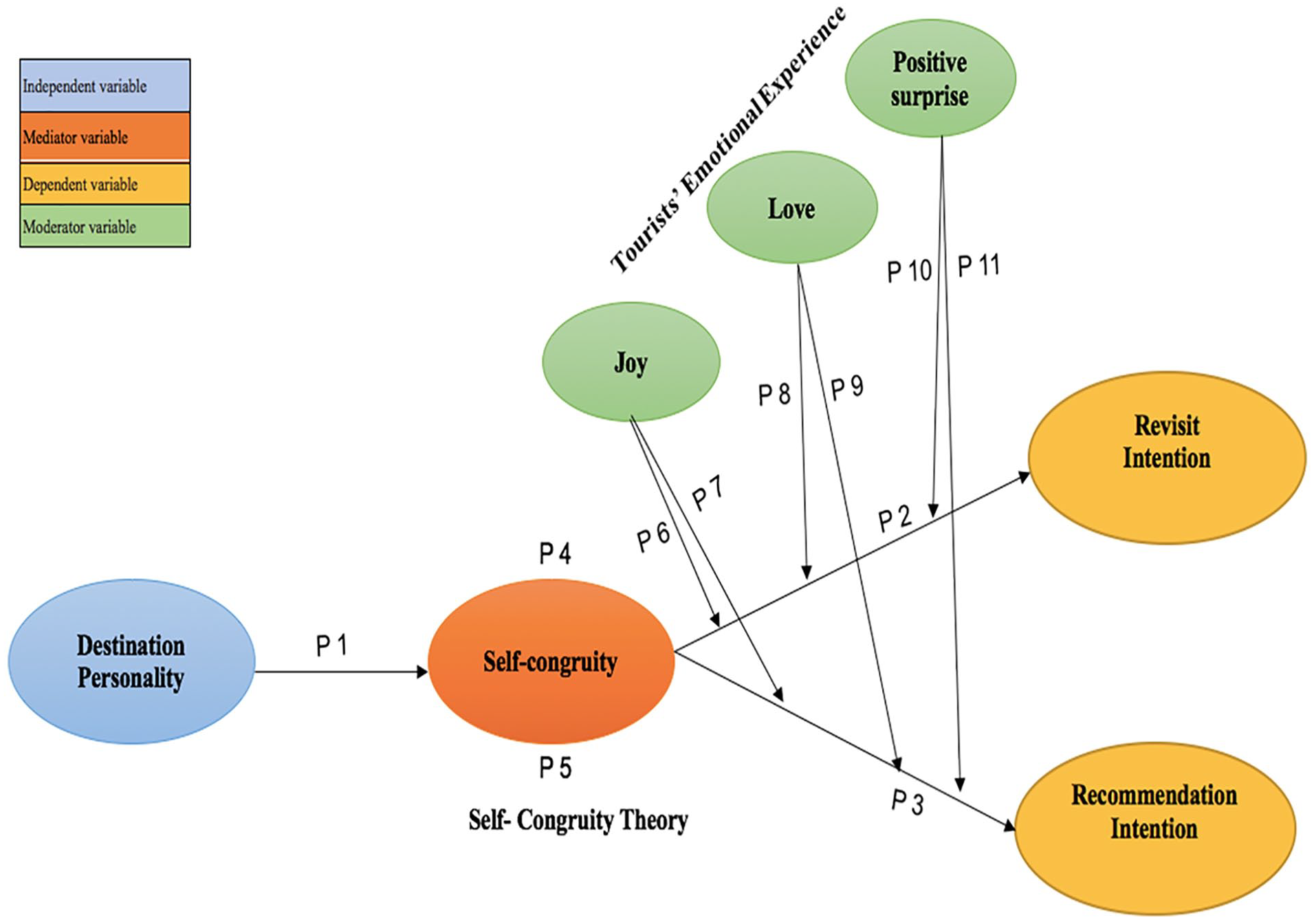
Theoretical framework.
On a similar note, it should be understood that tourists’ emotional experiences of joy, love, and positive surprise play a significant role in predicting tourists’ behavioral intention. Hence, failure to understand tourists’ emotional experience may hinder marketing outcome that can strengthen the loyalty of tourists. Tourism literature illustrated that tourists’ emotional experiences of joy, love, and positive surprise are correlated with tourists’ behavioral intention to revisit and recommend (Prayag et al., 2013; L. Su & Hsu, 2013). However, based on literature review, the weak relationship between self-congruity and tourists’ behavioral intention to revisit and recommend has been reported (Giraldi, 2013; Kastenholz, 2004; Rutelione et al., 2018). To achieve this aim, we proposed tourists’ emotional experience of joy, love, and positive surprise in the present study as the moderator that is able to strengthen and support the relationship between self-congruity and tourists’ behavioral intention to revisit and recommend.
Theoretical Contribution
There are still some potential contributions which need to be noted, despite the fact that the proposed framework has not yet been empirically tested. To fill the research gap, this conceptual article has made theoretical contributions as a reference for future works. First, this article extended the body of tourism literature by proposing the role of self-congruity as a mediator between destination personality and behavioral intention to revisit and recommend. The current conceptual article went beyond the conception of direct relations by introducing a new moderator between the relationship of self-congruity and behavioral intention to revisit and recommend in achieving a more precise depiction of the relationships between these variables. Previous studies (i.e., W. Kim & Malek, 2017; Z. Liu et al., 2019; N. Su & Reynolds, 2017; Usakli & Baloglu, 2011; Yang et al., 2020) have yet added other moderators into their model. This article contributes to tourism literature by conceptualizing and proposing moderator effect of tourists’ emotional experience. This can provide better understandings on the phenomena of behavior intention to revisit and recommend in the tourism setting.
Second, the current article, from an experiential viewpoint, managed to expand the knowledge of tourists’ emotional experience by merging the theoretical model of self-congruity. This could respond to Hosany et al. (2015) who suggested further studies incorporate tourists’ emotional experience of a destination into other conceptual frameworks which can generate a holistic understanding of travel experience. More importantly, this conceptual article managed to address the weakness by incorporating it into the framework. From the theoretical point of view, the current article also responds to Sirgy’s (2018) call for scholars from various disciplines to conduct further work for the purpose of achieving explanatory heights on self-congruity.
Finally, the present conceptual article refers to the layout of theoretical foundation of tourists’ emotional experience (the constructs of joy, love, and positive surprises) with destination personality, self-congruity, and behavioral intention. Moreover, it is expected that scholars will benefit from the empirical testing of the theoretical framework proposed in this article. Furthermore, this article has facilitated the reconciliation of contradictory arguments concerning the impact of destination personality, self-congruity, and behavioral intention by further examining the direct and indirect impacts on tourists’ intention to revisit and recommend.
Practical Contribution
The current article provides several potential practical implications for tourism stakeholders and authorities. First, the framework may enable tourism authorities and DMOs to identify the most valuable destination attributes that can further promote and enhance interesting tourism activities for the purpose of ensuring tourists to have good emotional experience during their traveling. Second, the present conceptual article provides the critical knowledge needed in ensuring that destination resources are able to be allocated more efficiently. Third, the article has the potential to provide tourism authorities and tourism marketers with new insights regarding the influence of attracting revisit tourists.
Furthermore, this conceptual article provides significant insights for destination marketing by incorporating tourist emotional experience. The aim of understanding the importance of tourists’ emotional experience of joy, love, and positive surprise will be helpful in determining their behavioral intention to revisit and recommend. Hence, this is considered very helpful to assist tourism marketing managers in formulating the most profitable marketing communicational strategies such as event marketing, word of mouth, product placement, and public relationship. More importantly, the above-mentioned benefits for tourism authorities and tourism marketers could lead to a more rewarding and enjoyable experience for visitors.
Limitations and Recommendations for Future Research
A number of important limitations of the present study need to be considered, despite its theoretical contributions and practical implications. First, it should be noted that the current conceptual article did not empirically test the framework as well as the emerging propositions. Next, the second limitation is related to the construct of tourists’ behavioral intention to revisit and recommend. In this case, it is crucial for marketing practitioners to consider the costs or benefits prior to the investment, despite the importance of attracting revisit tourists for the success of DMOs.
Furthermore, it is important for readers to be cautious by viewing the framework in light of different types of destinations because it does not necessarily permit to be applied to one particular destination. On another note, future studies can invoke the proposed framework as a theoretical basis in exploring different tourism research contexts. For instance, this framework can be applied to investigate behavioral intention in other tourism contexts which include adventure tourism, gambling tourism, arts tourism, and ghost tourism. Therefore, further exploration of tourism contexts will potentially lead to an interesting and meaningful contribution to further expand the body of tourism marketing literature.
In addition, the present article only considered several important elements from the theoretical perspectives. Hence, it is recommended for future research to integrate other factors into the framework by further applying the construct affective component and conative component instead of only focusing on tourists’ emotional and behavioral intention to revisit and recommend through other relevant underpinning theories. Other than that, the current research still left a knowledge gap between tourists’ behavioral intention and tourists’ actual behavior, despite the discovery that both self-congruity and tourists’ emotional experience tend to exert a positive impact on behavioral intention to revisit and recommend. Therefore, future research is recommended to conduct an empirical test on the relationship between tourists’ behavioral intention to revisit and recommend and actual behavioral intention to revisit and recommend based on the extension of other related behavioral theories.
Nevertheless, the present conceptual article managed to integrate disparate concepts in tourism marketing that is beneficial in establishing a conceptual framework that is underpinned by theory of self-congruity and Plutchik’(1980) typology which can be applied in various disciplines. Apart from that, it has also been acknowledged that the testing of the theoretical framework is able to indicate a positivist paradigm, an adaptation of existing scales in marketing and management disciplines, and quantitative data collection and analysis methods. Overall, it can be concluded that the current article managed to offer a framework that has the potential to deliver valuable theoretical and practical insights for tourism scholars as well as tourism marketing practitioners.
Footnotes
Declaration of Conflicting Interests
The author(s) declared no potential conflicts of interest with respect to the research, authorship, and/or publication of this article.
Funding
The author(s) received no financial support for the research, authorship, and/or publication of this article.
