




Abstract
This study examines the determinants of consumer satisfaction in Dubai’s rapidly expanding app-based food delivery sector, drawing on the theory of consumer behavior and analyzing data from 180 undergraduate students at Canadian University Dubai using Structural Equation Modeling (SEM) from January to February 2024. We evaluated the effects of delivery service price, meal pricing, food quality, restaurant variety, e-service quality, delivery timing, product advertisements, and sales promotions. The sample represents mobile-first generations. The findings reveal that food price, restaurant food quality, restaurant variety, e-service quality, delivery time, product advertisements, and sales promotions all positively influence consumer satisfaction. However, delivery charges, delivery promotions, and online payment security had no significant impact on the satisfaction of this mobile-first generation. Thus, businesses should streamline delivery times and emphasize value through targeted marketing to mobile-first consumers, ensuring that delivery charges and payment security do not hinder consumer satisfaction. These findings may help inform the development of meal delivery applications designed to attract and retain students in this specific market segment.
Plain Language Summary
This study examined the factors that contribute to university students' satisfaction with online food delivery in Dubai. We surveyed 180 undergraduate students at Canadian University Dubai in early 2024 and analyzed the data using statistical modeling. Key drivers of satisfaction included reasonable food prices, high food quality, a wide varity of restaurants, quick delivery, reliable online service, and appealing advertisements or promotions. In contrast, delivery charges, delivery discounts, and payment security did not significantly influence satisfaction. Businesses serving students should focus on speed, quality, variety, and engaging marketing to attract and retain this mobile-first generation of customers in the competitive delivery market.
Keywords
Introduction
App-based services that enable customers to order food from multiple restaurants simultaneously have significantly boosted the global food delivery industry. Online food delivery has grown significantly in urban areas like Dubai, where younger, tech-savvy consumers enjoy its ease and flexibility. Mobile-first generations—those who use smartphones for daily tasks—are becoming a larger customer category, so food delivery companies must understand what satisfies them (Ismail et al., 2024). The rise of the online-to-offline (O2O) marketplace has led to significant changes in how customer services are provided. These platforms combine online advertising with in-person sales of goods and services. One specific type is food delivery apps (FDAs), which take advantage of people using smartphones, the internet, and navigation services frequently (Talwar et al., 2021, 2023). FDAs have grown in prominence within developed as well as developing nations due to their ability to (a) enable easy and rapid delivery of food to customers at their doors and (b) offer dining establishments a greater chance to generate revenue without expanding restaurant’s space requirements (Sharma et al., 2021).
In recent years, mobile-based food delivery services have received interest, particularly among younger generations (D. N. Su et al., 2022). But little is known about the elements that affect consumer satisfaction in this market sector. Traditional consumer behavior theories have dominated the online food delivery literature, overlooking the unique traits of the mobile-first generation. University students, a vast and increasing mobile-first group, are affected by this divide (W. Ma, 2016). Most consumer satisfaction research has focused on food quality, delivery speed, and pricing (B. Ma et al., 2024; Nivornusit et al., 2024). However, e-service quality, online payment security, and advertising efficacy for mobile-first consumers have received less attention (Zhong & Moon, 2022). Studies show that delivery charges and promotions can affect consumer behavior, but their impact on satisfaction among mobile-first-generation users is uncertain. Understanding this group’s requirements and behaviors is crucial for designing effective corporate strategies as smartphones increasingly dominate internet purchases. Most studies also used samples from broad demographic categories without segmenting by generational or technological adoption (Zhong & Moon, 2022). Mobile app usability, personalized service features, and mobile-specific functionalities, such as in-app promotions and location-based services, have been understudied due to a lack of focus on the “mobile-first generation”—those who grew up with mobile technology as their primary means of communication and commerce.
Despite the increasing popularity of online food delivery (OFD) services in Dubai, research on this topic has been limited, particularly regarding the mobile-first generation, including university students, whose tastes and behaviors may differ from those of conventional consumers. Consumer satisfaction elements, including meal quality, delivery speed, and affordability, have been extensively studied (B. Ma et al., 2024); however, few have examined the complex expectations of younger and technologically proficient customers in the UAE. UAE studies focus on larger demographic groups, disregarding university students who significantly use mobile technologies for food ordering (Zhong & Moon, 2022). The mobile-first generation of undergraduate students at Canadian University Dubai will be examined for OFD satisfaction in this study to address this gap. The research supports organizations adapting to Dubai’s proficiency in technology, as well as its price-sensitive and convenience-oriented consumers, by focusing on this population.
The study makes several contributions. First, the satisfaction of Canadian University Dubai students with OFD is investigated using Consumer Behavior Theory. Consumer behavior theory suggests that emotional and social factors are equally important as price and quality in determining customer satisfaction. Student satisfaction in OFD is influenced by both practical (food quality, delivery time) and intangible (convenience, social influence) aspects, resulting in a complex interaction that impacts customer decisions (Arli et al., 2024; Zhong & Moon, 2022). Value-Perception Theory suggests that students evaluate OFD services based on price and quality. Student customers will be satisfied if the food and delivery service meet their quality and regularity expectations, even if the cost exceeds their expectations. OFD platforms cater to both physiological needs, such as hunger, and higher-level desires, including accessibility, variety, and comfort, which may explain why students utilize them (Hafiz et al., 2023). The Theory of Planned Behavior (TPB) suggests that peer recommendations and social media trends influence student decisions, thereby enhancing OFD service satisfaction (X. Su et al., 2015). Thus, Consumer Behavior Theory highlights the functional and affective elements that affect the pleasure of OFD students at the Canadian University Dubai (Al-Adwan et al., 2020). Second, it helps us understand consumer satisfaction with mobile food delivery services, especially for the mobile-first generation. This study contributes to the growing body of literature on food delivery services by offering a nuanced perspective on university student satisfaction. This population has been largely overlooked in earlier studies. This research on mobile-first customers provides a fresh perspective on traditionally mixed-age or general population studies. Third, the study introduces the concept of e-service quality in the context of mobile food delivery. In broader e-commerce contexts, e-service quality has been studied; however, in food delivery systems, particularly for mobile-first customers, it has not (Chung et al., 2021). We demonstrate that mobile-first customers are more sensitive to the usability and design of digital platforms than other demographics. Fourth, we demonstrate that delivery promotions, charges, and online payment security do not impact the mobile-first generation of mobile devices. This novelty contributes to existing research. Finally, the study provides insight into factors that do not significantly impact food delivery companies, particularly those trying to optimize their smartphone platforms.
The rest of the paper is organized as follows: Section 2 provides theoretical information. Section 3 presents the research hypotheses and models. Section 4 outlines the research approach, followed by a discussion of the data analysis. Section 5 covers the interpretation of the results. Section 6 presents the research conclusion, followed by implications in Section 7. Section 8 contains the study’s limitations and recommendations.
Theoretical Backgrounds
From a consumer behavior theory perspective, understanding the determinants of student satisfaction in online food delivery (OFD) services involves analyzing the psychological, social, and economic factors that influence students’ decisions to use such services and their subsequent satisfaction (Pal et al., 2022; Saad, 2020). Consumer behavior indicates that emotional, psychological, and social factors significantly influence purchasing decisions and rational evaluations of price and quality (Pal et al., 2022). Canadian University Dubai students may utilize online food delivery services due to the timely demands of hunger and convenience, as well as emotional aspirations for comfort and ease. Understanding Maslow’s hierarchy of needs helps us understand these aspects. OFD primarily offers services catering to the needs of students. However, convenience, variety, and comfort meet more complex requirements, such as security, community, and self-esteem, which affect their overall happiness with these services (Hafiz et al., 2023). In a hectic academic context, students may want convenience, time, or diversity in addition to food. Due to time constraints, students may prefer online food delivery over cooking to meet their convenience needs (Hafiz et al., 2023). Evaluating food delivery services becomes more complicated as OFD experiences extend beyond alleviating hunger to satisfying higher-order desires, such as high-quality food or excellent service.
Student satisfaction with online food delivery services also depends on perceived value. The value perception premise states that consumers evaluate a product or service based on its perceived value for the price (Hafiz et al., 2023). Students are cost-sensitive, so food pricing, delivery costs, and meal quality have a significant impact on their satisfaction (Al-Adwan et al., 2022). In OFD, students may weigh the convenience and time savings of purchasing food online against the cost. Students will be happier if they think the food’s quality matches the delivery price, speed, or convenience. Unhappiness might arise when prices look disproportionate to value (late deliveries, poor food quality, exorbitant delivery charges; Rees et al., 2022; Wu et al., 2020).
The Theory of Planned Behavior (TPB) emphasizes the roles of attitudes, social norms, and perceived control in consumer decision-making (Conner, 2020). Personal preferences, such as food quality and variety, as well as external factors like peer recommendations and social media trends, influence students’ perceptions of online food delivery services (Conner, 2020). Students are more likely to utilize the service again and be satisfied if it matches their expectations and provides a seamless, reliable experience. The subjective norms component of the Theory of Planned Behavior (TPB) reveals that students are often influenced by their classmates or broader social groups when making choices, suggesting that word-of-mouth and social media endorsements can significantly impact overall satisfaction with the OFD service (D. Kim & Jeong, 2024). Consumer behavior theory emphasizes that rational evaluations and emotional or social factors shape student happiness and the overall experience of the OFD.
Literature Review and Hypotheses Development
Price of Service Delivery and Customer Satisfaction
Service delivery price and customer satisfaction have been intensively examined, although empirics are conflicting and context-dependent (Al-Dmour et al., 2021). Several studies imply that a reasonable or competitive service price improves customer satisfaction, especially when consumers view the price as reflecting the value obtained (Ahmed et al., 2023; Al-Dmour et al., 2021). Consumers are happier with food delivery services if they think they are getting good value for their money. Businesses that match or surpass client expectations in service quality and convenience at low pricing build customer loyalty (Al-Dmour et al., 2021). Price can strongly influence consumer views, especially in competitive marketplaces with price-sensitive consumers (Cao & Wang, 2024).
Mobile banking, cloud computing, and same-city delivery make online food delivery (OFD) easier. Restaurants deliver food ordered online by OFD (Cao & Wang, 2024). Unlike traditional catering, OFD offers a diverse range of culinary options and added convenience. People can choose OFD multiple times and places to meet their dietary needs (Al-Dmour et al., 2021). OFD systems struggle to generate profits due to the high cost of couriers, who often use electric bikes and limited funding. The literature debates the relationship between service delivery price and customer satisfaction, yielding inconsistent results (Jiao et al., 2023). Price can significantly impact customer satisfaction, especially when consumers perceive the price as reasonable in relation to the value they receive. Good value and satisfaction are often associated with competitive or fair food delivery prices (Jiao et al., 2023). Consumers expect higher prices to mean better service, delivery, or convenience. When these expectations are realized, customer satisfaction rises, confirming the claim that price increases contentment. Other research shows a more subtle effect of price on satisfaction (Al-Adwan et al., 2020). Lower pricing may indicate lower quality or service delivery, which can impact satisfaction (Jiao et al., 2023). Customers may pay higher prices in high-end or premium service marketplaces if the service quality merits it. Price alone does not guarantee satisfaction unless complemented by superior service features or added value, such as faster delivery, personalized selections, or exclusive goods (Zakaria et al., 2024). Given these different perspectives, it is essential to investigate whether service delivery prices have a direct and positive impact on mobile-first consumer satisfaction, especially in food delivery services targeting younger, price-sensitive segments, such as university students. We suggest the following hypothesis:
H1: The price of service delivery interactivity results in favorable customer satisfaction with online food delivery in Dubai.
Price of Foods and Customer Satisfaction
Food price is a significant component of customer satisfaction, especially for food delivery services. Studies on the influence of food prices on customer satisfaction have yielded varied results, resulting in conflicting findings (Prasetyo et al., 2021). Two prominent satisfaction concepts in the literature emphasize price as a positive determinant, as well as the various elements that limit this relationship. Multiple studies suggest that food pricing promotes customer satisfaction, especially when consumers perceive the price is reasonable given the quality and quantity (Källström & Hultman, 2019). Price signifies worth, and purchasers are satisfied when they obtain good value. Competitive restaurant and food delivery pricing increases perceived value and customer satisfaction. As consumers appreciate convenience and quality, food delivery services that offer acceptable prices in line with food and service quality will likely satisfy customers (Källström & Hultman, 2019). Price and satisfaction are not directly associated. A reduced price may attract customers, but lower quality or service may dissatisfy them (Kencana, 2018) It was discovered that price decreases may suggest a decline in product quality, which can diminish customer satisfaction, especially when customers expect high-quality food. Customers may be willing to pay more for high-end food delivery if the quality and service justify the higher price. Price, quality, and consumer expectations may affect satisfaction more than price alone (Zhao & Zhang, 2019).
Consumer expectations and experiences significantly impact price satisfaction. In a competitive market, consumers may expect higher prices to reflect better service or products, which may boost satisfaction (Zhao & Zhang, 2019). Customers may be unsatisfied if a higher price does not match the quality of the food, delivery time, or service reliability. This enables price fairness when buyers compare prices to the perceived value of the product or service (Ahmed et al., 2023). Thus, food pricing affects customer satisfaction through its impact on perceived value, quality, and consumer expectations. Mobile-first consumers, particularly price-sensitive college students, often prioritize value over premium products. We propose that:
H2: The price of food interactivity results in favorable customer satisfaction with online food delivery in Dubai.
Food Quality and Customer Satisfaction
Food quality encompasses various aspects that meet customer requirements, including safety, desirability, nutritional content, and sensory appeal (Osei-Kwarteng et al., 2024). Recognizing the subjective nature of food quality underscores that its assessment is more about acceptability than an extrinsic characteristic (Mehta et al., 2024). This highlights the impact of various factors, particularly the conditions surrounding the food’s production. According to Mehta et al. (2024), the term “food quality” is intricately tied to meeting consumer expectations. This serves as a pivotal aspect of the broader restaurant experience. This implies that evaluating food quality is a nuanced process, extending beyond the inherent qualities of the food itself. This encompasses a holistic consideration of factors impacting consumer satisfaction. Key indications such as taste, nutritional value, and menu variety significantly foster customer loyalty and encourage repeat visits. Elements such as menu offerings, presentation, portion sizes, and variety are key metrics in evaluating food quality in a restaurant setting (D. Liu et al., 2024). Health and nutritional characteristics are widely utilized to predict food acceptance (D. Liu et al., 2024). Fresh, well-cooked, and presentable food is vital for consumers to be pleased and to repurchase (Dos Santos Leiria, 2021). Customers may hold the delivery service provider responsible for discrepancies in quality. If orders are incomplete, customers will not be satisfied, and delivery will be considered the biggest obstacle to the success of food e-commerce (Osei-Kwarteng et al., 2024). To foster customer loyalty and drive repeated purchases, companies must transition their e-business approach from merely focusing on transactions (e-commerce) to encompassing all interactions before and after a transaction (e-service). One element that influences customers’ intention to select a restaurant is the quality of food. Furthermore, food quality is a crucial factor and component in achieving customer satisfaction, which in turn leads to customer loyalty (D. Liu et al., 2024). Online food delivery retailers must prioritize providing high-quality service as the service level significantly impacts customer satisfaction and the likelihood of shopping online again (Kalantarzadeh Tezerjany, 2024; Osman et al., 2024). Therefore, we hypothesize as follows:
H3: The interactivity of food quality results in favorable customer satisfaction with online food delivery in Dubai.
Restaurant Variety and Customer Satisfaction
Restaurant Studies across consumer behavior show that restaurant variety affects customer satisfaction (Dos Santos Leiria, 2021). Restaurant variety can represent menu alternatives, cultural diversity, or fresh experiences (Abdelmassih & Arendt, 2020). Variety enhances consumer satisfaction by providing more options that cater to their needs. Diverse restaurant menus make customers happier. More choices make customers feel in control of their food, which enhances enjoyment. Vegetarian, gluten-free, and multicultural restaurants will likely satisfy a broader client base (Abdelmassih & Arendt, 2020). Thus, restaurants that provide multiple diets boost customer satisfaction by being inclusive and accommodating to different tastes and dietary limits (Khan, 2024). Further, exciting and intriguing variety can increase customer loyalty and visits (Khan, 2024). Variety should be balanced to minimize customer overwhelm. Variety can satisfy clients, but too many options can cause decision fatigue, making them feel overwhelmed or unsatisfied (Chan, 2024). Therefore, restaurants must offer sufficient variety without overwhelming diners, making selections both manageable and enjoyable.
When restaurants offer a choice of prices, customers are more likely to perceive themselves as getting good value (Ahmed et al., 2023). Menu variety, dietary inclusiveness, and uniqueness give diners a unique and dynamic dining experience. According to these studies, the variety of restaurants may enhance customer satisfaction. Diverse offerings improve client experiences and loyalty by increasing emotional connection and functional satisfaction. Thus, we propose the following hypothesis:
H4: The variety of restaurant interactivity results in favorable customer satisfaction with online food delivery in Dubai.
E-Service Quality and Customer Satisfaction
Growing empirical research supports the premise that e-service quality improves food restaurant customer satisfaction, highlighting the significant factors that affect online dining experiences. Restaurant e-service quality encompasses website or app functionality, navigation, order accuracy, delivery efficiency, payment security, and responsiveness of customer service (D. N. Su et al., 2022). Studies show that customers are satisfied with a restaurant’s service when they can easily browse its online platform, identify what they want, and place orders. A well-designed interface and user-friendly online ordering system reduce frustration and enhance dining convenience, providing valuable insights for restaurants (D. N. Su et al., 2022).
Customer satisfaction also depends on order fulfillment, which includes correct processing. Error-free deliveries improve customer satisfaction. Fulfillment is crucial to the food sector’s e-service quality, as customers demand on-time delivery and high-quality food. (Mamakou et al., 2024). Payment security also matters because safe financial information makes clients feel assured and satisfied. Customer service should respond quickly to incorrect orders and delivery issues. (Talha Talukder et al., 2022). Restaurants that offer responsive live chat, phone, and email services tend to have higher customer satisfaction. Therefore, e-service quality is an essential factor that determines customer satisfaction. Hence, we propose the following hypothesis:
H5: The interactivity of e-service quality is positively associated with customer satisfaction in online food delivery services in Dubai.
Delivery Time and Customer Satisfaction
Customer satisfaction in food service and restaurant delivery depends on delivery time. Timeliness is essential to customers, especially when ordering food delivery. Research consistently shows that delayed delivery leads to consumer dissatisfaction, while prompt delivery enhances customer satisfaction (Gopi & Samat, 2020). Customers want their food to arrive on schedule because delays can be frustrating and inconvenient (Xu et al., 2021). For example, serving food late damages freshness and disrupts customers’ schedules, resulting in disappointment and unfavorable restaurant reviews. Delivery significantly affects online food order satisfaction. Even a few-minute delivery delay might leave the wrong impression, especially if the food is cold or inadequately wrapped (Annaraud & Berezina, 2020). In fast-paced workplaces like food delivery, customers expect speedy, and efficient service. A restaurant that meets or exceeds delivery time standards builds customer trust and brand loyalty. Also important is delivery time consistency. Customers like reliability and fast service from restaurants. If delivery times are met consistently, customers are happier and less inclined to switch suppliers. Frequent delays can erode trust and lead to client turnover. Regular, reliable service—especially delivery—builds client loyalty. In conclusion, the time it takes for food supply restaurant delivery significantly affects customer satisfaction (Annaraud & Berezina, 2020). Food delivered on time improves dining experiences by assuring freshness and quality. Delivery time is crucial to food service performance because restaurants with rapid and dependable delivery services tend to experience increased customer satisfaction, repeat business, and loyalty (Sureeyatanapas & Damapong, 2024). These arguments led us to propose the following hypothesis:
H6: The interactivity of delivery time results in favorable customer satisfaction with online food delivery in Dubai.
Advertisement of Products and Customer Satisfaction
Advertising influences consumer satisfaction, particularly in food supply restaurants, where visual appeal and promotional messaging have a significant impact on customer decisions. Advertisements have a more significant impact on customer satisfaction among the mobile-first generation, which relies heavily on smartphones for information and transactions (Bali et al., 2023). Mobile advertising targeted to this tech-savvy generation’s interests and behaviors can boost customer engagement, excitement, and purchase behavior. Influential restaurant or food delivery service ads—whether specials, discounts, or appealing food imagery—can directly increase consumer satisfaction (Roy & Jasrotia, 2024). Mobile advertising is more satisfying since apps, push alerts, and social media platforms quickly deliver personalized promotions and offers (Stocchi et al., 2021). Mobile-first-generation mobile ads that match customer interests and are entertaining and non-intrusive can boost a restaurant’s value and quality (Stocchi et al., 2021).
Research shows that realistic product or service ads help control client expectations, leading to higher satisfaction when those expectations are met or surpassed (Meirovich et al., 2020). Food advertising that shows the quality and appearance of the dishes raises client satisfaction when they receive their order (Meirovich et al., 2020). Misleading or overblown marketing may leave clients feeling duped if the product fails to deliver. Convenience ads, such as online ordering or mobile app promotions, enhance satisfaction for the mobile-first generation by streamlining the ordering process and providing value (Arindra et al., 2024). The ability to rapidly purchase food via a smartphone in response to an advertisement enhances client satisfaction and repeat business. In conclusion, food supply restaurant marketing significantly affects customer satisfaction, especially for mobile-first generations (Arindra et al., 2024). Targeted, accurate, and convenient ads improve the dining experience and build loyalty. Thus, we propose the following hypothesis:
H7: The advertisement of product interactivity results in favorable customer satisfaction with online food delivery in Dubai.
Sales Promotions of Product and Customer Satisfaction
Sales promotions can enhance customer satisfaction, particularly in food supply restaurants, where discounts, special offers, and limited-time bargains effectively attract customers (Kaveh et al., 2021). Sales promotions can significantly influence the decision-making and satisfaction of the mobile-first generation, who use smartphones to find, order, and pay for food (H. Kim, 2021). Mobile promotions, such as push notifications about discounts, app-exclusive deals, or time-sensitive offers, can build urgency and excitement, encouraging customers to act quickly and increasing satisfaction when they believe they are getting good value (Kaveh et al., 2021). Research shows that sales promotions boost consumer satisfaction by increasing perceived value. Studies have shown that customers who take advantage of discounts or bundle offerings tend to be happier as they receive more for their money. In the competitive food service industry, incentives like “buy one, get one free,” free delivery, and discounted food combos can boost sales and make consumers feel valued (H. Kim, 2021; Zhong & Moon, 2022). These campaigns must be accessible to the mobile-first generation. This tech-savvy audience is targeted by eateries that offer mobile apps or social media promos.
Mobile devices make it easy to access and redeem promotions, improving consumer experience. Mobile-driven sales campaigns use simplicity and immediacy to attract and retain clients (Salmista & Genovino, 2023). Promotions that align with client preferences enhance satisfaction. For instance, personalized offers based on a customer’s browsing or buying history will make them feel good. Customization enhances client satisfaction and encourages repeat purchases, fostering loyalty (Salmista & Genovino, 2023). Sales promotions have a significant impact on food supply and customer satisfaction, particularly among mobile-first-generation customers. Well-executed promos improve dining experiences and consumer loyalty by offering value, convenience, and tailored incentives. We hypothesize as:
H8: Sales promotions that enhance product interactivity result in favorable customer satisfaction with online food delivery in Dubai.
Delivery Charges and Customer Satisfaction
As more customers use smartphone applications and online ordering platforms for food delivery, delivery charges affect customer satisfaction in the food supply restaurant industry. Many consumers consider delivery charges when choosing a restaurant, and their impact on satisfaction depends on how they are perceived (Ahmed et al., 2023). Transparent, reasonable, or waived delivery prices can enhance consumer satisfaction, especially when consumers feel they are getting good value. Delivery charges must be clearly communicated and integrated into the ordering process for the mobile-first generation, enabling seamless digital experiences (Ahmed et al., 2023). Mobile ordering platforms that reveal delivery fees before checkout prevent unpleasant shocks. Transparency manages client expectations and increases satisfaction, as customers like understanding what they are paying for (Tavitiyaman et al., 2024). Free or discounted delivery promotions, particularly those tied to minimum order values or loyalty programs, enhance consumer satisfaction (Tavitiyaman et al., 2024). For the mobile-first generation, taking advantage of such offers immediately through apps or notifications adds convenience and exclusivity, thereby increasing the perceived value of the food. Low or no delivery charges can boost customer satisfaction by giving them more for less (Martinez et al., 2024). Mobile-first clients anticipate convenience and affordability; therefore, this is crucial. Many food delivery apps offer free delivery on the first order or to customers who spend a certain amount, which can help build loyalty. Delivery charges that the service considers high or unjustified can lower satisfaction. If the delivery is late or the food is subpar, customers will be less satisfied if they perceive the price as too high. The prices of food supplies and restaurant delivery services significantly impact customer satisfaction (Martinez et al., 2024). Mobile-first consumers prefer transparency, convenience, and perceived value. Clear and reasonable delivery costs promote customer satisfaction and repeat business for restaurants. It can be hypothesized that:
H9: Promotions of delivery charges and interactivity result in favorable customer satisfaction with online food delivery in Dubai.
Online Payment Security and Customer Satisfaction
Online payment security is crucial to customer satisfaction in food supply restaurants, where customers are increasingly using mobile apps and digital platforms for ordering and payment. Our mobile-first generation values ease, pace, and security in online transactions; therefore, secure payment mechanisms greatly enhance restaurant satisfaction (Hosain & Kamal, 2024). Customers’ personal and financial information should be protected to build confidence and satisfaction as mobile food delivery and ordering platforms continue to grow (Hampson et al., 2021). Online buyers’ most significant concern is data privacy. Secure payment mechanisms improve customer satisfaction (Hampson et al., 2021). The mobile-first generation is more inclined to use secure payment channels, such as encryption and Secure Sockets Layer (SSL), as they are more susceptible to the risks associated with sharing financial information online (Zhu et al., 2022). Trust seals or encryption notices on a restaurant’s mobile app or website boost consumer confidence and ease transactions.
Payment solutions include mobile wallets, credit/debit card integration, and PayPal, all designed to enhance the consumer experience (Lekhi et al., 2024). Mobile-first consumers expect fast, frictionless payment methods and a secure system that supports them and enhances satisfaction (Aggarwal & Mittal, 2024). By securely saving payment details for future orders, convenience is enhanced without compromising security, improving satisfaction, and loyalty. Payment issues, such as failed transactions, fraud, and slow checkout processes, also impact satisfaction. Customers demand a secure, fast, and seamless payment experience, and any disruption might frustrate or keep them from using the service again (Putrevu & Mertzanis, 2024). In mobile-first restaurants, ensuring online payment security is crucial for maintaining customer satisfaction. Secure and efficient payment methods improve client trust, satisfaction, repeat business, and loyalty. We can hypothesize that:
H10: The online payment security interactivity results in favorable customer satisfaction with online food delivery in Dubai.
Research Framework
Based on a comprehensive literature review, we developed the research model presented in Figure 1 for this study. Consumer satisfaction is our dependent variable. The direct hypotheses are tested via an empirical model.
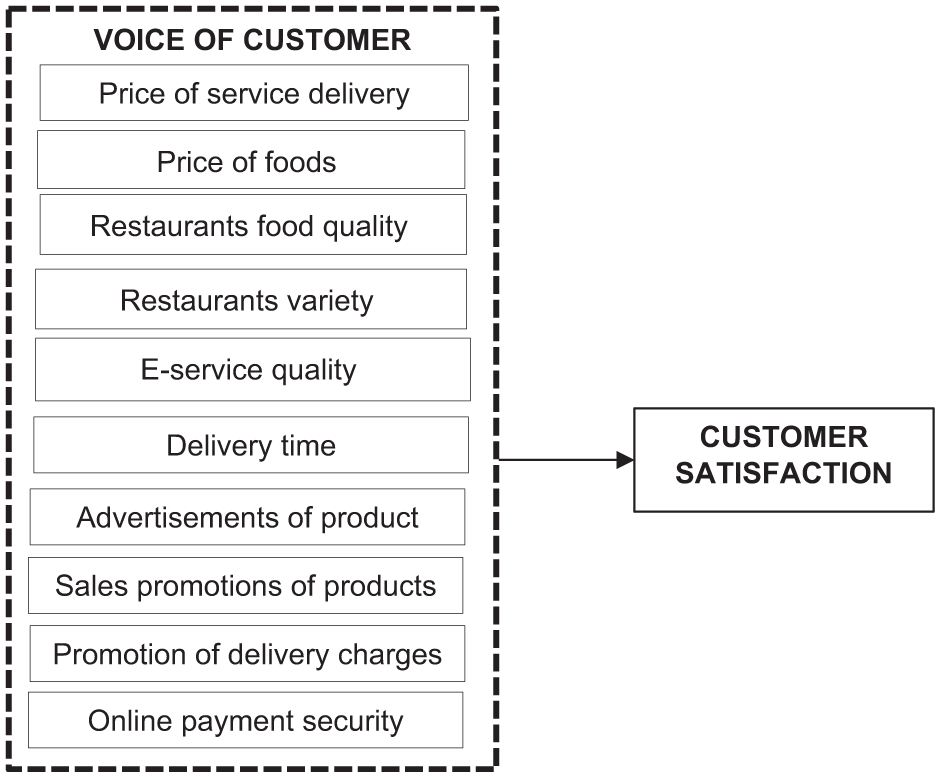
Research framework.
Methods
Questionnaire Design
We designed and implemented our study questionnaire to ensure reliability and validity. Our questionnaire was based on standard scales and tailored to the specific needs of our study. We consulted with subject experts to ensure the content was relevant and measured the correct parameters. We examined 11 key dimensions of online food delivery, including service quality, delivery timeliness, payment security, and customer assistance. Participants answered questions on a five-point Likert scale, from “strongly disagree” to “strongly agree,” for each concept item (see Table 1; Alabi & Jelili, 2023). This scale measured participants’ agreement with statements regarding their experiences with online food delivery in Dubai and their satisfaction. The constructions were chosen to reflect the online food delivery process, allowing for a thorough assessment of consumer satisfaction.
Scale Properties.

Note. F/L = factor loading; AVE = average variance extracted for; α = Cronbach’s alpha; CR = composite reliability. Note all Questions must align left.
This research involved collecting survey data from undergraduate students at a university in the United Arab Emirates. The study examined factors influencing students’ satisfaction with online food delivery services and was not related to the university’s internal operations or policies. The research design minimized any potential risk to participants by avoiding sensitive or intrusive questions and ensuring that no personally identifiable information was collected. Participation was voluntary, and respondents were informed about the study’s aims before providing their consent. The potential benefits of the research—such as contributing to the understanding of consumer satisfaction in online food delivery—were deemed to outweigh any minimal risks. Ethical approval for the study was obtained from the Dean of the School of Management at the participating institution.
This study used non-probability purposive sampling to choose undergraduates at Canadian University Dubai (CUD) who have used online food delivery (OFD) services. This technique was suitable for collecting insights from a demographic that uses smartphone apps to order food, given its focus on the mobile-first generation. Initially, professionals reviewed the wording of the questions for clarity, precision, and audience compatibility. Their input improved the instrument. The original content was edited to simplify complex sentences and updated to reflect the terminology used in the food supply and restaurant industries. We made sure the language was culturally suitable for our audience. Experts help ensured respondents understood our queries, which is crucial for accurate and reliable data.
We also pilot-tested the questionnaire with 30 respondents to assess its dependability and clarity. A pilot study was conducted to assess the clarity of questions, response options, and the flow of the questionnaire (Braun et al., 2021). Pilot test participants were asked to comment on unclear or irrelevant information (Braun et al., 2021). We measured the time it took to complete the questionnaire to avoid respondent fatigue. Pilot test results prompted numerous minor adjustments to the questionnaire. We clarified topics and removed or amended queries participants found confusing or unnecessary. The questionnaire improves through iteration and testing. After these adjustments, the questionnaire was ready for large-scale data collection. We employed expert consultation and pilot testing to verify that the instrument was reliable and valid for the research goals, thereby reducing bias and misunderstanding and increasing the likelihood of obtaining high-quality results.
Survey
Data was collected in January to February 2024. The survey was disseminated through Google Forms and personal contact. The study team and instructors shared the link to the questionnaire through university email lists, online learning platforms, and student group chats to increase participation. To ensure student diversity, printed surveys were distributed at school activities and in cafeterias. The hybrid distribution technique made participation easier and enhanced response rates. To ensure relevance and consistency, we only included participants who have used online food delivery services at least three times per month in our study. It was crucial to obtain responses from respondents with sufficient experience using online food delivery platforms to assess their level of satisfaction. Data collection was accessible at the Canadian University in Dubai, where the students were studying. Since the university’s target demographic was readily available, recruiting and data collection were efficient. We collected data using personal and online Google Forms. Google Forms enabled us to contact more students quickly and easily, making it convenient for them to complete digital questionnaires. We also personally collected questionnaires at university events and on campus to engage students and encourage participation. This strategy increased response rates and engaged students who may not have taken the online survey. Using these two methods, we reached a vast population of participants and collected 180 valid responses, providing a comprehensive dataset to measure online food delivery customer satisfaction.
Data Analysis and Results
We examined the proposed model using partial least squares (PLS), a powerful and commonly used method for latent variable models (Chin et al., 2020). After testing the measurement model’s reliability and validity, we investigated research hypotheses using the structural model.
Measurement Model
Independent review verified the content and construct validity of the questionnaire instrument. We piloted the questionnaire with 30 students to test its clarity and usefulness. Internal consistency was measured with Cronbach’s alpha for reliability. The survey’s Cronbach’s alpha was .83, suggesting strong reliability. Every factor had sufficient internal consistency and dependability, meeting the 0.70 criteria. We employed confirmatory factor analysis (CFA) to assess the reliability and validity of the measurement model. Table 1 indicates item standard loadings of 0.70 or higher. All scales’ Cronbach’s alpha values were over .7, indicating dependability (Musa et al., 2021). The scales had strong convergent validity because each construct’s AVE was over 0.60 (Musa et al., 2021). The scales’ composite reliability (CR) was over 0.8, indicating strong internal consistency (Cheung et al., 2024).
Table 2 illustrates the AVE relations and square roots for each construct. The diagonal represents the square roots of AVEs (e.g., PSD = 0.788, POF = 0.815, RFQ = 0.908, CS = 0.817). All diagonal elements exceed their corresponding construct correlation coefficients, indicating good discriminant validity for the scales. We also used Harman’s one-factor test (Howard & Henderson, 2023). To assess standard method bias, the data were self-reported and from a single source. The most significant factor explaining variance was 37.22%, indicating that our study did not exhibit standard technique bias.
Correlation Coefficient Matrix and Square Roots of AVEs.

Note. AVEs = average variance extracted; PSD = price of service delivery; POF = price of foods; RFQ = restaurant food quality; RV = restaurants variety; ESQ = e-service quality; DT = delivery time; AOP = advertisements of product; SPP = sales promotions of product; PDC = promotion of delivery charges; PS = payment security; CS = customer’s satisfaction.
Correlation at a significant level of 5%.
Correlation at a significant level of 1%.
Hypotheses Testing
The study examined the structural model with 5,000 bootstraps at a 95% confidence level (see Table 3). Our estimated model’s R-squared value is above .836, indicating a strong fit. This implies that the independent variables explain over 80% of the variation in restaurant food satisfaction, indicating that our model effectively captures the major determinants of satisfaction. The results indicate that the price of foods (H2; β = .181, p < .003, t-statistics = 4.464, SE = 0.025), restaurant food quality (H3; β = .192, p < .000, t-statistics = 4.807, SE = 0.033), restaurants variety (H4; β = .104, p < .025, t-statistics = 2.271, SE = 0.032), E-service quality (H5; β = .198, p < .000, t-statistics = 4.744, SE = 0.031), delivery time (H6; β = .11, p < .013, CR = 2.525, SE = 0.031), advertisements of product (H7; β = .068, p < .044, t-statistics = 1.677, SE = 0.036), sales promotions of product (H8; β = .187, p < .012, 5-statistics = 4.628, SE = 0.037) positively and significantly affect the customer satisfaction of students using online food delivery (OFD). Thus, these results support H3, H4, H5, H6, H7, and H8 of the study.
Direct Paths Analysis on Customer Satisfaction.

Note. PSD = price of service delivery; POF = price of foods; RFQ = restaurant food quality; RV = restaurants variety; ESQ = e-service quality; DT = delivery time; AOP = advertisements of product; SPP = sales promotions of product; PDC = promotion of delivery charges; PSD = payment security; CS = customer’s satisfaction.
Correlation is significant at the 0.05 level (2-tailed).
Correlation is significant at the 0.01 level (2-tailed).
Correlation is significant at the 0.001 level (2-tailed).
In contrast, the price of foods price of service delivery (H1; β = .028, p < .142, t-statistics = 1.110, SE = 0.025), promotion of delivery charges (H9; β = .021, p < .128, t-statistics = 0.108, SE = 0.163) and online payment security (H10; β = .032, p < .152, t-statistics = 0.235, SE = 0.121) negatively and significantly affects the customer satisfaction of students using OFD. These results do not support the study’s H1, H9, and H10 (see Table 3).
Discussion
Using 5,000 bootstraps at a 95% confidence level, our study yields a robust R-squared value of .836, indicating that the model explains a considerable percentage of the variance in customer satisfaction (Ighomereho et al., 2023). The results strongly support the student satisfaction with online food delivery. The price of food (H2; Ha & Jang, 2010; Kalantarzadeh Tezerjany, 2024), restaurant food quality (H3; Kalantarzadeh Tezerjany, 2024; Konuk, 2018, 2019; Osei-Kwarteng et al., 2024), restaurant variety (H4; Murdoch et al., 2017; Namin, 2017; Osei-Kwarteng et al., 2024), e-service quality (H5; Ighomereho et al., 2023; Mamakou et al., 2024; Suhartanto et al., 2019), delivery time (H6; Cao & Wang, 2024; B. Ma et al., 2024), product advertisements (H7; Arrona-Cardoza et al., 2023), and sales promotions (H8; Kaveh et al., 2021; Wolff, 2009) All positively and significantly affect student satisfaction. These data highlight the key factors that influence students’ satisfaction with OFD services.
Food prices increase customer satisfaction, supporting the consumer behavior theory that price influences value. Students are price-sensitive and will evaluate food delivery services on price, quality, and quantity (Cao & Wang, 2024). A reasonable price for tasty food promotes customer satisfaction (Zhong & Moon, 2020). The study revealed that OFD students are price-sensitive; therefore, price-quality imbalances may negatively impact their satisfaction (Awaad et al., 2024). Restaurants have always relied on good food to please customers. The considerable effect of food quality (H3) supports the theory that online customers value taste, novelty, and presentation. Before eating, customers check reviews, restaurant ratings, and past experiences for food quality. The findings underscore the importance of consistently providing high-quality food to meet customer expectations. This supports food service research, showing that quality drives customer loyalty and repeat business.
Variety in restaurant menus affects student satisfaction (Baiomy et al., 2019). Student satisfaction with restaurant variety (H4) refers to their preference for options that cater to different tastes, nutritional needs, and cravings (Baiomy et al., 2019). Diverse menus encourage students to return to the platform. The emergence of vegan and gluten-free options online may explain the increased need for variety. Students need this for food flexibility and convenience. In the digital age, client pleasure depends on e-service excellence. A seamless online buying experience is crucial to student satisfaction due to e-service quality (H5; Mohammad Salameh et al., 2018). Website and app usability, speed, and navigation have a significant impact on the quality of e-services. The finding proves that a smooth and efficient digital interface increases customer satisfaction. (Mohammad Salameh et al., 2018). User experience or technological issues may frustrate customers and deter them from placing future orders. Food delivery companies must enhance their digital interfaces for improved usability and reliability.
Another component of customer satisfaction is delivery time. Due to the significant impact of food delivery time (H6), customers expect food on time. Late food delivery can be frustrating for students, especially those who order during class breaks or between classes (Allah Pitchay et al., 2022). The findings highlight the importance of effectively managing delivery logistics to meet demand efficiently. Delivery speed influences customer satisfaction, and delays may deter repeat business (Allah Pitchay et al., 2022). Advertisements also boost customer satisfaction (H7), attract students, and influence restaurant views. Buyers are informed and moved by ads. Trend-driven students can become enthused about their food orders from commercials (Allah Pitchay et al., 2022). Well-designed advertisements with appealing graphics, discounts, and special offers can increase orders and brand loyalty.
Finally, sales promotions (H8) boost satisfaction, supporting the idea that discounts, specials, and limited-time deals effectively encourage students to order food online (Miranda et al., 2024). Cost-saving sales promotions inspire students and increase perceived value and pleasure. Free shipping or bundle discounts can entice students to make purchases. Sales and eating excitement increase with promotions (Miranda et al., 2024). This survey has had a significant impact on restaurant and food delivery owners in their pursuit of customer satisfaction. The report says that restaurants must prioritize food quality, menu variety, online ordering, and delivery times. Strategic advertising and sales incentives can enhance customer satisfaction for value-driven student buyers (Lee et al., 2022; Miranda et al., 2024). Given the benefits of e-service quality, restaurants and food delivery platforms should invest in user-friendly, efficient, and reliable digital systems. The app crashes, payments are slow, and menu navigation needs to be fixed.
In contrast, the price of food for service delivery (H1; Cao & Wang, 2024; Konuk, 2019; Nivornusit et al., 2024; Zhong & Moon, 2020), promotion for delivery charges (H9; Zhong & Moon, 2020), and online payment security (H10) did not significantly affect student satisfaction with online food delivery. This suggests that while some elements strongly influence satisfaction, students may view others as less necessary in OFD. Price is usually a significant issue in customer decisions; therefore, the lack of relevance for food price for service delivery (H1) is noteworthy. Food quality, delivery timing, and ease of ordering may be more important to students than delivery pricing (Zhong & Moon, 2020). Many students may already value delivery and are willing to pay more for it. If the food and service are good, a small delivery fee may not be a significant issue. This shows that students may be less price-sensitive in OFDs than in regular dining situations.
Unlike predictions that delivery charge discounts would increase value perception, the sales promotion for delivery charges (H9) did not significantly improve customer satisfaction. Students may consider food delivery a treat, making delivery charge savings less critical to their satisfaction (Hong et al., 2021). Instead of delivery savings, students may prefer food or value-added promotions, such as bundle offers. Also, online payment security (H10) did not affect consumer satisfaction (Hong et al., 2021). Students may view credit cards and mobile wallets as inherently secure, reducing their concerns about transaction security. As online payment systems become more familiar and trusted, students may not consider payment security a significant factor in their overall satisfaction with OFD.
This study sheds light on the satisfaction of undergraduate students at Canadian University Dubai with online food delivery (OFD) services. Food quality, variety, e-service quality, delivery time, advertisements, and sales promotions supported earlier research on convenience, efficiency, and product quality as key drivers of satisfaction. The non-significant influence of delivery costs, promotions, and online payment security needs more research. Since CUD is a private school for affluent students, delivery expenses and discounts may not be as important as they are for less privileged students. The lower price sensitivity may indicate a focus on convenience, quality, and time efficiency over cost savings. The lack of concerns for online payment security may also represent this group’s technological skill and trust in digital transactions. This socioeconomic setting inhibits the study’s generalizability. Public university students and those with limited financial means may prioritize OFD services differently. To further assess OFD customer satisfaction, future research should include more varied and representative samples from different socio-economic backgrounds and institutions in the UAE.
Conclusion
This study evaluates student satisfaction with food delivered online. The results indicate that meal quality, restaurant variety, e-service quality, delivery time, advertising, and marketing campaigns all contribute to increased student satisfaction. These characteristics strongly correlate with customer satisfaction, indicating that students are aware of the quality of food, ease of ordering, and delivery time. These findings can help food delivery and restaurant operators meet student expectations, enhancing consumer loyalty.
This survey examines the satisfaction of Dubai students with online meal delivery services. The results show that meal quality, variety, e-service quality, prompt delivery, and successful advertising all contribute to shaping pleasant consumer experiences. Mobile-first-generation objectives may have shifted as shipping charges, promotional discounts, and online payment security had minimal impact. This group prioritizes convenience, personalization, and speed over security and expense. Businesses must develop marketing strategies that align with the lifestyles and expectations of mobile-first consumers. Food delivery pricing, delivery charge sales promotions, and online payment security had non-significant effects. OFD students appear to be less concerned with these characteristics than traditional retail and service customers. Students may prioritize convenience, food quality, and fast delivery over affordability and security when ordering food online. These non-significant results suggest that convenience and customization increasingly affect students’ online food delivery value and enjoyment. While affordability and security remain important, the study advises that online food delivery companies should prioritize service to meet the needs of both customers and students. Thus, OFD customer satisfaction must be holistically addressed. To compete and satisfy students, food delivery services must provide excellent customer service, a diverse menu, and prompt service. Future studies should examine a broader demographic, changing technical characteristics, and consumer behavior to better understand how these factors affect other customer satisfaction measurements.
Research Implications
This study has significant implications for academics and practitioners in online food delivery (OFD), particularly for student customers. The findings contribute to the growing body of literature on consumer satisfaction in the digital age by identifying the primary factors influencing student satisfaction with OFD services.
Academic Implications
Academically, the study highlights the complexity of consumer behavior in the context of internet food delivery. Previous research has concentrated on pricing, food quality, and convenience. However, we demonstrate that food quality, delivery time, and e-service quality are the most significant factors contributing to student consumer satisfaction. These findings underscore the importance of digital service quality and user experience on online platforms. The non-significant results for price, delivery promos, and payment security dispute the idea that price sensitivity and security concerns drive online shopping behavior. The study suggests that student customers may prioritize convenience, food quality, and speedy delivery over financial or security concerns when it comes to online food delivery. This opens new ways to define the value of digital food ordering.
Practical Implications
The findings reveal several key areas that practitioners can focus on to enhance customer satisfaction and OFD market competitiveness. To satisfy customers, restaurants and delivery companies should prioritize food quality, service efficiency, and an easy-to-use web interface. Since e-service quality and delivery time are essential, platforms should optimize their digital platforms for simplicity and speed of delivery operations. The favorable effect of food variety suggests that a diversified menu is necessary to meet students’ varied tastes and nutritional needs. The lack of significance of delivery charge prices and promotions suggests that food delivery services should not focus simply on prices to attract students. Instead, providing students with seamless customer experience, high-quality cuisine, and imaginative advertising and incentives may increase satisfaction and loyalty.
Theoretical Implications
The application of Consumer Behavior Theory to online food delivery (OFD) services is a significant theoretical contribution. Unlike past food service consumer satisfaction studies, we employ consumer behavior frameworks to examine digital and convenience-driven off-premises dining (OFD) services. This study employs the Value Perception Theory, Maslow’s Hierarchy of Needs, and the Theory of Planned Behavior (TPB) to model student satisfaction with OFD services. This study examines how price-sensitive and time-constrained students balance the costs of delivery and quality. According to the Value-Perception Theory, students rate OFD services based on factors such as food quality, delivery time, convenience, and emotional enjoyment. The study utilizes Maslow’s Hierarchy of Needs to illustrate that students’ OFD service satisfaction is influenced by convenience and diversity, extending beyond physiological needs. This study employs the Theory of Planned Behavior (TPB) to emphasize the role of social influence on decision-making. Direct service experiences and subjective norms, such as peer recommendations and social media trends, are especially crucial in universities, affecting student satisfaction. This study’s theoretical framework illuminates the emotional, social, and functional factors that affect OFD service satisfaction, preparing the groundwork for research on digital food delivery consumer behavior.
Research Limitations and Recommendations
This study offers valuable insights into the satisfaction of online food delivery (OFD) clients, although it has some drawbacks. First, this study only included students, which may not represent all consumers. Students exhibit distinct behaviors and preferences that may differ from those of other age groups or socioeconomic backgrounds. Therefore, the findings may not be applicable to young professionals, families, or senior consumers. In future studies, a more diverse sample from different demographic groups could be used to investigate how satisfaction drivers vary among communities.
Second, this study’s geographic focus may limit its usefulness. Cultural differences, food preferences, and market conditions affect OFD service consumer choices and behaviors across regions or countries. A more geographically diversified sample or cross-cultural study could reveal how cultural and regional factors affect OFD customer satisfaction. Data is collected at one time in this cross-sectional study, which is another drawback. This design ignores user preferences over time. In longitudinal research, satisfaction criteria may change with the introduction of new technology, shifts in consumer behavior, or external events such as economic downturns or pandemics.
Finally, the study excluded essential characteristics, including brand loyalty, social influence, and emotional factors in customer decision-making. Future studies could add these constructs to the model to further understand OFD satisfaction.
Footnotes
Acknowledgements
The authors thank all undergrad students of CUD who supported this study in providing datasets.

Ethical Considerations
The study protocol was reviewed and approved by the Dean of the School of Management at the participating university in the United Arab Emirates.
Consent to Participate
Participation in this study was entirely voluntary for the undergraduate student respondents. They were informed about the purpose of the research, assured that their responses would remain anonymous, and provided informed consent prior to participation to ensure that their academic standing would not be affected. No personally identifiable information was collected, and all data were analyzed in aggregated form to minimize any risk of harm.
Author Contributions
All authors contributed equally to the conceptualization of the research study. DD and AG jointly developed the research concept, conducted the literature review, analyzed the datasets, and validated the results. RK was responsible for collecting data from participants and also assisted in drafting the original manuscript. SR supervised the entire project and provided revisions to the work of the three co-authors. All authors participated in editing and revising the manuscript and gave their final approval for submission.
Funding
The authors received partial financial support for the research, authorship, and/or publication of this article.
Declaration of Conflicting Interests
The authors declared no potential conflicts of interest with respect to the research, authorship, and/or publication of this article.
Data Availability Statement
The datasets were collected from Undergrad students at School of Management, Canadian University Dubai, UAE. The data of current study are not publicly available due to privacy policy of CUD but are available from the corresponding author on request.