




Abstract
This study looks into how employees’ performance at work is affected by inclusive leadership in five-star hotels in Addis Ababa, Ethiopia. Effective leadership is essential for promoting employee motivation, engagement, and overall organizational performance in the labor-intensive hospitality sector. Using a cross-sectional survey design and a quantitative methodology, this study gathers data from 323 employees who are working in 15 five-star hotels. For this investigation, second order confirmatory factor analysis (CFA) is used. The findings indicate that inclusive leadership significantly enhances workplace performance (β = .771, p < .001) by fostering key leadership attributes such as collaboration (β = 1.340, p < .001), cultural intelligence (β = 1.305, p < .001), awareness of bias (β = .907, p < .001), commitment (β = 1.039, p < .001), and curiosity (β = .808, p < .001). Additionally, inclusive leadership positively influences task performance (β = .655, p < .001), contextual performance (β = .831, p < .001), and adaptive performance (β = 1.000), creating a dynamic and high-performing workforce. There are important theoretical and practical ramifications to the topic. By confirming inclusive leadership as a factor in employee engagement, motivation, and productivity in a culturally diverse workplace, it adds to the body of literature on leadership and hospitality. In order to improve service quality, hotel managers are urged to implement inclusive leadership techniques and create training courses that emphasize creativity, collaboration, and cultural intelligence. Initiatives for leadership development that advance inclusivity and worker well-being should also receive support from policymakers.
Plain Language Summary
This study investigates the relationship between inclusive leadership and worker performance at five-star hotels located in Addis Ababa, Ethiopia. To deliver top-notch service, the hospitality sector relies on engaged and driven staff. This study investigates whether leaders can enhance workplace performance by promoting visible commitment, courage, awareness of bias, curiosity about others, cultural intelligence, and productive teamwork. About 323 hotel staff members were polled for the study, and statistical models were used to assess the results. The results demonstrate the significant positive effects of inclusive leadership on worker performance, enhancing collaboration, flexibility, and general job efficacy. Important leadership qualities including commitment, curiosity, cultural intelligence, and bias awareness contribute to a productive workplace. Workers are more engaged and effective when they feel appreciated and included. According to the report, hotel managers can improve employee performance and service quality by implementing inclusive leadership strategies. Business success may be further enhanced by training initiatives that emphasize workplace inclusion and leadership development. Additionally, policymakers are urged to support leadership efforts that promote employee well-being and diversity. To sum up, inclusive leadership has a major role in raising worker productivity in the five-star hotels in Addis Ababa. Guest happiness, teamwork, and employee experiences may all be improved by investing in inclusive leadership.
Keywords
Introduction
Leadership directly affects staff performance and overall results, making it a critical factor in determining organizational success. Open, approachable, and encouraging, inclusive leadership has become a popular contemporary leadership approach that promotes happy and effective workplaces (Carmeli et al., 2010; Hirak et al., 2012; Randel et al., 2018). This research looks at how inclusive leadership might improve workplace performance, specifically focusing on five-star hotels in Addis Ababa, Ethiopia.
The hospitality sector needs leaders who can navigate cultural diversity, promote inclusion, and create environments where employees feel valued and motivated because it is a labor-intensive sector that heavily depends on employee performance and satisfaction (Council, 2013; Ely & Thomas, 2001; Nishii et al., 2008). According to research, inclusive leadership fosters teamwork, creativity, and trust (Astuty & Udin, 2020; Javed et al., 2019; Shore et al., 2018). Furthermore, it has been associated with increased work satisfaction and organizational commitment, both of which are essential for long-term success (Asghar et al., 2023; S. B. Choi et al., 2017; Shore et al., 2018; Sürücü et al., 2023). Even with its increasing popularity, there is still a dearth of empirical study on inclusive leadership, especially in Ethiopia and the hotel industry in Africa.
Due to rising tourism and infrastructural investment, Ethiopia’s hotel sector has grown quickly. As major participants in this industry, Addis Ababa’s five-star hotels deal with a number of difficulties, such as excessive staff turnover, a lack of skilled workers, and poor engagement tactics. These difficulties highlight the necessity of leadership strategies that support organizational objectives while attending to the requirements of employees (S. B. Choi et al., 2017; Javed et al., 2019; J. Li et al., 2020; Randel et al., 2018). These issues can be effectively addressed by inclusive leadership, which places a strong emphasis on building a sense of respect, trust, and belonging (X. Wang et al., 2021).
Besides enhancing the performance of individuals and teams, studies have shown that inclusive leadership encourages both innovation and employee satisfaction, which are essential for businesses operating in fast-paced, culturally varied settings (Carmeli & Gittell, 2009; Carmeli et al., 2010; Hirst et al., 2009; Nembhard & Edmondson, 2006; Randel et al., 2018; Shore et al., 2018; D. Wang et al., 2014). However, there remains a significant theoretical and practical gap regarding inclusive leadership within Ethiopia’s hotel sector in the existing literature.
According to theory, the majority of studies on inclusive leadership come from Asian and Western settings (Carmeli et al., 2010; Hirak et al., 2012), frequently presuming that organizational dynamics are uniform. This strategy ignores issues that are particular to developing nations, like socio-economic constraints, cultural diversity, and possibilities for leadership development. To comprehend how inclusive leadership works in these kinds of environments and whether its effects on workplace performance are different from those seen elsewhere, region-specific research is crucial.
Practically speaking, Addis Ababa’s five-star hotels face recurring problems like high staff turnover, a lack of organized leadership development programs, and a skills shortage. Although traditional leadership techniques have been used, they frequently fall short in meeting the various cultural and personal demands of employees. A promising substitute is provided by inclusive leadership, which emphasizes appreciating individual contributions and creating encouraging work environments (Bao et al., 2021; Gupta et al., 2022; Rodríguez-Muñoz et al., 2017; Soares et al., 2019). However, its application in the Ethiopian context remains underexplored, leaving managers and policymakers with limited guidance for implementing effective practices.
This study looks into how inclusive leadership affects workplace performance in five-star hotels in Addis Ababa in an effort to close these theoretical and practical gaps. By concentrating on this particular environment, the study aims to offer insightful information to scholars and professionals, advancing our knowledge of inclusive leadership and its uses in many organizational and cultural contexts.
Review of Related Literature
Theoretical Foundations
Theoretical Foundations of Inclusive Leadership
By actively involving various people in decision-making, inclusive leadership creates a workplace where all workers feel appreciated and empowered (Oh et al., 2023; Siyal, 2023). According to Baum et al. (2016) and Khattak et al. (2022), inclusive leadership in the hospitality sector improves employee engagement, retention, and overall business performance. Diversity and Inclusion Theory, Social Exchange Theory (SET), Transformational Leadership Theory, Psychological Safety Theory, and Implicit Bias Awareness Theory are some of the theoretical frameworks that promote inclusive leadership (e.g., Cox & Blake, 2018; Hoyt & Burnette, 2013; Mertens & Wilson, 2009). Although these ideas are similar to inclusive leadership, their main focus is a crucial difference. Instead of focusing only on motivation (Transformational) or exchange reciprocity (SET), inclusive leadership combines aspects from these domains in a unique way, putting fair participation, belonging, and bias mitigation at its center.
According to the Diversity and Inclusion Theory, active management of diversity is required to promote belonging and equal chances, while diversity on its own is insufficient to create an inclusive environment (Cox & Blake, 2018; Mor Barak, 2019). Unresolved conflicts can impede diversity programs and perpetuate prejudice and stereotypes, even if organizations frequently strike a compromise between equality and business case viewpoints (Leslie et al., 2014; van Dijk et al., 2012). This brings to light a major obstacle for inclusive leadership: managing the conflict between organizational demands for profitability and moral obligations for equity, which occasionally results in flimsy efforts that ignore systemic biases (Janssens & Zanoni, 2014; Tatli, 2011). Nonetheless, research suggests that an inclusive environment has a good impact on both individual and group outcomes (Mor Barak et al., 2016; Nishii, 2013), and leadership is essential to promoting inclusivity (Shore et al., 2011).
Social exchange theory states that reciprocal interactions determine workplace behavior and that people react favorably to fair and encouraging treatment. By encouraging reciprocal respect, trust, and responsibility between managers and staff, inclusive leadership improves job performance and organizational commitment (Haslam, 2001; Hogg & Terry, 2000). Leaders may foster a high-quality exchange relationship that inspires employees to reciprocate with increased engagement and performance by respecting diversity and exhibiting inclusive behaviors (Blader & Tyler, 2009; Mavor et al., 2017). In addition to strengthening psychological resources like trust and commitment, this relational strategy aids in the organizational socialization of new hires (Hogg et al., 2017; Van Knippenberg & Hogg, 2003). Positive working relationships are reinforced by inclusive leaders who foster collaboration and lessen intergroup biases through constant support and equitable treatment (Barreto & Hogg, 2017). A drawback, though, is that groups may be less inclined to assert themselves in the trading dynamic if reciprocity expectations are imposed or perceived unevenly (Cropanzano & Mitchell, 2005).
By motivating and empowering staff members, transformational leadership closely resembles inclusive leadership (Mertens & Wilson, 2009; Shields, 2011). It places a strong emphasis on questioning the current quo, identifying personal strengths, and advancing a common goal (Burns, 1978; Khalifa, 2018). Diverse viewpoints are valued by inclusive leaders, who encourage creativity and a feeling of community (Booysen, 2014; Chrobot-Mason et al., 2013). Organizations can develop a diverse and motivated workforce by using transformational leadership principles (Creary et al., 2019; Shields & Hesbol, 2020). However, a crucial difference is that inclusive leadership explicitly prioritizes amplifying diverse voices and ensuring equitable participation, even when viewpoints diverge significantly, whereas transformational leadership’s focus on a unified vision and charismatic influence can occasionally unintentionally marginalize dissenting voices or diverse perspectives that challenge the leader’s direction (Nembhard & Edmondson, 2006; Randel et al., 2018).
According to psychological safety theory, it’s critical that workers feel free to voice their opinions without worrying about the repercussions (Edmondson & Lei, 2014; Nembhard & Edmondson, 2006). By encouraging open communication and trust, inclusive leadership helps to promote psychological safety (Randel et al., 2018; Shore et al., 2011). Employee engagement, creativity, and innovation are all higher in inclusive workplaces (Scheepers & Ellemers, 2019; Shafaei & Nejati, 2023). By fostering constructive conflict resolution, inclusive leaders improve team cohesiveness and employee satisfaction (Perry et al., 2021). Because it is difficult and resource-intensive to establish genuine psychological safety across a range of power dynamics and cultural backgrounds, leaders may overestimate its existence, which could result in unresolved tensions or “silent disagreement” (Detert & Edmondson, 2011; Morrison, 2014).
According to the Implicit Bias Awareness Theory, unconscious biases affect how people behave and make decisions (Greenwald & Lai, 2020; Hoyt & Burnette, 2013). In order to promote diversity and equity, inclusive leaders must be self-aware enough to identify and address their own prejudices (Dobbin & Kalev, 2018; Forscher Patrick et al., 2019). Leaders can foster a fair and inclusive workplace by using bias-awareness strategies (Beheshti & Silvestri, 2020; Nakamura & Edelman, 2019). One significant drawback is that bias training by itself has demonstrated varying degrees of efficacy and occasionally elicits defensiveness or backlash, underscoring the necessity of consistent, systemic initiatives that go beyond individual awareness (Duguid & Thomas-Hunt, 2015; Kalev et al., 2006).
An Integrative Theoretical Framework for Inclusive Leadership
We suggest that inclusive leadership serves as the primary catalyst in order to answer the requirement for a synthesized model. It does this by actively utilizing and integrating the fundamental mechanisms of these five foundational theories in order to promote workplace performance. This integration is shown in Figure 1 below:
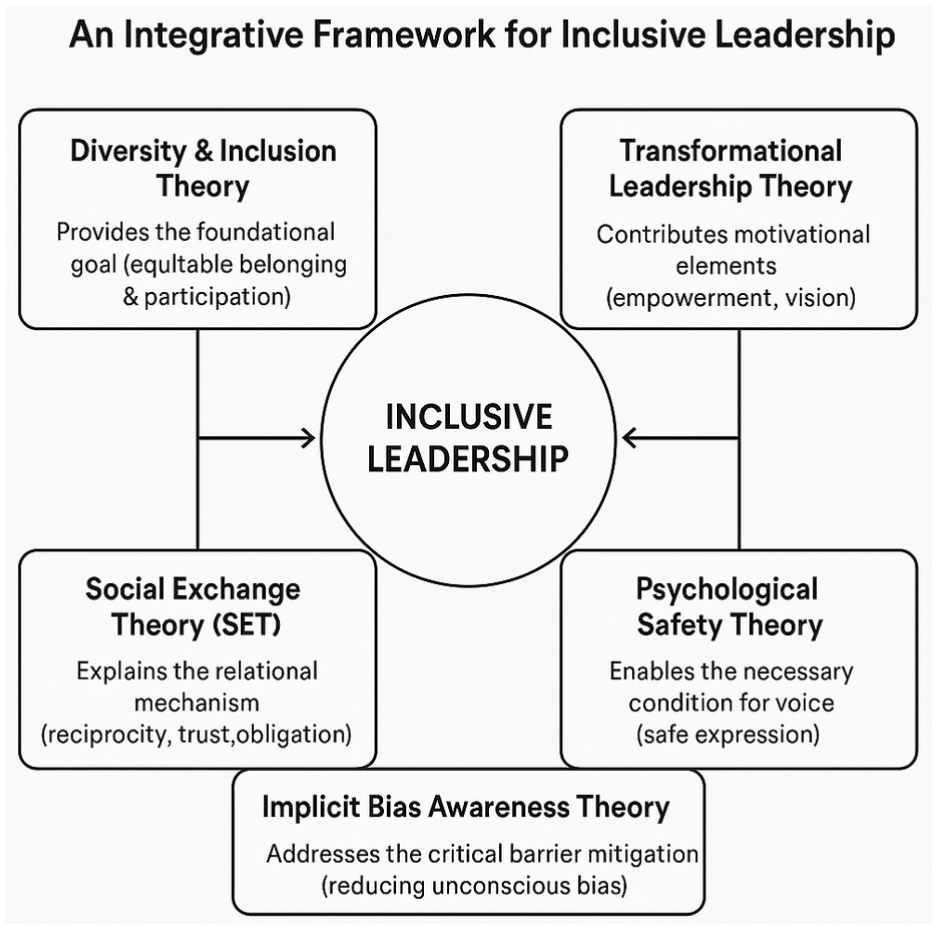
Integrative model of inclusive leadership foundations.
According to the aforementioned paradigm, inclusive leadership is the dynamic process of utilizing these interrelated theoretical principles in concert to foster an atmosphere where varied talent may flourish and contribute fully, improving organizational performance.
The combination of these concepts offers a strong foundation for inclusive leadership in the hotel sector. Leaders that appreciate diversity, foster psychological safety, and lessen unconscious bias create an inclusive workplace that enhances human well-being and business performance. But accomplishing this integration is difficult and fraught with difficulties, such as possible conflicts between corporate objectives and equity goals, the challenge of maintaining true psychological safety and bias reduction, and the level of resources needed for successful implementation across hierarchical structures (Findler et al., 2007; Q. M. Roberson, 2006).
Dimensions of Inclusive Leadership
To establish an equal workplace, inclusive leadership removes prejudices, promotes a sense of belonging, and values individual diversity (Randel et al., 2018; Shore et al., 2018). To guarantee that different workers are appropriately integrated and that their contributions are acknowledged, executives in the hospitality industry need to receive inclusive leadership training (Ashikali & Groeneveld, 2015; Carmeli et al., 2010; García-Rodríguez et al., 2015). Visible commitment, courage, awareness of bias, curiosity, cultural intelligence, and collaboration are some of the essential characteristics that characterize inclusive leadership (Bourke & Espedido, 2019; Chung et al., 2020; Lee et al., 2021).
To establish an inclusive workplace, inclusive leaders actively include staff members, encourage diversity, and set an example (Guo et al., 2020; X. Wang & Shi, 2021). They support fair hiring, promotion, and development opportunities and make sure that rules and procedures stay impartial and inclusive (Detert & Burris, 2007; Randel et al., 2018). Since companies that actively monitor their inclusion efforts typically have superior long-term success, measuring and tracking diversity initiatives provides accountability and ongoing progress (Javed et al., 2019; L. Qi et al., 2019; Zhu et al., 2020).
Even when doing so may be unpopular or encounter opposition, courageous leaders confront discrimination head-on, encourage underrepresented staff, and question the current quo (Bourke & Espedido, 2019; Obuobisa-Darko et al., 2023). They promote open communication, allowing workers to freely express their thoughts and concerns, which builds workplace inclusion and trust (Lee et al., 2021; Perry et al., 2021). By giving them leadership chances and career development pathways, courageous leaders also support underrepresented workers (N. Li et al., 2014; Shore & Chung, 2022).
Highly inclusive leaders understand personal and organizational biases, encouraging justice and equality in all decision-making processes (Bourke & Espedido, 2020; Dillon & Bourke, 2016). Leaders who are cognizant of bias foster an environment where workers feel appreciated and are evaluated on their contributions rather than stereotypes or preconceptions (Chak et al., 2022; Fujimoto & Hartel, 2017). Teamwork, productivity, and general job satisfaction all significantly improve in firms that address prejudices, according to research (Q. Roberson & Perry, 2022; Van Knippenberg & Schippers, 2007).
By encouraging an openness to different viewpoints and boosting creativity and participation, curiosity propels inclusive leadership (Bourke & Espedido, 2019; S. B. Choi et al., 2017). Curiosity-driven leaders are more inclined to investigate novel concepts, question conventional wisdom, and include other points of view into their decision-making (Ardichvili et al., 2008; Bennett, 2014). Businesses with curious CEOs routinely beat rivals in terms of market share and revenue growth (Korkmaz et al., 2022; M. Qi & Liu, 2017). Additionally, companies that cultivate a culture of inquiry are better equipped to adjust to shifting consumer needs and market conditions (Hollander, 2009; Javed et al., 2019).
Effective cross-cultural communication is made possible by cultural intelligence, which guarantees inclusivity in heterogeneous and multinational workplaces (Sternberg et al., 2021; K. W. Thomas et al., 2015). It consists of behavioral, cognitive, and motivational elements that assist leaders in comprehending various culture norms and modifying their communication approaches appropriately (Earley & Mosakowski, 2004; Liao & Thomas, 2020). High cultural intelligence leaders are able to establish rapport with staff members from a variety of backgrounds, creating an atmosphere where everyone is treated with dignity and respect (Ang & Van Dyne, 2008; Van Dyne et al., 2012).
By empowering diverse teams and maintaining psychological safety, where workers feel free to voice their opinions without worrying about prejudice or reprisal, inclusive leaders promote collaboration (Lee et al., 2021; Obuobisa-Darko et al., 2023). By utilizing the strengths of various teams, effective collaboration enhances workplace performance and innovation and facilitates improved problem-solving and decision-making processes (Chak et al., 2022; Shu & Wang, 2021). In order to foster collaboration, leaders must also take a participative rather than an authoritarian stance, making sure that each team member feels appreciated and recognized (Maalouf, 2019; Witte, 2012).
In the hospitality industry, where diversity is crucial for expansion and creativity, inclusive leadership improves employee engagement and organizational success by incorporating these factors (Bourke & Espedido, 2019; Dillon & Bourke, 2016). Leaders that embrace and hone these inclusive leadership qualities will be in a better position to build successful, high-performing companies that draw and keep diverse people as the hospitality sector continues to embrace inclusivity (Cheng et al., 2022; Fu et al., 2020).
Concepts and Dimensions of Workplace Employees’ Performance
In the competitive world of the hospitality industry, the performance of employees in hotels plays a crucial role in ensuring guest satisfaction and overall success. From front desk staff providing warm welcomes to housekeeping ensuring rooms are clean and comfortable, every employee’s contribution is essential. Effective communication, teamwork, and a strong work ethic are just a few factors that can impact employee performance in hotels. By understanding the significance of employee performance and implementing strategies to support and motivate staff, hotels can create a positive work environment that ultimately benefits both employees and guests (Aboul-Ela, 2017; Sackett & Walmsley, 2014).
According to several earlier authors, performance is conceptually categorized and divided into three separate dimensions: task performance, adaptive performance, and contextual performance (e.g., Aboul-Ela, 2017; Sackett & Walmsley, 2014; Pardhan & Jena, 2017).
Pardhan and Jena (2017) pointed that “task-based performance” is made up of task-explicit behaviors, including those that are provided as part of a job description. The capacity to do the task and prior experience are the main predictors of task performance. Task performance in an organizational setting refers to the agreement between a management and a subordinate to complete a task that has been given to them (e.g., Sackett & Walmsley, 2014; Seddigh, 2015).
Performance on committed tasks is divided into two categories: leadership task performance and technical-administrative task performance. Technical administrative task performance refers to the expected job performance that includes organizing, planning, and managing the daily workload using one’s technical expertise, business acumen, and other factors. Setting strategic goals, preserving appropriate performance standards, and inspiring and guiding subordinates to complete the task through encouragement, praise, and constructive criticism are all ways that leadership task performance is measured (Chirumbolo, 2015; Tripathy, 2014).
“Adaptive performance” refers to a person’s capacity to adjust to and offer the required assistance to the job profile in a dynamic work environment (Hesketh & Neal, 1999, as cited in Pardhan & Jena, 2017). According to earlier research, after workers achieve a certain level of proficiency in their assigned duties, they attempt to modify their attitudes and behaviors to fit the various demands of their professional positions (e.g., Aboul-Ela, 2017; Huang et al., 2014). Employees must be able to deal effectively with unpredictable work situations in order to perform adaptively (Baard et al., 2014), such as changes in technology, changes to one’s primary job assignment, organizational reorganization, and so on.
Due to the evolution of several new professions as a result of technology advancement, workers must participate in new learning and become effectively adaptive to change (Bryson et al., 2017; Griffin et al., 2010). To function well with a diverse group of peers and subordinates under such altered circumstances, the employees are also expected to modify their personality features. Griffin et al. (2007) stated that while job competency may help with task performance, adaptability and pro-activeness to one’s job role are crucial to deal with uncertain business settings.
“Contextual performance,” or pro-social behavior displayed by people in a work setting, is the third dimension of workplace employees’ performance. Although such conduct is required of employees, it is not explicitly stated in the job description (Pardhan & Jena, 2017). Prosocial behavior or extra role behavior are terms used to describe these kinds of implicit expectations. According to Bergeron (2007), contextual performance should include a variety of “sub-dimensions” like collaboration, loyalty, and tenacity.
The espirit-de-corps, or “body spirit,” of the context is elaborated on the basis of “feeling and viewpoint” that the employee embraces about their coworkers (team spirit). Teamwork fosters a sense of solidarity among employees, enabling them to freely and voluntarily communicate their concerns and issues with one another within the company (J. Y. Choi et al., 2019; Kalia & Bhardwaj, 2019). A great strategy for achieving organizational success is esprit-de-corps (Ahmad, 2017). Growth in team spirit within a company leads to higher employee performance and a happier workplace, according to Reisel et al. (2010). Contextual performance is a type of attitude that includes doing extra work for no pay, assisting others with difficult tasks, maintaining enthusiasm at work, collaborating with coworkers in times of need, sharing vital resources and information for organizational development, adhering to established rules and regulations, and supporting organizational decisions for better change (J. Y. Choi et al., 2019; Kalia & Bhardwaj, 2019). This type of conduct supports in achieving both individual productivity and organizational performance by fostering a stimulating workplace culture and climate. The introduction of personality tests and group discussions for assessing a potential candidate’s capacity for contextual performance in addition to the efficiency tests (ability and experience tests) to gage their task performance is suggested for choosing and on boarding the right individuals in businesses (Pardhan & Jena, 2017).
Empirical Studies and Hypothesis Development
Inclusive Leadership and Workplace Employees Performance
Studies have indicated that the performance of employees in the hotel business is significantly impacted by inclusive leadership. A leader who practices inclusive leadership (IL) invites people to participate and expresses thanks for their contributions, according to a ground breaking study by Nembhard and Edmondson (2006). The article claimed that IL improved worker engagement and had a favorable effect on psychological safety.
Furthermore, it has been stated that the sense of uniqueness and belonging that comes from inclusive leadership (IL) will foster extraordinary relationships between leaders and followers (Xiaotao et al., 2018). First of all, IL promotes an atmosphere in which subordinates receive the same treatment as members of their own group without distinction (Q. M. Roberson & Perry, 2021). Therefore, a workplace that is inclusive eradicates the feeling of ignorance and isolation among employees. Every employee has the need to feel like they belong and wants to be valued; if these needs are met, they will thrive and the organization will gain greatly from them (Mor Barak et al., 2022).
Since belongingness is regarded as a fundamental need, its absence or deficiency will have a detrimental effect. For instance, it might trigger anxiety attacks, which would lead to melancholy and despair as well as a collapse in their self-esteem (Baumeister & Leary, 1995). Employees who didn’t feel like they belonged started acting aggressively (Twenge et al., 2002), and their psychological behavior decreased (Twenge et al., 2007). Positive behavior, on the other hand, ought to be pursued from the point of establishing to strengthening social ties or participating in the group. Therefore, when a manager grants a worker the freedom to be involved without being micromanaged, the worker will be more motivated to work hard. Likewise, when managers show encouragement and acknowledge workers’ efforts, they will reciprocate, leading to increased productivity at work (Mansoor et al., 2020). Furthermore, workers will react to the IL of their superiors by working harder and taking aggressive steps to improve their reciprocal relationship with their bosses (L. Qi et al., 2019).
Lastly, inclusive leadership offers a forum where staff members from various divisions, ranks, and demographic groups collaborate to find a consensus on a shared issue via participatory decision-making (S. B. Choi et al., 2017). Although incorporating diverse viewpoints is not necessarily a sign of a manager’s trust, concern, or respect for staff members (Javed et al., 2020), it does provide staff members with a high-quality intrinsic incentive for their work (S. B. Choi et al., 2017).
Social Exchange Theory (SET; Aydin, 2020) states that when inclusive leadership shifts from a lower to a moderate level, supervisors encourage staff members to participate in decision-making, which forces staff members to respond by putting in exceptional work performance. Randel et al. (2018) discovered, for example, that a supervisor’s participative leadership has a major effect on workers’ performance at work.
According to Yang et al. (2020), the hospitality industry is service and people-oriented; hence in order to provide exceptional services, more voluntary and proactive behaviors are required. According to van Knippenberg and van Ginkel (2022), IL promotes a mature working relationship where leaders and staff have mutual trust and collaborate as a team to support one another. On the other hand, the same mature relationships and bonding keep workers motivated to work for the organization’s benefit. This encourages them to perform more voluntary actions, like lending a helping hand, putting in extra hours, offering services that go above and beyond what the customer could have imagined, and creating customer-focused citizenship and prosocial behaviors in service (Mansoor et al., 2020).
When supervisors treat their subordinates well, the subordinates should reciprocate favorably for the benefit of the hotel by acting in a similar or even more positive manner, such as increasing their performance effort (Aboul-Ela, 2017; Muhammad et al., 2020; Pardhan & Jena, 2017; Sackett & Walmsley, 2014). This is how inclusive leadership encourages workers to perform at a high task and contextual level. Furthermore, as noted by Hesketh and Neal (1999, cited in Pardhan & Jena, 2017), inclusive leadership can effectively support and intellectually stimulate subordinates to question the status quo, think creatively, and identify and adopt innovative ways of working. This can result in high-quality services and original solutions. According to Tripathy (2014) and Chirumbolo (2015), inclusive leadership encourages task performance and empowers staff to exhibit more creative and prosocial service behaviors in order to better meet the individual requirements of clients.
Drawing from the aforementioned discourse, the present study posits that an increase in employee IL can lead to higher productivity levels. This is because employees will feel valued and treated fairly, and their opinions will be taken into consideration when making decisions. Therefore, following hypothesis has been proposed.
Conceptual Framework of the Study
The conceptual framework of the study, which illustrates the relationship between inclusive leadership and workplace performance, can be structured as follows:
Independent Variables: “Inclusive Leadership”: This variable comprises visible commitment, courage, cognizance of bias, curiosity about others, cultural intelligence, and effective collaboration. Inclusive leadership practices are expected to positively influence workplace performance.
The Dependent Variable Employees’ Workplace Performance: This variable consists of three dimensions: (Task Performance, Adaptive Performance, and Contextual Performance). Proposed Relationships: Inclusive Leadership is expected to have a direct and positive influence on all three dimensions of Employees’ Workplace Performance. Hence, constructed model is shown in Figure 2.

Proposed model of the research.
Research Methodology
Research Paradigm, Design and Approach
Research Paradigm
This study is centered on the positivist research paradigm. The strategy utilizing quantitative data has been examined and appraised for the analysis section. This study suggests that positivism research philosophy aids in accurate data assessment. Knowing the various methods from a research method standpoint is crucial, in accordance with the defined the grounding philosophy. Deductive theory and inductive theory are the two primary methods. Based on their ability to analyze the data acquired in accordance with the study’s aims, the researchers have determined that a deductive technique is the best suitable for this particular study (Thoman, 2006). This means that the researchers start with a theory or hypothesis based on existing knowledge and use this to guide our data collection and analysis. By using a deductive approach, the researchers can ensure that their study is focused and that the data collected is relevant to their research aims.
Research Design
In order to investigate the connections between inclusive leadership and workplace performance, this study uses a cross-sectional survey using a quantitative methodology and a descriptive and explanatory research design. Because of practical restrictions like time and resource constraints, this study used a cross-sectional survey methodology. The cross-sectional methodology is suitable for investigating the connections between inclusive leadership, and performance at a particular moment in time, even though a longitudinal approach would better capture leadership effects over time. The descriptive component concentrates on methodically gathering and examining data in order to spot trends and patterns in workplace performance metrics and inclusive leadership practices. Establishing causal links between inclusive leadership and workplace success is the goal of the explanatory component. A cross-sectional survey was used to collect data at a particular moment to investigate how inclusive leadership practices affect overall workplace performance in the hospitality industry.
Research Approaches
This study used a self-administered questionnaire and a quantitative research approach to guarantee reliability and objective analysis. This approach was selected because quantitative methods are especially well-suited for statistically testing predicted links and assessing variables such as inclusive leadership and workplace performance (Zikmund, 2003). In order to minimize researcher influence and enable thorough analysis, the self-administered questionnaire format effectively collected information on characteristics, attitudes, and behaviors directly from respondents (Watson et al., 2008). Thus, this method is suitable for thoroughly investigating the relationship between inclusive leadership and workplace performance.
Target Population and Sample Size Determination
Target Population
Employees of 15 five-star hotels in Addis Ababa make up the target population. The following hotels are listed: Marriott Executive Apartments Addis Ababa, Elilly Hotel, Sheraton Addis, Hyatt Regency Addis Ababa, Sapphire Addis, Hilton Addis Ababa, Skylights Hotel, Golden Tulip Addis Ababa, Haile Grand Addis Ababa, Stay Easy Plus Hotel, Radisson Blu Hotel, The Grand Palace Hotel, Capital Hotel and Spa, a Luxury Collection Hotel, Addis and Revolution International Hotel (Source: Hotel Association of Ethiopia). The study focuses on employees with a minimum of 3 years of work experience and at least a 12th grade certificate, aligning with the study’s aim to assess the perceptions of experienced, full-time staff who are capable of meaningfully evaluating leadership behaviors, as supported by relevant empirical and theoretical literature. Excluded are those without a 12th grade certificate or those with less than 3 years of experience. With an estimated 2,250 workers, this diversified group is anticipated to contribute insightful information pertinent to the research.
Sample Size Determination and Sampling Technique
In sample size determination, the Yeman formula (1967) is often used to calculate the appropriate number of samples needed for a study. The formula, N = N/1 + N(e2), where N is the population size and e2 is the margin of error, helps researchers determine the most appropriate sample size to ensure the results are statistically significant and representative of the population as a whole. In this case, with a population size of 2,250 and a margin of error of 0.052, the calculated sample size using the formula is

Sampling Technique
This study’s sample size strategy mixes systematic random sampling with proportional allocation. To ensure fair representation, the 339 total sample size is first divided among the 15 hotels in accordance to the number of their workforce. Participants are chosen using systematic random sampling after the proportional distribution has been established.
Data Collection Technique
The main tool utilized in this study to collect data from staff members at the chosen five-star hotels was a structured questionnaire. The survey was made up of standardized questions intended to evaluate several facets of inclusive leadership practices and performance results in the workplace. It was divided into several categories, including demographic data and verified self-report measures of employee performance and leadership practices.
A five-point Likert scale was also used in the questionnaire to let respondents express how much they agreed with each statement. To guarantee content validity and reliability, every measuring item was modified from previously approved tools in the literature.
Pre-Testing or Validity and Reliability of Research Instruments
A pretest was carried out with a sample of 30 respondents selected from hotel staff who were not included in the final survey prior to the full-scale data gathering. The purpose of this pilot test was to find any problems with the instrument’s overall structure, question phrasing, and item clarity. The necessary changes were made in response to the input, including rewording unclear passages and eliminating or improving questions that were difficult to understand.
Internal consistency was initially evaluated using Cronbach’s Alpha to guarantee the validity and reliability of the instrument; values of .70 or higher were deemed appropriate for each construct (Mugenda & Mugenda, 1999). The convergent validity of the constructs was then investigated using Confirmatory Factor Analysis (CFA). The Average Variance Extracted (AVE) was calculated to make sure it was greater than 0.50 for each construct, and items with standardized factor loadings ≥ 0.50 were kept. Using CFA loadings, Composite Reliability (CR) was also computed, with a threshold of CR values ≥ 0.70 (Hair et al., 2010). Items with low loadings or those that adversely impacted validity and reliability were eliminated from the instruments in order to further improve them.
Measurement Model
This study’s measurement technique uses a second-order Confirmatory Factor Analysis (CFA) to investigate the connection between inclusive leadership and workplace performance (Hair et al., 2010; Kline, 2016). Because the study sought to examine theoretically based notions of inclusive leadership and workplace performance, CFA was used to validate the measuring model. CFA is appropriate when the factor structure is set based on current theory and empirical data, in contrast to exploratory factor analysis (EFA). In order to make sure that observed variables appropriately reflect their intended factors, it makes it possible to evaluate the validity and reliability of latent constructs (Hair et al., 2010; Kline, 2016).
Commitment, Courage, Cognizance of Bias, Curiosity, Cultural Intelligence, and Collaboration are the six first-order latent elements that make up the second-order construct of inclusive leadership. Multiple observed items that capture the corresponding aspects of inclusive leadership are used to measure each of these first-order constructs. Similarly, three first-order latent factors Contextual Performance, Adaptive Performance, and Task Performance that are each assessed using a variety of observed indicators make up the second-order construct that is used to model workplace performance.
The observed measurement items and the general second-order constructs are mediated by the first-order constructs in this paradigm. In order to guarantee that each indicator accurately reflects its corresponding latent variable, factor loadings specify the measurement relationships. The strength of each first-order construct’s contribution to the total second-order construct is further established by the second-order factor loadings. The structural model then looks at how inclusive leadership directly affects workplace performance, determining whether more inclusive leadership has a favorable impact on workers’ contextual, adaptive, and task performance.
Important goodness-of-fit indices, including Tucker-Lewis Index (TLI), Chi-square (χ2/df), Standardized Root Mean Square Residual (SRMR), Root Mean Square Error of Approximation (RMSEA), and Comparative Fit Index (CFI), will be assessed in order to validate the measurement model. According to Civelek (2018) and Hair et al. (2010), a good model fit is indicated by CFI and TLI values above 0.90, RMSEA below 0.08, and SRMR below 0.08. The impact of inclusive leadership on workplace performance in the hospitality sector may be thoroughly analyzed according to the CFA technique, which guarantees a thorough evaluation of the latent constructs.
Result and Discussion
Demographic Characteristics of Respondents
Of the 339 self-administered questionnaires that are provided, 323 respondents fill them out and send them back. The remaining surveys, though, are not filled out or returned. 95.2% was the response rate as a result. The respondents’ demographic details are shown below (refer to Table 1). In terms of gender, the majority of employees in the hotels under study were female (51.7%), while the workforces at these hotels ranged in age from under 40, suggesting that the majority of the workforce was youthful. Most employees in the hotels under study have degrees or diplomas (31.9% and 33.1%, respectively). Finally, the plurality of responders (34.1%) had 5 to 10 years of job experience.
Demographic Characteristics.

Test of Reliability and Validity
Test of Reliability (Cornbach’s Alpha Test)
To determine scale dependability, internal consistency was initially evaluated using Cronbach’s alpha. All constructs reached or beyond the 0.70 criterion (Mugenda & Mugenda, 1999), as seen in Table 2, indicating sufficient reliability for further analysis.
Cornbach’s Alpha Statistics Results.

Test of Reliability (Composite Reliability)
The
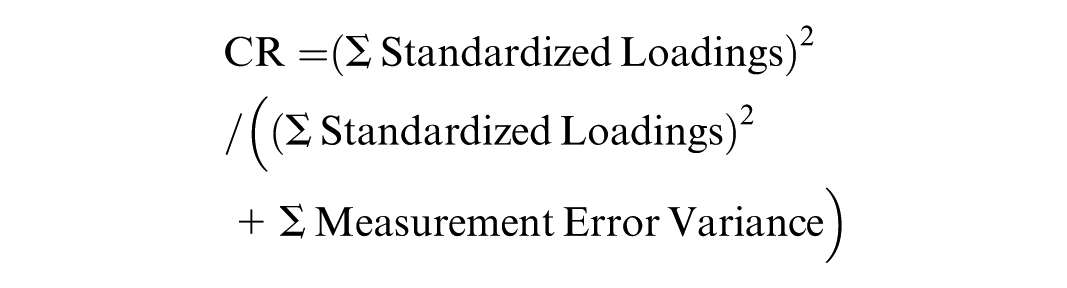
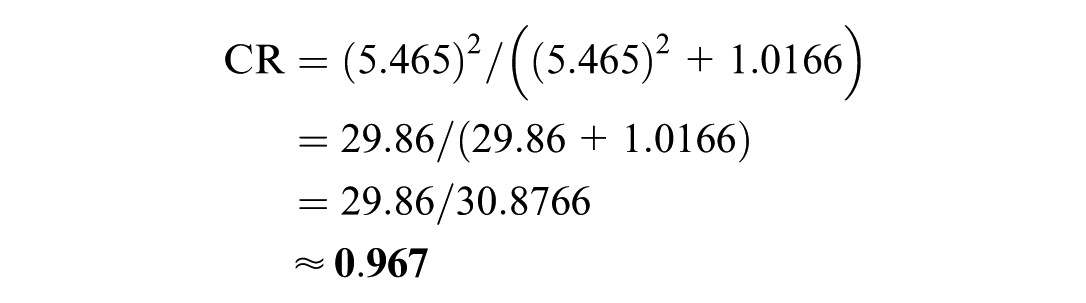
Factor Loading or Estimations.


Test Convergent Validity (AVE)
The Average Variance Extracted (AVE) measures the amount of variance captured by a construct relative to the amount of variance due to measurement error. AVE is calculated using:


In conclusion, both workplace performance and inclusive leadership exhibit high reliability, with composite reliability scores of 0.84 and 0.967, respectively. With average variance extracted (AVE) values of 0.83 for inclusive leadership and 0.646 for workplace performance, both of which are higher than the suggested cutoff of 0.5, they also demonstrate good convergent validity (Hair et al., 2010). These findings suggest that both notions have substantial validity and strong internal consistency.
Assessment of Goodness of Model Fit (GFI)
In Structural Equation Modeling (SEM), there is no universally accepted method for assessing model fit (Civelek, 2018). However, Hair et al. (2010) emphasize the importance of evaluating at least one fit index from each category of model fit. This study examined the model’s fitness across three categories: absolute fit, incremental fit, and parsimonious fit. The results indicate that all indices meet their respective thresholds, as summarized in Table 4.
Summary Table of Model Fit Indices.

The model’s fitness was assessed using absolute, incremental, and parsimonious fit indices, as indicated in Table 4, and each of these indices reached their corresponding thresholds. The chi-square test produced a non-significant result (p = .340) for absolute fit, meaning that there was no discernible difference between the model and the observed data. The model’s fit for the data is supported by the error measures, which include a PCLOSE of 1.000 and an RMSEA value of 0.009, which validate minimal approximation error (Schumacker & Lomax, 2021). Excellent model alignment is further confirmed by the CMIN/DF ratio (1.028), which is well below the suggested cut-off of 2.0 (Kline, 2016; Steiger, 1990). Other indices that demonstrate strong model representation, such RMR (0.056) and GFI (0.923), also satisfy acceptable benchmarks.
When compared to a null model, indices like NFI (0.928) and CFI (0.998) for incremental fit exceed their respective cut-offs of 0.90 and 0.95, demonstrating the model’s resilience in describing data structure (Hair et al., 2019). Last but not least, metrics such as PGFI (0.780) and PNFI (0.839) show a fair trade-off between model simplicity and fit quality, suggesting that the model attains parsimonious fit without going overboard.
Hypothesis Testing
The beta coefficients and p-values shown in Figure 3 and Table 5 of the regression analysis show how inclusive leadership significantly improves a range of workplace outcomes. With a highly significant p-value (p < .001) and a beta coefficient of .771, inclusive leadership is a strong predictor of workplace effectiveness. This study shows that encouraging inclusion among leaders significantly raises the performance of all employees in an organization.

Structural equation model.
Unstandardized Regression Weights.

Note. Parameters fixed to 1.000 were constrained for model identification.
p < .001.
Inclusive leadership is crucial for improving teamwork, cross-cultural competency, and awareness of unconscious prejudices. It also had a substantial impact on collaboration (β = 1.340, p < .001), cultural intelligence (β = 1.305, p < .001), and bias cognizance (β = .907, p < .001). Additionally, it has a beneficial impact on dedication (β = 1.039, p < .001) and curiosity (β = .808, p < .001), creating an atmosphere where workers are more committed, engaged, and creative.
Task performance had a significantly lower standardized loading (0.655) than contextual performance (0.831) and adaptive performance (1.000) among the three aspects of workplace performance. This implies that behaviors that go beyond normal tasks are given more weight in the present hospitality context, particularly under inclusive leadership. According to theoretical viewpoints on contemporary performance frameworks (e.g., Griffin et al., 2007), task execution alone is not as predictive of workplace effectiveness in dynamic, service-oriented contexts as contextual contributions and adaptability.
All things considered, the analysis demonstrates that inclusive leadership is a key factor in organizational performance, fostering a productive and cooperative work environment in the hotel sector. To maximize employee involvement, creativity, and adaptability, organizations are urged to give top priority to the development of inclusive leadership strategies.
Discussion
The findings of this research, which are based on Addis Ababa’s five-star hotels, highlight how important inclusive leadership is in influencing several facets of workplace performance, as seen in Table 5 and Figure 3. Social Exchange Theory (SET), which emphasizes reciprocity and mutual obligation; Diversity and Inclusion Theory, which emphasizes equitable and respectful treatment; Psychological Safety Theory, which guarantees a safe environment for interpersonal risk-taking; and Implicit Bias Awareness Theory, which addresses the reduction of unconscious biases in leadership behavior, are some of the major theoretical stances that support these results.
The result that inclusive leadership positively predicts workplace performance (β = .771, p < .001) is consistent with SET, indicating that when leaders act inclusively by exhibiting justice, acknowledgment, and support employees respond by doing better. This is in line with research that indicates inclusive leadership fosters employee engagement and motivation, both of which improve performance (Kundu & Mor, 2022; H. Wang et al., 2023). In Ethiopia’s multicultural hospitality industry, inclusive leadership satisfies the individual requirements of a heterogeneous workforce, strengthening a feeling of community and common objectives fundamental elements of both the Diversity and Inclusion Theory and the Psychological Safety Theory. According to earlier studies, inclusive policies improve service quality and personnel retention (Abebe, 2023; Assefa, 2023; Desta & Ali, 2023).
The importance of psychological safety, where workers feel free to share, support, and co-create without worrying about criticism, is further shown by the significant predictive association between inclusive leadership and collaboration (β = 1.340, p < .001). This is also in line with Social Exchange Theory, which holds that cooperative behavior is encouraged by transparent and encouraging leadership as a sign of mutual commitment. Leadership that encourages transparency and team cohesiveness improves internal efficiency and guest satisfaction at five-star hotels, where smooth service relies on integrated teamwork (Desta, 2022; Kim & Lee, 2023; Lemessa & Teshome, 2023; Okechukwu et al., 2023; Wright et al., 2022).
The favorable impact of inclusive leadership on curiosity (β = .808, p < .001) is also supported theoretically by psychological safety theory. Leaders who create inclusive workplaces inspire staff members to solve problems and do new things without worrying about failing. In Ethiopia’s quickly changing hospitality sector, this curiosity fuels creativity and flexibility, which are essential skills (Berhane, 2023; He et al., 2023; Moges & Mekonnen, 2022; Tadesse & Hagos, 2023; Zhang et al., 2022).
Both Diversity and Inclusion Theory and Implicit Bias Awareness Theory concepts are shown in the substantial correlation between inclusive leadership and cultural intelligence (β = 1.305, p < .001). Leaders that possess cultural intelligence are better able to comprehend, value, and collaborate with employees from a variety of backgrounds in a multicultural metropolis like Addis Ababa. Research backs up the claim that inclusive leaders create teams with cultural competence that can cooperatively handle diversity (Abebe, 2023; Getachew, 2022; Kim & Lee, 2023; Nguyen et al., 2023; Worku, 2022).
In line with implicit bias awareness theory, inclusive leadership also has a substantial impact on bias awareness (β = .907, p < .001). Inclusive leaders foster workplaces that are just and equal by being aware of and actively addressing unconscious prejudices. In addition to raising staff morale, this encourages fairness in decision-making, which is crucial in service environments where customer trust and employee retention are impacted by perceptions of justice (Johnson et al., 2023; Lemessa & Teshome, 2023; Smith et al., 2023; Tadesse & Hagos, 2023; Worku, 2022).
Supported hypotheses for commitment (β = 1.039, p < .001) and courage (β = 1.000, deemed significant) highlight how inclusive leadership increases resilience. When leaders promote inclusion and psychological safety, their workforces develop courage, which allows them to take the initiative and speak up, and commitment, which shows their continuous dedication. These actions are essential for negotiating the Addis Ababa hospitality industry’s resource limitations and competitive obstacles (Ayele & Tadesse, 2022; He et al., 2023; Mengistu & Wolde, 2023; Smith et al., 2023; Wright et al., 2022).
Furthermore, its varied contribution to workplace outcomes is seen in the considerable impact of inclusive leadership on task performance (β = .655, p < .001), contextual performance (β = .831, p < .001), and adaptive performance (β = 1.000, considered significant). Social Exchange Theory states that inclusive leaders encourage reciprocal efforts that lead to high task efficiency and high-quality service by offering clarity, resources, and support (Ayele & Tadesse, 2022; Deng et al., 2023; Desta & Ali, 2023; Lemessa & Teshome, 2023; Smith et al., 2023).
By creating a welcoming, courteous, and socially cohesive workplace, inclusive leadership also promotes contextual performance. This entails acknowledging the contributions of staff members and guaranteeing their involvement in establishing team objectives and culture, as endorsed by Diversity and Inclusion Theory (Desta & Ali, 2023; He et al., 2023; Johnson et al., 2023; Wright et al., 2022; Zhang et al., 2022).
Last but not least, inclusive leaders who promote adaptability, learning, and resilience enable adaptive performance the capacity to react to unforeseen obstacles. When workers feel appreciated and encouraged, they are more inclined to innovate and adapt to change (He et al., 2023; Abebe, 2023; Berhane, 2023; Getachew, 2022; Lemessa & Teshome, 2023). This performance dimension is based on both Psychological Safety Theory and SET.
Conclusions, Implications, and Future Research Directions of the Study
Conclusion of the Study
In summary, the results highlight how important inclusive leadership is in influencing Employees’ workplace performance in the hospitality sector in a variety of ways. In order to promote task efficiency, contextual performance, and adaptability in the face of changing circumstances, inclusive leadership cultivates teamwork, curiosity, cultural intelligence, courage, and fairness. These qualities are necessary to keep Addis Ababa’s five-star hotels competitive while guaranteeing excellent visitor experiences and great employee satisfaction. Maintaining these results and propelling the sector forward will require ongoing investment in inclusive leadership development initiatives.
Implications of the Study
In theory, this research contributes to the knowledge of inclusive leadership in the hospitality industry, especially as it relates to Addis Ababa’s five-star hotels. This study fills a significant vacuum in the literature on leadership and organizational behavior by offering empirical evidence from an African viewpoint, since the majority of previous research has concentrated on Western and Asian contexts. The study supports Social Exchange Theory (SET) and Psychological Safety Theory by proving that inclusive leadership significantly improves workplace performance (β = .771, p < .001), showing that employees are more engaged, motivated, and productive when they feel included. This extends earlier studies in various cultural and economic contexts and supports the idea that inclusive leadership creates a favorable work environment that improves task, contextual, and adaptable performance.
Furthermore, by providing empirical support for the importance of cultural intelligence, curiosity, teamwork, commitment, courage and bias awareness as essential elements of inclusive leadership in a multicultural service-oriented sector, the study adds to the body of literature on leadership. According to the results, these leadership qualities not only boost productivity at work but also foster innovation and superior customer service, all of which are essential for luxury hotels to remain competitive. Additionally, the study offers empirical support for the second-order Confirmatory Factor Analysis (CFA) model of workplace performance and inclusive leadership, providing a reliable measuring model that can be used by future researchers to evaluate the efficacy of leadership in comparable settings.
In terms of practicality, the results highlight how crucial inclusive leadership techniques are for hotel managers looking to raise employee engagement and service quality. Given the high turnover rates and diverse workforce in the hotel industry, this study advises managers to prioritize leadership development programs that promote qualities like psychological safety, teamwork, and cultural intelligence. In particular, hotels ought to conduct inclusion audits every 3 months to gage how employees feel about inclusion, belonging, and fairness in all areas. To find and solve inclusion gaps, they should also set up diversity-focused feedback loops, including anonymous surveys or biannual employee voice sessions. Furthermore, it should be mandatory for managers to annually finish certification programs on inclusive leadership competences that include hands-on modules on conflict sensitivity, active listening, and bias mitigation. Hotels may improve client experiences and gain a competitive edge in the Ethiopian and international hospitality markets by implementing structured inclusive leadership training that promotes employee retention, job happiness, and service quality.
Additionally, this study emphasizes how important it is for organizations to have inclusive policies. To ensure that leadership at all levels exemplifies inclusivity, human resource managers should incorporate inclusive leadership abilities into processes for hiring, training, and performance reviews. For example, hiring panels should be gender- and culturally-diverse, and inclusive behaviors should be formally scored as part of annual performance appraisals. Hotels may foster a more fair workplace that improves employee well-being and company success by minimizing prejudice in decision-making. In the end, these findings give policymakers, educators, and hospitality leaders’ practical suggestions that will help them develop a long-lasting and productive workforce in Ethiopia’s expanding tourist and hospitality industry. To encourage systemic adoption throughout the industry, policymakers should also think about including inclusive leadership abilities into national hospitality training programs and hotel licensing requirements.
Limitations of the Study and Future Research Directions
The study contains a number of drawbacks. Its particular emphasis on Addis Ababa’s five-star hotels may restrict the findings’ applicability to other areas or hotel types. Reliance on self-reported data may create response bias, and the cross-sectional design limits the ability to draw conclusions about causality. Furthermore, the organizational and cultural elements unique to Ethiopia might not apply in other situations.
To improve generalizability, future studies could examine inclusive leadership in various hospitality markets and geographical areas. It is advised to conduct longitudinal research to prove causation, and mixed-method approaches may yield more profound understanding. Furthermore, examining how inclusive leadership promotes creativity and adaptability in various sectors may increase the findings’ generalizability.
Future studies should also examine how technology and digital leadership might promote diversity, particularly in remote or hybrid hospitality environments. Understanding how inclusive leadership methods may be modified for technology-driven contexts is essential given the increasing usage of virtual teams, artificial intelligence, and digital communication platforms. Examining how leaders promote inclusivity through online employee engagement programs, virtual training, or digital feedback systems may provide insightful information for future-proofing leadership tactics in the hospitality sector.
Footnotes
Acknowledgements
The partners’ helpful advice and insightful remarks were much appreciated by the authors for their contributions to every step of the work.

Ethical Considerations
Ethical approval for this study was obtained from the relevant institutional review board, ensuring compliance with ethical research standards and participant confidentiality.
Consent to Participate
All participants provided informed consent to participate in the study.
Author Contributions
The first author (SHK) oversaw every step of the procedure, including literature search and selection, data analysis, report writing, and implications. The author participated in every investigation activity related to the study, helped prepare the report, and made adjustments in response to reviewers’ feedback. My supervisors’ instructors were the second (KL) and third authors (TA); they helped me choose a title and gave me guidance as I developed this paper. The final manuscript was read and approved by all the authors.
Declaration
All authors have read and approved the final version of the manuscript and agree to its submission to Sage Open.
Funding
The authors received no financial support for the research, authorship, and/or publication of this article.
Declaration of Conflicting Interests
The authors declared no potential conflicts of interest with respect to the research, authorship, and/or publication of this article.
Data Availability Statement
The data that support the findings of this study are available from the corresponding author upon reasonable request.