




Abstract
The problems of policy structure and coordination must be solved during digital development and low-carbon transitions. Considering the limitations of traditional policy evaluation methods that only focus on one class of policies, we used text mining and ontology semantic methods to build a policy mining dictionary, complete the machine assignment of the Policy Modeling Consistency (PMC) index model, combine the PMC index model with grey association analysis, and explore an optimized policy collaborative evaluation method. We evaluated 34 digitalization policies and 43 low-carbon policies issued in China from 2006 to 2023. Our study explored the degrees of internal and external coordination of digitalization and low-carbon policies from the perspective of dynamic development. The overall design of China’s digitalization and low-carbon policies was found to be reasonable, and policy evaluation scores are increasing. In terms of internal coordination, there are some problems such as unitary policymaking institutions, unitary policy types, and insufficient policy perspectives. In terms of external synergies, there are significant differences in the synergies of policy evaluation, institutions, perspectives, and focuses. Our study suggests that policymakers should pay more attention to cross-sectorial cooperation and improve policy crosscutting in terms of attitudes, types, and timeliness. It has theoretical significance for optimizing the evaluation method based on combining policy text data mining and policy knowledge and improving the analysis of cross-type policy cooperation degrees. This has practical value for policy optimization of the high-quality development of the digital and low-carbon economy.
Keywords
Introduction
In recent years, massive emissions of carbon dioxide and other greenhouse gases have triggered a series of non-traditional security issues, such as extreme weather, global warming, and sea-level rise, which critically endanger the sustainability of human societal development (Yue et al., 2022). Slowing the process of global warming and reducing carbon emissions have become an international consensus (Chen et al., 2020). Addressing climate change, many countries have implemented low-carbon development schemes tailored to their industrial structures, resource endowments, and technological advantages (Ma et al., 2022). As the world’s largest carbon-emitting economy (Cai et al., 2018), China’s carbon emissions will continue to increase (Zhu & Lee, 2022). China is considered to be the world’s most polluting economy, emitting more carbon dioxide than other developed countries combined (Liu et al., 2021). In the early 21st century, to rapidly develop its economy and integrate it into the global value chain, China focused on the speed of economic development and ignored the unsustainable problems caused by high consumption and high-pollution production methods. The extensive development mode of high inputs, consumption, and emissions has become a bottleneck restricting China’s high-quality sustainable development (Tang et al., 2023). Digital transformation is becoming an increasingly important means of addressing global warming and through enhanced energy efficiency, carbon emission reductions, and the advancement of new technologies to achieve green development (Sareen & Haarstad, 2021).
In this context, the 14th 5-year plan puts forward the “1 + N” policy system aimed at achieving carbon peaking and carbon neutrality, which aims to coordinate policies in digital technology, energy, finance, and other fields to achieve the peak of carbon emissions and strive to achieve carbon neutrality before 2030. The growing digital economy serves as a pivotal catalyst for enhancing the industrial structure (Tan et al., 2024). There is an urgent need to use digital technology to improve energy efficiency, conduct low-carbon transformation, and reconstruct the harmonious human-nature relationship characterized by low emissions and minimal resource consumption (Zhou et al., 2022). Although China has actively promulgated both digital and low-carbon policies, the strategic layout at the national level has improved, and the path of implementation in key areas has become clearer, there are still many practical problems in the process of digital and low-carbon coordination, resulting in no substantial synergies between these two types of policies. From a generational perspective, it is difficult to determine the specific future status of certain policies that will be sustainable or “good enough,” which requires timely evaluation and revision, and flexibility to modify goals, policies, and measures according to technological developments and changes in social values (Hildingsson & Johansson, 2016). Thus, existing policies need to be effectively evaluated to identify deep-seated problems and improved to maximize the multiplier effect of digitalization and low-carbon policies.
This study aims to systematically investigate the quality and coordination effects of China’s digitalization and low-carbon policies from the new perspective of holistic governance, with a focus on the following key scientific issues. (1) What is the quality of China’s digitalization and low-carbon policy? (2) Is there a “multiplier effect” between China’s digitalization and its low-carbon policies? (3) What are the deficiencies in the synergy between China’s digitalization and low-carbon policies? and (4) How can we solve the dilemma of digital low-carbon synergy from a policy perspective?
To address these scientific questions, we try to evaluate the quality and synergy of China’s digitalization and low-carbon policies through a comprehensive and empirical approach. We hope to make breakthroughs in the evaluation of policy effects and the measurement methods of the synergy degree of multiple types of policies. We construct a multi-dimensional policy evaluation system based on the PMC index model and apply text mining techniques and grey correlation analysis to assess both internal policy consistency and external coordination between the two policy types. The findings reveal that although a partial synergy exists, significant gaps remain in policy design, coordination mechanisms, and implementation structures, which limit the realization of the multiplier effect. These insights not only enhance theoretical understanding of policy synergy but also offer practical implications for optimizing coordinated policy frameworks in sustainable development. Through the formulation and implementation of coordinated policies, the relationship between financial development and environmental protection can be more effectively balanced and the coordinated development of economic, social, and ecological benefits can be realized.
Literature Review
Digitalization and Low-Carbon
The world is currently facing two socio-technological transformations: the transition to a low-carbon and digital society (Bergman & Foxon, 2023). In the past, in the process of embedding the global value chain, China mainly undertook value chain links with high consumption and pollution transferred from developed countries. In the early stages of economic construction, China placed more emphasis on development speed coupled with a relatively weak pollution control capacity, resulting in serious environmental pollution and other unsustainable problems. As a new economic form, the digital economy continuously improves the digitalization level of the economy and society through the evolution mode of digital industrialization and industrial digitalization, which effectively promotes economic development and improves innovation capacity while showing certain low-carbon effects (Z. Yu et al., 2022). The development and effective use of digital technology is an important way to solve the contradiction between the future utilization of energy and mineral resources and green development. Unlike previous production technologies, digital technology not only greatly enhances production efficiency and resource allocation, but also helps focus on the coordination between production and the environment.
Most studies have concluded that digital development has a carbon-reduction effect (Ji et al., 2023). According to Porter’s hypothesis, effective environmental regulations promote technological innovation and improve the production efficiency of enterprises, thus offsetting or even exceeding the cost increase caused by environmental regulations and ultimately reducing pollution emissions (Porter & van der Linde, 1995). Digitization can produce carbon reduction effects in several ways. From a macro perspective, a country should actively improve its digitalization level to achieve sustainable development goals, thereby improving its position in global value chains (Huang & Zhang, 2023). Leveraging digital technology, the government can gain improved insights into energy market dynamics and pricing trends, thereby effectively managing overall energy supply through strategic pricing and subsidy mechanisms. Through the gradual realization of digital carbon pricing mechanisms, such as charging, taxation, and carbon emission trading, the cost of energy conservation will be reduced, a new energy consumption mode will be formed, and the integrated development of digital low carbon will be promoted. Simultaneously, by digitally managing the carbon emissions trading market, governments can more effectively regulate total energy consumption and curb overall carbon emissions.
At the meso-level, the widespread adoption of digital technology has significantly advanced the refinement and modernization of industrial structures. It plays a crucial role in the perception of carbon emissions in the energy industry, monitoring and trend analysis of emissions, and planning for overall carbon emissions. The combination of monitoring and forecasting can improve the efficiency of energy use and resource allocation while curbing carbon emissions in the energy industry. Digital finance can enhance the energy carbon emission efficiency of the marine industry, refine the energy consumption structure, and accelerate the low-carbon development of China’s economy (Xu & Liang, 2023).
At the micro level, digitalization can not only optimize the end-treatment technology of corporate carbon emissions, but also enable real-time collection, monitoring, transmission, and analysis of energy data by precisely capturing energy flow data and directing energy resources toward efficient distribution. Thus, energy utilization efficiency can be improved, green total factor productivity can be promoted, and carbon emissions can be mitigated. Digitization can markedly lower the carbon emission intensity of Chinese manufacturing enterprises; its impact shows a marginal increase (G. Yang et al., 2023). Furthermore, from an energy conservation perspective, the digital economy will spur innovation in corporate green technologies through spillover and demonstration effects, break the flow barriers of information, data, technology, and talent between regions, and reduce energy usage caused by spatial and temporal factors in both production and daily life. Furthermore, it will promote the improvement of energy utilization efficiency, and thus curb carbon emissions. In short, the emergence of new technologies in the digital economy era are pivotal for achieving the dual-carbon objectives, offering critical technical support for emission reduction on the supply side. They enhance industrial intensity by increasing work efficiency and lowering production costs, consequently diminishing energy consumption, and input. Relying on new technologies on the demand side to enhance consumption and investment patterns drives the transformation and upgrading of the supply side.
Research on Policy Synergy Evaluation
Existing studies on policy synergy evaluation mainly fall into two categories. Internal synergy evaluation explores the policy objectives, subjects, or tools of one type of policy through quantitative policy evaluation methods to study the comprehensive effects of the interaction between different policy elements (Carmen et al., 2023). The evaluation of the internal synergy of policies is conducive to timely determination of whether the sub-indicators of policies are balanced, correcting the situation in which some indicators lag to better play the overall effect of policies and avoid conflicts between different goals. Liu et al. (2023) believe that coordination is an important step in improving the effectiveness of policies, including policy content, policy department, and policy type coordination. Some scholars have constructed multi-dimensional policy analysis frameworks based on various dimensions. For example, Jiang et al. (2023) constructed a three-dimensional policy analysis framework of “policy instrument—innovation value chain—policy level” to compare the focus of energy blockchain policy in China and the USA. Qi et al. (2023) built an analytical framework for digital gap-bridging policies from three perspectives: policy objectives, policy tools, and policy effectiveness. Recently, the Policy Modeling Consistency (PMC) index model has been widely used as a quantitative policy evaluation method. The model can not only evaluate the overall policy but also analyze the advantages and disadvantages of individual policy dimensions. Scholars have introduced this model to various fields of policy evaluation. Liu et al. (2023) constructed an evaluation index system for new energy vehicle industrial policies that includes nine dimensions. Zhao et al. (2023) adjusted and constructed ten first-class variables in the evaluation index system of China’s energy security policy. However, the complexity of the policy makes it impossible to evaluate the effect of a single policy in isolation because not only will the goal setting and implementation intensity of a single policy affect its implementation effect, but there are also problems such as mutual constraints and competition among policies. Therefore, when studying the effectiveness of these policies, the impact of the synergies between them should not be ignored.
The second type of policy synergy evaluation is external synergy evaluation, which focuses on the synergies between two different but related policies, such as the synergies between climate change and biodiversity policies (Jackson, 2011) and between climate and environmental policies (Hildingsson & Johansson, 2016). Evaluation of the external coordination of policies is conducive to the coordinated development of the two types of policies and serves the overall goal of economic and social development. Internal coordination ensures the overall effect of a single policy, while external coordination ensures the coordination between policies in different fields. Both are indispensable and together constitute the “internal and external repair” of policy making. Dinges et al. (2018) analyzed a case study of Austrian government coordination in the field of technology and innovation policy, showing that successful policy coordination requires a systematic framework. Xing et al. (2023) investigated the synergies of low-carbon digital development by establishing an integrated model and assessment system for low-carbon digital, economic, and social development. However, there is no unified research method for evaluating policy coordination.
In summary, although previous research has made significant achievements in terms of methodology and research content, there are still some limitations. First, the existing research on policy coordination evaluation focuses on the internal coordination evaluation of one type of policy. Existing studies also evaluate digital and low-carbon policies separately. This leads to the fragmentation of policies that are difficult to promote and adapt to each other. The policy evaluation method based on the PMC index relies heavily on manual labor and has strong subjectivity from the policy screening process to value assignment; the quantitative results lack objectivity (Liu et al., 2023). Second, because of the complexity of evaluating policy effects, there are few studies on the evaluation of external synergy among different types of policies. There is also no unified and comprehensive research method for external synergy evaluation. Third, most previous studies on policies are static evaluations, lack a dynamic policy analysis, and do not consider the evolution and distinctive traits of policies in different stages of history.
Our study aims to compensate for the limitations in current research and discover the reasons for limiting the multiplier effect between digital and low-carbon policies. The academic and practical contributions of our study are manifested across four aspects. (1) This research integrates the conventional manual assessment approach with advanced big data-driven policy information mining techniques. Combined with the application scenarios of digitalization and low-carbon policies, a multi-stage and multi-dimensional dynamic policy mining and evaluation framework for PMC index evaluation is proposed. (2) The evaluation method for the degree of synergy of different types of policies is designed by combining external and internal synergies. The traditional single-type policy analysis method based on the PMC index model was combined with the grey relational degree analysis method, leveraging the strengths of both methodologies to their fullest extent. (3) The study of dynamic policy evolution is also discussed. In response to the evolving landscape of technological advancements and policy implementation contexts, this study analyzes and identifies the evolution of the internal and external consistency of policies in different stages from the 11th to the 14th 5-Year Plan. (4) According to the characteristics of China’s current digital economy and low-carbon economic development, dynamic policy enhancement recommendations are proposed across various dimensions. This can help practitioners make decisions according to the characteristics of development scenarios. The results of the synergy degree obtained by the study also help explore the coupling degree and depth of mutual interaction between China’s digital and low-carbon policies to comprehensively examine the nexus between the digital economy and sustainable development through the novel lens of holistic governance.
Methods and Data
Data Sources and Collection
The policies selected in this study were collected mainly from the websites of relevant ministries and commissions of the central government, such as the Ministry of Industry and Information Technology (MIIT), National Development and Reform Commission (NDRC), and National Energy Administration (NEA). We used “digital,”“low-carbon,” and “green” as the main title keywords in our search. Due to the large number and scattered characteristics of policies involved in the field of digitalization and low carbon in China, it is difficult to collect them comprehensively. We conducted additional searches on www.pkulaw.com (accessed on July 21, 2023). Given that local policies are usually a continuation of central policies, this study only focused on national-level policies. We selected policies according to the following principles. First, they are directly related to digitization and low carbon. Second, the policy type mainly includes laws and regulations, planning, opinions, methods, and other documents with policy effects. We deleted documents that did not directly reflect the government’s will such as approval, reply letters, and project declaration notices. Third, we deleted invalid policies and retained only the current and effective documents. Fourth, the 11th 5-Year Plan period, which began in 2006, was a key period for China to promote large-scale digitalization and emission reduction. In the 11th 5-Year Plan, digitalization and emissions reduction are listed for the first time as key national development areas, marking a new strategic stage in China’s digitalization and low-carbon development. Therefore, we limited the time horizon of the policies to 2006 to 2023. After thoroughly reading these policy texts, 34 digitalization policies and 43 low-carbon policies were retained.
Research Route
The research route of our collaborative policy evaluation is illustrated in Figure 1 and is divided into the following phases. First, combined with the application scenarios of digitalization and low-carbon development, we built a unified single-type policy evaluation system based on existing research and conducted an overall evaluation of digitalization and low-carbon policies. Then, we establish a policy text mining dictionary based on the PMC index model. Third, based on the policy mining dictionary, machine assignment was used to evaluate the internal consistency of the digitization and low-carbon policies. Subsequently, the degree of external synergy of digital and low-carbon policies was evaluated using a grey correlation analysis. Finally, the degree of internal and external coordination in each stage and dimension was visualized using PMC surface maps, line charts, and bubble maps.

Research route for policy synergy evaluation.
Methods
Evaluation Method of Policy
The PMC index model, as introduced by Estrada (Ruiz Estrada, 2010), offers a quantitative evaluation method for a single policy based on the content of the policy text. This model is based on the Omnia Mobilis hypothesis (Ruiz Estrada, 2010), which states that an object should be evaluated comprehensively without ignoring any associated variables. The PMC index model considers all policy attributes from the policy content as widely as possible. By calculating the PMC index and drawing a PMC surface map, the method can analyze the internal consistency of a policy from the perspective of multi-dimensional and balanced policies, show the overall evaluation of the policy and the specific situation of each item, and visually highlight the strengths and weaknesses of a policy to provide decision support and a theoretical foundation for the implementation, adjustment, optimization, and continuation of policies. The PMC policy evaluation model was utilized to quantitatively assess the policy texts issued by China since the 11th 5-Year Plan. Construction of the PMC index model included five steps.
Step 1: Selecting the policy text.
According to the policy selection principles mentioned in section “Data Sources and Collection,” we collected the policy texts analyzed in this study.
Step 2: Identifying variables and parameters.
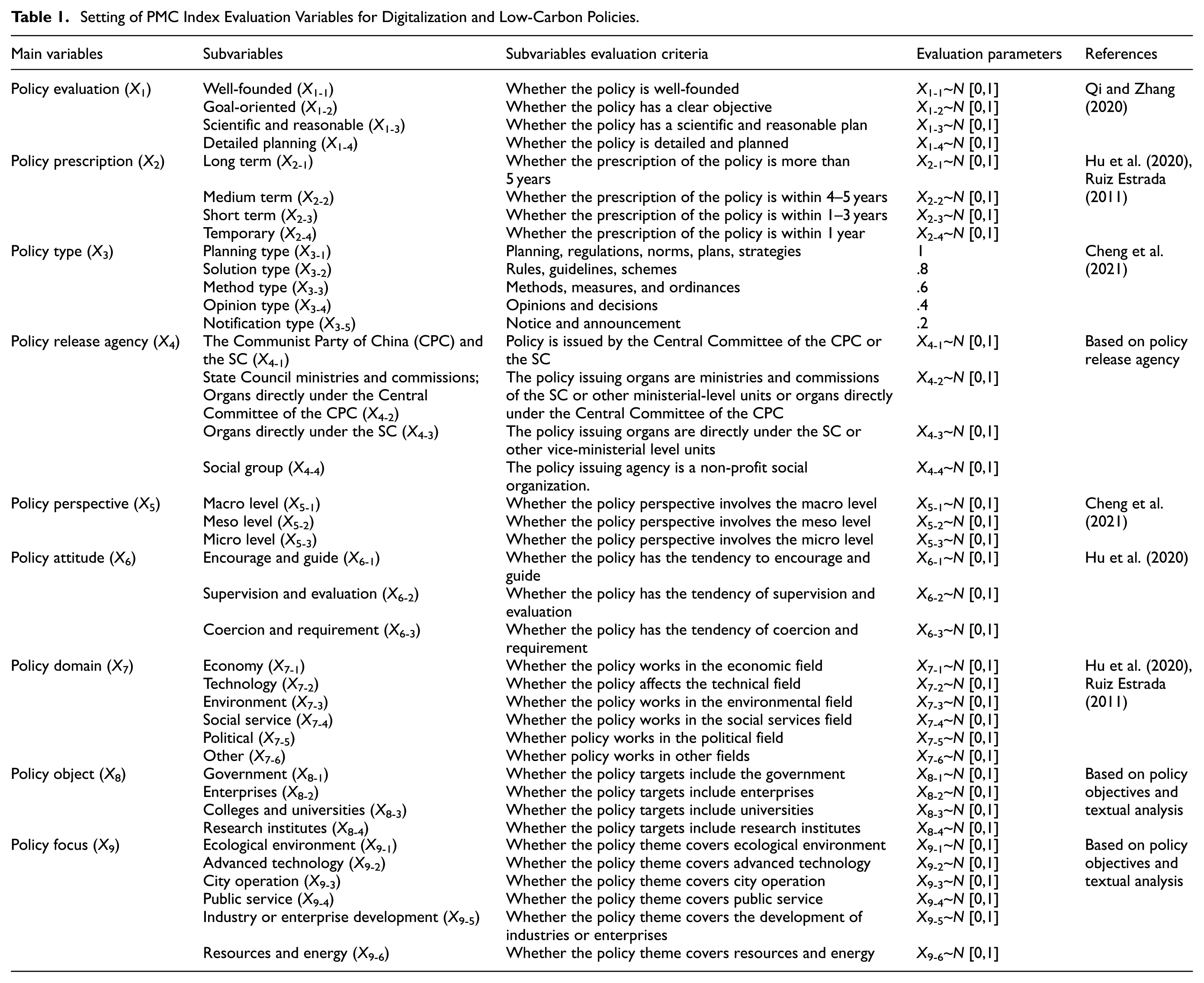
Drawing on variable parameter settings from extant research and aligning with the unique attributes of digital and low-carbon policies, nine first-level variables were refined and established, with several second-level variables under each first-level variable, for a total of 39 s-level variables (see Table 1). Subsequently, the parameters of the PMC index model were set.
Setting of PMC Index Evaluation Variables for Digitalization and Low-Carbon Policies.
Step 3: Establishing a multi-input-output table.
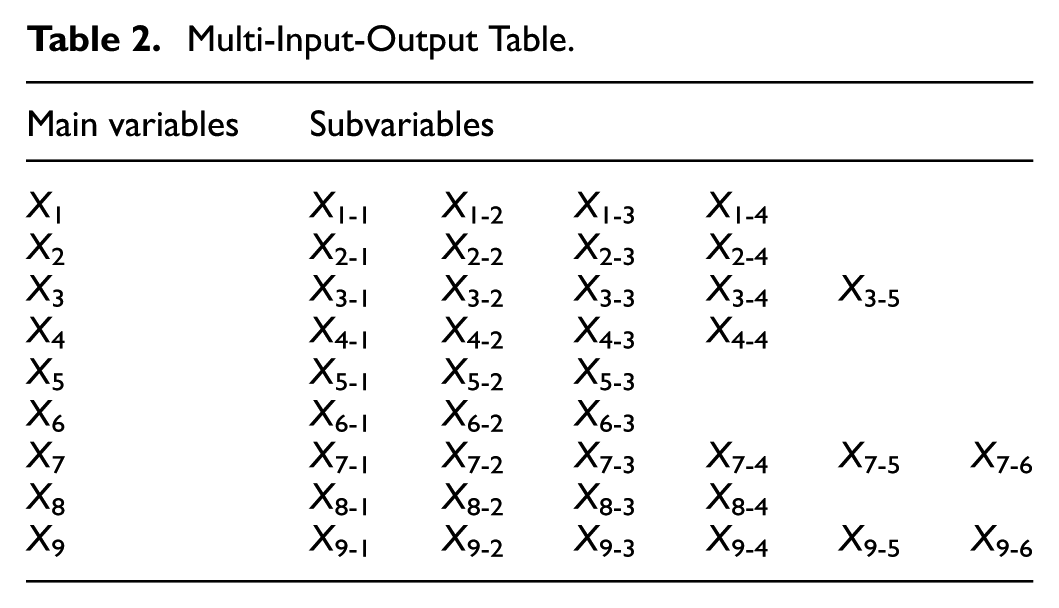
The multi-input-output table (see Table 2) serves as an analytical framework that quantifies single variables across various dimensions to assess policies multi-dimensionally and reflects the evolution of a certain policy dimension.
Multi-Input-Output Table.
Step 4: Establishing a policy text mining dictionary.
Text mining offers an efficient methodology for analyzing semi-structured and unstructured datasets. Leveraging natural language processing technology, it extracts valuable insights from textual data (Wu et al., 2021). Furthermore, it bolsters the capacity to manage and analyze textual information (Shamshiri et al., 2024). Policy texts are typical of semi-structured data. Thus, text mining methods are particularly well suited to addressing issues pertaining to policy texts. We employed a Python-based natural language processing technology to construct a policy text mining dictionary. Initially, policy texts were subjected to a cleansing process in which extraneous punctuation and numerals were eliminated. To enhance the segmentation outcomes, a stopword thesaurus and a user-defined thesaurus were crafted and specifically tailored to the content of policy texts. These dictionaries were then integrated into the third-party thesaurus “jieba” in Python. Subsequently, the Term Frequency-Inverse Document Frequency (TF-IDF) algorithm, which is a numerical measure that underscores the importance of a term within a document collection, was deployed for key term extraction.


In the above formula, e denotes the frequency of the word x within a policy, while E signifies the total word count of the policy. The term f refers to the total number of policies, and F is the number of policies that include the word x. Term Frequency (TF) measures the occurrence of each word in a policy. By contrast, Inverse Document Frequency (IDF) gauges the significance of words in the policy, enabling the extraction of keywords that convey substantial information despite their infrequent appearance (Kim et al., 2019). The multiplication of TF and IDF balances the need for both frequency and significance, pinpointing words that are not only frequently used but also carry more valuable information.
Words with high TF-IDF scores were aligned and clustered with indicators within the PMC framework. Given the unique attributes of digitization and low-carbon policies, words with lower scores, necessitating expert judgment, were incorporated into the text mining dictionary (Liu et al., 2023). Conversely, words scoring low on TF-IDF were added to the stopword list. By leveraging domain experts, relevant keywords were introduced into a user-defined thesaurus. This process was iteratively refined to continually enhance the feature word dictionary. Finally, a policy text mining dictionary rooted in the PMC framework was developed.
Step 5: Calculating the PMC index model.
The fifth step was to calculate the PMC index based on the established text mining dictionary and policy texts using the following formula:



where i is the first-level indicator and i = 1, 2, 3, 4, 5, 6, 7, 8, 9. j is the secondary index; j = 1, 2, 3,…n and n indicates the number of second-level indicators under a first-level indicator.

According to the grading standards of existing research (Kuang et al., 2020), policy levels were divided into four categories: perfect (7.128–10.000 points), good (5.549–7.127 points), acceptable (3.969–5.548 points), and low consistency (0–3.968 points). Through the above steps, a curved diagram can be formed that can more intuitively show the strengths and weaknesses of policies (Ruiz Estrada, 2011); secondary indicators can be tracked to determine the policy optimization path.
Evaluation Method of Policy Synergy
Since the PMC index model can only judge policies’ internal synergy, we continued the above PMC evaluation results and analyzed the external synergy of policies using the grey correlation degree analysis method. In the field of policy analysis, grey correlation analysis determines the degree of synergy by comparing the change and evolution trends between two types of policies and obtaining a priority ranking (Dou et al., 2014). Grey correlation analysis constitutes a pivotal component within the grey system theory. It is used to study the cooperative coupling relationship between certain factors in a system when information is asymmetrical and incomplete. It is suitable for quantitative analysis of the dynamic evolution process of factors between systems (Ju-Yong et al., 2019). The specific calculation process is as follows.
First, the reference and comparison sequences were determined. The average values of the nine main variables and the average values of the total scores for the two types of policies were calculated for this year. The index data of the digitalization policies are D1, D2, …, D9,
Second, the absolute difference sequence Δj(i) between the reference and comparison sequences was obtained by initializing each variable series. The synergy between the indicators of the digitalization and low-carbon policies was then calculated (similarly, the absolute difference

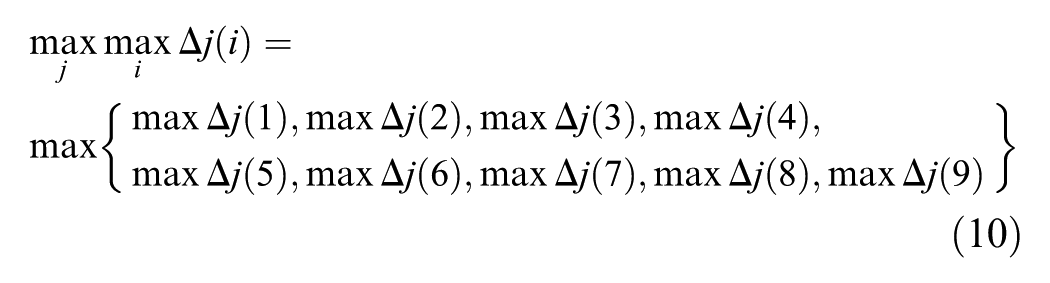
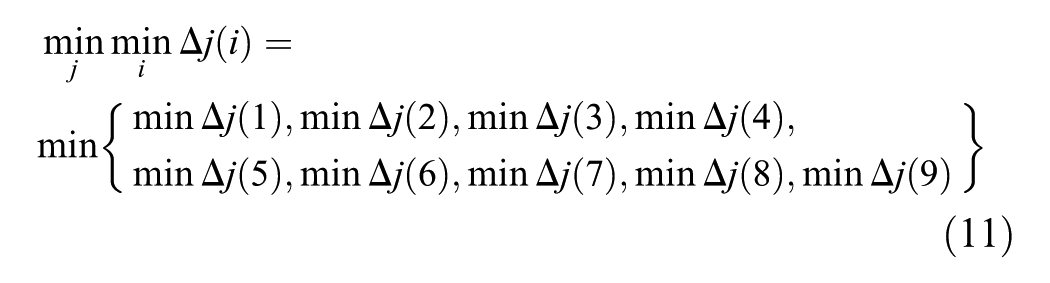
Third, the maximum and minimum ranges for each indicator in the time period were calculated, and the maximum of the maximum range and minimum of the minimum range were determined:
Fourth, the grey degree of correlation was calculated using the following formula:

The resolution coefficient σ ranges from 0 to 1. The value of σ = .5 was employed to calculate the correlation coefficients for research convenience. Finally, we calculated the degree of synergy between the main variables of the digital policy and R(i) of the low-carbon policy over 5 years.

Results and Discussion
Evaluation of the Overall State of Policy
In terms of the number of policies, digitalization and low-carbon policies have a relatively synchronous upward and downward trend, indicating that there is a certain synergy in policy issuance. However, compared to the digitalization policy, the promulgation of low-carbon policies has a 5-year lag, which gradually began during the 12th 5-Year Plan period (see Figure 2). Starting with the 11th 5-Year Plan, China began to promulgate special policies on digitalization to encourage digital transformation. Although the 11th 5-Year Plan considered resource conservation as the basic national policy and sustainable development as the guiding ideology, this was only at the theoretical level; the key task at that time was economic development.
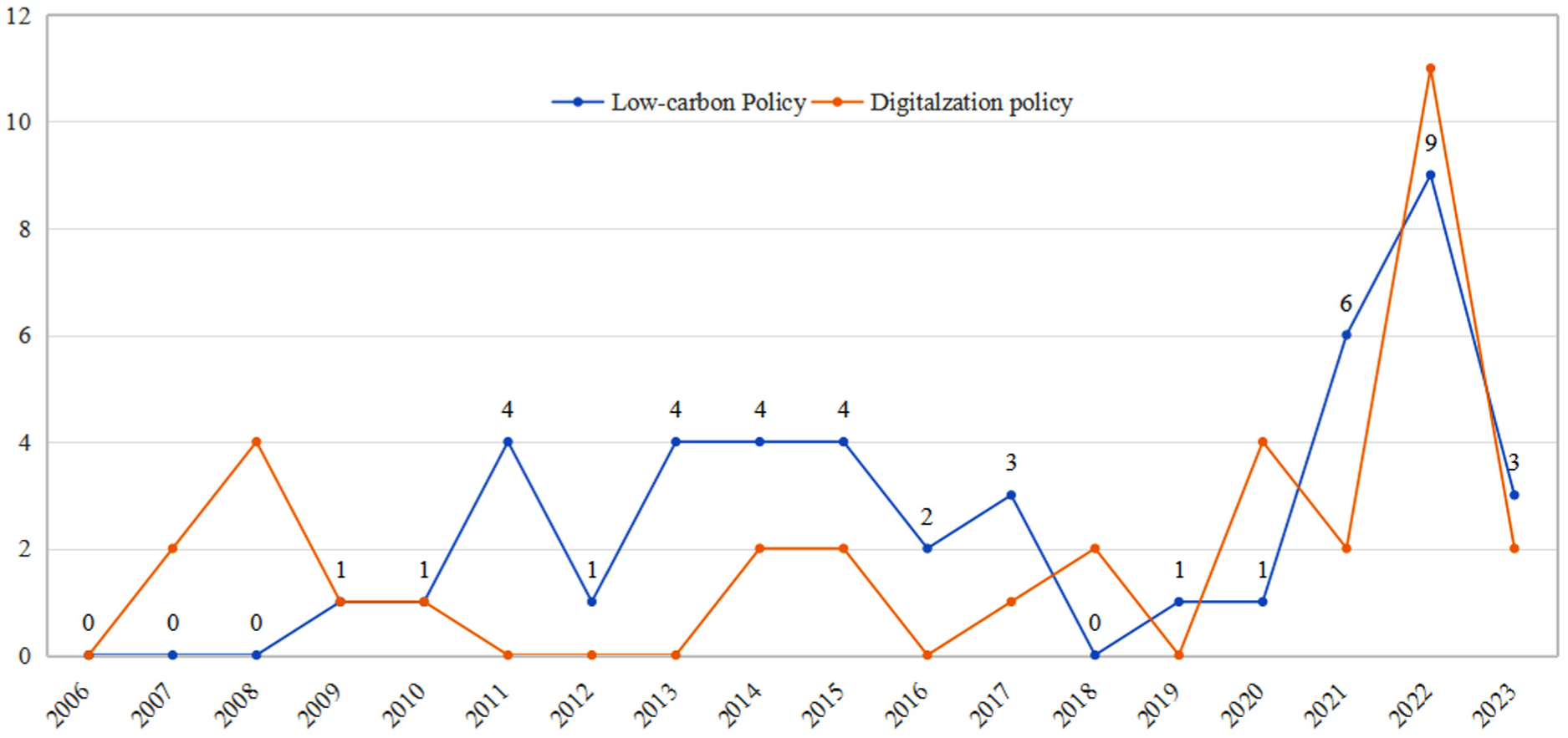
Number of digitalization and low-carbon policies issued at the national level from 2006 to 2023.
Evaluation of Policy Issuing Agencies
Since the main body of a policy document directly affects the degree of coordination of the policy content, we analyzed the situation of policy-issuing agencies. To represent the sectorial coordination between the two types of policies intuitively, we drew a bubble chart of the proportion of policies promulgated by different departments (see Figure 3). The horizontal coordinate is the proportion of policies issued by different departments in the low-carbon field, and the vertical coordinate is that of digital fields. Bubble size is the ratio of the department’s total published policies to these two types of policies. The dotted line indicates that the department issued the same proportion of policies in the two types of policies, indicating that the department issued low-carbon and digitalization policies simultaneously, which plays an intermediary and coordination role. The MIIT, Ministry of Finance, and Ministry of Housing and Urban-Rural Development are departments close to the midline. These sectors play important roles in coordinating digital and low-carbon policies. This indicates that digitalization and low-carbon policies have been coordinated to cover energy supply and utilization, industrial and agricultural production, transportation, building construction and operation, ecological and environmental governance, green and smart city construction, and other fields, profoundly transforming production methods, living patterns, and governance structures.

Bubble map of major publishing institutions of digitalization and low-carbon policies.
We used Gephi and UCINET software to draw a cooperative network diagram of policy-issuing institutions and to calculate the network’s relevant data. As shown in Figure 4, the major promulgators of digitalization policies include the NEA, MIIT, and NDRC, with close centrality of 24.706, 24.706, and 24.419, respectively. The main promulgation bodies of low-carbon policy are the MIIT and Ministry of Ecological Environment, with close centralities of 16.216 and 16.092, respectively. The network of collaboration among these core institutions is tight, whereas the network of cooperation among other institutions is loose. The average network degree of digital policy-issuing agencies (9.545) is lower than that of low-carbon policy-issuing agencies (13.35), indicating that the overall link degree of the low-carbon policy network is higher and cooperation is closer. The network centrality of digital policy-issuing agencies (17.26%) is lower than that of low-carbon policy-issuing agencies (20.59%). The modularity index of digitalization policy promulgators (.237) is smaller than that of low-carbon policy promulgators (.233), indicating that low-carbon policies have a larger scope of cooperation than digitalization policies.

Network diagram of the digitalization and low-carbon policy issuing subjects.
Evaluation of Policy Internal Synergies
We calculated the PMC scores of the 77 sample policies and the proportion of policy texts of different levels at each stage (see Table 3). Overall, there were only two perfect-level policies. The numbers of good digitalization and low-carbon policies were 7 and 12, respectively. Most policy ratings were good and acceptable, and there was a lack of perfect policies. The overall quality of low-carbon policies is higher than that of digitalization policies. From the trend perspective, spanning the 11th through the 14th 5-Year Plan periods, there were fewer low-grade policies and more good-grade policies; the overall level of policy distribution showed a growing trend.
PMC Score Grade of Digitalization and Low-Carbon Policies.

Furthermore, we conducted a dynamic analysis of the PMC scores for each stage and dimension (see Figure 5). The visualization results showed that the highest score in the main PMC dimension was policy evaluation. The dimension with the lowest score was the policy release agency, suggesting that the subject of policy formulation is relatively simple and lacks the joint participation of multiple subjects. Furthermore, the sub-dimension score was used to analyze the developmental differences at each stage. Overall, in addition to individual first-level indicators (such as the policy-type dimension), most first-level indicators of digitalization and low-carbon policies show an upward trend.

Dot plot of indicators at first level of digitization and low-carbon policies.
Since 2022 was the peak year for the promulgation of digitalization and low-carbon policies, this study takes 2022 as an example to elaborate specifically on each secondary index (see Table 4). In terms of policy evaluation, both types of policies are well founded, scientific, reasonable, and detailed in planning, whereas the policy objectives of digitalization policies lack sufficient clarity. Policy prescription is the timeframe of a policy’s impact and mirrors the overarching policy design blueprint (Dai et al., 2022). Digitalization policies are mostly short-term, whereas low-carbon policies are distributed in the long, medium, and short terms. This may be because digital technology is changing rapidly and short-term policies make it easier to keep pace with technological developments. In particular, low-carbon policies have a certain long-term orientation, which reflects the Chinese government’s tendency to leverage centralized institutions for advancing sustainable development (Zhao et al., 2020). The variability of different policies can be revealed (Dai et al., 2022). Digital policies are mainly released through notifications, solutions, and opinion policies, whereas low-carbon policies involve more policy types. Policy release agencies, including single- and multi-body associations, are at the beginning of policy operations. Policies promulgating an agency’s administrative level and management scope directly affect implementation efficiency (Dong & Liu, 2020). In terms of policy release agencies, digitalization policies are mainly promulgated through the ministries and commissions of the State Council or agencies directly under the State Council or CPC Central Committee. Low-carbon policies have also been issued primarily by agencies directly under the State Council or CPC Central Committee; however, other bodies have also issued low-carbon policies. All three levels are involved from a policy perspective. In terms of policy attitudes, the most encouraging and guiding policies are followed by supervision and evaluation policies, with few mandatory policies. The policy domain refers to the specific sector or industry a policy is aimed at. It defines the scope of the policy’s application and its sphere of influence. The more extensive the policy domain, the more perfect its content (Dai et al., 2022). Digital policies are concentrated in the economy, politics, technology, and social services fields, whereas areas covered by low-carbon policies are more diverse. Policy objects are the entities influenced by policies, highlighting the imperative for tailored interventions (Wang & Yang, 2024). This is the focus of policy operations and reflects the level and breadth of the policy function to some extent. Regarding policy objects, the digital policy mainly acts on the government and enterprises, whereas the low-carbon policy acts on enterprises, universities, and scientific research institutions. In terms of policy focus, digital policies mainly focus on public services, industrial or enterprise developments, advanced technologies, and city operations. In addition to the above topics, low-carbon policies focus on the ecological environment, resources, and energy fields.
PMC Second-Level Index Scores of Digitalization and Low-Carbon Policies in 2022.

Figures 6 and 7 show the PMC score curves for the two types of policies, reflecting the degree of policy equilibrium. Both digitalization and low-carbon policies have a certain degree of decline in policy prescription and types, indicating that when the government makes digitalization policies, cooperation among departments should be strengthened; long-term, medium, and short-term policy planning should be considered in an integrated manner. The dipping point of low-carbon policies includes policy-release agencies. Low-carbon policies are mainly promulgated through State Council ministries and agencies directly under the Central Committee of the CPC, which lacks the participation of social groups.

Digitalization policy PMC surface 2022.

Low-carbon policy PMC surface 2022.
Evaluation of External Policy Synergies
We calculated the grey relational degree of digitalization and low-carbon policies from the 11th to the 14th 5-Year Plans. The results are presented in Figure 8. Correlation degrees 1 and 2 use digitization and low-carbon policies as reference sequences, respectively. The average degree of correlation represents the average degree of correlations 1 and 2, representing the overall degree of synergy between digitalization and low-carbon policies. We found that the overall trend of the degree of correlation between the two types of policies first declined and then increased, showing a synergistic upward trend from the 13th to 14th 5-Year Plan periods. This outcome could stem from China’s introduction of green and innovative development concepts within the 13th 5-Year Plan, which underscores the advancement of low-carbon strategies and digital transformation. Following the proposal of the ‘double carbon’ goal in 2020, the status of low-carbon policies has been significantly improved. The role of digital technology in helping low-carbon fields has also become more prominent. The results showed that the policies of the two major areas could promote each other and provide empirical support for the coordinated promotion of the two major transformations. However, the synergistic effect between the two was in the medium range, and further enhancements are warranted.

The correlation degree between digitalization and low-carbon policies.
In synergies with low-carbon policy as a reference sequence (see Figure 9), the overall trend first decreases and then increases, indicating that digital policies are in a state of constant adjustment during the formulation process to find the best balance of synergies. However, the synergy effect is declining from the perspectives of policy level and field. This may be because digitalization policies focus more on improving efficiency, fostering innovation, and economic growth, while low-carbon policies focus on reducing greenhouse gas emissions and environmental protection. This difference in objectives may lead to reduced synergy. The lack of an effective policy coordination mechanism and a connection channel between macro-, meso-, and micro-policies has resulted in digital policies failing to effectively support the adoption of low-carbon measures. In terms of the synergies with digitalization policy as a reference sequence, except for the policy release agency and policy domain, the synergy degree of various policy indicators gradually increased (see Figure 10). As digitalization and low-carbon policy documents involve the interests of an increasing number of stakeholders, the issue of inter-institutional conflicts of interest is inevitable. Therefore, the synergies between the two types of policies still fluctuate in determining the best governance balance (Peters, 2018).
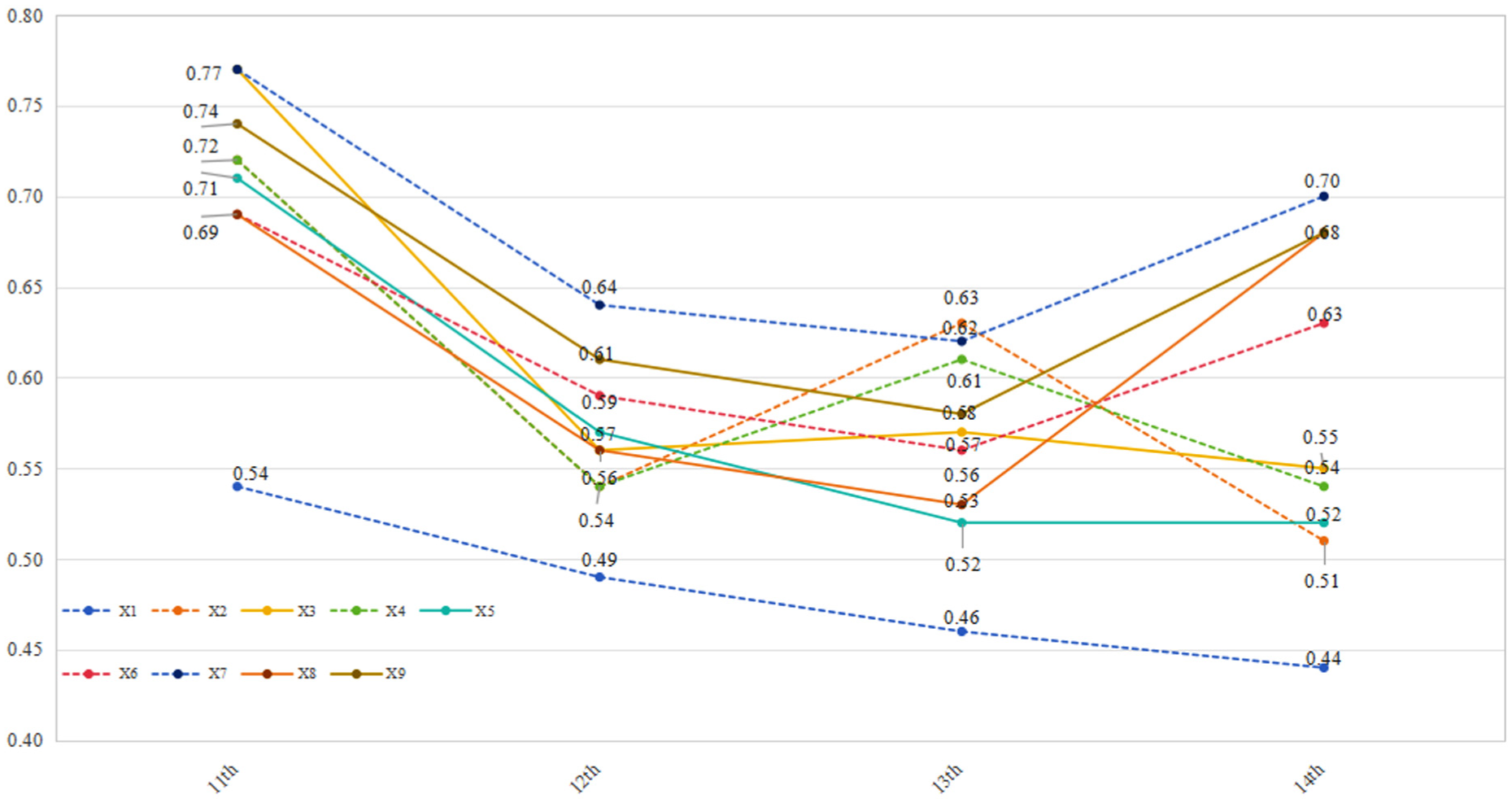
The grey correlation degree with low-carbon policies as reference series.

The grey correlation degree with digitalization policies as reference series.
Conclusion
Theoretical Implications
The consistency and integrity of policy are pivotal factors that affect policy goal attainment (Wang & Yang, 2024). Owing to the differences in environmental protection status and the digital economy’s development milieu in distinct periods, the synergy between digital and low-carbon policies is also different. The integration of digitalization and low-carbon efforts constitutes a multifaceted, systemic initiative that encompasses economic, political, and social dimensions. The specific problems to be solved by each policy and guiding level differ (Kuang et al., 2020). Consequently, there are differences in policy themes, priorities, innovations, and measures. However, as the socio-economic landscape evolves, the concepts, technologies, and methods of digitalization and low-carbon synergy will continue to development. China has conducted comprehensive pilot projects for digital green collaborative transformation development in 10 regions across the country and then implemented them nationwide, which will undoubtedly affect the formulation and implementation of digital and low-carbon policies. Our study has three main theoretical significances.
First, it enriches the methodology for assessing the degree of policy coordination. Considering the complex application scenarios faced by digitalization and low-carbon policies, we constructed a policy assessment system grounded in the PMC framework and a policy text mining dictionary. A multi-dimensional evaluation of the policy was conducted based on a text mining algorithm. Combined with the grey correlation analysis method, we evaluated the degree of policy coordination from the perspective of internal and external policy coordination, a research method that has not yet been used in policy research. Second, this study broadens the research horizon of digitization and low-carbon policies. Presently, research on digital and low-carbon policies focuses on the evaluation of a single type of policy, whereas the evaluation of the synergistic effect of these two types of policies is insufficient. Therefore, from the perspective of policy evaluation, we completed the calculation of PMC evaluation scores for 77 digitalization and low-carbon policies in China during the period from the 11th to 14th 5-Year Plans. On this basis, the external coordination of the two types of policies was evaluated using a grey correlation analysis. This study discusses the existing problems of digitalization and low-carbon policies in multiple dimensions, and proposes corresponding optimization countermeasures. Third, this study enriches the research objectives of quantitative policy evaluation. Compared to developed countries, developing countries’ economic development is slow, and improving the policy environment to promote high-quality and sustainable digital economic growth is more urgent (Wang & Yang, 2024). We used the digital policy and low-carbon policy text of China, the largest developing country, as the research objects for quantitative evaluation. The study results can be combined with the existing literature on the evaluation of digitalization and low-carbon policies and provide implications for the construction of a more systematic and dynamic policy coordination system. The principal conclusions can be summarized as follows.
Overall, there is a partial synergy between the two types of policies with respect to the number of documents issued and issuing agencies. As policies evolve and diverge at various stages, the internal consistency of policies showed an increasing trend. However, there is a serious lack of a perfect policy. The disparity in elevation between the peak and trough of the PMC surface is evident, indicating that the multiplier effect between various policy dimensions is low. The trough policy dimension includes policy prescriptions, policy types, and policy release agencies. This indicates that there are still a few policies with clear internal differentiation and weak links. The overall degree of synergy between the two types of policies showed a trend of decline and then increase; the level of coordination between them did not improve with an improvement in the level of policies. The lack of synergy with low-carbon policy as a reference sequence is mainly reflected in policy perspectives and domains. The lack of synergy with the digitalization policy as a reference sequence is primarily evident in the policy release agency and policy domain.
Policy and Practical Implications
This study provides actionable implications for researchers, practioners, and policymakers.
For researchers, the methodological framework presented in this study demonstrates how to conduct quantitative, multi-dimensional policy evaluation in complex governance settings, particularly those involving cross-sectorial coordination. This framework can be applied to other national contexts, especially in developing or transitional economies facing similar coordination challenges. Moreover, it can be extended to new policy pairings—such as AI governance and green finance—allowing researchers to explore how emergent policy domains interact, overlap, or conflict.
For practitioners in industry and civil society, understanding where coordination gaps persist helps firms, NGOs, and research institutions position themselves to participate in pilot programs, public–private partnerships, dataã sharing platforms, and technology demonstration projects that advance dual digital–lowã carbon objectives.
For policymakers, the combined PMC–textã mining–greyã correlation framework can be used as a diagnostic instrument to map policy portfolios, detect weak coordination dimensions, and prioritize interventions to unlock multiplier effects. The policy recommendations outlined above offer a menu of design levers, including interdepartmental integration, timing alignment, instrument mix and stakeholder role calibration, which can be adapted to national, provincial, or sectorial contexts. Specifically, the recommendations are as follows:
First, they could use our findings to strengthen inter-departmental cooperation to avoid policy effects that cancel each other out or produce a “funnel effect.” Horizontally, more departments should participate in the formulation of policies to coordinate and supervise the policy formulation of departments (Y. Yang et al., 2021) and to identify priorities among policy objectives that cross industry boundaries (Hildingsson & Johansson, 2016), to realize the system optimization of policy, rather than just the pursuit of local optima. The current status of the NEA and the NDRC as the main bodies needs to be changed. All departments should enhance information sharing, leverage diverse professional insights, and foster energy development. Vertically, cross-administrative communication and cooperation can be attempted (Zhang et al., 2024). Furthermore, strategic emerging industries such as new energy, bio-manufacturing, low-altitude economies, and green environmental protection should be developed. A coordinated policy formulation plan for all departments and a policy implementation plan for different implementation stages should be formulated to solve the problems of policy disconnection, absence, congestion, and even conflicts. The construction of digital and low-carbon integration of the technical and industrial systems, the establishment of a sound dual collaborative data catalog, the formation of a dual collaborative “one account” for data among various departments and industries, and the development of dual collaborative data applications are needed. Specific management and supporting mechanisms compatible with policy formulation should be established, such as information exchange channels and sharing platforms, resource and voice distribution, performance evaluation methods, and revenue-sharing agreements.
Second, policymakers should focus on the intersections of the timeliness of different policy documents. Policymakers need to strengthen the organic connection between the digital and low-carbon-related special, regional, spatial, local, and national development planning, grasp the timing, intensity, and rhythm of policy introduction, and maximize the “multiplier effect” of the two. Policymakers should realize the combination of short- and long-term policy effects to form a policy structure with short-term effects as the main and long-term effects as the auxiliary. Policymakers should make a comprehensive calculation of digitalization and carbon emissions in each period, flexibly adjust policy coordination plans according to actual conditions, clarify the time nodes and realization paths of various tasks, and achieve sustainable technological development.
Third, policymakers should focus on the intersection of different policy types. It is necessary to realize the combination of policy types, such as “measures” and “notices,” that solve practical problems with policy types, such as “planning” and “opinions,” that are biased towards governance. Policymakers must ensure policy coherence from macro to medium to micro and gradually guide digital and low-carbon development through diverse policy types. It is necessary to provide a driving force, pulling power, and an appropriate development environment for the collaboration between the digital and low-carbon economies from the three policy attitudes of encouragement and guidance, supervision and evaluation, and mandatory implementation. The realization of policy objectives requires reasonable guidance and appropriate supervision. The supervision method should be clearly reflected in the policy text, either as regulatory mandates or strategic frameworks (Zhang et al., 2024). As for support measures, governments can use a combination of incentives and coercive measures to increase the acceptance and implementation of digitalization and low-carbon policies (J. Yu & Ma, 2022). Governments can also provide tax incentives and subsidies to support digital and low-carbon investment projects. Furthermore, mandatory measures and punitive policies can be formulated, such as the introduction of mandatory technical standards and norms (e.g., carbon emission limits and energy consumption standards) and penalties (e.g., fines for noncompliance with standards).
Fourth, policymakers should consider the actual situation and optimize the structure of policy objects in a balanced manner. They should create a quantifiable “Digital–Low-Carbon Policy Synergy Index” based on core dimensions such as consistency of issuing agencies, timing, instrument type, and implementation scope. This index could be published annually by an independent evaluation agency and used to benchmark regions and sectors, linking scores to fiscal incentives or pilot program eligibility. The digitalization policy should moderately weaken the government’s intervention in digital development, enhance the role of universities and research institutions in the development of key digital technologies. Low-carbon policies should strengthen the role of the government in effectively providing the resources that companies, universities, and research institutions need for R&D and operations. China should gradually strengthen the exploration of the significance of digital technology for energy conservation and emission reduction; for example, in the direction of digital energy carbon management, power digital twins, and digital environmental monitoring and governance, the application of new technologies and models, such as computer and electricity collaboration and green microgrid applications, should be promoted.
Limitations and Further Research
This study selected only digitalization and low-carbon policies at the national level. Future research could further expand the sample size and conduct policy research on local policies and specific fields to compare and evaluate the differences in the importance and synergies of digitization and low-carbon policies in different regions, making policy suggestions more comprehensive and scientific. Due to the availability of research data, our study of policy synergies only involved an analysis of policy texts. Future research could conduct in-depth and detailed qualitative research by interviewing decision-makers to supplement and revise the conclusions of existing research to enhance its universality.
Footnotes
Acknowledgements

Ethical Considerations
Our research did not involve humans or animals.
Author Contributions
Conceptualization, Q.H. and N.J.; Methodology, Q.H. and N.J.; Validation, Q.H. and N.J.; Formal analysis, Q.H. and N.J.; Investigation, Q.H.; resources, Q.H. and N.J.; Data curation, Q.H. and N.J.; Writing—original draft preparation, Q.H. and N.J.; Writing—review and editing, Q.H. and N.J.; Visualization, Q.H.; Supervision, N.J. and X.L.; Project administration, N.J. All authors have read and agreed to the published version of the manuscript.
Funding
The authors disclosed receipt of the following financial support for the research, authorship, and/or publication of this article: This work was supported by the National Natural Science Foundation of China (Nos. 72274137, 72272068, and 71874122) and Basic Scientific Research Funds for Central Universities (No. 22120230346).
Declaration of Conflicting Interests
The authors declared no potential conflicts of interest with respect to the research, authorship, and/or publication of this article.
Data Availability Statement
Data sharing not applicable to this article as no datasets were generated or analyzed during the current study.