




Abstract
The digital content industry is developing rapidly worldwide, with the Yangtze River Delta (YRD) region emerging as China’s representative hub through its comprehensive industrial chain, enterprise clusters, and innovation capacity. The coordinated development of the digital content industry in the YRD is crucial for promoting regional integration and enhancing industry competitiveness. While industrial policies play a vital guiding role, there is a lack of systematic evaluation from a regional perspective. This study uses the Policy Modeling Consistency (PMC) Index model to systematically evaluate 54 Digital Content Industry Policies (DCIPs) in the YRD to assess policy characteristics, gaps, and regional coordination foundations. The results indicate that the region has established a relatively mature policy framework that includes various policy types, evidence-based decision-making processes, and well-defined objectives. It also faces challenges, such as homogeneous types of policy instruments, vague incentive measures, and insufficient regional policy synergy. From the perspective of inter-provincial differentiation comparison, Shanghai achieves the most balanced and effective policy formulation, Jiangsu excels in balancing policy quantity and quality, Zhejiang stands out for its forward-looking approach but lacks innovation support, while Anhui falls behind in both policy coverage and effectiveness. The research proposes actionable recommendations, including establishing coordinated mechanisms to promote specialized industrial divisions, fostering a collaborative policy community, optimizing policy instruments, and implementing a dynamic policy adjustment mechanism. Together, they aim to enhance the coordinated development and competitiveness of the digital content industry in the YRD.
Keywords
Introduction
The digital content industry has demonstrated a strong dynamism in the global economy (González-Rojas et al., 2016; United Nations Conference on Trade and Development, 2016). It integrates technology and creativity (Joo & Sohn, 2008) with digital content and creates high-value-added content products directly within a digital environment (Galindo-Martín et al., 2019). According to Grand View Research (2024), the global digital content creation market reached $ 32.28 billion in 2024 and is expected to grow at a compound annual growth rate (CAGR) of 13.9% in the following years. Digital content products, including Facebook, Instagram, Netflix, YouTube, TikTok, Spotify, and Coursera, have significantly changed how people interact, entertain, and learn. The ways these products integrate into people’s lives show the digital content industry’s significant economic and social potential.
The digital content industry is also an essential driver of economic growth in China, particularly in the Yangtze River Delta (YRD) region. The YRD, which includes three provinces—Jiangsu, Zhejiang, and Anhui—and one municipality, Shanghai, is one of the nation’s most economically vibrant areas (Tian & Mao, 2022). The region generated approximately 24.6% of China’s GDP in 2024. It offers distinct advantages for the growth of the digital content industry, including well-developed digital infrastructures and a substantial number of digital content enterprises. Furthermore, effective collaboration among universities, industry, and government entities (UIG) creates a solid foundation for advanced technological progress (Tao & Shuliang, 2022) and innovation. (X. Wang, Sun, Guo, & Xiao, 2024). Research from the Shanghai Culture Research Center and Tencent Research Institute (2020) shows that the YRD ranked No. 1 in digital culture metrics and growth dynamics among China’s 11 major urban agglomerations.
Besides its leading position in China’s digital content industry, the YRD regional integration development plan (Central Committee of the Communist Party of China & State Council, 2019) made the YRD an ideal case study for industrial collaboration. The area combines the features of a complete digital content industry chain with the challenges of balancing inter-provincial competition, optimizing resource allocation, and establishing coordination mechanisms. Policies play an important role in addressing these issues. However, administrative boundaries often limit policy formulation, resulting in several problems. First, inconsistent policy standards make it hard to compare policies and lead to unstable quality. Second, emphasizing local development often overlooks the broader perspective, leading to unhealthy competition or redundant projects. Third, a sector-based approach may prevent cross-industry collaboration opportunities. This limits the scope and depth of regional cooperation and ultimately weakens the region’s overall industrial competitiveness.
Therefore, evaluating existing policies and optimizing them for coordinated development within the YRD’s digital content industry is essential. It can promote regional digital content industry collaboration and provide an instructive model for other integrated development areas in China and globally. To achieve this goal, it is essential to develop a unified framework to evaluate policies from a regional perspective. This study employs the Policy Modeling Consistency (PMC) Index model to build a flexible, multi-dimensional framework (Y. Liu et al., 2022). This framework includes key evaluation dimensions, such as the potential for regional industrial coordination and the unique characteristics of the digital content industry. It is designed to identify the main features, gaps, and priorities of DCIPs. The framework also assesses how well these policies support regional industrial coordination. These will enable us to propose practical recommendations. The specific objectives of this study are as follows:
Develop a PMC-Index model as a systematic and standardized tool for evaluating and comparing DCIPs in the YRD from a regional perspective.
Apply the PMC-Index model to assess the performance of DCIPs, analyzing from a regional and inter-provincial perspective to identify characteristics and gaps while exploring the potential for collaborative industrial development.
Based on the findings, propose specific and actionable policy recommendations to address the identified gaps and promote coordinated growth in the digital content industry across the YRD.
To achieve these objectives, this paper is structured as follows: The literature review surveys the literature on the digital content industry, regional integration, and policy evaluation, providing the theoretical foundation for defining the scope of DCIPs and justifying the use of the PMC-Index model. The metholdology details the data collection and the construction of the PMC-Index model. The results and discussion section presents the findings, analyzing the strengths, weaknesses, and characteristics of DCIPs and the potential for coordination. The conclusion and policy recommendations section summarizes the key findings and offers actionable policy recommendations.
Literature Review
The Digital Content Industry: Definitions and Policy Challenges
As a crucial component of the digital economy, the digital content industry continues to evolve by integrating technology and markets (Z. Li et al., 2021). Existing research defines the industry in two main ways. The first approach focuses on its activities, such as creating, managing, and distributing digital content (Forfás, 2002; Lee & Heshmati, 2009). The second approach emphasizes product forms, including online games, e-books, e-learning, and digital music (Joo & Sohn, 2008; Kim & Kim, 2017). In China, the concept has gradually expanded from the early notion of digital publishing (State Administration of Press and Publication [SAPP], 2010) to emerging fields like short videos, live streaming, and knowledge services (Dong & Wu, 2024), and the products and services can be categorized into four types: animation and gaming, online audiovisual content, digital reading, and knowledge services. These product formats serve as a tangible and measurable framework for analyzing the industry.
The evolution of product forms highlights the dual nature of the industry. On one hand, technological innovations, such as artificial intelligence-generated content (AIGC) and cross-border distribution, reshape industry boundaries (X. Wang, Hong, & He, 2024; Wlömert et al., 2024). On the other hand, risks such as data monopolies, lack of content regulation, and copyright disputes (European Commission, 2015; Galindo-Martín et al., 2019; Morais Carvalho & Farinha, 2020) may harm industrial development and the industry's cultural value. Given the industry’s complexity and social impact, well-designed, adaptive policy frameworks are increasingly needed, especially in advanced regions such as the YRD, where policy effectiveness can significantly influence regional competitiveness (Yuan, 2024).
Logic of Regional Integration and Policy Coordination
Regional integration promotes economic development by reducing regional barriers (Baldwin, 1997), lowering transaction costs (Schiff & Winters, 2002), and fostering regional cooperation. In the case of the YRD, this process has been assigned the strategic mission of enhancing competitiveness through industrial collaboration (Central Committee of the Communist Party of China & State Council, 2019). The prerequisite for regional industrial collaboration is to establish an order that guides the coordinated operation of the industry (L. Chen & Xu, 2022), which is mainly influenced by the coordination and alignment of relevant policies. Well-coordinated industrial policies foster collaboration among participants and sectors, helping to address regional development imbalances by facilitating resource sharing and supporting collaborative innovation, as seen in the digital industry (Aiginger & Rodrik, 2020; Foster & Azmeh, 2020; Kaufmann & Sager, 2019; Sager, 2006).
Achieving policy coordination remains challenging. Local governments often prioritize short-term economic gains, leading to conflicting objectives and redundant resource allocation (Wänström & Persson, 2024). At the same time, internal conflicts of interest and reliance on administrative directives can weaken the efficiency of collaborative efforts (S. Li et al., 2022; Pan et al., 2023). Furthermore, current policy evaluations often lack systematic tools to measure the effectiveness of coordination (Mergoni & De Witte, 2022; Yan & Wang, 2024). As a result, there is a specific need for frameworks that can assess and enhance policy coordination within integrated regions.
Policy Evaluation Methods and the PMC-Index Model
Policy evaluation is a key tool for addressing the challenges mentioned above, but traditional methods have limitations. Quantitative methods, such as the difference-in-differences (DID) approach (Callaway, 2023, p. 1), mainly focus on policy effects rather than the consistency of policy contents. The data envelopment analysis (DEA) model is ineffective at analyzing official government documents (Mergoni & De Witte, 2022). Qualitative methods, such as case study analysis, can provide in-depth insights into specific contexts, but struggle to compare regional policy differences systematically (Barker & Beng, 2017; Tsai et al., 2008).
The PMC-Index model, proposed by Estrada (2011), offers a solution to these issues. Based on the “Omnia Mobilis” assumption, which assumes that all factors are subject to change (Ruiz Estrada et al., 2008), it allows evaluation dimensions to be customized according to industry features, enabling dynamic framework adaptation (Y. Liu et al., 2022); it uses text mining techniques to convert policy texts into structured data to reduce the subjectivity of human evaluation (Z. Li & Guo, 2022); besides, its effectiveness has been validated through cross-domain applications, including the green economy (Dai et al., 2021; F. Liu & Liu, 2022), the digital economy (Hong et al., 2024; G. Wang & Yang, 2024), the robotics industry (F. Hu et al., 2020), and high-tech industries (Y. Liu et al., 2022; Tian et al., 2022). Its capability for systematic, multi-dimensional analysis based on policy texts makes it particularly relevant for evaluating complex policy mixes in a regional context.
In summary, although the importance of policy coordination in the digital content industry is well recognized, existing studies either lack a regional perspective or rely on qualitative assessments without a standardized evaluation. The PMC-Index model, while effective elsewhere, has not yet been applied to systematically evaluate and compare DCIPs across integrated regions such as the YRD. Therefore, this study aims to fill these gaps by developing a framework for assessing DCIPs in the YRD, thus providing new insights for policy optimization and regional industrial collaboration.
Methodology
Data Sources
This study focuses on provincial-level DCIPs implemented in the YRD from January 1, 2011, to December 31, 2023. Based on the literature review, we selected all products and services formats, including “online games,”“online animation,”“digital music,”“online music,”“digital reading,”“e-books,”“digital newspapers,”“Internet journals,”“online literature,”“news and information,”“database publications,”“mobile publications,”“short videos,”“live streaming,”“online education,”“online educational publications,”“online maps,”“online videos,”“knowledge payment services,” and “digital publishing” as key words (Dong & Wu, 2024; SAPP, 2010). We searched the government websites of the four provinces (municipality), the Press and Publication Bureau websites, and the PKU Law database. As of October 31, 2024, 113 policy documents were retrieved. Since there were cases where the keywords merely appeared in the policy documents, we excluded policies with low thematic relevance and selected 54 highly relevant policy documents. Table 1 shows the samples of 54 DCIPs.
Sample of DCIPs in the YRD.

Construction of the PMC-Index Model
The construction of the PMC-Index model follows four main steps outlined by Estrada (2011): (1) selection of variables and identification of parameters for the construction of the PMC-Index model; (2) construction of the multi-input-output table; (3) calculation of the PMC index; and (4) construction of the PMC-Surface (Figure 1).
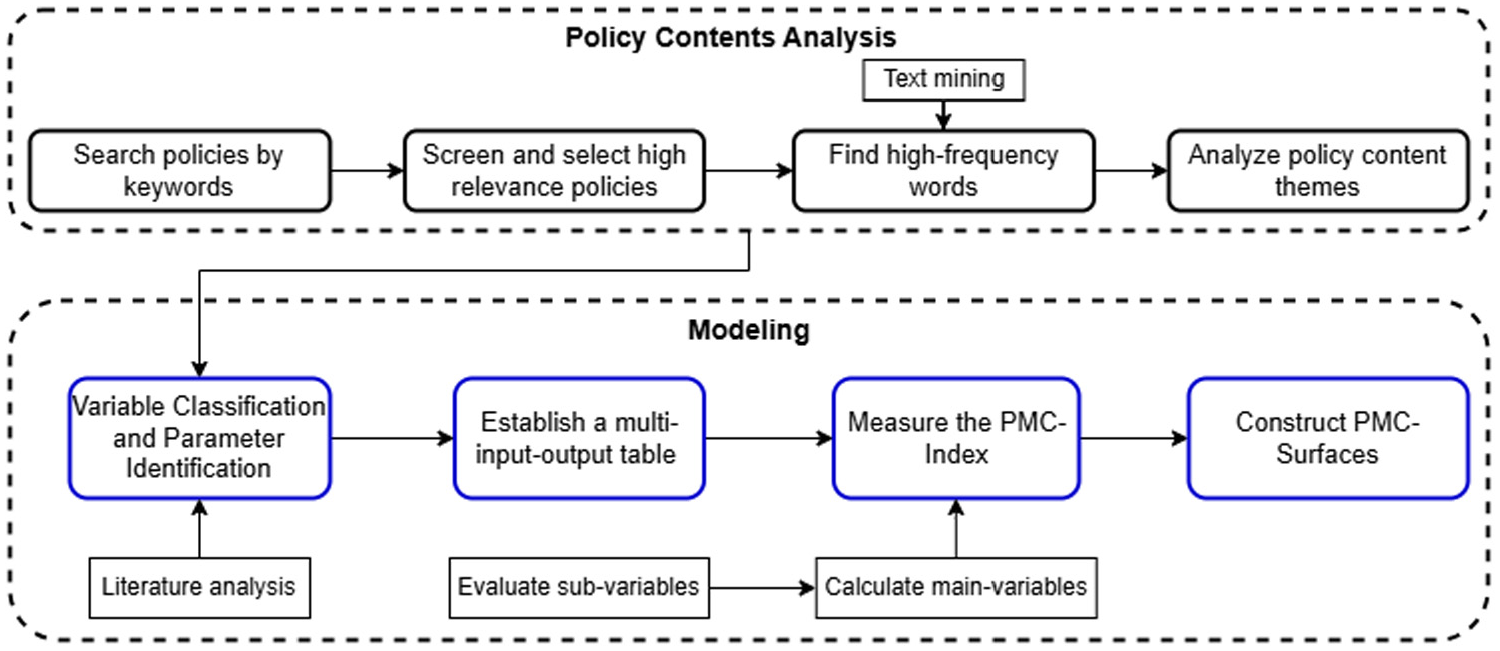
Steps for the construction of the PMC-index model.
Classification of Variables and Identification of Parameters
The key to constructing the PMC-Index model is to consider as many relevant factors as possible (Estrada, 2011) to ensure a comprehensive evaluation. Therefore, when selecting variables, we aimed to balance universal, validated indicators suitable for policy evaluation with factors reflecting the specific characteristics of DCIPs and the objectives of promoting coordinated industrial development in the YRD.
Based on a review of relevant literature (Hong et al., 2024; Kuang et al., 2020; S. Li et al., 2022; F. Liu et al., 2023; Nkoua Nkuika & Yiqun, 2022; N. Wang et al., 2022; C. Yang, Yin, et al., 2022; Y. Yang, Tang, et al., 2022; Wang et al., 2021; Lin & Teng, 2023), we selected six variables commonly used in the PMC-Index model, including Policy Nature (X1), Policy Timeliness (X2), Policy Orientation (X3), Policy Domains (X4), Policy Incentives (X7), and Policy Evaluation (X9). These variables collectively reflect fundamental attributes of policy documents, including their strategic intent, timeliness, coverage, and the scientific basis and rationality of policy design.
To address the unique characteristics of DCIPs and the goal of coordinated development in the YRD, we included three additional variables:
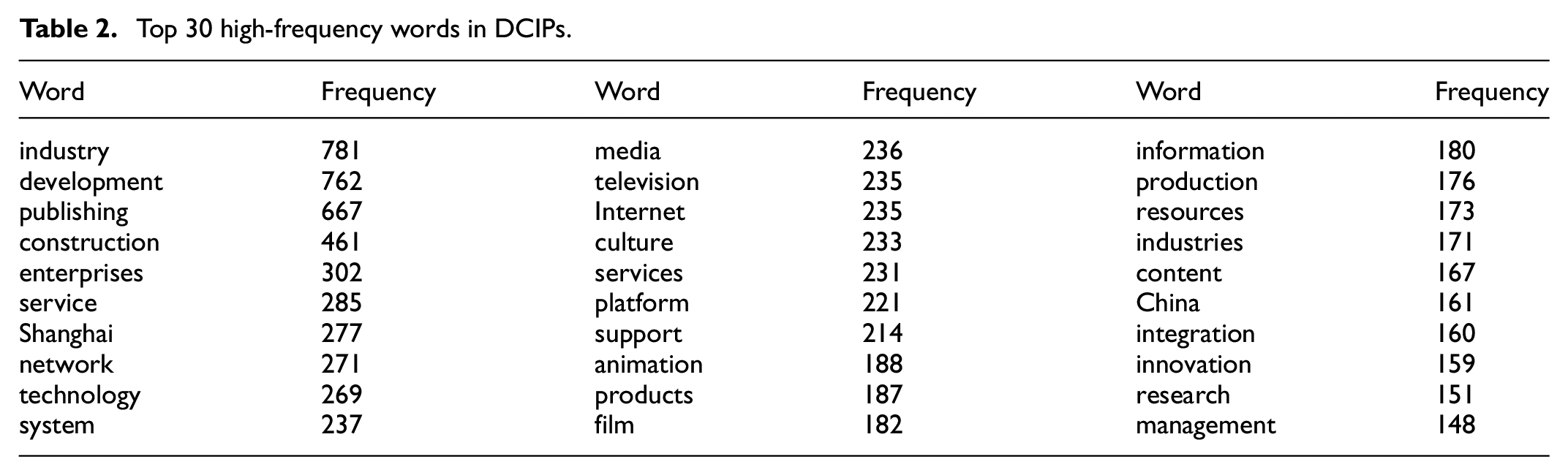
Policy Contents (X5): This variable reflects the thematic focus of policies. Sub-variables under Policy Contents (X5) were identified through thematic analysis using NVivo and high-frequency word analysis of policy texts (Table 2). This variable ensures that the evaluation reflects the specific priorities and gaps in DCIPs within the YRD.
Top 30 high-frequency words in DCIPs.
Policy Instruments (X6): Policies on different themes, or developed by different governments, often lead to diverse goals, requiring a mix of policy instruments to achieve these goals effectively (Juhász et al., 2023; Kastelli et al., 2023). Moreover, analyzing policy instruments helps policymakers make more effective decisions (Capano & Howlett, 2020). This variable examines whether policy instruments are sufficiently diverse.
Policy Synergy (X8): Regional integration and cross-sector collaboration are important policy goals for the YRD and are widely emphasized in government documents and academic literature (Dou et al., 2025; Yuan, 2024). Policy Synergy (X8) was specifically included to evaluate whether policymakers know the importance of regional industrial coordination, the necessity of cooperating with other industries, and the significance of industrial or innovation chain synergy.
When assigning parameters, we give all sub-variables equal weight (Estrada, 2011). This approach is based on our evaluation objective: to determine whether a sub-variable is mentioned in the policy rather than assessing the depth or quality of its coverage. To achieve this, we adopt a binary system for parameter assignment: assign a value of 1 if the sub-variable is mentioned in the policy and 0 if it is not (as shown in Table 3). This ensures that all sub-variables are equally relevant for evaluating policies (Estrada, 2011).
Variable setting and evaluation criteria of DCIPs in the YRD.

Setting Up Multi-Input-Output Tables
After identifying the variables for the model assessment, a multi-input-output table can be constructed. The table can measure DCIPs from different dimensions (X. Zhao et al., 2023). This study identifies 9 main-variables and 35 sub-variables (Table 4).
Multi-Input-Output Table.

Calculating the PMC Index
The PMC index calculation can assess the policy’s coverage of the evaluation framework. The specific calculation steps are as follows:
List all main-variables and sub-variables in the multi-input-output table (Equation 1);
Assign values to all sub-variables according to binary (Equation 2). XR represents the value of any sub-variables;
Calculate the value of each main-variable according to sub-variables (Equation 3), where i represents the main-variable (i = 1, 2, 3, …, ∞); j represents the sub-variable (j = 1, 2, 3, …, n); T(Xij) represents the total number of sub-variables in the main-variable;
Sum all main-variables’ values to obtain the PMC index of each DCIP (Equation 4).




After the calculation, the policies are classified into four grades (S. Li et al., 2022; Y. Yang, Tang, et al., 2022; X. Zhao et al., 2023) to show the consistency level with the evaluation framework. As there are 9 main-variables in this study, the consistency level of DCIPs in the YRD is between 0 and 9 (Table 5). For policies ranging from 0 to 4, the consistency level is “Bad,” indicating the policies have a narrow focus and limited alignment with the evaluation framework. For policies ranging from 4 to 6, the consistency level is “Acceptable,” indicating the policies meet minimum requirements but have significant room for improvement. For policies ranging from 6 to 8, the consistency level is “Good,” indicating the policies with moderate coverage and alignment, and address most of the main-variables. For policies ranging from 8 to 9, the consistency level is “Perfect,” which means the policies have broad coverage and high consistency across all variables.
Policy Consistency Evaluation Criteria.

Constructing the PMC-Surface
The PMC-Surface is created by calculating the PMC index of each policy, visualizing its strengths and weaknesses in 9 dimensions (X. Zhao et al., 2023). It is a three-dimensional surface constructed by a 3*3 matrix (Equation 5). The surface uses different colors and elevations to represent variable scores: raised areas indicate high scores, while lower areas indicate low scores.

Results and Discussion
Regional-Level Analysis of the DCIPs in the YRD
Analysis Based on the PMC Index
The PMC index score reflects the consistency between a policy and the evaluation framework, assessing the policy’s coverage across 9 dimensions. As mentioned above, the PMC index values are typically categorized into four levels. The results reveal that only 9% of policies achieved “Perfect” consistency with the evaluation framework, while 30% were “Good,” 54% were “Acceptable,” and 7% were “Bad.” The overall PMC index score is 5.98, corresponding to an “Acceptable” rating. This suggests significant room for improvement in the design and content quality of DCIPs in the YRD.
To better understand the gaps across these consistency levels, we employed Equation 5 to generate PMC-Surfaces for four representative policies: P12 (Perfect), P31 (Good), P40 (Acceptable), and P9 (Bad). These policies were selected based on median scores within their respective categories. This approach reduces the influence of outliers and better reflects the typical characteristics of each category. Using Python, we visualized these PMC-Surfaces (Figure 2) based on a matrix constructed from the policies’ main-variables (Equation 6). All results are reported to two decimal places. In the PMC-Surface, lighter shades represent higher variable values, while darker shades represent lower values.
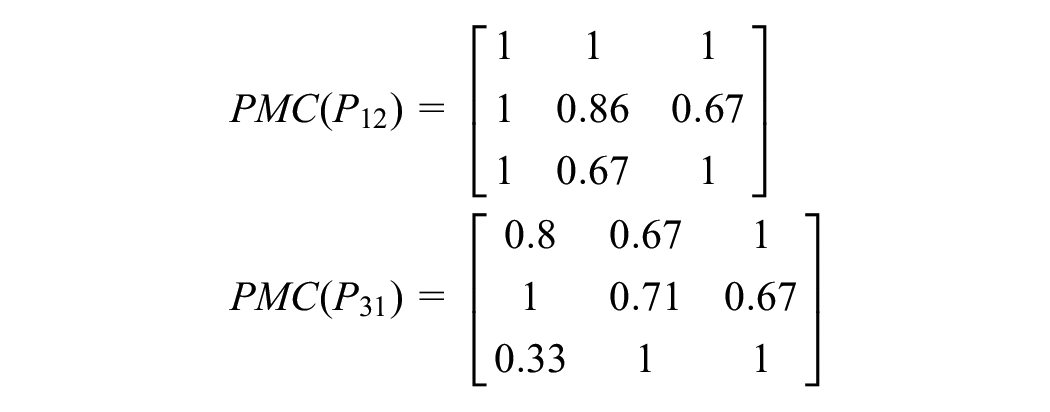
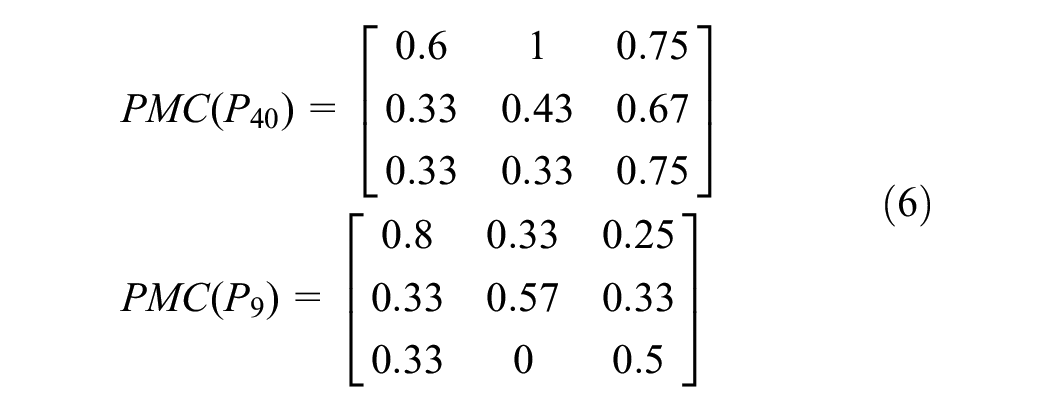

PMC-surfaces for four representative policies.
Comparative analysis of the four PMC-Surfaces shows a correlation between the PMC index scores and two key factors: the mean value of the main-variables and the range between their highest and lowest values. A higher PMC index score indicates a more comprehensive and balanced policy: higher mean values across the 9 main-variables, reflecting broader dimensional coverage; and smaller disparities among these variables, reflecting the absence of significant weaknesses in any specific area. Conversely, a lower PMC index score is associated with lower mean values and greater disparities among variables, suggesting potential gaps or imbalances in policy coverage. For instance, P12 (Perfect) exhibits lighter shades across all dimensions, demonstrating a comprehensive approach. On the other hand, P9 (Bad) shows darker shades in areas such as X2, X3, X6, X7, X8, highlighting the deficiencies in these aspects. Therefore, a higher PMC index score effectively reflects a policy’s overall comprehensiveness, with higher scores indicating extensive coverage across all evaluation dimensions and lower scores pointing to deficiencies and imbalances in specific key areas.
Analysis Based on Main-Variables and Sub-Variables
To clarify the characteristics of DCIPs in the YRD, we further analyze the main-variables and sub-variables of the 54 policies. The radar chart (Figure 3) displays the mean values of 9 main-variables across 54 policies, revealing the overall strengths and weaknesses of the DCIPs under this evaluation framework. We can categorize the performance of the main-variables into three groups:

Mean values of all the main-variables of DCIPs in the YRD.
Strong Performance (Mean > 0.75)
Among the 9 main-variables, Policy Evaluation (X9) (mean: 0.92), Policy Nature (X1) (mean: 0.81), and Policy Timeliness (X2) (mean: 0.78) demonstrate strong performance (Table 6).
Main-Variables With Strong Performance.

Policy Evaluation (X9) performs best among all main-variables. This means the policies are designed with sufficient basis, clear principles, and precise objectives. It also indicates that DCIPs in the YRD address industry challenges and provide clear goals to guide industry development. However, scientific planning should be emphasized, including establishing clear timelines and implementation steps. A detailed implementation plan is crucial for effective policy execution.
Policy Nature (X1) indicates that the policies provide practical guidance and descriptions regarding industry development. However, more attention should be paid to the forward-looking analysis of future development trends and the establishment of corresponding monitoring mechanisms.
Policy Timeliness (X2) performs well in short-term and medium-term planning, reflecting the policies’ ability to respond quickly to current and medium-term development needs. The balance of short-term and medium-term policies, along with a smaller number of long-term policies (which typically address overall industry development goals), is reasonable for the general pattern of the policy mix. This combination of policy timeliness serves both the region’s long-term development planning and the need for effective policy implementation.
Moderate Performance (Mean 0.50–0.75)
This level includes Policy Orientation (X3) (mean: 0.67), Policy Domains (X4) (mean: 0.60), Policy Contents (X5) (mean: 0.63), Policy Instruments (X6) (mean: 0.61), and Policy Incentives (X7) (mean: 0.59) (Table 7).
Main-Variables With Moderate Performance.
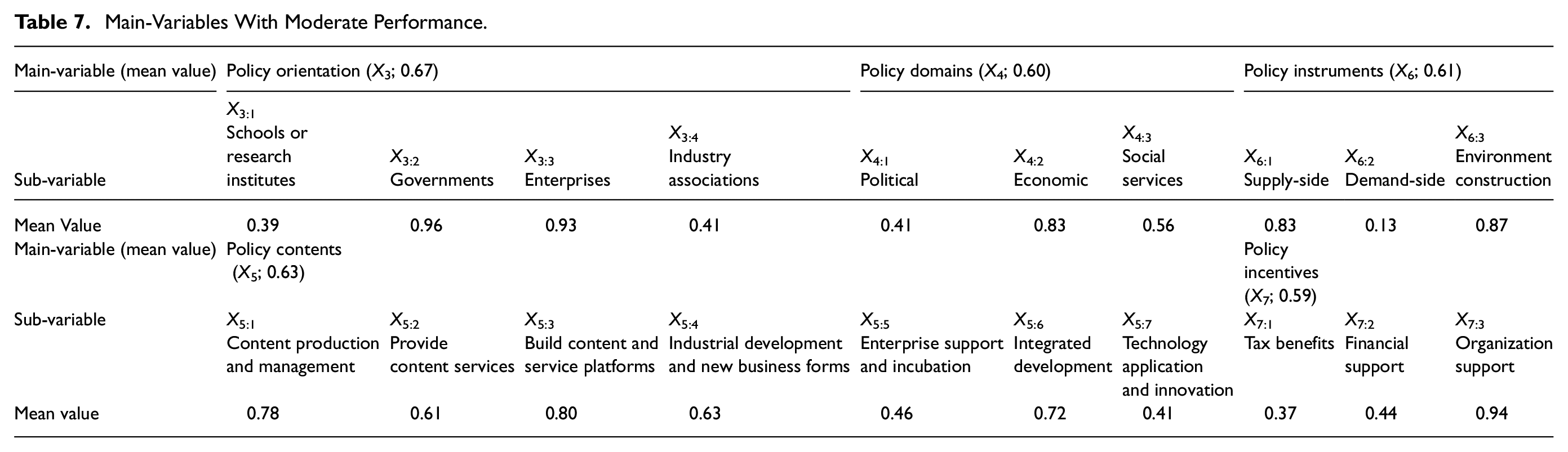
Based on Policy Orientation (X3), we can see that current policies concentrate on the role played by government and enterprises, with a limited focus on schools, research institutions, and industry associations. Schools and research institutions are vital in driving technological progress and innovation, while industry associations are key actors in setting industry standards, promoting exchange, and gathering market intelligence. Appropriate policy guidance could significantly enhance the contributions of these entities to industry growth.
Policy Domains (X4) of the DCIPs emphasize economic aspects, with limited coverage of political and social service domains. While this distribution is generally reasonable for developing the digital content industry, further expansion into these areas is still needed. Particular attention should be paid to the political and social service domains, as the digital content industry has the important function of transmitting cultural value.
Policy Contents (X5) reflects the priorities shaping industry development. While current policies perform well in content production management, platform development, and industry integration, they fail to promote technological innovation and support enterprises. The development of the digital content industry relies on integrating digital and information technologies with content creation, setting it apart from traditional industries. Overlooking technological innovation could hinder long-term, high-quality industry growth. Additionally, as small and medium-sized enterprises (SMEs) are the leading players in the digital content industry (Tsai et al., 2008), providing them with targeted support could improve policy effectiveness.
From the Policy Instruments (X6) perspective, current policies rely heavily on supply-side and environmental construction instruments. However, there is an apparent lack of demand-side instruments, such as those that foster market demand and increase consumer subsidies. This deficiency limits market vitality and slows technological progress and innovation.
Policy Incentives (X7) is a direct driver of industry growth. Current incentive policies have narrow coverage, mainly focusing on providing organizational support for the industry. Insufficient incentives related to tax reduction policies and financial support weaken the effectiveness of these measures.
Poor Performance (Mean < 0.50)
Policy Synergy (X8), with a mean value of 0.37, is the weakest-performing variable (Table 8). This indicates the significant gap in policies promoting coordinated industrial development within the YRD. Only 50% of policies align with the YRD integration strategy, showing that provincial policymakers pay insufficient attention to regional industrial collaboration. This lack of focus could create barriers to resource flow and sharing across administrative boundaries, weakening regional industrial competitiveness. Similarly, only 41% of policies address cross-sector synergies, indicating a lack of focus on the coordinated development of the digital content industry with other sectors. The digital content industry has the potential for cross-industry collaboration, as different types of digital content can satisfy different usage scenarios (such as online education or online tourism). Ignoring these collaborations will limit the growth potential of the industry. Additionally, only 20% of policies consider the coordinated development of industrial and innovation chains. Coordination across industrial chains can reduce costs and improve efficiency, while synergy across innovation chains can foster technological breakthroughs. Current policies fail to recognize the importance of this coordination for the regional development of the digital content industry.
Main-Variables With Poor Performance.

Provincial-Level Analysis of DCIPs in the YRD
Comparative Analysis Based on the PMC Index
Among the 54 DCIPs, Zhejiang leads with 18 policies, followed by Shanghai (15), Jiangsu (13), and Anhui (8). The mean values are ranked as follows: Shanghai (6.21) > Jiangsu (6.01) > Zhejiang (5.84) > Anhui (5.82) (Table 9).
The PMC Index of Four Provinces (Municipality).

While Zhejiang issued the most policies, its PMC index scores vary significantly, ranging from 7.94 to 3.39 (a range of 4.55). This wide range may stem from insufficient attention to certain key areas during the formulation of some of Zhejiang’s DCIPs. Shanghai maintains the highest mean value of the PMC index (6.21) and performs comparably overall with Jiangsu. Further analysis of specific variables is required to identify the precise differences between their policies. With fewer policies and lower PMC index scores, Anhui should prioritize the development of targeted policies and simultaneously improve the overall quality of policy formulation.
Comparative Analysis Based on Main-Variables and Sub-Variables
By analyzing the performance of main-variables and sub-variables, as shown in Figure 4 and Table 10, we can find the characteristics of each province (municipality)’s DCIPs.
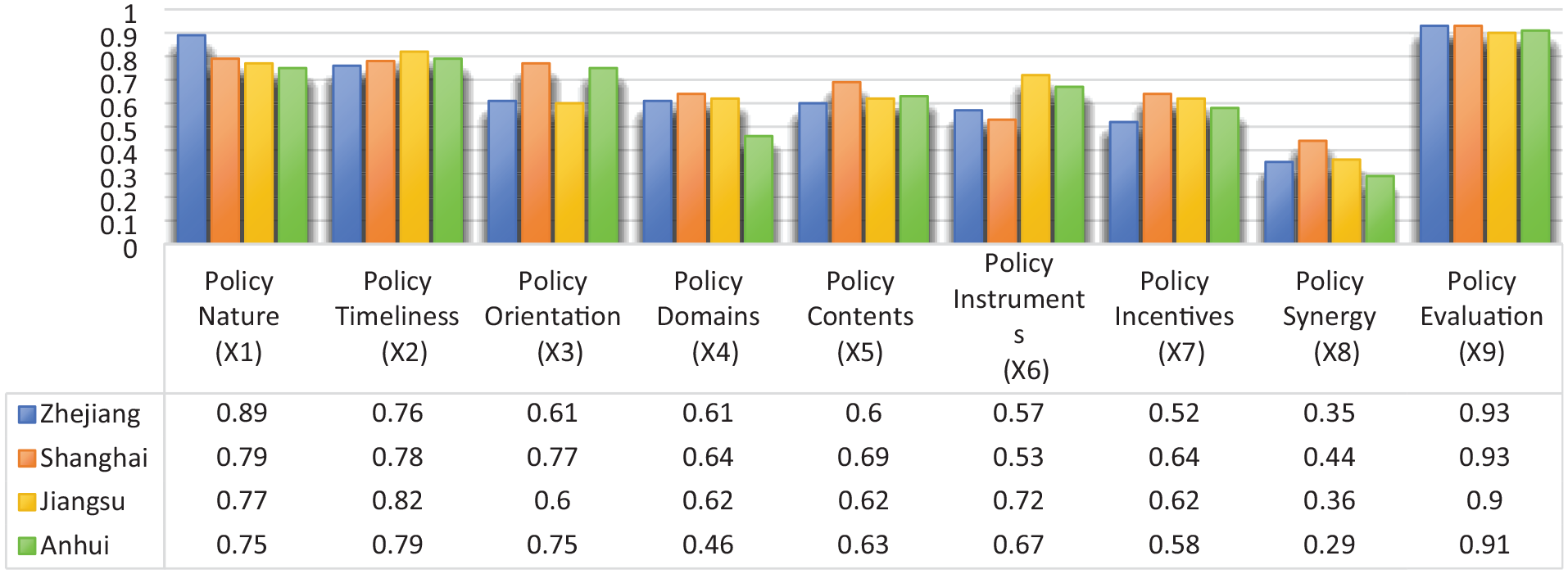
Performance of main-variables of the provinces (municipality).
Mean Value of Sub-Variables of the Provinces (Municipality).

According to the PMC index, we will analyze each province (municipality)’s main-variables to focus on its performance.
Zhejiang shows the most diverse Policy Nature (X1), covering all categories comprehensively. However, it scores lowest in Policy Contents (X5) and Policy Incentive (X7). Zhejiang’s policies show insufficient attention to industry integration, technological application, and innovation. Conversely, it has the most policies related to providing digital content services. This reflects Zhejiang’s differentiated approach to the development of the digital content industry. While a narrow thematic focus might increase policy specificity, single-theme policies may indicate a lack of systematic thinking in policy formulation. A key limitation is that most policies fail to establish incentive mechanisms, particularly in fiscal support, tax exemptions, and organizational assistance. This lack of specific implementation measures directly compromises policy effectiveness. The analysis reveals a notable paradox in Zhejiang’s approach: while the province is committed to digital content industry development by introducing DCIPs, it pays insufficient attention to monitoring and ensuring policy implementation outcomes.
Shanghai leads in 6 of 9 main-variables: Policy Orientation (X3), Policy Domains (X4), Policy Contents (X5), Policy Incentives (X7), Policy Synergy (X8), and Policy Evaluation (X9), but it scores the lowest in Policy Instruments (X6) and notably, none of its policies mention the use of demand-side instruments, which means policies do not consider leveraging consumer demand to stimulate the industry. Shanghai’s DCIPs emphasize the roles of various actors, including research institutions, enterprises, the government, and industry associations, in developing the digital content industry. Regarding Policy Domains (X4), two-thirds of policies extend beyond economic concerns to address social services, reflecting the industry’s multifaceted nature. The policies also demonstrate the broadest coverage of the industry, with a focus on integration and fostering new business models. The good performance in Policy Incentive (X7) indicates that adequate tax, financial, and organizational support policies have been implemented to promote industry growth. Shanghai’s Policy Synergy (X8) ranks highest in the YRD, but there is insufficient recognition of the importance of regional synergy for industry development. Besides, long-term planning for industry growth is lacking.
Jiangsu’s DCIPs show moderate performance in both quantity and quality. The province excels in Policy Instruments (X6) due to its comprehensive approach combining supply-side, environmental-construction, and demand-side instruments. Notably, Jiangsu leads in utilizing demand-side instruments, which effectively stimulate market activity by influencing consumer behavior. The province’s strategy of mixing different policy instruments has proven effective in policy implementation. However, Jiangsu performs poorly in Policy Nature (X1), Policy Orientation (X3), and Policy Evaluation (X9). The weak performance in Policy Orientation (X3) stems from two main issues: none of the 13 policies addresses industry associations, and only 3 targets educational or research institutions. This gap limits scientific support and innovation within the digital content industry. Jiangsu should assess the roles of schools, research institutions, and industry associations in the local digital content industry and develop targeted policies to empower these entities to fulfill their potential. As for Policy Evaluation(X9), the main weakness lies in scientific plan scores, with 5 out of 13 policies lacking detailed implementation plans and timelines, thereby reducing policy coherence and practicality.
Anhui faces the most challenges, having the lowest number of policies and below-average scores across all main-variables. This might reflect a low prioritization of developing the digital content industry or insufficient policy attention. The province faces particular challenges in four areas: First, Anhui scores lowest in Policy Nature (X1), with policies emphasizing general guidance over forecasting and oversight. This indicates that Anhui’s policy design does not adequately consider the development trends of the local digital content industry, which may compromise its long-term sustainability. Second, the relatively low score in Policy Domains (X4) stems from the fact that Anhui’s DCIPs do not cover political aspects. Since the digital content industry can provide crucial data resources for addressing issues such as the protection of digital sovereignty in the political sphere, international sovereignty competition, and the modernization of social governance, this omission might pose challenges for Anhui when coordinating industrial development with the other three provinces (municipality), and could this leads to poor performance of Policy Synergy (X8). Third, Anhui should establish more comprehensive policies and broaden its thematic coverage. Additionally, policies should emphasize utilizing the regional advantages of the YRD integration to promote local digital content industry development.
Comparative Analysis Based on Key Main-Variables: Policy Contents (X5) and Policy Synergy (X8)
Policies can foster coordinated regional industrial development through vertical cooperation, focusing on various objectives along the industrial chain, and horizontal cooperation, aiming towards common goals to achieve mutual benefits (Y. Chen et al., 2021; Demuynck et al., 2023; Z. Hu et al., 2023). The vertical dimension refers to different regional administrative units that focus on different segments or areas of the industrial chain. Through differentiated competition, they can collectively contribute to the development of the regional industry. The horizontal dimension refers to all regional administrative units that should know the importance of coordinated industrial development and establish corresponding goals. Therefore, we selected two key main-variables, Policy Contents (X5) and Policy Synergy (X8), to examine the focus areas of DCIPs in different provinces (municipality) within the YRD and the awareness of the synergy policymakers pay to regional industrial coordination. Through comparative analysis, we aim to provide a more precise direction for optimizing regional industrial policies.
Policy Contents (X5) reveals the specific focus areas of each province’s policies, reflecting their vertical integration possibilities. Table 11 shows that content production or management and building content platforms are the most extensively covered areas in all four provinces (municipality), with mean values of 0.78 and 0.80, respectively. Notably, Anhui scores highest in both areas, suggesting that Anhui places a strong policy focus on fundamental industry capabilities and infrastructure. Shanghai and Jiangsu also perform well in these areas, indicating a general regional agreement on the importance of content creation and platform building as the industry’s foundation. Providing content services has a regional mean of 0.61, with Zhejiang leading at 0.78. This reflects Zhejiang’s policy orientation toward supporting the downstream service delivery segment of the value chain, possibly linked to its strong internet service and e-commerce base. Industrial and integrated development receive considerable policy attention, with mean values of 0.63 and 0.72, respectively. Shanghai (0.73) and Jiangsu (0.69) stand out in industrial development, while Anhui (0.75) leads in integrated development, showing a focus on facilitating convergence across sectors and enhancing the overall industrial ecosystem. Enterprise support is highest in Shanghai (0.60), reflecting Shanghai’s role in nurturing industry leaders and supporting business growth. Technology application or innovation, crucial for long-term competitiveness, has relatively low scores across all regions, with Anhui ranking highest (0.50). This suggests that while technology-driven transformation is recognized, it may not yet be a central theme in policy documents across the YRD.
Mean Values of Sub-Variables Within Policy Contents (X5).

The DCIPs of the four provinces (municipality) need a more balanced policy approach that consolidates foundational capabilities and accelerates technological advancement and business development.
Policy Synergy (X8) assesses the willingness of which policies promote regional collaboration and coordination, reflecting the horizontal integration efforts (Table 12). In terms of regional industrial synergy, Jiangsu (0.69) and Anhui (0.63) score higher than Shanghai (0.27) and Zhejiang (0.50), with an overall mean of 0.50. This suggests that policies in Jiangsu and Anhui emphasize collaboration and integration with other provinces (municipality) within the YRD. Their policies focus more on resource sharing and complementing each other’s strengths. In contrast, as the leading city, Shanghai may prioritize its high-quality development and refer less to regional collaboration in its policy content. Regarding synergy with other industries, Shanghai stands out with the highest score (0.60), while the average across all regions is 0.41. This indicates that Shanghai’s policies are more likely to promote integration between the digital content industry and finance, culture, and technology sectors. Meanwhile, Jiangsu (0.23) and Anhui (0.25) have much lower scores, indicating room to improve their focus on cross-industry collaboration. Shanghai again leads in the industry or innovation chain synergy dimension (0.47), while the regional average is just 0.20. Zhejiang (0.11), Jiangsu (0.15), and Anhui (0) lags, showing that their policies pay less attention to the synergy across the industry or innovation chain. This may be due to Shanghai’s advantages in high-end industry segments and its concentration of innovation resources. The results imply that high-quality, coordinated development of the digital content industry in the YRD requires each province to utilize its unique strengths in policy design further. For example, Shanghai could enhance its regional collaboration efforts, while Jiangsu and Anhui should focus more on the industrial chain and cross-industry integration.
Mean Values of Sub-Variables Within Policy Synergy (X8).

Conclusion and Policy Recommendations
Conclusion
This study employed the PMC-Index model to evaluate the 54 digital content industry policies (DCIPs) in the Yangtze River Delta (YRD) region. The model provides a systematic framework and quantitative scoring method to assess the region’s policy characteristics, focuses, gaps, and the foundation for collaboration. The findings reveal that while the DCIPs in the YRD generally support industry growth, there is significant room for improvement.
The overall PMC index score of 54 policies is 5.98, indicating an “Acceptable” rating of consistency level within the evaluation framework. Only 9% of policies achieved a “Perfect” rating, and 54% rated it as merely “Acceptable.” This result highlights the imbalance of the region’s DCIPs in certain areas and the need to improve the comprehensiveness of policies to support the coordinated development of the digital content industry.
The analysis of 9 main-variables shows that policies perform well in areas such as Policy Evaluation (X9), Policy Nature (X1), and Policy Timeliness (X2), indicating a solid foundation for providing developmental guidance. However, they fall short in other crucial aspects: Policy Incentive (X7), Policy Instruments (X6), and most notably, Policy Synergy (X8). The lack of demand-side instruments, tax reduction, and financial incentives may influence the implementation of the policies. Besides, the lack of coordinated efforts toward regional integration, cross-sector collaboration, and the synergy between industrial and innovation chains are critical gaps that must be addressed.
At the provincial level, Shanghai’s policies have the highest overall quality, excelling in 6 main-variables. However, its policies lack emphasis on demand-side instruments and regional collaboration. Jiangsu performs well in policy timeliness and instrument utilization but lacks a forward-looking perspective and detailed plans for policy implementation. Zhejiang shows strengths in diverse policy natures but lacks focus on technological innovation and industry incentives. Anhui faces the most significant challenges, with weaknesses across multiple dimensions, particularly in policy synergy.
Further analysis of Policy Content (X5) and Policy Synergy (X8) reveals that while the foundation for vertical integration exists due to the diverse policy focuses of different provinces (municipality), the absence of a strong, shared vision for coordinated development across the YRD prevents the full realization of coordinated benefits.
Policy Recommendations
We propose a set of policy recommendations to address the identified gaps in policy design and implementation, particularly in policy synergy, instruments, and incentives, to strengthen regional coordination.
Establishing a Cross-Regional Policy Coordination Mechanism
An inter-regional governance framework is essential for strengthening the coordination of DCIPs across the YRD. This requires establishing a cross-provincial coordination body to align development goals, distribute resources, and implement timelines across provinces (Yuan, 2024). The YRD has a “Leading Group for YRD Integrated Development” chaired by the central government, which oversees the region’s integrated development. A dedicated task force for digital content industry collaboration could be formed under the leadership of this group. This task force would include representatives from the Ministry of Culture and Tourism, as well as the cultural and tourism departments of the three provinces and one municipality in the YRD. The task force should be granted the authority to review cross-provincial policies and ensure that new provincial policies add value to, rather than duplicate, the broader regional agenda. It can make resource allocation recommendations from central oversight, help align regional efforts with national priorities, and ensure fairness. Besides, it should develop a list of compatible inter-provincial policies, such as data sharing rules and tax revenue distribution guidelines. A central government financial incentive system could also be introduced to reward provinces that actively share resources like computing power and data. Most importantly, the results of cross-border cooperation must count in the annual performance review of local officials.
Developing a Differentiated Policy Framework
To maximize the comparative advantages of each province (municipality) and strengthen policy coordination, we recommend clearly defining specialized domains for each province (municipality) based on its advantages to guide differentiated development strategies: Shanghai should focus on establishing digital trade standards and advancing financial technology; Zhejiang should prioritize rural digitalization and the development of livestream e-commerce ecosystems; Jiangsu should use its strengths in industrial metaverse applications and smart manufacturing integration; and Anhui should concentrate on data governance and algorithmic innovation. Since specialization may reduce employment, decrease tax revenues in specific traditional sectors, and potentially generate social stability concerns, assigning specialized roles requires careful negotiation to ensure alignment with each province’s development plans and political priorities. The regional coordination body should facilitate these discussions, framing specialization as an opportunity for growth rather than a constraint. Concrete transitional support packages, such as workforce retraining programs and support for local digital enterprises linked to specialization, should be implemented to address these challenges.
Building a Collaborative Policy Community
To strengthen policy coordination and promote inclusive development, a regional innovation ecosystem should be established, encouraging the participation of non-governmental stakeholders. Industry associations, leading firms, and experts should be involved in providing policy recommendations to ensure policies closely align with industry needs. Universities and research institutions should lead the creation of innovation zones that offer low-risk environments for experimental projects. Through coordinated policies, resources, and outcomes from these innovation spaces can be shared, and successful projects can access regional markets. A technical capability certification program should be introduced for SMEs to evaluate their technology and intellectual property management ability. Certified enterprises would receive priority in government procurement processes. A regionally shared innovation fund, jointly financed by Shanghai, Jiangsu, Zhejiang, and Anhui, could support SMEs’ innovation across provinces. Furthermore, coordination strategies, such as channeling Shanghai’s advanced research capabilities to Jiangsu’s industrial digital content sector and Hangzhou’s digital entertainment expertise to Anhui’s emerging technology fields, could help promote regional innovation.
Restructuring Policy Instrument Mix
Current policy instruments emphasize supply-side measures, which may not be suitable for long-term sustainability. A better-balanced policy mix is needed, incorporating demand-side and environmental construction instruments. On the demand side, policies like digital content consumption vouchers can help boost market demand, especially among rural residents and low-income groups. For example, cities with strong digital industries like Shanghai and Hangzhou could issue these vouchers to rural and elderly populations. This would not only stimulate consumption but also help bridge the digital divide. However, in rural and less-developed areas, weak digital infrastructure may limit the impact of such demand-side policies. On the supply side, incentive systems should be refined by shifting from broad fiscal subsidies to performance-based incentives linked to specific outcomes, such as job creation in digital skills or patents from industry-academia-research collaborations. This approach encourages more efficient use of public funds and supports innovation. For environmental construction instruments, policies should create a supportive ecosystem that fosters sustainable industry growth (Kastelli et al., 2023). This could include building a cross-provincial cloud R&D platform and implementing standardized data exchange protocols. Joint R&D projects between provinces could receive tax breaks, and companies investing in cross-provincial collaborations could benefit from preferential treatment. Regulatory sandboxes could be set up for projects combining digital content with traditional industries to support industry integration further. For instance, remote healthcare platforms could be tested and refined within these controlled environments, ensuring innovation and risk management (Mazzucato et al., 2020).
Implementing a Dynamic Policy Adjustment Mechanism
Effective policy implementation depends on adaptability to industry trends and robust monitoring and evaluation systems. To enhance policy coordination, a standardized regional policy review cycle, such as a triennial review, should be introduced to ensure policies match technological advancements and market demands. Developing AI-assisted policy simulation tools can further support decision-making by predicting the potential impacts of new policies within the region. However, building such a system is complex and should be approached in stages. First, the process could start in Shanghai by developing core simulation models using available municipal data and testing them on one or two high-priority policies. At this stage, a basic data-sharing protocol should also be set up. Next, the approach can be expanded to pilot cities in Jiangsu and Zhejiang, where provincial data sources are integrated, the models are refined, and limited cross-regional policy simulations are conducted. Finally, the system can be rolled out across the entire region, with the early-warning system fully operational. To support these efforts, a data-sharing platform that brings together resources from government, industry, and research institutions should be established. This platform would facilitate the development of AI simulation tools and enable real-time risk monitoring. By setting up a risk early-warning system, potential issues in policy implementation can be detected early, allowing for timely adjustments and ensuring ongoing policy coordination.
Limitations
The study has limitations in the following areas: First, our analysis evaluates policies from an overall and provincial perspective. However, we did not conduct a detailed analysis of each policy document. As a result, specialized or narrowly focused policies may receive lower scores, potentially overlooking their unique contributions or innovations. Future research could address this limitation by conducting in-depth analyses of individual policies based on the specific research focus. Such targeted analysis would provide a more scientific understanding of the quality and effectiveness of specialized policies, enabling more accurate and effective policy optimization.
Second, while the PMC-Index model effectively identifies key issues within policy texts, it is not precise enough. For instance, although cross-provincial collaboration is considered, our analysis does not examine in detail the mechanisms, objectives, or operational status of such collaborations as described in the policies. This means our findings may highlight gaps in policy emphasis (e.g., insufficient innovation chain coordination or regional cooperation) but cannot fully explain their causes, specific local challenges, or how collaborative mechanisms function. Future research could use qualitative content analysis, interviews, or network analysis to explore the context, drivers, and effectiveness of policy emphasis and collaboration in greater depth.
Third, our study assesses policy content and design without considering policy implementation. The actual execution of policies may diverge significantly from their stated goals. This means our findings may overestimate the real-world influence of DCIPs on industry growth. Future studies should incorporate case studies or administrative data to evaluate how policy design translates into practice and to identify barriers to effective implementation.
Finally, our analytical framework does not include certain emerging factors, such as awareness of intellectual property protection and AI regulation. This reflected our intent to provide a foundational and systematic analysis of DCIPs in the YRD as a first step. However, excluding these variables may reduce the relevance of our findings for new and rapidly evolving policy areas, such as digital copyright enforcement and AI governance. Future research could expand the analytical framework to incorporate these emerging variables, using policy analysis and industry data to assess their impact.
Footnotes
Acknowledgements
We are grateful to the editor and reviewers for their insightful comments, which were very helpful in revising this manuscript.
Funding
The authors disclosed receipt of the following financial support for the research, authorship, and/or publication of this article: This study is supported by the project fund for the key laboratory of trustworthy digital copyright Eco-technology and standards, Press and Publication Administration (PPA).
Declaration of Conflicting Interests
The authors declared no potential conflicts of interest with respect to the research, authorship, and/or publication of this article.
Data Availability Statement
The data that support the findings of this study are available in the PKU Law data library and four provincial (municipality) government websites at https://www.pkulaw.com/, https://www.shanghai.gov.cn/, https://www.zj.gov.cn/, https://www.ah.gov.cn/,  .
.