




Abstract
The digital economy has gradually become an important support for high-quality economic development, but the speed of digital economy development is affected by policies. A reasonable digital economy policy system has practical significance for the development of the digital economy. This study takes the digital economy policy text published by Heilongjiang Province from 2015 to 2022 as the research object, uses the method of text mining and content analysis, innovatively introduces AE automatic coding technology into the PMC index model, constructs the PMC-AE index model, and quantitatively evaluates and analyzes the policy text. The study found that the digital economy policy of Heilongjiang Province is at a good level as a whole, but there is still room for improvement. The digital economy policy of Heilongjiang Province is mainly based on guiding policies. The richness of policy types, participants, and incentives is insufficient. The limitation of policy timeliness is strong, and the cooperation of the issuing agencies is not sufficient. Based on the research results, it is suggested that policymakers should pay attention to the combination of macro and micro policies, promote multi-agent participation, enrich incentive measures, develop both policy guidance and supervision, improve the timeliness and consistency of policies, and strengthen the communication between the Issuing Departments. In addition, this study puts forward policy suggestions for specific government departments from four aspects of digital industrialization, industrial digitization, digital governance, and data value. This study not only provides policy recommendations for policymakers but also expands the field of policy evaluation.
Introduction
In recent years, the rise of a new generation of information technology such as big data, 5G, AI, and blockchain has led to a subversive change in the mode of social production, and many new formats and models have emerged (Ren et al., 2023). Digital technology has a positive impact on business innovation in emerging markets (Dana, Salamzadeh, Mortazavi, & Hadizadeh, 2022). And the digital economy plays a stronger role in promoting innovation for large enterprises (Q. Li et al., 2023). The digital economy has gradually become an important engine to promote economic development. To seize the development opportunity, countries around the world have successively issued digital economy-related policies, deployed digital economy development strategies, and supported the development of the digital economy. For example, the United States’ digital economy agenda, Japan’s e-Japan strategy, and Germany’s digital economy strategy 2025. In the context of the world’s unprecedented changes in a century, especially in the case of the outbreak of the new coronal pneumonia epidemic, the digital economy has played an important role in the process of economic development, showing great vitality and toughness.
Sustainability is the key element of the digital economy, and the development of the digital economy cannot be separated from the support of policies (Dana, Salamzadeh, Hadizadeh, Heydari, & Shamsoddin, 2022; Huang et al., 2020). China started late in the field of digital economy development. To promote the development speed of China’s digital economy, the Chinese government has given strong policy support. Since the 18th National Congress of the Communist Party of China, the Central Committee of the Communist Party of China has supported the comprehensive deepening of reform in Northeast China, further promoted the Revitalization Strategy of Northeast China, accelerated the adjustment of industrial structure, adapted to the development requirements of the new era, played the advantages of the digital economy, and assisted the economic revitalization of Northeast China.
According to the China Digital Economy Development Report (2022) released by the China Institute of Information and Communications, there are imbalances in the proportion of digital economy scale and growth rate among China’s provinces, and the development of the digital economy in Northeast China is relatively slow. Among the three provinces in Northeast China, Heilongjiang province lags behind the other two provinces in terms of the proportion of digital economy scale and growth rate. To promote the development of the digital economy in Heilongjiang Province of China, it is necessary to evaluate the existing digital economy policies. At the same time, objective policy evaluation is also crucial to the improvement of digital economy policies.
The current research streams on digital economy mainly include: novelty in science, structured digital economy, area growth, rationalization and contextualization, creativity, and entrepreneurship (Okpalaoka, 2023). However, scholars’ research on the digital economy policy text itself is relatively less. To fill this gap, this study takes Heilongjiang digital economy policy text as the research object, constructs the PMC-AE index model through text information mining, and carries out the quantitative evaluation of the policy text.
The research questions to be solved in this study are as follows: (1) what is the quality of the digital economy policy in Heilongjiang Province? (2) Whether there are deficiencies in the design of the digital economy policy of Heilongjiang Province in China, and how to solve the dilemma of slow development of the digital economy from the perspective of policy.
The main contributions of this study include: (1) The PMC-AE index model based on text mining is used to quantitatively analyze the digital economic policy text, and the method of digital economic policy evaluation is innovated; (2) Through the text evaluation of digital economy policy, this paper puts forward relevant policy suggestions, which can provide a reference for the formulation, adjustment, and implementation of a new round of digital economy policy in Heilongjiang Province in the future.
The remaining parts of this study are structured as follows: The second part is a literature review of public policy evaluation research and digital economy policy research; The third part is the research design, which introduces the data sources and research methods; The fourth part is analysis and results; The fifth part is the discussion; The sixth part is the conclusion.
Literature Review
Research on Public Policy Evaluation
Public policy is a comprehensive discipline to solve social problems and find policy solutions by analyzing public policy phenomena. Policy evaluation is essential to understand the objectives of the policy and its impact on reality (Christie & Lemire, 2019). Researchers and policymakers also recognize the need to evaluate policies (Miljand, 2020). Through policy evaluation, policymakers can find the shortcomings and promote the optimization of policymaking in the future (Dai et al., 2021). Public policy research can be traced back to the middle of the twentieth century. As the founder of public policy, American scholar Lasswell (1951) put forward the policy process model. Since the 1960s, public policy evaluation has attracted the attention of academia and relevant government departments. With the development of the new public management reform movement, public policy evaluation has gradually occupied an important position in the field of public policy research. Early public policy evaluation methods are represented by qualitative research methods such as Poland’s (1974) policy evaluation classification, Suchman’s (1968) five-category evaluation method, and Wollmann’s (2007) classic causal effect evaluation method. With the further development of public policy evaluation research, policy evaluation methods have gradually become rich, from a single qualitative method to a combination of quantitative and qualitative methods (Prior et al., 2012). For example, analytic hierarchy process, content analysis, double difference method, etc. However, these methods are mainly for the overall evaluation of macro policies, and there are some limitations (Xiong et al., 2023).
With the advent of the information age, text mining technology has promoted the development of policy evaluation methods (Kayser & Blind, 2017). For example, Ren et al. (2023) used text analysis to explore the dynamic changes and influencing factors of enterprise digital development level. Estrada (2011) constructed a policy modeling consistency (PMC) index model based on the Omnia Mobility (everything is moving) hypothesis. With the help of text mining technology, the model transforms unstructured text into structured data, which can not only evaluate the overall policy but also analyze the advantages and disadvantages of individual policies. Scholars have introduced the model into various fields for policy evaluation. For example, based on the 57 LTCI policies developed in 15 pilot areas in China, Peng et al. (2020) evaluate the LTCI policies by building a PMC index model with 10 primary variables and 44 two-level variables. F. Liu et al. (2022) used text mining technology and the PMC index model to quantitatively evaluate the waste separation management policy in the Yangtze River Delta. In addition, the model has also been introduced into the research of high-tech industrial policy (Y. Liu et al., 2022), development policy of traditional Chinese medicine (Yang et al., 2022), cultivated land protection policy (Kuang et al., 2020) and wind power industry policy (B. Wang et al., 2022).
Research on Digital Economy Policy
Since the term “ digital economy ” first appeared at the end of the 20th century, the connotation of digital economy has become more abundant with the development of scientific and technological innovation (Tapscott, 1996). Kling and Lamb (1999) study it and organizational change in digital economies: a socio-technical approach. Research has found how it requires complex organizational work takes to get information systems “up and running.”Dahlman et al. (2016) make a call for why the digital economy matters for developing countries and what they need to consider when developing a national digital strategy. The meaning and metrics of the digital economy are both limited and divergent. The purpose of Bukht and Heeks (2017) is to review what is currently known to develop a definition of the digital economy, and an estimate of its size. Shokhnekh et al. (2020) define the directions of the concept strategy for the development of innovative small businesses in the system of economic security, which is particularly relevant in the digital economy. K. Li et al. (2020) analyzed the “digital economy and society index” and the attributes of the country, society, and economy as the basis for framing ideas.
Research on digital economy policy. The research on digital economic policy mainly focuses on two aspects: the research on the current situation of digital economic policy and the evaluation of digital economic policy.
As for the research on the current situation of digital economic policies, scholars mostly analyze the current situation of digital economic policies in the world. For example, Romanova (2018) believes that one of the characteristics of the fourth industrial revolution is the emergence of the digital economy. The fundamental difference of this revolution lies in the coordination and integration of a large number of scientific disciplines, which puts forward new requirements for the formation of industrial policy priorities. Aturin et al. (2020) explores the problems and trends in the digital transformation of the world economy in the context of revolutionary changes in the technological sphere, the unstable state of several national economies, and international trade. Foster and Azmeh (2020) analyzed the current situation of digital economy policies in developing countries and found that the intervention of digital economy policies is crucial to the digital transformation of developing countries. L. Chen et al. (2019) took the G20 economies as the research object and found that imperfect digital economy policies affected the development of the digital economy. It can be seen that the improvement of digital economy policy has a positive effect on the development of the digital economy.
As for the evaluation of digital economy policy, scholars mainly focus on the impact of the digital economy on other fields. For example, Aniqoh (2020) provides support for the government to formulate digital economy policies by analyzing the impact of the digital economy on promoting sustainable economic development. Y. Chen (2020) found that the digital economy reduces market friction, but it also poses new challenges to the effective operation of the market. Guo et al. (2023) found that the digital economy significantly promotes high-quality economic development by improving human capital and promoting green technology innovation. Hojeghan and Esfangareh (2011) discussed the impact of the digital economy on tourism. J. Wang et al. (2022) explored the role of the digital economy in a low-carbon society. Cheng et al. (2023) found that the digital economy can affect the intensity of carbon emissions in a variety of ways, such as optimizing the industrial structure, promoting scientific and technological innovation, etc. the research findings can provide a reference for the development of regional digital economy and the formulation of carbon reduction policies. Many scholars have reached a consensus that the new driving force for sustainable economic development comes from the digital economy (Jiao & Sun, 2021).
In summary, scholars have begun to explore the research of digital economic policy. However, research on the evaluation of digital economy policy text itself is relatively rare. To fill this gap, this study introduces the PMC index model into the field of digital economic policy research, and on this basis, integrates the PMC index model with AE automatic coding technology, making the research results more objective. This study takes the text of the digital economy in Heilongjiang Province of China as the research object and uses the PMC-AE index model for quantitative analysis to provide a reference for the formulation, optimization, and implementation of digital economic policies in Heilongjiang Province in the future.
Experimental Design
Data Source
This study takes the policy text of the digital economy in Heilongjiang Province from 2015 to 2022 as the research object. The policy text comes from the official website of the Heilongjiang Provincial Government of China and the legal database of Peking University, with “Internet,”“digital economy,”“digitization,”“big data,” and so on as keywords. To ensure the comprehensiveness and authority of the policy text, remove documents such as replies, letters, and important speeches, the main forms of the policy text are selected as regulations, opinions, plans, and notices, and finally, 44 current effective policy texts are selected.
Method
This study comprehensively uses the text mining method, content analysis method, and PMC-AE index model to quantitatively evaluate the text of digital economic policy. The scholar Estrada (2009) proposed the Omnia Mobilis hypothesis in 2008, which holds that everything is constantly moving and interrelated, and no relevant variable should be ignored. The PMC (Policy Modeling Consistency) index model is a public policy text evaluation model based on this hypothesis. Therefore, the range of secondary index variables is not limited, and the weight of each index variable is the same (Estrada, 2011). This model can not only evaluate the consistency of policies but also intuitively reflect the advantages and disadvantages of individual policies. It is a popular quantitative evaluation model of policies in recent years. The PMC-AE index model is improved based on the PMC index model, and the AE autoencoder technology is introduced. The difference between the two models is the method used to calculate the index: the PMC-AE index model uses AE autoencoder technology to nonlinearly fuse the parameters, which is superior to the classical PMC index model.
Analysis and Results
Model Construction
The construction of the PMC-AE index model is mainly divided into four steps, as shown in Figure 1: variable classification and parameter identification; establish multiple input and output tables; AE parameter fusion process; Calculate PMC-AE index and draw PMC-AE surface.

PMC-AE model policy quantitative evaluation process.
Variable Classification and Parameter Identification
This study uses ROSTCM text mining software to mine information from policy texts. Specific operation: The 44 digital economic policy texts are integrated and all imported into ROSTCM software for word segmentation and word frequency analysis, and the common words with high frequency such as “people’s government” and “department” but no practical significance for research are filtered. On this basis, high-frequency words are extracted to form a semantic network map of co-occurrence high-frequency words as shown in Figure 2, and the top 40 words are sorted out as shown in Table 1.

Heilongjiang digital economy policy text co-occurrence high-frequency word semantic network map.
High-Frequency Words of Digital Economy Policy Text in Heilongjiang Province.

In the semantic network map, the high-frequency words in the policy text are connected in the way of the network, which more intuitively reflects the relationship between high-frequency words. High-frequency words are represented by nodes. The more nodes a node connects to other nodes, the stronger the centrality of the nodes, indicating that the more critical the nodes are. Figure 2 directly reflects the focus of the digital economy policy text. Among them, words such as enterprise, service, technology, innovation, and platform appear frequently and are closely related to other words.
Variable classification. Based on the basic research theory and existing research results, combined with the text information mining of digital economic policy, nine primary evaluation index variables of digital economic policy were selected. Because the PMC-AE index model considers all index variables as well as possible, there is no limit to the number of level two index variables. Based on level one index variables, 46 level two index variables are selected, as shown in Table 2.
Indicator Variables of the PMC-AE Index Model.
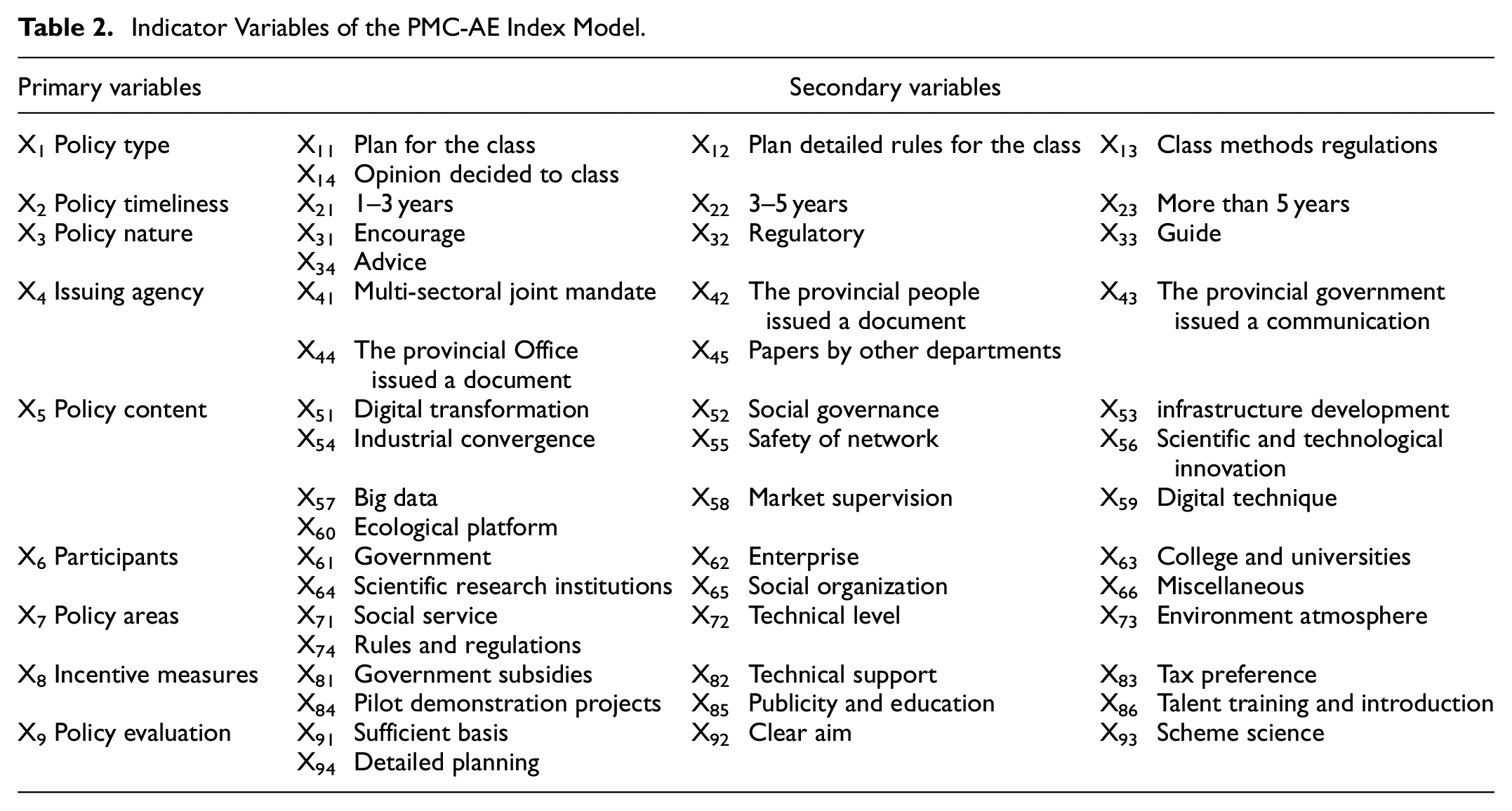
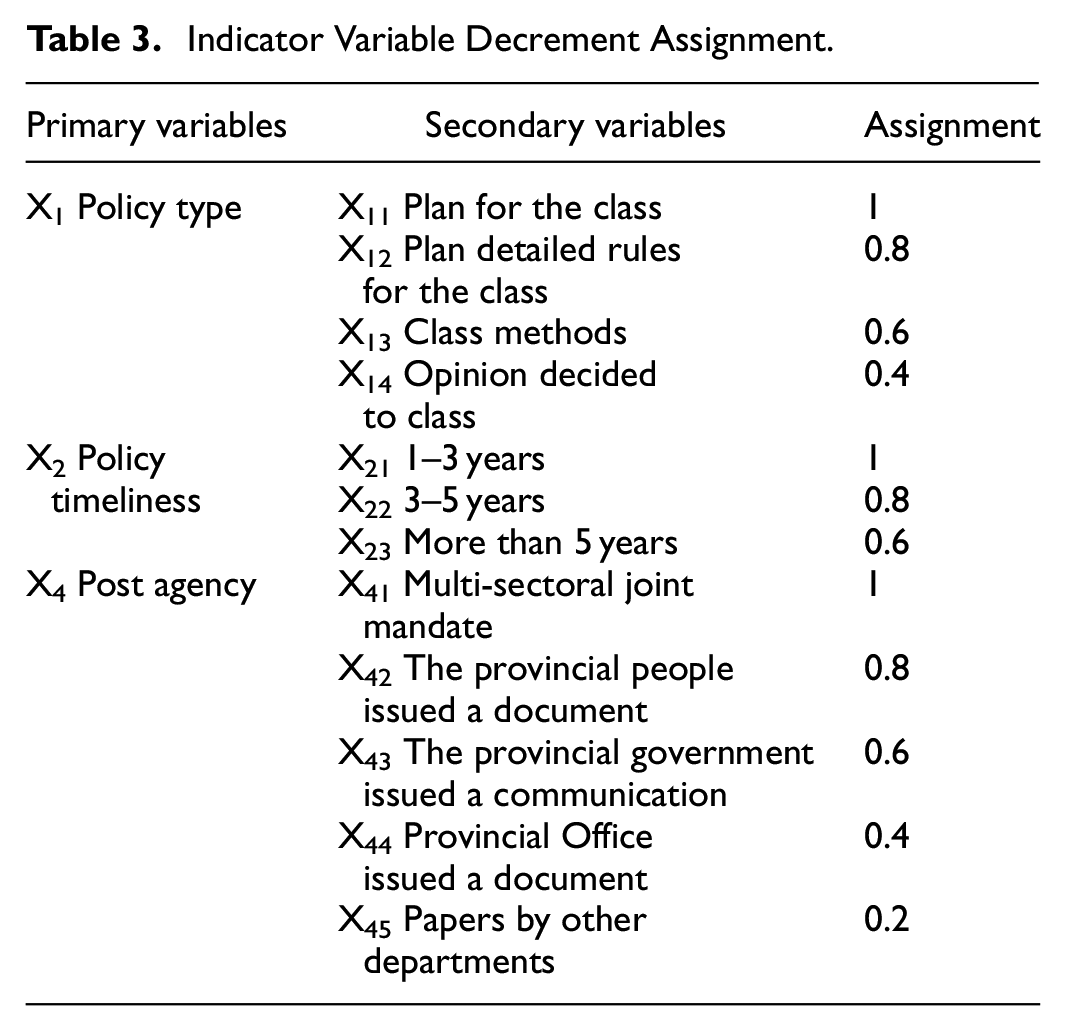
Parameter identification. Binary rules are used to set parameters, and the same weight is set for all parameters. To ensure the objectivity of the assignment, the text mining method is used to evaluate the two-level index variables, and the ROSTCM software is used to separate the segmentation of each policy text. According to the keywords of each policy text, the two-level index variables are assigned. The value 1 indicates that the variable requirements are met, and the value 0 indicates that the variable requirements are not met, as shown in the Equations 1 and 2. The two-level index variables are subject to the distribution of [0,1]. However, this assignment rule cannot be applied to mutually exclusive secondary index variables, and there will be equal assignment of index variables. In this study, the parameter settings of the second-level indicator variables of the first-level indicator variable policy type (X1), policy timeliness (X2), and issuing agency (X4) are assigned item by item in the range of [0,1], as shown in Table 3.


Indicator Variable Decrement Assignment.
Construct a Multi-Input-Output Table
The multi-input-output table is an analytical framework that can store a large amount of data and objectively analyze a single indicator variable from multiple dimensions. Combined with the characteristics of the digital economy policy in Heilongjiang Province, a multi-input-output table is constructed, as shown in Table 4.
Multi-Input-Output Table.

AE Parameter Fusion Process
The AE parameter fusion process is divided into three steps as shown in Figure 3: The first step is to encode the data to obtain the hidden layer data; in the second step, the hidden layer data is decoded to obtain the output layer data; in the third step, conduct multiple experiments with the minimum difference between the input data and the output data as the standard to obtain the best constant term.
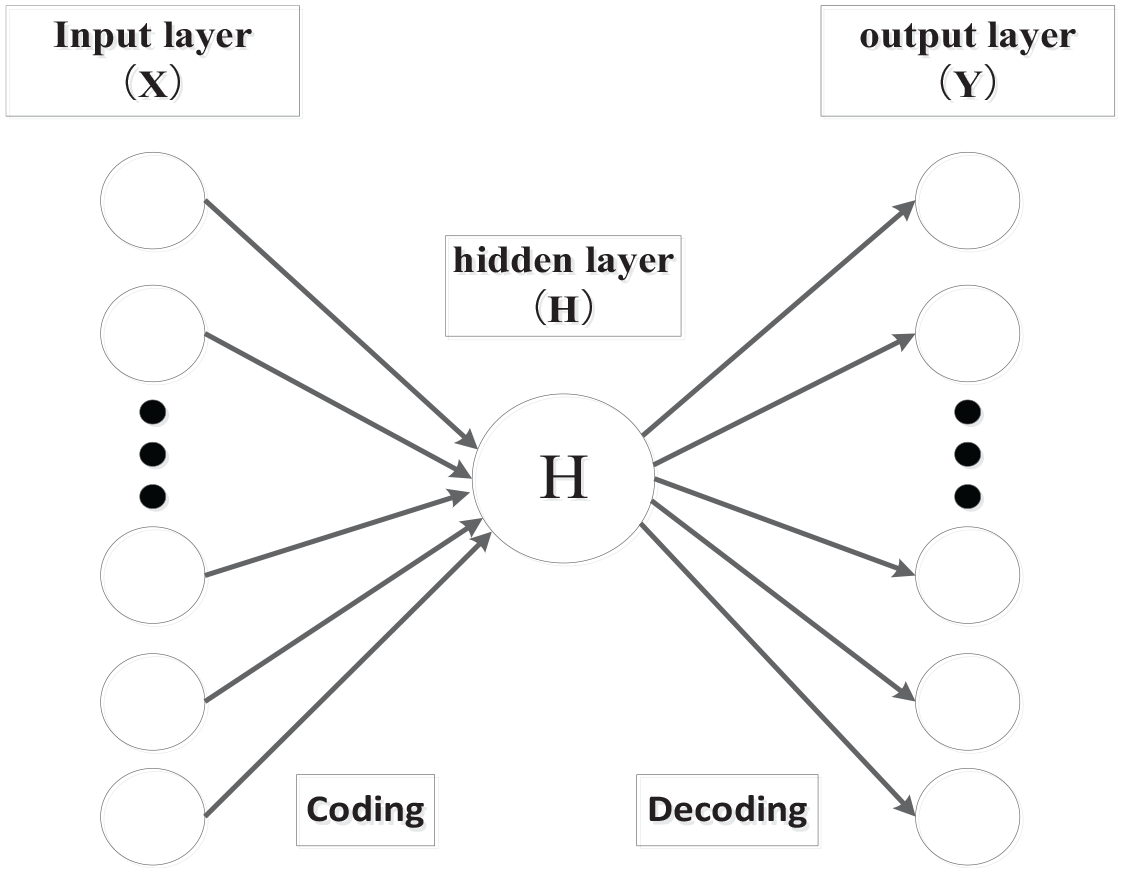
AE parameter fusion process.
Calculate the PMC-AE Index
In this study, the Sigmoid function is used as the activation function of the encoding and decoding process, and the data in the multi-input-output table is nonlinearly fused, as shown in Equation 3.

PMC-AE Surface Drawing
The PMC-AE surface map is a three-dimensional surface map that can visually display the policy evaluation score and comprehensively evaluate the advantages and disadvantages of each dimension of the policy. The PMC-AE matrix is the premise of constructing the PMC-AE surface. Based on 9 first-level indicator variables, the PMC-AE matrix of 3 × 3 is constructed, where

Sample
Based on the advantages of the PMC-AE index model, this study does not need to follow specific rules when selecting policy evaluation samples. Taking the digital economy policy issued by Heilongjiang Province from January 1, 2021, to May 31, 2022, as the evaluation object, a total of 23 policy texts are shown in Table 5.
23 Digital Economic Policies in Heilongjiang Province.

Data Analysis
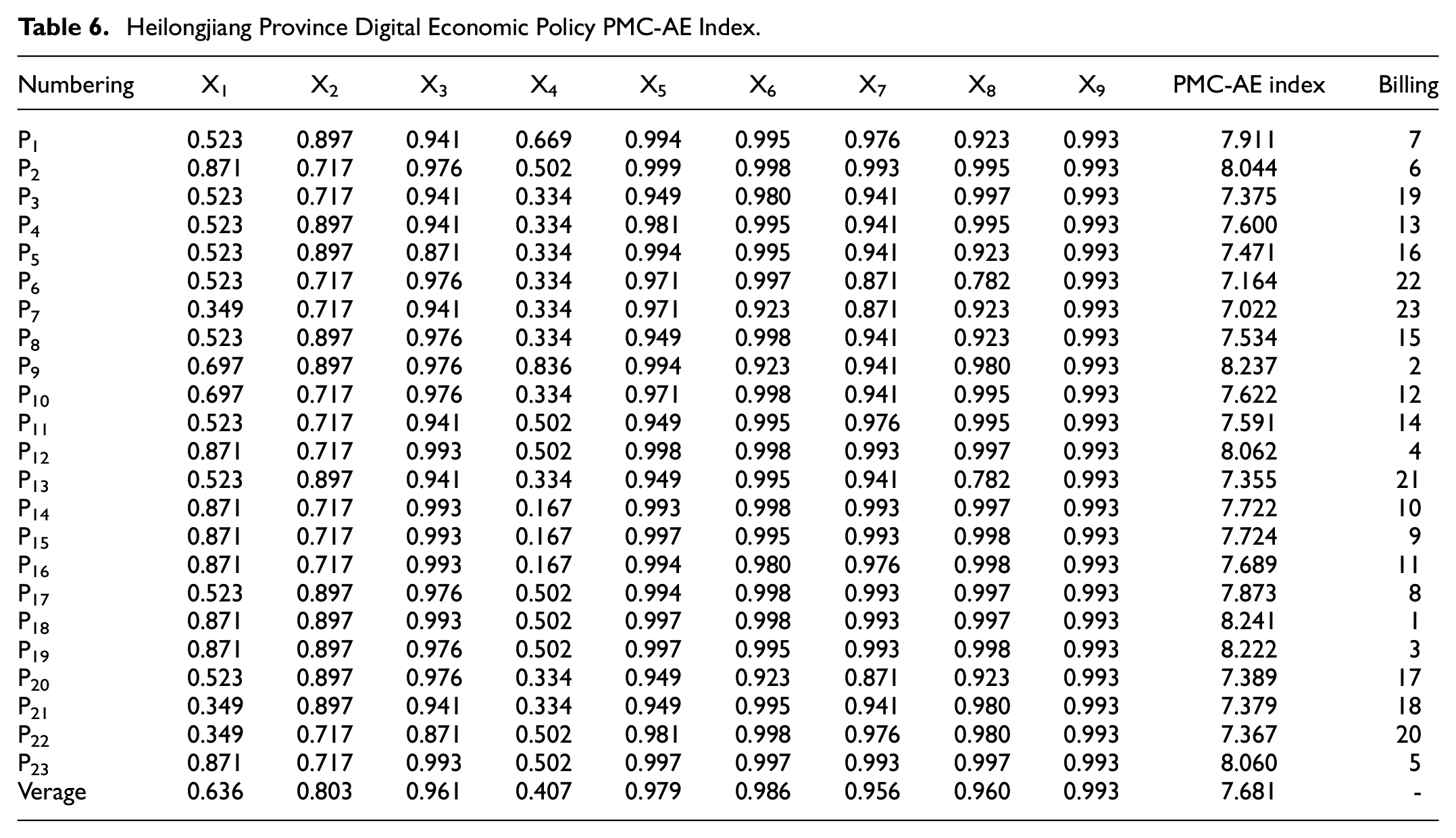
According to the index calculation steps of the above PMC-AE index model, the ROSTCM software is used for information mining to establish a multi-input-output table of digital economic policies in Heilongjiang Province and calculate the PMC-AE index, as shown in Table 6.
Heilongjiang Province Digital Economic Policy PMC-AE Index.
The policy evaluation level of this study is divided into three categories: I, II, and III, as shown in Table 7.
Policy Evaluation Level.

Results
Overall Result Analysis
The average PMC-AE index of digital economic policy in Heilongjiang Province is 7.681, which indicates that the overall quality of digital economic policy in Heilongjiang Province is good, and the policy formulation is scientific. According to the evaluation grade, six policies belong to class I, nine policies belong to class II, and eight policies belong to class III. Based on the overall perspective, the planning and implementation are in line with the actual situation, but there are differences in the specific aspects of evaluation.
According to Figure 4, the PMC-AE index scores of policy nature (X3), policy content (X5), participants (X6), policy areas (X7), incentive measures (X8), and policy evaluation (X9) have significant advantages. Policy type (X1), policy timeliness (X2), and issuing agency (X4) are the basic attributes of the policy. The secondary indicator variable is a single choice, so the index score is poor. Based on the sample analysis of policy evaluation, Heilongjiang’s digital economy policy tends to be a macro planning outline policy, with medium and long-term policy timeliness and a single department as the main issuing agency. Therefore, it provides a reference direction for policy improvement in the future.
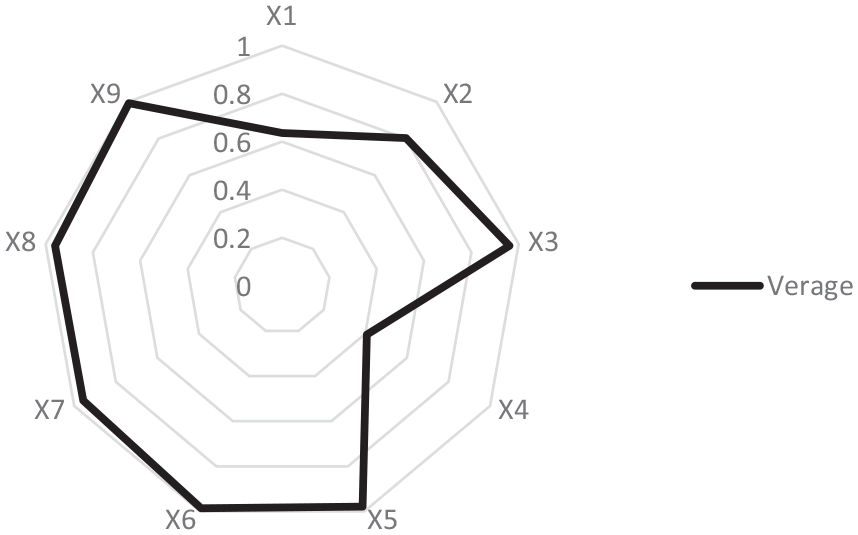
Radar chart of the mean value.
Single Policy Analysis
Due to the nonlinear fusion of scores, the final score is not limited to the result range of the PMC index model. According to the characteristics of the activation function, the higher the PMC-AE index value, the higher the policy quality. The PMC-AE index of 23 digital economic policies ranked from high to low: P18>P9>P19>P12>P23>P2>P1>P17>P15>P14>P16>P10>P4>P11>P8>P5>P20>P21>P3>P22>P13>P6>P7.
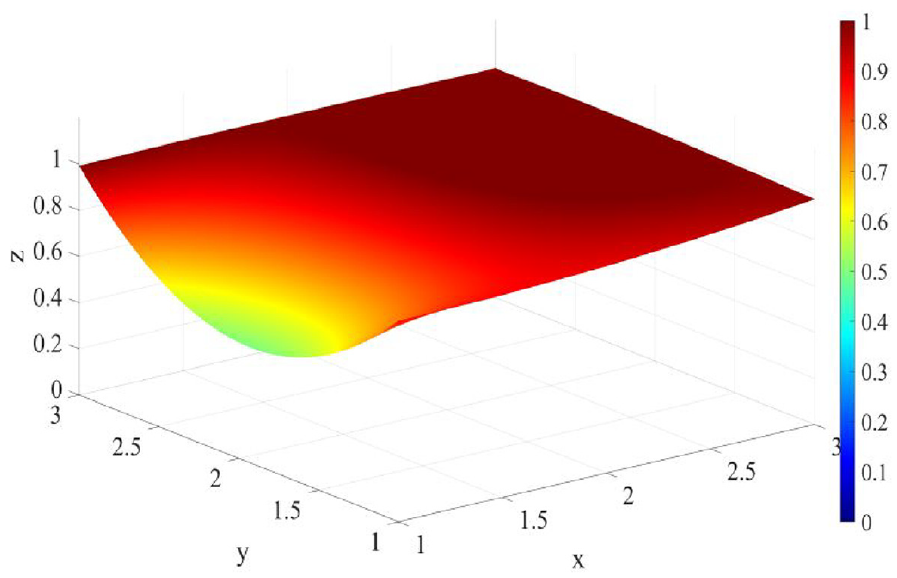
Considering the limitation of space, according to Equation 4, the top three policies from class I, class II and the last three policies from class III are selected to construct the PMC-AE matrix of digital economic policies, as shown in Table 8. According to the PMC-AE matrix of Table 8, the PMC-AE surface diagram of nine digital economic policies is constructed. The results are shown in Figures 5 to 12. The numbers 1, 1.5, 2, 2.5, and 3 in PMC-AE surface chart represent the coordinate values of the x-axis and Y-axis of the matrix. Different colors represent different values of index scores. The convex part of the surface graph indicates that the policy scores higher on the corresponding evaluation index, and the concave part indicates that the policy scores lower on the corresponding evaluation index. We can use the PMC-AE surface chart and the specific scores of each representative policy to analyze the strengths and weaknesses of each policy.
Heilongjiang Digital Economy Policy PMC-AE Matrix.
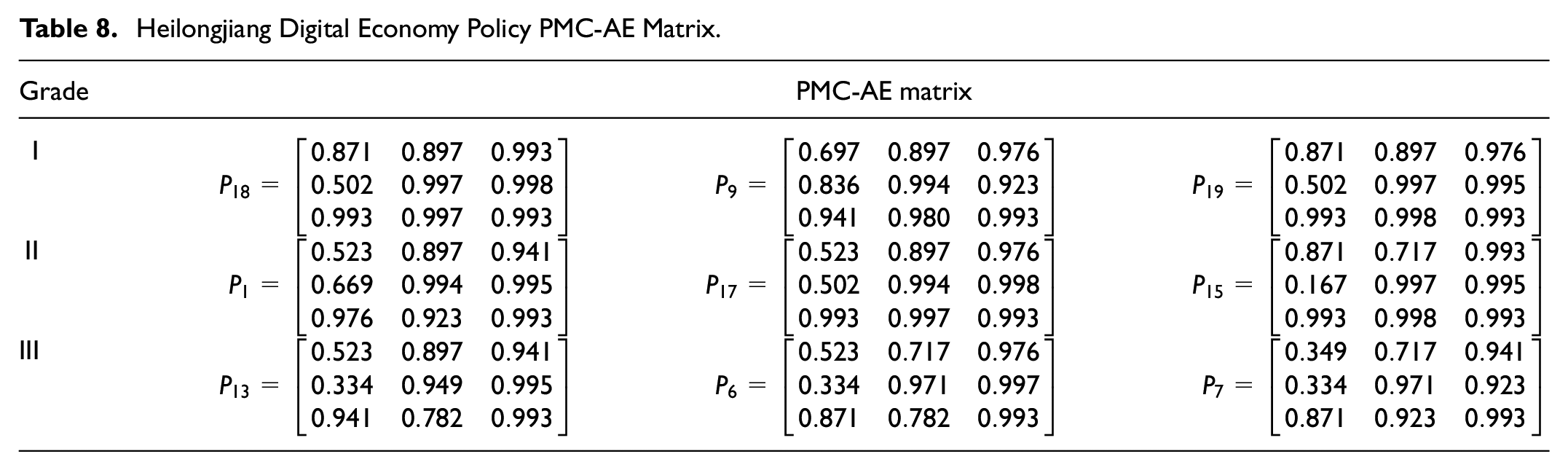

The PMC-AE surface of P18.

The PMC-AE surface of P9.
The PMC-AE surface of P19.

The PMC-AE surface of P1.

The PMC-AE surface of P17.

The PMC-AE surface of P15.

The PMC-AE surface of P13.
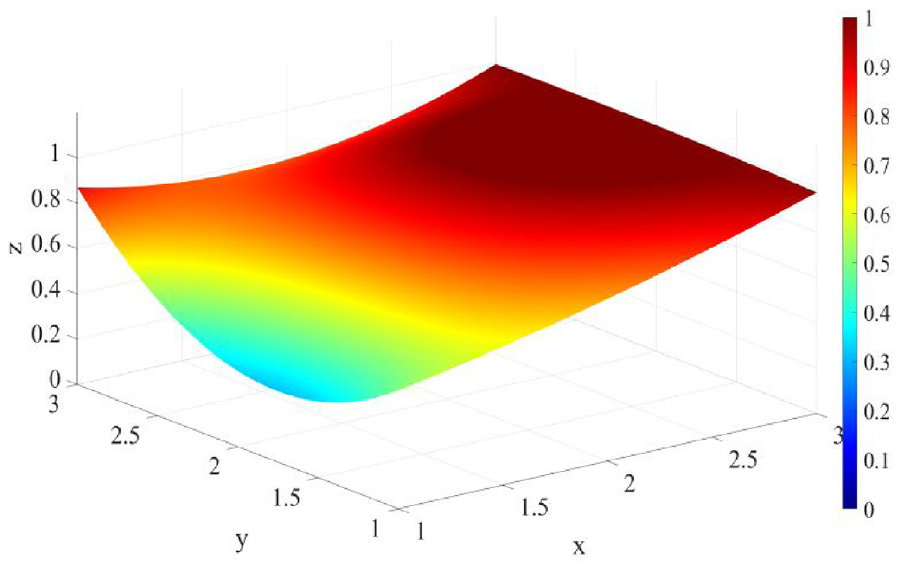
The PMC-AE surface of P6.
Based on the micro perspective, combined with the policy PMC-AE surface diagram, the above nine policies are analyzed in depth:
The scores of P18, P9, and P19 were 8.241, 8.237, and 8.222 respectively, and the evaluation grade was class I. The score of P18 ranked first, as shown in Figure 5. The scores of all index variables were greater than the mean. The policy, issued by the provincial government, covers a wide range of fields and is a long-term guiding policy committed to the development of science and technology. The score of P9 ranked second, as shown in Figure 6. The scores of the two indicator variables of the participant (X6) and the policy area (X7) are lower than the average. The policy is a policy document jointly issued by multiple departments, and the participants are mainly governments and enterprises, which are not rich enough; The policy field mainly involves the technical level and system construction, and other aspects are less involved. The score of P19 ranked third, as shown in Figure 7. The scores of all index variables were greater than the mean. The policy, issued by the provincial government, is rich in content and diverse in incentives. It is a planning policy committed to scientific and technological innovation.
The scores of P1, P17, and P15 were 7.911, 7.873, and 7.724 respectively, and the evaluation grade was class II. The score of P1 ranks 7th, as shown in Figure 8. The scores of policy type (X1), policy nature (X3), and incentive measures (X8) are lower than the average, while the scores of other index variables are higher than the average. This policy belongs to the policy of methods and regulations, and the incentive measures are not rich enough, mainly in the form of publicity and education, and talent training. The score of P17 ranked 8th, as shown in Figure 9. Only the score of policy type (X1) is lower than the average, and the scores of other index variables are higher than the average. This policy belongs to the method regulation policy, and the policy strength is weak.
The score of P15 ranked 9th, as shown in Figure 10. The scores of policy timeliness (X2) and issuing agency (X4) are lower than the average, while the scores of other index variables are higher than the average. The policy was issued by the Heilongjiang Provincial Department of Agriculture and rural areas, which is inclined to technological innovation in the field of agriculture, and is a guiding planning policy.
The scores of P13, P6, and P7 were 7.355, 7.164, and 7.022 respectively, and the evaluation grade was class III.
The score of P13 ranked 21st, as shown in Figure 11. The scores of the three index variables of policy timeliness (X2), participants (X6), and policy evaluation (X9) were higher than the average. The policy is inclined to the development of rural logistics, combining digital technology, building a digital platform, and commitment to social services, but there is still room for improvement in the development environment and system construction.
The score of P6 ranked 22nd, as shown in Figure 12. The scores of policy nature (X3), participants (X6), and policy evaluation (X9) are higher than the average. The policy focuses on promoting the transformation and upgrading of industrial digitalization, and puts forward relevant measures in infrastructure construction and platform construction, while there is still room for improvement in system construction and social services.
The score of P7 ranked 23rd, as shown in Figure 13. Only the score of policy evaluation (X9) is higher than the average. The policy focuses on the construction of high-level export consumer goods processing zones with digital empowerment, but there is still room for improvement in the participants and system construction.

The PMC-AE surface of P7.
Discussion
The digital economy is an important part of the modernization framework of the economic system, and its high-quality development cannot be separated from the support of an effective supporting policy system. This study takes the text of digital economy policy in Heilongjiang Province as the research object, constructs the evaluation model of digital economy policy, and uses the text mining method and content analysis method to quantitatively evaluate and analyze the digital economy policy in Heilongjiang Province from both macro and micro perspectives. The results show that the digital economy policy in Heilongjiang Province is at an excellent level as a whole, but it needs to be optimized in terms of policy type, policy timeliness, and policy nature. This study provides a reference for the formulation, revision, and implementation of digital economy policy in Heilongjiang Province in the future.
The purpose of this study is to provide policy recommendations for policymakers to formulate a new round of digital economy policies. Based on the experimental results, this study puts forward the following seven policy suggestions:
In terms of policy types, there are signs that the development speed of the digital economy in Heilongjiang Province has improved since 2021. The digital economy policies that have been issued are mainly macroplanning policies. To further implement the policy implementation, policymakers should strengthen policy support in terms of specific implementation measures in the future.
In terms of policy timeliness, the policies are mainly in the medium and long term, and there are fewer short-term policies. At the same time, there are fewer digital economy-related policies involving the short, medium, and long term. The short-term policy and the medium-term policy are conducive to the implementation of the policy, while the long-term policy focuses on the overall planning. The coordination among the three makes the implementation of the policy more scientific.
In terms of policy nature, the policy focuses on encouragement and guidance. In future policy-making, it is suggested to combine guiding policies with regulatory policies. This measure not only guides the development of the digital economy but also establishes the corresponding regulatory mechanism to promote the implementation process of the policy.
In terms of document issuing agencies, documents are mainly issued by a single department. It is suggested that policymakers should strengthen inter-departmental cooperation in the future policy-making process, establish a reasonable departmental coordination mechanism through effective inter-departmental communication, and then reduce policy conflicts.
In terms of participants, the participants are mainly governments and enterprises, and the participation of universities, scientific research institutions, and social organizations is insufficient. It is suggested that policymakers should pay more attention to multi-agent participation in the process of policy formulation and improvement in the future, and promote in-depth cooperation between government, industry, University, and Research Institutes, to create a good development atmosphere and speed up the development of the digital economy.
In the policy field, focuses on improving digital technology, but social services are relatively less concerned. To promote the social responsibility of relevant enterprises, the development of the digital economy needs to give appropriate policy guarantees.
In terms of incentives, government subsidies, technical support, publicity, and education are the main measures. In the process of policy formulation and improvement in the future, policymakers need to pay more attention to fiscal and tax support, deal with the relationship between talent cultivation and talent introduction, and uphold the concept of talent cultivation as the main and talent introduction as the auxiliary.
In addition, this study puts forward policy suggestions for specific government departments from four aspects of digital industrialization, industrial digitization, digital governance, and data value:
In the aspect of digital industrialization, it is necessary to promote the sharing of data resources among scientific research institutions, colleges and universities, and enterprises, and improve the innovation ability of digital core technology (Wei et al., 2022). The education department should recognize the importance of talent training in digital economy-related disciplines, and develop talent training programs that can meet the new requirements of society for the development of the digital economy.
In the aspect of industrial digitization, we should pay attention to the integration of the digital economy and real economy, and promote the digital transformation of traditional industries (Dana, Salamzadeh, Mortazavi, Hadizadeh, & Zolfaghari, 2022). The Industry and Information Department is the leading department of industrial digitalization. It should promote the development of a platform economy, strengthen the data resource sharing ability between enterprises, and also pay attention to the digital upgrading of key industries, such as manufacturing, transportation, medical care, and other industries. At the same time, it is necessary to strengthen the coordination between departments. For example, the financial department can further launch industrial digital special funds and tax benefits in the future to provide financial support for digital transformation. It is recommended that the authorities ensure the standardization of taxation through strategies based on trust and power (L. Batrancea et al., 2019; L. M. Batrancea et al., 2022).
In terms of digital governance, it is necessary to improve the digital governance capacity and promote the construction of multi-agent cooperative governance. Market regulators should make full use of digital technology, build a digital governance platform (Hanisch et al., 2023), promote the participation of governments, public welfare institutions, universities, enterprises, and other multi-agent, and further improve the digital regulatory system.
In terms of data value, build a multi-level data market system, further improve the market order of data elements, and promote the orderly sharing of transaction data. The marketization of data elements is to take data as a kind of element resource, and trade, circulate and configure it through the market mechanism. The data trading platform has gradually become the core facility of digital economic resources trading (C. Li et al., 2022), but at present, the development of the national data trading market is unbalanced and insufficient. The government needs to accelerate the construction of a national unified data element market, break the barriers between regions, departments, and industries, build a multi-level data market system, and better release the value of data elements with the help of the data trading platform.
Conclusion
This conclusion will cover theoretical implications, practical implications, limitations, and future research avenues.
Theoretical Implications
The results of this study have multiple theoretical significance.
It broadens the research vision of the digital economy. At present, the research on the digital economy policy mainly focuses on the impact of the policy, while the research on the evaluation of the digital economy policy text itself is relatively insufficient. Therefore, from the perspective of policy evaluation, this study quantitatively evaluates the digital economy-related policies issued by Heilongjiang Province of China, analyzes the shortcomings of the policies, and puts forward policy optimization suggestions.
It enriches the research object of policy quantitative evaluation. It is more urgent for regions with slow economic development to promote high-quality economic development and common prosperity by improving the policy environment. This study takes the digital economy policy text of Heilongjiang Province in China, which is relatively slow in economic development, as the research object for quantitative evaluation, which enriches the research object of quantitative evaluation of policy.
It enriches the evaluation method of the digital economy policy text. The PMC-AE index model used in this study is relatively rare in digital economic policy research. Therefore, it can provide some reference for the construction of a digital economic policy evaluation system, and to a certain extent, it can provide new research ideas for future digital economic policy research.
Practical Implications
The practical significance of this study is mainly divided into two aspects.
It is of great significance to optimize the policy and institutional environment of the digital economy in Heilongjiang Province. Firstly, this study uses the ROSTCM text mining software to extract word segmentation and word frequency statistics, which is conducive to objectively and find the current focus in the field of digital economy policy in Heilongjiang Province; Then the PMC-AE index model is used to quantitatively evaluate the existing digital economy policies, to sort out the current policy and institutional environment, analyze its advantages and disadvantages, and put forward policy suggestions for the government functional departments, providing new ideas for optimizing the digital economy policy and institutional environment.
It provides a reference for the development and construction of a digital economy in other economically disadvantaged areas. The difficulties and challenges Heilongjiang province needs to eliminate in developing the digital economy may also appear in other economically disadvantaged areas. Therefore, our research on the development of the digital economy in Heilongjiang Province and the analysis of its policy and institutional environment has important reference significance for the construction of other areas with slow economic development.
Limitations and Future Research Avenues
Although the design of this empirical study is more rigorous, there are also some shortcomings: first, in terms of research methods, to reduce the subjectivity of the PMC-AE index model in the selection of evaluation indicators, we can use a variety of methods to mine the characteristics of policy text, such as LDA theme model, and then optimize the index system and enhance the universality of PMC-AE index model. Second, in terms of data sources, the data of this study selected the digital economy policy text of Heilongjiang Province, China. There are many differences between China’s digital economy development and other countries. Therefore, the amount of experimental data needs to be further expanded to improve the objectivity and scientificity of the research results.
In future research, we can conduct quantitative evaluation and comparative research on the digital economy policy texts of different countries, analyze the common points and differences of digital economy policies of various countries, and promote the complementary advantages of digital economy development among countries. In addition, the PMC-AE index model can be combined with the qualitative comparative analysis method (QCA). The qualitative comparative analysis method (QCA) can further study which factors affect the operation effect of digital economy policy design and then explore the configuration path of good development of the digital economy. The combination of the two methods can be used to investigate the digital economy policy from the perspective of policy text design and policy operation effect. This is of great significance to improving the digital economy policy system.
Footnotes
Acknowledgements
We thank the editors for their excellent editorial guidance and helpful comments from anonymous reviewers.
Declaration of Conflicting Interests
The author(s) declared no potential conflicts of interest with respect to the research, authorship, and/or publication of this article.
Funding
The author(s) disclosed receipt of the following financial support for the research, authorship, and/or publication of this article: This study was funded by the Heilongjiang Provincial Philosophy and Social Science Research Planning Project (20GLE385).

Data Availability Statement
Data sharing not applicable to this article as no datasets were generated or analyzed during the current study.