




Abstract
The rise of Internet economy has provided an opportunity for the development of China’s transport industry and a new possibility for reshaping the mode of transport economy. With the development of Internet, scale and structural factors have changed the energy structure, freight structure and carbon emissions. The scales of logistics economy, credit loan and transport infrastructure can inhibit the carbon intensity of land transport, but Internet access scale has no inhibiting effect. Different impacts of energy structure and freight structure coexist. The energy structure of land transport tends to increase the use of electricity and has the inhibition, while the freight structure promotes the carbon intensity of land transport due to the absolute prepondering of road freight volume and the large use of fuel vehicles to undertake the huge amounts of transportation tasks. The interaction mechanisms of scale factors show negative spillover effects, especially between Internet access scale and transport infrastructure, as well as between credit loan scale and transport infrastructure, which can further help reduce carbon emissions. Heterogeneity varies across the eastern, central and western regions. These findings highlight the significance of scale and structural factors on low-carbon transport under the background of China’s dual-carbon strategy.
Introduction
In recent years, Internet has injected strong impetus into China’s economic development. With the expansion of the scale of Internet user, China’s Internet economy has prospered, the data of China Statistical Yearbook (CSY) showed the transaction volume of e-commerce reached 4,2328.4 billion RMB and the per capita transaction volume of e-commerce was about 30,000 RMB in 2021, which occupied a very important position in daily life. Although the scale of Internet user has promoted the increase of per capita e-commerce transaction, it has also produced a large amount of freight volume because of online shopping and consumed a lot of energy. However, the advantages and disadvantages of Internet coexist, especially in Internet searching function, through which the private vehicles that are difficult to manage become easy to engage in freight business, which is not conducive to the implementation of large-scale operations and energy conservation and emission reduction. From the strategic level, China proposed a “carbon peaking carbon neutrality” strategy (dual-carbon strategy) in 2020. In this context, China’s transportation industry, as an industry with large carbon emissions, faces great challenges in energy conservation and emission reduction. Furthermore, China has a shortage in crude oil, and relies heavily on imports. In order to break the import dependence, China has speeded up the development of new energy vehicle industry and digital economy and technology. Not only scholars from China, but also those from other countries have proposed optimizing the transportation and logistics through the digital economy (Popkova & Sergi, 2020). Most notably, carbon emission reduction has become a global issue, the environmental problem that we used to call “climate change” has now reached the point where it is termed a “climate crisis”(Mun & Jung, 2025). Thereby, accelerating the change of energy structure and the implementation of substitution oil with electricity is very important but facing challenges.
At present, there are some studies in this field. The first branch is the influence of economic and financial factors on carbon emission reduction in transport industry. First, in terms of the impact of economic scale factor, the development of transportation economy was generally at the cost of increasing carbon emissions (Li & Wu, 2017), but a long-term balanced relationship among transportation, economic growth, and carbon emissions was existed, there was a double-way dynamic influence in any two indices, but the degree of influence between them was not the same (Cai & Ye, 2017). While Chen, Wang, and Li (2019) found that the degrees of transportation operational economic efficiency, carbon emission efficiency and unified efficiency are different in different provinces, and the efficiencies of eastern, central, western, and northeast regions have gradient distribution features. Under digital economy, there are mixed opinions on the carbon emissions in the transport or logistics industry. On the one hand, digital economy played a significant inhibitory role (Xue & Chen, 2024; Zhong et al., 2024), on the other hand, it played a significant promotion role (Ren & Guo, 2023; Jiao et al., 2024). The reasons for this difference lay in the different research objects and mechanisms, so the opinions were different. Second, in terms of the impact of financial scale factor, financial development had an inhibitory effect on carbon emissions (Shahbaz et al., 2013), while Le et al. (2019) pointed out that the realization of carbon emission reduction goals could not be achieved without the support of financial development. Zhang et al. (2022) showed that financial development can have a positive effect on energy conservation and emission reduction through direct effect, structural effect, and technological effect. Inclusive finance could profoundly affect carbon emissions from energy activities in social and economic development by changing regional economic behavior (Chen & Xue, 2021), while digital financial inclusion could help improve the energy efficiency and reduce carbon emissions (Gu et al., 2021; Guo & Zhang, 2022; Li & Zhang, 2023; Yang et al., 2022). On the transmission mechanism of digital finance, its development could improve energy efficiency by improving the level of innovation and entrepreneurship (Zhang & Li, 2022), while digital inclusive finance supported the industrialization of digital technology (Guo & Zhang, 2022). On the impact of transport or logistics enterprises, Xie and Li (2022) found the green credit can ease the financing constraints of logistics enterprises, improve the efficiency of capital circulation, and provide continuous financial support for carbon emission reduction, transformation and upgrading of logistics enterprises. Since the rise of carbon finance research in China, Yang (2024) found the level of carbon emission trading has a significant positive effect on the low-carbon development of the industry.
The second branch is the influence of energy and transport structure factors on carbon emission reduction. At the aspect of energy structure, in the short term, relieving traffic pressure and reducing the use of inferior energy is effective, and medium- and long-term urban layout planning is essential. In the long run, it makes more meaningful to develop clean energy technologies (Ma et al., 2016). Huang et al. (2021) used baseline scenario (BS) and energy transformation scenario (ETS) to simulate the energy consumption demand, which was expected to peak between the year of 2025 and 2030, it was necessary to vigorously promote the application of clean energy such as natural gas, electricity, hydrogen and biofuels, and realize the energy transition in the transportation sector of in Guangdong -Hong Kong-Macao Greater Bay Area. Guo and Cai (2022) proposed that China’s transportation industry should not blindly expand at the expense of the environment, but should pay attention to optimize the energy structure and continue to increase the proportion of renewable energy utilization. The coal-to-electricity transformation and regional carbon tax policies are beneficial in promoting electricity consumption and curbing carbon dioxide emissions in the Yangtze River Delta region (Wang et al., 2024). At the aspect of transport structure, its optimization can effectively promote transport carbon emission reduction in China (Chai et al., 2017; Sun et al., 2023; Wei et al., 2013). Compared with other transport modes, road freight transport was an important point for emission reduction, and adjusting transport structure and reducing carbon emissions of heavy goods vehicles were the main measures to reduce road freight emissions (Fang et al., 2023), but the overall carbon emission efficiency of road transport in China was low (Zhao & Jiao, 2023), while the increase in the proportion of railway transport was conducive to the reduction of carbon emissions, and railway piggy-back transport could effectively reduce freight transport costs and carbon emissions (Zhang et al., 2023). In order to achieve the carbon emission reduction target of China’s transport industry under the carbon neutral strategy, it was necessary to continuously optimize the transport structure, accelerate the pace of energy structure optimization, promote the application of electric truck technology and promote road electrification (Huang et al., 2023).
The third branch is the influence of low-carbon policies on carbon emission reduction. Dender (2009), Sovacool (2009), and Tang et al. (2013) suggested that policies should stimulate the wide application of low-carbon technology and equipment in the transport industry. Vanderschuren et al. (2010) appealed that the government should issue policies to curb the energy demand of the transport industry, improve energy efficiency, and solve the deteriorating environmental problems. On the pilot policy, Lu et al. (2020) found that the pilot carbon trading policy had no direct impact on the carbon emission intensity of the transport sector, but indirectly reduced the carbon emission intensity of transport by promoting the improvement of the transport structure in the experimental area. In terms of policy proposals, researchers proposed some policy suggestions by studying the Chinese low-carbon transport or logistics fields (Han et al., 2022; Lin et al., 2022; Liu & Li, 2023; Wang & Ma, 2021; Yao et al., 2020), they analyzed from various aspects and suggested that China’s transport industry should implement carbon emission reduction or low carbonization.
Moreover, technology innovation has also affected the carbon emission reduction (Jiao & Zhang, 2023; Wang & He, 2024; Wang & Xie, 2024). Jiao and Zhang (2023) found that digitalization can improve the carbon emission intensity of the transport industry by promoting green technology innovation. Wang and He (2024) showed that green technology innovation was conducive to reducing carbon emissions in the logistics industry, and the emission reduction effect was more significant in developed regions. Wang and Xie (2024) found that there are three main paths for digital technology innovation to lead the green and low-carbon transformation of the logistics industry, namely, the paths of capacity upgrading, technology upgrading, and industrial joint development.
From the above literature review, it can be found that the literature on transport carbon emissions is more focused on low-carbon policies and energy structure and transport structure, and some studies also analyzed from the economic and financial development, but empirical literature on the carbon emissions of land transport is relatively few, there is still a research gap: (1) There are many scholars that they used the scale factors to study transport carbon intensity, but few scholars use Internet access scale and credit loan scale to analyze the differential impact mechanism. This paper has made some expansions at this aspect. (2) Many studies used the structural factors to study the carbon emission reduction in transport industry, but the different impact mechanisms from structural factors are not analyzed by combining the low-carbon substitution of energy consumption and the structural characteristics of freight volume. This study will focus on the differentiated impacts from structural factors. (3) There is relatively rare in the study on the interaction mechanism between scale factors. This study will also concentrate on the spillover effects of interaction mechanism.
The research contributions of this paper are as follows: (1) This study examines the differentiated impact mechanisms of scale factors to expand the research field. First, the inhibiting mechanisms of logistics economic scale and transport infrastructure and credit loan scale are examined. Second, this study uses Internet access scale from the perspective of Internet economy to examine the promotion influence. Specifically, it is a proven theory that economies of scale can improve the environment, and logistics economics scale can also do the same by our empirical testing. A good transport infrastructure can improve transportation efficiency, the implementation of China’s dual-carbon strategy can further enhance the low-carbon transport infrastructure and contribute to carbon emission reduction. Driven by China’s dual-carbon strategy and government policy, the continuous credit loan inputs from financing institutions in low-carbon transport construction is helpful to low-carbon development. The convenience of Internet access drives more private transport vehicles to enter the industry, but the competition in transport business is to be increased, which is detrimental to carbon emission reduction. (2) This study examines the influence mechanisms of structural factors based on the differentiated characteristics of land transport. First, according to the oil shortage of China’s energy consumption and low-carbon characteristics of electric trucks, the proportion of electricity is used to reflect the importance of electricity in the energy structure of land transport. Second, the freight structure is used to indicate the dominance of road and rail freight transport. After empirical testing, the structural factors have different effects on the carbon intensity of land transport. (3) This study examines interaction mechanism of scale factors to make up for the shortcomings of existing studies, especially in the cross-impact between Internet access scale and transport infrastructure, as well as between credit loan scale and transport infrastructure.
The rest of this study is organized as follows: the section “Research Framework and Hypothesis” builds the research framework and puts forward the research hypothesis. The section “Empirical Analyses” introduces variables, data and models, and reports and discusses the main results. The section “Conclusions and Policy Implications” presents the main conclusions and makes relevant suggestions.
Research Framework and Hypothesis
Research Framework
The research framework of this article is as follows: The carbon intensity of land transport is selected as the research object, and from the scale and structural perspectives, the scale variables of logistics economy, Internet access, credit loan, and transport infrastructure are used. At the same time, the structural variables of energy structure and freight structure are also used, the main variables are shown in research framework in Figure 1.

Research framework.
In Figure 1, we further explain how Internet economy is related to major scale and structural indicators. First, logistics economic scale can benefit from its development. Second, it is closely related to the scale of Internet access (users), the latter is the development foundation of the former. Third, there is a close relationship between Internet economy and transportation infrastructure, which has given rise to various applications (such as navigation software). Fourth, Internet can be used to better conduct credit loan business. Fifth, Internet business also changes the energy structure and freight structure. Internet searching makes it easier for private vehicles to find transportation business. The scale of Internet e-commerce economy has become very large. According to CSY data in 2022, the transaction volume of China’s e-commerce was 43,829.9 billion yuan, because of the flexible and time-efficient characteristics of road transportation and the economical and timely characteristics of railway transportation, most of the freight volume from e-commerce needed to be completed by the two types of transportations. Compared with road and railway, water transportation is too slow, and air transportation is more expensive, the freight transportation in China’s retail e-commerce market does not have an advantage in the latter two types of transportations. In general, Internet e-commerce has promoted the development of road and railway freight, while road transportation has been depending on fuel consumption, so freight structure and energy structure can also be changed under Internet e-commerce.
Next, we introduce the research work in this study under the research framework. This study will propose the research hypotheses and further test them in the regression analysis part. At the same time, the marginal impact of each variable is also to be examined. Moreover, the moderating effects will be further examined to show more spillover effects. Regional heterogeneity test will be examined to show more differences across the eastern, central, and western regions. According to the above research framework, some research hypotheses are proposed.
Research Hypothesis
Research hypothesis H1: Internet can optimize the allocation of resources (Qiu, 2022). Internet access user is an important part of Internet economy, the rise of some new types of business activities under Internet has increased the volume of less-than-truckload transportation. The larger of Internet access scale, the more Internet users participate in online business. With the expansion of network access users, it will not only promote the increase of e-commerce transactions per capita, but also generate a large amount of freight transportation due to online shopping. In order to improve their degrees of satisfaction and enthusiasm, enterprises pay more and more attention to the time window for the sales network. Traditional China’s e-business enterprises have sought time-efficient delivery and caused road congestion and increased carbon emissions to a large extent. There is also a new concern under network economy, there are more and more new business activities on live broadcast party (seller) in the network direct sales of goods through APP for Internet users, sellers contact the owners of trucks, which is a point-to-point less-than- truckload transport, the phenomenon of unfully loading vehicle is serious, which is not conducive to the reduction of carbon intensity. We propose research hypothesis H1: The expansion of Internet access scale is conducive to the development of network economy, but it will also lead to the increase of less-than-truckload freight, which is not conducive to the reduction of carbon emissions. On the contrary, it has the possibility to increase the carbon intensity of land transport.
Research hypothesis H2: More and more inclusive credit loan for transport enterprises will help enhance the development of land transport and improve transport efficiency. Digital finance provides financial support for land transport (Li & Zhang, 2023), while the inputs of credit loan are important means, which can improve the level of logistics technology services and promote the use of low-carbon transport means. The most important is that the labor productivity and the development of scientific and technological capacity in the land transport industry will be enhanced under the inputs of inclusive credit loan, especially in energy conservation and emission reduction technology. We propose research hypothesis H2: Credit loan is expected to have an inhibitory effect on the carbon intensity of land transport.
Empirical Analyses
Variable Description
The following variables are set, as shown in Table 1.
Definition and Provincial Data Description of Variables.

Note. In carbon intensity, the carbon emission value is equal to the energy consumption multiplied by the carbon emission coefficient, it is different of carbon emissions from land use (Zhang & Jin, 2024).
In Table 1, Carbon intensity of land transport (lnCI) is acted as a dependent variable, the main independent variables include:
(1) Scale variables. Many literature used GDP to act as a measure of regional economic scale, we refer to the literature of Chen, Zhang, and Yuan (2019) and choose logistics economic growth as a measure of logistics economic scale. Li and Song (2019) found there was a “U”-type relationship between Internet development and carbon emission. When the regional Internet level was at a low level, Internet development had significantly in increasing the per capita carbon emissions, when the level of Internet development crossed the threshold, Internet development was also reflected in the suppression of carbon emissions (Li & Song, 2019). Considered the importance of the development of Internet, so Internet access scale is considered in this paper. At the aspect of credit loan scale, although a small number of literature studied the relationship between inclusive finance and the development of logistics industry (Tu & Tang, 2024), there are few relevant studies on the use of credit loan for action mechanism on carbon emission reduction. Furthermore, it is difficult to obtain data on green credit (Xie & Li, 2022), so this article adopts the credit loan index of inclusive finance to support the development of low-carbon transport. Moreover, transport infrastructure can improve energy efficiency (Su & Hong, 2024), many Chinese scholars measured transport infrastructure by route density (such as Ma et al., 2023; Zhao et al., 2012), we also use the route density adopted by them.
(2) Structural variables. First, energy structure was measured by the ratio of coal consumption to total energy consumption in many literature (Bai & Sun, 2021), But in energy consumption of land transport, almost no coal is used. We refer to the literature of Li and Wang (2019) and choose the proportion of low carbon energy consumption as a measure of energy structure. Second, the study of freight structure on the carbon intensity is absolutely rare. Many literature studies the transport structure (Huang et al., 2023; Fang et al., 2023; Zhao & Jiao, 2023; Zhang et al., 2023), but the freight structure has really been changed under Internet economy. Therefore, we examine its effect on the carbon intensity of land transport.
According to research framework, research hypothesis, and the definition of main variables, we summarize the specific relationships and action mechanisms between the variables, shown in Table 2.
The Specific Relationships and Action Mechanisms Between the Variables.

Data Source and Descriptive Statistics
The data in this study are from Peking University Digital Financial Inclusion Index, China Energy Statistical Yearbook (CESY), and China Statistical Yearbook (CSY). Since the credit loan index of inclusive finance can only be obtained after 2011, the total data includes 330 samples from 30 provincial regions from 2011 to 2021 in Chinese mainland (Tibet’s energy data were incomplete and not included). Descriptive statistics of variables are shown in Table 3.
Descriptive Statistics of Variables.
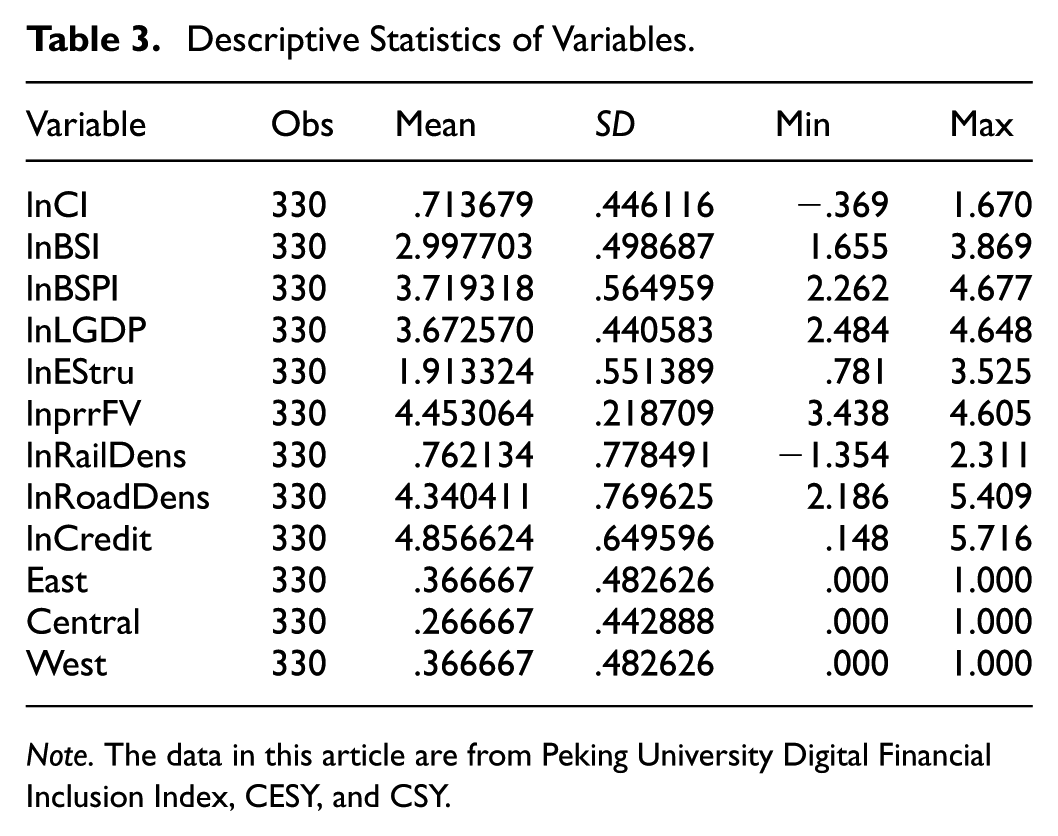
Note. The data in this article are from Peking University Digital Financial Inclusion Index, CESY, and CSY.
In this study, the empirical regression will use the panel data for analysis. Keeping all variables without missing data, 330 effective observations are used.
Model Construction and Regression Analysis
Theoretical Model
Let
We continue to adopt the core periphery model to analyze the transportation cost of icebergs. Samuelson (1952) showed the fact that if the selling price of a manufactured product at the production location r is
We set

We suppose φ is the carbon emission coefficient, so carbon intensity CI in land transport is equal to

Obviously, CI has a negative relationship with Logistics economic growth (LGDP), inclusive credit loan (Credit) is a kind of capital with low interest rates, which is a part of K and should also have a negative relationship with CI. The expression
Basic Regression Model
The paper sets up three basic logarithmic regression models, in which the dependent variable is lnCI and the independent variables include Logistics economic growth (
Here, the following logarithmic regression models eliminate the heteroscedasticity. In order to examine the effects of different scale and structural variables, the model I, II, and III are constructed as follows:


To eliminate the endogeneity, we employed the instrumental variable method. The results estimated by an instrumental variable method (2SLS) are shown in Table 4 below.
Basic Regression.

Note. The values in brackets are z-statistics, ***p < .01.
In Table 3, the results in Model I show that scale variables have different effects, logistics economic scale has an inhibitory effect, but Internet access scale has a promotion effect, which verifies the research hypothesis H1, that is, the expansion of Internet access scale will be conducive to the development of network economy, it also shows that the large number of orders generated by Internet users’ online shopping needs to be delivered in a very short time, but will also lead to the increase of less-than- truckload freight, which is not conducive to the reduction of carbon emissions. On the contrary, it will increase the carbon intensity of land transport. Furthermore, another scale variable, just like transport infrastructure involves the strategic planning of China’s transport infrastructure. As an old Chinese saying goes “If a country want to develop, roads must be built first.” Chinese government has improved the density of railway and road networks to better promote transportation efficiency and reduce the carbon intensity of land transport.
In Table 3, the structural factors also have the differentiated effects, the improvement of energy structure means that electricity has been used in large quantities and its proportion in the transport energy has increased, indicates that the low carbonization of energy structure inhibits the carbon intensity of land transport. China is rich in coal resources, thermal power occupies a major position. China has increased the development and use of green electricity (wind power, hydropower, nuclear power, and photovoltaic power generation, etc.) in recent years. Electricity can fully meet the needs of China’s development. The abundance of electricity has laid a good foundation for the electric vehicle industry. The use of electric transport vehicles and electric trucks will increase electricity consumption, but it will also reduce the use of gasoline and diesel trucks to achieve the purpose of energy conservation and emission reduction. Moreover, the freight structure has a promoting effect, which shows that the rise in the proportion of freight volume of road and railway can increase the carbon intensity of land transport. This is because road and railway account for more than 80% of freight volume, while freight volume of road accounts for about 70% and is carried by a large number of gasoline and diesel vehicles, therefore, the freight structure affects positively the carbon intensity of land transport.
Moderating Effects Between Internet Access Scale and Transport Infrastructure
The article assumes

The results estimated by 2SLS are shown in Table 5 below.
Moderating Effects Between Internet Access Scale and Transport Infrastructure.

Note. The values in brackets are z-statistics, ***p < .01.
In the real world, the service purpose of railway and road network density is a little different, the former is managed by the Ministry of Railways of China, the latter belongs to the Ministry of Transport of China, which is specifically managed by the transport department of the local government, with individual characteristics. In Table 5, the moderating effect of railway and road density (lnRailDens * lnRoadDens) reflects the synergistic effect of road and railway. Their interactions of lnBSI * lnRoadDens, lnBSI * lnRailDens, and lnBSI * lnRailDens * lnRoadDens have inhibitions, which show the moderating effects between Internet access scale and transport infrastructure are conducive to reducing carbon intensity of land transport.
Influence of Credit Loan and Moderating Effects
We continue to add the indicator of credit loan, it is a kind of capital with low interest rates, which should have a negative relationship with CI according the theoretical model. We continue to assume
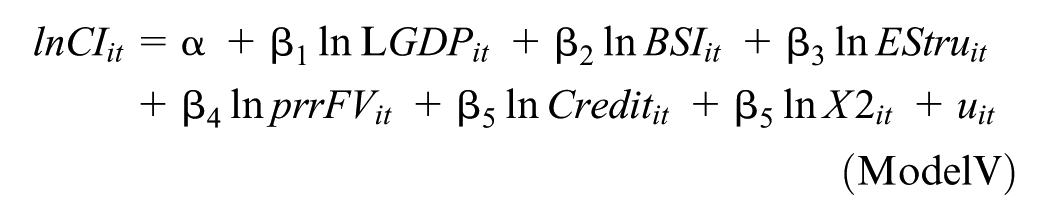
The more developed credit loan is, the more support of finance, land transport enterprises can improve the level of low carbon technology through it, and then achieve the purpose of the carbon emission reduction. For instance, when the technology level of transportation enterprises has improved, the faster vehicles can run (less waiting) through electronic charging at toll stations, reducing carbon emissions. The estimated results are shown in Table 6 below.
Influence of Credit Loan and Moderating Effects.

Note. The values in brackets are z-statistics, ***p < .01.
Although the credit loan of inclusive finance is mainly oriented towards small and micro enterprises, there are many enterprises in the field of transportation used credit loan to develop and optimize business, so there are a large number of small and micro enterprises involved in the construction of railway and road transport, so we examine the moderating effects. In Table 6, credit loan is acting as a scale variable, the research findings after adding credit loan are as follows: the effect of credit loan can help promote the reduction of carbon intensity of land transport, which are also the driving forces and the research hypothesis H2 are verified. Their interactions of lnCredit * lnRailDens, lnCredit * lnRoadDens, and lnCredit * lnRailDens * lnRoadDens have inhibitions, which show the moderating effects between credit loan and transport infrastructure are conducive to reducing carbon intensity of land transport.
Regional Heterogeneity Analysis
From the perspective of regional heterogeneity, it is necessary to add regional dummy variables in the Model VI, shown as follows.

In the Model VI, the vector of
Regional Heterogeneity.
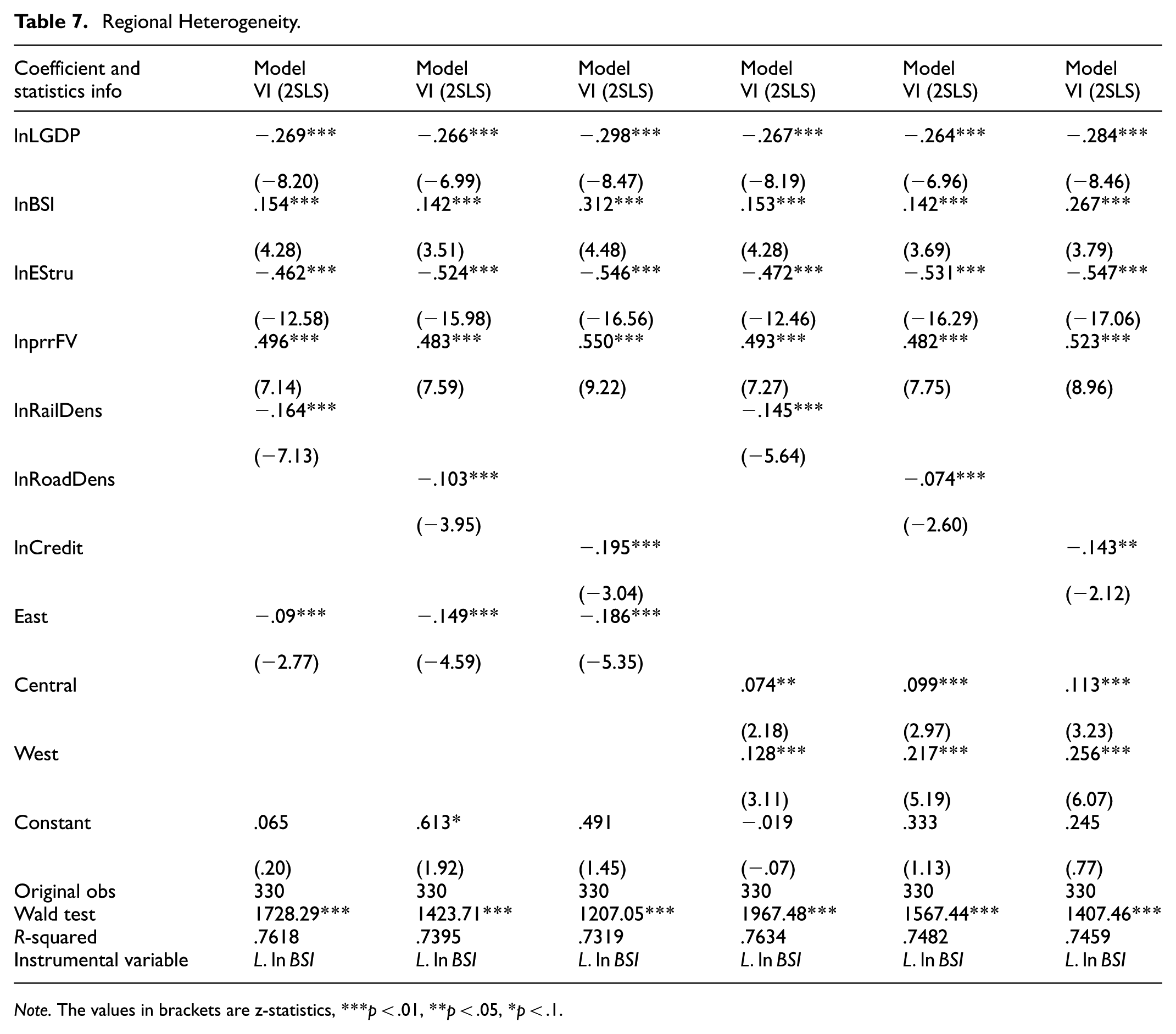
Note. The values in brackets are z-statistics, ***p < .01, **p < .05, *p < .1.
In Table 7, the tests of regional heterogeneity achieve good results, the coefficient of East is negative and significant, while the coefficients of Central and West are positive and significant. After comparison, for the carbon intensity of China’s land transport, it is found that the east region is the lowest, the central region is in the middle, and the western region is the highest. The western provinces include most of the provinces of the ancient Silk Road, are also an important channel to the west direction of the Belt and Road. However, the western provinces are affected by many factors such as location factors, road and railway transport infrastructure conditions and economic development level, where the carbon intensity of land transport is at a relatively high level.
Robustness Test
In order to test the robustness of the above empirical results, we test the above models based on the methods of endogeneity test, increasing and subtracting variables, etc., and use instrumental variable methods and multi-method test, it is found the endogeneity of models can be eliminated, and the conclusions of each model are robust and reliable. Robustness tests by GMM method are as shown in Tables 8 and 9.
Robustness Tests on the Scale and Structural Variables and the Spillover Effects from Internet Access Scale.
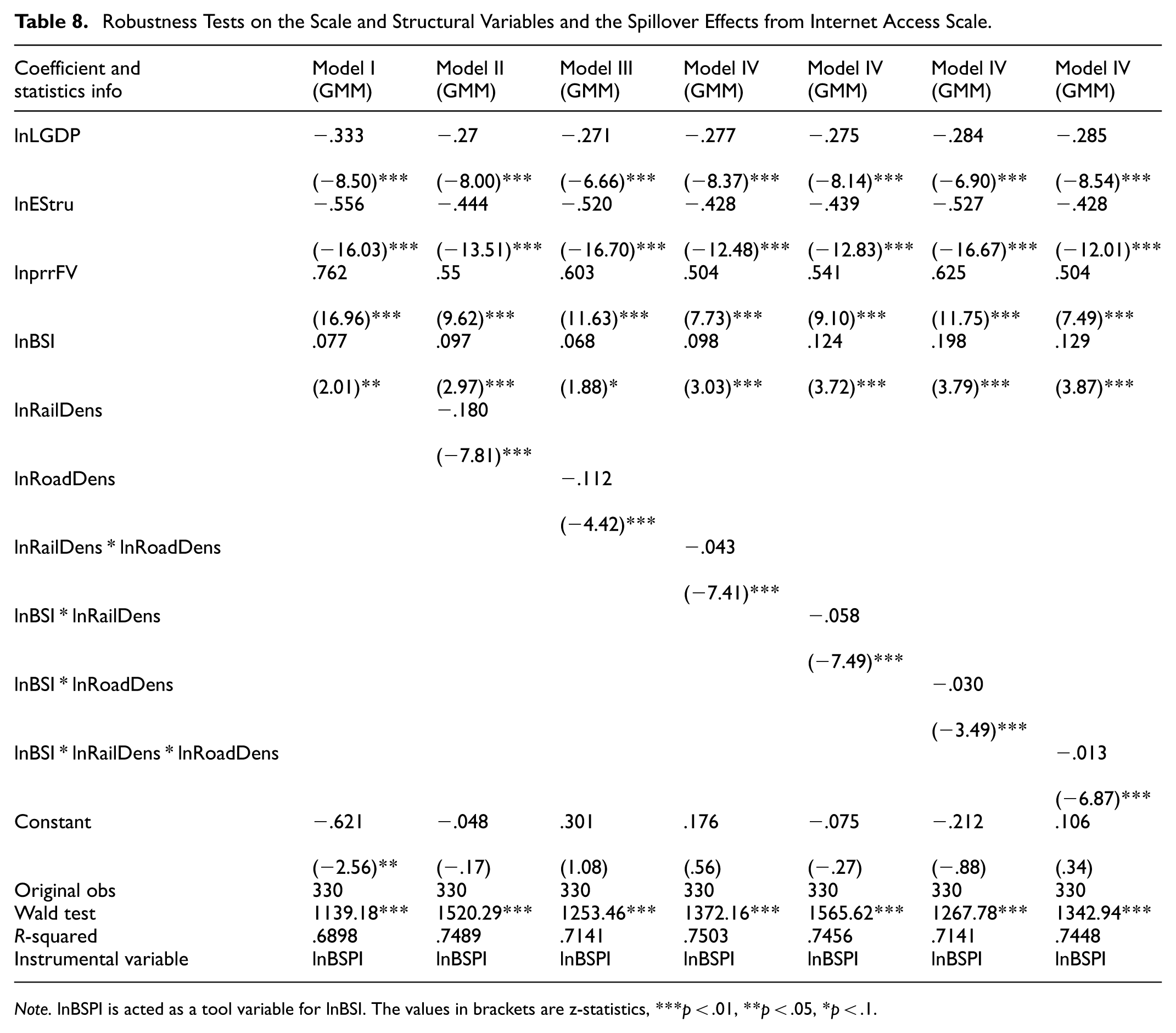
Note. lnBSPI is acted as a tool variable for lnBSI. The values in brackets are z-statistics, ***p < .01, **p < .05, *p < .1.
Robustness Tests on the Scale and Structural Variables and the Spillover Effects from Credit Loan.

Note. lnBSPI is acted as a tool variable for lnBSI. The values in brackets are z-statistics, ***p < .01, **p < .05, *p < .1.
In Tables 8 and 9, the robustness tests show our empirical analyses are reliable.
Conclusions and Policy Implications
Research Conclusions
Based on the above research, the following conclusions are drawn:
(1) In terms of scale factors, logistics economic scale, credit loan scale and transport infrastructure have inhibitions. Driven by China’s dual-carbon strategy and government policy, there are continuous credit loan inputs in low-carbon transport construction, which is different of other industries. The low-carbon technologies can be enhanced by the operations of logistics economic scale and credit loan scale, and the transportation efficiency can be improved by transport infrastructure. However, Internet access scale has no inhibiting effect, the fundamental reason is that it intensifies the dispersion of transport resources. The use of Internet searching makes it easier to drive private transport resources to enter into the land transport industry, which are difficult to manage and not conducive to carbon emission reduction.
(2) In terms of structural factors, the differences in energy structure and freight structure have different effects. Land transport requires a lot of gasoline and diesel oil, but China is short of oil and needs to reduce its dependence, the energy structure of land transport tends to increase the use of electricity, which shows the inhibition. The freight structure promotes the carbon intensity of land transport due to the absolute prepondering of road freight volume and the large use of fuel vehicles to undertake the transportation tasks.
(3) In terms of the interaction mechanism of scale factors, the interaction between Internet access scale and transport infrastructure shows an inhibitory effect, as well as between the scale of credit loan and transport infrastructure. The former is due to the use of various applications (such as vehicle service applications), which improves the transportation efficiency. More importantly, the synergistic effect in the former expands new possibilities for Internet applications in the field of transportation. While the latter is the credit loan invested in the field of transportation infrastructure improves the quality and coverage of transportation infrastructure, the synergistic effect in the latter expands the sustainable development of credit loan inputs in the field of transportation.
(4) Heterogeneity varies across the eastern, central, and western regions. The carbon intensity of land transport decreased from west to east, which indicates that the eastern region has better carbon emission reduction efficiency in the land transport industry, followed by the central and western region. In terms of economic scale, scientific and technological productivity, and logistics intelligence level, these are better in the eastern region than in the central and western regions. Moreover, the eastern region is also a gathering place of outstanding talents, which greatly promotes the development of low-carbon transport.
At the limitations of this study, we use panel data, propose hypotheses and test the robustness of the econometric models. Our research was concluded during the sample data period from 2011 to 2021 based on the changes of transport resources, credit loan, Internet economy and the government’s long-term dual-carbon strategy vision. It has a time limitation from 2011 to 2021, but it also shows differences from other times (and other countries).
At the future implications, China needs a low-cost, low-carbon and efficient transport industry, and more importantly, China aims to peak its carbon emissions before 2030 and achieve carbon neutrality before 2060, the issue of carbon reduction in the land transport industry under Internet economy will be continued to receive attention. Therefore, the research in this article will provide a reference for later researchers. With the development of Internet technology and the driving of technological innovation, it is expected that energy conservation and carbon reduction in China’s transportation industry will become increasingly better, helping China achieve the dual-carbon strategy more quickly.
Policy Implications
Through the above researches, the following policy implications are obtained:
(1) China should input more credit loan of low interest rates to develop low-carbon transport economy. China has used modern management and technology means, thereby reducing redundant transport and ineffective transport to implement carbon emission reduction. The transport industry is known as the main artery of the national economy. Under the general trend of China’s constantly pay attention to low-carbon transport, more credit loan inputs can help Chinese transport and logistics enterprises achieve better developments, especially in helping Chinese high-carbon transport equipment upgrade to low-carbon transport equipment and improve the scientific and technological level of the Chinese land transport industry.
(2) China should vigorously develop the Internet economy and logistics economy, and improve the logistics network efficiency by credit loan inputs. Compared with the traditional economy, Internet economy is a relatively new economic subject, there are many opportunities for its cooperation with the transportation and logistics industry, some new Internet business forms and a large number of freight apps will promote the development of logistics business. Just like the platform economy form of the Internet, it holds an important position in China’s economic development. As a matter of fact, it takes time to cultivate new forms of the Internet economy and also requires drawing on the experience of developed countries. There are still challenges in the legal construction of new business forms in Internet economy, such as the construction of tax laws for Internet platforms and monopoly regulations. For Internet platform economy, fair competition and development in accordance with the law are conducive to the operation of business flow, logistics and information flow in an orderly environment and system, which is conducive to the improvement of economic operation and energy utilization efficiency and the low-carbon development of land transport.
(3) China should vigorously promote road and railway intermodal transport and improve the density of the road and railway network to promote energy saving and carbon emission reduction. For example, in road and railway intermodal transport, all freight equipment such as containers and pallets can be used on roads and railways as much as possible. Chinese governments should further upgrade the level of electrification of railway freight lines, continue to improve the density of the road and railway network and promote the use of electric trucks, natural gas-powered trucks, electric minivans, and other vehicles in transport, and strengthen and improve the construction and operation of charging piles to improve low-carbon transport.
Footnotes
Acknowledgements
The authors express sincere gratitude to reviewers for their valuable comments and suggestions.
Ethical Considerations
This work did not include any studies with human or animal participants conducted by all the authors.
Consent to Participate
Informed consent was not required as the study did not involve human or animal participants.
Author Contributions
Fuzhong Wang: conceptualization, supervision, validation, methodology, software, writing—original draft, writing—review and editing. Chongyan Li: writing—original draft, writing—review and editing.
Funding
The authors received no financial support for the research, authorship, and/or publication of this article.
Declaration of Conflicting Interests
The authors declared no potential conflicts of interest with respect to the research, authorship, and/or publication of this article.
Data Availability Statement
Data used in this study are available from the corresponding author at reasonable request. The CSY and CESY Data can also be downloaded from the website https://data.stats.gov.cn/, and the Digital Financial Inclusion Index can also be obtained from Institute of Digital Finance Peking University ( ).
).