




Abstract
This study examined the mediating effect of employees’ green behavior (EGB) on the relationship between perceived organizational support for the environment (POSE) and job satisfaction (JS) among hotel employees. A quantitative approach was employed, with data collected from 258 hotel employees in Tanzania using a structured survey questionnaire. The data were analyzed using covariance-based structural equation modelling in IBM SPSS Amos and Hayes’ PROCESS macro. This dual approach was essential for examining both the direct and indirect effects of POSE on JS through EGB. The findings revealed that POSE had a significant and positive direct effect on JS. Moreover, both POSE and EGB were found to be positively and significantly related to JS. EGB partially mediated the relationship between POSE and JS, confirming the presence of both the direct and indirect effects. This study offers valuable theoretical and practical insights for researchers and practitioners in the hotel industry. Theoretically, the study enhances understanding of the role of POSE in improving JS, particularly through EGB. Practically, the study’s findings suggest that hotel managers should implement environmentally friendly supportive policies to foster EGB and enhance employee JS.
Keywords
Introduction
Employees tend to be happier with their workplaces when they experience job satisfaction (JS), as it reflects their overall well-being (Marijani & Marwa, 2016; Ndiango et al., 2024). JS reflects the extent to which employees are content with the work they perform within their organizations (Loan, 2020; Ndiango et al., 2024). Scholars in different contexts, including the hotel industry (Loan, 2020; Moin et al., 2021; Torres & Zhang, 2021; Wen et al., 2019), logistics (Ndiango et al., 2024), retail jewelry (Korzynski & Protsiuk, 2022), banking (Bhardwaj et al., 2021), education (Ganji et al., 2021), healthcare (Adamopoulos et al., 2023; Pinzone et al., 2019), manufacturing and other services (Ansong et al., 2022; Maan et al., 2020; Minh et al., 2019), have expressed an increasing interest in aspects linked to JS. These previous studies highlight the importance of employee JS across various industries. Therefore, JS is a relevant sign that is important in numerous aspects of organizational performance, and overall employee well-being.
Most research in the hospitality industry, particularly in hotel settings, emphasizes on employee JS due to the critical role it plays in delivering quality services (Lam et al., 2022; Padma & Ahn, 2020). JS is crucial both at the individual and organizational levels, as it contributes to employee retention and engagement (Ghani et al., 2022; Gong et al., 2022). Based on this fact, both organizations and employees can play a role towards JS. There is no doubt that a number of organizations make significant efforts to improve JS through various strategies such as performance management (Maleka et al., 2020), recognition and rewards (Danish & Usman, 2010; Ndiango et al., 2024), and enhancing professional values (Eskandari Kootahi et al., 2023). These strategies are considered important for enhancing JS and employee well-being, which are also relevant to organizational success and development. Despite these efforts, the hotel industry is still facing challenges related to JS, including limited engagement, low pay, long working hours, and turnover, all of which significantly lower the level of JS (Deery & Jago, 2015). The available literature show that, among hospitality employees, hotel employees demonstrate low level of satisfaction, attributed by various factors, including poor work-life balance (Andrade et al., 2021). This situation poses a serious threat to hotel service quality and competitiveness (Grobelna & Tokarz-Kocik, 2017).
In today’s world, the push for greener organizational practices requires greater efforts to implement eco-friendly measures, ensuring sustainable production and consumption in organizational operations (Alreahi et al., 2023; Barakagira & Paapa, 2024; Elias & Changalima, 2024; Ismail et al., 2023). Since hotels implement various practices that consume energy, generate waste, and produce carbon emissions (Deery & Jago, 2015), it is important for hotels to increase pressure to promote eco-friendly practices. The concept of ‘green’ calls for research into improving eco-friendly practices within organizations, which are crucial for achieving employee-related outcomes (Kerse, 2024). The majority of research in the field has focused on perceived organizational support for the environment (POSE), yielding a wide range of intriguing findings. Numerous studies have shown that POSE positively influences environmentally responsible behaviors and organizational citizenship (Aboramadan et al., 2022; Karatepe et al., 2022; Paillé & Meija-Morelos, 2019), with these behaviors benefiting both employee engagement and sustainability goals. Based on these arguments, it is relevant to emphasize the way employees’ green behavior (EGB) is manifested among hotel staff to enhance sustainable practices (Malsha et al., 2020; Yesiltas et al., 2022).
It is clear that POSE is crucial in achieving eco-friendly outcomes, particularly among employees in the hospitality industry. However, research on this topic is scant, especially in Sub-Saharan Africa. Evidence from this context is needed to balance the existing literature on addressing employee-related outcomes as a result of eco-friendly organizational support. The tourism sector in the area is expanding, which has fueled the growth of hotels (Tichaawa & Kimbu, 2019), the industry which is crucial for economic development and job creation (Moufakkir, 2023; Njoroge et al., 2020). This growth amplifies the need for eco-friendly practices and high levels of employee satisfaction to maintain competitive service standards (Barakagira & Paapa, 2024; Khonje & Leonard, 2019; Kimbu & Tichaawa, 2020; Musavengane, 2019). In this regard, there is a need for studies that link POSE and JS among hotel employees.
Additionally, despite the extensive body of research establishing a positive link between perceived organizational support and employee JS across various sectors such as manufacturing (Tatt et al., 2024), education (Kurt & Duyar, 2023), hotels (Ramos et al., 2021; Viseu et al., 2020), a significant theoretical gap remains in understanding the underlying mechanisms through which this relationship operates. While past studies affirm the beneficial impact of perceived organizational support on JS, particularly in context-specific environments, there has been limited exploration of how different forms of support, in terms of POSE, that consider environmental aspects influence JS. Moreover, the nuances of how this form of support operates across diverse organizational contexts, particularly with a focus on environmental factors, remain under-researched (Composto et al., 2023). This leaves a room for further investigation into the specific mechanisms that link POSE and JS.
Using data gathered from hotel employees in Tanzania, the current study fills this gap by examining the direct and indirect effects of POSE on JS via EGB. Therefore, the study contributes to the existing body of knowledge and offers practical insights for hotel management in Tanzania to promote environmental consciousness while enhancing JS. Specifically, the study contributes to knowledge by addressing the effect of POSE on JS as an employee-related outcome in the context of a developing country in in Sub-Saharan Africa. In this regard, the study uniquely provides empirical-based evidence on the role of POSE in influencing JS. The second part of the research addresses the need for understanding the contributing factors towards EGB (Norton et al., 2015), and provides justification for the link between POSE and JS via EGB. This is necessary as environmental-related goals in hotels cannot be achieved without employees’ involvement (Kalyar et al., 2021; Karatepe et al., 2022). Furthermore, this research provides practical implications for hotel managers, regarding the importance of enhancing eco-friendly practices to promote EGB, thereby contributing to greater JS.
The remaining sections of the paper are organized as follows: the literature review and hypotheses are presented in the subsequent section. The next section then presents the methods. Results are presented in fourth section. The fifth section of the paper contains the discussion, which is then followed by conclusion, theoretical and practical implications. The final section points out the limitations and possible areas for further research.
Literature review and hypotheses
Organizational Support Theory
This study is guided by organizational support theory, which proposes that employees form a general belief about the extent to which the organization values their contributions and cares about their wellbeing (Kurtessis et al., 2017). This theory provides a basis for explaining how perceived organizational support influences employee and work-related outcomes. According to this theory, employees are more likely to engage in positive behaviors when they perceive that their organization values and supports environmental policies, rewards, and support systems. One such behavior is EGB (Tariq et al., 2016). Therefore, this study suggests that when organization provides support through environmental initiatives, employees feel a moral and psychological obligation to contribute through EGB. Furthermore, organizational support theory posits that high levels of organizational support enhance JS (Kurtessis et al., 2017). Employees who perceive strong organizational support are more likely to feel valued, ultimately enhances JS. This is important in the hotel setting where engaging employees in eco-friendly practices is becoming a core business strategy.
POSE and JS
Empirical studies show a link between perceived organizational support and JS (Ganji et al., 2021; Viseu et al., 2020). Similarly, organizational support theory posits that employees develop a generalized perception of the extent to which organization values their efforts and commitment (Kurtessis et al., 2017; Maan et al., 2020). Despite existing research, further studies are needed to better understand forms of perceived organizational support and their effects on employee JS in the hotel industry. For example, Barakagira and Paapa (2024) investigated how organizational support for reducing waste, conserving energy, and using sustainable materials influences employee fulfilment in the workplace. These forms of organizational support are important in hotels because they support key employee responsibilities such as conserving energy and water, and caring for consumable and durable goods. With increasing pressure on adopting and implementing eco-friendly practices in businesses (Alreahi et al., 2023; El-Kassar & Singh, 2019; Ismail, 2022; Sabokro et al., 2021), POSE may be relevant in enhancing employee-related outcomes, particularly JS, which can support employee well-being and happiness at work. Despite past studies that have established a link between perceived organizational support and employee JS (Maan et al., 2020; Viseu et al., 2020), there is still insufficient evidence to generalize findings on the role of POSE, particularly on JS of hotel employees. As a result, the study hypothesizes the following.
POSE and EGB
Scholars contend that organization support theory has been effective in explaining the connection between perceived organizational support and employee behavior (Kurtessis et al., 2017; Rhoades & Eisenberger, 2002). It is believed that when employees feel supported by their organization, they are more likely to engage in practices and behaviors that benefit the organization (Cantor et al., 2012; Maan et al., 2020). In this case, the employee will positively respond to the organization’s actions in the same way they perceive the organization is keen on providing them with training and resources, benefits and rewards, and effective leadership. POSE entails the support that employees perceive from the organization to help them perform their daily tasks while adopting environmentally friendly practices. A study by Amrutha and Geetha (2021) reported that green supporting climate is relevant in enhancing voluntary workplace green behavior. Thus, learning from the organizational support theory, we expect that the organizational support on environmentally friendly practices that employee perceive to get from the hotel can play an important role in facilitating EGB.
Researchers argue that employees are more likely to engage in green behaviors when organizations promote a culture of environmental responsibility and provide with the necessary resources to support environmental sustainability (Amrutha & Geetha, 2020; Su & Swanson, 2019). Furthermore, organizations that provide their employees with environmental education and training are more likely to generate knowledge that makes them more concerned with environmental control and/or preventive procedures (Gill et al., 2021). According to Alreahi et al. (2023), preventive measures to reduce water and electricity consumption, use of trash cans, and proper use of leftover food in a hotel business are far more cost effective, and thus better adapted as EGB. In addition, participation in these activities can boost employees’ green skills, competencies, and sense of self-efficacy, allowing them to be more effectively in handling environmental concerns (Baumgartner & Winter, 2014). Despite the significant contribution of organization support on eco-friendly practices, the effect of POSE on EGB remain under-researched (Kerse, 2024). Therefore, the following hypothesis is formulated.
EGB and JS
Barakagira and Paapa (2024) opined that employee feels satisfied when they use energy, raw materials, and water efficiently while meeting customer needs and delivering quality services. In addition, EGB in hotels has the potential to reduce negative environmental impacts, resulting in a more positive work environment and well-being. Khamdamov et al. (2023) demonstrated that employees value green work practices for better health, and a pleasant working environment. Therefore, employees in the hotel industry who engage in environmentally responsible behaviors, such as reducing waste, conserving energy, or conserving water, may tend to feel more satisfied with their jobs. The existing literature presents the presence of relationship between EGB and JS in the context of healthcare professionals in Italy (Pinzone et al., 2019). Also, the link between green human resource management (GHRM) in terms of enhancing green behavior and JS in Malaysia (Moin et al., 2021). The logic behind the positive relationship could be that EGB brings a sense of belonging to the organization, as well as a sense of purpose and meaning in one’s work. Employees may feel more satisfied at work if they believe that they contribute positively to the environment. The generalizability of findings from the previous research on the link between EGB and employee JS is tricky due to the diverse nature of employees who operate in hotel businesses. This is relevant because business aspects differ in terms of competencies, passion, and motivation. Based on this discussion, we hypothesize that.
The Mediation Role of EGB
In our study, EGB has been conceptualized to explain the link between POSE and JS. The variable, EGB has been previously used as a mediator in the relationship between green banking practices and sustainability performance of banks in Sri Lanka (Malsha et al., 2020), and the results revealed a partial mediation role of EGB on the main relationship. Furthermore, a study conducted by Gill et al. (2021) presented a partial mediation role of EGB (employee eco-friendly behavior) in the relationship between GHRM and environmental performance in higher education institutions in Pakistan. Therefore, based on the mediating role of EGB reported in existing studies across different contexts, we propose that the significant positive influence of POSE on JS among hotel employees may be indirectly explained through EGB. Based on the basic assumption of organizational support theory, employees’ efforts may depend on the extent to which they perceive their organization as being mindful of their well-being (Maan et al., 2020; Rhoades & Eisenberger, 2002). When employees perceive that their organization supports them in engaging in green practices, it may enhance their morale toward green behavior and, eventually, increase their JS. Similarly, organizations that create a stronger environmental corporate culture are more likely to enhance both their operational efficiency and employee satisfaction (Alreahi et al., 2023), and protect employee health and well-being (Al-Hawari et al., 2021).
Most existing body of empirical studies that explain the role of EGB focuses on diverse settings and reports a range of interesting findings. For instance Yesiltas et al. (2022) found that EGB is not significantly related to organizational green culture, despite the fact that such culture promotes environmental consciousness among hotel employees in Turkey. On the other hand, hotel EGB in China has been presented to be a significant outcome of organizational trust, organizational identification and employee well-being (Su & Swanson, 2019). A study conducted by Tahir et al. (2020) shows that EGB in agri-inputs industry in Pakistan is negatively affected by greenwashing practices. Nevertheless, these studies did not explore the independent effect of POSE on EGB and the link between EGB on JS. Furthermore, there is a supportive evidence from literature on the role of perceived organizational support on innovative environmental behavior (Bhatti & Saleem, 2022), and EGB in enhancing JS (Pinzone et al., 2019). In this case, POSE may be crucial in contributing to EGB and hence JS. Based on the existing gaps in previous studies and the contextual settings of the current study, we hypothesize that.
Methods
Research Approach and Study Area
The quantitative approach was employed since the study aimed at testing statistical relationships as presented in the research model (see Figure 1). Therefore, the study employed quantitative methods that were applied to the collected data for testing hypotheses as presented in the literature review section. Data was gathered from hotel employees in Dar es Salaam, Tanzania. This location was selected as it is the largest business city in the country, with a number of enterprises including hotels. To some extent, the observed growth in the city is attributed to the increasing tourism activities in the region, which are concentrated in both the beach and town areas (Njoroge et al., 2020). Given the specific context of the study, employees from hotels rated at least four stars were contacted and invited to participate. These rated hotels were involved because they are more conscious and pay special attention to environmental preservation and sustainability (Chan et al., 2020; Karatepe et al., 2022).
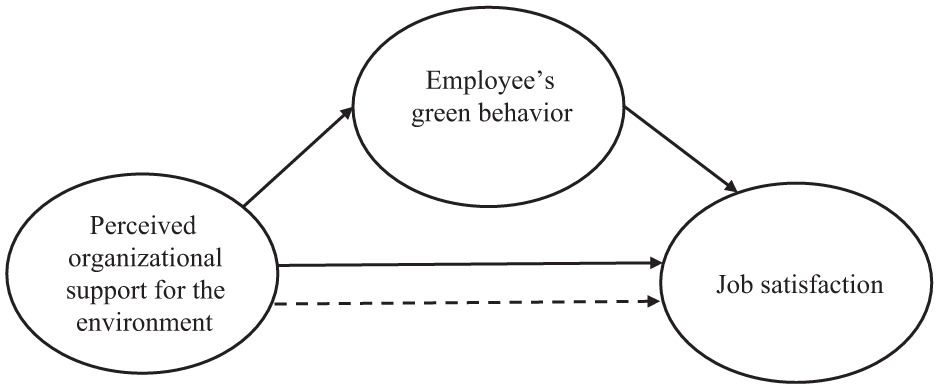
The research model.
Sample and Data Collection
The sample size for the study was calculated by using the G*Power 3.1.9.7. This is the software that recommend the minimum number of observations required for multivariate analysis based on the statistical power (Faul et al., 2007). The analysis in the software revealed that a sample size of 107 is required to meet a statistical power of 0.95, with an effect size of 0.15 and p = .05. To ensure that the low response rate was not an issue in the current study, a total of 400 questionnaires were distributed to hotel employees using a stratified random sampling technique. Strata were created to ensure representativeness across hotels with different ratings in the region in Tanzania. This approach was intended to capture diverse employee perspectives within the hotel sector. Furthermore, a drop-off/pick-up technique was employed for the distribution and collection of the questionnaire (Allred & Ross-Davis, 2011). A cross-sectional design was employed, whereby the data was collected at a single point in a time. After the data cleaning process, 258 usable questionnaires were retained for the final analysis. This resulted in a response rate of 64.5%, which was deemed sufficient due to the nature of research utilizing surveys in developing countries (Gill et al., 2021). Moreover, the final sample size (258) exceeded the minimum recommended sample size, thereby ensuring sufficient statistical power for the analysis and enhancing the reliability of the study’s results.
In terms of demographic characteristics, the analysis of a sample of 258 hotel employees reveals a predominantly female population, with 58.5% identifying as female and 41.5% as male (see Table 1). The age distribution shows a significant concentration in the 28–37 age range, which accounts for nearly half of the sample (49.6%), while younger (18–27) and older (48 and above) groups are underrepresented. Additionally, the education level is notably high, with 78.3% of participants having completed university education, compared to 21.7% with only secondary level of education.
Demographic Characteristics of Respondents.

Questionnaire Development and Measurements
The study employed a structured questionnaire, which is considered more appropriate for quantitative research (Hair et al., 2020). The survey questionnaire was developed after a careful review of existing studies in the domains of POSE, EGB, and JS. The questionnaire was divided into two main parts: the first part focused on demographic information of respondents. The second part consisted of measurement items (questions) designed to measure the main variables of the study. These measures were derived from previously validated studies. The decision to use existing measures was made to ensure the reliability and validity of the scales employed in the current research. Additionally, studies that informed these measurements were considered relevant and contributed to the knowledge in the research field. We measured POSE by using six (6) items that were adopted from Paillé and Meija-Morelos (2019) with reported internal consistency value of 0.920. The measures were also employed by Karatepe et al. (2022) with reported coefficient alpha value of 0.927. Four (4) items for measuring EGB were adopted from the study of Yesiltas et al. (2022) with reported coefficient alpha value of 0.810. Lastly, JS was measured by using five (5) items that were adopted from Johlke and Duhan (2000) with reported coefficient alpha value of 0.810. Despite the fact that JS is a cross-cutting issue across many settings, the research used these measures since they have been used by other studies focusing on hotel employees (Cheng & O-Yang, 2018; Yen et al., 2013). All utilized measures were deemed reliable, as they met the recommended Cronbach’s alpha threshold of 0.7 for achieving internal consistency reliability.
To establish the content validity of the measures, experts in organizational and business management studies were consulted. Furthermore, a pilot test was conducted, and the measures were deemed valid and reliable, leading to the full-scale data collection. The internal consistency reliability was evaluated using Cronbach’s alpha, and composite reliability was evaluated following confirmatory factor analysis (CFA). Under which values of .7 and above were used as threshold for achievement of reliability (Hair et al., 2010; Tavakol & Dennick, 2011). Also, discriminant validity and convergent validity as parts of construct validity were assessed by using the Fornell-Larcker criterion and AVE, respectively under which all values as presented in Table 2 were in favor of achieving the discriminant validity and convergent validity (Ab Hamid et al., 2017; Fornell & Larcker, 1981). The final measures included in the survey instrument are presented in Table 2. These measures were assessed using a 5-point Likert scale, ranging from 1 (strongly disagree) to 5 (strongly agree), providing a basis for respondents to rate their opinions.
Measurements, Reliability and Validity.

Model fit indices: X2 = 141.769; df = 87; X2/df = 1.630; p < .05; GFI = 0.934; AGFI = 0.909; NFI = 0.937; RFI = 0.924; IFI = 0.975; TLI = 0.969; CFI = 0.974; SRMR = 0.047; RMSEA = 0.049; PClose = 0.505
Data Analysis
Since the study tested the research model (see Figure 1) that include latent and observed variables, covariance-based structural equation modeling (CB-SEM) was employed for the analysis. Specifically, the study involved CB-SEM because it is well-suited for testing complex models that involve multiple relationships between latent constructs (Bagozzi & Yi, 2012; Hair et al., 2014). CB-SEM was chosen due to its ability to assess both the measurement model, which examines the reliability and validity of constructs, and the structural model, which analyzes the hypothesized relationships among variables (Dash & Paul, 2021; Hair et al., 2021). Consequently, before assessing the structural model to test the study’s relationships, a CFA was conducted. This measurement model was analyzed and produced useful results for assessing reliability and validity in our study (Bagozzi & Yi, 2012; Hair et al., 2010; Kim et al., 2016).
Subsequently, the structural model was tested to obtain results on the direct effects between study’s variables. Additionally, the PROCESS macro (Hayes, 2012), was utilized for testing the indirect effect of POSE on JS of hotel employees via EGB. This tool is relevant for providing robust results through bootstrapping, which is crucial for testing relationships and delivering stable path analysis results for mediation analysis. It is a widely used computational tool within IBM SPSS for conducting mediation analysis (Hayes, 2012). This approach allowed for a clearer examination of the relationships between variables, enabling the study to examine the indirect effect through a mediating variable (Hayes & Rockwood, 2017). Therefore, in addition to CB-SEM, the use of Hayes’ PROCESS macro for mediation analysis enhanced the rigor of the quantitative analysis as employed in our study (Hayes, 2012; Hayes & Rockwood, 2017).
Therefore, this study employed the dual approach as IBM SPSS Amos and Hayes’ PROCESS macro are complementary tools for analyzing relationships in quantitative data. CB-SEM is ideal for testing theoretical models that involve multiple observed and latent variables, and complex relationships, as it provides a robust method for estimating model fit, and path coefficients (Hair et al., 2014). On the other hand, the PROCESS macro, developed by Andrew Hayes, is a versatile tool for testing mediation, moderation, and conditional process models (Hayes & Rockwood, 2017). It is well-suited for examining the interactions and indirect effects between variables. Therefore, the combination of these two tools in data analysis offered a comprehensive approach to understanding both the structure and specific mechanisms within the analyzed data, making them particularly effective for our research that required examination of both direct and indirect relationships. Additionally, the dual approach was crucial, as the PROCESS macro allows for analysis through a bootstrapping procedure, which ensured more stable results. The study conducted bootstrapping based on 5,000 bootstrap samples, providing reliable outcomes.
Results
Non-response Bias and Common Method Bias
We tested non-response bias (Armstrong et al., 1977), and common method bias (CMB) (Podsakoff et al., 2003), before establishing the main study’s results. In the first place, non-response bias was assessed by making comparison between late and early respondents’ responses. The results showed that the mean values of all main variables did not show presence of statistical difference between them at p < .05 between the two groups (early and late responses), showing a low possibility of non-response bias in our study. Additionally, the study checked for CMB through Harman’s single-factor test (Harman, 1967), as it involved a self-reported questionnaire that was used to collect data from hotel employees. According to Podsakoff et al. (2003), CMB exists when a single factor in the unrotated factor analysis explains more than 50% of variance. In our study, CMB was not an issue of concern as only 46.04% was explained by a single factor.
Measurement Model Assessment
Before examining the statistical results of hypothesized relationships, the measurement model was assessed to ensure the reliability and validity (see Figure 2). The results shown in Tables 2 and 3 are the specific findings for the measurement model obtained after conducting the CFA. Table 2 displays the model fit indices, which show that all of the model fit indices are within the recommended thresholds (Hu & Bentler, 1999). Table 2 also shows that all factor loadings for each specific construct are greater than 0.6, indicating that the specific observed factor at least contributes greatly in explaining its relevant construct (Hair et al., 2010). This study also achieved internal consistency reliability and construct reliability because all values for each construct are greater than the suggested value of 0.7 as presented in Table 2 (Cheung et al., 2023; Tavakol & Dennick, 2011). The construct validity was assessed in terms of discriminant validity and convergent validity, with the results indicating that the italicized values that present square root of AVE values are greater than the correlations between constructs, implying that discriminant validity was achieved (see Table 3) (Fornell & Larcker, 1981). Furthermore, the AVE values for each construct in Table 2 are greater than the suggested threshold of 0.5, and the factor loadings are above 0.6, suggesting that convergent validity was realized (Cheung et al., 2023; Fornell & Larcker, 1981).

CFA (measurement model).
Fornell-Larcker Criterion for Discriminant Validity.

Note. Italicized values represent √AVE
Structural Model and Hypothesis Testing
Direct Effects
After successfully establishing the validity and reliability of the measures in CFA, the structural model analysis was conducted. Based on the outputs of CB-SEM, the study examined the direct effects on the hypothesized relationships. Specifically, the findings presented in this section are centered on examining the direct impact of POSE on JS in two scenarios: without the inclusion of the mediator, namely EGB, and with the mediator considered. By presenting these two models, the study provides insights into the isolated effects of POSE on JS as well as how the effects appear with the inclusion of the mediating variable. The structural model in Figure 3 show that the effect of POSE on JS (without the mediating variable). Generally, the model fit measures were X2 = 81.578, df = 43, X2/df = 1.897, CFI = 0.975, NFI = 0.949, RFI = 0.935, IFI = 0.975 and TLI = 0.968. Furthermore, SRMR = 0.046, RMSEA = 0.059 and PClose = 0.210. These model fit indices are within the recommended thresholds (Hu & Bentler, 1999). On the other hand, the model fit measures for the structural model as presented in Figure 4 were X2 = 141.769, df = 87, X2/df = 1.630, CFI = 0.974, NFI = 0.937, RFI = 0.924, IFI = 0.975 and TLI = 0.969. Furthermore, SRMR = 0.047, RMSEA = 0.049 and PClose = 0.505. Similarly, these fit indices are within the recommended thresholds (Hooper et al., 2008; Hu & Bentler, 1999).

The structural model (without mediator).
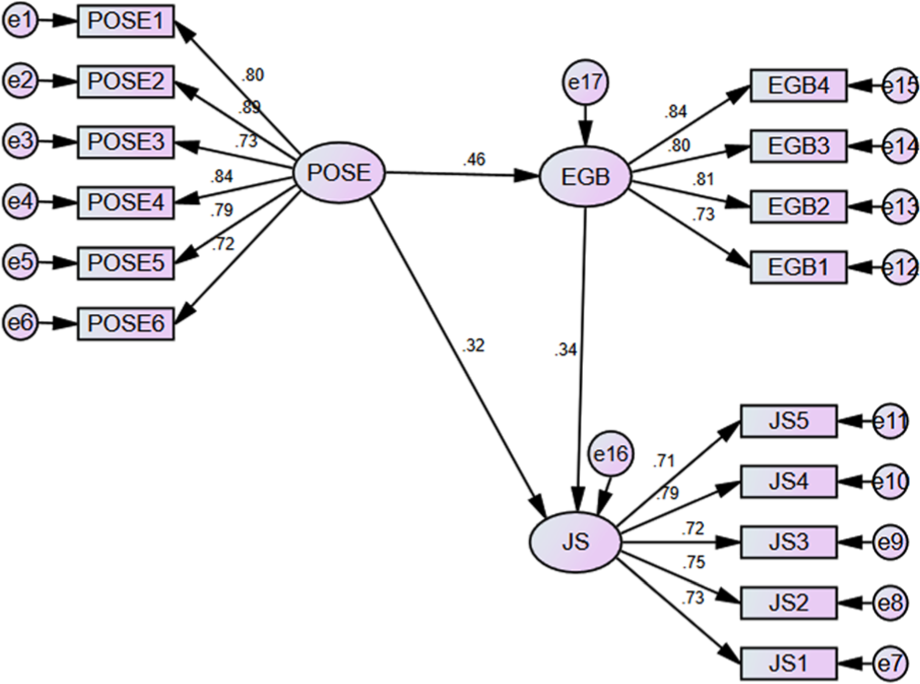
The structural model (with mediator).
The results in Table 4 show that the hypothesized relationships between variables are positive and significant. Thus, the model without the mediator depicts that the relationship between POSE and JS was positive and statistically significant (β = .548, SE = 0.084, CR = 6.527, p < .001), suggesting that as POSE increases, JS increases as well. These findings support the H1 that POSE is a significant predictor of JS. Furthermore, the model with the mediator reveals that POSE had a direct positive effect on JS (β = .368, SE = 0.086, CR = 4.278, p < .001). The analysis revealed a positive and significant relationship between POSE and EGB (β = .473, SE = 0.073, CR = 6.450, p < .001), as well as between EGB and JS (β = .390, SE = 0.088, CR = 4.439, p < .001), supporting H2 and H3, respectively. Generally, these results preliminarily suggest that POSE influences JS both directly and indirectly through EGB. However, to obtain the specific results of the indirect effect of POSE on JS via EGB, this study employed Hayes’ PROCESS Macro for mediation analysis.
The Results on the Structural Model from CB-SEM.

Mediating (Indirect) Effect
The Hayes’ PROCESS Macro was used for data analysis to test the specific mediating effect of EGB on the link between POSE and JS. This tool was used because of its robustness in assessing the direct and indirect effects of study constructs using the bootstrapping technique (Hayes, 2022). The findings were obtained in the analysis through examining model 4 of Hayes’ PROCESS Macro after the bootstrap procedure (5,000 resamples). First and foremost, the analysis yielded two models. In the first model, the mediating variable (EGB) was treated as an outcome variable, while POSE was treated as an independent variable. In the second model, JS was an outcome variable with POSE and EGB as predicting variables. In this regard, each model produced the relevant value of R2 for assessing the contribution of the predicting variable in explaining the variance of outcome variable, which were presented to be 0.188 and 0.261 for EGB in model 1 and JS in model 2, respectively. These findings imply that POSE contributed approximately 18.8% of the variance in EGB and approximately 26.1% of the variance in JS is contributed by POSE and EGB as predicting variables.
Furthermore, the results in Table 5 show that the first model, as hypothesized, a positive and significant relationship between POSE and EGB is established (β = .410, t = 7.686 and p < .001). In the second model, the relationship between POSE and JS is positive and significant (β = .301, t = 5.023 and p < .001). Similarly, the presented findings show that EGB has a significant and positive relationship with JS (β = .322, t = 5.092 and p < .001). It should be noted that all of these relationships have non-zero values between confidence intervals (LLCI and ULCI), as shown in Table 5, indicating that they support the significant relationships between the study’s variables.
Results for Testing Mediating (Indirect) Effect on Hayes’ PROCESS Macro.
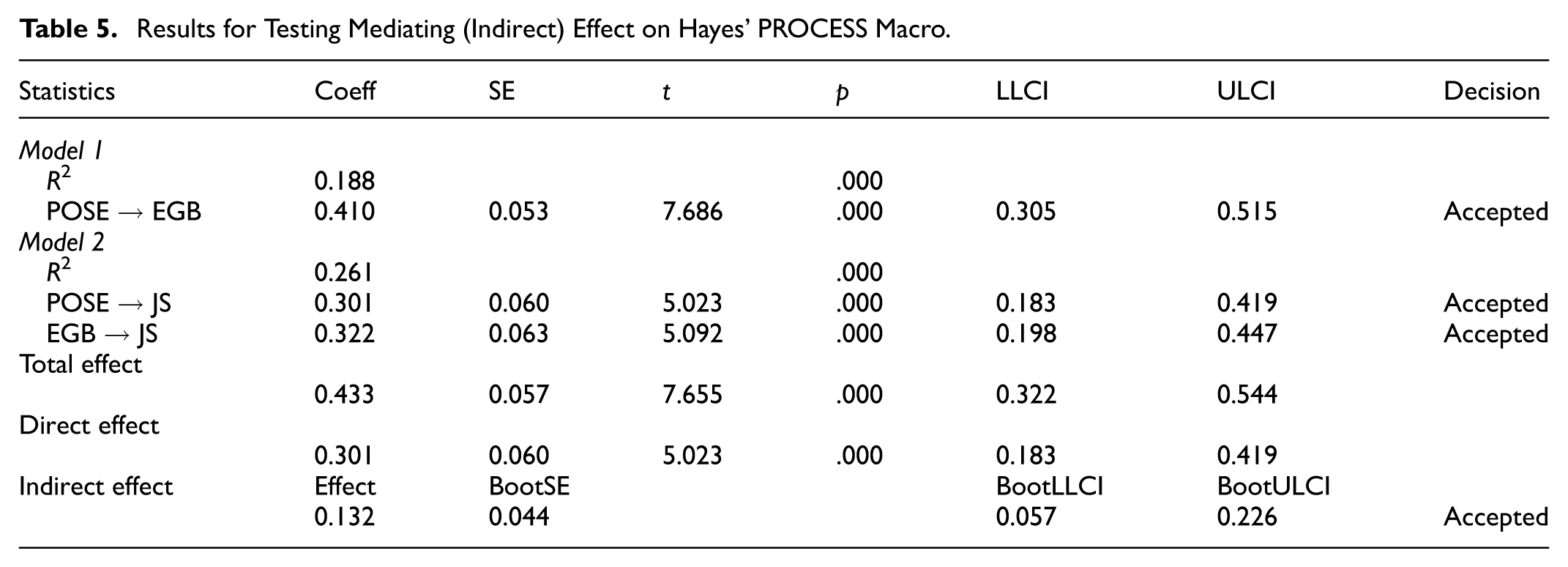
Finally, the indirect effect shown in Table 5 was found to be significant, supporting the role of EGB as a mediator in the relationship between POSE and JS (H4). Table 5 shows that the specific indirect effect (β = .132) has non-zero values between the bootstrapping confidence intervals (BootLLCI = 0.057 and BootULCI = 0.226). Furthermore, the total effect, which is the sum of the direct and indirect effects, is shown to be greater than the direct effect, indicating the presence of mediating effect. Table 5 shows that the total effect is 0.433, the direct effect is 0.301, and the indirect effect is 0.132. These findings imply that the effect of POSE on JS is partially mediated by EGB, as some effects of POSE have a significant direct result on JS while others have an indirect effect through EGB. These findings support H4, which states that EGB partially mediates the relationship between POSE and JS.
The findings of the mediation analysis are clearly presented in Figure 5. The direct effect of POSE on JS, with the mediator included in the model (c’), is 0.301. Furthermore, the effect of the mediating variable (EGB) on JS (b) is 0.322, and the effect of POSE on EGB (a), which denotes the link between the independent variable and the mediating variable, is 0.410, as shown in Figure 5. It should be noted that the indirect effect is the product of a and b (a*b), which is 0.132, implying the effect of POSE on JS through EGB. The total effect (the sum of the direct and indirect effects) is 0.301 plus 0.132, which equals 0.433. All these effects in the model were found to be significant at p < .05, supporting the study’s hypotheses and indicating a partial mediation effect. Therefore, the findings suggest that POSE has a direct effect on JS and indirect effect through EGB.

The mediation results.
Discussion
The study intended to empirically test a developed model on the mediating effect of EGB in the relationship between POSE and JS of hotel employees. Therefore, the study focused on establishing a positive and significant relationship between POSE and EGB. These findings imply that POSE enhance eco-friendly environmental behavior among employees. These results are consistent with prior research (Kerse, 2024; Aboramadan et al., 2022; Karatepe et al., 2022; Paillé & Meija-Morelos, 2019). One potential reason for the positive link between these variables is that when an organization demonstrates support for environmentally friendly practices, it may foster a sense of belonging among employees within an environmentally conscious workplace. This, in turn, might lead to an increase in EGB (Kerse, 2024). Furthermore, the findings revealed a significant and positive relationship between POSE and JS. Prior research has clearly established the positive link of perceived organizational support on JS which support our study (Ganji et al., 2021; Viseu et al., 2020). However, to be specific the current study focused on perceived organizational support for eco-friendly practices and JS. Thus, our findings imply that when employees perceive that their hotels real care about the environment and support them in addressing environmental issues, they will be more satisfied with their jobs.
The current study’s findings indicate that EGB has a direct impact on JS of hotel employees, which is in line with earlier research that established the relationship in the healthcare professionals’ context (Pinzone et al., 2019). In another context, employees’ workplace green behavior which has been used as a measure of GHRM has been associated with JS of employees working in various local and multinational hotels in Malaysia (Moin et al., 2021). Our findings show that hotel employees exhibit greater satisfaction with the increase in green behaviors. Therefore, EGB, which reflects employees’ voluntary involvement in environmentally friendly practices while performing their duties, contributes substantially to enhancing JS. These findings make an important contribution to environmentally friendly practices for hotel employees. One plausible explanation for the positive relationship between EGB and JS is that employees in organizational settings generally prefer healthy and safe workplaces that promote job security and enhance JS (Amrutha & Geetha, 2020). Therefore, eco-friendly practices linked to EGB may become necessary in order to meet the desired level of JS.
Furthermore, EGB partially mediates the relationship between POSE and JS. The partial mediation role of EGB describes that some effects of POSE on JS are explained through EGB. This study highlights that hotels that provide diverse forms of environmental support, as perceived by their employees, foster green behavior among employees, which in turn increases JS. The findings support the notion that POSE has an indirect effect on JS through EGB. This finding is important in contributing to sustainable practices in the hotel industry. The current study’s findings align with previous research (Gill et al., 2021; Malsha et al., 2020), showing that EGB is a key mechanism in mediating the relationship between various environmental-related constructs. However, to the best of the researchers’ knowledge, the current research is the first that looked at the role of EGB in mediating the relationship between POSE and JS among hotel employees.
Conclusion
This study confirms a positive and significant relationship between POSE and EGB and JS among hotel employees. These results highlight that when hotels actively support environmentally friendly practices, employees are more likely to engage in green behaviors, nurturing a sense of belonging in an environmentally conscious workplace. This, in turn, enhances their JS, aligning with prior knowledge that emphasizes the positive impact of organizational support on employee-related outcomes. The study’s contribution lies in its specific focus on eco-friendly practices within the hotel industry, reinforcing the importance of POSE in promoting green behaviors and improving JS. Furthermore, the research establishes EGB as a partial mediator in the relationship between POSE and JS, demonstrating that green behaviors significantly contribute to JS. This partial mediating role underlines the importance of utilizing EGB to bridge POSE and JS, offering a novel insight into the hotel industry context. The indirect effect of POSE on JS through EGB presents crucial insights for hotel management to prioritize eco-friendly practices, ultimately enhancing JS. These findings contribute to the growing body of literature on sustainable practices and offer a clear pathway for enhancing environmentally responsible and satisfied workforces in the hospitality sector.
Theoretical Implications
The primary theoretical contribution of our study is on enriching the existing theory on the relationship between organizational support and JS. This study complements the strand of literature on explaining JS of hotel employees through POSE and EGB. The study is conducted to the context of hotel industry from Tanzania as a developing country in Sub-Saharan Africa, therefore, it provides important empirical evidence on the direct and indirect relationships between POSE and JS through EGB from the under-researched setting. Previous research has established that perceived organizational support is one of the most important factors for enhancing JS (Ganji et al., 2021; Viseu et al., 2020; Wen et al., 2019). However, our study adds to this body of literature by examining the contribution of perceived organizational support specifically to environmental practices on JS of hotel employees. Therefore, the study’s findings advance on the knowledge of the link between POSE and JS in the hotel industry.
Grounded from the organizational support theory, our research discovered that EGB is important in explaining the relationship between POSE and JS among hotel employees. This study adds to the body of knowledge about the direct and indirect effects of POSE on JS in various contexts. Our research adds to the growing body of literature on the subject, which is crucial for expanding our understanding of how these constructs (POSE and JS) are related. The study focused specifically on the mediating effect of EGB in the relationship between POSE and JS, providing valuable empirical evidence in the existing literature centering on eco-friendly organizational support (Aboramadan et al., 2022; Karatepe et al., 2022; Paillé & Meija-Morelos, 2019; Pinzone et al., 2019).
Additionally, it should be noted that most hotels in Tanzania, where the study was conducted, are implementing environmental measures that are crucial for meeting sustainability goals (Naiman & Mlozi, 2019; Naiman & Mungure, 2023). Nevertheless, there is still a lack of knowledge regarding how POSE affects JS and how EGB might influence JS of hotel employees in this context. Therefore, by providing empirical evidence on the direct and indirect effects of POSE on enhancing employee JS in the hotel industry through EGB, this study contributes to a clearer understanding of the role of eco-friendly practices in hotels.
Practical implications
Nowadays, managers are interested in implementation of environmentally friendly policies in order to improve the company’s reputation (Hameed et al., 2022; Ismail, 2022; Paillé & Meija-Morelos, 2019). In this vein, our study yields a number of practical implications that inform practitioners, particularly those working in the hotel industry, on various strategies to improve JS. These strategies include providing organizational support for environmentally friendly practices and encouraging EGB. Therefore, the following points need to be considered.
Hotels should ensure that their employees are aware of environmental practices in order to make their operations more sustainable. This is important because assisting workers in resolving environmental issues is required to instill green behavior in them. The green mindset of employees towards the environmental practices they implement in their day-to-day operations is critical in achieving desired outcomes in the hotel industry. To achieve these results, hotels must create appropriate working environment that promotes implementation of environmentally friendly practices.
In addition, training programs can be used to educate employees on the benefits of working in environmentally friendly settings. Management should direct these efforts towards employees, as our findings show that organizational support for environmentally friendly practices improves green behavior among hotel employees.
In a similar vein, it is recommended that hotel employees should have strategies and approaches in place to maintain a green mindset in their day-to-day operations, since this can boost their level of JS. The same is relevant for effective hotel management in enhancing green practices. According to our research, for hotel employees to be pleased in their jobs, they must engage in environmentally friendly behaviors. Therefore, it is crucial to promote environmentally responsible conduct through participation in environmentally friendly activities and a voluntary desire to carry out such environmental initiatives (Yesiltas et al., 2022). While it is possible to implement these practices in a supportive environmentally friendly working environment, it is the employee’s responsibility to ensure that they are aware of greening their behaviors for the purpose of hotel operations and ensuring JS in the workplace.
The findings have some implications for hotel management, including the need to foster a workplace that prioritizes environmental sustainability and engage employees in environmental initiatives. This is crucial for fostering POSE and encouraging employees to adopt sustainable practices. Paillé and Meija-Morelos (2019) stressed the need to foster green behaviors by providing employees with the autonomy necessary to encourage environmentally conscious conduct.
Limitations and Directions for Future Research
Despite the theoretical and practical contributions of our study, there are some potential limitations that may pave way for areas for further studies for future researchers. First, the study focused on a sample of hotel employees from a single country, Tanzania, which may limit the generalizability of the findings. Future studies should consider conducting cross-cultural comparisons to validate the results across diverse geographical contexts and industries, such as manufacturing, education, construction, and healthcare. Expanding the scope in this manner would enhance the potential for generalizing the study’s findings. Second, because data was only gathered once over the course of the study, the results can only be applied without considering the possible variations of the variables. Longitudinal research that examines the links between the study’s constructs over time is essential to more valid results. Third, the study concentrated on examining the effects of POSE and EGB on JS and hence, future researchers may concentrate on analyzing other variables at the organizational or individual level which may provide more insights to extend the current research model. For instance, the direct and indirect relationships between POSE and other eco-friendly related variables on sustainable performance may be relevant in examining further the role of POSE in hotels and other businesses. Lastly, the study may be limited to the aspects of POSE observed among employees in the hotel industry. Since there are other forms of organizational support perceived by employees (Ahmed & Nawaz, 2015; Kurtessis et al., 2017), there is a need to expand the current model by considering a multifaceted approach to POSE and examining its link to JS. Furthermore, it has been determined that JS may also be influenced by other organizational and external factors such as economic conditions and performance-related experiences (Ndiango et al., 2024; Xiao et al., 2024), which were not considered in this study. Thus, future research should consider the potential effects of these factors.
Footnotes

Funding
The authors received no financial support for the research, authorship, and/or publication of this article.
Declaration of Conflicting Interests
The authors declared no potential conflicts of interest with respect to the research, authorship, and/or publication of this article.
Data Availability Statement
Data will be shared upon reasonable request.