




Abstract
This systematic review investigates the relationship between social media use and body image across genders, examining how different engagement patterns influence body perception and identifying gender-specific vulnerability factors through the theoretical frameworks of Objectification Theory and Social Comparison Theory. Following PRISMA guidelines, we analyzed 65 peer-reviewed articles (2019–2023) from Scopus and Web of Science using the keywords “social media,”“body image,” and “gender.” A multi-stage analysis approach employed PRISMA framework for article selection, bibliometric analysis using VOSviewer for mapping conceptual relationships, and Structural Topic Modeling (STM) to identify thematic clusters. Three primary thematic clusters emerged: “Social Media and Body Image” (39% of studies), “Gender Differences” (34%), and “Psychological Impact” (24%). Longitudinal analysis revealed a shift from gender-comparative research toward increasing focus on psychological mechanisms. Both passive consumption of idealized content and active manipulation of self-presentations consistently correlated with negative body image outcomes, with females demonstrating heightened vulnerability due to amplified sociocultural pressures. The study develops an integrated theoretical framework demonstrating how social media impacts body image through gender-specific pathways with varying psychological consequences. Females experience greater vulnerability due to more intense objectification effects and less effective coping resources, while platform design features amplify existing sociocultural appearance pressures. Our findings support the development of gender-sensitive interventions addressing specific vulnerability mechanisms, comprehensive media literacy programs fostering critical engagement with idealized imagery, and platform design modifications reducing features that foster problematic engagement patterns. Future research should employ longitudinal designs with gender-balanced samples to investigate causality and effectiveness of targeted interventions.
Plain Language Summary
The social media has various effects, however, the advent of visual practices caused numerous psychological effects, and one of them is body image. Everyone wants to present on social media with an ideal look, so that people appreciate and send loving comments. The scholars have observed a tendency of crafting and editing images. This research is a systematic review to describe what effects has been discussed by the scholars.
Introduction
The dramatic surge in the use of image-centric social media sites among young people has ushered in a period where the shaping of body image is increasingly influenced by online engagement (Choukas-Bradley et al., 2020; Rodgers et al., 2020). There is a pressing need for a detailed examination of how platforms such as Instagram and Snapchat Mold perceptions of beauty, aiming to develop strategies that safeguard countless individuals from potential psychological distress. In addition, increased engagement on platforms that offer photo editing and promote the consumption of idealized imagery, whether through passive scrolling or active participation in commenting, is correlated with heightened levels of body dissatisfaction and potential eating disorders (Lonergan et al., 2019; Thorisdottir et al., 2019). Additionally, the capability to alter images before posting may perpetuate the fixation on transient body concerns (McLean et al., 2015). These dynamics often involve comparisons with unattainable standards proliferating across social media feeds and the wider online milieu (Peris et al., 2020; Wartberg et al., 2020). The adoption of such narrow standards of beauty is a predictor of feelings of body shame and unhealthy motivations for exercise (F. Griffiths & Ooi, 2018; Jarman et al., 2021). This can lead to obsessive behaviors such as constant monitoring of dietary intake and vigilant weight tracking (Barron et al., 2021).
Furthermore, this influence exhibits variability between genders, as corroborated by contemporary research findings. Research has consistently shown that social media use during adolescence is a predictor of negative outcomes related to body image, including feelings of shame, and eating disorders, with evidence pointing to a distinct disparity between genders in these effects (Thorisdottir et al., 2019; Wartberg et al., 2020). Young women and girls are at a higher risk of experiencing body dissatisfaction because of regular interaction with image-focused social networks, more so than young men (Choukas-Bradley et al., 2020). It is therefore crucial to understand the differences in how visual social media platforms such as Instagram contribute to the formation of beauty standards among genders, to better support those most at risk.
However, a wealth of experimental and observational research has revealed that females are disproportionately affected by body dissatisfaction, negative emotional states, disordered eating attitudes, and self-objectification due to their exposure to media promoting thin ideals and the measurable feedback from peers, which can negatively impact the development of self-concept (Marengo et al., 2018; Wang et al., 2023; Wartberg et al., 2020). Additionally, controlled studies have shown that exposure to content that idealizes thinness and objectifies can distinctly alter self-perceptions among women. This same content, when passively consumed, also amplifies detrimental social comparisons (F. Griffiths & Ooi, 2018).
This research aims to explore the significant public health concern of how social media influences body image across genders, especially during the formative years of young individuals. It seeks to understand the psychological and health-related effects of body dissatisfaction and to propose initial steps toward targeted interventions. The study’s primary objective is to thoroughly review and integrate current research findings on the subject, focusing particularly on identifying and explaining the differences in impact between genders. This systematic review examines how social media influences body image across genders through the lens of Objectification Theory and Social Comparison Theory. By synthesizing recent research. We aim to identify psychological mechanisms that explain gender-based variations in vulnerability to negative body image outcomes from social media engagement. This study aims:
To analyze how different forms of social media engagement (passive viewing vs. active posting) affect body image perceptions across genders, using Social Comparison Theory to explain the psychological processes involved.
To examine gender differences in the internalization of beauty ideals from social media, applying Objectification Theory to understand why females may experience heightened vulnerability to negative body image outcomes.
To identify evidence-based intervention approaches that address gender-specific risk factors, with particular focus on media literacy programs and psychological resilience strategies for adolescents and young adults.
This focused approach establishes a clear theoretical foundation that guides our analysis of empirical findings. By explicitly applying established theoretical frameworks to gender differences in social media’s impact on body image, this review will provide researchers, policymakers, and practitioners with conceptually grounded insights for developing targeted interventions that address the unique vulnerabilities of different gender groups in the digital age.
Methodology
The Preferred Reporting Items for Systematic Review and Meta-Analyses (PRISMA) criteria were followed in this study to conduct a systematic literature review (Khan & Qureshi, 2020; Qureshi & Khan, 2022). Our aim was to capture a comprehensive view of how social media impacts body image across various life stages, recognizing that these effects extend beyond adolescence. This broader approach allows us to examine potential differences in social media’s influence on body image perceptions across different age groups, providing a more holistic understanding of the phenomenon. Therefore, in this study, a sizable database of the literature was subjected to a thorough literature review. Transparency in PRISMA was the criteria of relevance for the inclusion or exclusion of studies must be made explicit, alongside each search string used, according to the PRISMA procedure (Page et al., 2021). We select a database in the field business model on m-business. This study has associated appropriate keywords connected to the business model and m-business research to find and associate relevant papers in the worldwide database of Scopus and Web of Science. Both databases “Social media” AND “body image” AND “Gender” utilized as the primary resource of information because academics regarded it as a credible resource of scholarly papers on 25 January 2024. In addition, we selected the data from 2019 to 2022. This study utilized the keywords in the title, abstract, and keywords of the author to acquire relevant data from both databases as shown in Figure 1. The final selection of studies was based on our inclusion criteria, which prioritized articles directly addressing the intersection of social media use, body image, and gender differences. Articles that did not meet all these criteria or did not provide substantial insights into our research questions were excluded to maintain focus and manageability of the review. The mining of the data was restricted to computer sciences, Social Sciences, Environmental Science, Arts and Humanities, business, management and accounting, and psychology disciplines. This study included published articles, reviews, and book chapters in the English language only. Following rigorous inclusion and exclusion criteria, irrelevant results, removal of duplication, and missing data we identified 65 records for the data analysis. We chose to conduct a systematic review because this approach allows us to synthesize and critically evaluate a broader range of studies, providing a more comprehensive overview of the current state of research in this rapidly evolving field. This approach is particularly suited to our aim of exploring the nuanced gender differences in how social media impacts body image.

The PRISMA statement inclusion and exclusion criteria.
Results
Descriptive
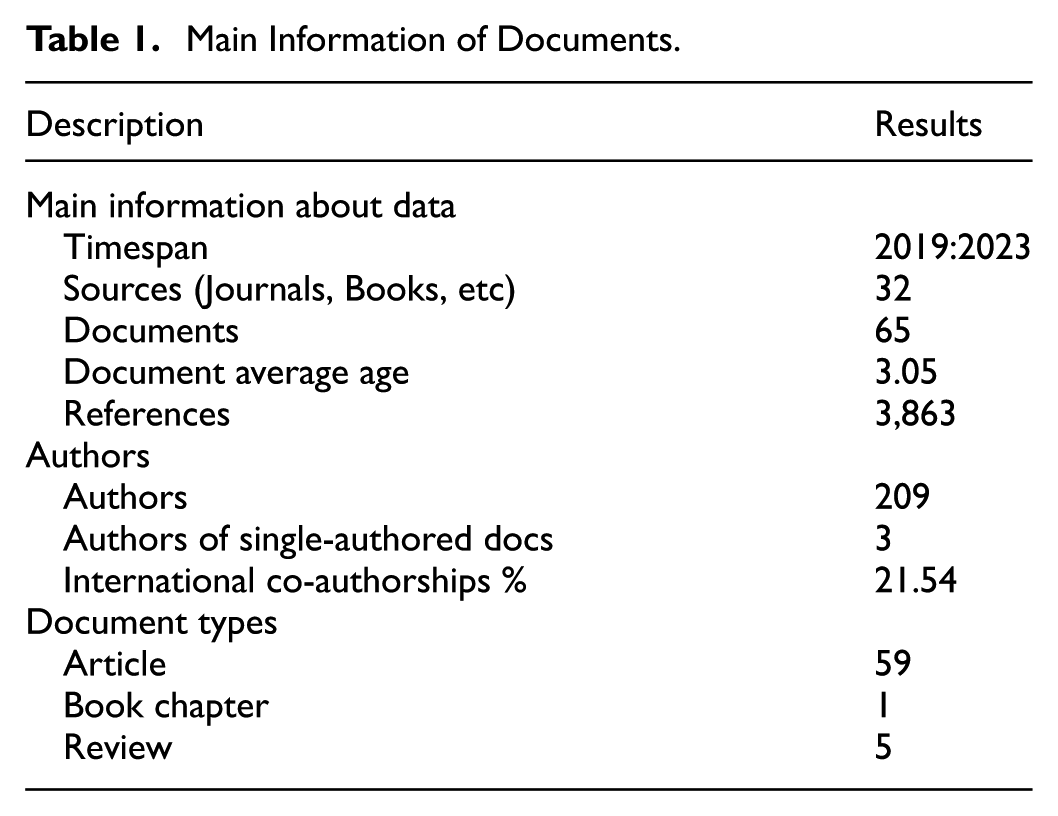
Table 1 comprises academic research published between 2019 and 2023, sourced from 32 different outlets, including journals, books, and other mediums. The dataset consists of 65 papers, with an average age of 3.05 years, suggesting a concentration on current research. The texts in question include a total of 3,863 references, which demonstrate a significant and intricate network of intellectual discourse and research foundation. The authorship landscape comprises 209 authors, with just three having generated documents as sole authors, indicating a research environment characterized by collaboration. International partnerships are significant, accounting for 21.54% of all authorships, highlighting the worldwide scope of scientific endeavors. The document types mostly consist of articles (59), with 1 book chapter and 5 reviews. The statistics reveal that article-based research dissemination is the most prevalent form of distribution.
Main Information of Documents.
In addition, the dataset offers a comprehensive analysis of publishing patterns over 5 years, namely from 2019 to 2023. In 2019, there were initially seven articles, marking the beginning of our monitoring period. The number of publications steadily rose to 15 in 2020, indicating a substantial rise in intellectual production. The growing trend persisted throughout 2021, culminating in a zenith of 24 publications, signifying an exceptionally fruitful year for research in the discipline. Subsequently, there was a conspicuous dip in production, with the number of publications dropping to 12 in 2022 and further plummeting to just 3 in 2023. The trajectory indicates a time of increasing research interest or activity, peaking in 2021, followed by a decline in subsequent years, maybe influenced by variables like shifts in research priorities, financing, or global influences affecting academic endeavors. Figure 2 illustrates the number of documents from each year.
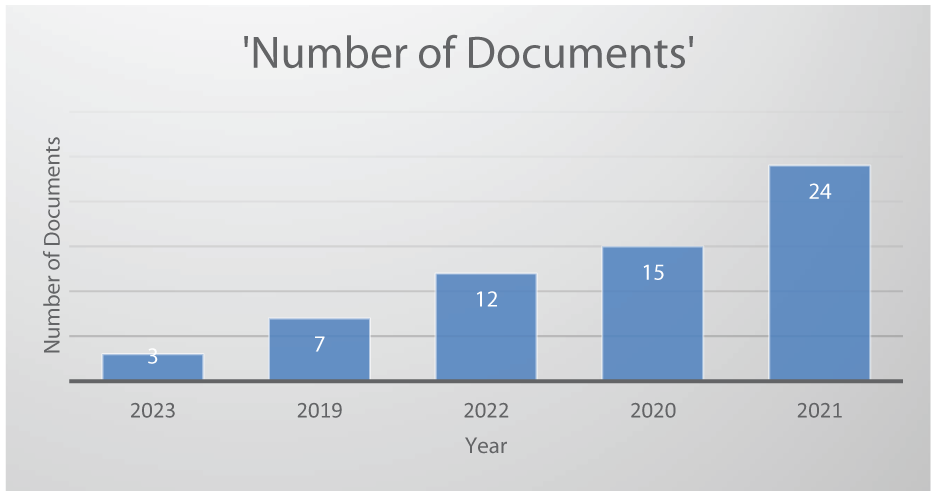
Number of documents from each year.
Furthermore, the allocation of papers across different sources throughout the period from 2019 to 2023 illuminates the specific areas of interest and journal preferences within the subject. The topic of “BODY IMAGE” is prominently included in 13 publications, suggesting a significant focus on research about perceptions of body image. The “INTERNATIONAL JOURNAL OF ENVIRONMENTAL RESEARCH AND PUBLIC HEALTH” has recently published 10 studies that explore the connection between environmental variables, public health, and perhaps body image or associated health behaviors. The journal “EATING AND WEIGHT DISORDERS” has 6 articles that emphasize the significance of eating behaviors and weight problems in the context being investigated.
Lower in the ranking, “FRONTIERS IN PSYCHOLOGY” has contributed three papers, demonstrating its extensive coverage of psychological research, which included studies on body image. The journals “APPETITE,”“COMPUTERS IN HUMAN BEHAVIOUR,”“CURRENT PSYCHOLOGY,”“JOURNAL OF YOUTH AND ADOLESCENCE,” and “PLOS ONE” have each published two papers, indicating that these platforms are also somewhat significant, although to a lesser degree, for this particular study topic. “ADOLESCENT RESEARCH REVIEW” has just one article, yet it nonetheless adds to the variety of research publications, although being less prevalent.
The breakdown highlights the multidisciplinary character of body image research, including psychology, public health, the influence of technology on human behavior, and particular concerns related to teenagers and adolescents. The method encompasses all aspects of understanding and managing difficulties related to body image, with findings being published in both specialized and general publications. Figure 3 illustrates the most relevant sources.

Most relevant sources on social media and body image.
Multistage Data Analysis
Figure 4 illustrates the three-stage methodological approach employed in this systematic review to comprehensively analyze the complex relationship between social media use, body image perceptions, and gender differences. The visual representation depicts a sequential filtration and analysis process, where each stage builds upon the previous one while progressively refining and extracting deeper insights from the literature corpus. The methodology begins with the PRISMA framework for systematic identification and selection of relevant documents, establishing a rigorous foundation through structured inclusion and exclusion criteria that yielded 65 publications for analysis. This initial stage is followed by Bibliomatrix Analysis, which maps the literature landscape and identifies publication trends, collaborative networks, and influential sources—revealing a peak in publications in 2021 and the prominence of specialized journals like “Body Image” and “International Journal of Environmental Research and Public Health.” The final stage employs thematic content analysis, which systematically identifies latent themes and conceptual relationships within the literature, particularly focusing on three key domains: patterns of social media engagement affecting body image, gender-specific vulnerabilities, and underlying psychological mechanisms that explain differential impacts across genders. This multi-stage approach ensures both methodological rigor and theoretical depth, allowing for the development of an integrated framework that elucidates the nuanced relationship between social media engagement and body image across genders. The final stage employs Machine Learning-based Structural Topic Modeling (STM), which algorithmically identifies latent themes and conceptual relationships within the literature that might not be immediately apparent through traditional review methods.

Multistage data analysis.
Bibliometric Analysis
This study used scientific mapping methods to precisely identify, depict, and delineate the conceptual structure and substance of the information about body image, as recorded in research papers investigating the relationship between social media and body image throughout the period from 2019 to 2023. This endeavor is the first attempt to use bibliometric science mapping methodologies to investigate the intricacies of body image across genders in the field of social media studies. Therefore, our results are likely to attract the interest of scholars who are keen to understand the whole structure of research on social media and body image. To analyze the results VOS viewer software was used to overlay and visualize the author’s major key term occurrences (Andersen & Swami, 2021; Novia et al., 2022; Qureshi & Khan, 2022). In addition to this for themes identification, we utilize the RStudio biblioshiny technique (Jiaqing et al., 2023).
Examining word frequencies in articles on body image and social media reveals that these two ideas are the main subjects of interest, accounting for more than 25% of the overall use of terms in Table 2. Furthermore, there is a noticeable focus on gender and age aspects. Terms associated with sex, different stages of life, and periods of development make up more than 30% of the vocabulary that has been monitored. It is worth mentioning that there is a strong focus on clinical research methodologies, which make up more than 10% of the words. An analysis of common language reveals a strong emphasis on the relationship between body image and online spaces. This research also identifies distinct patterns in investigating the effects of these factors on individuals of different genders and ages, to better understand the variations. The main methodological language emphasizes the use of rigorous scientific methods to study this area. The textual accentuation indicates a deliberate attempt to thoroughly analyze the interaction between self-perception, demography, and technological surroundings.
Key Terms Occurrences and Percentage of Each Term.

In addition to this, the word cloud provided represents the main themes discussed in the current discourse on the impact of social media on body image. It is based on a large collection of relevant literature. The phrases “social media” and “body image” are crucial to this discourse since their dominating magnitude highlights their significance in the study area. The prominent use of the words “female,”“male,” and “adolescent” about the influence of digital media on body perceptions indicates a strong academic focus on the confluence of gender and age. The use of phrases such as “young adult,”“human,” and “psychology” implies the extensive scope of the research across several demographics and disciplines. On the other hand, the terms “article,”“eating disorder,” and “self-esteem” imply specialized areas of study within the field. The word cloud not only shows how often certain terms are used but also reveals the underlying patterns of academic research on the psychological impacts of social media on body image. Figure 5 illustrates the word cloud of social media and body image.

Word cloud of social media and body image.
Topics/Themes Identified Through STM
A Structural Topic Model (STM) approach was selected for this research due to its advanced capabilities in uncovering latent thematic structures while accounting for document-level metadata, which is particularly crucial for analyzing the evolution of robotics research (Tamakloe & Park, 2023). STM extends traditional topic modeling by incorporating document-level covariates, enabling the examination of how research themes vary across different journals and time periods (Sharma, 2021).
First, the document-topic attention distribution is modeled using a logistic-normal distribution:

where X_d represents document covariates, \Gamma captures coefficient relationships, and \Sigma is the covariance matrix.
Second, the topic-word distributions are formed by combining multiple components:

where m represents the baseline word distribution, \kappa^{(t)} _k captures topic-specific deviations, \kappa^{(c)}_{y_d} represents covariate effects, and \kappa^{(i)}_{y_d,k} models interactions.
Third, the topic assignment for each word follows a multinomial distribution:

Finally, the observed words are generated conditional on their topics:

This mathematical framework enables STM to effectively model relationships between document metadata and topical content while maintaining computational tractability through variational inference methods (Roberts et al., 2019). Table 3 presents three distinct thematic clusters that emerged from our bibliometric analysis of the literature on social media and body image: The “Social Media and Body Image” cluster examines the direct relationship between digital platforms and body perception, focusing on how engagement patterns—from passive consumption to active content creation—influence users’ body satisfaction and self-esteem.
Cluster Identifications.

The “Gender Differences” cluster investigates the disparate impacts of social media across genders, consistently showing that females experience more pronounced negative effects due to heightened sociocultural pressures and objectification processes that are amplified through social media platforms. The “Psychological Impact” cluster identifies the mental health consequences and underlying psychological mechanisms mediating these effects, encompassing both clinical outcomes and cognitive-behavioral processes that explain how external influences from social media affect psychological well-being. Together, these interconnected themes provide a comprehensive framework for understanding the complex relationship between social media engagement, body image perceptions, and psychological health across genders.
Topic Proportions
In addition, Figure 6 illustrates the distribution of research focus across the three primary thematic clusters identified in our systematic review of social media and body image literature. The visualization reveals that “Social Media and Body Image” represents the dominant research theme, comprising 39% of the analyzed studies, highlighting the field’s primary emphasis on how social media platforms directly influence users’ perceptions of physical appearance. “Gender Differences” constitutes 34% of the research landscape, indicating substantial scholarly attention to how these effects manifest differently across genders, with particular focus on the disproportionate impact on females. The “Psychological Impact” theme accounts for 24% of the literature, suggesting a somewhat smaller but still significant focus on the mental health consequences and underlying psychological mechanisms mediating social media’s effects on body image. This proportional distribution demonstrates that while direct platform effects and gender disparities receive the most research attention, there remains opportunity for expanded investigation into the psychological processes that explain these relationships.

Topic proportions of each cluster.
Topic Prevalence
Furthermore, Figure 7 illustrate the evolution of research focus within the three identified thematic clusters from 2019 to 2024. Topic 1, “Social Media’s Impact on Body Image and Self-Esteem,” maintained relatively stable prevalence around 0.38 to 0.39 throughout the period, with slight fluctuations indicated by the confidence intervals narrowing between 2020 and 2022 before widening again toward 2024. This stability suggests that research examining direct relationships between social media engagement and body perception has remained a consistent foundation in the field. In contrast, Topic 2, “Gender Differences in Psychological and Behavioral Responses,” shows a clear downward trajectory from approximately 0.45 in 2019 to 0.28 by 2024, indicating a gradual decline in research specifically focused on gender-comparative analyses, despite this area previously representing a substantial proportion of the literature.

Topic prevalence of the each theme.
Topic 3, “Psychological Effects of External Influences on Mental Health,” displays the most dramatic shift, with a steady upward trend from just 0.16 in 2019 to 0.34 by 2024—more than doubling its prevalence in the literature. This striking increase reflects growing scholarly recognition of the importance of understanding the psychological mechanisms and mental health consequences underlying social media’s effects on body image. The narrowing confidence intervals for Topic 3 after 2022 suggest increasing consensus among researchers about the importance of this perspective. Collectively, these trends reveal an important evolution in the field: while direct platform effects remain consistently studied, research emphasis has shifted away from simply documenting gender differences toward deeper exploration of the psychological processes that explain how and why social media affects mental health outcomes related to body image across all users.
Classification of Themes
Social Media and Body Image
Table 4 presents a summary of current studies investigating the correlation between social media consumption and the effects on body image. Through a comprehensive analysis of studies using various research methods such as surveys, experiments, scale development, and structural equation modeling, numerous distinct patterns emerge about the influence of social media on body image. The findings suggest that passively consuming appearance-focused social media material is associated with a negative impact on body image. Exposure to images promoting a thin or athletic body ideal on social media platforms such as Facebook, Instagram, and TikTok is linked to decreased satisfaction with one’s own body (S. Griffiths et al., 2021; Yang et al., 2020), heightened negative mood and symptoms of depression, and increased monitoring and feelings of shame regarding one’s body (Choukas-Bradley et al., 2020). Also, the associations may be partly explained by the internalization of beauty ideals and the inclination to compare oneself to others online (Jarman et al., 2021; Vuong et al., 2021). In addition, individuals who have a higher level of awareness of their beauty on social media platforms also tend to experience a stronger sense of dissatisfaction with their physical appearance (Choukas-Bradley et al., 2020).
Synthesized Overview of Research on the Impacts of Social Media on Body Image.

Furthermore, engaging in frequent publishing and altering of visual images on social media is associated with negative effects on body image. Engaging in image editing of selfies before posting them on the internet is associated with increased feelings of dissatisfaction with one’s body and a greater emphasis on one’s physical appearance (Gioia et al., 2023; Lonergan et al., 2019). Additionally, the act of adolescents modifying and publishing sexually objectifying images is associated with reduced levels of self-esteem and confidence, as shown by (DiBisceglie & Arigo, 2019). Besides this, how photographs are shared has an impact—maintaining privacy for selfies is linked to a higher likelihood of photo modification and body image concerns compared to openly uploading them (Rodgers et al., 2020).
Moreover, excessive reliance on social media and irregular use patterns might facilitate detrimental behaviors centered on one’s physical attractiveness. Also, problematic utilization of social media is associated with increased monitoring and discontentment with one’s body (Jackson et al., 2021; Wartberg et al., 2020), heightened risk of developing disordered eating patterns (Burnell et al., 2021), and a stronger inclination towards embracing a slimmer beauty standard (Baceviciene & Jankauskiene, 2021). In addition, adolescents who have clinical conditions such as eating disorders or muscular dysmorphia have been shown to have a greater tendency to be addicted to social media, as reported by Santarossa et al. (2019). Therefore, social media serves as a platform that exacerbates body image concerns in those who are already susceptible.
Although several research propose neutral or positive effects of social media (Fasoli et al., 2023), the aggregate data shows that it might potentially cause damage, particularly for teenage girls and young adult women who experience an intensification of societal beauty expectations on online platforms. It is crucial to prioritize the development of resistance against the harmful effects of negative exposure (Limniou et al., 2021), the reduction of dysfunctional use patterns (Levin et al., 2023), or the promotion of adaptive ways of interaction with visual social media. In addition, athletes may also need targeted therapies that address the internalization of sports ideals and comparisons (Stoyel et al., 2020). Further study is necessary to clarify the processes of impact and evaluate intervention strategies to guarantee that social platforms promote, rather than undermine, body satisfaction.
Gender Differences Between Social Media Use and Body Image
Prior research provides evidence that women and girls generally have more detrimental effects on their body image because of engaging with social media, in comparison to men and boys. Multiple interrelated variables are likely responsible for this inequality (Gioia et al., 2023). More extensive Western societal norms around female physical beauty result in increased emphasis on looks and heightened demands when girls and women use the internet (Mahon & Hevey, 2021). In addition, the elements of social media itself—such as the widespread use of image-focused material, addictive aspects that promote an obsession with beauty, and feedback systems like “likes”—seem to be intentionally designed to negatively impact individuals’ contentment with their bodies (Rodgers et al., 2020).
In addition, concrete data supports the notion that females have more negative outcomes from engaging in visual social networking. Several research has shown a clear correlation between increased time spent on platforms and reporting problematic use, leading to greater levels of discomfort and disorders specifically among girls and women (Thorisdottir et al., 2019; Wartberg et al., 2020). Additionally, controlled investigations have shown that when women are exposed to fitspo and thin-ideal images, their contentment is specifically reduced, whereas men do not have the same effect (Barron et al., 2021; F. Griffiths & Ooi, 2018).
Additionally, indirect effects emerged via psychological mechanisms such as self-objectification and comparisons. Also, (Choukas-Bradley et al., 2020) found that females had higher scores in online self-perception of beauty compared to guys. Salomon and Brown (2019) found that girls who engage in appearance-focused activities on social media are more likely to experience body monitoring and guilt in the future. Peris et al. (2020) found that some addiction predictors vary across various genders. Table 5 illustrates the list of publications related gender differences.
Gender Differences on Social Media and Body Image.
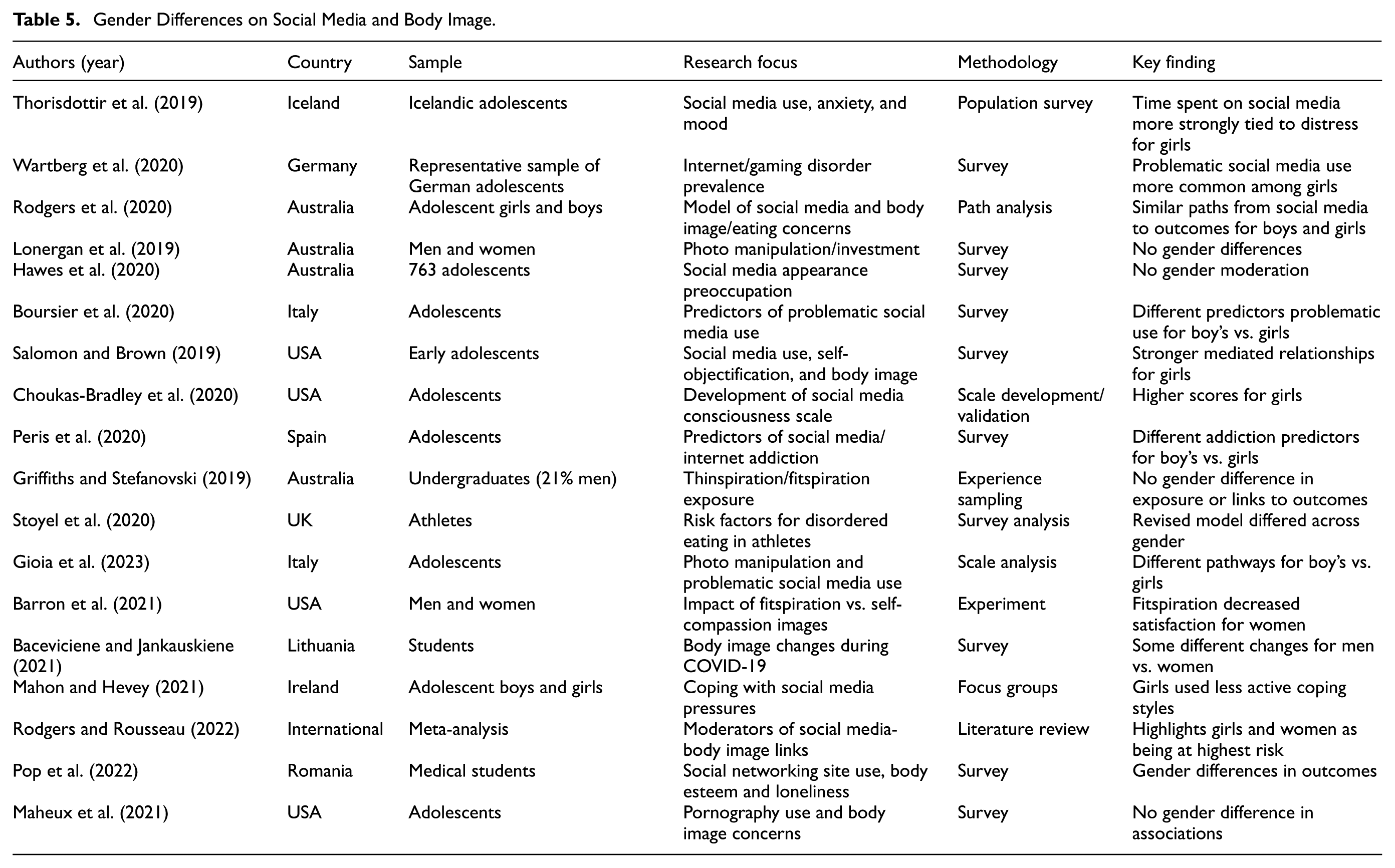
However, there is much data that shows how body image disturbance affects females more strongly. Nevertheless, there are indications of the influence of social media on various social groups. Several studies have shown no discernible gender disparities in the ability to manipulate images (Lonergan et al., 2019) or in the association between pornography and self-objectification (Maheux et al., 2021). Although the enhanced demands are more noticeable among Western girls and women, they nonetheless affect all demographic groups in the digital era (Liang et al., 2019). Finally, comprehensive evidence presented here confirms that social media plays a significant role in promoting and intensifying preoccupations with one’s physical appearance. This effect is particularly pronounced among girls and women and is likely influenced by real-life factors. It is crucial to implement interventions that focus on developing resilience and reducing involvement with image-focused social media feeds to safeguard adolescents’ body satisfaction and self-perception as they navigate through adolescence in the 21st century (Massey-Stokes et al., 2023). However, further examination of subtle distinctions related to gender and identity will be crucial for gaining comprehensive knowledge and providing adequate assistance to all young individuals.
The Psychological Impact of Social Media Use on the Body Image of Different Genders
The studies presented in this table unequivocally show that females have intensified negative psychological effects on body image outcomes due to social media, as shown by both observational and experimental methods. Various interconnected elements contribute to more adverse consequences for women and girls compared to males and boys. The primary factors that are likely to contribute to the excessive emphasis on female physical beauty online for girls and women are sociocultural prejudices (Xiao & Wang, 2021). These biases tend to prioritize the importance of physical appearance, leading to a disproportionate attention on it (de Valle et al., 2021). According to (Thorisdottir et al., 2019), females who spend more time passively consuming platforms are more likely to experience higher levels of emotional discomfort. In addition, higher rates of problematic use and indications of social media disorder are more prevalent among females (Wartberg et al., 2020). These trends indicate that constant exposure to information that idealizes thinness and objectifies individuals leads to body dissatisfaction, especially for them.
Furthermore, explicit tests that manipulate social media circumstances also highlight the negative effects on women. For instance, the influence of fitspiration media had a distinct impact on reducing body admiration among women, but not affecting males (Barron et al., 2021). Additionally, engaging in activities connected to appearance and using certain features also contribute to the development of harmful behaviors, particularly among females. Also, (Boursier et al., 2020) discovered that the paths leading from picture editing and investment in selfies to uncontrolled social media behaviors varied across genders. The implications are most likely a result of women experiencing an increased level of sexual objectification and scrutiny from others in the online environment (López et al., 2019).
However, there is still a combination of data about equivalencies as well. (S. Griffiths et al., 2021) discovered that there were no gender disparities in the relationship between exposure to fitspiration and decreases in body satisfaction, as seen using ecological momentary assessments. The ramifications may vary based on the characteristics of the user and their experiences on the website. In 2020, due to the COVID-19 pandemic, both men and women experienced disruptions in their body image (Robertson et al., 2021). However, these disruptions differed in terms of internalization and the focus on food and exercise (Baceviciene & Jankauskiene, 2021).
Moreover, female vulnerability has been attributed to the presence of coping deficiencies and self-consciousness. According to (Mahon & Hevey, 2021), focus groups indicated that females have and use fewer effective coping strategies when faced with attractive demands from Instagram and their classmates. This weakness may be partially explained by the presence of conditions that facilitate contemplation of critiques. Furthermore, females exhibited greater levels of awareness of their physical beauty in online settings, as shown by their scores on consciousness of physical attractiveness (Choukas-Bradley et al., 2020). Continuing to internalize the male gaze, especially in the presence of unfamiliar audiences, is likely to perpetuate their ingrained need to constantly check their bodies. Table 6 highlights the studies related the psychological influence of social media on the body image.
Psychological Influence of Social Media and Body Image.

Additionally, the examined study unequivocally demonstrates that social media serves as a catalyst for reinforcing prevailing cultural prejudices about female physical attractiveness, resulting in detrimental psychological consequences for the assessment of body and beauty standards, particularly among girls and women (Boursier et al., 2020). Interventions aimed at challenging limited media depictions and encouraging self-compassion have important functions in protecting individuals’ well-being (Tweedale, 2020). However, it is crucial to conduct research that acknowledges the effects of technology on different genders and demographics to provide necessary assistance for all young people as they navigate the challenges of growing up in a digital era.
Discussion
Our analysis reveals that specific patterns of social media engagement consistently correlate with negative body image outcomes across studies. Passive consumption of appearance-focused content on platforms like Instagram and TikTok is repeatedly associated with decreased body satisfaction, increased negative affect, and heightened body surveillance behaviors (S. Griffiths et al., 2021; Yang et al., 2020). These effects appear to be mediated by the internalization of beauty ideals and increased tendency toward appearance comparisons (Jarman et al., 2021; Vuong et al., 2021). Similarly, active engagement through selfie-posting and image manipulation correlates with increased body dissatisfaction (Gioia et al., 2023; Lonergan et al., 2019), while problematic usage patterns exacerbate vulnerability to disordered eating and body image disturbance (Jackson et al., 2021; Wartberg et al., 2020).
The gender disparities in vulnerability represent one of the most consistent findings across studies. Research overwhelmingly demonstrates that females experience more pronounced negative effects from social media engagement than males. Population surveys (Thorisdottir et al., 2019; Wartberg et al., 2020), experimental studies (Barron et al., 2021), and psychometric assessments (Choukas-Bradley et al., 2020) all converge on this conclusion. This heightened female vulnerability appears to be driven by sociocultural factors that amplify appearance pressures specifically for women and girls, including Western beauty standards that emphasize female physical attractiveness and platform design features that intensify these pressures (Mahon & Hevey, 2021; Rodgers et al., 2020).
The psychological mechanisms mediating these effects reveal further gender-based variations. Our analysis highlights that females demonstrate higher levels of appearance-related social media consciousness (Choukas-Bradley et al., 2020), more intense self-objectification processes (Salomon & Brown, 2019), and less effective coping strategies when confronted with appearance pressures (Mahon & Hevey, 2021). These findings align with both Objectification Theory, which explains how cultural practices of sexual objectification led to self-objectification and body surveillance behaviors, and Social Comparison Theory, which illuminates how upward comparisons to idealized images contribute to negative self-evaluation.
Importantly, our temporal analysis of topic prevalence (Figure 7) reveals an evolution in research focus from 2019 to 2024. While studies examining direct relationships between social media and body image have remained consistently prevalent, there has been a notable decline in research focused exclusively on gender differences (from 0.45 to 0.28), accompanied by a dramatic increase in research exploring psychological mechanisms and mental health impacts (from 0.16 to 0.34). This shift indicates a maturing field, moving beyond documentation of gender disparities toward deeper understanding of the psychological processes that explain these differences.
Most studies employ cross-sectional designs, providing valuable correlational data but limiting causal inferences about the relationship between social media use and body image outcomes. The few experimental studies (e.g., Barron et al., 2021; Limniou et al., 2021) offer stronger evidence for causal effects but typically examine only short-term responses to controlled exposures rather than naturalistic engagement over time. Longitudinal investigations remain relatively scarce, creating a significant gap in understanding developmental trajectories and bidirectional relationships.
Measurement inconsistencies present another methodological challenge. Studies vary considerably in how they operationalize “social media use,” with some focusing on time spent, others on specific activities (passive browsing vs. active posting), and still others on problematic usage patterns. This heterogeneity complicates direct comparisons across studies and may partially explain inconsistent findings. Similarly, body image measures vary widely, with some research employing validated clinical instruments while others use single-item assessments or adapted scales with limited psychometric validation.
Sampling limitations are particularly noteworthy. Despite the focus on gender differences, male participants are underrepresented in many studies, with several investigations including predominantly or exclusively female samples. This imbalance limits understanding of male-specific vulnerabilities and may perpetuate the notion that body image concerns primarily affect females. Additionally, participants tend to be drawn from Western, educated populations, raising questions about the cross-cultural applicability of findings (Xiao & Wang, 2021).
The field has also been hampered by inconsistent theoretical grounding. While some studies explicitly operate within established frameworks like Objectification Theory or Social Comparison Theory, others lack clear theoretical foundations. This inconsistency has limited the development of cohesive explanatory models. Our application of these dual theoretical lenses represents a strength of the current review, providing an integrated framework for interpreting the complex relationship between social media, body image, and gender.
The advanced methodological approach employed in our review—combining systematic review with bibliometric analysis and Structural Topic Modeling—represents a significant advancement over traditional narrative reviews. This multi-stage approach enabled identification of latent thematic structures and conceptual relationships not immediately apparent through conventional methods (Andersen & Swami, 2021).
Conclusion
This systematic review has provided comprehensive insights into the complex relationship between social media engagement and body image across genders. By analyzing 65 peer-reviewed articles published between 2019 and 2023 through the theoretical lenses of Objectification Theory and Social Comparison Theory, we have identified distinct patterns in how social media affects body image perceptions and the psychological mechanisms that explain gender-based variations in vulnerability.
Our analysis has revealed three primary domains of impact. First, specific patterns of social media engagement—passive consumption of idealized imagery, active manipulation of self-presentations, and problematic usage patterns—consistently correlate with negative body image outcomes. Second, females demonstrate heightened vulnerability to these effects, with Western sociocultural beauty norms being amplified by design features of social media platforms that intensify appearance pressures specifically for women and girls. Third, psychological mechanisms including self-objectification, appearance comparison processes, and coping resources mediate these effects, with females generally demonstrating less effective coping strategies and higher appearance self-consciousness.
This study makes a significant theoretical contribution by developing an integrated framework that elucidates the complex relationship between social media engagement and body image across genders. By synthesizing recent empirical evidence through the dual theoretical lenses of Objectification Theory and Social Comparison Theory, the framework identifies three interconnected domains of impact. First, it demonstrates how specific patterns of social media engagement—passive consumption, active image manipulation, and problematic usage—affect body image through distinct psychological pathways. Second, it illuminates gender-based vulnerabilities, highlighting how sociocultural beauty norms are amplified by platform design features, creating disproportionate pressures on females. Third, it articulates the psychological mechanisms underlying these disparities, revealing how females experience heightened vulnerability due to more intense objectification effects and less effective coping resources. This comprehensive framework advances theoretical understanding by illustrating that social media’s impact on body image is not merely a uniform effect but operates through gender-specific pathways with varying psychological consequences, providing a more nuanced foundation for developing targeted interventions that address these differential vulnerabilities. Figure 8 illustrates the theoretical contribution of the current study in context of social media impact on body image.
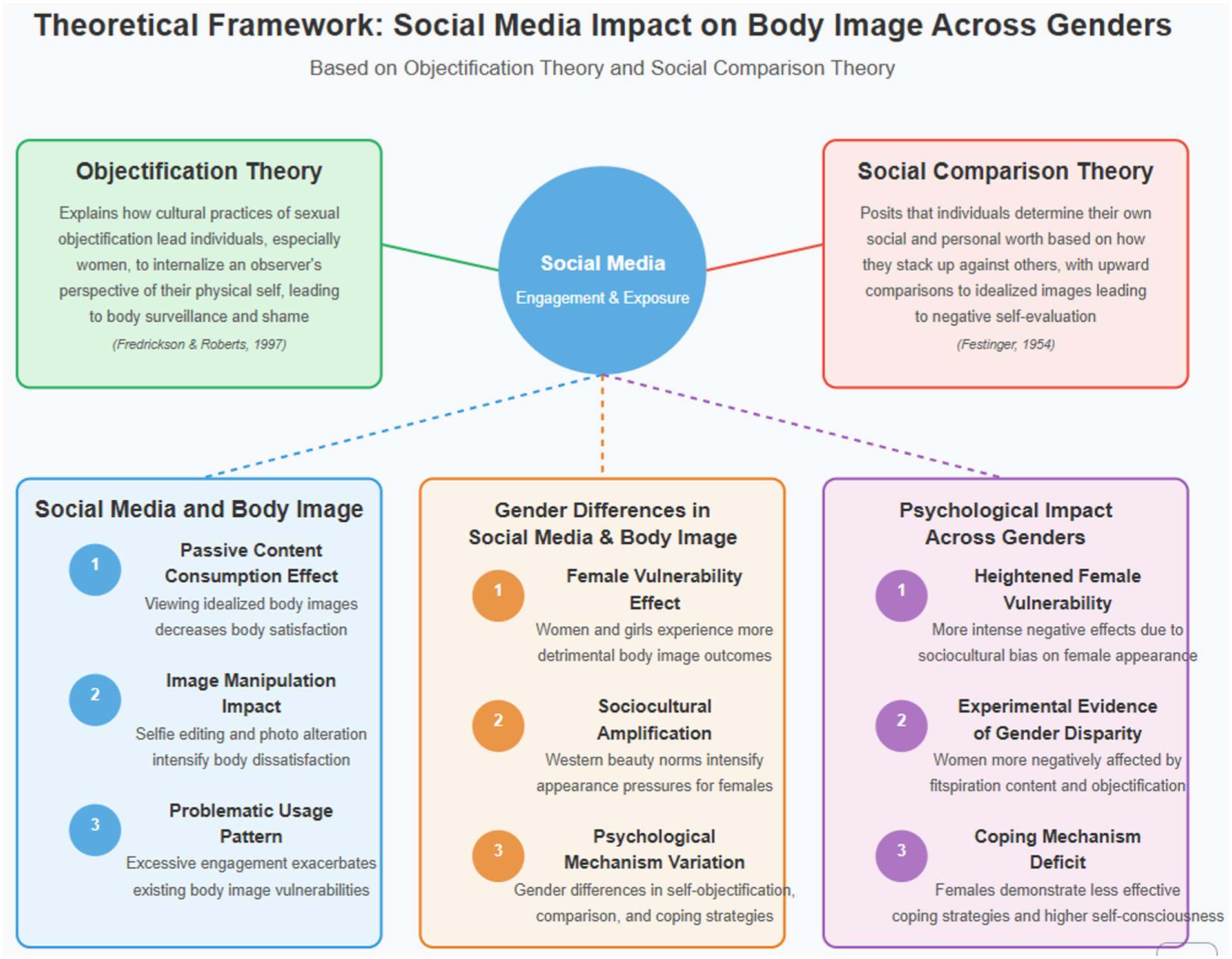
Theoretical Framework of Social Media’s Impact on Body Image.
In addition, the practical implications of this review are substantial for multiple stakeholders. For mental health practitioners, our findings support the development of gender-sensitive interventions that address the specific vulnerabilities and psychological mechanisms identified. For educational institutions, these results underscore the need for comprehensive media literacy programs that enhance critical engagement with idealized imagery and build resilience against appearance-related social comparisons. For technology companies, our findings highlight how platform design features may inadvertently amplify appearance pressures, suggesting opportunities for implementing protective mechanisms and reducing features that foster problematic engagement patterns
Future Direction
To advance our theoretical framework and address these limitations, we propose these specific research directions:
Implement multi-wave longitudinal studies examining bidirectional relationships between specific engagement patterns and body image outcomes, with gender-balanced samples to enable direct comparisons of effect pathways.
Conduct experimental studies manipulating specific platform features to isolate which elements contribute most significantly to negative outcomes for each gender, informing targeted interventions.
Incorporate objective measures of social media use through digital tracking tools alongside physiological measures (e.g., eye-tracking) to capture unconscious processes of self-objectification and appearance comparison that may operate differently across genders.
Pursue cross-cultural validation studies examining how the framework applies across diverse populations, particularly exploring how different beauty standards interact with social media influences.
Develop and test interventions specifically targeting the three key mechanisms identified: passive content consumption effects, image manipulation impacts, and problematic usage patterns, with comparative effectiveness research evaluating approaches for different gender groups.
These directions will refine our understanding of gender-specific vulnerability pathways and support development of effective interventions to promote positive body image in the digital age.
Footnotes

Funding
The authors received no financial support for the research, authorship, and/or publication of this article.
Declaration of Conflicting Interests
The authors declared no potential conflicts of interest with respect to the research, authorship, and/or publication of this article.
Data Availability Statement
The data analyzed during the current study are available from the authors upon request.
