




Abstract
The article is set against the backdrop of digital transformation and focuses on micro and small tourism enterprises as research subjects. By employing a combination of quantitative and qualitative methods, it aims to explore the conceptual model of dynamic capabilities in these enterprises, along with the development and validation of an associated measurement scale. The research findings indicate that small and micro tourism enterprises exhibit three key dynamic capabilities during their digital transformation process: market perception capability, learning and absorptive capability, and execution and application capability. The empirical validation indicates that the scale developed in this study demonstrates satisfactory reliability and validity. The overall score of dynamic capabilities for micro and small tourism enterprises is at an acceptable level. Furthermore, by selecting enterprise performance as a relevant criterion, it has been confirmed that dynamic capabilities and their three dimensions significantly positively impact the performance of micro and small tourism enterprises.
Introduction
Digital transformation is the main direction of innovation in the economic system. The 2025 World Economic Forum Annual Meeting pointed out that digitalization is an important driving force for the development of the world economy. We should actively promote the industrialization of digitalization and the digitalization of industries, accelerate the pace of digital transformation, and promote the sustainable development of the world economy. The digital transformation of enterprises is not only a micro-manifestation of the deep integration of informatization and industrialization at the industrial level, but also an innovative symbol of enterprises moving from industrialization to a digital system at the enterprise level. Fundamentally, the essence of an enterprise’s digital transformation is the embodiment of the deep integration of new-generation digital technologies with the real economy, and it is a strategic priority that contemporary enterprises need to undertake (Singh & Hess, 2020).
In the process of digital transformation, leveraging digital tools and platforms to drive organizational change and accelerate product and service innovation has become a strategic choice for most enterprises to enhance business performance and seek sustainable competitive advantages. Meanwhile, the series of impacts triggered by digital transformation have also received extensive attention from the academic community. Regarding the manifestation of digital transformation at the micro level, existing studies have deeply explored its role in enterprise risk-taking (Luo et al., 2024), talent management (Guerra et al., 2023), innovation performance (P. Chen & Kim, 2023), corporate governance (Manita et al., 2020), and business model (Ritter & Pedersen, 2020).
However, from a strategic perspective, for digital transformation to achieve long-term success, enterprises must not only possess the operational capability necessary to compete in the current market but also have the capability to fully reconfigure their assets and organizational structures in order to adapt to emerging markets and technologies. This capability is referred to as dynamic capability. It empowers enterprises to continuously upgrade and restructure their core capability in response to an ever-changing environment, thereby enabling them to gain and sustain competitive advantages (Wang & Ahmed, 2007). Furthermore, dynamic capability allow enterprises to consistently maintain these competitive advantages while helping them avoid core rigidity that can hinder development, generate inertia, and stifle innovation (Leonard-Barton, 1992). Therefore, different from previous literature, the research focus of this paper lies in exploring the manifestation of dynamic capabilities of small and micro tourism enterprises in the process of digital transformation and the specific roles of each dimension. This is mainly because small and micro tourism enterprises have already occupied a dominant position in the tourism market in terms of quantity. With their huge scale, they have an “overwhelming” advantage in the tourism industry and are the main providers of tourism services (Jaafar et al., 2011). Meanwhile, small and micro tourism enterprises have a significant effect on enhancing the competitiveness of the tourism industry and promoting the sustainable development of the local social economy (Ye et al., 2018), and play an important role in providing employment opportunities and solving the problem of surplus labor force (Ateljevic, 2007). Although they have certain advantages during the transformation due to their small scale, flexible operation mode and relatively controllable costs, they also face non-negligible disadvantages such as shortage of funds, lack of talents and weak infrastructure (Fanelli, 2021), which may hinder their digital transformation process. Therefore, the effective application of dynamic capabilities is particularly important in the digital transformation process of small and micro tourism enterprises. Small and micro tourism enterprises must possess the capability to constantly innovate themselves, that is, the dynamic capability to cope with the highly uncertain external environment by integrating and reconfiguring internal and external resources of the enterprise (Teece et al., 1997), so as to reshape new competitive advantages in the process of digital transformation. However, the existing literature mainly focuses on the research of the dynamic capabilities of large enterprises (Hong et al., 2018; Wu et al., 2022), while the discussion on the dynamic capabilities of small and micro tourism enterprises is relatively scarce.
Therefore, this study adopts a method combining semi-structured interviews and questionnaires to deeply explore the application of dynamic capabilities of small and micro tourism enterprises in the process of digital transformation, aiming to provide theoretical guidance and practical suggestions for small and micro tourism enterprises to effectively respond to digital transformation. The possible contributions of this study are mainly as follows: (1) By systematically reviewing relevant literature and integrating the results of in-depth interviews, a theoretical model of dynamic capabilities was constructed based on the characteristics of small and micro tourism enterprises. This model is specifically subdivided into three key dimensions: market perception capability, learning and absorption capability, and execution and application capability. (2) A questionnaire was specifically designed for the dynamic capabilities of small and micro tourism enterprises, and the scientificity and rationality of the questionnaire design were verified through empirical research. (3) Enterprise performance was selected as the key related indicator for empirical analysis. The research results show that dynamic capability and the three dimensions all have a significant positive impact on enterprise performance. In conclusion, this study not only enriches the empirical research on the dynamic capability theory of small and micro tourism enterprises under the background of digital transformation, but also provides a scientific basis for the strategy formulation of small and micro tourism enterprises in the practice of digital transformation.
Literature Review
Progress in Research on the Digital Transformation of Tourism Enterprises
The rapid advancement of digital technology has provided tourism enterprises with opportunities to expand market coverage, promote growth, enhance operational efficiency, and strengthen competitive advantages, ushering in a new era of development for these businesses (Hess et al., 2016). Through digitalization, tourism enterprises can deeply integrate digital technology with tourism business, providing customers with services such as online booking, electronic payment and intelligent customer service, enhancing customer satisfaction and the matching degree of services, and ultimately improving the performance of tourism enterprises (Christou et al., 2023). For tourism enterprises, digital transformation has become a key element for them to maintain competitive advantages and achieve sustainable development. The types of enterprise digital transformation include product digital transformation, service digital transformation, process digital transformation, model digital transformation, and organizational digital transformation. As digital technology continues to permeate the tourism industry, the digital transformation of tourism enterprises is evolving from a singular focus on products, services, and marketing to a more holistic approach encompassing comprehensive business models and organizational structures (Perelygina et al., 2022). The influencing factors of an enterprise’s digital transformation include internal and external factors. On the internal front, innovation in thought and concepts serves as an intrinsic driving force for digital transformation within enterprises. Additionally, characteristics such as management personnel’s experience and demographic features also play a significant role in shaping the digital evolution of these organizations (Legohérel et al., 2004). Regarding external factors, geographical location is regarded as a decisive element in digital transformation. The digital development of tourism enterprises is significantly linked to local economic development (Dredge et al., 2019). Tourism enterprises can implement digital tourism experiences through means such as online booking and offline experience, as well as the combination of digital tour guides and virtual reality (Cranmer et al., 2021). The digital transformation of large tourism enterprises such as Ctrip (Shao & Kenney, 2018) and Disneyland (Y. Chen et al., 2025) has become a benchmark in the service industry.
Progress in Research on Dynamic Capability
In the era of the digital economy, the lack or insufficiency of capability during the digital transformation process significantly constrains enterprises’ innovation capability and core competitiveness, hindering their capability to upgrade and transform. To maintain competitiveness, companies require dynamic capabilities, which have emerged as a crucial asset. Dynamic capability refers to an organization’s ability to continuously integrate, establish, and reconfigure internal and external resources in response to changes in the external environment. This capability is a unique organizational resource that is difficult for competitors to replicate. The dynamic capability of an enterprise can help it grasp the latest practical achievements of digital transformation within the industry, assist it in learning advanced external digital technologies, prompt it to optimize its digital goals and operation models, and achieve digital transformation of the enterprise (Tortora et al., 2021). In the digital economy environment, digital transformation exposes enterprises to the uncertainty of the external environment. Dynamic capability can help enterprises resist changes in the external environment, optimize the allocation and transformation mechanism of enterprise resources, reduce transformation risks, and accelerate the pace of digital transformation (Verhoef et al., 2021). In a certain sense, the digital transformation process in enterprises can also be viewed as a journey toward constructing and enhancing dynamic capability. At the same time, the dynamic capability generated by enterprises through the modification, adjustment, or expansion of their existing resources, processes, and values contribute significantly to their digital transformation (Warner & Wäger, 2019). In summary, digital transformation is a strategic response by enterprises to the environmental changes brought about by the rapid advancement of digital technologies. Dynamic capability serve as the driving force for businesses in light of these environmental shifts; they form the foundation of digital transformation, reshaping an enterprise’s dynamic capability. The core components of dynamic capabilities primarily encompass three dimensions: sensing, integrating, and reconfiguring capabilities (Teece, 2007).
To sum up, although certain research results have been accumulated regarding the digital transformation of tourism enterprises and the application of dynamic capability, there are still some deficiencies. On the one hand, most of the existing studies focus on manufacturing enterprises or large tourism enterprises, failing to fully consider the unique market characteristics and operation models of small and micro tourism enterprises. The limitations of the research objects restrict the comprehensiveness of the research conclusions to a certain extent. On the other hand, most of the existing studies take dynamic capability as a single variable and lack further subdivision of its dimensions. So, what dynamic capabilities should small and micro tourism enterprises possess in digital transformation? Which aspects should dynamic capabilities include? What impact does dynamic capability have on enterprise performance? Further discussion is still needed.
Conceptual Model and Structural Dimensions of Dynamic Capabilities in Small and Micro Tourism Enterprises Under the Context of Digital Transformation
The literature review on the digital transformation of enterprises reveals that there is currently a scarcity of research, both domestically and internationally, concerning the digital transformation of small and micro tourism enterprises. Furthermore, there is a notable lack of exploration into the dynamic capabilities of these enterprises under the context of digital transformation. Therefore, this paper employs literature analysis and interview methods to investigate both theoretical and practical aspects of dynamic capability development in small and micro tourism enterprises against the backdrop of digital transformation. First, relying on literature analysis, we have delved deeply into relevant research publications to extract a foundational framework for the application of dynamic capability. This serves as a solid theoretical basis for subsequent studies. Subsequently, in-depth interviews with management personnel from small and micro tourism enterprises have been conducted to gain insights into their specific practices regarding creating dynamic capability during their digital transformation processes. This allows for empirical validation and optimization of our preliminary theoretical framework, thereby enhancing its relevance for practical application.
Structural Dimensions of Dynamic Capabilities in Small and Micro Tourism Enterprises Under the Context of Digital Transformation
Based on the research results of scholars at home and abroad, semi-structured interviews were conducted with the managers of seven different types of small and micro tourism enterprises (including travel agencies, scenic spots, hotels, etc.). The interview content focuses on multiple aspects such as the enterprise’s understanding of digital transformation, the actual situation of technology investment and application, the digital transformation of internal operation processes, talent training, innovation in customer interaction, efficient utilization of data resources and security measures, such as how the enterprise views digital transformation, whether it actively uses digital technology for digital transformation, and in what aspects it is reflected. What are the difficulties faced during the transformation process? Each interview lasts about 1 hr. During the interview, the content is mainly recorded by audio.
After the interview, the interview content was sorted out and its commonalities were extracted from it. It is found that the dynamic capabilities of small and micro tourism enterprises under the context of digital transformation are a collection composed of multiple capability elements. Specifically, this includes three dimensions: market perception capability, learning and absorptive capability, and execution and application capability (Table 1). These three dimensions exhibit both independence and interconnection, progressing in layers. In the era of digital information, small and micro tourism enterprises keenly observe changes in the external environment to acquire relevant skills and knowledge related to digitization. This acquired knowledge is then transformed into their own intellectual assets, which are subsequently applied to existing management processes and operational practices. Through this approach, these enterprises generate greater value for themselves. Among them, market perception capability and learning and absorptive capability are the key dimensions for drawing on the dynamic capabilities in the existing literature. Based on the results of literature review and research interviews, the capability of small and micro tourism enterprises to transform strategic planning into specific actions and apply them efficiently is particularly important. Therefore, this study innovatively incorporates the execution and application capability into the framework of dynamic capabilities.
Dimensions of Dynamic Capabilities in Small and Micro Tourism Enterprises Under the Context of Digital Transformation.

Market Perception Capability
The market perception capability refers to an enterprise’s astute understanding of and comprehensive insight into various potential influences, including the macro environment, market environment, the business ecosystem in which it operates, as well as customers, competitors, and other stakeholders (Bayighomog Likoum et al., 2020). This capability is the foundation for a company’s response to changes in external environments and is a prerequisite for timely adaptation to dynamic conditions. It aids enterprises in discerning market trends and identifying opportunities. Thus, one could argue that market perception capability is a guiding tool for companies to achieve agility. Every enterprise exists within a specific environment. Due to China’s economy entering a new normal characterized by medium-to-high-speed growth, many businesses face significant challenges. The rapidly changing market landscape necessitates that managers promptly identify innovation opportunities and development prospects for their organizations. Considering this complex and ever-evolving market environment, small and micro tourism enterprises must possess heightened perceptual capabilities to recognize new opportunities effectively, enabling them to mobilize resources and foster innovation. Therefore, a company’s capability to grasp the need for change and implement necessary adjustments relies on its capability to observe the market, evaluate market conditions and competitors, and swiftly reorganize resources ahead of its rivals. Furthermore, market perception capability is crucial in the successful digital transformation of small and micro tourism enterprises. The stronger this capability is, the more advantageous it becomes for companies to acquire market information, accurately identify new digital opportunities and threats, and clarify their direction for digital transformation, enabling them to gain a first-mover advantage (Alshanty & Emeagwali, 2019). Additionally, enhanced market perception capability facilitates greater exposure to new knowledge within enterprises. It allows timely identification and absorption of the most relevant and suitable sources of digital knowledge (Ardyan, 2016). This process ultimately strengthens employees’ digital skills, ensuring steady progress toward digital transformation.
Learning and Absorptive Capability
The capability to absorb knowledge is a crucial competency for enterprises, allowing them to integrate spillover knowledge from competitors and other fields into their internal operations. This capability is essential for responding to environmental challenges and maintaining competitive advantages. Establishing an effective learning mechanism serves as the primary pathway for organizations to accumulate knowledge and enhance their capabilities. The stronger an enterprise’s learning capability, the better it can comprehend external environments, facilitating improvements in market perception and execution and application capabilities through synergy. For small and micro tourism enterprises, external learning serves as the primary means of acquiring information and knowledge. By assimilating newly acquired external knowledge with their existing internal expertise, these enterprises can respond flexibly to changes in their environment (Verona & Ravasi, 2003). The capability to absorb learning is a dynamic skill that enables small and micro tourism businesses to identify, collect, analyze, and creatively utilize external information. This capability contributes significantly to management efforts to foster customer loyalty and satisfaction (Tzokas et al., 2015). At the same time, the capability to learn and absorb knowledge is also an asset that helps small and micro tourism enterprises create value within a dynamic business environment. This capability enables them to adapt and utilize their resources appropriately, positively enhancing performance (Fatoki, 2021; Zott, 2003). Moreover, given the significant uncertainties inherent in the digital transformation process, strong learning capabilities can assist small and micro tourism enterprises swiftly adapt to environmental changes, clarify future transformation objectives, and make informed judgments about their current situations. This mitigates risks associated with digital transformation and facilitates the integration and absorption of existing resources, converting them into essential resource elements the enterprise needs. Therefore, the capability to learn and absorb information enables enterprises to perceive environmental information sources while simultaneously engaging in learning and absorption. This process allows them to release valuable resources and knowledge, thereby facilitating updates in behavioral logic. In this context, enterprises not only demonstrate their capability to acquire new knowledge and absorb new resources but also exhibit their capability to integrate and internalize these resources and knowledge, leading to the formation of multiple strategic pathways.
Execution and Application Capability
The capability of execution and application refers to an enterprise’s ability to continuously learn and absorb external information, resources, and knowledge. This process aims to create a valuable system that adapts to the environment and is ultimately applied in practice. The execution and application capability enables enterprises to restructure internal resources, technologies, and other elements in response to changes in the external environment. Furthermore, it leverages knowledge to accelerate the integration of digital technologies with production and service operations. For small and micro tourism enterprises, the capability of execution and application is a core component of their dynamic capabilities. Among the three dimensions—market perception capability, learning and absorptive capability, and execution and application capability—the latter often serves as a critical factor determining the survival and growth of the enterprise. Furthermore, the execution and application capability acts as a bridge that transforms theory into practice; it ensures that enterprises can swiftly and effectively convert keen market insights and acquired knowledge into concrete action plans, which are then integrated into their daily operations. This capability enables enterprises to respond more swiftly to market fluctuations and optimize operations to enhance customer experience in a highly digitalized and rapidly changing market environment. More importantly, the capability of execution and application involves effective management and utilization of resources, which is particularly critical for small and micro tourism enterprises with limited resources. By optimizing resource allocation and improving operational efficiency, execution capability can assist businesses in achieving cost control, enhancing profitability, and ultimately fostering sustainable development. Therefore, for small and micro tourism enterprises, execution capability are essential for addressing current challenges and serve as a strategic cornerstone for long-term growth.
Conceptual Model of Dynamic Capabilities in Small and Micro Tourism Enterprises under the Context of Digital Transformation
Based on the comprehensive research conducted, a conceptual model of dynamic capabilities for small and micro tourism enterprises in the context of digital transformation has been developed in this study (Figure 1). The dynamic capabilities of these enterprises are multidimensional variables that primarily encompass three dimensions during the digital transformation process: market perception capability, learning and absorptive capability, and execution and application capability.
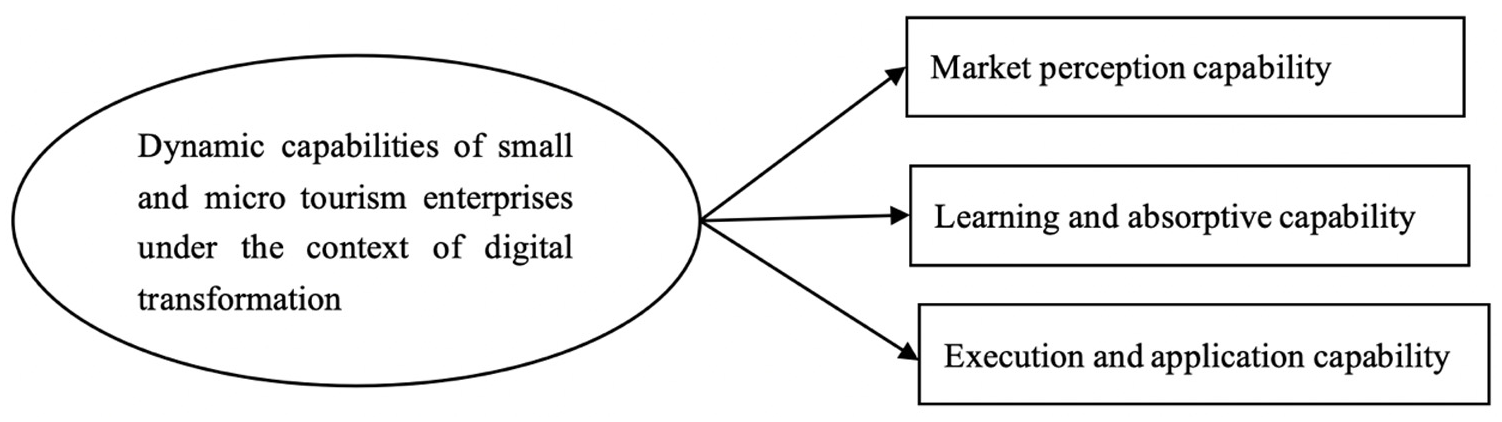
Conceptual model of dynamic capabilities in small and micro tourism enterprises under the context of digital transformation.
Empirical Study on the Dynamic Capabilities of Small and Micro Tourism Enterprises under the Context of Digital Transformation
Sample Selection
Chongqing and Yangshuo counties in Guangxi are renowned tourist hotspots with rich regional culture and unique tourism resources that attract numerous visitors. For this reason, the digital transformation of traditional micro-tourism enterprises has become imperative. First, the substantial number of micro-tourism enterprises in both Chongqing and Yangshuo is a vital component of the local tourism industry. In recent years, these businesses have increasingly recognized the significance of digital applications and have begun to actively explore online channels. They leverage social media platforms and online travel services to attract tourists and enhance their visibility. Second, as highly popular tourist destinations, both Chongqing and Yangshuo significantly contribute to the local economy. This robust economic foundation supports the digital transformation efforts of micro-tourism enterprises. Finally, the proactive efforts of the Chongqing Municipal Government and the Yangshuo County Government have created a favorable environment for digital innovation in small and micro tourism enterprises. For instance, the Chongqing Economic and Information Technology Commission has issued the “Implementation Plan for Digital Transformation of Small and Medium-sized Enterprises in Chongqing (2023–2025).” This plan not only clarifies the objectives and pathways for digital transformation but also facilitates citywide conferences aimed at promoting this transition among SMEs. By focusing on “specialized, refined, distinctive, and innovative” businesses as key drivers, it supports the overall digital transformation of SMEs across the city. The Yangshuo County Market Supervision and Administration Bureau has introduced the “Work Plan for Promoting the Transformation and Upgrading of Individual Industrial and Commercial Households in Yangshuo County,” aimed at further enhancing the growth and vitality of the private economy and boosting its innovation. Concurrently, the Yangshuo Power Supply Bureau has proposed accelerating digital transformation to establish a zero-carbon, green electricity tourism demonstration zone, leveraging digitalization as an engine for reform to promote high-quality development among enterprises. Therefore, selecting micro-tourism enterprises from both Chongqing and Yangshuo as research samples is representative and holds significant practical value for the development of small-scale tourism businesses.
Data Collection
Based on literature review and semi-structured interviews, a questionnaire was designed according to the characteristics of small and micro tourism enterprises, aiming to collect sample data on the dynamic capabilities of small and micro tourism enterprises in their digital transformation. Data collection primarily occurred through two methods: First, we visited multiple small and micro tourism enterprises in person. With their consent, participants completed paper questionnaires on-site. This approach ensures the authenticity and validity of the data while facilitating in-depth communication and discussion with the enterprises. Second, leveraging existing social networks, we distributed electronic questionnaires to our target group via Questionnaire Star to broaden the coverage and diversity of our samples. The data collection period was set from December 2023 to February 2024. Ultimately, we received a total of 300 completed questionnaires, out of which 271 were deemed valid. The basic characteristics of the sample are presented in Table 2.
Basic Information of the Survey Samples.

Data Analysis Results
Exploration and Validation of Scale Structure
To mitigate the occurrence of common method bias, it is essential to conduct both Exploratory Factor Analysis (EFA) and Confirmatory Factor Analysis (CFA) to assess validity. In this study, the formal survey data (N = 271) were divided into two subsets: Sample 1 (N = 140) and Sample 2 (N = 131). Exploratory factor analysis was performed on Sample 1 using SPSS 26.0, while CFA was conducted on Sample 2 utilizing AMOS 28.0.
Exploratory Factor Analysis
Exploratory Factor Analysis (EFA), as a statistical technique, aims to reveal the underlying structure behind multiple observed variables and summarize these complex variables into a few core factors through dimensionality reduction processing. Before conducting exploratory factor analysis, it is necessary to perform KMO (Kaiser–Meyer–Olkin) measure test and Bartlett sphere test on the variables. The KMO value is an indicator used to determine whether a variable is suitable for factor analysis, ranging from 0 to 1. If the KMO value of a certain variable is closer to 1, it indicates that the variable is more suitable for factor analysis. If the KMO value is too small, it is not suitable for factor analysis. The Bartlett sphere test is a statistical method for examining the correlation among various variables. Each variable in the correlation matrix is autocorrelated, while the variables are not correlated with each other. Therefore, SPSS26.0 was used to conduct exploratory factor analysis on sample data 1. The results indicated that the KMO test value for Sample 1 was 0.826, which exceeds the threshold of 0.8, suggesting that the data set is suitable for factor analysis. Additionally, Bartlett’s test of sphericity yielded a p-value of .000, indicating that the overall scale measuring dynamic capabilities is appropriate for factor analysis. Subsequently, principal component analysis was employed to extract factors, and an orthogonal varimax rotation method was applied to facilitate interpretation. Following rotation, 10 items were identified as loading onto three distinct factors; each item’s factor loading exceeded 0.50, resulting in an overall variance explanation rate of 67.323%. This demonstrates that the three extracted factors provide an acceptable level of variance explanation.
Confirmatory Factor Analysis
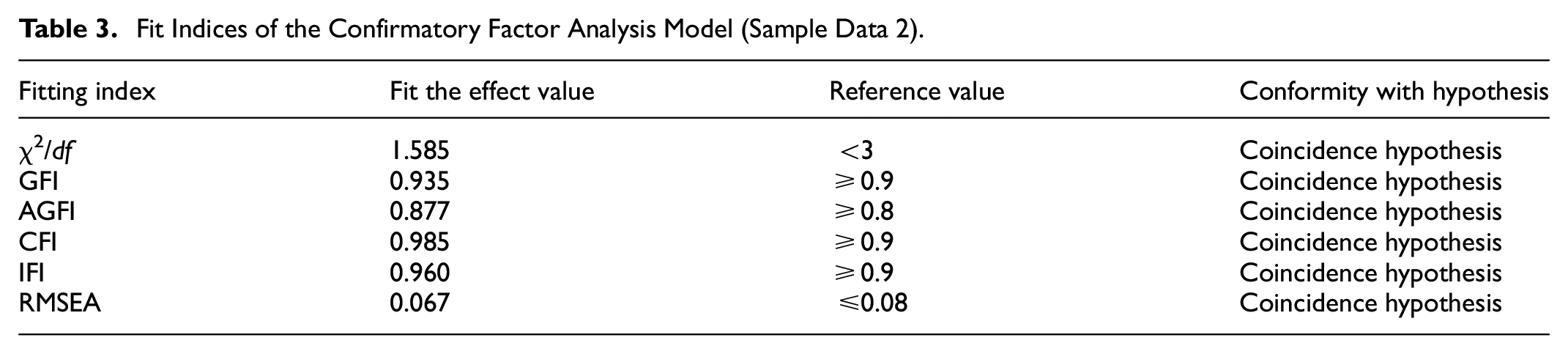
Confirmatory Factor Analysis (CFA) is a statistical analysis of social survey data. What confirmatory factor analysis refers to is the procedure of exploring whether the factor structure model of the scale fits the actual collected data and whether the indicator variable can effectively serve as the measurement variable of the potential variable. Usually, six indicators, namely χ2/df, GFI, AGFI, CFI, IFI, and RMSEA, are used to measure the fitting situation of the factor structure model. To ensure the credibility and validity of the research results and improve the quality and level of the research results. Therefore, we employed AMOS 28.0 to conduct CFA on sample 2, as detailed in Table 3. As reflected in Table 3, the measurement indicators proposed in this study demonstrate favorable results; thus, the constructed model exhibits a good fit. All variables within the model meet the required standards.
Fit Indices of the Confirmatory Factor Analysis Model (Sample Data 2).
Examination of Reliability and Validity
The reliability analysis of the dynamic capability scale for small and micro tourism enterprises was conducted using SPSS 26.0 statistical software. The results indicated that Cronbach’s α values for the three dimensions—market perception capability, learning and absorptive capability, and execution and application capability —were 0.825, 0.903, and 0.878, respectively, with an overall Cronbach’s α value reaching 0.914. The composite reliability for all three dimensions exceeded 0.8, demonstrating that the scale possesses excellent reliability, consistency, and stability. Furthermore, validity testing of the scale revealed that all observed variable factor loadings were greater than 0.6; additionally, the average variance extracted (AVE) values for market perception capability, learning and absorptive capability, and execution and application capability were above 0.5. Moreover, the square roots of these AVE values surpassed their correlations with other latent variables, indicating that the scale exhibits good convergent and discriminant validity.
Evaluation of Factor Scores
The descriptive statistics of the three dimensions of dynamic capabilities in small and micro tourism enterprises are presented in Table 4. The results indicate that, overall, the dynamic capabilities of these enterprises are at a satisfactory level, ranked as follows: learning and absorptive capability (3.7737), market perception capability (3.7371), and execution and application capability (2.9692). Comparing the scores across these three dimensions reveals that both market perception and learning and absorptive capabilities are at a satisfactory level. This suggests that small and micro tourism enterprises in the surveyed areas possess a keen capability to perceive market dynamics within a digital environment and achieve growth through continuous knowledge acquisition and transformation. Conversely, the relatively low score for execution and application capability among these enterprises reflects a universal deficiency in translating resources into practical applications during their digital transformation process.
Descriptive Statistical Analysis of Dynamic Capability Factors for Small and Micro Tourism Enterprises under the Context of Digital Transformation.

Validation of Predictive Effectiveness of the Scale
Selection of Relevant Criterion Measures
When constructing a scale, it is essential that the scale can predict certain existing variables, ensuring the predictive validity of the developed measure. Consequently, this paper selects “enterprise performance” as a relevant benchmark that aligns with the research context. A systematic literature review regarding the relationship between enterprise digital transformation and performance reveals that digital transformation generally positively influences enterprise performance. However, there are variations in the underlying logic or pathways through which this enhancement occurs (Gölzer & Fritzsche, 2017; Loebbecke & Picot, 2015; Mitroulis & Kitsios, 2019). Dynamic capability, recognized as a critical driving factor for the effectiveness of digital transformation, has been validated by relevant research. Consequently, a correlation exists between an enterprise’s dynamic capability and performance (Leiponen, 1997). Considering the unique operational environment of small and micro tourism enterprises, particularly the simplicity of their financial systems, this study assesses these enterprises’ performance from a revenue perspective. At the same time, drawing on previous relevant studies, this paper considers the enterprise’s founding years, scale, revenue, and type as control variables. In summary, we propose the following hypotheses:
H1: The dynamic capabilities of small and micro tourism enterprises have a significant positive impact on their performance.
H1-1: The market perception capability of small and micro tourism enterprises have a significant positive impact on their performance.
H1-2: The learning and absorptive capability of small and micro tourism enterprises have a significantly positive impact on their performance.
H1-3: The execution and application capability of small and micro tourism enterprises have a significantly positive impact on their performance.
Empirical Analysis and Results
Reliability and Validity Testing
Analysis of the questionnaire results reveals that Cronbach’s α values for the digital transformation dynamic capability scale of small and micro tourism enterprises and the enterprise performance scale are 0.914 and 0.928, respectively. The Cronbach’s α values for each dimension exceed 0.8, while all four latent variables have AVE values greater than 0.8. Furthermore, the square roots of these AVE values are higher than the correlations among other latent variables, indicating that both scales meet established standards for reliability and validity.
Hypothesis Testing
In Table 5, Model 1 includes control variables such as age, size, revenue, and type of enterprise. Model 2 introduces dynamic capability as an explanatory variable, and Model 3 incorporates three explanatory variables: market perception capability, learning and absorptive capability, and execution and application capability. The analysis results indicate that both Models 2 and 3 achieved an F-value significant at 0.000, suggesting a strong overall fit for the models.
Results of Multiple Regression Analysis on Dynamic Capabilities and Their Dimensions in Relation to the Performance of Small and Micro Tourism Enterprises.

Note. * indicates p < 0.05, ** indicates p < 0.01, *** indicates p < 0.001.
Examining the relationship between dynamic capabilities and the performance of small and micro tourism enterprises reveals (Table 4) that dynamic capabilities have a significant positive impact on the performance of these enterprises (β = .968, p < .001). Therefore, H1 is validated. Additionally, market perception capability (β = .319, p < .001), learning and absorptive capability (β = .287, p < .001), and execution and application capability (β = .349, p < .001) all demonstrate significant positive impact on the performance of small and micro tourism enterprises, with their influence ranked in descending order as follows: execution and application capability, market perception capability, and learning and absorptive capability. Consequently, H1-1, H1-2, and H1-3 are also validated.
Conclusion and Discussion
Research Conclusions
This article systematically investigates and measures the dynamic capabilities of small and micro tourism enterprises in the context of a rapidly changing market environment through a literature review, in-depth interviews, and large-scale surveys. The findings reveal that these enterprises exhibit three key dynamic capabilities during their digital transformation process: market perception capability, learning and absorptive capability, and execution and application capability. Market perception capability refers to the capability of small and micro tourism enterprises to keenly capture market trends and changes in consumer demand. Learning and absorptive capability is defined as the capacability to continuously acquire new knowledge and technologies, which these enterprises then integrate as part of their organizational resources. Execution and application capability pertains to the capability of small and micro tourism enterprises to translate theoretical knowledge into practical actions, enabling them to respond swiftly to market opportunities and challenges. Together, these capabilities form the foundation for survival and growth within complex market environments for small and micro tourism enterprises. However, existing research has not identified execution and application capability as a core dimension of dynamic capabilities, particularly in small and micro tourism enterprises. Considering this gap, this paper puts forward the concept of execution and application capability based on the characteristics of small and micro tourism enterprises and relevant literature. It emphasizes its critical role in the enterprises’ strategic implementation and market adaptability, thereby supporting innovation-led growth.
At the same time, to further quantify the dynamic capability performance of small and micro tourism enterprises during their digital transformation process, a measurement scale was designed that encompasses three core dimensions: market perception, learning and absorption, and execution and application. Empirical analysis revealed that the overall dynamic capabilities of small and micro tourism enterprises under the context of digital transformation are at an acceptable level. The current scores of each capability reveal that learning and absorptive capability (3.7737) ranks highest, followed by market perception capability (3.7371). In contrast, execution and application capability (2.9692) has the lowest score. This result suggests that, although small and micro tourism enterprises are sufficiently adept at learning and absorbing knowledge and skills related to digital transformation, their capability to translate these resources into practical actions and applications remains relatively limited. This might be because small and micro tourism enterprises can perceive market changes and learn knowledge related to digital transformation with the help of digital technology, and obtain necessary information and skills with relatively low time consumption and energy input. However, the low score of execution and application capability is due to the fact that small and micro tourism enterprises generally face limitations in terms of funds and technology. These resource constraints make it difficult for enterprises to effectively implement digital transformation strategies in their actual business operations. At the same time, this paper introduces enterprise performance as a relevant benchmark to explore the relationship between the dynamic capabilities of small and micro tourism enterprises, their three dimensions, and overall performance. We also propose several hypotheses. The analysis results indicate that both the dynamic capabilities of small and micro tourism enterprises and their three sub-dimensions are significantly positively correlated with corporate performance. In terms of impact magnitude, executionand application capability (β = .349, p < .001) has the greatest influence, followed by market perception capability (β = .319, p < .001), and finally, learning and absorptive capability (β = .287, p < .001). This suggests that during the digital transformation process, it is imperative for small and micro tourism enterprises to focus on enhancing their execution and application capability—effectively translating acquired knowledge and resources into concrete, practical actions—which is crucial for improving their overall performance.
Insights on Management
In the digital age, enhancing the execution and application capability has become essential to boosting competitiveness and achieving business innovation and growth for small and micro tourism enterprises. This is particularly important for smaller businesses with limited resources, as translating theoretical knowledge into practical actions is crucial. Therefore, based on the research findings mentioned above, we suggest that to effectively enhance the execution and application capability of small and micro tourism enterprises, it would be beneficial to focus on three key areas: seeking network collaborations, building a talented workforce, and improving technological infrastructure.
In seeking to establish partnerships for network collaboration, small and micro tourism enterprises often face challenges due to their limited scale, which can hinder strategic planning during the digital transformation process. To address this, they need to build extensive partnerships that can help expand their service offerings, share resources, and mitigate risks. Small and micro tourism enterprises may consider joining industry associations or online travel platforms. This approach allows them to stay updated with industry trends while gaining access to cutting-edge information and technical support, enhancing their market adaptability and competitiveness. Additionally, forming alliances with similar businesses can be beneficial as well. By sharing customer resources and engaging in joint marketing efforts at destinations, these enterprises can reduce customer acquisition costs while achieving both economies of scale and scope.
To promote talent development, first, small and micro tourism enterprises should regularly organize professional knowledge and skills training programs. This should include a diverse range of courses covering language proficiency, cross-cultural communication, emergency response, and more. Such initiatives will help enhance employees’ service quality and professional skills, ensuring that the services provided remain competitive internationally while prioritizing safety. Second, it is essential to break down information barriers to promote the sharing of knowledge and resources. Doing so can strengthen their collective problem-solving abilities and foster innovative thinking. This approach will ultimately improve overall operational efficiency as well as market responsiveness. Last, introducing a performance reward mechanism would be beneficial in encouraging employees to actively engage in innovation activities and digital workflows within the company. Creating a positive work environment that focuses on results will motivate staff and contribute significantly to their shared success.
In terms of technological infrastructure, the first priority is to introduce appropriate digital devices that can help collect and analyze customer data. This will enable small and micro tourism enterprises to provide personalized services and implement precise marketing strategies. Next, they should use social media and online platforms to enhance their visibility and influence, attracting potential customer groups. Additionally, optimizing the online booking and payment processes will strengthen customer loyalty. Finally, by leveraging artificial intelligence technology for automated customer interactions, they can promptly address inquiries and offer uninterrupted service while reducing labor costs.
Limitations of the Study and Future Directions
The article provides an in-depth exploration of the dynamic capabilities of small and micro tourism enterprises under the context of digital transformation. However, we acknowledge certain limitations and shortcomings. Although this study is grounded in extensive research and has identified three key dynamic capabilities applicable to small and micro tourism enterprises, further empirical validation is needed to determine whether these capabilities can be generalized to small enterprises in other industries.
Therefore, future research could benefit from a comparative analysis between small and micro tourism enterprises and those from different sectors. This approach may help uncover both commonalities and unique characteristics of dynamic capabilities across various industries. Such insights would offer tailored guidance for the digital transformation of diverse small enterprises, ultimately fostering sustainable development in this digital age.
Footnotes
Acknowledgements
The author would like to thank Chongqing Education Commission and Chongqing Jiaotong University for the funding support, and the small and micro tourism enterprises that participated in the research process.

Ethical Considerations
Li Li is the professor of Department of Tourism and Service Management, Chongqing University of Education. The Chongqing Municipal Education Commission’s Science and Technology Project (No. KJQN202101625) led by Professor Li Li from is based on the Helsinki Declaration. The questionnaire survey involved in the research was approved by the Academic Committee of Department of Tourism and Service Management, Chongqing University of Education. This questionnaire does not involve moral and ethical issues, and all participants expressed informed consent before participating in the study.
Consent to Participate
All subjects gave their informed consent for inclusion before they participated in the study. The study was conducted in accordance with the Declaration of Helsinki, and the protocol was approved by the Ethics Committee of Chongqing University of Education (Project identification code: KJQN202101625).
Funding
The authors disclosed receipt of the following financial support for the research, authorship, and/or publication of this article: This study was funded by the Science and Technology Research Program of Chongqing Municipal Education Commission (grant number: KJQN202101625); Chongqing Education Science 14th Five Year Plan Project “Research on the Construction of Chongqing Industry Education Integration Innovation Ecosystem” (grant number: K24YD2070038); Research and Innovation Project of Chongqing Jiaotong University (grant number: 2023S0119).
Declaration of Conflicting Interests
The authors declared no potential conflicts of interest with respect to the research, authorship, and/or publication of this article.
Data Availability Statement
Data sharing not applicable to this article as no datasets were generated or analyzed during the current study.