




Abstract
This study aims to examine the factors influencing and moderating the level of supply chain digitalization (SCD) in SMEs in Vietnam, within the context of increasing global competition and market pressures. The study integrates three theoretical frameworks: the Technology-Organization-Environment (TOE) framework, Institutional Theory (IT), and Dynamic Capability Theory (DCT) to construct an empirical model. A quantitative approach is employed, utilizing a survey of 412 export SMEs to collect data. Structural Equation Modeling (SEM) is applied to analyze both direct and moderating relationships between 13 factors and SCD. Additionally, an SCD index is developed to measure SCD levels. Response Surface Plot Analysis (RSPA) is used to visualize the nonlinear interactions among Technology (T), Organization (O), Environment (E) factors, and Dynamic Capabilities (DC) in shaping SCD. The study identifies ten key factors directly influencing SCD, with three main factors, customer and partner pressure, financial capability, and innovation and learning capability, emerging as the most critical drivers. The research also reveals that DC moderate the relationships between TOE factors and SCD, indicating that the impact of technological, organizational, and environmental factors is strengthened or weakened depending on a firm’s DC. For businesses, it is recommended to enhance technological infrastructure, foster organizational readiness, and invest in digital technologies to improve supply chain digitalization. For policymakers, it is essential to provide financial incentives, regulatory support, and training programs to assist SMEs in improving their digital capabilities and ensuring inclusive digital transformation across sectors. This study contributes to understanding the factors influencing SCD by integrating theoretical frameworks such as TOE, IT, and DCT. The development of the SCD index and the application of RSPA offer a novel approach to analyzing the nonlinear relationships among key factors, providing valuable insights for both businesses and policymakers to promote effective digital supply chain management (SCM).
Introduction
SCD involves integrating advanced technologies like AI, IoT, blockchain, big data, and cloud computing to enhance transparency, efficiency, and decision-making in supply chain operations (Brinch et al., 2018; Dubey et al., 2020; Foroughi, 2025; Ivanov and Dolgui, 2019). Globally, SCD optimizes production processes, reduces costs, and improves market responsiveness (Kache and Seuring, 2017; Queiroz and Fosso Wamba, 2019). Leading firms like Amazon and Siemens have successfully adopted digital strategies to boost competitiveness (Akter and Wamba, 2016; Choi et al., 2018; Li, 2025). The COVID-19 pandemic accelerated SCD adoption, highlighting the importance of automation, real-time connectivity, and predictive analytics for resilience during disruptions (Iranmanesh et al., 2023). Technologies such as automated warehouses, smart ERP systems, and blockchain are widely used to improve supply chain transparency (Dubey et al., 2020; Ivanov and Dolgui, 2019; Mefid and Ridhaningsih, 2024). In manufacturing, IoT sensors and AI are integrated to optimize logistics and inventory management (Kache and Seuring, 2017; Kamble et al., 2019; Lu et al., 2025). Governments and international organizations support SCD through policies like the EU’s Digital Europe program for SMEs (European Commission, 2021) and U.S. initiatives promoting blockchain in logistics (Saberi et al., 2019; Wamba et al., 2015). SCD is gaining traction in developing countries as businesses see its value in improving global connectivity and data transparency (Li and Zhao, 2024; Wang et al., 2016). Ultimately, SCD is now a crucial strategic factor, revolutionizing supply chain operations and driving productivity, cost optimization, and risk management (Ivanov and Dolgui, 2020; Mefid and Ridhaningsih, 2024; Ning and Yao, 2023; Sanders, 2016).
In Vietnam, SMEs play a significant role in fostering economic development and generating employment for a large portion of the workforce (Bao et al., 2020; Dat and Truong, 2020). In 2024, the total export turnover of the nation reached 405.53 billion USD, marking a 14.3% increase from the previous year, with 37 products surpassing 1 billion USD in export value, accounting for 94.3% of the total turnover. Notably, foreign direct investment (FDI) enterprises contributed 71% of this turnover, totaling 275.09 billion USD, a 12% increase compared to the previous year. Major export markets for Vietnam include the United States, China, the EU, ASEAN, Japan, and South Korea. Exports to the United States alone accounted for 29% of the total export turnover in 2024, amounting to 142.4 billion USD, which equates to about 30% of Vietnam’s GDP. This heavy reliance on the U.S. market exposes the country to the risks associated with changing trade policies and tariffs (Reuters, 2025). For Vietnamese SMEs, SCD has become a pivotal factor in improving operational efficiency and enhancing their competitiveness in the global market. Emerging technologies offer potential for increased transparency, optimized processes, and reduced costs. However, many SMEs have yet to fully harness the power of digital technologies, limiting their participation in the global value chain. Additionally, challenges such as the reliance on imported raw materials, especially from China, have been exacerbated when global supply chains face disruptions. The shortage of skilled labor and technological limitations also hinder the effective adoption of digital solutions among SMEs. To address these issues, SMEs must focus on enhancing their technological capabilities, investing in HRM, and strengthening partnerships with international stakeholders.
In recent years, factors influencing SCD have attracted considerable attention from both academia and industry (Chen et al., 2025; Fosso Wamba, 2022; Jam et al., 2024). Prominent theories applied in this field include TOE framework, IT, Technology Acceptance Model (TAM), and DCT. TOE explores the adoption of new technologies based on technological, organizational, and environmental factors (Tornatzky and Fleischer, 1990). In the context of SCD, technological factors include access to technologies like AI and IoT (Chen et al., 2025; Manavalan and Jayakrishna, 2019), organizational factors involve structure and resources, and environmental factors focus on market pressures (Fosso Wamba (2022); Yang et al., 2021). TAM addresses users’ perceptions of technology’s usefulness and ease of use (Davis, 1989), while DCT emphasizes developing DC to adapt to technological changes for effective digitalization (Sánchez-García et al., 2024; Teece et al., 1997). Key factors influencing SCD include investment costs and returns (Ning and Yao, 2023; Waller and Fawcett, 2013; Zhao et al., 2023), innovation and organizational change (Costa et al., 2024; Foroughi, 2025; Tiwari et al., 2018), and modern IT infrastructure (Schniederjans et al., 2020; Mefid and Ridhaningsih, 2024). Skilled human resources and leadership support are also crucial for successful implementation (Castro-Lopez et al., 2023; Iranmanesh et al., 2023; Kache and Seuring, 2017), as are market and competitive pressures (Suganda and Judijanto, 2023). Additionally, blockchain technology plays a key role in enhancing transparency and efficiency (Dubey et al., 2020; Suganda and Judijanto, 2023). SCD is shaped by a blend of internal and external factors, necessitating appropriate management theories for a sustainable strategy.
Although SCD has gained significant attention in management research and practice, several key research gaps remain. First, much of the existing literature focuses on developed economies, where businesses have more favorable conditions to implement digital technologies (Iranmanesh et al., 2023; Ivanov and Dolgui, 2020; Lu et al., 2025). In contrast, developing economies face unique challenges, including limited infrastructure, high investment costs, and technological capabilities, which have not been adequately explored in previous studies. Second, many studies apply individual theoretical frameworks, such as TOE, IT, or DCT, to explain SCD decisions (Fosso Wamba, 2022; Li, 2025), but fail to integrate these with institutional and DCT to examine the impact of organizational capabilities on digital transformation processes. By combining these frameworks, a more comprehensive understanding of the drivers and barriers to digital technology adoption in SMEs in emerging markets can be achieved. Third, while research often focuses on specific technologies like blockchain, AI, or IoT (Dubey et al., 2020; Suganda and Judijanto, 2023; Yang et al., 2021), few studies have explored the overall digital readiness of firms and its effect on supply chain performance (Ivanov and Dolgui, 2020). Fourth, there is a lack of consideration of moderating variables in the relationship between influencing factors and the decision to digitize the supply chain. For example, while firm size may impact the adoption of digital technologies (Schniederjans et al., 2020), the moderating effect of firm size in the context of exporting firms in developing economies has been largely unexplored. Additionally, the roles of digital management capabilities and organizational change readiness in shaping the relationship between technological, organizational, and institutional factors in the decision to digitize remain under-examined (Li and Zhao, 2024; Park and Li, 2021; Suganda and Judijanto, 2023).
From the analysis of context and current research gaps, this study raises three main research questions (RQ):
The novelty and contributions of this study lie in its comprehensive examination of the factors influencing SCD within an emerging economy, addressing the unique challenges posed by globalization. The first major contribution is the integration of three theoretical frameworks—TOE, IT, and DCT. This theoretical synthesis elucidates the interplay between technological, organizational, and environmental factors in SMEs’ decision-making processes regarding SCD. By combining these perspectives, the study transcends single-theory approaches and proposes a holistic analytical model, offering deeper insights into digital transformation dynamics in globalized markets. Secondly, the study advances understanding of how DC moderate the relationships among these factors, emphasizing the role of sensing, seizing, and transforming abilities in helping SMEs adapt to technological change and environmental turbulence. This sheds light on how dynamic capabilities enhance firms’ resilience and agility in digital transformation. A further contribution is the investigation of digital readiness, focusing on moderating variables such as digital management capability and organizational change readiness, and their influence on supply chain performance. These insights provide practical guidance for SMEs seeking to strengthen their preparedness for digitalization. Finally, the study introduces a novel SCD Composite Index, a multidimensional measurement tool capturing the extent of digital technology application across supply chain operations. This index not only refines the empirical accuracy of SCD assessment but also serves as a valuable benchmarking instrument for policymakers and practitioners in other developing economies facing similar digital transformation challenges.
Literature Review and Model Development
Literature Review
Digitalization refers to transforming activities, processes, business models, and services from traditional to digital through the application of digital technology (Queiroz and Fosso Wamba, 2019; Queiroz et al., 2021). It involves not only data digitization but also using technology to enhance performance, create value, and improve competitiveness (Li, 2025). SCD applies digital technologies across all supply chain activities to improve efficiency, transparency, and adaptability to market changes (Dubey et al., 2020; Ivanov and Dolgui, 2020; Suganda and Judijanto, 2023). In supply chains, digitalization enhances connectivity, automation, and optimization in logistics, production, and distribution (Chen et al. 2025; Fosso Wamba, 2022; Kagermann, 2015). Key applications include IoT for real-time monitoring and optimization, AI and Big Data for demand forecasting and risk detection (Wamba et al., 2015), blockchain for transparency and traceability (Iranmanesh et al., 2023), automation and robotics for efficiency in warehousing and manufacturing (Idrissi et al., 2024), and cloud computing for real-time data sharing among partners (Abhari, 2025; Dubey et al., 2023).
Table 1 summarizes studies on factors affecting SCD of enterprises. The studies are selected from many international sources, mainly from 2020 to present, to reflect the latest trends in this field. Theoretically, the studies use many different theoretical frameworks such as TOE, IT, RBV, DCT and Industry 4.0 Framework to explain the factors affecting SCD. Of which, TOE is widely used to analyze the influence of technology, organization and environment. In addition, IT helps explain the role of institutional pressures from government, market and partners, while DCT emphasizes the ability of enterprises to adapt, innovate and restructure in the digital environment. The key factors identified in the studies include: technological capacity, financial capacity, competitive pressure, government policy, knowledge management capacity, technology adoption level, and the impact of advanced technologies such as blockchain, AI and IoT.
Summary of Studies on Factors Affecting SCD.

Source. Study review (2025).
Based on a review of global theories and research, this study integrates three theoretical perspectives, the TOE framework, IT, and DCT, to construct an empirical model. The combination of these theories provides a comprehensive framework for analyzing the factors influencing SCD among export-oriented SMEs in Vietnam. The TOE framework offers a foundational lens for examining technological factors (e.g., accessibility and application of digital technologies), organizational factors (e.g., internal resources and innovation capacity), and environmental factors (e.g., competitive pressure and policy support) that shape the digitalization process. However, as TOE alone does not sufficiently capture the influence of external institutional forces, IT is incorporated to explain institutional pressures, namely, coercive pressures from government regulations, mimetic pressures from industry peers, and normative pressures from customers and international partners. Complementarily, DCT clarifies how firms adapt and reconfigure resources to effectively leverage digital technologies. DC such as sensing technological opportunities, absorbing innovations, and restructuring supply chain operations are critical to digital transformation success. Integrating these three theoretical lenses allows the study not only to identify the determinants influencing digitalization decisions but also to analyze how SMEs implement and optimize digital transformation within Vietnam’s dynamic business environment.
Model Development
Technology Readiness (TR)
TR plays an important role in promoting the digitalization process of enterprises’ supply chains (Queiroz et al., 2021). According to Park and Li (2021), enterprises with high levels of TR are more likely to implement digital solutions thereby improving operational efficiency and enhancing competitiveness. Hui and Fan (2024) also pointed out that enterprises with advanced technology infrastructure and highly digitally skilled human resources are more likely to adopt digitalization in supply chain processes. In addition, the study by Büyüközkan and Göçer (2018) emphasized that technology accessibility not only affects the level of new technology adoption but also determines the speed of digital transformation of enterprises.
Perceived Benefits of Digitalization (PB)
PB also has an important role in the decision to adopt digital technologies in the supply chain (Wang et al., 2020). When businesses clearly perceive benefits such as improved operational efficiency, cost optimization, and increased flexibility to respond to market fluctuations, they tend to invest more heavily in SCD (Dubey et al., 2020). Iranmanesh et al. (2023) shows that businesses with a high level of awareness of the benefits of digitalization tend to deploy technologies faster than those that are not fully aware. In addition, according to Zhao et al. (2023), understanding the benefits of digitalization not only helps businesses improve operational efficiency but also enhance their competitiveness in the international market.
Technology Compatibility (TC)
TC refers to the extent to which new technology fits into the existing systems, processes, and culture of the business (Li, 2025). In context of SCD, the more compatible the technology is with the existing infrastructure, the easier it is for businesses to deploy and expand digital solutions, thereby improving operational efficiency and adaptability to market fluctuations (Fosso Wamba, 2022). Many studies have shown that technology compatibility plays an important role in promoting the adoption of digital supply chain management systems (Oliveira and Martins, 2010). Particularly in exporting firms, where there are complex connections with global partners and customers, compatibility helps reduce adjustment costs, increase implementation speed, and improve collaboration in SCD (Wang et al., 2020).
Technology Complexity (TCM)
TCM relates to the difficulty in understanding, implementing, and integrating digital technologies into business operations (Fosso Wamba, 2022). As SCD is highly complex, businesses may encounter many barriers during implementation, including the requirement of specialized knowledge, personnel training costs, and system integration time (Chen et al, 2025; Jam et al., 2025). As to Zhao et al. (2023), highly complex technologies often reduce the accessibility and application of businesses, especially SMEs, due to limited resources and technological skills. In addition, the complexity of digital implementation can also reduce organizational readiness and increase risks in the digital transformation process.
Financial Capacity (FC)
FC is one of the key factors that determine the readiness and ability to deploy digital technologies in enterprises (Ning and Yao, 2023). SCD requires significant investment in technology infrastructure, software, hardware equipment, as well as personnel training to operate the new system (Ning and Yao, 2023). Enterprises with strong financial resources can more easily access and deploy digital solutions such as AI to optimize operational efficiency and enhance competitiveness (Kamble et al., 2019). According to Foroughi (2025), enterprises with strong finances can also minimize risks in the digital transformation process and maintain sustainability in supply chain operations.
Innovation and Learning Capability (ILC)
ILC plays a significant role in promoting SCD, helping businesses quickly adapts to new technologies and optimizes operational efficiency (Suganda and Judijanto, 2023). Businesses with high innovation capabilities tend to be proactive in seeking, testing, and deploying digital technologies to improve supply chain efficiency. In addition, learning capabilities allow businesses to quickly grasp and adjust operating processes to minimize risks and improve adaptability in a highly competitive environment. Wang et al. (2019) found that organizations with a learning culture and innovation incentives are more likely to successfully implement digital technology systems in their supply chains, thereby improving operational efficiency and creating sustainable competitive advantage.
Employee Expertise and Training (EDST)
EDST can also play an important role in driving SCD, helping businesses effectively exploit new digital technologies (Queiroz et al., 2021). Suganda and Judijanto (2023) emphasized that highly skilled human resources help businesses leverage technology to improve productivity, optimize supply chains, and improve data-driven decision making. In addition, continuous training helps employees update their knowledge about new technologies, improve their ability to adapt to complex digital systems, thereby minimizing errors and improving operational performance (Garrido-Moreno et al., 2014; Saberi et al., 2019). In addition, Li (2025), enterprises with a systematic training program on digital technology are able to deploy and operate digital supply chain systems more effectively than enterprises lacking skilled human resources.
Top Management Support (TMS)
TMS has been shown to play a decisive role in the digitalization of supply chains, as business leaders not only provide strategic direction but also create resources and an enabling environment for digital technology implementation (Chen et al., 2025; Fosso Wamba, 2022). Companies with leaders who are strongly committed to digital transformation are more effective in integrating technology into the supply chain, as they are able to promote cross-functional collaboration and ensure appropriate budget allocation (Fosso Wamba, 2022). In addition, support from top management helps reduce employee resistance and fosters a culture of innovation within the organization. Wang et al. also pointed out that leaders with a strategic vision for digitalization will clearly orient technology goals, helping businesses better take advantage of opportunities in SCD.
Customer and Partner Pressure (CPP)
CPP is one of the important drivers that motivate businesses to apply digital technology to their supply chains (Costa et al., 2024; Foroughi, 2025). Customers increasingly demand greater transparency, speed, and personalization in the supply chains; forcing businesses to deploy digital solutions such as integrated SCM, blockchain to meet the demand (Dubey et al., 2023). Supply chain partners, including suppliers and distributors, also place increasing demands on real-time information sharing and integration capabilities, which requires businesses to invest in digital platforms to maintain effective collaboration (Dubey et al., 2020). As to Foroughi (2025), businesses under strong pressure from customers and partners tend to deploy digital technologies faster to enhance competitiveness and optimize operational efficiency.
Industry Competition (IC)
IC can play an important role in motivating enterprises to invest in SCD to enhance competitive advantage (Suganda and Judijanto, 2023). As digital technology develops quickly, enterprises are forced to optimize operational processes, improve delivery speed, and enhance the ability to meet market demands through digital solutions (Wamba et al., 2015). Enterprises operating in highly competitive industries tend to be pioneers in applying digital technology to improve supply chain efficiency, reduce costs, and optimize performance. In addition, businesses must also keep up with the pace of innovation of their competitors to maintain their market position, which creates great pressure on the implementation of advanced digital technologies (Dubey et al., 2020; Foroughi, 2025).
Government Support (GS)
GS plays a very important role in promoting businesses’ SCD, especially in industries that are strongly affected by technology and global economic integration (Dubey et al., 2020; Park and Li, 2021). The government can influence this process through preferential policies, financial support, human resource training, and appropriate legal frameworks to encourage businesses to invest in digital technology (Wang et al., 2022). Firms operating in environments with strong government support policies tend to adopt technology faster due to reduced financial risks and increased access to innovation initiatives. Furthermore, government support also helps promote collaboration between firms and research institutions, creating a more comprehensive digital ecosystem (Li, 2025; Li and Zhao, 2024).
Digital Legitimacy in the Industry (DL)
DL reflects the extent to which firms in an industry view digitalization as a widely accepted norm and an essential factor for maintaining competitiveness (Queiroz et al., 2021). When digitalization becomes a common practice and is considered a standard in the industry, businesses have a stronger incentive to deploy digital technology to meet the requirements of customers, suppliers, and regulators. According to IT, businesses tend to follow common practices in the industry to gain legitimacy and avoid being perceived as outdated or uncompetitive (Ning and Yao, 2023; Suganda and Judijanto, 2023). In addition, Wessel et al. shows that digital legitimacy not only promotes technology investment but also helps businesses enhance their reputation and ability to attract strategic partners.
Moderating Roles of Dynamic Capability
DC refers to a firm’s ability to integrate, build, and restructure resources to adapt to rapidly changing business environments (Teece et al., 1997). In case of SCD, DC plays an important role in helping firms better leverage technological, organizational, and environmental factors to enhance the level of SCD. First, in terms of technology, firms with strong dynamic capabilities will be able to absorb and deploy new digital technologies more effectively, thereby amplifying the positive impact of factors such as TC or system integration on the level of SCD (Suganda and Judijanto, 2023; Tian et al., 2021). Second, in terms of organization, DC helps businesses quickly adjust their organizational structure, operating processes, and corporate culture to adapt to the digital transformation process. This enhances the positive impact of factors such as ILC or TMS on SCD. Third, in terms of environment, DC allows businesses to respond flexibly to competitive pressures, customer demands, and government support policies, helping to optimize the impact of factors such as IC or DL on SCD (Dubey et al., 2020).
Figure 1 presents the model of the study.
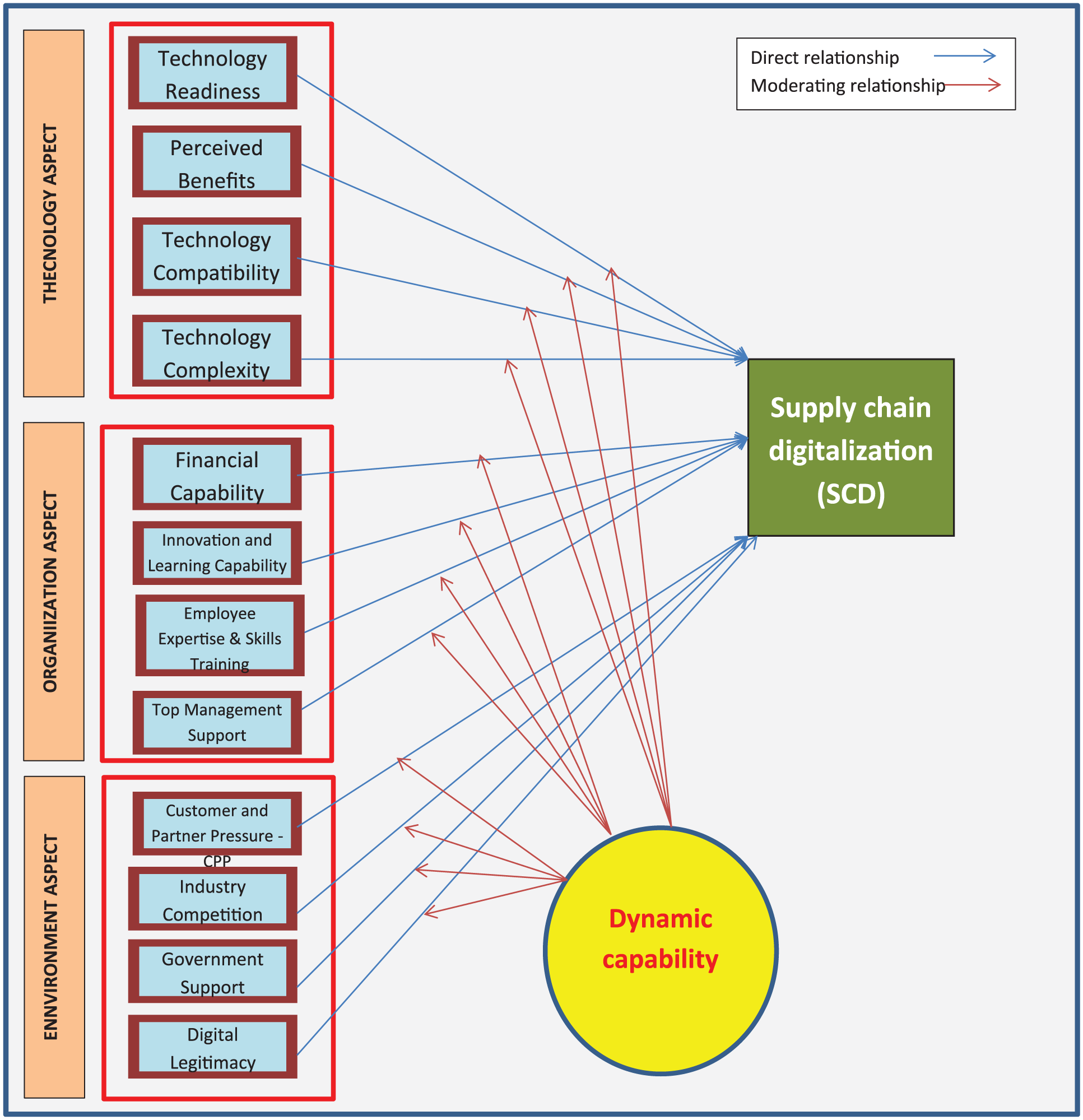
Study model.
Methodology
Desk Study
The first stage of the research focused on reviewing the literature to build a theoretical foundation and identify factors affecting the level of SCD. The reviewed literature sources include: academic studies published in prestigious international journals on the topic of SCD, technological innovation and factors affecting digital transformation in enterprises; theoretical models widely used in research on technology and organization, namely TOE, IT and DCT; practical reports from international organizations such as McKinsey, World Economic Forum, or domestic organizations such as the Ministry of Industry and Trade, Vietnam Chamber of Commerce and Industry (VCCI), to update the actual context of SCD in Vietnam. The objective of this phase is also to identify the main factors affecting SCD from three aspects (T-O-E), synthesize the scales used in previous studies to design a set of survey questions, and propose a preliminary research model based on the underlying theories and relationships studied in previous literature.
Questionnaire and Scale Development
To develop questionnaire, the study conducted a preliminary verification step throgh a focus group discussion (FGD). FDG was organized with the participation of eight experts in the fields of SCM, digital technology and enterprise digitalization to assess the suitability and applicability of the questionnaire in a real-life context. The discussion focused on assessing the clarity and comprehensibility of the draft questions, examining the suitability of the scale with the practice of SCD in Vietnam, and proposing adjustments or additions to factors that may affect SCD that previous studies have not mentioned. To construct the questionnaire and develop observed variables, we inherited the theories of TOE, IT, DCT and previous studies as in Table 2. Each factor will be measured by four to eight observed variables. A total of 60 observed variables were developed. Observed variables were measured on a five-point Likert scale from 1 to 5 (1 = completely disagree, 5 = completely agree). The official questionnaire consists of three parts, part 1 introduces the research objectives, and collect respondents’ consensus, part 2 includes socio-economic information of respondents (gender, age, education, job position), part 3 includes questions measuring observed variables corresponding to each factor in the model (Annex 1).
Factors and Observed Variables.

Source. Study results (2025).
SCD Index Building
In this study, the level of SCD was measured through the construction of a Composite Index that captures multiple dimensions of SMEs’ digital technology adoption in supply chain operations. The SCD Index was developed based on an extensive literature review and expert consultations, resulting in four main dimensions: (a) the application of digital technologies in supply chain management, (b) the level of information integration and digital connectivity, (c) the degree of automation within the supply chain, and (d) the operational efficiency achieved through digitalization.
To operationalize these dimensions, eight representative items were designed, each reflecting a specific aspect of SCD and measured on a five-point Likert scale. To ensure comparability among items with different variances, the data were normalized using the min–max method, transforming all variables into the range [0, 1] according to the formula:

Where
Calculate the average score to get the SCD index of each business with formula:

SCD i is the value of each question after standardization, n is the number of questions to measure the SCD of each enterprise. Before conducting a large-scale survey, the study conducted a pilot survey on a group of 15 SMEs to check the validity of the content and comprehensibility of the questionnaire to ensure that respondents could understand and answer accurately.
Sampling and Data Collection
The study utilized a purposive sampling method, focusing specifically on SMEs engaged in export activities across key manufacturing sectors in Vietnam, including textiles, electronics, food processing, and wood products. The criteria for selecting SMEs followed the definition provided by the Vietnamese government, which classifies SMEs based on the number of employees (less than 200 employees for medium enterprises) and annual revenue (less than 100 billion VND for medium enterprises). The sample size was determined according to the principle of 5 to 10 observations per variable in the research model (Hair et al., 2019). With 60 observed variables, a minimum of 300 enterprises were required to ensure the reliability of the SEM analysis.
Data were collected through direct, on-site surveys to ensure accuracy and reliability. The initial sampling frame of 600 export-oriented SMEs was compiled from credible sources, including the Ministry of Industry and Trade (MOIT), industry associations such as VCCI, VITAS, and VEIA, and official directories of exporting enterprises. From this list, 420 firms were purposively selected to ensure balanced representation across industries (textiles, electronics, food processing, and wood products) and firm sizes. The research team directly contacted each enterprise to introduce the study, explain its purpose, and emphasize the importance of participation. Firms expressing interest were provided with introductory documents and scheduled for structured survey appointments. Data were collected through in-person interviews conducted between January and March 2025, targeting middle and senior managers from operations, supply chain, IT departments, and executive boards. Each session lasted approximately 30 to 35 min, during which the research team guided participants to ensure clarity and completeness.
Of the 600 invitations distributed, 420 enterprises agreed to participate, and 412 valid questionnaires were obtained after eliminating eight incomplete or patterned responses, yielding an effective response rate of 68.7%. To assess nonresponse bias, an early–late wave analysis following Armstrong and Overton (1977) was performed, revealing no significant differences (p > .05) in key variables such as firm size, export experience, and digital readiness. Additionally, a post-hoc statistical power analysis using GPower 3.1 (Faul et al., 2009) indicated an achieved power of .92 (α = .05, 13 predictors), confirming that the sample size was sufficient for robust SEM estimation.
Data Analysis
To assess the reliability and validity of the scales used in the study, we employed several indices: Cronbach’s Alpha, Composite Reliability (CR), Average Variance Extracted (AVE), Variance Inflation Factor (VIF), and Heterotrait-Monotrait ratio (HTMT). Cronbach’s Alpha was used to evaluate internal reliability, with values above 0.7 indicating satisfactory reliability. CR was calculated to ensure the measurement indicators’ reliability, with values greater than 0.7 deemed acceptable. AVE was used to assess the validity of the scales, where a value above 0.5 suggests that the observed variables adequately explain the variation in the latent factors. VIF was employed to detect multicollinearity, with values below five indicating no significant multicollinearity issues (Hair et al., 2019). HTMT was used to check the discriminability between latent factors, with values below 0.85 suggesting that there is no excessive overlap.
After confirming the reliability and validity of the scales, Confirmatory Factor Analysis (CFA) was conducted to assess the measurement model. CFA helps evaluate how well the measurement model fits the data, using indices such as chi-square, RMSEA, CFI, and TLI. A model is considered a good fit if RMSEA is below .08, and both CFI and TLI exceed .90 (Hair et al., 2019). To analyze direct relationships and moderating effects, we applied SEM. We also examined the effects of control variables on SCD levels. Controlling for industry differences helps eliminate confounding effects, thereby clarifying the impact of key factors on the SCD process. Lastly, RSPA was used to investigate complex, nonlinear relationships between factors affecting SCD. This method provides valuable insights into how these factors interact to influence the outcome of SCD.
Common Method Bias (CMB)
In this study, potential sources of bias, particularly CMB, were carefully considered, as all data were self-reported by respondents from a single source. CMB can distort the observed relationships between independent and dependent variables, leading to inflated or spurious associations. Initially, Harman’s single-factor test was conducted to assess the extent of CMB. The results indicated that no single factor accounted for more than 50% of the total variance, suggesting that CMB was not a critical concern.
To further strengthen the validity of the findings, both procedural and statistical remedies were applied, following the recommendations of Podsakoff et al. Procedurally, the questionnaire design ensured proximal separation between constructs, employed mixed Likert scale anchors, and included reverse-coded items to minimize consistency artifacts. Respondent anonymity and confidentiality were also guaranteed to reduce evaluation apprehension. Statistically, a marker variable test and a latent method factor analysis (ULMC CFA) were performed to detect potential method variance. The results showed minimal differences between the baseline and adjusted models (ΔCFI = 0.004, ΔRMSEA = 0.002), indicating that CMB did not materially affect the model estimates. Therefore, both procedural design and statistical diagnostics confirm that common method bias was effectively controlled in this study.
Results
Characteristics of Study Sample
Table 3 outlines the general characteristics of the research sample, which consisted of 412 participants, ensuring reliable model analysis. The sample was fairly balanced in terms of gender, with 221 males (53.6%) and 191 females (46.4%). In terms of age, the largest group was 31 to 40 years old (42.2%), followed by 31 to 40 years old (31.4%), indicating that the digitalization process is primarily driven by individuals with substantial work experience and technological access. Regarding education, 75.7% of participants held university degrees, and 17.5% had postgraduate degrees, and 6.8% had intermediate or lower qualifications, highlighting that SCD is mainly driven by individuals with strong educational backgrounds. The sample included representatives from various industries, with the highest participation from the food processing (19.9%), electronics (17.2%), and textiles (16.3%) sectors. Job titles were predominantly middle and senior management, with operations (28.1%), IT (20.1%), and finance managers (12.3%) representing the largest proportions, reflecting those with significant influence on SCD decisions. This diverse and well-distributed sample accurately represents key stakeholders involved in the digitalization process.
Respondent Characteristics.
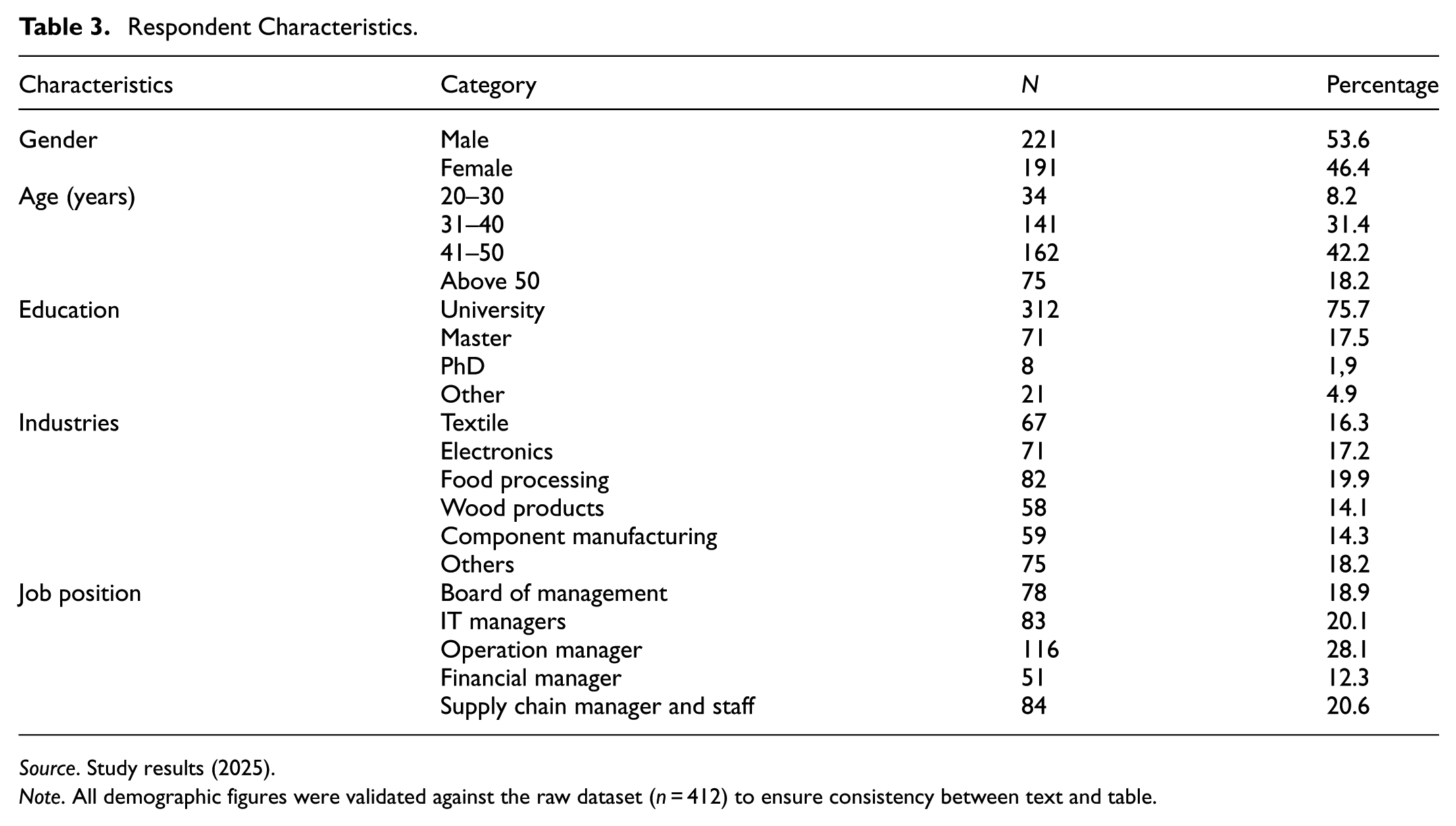
Source. Study results (2025).
Note. All demographic figures were validated against the raw dataset (n = 412) to ensure consistency between text and table.
Validity and Reliability Analysis
Table 4 presents the results of the reliability and validity analysis of the scales, using Cronbach’s alpha, CR, and AVE indices. Cronbach’s alpha, with a threshold of ≥.7 (Hair et al., 2019), showed that all scales in the study exceed 0.7, indicating strong internal consistency. Notable values include: TR = 0.812, PB = 0.841 and FC = 0.864, with the SCD scale achieving the highest reliability at 0.902. CR, which should also be ≥0.7, was above this threshold for all scales, confirming high reliability. DC had the highest CR at 0.889, reflecting robust measurement of dynamic capabilities. AVE, with a required value ≥0.5 (Hair et al., 2019), showed that all scales exceeded 0.5, indicating strong convergence. The AVE ranged from 0.519 to 0.712, with the SCD variable having the highest value at 0.712, signaling excellent convergence. The VIF was calculated to test for multicollinearity, and all variables had VIF values below 2.0, indicating no significant multicollinearity, as values under 5.0 are considered safe (Hair et al., 2019). Discriminant validity was assessed using HTMT, which revealed that all HTMT values were below 0.85, confirming that the constructs are distinct and do not overlap significantly. This supports the validity and robustness of the measurement model, ensuring that the study’s findings are not compromised by issues of convergent validity and allowing for more accurate interpretation of the data.
Reliability and Validity Analysis Results.

Source. Study results (2025).
Confirmatory Factor Analysis
After testing the reliability and validity of the scale, the next step is to perform CFA to assess the fit of the measurement model to the actual data. CFA analysis helps to check whether the observed variables accurately reflect the theoretical concepts, and at the same time assess the overall fit of the model (Hair et al., 2019). In this study, the suitability of the CFA model was assessed based on the following indices: Chi-square/df (CMIN/DF) = 1.464 (<3.0), indicating a good fit, RMSEA = 0.046 (<0.08), indicating a low mean error, CFI = 0.846, above the threshold of 0.8, acceptable, TLI = 0.875, above 0.8, indicating a fairly good fit, and GFI = 0.846, above the minimum requirement of 0.8. The CFA results also showed that all observed variables had factor loadings >0.6, indicating that the observed variables had a high level of contribution to the concept to be measured (Hair et al., 2019). The CFA results confirm that the measurement model has a good fit with the actual data. The observed variables have a high level of contribution to each concept, and have good convergent and discriminant validity (Table 5).
Confirmatory Factor Analysis Results.

Source. Research result (2025).
Direct Relationships
The research model was evaluated using SEM to assess the impact of TOE factors on the level of SCD. Table 6 presents the results of the regression analysis, which identifies the key factors influencing SCD. The model achieved an R2 value of 0.733, indicating that 73.3% of the variation in SCD is explained by the independent variables in the model. This suggests a strong fit between the model and the actual data, confirming that the selected factors significantly influence the SCD process (Hair et al., 2019).
Direct Relationship Results.
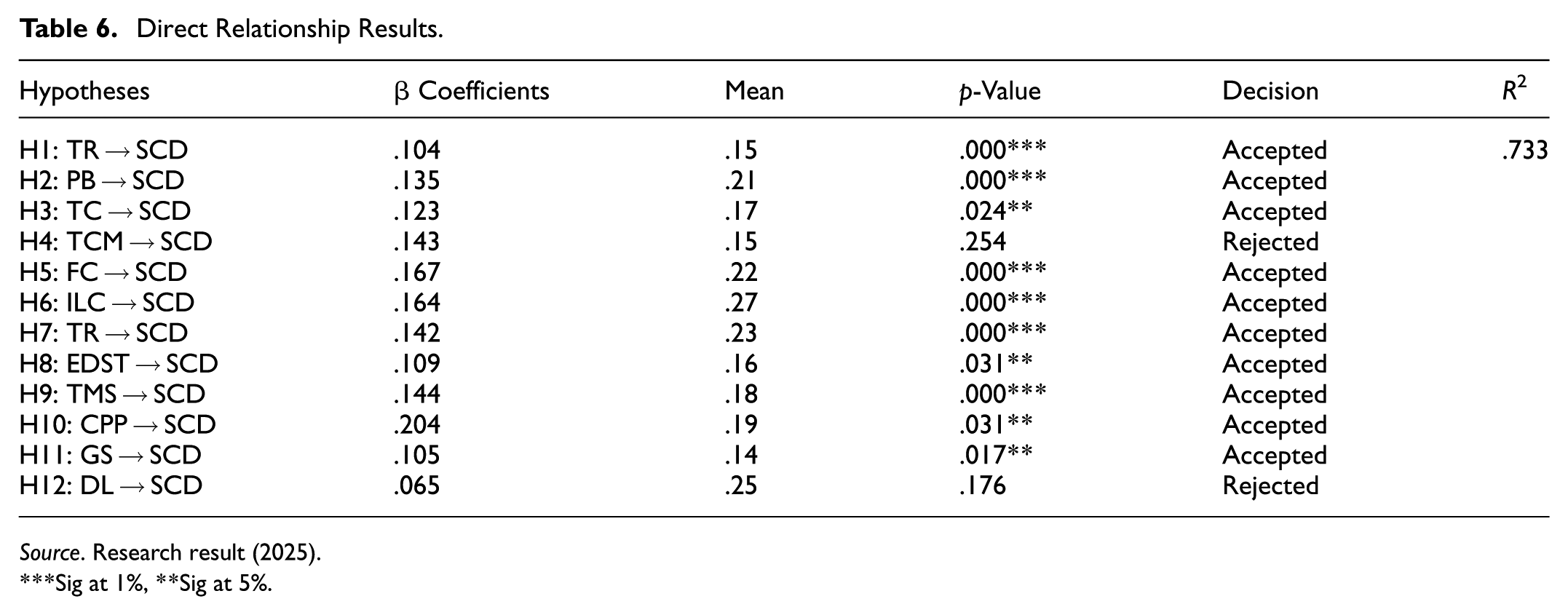
Source. Research result (2025).
Sig at 1%, **Sig at 5%.
Several factors were found to have a positive and statistically significant impact on SCD. Notably, TR was positively associated with SCD (β = .104), demonstrating that firms with a robust technology infrastructure have a considerable advantage in implementing digital solutions. Similarly, the PB also positively influenced SCD (β = .135), emphasizing the critical role of business awareness and understanding in driving the digitalization process. TC was another important factor (β = .123), suggesting that firms find it easier to adopt digitalization when the technology aligns well with their existing operational systems. FC (β = .167) and ILC (β = .164) were also strong predictors of SCD, highlighting the importance of financial resources and innovation capabilities in facilitating the adoption of digital technologies. Additionally, TMS (β = .144) had a significant impact, indicating that strategic vision and commitment from leadership provide clear direction and motivation for digital transformation. Among institutional factors, CPP was the most influential (β = .204), underscoring the importance of market demand and stakeholder expectations in shaping firms’ decisions to digitize their supply chains. This suggests that firms are not only influenced by internal factors but must also adapt to the requirements set by external stakeholders. GS (β = .105) also played a significant role, indicating that supportive government policies and programs can help facilitate the digitalization process.
However, some factors were not statistically significant. TCM (β = .143) did not significantly affect SCD, likely due to the rapid development of technology, which reduces the barriers to digital adoption. Similarly, DL (β = .065) was not a decisive factor, suggesting that legal regulations on digitalization are not yet a major concern for firms in this context (Table 6).
The study employed a one-way ANOVA to examine variations in SCD indices across control variables, particularly by industry group. Prior to analysis, assumption checks confirmed normal data distribution (Shapiro–Wilk test, p > .05) and homogeneity of variances (Levene’s test, p = .118), validating the use of ANOVA. The results revealed a statistically significant difference in mean SCD indices between industries, F = 3.29, p = .013, with an effect size of η2 = .031, indicating a small-to-moderate practical impact.
Post-hoc comparisons using the Tukey HSD test identified that firms in the electronics, textile, and wood product sectors exhibited significantly higher SCD indices than those in food processing, component manufacturing, and other industries. Among them, the electronics sector demonstrated the highest degree of digitalization, likely reflecting its strong automation requirements, export intensity, and technological orientation, which necessitate advanced digital transformation to sustain global competitiveness.
Dynamic Interactions of TOE Aspects to SCD
The study employed RSPA to analyse the nonlinear interactions between the factors Technology (T), Organization (O), and Environment (E) with DC in their impact on SCD. The use of nonlinear analysis through RSPA was theoretically grounded in DCT, which emphasizes non-proportional relationships between firms’ adaptive capabilities and environmental pressures. Empirically, the suitability of the nonlinear specification was verified through model comparison tests (Δχ2 = 12.87, p < .01; ΔCFI = 0.006), indicating that the inclusion of quadratic and interaction terms improved model fit. This complementary approach allows SEM to test direct causal paths, while RSPA explores higher-order and synergistic effects, offering a more comprehensive understanding of SCD determinants.
Figure 2 show analysis results in more detail. The first plot demonstrates the interaction between T and DC in influencing SCD. The results suggest that as the level of technology increases, SCD improves. However, the relationship is nonlinear, and diminishing returns are observed as T and DC increase. This implies that while technological advancements are important for SCD, excessive investment beyond a certain threshold yields minimal additional improvements in SCD. The second plot shows the interaction between O and DC. As O increases, the impact on SCD is positively influenced, especially when paired with higher DC. The interaction highlights that organizations must enhance their structures and processes to facilitate the integration of digital technologies. However, similar to the first plot, the relationship shows diminishing returns at higher levels of O and DC, indicating that a balanced approach is key to optimizing digitalization efforts. The other plot illustrates the interaction between E and DC. As environmental factors (such as market pressure and external demands) interact with DC, the influence on SCD increases. This shows that businesses need to align their strategies with external market forces and adapt to the changing business environment to enhance digitalization. However, like the previous plots, the curve flattens at higher levels of E and DC, suggesting that too much reliance on external factors alone may not lead to sustained improvements in digitalization (Figure 2).

RSPA on the interactions of TOE aspects and DC in shaping business SCD.
These results emphasize the importance of optimizing both internal and external factors for effective SCD. Businesses should focus on developing the right combination of TOE capabilities to maximize the impact of digital transformation. The diminishing returns observed in each interaction suggest that businesses should not over-invest in one factor at the expense of others, as this can lead to inefficiencies. In addition, companies must find the optimal balance between T, O and E, ensuring that each factor contributes synergistically to the digitalization process. These findings highlight the need for a dynamic approach to managing these factors, ensuring that businesses remain adaptable to both internal capabilities and external market changes.
Moderating Relationships
Table 7 presents the results of testing the moderating role of DC in the relationship between TOE factors and the level of SCD. The p-values in the table indicate that several hypotheses are supported, while others are not.
Moderating Relationship Results.

Source. Research result (2025).
Sig at 1%, **Sig at 5%.
First, the interaction between TR and DC has a positive effect on SCD, with a coefficient of β = .091. This suggests that enterprises with high levels of TR, combined with strong DC, are more effective in driving the digitalization process. Similarly, PB significantly affects SCD when moderated by DC (β = .112). This implies that firms with a clear understanding of digitalization benefits, along with suitable DC, are more likely to successfully adopt digital technologies. TC also shows a positive influence (β = .108) when moderated by DC. This indicates that when technology aligns with a firm’s existing systems and is supported by adequate DC, the implementation of digitalization becomes easier. FC also demonstrated a positive impact with DC moderation (β = .113), highlighting that firms with strong financial resources and adaptive capabilities are better equipped to implement digital technologies. ILC also positively influences SCD when moderated by DC (β = 0.094). This suggests that firms with high innovation and continuous learning are better positioned to leverage digitalization opportunities. Additionally, EDST showed a significant effect (β = 0.084), indicating that businesses with well-structured training programs achieve higher levels of SCD. TMS also played a critical role (β = 0.109), emphasizing the importance of managerial support in promoting digital transformation. CPP had a strong influence on SCD when moderated by DC (β = 0.135), confirming that firms facing digitalization demands from customers and partners are more likely to invest in technology to improve supply chain efficiency. GS also had a positive impact (β = 0.074), indicating that government policies, financial incentives, and training programs can encourage firms to adopt digital technologies.
However, some hypotheses were not supported. TC did not significantly influence digitalization when moderated by DC, possibly because technological complexity is not a major barrier for firms with strong DC. Similarly, DL did not have a significant impact when moderated by DC, suggesting that legal factors may not be decisive in the digitalization process, particularly when enterprises have a solid technological foundation (Table 7).
Discussions
The results of this study confirm the effectiveness of integrating the TOE, IT, and DCT models in explaining the factors influencing SMEs’ SCD. The findings demonstrate that TOE factors significantly impact SCD, although the degree of influence varies depending on the business context. Additionally, DC plays a crucial moderating role in the relationship between TOE factors and SCD levels in SMEs.
In the technological context, the study highlights that factors such as technological readiness, compatibility, and the perceived benefits of digitalization positively influence SCD. These results align with previous studies (Dubey et al., 2016; Foroughi, 2025; Wamba and Queiroz, 2023), which emphasized that access to advanced technology is key to driving digitalization. Furthermore, this study supports Tornatzky and Fleischer’s (1990) argument in the TOE model that technology is a primary driver of innovation. Notably, when technology aligns with existing systems, digitalization becomes easier (Kamble et al., 2019; Lu et al., 2025). However, unlike some prior studies (Zhao et al., 2023), the study finds that technological complexity does not significantly hinder digitalization. This can be attributed to advancements in technology that have simplified its implementation, reducing complexity barriers.
In the organizational context, factors such as financial capability, innovation and learning capability, employee digital skills training, and top management support were found to have a significant influence on SCD. These findings are consistent with Low et al. (2011), Ning and Yao (2023), Suganda and Judijanto (2023), who argued that strong financial resources and innovation capabilities facilitate the effective adoption of digital technologies. The study also reinforces the IT view that organizational factors like leadership commitment and adaptability are critical to the success of technology initiatives. Notably, leadership support emerged as the most important factor, echoing Premkumar and Fosso Wamba, who highlighted the strategic role of senior leaders in digitalization. Interestingly, this study also found that employee digital skills training plays a more substantial role than suggested by previous studies (Fosso Wamba, 2022; Le Viet et al., 2023), reflecting the increasing importance of skilled human resources in modern digital transformations.
In the environmental context, both customer and partner pressure and government support were found to significantly impact SCD, in line with some previous works (Costa et al., 2024; Foroughi, 2025; Tiwari et al., 2018). These factors underscore the role of external pressures in accelerating digitalization. However, this study diverges from Awa et al. (2015), as it finds that digital legitimacy does not significantly influence SCD. This may be due to the fact that businesses today prioritize market needs and external pressures over legal regulations when deciding to adopt digital technologies.
A novel contribution of this study is the identification of the moderating role of DC in the relationship between TOE factors and SCD. This finding supports Teece et al. (1997), who argued that DC enables firms to adapt quickly to new technologies and optimize the digital transformation process. Firms with high DC not only invest in technology but also continually restructure and expand their digital platforms to adapt to a changing environment. This explains why the impact of technological factors on digitalization is stronger when DC is present. Additionally, DC helps firms reduce barriers like technological complexity by enabling them to learn and adapt quickly, a new insight that contrasts with Foroughi (2025), who suggested that complexity hinders digitalization. The study also confirms that DC moderates the relationship between organizational factors and digitalization, consistent with Chen et al. (2025), Jam et al. (2025), who emphasized the flexibility provided by dynamic capabilities in restructuring organizations and leveraging digital technologies. This study extends the DCT by suggesting that it is not just the availability of resources but also the ability to utilize and develop those resources that determines the success of digitalization.
Finally, the study shows that DC moderates the relationship between environmental factors and digitalization. Firms with high DC are not merely reacting to external pressures but proactively exploiting digital opportunities to gain a competitive advantage, aligning with Fosso Wamba (2022) view on the importance of dynamic capabilities in adapting to changes. This extends DCT perspective by emphasizing that firms not only respond to institutional pressures but also adjust their strategies to maximize the benefits of environmental factors. Additionally, the study demonstrates that firms with high dynamic capabilities can take better advantage of government support, such as seeking policies that encourage digitalization or collaborating with the government to experiment with new technologies.
Conclusions and Recommendations
This study makes some important contributions to the literature on SCD, particularly in extending and integrating the three main theoretical frameworks, namely TOE IT and DCT. First, this study extends the TOE model by demonstrating that technological, organizational, and environmental factors have a significant impact on the level of SCD of a firm. While previous studies have mainly considered TOE in a linear manner, this study adds a new perspective on the interactions among these factors in the digitalization process. In addition, this study integrates IT to explain how institutional pressures (e.g., government regulations, partner and customer expectations) promote or inhibit SCD. This helps clarify how firms are influenced by the external environment when implementing digital technology, expanding the understanding of IT in the context of digitalization. Moreover, the study introduces dynamic capabilities as a moderator, clarifying that firms with high dynamic capabilities can better leverage technological, organizational, and environmental factors to accelerate the process of SCD. This complements the DCT, which emphasizes that in addition to seizing opportunities and restructuring the organization, firms need a strong dynamic capabilities foundation to adapt to the rapidly changing business environment. Furthermore, this study contributes to connecting TOE, IT, and DCT into the same theoretical model, creating a comprehensive analytical framework to better understand SCD in the context of export manufacturing firms. This extends existing theories and provides an empirical model that can be tested in future studies.
From the analysis results, the study gives some following recommendations for both the business and government sectors to significantly enhance the level of SCD, which is crucial for improving the competitiveness and sustainability of industries.
For business sector
Firstly, Investing in Technology and Automation: It is recommended that businesses, particularly SME, invest more in digital technologies and automation to enhance the efficiency and competitiveness of their supply chains. This could involve adopting technologies to improve transparency, reduce operational costs, and respond more effectively to market demands.
Secondly, Capacity Building and Workforce Development: As organizational readiness plays a significant role in digitalization, businesses should focus on improving their internal capabilities, including investing in workforce training and developing skills related to digital technologies. This can help employees effectively manage digital tools and ensure smooth transitions to more automated and data-driven processes.
Thirdly, Collaboration and Partnerships: To overcome resource limitations, SMEs and micro-enterprises could form partnerships or collaborate with larger firms or technology providers. This would enable them to access advanced technologies and expertise, facilitating digitalization without requiring massive upfront investments. Collaboration within industry clusters or with international partners could also enhance knowledge sharing and technological adoption.
Fourthly, Tailored Digitalization Strategies: Each industry faces different challenges in digitalization. Therefore, companies should develop customized digital transformation strategies that align with the specific needs and characteristics of their respective sectors. For example, industries such as electronics, which have higher levels of digitalization, could serve as models for other sectors.
For the Governmental Management Agencies
Firstly, Policy and Financial Support for SMEs: Given that SMEs and micro-enterprises tend to lag in digitalization, the government should introduce targeted policies and incentives to help these businesses adopt digital technologies. This could include offering subsidies, tax breaks, or grants to support digital transformation initiatives and to encourage SMEs to invest in new technologies.
Secondly, Creating a Supportive Regulatory Environment: Governments can play a crucial role in facilitating digital supply chain transformation by establishing clear and supportive regulations around data privacy, cybersecurity, and digital transactions. These regulations would not only protect businesses and consumers but also help businesses navigate the complexities of digital adoption in a regulated and secure manner.
Thirdky, Promoting Digital Literacy and Training Programs: The government should invest in national programs aimed at improving digital literacy, particularly for employees in small and medium-sized enterprises. This would involve offering training programs that focus on the skills required to implement and manage digital tools in supply chains, thus helping bridge the digital skills gap in the workforce.
Forthly, Fostering Industry-Academia Collaboration: The government could encourage collaboration between industries and academic institutions to develop research-based solutions and innovations for supply chain digitalization. This would help businesses in various sectors understand and adopt cutting-edge digital technologies that can enhance their supply chain processes.
Last But Not Least, Building Digital Infrastructure: For digitalization to be successful, adequate digital infrastructure is essential. The government should invest in improving the digital infrastructure, particularly in rural and underserved areas, to ensure that businesses, especially small ones, have access to reliable internet and cloud-based services necessary for digital supply chain operations.
Limitations and Future Study Direction
This study makes a significant contribution by identifying key factors affecting SCD, but it also has some limitations that should be considered. First, the research methodology primarily relies on cross-sectional quantitative data, which captures information at a single point in time. While this approach is effective for identifying current trends and relationships, it does not fully account for temporal changes or the dynamic nature of digitalization processes over time. A longitudinal study, utilizing data collected over a longer period, would provide deeper insights into how digitalization evolves in response to changes in business environments, technological advancements, and external shocks. Additionally, a time series approach could help in understanding the long-term effects of digital transformation on supply chains.
Second, the study’s scope is limited to export manufacturing SMEs in Vietnam, which restricts the generalizability of the findings. The conclusions drawn from this specific sample may not be applicable to businesses in other sectors or geographical regions. While Vietnam’s manufacturing sector provides valuable insights into digitalization in developing economies, further research could broaden the scope by including companies in different industries or regions, thereby enhancing the external validity of the results. This would allow for a more comprehensive understanding of how different types of businesses, across various economic contexts, approach and implement SCD.
Third, although the research model incorporates widely recognized theories such as TOE, IT, and DCT, it does not take into account other critical factors that could influence SCD. For instance, corporate culture, leadership style, and the level of collaboration within supply chains are all known to significantly impact digital transformation but were not considered in this study. These factors could offer valuable insights into the organizational and relational dynamics that shape the adoption and success of digital supply chain initiatives. Incorporating these additional variables would provide a more holistic view of the factors influencing SCD.
Footnotes
Annex 1: Factors,Observed Variables and Measuring Statements

Ethical Considerations
This study was reviewed and approved by the Scientific and Training Committee of the National Economics University, Vietnam which has the responsibility of academic ethics approval.
Consent to Participate
The research was conducted in accordance with the principles embodied in the Declaration of Helsinki and in accordance with local statutory requirements. All participants gave consent to participate in the study.
Funding
The authors disclosed receipt of the following financial support for the research, authorship, and/or publication of this article: This study is funded by the National Economics University, Vietnam
Declaration of Conflicting Interests
The authors declared no potential conflicts of interest with respect to the research, authorship, and/or publication of this article.
Data Availability Statement
The datasets generated and/or analyzed during the current study are available from the corresponding author on reasonable request.