




Abstract
The fusion of professional and entrepreneurship education is increasingly recognized as vital for fostering economic growth and innovation, particularly in rapidly evolving economies such as China. This study addresses the need to integrate these educational models in Chinese private colleges to enhance students’ entrepreneurial competencies and career readiness. This study aims to develop and evaluate a cooperative model that integrates professional, entrepreneurial, and experiential learning to enhance students’ entrepreneurial intentions, competencies, and career readiness in Chinese private colleges. Using grounded theory methodology, this study conducted in-depth interviews with 65 students from 3 private colleges across different regions of China. The data were coded through open, axial, and selective coding processes to identify core factors influencing the integration of professional and entrepreneurship education. The analysis revealed three core categories influencing integration: value synergy, training system coherence, and platform resource synergy. These categories were further refined into seven main factors, leading to the development of a “Trinity” cooperative model focusing on “value-system resources” that integrates professional, entrepreneurial, and experiential learning. The “Trinity” model emphasizes the interconnectedness of educational streams and the necessity of experiential learning. This approach addresses existing challenges, such as fragmented educational frameworks and limited resources. The model is designed to enhance students’ entrepreneurial intentions, competencies, and career readiness, aligning with national innovation-driven development strategies. Integrating professional and entrepreneurship education through the “Trinity” cooperative model offers a comprehensive framework for educational reform in Chinese private colleges. This integration can significantly improve students’ entrepreneurial capabilities, contributing to social development goals.
Keywords
Introduction
The global economy recognizes entrepreneurship and professional education as two essential developments that create economic growth through innovation (W. Li et al., 2019). Areas experiencing rapid economic growth need this dual educational approach, especially in environments such as China. Chinese private educational institutions, with their historical commitment to expert education development, now extend their programs to include entrepreneurship instruction. The purpose of this change is to deliver students technological skills alongside professional competencies (Kim & Rhee, 2018) while developing their entrepreneurial mindset, which ensures success in swiftly transforming the economic landscape (Gianiodis & Meek, 2020). Various educational models should be integrated to develop innovative thinkers and magnates who actively support sustainable economic development (Liu et al., 2019). Current educational practices need to unify the principles of professional education with those of entrepreneurship education. The combined forces handle multiple key operations successfully. Numerous countries, especially China, have economic development targets that focus on innovation-based growth, and this educational combination matches that objective. Automated educational programs help graduates address employment challenges by supplying them with entrepreneurship-related competencies and an entrepreneurial mindset through practical problem-solving approaches for professional settings. The educational practice of entrepreneurship results in significant changes in student entrepreneurial activities and behaviors in the creation of an inventive workforce (Zhang & Wang, 2023).
China is one of the world’s most populous countries. Owing to the limitations of social and economic development, education resources are relatively scarce, and higher education resources are particularly limited (Zhou & Xu, 2012). To meet society’s needs for higher education continuously, the transformation from “elite” education to “popularization” is imperative, leading to the gradual development of private colleges (Gide et al., 2010). However, China’s private colleges have a weak educational basis, poor foundation, and a late start, and they do not adapt well to the current national innovation-driven development strategy (Yu et al., 2023; Zha et al., 2016). Therefore, studying the cooperative education of professional education with entrepreneurship education in private colleges has great practical significance within the context of the national implementation of innovation-driven development strategies (T. Chen et al., 2021).
Cooperative learning is widely acknowledged as “the structured use of small groups through which students work together to maximize their own and each other’s learning” (Johnson et al., 2008; Lavelle, 2021). The acceptance of its underlying ideas, such as cognitive development, social-cognitive behavioral learning, and social interdependence theory, is at the root of this mode’s appeal (Ting, Abdullah, et al., 2020). These ideas promote a constructivist teaching method that emphasizes students’ active, central, and social involvement in learning through interactions and negotiations (Q. Chen & Liu, 2017). Another critical reason for cooperative learning’s extensive use in and out of the classroom is its effectiveness and efficiency in improving teaching and learning (M. Wang, 2018). Those who engage in positive relationships and constructive agreements have been shown to succeed more academically, socially, and psychologically than students who engage in competitive and individualistic styles (Liu et al., 2010; Rasmussen & Sørheim, 2006). Group engagement, in particular, aids students in retaining better learning of greater depth, developing more positive attitudes toward learning, achieving higher levels of attendance and student satisfaction, fostering more robust relationships among group members, and enhancing self-esteem, cognitive capacities, and critical thinking skills (Qin et al., 2020).
The International Cooperative Alliance (ICA) defines cooperatives as “people-centered enterprises jointly owned and democratically controlled by and for their members to realize their common socioeconomic needs and aspirations” (ICA, 2021). According to this definition, a cooperative society is an enterprise founded, owned, and controlled by a group of users who follow democratic norms, contribute equitably to the required capital, and take a fair share of the risk and advantages of the activity in which the members actively participate (Ting, Shu, et al., 2020). The concept focuses primarily on member engagement, necessitating education and adequate knowledge of cooperative issues. Furthermore, cooperative education empowers members and promotes cooperative consciousness, making it easier to persuade the wider public to join society (Liu et al., 2010). Cooperative education stands as the essential driver of cooperative development and is vital to all aspects of cooperation, according to ICA (2021). All cooperative principles depend on cooperative education because its use makes the other principles ineffective.
Professional curricula should include entrepreneurial education according to current academic research findings (Liang, 2018; Li, 2021a; Santoso et al., 2023; Yang & Ma, 2021). China needs to develop more innovative entrepreneurial education within its institutions because it creates qualified graduates who contribute to economic development and resolve professional challenges (Zhaojun, 2018). In addition, Yan’s (2020) analysis of official policy documents proves that China operates a complete system to strengthen entrepreneurial education in academic institutions. The policy system drives important advancements in entrepreneurship education through targeted actions on capacity building while encouraging entrepreneurship incubation, faculty motivation, and environment optimization (Manimala & Thomas, 2017), resulting in significant advancements in entrepreneurship education (Gianiodis & Meek, 2020). Research suggests that Chinese private colleges possess suitable conditions to develop and carry out extensive programs that equip students with skills that are adequate for modern economic operations (Tian et al., 2022).
Government support, together with clear advantages, cannot resolve the multiple obstacles facing the implementation of professional and entrepreneurship education within Chinese private institutions. The main difficulty is that there is no coherent standardized system to connect professional study with entrepreneurship training effectively. The difference between theoretical concepts and the actual implementation of these concepts frequently hinders the advancement of entrepreneurial competencies (W. Li et al., 2019). Some Chinese private universities lack the adequate facilities or funds required to develop their entrepreneurial programs properly (Deng & Wang, 2023; Yu, 2019). Different institutions should implement flexible integrated educational models aimed at maximizing the benefits of integrating professional and entrepreneurial training.
The combination of professional education with entrepreneurial education within Chinese private universities remains understudied despite existing research on the individual benefits of each program (Liang, 2018; Li et al., 2019; Li, 2019; Xie et al., 2024) and entrepreneurial education (Brüne & Lutz, 2020; Gianiodis & Meek, 2020; Manimala & Thomas, 2017; Mambali et al., 2024). The literature focuses mostly on policy analysis (Bischoff et al., 2018; Sagie & Yemini, 2018; Yan, 2020) show the importance of incorporating entrepreneurial education while failing to provide specific implementation models. There is minimal empirical evidence regarding the implementation results of combined educational methods that measure both student competency development and entrepreneurial success rates. The present gap requires research to develop theoretical models alongside an assessment of their actual implementation impact. Therefore, this study intends to address three research questions: (a) How can professional and entrepreneurship education be integrated to create a cohesive educational framework in Chinese private colleges? (b) What are the fundamental elements of the “Trinity” cooperative model necessary for the successful integration of professional, entrepreneurial, and experiential learning? (c) How does the “Trinity” cooperative model impact student outcomes in terms of entrepreneurial intentions, competencies, and overall career readiness? The research work establishes and reviews a “Trinity” cooperative framework that combines professional learning with entrepreneurial and experiential education in Chinese private colleges to improve student entrepreneurial goals alongside career preparedness.
The research defines the Trinity model as an organizational integration framework connecting value synergy with training system coherence and platform resource synergy to strengthen vocational education alongside entrepreneurial education in Chinese private colleges. Value synergy integrates educational principles to develop student innovation and entrepreneurship through the training system coherence process, which merges curriculum and pedagogical methods for theoretical and practical application. Platform resource synergy promotes the strategic joint use of organizational internal resources and external resources, such as local business partnerships, together with government policy backing to build an optimum learning framework. Through their collaborative operation, these elements address educational partitioning, which delivers skills that students need both for their first jobs and for enterprise development in the long run.
This study adds valuable information by introducing the ‘Trinity’ cooperative model, which unites complete professional and entrepreneurial educational frameworks. The Trinity educational approach breaks new ground, as it demonstrates how different educational subjects integrate through a holistic system that requires active student practice. The expected outcome of implementing this approach is that students acquire comprehensive skills that expand their opportunities to secure employment and launch their business ventures. The implementation of this model in real-life environments contributes practical policy-based recommendations to both policymakers and educational institutions through evidence-based assessment. The study stands apart because it combines all dimensions of education delivery method evaluation in Chinese private colleges, which promises to transform how these institutions teach their students. Following this transformation, economic development aims and innovation objectives can be achieved.
Literature Review
Entrepreneurship education originated in the United States and has gradually attracted global attention, developing rapidly. The synergetic integration and development of entrepreneurship education and professional education have become a new trend in international education reform (Li, 2021a, 2021b; Zheng et al., 2020), which is reflected mainly in the following three aspects: first, the value idea of entrepreneurship education. Foreign universities, mainly private ones, attach great importance to the cultivation of innovative entrepreneurship, focusing on the integration of professional education values. First, innovative entrepreneurship education emphasizes cultivating students’ entrepreneurial spirit and enhancing their entrepreneurial awareness as a value orientation (Grilo & Thurik, 2005; Katz, 2003; Rae, 2008). It focuses on cultivating students’ entrepreneurial spirit and enhancing their entrepreneurial awareness as a value orientation (Matlay, 2008; Neck & Greene, 2011; Valerio et al., 2014). This approach not only prepares students to start their businesses but also equips them with the skills to innovate within established companies, fostering a culture of intrapreneurship that is critical for continuous organizational growth and competitiveness.
The second is the innovative and entrepreneurial education model. Foreign private colleges are very independent, which leads to creative and entrepreneurial education courses being rich in content and diverse in form, thus forming a unique system of innovative entrepreneurship education. In 1947, Harvard Business School opened a “Management of New Enterprise” entrepreneurship course, which gradually formed the “Focused Model,” emphasizing that the entrepreneurship education curriculum should be based on professional courses, combining interdisciplinary foundations and professional courses (Sá & Kretz, 2015). With the continuous exploration of entrepreneurship education, the “magnet model” was formed, expanding its innovative and entrepreneurial education to benefit all full-time students (Schöggl, 2023). On the basis of some practical exploration issues, the “radiant model” was formed, evolving into an interdisciplinary and transdisciplinary entrepreneurship education mode to realize the integration of entrepreneurship education in the professional field (Mars & Ginter, 2012; Streeter et al., 2002). This evolution highlights the adaptability of entrepreneurship education to meet the diverse needs of students across various disciplines, ensuring that entrepreneurial skills are accessible and relevant to all fields of study.
Third, the limited resources Chinese private universities face create barriers to establishing proper connections between business and vocational courses. Private institutions face three major challenges: restricted funding, inadequate facilities, and weak tie-ups with industry. Extending problems arise from the different organizational structures found in eastern, central, and western Chinese institutions. Local policy reforms acknowledge institutional structural barriers but do not address actual integration obstacles that institutions encounter when incorporating vocational and entrepreneurship education. Education models need detailed knowledge about local conditions to create proper matches with regional characteristics.
Fourth, the research focuses on the relationship between entrepreneurship education and professional education. Foreign private colleges focus on integrating entrepreneurship education and professional education in teaching practices. They incorporate the entrepreneurship education system into all aspects of professional education, including professional lectures and case analyses. Simultaneously, dynamic integration between innovative entrepreneurship education and students’ major and occupational planning has been implemented (Hahn et al., 2017; Hien & Cho, 2018; Rae, 2008). Teachers in professional courses pay great attention to learning innovative entrepreneurial knowledge systems and strive to integrate innovation and entrepreneurship into professional teaching (Katz, 2003; Lepistö & Ronkko, 2013). The integration of these educational streams has been shown to enhance critical thinking, problem-solving skills, and adaptability among students, making them more prepared for the challenges of the modern workforce.
Entrepreneurship education initiatives have taken root in Chinese private colleges, which led them to discover the connection between these programs and professional education. Despite the necessity of this integration, the process of achieving profound integration remains a significant obstacle (Y. Huang et al., 2020; Jiang & Ren, 2017). The formation of a Chinese-characterized entrepreneurship education reform model for private colleges necessitates the integration of professional education within innovative and entrepreneurial education systems while considering the actual circumstances of Chinese private colleges (K. Chen et al., 2014; Y. Sun, 2018; Yin & Wang, 2017; Zhang & Jiang, 2011). The proposed model needs to overcome Chinese private colleges’ resource limitations and overcome their late development with support from authorities to generate an environment conducive to entrepreneurial expansion. Through this method, structural and long-term synergy between entrepreneurship education and professional education can be achieved to achieve practical integration between innovation and professional education (Chen et al., 2014; Z. Huang & Wang, 2013; Zeng & Huang, 2010).
Overall, global entrepreneurship education in private colleges has formed a relatively complete system of education models, with practical exploration of the collaborative development of entrepreneurship education and professional education. This system cultivates a unique value idea, curriculum system, and reform model. The innovation and entrepreneurship reform of private colleges in China urgently needs to learn from the experience of foreign entrepreneurship education reform and take the opportunity of professional education and entrepreneurship education in education to promote the continuous reform of entrepreneurship education in private colleges with Chinese characteristics, thus forming a reform model with Chinese characteristics. This continuous improvement and adaptation will help Chinese private colleges better prepare their students to meet the demands of a rapidly changing global economy, ensuring that graduates are equipped with both the technical skills and the entrepreneurial mindset necessary for success.
Methodology
Research Design
This study adopts the classical grounded theory research method (Figure 1). Grounded theory methodology originated from field observations by Glaser and Strauss (2006) in a hospital in the 1960s on how medical staff treated patients who were about to die. The development of this methodology is related to theoretical ideas from both philosophy and sociology. One aspect involves American pragmatism, which emphasizes the importance of action and addressing problematic situations to generate methods for problem resolution. The other influencing factor came from the Chicago Sociological School, which gathers data through field observations and in-depth interviews and emphasizes understanding social interactions, social processes, and social change from an actor’s perspective.
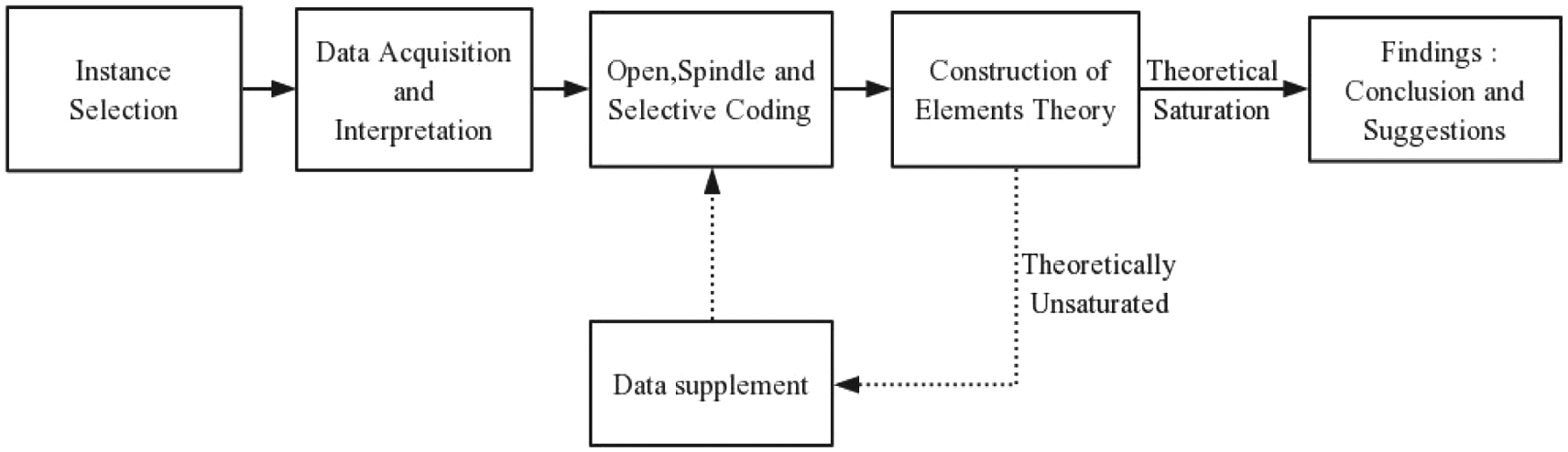
Principle of grounded theory.
Grounded theory is a typical qualitative research method widely used in the field of social sciences (Charmaz, 2001). It has no presupposition of theoretical value beforehand and focuses on searching for the “core proposition” reflective of certain social phenomena from primary sources. The theory has developed through systematic data collection and analysis (Japhet & Usman, 2013). Its key technique is to summarize and sort primary sources through “coding” to extract the core content or vital influencing factors of a problem (Charmaz, 2011). Analyzing the data involves three levels or types of coding: open coding, axial coding, and selective coding. This procedure enables the conceptualization and categorization of primary data sources.
The research drew its sample from three private Chinese universities operating across different geographical regions of the country to achieve comprehensive local and resource diversity. The selected institutions met the research criteria, which included their size, educational program organization and interview willingness regarding postsecondary vocational and entrepreneurial education. The selected institutions grant researchers access to detailed knowledge about regional differences as well as widespread resource limitations. This research requires classical grounded theory methods because they establish optimized data-based theoretical frameworks that connect directly with the practical challenges of educational environments. The methodology uses open and axial plus selective coding to provide a thorough examination of resource limitations combined with other regional factors that shape the integration of vocational and entrepreneurship education.
Data Collection
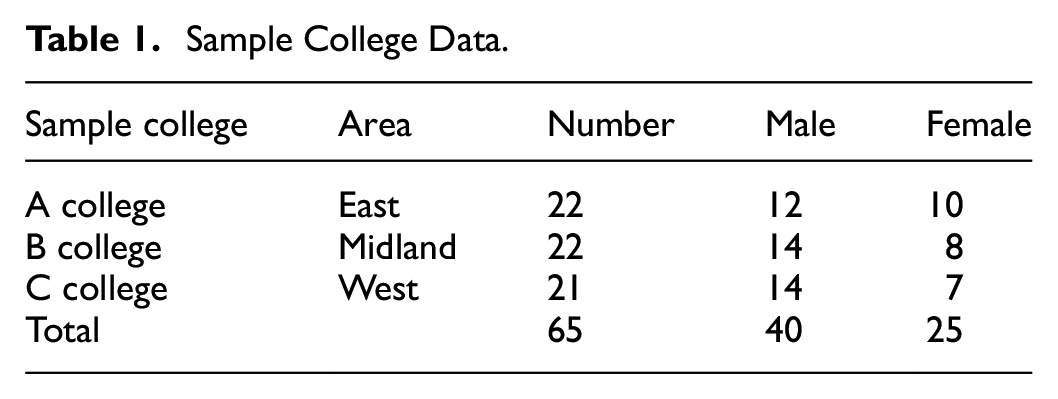
The research data are drawn from the random selection of three private colleges in the eastern, central, and western regions. To maintain the confidentiality of the colleges and interviewees, the names of the three colleges in this study were replaced by A, B, and C. In-depth interviews were conducted with 65 students and teachers who were willing or experienced in innovation and entrepreneurship. These interviews were carried out by a four-person research team over nearly 3 years. Each interview lasted approximately 2 hr per student or teacher, resulting in many interview notes and memos. The interview materials from the 65 students and teachers were coded as S01, S02, S03, … S65 and recorded in the form of text materials (Table 1).
Sample College Data.
Data Analysis
Open Coding
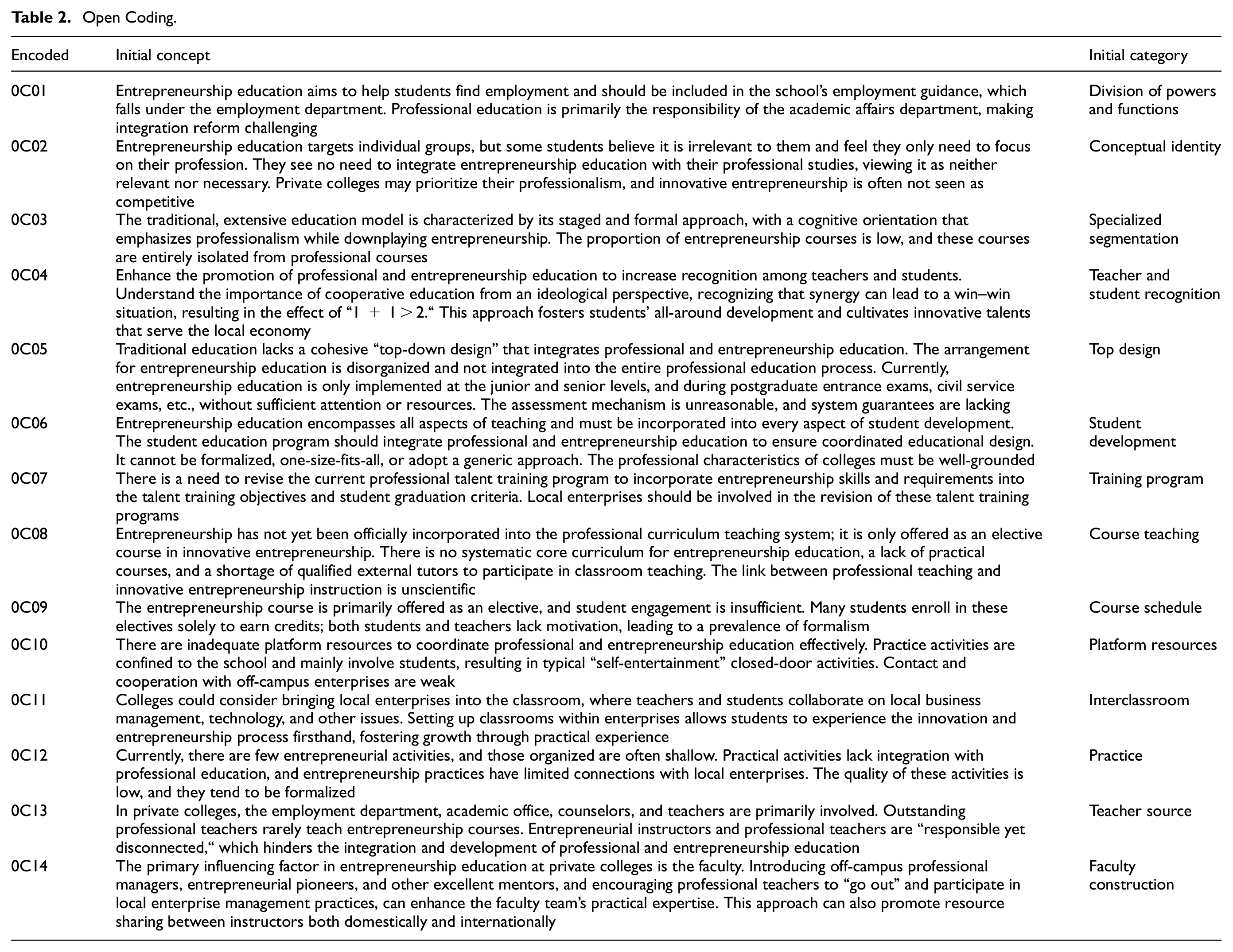
Open coding primarily involves resolving, comparing, filtering, and combining the first-hand original interview data repeatedly to extract the influential core factors (Corbin & Strauss, 1990). This process helps explore the profession through mark coding. The initial concept of the factors influencing education and entrepreneurship education should be classified. First, in addition to the original conclusions and assumptions, the valid sentences in the first-hand original interview materials (including interview notes, memos, audio materials, etc.) are coded step by step. A layered coding method is used to ensure the ordering of the original data. For example, the interview record of the fifth sentence of the interviewer, numbered three, is coded as S03 to 5, and the original record code for 65 interviewers is 1798. Second, the main influencing factors are initially conceptualized, and the qualitative analysis software NVivo 10 repeatedly filters and rejects the information with low repetition frequency in the 1798 code records (below four times), ultimately identifying 139 key information codes, which are encoded as C01, C02, C03, … C139 in sequence. Then, through grounded theory methodology, the analysis and refinement are repeated, resulting in 49 initial conceptual factors. Finally, through classification, categorization, rooting, and other methods, the initial concept influencing factors are refined and classified into 14 initial categories. These categories include the division of powers and functions, concept identification, specialization and division, and teacher and student recognition, among others (Table 2).
Open Coding.
Axial Coding
Axial coding is based on logical clues to apply cluster analysis, discovering and establishing various relationships between initial concepts and categories to represent the logical associations between multiple parts of the data (Li, 2017). This involves performing a hierarchical analysis of the inherent logical relationships between the initial concepts and the initial category factors of professional education and entrepreneurship education identified during open coding. The goal is to explore the logic of the category factors that affect professional education and entrepreneurship education, ensuring the mutual exclusivity of the relationships between these initial category factors.
The key to axial coding is to conduct root analysis, refinement, and integration of the 49 initial conceptual factors and 14 initial category relationships obtained via open coding. This process clarifies the inherent logic between the initial concepts and the initial categories. Finally, the clusters are integrated into seven main categories of factors: division of powers and functions, value identification, top-level design, institutional arrangement, and training programs (Table 3).
Axial Coding.

Selective Coding
Selective coding extracts the core category factors that can lead all categories from the main category factors. It analyzes their inherent logical relationships to construct a new theoretical model of influencing factors (Li, 2017). Through in-depth analysis of the initial concepts, initial categories, main categories, and logical relationships among the categories in the interview materials, followed by repeated refinement, integration, and root analysis, the author concludes that professional education and entrepreneurship education in private colleges are coordinated.
In addition, we conducted a saturation test during the coding process. After analyzing approximately 50 of the 65 interviews, we observed that no new categories or significant insights emerged from the subsequent interviews. This indicated that theoretical saturation had been reached. The iterative process continued until all remaining interviews confirmed the established categories and the emerging theoretical logic. This systematic validation through data saturation further reinforces the robustness of the “Trinity” cooperative model.
The three core categories are “value factors,”“training system factors,” and “platform resource factors.” The connotations of these core categories, which affect professional and entrepreneurship education, are analyzed in depth. The above three core categories have intrinsic logical associations, leading to seven main categories, confirming that the existing interview material is typical (Table 4).
Selective Coding.

Theoretical Saturation Test
A saturation test was incorporated into our methodological framework to ensure the credibility and completeness of our grounded theory analysis. Saturation was considered achieved when additional interviews ceased to yield new information or insights regarding the core categories. In our study, after approximately 50 interviews, the coding team noted that no novel concepts emerged, and the subsequent interviews served to confirm and consolidate the existing categories and theoretical relationships. This observation was discussed in regular intercoder meetings and supported by data triangulation across different regions and stakeholder groups. The achievement of saturation validates that the sample size of 65 interviews (comprising both students and teachers) was sufficient to construct a comprehensive and reliable theoretical model.
Ethical Statement
This study was approved by the ethics committee of the School of Economics, Hubei Enshi University, China, and all participants provided informed consent before participation. Ethical considerations followed the guidelines and adhered to the principles of voluntary participation, confidentiality, and minimization of harm. This study involved in-depth interviews with students and teachers from three private colleges in China. All the participants were informed of the purpose of the research, the voluntary nature of their participation, and the measures taken to ensure anonymity and confidentiality. Written informed consent was obtained from each participant before the interviews.
Results
The core of integrating professional education with entrepreneurship education in private colleges lies in merging value ideas and focusing on the interamalgamation of training systems. The key is the joint construction of platform resources and ensuring the sharing of teachers. To this end, it is necessary to ideologically recognize the value of integrating professional education with entrepreneurship education and to create a “top-level design” arrangement for the system (Weiming et al., 2016). This can establish a talent training system that highlights the innovation consciousness and entrepreneurial ability of private colleges with the help of local governments. The policy advantages and resource advantages of local enterprises can be utilized through the two-way drive of platform resources, promoting resource sharing and the complementary benefits of teaching staff inside and outside the school via the “bring in + go out” strategy (Sun, 2018).
Consequently, this approach promotes the deep integration of professional education and entrepreneurship education reform in private colleges by aligning with the strategic needs of the national implementation of entrepreneurship education reform (Fan et al., 2013). The practical needs of private colleges can be addressed through the comprehensive reform of entrepreneurship education, the scientific application of grounded theory methods, and the consideration of “value,”“training system,” and “platform resources.” These three core influencing factors, along with the establishment of “value-system-resource” as the axle of the “trinity” cooperative education model, can fundamentally improve the innovative awareness and entrepreneurial ability of college students in private colleges, thereby creating and cultivating innovative talent that serves China’s economic and social development (L. Wang, 2019) (Figure 2).

Cooperative education model of professional education and entrepreneurship education in private colleges.
Coding Process and Data Triangulation
Grounded theory methodology serves as an analytical tool for evaluating data on the basis of a standardized method that produces theoretical frameworks. The researchers applied open coding as their first step before moving on to axial coding and eventually selecting the codes for their study. Researchers have conducted open coding to separate and study discrete data parts while establishing similarities and differences between the parts (Orser et al., 2019). The research team employed axial coding to construct meaningful data relationships between open codes as per the process (Chaudhary et al., 2023). The final stage of selective coding combined and improved the categories to develop a grounded theory that blended professional and entrepreneurship education. The researchers ensured strong intercoder agreement through frequent meetings where they found solutions to coding differences to reach a complete consensus.
The systematic validation process included multiple coding iterations as well as data triangulation methods to increase the robustness and persuasiveness of the “Trinity” cooperative model. The research design implemented a structured analytical process that started with open coding, followed by axial coding and then selective coding to refine the model. The analysis of 65 in-depth interviews conducted among three Chinese private colleges yielded three core categories of value synergy training system coherence platform resource synergy. We carry out intercoder reliability tests by regularly discussing any discrepancies between coders to verify the consistency of the identified derived categories. Our theoretical model gained credibility by structuring its framework on the basis of patterns observed in qualitative data from Chinese private colleges, thereby proving its useful application in educating students for professional and entrepreneurial careers.
Identified Core Categories
The research identified value synergy, along with training system coherence and platform resource synergy, as core influencing factors in integration. The ideological understanding of blending professional and entrepreneurship training forms the basis of value synergy. Training system coherence requires education providers to unite learning goals with curriculum materials to deliver complete educational programs. Platform resource synergy centers on how local government policies and resources should be used to support educational transformation (Xie et al., 2024). Detailed examples coupled with direct interviewee quotations supported the research findings to demonstrate its validity and explain the problems studied.
Value Synergy
The survey results revealed value synergy as an essential category because professional and entrepreneurship education needs a fundamental transformative approach toward its ideological value system (Guan et al., 2019). The interview participants supported the development of creative entrepreneurship principles in students over basic technical instruction. My understanding of innovation within my field became stronger since we added entrepreneurship education to our professional courses, according to one interview participant. The change in the value system enables schools to develop a unified educational approach that properly prepares students to handle current workforce challenges. A study by Sagie and Yemini (2018) demonstrated that educational values should match economic and social targets, which corresponds to the findings of this research.
Training System Coherence
Training system coherence combines curriculum and educational objectives to establish an educational system that delivers professional skills and entrepreneurial learning to students (G. Sun & Zhao, 2024). Students need curriculums that unite theoretical knowledge with practical skills to achieve educational success, according to study findings. Students enrolled in professional education alongside entrepreneurship courses gain increased career readiness through the comprehensive skills that their programs deliver to them. The framework of prestigious curricular development combined with integrated classes produces the required unity that combines professional educational content with entrepreneurship teaching (Yang & Ma, 2021).
Platform Resource Synergy
Platform resource synergy functions as a strategic approach to integrating professional education and entrepreneurship education through joint partnerships between government policies and enterprise resources (Pan & Lin, 2019). Research has shown that private colleges must build enterprise relationships to allow students to access both practical education and enterprise resources. The institution’s local business partnerships enabled instructors to provide practical student education for entrepreneurship training, according to the faculty members. This collaborative education method perfectly supports the strategic goals of national education reform (Gao et al., 2016).
Comprehensive Reform Through Grounded Theory
Analysis through grounded theory methods provided complete insights into the factors that affect the combination of professional training with entrepreneurial learning. The progressive study approach combined analysis methods to ensure that all the data points had their foundation within the obtained research data. The core categories of value-system-resource create an axis within the “trinity” cooperative education model to demonstrate how they interact with each other to enhance students’ innovation awareness and entrepreneurial skills (Zhang, 2024).
Addressing Practical Needs
Professional and entrepreneurship education integration provides Chinese private colleges with a comprehensive education structure that addresses their practical educational requirements. This model fulfills both national innovation-driven development plans and the special needs of private colleges regarding resource restrictions and educational system modernization requirements. Research evidence shows that combining this holistic educational model results in substantial improvements in education quality and student preparedness for modern employment demands (Brüne & Lutz, 2020).
Chinese private colleges need to combine value synergy with training system coherence and platform resource synergy systems to integrate professional and entrepreneurial education successfully. The grounded theory methodology produced comprehensive knowledge about complex variable connections through the development of an extensive educational model. The research shows that collaborative methods lead to student development of entrepreneurial capabilities alongside innovation competencies to fulfill China’s economic development goals.
Model Validation and Theoretical Consistency
The “Trinity” cooperative model establishes its conceptual basis through established concepts of entrepreneurial education together with cooperative learning theory (Johnson et al., 2008; Lavelle, 2021). The core categories we identified match the interlocking aspects of experiential learning, thus showing how structured collaborative approaches increase the entrepreneurial capabilities of students. Previous studies on integrated educational models and innovation development have received additional support from our research findings (Gianiodis & Meek, 2020; Sagie & Yemini, 2018). The theoretical stability between elements adds to the model’s capacity to convince it while making it operational.
The evaluation of the model involved comparing references to research studies regarding professional and entrepreneurial education coherence. The “Trinity” model succeeds in alleviating fragmented curricula through its value-system-resource synergy, which creates an educational system glue that connects all components. The conceptual basis of our research follows established theoretical frameworks, thereby making our model more persuasive to academia.
A rigorous analysis of the “Trinity” cooperative model by means of grounded theory produced accurate results via systematic open, axial, and selective coding methods, which enabled theory development from data sources. A combination of interviews with institutional records and secondary data sources validates the research findings through data triangulation methods and intercoder reliability tests, increasing the model’s internal consistency. This research draws practical significance from the analysis of three private institutions with inputs from the student, faculty, and administrator perspectives. This study creates a validated conceptual framework through its theoretical basis, and even though it does not follow a longitudinal method for research, it instead serves as a foundation for future empirical tests.
Comparative Analysis with Existing Models
To further highlight the novelty of the “Trinity” cooperative model, a comparative analysis with existing frameworks is presented in Table 5. Traditional cooperative education models often focus on either professional education or entrepreneurship education independently, without a structured integration of experiential learning. While models such as the “focused model” (Harvard Business School, 1947) emphasize discipline-centered entrepreneurship education and the “magnet model” broadens participation, they lack a systematic synergy of professional, entrepreneurial, and experiential learning. The “Trinity” model strengthens previous frameworks by bridging these educational domains into a unified system, emphasizing value synergy, structured training systems, and shared platform resources. This ensures a comprehensive approach to student entrepreneurial competencies, aligning with the needs of innovation-driven economies.
Comparison of the Trinity Model with Existing Educational Models.

Discussion
The Synergy of Value Ideas Between Professional and Entrepreneurship Education
It is essential to firmly establish the advanced concept of entrepreneurship education, shifting the focus from knowledge to innovation, entrepreneurial awareness, and entrepreneurship capability, from targeting only a subset of students with a willingness to innovate to including all students (Bae et al., 2014). This can promote the synergetic development of entrepreneurship education in private colleges and professional curriculum reform, thus enabling the overall development of students (Li, 2017).
Entrepreneurship education is aimed not only at educating individual groups but also at cultivating students’ innovation consciousness and entrepreneurial quality, organically integrating professional education with innovation and entrepreneurial value concepts (Neck & Corbett, 2018). This requires constructing the organic integration of professional education and innovation through a blending mode, building professional education, and fostering the value idea of cooperative education toward entrepreneurship education to promote the overall development of college students (Zhiqin, 2020). Therefore, private colleges urgently need to encourage the integration and coordinated development of professional education and entrepreneurship education. This can transform the education mode from traditional infusion-based teaching to a modern heuristic approach (Streeter et al., 2002) and from cultivating niche groups to mass-oriented students. Instituting innovation and entrepreneurship within professional instruction creates opportunities for student development of entrepreneurial abilities at private colleges, which aim to establish professional–entrepreneurial academic cooperation (Mei et al., 2020).
The Synergy of the Training System Between Professional and Entrepreneurship Education
Private colleges aim to develop applied talent that possesses specialized characteristics to contribute to regional economic growth. The enhancement of student capabilities in innovation and entrepreneurship serves as the core aspect of talent development in entrepreneurship education (Weiming et al., 2016). The development of entrepreneurial education reform strives to create substantial improvements in human resource education standards. A person-centered teaching system must be implemented alongside aptitude-advantaged instruction alongside entrepreneurship education integration in talent development programs through professional and entrepreneurial educational adoption modalities (L. Wang, 2019). Talent training objectives need to combine knowledge goals with literacy goals as well as skill goals into one integrated system. System integration requires the unification of three curriculum components: essential requirements along with optional subjects and practice-oriented education. Private colleges need to modify their professional personnel cultivation programs to match faculty capabilities alongside professional advancement characteristics, whereby innovation and entrepreneurship serve as fundamental elements for talent training objectives and graduation standards (Li, 2018).
The system of entrepreneurship education courses should be improved, with content and teaching methods reformed to drive the integration between the latest research achievements in entrepreneurship education and the professional education curriculum (Chen et al., 2021). There should be a proper alignment between curriculum modules of theoretical knowledge and practical skills, allowing students to select complementary professional education and entrepreneurship education courses. This requires the development of an innovative entrepreneurship education curriculum system suitable for different students. Moreover, expanding the educational ideas and models of professional education and entrepreneurship education can unlock the potential and functions of the cooperative education model, achieving the integration of the training system (Yin & Wang, 2017).
Synergy of the Resource Platform Between Professional and Entrepreneurship Education
The two resource integration platforms, both inside and outside the campus, should be actively forged to optimize resource allocation through joint construction and sharing (Byun et al., 2018). Given the endowment status and professional characteristics of teaching resources in private colleges, there is potential to innovate and explore reforms in professional education and entrepreneurship education. This also requires establishing a cooperative education center for professional and entrepreneurship education (Wu et al., 2016). First, the school’s innovation and entrepreneurship platform should be built through resource sharing among professional discipline construction groups. The school–enterprise cooperation model should create an off-campus innovation and entrepreneurship practice training base to promote the two-way drive of the school’s professional education and entrepreneurship education platform and the off-campus base. Second, professional education should be the foundation, further enriching and expanding its innovative and entrepreneurial education functions. Private colleges should leverage their resource advantages and strive for local government policy support, thereby promoting the construction of professional and entrepreneurship education and improving the ability of private college students to innovate and start businesses (Lavelle, 2021). Third, actively explore the sharing mode of “coming in + going out” to construct an innovation and entrepreneurial mentor team. Local experts from the employment department and successful entrepreneurs should serve as entrepreneurial tutors at private colleges who instruct and guide innovation and entrepreneurship courses. The “going out” strategy should provide selected excellent young and middle-aged professional teachers with 1 year of practical experience at excellent enterprises by either implementing training at these enterprises or using winter and summer breaks for short-term field training (Chun Tie et al., 2019).
Practical Implications and Recommendations
The “Trinity” cooperative education framework introduces a new method of combining professional education with entrepreneurial education and practical learning for Chinese private colleges. This model builds an integrated system through which entrepreneurial values flow into professional education by using real-world experiences instead of traditional independent component organization. Students benefit from this method, which involves developing specialized knowledge as well as necessary entrepreneurship competencies, which are born from innovation.
The model works through its governance structure to unite academic instructors with business experts who provide practical teaching experiences under professional guidance to students. The “Trinity” model, through its local enterprise partnerships, emerges as a flexible educational and economic connection that produces learning outputs specific to market demands and state development priorities in Chinese regions. The collaborative framework aims to overcome standard university–industry partnerships through sustained academic–industry contacts that build an energetic learning system that improves students’ entrepreneurial capabilities.
The findings obtained from stakeholders combined with institution-to-institution analysis show the hands-on benefits of “Trinity” cooperative model operations. The data-based verification process shows this model’s ability to work well in different educational situations. Student learning outcome assessments, along with satisfaction evaluations and assessments of entrepreneurial success, will enhance its broad application potential. The enhanced implementation results from architecting the model on the basis of multisectoral feedback together with expert consultation, which improves its universality.
Curriculum Reforms
Educational programs should create combined professional and entrepreneurial classroom content through the integration of interdisciplinary subjects. This instructional method equips students with theoretical concepts together with subject-specific practical abilities. The incorporation of project-based learning and active problem-solving activities within the curriculum helps develop the critical thinking abilities and innovative problem-solving skills of students (Santoso et al., 2023; M. Wu et al., 2023). The curriculum remains effective by receiving periodic updates from both industrial trend observations and stakeholder feedback.
Faculty Training Programs
Teachers serve as essential components for achieving the successful execution of integrated education systems. Universities need to establish educational training sessions that prepare instructors to effectively educate both professional subjects and business creation materials (Guo & McGraw, 2023). Educational organizations should implement workshops, seminars, and laboratory-based training with experts from industry and educational authorities. Educational staff’s pursuit of continuous professional advancement, including adherence to contemporary educational practices and industrial methods, remains essential for institutional success.
Establishment of Innovation Hubs
Through the establishment of innovation centers inside college campuses, student entrepreneurs can develop their business concepts with institutional support. These centers provide students with access to mentoring services in addition to funding resources and business network opportunities with industry experts. When brought into the mix, local businesses, along with government agencies, enable these hubs to become more effective. Through innovation hubs, students can create their startups as the facilities act as both incubation spaces and drive an entrepreneurial spirit throughout campuses (Wu et al., 2023).
Continuous Feedback Mechanisms
Education practices require continuous feedback mechanisms because they advance professional practices that serve student needs and industrial requirements. Student feedback during scheduled sessions combined with assessment surveys and extra evaluation tools enables teachers to detect educational flaws that lead to the maintenance of active learning materials. Taking part in feedback activities helps students become more devoted to their educational progress and promotes their active classroom participation (Pisoni, 2019).
Evidence-Based Approaches
The evidence-based teaching methods established for this purpose enhance the learning outcomes generated from a combination of the classroom curriculum and industrial education principles. Research-oriented learning methods that pair theoretical knowledge with practical applications generate better academic results (Suguna et al., 2024). Educational researchers must review teaching principles on the basis of real evidence data to help instructors implement optimal approaches that achieve student academic success.
Several implementable guidelines support the adoption of the Trinity model across different educational domains. Past evaluations of internal organization abilities and outside partnership potential help institutions create a unique model implementation approach for their operating framework. The platform utilization capabilities of private universities operating in underfunded regions will strengthen through their government agency partnerships with regional industries. By modifying their curriculum planning methods on the basis of both traditional vocational education and practical study practices, educational institutions can create training system consistency that matches instructional methods to local market requirements alongside institutional potential. Educational institutions should employ continual feedback processes that include frequent stakeholder input and performance reviews to ensure that the system remains responsive to environmental transformations. The operational recommendations of the guidelines will assist educational institutions in developing educational approaches that align with the Trinity framework while maintaining the scalability conditions described in Table 5.
Conclusion
This study advances integrated educational research by creating a new “Trinity” cooperative learning approach that harmonizes professional development with entrepreneurship and experiential learning. This model emerges above current approaches because it creates a comprehensive strategy that unites various educational components, including values, alongside institutional systems with extension networks.
The innovative aspect of this model relies on its active combination of elements that integrate entrepreneurial competency teaching into professional programs and help students gain practical exposure through collaborative resource access systems. The model enables students to gain adaptive competencies that correspond to academic standards and professional requirements, thus making it suitable for private colleges across China. The “Trinity” model stands as a practical solution to reform challenges by using enterprise partnerships together with structured experiential learning activities and faculty training procedures.
Professional education gains its new purpose through entrepreneurship education, which develops existing professional training by advancing its department. Currently, the reform of entrepreneurship education in most private colleges in China must be established on the basis of their current state, characterized by a “poor foundation and late start.” To achieve rapid development in entrepreneurship reform, the controversies and dilemmas in the traditional educational concept of entrepreneurship education should be clarified. This involves advancing with the times, reforming ideas, transforming methods, and reaching a theoretical consensus on collaborative education.
The construction of a synergistic education platform between professional education and entrepreneurship education in private colleges should be expedited, both within the school and beyond, to broaden, build, and share resources. This can better serve local economic development by increasing cooperation between private colleges and local governments to attract social resource input and promote the combination of production and study.
Promoting the deep integration of professional education and entrepreneurship education in private colleges is beneficial, addressing the strategic need for domestic education reform in entrepreneurship education and the practical need for comprehensive reform in private colleges. Grounded theory methodology was applied to influence factorial dimensions from the perspective of factors such as “value idea,”“training system,” and “platform resource,” and to establish “value-system-resource” as the axle of the “trinity” cooperative education model. Consequently, the innovative awareness and ability of private college students can be fundamentally improved, cultivating creative talents that serve China’s economic and social development.
This study bridges a critical gap in educational research by integrating professional, entrepreneurial, and experiential learning into a unified framework, surpassing the fragmented approaches of prior models. Unlike existing frameworks that focus on isolated learning aspects, the “Trinity” model systematically interconnects value synergy, structured training, and platform resources to enhance entrepreneurial readiness. In addition to addressing regional disparities in Chinese private colleges, the model introduces new constructs, particularly the synergistic role of institutional and industry collaboration. This study explores two novel dimensions of academic staff involvement in multidisciplinary cooperative learning and sustainable education from planned experiential learning activities. These research findings extend regional discussions by creating new conceptual frameworks for innovative educational approaches, cross-disciplinary exchanges, and structured business learning methods. The model functions as an organized structure that applies well to different global educational settings.
The research reveals concrete solutions for universities and government institutions according to theoretical guidelines. Educational institutions must initiate their resource synergy efforts by assessing their team capabilities before partnering with both local businesses and government institutions. Innovative educational programs at higher education institutions should integrate vocational training and entrepreneurship education through hands-on instruction with built-in feedback systems for stakeholders. The government should adopt three policies to fund educational institutions while creating industrial cooperation rules and awarding benefits to educational advancement initiatives. Implementing integrated measures will enable the successful deployment of the integrated Trinity model alongside fostering sustainable regional development that delivers social and economic benefits.
This study has several limitations. The study achieves limited generalizability of findings because researchers gathered only qualitative information through interviews at three private institutions. The subjective interpretation of research data via grounded theory analysis methods potentially influences the theoretical framework of the study. The research solely collected data from students and administrators without hearing from either employer groups or public policy-makers. There are no quantitative statistics or statistical evidence presented in this article, which diminishes the research findings. The study of career outcomes from integrated education needs extensive longitudinal research because this particular analysis lacks long-term evaluation. A theoretical approach named “Trinity” emerged from this study, but its practical value will grow through the application of case study analysis and the acquisition of stakeholder recommendations. The evaluation system creates understanding, while the educational program follows government regulations to gain long-term entry into private educational establishments.
Future studies should focus on whether integrated education systems shape career paths for students and their pathways to entrepreneurial ventures across extended timeframes. A complete time-spanning analysis must examine the “Trinity” model to establish its operational effectiveness and nationwide implementation readiness in various academic institutions. Exploring digital resources and their platforms that enable educational integration will direct modernization efforts to make students work market-ready through current educational practices.
Footnotes

Ethical Considerations
This study was approved by the ethics committee of School of Economics, Hubei Enshi College, China, and all participants provided informed consent before participation. Ethical considerations followed the guidelines and adhered to the principles of voluntary participation, confidentiality, and minimization of harm. This study involved in-depth interviews with students and teachers from three private colleges in China.
Consent to Participate
All participants were informed of the purpose of the research, the voluntary nature of their participation, and the measures taken to ensure anonymity and confidentiality. Written informed consent was obtained from each participant before the interviews. All participants provided informed consent prior to participation. The study was conducted in accordance with Sage’s Guidelines for studies involving humans and adhered to the ethical standards outlined in Section 8.05 of the APA Ethical Principles of Psychologists and Code of Conduct.
Funding
The author(s) disclosed receipt of the following financial support for the research, authorship, and/or publication of this article: The study was supported by the project “Exploration and Practice of PBL Project-Based Teaching Reform in Management Accounting” (Grant number: JYWZ10202208).
Declaration of Conflicting Interests
The author(s) declared no potential conflicts of interest with respect to the research, authorship, and/or publication of this article.
Data Availability Statement
Data will be made available upon request.