



Abstract
This qualitative phenomenological study aimed to explore middle school students’ perceptions of using the school-based cooperative problem-based learning (SB-CPBL) approach in learning science. The study examined how SB-CPBL differs from the students’ usual learning, how the new approach affects their learning process and the main challenges of learning via SB-CPBL. The study identifies key patterns in students’ perceptions of SB-CPBL in science learning. The study sample consisted of two sections of eighth-grade students, comprising 28 males and 32 females, totaling 60 students aged 14 to 15 years from a middle school in Jordan. The study conducted semi-structured group interviews with each gender class using their native language (Arabic), and semi-structured individual interviews with the teacher and students. Findings indicated that, by the final stage, students perceived SB-CPBL as enjoyable, engaging, and stimulating for critical thinking. However, students initially expressed some negative perceptions and anxiety, particularly regarding adapting to the new learning structure and collaborative problem-solving expectations.
Plain language summary
The present study elucidates the pattern of students’ perceptions changes toward using school-based cooperative problem-based learning (SB-CPBL) in learning science. The study explored how SB-CPBL differs from the students’ usual learning, how the new approach (SB-CPBL) affects their learning process, and what are the main challenges of learning via SB-CPBL.
Keywords
Introduction
The need for changing the existing pedagogical practices of science education is well recognized (Abd Ghani et al., 2023). For decades, reformers have advocated a shift toward inductive learning approaches, such as problem-based learning (PBL; Marcinauskas et al., 2024), as an alternative to teacher-centered methods that tend to induce passivity among students (Shah, 2019). There is no doubt that PBL has contributed significantly at the university level to medical programs (Ssemugenyi, 2023). However, the debate continues as to its challenges to implementation in school settings (Bledsoe, 2011; Pastirik, 2006). It has been observed that monitoring small groups’ learning by one floating facilitator is challenging in large classes (Wallace et al., 2020), as is the case of school classes that are often crowded. With careful planning and forethought, PBL has been conducted in medium and large classes, and authors have concluded that grouping students into collaborative working groups is crucial to infusing PBL in these settings (Casey & Goodyear, 2015; Mohd-Yusof, Hassan, Syed, et al., 2011). Cooperative Learning (CL) which is known to foster students’ collaboration (Chen & Lin, 2020) has been proposed for integration into the cycle of PBL. The results have proven to be effective in establishing collaborative functional learning teams in large class settings (Bergin et al., 2018; Sadikin et al., 2019; Siew & Chin, 2018). The natural synergy between PBL and CL principles converts the whole class into an active learning community (Nawi et al., 2019), which highly supports the facilitator’s task in the large classes, as a part of monitoring and support can be obtained from peers and other group members (Mohd-Yusof, Hassan, Jamaludin, et al., 2011). In addition, ensuring collaborative functional learning teams acts as a scaffold in assisting novice problem-solvers who are new to problem-based learning techniques (Siew et al., 2017).
The new learning approach that combines CL and PBL is gradually gaining interest across different education levels and disciplines. The positive effects of such a combination include increasing the equipped knowledge (Bahar-Ozvariş et al., 2006), developing problem-solving skills (Ahmad et al., 2012), acquisition of cooperation skills (Panlumlers & Wannapiroon, 2015), and improving students achievement (Ahmad et al., 2012). SB-CPBL, which stands for School-Based Cooperative Problem-Based Learning, is an adaptation of this combined approach specifically tailored for school science education. By incorporating both PBL and CL principles, SB-CPBL aims to enhance student-centered learning environments, fostering collaboration, and engagement in ways that are particularly effective in school settings.
Recent research studies conducted with middle school students in Jordan have demonstrated the effectiveness of SB-CPBL in improving science achievement (Musalamani et al., 2022) and fostering positive attitudes toward learning science (Musalamani et al., 2021). These studies highlight SB-CPBL’s capacity to enhance collaboration among Jordanian students, regardless of gender differences. These findings offer valuable insights for educators, curriculum designers, and policymakers seeking to innovate educational practices and equip students with essential 21st century skills. The importance of SB-CPBL in the present educational landscape is multifaceted, addressing several educational challenges. By engaging in cooperative problem-based activities, students learn to identify problems, analyze situations, and develop solutions collaboratively, thereby enhancing their cognitive abilities and readiness for real-world challenges. This method encourages students to take ownership of their learning and connect theoretical knowledge with practical applications.
Although much has been documented on the advantages of integrating PBL and CL, much less attention has been paid to the process of the shift to these curricula, and how the learning environment that combines both PBL and CL affects students’ learning experiences, especially their perceptions. Understanding students’ perceptions is critical in evaluating the effectiveness of educational approaches like SB-CPBL. Students’ perceptions provide valuable insights into their engagement, motivation, and overall learning experience (Falls et al., 2014), which are essential for identifying strengths and areas for improvement in the teaching methodology (Oderinu et al., 2020). By exploring how learners perceive SB-CPBL, researchers and educators can tailor the approach to better meet students’ needs, ensure its relevance, and promote its effectiveness in fostering critical 21st-century skills. Furthermore, understanding students’ perceptions can help in creating a more supportive and inclusive environment, ultimately leading to improved learning outcomes (Golightly, 2018).
Previous research has shown that integrating CL and PBL significantly enhances students’ perceptions of their learning experiences. It has been demonstrated that combining these two approaches fosters a more attractive and engaging learning environment, which encourages collaboration and active participation among students. Adi et al. (2012) found that this combination fosters students’ willingness to learn more, move away from the spoon-feeding culture and work with group members. In their (2022) study, Chang et al. investigated the effects of combining different collaborative learning strategies with problem-based learning in a flipped classroom. They found that integrating CL with PBL significantly enhances students’ motivation by fostering independent learning and developing problem-solving skills. Additionally, participants in the study provided positive ratings for the flipped classroom model designed. Similarly, Mataka and Kowalske (2015) confirmed the positive effect of this integrative approach on students’ confidence and self-efficacy, particularly in complex subjects like chemistry.
To gain experience and to shed light on the effects of shifting toward these curriculums, we replaced a 6-week conventional approach to teaching science with the School-Based Cooperative Problem-Based Learning (SB-CPBL) approach. The new curriculum that integrates CL principles into the typical cycle of PBL has been developed for middle-school students in Jordan to replace conventional science teaching in Jordanian middle schools. Therefore, the present study aims to explore Jordanian eighth-grade students’ perceptions of learning through SB-CPBL. It is fundamental to gain their feedback to provide insight for future changes and improve science education. To address these aims, the study will be guided by the following research question:
- How do Jordanian middle-school students perceive the SB-CPBL approach in learning science?
- What challenges do students face when engaging in the SB-CPBL approach?
- What are the perceived advantages of the SB-CPBL approach according to the students?
Jordanian Style of Teaching Science
According to the Arab Human Development Agency, the upbringing contexts in the Arab region are mostly authoritarian and overprotective (United Nations Development Programme [UNDP], 2003), both of which have been discussed in the literature, limiting students’ ability to creativity, solving problems, and being less prone to think critically (Li, 2019). As a part of their cultural upbringing, Arabian learners have been brought up to obey teachers as a source of authority in classrooms; students would hesitate to ask questions, suggest new directions, or debate with teachers in class. This authoritarian style is a true mirror that largely reflects regimes that prevail in most Arab countries (Alhabahba et al., 2016). There is a belated recognition that the conventional style of teaching is the main factor that stands behind the modest performance of Jordanian students in science and mathematics (United Nations Educational Scientific and Cultural Organization [UNESCO], 2014). Despite the huge budgets spent on educational reform projects in Jordan, few changes have been observed in the conventional teaching methods that still dominate the educational climate of Jordanian schools (Adely et al., 2021).
Science education in Jordan often neglects higher-order thinking skills, focusing instead on theoretical content and written exams that do not assess collaboration or problem-solving (Dagher & BouJaoude, 2011). In recent years, the steady decrease in students’ enrollment in science and technology majors has become a serious concern for planners and decision-makers in Jordan (UNESCO, 2015). Moreover, the lack of research in science and technology carried out in Jordan became a major issue (Schneegans & Erocal, 2015). This suggests that Jordanian students may have negative attitudes toward science and technology. A fundamental solution to the challenges in science and technology education lies in improving teaching and learning practices to ensure a meaningful environment that promotes students’ learning at Jordanian schools.
Students’ Perceptions of Problem-Solving Strategies
Several studies on students’ perceptions of learning using problem-solving strategies have been carried out. It has been found by Hussain et al. (2019) that students were motivated to experience a more effective learning strategy which enhanced their acquisition of knowledge and improved their time management and their ability to think critically. It has been also reported by science students that the curriculum program used PBL was beneficial and enhanced their practical skills (Mpalanyi et al., 2020). Vidal et al. (2017) found that students in problem-solving groups developed stronger connections, which positively impacted their learning. In different research studies (Kidane et al., 2020; Kim & Pegg, 2019; O’Brien et al., 2020; Rosca, 2019) students expressed their enjoyment of PBL and believed in the possibility of adopting PBL in other subjects. Tosun and Senocak (2013) revealed that in addition to the students’ levels of metacognitive awareness enhanced via PBL, they have also developed a more positive attitude toward learning subjects. In a phenomenological study that explored the change in chemical engineering students’ perception toward the cooperative-PBL approach (Adi et al., 2012), students expressed anxiety about the new approach at the initial stage, however, at the end of the semester, they expressed their enjoyment of the given cases and demonstrated the willingness to learn more. However, several previous studies have reported some negative attitudes. In the work of Ruiz-Gallardo et al. (2016), PBL was found to be time-consuming with a heavy workload. Du et al. (2013) concluded that for students, PBL was more complicated than expected. Some students felt better prepared for learning activities in conventional settings compared to PBL (Bueno Millan et al., 2012).
The implementation of SB-CPBL in teaching and learning science presents a transformative opportunity to address the shortcomings of conventional teaching methods in Jordan and beyond. Domestically, SB-CPBL has been shown to improve students’ academic performance and increase their interest in learning science (Musalamani et al., 2021). Embracing SB-CPBL in Jordanian schools could thus bridge the gap between theoretical knowledge and practical application, ultimately fostering a more scientifically literate and innovative society. Internationally, SB-CPBL can significantly support student engagement and program outcomes by fostering a more student-centered classroom environment. By encouraging problem-solving and collaboration, SB-CPBL helps students develop critical thinking and practical skills that are essential for scientific inquiry and innovation.
Research Methodology
This is a phenomenological research study that used semi-structured groups and individual interviews. This study aims to gain insights into students’ perceptions of SB-CPBL. This study employed a phenomenological research design to obtain a large quantity of qualitative data for analysis. This approach is particularly advantageous as it allows for a deep exploration of participants’ lived experiences, capturing the essence of their perceptions and feelings. Moreover, it facilitates the identification of underlying themes and patterns, providing a comprehensive understanding of the students’ experiences with SB-CPBL. For the study sample, the researcher used a simple random sampling to select an educational governorate of 12 governorates in Jordan. The governorate chosen for the current research study was Al-Zarqa, the second-largest governorate in terms of population. Al-Zarqa is varied, encompassing both urban and suburban populations, offering a broad representation of the Jordanian middle school demographic. A middle school was randomly selected from 283 middle schools in Al-Zarqa. In the middle school selected, there were four sections of eighth grade, separated by gender, with a total of 128 students. Two sections were randomly selected: one male section (28 students, 47%) and one female section (32 students, 53%), resulting in a total study sample of 60 students. Thus, a total of 60 eighth-graders, from both genders, took part in this research study. Eighth graders were chosen for this study as one of the middle school levels, where students have completed their elementary stage and are now undergoing pre-secondary education. The subjects are all from the same grade level (eighth grade), aged between 14 and 15 years old.
The scope of this study was limited to a qualitative exploration to ensure a focused and in-depth investigation within the available resources and time constraints. Teachers’ perspectives on PBL could pose a potential threat to the validity of experimental research studies. To decrease the possibility of such threats, the teacher involved in the study participated in a 3-day training workshop on SB-CPBL to gain a better understanding of how to implement the module. The researcher provided the teacher with detailed lesson plans to follow during the implementation. Lesson plans included important elements such as lesson titles, materials, facilities, objectives, guided outlines, time frames, and assessment tasks. Moreover, the teacher asked to maintain a neutral stance regarding PBL throughout the implementation. The teacher also asked to avoid sharing personal opinions and views about PBL with students to prevent influencing their perceptions. This research was developed and carried out in three stages:
Stage One: Development of the SB-CPBL Module in Genetics
An instructional design proposed by Wood (2003) was adapted and used for constructing the module of this study. Other than providing a detailed framework that guides instructional designers to design effective PBL modules, the framework also focuses on the PBL problematic scenarios that should be well crafted based on the learning objectives. The PBL instructional design consisted of defining the desired learning outcomes. In the second stage, the PBL model that will be implemented to realize the learning objectives must be selected. In the next stage, the number of PBL sessions will be planned. Within this stage; the learning objectives for each PBL scenario, problematic scenarios, as well as lesson plans, can be outlined. Afterward, the module will be given to the experts for content validation. This is followed by a pilot study on a group of students and then refining the scenarios and lesson plans. Finally, the module’s implementation and evaluation.
The unit of Genetics, which contains five lessons, was used in the study. The researcher, in collaboration with a group of science teachers, analyzed the content knowledge of the Genetic unit and came up with the learning objectives. A total of five problematic scenarios were crafted to meet the learning objectives of the SB-CPBL module. Based on the science teacher’s guide, 24 sessions in 6 weeks, for 4 weekly sessions in a time frame of 45 min, were allocated for this unit. The 6-week duration was selected to balance thoroughness with the practical constraints of the school calendar and to ensure sustained engagement without causing fatigue among participants. This period was sufficient to cover multiple cycles of the SB-CPBL process, allowing students to engage deeply with the material and demonstrate meaningful changes in perceptions and learning behaviors. The SB-CPBL module content validation went through several procedures including three supervisors of science subject, who were asked to scrutinize whether scenarios adequately encompass the desired domain of content knowledge of the Genetic unit selected for the study. Supervisors confirmed that scenarios adequately cover the content knowledge however, they have proposed that lesson activities should be included too in the module. Lesson activities were included in the form of worksheets added at the end of each lesson.
The modified content was sent to two PBL experts to review whether the problematic scenarios were well crafted. Experts were requested to review the module construction on process sequence and clarity. The SB-CPBL module cases have been enhanced based on the expert’s feedback. SB-CPBL module with one case was piloted with other groups of students from the same level with similar characteristics during their normal science class sessions. Piloting aimed to detect the weaknesses, gaps, and problems that may arise during the module implementation. At the end of the piloting, the researcher interviewed students addressing questions about their opinions, challenges, difficulties, or any problems in understanding the case. Students’ feedback was considered during the true implementation of the module.
Stage Two: SB-CPBL Module’s Practical Functioning
Before bringing the module into operation, a meeting was held with the eighth-grade students to guide them on working within collaborative groups. Moreover, the science teacher who participated in the study was also subjected to a 3-day training workshop on how to act as a facilitator in PBL classrooms. The PBL model used for this study was adapted from (Mohd-Yusof, Hassan, Syed, et al., 2011). In their systematic model, cooperative learning components have been emphasized throughout the PBL process to promote cooperation among engineering students and attain successful PBL implementation in their typical courses in engineering faculty. The cooperative learning components emphasized throughout the PBL process are; (1) positive interdependence(2) individual accountability, (3) face-to-face interaction, (4) appropriate interpersonal skills, and (5) regular group function assessment (Aranzabal et al., 2019).
The SB-CPBL model shown in Figure 1 has been adapted to fit the school environment and its specific conditions, as well as the nature of the subjects presented especially the science curriculum. SB-CPBL was constructed in a systematic and planned manner, grounded in the social constructivist approach in primary science education (Hằng et al., 2015), CL principles (Johnson et al., 2006), and How People Learn (HPL) framework (Bransford et al., 2004). It mainly consists of three phases divided into multiple steps that are clear and easy to follow by novice learners of PBL.
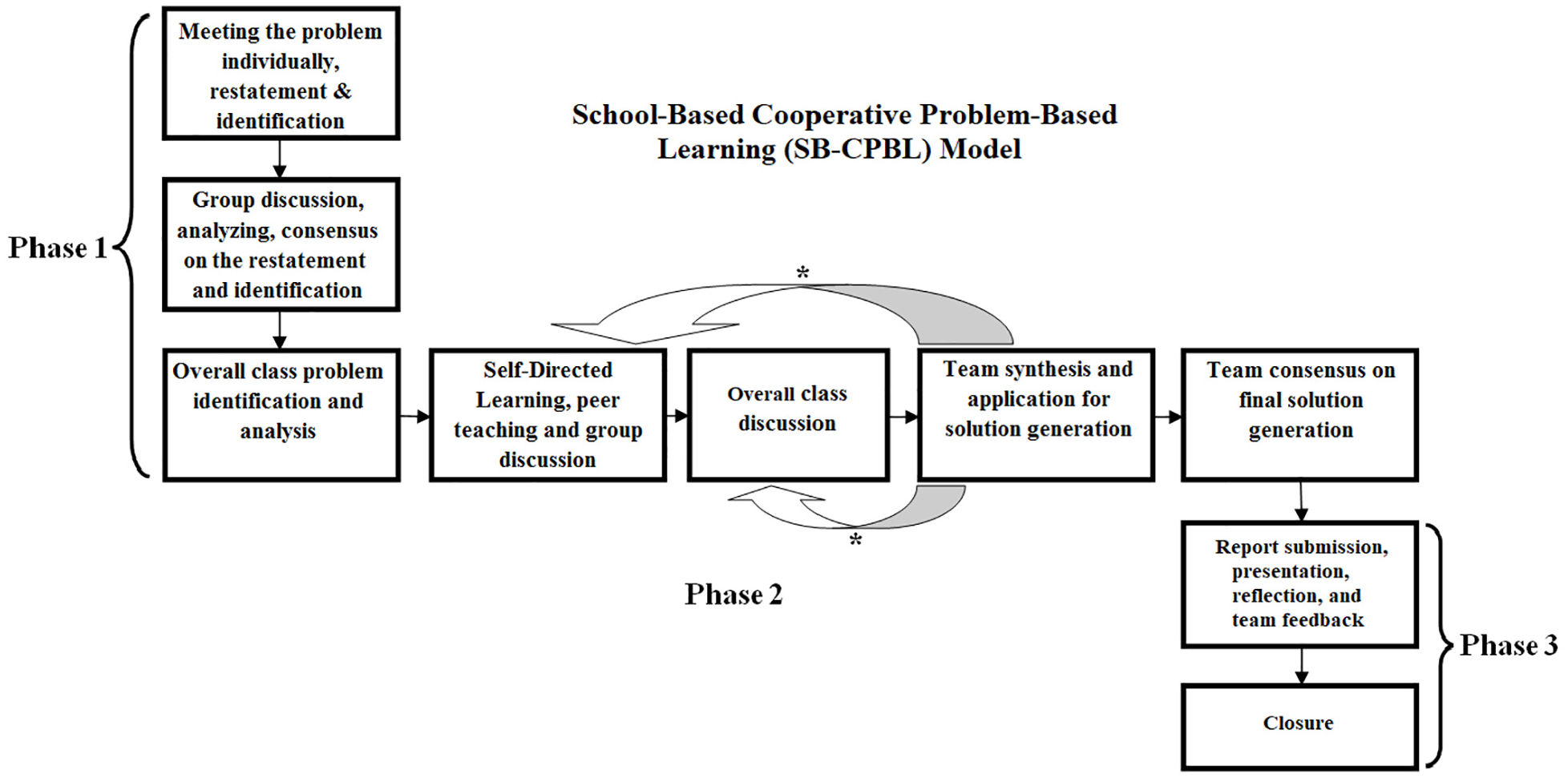
SB-CPBL model adapted from (Mohd-Yusof, Hassan, Syed, et al., 2011). *Insufficient understanding of learning issues to solve problem.
The SB-CPBL cycle began with a realistic problem scenario aligned with the learning objectives of the Genetics unit employed in this study. The case was given to the students a day before their science class. Students were individually required to come out with their problem restatement and identification. This approach promotes individual accountability and self-assessment skills, as requiring individual submissions encourages each student to think about the case on their own (Woods et al., 2000). On the following day, students were assigned into small groups (4–5 students) divided into four major roles, which were rotated to deal with each problem. These roles help maintain PBL group dynamics, such as the chair, scribe, group members, and facilitator. Students within their SB-CPBL groups were expected to reach a consensus on problem restatement and identification, which was followed by an overall class discussion monitored by the facilitator to reach a consensus for overall class problem restatement and identification. Both group and overall class discussions encouraged critical analysis of a variety of views and ideas, as well as supported positive interdependence and a sense of community.
Ample time was allocated for phase number two which intends to guide students in gathering missing information identified in phase number one. As students engaged in searching for solutions guided by their desire to acquire new knowledge, peer teaching was held to foster student learning by sharing what they understood, which was then followed by an overall class discussion where information gathered was shared and critically reviewed. Peer learning facilitated debate and the sharing of knowledge through face-to-face interactions. By supporting one another in learning, learners develop positive interdependence amongst themselves. Next, the information and knowledge newly acquired were synthesized to generate possible solutions. In the final part of this phase, students within their respective groups were required to propose the best solution to all SB-CPBL group members, with proper justification. The last phase is one of the most important aspects of the SB-CPBL model. It is the phase where the final solution report required from each group and presentation acted as a crux to the assessment process. Presentations made the students feel confident and perceive themselves as sources of knowledge, which positively impacted their interpersonal skills. There was also an open climate for team feedback and individual reflections in the light of group presentations. Finally, the acquired knowledge and skills were generalized to other situations. In the SB-CPBL model, the instructor acted as a facilitator in a cooperative and effective learning environment.
A sample of case number four presents the lesson “Genetic Diseases.” The presented written scenario was supported by a 5-min animation video showing patients suffering from Thalassemia and the annual cost incurred by Jordan due to the disease. The learning animation video ended with the following question: “How can you help Jordan face Thalassemia and minimize its cost burden?” Several information resources have been made available, such as related books, articles, laptops with an internet connection (science laboratory), pictures, and other related written materials. The students followed the three phases of the SB-CPBL model to solve the scenario. In stark contrast, in the other two eighth-grade classes, teaching often starts with writing the science lesson title at the top of the blackboard, followed by the learning objectives to the right of the board. Next, the teacher verbally explains the main ideas of the lesson, which are summarized at the end of the session. Besides, the teacher defines the concepts in the lesson, which the students note down. Finally, students are required to answer questions assigned by the teacher as homework.
Stage Three: Data Collection
An extensive literature review was initially carried out to initiate the data collection and formulate questions for the interviews. Three face-to-face group interviews were conducted with each gender class using the participants’ native language (Arabic), and the responses were translated into English. To enrich the data collected, semi-structured individual interviews were conducted with students. Furthermore, considering the critical role of the teacher in PBL, the science teacher involved in the study was also interviewed. The interview questions were created to get in-depth answers about how students view SB-CPBL. The process of development involved a comprehensive literature review on problem-based learning, cooperative learning, and students’ perceptions of learning strategies. The interview included questions such as “How does SB-CPBL differ from your usual learning methods?” and “What were your initial feelings toward SB-CPBL, and how did these change over time?.”
Group Interviews
A three-stage group interview process was designed to systematically capture the evolution of students’ perceptions over time. Each group interview lasted for 30 to 35 min. Every stage had specific objectives and themes, which were:
Individual Interviews
Individual interviews provide deeper insights into specific experiences and perceptions that might not be fully expressed in a group setting (Bell et al., 2018). The individual interviews were spaced to capture the dynamic nature of students’ experiences as they progressed through the SB-CPBL module. Twelve students (6 males and 6 females) were selected randomly and took part in interviews that lasted 15 to 20 min. The timeline was as follows:
Teacher Interview
The science teacher who participated in the study was interviewed for 35 to 40 min. A semi-structured interview was adopted to create a favorable climate for more open-ended questions, rather than following a formalized list of questions (Lune & Berg, 2017). The teacher was asked about the main challenges of learning by SB-CPBL. All interviews in this study were video recorded.
Methodological Rigor
Several measures were implemented to ensure the validity and reliability of the study. Three experts in educational research reviewed the initial set of questions to ensure they were clear and relevant. The questions were then piloted with another group of students not part of the main study. Data were collected through group and individual interviews, allowing for triangulation and providing an extensive understanding of students’ perceptions. After transcription, interviewees were asked to review their responses to confirm the accuracy of the transcripts. In addition, we adhered to a structured interview protocol developed through an extensive literature review and expert consultations. This protocol ensured consistency in the questions posed across different stages and participants, reducing interviewer bias. Furthermore, detailed records of the research steps including; data collection, transcription, coding, and data analysis were maintained throughout the study.
Data Coding and Analysis
The video recordings of the group interviews were typed out verbatim. This procedure was replicated for individual interviews with the students and teacher. The coding scheme was first created according to the research questions and the review of existing literature. This encompassed categories like “initial perceptions,”“benefits,” and “challenges.” The transcripts were carefully reviewed to identify new themes and codes. After that, the codes were categorized into larger themes, and connections between the themes were discovered.
The qualitative data collected were analyzed using the thematic analysis approach (Braun & Clarke, 2006; Strauss & Corbin, 1998). Thematic analysis was selected for its ability to offer a systematic inductive approach for collecting, organizing, and analyzing patterns (themes) found within a data set (Braun & Clarke, 2006). The researchers first reviewed the written statements to get an overview of the data collected. The analysis included the scrutinization of transcripts and highlighting the initial codes. Codes were organized into potential themes, which were then tested and refined. This included verifying that the themes aligned with the coded extracts and the complete dataset. Each theme was defined and named and a detailed analysis was carried out to establish the core of every theme. It has been stated that analyzing qualitative data could involve subjective judgments (Burnard et al., 2008). To avoid potential bias, three experienced researchers were involved in reviewing the transcripts, identifying themes, and data analysis.
Ethical Considerations
The researcher obtained all the required permissions and letters from the Educational Research and Development Department/Jordan (MoHE). Students who participated in the study have met the following inclusion criteria; agreed to participate in the SB-CPBL module by signing the parent’s approval form, agreed to be interviewed, video recorded, and provided notes and answers while undergoing the cycle of SB-CPBL. Moreover, the science teacher of the two classes was approached and asked if she was willing to be involved in the study. The teacher agreed and signed up to participate in the study. The research study was approved by the Human Research Ethics Committee of the National University of Malaysia.
Results
The interviews provided vast data on various aspects of student’s perceptions of learning through SB-CPBL and enabled researchers to gain a deep understanding of a range of issues that may have an impact on making the SB-CPBL classroom more dynamic. Table 1 shows the data analysis, including the themes and their related codes.
Themes Within the Coding System for Students and Teacher Interviews.

Students’ Perceptions of SB-CPBL
From Conventional Teaching to SB-CPBL Approach
The study sought to answer the first research question: “How do Jordanian middle-school students perceive the SB-CPBL approach in learning science?” In the first round of interviews, most students confirmed that they had not previously experienced PBL. Many expressed surprise at the shift in teaching methods: “I have never been tasked to solve a problem in the class before.” Some students thought that SB-CPBL was only a 1-day activity that would be used for a class and then, things would return to normal: Science class has become completely different from the other subjects, and I did not expect that to continue.
Anxiety seemed to be evident among the students particularly when faced with the second problematic scenario. Some students started even to ask about the achievement exam of the unit. This baffling situation made some students resort to the science textbook and search for the information they thought might come in their exams. A few students stated that they neglected to think about the exam. The teacher involved in SB-CPBL confirmed that students at the beginning were not confident of their ideas, opinions, and solutions: “The students were hesitant about everything they present.” In the initial learning stage, the common belief among the students was that they would not be able to solve the problems given to them. However, their expectations have improved in phase two of SB-CPBL where the class discussion component takes place: The other group’s work is similar to what we have done, so I think we are on the right track.
Students’ views contradicted the superiority of SB-CPBL in acquiring the knowledge required of genetics compared to their usual learning style. On the other hand, some students expressed their desire to solve more problems.
Challenges
To address the research question, “What challenges do students face when engaging in the SB-CPBL approach?” the findings highlighted several obstacles. During the middle stage, that is, after a month of SB-CPBL implementation, the second round of group interviews was conducted. At this stage, students had undergone the SB-CPBL cycle three times and their feedback reflected both improvements and ongoing difficulties. During its first time, SB-CPBL classes required direct instructions to help them manage groups and not disturb others. However, students appeared to be more disciplined within their learning groups in this stage. One student observed: “We no longer quarrel about role distribution within the group.” However, classroom discipline during overall discussions remained an issue. Some students found the sessions noisy and unstructured, which affected their ability to concentrate. The most prominent thing that was observed in this context is the attempt by some groups to impose their opinions and views. Interestingly, “more discipline is needed” was mentioned by both the teacher and students in various situations. The majority speech of the students during their interviews was away from the anxiety of the exam. The focus was on technical matters related to working within the groups.
Another challenge was time management. Many students felt that gathering information, writing reports, and preparing presentations required more time than allocated. Moreover, the teacher emphasized that sufficient time is essential for students to complete their learning tasks. Although the need for time has been mentioned repeatedly, a majority of the opinions and views expressed by students reported their satisfaction with their performance in answering the learning issues: When a group member completes the tasks assigned to her, she goes and helps the other gather information”, and “peer teaching shortened a lot of time.
Several students said they did not receive direct answers to their inquiries: “When we ask the teacher a question, the answer is a question.” This led groups to be more independent, which is seen when they require less and less intervention from the teacher. Parental concerns also emerged as a challenge. Some parents were confused about the new learning strategy, as they were accustomed to traditional memorization-based education. The teacher noted: Some parents expressed concern because they were used to helping their children memorize textbook content, not solving scenarios. It was difficult to convince them of SB-CPBL’s effectiveness.
Finally, scenario crafting was identified as a key challenge for implementation. Overall, while students and the teacher faced several challenges during SB-CPBL implementation, many issues, such as group management and role distribution, improved over time. However, aspects like time constraints, classroom discipline, and scenario crafting remained areas requiring further refinement.
Advantages
To explore the research question, “What are the perceived advantages of the SB-CPBL approach according to the students?,” the following insights were gathered. By the end of the implementation, students had developed a deeper appreciation for the new learning strategy. One of the most frequently mentioned advantages was increased engagement. Many students found SB-CPBL enjoyable and interactive. One student noted: “SB-CPBL brings Jordanian problems to the class, which makes it enjoyable.” These were confirmed by a teacher who stated that students were motivated; they began issuing judgments and solutions and defending them vigorously on their own. Students described the process as resembling a story. It was also described to be comfortable. The collaborative aspect of SB-CPBL fostered a sense of fairness and inclusivity. Students appreciated being able to share their ideas freely. As one of the key features that characterize SB-CPBL, the peer teaching element was given special attention by students. Students valued learning from their classmates, as it helped reinforce their understanding. Besides, some students added that a sense of responsibility was evident among the students in SB-CPBL. They became more independent and confident in their abilities. One student observed: Every member was responsible for something; as well as we are all responsible for selecting the final solution.
With another question, several students indicated that SB-CPBL is a continuous process of thought: “… SB-CPBL requires thinking in its three phases.” Some of the interviewees admitted that there is a psychological obstacle when it comes to debating a point with their teacher in the conventional science class while group learning context provides a better opportunity to discuss ideas with the teacher. Overall, the findings suggest that SB-CPBL created an engaging, collaborative, and student-centered learning environment. While initial challenges existed, students ultimately recognized the benefits of this approach in enhancing their learning.
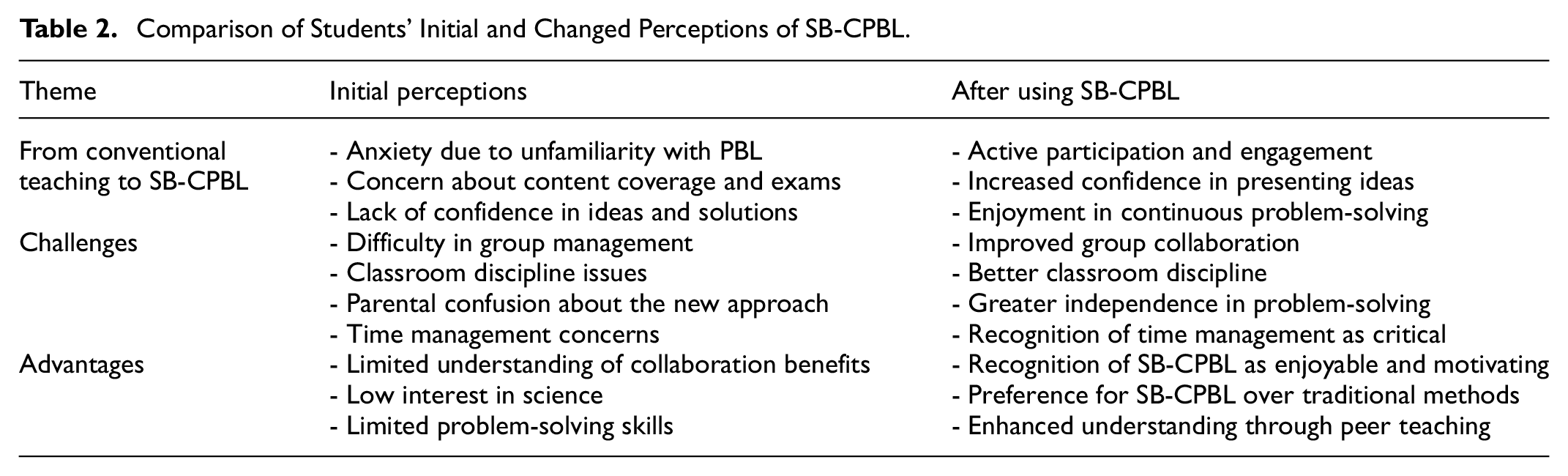
Table 2 displays a comparison between students’ initial perceptions of the SB-CPBL and their perceptions after undergoing the module. The table highlights the evolution of students’ experiences and views as they engaged with SB-CPBL.
Comparison of Students’ Initial and Changed Perceptions of SB-CPBL.
Discussion
In this research, a middle school in Jordan was chosen as an example of a school with large classes using the conventional approach to teaching science. The main value of this research is to gain a better understanding of students’ perceptions of using the SB-CPBL approach in teaching and learning science. In this study, students showed a sense of anxiety in the first 2 weeks of SB-CPBL. Uncertainty about the ability to solve problems was the dominant belief among the students. The students also showed uncertainty about SB-CPBL’s ability to provide the required knowledge of the science curriculum. This pressure led to a lack of confidence in the solutions they had reached in the first and second cycles of SB-CPBL. At this point, it is important to know that students’ achievement in science is one of the important issues for middle school in Jordan, where it is looked upon as a benchmark to distribute the students on the scientific and literary tracks in the secondary education stage, thus, the students were worried of SB-CPBL would cause them a low achievement in science at this critical stage.
With the students who have experienced SB-CPBL as anxiety-provoking, some parents expressed their concern about their children’s difficulty in accepting the new learning strategy. To understand this feeling, the effect of the instruction culture followed in Jordanian schools must be taken into consideration. In the Jordanian instruction culture, teaching is oriented toward exams and the scores that students achieve in these exams. Both students and teachers in Jordan are graduates of conventional teaching classes where problem-solving strategies are not commonly used. It is known that students with a conventional learning background, usually resist working within groups, as it differs from their previous learning experience (Falls et al., 2014) and contradicts their beliefs (Woods, 1994), and leads to what is called a struggle/shock (Beaumont et al., 2004). However, after 4 weeks of using SB-CPBL, students seemed to be more disciplined within their working groups, as well as they expressed their satisfaction with what they had accomplished, which aligns with Bahar-Ozvariş et al. (2006), who revealed that trainees appreciated the role of cooperative problem-based learning in enhancing their confidence and engagement. The science teacher asserted that students showed an active involvement in learning after a month of using SB-CPBL. This supports the findings of Adi et al. (2012) who revealed that undergoing cooperative problem-based learning for one semester caused engineering students to enjoy the case studies as it provided a deeper understanding of concepts and content knowledge.
Other studies have shown that students’ perceptions of learning could change depending on their experience within the working group (Falls et al., 2014; Golightly, 2018). PBL is known to transform science classrooms into more enjoyable places (Klegeris, 2020). However, gradual adaptation to PBL is an important issue that should be taken into consideration (Chavez et al., 2020). Through looking at the data within its timeframe, it is clearly shown how the eighth-graders perceptions have changed over time as a result of gradual adaptation. As they engaged more with SB-CPBL, they began to see the value of active participation and collaboration. This shift was facilitated by increased confidence in presenting their ideas and solutions, which was bolstered by positive feedback during class discussions and the enjoyment they found in solving problems continuously. The evolving perceptions significantly impacted their learning processes by enhancing their understanding, which is supported by the findings of Heller et al. (1992), where the students highlighted the effectiveness of cooperative PBL in understanding complex physics concepts.
The summary of the students’ response at the final stage includes the fact that SB-CPBL is enjoyable and attractive, and initiates the urge to think critically. This supports the findings of Siew et al. (2017), who noted significant improvements in pre-schoolers’ critical thinking skills through problem-based cooperative learning. These findings also agree with other studies, where PBL (Demirel & Dagyar, 2016; LaForce et al., 2017) and CL (Jampel et al., 2018; Veldman et al., 2020) have been identified as effective learning approaches that increase students’ enjoyment of STEM subjects. Further, teachers have pointed out that more 21st-century skills, including critical thinking and problem-solving skills, were incorporated into their teaching when using PBL (Hairun et al., 2020; Kadir et al., 2016). It has been argued that learning in the context of solving real-life problems, searching for information within multiple resources, and generating solutions seems to be an interesting process for students (Winkler et al., 2021). In this study, a consensus on the final solution was a serious and critical stage and attracted the attention of the entire group. SB-CPBL students were more excitable, especially when dealing with questions and comments from their fellow students.
Students who initially struggled with classroom discipline and group management learned to manage their time better and collaborate more effectively, recognizing these skills as fundamental to their success in SB-CPBL. Moreover, as students grew more independent and willing to take risks, their engagement and motivation in learning increased. This transformation indicates that SB-CPBL improves academic outcomes and equips students with the essential skills. These include collaboration and self-directed learning, all contributing to a more student-centered and interactive learning environment.
Eventually, most of the students expressed a clear preference for SB-CPBL in learning science, but the challenges that arise when implementing SB-CPBL cannot be overlooked. The overall class discussion component was to support social interaction, scaffolding, and providing feedback on students learning (Kidane et al., 2020). However, classroom discipline is not a simple matter in the context of overall class discussions. It requires tremendous effort on the part of the facilitator. Some students joke around within their SB-CPBL working groups. The students require time to get used to this approach, especially those in middle schools. One challenge facing the implementation of SB-CPBL is the need for more time on the part of students to accomplish their learning tasks. SB-CPBL students have repeatedly questioned whether the time provided for answering the learning issues is sufficient. Literature has confirmed “time” as a major challenge in problem-solving strategies at various educational levels (Argaw et al., 2017; Quinlan, 2016). Therefore, limiting the time of searching and answering learning issues appears to be difficult, whereas improving the teamwork environment and how to manage their learning should be targeted.
Further, it is necessary to highlight that crafting SB-CPBL problems was reported by the teacher as a challenging task. This comes in line with the view of Jamaludin et al. (2012), who revealed that crafting PBL problematic scenarios proved to be a challenge for instructors in most educational disciplines. In PBL, the problem acts as the backbone of learning, as it initiates the learning process. Understanding how to craft or design the PBL problem is likely to be crucial and meaningful in improving the ability to craft problems.
This study was applied with a relatively small sample of 60 eighth-graders from one school. While this provided valuable insight into students’ perceptions of using SB-CPBL, the findings could not be generalized to all middle school students in Jordan or other countries. Future studies should include a larger sample to enhance the generalizability of the results. Moreover, the study was carried out over 6 weeks, which may not be sufficient to observe long-term student learning changes. Longer-term research studies are required to evaluate the sustained effects of SB-CPBL on students’ perceptions and learning outcomes. Although efforts were made to train the science teacher and reduce bias, the teacher’s implementation of the SB-CPBL module could have influenced the results of the study. Differences in teacher experience and training can significantly affect its success. Future research studies should consider standardized training protocols to mitigate this limitation. Policymakers should support and fund long-term studies that include diverse populations across different schools and regions. This will enhance the generalizability of the research findings. Moreover, educational policies should develop comprehensive training courses for science teachers on the SB-CPBL approach.
Future research should explore the effect of SB-CPBL on some variables such as critical thinking, expanding the understanding of how this SB-CPBL influences key cognitive skills. Additionally, studies should focus on effective learning strategies in overcrowded classrooms, particularly in developing countries such as Jordan, to evaluate their effectiveness in challenging environments. Furthermore, there is a need to investigate mechanisms for developing student collaboration, which is fundamental for successfully implementing group-based learning strategies. Understanding how to foster effective teamwork in diverse educational settings will be crucial for maximizing the benefits of SB-CPBL and similar approaches.
Conclusion
This study investigated the perceptions of Jordanian middle school students of using the SB-CPBL approach in learning science. The participants expressed a feeling of anxiety in the initial stage of SB-CPBL, however, the majority reported a positive attitude toward the new approach in the final stage and expressed an active engagement in learning science. The negative perception held by students was understandable as it was the first time they had been exposed to such a learning approach. The present study provided meaningful insights into students’ perceptions of the learning environment that integrates both cooperative learning and problem-based learning (PBL) approaches. Addressing the challenges and obstacles is very important in implementing optimal SB-CPBL curriculum modules. Future studies are expected to expand the scope and involve high school students. The effectiveness of SB-CPBL can be also examined on other topics and disciplines. Moreover, it could be worthwhile to study the effectiveness of SB-CPBL in improving skills that the 21st century is looking for.
Footnotes
Acknowledgements
The authors would like to express special words of thanks and their acknowledgment to the Jordanian Ministry of Higher Education and Scientific Research, and the Faculty of Education, The National University of Malaysia (UKM; GG-2019-007).

Author Contributions
The authors contributed equally to this manuscript. They have read and approved the final manuscript.
Funding
The author(s) disclosed receipt of the following financial support for the research, authorship, and/or publication of this article:
Declaration of Conflicting Interests
The author(s) declared no potential conflicts of interest with respect to the research, authorship, and/or publication of this article.
Data Availability Statement
The data analyzed during the present study are not publicly available due to the Jordanian Ministry of Education policy restrictions, but aggregated data are available from the corresponding author upon reasonable request.