




Abstract
The aim of this study was to identify and understand the necessary conditions for companies to implement social practices. Social practices positively affect society and the companies that implement them. Understanding the factors that lead to social practices is crucial to promote these practices and thus bring about their positive effects. Necessary condition analysis (NCA) was conducted following a survey of 141 companies in the Spanish footwear cluster. The conditions of supplier relationship, customer relationship, and culture were found to be necessary for the implementation of social practices. This finding reveals the importance of conveying to employees the relevance of social practices and their key role in customer engagement. For the highest levels of social practices, investment was present, indicating that only companies with a deep commitment to social practices can fulfill their potential to attract investors. Similarly, government barriers and internal barriers were only observed to be acknowledged by companies with outstanding social practices. These findings provide useful insights for companies and policymakers.
Keywords
Introduction
Today, companies cannot seek to maximize profits yet disregard the consequences of their actions. Instead, they must also provide value to stakeholders and society (Hammann et al., 2009). To ensure this orientation to society and stakeholders, many companies have adopted social and sustainable practices. These practices are labeled differently depending on their approach, scope, and motivation, varyingly referred to as social innovation, corporate social responsibility (CSR), and corporate social innovation. For clarity, the differences between these terms are explored in the theoretical framework section of this paper.
Organizations’ social practices (De Bakker et al., 2005) and sustainable practices (Nobanee et al., 2021) have gained widespread popularity and adoption, making them a consistent focus of academic research. This interest is driven not only by the paradigm shift that occurs when such practices are implemented but also by their impact on various organizational aspects. For example, Haddach et al. (2016) and Hammann et al. (2009) found that social and environmental practices positively affect firms’ overall performance. Virvilaite and Daubaraite (2011) observed the positive effect of CSR on corporate image. Its positive influence on customer engagement and loyalty was likewise explored by Abbas et al. (2018) and Nareeman and Hassan (2013). The findings from the literature reflect the idea that implementing social and sustainable practices is not charity but in fact a strategic business investment (Kanter, 1999).
There is also abundant literature on the drivers of and barriers to the adoption and dissemination of social and sustainable practices. For instance, Sadabadi and Rahimi Rad (2022) identified six enhancers and three barriers to cross-sector partnerships in social innovation. Likewise, Lashitew et al. (2020) found that local embeddedness is a key factor for initiating and implementing social innovation. The primary motivations to adopt them and their main benefits have also been identified and analyzed in the literature (Aleksić et al., 2024; Dieguez et al., 2023).
Problem Statement
However, to the authors’ knowledge, the factors necessary for the successful implementation of social and sustainable practices have not yet been identified. Therefore, this paper identifies the necessary conditions for the implementation of social practices in Spanish footwear companies. Identifying these necessary factors will fill a gap in the literature, support policymaking processes, and result in managerial recommendations to promote companies’ adoption of these practices. Thus, this paper addresses the following
To address this research question, a necessary condition analysis (NCA) focus (Dul, 2016a) was applied as an innovative approach to the topic, enabling the identification of necessary factors. These findings were then contrasted with those from a multiple linear regression model. For a given condition to be considered necessary, it must meet three conditions. First, it must be identified as necessary (i.e., its effect size d should be greater than 0, as explained in the methodology and data section). Second, it must be statistically significant. Third, it must be theoretically justified (Dul et al., 2020).
This article first presents a theoretical framework (Section 2) that explores and justifies the factors chosen for analysis in this study, providing support for the research question. Next, the sample and methods (NCA and multiple linear regression) are described in Section 3. The results are presented and discussed in Section 4. Conclusions and practical implications are summarized in Section 5, along with the limitations of the study and future lines of research.
Theoretical Framework
Social Innovation, Corporate Social Responsibility, and Corporate Social Innovation: Limits and Frontiers
Social innovation, CSR, and corporate social innovation are three closely related concepts. This section provides an overview of these concepts and reviews the relationships between them.
Social Innovation
The field of social innovation is characterized by conceptual ambiguity and a lack of a consensus regarding its definition (van der Have & Rubalcaba, 2016). Nonetheless, extensive research has been conducted, and multiple definitions and theoretical models have been proposed in the scientific literature. Howaldt et al. (2015, p. 30) defined social innovation as “a new combination or configuration of practices in areas of social action, prompted by certain actors or constellations of actors with the ultimate goal of coping better with needs and problems than is possible by using existing practices.” The conceptual ambiguity of social innovation leads to problems when defining tools to measure its impact (Cunha & Benneworth, 2020).
Marques et al. (2018) proposed a classification of social innovation based on the target, scope, and depth of changes. They identified three types of social innovation. First, structural social innovation comprises deep, radical changes. Second, targeted social innovation is complementary. Finally, instrumental innovation is more limited and seeks to address stakeholder interests by rebranding prior agendas.
The concept of social innovation ecosystems provides a heuristic model that supports the understanding of innovation diffusion (Domanski et al., 2020). The idea is the surrounding actors and environment influence social innovation. A company’s social innovation orientation is strongly influenced by actors in its environment such as competitors, customers, and external consultants (Segarra-Oña et al., 2017). However, other factors such as the COVID-19 pandemic have been reported as drivers of social innovation in multinational enterprises (Peerally et al., 2022).
Interestingly, scholars have argued that social innovation goes beyond the boundaries of companies (Svensson & Hambrick, 2019) or cooperatives (Han et al., 2014), with stakeholders playing a key role in the social innovation process. For instance, an intermediary’s functions not only help develop a company’s activities but also entail spillover intermediation, which boosts the capabilities of buyers and leads to development of the field (Barraket, 2020). Similarly, Sauer and Hiete (2019) studied the case of mining-sector multi-stakeholder initiatives that led to new practices and forms of governance by minimizing sustainability impacts, thus resulting in social innovation. However, companies do not always take full advantage of relationships with their stakeholders. Although social enterprises purposely collaborate with stakeholders in social innovation creation, they seem to fail to benefit from the knowledge and experience of their partners in the implementation stage (Phillips et al., 2019).
Corporate Social Responsibility (CSR)
As with social innovation, there is no clear universal definition of CSR, despite considerable conceptual analysis and attempts to develop such a definition since the 1950s (Kraus & Brtitzelmaier, 2012). The view of CSR has evolved over the years in response to the interests of society and institutions (Mosca & Civera, 2017). A notable example of the influence of institutions is the creation of the 17 Sustainable Development Goals (SDGs) by the United Nations (2015), which have influenced companies’ adoption of CSR practices.
Kotler and Lee (2005, p. 3) proposed a definition that has since been widely adopted. They defined CSR as “a commitment to improve community well-being through discretionary business practices and contributions of corporate resources.”Carroll (2015) argued that CSR comprises two main actions: protecting society from companies’ negative effects and improving well-being in society (i.e., companies should create benefits for society). In exceptional circumstances such as the COVID-19 pandemic, companies provide resources and make efforts to meet the needs of society (Ahmed et al., 2021). However, CSR hides a dark side. Companies’ malpractices often increase CSR skepticism due to a lack of honesty and the conflicting interests of pursuing economic gain and performing philanthropic (social) actions (Dalal, 2020). This dilemma facing companies (i.e., economic vs. social benefits) is exemplified by controversial cases in highly polluting sectors, which are the most committed to signaling CSR policy (Sardanelli et al., 2021).
Although CSR practices are widespread at the global level, Europe is the most CSR-committed region in terms of values, norms, and perceptions. Europe has played a key role in promoting CSR through stakeholder relationships (Mullerat, 2013). At the country level, social factors have been found to have a positive influence on the degree to which companies have adopted CSR. In areas where people are more engaged in philanthropic activities, companies are also more engaged in CSR initiatives. Similarly, an aging population leads local companies to participate in more CSR initiatives, whereas degree of religiosity has a negative impact on CSR dissemination (Attig & Brockman, 2017).
Corporate Social Innovation
Since Kanter (1999) introduced the concept of corporate social innovation, many definitions have been proposed. Corporate social innovation has been defined as “a strategy that combines a unique set of corporate assets (innovation capacities, marketing skills, managerial acumen, employee engagement, scale, etc.) in collaboration with the assets of other sectors and firms to co-create breakthrough solutions to complex economic, social, and environmental issues that impact the sustainability of both business and society” (Mirvis et al., 2012, p. 3).
Within companies, corporate social innovation can be enhanced through three organizational components: strategic alignment, institutional elements, and clarity. The three institutional elements recognized as drivers of corporate social innovation are stakeholder engagement, operational structures and processes, and organizational culture. These three institutional elements shape a company’s strategy and operations, producing synergies between other types of innovation and corporate social innovation (Herrera, 2015). Financial performance also has a positive impact on corporate social innovation, although this effect seems to have a 1-year lag (Alonso-Martínez et al., 2019).
Corporate social innovation is influenced by external and internal factors. Examples of external factors include social movements, which indirectly promote corporate social innovation (Carberry et al., 2019), and higher educational institutions, which can facilitate social innovation through learning processes and systemic change (Kumari et al., 2019). Internal factors include local embeddedness, which refers to deeply understanding the local context to gain competitive advantage. Local embeddedness is positively related to social innovation orientation (Adomako & Tran, 2022).
Social Innovation, CSR, and Corporate Social Innovation: So Different Yet So Alike
Social innovation aims at improving society and people’s quality of life through novel practices to tackle unsolved problems. CSR focuses on giving back to the society from which companies benefit. Corporate social innovation transcends this focus by incorporating the logic of social innovation as a strategy that simultaneously generates positive social impact and business opportunities (Popoli, 2016). According to Dionisio and de Vargas (2020), a key difference between CSR and corporate social innovation is that CSR responds to external pressures to improve a corporation’s reputation, whereas corporate social innovation entails a strategic investment to co-create something new to provide a sustainable solution to social needs, thus promoting social change. Traditional CSR has a philanthropic purpose based on employee volunteerism, whereas corporate social innovation has a strategic purpose based on employee development (Mirvis & Googins, 2017). Therefore, corporate social innovation goes a step further than CSR and entails deeper changes and commitment. Moreover, corporate social innovation better captures the importance of the balance between the needs of society and stakeholders (Dionisio & de Vargas, 2020). Following this rationale, if CSR constitutes a part of corporate strategy, it could be considered a social innovation itself (Szegedi et al., 2016).
Drawing on the relevance of practices outlined in research by Nicolini (2012) and Szegedi et al. (2016), this study adopts social practices as an umbrella term encompassing actions or activities that could be categorized as social innovation, CSR, or corporate social innovation, depending on their contextual novelty, approach, and scope. This decision to use such an umbrella term is motivated by the fact that this categorization is more conditioned by motivation, planning, and strategic integration than by the nature of the practice itself. For this study, companies were surveyed about specific actions they had undertaken, as detailed in Appendix 1.
Social and Environmental Practices: The Relationship With Customers and Suppliers
The relationship between companies’ social practices and stakeholders has been extensively analyzed in the literature. This section addresses the relationship between social practices and customers and suppliers. Implementing innovative social and sustainable practices positively influences companies’ relationships with customers in different ways. For example, companies can gain competitive advantages such as improvements in reputation, consumer satisfaction (Saeidi et al., 2015), and loyalty (Du et al., 2007; Nareeman & Hassan, 2013), which ultimately result in an increase in consumer purchase intentions (Dutta & Singh, 2013) and contribute to building a customer base (Mirvis et al., 2012). Therefore, clear communication of any social practices developed within a company is paramount to minimize discrepancies between customer perceptions and the company’s environmental, social, and governance (ESG) efforts (Aksoy et al., 2022). However, besides effective communication with society, companies should be deeply and honestly committed to society and the environment to benefit from the positive effects of social practices. To this end, a company’s strategies should be aligned with social innovation developed within business boundaries (Sigurdsson & Candi, 2020).
Social and sustainable practices also improve relationships with suppliers. The implementation of strategic CSR increases supplier trust, which is reflected in tangible improvements such as greater trade credit financing from suppliers (Zhang et al., 2014) and better sales performance (Jia et al., 2023). Interestingly, suppliers with comparatively low CSR ratings experience a negative effect on contractual relations. Two underlying mechanisms have been proposed to explain this phenomenon: benchmarking and public pressure (Darendeli et al., 2022).
CSR indicators are becoming another decision-making element in the supplier selection process (Kruschwitz, 2013; Wong et al., 2012). Hence, suppliers are becoming more proactive in complying with CSR directives (Hultman & Elg, 2018) to boost their selection rate. Nevertheless, the extent of these practices seems to depend on sector, size, and geographical scope, with larger firms having a more international presence and the clothing or perishable goods sectors proving more sensitive (Elg & Hultman, 2011).
Therefore, extensive literature shows the positive effect of adopting social and environmental practices on customer and supplier relationships. These practices contribute to reducing financial distress and thus improve company performance (Al-Hadi et al., 2019).
Therefore, the following hypotheses are proposed:
Hypothesis 1: For companies to adopt social practices, a necessary condition is that they regard social and environmental policies as relevant to their customers.
Hypothesis 2: For companies to adopt social practices, a necessary condition is that they promote the social and environmental responsibility of their suppliers.
Internal Factors: Culture, People, Leaders, and More
Company culture in terms of social innovation and the way it is conveyed to employees are important internal factors that influence the success of social innovation. João-Roland and Granados (2020) argued that company culture is a driver of social innovation. However, this concept is broad and covers a wide variety of aspects. It is therefore complex, which hinders the understanding of the concept within the framework of social innovation. Examples of cultural elements that promote social innovation include fear of failure and the existence of spaces for the exchange of ideas.
Goal-oriented employees can act as social innovation initiators, increasing the probability of social innovation success (Katonáné Kovács et al., 2016). Employees’ vision must be aligned with that of companies at the formal (inclusion of social and environmental practices in the job description), psychological (rewards for sustainable behaviors), and social (perception of culture and values) levels (Bhattacharya & Polman, 2016). Also, the way in which employees are managed is crucial because this management has an impact on a company’s reputation and social and sustainable practices (Sobhani et al., 2021). For instance, introducing superior quality management practices improves CSR ratings and social actions (Attig & Cleary, 2015).
Different strategies to engage employees as social innovators can be employed. Examples include participation in innovation competitions, partnerships with external social entrepreneurs, pro bono global service programs, and innovation team membership (Mirvis & Googins, 2018). Moreover, social and environmental practices can be applied to increase employee engagement (Kruschwitz, 2013) and improve innovation activities within a company (Broadstock et al., 2020), among other positive outcomes.
Similarly, ethical leadership directly and indirectly influences employees’ tendency toward social innovation. This influence is mediated by social capital. Leaders must also promote the creation of social capital among employees to encourage social innovation within their companies (Pasricha & Rao, 2018). Therefore, human resources play a pivotal role in social innovation because 80% of social innovations are primarily determined by employees (Krejčí & Šebestová, 2018). However, the creation of social innovation is not enough. It must also be sustained in the long term. Institutionalization is a key factor for long-term sustainability of social innovation because it fills the gap between product development and an effectively operating business (Katonáné Kovács et al., 2016).
Consequently, the following hypotheses are proposed:
Hypothesis 3: Conveying to employees the relevance of social practices is a necessary condition for companies to adopt social practices.
Hypothesis 4: The absence of internal barriers is a necessary condition for companies to adopt social practices.
External Factors: Government, Funding, and Beyond
The context surrounding social innovation initiatives is vital for their success (Katonáné Kovács et al., 2016), reflecting the importance of external factors. A crucial idea to understand the specific features of social innovation is that the law of supply and demand does not apply in some of these social innovation initiatives. The reason is that the beneficiaries of social innovation initiatives are not customers but rather other organizations or government agencies. In the United Kingdom, as in other countries, the government has promoted the use of social enterprises to provide certain services (Farmer et al., 2008). However, this paradigm shift in the applicability of the law of supply and demand distorts dynamics, potentially resulting in a paradox where successful companies are those that secure more lucrative grants or government contracts (Antadze & Westley, 2010). Hence, social innovation companies could become grant dependent, which highlights a major limitation of the public funding approach (Hall et al., 2012).
According to Piñeiro-Antelo and Lois-González (2019), public funding plays a key role in the establishment of social innovation initiatives, especially at the early stage of development (Vanderhoven et al., 2020). This key role of public funding is particularly relevant in remote and rural communities (Munoz et al., 2015). However, public funding does not guarantee long-term stability for organizations (Hall et al., 2012; Vanderhoven et al., 2020). Interestingly, public funding dependence leaves social innovation exposed to public budget fluctuations. Although the impact of public sector funding cuts differs between companies, it often first entails the abandonment of growth plans (Allinson et al., 2011). Thus, the role of the state should not be limited to funding these initiatives and giving business advice. Government involvement requires more profound changes to the role of the state, customer expectations, and the third sector (Munoz et al., 2015). For instance, governments should develop policies to promote social innovation because the lack of such policies has been identified as a barrier for social innovation (Farmer et al., 2008). Moreover, the lack of regulation constitutes a critical barrier to the adoption of social and environmental practices (Bux et al., 2020).
In addition to public funding, other funding alternatives in the entrepreneurial context such as crowdfunding, microfinance, peer-to-peer lending, and other similar innovations (Bruton et al., 2015) could also be applied to social innovation. Soft loans and grants are critical in the early stages of social businesses, as is access to informal funding through acquaintances and social networks, helping socially privileged individuals lead successful ventures (Steiner & Teasdale, 2016). Companies complying with social and sustainable practices have been found to attract more private investment than those that do not (Marshall et al., 2022; Yu & Zheng, 2020), partly because this compliance positively affects their reputation (Esen, 2013).
Therefore, the following hypotheses are proposed:
Hypothesis 5: The absence of government barriers is a necessary condition for companies to adopt social practices.
Hypothesis 6: Regarding the adoption of social and environmental practices as a way of attracting investors is a necessary condition for companies to adopt such practices.
Building on this background and these hypotheses, this paper explores the necessary conditions for companies to implement social practices by addressing the following research question: What conditions are necessary for companies to adopt social practices?
Methodology and Data
This paper uses necessary condition analysis (NCA) to identify the necessary conditions for companies to adopt social practices. In contrast to regression-based methodologies, where it is assumed that the absence of a sufficient input can be compensated for by other sufficient inputs (sufficiency logic), NCA is based on necessary conditions, whose absence prevents an outcome from occurring (Hauff et al., 2021). According to Dul (2016a), the absence of a necessary condition guarantees that the outcome will not occur, whereas the presence of that necessary condition does not guarantee its success. Therefore, necessary conditions are part of a combination of conditions leading to the outcome. This combination of conditions is sufficient to guarantee the success of the outcome. A necessary condition is a constraint, bottleneck, or barrier for an outcome (Dul, 2016b). NCA applies the logic of necessity to test the necessity levels of the necessary conditions (X) required to lead to the outcome (Y). That is, NCA can find the critical level of X needed for Y to occur (Solaimani & Swaak, 2023).

The research model: What conditions are necessary for companies to adopt social practices?
NCA fits the study’s objective, identifying the necessary conditions that stimulate the implementation of social practices. The absence of these conditions, known as constraints or bottlenecks, would limit the occurrence of the outcome, meaning that social practices in companies will not be undertaken. By identifying these necessary conditions, companies and policymakers gain crucial insights so that they can focus on critical areas for promoting social practices, thus ensuring the success of strategies or policies.
The NCA process uses three instruments to study the relationships of necessary conditions. These three instruments are scatterplots, effect sizes, and bottleneck tables (Bakır et al., 2022; Tóth et al., 2019). First, a scatterplot graphically shows the relationship between a necessary condition (X) and an outcome (Y). On this plot, a ceiling can be drawn, which separates the area with and without cases (Dul, 2016a). The existence of an empty area in the upper left corner indicates the presence of a necessary condition (Dul, 2016b). The two techniques for drawing the ceiling line are ceiling envelopment with free disposal hull (CE-FDH) and ceiling regression with free disposal hull (CR-FDH). CE-FDH connects cases in the upper left part of the scatterplot using a piecewise linear step function (Dul, 2016a). In contrast, CR-FDH uses ordinary least squares (OLS) to draw a regression line through the CE-FDH corners (Hauff et al., 2021). In this paper, CE-FDH is used because of the higher accuracy level of the ceiling line with this technique. In CE-FDH, all observations must lie on or below the line, ensuring 100% accuracy. In contrast, in CR-FDH, most cases lie on or below the ceiling line, usually ensuring more than 95% accuracy (Tynan et al., 2020).
The effect size (d) represents how much of a necessary condition constrains the outcome. The lower the ceiling line is, the larger the empty area is, and the bigger the effect size of the necessary condition will be. The effect size compares the empty area with the area where there are cases (Dul, 2016b). The effect of a necessary condition is theoretically and practically significant when its effect size exceeds 0.1. The effect size can be small (0 < d < 0.1), medium (0.1 ≤ d < 0.3), large (0.3 ≤ d < 0.5), or very large (d ≥ 0.5) depending on its value (Dul, 2016b; Hauff et al., 2021). Finally, the bottleneck table shows the critical necessity levels of conditions that must be surpassed to achieve a specific outcome level (Solaimani & Swaak, 2023).
However, when applying NCA, researchers should be aware of its weaknesses. One limitation of NCA is that causality is not guaranteed by observational data. That is, when the researcher observes that the established causal hypothesis is consistent with a specific data pattern, it does not mean that a causal connection exists. Necessary conditions depend on justifications based on theoretical knowledge. Therefore, it is paramount to search for sufficient evidence to avoid misinterpretations and conclude that a condition is necessary for an outcome (Dul, 2016a).
Moreover, NCA is more susceptible to measurement and sampling errors than traditional methods because of the small number of observations required for the ceiling techniques (Chaparro-Banegas et al., 2024). This feature of NCA could compromise the validity of the study’s findings if the data are not accurately measured or representative, resulting in misleading conclusions that do not reflect true causal relationships. Moreover, the reliability of findings is limited when generalizing to a larger population because NCA estimates lack confidence intervals. Researchers may present results as definitive when they are merely point estimates, which can mislead stakeholders or practitioners relying on these findings for decision making (Dul, 2016b).
This paper presents the possible necessary conditions that lead to social practices (outcome) in companies. The conditions considered in the NCA are (i) supplier relationship, (ii) customer relationship, (iii) investment, (iv) culture, (v) government barriers, and (vi) internal barriers. The model can be formalized as follows:

Traditionally, Spain is one of the main footwear producers in Europe. The Spanish footwear cluster is worth studying given its unique features (Belso-Martinez et al., 2020). In this study, 175 companies from the Spanish footwear cluster were surveyed. After reviewing the data, 141 responses were analyzed. Appendix 1 contains the questionnaire used in the study. Respondents used a 5-point scale to indicate the frequency of actions within their companies or their level of agreement with various statements. The scale ranged from 1 (never or completely disagree) to 5 (always or completely agree), with an additional N/A option provided. Table 1 shows the descriptive statistics for the sample.
Descriptive Statistics for the Sample.

The conditions of social practices, government barriers, and internal barriers were based on three different theoretical constructs. The three theoretical constructs were reliable and consistent because the Cronbach’s alpha values were .81, .78, and .86, respectively. Social practices encompassed social activities related to donations and sponsorship; projects and policies supporting the local environment (procurement, hiring, etc.); involvement or collaboration in local movements (neighborhood associations, etc.); and employee participation in activities for the benefit of the community during working hours or paid by the company. The theoretical construct of government barriers consisted of a lack of government support and specific regulations and legislations. Internal barriers comprised the theoretical constructs of no business benefits expected from social and environmental responsibility and low management motivation. Investment referred to whether social and environmental responsibility activities helped attract investors to the company. Supplier relationship referred to whether the company promoted the social and environmental responsibility of suppliers. Customer relationship referred to whether social and environmental practices were relevant for customer acquisition and/or loyalty. Culture referred to whether companies conveyed the relevance of social practices to their employees. For further details, Appendix 1 shows the questionnaire items.
Results
To identify the necessary conditions that encourage the adoption of social practices by companies, the empty spaces in the upper left corners of the scatterplots were identified (see Figure 2). Table 2 shows the effect sizes of the conditions. The effect sizes for the conditions of investment, supplier relationships, government barriers, and internal barriers were 0.17, 0.16, 0.17, and 0.12, respectively. These values indicate a medium effect size on companies’social practices. Customer relationship and culture had effect sizes of 0.39 and 0.3, respectively, indicating a large effect size on social practices. This finding is corroborated by Figure 2, which shows that customer relationship and culture had larger empty spaces than the other conditions. Even though all conditions were theoretically and practically meaningful (effect sizes greater than 0.1), not all could be considered necessary conditions because most did not have a p value that met the threshold condition of .05 (Yan et al., 2022). Supplier relationship, customer relationship, and culture had small p values, indicating that the findings for these conditions were unlikely to come from “a random process of unrelated variables” (Dul et al., 2020, p. 386). Therefore, these three conditions were observed to be necessary and significant, validating hypotheses 1, 2, and 3.

Ceiling lines for social practices (Y) and conditions (X).
Effect Sizes of Conditions Based on the Ceiling Line.

Note. p-value for CE-FDH line < .05.
In conclusion, the relationships of companies with customers (i.e., customer interests and demands) and the intra-firm culture were found to be essential when trying to encourage social innovation practices in private companies. The results showing the relevance of communicating with and engaging employees in social practices were in accordance with those of scholars such as Krejčí and Šebestová (2018) and Katonáné Kovács et al. (2016) Specifically, 80% of social innovations are implemented by employees (employee-oriented) to address their needs and challenges. The company’s entrepreneurial spirit and values influence employee’s behaviors and decisions, further shaping the social innovation landscape (Krejčí & Šebestová, 2018). Likewise, as observed by Saeidi et al. (2015) and Dutta and Singh (2013), being aware of the potential of social practices to engage customers was observed to be important for their successful implementation. Given that companies are also customers when dealing with suppliers, companies’ demands encourage suppliers to adopt social practices so that they can succeed.
Table 3 presents the bottleneck table. This table helps understand the NCA findings when several necessary conditions lead to a specific outcome. The level of necessary conditions required to achieve a particular outcome level can be determined from this table (Dul, 2016a). No necessary condition would be required to encourage companies’social practices at an outcome level of 30% or lower. For 40% social practices within a firm, a minimum level of 9.9 of customer relationship would be needed. Similarly, for 50% of the outcome, the necessary conditions customer relationship and culture would need values of 23.1 and 6.5, respectively. As explained earlier, these two conditions had the largest effect on the outcome in terms of effect size. For 60% to 80% levels of the outcome, certain values of the conditions investment, government barriers, and internal barriers would be required. To reach 90% of the outcome, values of 42.2, 52.2, 75.9, 76.1, 54.2, and 37.8 would be required for the conditions investment, supplier relationship, customer relationship, culture, government barriers, and internal barriers, respectively. Finally, the effect of customer relationship and culture would still be necessary and significant to achieve 100% of social practices in companies, requiring values of 89.2 and 93.5, respectively. These results are consistent with those of Marques et al. (2018) because the highest level of social practices requires more factors. The reason is that structural social innovation entails more profound changes and inevitably affects the company as a whole. Similarly, Attig and Brockman (2017) found that a prosocial attitude, which forms part of the company culture, conditions the level of CSR engagement.
Bottleneck Table for Social Practices and Necessary Conditions.

Note.“NN” indicates that the condition is not necessary. “Y” indicates the percentage of the outcome achieved. The values required of the conditions are presented in actual values (Dul, 2016b; Rey-Martí et al., 2023).
The insights from the analysis of effect sizes imply that customer relationship and culture have the largest impact (in terms of necessity) on encouraging firms to adopt social practices. This finding suggests that these two conditions have the highest explanatory power when explaining the outcome. Investment, government barriers, internal barriers, and supplier relationship, ordered according to their power to constrain the development of social innovation when they are absent, were also found to have the power to limit the outcome. However, these last four conditions would only limit the achievement of high levels of social practices (i.e., more than 60% of the outcome). For lower levels (40%–50%), only certain levels of customer relationship and culture would be required. A value of 9.9 for customer relationship is needed for a 40% social practices level, and values of 23.1 and 6.5 for customer relationship and culture are needed to reach a 50% level of the same outcome.
The finding that government barriers and internal barriers would be relevant in regard to high levels of social practices challenges hypotheses 5 and 4 and might seem counterintuitive at first. Prior literature reports the relevance of government support for the adoption of social and environmental practices (Piñeiro-Antelo & Lois-González, 2019; Vanderhoven et al., 2020). Hence, it would be expected that government barriers would be a necessary condition for the highest level of social practices, whose absence would constrain such practices. Similarly, governments are generally more comfortable with incremental innovations than with disruptive innovations. Consequently, as the commitment to social practices (and innovation) increases, so does the government’s resistance (Antadze & Westley, 2010). However, this finding may have arisen because the data were gathered from a self-reported questionnaire based on the perceptions of respondents. It is conceivable that when companies engage in higher levels of social practices, employees perceive a greater influence of these barriers, and therefore respondents report these higher levels more. Nonetheless, these self-reported perceptions were supported by previous studies that also identified the lack of regulations and standards as the most critical barriers impeding CSR (Bux et al., 2020) and social innovation adoption (Farmer et al., 2008).
Regarding internal barriers, poor managerial motivation would pose a constraint to social practices because, as reported in the literature, ethical leaders must support these practices so that they can develop within the company (Pasricha & Rao, 2018). Again, because this questionnaire gathered self-reported data on respondents’ perceptions, greater investment in social practices may translate into greater inconvenience from internal barriers. It therefore appears with high levels of social practices.
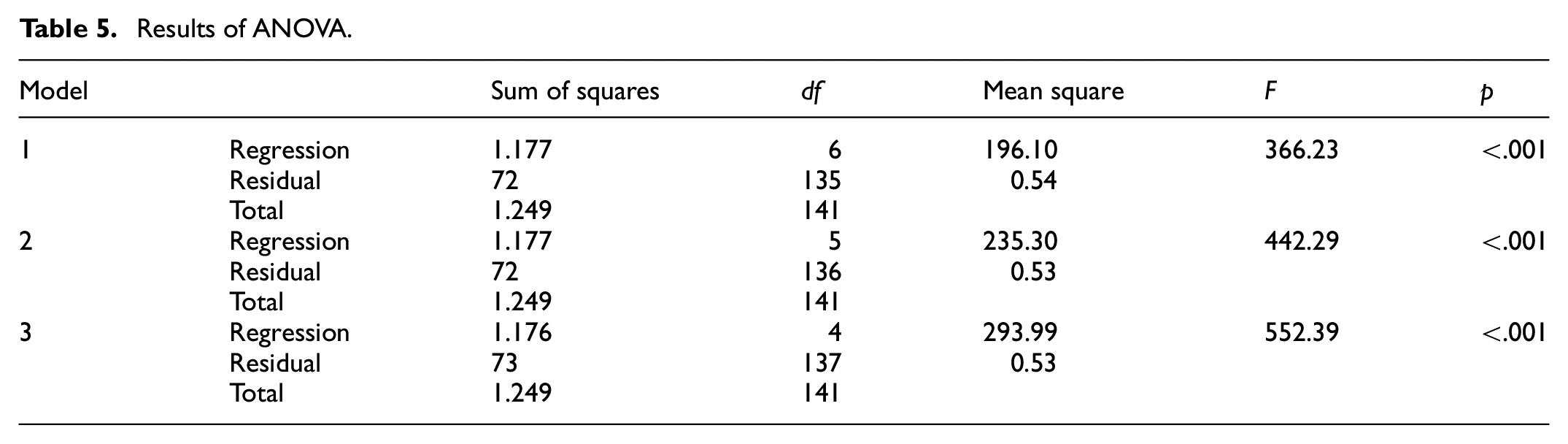
Following the NCA and the analysis of the necessity levels for conditions leading to social practices in companies, linear regression analysis was conducted to analyze the extent to which selected independent variables (investment, supplier relationship, customer relationship, culture, government barriers, and internal barriers) could explain the dependent variable (social practices). Table 4 presents the findings of this regression analysis. The coefficient of determination (R2) had an equally high value for all models (R2 = .94). This finding indicated that the independent variables in each model explained 94% of variation in the dependent variable. Table 5 shows that the three models were statistically significant because their p value was less than 0.05. These findings corroborated the idea that the proposed models effectively described the dependent variable (social practices).
Summary of Models with Social Practices as the Dependent Variable.

Note. R2 = coefficient of determination; RMSE = root mean square error.
Results of ANOVA.
The three models included several variables (see Table 6). Model 1 included government barriers, internal barriers, investment, supplier relationship, customer relationship, and culture. Model 2 included government barriers, internal barriers, investment, supplier relationship, customer relationship, and culture. Finally, Model 3 included government barriers, internal barriers, customer relationship, and culture. However, not all variables in the models were significant at the 95% level. The p values of the variable internal barriers (in Models 1 and 2) and supplier relationship (in Model 1) were .3 and .72, respectively. In contrast, the other variables (government barriers, investment, customer relationship, and culture) had p values of .05 or less and thus a significance level that was greater than or equal to 95%. Therefore, Model 3 consisted of only variables that were statistically significant. Interestingly, investment was not identified as a necessary condition. However, it appeared in all three models, indicating a direct relationship with social practices.
Coefficients of the Three Linear Regression Models.

Comparing the NCA results with those for this model showed that culture and customer relationship were highlighted in both analyses. In addition, investment and government barriers, which were not identified as necessary conditions in the NCA, were also highlighted in the linear regression analysis. As discussed in the bottleneck analysis, this finding could be attributed to the questionnaire used to collect responses. As explained earlier, those engaging in more challenging social practices would be likely to experience greater government barriers and to be more aware of the positive effect of social practices on attracting investors (Marshall et al., 2022; Yu & Zheng, 2020).
Conclusions
Social practices increasingly attract interest from academics and practitioners because of their positive implications in a range of areas, including reputation (Virvilaite & Daubaraite, 2011), engagement (Abbas et al., 2018), and performance (Hammann et al., 2009). Therefore, identifying the necessary conditions for the successful implementation of these practices is important. Accordingly, this paper answered the following research question: What conditions are necessary for companies to adopt social practices?
Three necessary conditions for social practices were identified: supplier relationship, customer relationship, and culture (in line with hypotheses 1, 2, and 3). These three necessary conditions reflect the relevance of stakeholders in the social innovation process. The key role of organizational culture and the need to convey the relevance of social practices to employees are interesting findings because, without a business culture that values social and environmental practices, these practices be implemented.
Therefore, the development of programs to raise awareness of social practices could be a valuable goal for policymakers aiming to boost the adoption of social practices in the business community. Similarly, if a company seeks to engage in social practices, it should train and motivate employees and promote these practices among employees to ensure successful implementation. Regarding the appearance of supplier relationship and customer relationship among the findings, the incorporation of social practices could be beneficial to the business ecosystem in general and adopting companies in particular because they engage customers (meeting the customer condition). Moreover, suppliers adopt social practices to please and retain companies, which in such cases are their customers (meeting the supplier relationship condition). Value is thus created throughout the entire supply chain. This finding is especially relevant given that most companies act as both supplier and customer.
Nonetheless, the highest levels of social practices entail greater commitment and require the presence of all factors (according to hypotheses 1–6). Therefore, greater engagement in social practices means that more agents, stakeholders, and factors must be involved. For instance, the appearance of investment at high levels of social practice implementation implies that only profound knowledge and extensive training in social practices can unleash the positive impact of social practices to attract investors to the company. Consequently, companies should start implementing social practices because the more they commit to them, the more the company will benefit from them, along with society.
A key finding is that more deeply rooted social practices entail more awareness of both government (external) barriers and internal barriers. Therefore, policymakers should consult companies engaging in high levels of social practices to understand how to lay the foundations for social practices. This input could then be added when defining policies. Regarding the internal barriers, managers leading the adoption of social practices should note that they must be fully committed to implementation to ensure success. Accordingly, motivational activities and awareness raising with employees could help minimize internal resistance.
Identifying key conditions gives managers and other business stakeholders crucial insights for successfully designing and developing social innovation in companies. As companies advance in their implementation of social practices, they can determine where resources should be invested and which aspects should be prioritized. By highlighting the role of suppliers, customers, and employees in driving social practices, companies could encourage interaction and collaboration among different stakeholders, fostering their engagement in achieving sustainable business practices. However, applying social practices and innovation entails high levels of complexity. It therefore requires specific knowledge and commitment to address disruptive challenges and contribute to sustainable development. Hence, the government could work closely with companies to determine and mitigate challenges, thereby creating an ecosystem conducive to social innovation and sustainable practices among agents and stakeholders. Moreover, firms’ engagement in adopting social practices could be stimulated by communicating their potential benefits, such as increased customer engagement, enhanced supplier loyalty, and greater attractiveness to investors, contributing to competitive advantage.
In sum, this paper sheds light on the literature and provides a valuable perspective and useful knowledge on (i) how managers can overcome barriers and implement social practices successfully and (ii) how policymakers can design programs, initiatives, and support mechanisms that facilitate and encourage social practice adoption.
Limitations and Future Lines of Research
This study focused on the Spanish footwear sector. Therefore, a study comparing different sectors would increase the generalizability of the findings. Given the relevance of cultural and local factors identified by Attig and Brockman (2017), a study comparing countries with different cultures would be of interest because social innovation is not an isolated phenomenon but involves multiple agents and is subject to the local context. Therefore, local-level analysis is important for comparative purposes. The findings should be generalized with caution because of the role of cultural aspects. Another limitation of this study is that the analysis suggests that government and internal barriers become more relevant as social practice adoption increases. However, because this finding is based on self-reported perceptions and has limited support in the literature, future research could further explore this relationship using alternative data sources such as longitudinal studies or case-based evidence. Other future lines of research that would also be worth exploring include the use of configurational methods such as qualitative comparative analysis (QCA) and further exploration of interesting findings regarding government barriers and internal barriers in relation solely to high levels of social practice implementation.
Footnotes
Appendix 1: Questionnaire
The questionnaire items for each variable are listed. The respondents indicated the frequency with which these actions take place in their companies and/or the level of agreement with each statement on a 5-point scale ranging from 1 (never or completely disagree) to 5 (always or completely agree). There was also an N/A option.

Funding
The author(s) disclosed receipt of the following financial support for the research, authorship, and/or publication of this article: This paper has been supported by the Dirección General de Ciencia e Investigación (Generalitat Valenciana, Spain) awarding grants for consolidated research groups – AICO 2024 (CIAICO/2023/201).
Declaration of Conflicting Interests
The author(s) declared no potential conflicts of interest with respect to the research, authorship, and/or publication of this article.
Data Availability Statement
Data will be made available on request.